Skip to content
  • Home
  • Subscribe / donate
  • Events calendar
  • News
    • Local
    • National
    • Israel
    • World
    • עניין בחדשות
      A roundup of news in Canada and further afield, in Hebrew.
  • Opinion
    • From the JI
    • Op-Ed
  • Arts & Culture
    • Performing Arts
    • Music
    • Books
    • Visual Arts
    • TV & Film
  • Life
    • Celebrating the Holidays
    • Travel
    • The Daily Snooze
      Cartoons by Jacob Samuel
    • Mystery Photo
      Help the JI and JMABC fill in the gaps in our archives.
  • Community Links
    • Organizations, Etc.
    • Other News Sources & Blogs
    • Business Directory
  • FAQ
  • JI Chai Celebration
  • JI@88! video

Recent Posts

  • Hateful messages intensify
  • Creating entrepreneurs
  • Wrong choice to host Piker
  • Attack on Jewish kids
  • Multiple benefits of a break
  • Dialing up the perfect thriller
  • Empowerment & more
  • Songs in war of peace
  • Successful trip to Cuba 
  • Tackling antizionism head on
  • Thinking of leaving Canada?
  • Kindness as a matter of fact
  • Personal stories, vital lessons
  • Connecting generations
  • Vancouver to Vienna
  • Recipes a form of resistance
  • Community milestones … February 2026
  • Generations … It’s all yours!
  • נתניהו לא מתבייש להאשים את ביידן באחריות להרג חיילים ברצועת עזה
  • Last hostage home
  • New bill targets hate crimes
  • Concerning actions
  • Recipes not always required
  • Survivor urges vigilance
  • Seniors profoundly affected
  • Farm transforms lives
  • Musical legacy re-found
  • A range of Jewish literature
  • A concert of premieres
  • Variety telethon on Feb. 22
  • Victoria club’s many benefits
  • Avodah dedicated to helping
  • Artists explore, soar, create
  • Life’s full range of emotions
  • Community needs survey closes March 29
  • Jerusalem marathon soon

Archives

Follow @JewishIndie
image - The CJN - Visit Us Banner - 300x600 - 101625

Tag: Jerusalem

המכביה העשרים

המכביה העשרים

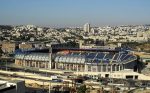
טקס פתיחת משחקי המכביה יערך באצטדיון טדי בירושלים בשישה ביולי. (צילום: Lyulyev Danny)

נבחרת קנדה למשחקי המכביה העשרים תגיע עם למעלה משש מאות ספורטים ותשתתף בשמונה ענפים שונים. והם: כדורגל, טניס, שחייה, כדורעף חופים, טריאלתון, סופטבול, כדור בסיס ורכיבה על אופניים. נבחרות הנוער והצעירים של קנדה למכביה יתחרו בשלושה ענפים: כדורסל, כדורגל והוקי.

כוכב נבחרת הבוגרים הקנדית הוא ג’וש בינשטוק (בן השלושים ושש) שנחשב לשחקן כדורעף החופים מהטובים בעולם, ומיקומו הוא תשע בטבלה העולמית. הוא השתתף כבר בשתי מכביות ונשא את הדגל הקנדי בטקס פתיחת המכביה הקודמת. בינשטוק זכה פעמיים באליפות של קנדה למשחקי כדורעף חופים. יש סיכוי שגם ברון נוסבאום (בן העשרים וארבע) שנחשב לכוכב חדש בכדורעף החופים של קנדה, יגיע אף הוא למכביה בישראל. נוסבאום הגיע למקום השלישי באליפות העולם עד לגיל 19.

בין הספורטאים מוונקובר ניתן למנות את כריסטופר קייפ (בן הארבעים וארבע) שישתתף בריצת חצי מרתון במכביה. קייפ שהחלים מניתוח קשה לפני כחצי שנה מקווה להשיג תוצאה מכובדת בריצה של שעה ו-45 דקות.

ספורטאי בולט נוסף בנבחרת הקנדית הוא המתאבק משה קליימן. הוא הספורטאי הקנדי הראשון שגדל והתחנך בישיבה. קליימן שגר באינגלווד שבניו ג’רסי משמש מאמן כושר במקצועו. הוא נעזר בתרומות מהציבור למימון נסיעתו לישראל.

image - Maccabiah 2017 logoהמכביה העשרים תתקיים בין הארבעה בחודש יולי ל-18 ביולי, ומרבית המשחקים מטבע הדברים יערכו בירושלים. מדובר במכביה הגדולה ביותר שנערכה אי פעם וישתתפו בה למעלה מעשרת אלפים ספורטאים וכעשרים ושתיים אלף מלווים (בהם חברי משפחה וחברים, חברי משלחות של שמונים מדינות מרחבי העולם. בסך הכל יתקיימו כשלושת אלפים תחרויות בארבעים ושבעה ענפי ספורט שונים (בהם: כדורגל, כדורסל, טניס, אתלטיקה, כדור בסיס, רכיבה על אופניים, הוקי, שחייה, ג’ודו, קט-רגל, קארטה, גולף, טריאלתון, סופטבול וכדורעף). במכביה יוענקו אלפיים ומאה מדליות מזהב, כסף וברונזה לספורטאים המצטיינים.

טקס פתיחת משחקי המכביה יערך באצטדיון טדי בירושלים בשישה ביולי, וכן טקס הסיום יתקיים בו ב-17 בחודש. תחרויות המכביה יערכו בכל רחבי הארץ אך מרביתם יתקיימו כאמור בירושלים, בסימן חמישים שנה לאיחוד העיר (לאור החלטת ממשלת ישראל). משחקי הנוער והצעירים של המכביה בהשתתפות כשלושת אלפים בני נוער יערכו כולם במתחם הספורטן בחיפה.

ממשלת ישראל העבירה עשרים ושישה מליון ש”ח למימון משחקי המכביה העשרים, כאשר תקציב השיווק של האירוע יעמוד על 5.5 מיליון שקל. יו”ר מכבי התנועה העולמית הוא יאיר המבורגר, מנכ”ל מכבי התנועה העולמית הוא אייל טיברגר, יו”ר המכביה העשרים הוא עו”ד אמיר פלד, יו”ר הטקסים והאירועים של המכביה הוא נעם סמל ומנהל הקריאייטיב של המכביה הוא איתי בלאיש.

את לפיד משחקי המכביה העשרים זכה להזניק הג’ודאי הישראלי אורי ששון (שזכה במדליית ארד במשחקים האולימפיים שנערכו בריו דה ז’ניירו אשתקד). הוא העניק את הלפיד לנשיא ראובן ריבלין ב-26 בחודש דצמבר. אחרי האירוע בבית הנשיא בירושלים יצא הלפיד למסע בן שישה חודשים שיסתיים בטקס הפתיחה של המשחקים, כאמור באצטדיון טדי בשישה ביולי.

מכבי התנועה העולמית מקיימת את המכביה מדי ארבע שנים מאז שנת 1932. מדובר במפעל הציוני-יהודי בתחום הספורט הגדול ביותר בעולם. בתנועה העולמית חברים כארבע מאות אלפי חברים משישים מדינות שונות.

יצויין כי שלושת הקריטריונים המהותיים המאפשרים לספורטאים להשתתף במכביה הם: לפחות אחד מההורים הביולוגים של הספורטאי הוא יהודי. המשתתף לא פעיל בשום דת אחרת מלבד היהדות. אם המשתתף התגייר התהליך נעשה רק על ידי אחד מהמוסדות המוכרים.

Format ImagePosted on May 30, 2017May 30, 2017Author Roni RachmaniCategories עניין בחדשותTags Israel, Jerusalem, Maccabiah Games, ירושלים, ישראל, משחקי המכביה
This week in Israel … May 26/17

This week in Israel … May 26/17

U.S. President Donald Trump and First Lady Melania Trump lay a wreath during a visit to Yad Vashem, the World Holocaust Remembrance Centre, on May 23. (photo from IGPO via Ashernet)

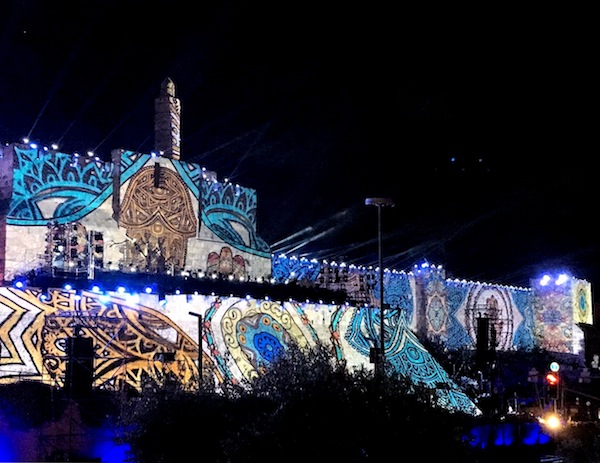
photo - On May 21, Israel celebrated 50 years since the reunification of Jerusalem. The images projected on the Old City Wall were part of the festivities
On May 21, Israel celebrated 50 years since the reunification of Jerusalem. The images projected on the Old City Wall were part of the festivities. (photo from Ashernet)
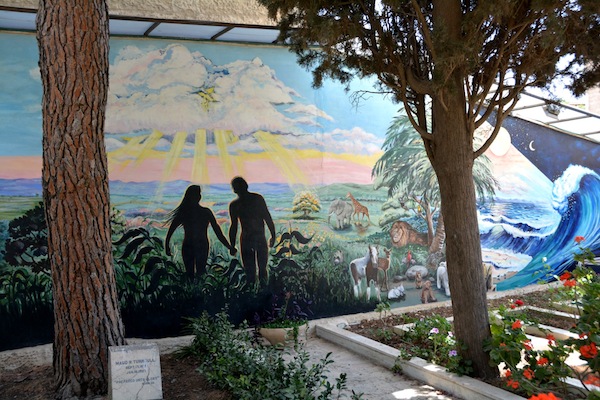
photo - A mural by Patricia Solveson depicting the Garden of Eden adorns the wall of the Alliance Church International Cemetery in Jerusalem’s Emek Refaim neighbourhood, also known as the German Colony because, in the latter part of the 19th century, many German Templers lived in this part of the city
A mural by Patricia Solveson depicting the Garden of Eden adorns the wall of the Alliance Church International Cemetery in Jerusalem’s Emek Refaim neighbourhood, also known as the German Colony because, in the latter part of the 19th century, many German Templers lived in this part of the city. (photo from Ashernet)
Format ImagePosted on May 26, 2017May 24, 2017Author Edgar AsherCategories IsraelTags Israel, Jerusalem, Patricia Solveson, Trump

Jerusalem, the Eternal City

Today I arose early and took a few minutes to look at the pearly dawn through my bedroom window. A bit later, I walked to the nearest grocery store and bought fresh bread for breakfast before I began my work day. All trivial, mundane things? Yes, but there is a difference, for I was doing them in Jerusalem.

No matter what ordinary events shape my day, the fact that they are happening here, in the Eternal City, somehow endows them with an extra dimension.

Jerusalem got its name because it has been the city of the Jewish people since the days of King David and his son Solomon, who built the First Temple here. Generation after generation continues to pray: “If I forget thee, O Jerusalem, may my right hand lose its cunning.” Devout Jews the world over turn towards Jerusalem three times a day in prayer, as the focus of their longing.

Five thousand years ago, a group of settlers chose to make their homes on the steep ridge called the Ophel, south of today’s Old City. Two thousand years later, David captured it from the Jebusites and, by bringing the Holy Ark here, he established forever its sanctity for Jews.

Jerusalem’s history spans 4,000 years. In 2000 BCE, Abraham offered his son Isaac for a sacrifice on Mount Moriah – ready to carry out the ultimate renunciation until the angel stayed his hand. A thousand years later, David captured the city and, from 961 BCE to 922 BCE, Solomon constructed the First Temple. In 537 BCE, Jews returned from Babylon, where they had been exiled by Nebuchadnezzar and, in 517 BCE, the Second Temple was completed. After that, Alexander the Great took the city and then Antiochus ruled it, until the Maccabees liberated it. In 63 BCE, Pompey captured Jerusalem and, over a period of 33 years, Herod reconstructed the Second Temple.

Jerusalem’s history continued to be a story of conquest and destruction by a chain of occupiers lusting for this precious jewel: the Romans, the Greeks, the Crusaders, the Mamelukes, the Ottoman Empire, the British Mandate, the Jordanians … a succession of nations who wanted to rule this battle-worn city that possesses no material riches – no gold, no precious metals, no minerals, no oil, nothing to enrich their coffers. So what does it possess?

I don’t know the answer but, in 1907, Hermann Cohen, in his Religiose Postulate, put forward the idea that they had no choice: “All nations, without exception, must go up with the Jews towards Jerusalem.”

Prior to that, in 1882, Peretz Smolenskin wrote, in Nekam Brith, a prophecy about its conquerors: “This shall be our revenge; we shall quicken what they shall kill and raise what they shall fell…. This is the banner of vengeance which we shall set up, and its name is – Jerusalem.”

Jews and non-Jews alike have always felt a magnetic pull towards the Holy City. It is written in Midrash Tehillim 91:7: “Praying in Jerusalem is like praying before the Throne of Glory, for the gate of heaven is there.” Every Jew who prays at the Western Wall feels an unusual closeness to G-d. Judah Stampfer, in his book Jerusalem has Many Faces (1950), expressed it poetically: “I have seen a city chiseled out of moonlight / Its buildings beautiful as silver foothills / While universes shimmered in its corners.”

There are many enchanting cities in the world, and I have visited many – Venice, Avignon, Bruges, Hong Kong, Paris, all have a magic that transforms the senses. Yet there is something extra in Jerusalem that I simply can’t define. It is a beautiful city, but there are many that exceed it. It is dignified, ancient, historic – all adjectives that can be applied to other cities, like London and Rome. Jerusalem, however, is an emotion, a state of mind even more than a place. It arouses dormant passions. It nurtures the soul. It is spiritual and inspiring.

To call Jerusalem home for the past 46 years is, for me, an enormous privilege. I am always aware of the history under my feet. I never forget the nameless heroes who fought to retain it for the Jewish people. And so, let us pay homage to the Maccabees, to those who withstood the Crusaders and Saladin and the Ottomans. And, in our own time, our Jewish soldiers who reunited Jerusalem in the Six Day War in 1967, 50 years ago. So many heroes, who made the ultimate sacrifice so that those of us in Jerusalem today could live out our lives in the Eternal City.

Dvora Waysman is the Australian-born author of 14 books. She came with her family to live in Jerusalem in 1971. She can be contacted at [email protected] or through her blog dvorawaysman.com.

Posted on May 12, 2017May 9, 2017Author Dvora WaysmanCategories Op-EdTags Eternal City, Israel, Jerusalem, Judaism
Wrestling with complexities

Wrestling with complexities

In Wrestling Jerusalem, which is at Chutzpah! March 1 and 2, Aaron Davidman tries to understand the complexities of the Israeli-Palestinian conflict. (photo by Ken Friedman)

Most of us have an opinion on the Israeli-Palestinian conflict. But how many of us have listened to others’ perspectives, really considered them and tried to understand them? Aaron Davidman has. And he will share his emotional and thought-provoking journey with Chutzpah! Festival audiences March 1 and 2.

Written and performed by Davidman, Wrestling Jerusalem, directed by Michael John Garcés, is Davidman’s personal journey, as an American Jew, to understand a situation that is often polarizing and over-simplified. The play gives voice to 17 different characters – all performed by Davidman – who represent the breadth, depth and complexity of the conflict; its political, religious and cultural aspects.

As personal as it is, however, Davidman was commissioned to write the play by Ari Roth, who, in 2007, was the artistic director of Theatre J, which is based in Washington, D.C. After 18 years with Theatre J, Roth founded Mosaic Theatre Company, also in Washington, in 2014, and is still its artistic director.

“He asked me to write a solo performance piece investigating the deaths of Rachel Corrie and Daniel Pearl and reflect on the public conversation in America about the Israel-Palestine issue,” Davidman told the Independent about the commission. “The play started there and, as I developed it, it became much more personal and those two subjects no longer relevant to my investigation, which became about the multiple perspectives and competing narratives at the heart of the conflict.”

Davidman is not only a playwright and actor, but also a director and producer. He received a master of fine arts in creative writing and playwriting from San Francisco State University and is a graduate of the University of Michigan; he received his theatrical training at Carnegie Mellon University.

Davidman was raised in Berkeley, Calif., he said, “by Jewish-identified but not religious parents, with a social justice context.”

In an interview with CJN, when Wrestling Jerusalem had its Canadian première in Toronto in November, Davidman said he “fell in love with Israel as a Jewish homeland” when he first visited the country, in 1993, at age 25. “I spent six months living there and had a really incredible spiritual and Jewish identity-forming experience. That story is in the play,” he told CJN.

In the process of researching, writing and performing Wrestling Jerusalem, Davidman told the Independent, “My views about the importance of engagement have deepened, as has my conviction that understanding the ‘other’ is a vital part of the process of reconciliation.”

The play, which premièred in 2014, has also been made into a feature film, directed by Dylan Kussman, which was released in 2016.

“The transcendent themes of the piece remain front and centre now more than ever in a world that is growing only more polarized,” said Davidman. “This piece stands for understanding multiplicity and complexity as humanity’s best chance to live together.”

To facilitate understanding, talk-backs often take place after performances.

“We try to have community conversation – I prefer that term to ‘talk-back’ – after performances and screenings because the piece opens people up,” Davidman said. “They’ve just had a fairly unique experience concerning this topic and there is hunger to process it. It’s a densely written piece and unpacking it and allowing people to hear where they each are coming from in response has proven to be very useful and moving.”

As for advice for people wanting to try and move the public – or even personal – discussion to a more nuanced or empathetic space, Davidman said, “Listen deeply. Don’t know so much. Try to connect.”

Wrestling Jerusalem is at Rothstein Theatre March 1-2, 8 p.m., with audience conversations after both performances, featuring Rabbi Dan Moskovitz of Temple Sholom and Aaron Davidman. For tickets ($29.47-$36.46), call 604-257-5145 or visit chutzpahfestival.com. The festival’s other theatre offering combines Cree storytelling, Chekhovian character drama and comedy, performed by Edmonton-based, award-winning improv troupe Folk Lordz – Todd Houseman and Ben Gorodetsky of Rapid Fire Theatre – on Feb. 22, 8 p.m., at Rothstein Theatre. The festival also features dance, music and comedy.

Format ImagePosted on February 10, 2017February 8, 2017Author Cynthia RamsayCategories Performing ArtsTags Chutzpah!, Israeli-Palestinian conflict, Jerusalem, peace

Unite in acts of chesed

May 24, 2017, marks the 50th anniversary of a united Jerusalem. In honor of this occasion, the Afikim Foundation, in cooperation with the Israel Ministry of Diaspora Affairs, is launching the Jerusalem50 Global Unity Torah, a global movement that celebrates a reunited Jerusalem with acts of kindness.

“The Global Unity Torah will provide Jews worldwide an unprecedented communal platform to do good and inspire goodness in others,” said Rabbi Raphael Butler, founder of the Afikim Foundation. To purchase a letter, the currency is not in dollars but in acts of kindness.

Individuals and families from all walks of Jewish life will unite with organizations, congregations, agencies, schools and Jewish groups from all corners of the globe to “purchase” their letter(s) in the Torah with acts of chesed (kindness).

With an interactive site in five languages, jerusalem50.org, a social media campaign, pamphlets designed and published in five languages, wall hangings of the sites of Jerusalem set to display in communities around the world, and a traveling exhibition on Jerusalem, the Jerusalem50 movement is set to launch.

“As an innovative incubator, Afikim is where profound Jewish ideas take flight, and we envision Jerusalem50 having a poignant and lasting impact on the Jewish people,” said Butler. “By using kindness as an impetus for change and Jerusalem as a uniting factor, we can transform our world.”

For more information on the Afikim Foundation, visit afikimfoundation.org.


Posted on December 9, 2016December 7, 2016Author Afikim FoundationCategories WorldTags chesed, Jerusalem, tikkun olam
Where David fought Goliath

Where David fought Goliath

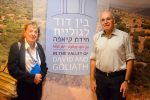
The author, Sybil Kaplan and Prof. Yosef Garfinkel at the opening of the exhibit In the Valley of David and Goliath, now at Bible Lands Museum in Jerusalem. (photo by Barry A. Kaplan)

“As the Philistine moved closer to attack him, David ran quickly toward the battle line to meet him. Reaching into his bag and taking out a stone, he slung it and struck the Philistine on the forehead; the stone sank into his forehead, and he fell face down on the ground. So, David triumphed over the Philistine with a sling and a stone; without a sword in his hand, he struck down the Philistine and killed him.” (1 Samuel 17:48-50)

Most of us have read or heard the story of David and Goliath, and some of us have even visited where the battle took place. But now we all have the chance to learn more. On Sept. 5, In the Valley of David and Goliath opened at Bible Lands Museum in Jerusalem. Presented to the public for the first time, the exhibit will be on display until September 2017.

Khirbet Qeiyafa (Fortress of Elah), 20 miles southwest of Jerusalem, on top of a hill overlooking the Valley Elah, was excavated by Prof. Yosef Garfinkel from 2007 to 2012. Garfinkel is the Yigael Yadin Chair in Archeology of Israel at Hebrew University and director of excavations at Khirbet Qeiyafa.

This fortified city was across from Gath, the Philistine city where Goliath lived when he came out to face the Israelites. The evidence indicates that the city was a military outpost for the House of David. In David’s day, the Valley of Elah served as a neutral zone between the Israelites and the Philistines. Excavators discovered a large cache of weapons in Qeiyafa, which Garfinkel identifies as “an area of conflict between two political units.”

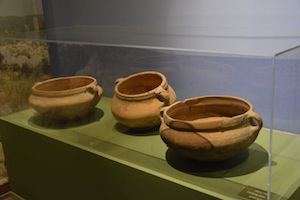
photo - Cooking pots were among the many items on display
Cooking pots were among the many items on display. (photo by Barry A. Kaplan)

Based on carbon-14 dating performed on 28 olive pits, archeologists believe the city lasted from 1020 to 980 BCE. Items found at the site strengthen the connection to King David and religious practices described in the Bible. As well, according to Garfinkel, this Iron Age town was described in the Bible as the location of the battle between David and Goliath 3,000 years ago.

In an interview with Erin Zimmerman for CBS News in 2013, Garfinkel maintained that Khirbet Qeiyafa was a Jewish city for four reasons.

“It has a big casement city wall and houses abutting the city wall,” he said. “This is known from four other sites, so now we have five sites. All these five cities are in Judah, none of them is in Philistia. This is really typical Judean urban planning.”

Second, the bones found in the city all come from kosher animals.

“We have sheep, goat, cattle, but we have no pigs and no dogs,” he said. “On the Philistine side, they consume pigs and also dogs. Up to 20% of the animal bones at Philistine sites are pigs, but here, nothing.”

And, according to Garfinkel, a found pottery shard, also known as an ostracon, is the earliest example of Hebrew writing ever unearthed. On it are written commandments to worship the Lord and to help widows, orphans and slaves.

“It started with the word ‘al ta’as,’ which means ‘don’t do,’ and ‘ta’as,’ ‘to do,’ is only in Hebrew. It’s not Canaanite and not Philistine,” he explained.

Finally, Garfinkel said the absence of idols – which would have been in abundance in other places – points to a Jewish city.

“If you go to Canaanite temples of the Late Bronze [Age], you will find a lot of human and animal figures, but not in Khirbet Qeiyafa. So, the people here really obeyed the biblical taboo on graven images,” he said.

Garfinkel pointed out that, “in the absence of idols, there were religious shrines, and the models predate Solomon’s Temple by about 40 years, yet they match the Bible’s description of the Temple, down to the triple-framed doors. They’re the first physical evidence of Jewish worship in the time of King David.”

Part of the exhibit at the Bible Lands Museum are the two inscriptions that were found – one on a jar and one inscribed with ink on a pottery shard – which contain the distinctly identifiable Hebrew words for “king,” “don’t do” and “judge.”

Among the other objects on display are storage jars, water basins, a model of a house, hundreds of pottery vessels, jar handles with finger impressions, cooking pots and jugs, and the bowl that contained the olive pits.

Most amazing is a stone model shrine, which reflects a Mesopotamian architectural-style before the era of King David, but which probably inspired the look of the palace built by Solomon, David’s son. Features of the model are mentioned in biblical references to King Solomon’s Temple, built decades later.

For Hebrew-speakers traveling to Israel in the near future, exhibit curators will be giving behind-the-scenes tours in Hebrew on Oct. 7, Nov. 11 and Dec. 16.

Sybil Kaplan is a journalist, foreign correspondent, lecturer, food writer and book reviewer who lives in Jerusalem. She also does the restaurant features for janglo.net and leads walks in English in Jerusalem’s market.

Format ImagePosted on September 23, 2016September 21, 2016Author Sybil KaplanCategories Israel, TravelTags archeology, Jerusalem, Khirbet Qeiyafa, museums
Jerusalem’s French aspects

Jerusalem’s French aspects

Salt print of Adolphe Crémieux, December 1856, by Nadar (1820-1910), from the J. Paul Getty Museum. (photo from Wikimedia Commons)

While Jerusalem’s French connection thankfully lacks the violence and crime of the 1971 movie by the same name, both the film and real-life “French” Jerusalem have one thing in common: both expose us to off-the-beaten-track sites. Take a look at what you’ll find in Jerusalem.

The Israel Museum (11 Ruppin Blvd.) has amazingly reassembled an original 18th-century French salon called the Rothschild Room. (All that’s missing is the fancily dressed smart-set listening to a book or music recital.) It also has an impressive collection of French impressionist and post- impressionist painters, such as Pierre-Auguste Renoir, Camille Pissarro, Edgar Degas,

Alfred Sisley, Claude Monet, Paul Cézanne, Paul Gauguin and Henri de Toulouse-Lautrec, as well as works by earlier French artists such as François Boucher.

Speaking of paintings, 120 years ago, Count Marie Paul Amédée de Piellat painted Crusader-related images on the wall of what is today known as Jerusalem’s French Hospice, a non-denominational facility for the terminally ill. Painted in fresco-style, they were recently uncovered during a routine repair.

First built some 130 years ago as St. Louis Hospital – after the same King Louis IX who was responsible for broadening the Inquisition and burning Talmuds – it stands at 2 Shivtei Yisrael St. Around the corner from the hospice is the Romain Gary French Institute of Jerusalem, which promotes French culture by means of French-language courses, a French-language library and a media and entertainment space.

Romain Gary was a Second World War pilot, French diplomat and filmmaker, but was best known for his prolific writing. He won literary prizes using various pen names. Born to Jewish parents, his mother had him baptized a Catholic. Oddly, he had a large menorah at the foot of his bed when he shot himself dead.

Jerusalem’s Ratisbonne Monastery – built in the late 1880s, in Rehavia, 26 Shmuel HaNagid St. – is named after two French Jewish brothers who converted to Catholicism and made it their mission to have Jewish children follow in their “way.” Just before Israel declared statehood, 60 children from Kfar Etzion were safely evacuated to the monastery before the kibbutz fell. Most of the kibbutz defenders, however, were killed in the fighting. During the period in which the Jordanians blocked Hebrew University’s Mt. Scopus campus, the Ratisbonne Monastery served as the school’s law faculty.

Today, the monastery is an international theological school for those studying for the Catholic priesthood.

Several Jerusalem streets are named after French personalities who were either themselves Jewish or had connections to Jews. Centrally located Emile Botta Street is named after the French consul in Jerusalem during the Ottoman rule. The 90-year-old Pontifical Biblical Institute stands on this street. This facility has been in the news lately, as an Egyptian mummy belonging to the institute is currently on exhibit at the Israel Museum.

Emile Zola Street in the German Colony honors the outspoken journalist who defended Captain Alfred Dreyfus’ innocence. In a Jan. 13, 1898, letter (J’accuse!) to the French president, Zola publicly charged the French government and army with suppressing the true story behind Dreyfus’ arrest. Zola himself paid a high price for his bravery; he fled to Britain to avoid prison, only to die there suddenly and suspiciously from carbon monoxide poisoning.

Located near Emile Zola Street is Adolphe Crémieux Street. Crémieux was a Jewish lawyer, statesman, staunch defender of human rights (both of Jews and slaves) and the founder, in 1860, of the Alliance Israélite Universelle; four years later, he served as its president. Unfortunately, the Alliance vocational school no longer stands, but you can still see approximately where the gate was on Jaffa Road, in front of the site’s successor, the Clal Building.

Crémieux did much to better the conditions of the Jews in France. In 1827, he advocated the repeal of the Oath More Judaico, a piece of stigmatizing legislation left over from pre-revolutionary France. Crémieux apparently brought about the abolition of the oath when he defended Rabbi Lazard Isidor. The rabbi – who went on to become France’s chief rabbi – had refused to take the antisemitic oath and was charged with contempt of court. Crémieux got him acquitted. On March 3, 1846, the French Supreme Court finally declared the oath illegal.

Crémieux was likewise involved in defending Saratov (Russia) Jews facing charges of blood libel. For his instrumental assistance in bringing about the end to slavery in the French colonies, Crémieux was nicknamed the “French Abraham Lincoln.”

In recent years, Crémieux Street drew significant attention when police investigated former prime minister Ehud Olmert for the suggested favorable terms he received on the purchase of a home on this street, in exchange for help rendered to the contractor who sold it to him. The National Fraud Unit ultimately advised that there was not enough evidence to proceed with criminal charges against Olmert in the “Crémieux Street affair.”

Frederic Chopin Street is named for the well-known, Polish-born, French composer and pianist. Probably not coincidentally, this Talbiya street is the site of the Jerusalem Centre for the Performing Arts. Six halls serve as regular venues for music and dance concerts, dramatic performances and films.

Located in an ultra-Orthodox neighborhood, Estori Haparhi Street is named after the first topographer of the land of Israel. Haparhi’s family lived in Provence, but was expelled from France, along with the rest of the medieval Jewish population. Following this expulsion, he made aliyah and frequently preached the necessity of settling in the Holy Land. While making his living as a doctor, he wrote a book citing the biblical and halachic borders of Israel. He claimed that the Arabic names of numerous towns and villages reflected their Jewish textual names.

Speaking of medieval France, the Jerusalem municipality named three Mekor Baruch neighborhood streets after medieval Jewish scholars, Rashi and his two grandsons, the Rashbam and Rabenu Tam.

Neve Yaakov’s Gamzon Street recognizes the French resistance work of Robert Gamzon. In wartorn France, he set up an underground for issuing false identities to children and young adults. With these papers, they were able to escape France. Gamzon went on to fight in Israel’s War of Independence and to do research at the Weizmann Institute.

Talpiot’s Marie-Pierre Koenig Street commemorates the bravery and leadership of the French general who headed the Free France forces in the Second World War and took part in the D-Day landing. During the war, Koenig let members of the Jewish Brigade fly the blue and white flag, in defiance of British orders banning such action. Even after becoming the French minister of defence, Koenig remained an advocate of the new state of Israel.

For a general understanding of how the Holocaust affected French Jewry – including the critical assistance provided by French Jewish underground workers – plan a physical, or at least a virtual, visit to Yad Vashem (yadvashem.org). France’s recognition of Jewish defence was short-lived, however. Following the Six Day War, France embargoed its Mirage fighter jet. This forced Israel to develop the Kfir jet, and a street named HaKfir reflects Israel’s decision to go blue and white.

Deborah Rubin Fields is an Israel-based features writer. She is also the author of Take a Peek Inside: A Child’s Guide to Radiology Exams, published in English, Hebrew and Arabic.

Format ImagePosted on September 23, 2016September 21, 2016Author Deborah Rubin FieldsCategories Israel, TravelTags France, Israel, Jerusalem, tourism
From the Mamluks to today

From the Mamluks to today

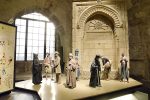
suleiThe above display at the Tower of David Museum shows a variety of characters typical of Jerusalem in the 19th century in front of a fountain. Jerusalem’s water system was restored during the rule of Sultan Suleiman the Magnificent; fountains (sabils) were built throughout the city, providing water to its residents and to visitors for generations. (photo by Hamutal Wachtel courtesy of Tower of David Museum Jerusalem)

Running water is still a luxury. For most of history – and still in many parts of the world – there has been a constant struggle to locate and maintain water resources. Certainly, this has been the history of inland Jerusalem, which, for thousands of years, has been important to merchants, travelers, pilgrims, politicos and residents alike.

When the Egyptian Mamluks came to Jerusalem in the middle of the 13th century, they found the public water system in need of rehabilitation. To relieve the weary and the thirsty, Mamluk rulers constructed a series of sabils, or free public drinking fountains.

Perhaps the Mamluks repaired or built these esthetically pleasing drinking and washing (i.e. Muslim ablution) facilities out of a heightened sensitivity to the under-privileged. The Mamluks themselves apparently began as young captured or bought slaves, forced to fight, especially in Egypt. While they did not establish social welfare ministries, the Mamluks nevertheless gave alms to ensure water, food, medical care and even (madrasa) education for the poverty-stricken.

The Sabil al-Shurbaji demonstrates this charitable approach. Abed al-Karim al-Shurbaji, the sabil’s endower, was an apparently wealthy Jerusalem resident who lived at the end of the 17th century. In 1686, he had the following welcoming, non-denominational inscription installed on his fountain: “Abed al-Karim al-Shurbaji built the sabil so that thirsty people might drink, hoping through this deed for reward, blessing and charity from Allah the Glorious. Beloved respectful one, set out to date it, and say [it is] a drink from Paradise or a spring.”

In addition to providing regular water flow for his sabil, al-Shurbaji built a cistern nearby in order to have water during droughts. The commissioned sabil was actually a single room with a double window on the northern side, covered by a shallow pointed dome. Compared to the ornate designs ordered by earlier Mamluk rulers, Sabil al-Shurbaji’s architecture is simple.

According to Dr. Avi Sasson, Jerusalem had some 30 sabils, from the nucleus of the Temple Mount to the surrounding city and beyond. Suleiman the Magnificent – sultan from 1520 to 1566 – built all his sabils at street intersections and at central sites around Haram esh-Sharif, the Temple Mount. Medieval sabils were built on the Temple Mount. Starting in the early Ottoman period, sabils began to spread into the city, following housing development outside the Old City walls.

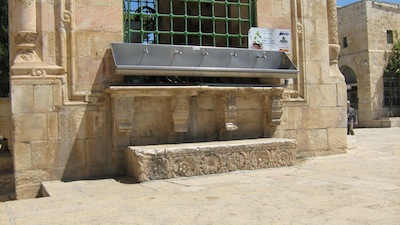
photo - Sabil Qaitbay (Fountain of Qayt Bay)Sabils appeared in three forms: built into a wall; free-standing, sometimes looking like a kiosk; and stylized tanks that required refilling, as they had no constant source of water. In the first two types of sabils, the drinking water came from reservoirs, cisterns or aqueducts. Exquisitely chiseled, these stone fountains sometimes incorporated carved items from other sites, such as the Roman – Prof. Dan Bahat says Crusader – sarcophagus or stone coffin used as a trough at Sabil Bab al-Silsila (Fountain of the Chain Gate), or the Crusader door frame on the Harem’s (1482 CE restored) Sabil Qaitbay (Fountain of Qayt Bay).

photo - The Mamluks’ Sabil Qaitbay (Fountain of Qayt Bay), located on the Temple Mount, was built in the 15th century. Note the contrast between the modern metal trough and the ornate Crusader stone door fixture used as a step
The Mamluks’ Sabil Qaitbay (Fountain of Qayt Bay), located on the Temple Mount, was built in the 15th century. Note the contrast between the modern metal trough and the ornate Crusader stone door fixture used as a step. (photos by Deborah Rubin Fields)

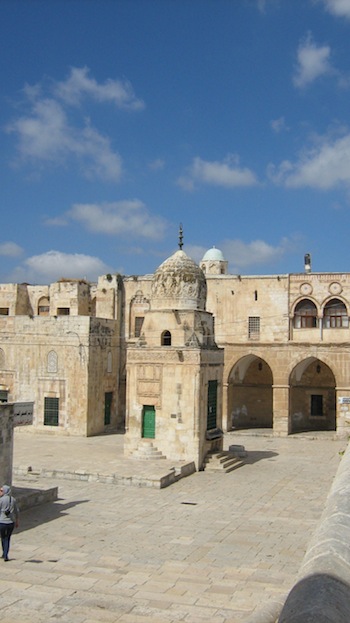
While researchers know of the existence of 10 sabils on the Temple Mount, Sabil Qaitbay is one of two sabils on the Temple Mount noted for its unique shape. The 1482 CE fountain – which is actually the rebuilding of an earlier sabil of Mamluk Sultan Saif al-Din Inal – has an ornately carved stone dome. Highly stylized Quranic inscriptions run along the top of the structure. Lacking its own water source, the fountain required refilling. The entrance to the fountain structure was from a set of rounded stone stairs on the east side.

The eight-sided Sabil Qasim Pasha originally got its water from an aqueduct. Water streamed from openings in the marble slabs. Today, the sabil gets its water piped in from the al-Aqsa Mosque water system.

Suleiman the Magnificent’s sabils are probably the best known. In the past year, the Jerusalem Municipality has restored Suleiman’s Sabil Birkat al-Sultan. The sabil’s stones are now clean and there are spouts for drinking fresh water. Runners in Jerusalem’s Marathon this year could stop at this 480-year-old fountain to quench their thirst.

According to a 2009 article in Sustainability by Jamal Barghouth and Rashed Al-Sa’ed, documents show that early in the Mamluk period, Baibars (in 1267 CE) and Mohammad Ibn Qalawun (in 1327 CE) conducted water restoration projects. Rulers, however, soon discovered that keeping Jerusalem water flowing was a demanding job.

Upset over their lost income, private water carriers not infrequently sabotaged the aqueduct along its Judean Desert edge. In addition, south of Jerusalem, farmers diverted the water flow to irrigate their fields. To protect the water, rulers stationed guards and soldiers along the line, but that did not totally stop daring water thieves. Even the severe punishments for those caught tampering with the water system did not completely deter people. Eventually, the Ottomans proposed a different tack: in exchange for leaving the line alone, farmers and towns were given tax breaks.

Accumulated waste material in the open-air aqueduct eventually caused complete blockage. Suleiman the Magnificent reportedly cleaned the aqueduct and undertook many other restoration activities. Later Ottoman rulers were left to instal a closed line.

Eventually, however, the Ottomans abandoned the whole system, forcing Jerusalemites to draw water from wells and local pools until the eventual British Mandate installation of a modern water system. While the Gihon Water Company, established in 1996, lacks the artistic and charitable sense of early sabil builders, it nevertheless reliably supplies fresh water, as well as sewage and drainage services, to about a million people, including Jerusalem residents and those living in Abu Ghosh and Mevaseret Yerushalayim.

Deborah Rubin Fields is an Israel-based features writer. She is also the author of Take a Peek Inside: A Child’s Guide to Radiology Exams, published in English, Hebrew and Arabic.

Sources (further reading)

  • Poverty and Charity in Medieval Islam: Mamluk Egypt, 1250–1517 by Adam Sabra (2006), part of Cambridge Studies in Islamic Civilization
  • “Sabils (Water Fountains) of Jerusalem from the Medieval Period to the Twentieth Century” by Avraham Sasson in Water Fountains in the Worldscape (2012), edited by Ari J. Hynynen, Petri S. Juuti and Tapio S. Katko, published by International Water History Association and KehräMedia Inc.
  • “Sustainability of Ancient Water Supply Facilities in Jerusalem,” by Jamal M. Barghouth and Rashed M.Y. Al-Sa’ed in Sustainability 1(4) (2009)
  • Jerusalem of Water: The Supplying of Water to Jerusalem from Ancient Times until Today by Yad Ben Zvi for HaGihon Water Company Ltd. (in Hebrew)
Format ImagePosted on June 24, 2016June 22, 2016Author Deborah Rubin FieldsCategories IsraelTags Egypt, fountains, Israel, Jerusalem, Mamluk, sabil, Suleiman
Jerusalem in photographs

Jerusalem in photographs

The Dome of the Rock in the snow, 1940s. (photo by Moshe (Nicolas) Schwartz / Schwartz Collection, Bitmuna)

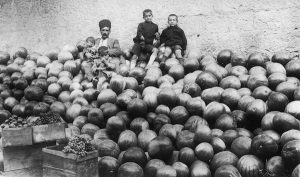
photo - Watermelons, undated
Watermelons, undated. (photo by Elia Kahvedjian)

Jerusalem is one of the most photographed places in the world. The Camera Man: Women and Men Photograph Jerusalem 1900-1950 exhibition at the Tower of David Museum highlights the unique and complex human and cultural heritage of the city. It also offers, for the first time, a comprehensive look at the photographic work in Jerusalem of Christians, Jews and Muslims between the years 1900 and 1950.

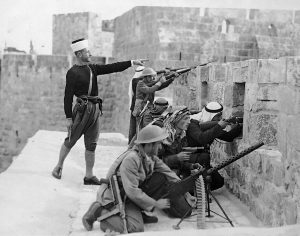
photo - Arab fighters on the walls of the Tower of David
Arab fighters on the walls of the Tower of David. (photo by Chalil Rissas / The Central Zionist Archives)

The 34 photographers chosen to be exhibited in The Camera Man lived and worked in Jerusalem during the first half of the 20th century. The photographers come from all different backgrounds – European, Armenian and local, Jewish, Muslim, Christian, men and women. Many photographers recorded the Jerusalem residents of different communities; some were hired by institutions and organizations to photograph various historical events that occurred in the city and some were artists who sought to honor the unique faces of Jerusalem.

What makes this exhibition different from others is that much of the photography that has been displayed before from this time period looks at the young “strong Zionist,” the developing state of Israel, the rural local villages, the posed “Orient,” the “new Tel Aviv.” This exhibition – which includes many photographs that have never been seen before – examines Jerusalem and its colorful mosaic of people, from everyday life to historic events.

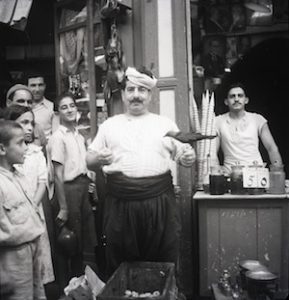
photo - The ice cream seller with his bird, 1940s
The ice cream seller with his bird, 1940s. (photo by Hanna Safieh / Rafi Safieh Collection)

“The juxtaposition of different viewpoints and spheres of activity, placing works by prominent photographers alongside less well-known names, reveals a hitherto untold chapter in the history of photography in the country and in Jerusalem’s own history,” writes exhibit curator Dr. Shimon Lev.

In the mid-19th century, when Europe began to take an interest in the Orient, Jerusalem witnessed an influx of travelers from England, France and, later, from America. At the same time, a new invention was spreading through Europe – the camera – and the newcomers carted their unwieldy photographic equipment with them. The sight of the squalid city was a bitter disappointment to them and clashed with an imagined idea of the Holy City that had prompted their journey to Jerusalem.

The dissonance between the Jerusalem cherished by the heart and the Jerusalem revealed to the eye, between the heavenly and the earthly Jerusalem, and between the ideal and the mundane Jerusalem, still occupies photographers today. Although cameras are now conveniently small and light and exposure times are shorter, today’s photographer still tries to capture his own personal version of Jerusalem, even if it is only a digital self-portrait in front of the Tower of David.

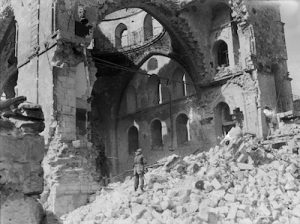
photo - Jordanian soldier at the destruction of the Hurva Synagogue, 1948
Jordanian soldier at the destruction of the Hurva Synagogue, 1948. (photo by Ali Zaarour / Zaarour Family Collection)

In The Camera Man, there are photographs showing action in the streets of Jerusalem from 1948, as well as portraits taken by local photographers who opened up their own photographic stores, most of them along Jaffa Road near Jaffa Gate and the Tower of David. The stores were called photographic houses or photo studios, although the driving spirit between the revival of the Hebrew language, Eliezer Ben-Yehuda (1858–1922), suggested the term ‘“light-painting houses” in Hebrew.

The photographs comprising The Camera Man were collected from private and public archives. The catalogue accompanying the exhibition includes selected photos from the exhibit, several of which are published for the first time, as well as articles by Lev, Dr. Lavi Shai and artist Meir Appelfeld.

The Camera Man is on display until Dec. 10. For more information, visit tod.org.il/en/exhibition/the-photographers.


– Courtesy of 

Format ImagePosted on June 10, 2016June 8, 2016Author Tower of David MuseumCategories Visual ArtsTags history, Israel, Jerusalem, photography
Double tax for affordability

Double tax for affordability

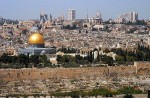
Jerusalem from Mount of Olives. (photo by Wayne McLean via Wikimedia Commons)

For a long time, we have been seeking ways to make Jerusalem more than just the centre of the Jewish people, but also a city revived, with a young, optimistic spirit. We have succeeded in many areas, but a major issue remains: housing prices in many neighborhoods are unaffordable for young people.

With this in mind, the idea of raising the municipal tax came to be, with the goal of addressing this important issue. The first time we went to the government with a proposal to double the municipal tax on “ghost apartments” (empty apartments owned by non-residents) in Jerusalem, we were promptly shown the door: the ministers viewed this measure as potentially damaging for their friends abroad. While we share the deep connection with the very same people abroad, we insisted the move would promote our shared goals of a flourishing Jerusalem. But it is in the nature of good ideas to finally break through all obstacles and for disagreements and misunderstandings to be solved, and eventually the idea was approved.

Not everyone thinks increasing municipal taxes for non-residents is a good idea, but such disagreements are part of a legitimate dialogue between friends. However, I believe we might have lost the context of our shared goals. In my opinion, we’re looking at this all wrong. Instead of viewing the increased taxation as a penalty for homeowners, we need to think about this measure as an opportunity.

Jerusalem is in full bloom. Over the last few years, we have seen much progress in education, culture, tourism and the economy. It has bounced back from politicking, social tensions and terror attacks. Today’s Jerusalem is all about innovation, creativity and optimism. Across all sectors of society, Jerusalemites recognize the inherent value of diversity and coexistence. Jerusalem is a pilgrimage site, home to

Israel’s basketball champions (finally!), a place of wondrous architecture, sacred sites, top-notch museums and world-class restaurants. Everyone wants a part of Jerusalem – not in order to save it, but to take part in its success as a city combining tradition and innovation, religiosity and diversity.

It is this success that has made the beating heart of the Jewish world attractive for investors from the world over. Jerusalem currently has around 9,000 “ghost apartments,” including whole neighborhoods such as Kfar David or Mamilla, at the very core of the city. In the building where I lived until recently, seven out of 11 apartments were only in use for a few days each year. It is sad to see whole sections of the city empty. But it is even sadder to think of the young, dynamic population that won’t be able to afford an apartment in central Jerusalem so long as there is someone who will pay more.

Jerusalem is unlike any other city in the world. It is the fountain of ideology and innovation in the Jewish world. It is a challenge and an opportunity. It enjoys a unique, mutual bond with the Diaspora: connections formed here are of special significance to Jews both home and abroad. The cohort of young leaders being formed in Jerusalem is hard at work trying to create new paradigms.

Many owners of “ghost apartments” have invested time, energy and money in Jerusalem with the best intentions at heart, and have a great share in what has become of the city in recent years. But this phenomenon has driven housing costs to the level where it is nearly impossible for the average young Jerusalemite to buy an apartment, or even rent one at a reasonable cost. These young people will not be able to stay, and that is what gave birth to the idea of doubling municipal taxes for non-residents. Or, as I like to call it, “the pro-affordable housing tax.” This new ordinance is projected to generate around 10 million NIS annually, solely dedicated to creating affordable housing for the city’s young.

Again, this is not a penalty, but an opportunity to take part in one of the great challenges of the contemporary Jewish world – maintaining Jerusalem as a vital, tolerant and dynamic city.

Hanan Rubin is a Jerusalem city councilor and a co-founder of the political movement Wake Up Jerusalem, which focuses on quality of life issues for Jerusalem residents.

Format ImagePosted on February 12, 2016February 11, 2016Author Hanan RubinCategories IsraelTags affordable housing, Jerusalem

Posts pagination

Previous page Page 1 … Page 3 Page 4 Page 5 Next page
Proudly powered by WordPress