Skip to content
  • Home
  • Subscribe / donate
  • Events calendar
  • Business Directory
  • FAQ
  • News
    • Local
    • National
    • Israel
    • World
    • עניין בחדשות
      A roundup of news in Canada and further afield, in Hebrew.
  • Opinion
    • From the JI
    • Op-Ed
  • Arts & Culture
    • Performing Arts
    • Music
    • Books
    • Visual Arts
    • TV & Film
  • Life
    • Celebrating the Holidays
    • Travel
    • The Daily Snooze
      Cartoons by Jacob Samuel
    • Mystery Photo
      Help the JI and JMABC fill in the gaps in our archives.
  • Community Links
    • Organizations, Etc.
    • Other News Sources & Blogs
  • JI Chai Celebration
  • JI@88! video

Recent Posts

  • Federation now across BC
  • Israel fighting for its existence
  • Deal strengthens Iran
  • Patriotic belonging diminishes
  • A campaign to engage
  • Upstanders’ first live event
  • Responding to Carney
  • Having your own home
  • Music a family tradition
  • Musical to warm heart
  • Community milestones … June 2026
  • Sharing her passion for Israel
  • Or Shalom reopens its doors
  • JFS from past to future
  • Need holistic approach
  • Sharing stories, advice
  • Journalist shares fears
  • Skills to live together
  • Road to independence
  • Cutting grass with scissors
  • Zionism as a solution
  • Deceit, desire & the divine
  • Reclaiming sacredness
  • Creative project ideas
  • Summer squares and cobbler
  • Thou shalt … summer commandments
  • Legal help for students
  • Revisiting myth of Lilith
  • Wrong person rebuked
  • Canada’s mixed messages
  • Questions for museum
  • Symposium on antizionism
  • Making soccer political
  • CJPAC lauds Pulver’s impact
  • City recognizes Vrba’s legacy  
  • Organ donation saves lives

Archives

Follow @JewishIndie
image - CJN box ad Rockowers 2026

Tag: Israel

Troubles in leadership

A world leader decries investigations into his possible criminal corruption as an “attempted coup” based on “fabrications and a tainted and biased investigative process.”

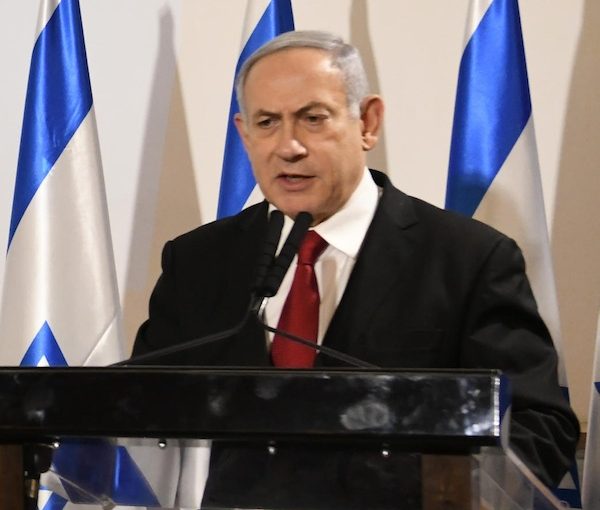
No, not that world leader. This time it is Binyamin Netanyahu, Israel’s prime-minister-by-a-thread. Finally indicted on graft charges after months of anticipation, he became the first Israeli prime minister ever to face charges while in office. He insists the indictment will not impact his leadership, just as the country seems on an irreversible path to a third election in a year.

In a region with a scarcity of free and fair elections, Israel can’t seem to stop having them. From that perspective, things could be worse. Whether Netanyahu’s Likud party stands with him in his time of trouble remains to be seen. The possibility of his departure from the political scene, which he has dominated for nearly a generation, would provide the most significant shakeup of the field and possibly prevent a third inconclusive outcome.

On this side of the ocean, the U.S. House of Representatives continues investigating President Donald Trump. Few people, including Republicans, are making much of an effort to refute the basic facts. Evidence piles upon itself that the U.S. president indeed asked the president of Ukraine for a dirty political favour – a bribe – in exchange for military financial aid that had already been approved by the U.S. Congress. GOP responses to this evidence range from “So?” to the only slightly more nuanced argument that the president of the United States didn’t get what he wanted and the president of Ukraine did, so no harm done.

With Trump seemingly in thrall or somehow beholden to Vladimir Putin, and his party steadfast behind him, we are treated to the spectacle of a party that 60 years ago was trampling over individual liberties based on a largely false suspicion that “the Russians” were infiltrating the country’s government and threatening its entire way of life now responding to a disturbingly similar situation, this one far more provably real, with a shrug.

While Canada, thankfully, has no such level of political intrigue or corruption at the moment, a shocking diplomatic move last week has set the official voices of the Jewish community on edge.

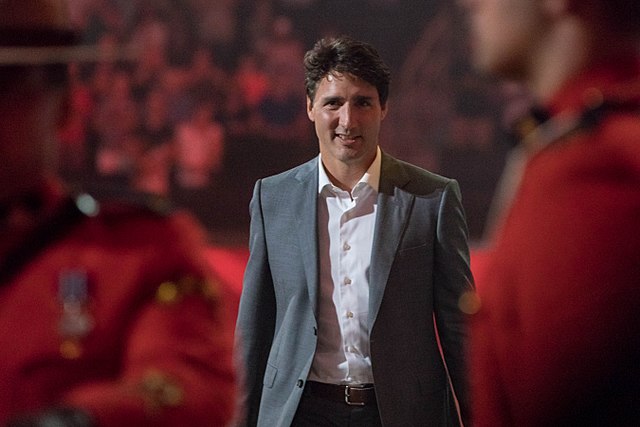
The day before swearing in a new cabinet, the government of just-reelected Prime Minister Justin Trudeau opted to vote at the United Nations General Assembly to condemn all Israeli settlements in the West Bank, jumping on a dogpile led by North Korea, Egypt, Nicaragua and Zimbabwe, none of whom should be arbiters of justice or human rights. To be clear, the vote means almost nothing in practical terms. But symbolism does count. And the vote was a slap in the face by Canada to Israel and those in this country who recognize it as our closest ally in the region for historical, moral and pragmatic reasons.

Some speculate that the shift in tone reflects the new minority government currying favour with the New Democratic Party, which has included some notorious Israel-bashers. That is probably a less likely reason than the campaign by Trudeau to win Canada one of the rotating seats on the United Nations Security Council. Where former prime minister Stephen Harper’s refusal to “go along to get along” in the anti-Israel hatefest that occurs annually at the UN was seen as a key reason we lost out on a seat, Trudeau seems determined to hedge his bets.

A prestigious seat on the Security Council would presumably elevate Trudeau in the eyes of the world after he frittered away the “Canada is back” optimism of four years ago by failing to meet climate targets while bhangra dancing across the world stage.

Regardless of the motive, it is a reprehensible act that could have serious implications for the political orientation of Jewish Canadians in the next few years. Coming as it does while the ink is barely dry on the results of an election in which Liberals mostly made the right noises to Jewish and pro-Israel Canadians, it seems a particularly brutish little dagger to unsheathe now.

Posted on November 29, 2019November 27, 2019Author The Editorial BoardCategories From the JITags Binyamin Netanyahu, Canada, corruption, Donald Trump, Israel, Justin Trudeau, law, politics, United Nations, United States
Operation Black Belt diaries

Operation Black Belt diaries

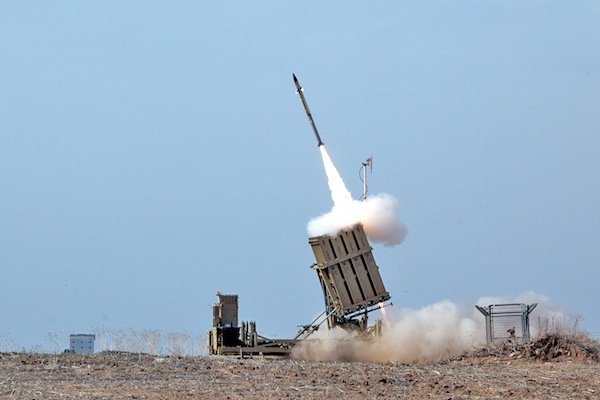
A missile from Israel’s Iron Dome is fired to intercept a missile coming from the Gaza Strip, in November 2012. (photo by Nehemiya Gershuni-Aylho/IDF)

Interesting. Sad. Frustrating. Predictable. Some five years after Operation Protective Edge, there are the same tensions and military conflagrations between Gaza and Israel. As my three-part homefront diaries from 2014 is being printed as a retrospective in the Jewish Independent (see other article on this page), Israel continues to defend itself from indiscriminate missile fire from Gaza. With this diary, I hope to capture the same sense of homefront resilience. From the mundane to the philosophical, this is how I experienced it.

Tuesday, Nov. 12, 2019: Again. A little bit tedious. This business of war. Woke up just after 6 a.m. to a siren. Incoming. Oh well. Time to get up anyway. Just a few hours earlier, Baha Abu al-Ata (try say that while standing on your head) was assassinated in a targeted killing by the Israel Defence Forces. He was a top Palestinian Islamic Jihad (PIJ) commander in Gaza.

Not much later, a text message from the school district. School canceled. My daughter happy. Twenty minutes later, several of her friends show up for breakfast. Their conversation: missiles, sirens, stress levels, locations hit. Where is the giggling? The talk of boys? Of parties? OK, there was also that. Teenagers in the homefront.

Missiles hitting as far north as Tel Aviv. Several months ago, this was a red line. An exception. Now, the norm.

My wife called her mom, who lives just outside Tel Aviv. We’re bringing her here until the missiles stop.

Wednesday, Nov. 13: Two hundred missiles slammed into Israel. Remarkably, very little damage. Did the PIJ ever hear of GPS? Shhh. Don’t tell them.

The enemy is the Palestinian Islamic Jihad. Not Hamas. Not sure the difference. Or how important it is. Both radical Islamic parties. Both fire missiles at Israel. Both want to destroy Israel. Both want to kill Israelis.

Thursday, Nov. 14: A very quiet night. And then, around 6 a.m., the missiles started again. Raining on the south. By late afternoon, another 100 missiles fired on us. Yikes.

Told to brace for several days of fighting. Most of the missiles fired today fell around the Gaza periphery. PIJ not ready for a ceasefire. Acting as if they own this game. Maybe they do. Where is our might? Our deterrence? Our “make my day” attitude? Must put an end to this constant threat. To the PIJ. To Hamas. To their ability to fire indiscriminately and nonstop at Israel. It’s not fair. “Fair.” Like that’s a concept in war.

My big question, somewhat rhetorically, but also looking for answers: how did Gaza develop so many darn missiles? Shouldn’t we have stopped this stockpiling before it got out of hand? Same mistake in Lebanon, where Hezbollah has 150,000 missiles aimed at my home. Double yikes!

Regarding the current threat – 42 missiles fired at us in last 15 minutes. Triple yikes!

And, as I was sleeping in our apartment up north, where I stay occasionally during the week because of work, a missile was shot down over Rehovot. My daughter was woken at 11:30 p.m., alone at home. She excitedly recounted the difficulty she had shutting the fortified window in our protective room. The recently replaced screen is the culprit. By the time she finally got it shut, boom! The missile was shot from the sky by our trusty Iron Dome interceptor.

I need to fix that screen for next time.

Friday, Nov. 15: The fighting has been called Operation Black Belt. A ceasefire agreement reached. Not surprisingly, the ink not yet dry, more missiles fired into Israel.

Just wondering. When ceasefires agreements signed, does the PIJ – not Hamas, I remind you – and Israel sit around a table, sign a document, exchange pens, take a few selfies? OK, silly thought. But, if they did, might be a way to reduce animosity. They could even share a drink at an “after event.” Ha.

How does Operation Black Belt impact Israel’s political woes? Still a country without a functioning government.

And Gaza has a functioning government? A rhetorical question I couldn’t refuse to ask.

More than 400 missiles fired into Israel since Tuesday. Fifty-eight Israeli civilians injured, but none seriously (I think, I hope). Not sure our number of retaliatory attacks but reportedly significant.

Our ability to pinpoint attacks is just amazing. Baha Abu al-Ata (and his wife) were taken out while sleeping in his apartment. No other deaths or damage.

Saturday, Nov. 16: My morning news feed: “Intermittent Rockets Continue to be Launched by Palestinian Islamic Jihad.” Now, isn’t that lovely. Actually, it’s difficult to distinguish the morning thunderstorm – finally raining – from the sounds of missiles and anti-missiles clashing overhead. A boom is boom is a boom.

This is a ceasefire? Middle East-style, anyway. The proverbial beat goes on.

Bruce Brown, a Canadian-Israeli, made aliyah 25 years ago. He works in high-tech and is happily married, with two kids. He is the winner of a 2019 American Jewish Press Association Simon Rockower Award for excellence in Jewish writing. This article originally appeared in the CJN.

Format ImagePosted on November 29, 2019November 27, 2019Author Bruce BrownCategories IsraelTags Gaza, Hamas, Iron Dome, Israel, memoir, Operation Black Belt, Palestinian Islamic Jihad, terrorism
Protective Edge retrospective

Protective Edge retrospective

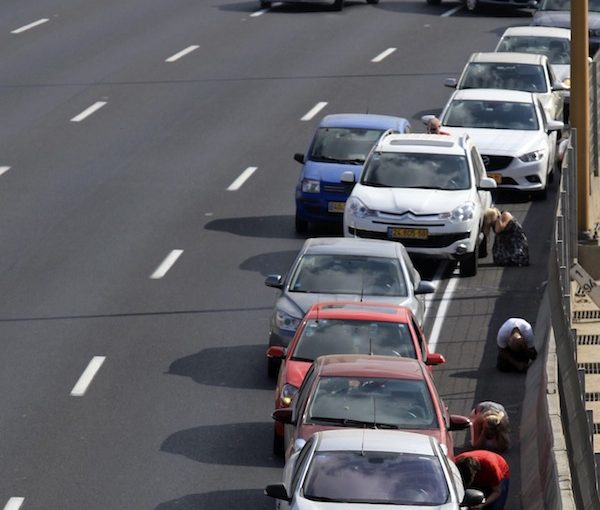
Drivers take refuge from rockets in Tel Aviv, July 9, 2014. (photo from flickr.com/photos/idfonline)

Part 1 of a three-part series, in which the author shares his diaries from the homefront, providing a glimpse of daily life under missile threat during Operation Protective Edge in 2014. For Part 2, click here; for Part 3, click here.

July 8

Operation Cast Lead, 2008. Operation Pillar of Defence, 2012. Now, Operation Protective Edge, 2014.

Naïvely, I disassociate the unraveling events from the grisly murders of teenagers Gilad Sha’er, Eyal Yifrach, Naftali Fraenkel. Then the murder of teen Muhammad Abu Khdeir. Gripping the country in horror, fear and dismay. I hope a sense of normalcy will prevail.

It doesn’t. Last evening was disrupted by 15 rockets fired over Rehovot, my little shtetl. Our Iron Dome intercepted several of them. The rest missed their targets, falling into open land. Two hundred missiles fired at Israel over the past week.

The attack took us by surprise. Pizza ordered, my son just finished his shower, my daughter hanging in her room, which doubles as our reinforced shelter. The siren sounded. Together with our dog, we ran to join my daughter in her room. A bit invasive to a teen. But she forgave us.

I took a few extra seconds. I had 30, after all. Grabbed a large bottle of water, some chocolate, a few asthma inhalers. “Dad! Get your ass in here!” my son shouted as I was scouring the kitchen for more goodies.

Then. All clear. We left my daughter’s room. I mean, the protective room. The doorbell rang. Pizzas here.

Amazed the delivery boy was still doing his rounds. I admonished him for not seeking shelter. He says he waited out the attack in our stairwell (also a reinforced area). Quite impressed with his delivery skills, gave him a large tip. The pizza arrived in less than 30 minutes, as advertised. Great job.

Went to bed a few hours later. My daughter had a difficult night. Couldn’t fall asleep and came into our room a couple times. Did our best to comfort her. But what can we say? We were attacked with missiles.

We promised our daughter she wouldn’t have to stay home alone, that she could join me at work. Not sure this was a wise promise. My office is located more south. My big worry – the drive to work. Driving there, I imagine myself in an episode of Wagon Train.

Looks like we are moving into a major ground offensive. A pending call of up to 40,000 reservists. Imagine the impact this will have on our economy, on our society. Fortunately, my son’s army duty is two years away. Somewhat reassuring, but not much, as these operations tend to repeat themselves every couple of years.

July 9

Visited our safe room twice last night. Hamas fired missiles as far north as Tel Aviv. Even targeted our capital. Didn’t expect such a quick escalation. We responded. Pounded 150 targets inside Gaza. I pity the poor Gazans suffering the slings and arrows of their leaders.

Heard another siren while walking my dog this morning. Poncho and I ran to the nearest shelter, the stairwell of a neighbouring building. Waited the mandatory 10 minutes with a mother and her child. Adding to an already complicated situation the child had cynophobia – started panicking at the site of my dog. Poncho and I chivalrously moved one floor up.

Poncho also feels the stress. Waiting in the stairwell, amid the booms and sirens, he started crying, pawing me.

I think about my son and his friends, who have a trip to Eilat planned for tomorrow. They are debating whether to go. Tough call. My wife and I also are struggling with this. That dang security factor! But there is also the heroic, stoic pizza delivery guy message. Life in Israel.

July 10

Operation Cast Lead cost $50 million a day; total cost, one billion bucks. Pillar of Defence cost $2 billion. Where is this money coming from?

We’ve destroyed more targets in the last 36 hours than in all of Operation Pillar of Defence.

More than 90 missiles were fired at Israel yesterday. Thirty were struck down by the Iron Dome. Rehovot was pretty quiet, with only one evening siren. I was home alone while my wife and kids were at the mall, which they said was totally empty. So, why were they there? Great question. One I ask every time they’re at the mall. Missiles or not.

Yesterday, we received an automated call from our mayor. Rehovot, along with other southern municipalities, has declared a state of emergency. Not sure what this means. Think we need to stay within 90 seconds of a protected space. Try factoring that into your busy day!

Morning papers filled with instructions on how to stay safe. Definitely a well-prepared country with this sort of thing. Facts speak for themselves. No casualties, despite more than 300 missiles fired at us since hostilities broke out.

My gym routine at work was disrupted by a double siren (one after the other). While waiting in the protected area, I positioned myself for a dash to the bench press once the all clear was sounded. Priorities!

The situation was becoming routine. How quickly we adapt. Calling home, I asked the standard questions. What’s up? What are you doing? What’s for lunch? Any missiles? Reading your book? A totally ordinary conversation.

My son and his friends went to Eilat, which is outside the battle zone. So, in the meantime, just the regular parental worries for a vacationing teen.

On a patriotic note, I hung a flag on our balcony today. Nothing like a good war to bring out the blue and white in me.

That night, the 1970s comic strip Love Is came to mind. Discovered a new one – love is … being alone with your wife in a bomb shelter.

July 11

A siren went off this morning while I was driving to the supermarket. Always dreaded being in a car during a siren. Seems the least safe place. There I was at an intersection, a little jittery, looking for a place to pull over and exit the car – then run for fortified cover … or lie down with my hands over my head. Spotted a place just down the road. Reminded myself I had 90 seconds to get to relative safety.

The red light took forever to change. Waiting. Waiting. Waiting. Green! A car zoomed out from behind. Cut me off. Took my coveted spot. Dang! Most drivers stopped on the spot, like when the sirens sound on Remembrance Day, so I did the same. Then bolted from my car. Crouched down. Put my hands over my head and hoped for the best.

Crouching next to me was the guy who cut me off. He also didn’t get to “the spot” in time. He apologized. We exchanged pleasantries about the unpleasant situation. And then, moved on.

What’s with the covering our heads with our hands stuff? Will that protect us from burning debris falling from the sky? I told my daughter I’m going to start driving around with her bike helmet. Though not a bad idea, it was quickly nixed. If I did that, she warned, she’d never drive with me again. Too embarrassed I guess. Teens. Even during war. Go figure.

Yesterday afternoon, the Iron Dome intercepted several missiles over Rehovot. Parts of the Weizmann Institute of Science were covered with bomb fragments. Especially by the pool. The lifeguard had ensured the kids were out of the water and ushered to safety. A miracle no one was hurt. One panicked child ran back to reclaim his sandals. The lifeguard ran after him. Unable to drag him back in time, he covered the child with his body. Bomb fragments littered the ground around them. Another Israeli hero. Like the pizza delivery guy.

A missile was fired towards the Upper Galilee from Lebanon this morning. We fired back. Hope our Lebanese friends are deterred. Certainly prefer not to open another front.

The Israel Defence Forces also has struck 1,100 Hamas targets in Gaza: 210 targets over the last day, including 81 underground rocket launchers, 21 command and control centres, 15 attack tunnels, 10 training centres, seven administrative buildings. And a partridge in a pear tree.

July 12

Woke up this morning to find my daughter watching the news. Instead of her usual Saturday morning teen programs, she was actually watching the news. One of the first tragedies of war is innocence. On the positive side, we finally got our daughter interested in the news.

Another casualty of war? Certainty. We are no longer certain about so many things. Things that affect today, things that affect tomorrow, things that affect next year. Small things, large things. Lots of things. Not certain.

Two missile attacks on Rehovot today. Surreal. Scary.

Trying to keep a normal routine. Went to a matinée today. Still planning our summer vacation. Busy with work. Busy at home. Baking chocolate chip cookies. Watching Friends reruns. Doing everything with this horrendous situation in the background. Or the foreground.

A bit despondent today. Want this to end. But what’s the end? What about the economic fallout of a $2 billion bill? What about the political and diplomatic fallout? Waiting for some good news.

Bruce Brown, a Canadian-Israeli, made aliyah 25 years ago. He works in high-tech and is happily married, with two kids. He is the winner of a 2019 American Jewish Press Association Simon Rockower Award for excellence in Jewish writing.

Format ImagePosted on November 29, 2019December 12, 2019Author Bruce BrownCategories IsraelTags family, Gaza, Hamas, Israel, memoir, Operation Protective Edge, terrorism
Iron Dome inspection

Iron Dome inspection

Prime Minister Binyamin Netanyahu, right, visiting an Iron Dome missile intercept control centre Nov. 14, accompanied by Israel Defence Forces Brig.-Gen. Ran Kochav. (photo from IGPO via Ashernet)

Iron Dome has a success rate of around 90%. Each Israeli missile costs some $50,000 and the cost of each battery has been put at some $100 million, but the number of lives saved and buildings protected makes Iron Dome one of the most significant military developments.

Format ImagePosted on November 29, 2019November 27, 2019Author Edgar AsherCategories IsraelTags Binyamin Netanyahu, Iron Dome, Israel

Trojan horse for Israel?

United States Secretary of State Mike Pompeo said Monday that the United States does not view Israeli settlements in the West Bank as a violation of international law, reversing long-standing U.S. policy.

Most countries, and the United Nations General Assembly, hold that the settlements contravene the Fourth Geneva Convention, which declares that an occupying power “shall not deport or transfer parts of its own civilian population into the territories it occupies.” There are counterarguments: Jewish residency in the area goes back thousands of years and, since Jordanian occupation of the area, which was superseded by Israeli occupation in 1967, was never internationally recognized, there was effectively no legal sovereign power and, as a result, the prohibition outlined by the Geneva Conventions is moot.

These are arcana for legal minds, but the more practical implications of the announcement demand the questions: Why? And why now?

The announcement came 48 hours before the deadline Benny Gantz was granted to form a government in Israel. Was this some last-ditch lifesaver thrown to Prime Minister Binyamin Netanyahu by his friend Donald Trump? Trump seemed to throw Netanyahu more of an anvil than a buoy after Netanyahu’s poor showing in the most recent election, contending that the relationship was between two countries, not between two men. Typically, Trump’s concept of loyalty to ostensible allies is solid as the wind.

And what does the U.S. administration hope to gain from this? Is there some domestic political calculation at play? It may be an ideologically consistent position for Republicans to side with the Israeli right. But ideological consistency, or any consistency at all, is not a hallmark of the administration.

Some would say that there is an overemphasis on settlements as a component of the conflict, that there is a vast range of issues at the root of the continuing Israeli-Palestinian struggle and that settlements are among the most likely to be satisfactorily resolved through compromise. Other accelerants, like incitement in Palestinian society, are less easily dismantled or accommodated through trade-offs.

Whether we are vehemently opposed to settlements in the West Bank, whether we are passionately in favour of the right of Jewish people to live in that area, or whether we fall somewhere in between, realpolitik should convince us that settlements undermine attempts by the Israeli side to project a good-faith commitment to an eventual resolution of the conflict.

But, more to the immediate consequences, almost instantaneously after Pompeo’s comments, the Overseas Security Advisory Council, a branch of his own department, issued a new security alert for Jerusalem, Gaza and the West Bank, warning of potential retaliation by Palestinians in response to Pompeo’s remarks: “U.S. citizens should carefully consider risks to their personal safety and security at sites and events that are potential targets” and “should avoid nonessential movements and events that attract attention.”

Violence should always be blamed on the perpetrator, and defences should not be made that seem to excuse it based on “provocations.” Nevertheless, the Secretary of State made a comment that led to an immediate warning from his own department that American and Israeli people and interests may be put at risk. And for what?

Is this a “gift” to Jewish and Zionist Americans? Sure, if we believe that it is beneficial to have the Diaspora pro-Israel movement associated with the extreme right in both countries, and that our long-standing commitment to peace and two states with contiguous defensible borders is a concept increasingly isolated to the left. Clearer heads would see it as a very divisive gift indeed, a Trojan horse more than a gift basket from Zabar’s.

For whatever else it may have been, Pompeo’s statement is, at root, the manifestation of something we have repeatedly warned against in the space: the politicization of the important bilateral relationship with Israel for short-term political reasons. That isn’t good for Israel in the long run.

Posted on November 22, 2019November 19, 2019Author The Editorial BoardCategories From the JITags Gaza, international law, Israel, Mike Pompeo, politics, settlements, United States, West Bank
A day that changed my life

A day that changed my life

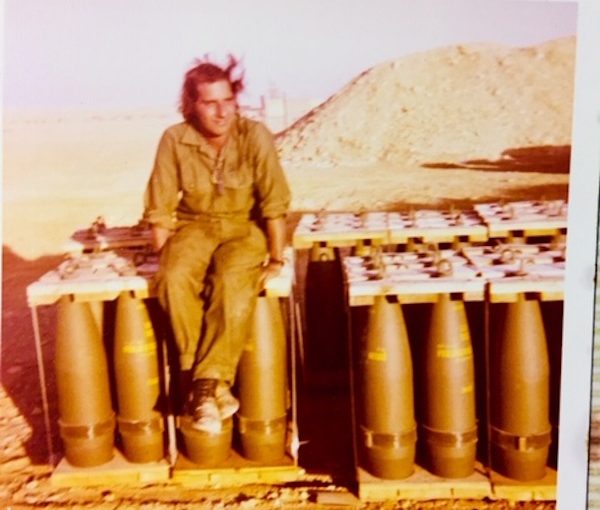
The author in the Sinai in October 1973, before his unit was attacked by two Iraqi planes, which caused the unit’s ammunition supply to explode, killing some soldiers and wounding others. (photo from Yom Shamash)

I would like to say that an event that happened 46 years ago left no marks on me and that I am over it. But then, I would not be honest. In fact, the experience left an indelible mark on my life and changed me completely.

In 1971, I returned to Israel – the country of my birth and early childhood – from Brazil with a Zionist youth group, to Kibbutz Zikim. I remember very well the prevailing thinking in Israel then. Four years after the victory of 1967, Israelis were quite confident. Egypt, the most powerful enemy Israel had, was neutralized. We were strong. We had conquered the Sinai, Gaza, the West Bank and the Golan. All in six days. I had absorbed this attitude and felt secure in my little world.

And then the war of 1973 exploded.

I served in the Sinai before the war; I was in a Nahal Brigade unit in which part of my service was spent on a kibbutz. On Oct. 6, 1973, I was on the kibbutz. It was Shabbat, Yom Kippur. Because Israel was caught off guard, there was no time to set up the unit in an orderly manner. As soon as we arrived at our position behind a high dune in the Sinai desert, we started shooting. My tank had a long-range cannon; we could not see what we were hitting 30 kilometres away.

Because my job was to pull the cannon’s trigger with both hands, I could not block my ears with my fingers, as all my tank mates did. As a result, I have a significant and permanent hearing loss.

On Oct. 13, 1973, our unit was decimated by two Iraqi planes. There had been a lull in the fighting and we had been resting on the sand. Suddenly, the two planes swooped from the sky, dropped bombs and disappeared in a matter of seconds. Very quickly, our own ammunition started to explode. Pieces of shrapnel started flying. The only thing to do was to run away from this inferno. Some soldiers were wounded, some died, and all who survived were traumatized.

Looking back now from the vantage point of 2019, many of us wonder about the heavy loss of young lives. Israel lost about 2,700 soldiers in that war. What did they die for? Defending the Sinai? Those of us who served in the Sinai know well that there isn’t much there except sand, stretching for miles; there isn’t much there to defend. What I didn’t know in 1973 was that, for several months prior to the war, Israel’s then-prime minister Golda Meir had rejected numerous initiatives by Egypt’s then-president Anwar Sadat to negotiate a peace accord. Was it worth it holding on to the Sinai? Especially since, in the end, Israel wound up returning the Sinai anyway?

The same could be said about Lebanon – more than 1,200 Israelis lost their lives in Lebanon from 1982 to 2000. Was it worth it? We must ask this question of the parents of those soldiers who lost their lives. I wonder what they would say.

I am afraid that one day the West Bank and the Golan will return to their rightful owners, the Palestinians and the Syrians, and, years later, we will ask ourselves what the hell we were doing in these places, and in Gaza.

Two million Palestinians in Gaza and two-and-a-half million in the West Bank, who do not have the right to vote in Israel, will not disappear, and I see no reason why Israeli soldiers should be controlling the movements of Palestinians traveling within the West Bank and those wanting to leave or enter the Gaza Strip. If I told you that Israelis traveling from Tel Aviv to Haifa have to pass through Palestinian checkpoints, you would say this is absurd. And I would agree, but it is no less absurd than Palestinians going from Ramallah to Nablus having to pass through Israeli checkpoints.

And why are settlers in the West Bank consuming 10 times more water than the indigenous Palestinians? And why are Israeli soldiers protecting settlers – who should not be there in the first place – some of whom do not serve nor send their children to serve in the army?

There can be no peace in Israel until there is peace in Gaza and the West Bank. The occupation is a recipe for continuous wars and insecurity for all.

I recall clearly, at the end of the Yom Kippur War, returning my equipment at the army base. I pledged that I would never again wear a green uniform.

For a long time, I did not understand how and what changed inside me that October. No one talked about post-traumatic stress disorder; no one talked about personal feelings. But the recurring nightmares never stopped. The fear and anxiety stayed. Right after the war, I sought out a psychiatrist friend, who told me to leave Israel for awhile – I had planned to study in Jerusalem, but he said leave and decide later. I left. I came to Canada, started a new life, married, studied, had four kids, remarried, had a good career and am enjoying life with my wife, children and four grandchildren.

Since leaving Israel in 1974, I have been back twice for visits, in 1998 and 2008.

What happened on Oct. 13, 1973, changed me and shaped my views, my values, my activism, my appreciation for what is important in life. Perhaps one of the most important lessons I learned is that war is never the best option to resolve conflicts. Taking land from others is never a way toward peace. Military strength is not a guarantee of security.

I wish I could be optimistic about the future of Israel, but I am not. For me to have any optimism at all, at a minimum, the occupation would have to end.

Yom Shamash was born in Israel. At the age of 6, his family moved to Brazil. He returned to Israel as a member of the Hashomer Hatzair group and settled in Kibbutz Zikim, south of Ashkelon. In British Columbia, he worked as a public school teacher in Surrey and, since retirement, he has been working as a translator and babysitter.

Format ImagePosted on November 22, 2019November 19, 2019Author Yom ShamashCategories Op-EdTags IDF, Israel, military, politics, Yom Kippur War
Rockets raining down

Rockets raining down

Israeli Prime Minister Binyamin Netanyahu talks about the rockets being fired from Gaza. (photo by IGPO via Ashernet)

Rockets were falling on southern and central Israel as the paper went to press this week. After the Israeli military killed Islamic Jihad commander Baha Abu al-Ata, Gaza once again erupted into full war footing.

The Iran-backed Palestinian Islamic Jihad called the assassination “a declaration of war against the Palestinian people” and declared, “Our response to this crime will have no limits.” Because they’re usually so restrained.

Schools were closed and Israelis, especially in the “envelope” area near the Gaza Strip but also in Tel Aviv, hunkered down in bomb shelters as Iron Dome deflected some but far from all of the rockets launched from the enclave.

The new, or renewed, conflict does not occur in a vacuum. Political leaders in Israel are in the midst of difficult negotiations to form a government after the second inconclusive election this year. Some critics claim the fighting is a scorched earth attempt by incumbent Prime Minister Binyamin Netanyahu to shake up the status quo and tip domestic politics in his favour. But, among those who reject this assessment is Netanyahu’s chief rival, Benny Gantz, who is now leading the efforts to cobble together a working alliance in the Knesset.

It all has a feel of déjà vu, of course, because this scenario, in different permutations, has played out repeatedly. As we posited in this space recently, some people say the status quo cannot hold. It can. It has for decades. But intermittent, terrible flare-ups like this are a part of and a price for that status quo, a high price paid by both Israelis and Palestinians. Until someone finds a path for both peoples to coexist more peacefully, this is life.

Format ImagePosted on November 15, 2019November 13, 2019Author The Editorial BoardCategories From the JITags Gantz, Gaza, Islamic Jihad, Israel, Israeli-Palestinian conflict, Netanyahu, peace
Harpers at Lake Hula opening

Harpers at Lake Hula opening

Laureen and Stephen Harper, centre left, and Daniel Atar, KKL-JNF world chair, centre, were among those who cut the ribbon at the Nov. 6 official opening of the Stephen J. Harper Hula Valley Bird Sanctuary Visitor and Education Centre. (photo by Michael Huri)

Former Canadian prime minister Stephen Harper was in Israel earlier this month for a four-day visit with a delegation from the Jewish National Fund of Canada, where he took part in the dedication of the new visitors centre at JNF Lake Hula Park in northern Israel, which is named in his honour.

Budgeted at $25 million Cdn, one-fifth of which was raised by the JNF of Canada, the Stephen J. Harper Hula Valley Bird Sanctuary Visitor and Education Centre south of Qiryat Shmona is seen as “the flagship project of Keren-Kayemet L’Yisrael (KKL),” the JNF’s Israel-based sister organization. Harper contributed to the cost of the project, and the auditorium is named for his wife, Laureen, in recognition of her service to Canada, friendship to Israel and dedication to the preservation of nature and wildlife.

Stephen Harper was honoured at the JNF of Canada’s 2013 Negev Dinner in Toronto. At the time, then-JNF chief executive officer Josh Cooper said: “Given his well-documented love of animals, we felt this would be an appropriate project to present to him.”

Now completed, six years after fundraising began, the facility promises to transform the experience of ornithologists and bird watchers who come to the Hula Valley. There, they can watch the twice-a-year seasonal migration of 500 million birds from more than 500 species, from Europe and Central Asia to Africa, and back.

The Hula Valley, located in the shadow of Mount Hermon, is considered the crown jewel of Israeli conservation efforts. Known in the Bible as Merom, up until the 1950s, it was full of swampland that was notorious for breeding malaria-carrying anopheles mosquitoes. In the 1950s, the wetlands were drained, with the hope that fertile farmland would result; instead, environmental devastation and the extinction of some indigenous species followed. Farming in the area was never successful and JNF ultimately decided to reflood part of the former lake.

Known in Hebrew as Agamon Hula (Little Lake Hula), the flat valley is filled with an array of birds, including cranes, pelicans and eagles. Visitors can observe the birds and also cycle around the site.

***

At the gala dinner Nov. 5 in honour of Harper, which took place at the Waldorf Astoria Hotel in Jerusalem, Israeli Prime Minister Binyamin Netanyahu spoke about the danger Iran’s nuclear ambitions poses for Israel, the Middle East and the West.

“Iran expands its aggression everywhere. It seeks to envelop Israel. It seeks to threaten Israel. It seeks to destroy Israel. We fight back,” Netanyahu said. “I also want to say, given Iran’s efforts to expand its nuclear weapons program, expand its enrichment of uranium for making atomic bombs, I repeat here once again – we will never let Iran develop nuclear weapons. This is not only for our security and our future; it’s for the future of the Middle East and the world.”

Netanyahu was particularly concerned about Tehran’s plans to start injecting UF6 (uranium hexafluoride) gas into the centrifuges to enrich uranium to five percent at the heavily fortified underground Fordow Fuel Enrichment Plant, located inside a mountain 32 kilometres northeast of the Shi’ite holy city of Qom.

Earlier in the day, Iran’s nuclear chief Ali Akbar Salehi promised that his country would violate the element of the 2015 nuclear deal known as the Joint Comprehensive Plan of Action, which Tehran had worked out with the P5+1 (China, France, Germany, Russia, the United Kingdom and the United States). The United States left the deal last year and has imposed sanctions on Iran in an attempt to force it to renegotiate the document. Tehran, in turn, has begun violating the deal in an attempt to pressure the United States to recall the sanctions.

Under the 2015 agreement between Iran and world powers, Iran agreed to turn Fordow into a “nuclear, physics and technology centre,” where 1,044 centrifuges would be used for purposes other than enrichment, such as producing stable isotopes, which have a variety of civil uses. The deal bans nuclear material from Fordow and, by injecting UF6 into centrifuges, the facility will become an active nuclear site rather than a research plant as permitted under the pact.

***

Since leaving Parliament after the Conservative party was defeated in the 2015 federal election by the Liberals, Harper has become president of the Awz venture capital fund advisory committee. The fund, founded by managing partner Yaron Ashkenazi, specializes in investments in Israeli security and intelligence startups, and manages $100 million in assets. The fund has invested in 12 companies to date, according to the Israeli financial website Globes.

Harper, an enthusiastic supporter of Israel, has visited many times. On Jan. 20, 2014, he addressed the Knesset plenum, saying: “It is, thus, a Canadian tradition to stand for what is principled and just, regardless of whether it is convenient or popular. But, I would argue, support today for the Jewish state of Israel is more than a moral imperative, it is also of strategic importance, also a matter of our own, long-term interests…. For too many nations, it is still easier to scapegoat Israel than to emulate your success.”

About the education centre, he said in a statement, “This park is one of the greatest restoration stories, just like this country is to the Jewish people. It is a magnificent honour to have this centre named after my name, and I am grateful for this beautiful occasion.”

Gil Zohar is a writer and tour guide in Jerusalem, Israel.

Format ImagePosted on November 15, 2019November 13, 2019Author Gil ZoharCategories IsraelTags environment, Harper, Hula Valley, Iran, Israel, nuclear deal, preservation

On return to Canada, life changes

Victor Neuman (photo from Victor Neuman)

In this eight-part series, the author recounts his life in Israel around the time of the 1973 Yom Kippur War. The events and people described are real but, for reasons of privacy, the names are fictitious.

Part 8: Epilogue

In a backhanded, minor way, I was a casualty of the war, too. The lack of help during the conflict meant I had to work alone trying to preserve the banana crop. One day, on my tractor, I was in a hurry, carrying several sacks of fertilizer to the fields. They had to go into the distribution tank before the irrigation timers flipped a switch and began irrigating another field. Someone at the kibbutz had helped me load them onto the hood of the tractor, with the idea that, at that height, I could drop them easily into the tank at the other end.

It didn’t work out that way. I hit a rut in the road and all the sacks slid to the ground. As fast as I could, I reloaded all the bags – which were 50 kilos each – lifting them from the ground to the tractor hood, and carried on. I felt OK at the time but I had herniated a disc in my back. The pain started later that day and got worse over the next few days. I saw a doctor in Hedera and got a daunting prognosis. My back might need surgery but no surgery would be possible in the near future. Wounded soldiers had priority, so only life-saving procedures were available to civilians. Had I been lucky enough to have been shot as well, they could have done something for my back.

I had to return to Canada to get the operation and, although I didn’t realize it at the time, my time in Israel was coming to an end. My plan was clear in my head. I would go home, get the surgery, return to Israel cured, become a kibbutz member, marry Tamar and live happily ever after. As the saying goes: “Man plans and God laughs.”

Away from Tamar in Canada, I had the growing realization that I wasn’t going back to Israel. The best explanation I can give is to repeat what a friend once told me.

He was a rude bugger but he had the right of it when he said, “Millions of years of evolution have turned men into slobbering idiots around women. Our problem is that we’re always thinking with the wrong head.”

Whatever Tamar and I had going on, it wasn’t happening between my ears. As beautiful as she was, I couldn’t imagine spending my life with her and I had to end things. And, if I ended things, I could never return to the kibbutz after jilting their darling firstborn-on-kibbutz child. And that particular kibbutz was the only place in Israel where I could imagine a life for myself.

It was over in every sense and way. I wrote a painful letter to Tamar. She wrote an even more painful letter back to me, using English expressions I didn’t know she had. She hated me. That made two of us. Lost another woman. Lost a country. Lost my purpose in life. How careless can you get?

Ironically, my back injury, which had started the whole process of turning my life on its head, simply healed itself. No surgery and no pain after just a few months. My life had completely changed direction because a few sacks of fertilizer fell off a tractor. Once again, life turning on a dime.

As much as I loved English literature, I still had no notion of how to use my master’s degree. Teaching wasn’t my thing and, with that degree, there wasn’t much else. I had to change gears – drastically. Then I recalled something from my time doing archeology.

While we tourist-volunteers struggled in the heat and dust, digging endlessly to uncover the ruins of Tel Beersheva, a surveyor stood over us and used his instrument to map out the location of walls as they were discovered. To do it, he spent most of his time staring through his instrument at his survey assistant – a woman in a two-piece bathing suit who was holding the survey rod. I started thinking an archeological surveyor was the job for me. You may think of me as a shallow person. In my defence, I am.

To make a long story short, I began studying survey technology at the British Columbia Institute of Technology. That morphed into surveying fish hatcheries, which morphed into surveying logging roads, which morphed into designing logging roads, which morphed into a lifelong career designing highways for the Province of British Columbia and an engineering firm called Binnie Engineering Consultants. Nowhere along the line did I ever do archeological surveying, and the only survey assistants I ever had wore flannel shirts, jeans and hiking boots.

In time, my road design work left me feeling a little parched, culturally. I decided to join the Vancouver Jewish Folk Choir. There, I met the gal who has been the love of my life for the past 31 years and counting. After meandering through life for what seemed like an eternity, what I wanted was crystal clear to me. I wanted her. And I learned something about finding my purpose in life. The main deal is to find the right person. The rest is just commentary.

We had our first date on New Year’s Eve. We were engaged by February and planning to be married by May. Her family was apoplectic about the timeline so we pushed the marriage date to September. I’ve stuck by her and she is stuck with me. And so, more than 30 years after puberty, I was finally all grown up. And you know what? By all I hold dear, she is the most beautiful creature I’ve ever laid eyes on.

Time is a river, they say, and this river may have almost run its course to the sea. But I remember the stream that became that river. I can never get Israel out of my mind, after all this time. And my leaving that country to lead the easy, secure life in Canada will always haunt me. It was 1974 and I still remember, clear as a bell, the sign I passed in Lod airport on the way to my plane home. In Hebrew and English, it said: “Will the last one to leave the country please turn off the lights.” Even believing I was soon coming back, I felt like a traitor.

A long time ago, when I was courting the dear lady I married, I did something very old-fashioned. I wrote her love poems. She may have married me because of them or in spite of them, I’m not sure which. I reread one of them recently and something dawned on me. It wasn’t a poem just for my beloved. It was also a poem for everybody in that land; everybody trying to hold onto their place in the sun or everybody trying to find it. It’s called “Magic”:

On this shattered summit / Over plains flooded red by sunfall / Where insect armies sullen, blooded / Crawl craters in search of victim’s missed / We perch uneasily / And wonder at a lethal world

But then, conjured by you / I felt for one bedazzled, high moment / We were magicians such as none before / And with our silk top hats / And our crimson capes, love-woven / We could pluck rabbits out of a hat / Launch birds out of a box / Or trick the world into decency.

(Previously: “Learning the lay of the land”; “When Afula road went quiet”; “Tending the banana fields in war”; “Weapon training begins”; “Near tragedy on guard”; “Fighters return to kibbutz”; “The fire-like impacts of war”)

Victor Neuman was born in the former Soviet Union, where his family sought refuge after fleeing Poland during the Second World War. The family immigrated to Canada in 1948 and Neuman grew up in the Greater Vancouver area. He attended the University of British Columbia and obtained a BA and MA with majors in English literature and creative writing. Between 1968 and 1974, he made two trips to Israel, one of which landed him on a kibbutz at the time of the 1973 Yom Kippur war. Upon his return to Canada, he studied Survey Technology at BCIT and went on to a career of designing highways for the Province of British Columbia and the firm of Binnie Civil Engineering Consultants. When he retired, he reconnected with his roots in creative writing and began writing scripts for Vancouver Jewish Folk Choir concerts and articles for the Jewish Independent. Neuman and his wife, Tammy, live in southeast Vancouver and enjoy the company of friends, their extensive extended family and their four sons.

Format ImagePosted on November 15, 2019November 13, 2019Author Victor NeumanCategories IsraelTags Diaspora Jews, history, Israel, kibbutz, memoir, Yom Kippur War
אז מה אם הוא ראש הממשלה?

אז מה אם הוא ראש הממשלה?

בנימין נתניהו (en.kremlin.ru)

אינכם מבינים עד כמה אני עסוק? יש לי עניינים מעניינים שונים לעסוק בהם. מכאן ועד שם. אז מה אם הוא ראש הממשלה? מה אתם חושבים שיש לי זמן להתפנות ולשמוע אותו נואם בחדשות המרכזיות של הערוץ המרכזי בשעה המרכזית?

אני חייב להתקדם בענייני הדחופים – הרי אני מייצר עניינים כדי להיות עסוק. נא להבין ולהתחשב בי. אמנם אינני שותה שמפניות ורודות או כל משקה אחר למכובדים ואף לא מוזמן לאירועים רבי מעלה, אך באמת ובתמים עסוק כל יום מהבוקר עד הלילה. לישון מוקדם כי בוונקובר כולם ישנים מוקדם? מה השתגעתם? אפילו ראש הממשלה לא ישן מוקדם – אז למה אני?

נכון בצעירותי נהגתי לעשן סיגרים מדי פעם לפעם בעיקר לאחר שחברי משפחה שונים ומשונים בחתונות, דחפו לי אותם לכיס החולצה הלבנה המגוהצת שלי. כן נכון! זה לא באשמתי. הרגשתי לרגעים חבר במועדון המכובדים בזמן העישון המרגיע ועם סיום הסיגר גם התחושה הזו הסתיימה. בוונקובר אגב לא עישנתי אפילו חצי סיגר.

אחד מיריביו של ראש הממשלה הושמץ בעבר הרחוק כל פעם. אמרו עליו שאמו ערביה ושיש לו מניות בתדיראן. כמובן מדי יום הזכירו בחדשות שהוא חתרן בלתי נלאה. ואני לעומתו: אף לא חושד שאימי ערביה, שאולי בטעות יש לי מניות בתדיראן או שאני חותר נגד מישהו או משהו – אני בכלל לא יודע לחתור. אבל למרות זאת מספיק שונאים גידלתי לעצמי. אבל למה זה מגיע לי? כיוון שאני עסוק כל כך?

אז מה אם הוא ראש הממשלה שמסרב להיפרד מהכיסא? אני מבין שהוא עשה לכם הרבה נזק ועשה הרבה לעצמו. אז זה אומר גם שאני צריך להיפרד מהרגלי להיות עסוק כל הזמן או ללכת הביתה? תרכשו לו כרטיס לכיוון אחד ותעזבו אותי בשקט. אנא רבותי לא לשכוח: אני הרי עובד מהבית בוונקובר אז לאן אתם רוצים שאלך בדיוק לעזאזל? מה אני הומלס? אנא קצת רחמו עלי לשם שינוי.

אני יושב כאן במשרדי שבביתי בדאון טאון וחושב על ראש הממשלה. חושב כיצד הוא ממשיך לשבת על הכיסא ולא משנה מה היו או יהיו תוצאות הבחירות האלה והקודמות, ומה קורה למדינה שלנו-שלכם. ולא דיברנו עוד על כתבי האישום העומדים נגדו למרות שלדבריו “לא היה כלום ואין כלום”.

כמוהו כמוני גם אני לא עוזב את הכיסא ונצמד אליו חזק חזק. אם הוא יכול אז גם אני יכול, למרות שאין נגדי שום כתבי אישום ושוב כתב בכלל עד לרגע זה. רק אני ועצמי לי. אז מה אם הוא ראש הממשלה? האם זה אומר שאני צריך לתמוך בו? בדרכו הקלוקלת? לא ולא.

מוונקובר שבמערב קנדה הכל נראה רחוק וטוב שכך אם כי גם לנו ביבשת הצפונית יש מנהיג שמתנהג בדומה לראש הממשלה. כן הנשיא של המדינה השכנה מדרום ממש כמוהו מצפצף על כולם. מופרע לחלוטין. אז מה אם הוא הנשיא? האם זה אומר שאני צריך לשבת מול המסך ולראות אותו מדבר במהדורה המרכזית, בשעה המרכזית של הערוץ המרכזי? או לקרוא את השטויות שלו בטוויטר?

אולי בכלל כדאי לרכוש מניות של טוויטר? כל עוד שהנשיא האמריקני המופרע ממשיך להשתלח בכל העולם ואשתו באמצעות טוויטר – המיזם המדיומי הזה צובר מבקרים רבים יותר וערכו עולה. אז מה אם הנשיא מצייץ בטוויטר? האם זה אומר שגם אני צריך לצייץ?

Format ImagePosted on November 13, 2019November 6, 2019Author Roni RachmaniCategories עניין בחדשותTags Israel, Netanyahu, ישראל, נתניהו

Posts pagination

Previous page Page 1 … Page 48 Page 49 Page 50 … Page 111 Next page
Proudly powered by WordPress