Skip to content
  • Home
  • Subscribe / donate
  • Events calendar
  • News
    • Local
    • National
    • Israel
    • World
    • עניין בחדשות
      A roundup of news in Canada and further afield, in Hebrew.
  • Opinion
    • From the JI
    • Op-Ed
  • Arts & Culture
    • Performing Arts
    • Music
    • Books
    • Visual Arts
    • TV & Film
  • Life
    • Celebrating the Holidays
    • Travel
    • The Daily Snooze
      Cartoons by Jacob Samuel
    • Mystery Photo
      Help the JI and JMABC fill in the gaps in our archives.
  • Community Links
    • Organizations, Etc.
    • Other News Sources & Blogs
    • Business Directory
  • FAQ
  • JI Chai Celebration
  • JI@88! video

Recent Posts

  • עשרים ואחת שנים להגעתי לונקובר
  • Eby touts government record
  • Keep lighting candles
  • Facing a complex situation
  • Unique interview show a hit
  • See Annie at Gateway
  • Explorations of light
  • Help with the legal aspects
  • Stories create impact
  • Different faiths gather
  • Advocating for girls’ rights
  • An oral song tradition
  • Genealogy tools and tips
  • Jew-hatred is centuries old
  • Aiding medical research
  • Connecting Jews to Judaism
  • Beacon of light in heart of city
  • Drag & Dreidel: A Queer Jewish Hanukkah Celebration
  • An emotional reunion
  • Post-tumble, lights still shine
  • Visit to cradle of Ashkenaz
  • Unique, memorable travels
  • Family memoir a work of art
  • A little holiday romance
  • The Maccabees, old and new
  • My Hanukkah miracle
  • After the rededication … a Hanukkah cartoon
  • Improving the holiday table
  • Vive la différence!
  • Fresh, healthy comfort foods
  • From the archives … Hanukkah
  • תגובתי לכתבה על ישראלים שרצו להגר לקנדה ולא קיבלו אותם עם שטיח אדום
  • Lessons in Mamdani’s win
  • West Van Story at the York
  • Words hold much power
  • Plenty of hopefulness

Archives

Follow @JewishIndie
image - The CJN - Visit Us Banner - 300x600 - 101625

Soap factory discovered

Soap factory discovered

Uri Geller holds a water or oil jug that was found during the construction of a new museum dedicated to his activities. (photo by Dilila Bar-Ratson courtesy Ashernet)

During the construction of a new museum in the Old City of Jaffa, dedicated to the activities of Uri Geller, an illusionist, magician, television personality and self-proclaimed psychic, a 19th-century Ottoman-era soap manufacturing factory was discovered. The museum will go ahead as planned, with the addition of the newly discovered factory.

The site was well-preserved and comprised troughs for mixing raw material, cauldrons, storage facilities and water cisterns. It was of particular interest because soap made from olive oil was recorded as having been produced in Israel for more than a thousand years. Making olive oil-based soap took just over a week to prepare in large vats. The contents would then be poured onto lime-covered trays to cool and solidify for about another week before being cut into bars. It would take another two months approximately for the soap to completely harden before being wrapped in paper and offered for sale.


Format ImagePosted on August 31, 2018August 29, 2018Author Edgar AsherCategories IsraelTags archeology, history, Israel, Uri Geller
הפרשה המורכבת והמסתורית

הפרשה המורכבת והמסתורית

סוכן המוסד לשעבר: “עזרתי לישראל לחשוף את תוכנית הגרעין של סוריה” – חלק ראשון. (צילום מחוסיין עלי סומדייה)

לאחרונה שני עיתונים מרכזיים ‘הטורונטו סאן’ ו’הנשיונל פוסט’ דיווחו בהרחבה על הסוכן הכפול לשעבר של עיראק, ולאחר מכן של המוסד, חוסיין עלי סומדייה (53), שגר בקנדה ומנסה למנוע את גירושו בשנית לתוניסיה. הפרשה המורכבת והמסתורית משהו על סוכן כפול תמיד מעלה את רף העניין אצל הקוראים, שברובם המוחלט אינם יודעים מה היא האמת ומה שייך לפרי הדמיון, בסיפורים יוצאי דופן מעין אלה.

חשבתי שכדאי לשמוע על קשריו ועבודתו של סומדייה עם המוסד ממקור ראשון, אך לא הצלחתי למצוא מידע על פרטי ההתקשרות עימו. לבסוף מצאתי באתר בית המשפט הקנדי המידע על התיק המתנהל בעניינו, ושם פורסם גם שמו של עורך דינו, ג’רארד וויל מטורונטו, שמתמחה בנושאי הגירה ופליטים. עו”ד וויל הוא זה שמסר לי את האימייל של סומדייה וכך נוצר הקשר בינינו. הוא אגב קורא לעצמו כיום סם סומדייה. בתגובה לבקשתי לראיין אותו כתב לי: “אסכים להתראיין ובתנאי שלא מדובר באחד מכלי התקשורת הערבים”. מדוע? שאלתי וסומדייה השיב בשיחת טלפון מהמילטון (במחוז אונטריו) ששם הוא גר: “עבורם אני בוגד, כלב או כל שם גנאי אחר – כיוון שעבדתי עם הישראלים”. זו גם הסיבה לטענתו שאם יגורש שוב לתוניסיה הם ידאגו לחסלו. ב-2005 עת גורש לראשונה לשם הוא עונה לטענתו ולבסוף הצליח לברוח שוב לקנדה. “לכן”, הוא מוסיף: “אני מתקשה להבין כיצד השלטונות הקנדים כל כך נאיבים ולא מבינים מה יעלה בגורלי אם אגיע למדינה ערבית כשלהי”.

לפי הפרסומים בעיתונות הקנדית בתקופת הרודן סאדם חוסיין בשנות ה-80, סומדייה שגר באנגליה, שימש סוכן כפול של מנגנון הביטחון הסודי העיראקי לשעבר – המחובראת, ולאחר מכן סוכן של המוסד. הוא יליד עיראק ומחזיק גם באזרחות של תוניס, שבה נולד אביו, חוסיין סומדייה, ששימש שגריר עיראק בבלגיה תחת סאדם חוסיין.

סומדייה שמנסה כאמור בכל כוחו למנוע מהשלטונות הקנדיים את גירושו בשנית לתוניסיה, הגיש ערעור לבית המשפט הפדרלי של קנדה. זאת, לאחר ששרותי ההגירה הפקיעו את תושבות הקבע הקנדית שלו. כשהכוונה בשלב השני בעצם היא לגרשו שוב לתוניסיה.

“הסוכן הכפול” הגיע לקנדה לראשונה ב-1990 לאחר שברח מהשלטון העיראקי וביקש מקלט מדיני. שלטונות ההגירה לא הסכימו שהוא ישאר בקנדה בטענה שיש סבירות גבוהה שבעבודתו כסוכן, חשף לא מעט אנשים למעשי עינויים ואולי אף להוצאה להורג. ובעצם מדובר בפשעים שהוא ביצע נגד האנושות. לפיכך לאחר שנים של הליך משפט ארוך שכלל ערעורים רבים מציד סומדייה שנדחו, הוא גורש לבסוף לתוניסיה ב-2005. סומדייה טען אז שברגע נחיתתו בתוניסיה הוא נעצר על ידי רשויות החוק. הוא הובא לחקירות קשות שכללו מעשי אלימות ועינויים. לאחר כשנה הוא הצליח לברוח מתוניסיה לאלג’יריה, עבר להולנד והציג לשגרירות הקנדית בהאג מסמכים מזוייפים לבקשת מקלט מדיני בקנדה. על בסיס המסמכים הוענק לו דרכון חרום וכך טס בחזרה לקנדה בקייץ 2006. מאז שוב עניינו נדון בבית המשפט, בזמן שרשויות ההגירה מסרבות להעניק לו תושבות קבע, לאחר שעשה שימוש במסמכים מזוייפים. לאחר שנה (2007) רשויות ההגירה הסכימו עם טענתו שאם יגורש שוב לתוניסיה, אכן צפויה סכנה לחייו. “לטורונטו סאן” אמר סומדייה כי המאבקים הקשים בשלטונות ההגירה עלו לו הרבה, ובין היתר גרמו לגירושים שלו.

Format ImagePosted on August 29, 2018Author Roni RachmaniCategories עניין בחדשותTags "המוסד", Hussein Ali Sumaida, Israel, Mossad, spy, חוסיין עלי סומדייה, ישראל, סוכן הכפול
Jewish history’s next chapter

Jewish history’s next chapter

The JDC’s Zoya Shvartzman is part of the FEDtalks lineup Sept. 16. (photo from JFGV)

In returning to Vancouver, Zoya Shvartzman is retracing the route that has seen the Moldova-born woman help “write the next chapter of the history of European Jewry.”

Those words, while spoken by Shvartzman, are not about herself – she was crediting North Americans and others who support the American Jewish Joint Distribution Committee (JDC) with helping revivify communities that were almost annihilated under Nazism and then suppressed by communism. But the work Shvartzman does in her role at the JDC means she could rightly claim to be among a number of authors altering the future for Jews in Europe.

Shvartzman and her parents made aliyah from the East European nation when she was 8 years old. At 15, she and her mother migrated to Vancouver. Here, the family had some hard times and they turned to the Jewish community.

“The Jewish community welcomed us with open arms and gave us almost a second home,” she recalled recently in a phone interview with the Independent. “It was a very, very fond memory of my time there and it has a lot to do with the Jewish community that became our family.” She will speak about this time when she presents as one of four speakers at FEDtalks, the opening event of the 2018 Jewish Federation of Greater Vancouver annual campaign, Sept. 16.

Shvartzman chose to pursue a degree in international development studies and political science at McGill University and so, after four years on the West Coast, she and her mother decamped for Montreal.

“After that, I decided to move to Budapest to pursue my master’s in political science because I was focusing on Eastern European politics and transitions from communism to democracy,” she said. “Because I’m from that part of the world, it made sense to go back and be there, be where it’s taking place.”

She completed her studies at Central European University, which was founded and funded by the democracy philanthropist George Soros, and, after graduation, worked for the Canadian embassy in Budapest. In 2007, she was offered a position at the JDC, where she is now director of strategic partnerships.

Shvartzman’s role is to identify on-the-ground needs of Jewish communities in Europe and convey those needs to potential funders, primarily in North America. Federations, foundations and philanthropists then contribute to help the JDC complete its projects.

“In Europe, basically, our main mission is that we build resilient communities,” she said. “We help build communities where they were shattered after the Holocaust and after communist regimes.

“In Eastern and Central Europe, we help poor Jews with basic services like food and medicine and winter relief, help to pay their utilities,” she explained. “Most of the elderly are Holocaust survivors. We work extensively with Holocaust survivors together with the Claims Conference funding. In the last 10 years or so, we developed services for children and families, modeled on the JFS [Jewish Family Services] model that you’re familiar with in Canada and the U.S., addressing the needs of poor children and families.”

Examples of projects that the JDC has spearheaded or supported include a Jewish community centre in Warsaw and a summer camp in Hungary, where children from 25 countries come to strengthen – or, in some cases, learn about for the first time – their Jewish identity. But the work is not limited to Eastern and Central Europe.

In France, the JDC has opened a “resilience centre,” to help Jewish schools, social workers, teachers, children and families respond to threats experienced by Jews in the country. Several acts of anti-Jewish terror in recent years in France have compounded existing anxieties about the security of its Jewish population and institutions.

The decade-plus that Shvartzman has been with the JDC has been a time of challenge for Jews and others across the continent.

“Especially the last four or five years have been particularly tumultuous for Jews in Europe,” she said. “There are different threats – external, internal threats. We see communities that have nearly collapsed, like the community in Greece, in terms of the economic crisis that really, really shattered it.”

In addition to the generalized economic challenges experienced by people in many countries, Jews have faced particular difficulties. Rising antisemitism and political extremism in places like Hungary and Poland have stoked once-dormant apprehensions.

Even so, Shvartzman is bullish about Jewish life in Europe and plans to share her enthusiasm with Vancouverites.

“There are many causes for optimism,” she said. “When you look at the revival of Jewish life in Europe and how these communities have gone from survival to really thriving Jewish communities, I think that’s a big cause of optimism.

“This is quite remarkable when you consider the history and some of the deep, deep traumas that this community has suffered and, today, Jews are reclaiming their heritage and are proud to be Jewish,” she continued. “All of this gives us great causes of optimism that Jewish life in Europe is thriving.”

Shvartzman’s Moldovan childhood and her current work both reflect and embody the JDC’s mission to save and build Jewish lives, said Michael Geller, the JDC’s North American director of communications.

“In her professional life and her personal life and in her life’s journey, she understands quite deeply the importance, the critical importance, of the work we do every day to ensure that needy Jews have the basic needs to continue to live their lives and, in addition, to have a strong Jewish identity, one that is their own, that they make themselves, and one that we help strengthen and empower through the kind of work that we do,” he said.

Returning to the theme of writing the next chapter of European Jewish history, Shvartzman credits overseas allies with making possible all of the achievements she and the JDC have realized.

“It’s only possible because of the support of the North American communities, North American Jewry, that chose to invest in that part of the world over the past 20, 25 years,” she said. “If I had to underline one message, it would be that: North American Jewry helping to write the next chapter of the history of European Jewry.”

FEDtalks features keynote speakers Rabbi Irwin Kula, Pamela Schuller, Arik Zeevi and Zoya Shvartzman. The event takes place at the Vancouver Playhouse on Sept. 16, 7 p.m. Tickets ($36) are available from jewishvancouver.com.

Format ImagePosted on August 24, 2018August 22, 2018Author Pat JohnsonCategories LocalTags American Jewish Joint Distribution Committee, annual campaign, FEDtalks, Holocaust, JDC, Jewish Federation, philanthropy, Renewal, Zoya Shvartzman
Love your uniqueness

Love your uniqueness

Pamela Schuller will share her story at FEDtalks Sept. 16. (photo from JFGV)

On Sept .16 at Vancouver Playhouse, as part of FEDtalks, Pamela Schuller, an internationally known disability and mental health advocate and professional stand-up comedian, will share her story. Her aim? To inspire attendees to remember and cherish what makes them unique.

Schuller divides her time between being running a Jewish teen mental health initiative in New York City and traveling the world, using her own experiences to discuss inclusion and the importance of embracing differences and disabilities.

“I tell my story of growing up with a severe case of Tourette syndrome (TS) and obsessive compulsive disorder (OCD) … and how, over time, I learned how to be more than OK with those things,” said Schuller. “I learned to love them and embrace them, and found that they add positive, incredible things to my life when I allow them to.”

According to the website tourette.ca, TS is “a neurodevelopmental or brain-based condition that causes people who have it to make involuntary sounds and movements called tics.” And, according to the Canadian Mental Health Association (cmha.ca), OCD is “a mental illness … made up of two parts – obsessions and compulsions. People may experience obsessions, compulsions or both, and they cause a lot of distress.”

Growing up in America’s Midwest, Schuller felt she stood out as the oddball kid with TS. Her mom had a hard time raising her. And, as her mom struggled, so did Schuller – dealing with having TS, as well as with numerous trips to the hospital for broken bones and depression. It took a boarding school environment for Schuller to be able to come out of her shell.

“I’d always felt like I was something my community had to work through, that I was a nuisance,” Schuller told the Independent. “But, at this boarding school … well, I’m not going to tell the whole story … I’ll save that for when I’m in Vancouver. But, I can tell you that the school knew that, if I was going to pull myself out of this space of feeling worthless, I’d need to have something about myself that I loved. So, their goal was to help me find one thing about myself that I loved. And we used that to catapult me into realizing that the one thing I love about myself translates into other areas of my life. And that, maybe, I don’t love this thing despite TS, but maybe, in actuality, TS adds to this thing that I love.”

Schuller speaks openly about being depressed before experiencing this mental shift, and of not having wanted to be a part of this world.

“To be honest, I think it’s a journey that doesn’t stop,” she said. “I still have days where it feels like having TS is bad, embarrassing or painful. And I have to remind myself that it’s OK and that there are still things I love about myself … and that, a lot of them, I learned because of TS.

“The first thing I learned that I love about myself was my sense of humour. But, it took some time to channel that sense of humour from snarky and sarcastic … to a more channeled sense of humour.

“Then, over time, I started talking seriously, not using humour, about what it means to love differences, to love the most challenging thing about yourself, the thing you struggle with the most.

“A few years ago, I realized that stand-up and talking about disabilities don’t have to be separate. So, I combined them into a talk, with humour and storytelling.”

A few years ago, Schuller earned a master’s degree in child advocacy and policy, with an emphasis on creating inclusive communities.

She believes that much of celebrating differences is about believing it is possible – that, whatever you bring to a community, you can be a part of that community.

Stand-up comedy serves as a sort of therapy for Schuller. “When I’m on stage, it’s not that my TS calms down … but, even on a tough day, I’m reminded that I love my brain,” she said. “And my brain allows me to do stand-up and have TS.

“That reminder allows me to see other things about me that I love. I think I’ve always seen the world from a different point of view, in part, because of TS. Comedy allows me to point those things out and, in a way, speak without being judged.”

Schuller encourages people to find the one thing that makes them incredible and unique.

As far as what people can expect to get out of her talk, Schuller said, “It doesn’t matter if you have a disability or not, the message is pretty universal. So, you can expect to laugh, to think about things and, maybe, sometimes, to cry, because feelings come up.

“Some of these conversations are tough. We’re all afraid of what we don’t know or maybe we don’t feel so great about ourselves or what we bring into this world. I think, by pairing humour with some of these messages and storytelling, it makes people think – about themselves and how they treat others, how they treat people in their community and what their community is doing.

“I walk into teen communities and I have everyone laughing and thinking,” she said. “And, when I finish, the teens line up to talk to me, share with me or ask questions. So, I think that my goal is to not be preachy, but to be a conversation starter.

“Typically, when communities bring me, they’ll have me perform for everyone. Then, I’ll do workshops, classes and programs. I’ve been working with communities around being inclusive for years, professionally, sharing ideas and talking about the tension points in your community around inclusion and how can we come up with some ideas that might help that.”

Schuller and her family have realized that, sometimes, the things they struggle with the most can also be their greatest strengths.

“It doesn’t mean I don’t still end up in the hospital from broken bones, from TS, but, even in those tough moments, as a family, we’re able to find humour … and to find those moments where, we’re like, ‘OK, this is so amazing … how cool that we’re learning this, doing this or experiencing this.’”

For tickets to FEDtalks ($36), visit jewishvancouver.com.

Rebeca Kuropatwa is a Winnipeg freelance writer.

Format ImagePosted on August 24, 2018August 22, 2018Author Rebeca KuropatwaCategories LocalTags annual campaign, comedy, FEDtalks, Jewish Federation, mental health, Pamela Schuller, philanthropy
Exhibit celebrates life

Exhibit celebrates life

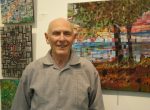
The paintings of Frank Levine are on display at the Zack Gallery until Aug. 31 in a shared show, called Celebration, with Melanie Fogell. (photo by Olga Livshin)

The latest show at the Zack Gallery, Celebration, showcases two artists, Melanie Fogell and Frank Levine. At first glance, they don’t seem to have much in common.

Fogell’s art is bright and flamboyant, totally abstract, and her canvases are large, while Levine’s paintings are generally smaller, more intimate, his colours more muted and his compositions tend to have recognizable figurative patterns: people, musical instruments, landscapes, cityscapes.

However, both artists celebrate life through their paintings. For years, both approached art as a hobby – it is only recently that Fogell started painting full-time, while Levine still works as an accountant. Both artists also lived for some time in Gibsons, B.C., where they met a few years ago. Fogell still lives there, while Levine has moved to Richmond.

Levine’s life has involved several drastic moves, geographic and professional. Born in England, he received his art education in London. He majored in fashion design. Upon graduation, he opened his own fashion boutique in London, but that didn’t last long in the cutthroat industry. After that, he worked for 10 years as a clothing designer for a large factory in the city.

“The clothing industry in London is very stressful and loud. Everyone shouts and screams,” he explained in an interview with the Independent. “The designers had to produce a new design every week, two collections a year. If a particular coat sold, the owners congratulated themselves at how good they were at selling. If it didn’t sell, the designers were to blame.”

After a decade of the stress and screaming, Levine switched to accounting, which he considers an occupation much less taxing on his nerves. In 1978, he moved to Canada and settled in Vancouver. “Antisemitism in England was a consideration in my decision to move,” he said.

Wherever he has lived, and whatever his day job, he has kept on painting.

“I have always painted when I had the time,” he said. “I don’t paint every day, only when I’m inspired. Once a week, my son and his children come for a visit, and we paint together.”

One of the paintings in the show, “Prism,” came from one of those weekly sessions. The small image features a blue-and-gold cityscape, happy and bright, vaguely reminiscent of a Greek city. “My son suggested the theme of prism,” said Levine.

Many of the artist’s paintings are landscapes, but he portrays them through a mesh of geometric figures. The lines creating the geometric patterns add mysticism to the trees and lakes. “I’m drawn to the images that have passion, not something everyone would paint,” he said.

Whatever his brush depicts – his backyard in Gibsons with a visiting bear, a small café in the Luxembourg Gardens in Paris or picturesque gates in China – his love for the places shines through the canvas.

Unfortunately, not many people have seen his charming work. “I didn’t do any promotion until recently and I sell maybe two or three paintings a year,” he said. “I only joined Facebook a month ago.”

Over the years, Levine has participated in several exhibitions in Gibsons and has had his paintings displayed at a Richmond community centre. This Zack Gallery show is only the second time in Vancouver that the public has had a chance to admire them, and it is his first exhibit in a Vancouver art gallery.

photo - Melanie Fogell’s art is bright and flamboyant, totally abstract, and her canvases are large
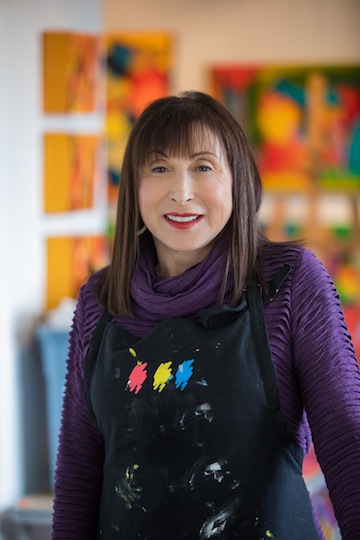
Melanie Fogell’s art is bright and flamboyant, totally abstract, and her canvases are large. (photo from Melanie Fogell)

Unlike Levine, Fogell is well known on the Vancouver art scene. She had a solo show at the Zack in 2011 and another one in 2014. Her early art education at Emily Carr University of Art + Design could have led to a career in the arts, but, like many others, she discovered that it was extremely difficult to make a living as an artist. She became a piano teacher instead.

Years later, Fogell went back to university for a master’s in women’s studies and then did a PhD in educational research. She has taught women’s studies at the University of British Columbia and piano as a private tutor, but, throughout the years, just like Levine, she has never stopped painting. She loved art too much, and the need to express herself through imagery drove her to paint. She paints full-time now.

“I did this group of paintings, the Oval Series, over the last two years,” she said about the work in the Zack Gallery show. “It began by me doodling oval shapes. Then I started thinking of possible meanings of this particular shape. The oval could stand for an egg, which is a symbol of life, a celebration of life. Or it could be a face, the beginning of a face, not ready to be recognized. They could be faces of people in my life or people I have yet to meet.”

Fogell’s paintings burst with primal colours, and her ovals seem like gladness enclosed, surrounding the viewers like a collection of exuberant eggs, or new leaves shimmering in the sunlight, or a field of tulips swaying in a breeze. They promise renewal and hope. “I paint how it feels to be connected to everything in my life, both present and past,” she said.

The exhibition Celebration opened on Aug. 9 and continues until Aug. 31. For more information, check out the artists’ websites, melaniefogell.com and franklevineart.com.

Olga Livshin is a Vancouver freelance writer. She can be reached at [email protected].

Format ImagePosted on August 24, 2018August 22, 2018Author Olga LivshinCategories Visual ArtsTags art, Frank Levine, Melanie Fogell, painting, Zack Gallery

Impacts of nation-state

Canada’s identity has evolved dramatically since the Second World War. First, the country’s self-image changed from an Anglo orientation as a member of the British Empire-cum-Commonwealth to a concept of “two founding nations,” which included the recognition of bilingualism and biculturalism as pillars of our identity. No sooner had that change been digested than we broadened the definition of Canadianness to incorporate multiculturalism and then, very belatedly, we have recently come to recognize the important place of indigenous Canadians and to attempt to reconcile our peoples with the history of injustice and cultural genocide perpetrated against First Nations.

Not all countries are given to this sort of evolving self-identity. Israel, in very different ways but over the same period, has struggled to define itself in a manner that reflects both its founding premise and its demographic and cultural realities. For several decades, the country has debated the question “who is a Jew?”; a riddle that goes to the heart of the nation’s identity in part due to the Law of Return, which grants citizenship to any Jew. But the place of non-Jewish citizens – both in the state of Israel and, more problematically, in the territories occupied in 1967 – has confounded the country as it struggles to be both a democratic country and one particularly founded as the homeland of the Jewish people.

This matter was brought to a head (again) recently by a law passed by the Knesset dealing with the country’s Jewish identity.

In practical terms, the “nation-state law” has little impact. If an Israeli didn’t follow the news, they would probably not notice any change in their daily life. The law is mostly symbolic. It enshrines the Jewish calendar as official, declares Jerusalem the country’s capital, codifies what was already the practical reality in terms of Jewish iconography in Israeli national symbols, such as the Star of David on the flag and the menorah on the national shield. But, it also explicitly downgrades the Arabic language, mother tongue of 22% of the country’s population, from official language to one with a “special status.” That doesn’t mean that Arabic (or English) will be erased from street signs or other official places, but it is a calculated poke in the eye to the country’s largest minority population – people who have struggled for decades to adapt themselves to their status as non-Jewish citizens of the Jewish state.

Critics, particularly on the left, have condemned the law as the triumph of Jewishness over democracy in the continuing struggle over the country’s identity as a Jewish and democratic state. Some claim that the accusation of “apartheid” has now been proven and codified. Competing New York Times op-eds by Ronald Lauder, head of World Jewish Congress, and Naftali Bennett, Israel’s minister of Diaspora affairs, took diametrically opposing positions on the law.

The law’s enemies perhaps did themselves no favours during a mass rally in Tel Aviv nearly two weeks ago, when Palestinian flags were prevalent and some participants seemed to be promoting a one-state resolution.

The controversy is the culmination of several years of debate over the law, or variations on the theme. Prime Minister Binyamin Netanyahu defended the final bill, which passed the Knesset overwhelmingly.

“We enshrined in law the basic principle of our existence,” he said. “Israel is the nation state of the Jewish people, that respects the individual rights of all its citizens. This is our state – the Jewish state. In recent years, there have been some who have attempted to put this in doubt, to undercut the core of our being. Today we made it law: this is our nation, language and flag.”

The prime minister’s words are accurate enough. He acknowledges the fundamental and perhaps irreconcilable tug between “the nation state of the Jewish people” and one that “respects the individual rights of all its citizens.” And he is correct that the law enshrines what was already the de facto reality.

He is also not far off the mark in stating that some have tried to put in doubt Israel’s identity as a Jewish state – there are calls in the Middle East and elsewhere for a unitary state between the Mediterranean and the Jordan River, a concept that would effectively eliminate Jewish national self-determination. Yet, this is perhaps the most specious of Netanyahu’s arguments. Yes, there are those would see the Jewish state destroyed. But these voices are no more mainstream nor prevalent than they have been in recent years.

The law is red meat for Netanyahu’s core supporters and those to their right. It is a provocation – and an unnecessary one – that even the prime minister claims has no real, practical impact.

However, it does have an impact – and one that is perhaps not unintended. The law makes non-Jewish citizens of Israel feel isolated and demoralized and it strengthens the case of those inside and outside Israel who condemn the country for inequality and favouritism.

Posted on August 24, 2018August 22, 2018Author The Editorial BoardCategories From the JITags Israel, law
Forgiving but not forgetting

Forgiving but not forgetting

Robbie Waisman, left, and Chief Robert Joseph, will speak at Temple Sholom’s Selichot program Sept. 1. (photos from Temple Sholom)

Two men who have built bridges between Canada’s indigenous and Jewish communities will speak about reconciliation, forgiveness and resilience at Temple Sholom’s Selichot program.

Robbie Waisman, a survivor of the Holocaust who was liberated as a child from Buchenwald concentration camp, and Chief Robert Joseph, a survivor of Canada’s Indian residential schools system, will address congregants on the subject of Forgiving But Not Forgetting: Reconciliation in Moving Forward Through Trauma. The event is at the synagogue on Sept. 1, 8 p.m.

Waisman is one of 426 children who survived Buchenwald. At the age of 14, he discovered that almost his entire family had been murdered. He came to Canada as part of the Canadian War Orphans Project, which brought 1,123 Jewish children here under the auspices of Canadian Jewish Congress.

Joseph is a hereditary chief of the Gwawaenuk First Nation, located around Queen Charlotte Strait in northern British Columbia. He spent 10 years at St. Michael’s Indian Residential School at Alert Bay on the central coast of the province. He recalls being beaten for using his mother tongue and surviving other hardships and abuse. A leading voice in Canada’s dialogue around truth and reconciliation, the chief is currently the ambassador for Reconciliation Canada and a member of the National Assembly of First Nations Elders Council. He was formerly the executive director of the Indian Residential School Survivors Society and is an honourary witness to Canada’s Truth and Reconciliation Commission.

Waisman and Joseph have become close friends over years of discussing, publicly and privately, their respective histories and the challenges of building a life after trauma. Waisman has become a leading Jewish advocate for indigenous Canadians’ rights.

“I think we have a duty and obligation to give them a stand in the world,” Waisman said. “For many, many years, many people ignored them, and their story about truth and reconciliation was just in the background, they weren’t important. I think that now that we give them an importance – and it is important that they speak up and speak about their history and so on – [it is possible] to make this a better world for them.”

Waisman believes that the experiences of Holocaust survivors and the example that many survivors have set of assimilating their life’s tragedies and committing themselves to tikkun olam is a potential model for First Nations as they confront their past and struggle to address its contemporary impacts.

“We were 426 youngsters who survived Buchenwald and the experts thought that we were finished,” Waisman said of his cohort of survivors, who have been immortalized in The Boys of Buchenwald, a film by Vancouverites David Paperny and Audrey Mehler, and in a book by Sir Martin Gilbert. “We wouldn’t amount to anything because we’d seen so much and we’d suffered so much and lost so much. And look what we have accomplished. We have little Lulek [Rabbi Yisrael Meir Lau], who became the chief rabbi of Israel, Eli Wiesel, Nobel Peace Prize winner, and I can go on and on. When I speak to First Nations, I say, ‘look what we’ve done,’ and then I quote [Barack] Obama and say, ‘Yes, you can.’”

One of Waisman’s first experiences with Canadian indigenous communities was when he was invited to the Yukon. His presentation was broadcast on CBC radio and people called in from all over the territory, asking that Waisman wait for them so that they could come meet him.

“They kept phoning in and saying, ‘Don’t let Robbie leave, we are coming in to see him,’” Waisman recalled. “It was just amazing. I would sit on a chair and they would come and touch me and then form themselves in a circle and, for the first time, they were speaking about their horrors and how to move on with life.”

This was a moment when Waisman realized the power of his personal story to help others who have experienced trauma gain strength.

The Selichot program was envisioned by Shirley Cohn and the Temple Sholom Working Group on Indigenous Reconciliation and Community, which Cohn chairs.

“It’s the right thing to do given the political atmosphere, the increased awareness about indigenous issues and just the fact that, as Jews, I think we need to be more tolerant of others, and these are really the first people in Canada, and they’ve suffered discrimination, as we have, and I think it’s important,” she said.

The message is especially relevant at this time of penitence and self-reflection, she added. “It’s a time for thoughtfulness and looking inward,” said Cohn, who is a social worker.

Rabbi Carrie Brown said the Temple Sholom community sees the topic as fitting.

“We want to look at this further as a congregation,” said Brown. “Selichot is a time of year when we really start to think about ourselves as individuals and ourselves as a community and the conversation between Robbie Waisman and Chief Joseph really fits nicely into that, about trauma and reconciliation and forgiveness and all of these major themes of the season.”

This is “not just a one-off program,” the rabbi stressed, but the beginning of a process of education and conversation.

Format ImagePosted on August 24, 2018August 22, 2018Author Pat JohnsonCategories Celebrating the HolidaysTags Chief Robert Joseph, education, Holocaust, reconciliation, residential schools, Robbie Waisman, Selichot, survivors, Temple Sholom
Vancouverite to serve in IDF

Vancouverite to serve in IDF

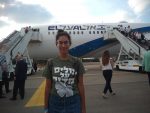
Vancouverite Maya Gur-Arieh was among the 57 soon-to-be-enlisted Israel Defence Forces lone soldiers who landed at Ben Gurion Airport on Aug. 15. (photo by Gil Zohar)

A happy crowd of approximately 2,000 people – family and friends, along with eight members of the Knesset and assorted officials – arrived at Ben Gurion Airport in Israel at 6 a.m. on Aug. 15 to welcome the second plane of Nefesh b’Nefesh olim (immigrants) and returning citizens to touch down this summer. On board were 239 newcomers, including olim hailing from British Columbia, Ontario, Quebec, and 24 American states.

The reception at Terminal 4, a hangar adjoining the tarmac, festooned with banners, featured hora dancing, shofar blowing, tears of joy and shouts of “welcome home” and “mazal tov.” The newcomers varied from babies to retirees, including 30 families, 90 children and three sets of twins. But it was the 57 soon-to-be-enlisted Israel Defence Forces lone soldiers, wearing T-shirts emblazoned in Hebrew with “Ascending to an army uniform,” who garnered most of the accolades.

Among these future IDF soldiers was Maya Gur-Arieh, 18, who was born in Ashkelon but moved with her family to Vancouver when she was six months old. Keen to enlist for the past 24 months, she told the Jewish Independent, “I’m really happy I’m here. I’m really looking forward to my service. I really recommend Garin Tzabar.”

The program, affiliated with the Hebrew Scouts Movement in Israel and largely funded by the Ministry of Immigrant Absorption, facilitates service in the IDF and provides a support system for Israelis and Jews from the Diaspora serving in the army who do not have at least one parent living in Israel.

Lone soldiers receive a higher basic salary from the IDF, as well as financial assistance from the Ministry of Immigrant Absorption and the Ministry of Housing. Lone soldiers in combat units receive a monthly salary of NIS 3,100 ($1,200 Cdn), according to the Garin Tzabar website, and they are given help with housing and the right to extra time off, including 30 days per year to visit family overseas.

Gur-Arieh said she attended four Garin Tzabar programs in San Francisco, at her own expense, in anticipation of joining Zahal, the Hebrew acronym for the IDF.

In heading to Israel, she is following a Gur-Arieh family tradition, she said – her two older sisters both served as lone soldiers, one as an artillery instructor and the other as a combat engineering instructor. Both became officers, she said with pride. One of her sisters is making a career in the IDF.

Gur-Arieh doesn’t know where she will be serving since she hasn’t done the battery of physical and psychological tests that all draftees must complete before being assigned to a unit. Like her sisters, she, too, would like to be an instructor in a combat unit.

Until she is drafted, Gur-Arieh – whose surname means lion cub – will be living at Kibbutz Kissufim on the Gaza periphery. Asked about the tensions in the south and the rockets, mortars and incendiary balloons and kites from Gaza that have targeted her adopted home, she was nonplussed.

Founded in 2002, Nefesh b’Nefesh has assisted in bringing 57,000 Jews to Israel from Canada, the United States and Britain. The organization currently assists 3,200 soldiers in its lone soldier program.

The Aug. 15 Nefesh b’Nefesh charter flight was paid for by Heidi Rothberg of Denver, Colo.

Gil Zohar is a journalist based in Jerusalem.

Format ImagePosted on August 24, 2018August 22, 2018Author Gil ZoharCategories Israel, LocalTags aliyah, Garin Tzabar, IDF, Israel, lone soldiers, Maya Gur-Arieh, Nefesh b’Nefesh
Tikkun olam through photos

Tikkun olam through photos

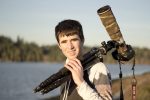
With his photos, Liron Gertsman hopes to raise awareness of environmental issues. (photo by Liron Gertsman)

Recent Vancouver high school graduate and award-winning photographer Liron Gertsman is heading to the University of British Columbia to study biology. His main passion is taking photos of nature, particularly birds, in the hope of sparking in viewers feelings of love and awe for the environment, leading to improved conservation.

“I believe people need to see the natural world if they want to protect it, so I try to do that through my photos,” Gertsman told the Independent in an interview.

From as young as 5 or 6 years old, Gertsman spent a great deal of his spare time walking around his neighbourhood, keeping an open eye.

“Around that time, my parents gave me a blue miniature camera,” he recalled. “Right from the start, I began taking pictures of birds and nature … and it grew and grew until, when I was 12, I bought my first personal DSLR camera equipment. And, since the very start, I’ve loved birds and have been fascinated by their behaviours … and have done my best to photograph them.”

Gertsman’s love of nature does not seem to have come from his parents, who are both businesspeople. His dad is a real estate tax consultant and his mom is an accountant.

“It was a big combination of things,” said Gertsman. “A lot of it was self-learning things – reading on the internet, reading books, and there were [other] influences because the bird-watching community is very large…. I would go attend bird walks and meet people that way. My Grade 2 teacher was a really big environmentalist and created an environmental conservation club at school.”

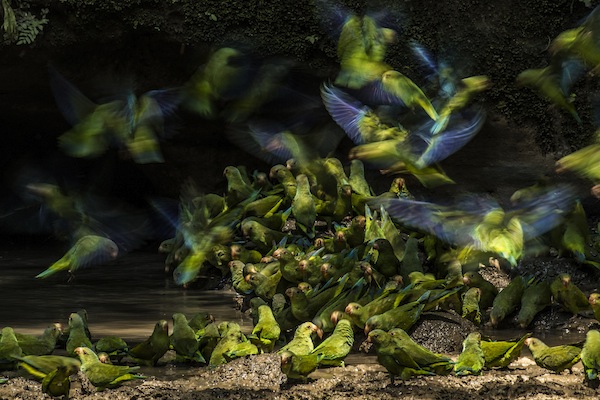
photo - Cobalt-winged parakeets. “To get this photo,” said Liron Gertsman, “I waited for hours three days in a row in a blind in the hot and humid rainforest of Yasuni National Park in Ecuador”
Cobalt-winged parakeets. “To get this photo,” said Liron Gertsman, “I waited for hours three days in a row in a blind in the hot and humid rainforest of Yasuni National Park in Ecuador.” (photo by Liron Gertsman)

Now that he is heading to UBC, Gertsman is not sure if he will integrate photography with research on birds, or if he will become a professional nature photographer.

“There are a lot of biologists who use photography to document their work,” he said. “They’re doing work that is hopefully going to benefit conservation and they need photographers, or they, themselves, will document their own work … to put it into a format that is easier for people to comprehend. Hopefully, I’ll get involved in some research projects – maybe over the summers – that will allow me to do things like that…. But, I’ll see what calls me more in the years to come and make a decision in a few years.”

Gertsman posts his photos on his website and social media accounts, and some have won contests. Most recently, three of his photos were recognized by the Audubon Photography Awards, winning the youth category prize and honourable mentions.

“It’s a great way to show more people your work, show them the beauty of nature,” said Gertsman. “Some of my photos have been featured, in the past, in magazines and in web articles.

“We are at a point now in the world where, if we don’t change something big … we’re going to be heading into some dark times. The environment is at a very unstable point right now. Our actions in the next little while are going to have a big impact on whether there’s going to be nature and a natural environment to live in, in the years to come.

“Everything we have as people comes from nature,” he continued. “Without nature, we can’t survive. But, it can be hard for people to understand that. It’s not a direct link. If you cut down a tree, it’s not going to have an impact on most people’s lives.”

But, on a larger scale, it matters. “So,” he said, “what I’m trying to do is, by photographing the natural world in the most beautiful way I possibly can and showing it to as many people I possibly can, I’m trying to educate the world the best I can on how incredible the environment is and how worth protecting it is.”

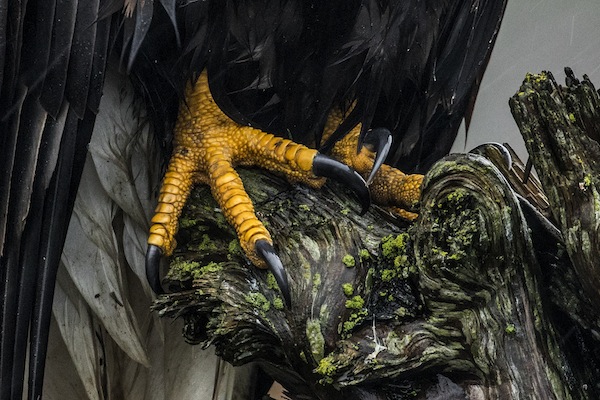
photo - The talons of a wild bald eagle, photographed on the southwest coast of British Columbia. “It was sitting near a popular walking trail, so perhaps it was used to attention from its human admirers,” said Liron Gertsman
The talons of a wild bald eagle, photographed on the southwest coast of British Columbia. “It was sitting near a popular walking trail, so perhaps it was used to attention from its human admirers,” said Liron Gertsman. (photo by Liron Gertsman)

This past spring, Gertsman was in Israel, one of the most amazing places in the world for birdwatching, as “all the birds migrating from Africa to Europe pass through in Israel,” he said.

There are many ways people can help promote the environment, he added. “You can help me spread my message – tell your friends, share my website, follow me on social media, my Instagram. I post, almost every day, my latest pictures on Instagram. Hopefully, through that, I’ll be able to reach more people.

“It’s increasingly difficult to motivate people to do things individually, but individual action can have wide affect. When a government adds a regulation, it has an impact and, when regulations are taken away, that too has a huge impact. So, in the way we think about our political leaders, there’s something we can do as a nation there.

“But also, just on an individual scale, cutting down on driving, not using plastic straws … little things, like carpooling, things you do every day can make a big difference. And, just spreading the message of how amazing nature is, and getting out and enjoying nature yourself.”

For more information, visit lirongertsman.com or @liron_gertsman_photography on Instagram.

Rebeca Kuropatwa is a Winnipeg freelance writer.

Format ImagePosted on August 24, 2018August 22, 2018Author Rebeca KuropatwaCategories Visual ArtsTags birds, environment, Liron Gertsman, photography, tikkun olam
Kakagi comes to B.C.

Kakagi comes to B.C.

Kakagi is, left to right, Jacob Brodovsky, Jesse Popeski, Jonathan Corobow and Max Brodovsky. (photo by Jen Doerksen)

The band Kakagi (pronounced ke-KA-gi) is coming to Vancouver next month as part of a tour that includes several B.C. stops.

Officially formed in September 2015, Kakagi is Jacob Brodovsky (guitar and vocals), his brother, Max Brodovsky (drums), Jonathan Corobow (bass) and Jesse Popeski (guitar). The four Winnipeg-area musicians met and first started jamming together when they were campers at B’nai Brith Camp in Kenora, Ont. Lake Kakagi is 100-plus kilometres south of Kenora.

“When me, Max and Jonathan were all staff (at BB), we all started playing together,” said Jacob Brodovsky. “We’ve been playing now for two-and-a-half years. Jesse and I played in the band in high school, from around ages 12 to 18. And then, Max and John always jammed together in high school, so it worked out nicely.”

The four each went their own way in university, but, once they finished school, they came back together to form the band.

“We are all either done with school or are taking a break, to be able to focus on this full-time … so the timing was good to do some heavier touring,” said Brodovsky.

Kakagi’s music is reminiscent of Neil Young, on the folk rock or indie rock spectrum.

Being a young band, Kakagi has so far been playing mainly locally, but they headed east on tour in July – Toronto, Ottawa, Peterborough and Sault Ste. Marie – and will head out west in September. The tour is called Staying Up Late, and is in support of their first EP, which they recorded in Winnipeg over the winter.

“I think we’re getting a better hang of being an actual touring band, figuring out how to make that sustainable, how much forward planning is needed to make that possible,” Brodovsky said.

After the western leg of the tour, he said, “we’ll probably head back to Winnipeg to do some song writing. We’ll be putting out another EP in January 2019, called High Hopes. That’s pretty much in the can. We just have to do a little fixing on it. Then, we’ll head to Montreal in the spring to record our first full-length album.”

Kakagi has wanted to play in Vancouver for some time now and are happy to have created enough of a buzz with their music to warrant the trip.

“We know a bunch of people in Vancouver, and it’s also one of the bigger markets in the country, so it’s a good city to get our footing,” said Brodovsky. “There is a lot of (music) industry in Vancouver. Also, we just love B.C., so we’re making the tour as long as possible to be in Vancouver and to the island.”

Kakagi will be at the Roxy in Vancouver on Sept. 5 and at Wheelies in Victoria on Sept. 8. They are also playing in Kelowna, Nelson and other B.C. communities. For more information, visit kakagimusic.com.

Rebeca Kuropatwa is a Winnipeg freelance writer.
Format ImagePosted on August 24, 2018August 22, 2018Author Rebeca KuropatwaCategories MusicTags indie rock, Kakagi, Winnipeg

Posts pagination

Previous page Page 1 … Page 349 Page 350 Page 351 … Page 650 Next page
Proudly powered by WordPress