Skip to content
  • Home
  • Subscribe / donate
  • Events calendar
  • News
    • Local
    • National
    • Israel
    • World
    • עניין בחדשות
      A roundup of news in Canada and further afield, in Hebrew.
  • Opinion
    • From the JI
    • Op-Ed
  • Arts & Culture
    • Performing Arts
    • Music
    • Books
    • Visual Arts
    • TV & Film
  • Life
    • Celebrating the Holidays
    • Travel
    • The Daily Snooze
      Cartoons by Jacob Samuel
    • Mystery Photo
      Help the JI and JMABC fill in the gaps in our archives.
  • Community Links
    • Organizations, Etc.
    • Other News Sources & Blogs
    • Business Directory
  • FAQ
  • JI Chai Celebration
  • JI@88! video

Recent Posts

  • Story of Israel’s north
  • Sheltering in train stations
  • Teach critical thinking
  • Learning to bridge divides
  • Supporting Iranian community
  • Art dismantles systems
  • Beth Tikvah celebrates 50th
  • What is Jewish music?
  • Celebrate joy of music
  • Women share experiences 
  • Raising funds for Survivors
  • Call for digital literacy
  • The hidden hand of hate
  • Tarot as spiritual ritual
  • Students create fancy meal
  • Encouraging young voices
  • Rose’s Angels delivers
  • Living life to its fullest
  • Drawing on his roots
  • Panama City welcoming
  • Pesach cleaning
  • On the wings of griffon vultures
  • Vast recipe & story collection
  • A word, please …
  • מארק קרני לא ממתין לטראמפ
  • On war and antisemitism
  • Jews shine in Canucks colours
  • Moment of opportunity
  • Shooting response
  • BC budget fails seniors
  • Ritual is what makes life holy
  • Dogs help war veterans live again
  • Remain vital and outspoken
  • An urgent play to see
  • Pop-up exhibit popular
  • An invite to join JWest

Archives

Follow @JewishIndie
image - The CJN - Visit Us Banner - 300x600 - 101625

Category: Visual Arts

Jewelry that’s easier to wear

Jewelry that’s easier to wear

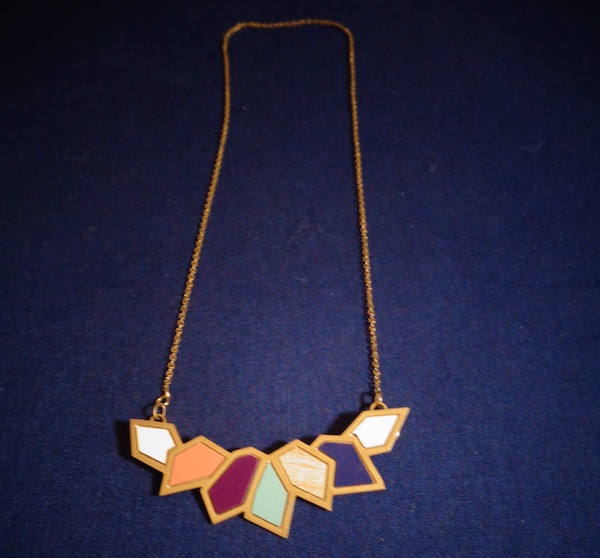
This necklace uses snap fasteners instead of clasps [see below]. (photo from Deborah Rubin Fields)

Diane von Furstenberg is attributed with saying: “Jewelry is like the perfect spice – it always complements what’s already there.” Some of us would say that’s all well and good, until you have to ask for help in closing a necklace.

Maybe you can release the spring, which opens the lobster clasp’s arm, but you can’t hold it long enough to actually close the clasp. Or perhaps your hands just can’t negotiate the T into a toggle clasp’s circle. Whatever your exact manoeuvrability problem, one thing is sure, putting on jewelry can be a frustrating experience. And the frustration seems to increase with age.

In The Journals of Gerontology, academics Eli Carmeli, associate professor at Haifa University, the late Hagar Patish and Prof. Raymond Coleman of the Technion state, “Hand function decreases with age in both men and women, especially after the age of 65 years. Deterioration in hand function … is, to a large degree, secondary to age-related degenerative changes in the musculoskeletal, vascular and nervous systems.

photo - The necklace's snap fasteners
The necklace above’s snap fasteners. (photo from Deborah Rubin Fields)

“Prehension is defined as the act of seizing or grasping. Aging hands and fingers are especially prone to osteoarthritis and rheumatoid arthritis. It is clear that common tasks involving precision dexterity, two-hand coordination, such as are needed to thread needles, open buttons on clothing or fine-grip tasks, as in holding a pen or cutlery, become increasingly difficult with aging. This is also true with regard to simple handgrip tasks requiring strength, such as opening bottles. The difficulty of performing such tasks may be in part due to declining vision.”

So what are the different kinds of jewelry clasps or closures and how easy are they to use? Today, eight clasps are usually added to necklaces.

The lobster clasp and spring ring clasp have a spring-loaded mechanism. Both operate by fitting one end into the opened spring side, then releasing the spring mechanism to shut.

The fishhook clasp is so named because part of the closure resembles the hook used in fishing: one end is a metal hook, while the other is an oval-shaped case. The hook slides into and locks inside the case.

Somewhat similar in shape to the fishhook, the S hook works by sliding the S-shaped hook onto a ring at the other end.

In a toggle bar clasp, one end is a long bar or T shape and the other is an open shape, usually a circle. The bar slips through the centre of the shape and locks in place.

The barrel clasp is so named because, when closed, it looks like a barrel. This clasp consists of two metal pieces, one on each end of the necklace, which close by screwing together. Likewise, in the slide-lock clasp, one tube slides inside the other and locks in place.

Finally, both ends of a magnet clasp contain magnets, which attract each another and snap together, locking the piece of jewelry in place. While not always particularly attractive, the newer magnet closures can actually look quite pleasing.

Clips designed to be easy to put on. (photo from Deborah Rubin Fields)

While all these clasps are relatively secure, if you have dexterity issues, six of the eight might be difficult to manipulate. So, if you’d like to continue wearing certain pieces of jewelry, to what clasps should you switch? For people with handgrip problems, two necklace closures are usually recommended: the slide-lock and the magnet clasps.

Israeli Keren Doron, who has designed and produced gold necklaces, however, is skeptical about a magnet clasp staying closed when the necklace is really heavy. She also warns that it is possible to damage a necklace when switching its existing clasp. There are many ways to do so, although it depends on the different kinds of jewelry. For example, Doron said not all necklaces with stones can withstand the heat of burner re-soldering.

Occupational therapists at Jerusalem’s Shaare Tzedek Hospital suggest that people with dexterity problems switch to necklaces that are long enough to simply slip over the head.

If you enjoy wearing costume jewelry, a new Israeli company offers another solution. Snaps (snaps.co.il) makes attractive necklaces and earrings that completely do away with clasps. Instead, designers Lilach Bar Noy and Inbar Ariav glue snap fasteners to the back of their pendants (using either a single or double set of snaps) and to each end of the necklace chain. Without having to apply much pressure, the male and female parts of the snap attach.

Wearing pierced earrings may also be a problem for people with hand issues. One solution is to wear omega-back earrings with a hinged back that simply flips closed; there are no tiny posts or backs to manipulate.

Neta ben Bassatt’s fashion jewelry addresses the problem of closures in a different manner. As a student at Bezalel Academy of Arts and Design, she won a prize for her coat pins designed especially for people who have visual impairments. Her wood and brass pins may be used with heavier clothes, such as cotton, wool, linen, etc. Two of her pins have a kind of clasp that can fasten best to a shirt collar or the lapel of a suit, where it is easier to get to the other side of the fabric. Her other designs feature a long, open needle pin, which can be attached anywhere on the fabric. Importantly, the wearer does not need to touch the pin itself, thus eliminating the chance of sticking oneself.

Is jewelry important? The answer depends on whom you ask. One thing is clear: jewelry has been around a long time. As early as Chapter 24 of the Book of Genesis, Abraham’s chief servant (Eliezer) is giving jewelry to Rebecca’s family. And, with people living longer, more and more adaptability and accessibility issues will arise, so we are likely to be talking about jewelry for a long time to come.

Deborah Rubin Fields is an Israel-based features writer. She is also the author of Take a Peek Inside: A Child’s Guide to Radiology Exams, published in English, Hebrew and Arabic.

Format ImagePosted on March 8, 2019March 6, 2019Author Deborah Rubin FieldsCategories Visual ArtsTags disability, fashion, jewelry, style, technology
Quality, affordability

Quality, affordability

Gaby Aghion started the fashion line Chloé in 1952. (photo from Chloé Archive)

Antisemitism was increasing in Egypt in 1945. Among the 80,000 Jews forced to leave their homes was Gabrielle (Gaby) Hanoka. Her birth name may not be recognizable to most, but the fashion house she created – Chloé – unquestionably is.

The youngest of seven children, born in 1921 in Alexandria, Egypt, Hanoka derived her distinct combination of business and creative style from her parents. Her father was an affluent cigarette manufacturer and her mother’s passion for fashion resulted in demanding copies sewn of all the latest Parisian couture. Hanoka was given a French education and, with that, embraced an ample affection for everything French.

Fittingly, Hanoka, together with Raymond Aghion, her elementary school sweetheart and subsequent husband, moved to Paris, making it home, with their son Philippe, until her passing at 93 in 2014. Befriending the upper stratum of European artists, such as Picasso and French poet Paul Éluard, earned them popularity within the art scene. Coming from a prosperous family enabled Aghion the luxury of opening a modern art gallery. The couple evolved into avid art collectors over the years.

Living a comfortable lifestyle was not enough for Gabrielle Aghion. In 1952, she resolved to flourish. “I’ve got to work … it’s not enough to eat lunch,” she is said to have informed her husband. Fashion was her choice.

She named Chloé after a friend who believed she lacked allure. Turning an extra room in her apartment into an atelier, she created six dresses, which set her success in motion. The styles corresponded with her socialist and free-spirited values, embodying youth and femininity using the finest fabrics. She wanted her designs to be accessible to regular people, without compromising on quality, coining the term prêt-à-porter, ready-to-wear.

Wanting to focus strictly on design, she partnered with Jacques Lenoir, who steered Chloé into a label. From 1956, Chloé’s fashion collection was shown twice a year at the grand Café de Flor on the Boulevard Saint Germain. These events became a fashion highlight for Parisian women. Aghion not only demonstrated an eye for fashion, but she also had a great sense for talent. In 1966, she hired the aspiring Karl Lagerfeld, who remained head designer until the mid-1980s. (Lagerfeld passed away just last month, at age 85.)

Chloé became the choice of some of the world’s most fashionable and beautiful women – Brigitte Bardot, Grace Kelly and Jackie Kennedy, to name a few. The first flagship boutique opened in 1971, followed by hundreds more worldwide. In 1975, Chloé perfume was launched, and also became an ongoing success.

In 1985, Aghion sold her company to the Richemont group. She remained active throughout the years, never missing a fashion show. The spirited Aghion continued to express her opinions before each collection and head designers took her insights into consideration.

A year before her passing, Aghion was awarded the highest merit in France, the Legion of Honour, for her contribution to the country’s fashion industry. Recollecting her starting point, she said, “The world was opening up before my eyes and I believed I could do anything. I felt I had wings.”

Her flight continues to shape the next generations of fashion enthusiasts.

Ariella Stein is a mother, wife and fashion maven. A Vancouverite, she has lived in both Turkey and Israel for the past 25 years.

Format ImagePosted on March 8, 2019March 6, 2019Author Ariella SteinCategories Visual ArtsTags Chloé, clothing, design, fashion, Gaby Aghion
Mixing abstract, nature

Mixing abstract, nature

Sidi Schaffer’s current exhibit, In Partnership with Nature, is at the Zack Gallery until March 3. (photo by Olga Livshin)

Sidi Schaffer’s art has gone through several different incarnations. At the beginning of her career, in postwar Romania, she adhered to a realistic approach. “For several years, the central images of my work were people,” she said in an interview with the Independent.

After her family immigrated to Israel, she continued her studies and received her art education degree. “At that time, I fell in love with the Impressionists, especially Cezanne, and started painting more landscape and still life,” she said. “I tried to catch the essence, the light and beauty of my surroundings. Even my palette changed.”

The next stage in her artistic development came after she immigrated to Canada in 1975. It was as if every country triggered a twist in her artistic road. “I needed to establish new roots and master new challenges,” she recalled. “In 1980, I went back to school to study printmaking at the University of Alberta. They told me: ‘Paint abstract, throw away realism.’ I followed my teachers’ good advice … and totally immersed myself in abstraction. I simplified my work; my focus became my inner world, my feelings and my emotions. The art-making process became a sacred ritual.”

But pure abstraction didn’t hold her interest for long. Her abstract compositions acquired random elements of realism. “I tried to make my works integrated, bring together abstract and figurative,” she said. “I tried to express the concept of unity between the internal and the external, between the spiritual and the physical.”

Her current show, In Partnership with Nature, which opened at the Zack Gallery on Jan. 31, combines her inclination towards abstraction, her love of nature and her ability to bridge the realistic and the spiritual in her paintings. It also highlights her innate optimism. The show is airy, uplifting and charming, the works prompting a quiet gladness in viewers.

It’s about flowers, but in an oblique, complex way. “I love flowers,” said Schaffer. “Nature is my biggest inspiration. When it surrounds me, I feel alive, free, and in awe of all its beauty and miracles.”

For years, she has been drying flowers between pages of books. “I have piles of those books in my house,” she said. “I always wanted to preserve the flowers’ beauty, even after the original bloom. I have been doing it since I was a young girl…. In autumn, I also dry leaves with their amazing colours and abstract designs. Nothing is more beautiful. Sometimes, I pick a flower just to remind me of a place and time.”

A few years ago, Schaffer decided to try and incorporate those dried flowers and leaves into her art. “I wanted to make them the subject matter,” she said. “Every picture in this show, except one, has one or more dry flowers or leaves in them.”

photo - “Grace into Focus 1” by Sidi Schaffer is part 1 of a triptych
“Grace into Focus 1” by Sidi Schaffer is part 1 of a triptych. (photo from Sidi Schaffer)

All of the images in the exhibit are mixed media. She experimented with acrylic and oil paint, with old prints and new drawings, with collage. The dried leaves or flowers form the heart of the compositions.

“I wanted to give them importance,” she explained. “Some of the landscapes in this show look fantastic, because dry leaves play the part of trees. Some abstract collages were like memory boxes for me, with layers. There are dry petals there, and lettering and musical notes.”

Schaffer’s collaboration with the elements of nature tends towards whimsical. Flower petals float on the visual breeze. Mundane dandelions turn into exotic palm trees. Waves of musical notation sparkle with rainbow colours.

“I played with the images,” said the artist. “I didn’t take myself seriously when I prepared this show.”

Schaffer said every image in the exhibit started with an idea. “But I never knew how it would come out,” she said. “It’s a process, a discussion between me and the flowers. Sometimes, it is a struggle. I look at the flowers and they supply more ideas. This one flower I had, I put it on the painting and the petals came off. I left them off, incorporated into the image.… From a flash of excitement to the end result, each image reflects my emotional journey. By the time I finish a painting, it seldom resembles my original starting point. What is important for me is the visual poetry, the relationship of form, space, colour and light.”

Schaffer’s exploration into creative possibilities is nourished by her rich inner life. Before her retirement, she taught art and painted commissions, but never, for example, something made specifically to harmonize with anyone’s living room décor.

“I paint what is inside of me,” she said. “I don’t paint for anyone’s sofa. I enjoy the hours I spend in front of my canvas. It is an intense emotional outlet and, when I’m finished, I feel happy, but, at the same time, drained and vulnerable.”

In Partnership with Nature is at the Zack until March 3.

Olga Livshin is a Vancouver freelance writer. She can be reached at [email protected].

Format ImagePosted on February 15, 2019February 13, 2019Author Olga LivshinCategories Visual ArtsTags art, environment, multimedia, nature, Sidi Schaffer, Zack Gallery
Community show at Zack

Community show at Zack

“Open Doors” by Marcie Levitt-Cooper. (photo by Daniel Wajsman)

The group show Community Longing and Belonging, which opened Jan. 15 at the Zack Gallery, marks Jewish Disability Awareness and Inclusion Month (JDAIM).

“I heard about community art shows in celebration of JDAIM in other communities,” said Leamore Cohen, inclusion services coordinator at the Jewish Community Centre of Greater Vancouver, who was the driving force behind the local exhibit.

“I thought an unjuried exhibit would be a fabulous way to honour our community-wide commitment to remove barriers, to celebrate our community members’ creative capacities,” she said.

The main idea was to open up participation to everyone – professional artists and amateurs, people of different skill levels, abilities, perspectives, faiths and socioeconomic status.

“To make participation truly inclusive,” said Cohen, “we provided each artist with a 12-by-16 wood panel. We have also been taking direction from Kickstart Disability Arts and Culture and its artistic director, Yuri Arajs, as we wanted to ensure that this event is fully accessible.”

The JDAIM inclusion initiative and month of advocacy began throughout North America in 2009, explained Cohen. The idea for the art exhibit started to take form last spring, when Cohen approached Zack Gallery director Linda Lando.

“Linda was really receptive to the idea of the show.… Once I had the green light from her, the support and use of the gallery,” said Cohen, “I began to focus more on the theme.”

The theme of community and inclusion prompted her next steps. She reached out to many different organizations and communities and invited artists from all over the Lower Mainland to participate. The call for submissions went out in late September, and the response was remarkable. Fifty-two artists are included in the show.

“We have artists from Vancouver, Burnaby, Richmond, North Vancouver, and even as far out as Cloverdale,” said Cohen. “I’ve had the good fortune to meet all these new and amazingly creative people, welcome them to our community centre, and make new friends along the way. It’s been a joy. It broke my heart that I had to turn many away because of the limited space in the gallery. I have artists who want to sign up for the next year. There is so much excitement and so much more to say on this issue.”

photo - “Embrace” by Evelyn Fichmann
“Embrace” by Evelyn Fichmann. (photo by Daniel Wajsman)

To frame this exhibit, Cohen posed two questions, which are being used in its promotional materials: “How do we make meaning of the concept of community, the real and the imagined spaces we inhabit? What does community longing look like and what are the possibilities for belonging in an ever-changing world?”

“This show was a challenge and an invitation to look at social problems creatively and critically,” Cohen told the Independent. “It was also an opportunity for artists living with diverse needs to exhibit their work in a professional venue and to receive exposure.

“I don’t think we are going to resolve the problems of longing and belonging, or longing for belonging, any time soon. I think we’ll always have people who are better situated and people whose social networks are more tenuous. We should just keep having the conversations and build up those connections. We create new platforms and new access points, new opportunities for people to engage and tell their stories, whatever they look like and from whatever lens, whether it be through mental health, sexual identity, ability or socioeconomic status. We all have a story to tell.”

Cohen shared one example of how the show’s theme relates to her own life.

“The ‘longing’ part of the theme resonates with a lot of people,” she said. “It resonates with me as well. It emerges from my own story of disconnection from the Jewish community during my youth and young adulthood. Fortunately, so, too, does the ‘belonging’ part of this show. The JCC is a wonderful place, a place for belonging.”

photo - “Veselye u Selu” by Daniel Malenica
“Veselye u Selu” by Daniel Malenica. (photo by Daniel Wajsman)

The theme allowed for a number of different approaches, and the skill of the various participating artists varies widely, but the utter diversity becomes its main attraction. Although the size and shape of the canvases – the wooden boards provided by the organizers – are universal, the content is anything but, and so is the media. Some pieces are oils, others acrylic; still others, mixed media. There are abstracts and figurative compositions. Some have narratives. Others evoke emotions. Some have Jewish connotations. Others don’t. Some artists participated solo, while others enrolled as a family group.

Marcie Levitt-Cooper represents one such family. Her painting “Open Doors” depicts a colony of colourful birdhouses. Every door of every birdhouse is open, creating a welcoming avian village, a festive metaphor that makes you smile. No birds appear in the image, but you can almost hear them sing. The artist’s three daughters – Rebecca Wosk, Teddie Wosk and Margaux Wosk – also exhibit in the show.

Another family of artists is mother Elizabeth Snigurowicz and son Matthew Tom Wing. “They regularly come to the Jewish Community Centre inclusion services Art Hive drop-in program, a low-barrier, free art program,” said Cohen.

Daniel Malenica doesn’t have a family in the show, but her charming, pastel-toned piece is a jubilation of the artist’s Croatian roots and her LGBTQ+ community. Two girls embrace each other in the painting, both wear Slavic costumes. The title, “Veselye u Selu,” is the English phonetic spelling of a phrase in the artist’s mother tongue, meaning “Celebration at the Village.”

In Evelyn Fichmann’s painting “Embrace,” the artist, a recent immigrant from Brazil, has incorporated words in English and Hebrew. “Encourage,” “include,” “educate,” “respect,” “engage” and “support” surround the image, all fitting descriptors of what we should strive to do in our communities.

Community Longing and Belonging runs until Jan 27.

Olga Livshin is a Vancouver freelance writer. She can be reached at [email protected].

Format ImagePosted on January 18, 2019January 16, 2019Author Olga LivshinCategories Visual ArtsTags art, disabilities, inclusion, JDAIM, Leamore Cohen, painting, Zack Gallery
Whisper Across Time

Whisper Across Time

Olga Campbell (seated) takes a break from signing books at the opening of her exhibit A Whisper Across Time, which also served as a launch of her book by the same name. (photo by Gordon E. McCaw)

The impacts of the Holocaust continue to reverberate. Even though most of the first-generation survivors have passed away, the next generations, the survivors’ children and grandchildren, remember.

Local artist Olga Campbell belongs to the second generation. Her parents survived the Holocaust, but her mother’s entire family was murdered by the Nazis. The need to give those family members a voice was Campbell’s driving force in writing her new book, A Whisper Across Time: My Family’s Story of the Holocaust Told Through Art and Poetry. Her solo exhibit with the same name, co-presented with the Cherie Smith JCC Jewish Book Festival, opened at the Zack Gallery on Nov. 15. The night also served as a book launch.

“The art in this show are mostly prints from the book,” she said in an interview with the Independent. “There are also some pieces that are offshoots on the same theme, even though they aren’t in the book.”

Campbell has always known that her mother’s family didn’t survive the war, but the emotional impact of their deaths built slowly over the years. It took decades for this book to emerge.

“In 1997,” she said, “I heard a program on the radio about the second-generation survivors. Their words about the trauma being passed between generations resonated with me.”

She embarked on an artistic journey, and she is still following a path of exploration. Her art reflects her emotional upheaval. Her paintings and statues are fragmented, with broken lines and distorted figures, evoking feelings of loss and anguish. One look at her paintings and a disquiet tension washes over the viewer. It is apparent that a huge tragedy inspired her work.

In 2005, Campbell had a show at the Zack, called Whispers Across Time. “Even then,” she said, “I knew I had to write about my family. The art show was not enough. I had to say more, but, at that time, I couldn’t. I was too raw, too emotional. But my family kept tugging at me. I needed to tell their story. I was compelled to write this book.”

Unfortunately, she knew only the bare bones of her mother’s life. So she plunged into a deep and long research period, surfed the internet, contacted Yad Vashem and other sources. After several years, the book crystallized.

“My book is a tribute to my family, the family I never knew,” she said.

“Of course, it is only one family of the millions of families killed during the Holocaust.”

Campbell spoke of the relevance of her book in today’s political climate. “Our world is a chaotic place right now, somewhat reminiscent of the period before the war,” she said. “There are over 68 million people around the world that are refugees or displaced. My book is not only about my family. It is a cautionary tale. It is about intergenerational trauma and its repercussions across time.”

image - artwork by Olga Campbell
(artwork by Olga Campbell)

She created new art for the book, wrote poetry to supplement the imagery, and also included an essay on her family members and their lives, destroyed by the war. The paintings in the book and on the gallery walls are powerful but melancholy, even distressing.

“My work always had this darkness, the sadness, but also a bit of hope,” she said. “I never know what will happen when I start a piece. I’m very intuitive. I would throw some paint on an empty canvas and let my emotions and the art itself guide me through the process. I use photos in my works and digital collages. My finished pieces always surprise me.”

When the book was ready, Campbell applied for another show at the Zack, to coincide with the book launch.

“I wanted to give it the same name as the previous show, Whispers Across Time,” she said, “but I checked the internet, and there are a couple other books already published with the same title. I decided to change it.” The book and the show are called A Whisper Across Time. “I feel a lot lighter now, after the book is finished and published,” she said.

A Whisper Across Time is Campbell’s second publication. In 2009, she published Graffiti Alphabet. She has been doing art for more than 30 years, but that is not how she started her professional career. She was a social worker until, in 1986, she took her first art class. That year changed her life.

“It was such fun. I loved it,” she said. “I went back to work afterwards but it didn’t feel as much fun. I decided to get an art education. I enrolled in Emily Carr when I was 44.”

Campbell finished the art program, continued working part-time as a social worker, and dedicated the rest of her time to painting, sculpture and photography.

“I’ve been a member of the Eastside Culture Crawl for 22 years, since its beginning,” she said. “I participated in the Artists in Our Midst for many years, too. At first, when people asked me, I would say I do art. Now, I say, I’m an artist. I must be. That’s what I do. I’m retired now, but I did art when I was working, too, and it was always very healing and rewarding – still is…. If, for some reason, I don’t paint for awhile, I feel as if something is missing.”

The A Whisper Across Time exhibit continues until Dec. 9. For more about her work and books, visit olgacampbell.com.

Olga Livshin is a Vancouver freelance writer. She can be reached at [email protected].


Format ImagePosted on November 23, 2018November 20, 2018Author Olga LivshinCategories Visual ArtsTags art, Holocaust, memorial, Olga Campbell, painting, Zack Gallery
Heart unites artworks

Heart unites artworks

Claudie Azoulai, left, and Nicole Schouela. Their work comprises the exhibit Heart to Heart, which is at the Zack Gallery until Nov. 9. (photo from the artists)

The latest show at the Zack Gallery, Heart to Heart, presents the work of two artists in two vastly different media. Claudie Azoulai makes felt tapestries, while Nicole Schouela specializes in photography. Despite the differences in material representation, however, the colour palettes and the themes are amazingly similar – places close to their heart, places that invoke love and peace. The places and the emotions they inspire consolidate the show into a seamless, cohesive whole.

“We wanted to have a shared show forever,” Azoulai told the Independent. “We’re cousins, Nicole and I. We grew up together.”

They came up with the idea of a joint show about a year ago. “The timing is perfect,” said Azoulai. “It takes me, on average, about a month to create one piece, and there are 13 pieces of mine in this show, all new.”

photo - “Heron” by Claudie Azoulai
“Heron” by Claudie Azoulai.

All of these pieces are related to a children’s book Azoulai has written. “The book will be called The Spring Feast. It’s about the flora and fauna of Hornby Island, one of my favourite places. I will photograph every tapestry here, and they will be the illustrations for the book,” she said.

Azoulai considers herself a part of the great pageantry of life, and Hornby Island provides her with the opportunity to experience it firsthand. One of the tapestries, “Herring Run,” reflects her connection with nature.

“Every spring, herring come to Hornby Island to spawn,” she explained. “Then salmon come to eat the herring. Seals come to eat the salmon. Whales come to eat seals. Eagles fly over to eat the roe. Everything is alive, this great circle of life, and I’m part of it, too. When I come to Hornby Island in spring, I try to stay outside all day.”

Many of the tapestries depict various birds of Hornby Island. “I work from my imagination,” Azoulai said, “but when I need a particular pose or gesture, I go to the beach to watch the birds or look at photographs.”

Azoulai dyes her wool herself, and no batch comes out of the vat exactly the same, even if all the ingredients of the dye match. “Colours of the fleece always surprise me,” she said. “They influence the images. When I’m stuck, I would dye a new batch, and the new colours might affect the image, lead to a change. The colours dictate the picture more often than not.”

She frequently experiments with new materials, incorporating silk or synthetic particles into the base of wool to add a shine or a different texture. “As long as the fleece entangles the other threads, the image stays together,” she said about that technique.

Mixing and matching is also Schouela’s preferred technique, using Photoshop to work with different parts from a multitude of photographs.

“I have nine pieces in this show,” she said. “They are places I revisit often, not by traveling far away, but the places where I live and work. The places I walk. The places I love. The places that have almost a ritualistic meaning for me.… Sometimes, they are physical places. Other times, they are mental places.”

Schouela started her artistic life as a dancer, but dance is an unforgiving art form that takes its toll on the body. She switched first to ceramics, and later dedicated herself to photography. In everything she creates – a dance or a vase or a photo collage – there is movement and transformation. The images flow through each other, striving towards abstraction and emotional truth.

photo - “Perceived Threat” by Nicole Schouela
“Perceived Threat” by Nicole Schouela.

“Photo manipulation is freeing,” she said. “I could take pieces from here and there and create a new image I want, while it still retains the essence of the originals. It might take me several months to finish one picture. I would stop working with it and then, later, I would return to it again and again, until I’m satisfied.”

She photographs places that are part of her and her search for connections and understanding. By now, she has thousands of photos in her digital archives. “Sometimes, I would use a photograph or a fragment of one years after it was taken, because it would fit one particular composition or a feeling I want to explore,” she said. “I don’t want my images to resemble the real places. The original photographs are not important by themselves. They are part of the process. Sometimes, I play with pieces of 30 to 50 photos for one picture. It is fun.”

Schouela’s abstract compositions on the gallery walls lean towards pastel or black and white, with occasional splashes of bright colour. Some are geometrical. Others tell a story or convey an emotion.

“Traditional photography doesn’t interest me anymore – anyone can take a picture now with their phones,” she said. “I don’t want my imagery to be like paintings either. Photography is a separate art form. If I wanted a painting, I would paint. No, I want my collages to keep their photographic elements obvious.”

The exhibit Heart to Heart opened on Oct. 11 and continues until Nov. 9. To learn more about the artists, check out their websites: claudieazoulai.com and nicoleschouela.com.

Olga Livshin is a Vancouver freelance writer. She can be reached at [email protected].

Format ImagePosted on October 19, 2018October 18, 2018Author Olga LivshinCategories Visual ArtsTags art, Claudie Azoulai, Nicole Schouela, photography, Zack Gallery
New Hornby art centre

New Hornby art centre

Rae Maté is one of the many artists who have donated work to the fundraiser for a Hornby Island gallery. (photo from Rae Maté)

Hornby Island, in Georgia Straight, is known for its natural beauty. It is no surprise that many of its small population – 1,016, according to the 2016 census – are artists. While the community hasn’t had a regular exhibition space, this is about to change. On Oct. 10, the Hornby Island Arts Council is holding an auction fundraiser in support of building a new art centre.

“A full 40% of residents of Hornby are visual artists, dancers, musicians, poets, actors and writers,” Cheryl Milner, auction chair, told the Independent about the need for a permanent gallery. “For too many years, local visual artists have been using a 1967 mobile home with a small display area to show their work. Otherwise, artists have built their own studios or hung their work in the local co-op general store to get in front of the island visitors.”

About the concept for the fundraiser, Milner said, “The idea came to me because I became familiar with this amazing woman on the East Coast of Canada, Zita Cobb. She lived on Fogo Island, left after high school, made it in the high-tech business and went back home to see how she could help her native island, particularly because the cod fishery had closed. She started a foundation to create greater cultural resilience for the region.”

Milner doesn’t want anyone to compare her to Cobb, but she wants to help Hornby Island and its artists on a smaller scale. “My thought was to marry Vancouver to Hornby Island as Toronto supports Fogo Island. The auction is our first attempt, and we’ll see how it goes,” she said. “The parallel goes only as far as helping support the gallery. We don’t wish to expand things further than that for now.”

She said a gallery has been on the radar of the arts council for years. “We have some new blood in the organization and want to help make it happen,” she explained. “We are also applying for some matching grant opportunities, which means that we could potentially double the capital we have been scrimping to save. Currently, we have about $180,000 saved. This will give us a good foundation to move forward. We do have a couple of architects on board to support this venture, so there appears to be quite a lot of momentum to get this done.”

Attracting tourists is one of the reasons the auction will take place in Vancouver, not on the island itself.

“Many Vancouverites frequently visit Hornby,” Milner said. “They love the place and their special time there. We are giving Vancouver an opportunity to support the artists they love by helping to build a proper facility to house a permanent gallery, exhibition and workshop space for future generations.”

The artists of Hornby Island are excited about the gallery and the auction.

“Approximately 35 artists donated their works,” said Milner. “About 25 are in the live auction and another 10 in the silent auction, which will focus on items and services of interest to Vancouverites.”

Besides their art, some participants are offering “Hands-on Hornby” artistic experiences to bidders. Among these will be cutting a song with Marc Atkinson at the Barn Studio and a two-day workshop with ceramicist Rachelle Chinnery, which includes a rental stay.

One of the visual artists who donated their work for the auction is Vancouver Jewish community member and well-known local artist Rae Maté. In 2011, she had a solo show at the Zack Gallery, and the Independent published an interview with her at the time. Since then, much has happened in her artistic life.

“In 2015, my third book in the Crocodile series with the author Robert Heidbreder, Crocs at Work, was published by Tradewind Books. My silly crocodiles are back and, this time, they have jobs and professions, which they do in very surprising and funny ways,” she said.

Since the death of her mother in 2017, Maté has devoted herself to art full-time.

“I’m excited to be using oils again as well as acrylics,” she said. “I’m exploring new directions: abstraction, non-figurative works and landscape. This summer, I had a very successful show on Hornby during the art festival in August. I was one of the four artists invited to mentor Hornby children. The children’s art was shown alongside with the mentoring artist’s new works. It was an exciting and rewarding experience for us all.”

photo - One of the pieces she has donated is “Sunflowers”
One of the pieces she has donated is “Sunflowers.” (photo from Rae Maté)

Maté’s ties to Hornby Island are longstanding. “Our family fell in love with Hornby Island in the 1980s, when my sons were little, and we spent several summer holidays camping there,” she said. “After my daughter was born, we purchased a small cabin. Five years later, we sold it and bought a larger place with indoor plumbing. We are still there today and we have many Jewish friends who live nearby. For years, we have been having potluck Shabbat dinners at Grassy Point, a wonderful park with a meadow and a beach a short walk from us. It is famous for its sunsets.”

Maté has enjoyed the island and its artistic atmosphere for years. It feeds her creativity.

“I used to tell people that being an artist on Hornby Island is like being a Jew in New York,” she said. “Almost everyone is creative and involved or interested in the arts. I feel very inspired and at home there.”

She also contributes to the arts scene on Hornby. “I regularly sell my art cards at the co-op store and at the farmers markets in the summer. I had a few solo and group shows at the community hall.”

Not only do she and her family spend most summers on the island, but she usually manages to get there for about a week every two months. “I do so much of my painting and illustrating work there, on my deck in the garden, when the weather allows, or in the studio during the colder months,” she said.

When Maté heard about the auction, she knew she wanted to donate her works for it.

“When Cheryl approached me at the market, I said yes immediately. This is a cause I whole-heartedly support. I am offering three paintings for the auction, all new, created especially for this event.”

The Oct. 10 auction will take place at Sage Bistro, which is behind the Chan Centre for the Performing Arts at the University of British Columbia. To learn more, visit hornbyislandartscouncil.wordpress.com.

Olga Livshin is a Vancouver freelance writer. She can be reached at [email protected].

Format ImagePosted on October 5, 2018October 3, 2018Author Olga LivshinCategories Visual ArtsTags arts, Cheryl Milner, fundraiser, Hornby Island, philanthropy, Rae Maté
Divine Sparks at the Zack

Divine Sparks at the Zack

Barbara Heller’s exhibit, Divine Sparks, is at the Zack Gallery until Oct. 8. (photo by Olga Livshin)

Barbara Heller’s new solo show at the Zack Gallery, Divine Sparks, could be divided into three distinct themes, each one representative of a world culture: the Sephirot, the Mudras and the Future Reliquaries. Each of the three resonates with one of three religions, Judaism, Hinduism and Christianity, respectively, but Heller, a master weaver, sees divine sparks everywhere. Her tapestries, big and small, invite gallery guests to contemplate what unites us, no matter our ethnicity or religious affiliation.

Symbolism infuses Heller’s images, starting with the centrepiece of the show, “Tzimtzum,” or “Transcendence.” The large tapestry is a stylized ladder. The midnight blue rungs at the bottom coalesce into a dead bird, but the higher your eyes travel, the lighter the colours become. Two pairs of wings punctuate the climb of colours from dark indigo to white radiance.

“The ladder has many interpretations,” Heller told the Independent. “It can be a metaphor for our life, a liminal space between birth and death…. For me, the rungs are stepping stones on the path of spiritual attainment, of transcendence.”

Heller has shown this tapestry at several exhibitions already, to great acclaim. Recently, it won the American Tapestry Alliance Award.

photo - Barbara Heller made a series of small tapestries of her feather collection, Sephirot, specifically for the Zack show
Barbara Heller made a series of small tapestries of her feather collection, Sephirot, specifically for the Zack show.

“Originally, I wanted to display this tapestry with real feathers piled along the bottom,” the artist said about “Tzimtzum.” “I have amassed many beautiful feathers, and friends kept bringing me more, but I discovered it was almost impossible to send real feathers anywhere. I displayed the tapestry in Poland a couple years ago, and they told me that real feathers have to be quarantined for weeks before being allowed into the country. And they can’t be from endangered species. I wasn’t sure about that.”

Since the plan involving the real feathers fell through, Heller made a series of small tapestries of her feather collection, Sephirot, specifically for the Zack show.

“I already had lots of yarn died blue for the ‘Tzimtzum,’” she said. She called the series Sephirot after the kabbalah’s spiritual qualities of understanding, wisdom, love and judgment, among others.

“Some of the feathers are almost photographic,” she said. “In the others, I played with colours and sparkles.”

The second series in the show, Mudras, obtained its name from the hand gestures prevalent in Hinduism, Asian dancing, yoga and meditation.

“Typically, mudras are used as a way to direct energy flow in the body,” Heller said. “According to yoga, different areas of the hand stimulate specific areas of the brain. By applying light finger pressure to these areas of the hand, you can ‘activate’ the corresponding region of the brain. In addition, hand mudras also symbolize various feelings and emotions.”

Heller’s Mudras is a series of small, uniform-sized round images of various hand gestures. The hands are woven of golden yarn and appliquéd to dark-green fabric with a vague “computer motherboard” pattern. Parts of real electronics – wires, chips, connectors – are incorporated into the design of every gesture, as if to emphasize the similarities between computer circuits and the neuron circuitry in our brains.

“I collect old electronics and take them apart, and use them in my weaving,” said Heller. “This series was fun to make.”

The other series, Future Reliquaries, is an older one. Also depicting hands embedded with parts of electronic devices, it reflects humanity’s developing love affair with technology.

Several tapestries of the series are rather large. In each one, a human hand in golden yarn stands out from the background of an ancient traditional pattern. “Different tapestries sport different patterns: from Persia, Indonesia, Turkey, Navajo,” Heller said.

Like in the Mudras series, the interlaced computer piece are symbolic of our interconnection with machines.

Heller wrote: “This series deals with three apparently separate but, in my mind, connected histories: weaving, computing and religion. Weaving is a binary system of up/down, just as computing is a binary system of on/off…. Religion is not only a store of faith; it is a store of history and social values…. Today, we are creating a new religion. We are worshipping the technology.”

Heller’s tapestries contemplate the future status of today’s electronic remnants in the context of ancient fabrics. “As holy relics were housed in reliquaries, often made of gold and gems, I’m trying to populate my tapestries with the future relics – the computer chips and wires.”

Beside the large hands, there is also a selection of tiny ones, where each miniscule woven hand is linked to topics such as keys or clocks, science or beauty, birth or death.

Heller’s exhibit is part of larger happenings in Vancouver this month – a symposium of the Textile Society of America. The symposium takes place Sept. 19-23, and many galleries around the city besides the Zack are displaying textile or weaving exhibitions to coincide with it.

As a well-known local artist, Heller has been one of the event organizers from the beginning. “We have a wealth of local textile artists, and about 400 people are coming to the symposium from all over the world,” she said.

The planning for the symposium began three years ago. “We made sure that the hotel reservations were available on the dates that didn’t include Yom Kippur,” she said. “Unfortunately, a year ago, the hotel informed us that they had to change our reservation dates.”

So, now, the first day of the symposium falls on Yom Kippur, as other reservations were not available, and the society has posted an apology on its website.

The Zack Gallery offers a bus tour of three textile exhibitions in the city on Sept. 20. To learn more about the tour and to register, visit jccgv.com/art-and-culture/gallery. For more about Heller, visit barbaraheller.ca.

Divine Sparks opened on Sept. 6 and continues until Oct. 8.

Olga Livshin is a Vancouver freelance writer. She can be reached at [email protected].

Format ImagePosted on September 14, 2018September 12, 2018Author Olga LivshinCategories Visual ArtsTags art, Barbara Heller, spirituality, tapestry, Zack Gallery
Shoes with celebrity appeal

Shoes with celebrity appeal

Stuart Weitzman built up his father’s business into an empire. (photo by Phillip Pessar)

There are so many styles of women’s shoes, including the stiletto, platform, wedge, kitten, sling backs, peep toe, mule or sneakers. Unlike our favourite outfits, the fit of our shoes doesn’t change much in relation to our waistlines. A great pair of shoes can boost our confidence and turn a “shlumpy” outfit into something eye-catching. Marilyn Monroe declared, “Give a girl the right pair of shoes and she can conquer the world.”

Renowned designer Stuart Weitzman was born into a shoe business family. But, while his father had started a shoe company in Massachusetts in the 1950s, Weitzman’s goal was a career on Wall Street and he went to and graduated from the Wharton School. However, after his father died, he started to make the transition from talented hobbyist sketcher to acclaimed shoemaker. His strong work ethic coupled with an eye for style created the prevailing Weitzman empire. His designs flew off the shelves of upscale stores and filled pages of top fashion magazines.

photo - Stuart Weitzman
Stuart Weitzman (publicity photo)

In 1971, Weitzman partnered with a Spanish shoe factory, Caressa. In 1986, Weitzman bought all the shares from his Spanish partners and became independent. Success over the years led to Weitzman’s ownership of nine factories throughout Spain, which granted him the ability to keep his upscale shoe brand at a price 30% to 50% lower than that of his contemporaries. At his peak, Weitzman owned 120 private boutiques and sold globally in department stores.

Fifty years in the business has attracted a large following of shoe enthusiasts to Weitzman’s creations, including celebrities like Beyoncé, Kim Cattrall, Jennifer Aniston and Taylor Swift. In 2002, Weitzman fashioned a pair of million dollar shoes, almost literally dripping in diamonds, worn by actress Laura Harring to the Academy Awards. He also designed the most popular nude sandal worn among celebrities, which has become a classic and essential for many women.

Weitzman sold his company to Coach for an estimated $574 million in 2015. At the age of 76, he remains the creative director. It is now Weitzman’s wish to find a successor, as his two grown children, Rachel and Elizabeth, have chosen different routes.

Weitzman and his wife, Jane Gershon, worked together to build the business. Together, they also became philanthropists, donating to many causes, but also establishing the foundation Pencils of Promise, which focuses on opening schools in Ghana, Laos and Guatemala.

Weitzman and Gershon are passionate about their Jewish roots and work to ensure the future of Jewish communities and Jewish heritage. Consequently, a substantial amount of their contributions and time commitments revolve around Jewish institutes and causes around the world.

Weitzman, an avid ping-pong player, participated in the Maccabiah Games in Israel in 2009 and 2013. Also in 2013, he made a donation of $1 million to Maccabi USA. “My participation in the Maccabiah Games was one of the greatest experiences of my life!” he has said.

A man used to working 16-hour days in a creative environment doesn’t seem set on a quiet retirement. The list of projects he has planned is long. A top priority is constructing a Jewish museum in Madrid dedicated to Spanish Jewry. On the horizon is producing a Broadway musical with Sir Trevor Nunn about the life of Andy Warhol.

Just in case the wedding superstition is true, let us do as the bride is advised – whatever our footwear, let us remember to exit with our right foot first to ensure a lucky day.

Some shoe facts

  • 40,000 years ago, it seems, people began wearing shoes
  • the first women’s boot was made for Queen Victoria in 1840
  • sneakers were first made in America in 1916
  • heels were added to shoes in the Middle East to lift the shoe from the burning sand
  • Marie Antoinette had 500 pairs of shoes
  • the only shoe museum in North America is the Bata Shoe Museum, in Toronto
  • gold and silver coins placed inside a bride’s wedding shoe is an old Swedish custom
  • Chinese brides throw one of their red bridal shoes to the roof of their house to ensure the couple’s happiness
  • Altocalciphilia is the name for having a high heel fetish

Ariella Stein is a fashion writer based in Israel.

Format ImagePosted on September 7, 2018September 6, 2018Author Ariella SteinCategories Visual ArtsTags business, fashion, shoes, Stuart Weitzman
Exhibit celebrates life

Exhibit celebrates life

The paintings of Frank Levine are on display at the Zack Gallery until Aug. 31 in a shared show, called Celebration, with Melanie Fogell. (photo by Olga Livshin)

The latest show at the Zack Gallery, Celebration, showcases two artists, Melanie Fogell and Frank Levine. At first glance, they don’t seem to have much in common.

Fogell’s art is bright and flamboyant, totally abstract, and her canvases are large, while Levine’s paintings are generally smaller, more intimate, his colours more muted and his compositions tend to have recognizable figurative patterns: people, musical instruments, landscapes, cityscapes.

However, both artists celebrate life through their paintings. For years, both approached art as a hobby – it is only recently that Fogell started painting full-time, while Levine still works as an accountant. Both artists also lived for some time in Gibsons, B.C., where they met a few years ago. Fogell still lives there, while Levine has moved to Richmond.

Levine’s life has involved several drastic moves, geographic and professional. Born in England, he received his art education in London. He majored in fashion design. Upon graduation, he opened his own fashion boutique in London, but that didn’t last long in the cutthroat industry. After that, he worked for 10 years as a clothing designer for a large factory in the city.

“The clothing industry in London is very stressful and loud. Everyone shouts and screams,” he explained in an interview with the Independent. “The designers had to produce a new design every week, two collections a year. If a particular coat sold, the owners congratulated themselves at how good they were at selling. If it didn’t sell, the designers were to blame.”

After a decade of the stress and screaming, Levine switched to accounting, which he considers an occupation much less taxing on his nerves. In 1978, he moved to Canada and settled in Vancouver. “Antisemitism in England was a consideration in my decision to move,” he said.

Wherever he has lived, and whatever his day job, he has kept on painting.

“I have always painted when I had the time,” he said. “I don’t paint every day, only when I’m inspired. Once a week, my son and his children come for a visit, and we paint together.”

One of the paintings in the show, “Prism,” came from one of those weekly sessions. The small image features a blue-and-gold cityscape, happy and bright, vaguely reminiscent of a Greek city. “My son suggested the theme of prism,” said Levine.

Many of the artist’s paintings are landscapes, but he portrays them through a mesh of geometric figures. The lines creating the geometric patterns add mysticism to the trees and lakes. “I’m drawn to the images that have passion, not something everyone would paint,” he said.

Whatever his brush depicts – his backyard in Gibsons with a visiting bear, a small café in the Luxembourg Gardens in Paris or picturesque gates in China – his love for the places shines through the canvas.

Unfortunately, not many people have seen his charming work. “I didn’t do any promotion until recently and I sell maybe two or three paintings a year,” he said. “I only joined Facebook a month ago.”

Over the years, Levine has participated in several exhibitions in Gibsons and has had his paintings displayed at a Richmond community centre. This Zack Gallery show is only the second time in Vancouver that the public has had a chance to admire them, and it is his first exhibit in a Vancouver art gallery.

photo - Melanie Fogell’s art is bright and flamboyant, totally abstract, and her canvases are large
Melanie Fogell’s art is bright and flamboyant, totally abstract, and her canvases are large. (photo from Melanie Fogell)

Unlike Levine, Fogell is well known on the Vancouver art scene. She had a solo show at the Zack in 2011 and another one in 2014. Her early art education at Emily Carr University of Art + Design could have led to a career in the arts, but, like many others, she discovered that it was extremely difficult to make a living as an artist. She became a piano teacher instead.

Years later, Fogell went back to university for a master’s in women’s studies and then did a PhD in educational research. She has taught women’s studies at the University of British Columbia and piano as a private tutor, but, throughout the years, just like Levine, she has never stopped painting. She loved art too much, and the need to express herself through imagery drove her to paint. She paints full-time now.

“I did this group of paintings, the Oval Series, over the last two years,” she said about the work in the Zack Gallery show. “It began by me doodling oval shapes. Then I started thinking of possible meanings of this particular shape. The oval could stand for an egg, which is a symbol of life, a celebration of life. Or it could be a face, the beginning of a face, not ready to be recognized. They could be faces of people in my life or people I have yet to meet.”

Fogell’s paintings burst with primal colours, and her ovals seem like gladness enclosed, surrounding the viewers like a collection of exuberant eggs, or new leaves shimmering in the sunlight, or a field of tulips swaying in a breeze. They promise renewal and hope. “I paint how it feels to be connected to everything in my life, both present and past,” she said.

The exhibition Celebration opened on Aug. 9 and continues until Aug. 31. For more information, check out the artists’ websites, melaniefogell.com and franklevineart.com.

Olga Livshin is a Vancouver freelance writer. She can be reached at [email protected].

Format ImagePosted on August 24, 2018August 22, 2018Author Olga LivshinCategories Visual ArtsTags art, Frank Levine, Melanie Fogell, painting, Zack Gallery

Posts pagination

Previous page Page 1 … Page 14 Page 15 Page 16 … Page 25 Next page
Proudly powered by WordPress