Skip to content
  • Home
  • Subscribe / donate
  • Events calendar
  • News
    • Local
    • National
    • Israel
    • World
    • עניין בחדשות
      A roundup of news in Canada and further afield, in Hebrew.
  • Opinion
    • From the JI
    • Op-Ed
  • Arts & Culture
    • Performing Arts
    • Music
    • Books
    • Visual Arts
    • TV & Film
  • Life
    • Celebrating the Holidays
    • Travel
    • The Daily Snooze
      Cartoons by Jacob Samuel
    • Mystery Photo
      Help the JI and JMABC fill in the gaps in our archives.
  • Community Links
    • Organizations, Etc.
    • Other News Sources & Blogs
    • Business Directory
  • FAQ
  • JI Chai Celebration
  • JI@88! video

Recent Posts

  • Story of Israel’s north
  • Sheltering in train stations
  • Teach critical thinking
  • Learning to bridge divides
  • Supporting Iranian community
  • Art dismantles systems
  • Beth Tikvah celebrates 50th
  • What is Jewish music?
  • Celebrate joy of music
  • Women share experiences 
  • Raising funds for Survivors
  • Call for digital literacy
  • The hidden hand of hate
  • Tarot as spiritual ritual
  • Students create fancy meal
  • Encouraging young voices
  • Rose’s Angels delivers
  • Living life to its fullest
  • Drawing on his roots
  • Panama City welcoming
  • Pesach cleaning
  • On the wings of griffon vultures
  • Vast recipe & story collection
  • A word, please …
  • מארק קרני לא ממתין לטראמפ
  • On war and antisemitism
  • Jews shine in Canucks colours
  • Moment of opportunity
  • Shooting response
  • BC budget fails seniors
  • Ritual is what makes life holy
  • Dogs help war veterans live again
  • Remain vital and outspoken
  • An urgent play to see
  • Pop-up exhibit popular
  • An invite to join JWest

Archives

Follow @JewishIndie
image - The CJN - Visit Us Banner - 300x600 - 101625

Category: Performing Arts

The power of music and love

The power of music and love

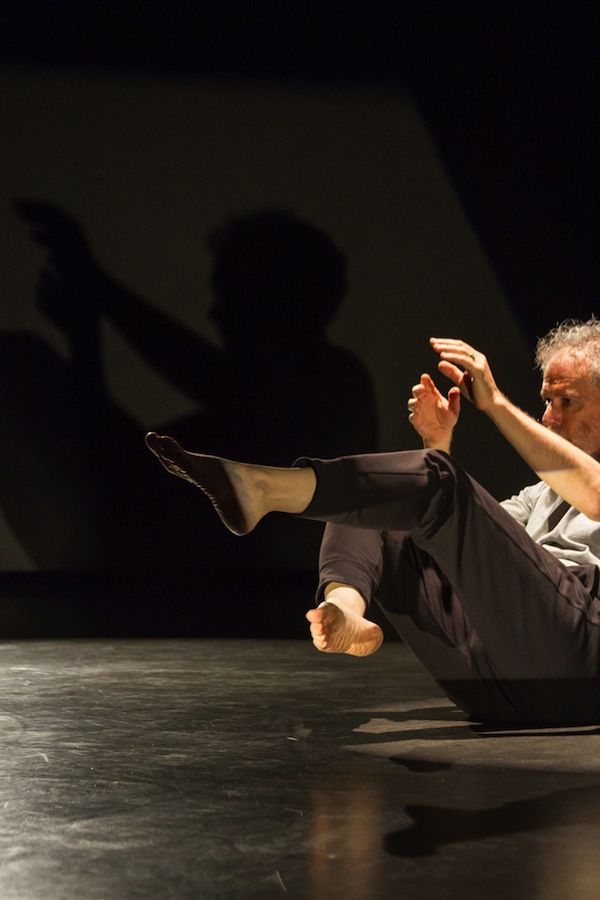
Ted Littlemore, in Orfeo ed Euridice, the research for which will be presented by Idan Cohen and Ne. Sans on May 13 at the Dance Centre. (photo by Ted Littlemore)

A relatively recent arrival in Vancouver, Israeli choreographer and opera director Idan Cohen is already making his mark. On May 13 – with the support of the Dance Centre, Arts Umbrella and Vancouver Academy of Music – Cohen and Ne. Sans will present Orfeo ed Euridice, a glimpse into Cohen’s reenvisioning of Christoph Willibald Gluck’s opera.

The myth of Orpheus is a story of love. Poet and musician Orfeo mourns the death of his wife, Euridice, and he determines to get her back from Hades. With the intervention of Amor (Cupid), the god of love, Orfeo heads into the Underworld, gaining entry by winning over the Furies with his music, and he is reunited with his wife. However, Amor has set a condition – Orfeo must not look at Euridice, or explain why he is not doing so, until the two are back on earth. It’s a condition Orfeo breaks when Euridice begins to doubt his love and begs for a glance to assure her. When he gives in, Euridice dies again and Orfeo, grief-stricken, resolves to kill himself so that he can be with her. In the face of such love, Amor intervenes once more, to save both Euridice and Orfeo, and return them to earth.

“This opera was created in 1762 and, for me, a significant part of directing a classic opera is the studying of the values that originally inspired the music and the performance,” Cohen told the Independent. “Looking at concepts of novelty and tradition and respecting those as the DNA of this creation was quite valuable in my creative process. At the same time, those are values that are violent, discriminative and often quite outdated. One clear example that I personally find fascinating is the fact that Orfeo ed Euridice was originally written to be performed by a male castrato. Nowadays, it is often performed by a female mezzo-soprano or a male singer singing in a falsetto technique, but, for me, the history of the castrato and the violence that history entails against the human body is an example of difficult questions and issues that are a part of the time this opera was created in.

“It is even more fascinating and relevant,” Cohen added, “since the mythological story of Orpheus presents to us a musician and a poet who had the ability to enchant all living creatures through his musical gift. Orpheus’s strength was art and, hence, he is the ultimate representation of art and the artist. So, in Orfeo, these values can be represented in the most honest, vulnerable way, exposing their inner human truth and the limits through which we define and accept artistic beauty.”

Cohen grew up in Kibbutz Mizra in the north of Israel, but lived in Tel Aviv for 10 years before coming to Vancouver with his partner about a year ago. “When we got here, I completely fell in love with the city, the nature, the people,” said Cohen.

“Besides the personal reasons that brought me here,” he said, “I’m finding Vancouver’s arts scene most inspiring, and the city was very welcoming to me. I’ve received this wonderful DanceLab residency at the Dance Centre, I have been creating for Arts Umbrella’s pre-professional program, led by Lesley Telford, and with Modus Operandi, directed by David Raymond and Tiffany Tregarthen. These great artists invited me to teach and create when I just got here, and I immediately felt at home.

“Also, for the past years, I have been interested in directing opera through dance and movement … [and] there is so much going on in the city both in opera and in dance – I feel I have something to contribute to this city’s rich arts scene by fusing the two. Historically, they do belong together.”

As well, said Cohen, “living in Vancouver makes traveling so much easier and, when you travel often, this can be very convenient and helpful. This June, I will present at the Seattle International Dance Festival with Ne. Sans, my new Vancouver-based society, and, on the following day, will catch a flight to go to Sydney to present work in Sydney and Newcastle.”

According to Cohen’s website, Ne. Sans “is a home for the research and creation of work that seeks to deepen and reconnect opera and dance.” And this melding “opens a whole new world of collaborative opportunities: a space that involves working with singers, dancers, musicians, visual artists and designers.”

“Directing an opera like Orfeo ed Euridice through dance is a huge task that requires a tremendous amount of preparation,” said Cohen. “This opera was created 256 years ago, but has kept its immortality through its beautiful music and a story so rich, layered and full of depth.”

As he enjoys exploring operas with dancers in the studio – “It’s a great way to get intimate with the music, through the body” – Cohen said, “I’ve started this process by creating a 20-minute duet that was inspired by Orfeo ed Euridice, using parts of Gluck’s music and the main ideas behind the story, and translating those to pure dance. The dramaturgy of that dance piece was inspired by the opera and its libretto [by Ranieri De’ Calzabigi]…. But, looking at it closely and breaking it apart in the studio presented an opportunity to create a more abstract version of the story, in dance form. Fortunately, it was very well-received and won an award from the Be’er Sheva Fringe Festival, in Israel’s Negev.”

The presentation at the Dance Centre “will be performed by 18 singers from VAM [Vancouver Academy of Music] Schola Cantorum chorus, conducted by Kathleen Allan; six dancers from Arts Umbrella’s pre-professional program; two amazing dancers/musicians, Ted Littlemore and Jeremy O’Neil; and mezzo Debi Wong [director of re:Naissance opera company]. It’s a rather big cast for what I’m hoping will be an honest, pretty direct sharing of the research and ideas that will then be transformed into the ‘real deal,’ the full opera production.”

The Orfeo ed Euridice presentation is open to the public and is free of charge. It takes place in the Dance Centre’s Faris Family Studio May 13, 3 p.m. RSVP to [email protected] to reserve a seat.

Format ImagePosted on May 4, 2018May 2, 2018Author Cynthia RamsayCategories Performing ArtsTags dance, Idan Cohen, music, opera, Orfeo ed Euridice
Ballet BC brings back Bill

Ballet BC brings back Bill

Ballet BC artists perform Bill, by Israeli choreographers Sharon Eyal and Gai Behar, with musician Ori Lichtik. The company premièred the work in Vancouver 2016 and is bringing it back as part of Program 3 May 10-12 at Queen Elizabeth Theatre. (photo by Chris Randle)

What’s coming out of Israel is some of the “most exciting” dance, Ballet BC artistic director Emily Molnar told the Independent in a phone interview last week about the company’s upcoming program May 10-12, which includes the return of Bill, by Israeli choreographers Sharon Eyal and Gai Behar, with musician Ori Lichtik.

“It’s moved around the world in different generations, where the leading focus is coming from in dance,” said Molnar, “and I think that Israel is, right now, very much one of the major centres…. There is something about the way that the body is being spoken through the dance that’s coming out of Israel that is very relevant right now … it’s exploring more the sophistication and the rawness and the curiosity and the aliveness of using the body in dance.”

Ballet BC performed the Canadian première of Bill in 2016 and have since toured nationally and internationally with it, as part of an evening of female choreographers, along with Crystal Pite’s Solo Echo and Molnar’s 16 + a room. Given the response to Bill after its première here, Molnar said, “It was just one of those things that, to me, was obvious – this needed to come back to Vancouver audiences.”

And it will be a somewhat different performance than it was two years ago. “It’s more in the skin of the performers,” said Molnar. She explained that, having toured with it, the piece is “more familiar” to the dancers, “so they can take different forms of risk than they did before, when they first learnt it. And, each year, we’ve been bringing someone who is familiar with the work and close to Sharon’s work to come and work with us on it, so we keep tuning it each time we do it.”

Ballet BC has only recently returned from six weeks in Europe. The company toured the United Kingdom with the Dance Consortium, which works with their network of presenters to put together a touring circuit for international companies. “They only do two a year, and we were one of them,” said Molnar. “Then we attached that to two weeks in Germany.” In Germany, Ballet BC was the first Canadian company to be invited to perform in Wolfsburg, for the Movimentos Festival, she said.

“There are really a few festivals in Europe that really are landmarks or venues,” she explained, saying that Sadler’s Wells in London, England, where Ballet BC also performed, and Wolfsburg were two of them. “And, next year, we’re going to Luxembourg, so that’s another big one. And then we’re going to Madrid, and also to Tel Aviv, hopefully. More and more touring is coming up for the company, which is really great for us. We love being here at home, for sure, but to be able to have more shows and to diversify audiences, we get more information about what works … we learn more about what we’re trying to do.”

Touring is a relatively new phenomenon, said Molnar. When she danced with the company, they may have toured a week and, when she started as artistic director almost 10 years ago, they weren’t touring at all, she said. “Then we started touring maybe two weeks of the year, and now, this year, we’re out about six or seven, and next year could be even more. There will be a limit, because we have to build a certain amount of work in order to do each season, so we’re not going to be a company that’s constantly on tour because we have a subscription series and we love being three times a year here in Vancouver.”

In many Ballet BC programs, audiences can expect to see a piece choreographed by Molnar.

“I work very closely with the dancers, with the company,” she said of her creative process. “I will often start with proposing ideas or text or ‘what if you tried this’ … and then we start to build some vocabulary. From that vocabulary, I start to compound it and build a dictionary and, from that, I start to place it into some form of a world…. I’m not someone who goes in and shows every step; I definitely cultivate a conversation or way of thinking about a theme or a topic … and then we start to see what comes out of it. I work a lot with improvisation before I get to things that are often scored. But, when I do score something – in other words, when I set it choreographically – I do often still try to keep some things that might be improvisational, but that’s not always the case.”

She said, “It’s more about finding unusual timings, unusual possibilities in the movement. I think that, although I’m very attracted to the expression of the body … there is usually always a concept for me of what I’m working with in the way that I grid, the way that I compose.”

Where the music comes in depends on the work. Sometimes it comes first, and that is the case with the work she has created for this season’s Program 3 with Graeme Langager, conductor of the Phoenix Chamber Choir.

Molnar said that she and Langager had been looking for awhile at how they could bring Ballet BC and the choir together in a performance. “We have a lot of shared philosophy,” said Molnar, so it was a case of “when can we make this happen, and this program seemed like the right one.”

Langager proposed a few compositions, and Molnar was drawn to one by Peteris Vasks called Plainscapes. But it’s a short piece, so that has been part of the challenge of choreographing it – “it’s only 15 minutes,” she said, “and I’m working with the full company, as opposed to a duet or something like that.”

As well, she said, there are 30 voices in the choir, a cello and a violin. “It’s this very beautiful, very intimate, but driving piece of music that has a mysterious urgency to it and I took it as a reflection of a landscape of memory, this desire to want to hold on to remembering something…. The more we lose memory of something, the more we want it to exist.” In her choreography, she tries to communicate that feeling – the desire to hold on to life, on to our memories.

When putting together a triple bill, Molnar said she looks first for diversity “that will take the audience, as a full evening, on a certain type of journey, as opposed to the same tone.

“It is always a risk when we’re doing new work,” she said, “but we don’t always have new work on the program. So, for instance, in this program, I knew mine would be new, so that’s an unknown, but I knew what Bill was and I knew what Beginning After was, which is the first work of the evening, which is a piece by our resident choreographer Cayetano Soto … to the music of [George Frideric] Handel, a beautiful aria. So, all of the pieces have a certain vocal aspect to them…. That wasn’t what drew me to say, oh, this evening is about the voice, but there is a certain type of humanity because the voice is involved in the musical aspect of the show. But there are things that are very different within each of the pieces, and then there is this real attention to the individual but also to the collective throughout each of the pieces.”

Next year will be Molnar’s 10th as artistic director of Ballet BC. Even before she got the job, she said, she had hoped that “its presence as a contemporary dance company, which was very clear before I ever joined as a dancer or as artistic director, would get, not just recognition but that it would have life outside of its own city and be an ambassador for all the new work” it was creating.

“It was not as known within the community as I thought it could be,” she said, noting that, for it to become known, some barriers had to be broken down about “what it meant to walk into a theatre under the banner of a ballet company.

“There are so many ways that can be,” she said, “and I’ve been really trying to work on that, that it’s really about having a conversation and it’s about sharing and it’s about understanding what dance can be, and it’s not about ballet, it’s about dance, it’s about art, it’s about community – and these are not meant to be catchphrases. Seriously, when you bring people together in a live performance and you have a conversation that’s been meaningful for a group of artists and you try to meaningfully extend that over to an audience and they care about it, then there are a lot of really exciting things that can happen.”

And one such exciting thing will be announced at Program 3. Ballet BC will be one of the first companies to commission the work of an emerging female Israeli choreographer so that, next season, Ballet BC will be performing three Israeli works. “We have Ohad [Naharin] coming back,” said Molnar. “We have another work of Sharon’s, a new work for us, and then….” (The JI is not one to ruin a surprise.)

Program 3 runs May 10-12, 8 p.m., at Queen Elizabeth Theatre. Tickets run from $35 to $100 and can be purchased from ticketmaster.ca or 1-855-985-2787.

Format ImagePosted on April 27, 2018April 25, 2018Author Cynthia RamsayCategories Performing ArtsTags Ballet BC, British Columbia, dance, Emily Molnar, Israel
My chat with Ed Asner

My chat with Ed Asner

Ed Asner stars in A Man and His Prostate, which is at the Anvil Centre Theatre for two nights only: April 27-28. (photo from ACT)

I did my homework. I had read and watched interviews. I had my questions ready. I was prepared. But Ed Asner is a force of nature – a funny, caring and curious one, but a force of nature nonetheless. And nature is more powerful than the proverbial man. I learned that in high school English class – man has a chance against another man or his own internal demons, but not so much against nature.

I was calling Asner about his upcoming performances in New Westminster at the Anvil Centre Theatre April 27-28. He stars in A Man and His Prostate, written by his longtime friend Ed Weinberger, a multiple-award-winning scribe (including a Writers Guild of America Lifetime Achievement Award), who has written for countless TV series – for soooo many comedies. Both Weinberger and Asner know funny, so this show promises to be hilarious. But its purpose is also to make a point: “that point being,” Asner told me succinctly, “get examined.” Hear that, guys?

I’ve interviewed famous people before so that wasn’t the reason I got somewhat flustered in speaking with Asner. Admittedly, I loved and watched every episode of The Mary Tyler Moore Show and its spinoff drama Lou Grant. I have enjoyed Asner in various other roles over the years, including on Murdoch Mysteries (as Santa Claus, of all things) and, of course, as the voice of Carl Fredricksen, the grumpy protagonist in Up, who made me cry. Hearing such a well-known voice respond to your questions is very cool, and a little unnerving, but there was more to it.

I called Asner at the number I was given by the publicist for the local show. The woman who answered the phone simply said he’d had to leave and that I should try his cell, so I did, thinking nothing of it. The connection wasn’t great, but I reached Asner – he was in an L.A. hospital waiting to get a CT scan. When I wished him well and said we could reschedule the interview, he said, “Let’s try to talk now. It’ll help me pass the time.”

As I started asking him questions, he stopped me: “Are you uncomfortable doing this?”

“No,” I said, “I’m happy to keep your mind off things if that’s going to help.” I got as far as finding out that Weinberger had approached Asner about a year and a half ago to take on this role, but the line really was bad and we weren’t hearing each other – he said he’d call me back. But it was Asner’s righthand man (Nick, I think) who phoned, telling me that Asner had gone in for his CT, and they would call again once it was complete.

Next call: “Are you OK?” I asked.

“I’m fine. Well, maybe a little dizzy,” said Asner. Or, at least that’s what I think he said. After a spike of feedback came through the phone, I admitted, “I can barely hear you.”

In a louder voice, enunciating carefully and speaking slowly, he responded, “I said, maybe a little bit of syphilis.”

I might have taken a beat before saying, “Oh my. Really?! Is that the headline I can put?”

While it may not be apparent on first meeting, I can be bawdy with the best of them, and I enjoy such banter when all involved are of age and it’s in good fun. And this would turn out to be one of the most fun interviews I’ve conducted.

Laughing, I said, “So it all went well, the CT scan?”

It had indeed. He’d had a fall but was OK. I thanked him for calling me back, and he let me know, “Well, I’m reversing the charges.”

“You should!” I said. “You’re paying for this now. Oh my gosh. I was hoping to get my parents to pay for it.” (I was in Ottawa, and was calling him from my parents’ house.)

“Ah, no, no, no,” he assured me. “Anyway, you’ve got a lovely voice.”

“As do you, of course. But a little more famous than mine.”

“Well, I’ve been working at it longer.”

We eventually returned to where we had left off. “Were you involved in any of the writing process, or is there improv involved?” I asked about the show.

“Not on this,” said Asner. “I worked with him [Weinberger] on our book together, called The Grouchy Historian, which came out in October. We worked together on that, but he wrote A Man and His Prostate all by himself.”

“And you obviously liked what he wrote.”

“I love it.”

Asner said his first performance of A Man and His Prostate was in the fall of 2016, but then he stopped the interview again, leaving the phone with Nick – the two were still at the hospital, about to grab a very late lunch. Getting into a rhythm for this interview was proving impossible. Case in point, when Asner returned to the line, he started interviewing me. Why was I calling from Ottawa? I explained I was at home for Passover and asked if he had attended a seder. “No, we were on the road,” he said, going on to ask me about the weather in Ottawa, how many were in my family, whether I had grown up in Vancouver. When I let him know that I had grown up in Winnipeg, he said, “Oh, God.” And, while I fumbled to regain my role as interviewer, he continued his train of thought, “Froze your ass off didn’t you?”

“I did,” I admitted. “And that’s why I live in Vancouver now.”

After some PG-rated politically incorrect exchanges, I managed to get back to my questions.

The first shows of A Man and His Prostate were in California, he said, then they did a few in New York.

“Do you do what the show preaches? Do you get regular prostate exams?” I asked.

“Well, I’m due for one, I must tell you,” he said.

Asner called A Man and His Prostate “wonderfully funny,” and said “it stresses a very important point – that point being, get examined.”

He said the show is “very rewarding to do because the laughter is prevalent.”

At 88, he has no plans to retire. As for his beginnings in the profession, he said his desire to be an actor “didn’t achieve consciousness until I did the lead in the play at university.” He said, “I had done radio in high school, and loved it, but full-fledged stage-acting, I hadn’t thought of that.”

That doesn’t mean he didn’t like the spotlight as a kid. “I loved to get up and sing Adon Olam louder than anyone else,” he said, adding, “My bar mitzvah was a failure.”

He explained, “I spoke too fast, and angered my father. I put my hands behind my back, hovering over my ass, that angered him, as well. I was a prize student … but that bar mitzvah was not of prime quality.”

Asner grew up in an Orthodox home and, he said, “I’d say I pursued acting, probably, as part of my atonement” for his bar mitzvah. He said acting was at least a partial atonement in that it involved “pleasing the crowd, reciting or reading the script correctly and empathetically … all kinds of things.”

While no longer religious, Asner attributed his activism to “the intensity of my raising, the love of my parents, the constant identification as a Jew, [being] born in the time of Hitler.”

The actor has seven grandchildren. When I asked about whether he actively tries to engage them in the world around them, he joked, “Nope. I don’t like ’em.”

“You only hang out with them when you have to?” I asked.

“Uh huh. They don’t like me. It’s a perfect fit.”

I told him how much I enjoyed the Funny or Die video Old People Don’t Care About Climate Change, in which he took part. I mentioned it because one of his lines in it is, “My grandkids are spoiled anyway. They could use a little hardship.” The video’s message, of course, is that younger people must take action to protect the environment.

“I worship the earth,” Asner told me. “I don’t necessarily worship any god.”

Returning to the reason for the interview, I asked him whether he had anything else to say about A Man and His Prostate. “You’ll be there, and you’ll see how right I was to urge you to come,” he said.

The show is about Weinberger’s “journey to discover his inner self both literally and figuratively,” reads the press material. “This near tragedy is masterfully transformed into a poignant monologue perfectly portrayed by Asner as he visits the hospital in preparation for a surgery he needs but doesn’t want.”

“There’s mostly jokes all the way, or building up to a joke,” Asner said. “But then we get to that little section where I talk about the celebrities who have died – it’s a long list of celebrities – and I make the serious point that, every 16 minutes, a man dies of prostate cancer in the United States.”

As we wound up, he said, “You’re a wonderful interviewer, I don’t care what they say about you.”

“You should only believe half the rumours,” I returned.

A charmer to the end, he said, “I can’t wait to meet you.”

After I told him I didn’t think that was an option for me, he asked, “Why not?”

“Because you’re you!”

He told me to tell the publicist, “Well, say that I asked for you.”

“OK,” I said. “And I’ve now got it on tape, so I can actually prove that I’m not just making that up.”

“That’s right,” he agreed. “That’s absolutely right.”

He said, I “could even bring Momma” – my mother had answered the phone when he called back.

“Momma might even fly to Vancouver for that,” I responded before handing the phone over to my mom so she could say goodbye.

For tickets ($75) to A Man and His Prostate at the Anvil Centre Theatre April 27-28, 7:30 p.m., visit ticketsnw.ca or call 604-521-5050.

Format ImagePosted on April 20, 2018April 18, 2018Author Cynthia RamsayCategories Performing ArtsTags Anvil Centre, Ed Asner, Ed Weinberger, health, Judaism, prostate cancer, theatre
Success in comedy biz

Success in comedy biz

Mark Breslin (photo from Temple Sholom)

Yuk Yuk’s co-founder Mark Breslin is excited to be entertaining Jewish Vancouverites at Temple Sholom’s annual spring fundraiser May 6.

“I can’t get enough Jews in my life,” he told the Independent. “I’m married to a Catholic woman but I’m a Jew through and through. Any time I can talk about Jews and Jewishness, and my unique views on that, I jump at the opportunity because comedy is the jazz of our people. That’s how I express my Jewishness in the biggest way, not by keeping kosher or going to Israel each year, but through comedy.”

Breslin opened his first Yuk Yuk’s location in 1976. Today, he has 15 Yuk Yuk’s franchises across the country, has published four books, produced programs for television and radio, and appeared in theatrical productions. He’s a sought-after public speaker and, in December 2017, he was awarded the Order of Canada.

“Comedy is not usually something people respect, so it’s gratifying that some bureaucrats in Ottawa see what I’ve done with my life and think it has value,” he said. “But all the people I’d like to lord this over are dead now.”

Those people include a high school principal who informed Breslin he was a menace to society, as well as his aunts and uncles, who refused to attend his shows “because they thought I was wasting my life.”

Back when he started Yuk Yuk’s, Breslin said he received no support or encouragement from the people closest to him. “My mother was a child actress in the Yiddish stage in 1920, so you’d think she would be thrilled about what I was trying to build in comedy, but instead she was appalled by it right to the grave. My father was more ambivalent. He respected Yuk Yuk’s as a business and was proud of me, though he didn’t find the comedy funny. Even my friends thought I was nuts.”

When he began the first Yuk Yuk’s location, in Toronto, Breslin said his main goal was to avoid law school. “I thought I’d do comedy for a couple of years and find something else to do when it ran out of steam,” he admitted. “I never thought it would become my life!”

Initially, the Toronto Yuk Yuk’s was known as “that Jewish club,” because the names of the performing comedians were all Jewish. “When standup started, it was a very Jewish thing to do,” explained Breslin. “A lot of the comedians at that time were my friends from high school or university, and they gravitated to Yuk Yuk’s because they knew me.”

Today, standup is a mainstream phenomenon and Yuk Yuk’s is no longer known as a Jewish club. One thing that’s remained unchanged from the get-go, however, is Breslin’s insistence that his clubs be uncensored. “I’ve never censored an act in the 42 years I’ve been in business,” he said. “Being uncensored is important because the clubs are small enough that no one can control them. We have an obligation to be the official opposition and, these days, it’s more important than ever.” While he conceded that most comics exercise their right of free speech to talk about sex, not politics, he said, “Still, the opportunity is there.”

Yuk Yuk’s has two locations in British Columbia: Abbotsford and Vancouver. The Vancouver club opened in 1988 and is located on Cambie Street, near City Hall. It’s always been a success, said Breslin. “I measure success by some level of profitability, but also by how impactful our product is on the wider community and on comedy in general,” he said.

Among the comedians who got their start at Yuk Yuk’s are Russell Peters, Jim Carrey, Howie Mandel, Mike Bullard and Gerry Dee.

Breslin said that, on May 6, at the Temple Sholom event, he plans to talk about how each Jew has their own unique form of Jewishness and how we treat our culture as a Chinese buffet, picking what we want from it.

“I’m going to talk about the golden age of Judaism, 1950 to 1975, when it was cool and sexy to be a Jew,” he said. “I’ll try to figure out what happened between then and now, and why we’re a people in need of a good PR person. I’ll also reveal a lot of fun stuff about my life, my family and things I’ve done, relating that to comedy in general and what it means as a Jewish art form.”

For event details, visit templesholom.ca/inspired. The evening at Performance Works on Granville Island is titled Inspired to Act and includes comedy, music by Adrienne Robles and Liel Amdour, and the 2018 Tikkun Olam Youth Awards.

Lauren Kramer, an award-winning writer and editor, lives in Richmond. To read her work online, visit laurenkramer.net.

Format ImagePosted on April 20, 2018April 18, 2018Author Lauren KramerCategories Performing ArtsTags comedy, Mark Breslin, Temple Sholom, tikkun olam, Yuk Yuk's
Festival fêtes Russian music

Festival fêtes Russian music

A scene from Vancouver Opera’s production of Eugene Onegin. (photo by Trudie Lee)

“I’ve sung a lot of Russian, and I love it,” Jewish community member and opera singer Leah Giselle Field told the Jewish Independent. Field will have a lot to love at this year’s Vancouver Opera Festival, which starts next weekend.

Russian White Nights, the second annual Vancouver Opera Festival, celebrates Russia’s luminous midsummer nights. Among the festival offerings is Eugene Onegin, based on the classic of Russian literature by Alexander Pushkin, which was turned into a lyric opera with a libretto co-written by Pyotr Ilyich Tchaikovsky with K.S. Shilovsky. The festival will also feature the première of The Overcoat, an opera based on Nikolai Gogol’s famous short story, as well as Requiem for a Lost Girl, an original chamber musical collaboration that explores themes around homelessness and violence towards women.

According to the press material, Eugene Onegin – which plays April 29 in the afternoon, and the evenings of May 3 and May 5 – promises “breathtaking music [and] choreography, lavish orchestrations and compelling arias.” Field will be playing the role of Larina, the mother of the two main female protagonists of the story, Olga and Tatyana.

“The libretto includes portions of the original verses of Pushkin,” Field said, noting that the score is one of her favourites. “Tchaikovsky originally thought it would be blasphemy to make Pushkin’s poem into an opera, but eventually he agreed. I love the Pushkin poem the opera is based on as well – it’s so environmentally evocative, it is so Russian, and it takes you into right into that environment.”

A number of Russians feature in the cast, including baritone Konstantin Shushakov (Onegin), soprano Svetlana Aksenova (Tatiana) and tenor Alexey Dolgov (Lensky). This new production has been created in collaboration with Calgary Opera and is directed by Tom Diamond and conducted by Jonathan Darlington. Eugene Onegin will be sung in Russian with English surtitles projected on a screen.

In addition to Eugene Onegin, Field will participate in a chamber music performance of Dmitri Shostakovich’s From Jewish Folk-Poetry Op. 70 on May 4, 5 p.m., at CBC Studio 700. This song cycle was written in 1948 by the Soviet composer, who initially wrote eight songs that were meant to reflect the hardships of being Jewish in the Soviet Union. In order to disguise this sensitive material, Shostakovich added three more songs depicting the “great life” Jews had under the Soviet regime. Despite these efforts, the censors were not fooled and refused to approve the work – it could not be performed until after Stalin’s death in March 1953.

On the lighter side, Field will also appear in a family-oriented original adaptation of Maurice Sendak’s Where the Wild Things Are, a student performance co-produced by Vancouver Opera and Delta School of Music on May 5, 1 p.m., also at CBC Studio 700. The production is one of four offerings aimed at children and/or teens on the festival’s Family Day.

Vancouver Opera general director Kim Gaynor, also a member of the Jewish community, is in her second season at the organization, which she came to after years working the festival circuit in Europe. Gaynor told the Independent that she has modified the Vancouver festival quite a bit from its first year, trying to take a more “out of the box” approach. This includes a more diverse and daring program with a mixture of classical and contemporary works, and the inclusion of chamber music. The festival will also include three films: the silent film Man With A Movie Camera on April 28, the 2001 CBC production of The Overcoat on April 29 and 1965’s Dr. Zhivago on May 1.

The festival starts on April 28 with an outdoor celebration at Queen Elizabeth Theatre Plaza that features Russian cultural performers, food trucks, market vendors, a circus presentation, a movie screening and a patio bar. Festivities that day will get underway at 2 p.m., and a highlight will be the re-creation of the pinnacle of white nights celebrations in Russia that evening. A 40-foot schooner with scarlet sails will serve as the stage for acrobatics, music and custom-designed projections on the 22-foot-high sails in a performance suitable for all ages. Scarlet Sails will also be offered April 29 and May 3 and 5.

The Vancouver Opera Festival runs to May 6. The full program and more information can be found at vancouveropera.ca.

Matthew Gindin is a freelance journalist, writer and lecturer. He is Pacific correspondent for the CJN, writes regularly for the Forward, Tricycle and the Wisdom Daily, and has been published in Sojourners, Religion Dispatches and elsewhere. He can be found on Medium and Twitter.

Format ImagePosted on April 20, 2018April 18, 2018Author Matthew GindinCategories Performing ArtsTags chamber music, film, Kim Gaynor, Leah Giselle Field, Onegin, opera
The magic of laughter

The magic of laughter

Magician Stephen Kaplan entertains at last month’s Empowerment session. (photo from Jewish Seniors Alliance)

On March 21, the Jewish Seniors Alliance, in partnership with Temple Sholom Seniors, once again brought the community a magical program of laughter.

In the program, which was the second in the 2017/18 JSA Snider Foundation Empowerment

Series with the theme Laughter and Music: Feeding the Soul, magician Stephen Kaplan delighted the audience of more than 100 people with his energy, sense of humour and enthusiasm.

Kaplan introduced himself as “the Maestro of Magic” and, as such, he said he conducts the magic that is within us all. Combining interactive entertainment with jokes and surprises is what he loves to do – and he does it so well.

The audience was shrieking with laughter and wonder. How did he guess that Heather’s first boyfriend’s name was Peter? How did he guess that Lila was thinking of the city Winnipeg? And how did he guess that the card that Bonny picked was a seven of diamonds? Did he really guess all that? It doesn’t matter. As a finale, he took a section of the Vancouver Sun, tore it into pieces and, within seconds, put it back together.

Gyda Chud, his preschool teacher, introduced him beautifully. Was she the one who instilled the charm and magic in him? Kaplan made sure that every one of the attendees left the program with a big smile.

The afternoon began with greetings from Bill Gruenthal, Arthur Gutman told some jokes and led the audience in Passover songs, and Ken Levitt, JSA president, encouraged people to join the JSA, if they hadn’t already.

Two more Empowerment sessions on the theme Laughter and Music are coming up: Perla’s Music Workshop on April 17 with Congregation Beth Israel, in conjunction with the Jewish Family Services’ Seniors Lunch program; and Music for Our Hearts and Songs We Love on June 25, with the Kehila Society in Richmond. For more information, visit jsalliance.org or call 604-732-1555.

Tamara Frankel is a board member of Jewish Seniors Alliance.

Format ImagePosted on April 20, 2018April 18, 2018Author Tamara FrankelCategories Performing ArtsTags comedy, Empowerment, JSA, magic, seniors, Snider Foundation, Stephen Kaplan
Cabaret a timely show

Cabaret a timely show

Michael Wilkinson, left, and Kurtis D’Aoust in Royal City Musical Theatre’s Cabaret, which plays at Massey Theatre until April 29. (photo by Emily Cooper)

The musical Cabaret is a classic in the English-speaking world. Since its Broadway première in 1966, it’s been staged multiple times in many countries, and its acclaimed movie version of 1972 won eight Oscars. This April, Royal City Musical Theatre (RCMT) brings the show to New Westminster’s Massey Theatre.

“I saw the Cabaret movie many years ago, but it’s quite different from the stage musical, which I saw for the first time on Broadway in New York, starring Alan Cumming, in 2015,” actor Michael Wilkinson told the Independent. “The Broadway production was spectacular; not only is the show filled with great songs and dance numbers, but the various storylines were, and are, timely to current events that we’re seeing around the world today.”

With music by John Kander and lyrics by Fred Ebb, the show is loosely based on the book Cabaret, written by Christopher Isherwood.

“Taking place in Berlin [in 1931] just before the Nazis came to power, Cabaret demonstrates how there was an increasing presence of far-right wing politics, which is not dissimilar to some of the political movements we’re seeing in the United States,” said Wilkinson, who is a member of the Jewish community. “It provides a stark reminder of how we need to stand up for those who are most vulnerable in society.”

In the RCMT production, Wilkinson plays Victor, one of the performers at the cabaret. Victor is a dancer, singer and waiter, Wilkinson explained. “As Victor, I spend most of the play singing and dancing in the ensemble numbers, as well as serving and fooling around with the patrons. It’s a fun role, and many dance numbers are very energetic.”

Unlike most members of the cast, Wilkinson doesn’t see his professional life revolving around theatre. “I actually am not studying acting,” he said. “I did study theatre for one year right after high school in New York at NYU. However, after an amazing year, I decided that theatre school was not for me, so I returned to Vancouver. I’m currently one year away from graduating with a bachelor of arts from UBC’s Institute for Gender, Race, Sexuality and Social Justice. I would love to work in arts marketing or management, but I am also very passionate about youth education.”

For him, theatre is a beloved hobby, although he did want to be an actor as a child. “I grew up taking theatre and music classes, which I loved. I went to the fine arts theatre program at Lord Byng Secondary School,” he said. “I participated in school plays. I also participated throughout high school in many community and professional theatre productions across the Lower Mainland. And I’ve continued to do so into adulthood. I love to do theatre in my spare time, and companies like RCMT provide a great opportunity for this.”

Being in a musical is ideal for the young performer.

“I started playing violin when I was 5 and I played oboe in my high school band, so music has always been a part of my life,” he said. “Musicals just seemed like a natural genre for me to fall into when I became interested in theatre. I love being in big musicals, like Cabaret. RCMT is a great company because they present big musicals every year, which is not something that every theatre company is able to do. This is my fourth show with RCMT. With them, I’ve had lots of fun in the smaller featured roles or as part of the ensemble.”

Over the past several years, Wilkinson has performed with many theatrical companies in Vancouver. In addition to RCMT, he has played in shows put on by Theatre Under the Stars, Awkward Stage Productions, Gateway Theatre, Bard on the Beach, and Footlight Theatre.

“Most of them have been non-paying [roles], which was fine growing up and going through high school,” he said. “I never expected to get paid at that age. However, this year, RCMT introduced an actor honoraria, which is very helpful to offset transportation costs. While this is certainly not the case for many other cast members, I’m not at a point where I’m looking to make a living from doing theatre. I have two other part-time jobs, my UBC classes and rehearsals, so [being in] shows that do not pay, or at least not very much, works for me.”

The timing of a show is more important to him than the financial side, because he has to juggle his schedule. This is why he doesn’t go to auditions very often. “I only audition for productions that I would really want to be in and that I know I can commit to, in terms of rehearsals and performance dates,” he said.

He enjoys everything involved in putting on a show. “I love the rehearsal process,” he said, “because it is so exciting to watch a production come to life with all its elements: music, choreography, scene work, props, costumes, sets and lights, and eventually the audience. It is also great to get to know a new group of actors as we come together to work on a production. The Vancouver theatre community is quite small, so there are usually some familiar faces, but every cast kind of becomes a family for the duration of a show – some of my best friends I’ve met through theatre. And, of course, performing the final product in front of the audience is always very exciting.”

Wilkinson is not sure yet what his future holds, or even where he will be after graduation. “I’ve lived in Vancouver my whole life, minus my one year in New York,” he said. “Vancouver is home, but if a really great job presented itself outside of Vancouver, I would never say no. I’m also interested in doing my master’s degree at some point, so that may involve a move, as well. I think it’s important to be happy in whatever we’re doing, so that’s how I try to guide my education, work and theatre to balance in my life.”

Cabaret opened at Massey Theatre April 12 and runs until April 29. For tickets and information, visit royalcitymusicaltheatre.com.

Olga Livshin is a Vancouver freelance writer. She can be reached at [email protected].

Format ImagePosted on April 13, 2018April 13, 2018Author Olga LivshinCategories Performing ArtsTags Cabaret, Holocaust, Massey Theatre, Michael Wilkinson, musical theatre
Unique coming of age

Unique coming of age

Richard Newman and Gina Chiarelli in Bar Mitzvah Boy, at Pacific Theatre until April 14. (photo by Damon Calderwood)

The number 13 means different things to different people. To a baker, it’s that extra pastry that he adds to a dozen; to the superstitious, it’s considered bad luck to the extent that some buildings do not have a 13th floor. To a Jewish boy, it means his right of passage into manhood, a journey fraught with both angst and joy.

But what if you missed that momentous occasion, for whatever reason, and now, as a grandfather, as your grandson’s bar mitzvah approaches, you have an urgent need to have a bar mitzvah ceremony? This premise forms the basis of local playwright Mark Leiren-Young’s Bar Mitzvah Boy, a two-hander being staged at the intimate Pacific Theatre in Vancouver until April 14. It won the American Jewish Play Project’s prize for best new Jewish play last year, with successful staged readings in New York, Boston and Charlotte, N.C.

Joey Brandt (Richard Newman) is a successful Vancouver divorce lawyer who wants to study privately with Rabbi Michael (Gina Chiarelli) in order to have his bar mitzvah before his grandson’s big day. He is surprised to learn that she is female, and even more surprised when she refuses him as a student, suggesting that he join Cantor Rubin’s bar mitzvah class instead. Joey is obviously a man used to getting his way and, not surprisingly, his stint in Rubin’s class turns into a fiasco, as Joey disrupts the class and takes all the boys out for Hawaiian pizza (you know, the kind that has ham on it). The rabbi eventually relents, in light of both Joey’s advocacy skills and a big donation to the synagogue’s renovation fund.

The chemistry between the two actors is palpable. The audience is led through a witty pas de deux, and both teacher and student experience personal metamorphoses through their weekly interactions. Joey – who has not been to shul for 52 years – learns to put on tefillin, as well as studying the liturgy and history of his people, in a crash course in Judaism. Meanwhile, the somewhat bohemian rabbi (she jogs and smokes marijuana – for “medicinal purposes” only) works through her own demons, which include an almost-12-year-old daughter with cancer and a husband who cannot cope with the illness. In an engaging twist, the professional roles reverse as the players grapple with the existential question of whether G-d is a metaphor or a real entity on which to base our faith.

Newman, who says that he is “Jewish on both sides” is stellar in his role as Joey (and his Hebrew is not too bad, either) but it is Chiarelli who steals the show with her sublime portrayal of a working mom having to deal with a sick child and an unsupportive husband. Kudos to Chiarelli, who is not Jewish, but who has mastered the dialogue and rituals of the script.

The set design is sparse but effective. One side is a backlit bimah with a lectern and a dove-shaped eternal flame hanging above. The other side does double duty as the rabbi’s study (replete with a library that includes Kosher Sex by Rabbi Shmuley Boteach and the Kama Sutra) and Joey’s office. The costumes are simple and the music – klezmer, what else.

Leiren-Young peppers the play with local references that will resonate with some of the community audience – names like Cantor Rubin, Rabbi Solomon, Schara Tzedeck, the astronomical prices of the real estate – some contemporary quips about the Broadway musical hit Hamilton and singer Kenny Rogers, and a multitude of Jewish clichés. He is the master of witty repartee, as anyone will know who has seen his play Shylock, which was, most recently, at Bard on the Beach last year.

“I had a truly crazy bar mitzvah at the Beth Israel,” said Leiren-Young when asked in an email interview by the JI about his own bar mitzvah experience. “There was a snowstorm and my mom’s car was hit en route to the shul for Friday night services. After that, standing at the bimah

and singing was easy! I drew a lot of inspiration for this play from real experiences – a mix of my own and stories from friends – but I just realized I left out the snowstorm. Maybe that’ll go in the movie.”

As to whether or not you have to be Jewish to get the play, he said, “No more than you have to be Catholic to ‘get’ Doubt or Mass Appeal or Sister Mary Ignatius (three ‘Catholic’ plays I love). But there are definitely moments that will hit harder for a Jewish audience and, I suspect, there will be jokes only Jewish audience members will laugh at.”

It is somewhat ironic that the world première of this play is being held in the basement of an Anglican Church, but that is part of its cachet.

The audience take-away from any play is deeply personal but, as Joey says in his bar mitzvah speech at the end of this journey into his faith: today, I am a man here to honour my family and ancestors, to celebrate being a Jew and becoming a member of a community with all the rights and responsibilities that go along with that membership. And, to that, we say, amen.

For tickets, visit pacifictheatre.org or call the box office at 604-731-5518.

Tova Kornfeld is a Vancouver freelance writer and lawyer.

Format ImagePosted on March 30, 2018March 29, 2018Author Tova KornfeldCategories Performing ArtsTags Judaism, Mark Leiren-Young, Pacific Theatre, religion, Richard Newman, theatre
Miller play remains relevant

Miller play remains relevant

Arthur Miller’s Incident at Vichy is set in a Nazi detention centre in Vichy France, where a group of prisoners are being held. (photo from Theatre in the Raw)

Theatre in the Raw is bringing Arthur Miller’s Incident at Vichy to the Studio 16 stage April 11-22.

The play was chosen and recommended to the theatre’s board of directors in 2017, said Jay Hamburger, artistic director of Theatre in the Raw and director of the theatre’s production of Incident at Vichy. “It had been a piece that had been suggested previously as well,” he said. “But, with the recent political developments in the U.S. as well as worldwide, I felt that, as a theatrical piece, it spoke closely to issues today perhaps even more so than when it was written in the 1960s, and these events were behind the popular consciousness in some way.”

In Incident at Vichy, Miller – whose most popular plays include Death of a Salesman, The Crucible and A View from the Bridge – explores our moral responsibility to act in the face of intolerance and hate. The one-act play, which was first performed in 1964, is set in a Nazi detention centre in Vichy France, where a group of prisoners are being held. “Their unease, fear and confusion is stirred up as they contemplate what may divide or unite them. And what fate awaits them,” reads the press material.

Panel discussions will follow each performance and explore the question, Can it happen here?

“That is the overall and main question placed before the audience as well as to ourselves,” said Hamburger. “Can fascism, or a wave of totalitarian, racially dividing politics take place in Canada? We see fragments of such distressing political and socially oriented movements happening worldwide. Even in the U.S., so close to Canada, there are semblances of divide and conquer. Sadly, it seems to come from the current administration in Washington, D.C. This is cause for real concern.

“Now more than ever this may be the time to warn people that eternal vigilance is key to the well-being of our daily lives, especially given the rise of violent hate crimes against Jews, Muslims, South Asian and First Nations communities, even in Canada…. The play finds a way to touch on economic and class concerns related to the increasing gap between the rich and the poor. It notes that certain people are at an insurmountable disadvantage in seeking ways to survive. Certain characters in the play point out the way prejudices are manufactured and fomented, often condemning people because of misconceived notions concerning races of people, ethnicities or religions.”

Incident at Vichy doesn’t only examine how genocide can happen, however, but what people could do to prevent it.

“Each character in the play has their own experience and background in relation to being interrogated for being Jewish or perhaps seen as an ‘undesirable’ in some way,” explained Hamburger. “The play is basically a dramatized account of events that took place in 1942 in the unoccupied ‘free zone’ of Vichy France,” he said, and it presents many of the attitudes that “people had who weren’t quite ready to accept the extent of what was happening around them until it is completely undeniable – and too late.

“It also includes as an important aspect the perspectives of characters who are non-Jewish Germans, and Austrians as well,” he added. “It implores members of the society to not be complacent in the face of governments and demagogues that wish to grab power by lying and oppressing the large swaths of society.

“A question and statement is placed forward within the play: who is responsible for such horrendous acts of cruelty leading to genocide? At what point must one consider themselves also responsible? The play suggests it is for all in society to give a damn or have a sense of responsibility to such terrible events. There is an important act of human kindness in the play, but I won’t give away the ending here. But, obviously, Miller is writing about shattering events, with shreds of hope that a holocaustal deluge will not repeat itself, that such human massacres will not happen again.”

Audiences should come away from Incident at Vichy with some answers, but perhaps as many questions about the nature of evil, how we perceive it and deal with it.

“I think the play is trying to answer the question, How did things get so far out of hand without people rising up and stopping the madness?” said Hamburger. “The play tries to answer that question, even though you get the impression of how relentless the evil and suffering was once certain powers were in control and the momentum of a horrific madness got going…. I think the play insists that ordinary people are instrumental in realizing evil actions, without necessarily wanting to see the bigger picture themselves. Thus, a vigilant eye is necessary on governments and draconian racial laws implemented upon a citizenry. Such policies must be watched, debated and fought against in a fair and free manner without fear of punishment or reprisal.”

photo - Theatre in the Raw artistic director Jay Hamburger directs the theatre’s production of Incident at Vichy
Theatre in the Raw artistic director Jay Hamburger directs the theatre’s production of Incident at Vichy. (photo from Theatre in the Raw)

Theatre in the Raw’s mission statement is on their website. Part of it is to be “risk-takers, willing to give exposure to voices seldom heard, striving for artistic excellence, in the presentation of unusual, awakening and exchanging theatre.”

“We are an independent grassroots theatre that has been in production and functioning for 24 years, residing on the Eastside of Vancouver,” said Hamburger. “We have produced comedies, tragedies, radio play works, original one-acts and full-length mainstage plays, as well as original and revived musicals of quality and enjoyment. Our process is to take the art of theatre and performance seriously and to present it first on a local level to Vancouver audiences and then beyond.”

The audition process for Incident at Vichy started seriously in early January and continued to the end of February.

“We saw dozens of actors (actually over 50 for weeks on end) that also included an extensive call-back set of days,” said Hamburger. “A few actors were called in to audition because I attended the unified general auditions that the Greater Vancouver Professional Theatre Alliance provides for theatre company members in the province. That proves an invaluable resource for those involved in the theatre arts.”

Rehearsals started at the end of February and will continue until the opening of the play on April 11 at Studio 16, which is housed in La Maison de la francophonie de Vancouver. “We are meeting three to four times a week, as well as individual meetings and sessions with each of the 15 actors cast in the show,” said Hamburger.

Incident at Vichy features some longtime Theatre in the Raw company members, he said, naming Roger Howie, Jacques Lalonde, David Stephens, zi paris, Brian Leslie, Stanley Fraser, Michael Kruse-Dahl and Ralston Harris. Hamburger is also part of the cast, as are Rob Monk, Julie Merrick, Daniela Herrera Ruiz, Laen Avraham Hershler, Giuseppe Bevilacqua and Simon Challenger, with Amanda Parafina as stage manager.

“We are fortunate to have such a dedicated and hardworking group of able thespians on the boards for the April run of the show Incident at Vichy,” said Hamburger, adding that fellow Jewish community member Cassandra Freeman also has been helpful.

“Cassandra has been an invaluable advisor and advocate for a number of years with Theatre in the Raw,” he said. “She has been a coordinator with the Tuesday night Vancouver Actor’s Drop-In sessions. We have cast at times from those evening sessions for some of our shows. She is a creative writer and has made the effort to report about Theatre in the Raw in a column or two she does for the press.”

Tickets for Incident at Vichy are $25/$22 and can be purchased from theatreintheraw.ca or 604-708-5448.

* * *

In his interview with the Jewish Independent, Jay Hamburger, artistic director of Theatre in the Raw and director of the theatre’s production of Arthur Miller’s Incident at Vichy, said, “A question and statement is placed forward within the play: who is responsible for such horrendous acts of cruelty leading to genocide? At what point must one consider themselves also responsible? … There is an important act of human kindness in the play, but … Miller is writing about shattering events, with shreds of hope that a holocaustal deluge will not repeat itself, that such human massacres will not happen again.”

Hamburger added, “The sentiment reminds and brings forth four related historical quotes that speak directly to significant parts of the play”:

“How can we expect righteousness to prevail when there is hardly anyone willing to give himself up individually to a righteous cause. Such a fine, sunny day, and I have to go, but what does my death matter, if, through us, thousands of people are awakened and stirred to action?” – Sophie Scholl, a member of the anti-Nazi White Rose group, who was executed for treason by the Nazis

“Of course, the terrible things I heard from the Nuremberg Trials, about the six million Jews and the people from other races who were killed, were facts that shocked me deeply. I was satisfied that I wasn’t personally to blame and that I hadn’t known about those things. I wasn’t aware of the extent. But, one day, I went past the memorial plaque which had been put up for Sophie Scholl in Franz Josef Strasse, and I saw that she was born the same year as me, and she was executed the same year I started working for Hitler. And at that moment I actually sensed that it was no excuse to be young, and that it would have been possible to find things out.” – Traudl Junge, one of Adolf Hitler’s secretaries

“I don’t believe that the big men, the politicians and the capitalists alone are guilty of the war. Oh, no, the little man is just as keen, otherwise the people of the world would have risen in revolt long ago!” – Anne Frank

“I’ve found that there is always some beauty left – in nature, sunshine, freedom, in yourself; these can all help you. Look at these things, then you find yourself again, and God, and then you regain your balance. A person who’s happy will make others happy; a person who has courage and faith will never die in misery!” – Anne Frank

Format ImagePosted on March 30, 2018March 29, 2018Author Cynthia RamsayCategories Performing ArtsTags Arthur Miller, genocide, Holocaust, Jay Hamburger, theatre
The telling of stories

The telling of stories

Left to right: Yoo Ra Kang (Asaka, Mother of the Earth), Ricardo Pequenino (Agwe, God of Water), Alexandra Quispe (Erzulie, Goddess of Love) and Sari Rosofsky (Papa Ge, Sly Demon of Death) in Fabulist Theatre’s production of Once On This Island, which opens April 6. (photo by Tina Clelland)

None of us mere mortals is a god. But some of us get to play one on the stage.

Sari Rosofsky takes on the role of Papa Ge in Fabulist Theatre’s upcoming production of Once On This Island. Papa Ge is one of four gods who affect – for better and for worse – the life of the main character, Ti Moune, a peasant girl living on an island in the French Antilles.

“What I love about Papa Ge is she’s the evil one!” said Rosofsky. “Ever since I was a child, I’ve always loved the bad guys more than the good because I felt they had more depth and dimension to them, and they always had the cooler songs. I think what is the most challenging part of this character is how to be a villain without being crazy – while I still want to portray the darkness and depth Papa Ge has to offer, I want audience members to be drawn to her despite her being the bad guy. It’s a delicate balance for sure, but I’m certainly up for the challenge.”

Based on the novel My Love, My Love; or the Peasant Girl by Rosa Guy, the one-act musical (with book and lyrics by Lynn Ahrens and music by Stephen Flaherty) “includes elements of Romeo and Juliet and Hans Christian Andersen’s The Little Mermaid,” explains the press material. Ti Moune “uses the power of love to bring together the different social classes living on her island.”

“Right now, I’m auditioning for a wide variety of shows, as I want to do as much theatre as possible to gain experience,” Rosofsky told the Independent about how she landed her role. “I saw the call [for Once On This Island] and saw that the production team had some familiar names, and knew I wanted to work with them – the music director, Amy Gartner, was actually in a show with me at the time I saw this call. I approached her and asked about the auditions and she strongly encouraged me to submit. So, I did, but, sadly, the auditions were during a time when my show had some important rehearsals. Thankfully, the production team decided to have me audition during the callbacks when I was available, and had me sing for multiple roles, Papa Ge included. And the rest, you can say, is history!”

Traditionally, director Damon Jang told the Independent in an email, the role of Papa Ge is played “by a man, but portrayed by a woman in the Broadway revival version.” Rosofsky, he said, “was the best person for the part, so we cast her.”

According to her bio, Rosofsky has “a passion for the arts, whether that be in singing, acting or modeling.” In addition to starting voice lessons at age 12, she started auditioning for school plays. She won her first role in Grade 8 – as a sailor in Shakespeare’s Twelfth Night. Her first musical came the next year, when she was part of the ensemble of Kiss Me Kate. She continued singing and acting through university, but did her degree in earth and ocean sciences.

Starting her sciences degree at the University of Waterloo, she finished it at the University of British Columbia. “While at UBC,” notes her bio, “she rediscovered her passion for musical theatre with the show Guys and Dolls, where she played Big Julie.”

Rosofsky has released two songs – “Save Me” and “Turn Around” – under the name Sari Rose. In her everyday life, she goes by the name Sari Chava Rosove. Rosofsky is her stage name, she said.

“My name alone is very difficult to pronounce for most people so I wanted to change it to something that rolls off the tongue slightly easier, but still maintain the uniqueness,” she explained. “It turns out my family already had this one taken care of for me – while Rosove is my legal last name, Rosofsky was the original family last name before they immigrated from Russia in 1901. They changed it to Rosove, as they were Jewish refugees and wanted to avoid antisemitism when they came to Canada. And so that’s where my stage name comes from, by paying homage to my roots.”

Rosofsky grew up in Seattle, where, she said, she spent most of her Jewish childhood at Herzl-Ner Tamid. “I went to Sunday school, along with additional after-school classes to prepare for my bat mitzvah, and, after that, I just kept going!” she said. “One of the most memorable things I did growing up at this synagogue was a program my mother actually ran, where a group of us would get together and make sandwiches that would be donated to a group that would hand out paper bag lunches to the homeless in Seattle. Of course, I also attended summer camp for a few summers at Camp Solomon Schechter.”

Rosofsky graduated from UBC in 2013, and then studied musical theatre at Capilano University.

“It’s a three-year, full-time program – and they truly keep you very busy,” she said. She attended Capilano from September 2014 to April 2017. “The entire program was so much fun. I learned a lot not only about the industry but about myself as a performer from some truly inspiring instructors.”

Recently, Rosofsky was in the ensemble for Merrily We Roll Along, put on by United Players, and played the wife in Draining the Swamp, by Curious Creations Theatre. “In between all of my endeavours in theatre,” she said, “I also dabble in competitive pole dancing which, in actuality, can be quite a performance! I competed and placed in my division back in October and will be training at Tantra Fitness for the upcoming competition in September, in between my other projects.”

Once On This Island is at the Red Gate Revue Stage on Granville Island April 6-14, 8 p.m. The show is approximately 90 minutes with no intermission.

The production is Vancouver’s first semi-professional cast of Once On This Island, according to the press release. Added Jang, “We wanted to cast based on the culturally diverse community of performers who make up Greater Vancouver and might otherwise be underrepresented in the city. We fully acknowledge that the story is a largely set in Haiti, but we wanted to use the story as a platform to address the more universal themes of love, death, and fighting against the class system. At the end of the day, these are storytellers telling a story.”

For tickets to the show, visit ootivan.brownpapertickets.com.

Format ImagePosted on March 16, 2018March 21, 2018Author Cynthia RamsayCategories Performing ArtsTags Damon Jang, Fabulist Theatre, musical theatre, Sari Rosofsky

Posts pagination

Previous page Page 1 … Page 28 Page 29 Page 30 … Page 49 Next page
Proudly powered by WordPress