
Skip to content
  • Home
  • Subscribe / donate
  • Events calendar
  • Business Directory
  • FAQ
  • News
    • Local
    • National
    • Israel
    • World
    • עניין בחדשות
      A roundup of news in Canada and further afield, in Hebrew.
  • Opinion
    • From the JI
    • Op-Ed
  • Arts & Culture
    • Performing Arts
    • Music
    • Books
    • Visual Arts
    • TV & Film
  • Life
    • Celebrating the Holidays
    • Travel
    • The Daily Snooze
      Cartoons by Jacob Samuel
    • Mystery Photo
      Help the JI and JMABC fill in the gaps in our archives.
  • Community Links
    • Organizations, Etc.
    • Other News Sources & Blogs
  • JI Chai Celebration
  • JI@88! video

Recent Posts

  • Federation now across BC
  • Israel fighting for its existence
  • Deal strengthens Iran
  • Patriotic belonging diminishes
  • A campaign to engage
  • Upstanders’ first live event
  • Responding to Carney
  • Having your own home
  • Music a family tradition
  • Musical to warm heart
  • Community milestones … June 2026
  • Sharing her passion for Israel
  • Or Shalom reopens its doors
  • JFS from past to future
  • Need holistic approach
  • Sharing stories, advice
  • Journalist shares fears
  • Skills to live together
  • Road to independence
  • Cutting grass with scissors
  • Zionism as a solution
  • Deceit, desire & the divine
  • Reclaiming sacredness
  • Creative project ideas
  • Summer squares and cobbler
  • Thou shalt … summer commandments
  • Legal help for students
  • Revisiting myth of Lilith
  • Wrong person rebuked
  • Canada’s mixed messages
  • Questions for museum
  • Symposium on antizionism
  • Making soccer political
  • CJPAC lauds Pulver’s impact
  • City recognizes Vrba’s legacy  
  • Organ donation saves lives

Archives

Follow @JewishIndie
image - The CJN - Visit Us Banner - 300x600 - 101625

Byline: Joanne Seiff

In the unlikely event that …

In the unlikely event that …

Most issues that arise at camp can be solved so that your child enjoys the experience, and perhaps learns that problems can be overcome. (photo from flickr.com)

The moment most working parents dread is when they discover, halfway through, that the summer camp they chose is not a good fit for their kid. The money is often already spent. How can this best be resolved for the child, the parent and the camp itself?

The first step is easy. If you’re relying on your child to relay all the issues, it’s possible you aren’t getting the whole story. The moment something seems to be going wrong, speak to your child’s counselor or the supervisor in charge of their daily activities. This could be something simple. Is your kid too hungry, too tired or getting too much sun? Is there a personality conflict between kids in the bunk? Sometimes it is possible to catch things before they get out of hand, such as separating the kids who are having difficulties, or to find solutions to the problems causing discomfort.

Next, keep communication lines open and keep abreast of the problems. How are the solutions working? Keep evaluating how things are going on a day-to-day basis. If it doesn’t change at all, don’t dally. Camp sessions don’t last long. It can be hard to find out exactly what’s happening to your kid if communication isn’t good.

If things don’t improve, it’s time to talk to the camp director. This can be a quick conversation in a hallway or a formal meeting. It’s important to air your concerns and see how they can be addressed. This is an opportune moment to figure out exactly what’s going on. Does the director seem concerned? Hopefully, the director will want to seek solutions, instead of explaining defensively that things should stay as they are.

In some cases, your kid might need extra help or to spend less time at camp. In these cases, a smart director can evaluate on the spot what might help. One year, I figured out which camp activity days sounded too hard for one of my kids to manage. On those days, he went to work with me while his twin was at camp. He didn’t drop out entirely, and I had a back-up plan that worked out.

A quick example here of when you know it’s time to bail. When my twins were in preschool, I signed them up for a Jewish community centre summer camp. I was surprised to find that there was little Jewish content. Further, they spent a part of every Friday watching movies at the day camp for 3- to 5-year-olds. When I asked about it, I was told that no one else saw the movies as a problem, but that they would switch the movies to the afternoons, since my children attended the morning half-day session.

What followed was a big show each week about how careful they were to adjust the movie activities – solely on my behalf. I was also told that the camp consisted of 50% non-Jews. They wouldn’t provide more Jewish flavour (blessings before meals, songs or activities) at the Jewish community centre where we were living at the time, for fear of alienating non-Jews.

The director then told me that, if I really wanted to iron this out, I would need to wait until after the summer camp season so he could have time to explain how his camp functioned. (This wasn’t the right place for us – I didn’t set up the mansplaining follow-up meeting.)

There are times when it’s immediately necessary to withdraw your kid from a camp, perhaps due to safety issues. This is a case of triage. You must find alternate childcare or summer activities and bounce back from a trying situation.

In these cases, it is unlikely that you’ll get your money back. The camp has already committed to paying its staff, buying equipment, paying rental fees and more. Further, unless they have done something illegal or egregiously wrong, it’s hard to prove that your difficulties require reimbursement.

Yes, it’s a bad feeling, but often we need to model moving on from bad experiences for our kids. It’s important to meet your child’s needs and get that kid back to enjoying the summer. If it’s possible to offer fair feedback about the camp to the director, sponsoring organization or agency, that is a worthwhile step. If another parent asks, you can explain what went wrong. But, on no account is it helpful to smear the camp through social media – avoid the lawsuit! Instead, focus on making things right with your children.

Our summers are short. Sometimes a bad camp experience is a good example of how to make the best of things. Learning to seek solutions and closure when problems arise are great life lessons to learn.

Joanne Seiff has written regularly for CBC Manitoba and various Jewish publications. She is the author of three books, including From the Outside In: Jewish Post Columns 2015-2016, a collection of essays available for digital download or as a paperback from Amazon. Check her out on Instagram @yrnspinner or at joanneseiff.blogspot.com.
Format ImagePosted on January 24, 2020January 22, 2020Author Joanne SeiffCategories Op-EdTags kids, parenting, problem-solving, summer camp
Tips for inclusivity

Tips for inclusivity

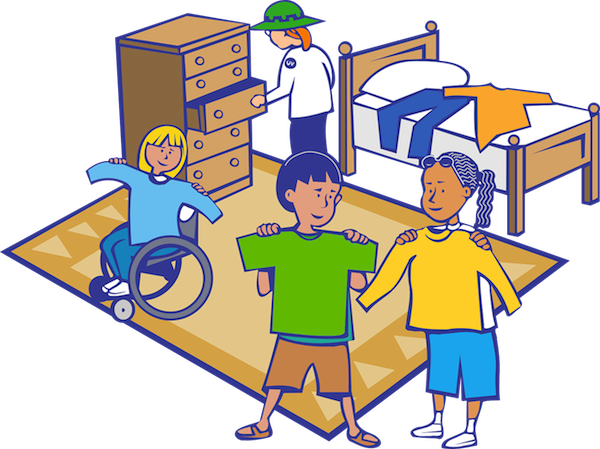
If you’ve got a kid with special needs, it can be hard to find the right learning experiences and it can require extra work to make them accessible. (image from clker-free-vector-images (pixabay.com))

All Jewish kids deserve to have access to wonderful summer camp experiences. However, if you’ve got a kid with special needs, it can be hard to find the right learning experiences and it can require extra work to make them accessible. Every kid is different, so these tips are only a start, and from just one parent. Here’s to hoping your child has a great experience with Jewish camping, and that you do, too.

Start early. Finding the right situation takes research. For us, the best advice came from the parents of other special needs kids. Every special needs parent I’ve met wants to help others, as well. Taking care of a kid with challenges can be a struggle.

Even if your child isn’t ready for camp now, listen carefully, as advice may make it easier when the time comes. Starting early might mean gathering information years in advance or just signing up early in the new year to get into the summer program that is the best fit for your kid.

Ask for more information. Many camps say they work to meet every kid’s needs, but their program descriptions may not offer details. Contact the camp office to ask how they can meet your specific child’s needs. Be polite and detailed. The camp director should demonstrate professional competence that shows they can rise to any challenges that may occur.

Ask for a tour. If a child has physical disabilities or sensory challenges, for example, the physical environment can make or break the kid’s experience. Some places give lip-service to accessibility but haven’t tested it. Maybe a kid using a wheelchair can’t use the bathroom, or the hiking trails are too rugged for the wheelchair to manage. If a child uses an iPad assistive communication device that requires charging, check that the camp’s got adequate plugs to recharge it.

Walk through the grounds. Imagine your child on a camp day. If your child is open to it, bring the kid along. How will this environment work physically for him or her? Is it truly accessible?

Ask about professional supports. Many camps are staffed with eager but inexperienced young adults. These counselors are often full of energy and great ideas but many have never encountered special needs situations. Does this camp have a professional on staff who works with kids with challenges? Does this person have any training or experience?

In some school environments, even the teachers aren’t expected to have special education training. If it isn’t required at school, it may not be available at camp.

While professionals are essential, sometimes the best support can be an older student or even another parent who has experience with a sibling, child or friend with special needs. If the camp looks like a possibility, see if your child can be paired with an assistant who really knows what she or he is doing. Sometimes, you need to pay extra to get this help.

Good communication is key. A camp that doesn’t respond to questions isn’t likely to work out well. This is particularly true if your child isn’t verbal or can’t advocate for themself. You should feel reassured that, from start to finish, the camp is willing and able to connect with you, let you know about the successes and difficulties each day, and even ask you for advice about your kid.

It doesn’t have to be formal, it can be a few words at pick up and drop off, but communication needs to be good to keep your kid safe.

Ask if you can observe or drop in. If you can see camp in session, with or without your camper present, you may have a much better idea of whether it will work. For instance, a kid who is sensitive to noise may need accommodation to cope with common camp experiences like bunk cheers or song sessions, as these frequently offer an opportunity for over-the-top yelling. You cannot hear that noise unless you are there when the campers and counselors are, too.

Compromise. The best Jewish environment for your child may not be the one you planned on. If your family is traditional but the Reform day camp has the most accessible campus, you might choose that camp. Or, if your local Chabad provides the most supportive environment in terms of counselor/camper ratio, but you’re raising an egalitarian Conservative family, you may need to decide which values are most important. For many, there are the things that their special needs camper must have, and then there are many other compromises along the way. Do what is best for your child. Sort out the theological discrepancies later.

Trust your gut. Sometimes, we don’t have all the information in advance, but we know the people involved and their good relationship with our children. If you feel confident and trust those in charge, that’s a great start. On the other hand, if you get a bad feeling from an interaction, pay attention! Your child is dependent on the adults in charge at camp. If you doubt their ability to meet your kid’s needs, don’t sign up, or take your kid out of the camp.

Your kid (and every kid) is precious. Do your homework. A good camp is more than daycare. It’s powerful enrichment that boosts Jewish identity and enthusiasm for the whole year.

Joanne Seiff has written regularly for CBC Manitoba and various Jewish publications. She is the author of three books, including From the Outside In: Jewish Post Columns 2015-2016, a collection of essays available for digital download or as a paperback from Amazon. Check her out on Instagram @yrnspinner or at joanneseiff.blogspot.com.

Format ImagePosted on January 17, 2020January 15, 2020Author Joanne SeiffCategories Op-EdTags accessibility, camp, disabilities, inclusion, kids, parenting

A not so diasporic dialogue

Awhile back, friends invited me to a writers group. Although I told them that I wasn’t quite the right fit for the group, they convinced me to go.

The meeting was nearby. I enjoyed walking on a cold, dark and starry night. Yet, the meeting’s “gatekeeper” told me that I wasn’t eligible for their future gatherings, as I didn’t (yet) write or edit in their genre. Instead, she invited me to another writers event in October. (I’m not on the social media lists for these types of things, as I tend to focus on writing deadlines and my household – and I’m introverted.)

The event, titled Diaspora Dialogues, took place on a Friday and Saturday. Although it might been possible for me to attend some parts of it, I saw only one gathering that interested me. Called Vulnerability and the Public Space, it boasted a live podcast, but it was held on Saturday afternoon. As someone who writes on religious issues in the public sphere, it seemed relevant. However, I saw no way that I could pull off attending – Saturday is a family day for us. After we go to services, I’m often feeding everyone a big lunch and playing with kids afterwards. (In an ideal world, we’d even take a nap!) To go, I’d have to have given up my day off and commit to attending on Shabbat.

This “diaspora” event, which seemed designed for Canadians of colour, was scheduled at a time when Muslims might be busy (Friday afternoon) and on Shabbat, when Jewish families might be busy with family or synagogue or both. It wasn’t inclusive of religious diversity. It excluded any person who might be both religiously observant and a Canadian minority.

Even the event’s title puzzled me, as the first dictionary definition for diaspora usually references the historical dispersal of the Jewish people outside of Israel. The “scattering of a people outside their original country to other places” is a secondary definition. So, OK, this was a secondary use of the definition, fine.

I resolved my personal conflict. I emailed one of the organizers to point out the discrepancy. Although I write about vulnerable religious issues, often in the public space, I wouldn’t be able to attend this “diaspora” event, as its timing excluded Canadian religious minorities. No matter, though, perhaps I could access the podcast online later? Where, I asked her, could I locate the podcast link?

I received no reply. The podcast never appeared online.

We celebrate our religious freedom on Chanukah. It’s the chance to rededicate our spaces to Jewish practice. However, the holiday’s origins are a tale of struggle between minorities and the majority: Jewish assimilationists, religious fundamentalists and the Seleucid empire’s religious majority (aka the Greeks, or the Assyrians). We remind ourselves of this in each generation – we can’t take religious freedom or Jewish practice for granted.

There has been a huge rise in antisemitic activity. Identifiable Jews or Israelis are now often targeted, assaulted and harassed throughout the world.

A far more subtle and insidious change has also happened in terms of Jewish identity. Now, U.S. President Donald Trump has decided, via presidential order, to define Jewish students as an ethnic or racialized “national”group that, theoretically, can’t be discriminated against. Yet, the definition alone is a worrying precedent.

Take a look around you at any Chanukah event. We’re not one race by any (purely artificial and historic) definitions. We aren’t one homogenous ethnic group, even if we might have been thousands of years ago. Just ask those who argue about doughnuts versus latkes or other holiday foods. What or who defines us? We’re now facing new identity definitions – as delineated from the outside.

We are a diaspora religious minority group that evolves and changes. We haven’t disappeared despite changing definitions.

Chanukah’s a minor holiday on our calendar. It celebrates clinging to our freedoms in a dark world. It relies on a subtle understanding that not all discrimination is based on racism. It implies that religious, ethnic or racial background alone doesn’t solely define someone’s minority status.

A true acknowledgement and respect for religious freedom is one that practises intersectionality instead.

What is intersectionality? Our identities – racial, sexual, class, gender, religion, nationality, etc. – are complex and changing. We are each the result of several roads, always under construction, that meet in one huge intersection.

As Jewish North Americans, living in the Diaspora, we’re more than one ethnicity, gender or race. Together, we celebrate our tradition and identity as a triumph over adversity. We just may have to celebrate with an understanding that we’re no longer included in some folks’ definition of diaspora and, hence, excluded from the narrative. Heck, I cannot even access the podcast about the narrative!

Wishing you a very happy, inclusive Chanukah from my family to yours. Have a great winter break, one where you feel included! May it be full of light, joy and peace.

Joanne Seiff has written regularly for CBC Manitoba and various Jewish publications. She is the author of three books, including From the Outside In: Jewish Post Columns 2015-2016, a collection of essays available for digital download or as a paperback from Amazon. Check her out on Instagram @yrnspinner or at joanneseiff.blogspot.com.

Posted on December 20, 2019December 18, 2019Author Joanne SeiffCategories Op-EdTags discrimination, interfaith, intersectionality, Judaism, lifestyle, writing
Tips for choosing right camp

Tips for choosing right camp

No matter your observance level, prioritizing a Jewish camp will boost your kids’ enrichment and ownership in the Jewish community. (photo by Joe Goldberg / flickr)

Day camp or sleepaway camp? Single sex or co-ed? Traditionally Jewish or liberal? Shabbat observant? Kosher? STEM or sports camp? The choices are endless. No matter your observance level, prioritizing a Jewish camp will boost your kids’ enrichment and ownership in the Jewish community.

As a parent, I often feel overwhelmed by the options available. Many say, “You’re the expert!” when it comes to your own kids. Yet, it can be hard to get inside kids’ brains to know what is right for them – and summer camp is one of those big decisions. It’s a time for childcare, enrichment and fun. But it must be decided in advance, it’s sometimes expensive and it can feel like a risky guess. Here are some tips to get started.

What do you need?

If you must get kids to camp before work, let’s be honest. Camp serves as childcare. It needs to be something you can pull off each morning. Make a list of what you need to make it through the summer. Early morning or afternoon care, a way to purchase healthy snacks and lunches, or a bus that picks the kids up? These may be essentials for some parents.

Some need much more. Kosher food? Stricter Sabbath observance? These may limit your choices. If your kid has special needs, your work schedule is unpredictable or you live far from Jewish camping options, things become complicated. Some parents start with geography. For many, it’s unrealistic to try to drive an hour to camp each morning with small kids before getting to work.

Plan ahead

If your list of possible Jewish camping options is short, find out when sign-up opens and get your kids’ names on the list. Sign-up often happens in January or February – long before we’re ready!

What do your kids want?

I started my research by asking my twins what they liked to do most in the summer. To my surprise, playing outdoors with Mommy and the dogs ranked top on their list. When I prioritized the other “wants,” it became clear that taking swim lessons at a lake (with a half-hour drive on each end) and just getting a chance for free play in the sunshine were key elements of their summer. For that summer, we had only a month of camp and a long but inexpensive “staycation,” with trips to a lake with a parent. We fit in making challah, doing Jewish art projects and reading PJ Library books, too.

Other requests might include attending camp with a close friend or trying out a new skill (music, acting, soccer, coding) – and these could all happen at a Jewish camp.

Be realistic

Maybe your kids know what they want, but, sometimes, they don’t. That’s OK. A general day camp, with lots of activities and choices every day, may be just the ticket.

One summer, I was sent to a co-ed sleepaway camp far from home for a month. I didn’t know anyone. The daily activities included a large dose of sports, which I hated. Worse yet, there was an outbreak of head lice. It was awful. By contrast, I also spent two years attending an overnight girls’ camp for two weeks each summer with a friend. I loved the library and the arts and crafts stations and have vague but good memories.

A kid’s maturity level matters, too. I was an independent oldest sibling, ready for overnight camps at 8, but, at that age, it was clear my twins were not ready to go anywhere overnight. I did ask them though. Did they want to go to sleepaway camp with some of their friends? I got a resounding no. Your kids often know what they’re ready for and what they wouldn’t enjoy. Give them a choice.

Feel confident in safety

Camp is a lot more flexible than life during the school year. There’s swimming, group sports and many other ways to have fun – and get hurt. Many camps are staffed by well-meaning teenagers and university students, with only a few adults supervising. Be sure things are safe and the activities are a right fit for your kids. Even one bad interaction with a bully or an unsafe situation could make camp hard for your kid.

There’s also a feeling of confidence when you know that the people in charge are knowledgeable and making good decisions that you can trust.

Ensure communication

Make sure the camp gives parents and campers lots of information from the beginning about what they will be doing each day, what they need to bring and how to have a successful experience. A camp that doesn’t remind you to bring towels or bag lunches may also be disorganized in other ways, too. See if the counselors offer you information when you drop off or pick up your kid so you can know more about what goes on. Tell those in charge that you expect to know about any injuries or tussles during the day.

Compromise is key

Sometimes, when you’ve gotten through your list of Jewish camps and kids’ desires, you find that the best camp for one kid might not work for the other. Or, the only horseback riding camp is single sex, and the kid’s best friend is not the same gender.

Sometimes, we need to choose out of our comfort zones to make things work. My kids attended a Chabad travel camp for years. It didn’t jive with my egalitarian sensibilities. Some of the theology concerned me. However, they definitely learned about Judaism and had fun. I trusted one of the directors, my kids’ former preschool teacher, completely.

It’s important to optimize things as best you can, and then compromise, too. There are a limited number of Jewish camps out there. Your kids have only a few summers to have fun outdoors with friends. Put aside some of the details you can’t change so you can make the most of their fun – and Jewish – times in the sun. They may remember their camp experience forever.

Joanne Seiff has written regularly for CBC Manitoba and various Jewish publications. She is the author of three books, including From the Outside In: Jewish Post Columns 2015-2016, a collection of essays available for digital download or as a paperback from Amazon. Check her out on Instagram @yrnspinner or at joanneseiff.blogspot.com.

Format ImagePosted on December 20, 2019December 18, 2019Author Joanne SeiffCategories LifeTags culture, education, Judaism, kids, summer camp

You take care now, y’hear?

I just realized that, lately, I had unconsciously changed the way I say goodbye, particularly when I am speaking with women. As a younger person, it wouldn’t have occurred to me to say “Take care!” when parting with people. What’s more? It’s happening even when I have casual interactions. I started thinking about where my new-to-me phrase comes from and where I’d heard it before.

I was out walking my dogs when one of them (the young, spry Setter mix) kicked me in the shin. I looked down, in pain, when I saw that she, too, was surprised. She’d slipped on the slick sidewalk and certainly hadn’t meant to hurt me. A man at the bus stop remarked how icy it was, and I agreed. I said, “Take care!”

Later, my household was in bed when we heard an ominous thump outside. My husband made a joke, we laughed and went to sleep. In the morning, I saw a thoroughly smashed car, its front end bashed in. It faced the wrong way on a busy street near our home. Across the intersection, there was a truck, also facing the wrong direction, somehow wedged into someone’s yard. It was slippery, indeed.

Often the habit of suggesting people take care is aligned with another statement though, something like, “Things are more dangerous these days.” However, our Torah readings from this time of year, in Genesis, remind us that things have always been dicey out there, particularly for women and for those in positions of less power in society.

For instance, when the three strangers tell Abraham that Sarah will have Isaac, she laughs (Genesis 18:12-15). However, this is quickly followed by Abraham’s question about why she laughed and she says, “I didn’t laugh.” Why? “Because she was frightened.” Why did she lie? Well, she was an old woman. Strangers told her something ridiculous and then she was asked to take it seriously. She was afraid. Sarah wouldn’t be the first or last woman to feel threatened and unsafe. If something like this situation happened today, I wouldn’t leave until I’d said, “Take care.”

Not much further along in Genesis, Abraham bargains with G-d, asking how many people in Sodom have to be righteous for G-d to save the city. Abraham has some power here. He feels emboldened to speak out, but he also gets to stay home rather than go to Sodom to try and fix things. Instead, two angels go to Sodom.

Lot takes the angels in as his guests, but when a crowd gathers to do the visitors harm, Lot suggests an unsettling exchange. He says that, rather than let the crowd “be intimate with them,” he’ll send out his two young daughters instead. He will sacrifice his daughters to be violated by the crowd (Genesis 19:8) rather than let his male guests be endangered.

Reading Genesis, I am reminded by how these dangerous situations, and particularly ones that threaten women, are not at all new. These are issues of power, control and sexuality. In a modern political comparison: we act as though the MMIWG (missing and murdered indigenous women and girls) report and its findings are new or different. In fact, violence against women, and specifically minority women in vulnerable situations, is a bad news story played on repeat. These threats are close to home, and they remain frightening.

When I hear myself telling a friend – a single mom whose father just died – to take care, I realize who I am echoing in my head. I hear older African-American women in my Virginia neighbourhood saying goodbye to me: “You take care now, y’hear?” I hear my mom sighing as she hung up the phone (it was avocado green, with a long cord so she could cook while talking) at home when I was younger. She said goodbye with a worried expression that her friend couldn’t see, saying “Bye! Take care.”

This is the closing comment of women, all over, who know that the world can be dangerous. We’re sending out our concern to those we love. We’re acknowledging that, sometimes, we must depend solely on ourselves, because it doesn’t look like anyone (including G-d) is stepping up to keep us safe.

Sometimes, Bereishit (Genesis) offers stories to dig into. I enjoy their meaty narrative. I love interpreting what it all means. Other sections cause me to sigh just as my mom did. In a world where women still don’t have any assurance of safety from war, crowds and violence, and where those who have less power are at the mercy of the powerful, it’s hard not to feel sadness. How little things change.

This also is a continuing opportunity for social justice. We can fight for a better place for everyone. We can seek out and care for those around us, rather than choosing to discriminate or discard lives, as Lot would have done to his daughters. In the meanwhile, I’m often slipping down the icy street, worrying and wondering over how I can spread a sukkat shalom (a shelter of peace) over those I love and care for. So, I’ll say what many wise women have said before me. You take care now, y’hear?

Joanne Seiff has written regularly for CBC Manitoba and various Jewish publications. She is the author of three books, including From the Outside In: Jewish Post Columns 2015-2016, a collection of essays available for digital download or as a paperback from Amazon. Check her out on Instagram @yrnspinner or at joanneseiff.blogspot.com.

Posted on December 6, 2019December 3, 2019Author Joanne SeiffCategories Op-EdTags #MeToo, abuse, Genesis, harassment, Judaism, Torah, women

Generations struggle together

I’ve heard some unsettling real-life stories lately. These weren’t news, but family stories, in my social media inbox. One friend is wrestling with how to best cope with family members struggling with addiction. (This is, unfortunately, a common problem.) In another note, I heard of how an estate is being divided after a parent died; in this case, a sibling told his sister and her family (who stayed local to care for the parents) that she will be homeless within two months unless she can manage to get a mortgage to buy the family’s home. Another message concerns the arrival of a baby, and how scared the new mother is about being sent home early from the hospital. Finally, another friend and I shared our cultures’ rituals as we worked through a discussion about miscarriage, premature babies, infertility and pregnancy loss.

There is both love and struggling out there. These challenges are just part of dealing with our families and lives. No matter what your religion, you may encounter things like this in your life. But, while none of the stories I’ve mentioned is a “Jewish” one, neither are they not Jewish.

With these burdens in mind, I thought about the stories we hear in synagogue this time of year. This week’s parashah, Toldot (Genesis 25:19-28:9), offers vignettes about life. There’s Rebecca’s story about what it’s like to struggle with infertility and pregnancy difficulties. There’s sibling favouritism, as Isaac and Rebecca raise their twins, Jacob and Esau. There’s inheritance trickery when the twins struggle over their father’s blessing. Their dying father, Isaac, shows what some might call poor judgment, as he mixes up his children’s identity and offers them unequal blessings.

This section of Genesis contains a lot: wealth, poverty, lying, distrust, water rights, and discord between neighbours, intermarriage, family relationship troubles and even possibly some mental health issues. What happens to Rebecca, for instance, when Isaac dies? She needs to know that Jacob will marry someone with whom she can cope, as she mentions with the phrase, “I am disgusted with my life….” (Genesis 27:46)

When we wrestle with similar family and community relations issues in a 21st-century context, many feel isolated. Despite plentiful online information, we can feel overwhelmed and lost when life throws us big challenges.

Our tradition gives us support. When I hear the Torah read or read it on my own, I’m reminded that these stories come with centuries of commentary. When using a modern tool like sefaria.org, I can pull up the portion, but also see commentaries (in both English and Hebrew) that allow me to learn from that scholarship.

It’s true that, for some, nothing beats seeking out an elder or a rabbi who might offer in-person wisdom. For others, the struggles are deeply private. It can be good to have access to knowledge online when dealing with hard issues like addiction, infertility or other family issues. Sometimes, the backlash from older family members can be such that a young person might never again want to talk with them about it. For instance, the pressure to “start a Jewish family” or even “accept being childless” from an older family member can be anguishing.

This Torah portion is called Toldot, which translates to Generations. We’re often in a North American generational struggle, as the phrase “OK, Boomer” currently echoes around the internet. Millennials seek help, guidance and a place in society, while their elders respond with comments like the AARP’s senior vice-president Myrna Blyth, who said, “OK, Millennials, but we’re the people that actually have the money.” (Even as a Gen Xer, I’ve long known how the Millennials might feel. Yes, Boomers have the money. The rest of us, largely, don’t.)

Elders do often have the money, power and influence in society. They sometimes, like Isaac and Rebecca, make selfish or complicated decisions. So, the question is, how does Judaism and its leaders respond to younger generations who seek out help? Are we doing this on a local level to help those in need? These sound like institutional questions, and perhaps our institutions can help. Yet, the last step is a personal one. What can we do as individuals when we see someone in need of support? We can reflect on how our words, actions and contributions help others along life’s path.

I go back to what I heard about how that estate was managed after a parent died. What parent would want to turn out their child and her family from their home? What sibling declares that “it’s only fair” to insist his sister pay off the other siblings or be homeless within two months? (Especially considering this was after she did most of the daily caretaking of their parents for years.)

Of course, families are complicated and have their difficulties, but being an upstanding elder might mean thinking ahead. How does your child/executor behave? Is he or she without compassion? Good, fair estate planning should protect all your children. It should recognize and support those who took time off to care for you. That’s a sign that you’re helping all your generations along their way.

None of these are new problems, but they’re hard. Luckily, we have voices of experience, love and compassion in our tradition to help us do the right thing. It might be time to listen.

Joanne Seiff has written regularly for CBC Manitoba and various Jewish publications. She is the author of three books, including From the Outside In: Jewish Post Columns 2015-2016, a collection of essays available for digital download or as a paperback from Amazon. Check her out on Instagram @yrnspinner or at joanneseiff.blogspot.com.

Posted on November 29, 2019November 27, 2019Author Joanne SeiffCategories Op-EdTags Judaism, lifestyle, Torah

From beginning again

Recently, I decided to conquer an inner anxiety and do something new. It wasn’t skydiving or anything dangerous. I was hoping to follow a pattern and sew myself some clothes. I write knitting patterns, so am very familiar with the notion of “winging it” and making my own design, but I needed to go back to the beginning with sewing.

As a teen, my mom insisted I take sewing lessons and my dad did them with me. (My dad was good at it and made himself a bathrobe and the upholstery for a convertible he restored!) The sewing assignment was to counteract my terrifying enthusiasm for my mom’s fabric and yarn stash. I’d dive into her stuff, grab scissors, cut fabric up and make things. For instance, I made myself shorts out of some old Winnie-the-Pooh curtains – and my mom was livid. Why? Well, she’d sewn those curtains for me as a kid in the first place. As a teenager, I couldn’t figure what she was saving them for, and I likely upset her by “taking her stuff” and hurting her feelings. She made something, and I remade it without asking. Worse than that, I didn’t use a pattern to do it!

My mom’s discipline as a seamstress came from required dressmaker/tailoring coursework she’d taken at Cornell University. When she was a student there, young women had to take home economics. My mom already could sew like nobody’s business, but she learned a lot from those required courses. It made her crazy to see me break all the rules.

Her reaction to my freeform creativity is probably what made me so anxious about my ability to follow a pattern as an adult. It was a mental block. Even though I am fully capable of it, I still feel anxiety when I face the tissue paper cutouts and instructions.

Now that I have sewn one dress, following a pattern exactly, I’ll let the truth out. I’m halfway through a second sort of vest/tunic based on the first dress pattern, and I’m already winging it. Once I started again from the beginning, I regained my crazy freeform gusto. I can’t hold back!

Each year, we, as a Jewish people, start something right from the beginning. We begin reading the Torah, starting with the creation of the world. We jump into B’reishit, Genesis, and we hear a familiar story. Some people roll their eyes, saying, I’ve heard this before. However, like learning anything new (sewing, for instance), the learning curve is steep. There is a lot in there.

As a sewer, I saw things I missed the first time I followed a pattern. I didn’t do something wrong, I was just less practised before; I was a beginner. Those of us who have been studying Jewish texts every year, reading the Torah portion or commentaries or Midrash – well, we all start out as beginners and eventually become more immersed in the material. There is always something rich, new and different to consider or pursue as we read it again.

It’s like rereading a favourite novel. Now that I know how it’s going to end, I don’t have to rush. I can enjoy all the twists, the foreshadowing, the way the writer uses the language in telling us the story. I see and understand things that I might have missed in a first reading.

I’m not going to lie. Just like sewing, knitting, cooking or building something you’ve made before, rereading the text can feel rote, like you are on autopilot. Sometimes reading a familiar text is actually an opportunity to meditate on something different altogether.

This morning, I dug into making that vest because I needed something with pockets to go with my Shabbat skirts or dress pants. I wanted to make something that would come out OK in a life or world that sometimes seems very unpredictable.

By the time you read this, Simchat Torah and the Canadian federal election will be weeks over, but our new year is really just beginning. It’s a time of great potential, even as the light fades earlier each day. We have so much good and creative work ahead of us. Rereading B’reishit gives a chance to relive something magical and important to our identity as Jewish people – an origin story. At the same time, the characters of Genesis offer us insights into today, into our lives, identities, families and communities.

It’s true that sewing is an old-fashioned skill that I’m getting a hold of again. However, like Genesis, we can say “Look! Everything old is new again!” and jump into learning with emotion – and enthusiasm.

Joanne Seiff has written regularly for CBC Manitoba and various Jewish publications. She is the author of three books, including From the Outside In: Jewish Post Columns 2015-2016, a collection of essays available for digital download or as a paperback from Amazon. See more about her at joanneseiff.blogspot.com.


Posted on November 8, 2019November 6, 2019Author Joanne SeiffCategories Op-EdTags Jewish calendar, Judaism, knitting, lifestyle, sewing, Torah

A dose of humility, gratitude

Between Rosh Hashanah and Yom Kippur, there were lots of opportunities for reflection and self-examination. I had a helpful reminder when I recently taught a workshop on recycling and reuse in fibre arts.

I worked as an English, writing and adult education teacher when I was in my 20s, and I’ve taught off and on ever since. Lately, I’ve mostly taught fibre arts, but I enjoy teaching in general. Often, as we moved for my husband’s academic life, I’d give up my teaching job, uproot myself and try again in the next place we lived. It was a challenging situation. A couple of moves ago, I switched over to writing, editing and design, and only occasional teaching. Now it all has to fit in around my kids’ needs as well, so I’ve taught a lot less in recent years.

My wake-up call came when I checked in at a teaching venue. About six years ago, I helped create the festival that hosted my workshop. First, the volunteer asked who I was and what I needed. I pointed to the class list and said I was teaching. The volunteers started chatting with me, “Oh,” they asked, “Do you knit?”

“Well yes,” I replied. “I write knitting patterns.”

It went from there. They had no idea who I was at all. I explained that I had been a teacher at the festival more than once. It came up that I’d written books on the subject and, if they couldn’t take my class, as they were volunteering, they could download my designs online and learn that way.

It continued when they rushed into my classroom five minutes into the workshop to hand out name tags. (They’d forgotten them.) I smiled and said we already had them. “Oh,” they responded, “someone else gave them to her!” I had to smile back and say, “I brought them myself – something I’d learned from helping to start this festival.”

We live in an age of constant social media bombardment and self-marketing. If we aren’t always in our profession’s limelight somehow, it’s possible that no one will know us; that anything we’ve accomplished is irrelevant if we’re not at the top of somebody’s Instagram or social media feed.

This encounter reminded me that, even if I’m teaching, being paid and my bio is up on the website, well, I’m a nobody like everybody else. We all put on our pants one leg at a time. We may think a lot of ourselves, and that’s well and good, but is there any reason to think that? (In my case, not really!)

From Selichot up to Yom Kippur is when we’re supposed to focus on self-examination and make apologies. We make space and time to think about when we missed the mark and how we can do more. We have to reflect on whether we have run away from our responsibilities or failed in our lives. How can we do better at keeping our promises, and go beyond?

On Yom Kippur, we read the Haftorah portion of the story of Jonah (Jonah 1:1-4:11). This is a hard story to hear and I always find myself with conflicting emotions. I mean, who thinks they can get a direct order from the Almighty and then take a boat ride in the opposite direction? Is it normal to get thrown overboard and swallowed by a whale? Not so much. (It’s a whale of a tale!)

Once Jonah gets to Nineveh, he does what he is asked to do – and the people respond. They atone. This doesn’t please Jonah either. Jonah wishes that they were punished rather than forgiven for their previous bad behaviour. He wants retribution rather than compassion.

Jonah is human, like all of us. He learns what it means, eventually, to lose everything. He is abased and despondent. It’s miserable, but he learns a lot.

After my class, which went very well, by the way, and was a lot of fun, I realized that I was pitying myself, like Jonah. I spent time thinking, I’ve lost everything, nobody’s heard of me anymore.

Avoiding the great big pity party, I resolved that I should be grateful. I’d had fun and earned money in my classroom. When others recognized me later that day, I felt grateful and tried to celebrate the connections I had made in previous years.

For me, having twins and some health challenges has meant that I’ve had to adjust my worldview. Like Jonah, I’ve had to learn that I’m just not in control. Instead of running away from Nineveh, I gave up some volunteer activities, work commitments and other things when I discovered that I couldn’t manage it. Like Jonah, I can’t blame others who flourished in the meanwhile. Jonah had to sweat it out in the heat, alone, to learn this, but here it is: we’re not in control.

Instead of feeling angry that we’re not recognized or that Nineveh wasn’t punished appropriately for its mistakes, let’s turn the story around. It’s great that there’s a divine power at work who saves Nineveh and Jonah, and teaches him (and me) important lessons about compassion. I hope I didn’t embarrass those volunteers.

A little navel-gazing helped me realize what I needed for 5780: an increased dose of humility and gratitude.

Joanne Seiff has written regularly for CBC Manitoba and various Jewish publications. She is the author of three books, including From the Outside In: Jewish Post Columns 2015-2016, a collection of essays available for digital download or as a paperback from Amazon. See more about her at joanneseiff.blogspot.com.

Posted on October 11, 2019October 10, 2019Author Joanne SeiffCategories Op-EdTags gratitude, High Holidays, Judaism, lifestyle

Apple-picking and tzedakah

My family helped pick a neighbour’s apple tree on Labour Day weekend. It was heavy with fruit. I love this activity, as it connects us viscerally with the changing season. It also connects with the beginning of the Torah portion Ki Tavo (Deuteronomy 26:1-29:8). This portion instructs the Israelites to give some of their first fruits to the priests for the divine altar and, also, to give 10% of their harvest as a tithe, for those who are less fortunate.

Even though we make applesauce, apple chips, apple crisp and eat lots of fresh apples, we always pick more than we can use. It gives us a chance to interact with our neighbours and to help elders who need help cleaning up their yards. It also gives us a way to make a physical donation to those who might need it more than we do.

Each year, we choose places to donate the apples. This year, we made a visit to Chabad and dropped off apples. We know the Torah Tots preschoolers might like apple slices or applesauce. (My kids were once those preschoolers and remember snack very well!)

We also dropped off apples and visited a friend of ours. He works at the Welcome Home, a Ukrainian Catholic mission house in the North End of Winnipeg. Welcome Home works in part as a food pantry, offering weekly hampers and meals to the hungry. It also provides places for kids to play, people to gather and worship, and access other supports. It’s housed in a big old building that used to be a duplex. It was originally built as a rooming house for the new immigrants. The house was quiet on a weekday, only receiving occasional donations when we visited. However, you could almost hear the bustle of a weeknight dinner for the community, or the single immigrants or whole families who lived in these small rooms long ago when they first arrived in Canada.

I’m not mentioning this to boast of our tzedakah (charity) activities. I’m suggesting that, for many working families, donating 10% of their salaries doesn’t seem like a financially realistic goal. What about donating actual produce? That was something we could do. A few hours of apple picking and sorting seems like fun for my household, but the food is also meaningful. If we don’t pick it, in many yards, it’s left to fall and rot on the ground.

Community involvement is a way for us to show our gratitude when we feel blessed and lucky to be alive, but the involvement doesn’t have to be formal. We don’t all have to serve on a committee or make large, tax-deductible donations. It can be simpler than that. This past summer, my kids took swimming lessons at a lake and we often stopped for ice cream on the way home. The place where we bought ice cream had a tin on the counter. They collected change to support the food bank. So, each kid was handed change to donate. You get ice cream after a swimming class and you’re grateful. Give back.

This lesson can be extended further though. Part of the apple-picking exercise, the awkward part, might be knocking on your neighbour’s door. Yet, this is when you might learn your neighbour just had hand surgery, or was now too physically fragile to be able to pick up the fallen apples. It’s a chance to make informal and meaningful connections with others.

No matter how functional (or dysfunctional) our infrastructure is, government financial supports or provincial services don’t always manage to meet essential needs. This is when we can do more by reaching out to others who live nearby.

Rosh Hashanah, our new year, is an opportunity. We think about how we can do better and start anew. In many ways, this yearly “check-in” is our chance to reflect on how we can make more of a difference. Sometimes, if you’re lucky enough to have more than you need, it’s easy and very important to donate money. Perhaps you can sponsor a Jewish activity, a needed renovation in the Jewish community or support a project to increase the capacity of organizations that offer services to those in need.

For many of us, though, our commitment to helping others happens in a more modest way. It might be a dime dropped into the pushke (collection tin) or finding a way to feed others. It might be picking apples or donating an extra can of tuna to the food bank. It could be volunteering to help a new mom so she can take a shower while you watch the baby. It’s offering another working parent a play date so that he or she doesn’t have to pay for child care.

We can all invest more in helping others. Let’s be grateful for what we have by trying to give a bit more of ourselves and our labours to others who might need it this year. It’s the right thing to do.

My family and I wish you a very sweet new year, full of good health and lots of apples and honey.

Joanne Seiff has written regularly for CBC Manitoba and various Jewish publications. She is the author of three books, including From the Outside In: Jewish Post Columns 2015-2016, a collection of essays available for digital download or as a paperback from Amazon. See more about her at joanneseiff.blogspot.com.

Posted on September 13, 2019September 10, 2019Author Joanne SeiffCategories Op-EdTags charity, family, Judaism, lifestyle, tzedakah

Concern over what to share

For many of us, it’s the beginning of the year. Not the year that starts with Rosh Hashanah. I mean, the academic year. If you’re a student, a student’s parent or a teacher, professor or other education professional, the beginning of September can mean only one thing. It’s time to get back to the grind.

This is both exciting and a nerve-racking time. You want people to like you and appreciate your skills, talents and special gifts. You want to feel welcome and make others feel welcome, too. Seeking approval is an important part of life. We all do it, right?

As overachievers, my husband and I try to start early. He mentioned that some new colleagues were moving in down the street at the beginning of August. They were moving from another country, so we should try to help, we figured. The wait for one’s belongings to arrive and pass through customs can be awhile. (For us, it took 10 days.)

My husband was out of town when they arrived, so I sprang into action. We loaned them a picnic basket filled with dishes, silverware and cups, some patio chairs and, when they asked, even a broom and dustpan.

A few days later, my husband home, we enjoyed a Saturday together out in the sunshine. When we checked our email again, we found that our new neighbour had asked us to loan more items. We apologized, but explained we weren’t usually online on Saturdays. “Oh!” she replied, “Do you do a tech Sabbath?” I had to look this up, but this term was coined in 2010 by Tiffany Shlain, an internet pioneer, and her husband, Ken Goldberg, a robotics professor. It is based loosely on the notion of unplugging from technology on a traditional Sabbath.

I was flummoxed. There seemed to be no nice way to say, “Uh, no, I do real Shabbat.” So, I thought, OK, I will try to explain. I said something like: “In the safety of Canadian diversity, we observe real Shabbat, not just ‘tech Shabbat.’

“We are Jewish and try to take the day off from Friday night to Saturday night. So, we have a big family dinner on Friday nights, we go to synagogue on Saturdays many weeks and we spend the day together, sometimes with friends. However, if you need to reach us, you can always call the landline or walk over and knock on the door. We use the phone when necessary, drive, turn on lights, etc. We are not very strict in our observance; sometimes, we spend the day as a family outside, at a farm or doing an outing together. We just try to rest and not to work.

“We hope your belongings will arrive soon!”

Her response? I kid you not – she said, “Thanks for sharing.”

I felt completely uncomfortable and embarrassed. This was from a new neighbour, someone to whom we offered the loan of various items and tried to welcome. I left it there, I had nothing else to say. My partner was somewhat more hopeful, that perhaps they were just clueless. He tried to explain how hard it is sometimes to be a minority in this way.

In the end, I realized that this fit right into the “new school year, new school experience.” Many of us are seeking approval from peers, colleagues, family members and friends. We jostle and jockey for position. We want others to admire us or, at the least, accept who we are. Then, in an effort to bond or make connections we maybe overshare with people who couldn’t care less.

At the start of the new school year, I’m often keen to make new connections, but it would have been altogether possible for me to say nothing about who we were or why we weren’t online on Saturdays. We might even have saved ourselves the trouble by not offering to loan things in the first place. However, in the interest of being welcoming to strangers and reaching out to make friends, I ended up feeling embarrassed and self-conscious rather than proud. I didn’t like it.

Before I moved to Canada, I lived in the southern United States in a place where I had good reason to feel wary about revealing too much about my religious life. We knew it could be an issue; it wasn’t an especially tolerant place.

Based on recent news events – a swastika painted on a car in a Winnipeg neighbourhood, an election scheduled for Shemini Atzeret – I have to conclude that maybe it’s time to be more careful here.

Sadly, for the first time in 10 years in Canada, I’m wondering if I would have been better off to keep my Jewish practice to myself, and reveal less. Maybe if I were hip, I’d be considering a tech Sabbath, but no. I’m connected to something that’s perhaps less popular, but a lot deeper. Sometimes, sharing this is important, even if it isn’t always the cool answer.

Joanne Seiff has written regularly for CBC Manitoba and various Jewish publications. She is the author of three books, including From the Outside In: Jewish Post Columns 2015-2016, a collection of essays available for digital download or as a paperback from Amazon. See more about her at joanneseiff.blogspot.com.

Posted on September 6, 2019September 4, 2019Author Joanne SeiffCategories Op-EdTags antisemitism, Canada, Judaism, lifestyle

Posts pagination

Previous page Page 1 … Page 15 Page 16 Page 17 … Page 21 Next page
Proudly powered by WordPress