Skip to content
  • Home
  • Subscribe / donate
  • Events calendar
  • Business Directory
  • FAQ
  • News
    • Local
    • National
    • Israel
    • World
    • עניין בחדשות
      A roundup of news in Canada and further afield, in Hebrew.
  • Opinion
    • From the JI
    • Op-Ed
  • Arts & Culture
    • Performing Arts
    • Music
    • Books
    • Visual Arts
    • TV & Film
  • Life
    • Celebrating the Holidays
    • Travel
    • The Daily Snooze
      Cartoons by Jacob Samuel
    • Mystery Photo
      Help the JI and JMABC fill in the gaps in our archives.
  • Community Links
    • Organizations, Etc.
    • Other News Sources & Blogs
  • JI Chai Celebration
  • JI@88! video

Recent Posts

  • Or Shalom reopens its doors
  • JFS from past to future
  • Need holistic approach
  • Sharing stories, advice
  • Journalist shares fears
  • Skills to live together
  • Road to independence
  • Cutting grass with scissors
  • Zionism as a solution
  • Deceit, desire & the divine
  • Reclaiming sacredness
  • Creative project ideas
  • Summer squares and cobbler
  • Thou shalt … summer commandments
  • Legal help for students
  • Revisiting myth of Lilith
  • Wrong person rebuked
  • Canada’s mixed messages
  • Questions for museum
  • Symposium on antizionism
  • Making soccer political
  • CJPAC lauds Pulver’s impact
  • City recognizes Vrba’s legacy  
  • Organ donation saves lives
  • Theodore’s March premiere
  • A healing Shabbaton
  • Supplying healthy food
  • A chime of metal tags
  • Yellowknife seder a first
  • Ishai energizes, unifies
  • A Lag b’Omer to remember
  • Expanding the healing
  • Hannah Senesh – a unique hero
  • Community milestones … May 2026
  • Деньги до зарплаты на карту Займ до зп онлайн за 5 минут 2026
  • Микрокредит онлайн в Казахстане Микрозайм в Акшамат

Archives

Follow @JewishIndie
image - The CJN - Visit Us Banner - 300x600 - 101625

Byline: Cynthia Ramsay

Rock pioneer plays at Chan

Rock pioneer plays at Chan

Micha Biton headlines the community’s Yom Ha’atzmaut celebrations April 22. (photo from Micha Biton via Jewish Federation of Greater Vancouver)

Seven years in the making, Laura Bialis’ documentary Rock in the Red Zone premièred last October at the Haifa Film Festival, and has since enjoyed several other prominent screenings in Israel. Less than a kilometre from the Gaza Strip, Sderot has been a favorite target of Hamas rocket fire for the last decade and a half – but it has also been the birthplace of a unique style of rock music, producing more than its share of popular bands and singers. One of the rock pioneers featured in the documentary steps off the Israeli silver screen and into Vancouver’s Chan Centre for the Performing Arts on April 22 to lead our community’s Yom Ha’atzmaut celebrations – Micha Biton.

JI: Your stop in Vancouver is part of a North American tour for Like Water. Are you traveling with a band? If so, who and what instruments?

MB: Exactly a year ago, my fifth album, Kmo Mayim (Like Water), was released in Israel and we performed a series of concerts around the country in celebration of the release – a tour that was very successful and drew attention from radio, television and media outlets. Subsequently, I performed in both San Francisco and New York and realized that, despite the fact that over half of the audience does not understand Hebrew, the music touched the hearts of those who heard it. For this concert in Vancouver, I am coming with five amazing musicians: Yossi Shitrit (electric guitar), Shir Yerushalmi (electric guitar), Hillel Shitrit (keyboards), Itamar Abohasera (drums), Shai Zrian (bass).

JI: In which other cities are you performing on this tour? For how long are you here?

MB: We are coming directly from Israel, and Vancouver is the first city on our tour. After Vancouver, I will perform in Los Angeles and San Francisco. I’ll be in North America for less than two weeks. Due to my heavy performance schedule in Israel, I couldn’t carve out more time to tour on this trip, but I always manage to make a little time to take in the atmosphere of the cities in which I perform. This is not my first time in Vancouver – last year, during the war between Israel and Gaza, I brought my whole family to Vancouver to visit my wife’s family and I fell in love with your beautiful city and people. I’m excited that on my second trip to Vancouver I will get to perform for the wonderful people that I met in Vancouver.

JI: Like Water is your fourth solo recording?

MB: Kmo Mayim is my fourth solo recording, but it is my fifth album. In 1997, I produced my first album, Tanara, with a group of talented musician and it received critical acclaim in Israel. Soon after, I became a solo artist and, over two decades, I recorded four albums of original music. For me, Kmo Mayim is a very personal album that I wrote about relationships – friendships, love, connection with God. Every song tells a different story, and every story has an open-ended moral attached to it. I’m very proud of this album and I’m happy that my audiences like it.
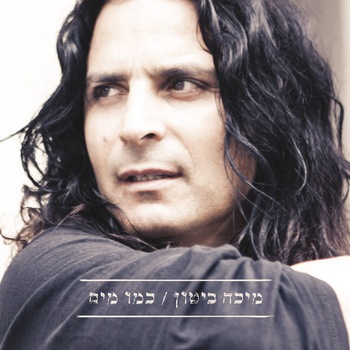
image - Kmo Mayim cover
Micha Biton’s latest CD is Kmo Mayim.

JI: You are one of the pioneers of the renowned rock music scene in Sderot. Could you share a bit about its development, how it has changed over the years?

MB: In the 1990s, I created a band called Tanara, a period that saw an incredible explosion in the Israeli music scene, especially in Sderot. Bands like Tippex, Knesiyat Hasechel and ours developed a new sound that was special and unique to Sderot, combining rock music with the Moroccan/ethnic sounds of our neighborhoods and our childhoods. In those early days, Sderot was underdeveloped and family-oriented. We didn’t have much to do, so music became our lives and we played and composed in the bomb shelters all of the time. (In those days, we used the shelters for writing music and rehearsing for concerts. Today, unfortunately, they are used as shelters from the rockets fired from Gaza.) In addition, it was a town where everyone knew everyone – there was no such thing as a stranger in our town, and the warmth created by this strong community significantly influenced our ability to create something unique musically.

JI: How about your own style? How would you describe it now versus when you first started out?

MB: My musical style hasn’t really changed much over the years. I’ve been very successful continuing to write ethnic rock in the style that I helped to create and I am lucky that my audience appreciates my style and my sensitivity. While my roots are strongly planted in Sderot, I am different than most of my fellow musicians from the area. At the age of 10, after my father died, I left my Moroccan biological family and was fostered by an Ashkenazi family in Jerusalem. From that early, tender age, I started to live between two cultures, understanding the beauty of each, and using both of them to influence the way I compose and the way I live. It turns out that my foster mother, Galila Ron-Feder, was a modestly successful author in Israel who shortly after my arrival chose to write an entire book based on my life and my journey (and I was only 10!). This book, El Atzmi (To Myself), became her most successful book. It became a series of books, and then a movie. It has been translated into 27 languages. The influence of Galila and her world, and the world of my parents together, helped me to create a new world of my own. My music and the lyrics that I write are very connected to the fact that I have lived most of my life straddled between these two worlds.

JI: A 2007 New York Times article refers to “Biton’s anthem for Sderot,” which was “I don’t leave the town for any Qassam.” What is it like living in Sderot these days? Are you hopeful for the future?

MB: In the quiet days of peace, we love living in this area. My nine brothers and sisters and their families live in Sderot, and my family and I live on the border between Sderot and Gaza in Netiv Haasara, a moshav where we can see Gaza from our backyard. This is my home, and we are very drawn to this place. For the past 10 years, we have lived with the reality that at any moment, day or night, the sirens will start and we have 15 seconds to run to our bomb shelters. Our children have grown up with the feeling that life is beautiful but uncertain. This past summer, and several times in the past, we have been forced to leave our homes and our community because of the imminent danger that the conflict caused. Rockets fell on our yard. A rocket hit my wife’s parents’ home, who live a block away from us, destroying precious family heirlooms. For every rocket that fell last summer, there are hundreds of rockets that have landed around us in the past 10 years that go unreported but, for us, they are very real. When we came to Vancouver last summer, my 4-year-old son looked at me and asked, “Abba, why don’t they have tzeva adom (warning sirens) here in Vancouver?” and I explained to him that not everyone has to deal with rockets falling on their heads all of the time. It was a very sad moment for me.

In 2007, when I wrote the song ‘I don’t leave the town for any Qassam,’ I felt that people were deserting Sderot and all of her beauty because of the situation. I wanted to give them strength and remind them that it was critical to stay and to fight for our hometown. Less than a year later, I wrote HaTzad HaMuar (The Lighted Side) from the same place in my heart. Despite all of the pain, I wrote, don’t forget the light, the hope, the optimism. Because that is really what Sderot is all about. Not a place where rockets fall, but a place of warmth and love and peace.

JI: In the same article, you speak about Hagit Yaso as a star almost certain to rise to the top. She has, of course. And she played here in Vancouver last year for Yom Ha’atzmaut. Are there any current young Sderot musicians for whom we should be keeping watch?

MB: Hagit is an amazing singer and an extraordinary human being. I’m proud to stay that she was one of my most talented students when I taught music and theatre in Sderot. I am so happy for her success and that she represents a new generation of musicians that has emerged from Sderot. The wonderful thing about this young generation is that they are succeeding to continue the tradition of Sderot, bringing exciting new musical projects to Israel and to the world. During one of my tours, I invited her to the stage to sing with me, and it was a really beautiful moment of connection between the pioneers of the music scene and the young musicians of this generation.

One of the new, talented musicians climbing up the ladder at the moment is my cousin Tzafrir Yifrach, who concentrates on world music. He has exceptional talent and is performing quite a bit these days around Israel, and musicians from all over Israel love coming to his recording studio in Sderot to work on their own projects with him. Another rising talent is Nir Vaknin, who is in the process of finishing his debut album.

JI: If there is anything else you’d like to add, please feel free.

MB: During the time that I was in production for Kmo Mayim, I started another project with a musician from the U.S., Lisa Tzur, who was the executive producer of Kmo Mayim. I’ve traveled a lot in North America and have performed at synagogues where the singing was so beautiful that I never forgot it. I wanted to be a part of that somehow. Taking words from the prayer service and from Psalms, as well as a few original texts, we recorded a project that is different than anything else that I have recorded. The idea was to create music that was accessible and singable by audiences that were not necessarily Israeli. Lisa comes from that world (as a lifelong member of the Reform Jewish movement and as an ordained rabbi) and together we created something very special that will be released this summer both in Israel and in the world.

The April 22 festivities at the Chan start at 7:30 p.m. For tickets ($18) and more information, visit jewishvancouver.com/yh2015.

Format ImagePosted on April 3, 2015April 1, 2015Author Cynthia RamsayCategories MusicTags Chan Centre, Israel, Jewish Federation of Greater Vancouver, JFGV, Micha Biton, Yom Ha'atzmaut
A friendly, fun contest

A friendly, fun contest

Dr. Neil Pollock hands out some of the awards, as Larry Barzelai and student participants look on. (photo by Cynthia Ramsay)

Based on the numbers alone, the 27th Annual Public Speaking Contest on March 19 at the Jewish Community Centre of Greater Vancouver was a success. Participants: 120. Prizes: 30. Volunteer judges and moderators: 30.

Founded by Larry Barzelai in memory of his father, the event was co-sponsored by Jewish Federation of Greater Vancouver and State of Israel Bonds, with additional support from the J and the Isaac Waldman Jewish Public Library. As one of the volunteer judges, I witnessed a well-organized event that thrived on controlled chaos – almost all of those 120 student participants were accompanied by family and/or friends, and in the crowd were potential future speakers and their parents sussing out what participating next year might be like.

“My father, Morris Black, alav ha’shalom, would be very pleased to see the legacy he created,” Barzelai told the Independent.

Indeed, he would. Speakers were from grades 4 through 7, and they had their choice of topic from a list of 10, one of which was to choose their own. The most popular choices in the Grade 4 class I co-judged were to create a day to mark an event from Jewish history that is not currently being celebrated or commemorated; to describe an app that would enhance Jewish studies at your school; to explain why recycling is a Jewish concept; and to explain what you think is/are the best innovation(s) to have come out of Israel in recent years.

The enthusiasm of the competitions taking place in rooms around the J was corralled in the Wosk Auditorium afterward, and Alex Konvyes entertained the excited students and their guests while the results were being tallied. As each winner was announced, huge cheers went up. As some winners read their speeches, the auditorium came to a hush.

“Several parents in attendance this year had previously been public speaking contestants in their youth, so the legacy continues,” Barzelai noted.

While pleased that “the contest continues to be healthy” and that it is strongly supported by the principals and teachers of the three day schools – Vancouver Talmud Torah, Vancouver Hebrew Academy and Richmond Jewish Day School – Barzelai expressed concern about “the inability to attract students from Jewish supplementary schools and students that are not affiliated with Jewish schools. In former years, the contest had a wider cross section of students,” he said.

Barzelai credited Lissa Weinberger, JFGV manager of Jewish education and identity initiatives, for doing “all the work, with only occasional input from me. Her organizational skills are great. A few prospective judges dropped out close to the event, and she was able to recruit new ones at Shabbat services. Beware, synagogue attendees!”

2015 winners

In order of first, second and third, this year’s Public Speaking Contest winners in each contest were:

Hebrew: Omer Murad (Grade 4, VTT), Ofek Avitan (Grade 5, VHA), Yael David (Grade 4, VTT).

Grade 4: Rachel Marliss (RJDS), Mendel Bitton (VHA), Jesse Millman (VTT).

Grade 4: Zac Peter (VTT), Ellis Jackson (RJDS), Chase Dodek (VTT).

Grade 4: Aaron Guralnick (VTT), Cassie Porte (VTT), Devorah Leah Yeshayahu (VHA).

Grade 5: Ava Abramowich (VTT), Benjamin Gutman (VTT), Elana Robibo (VTT).

Grade 5: Sarale Bitton (VHA), Adin Tischler (VTT), Rubi Katz (VTT).

Grade 5: Alex Ritch (VTT), Shoshana Pollock (VTT), Tristan Georges (VTT).

Grade 6: Menachem Yeshayahu (VHA), Riva Berger (VHA), Mordechai Wolfson (VHA).

Grade 7: Eva Dobrovolska (VTT), Neev Mizrachi (VHA), Teah Bakonyi (VTT).

Grade 7: Avrel Festinger (VTT), Romy Ashkenazy (VHA), Elliot Pollock (VTT).

Format ImagePosted on April 3, 2015April 1, 2015Author Cynthia RamsayCategories LocalTags Israel Bonds, Jewish Federation of Greater Vancouver, Larry Barzelai, public speaking, Richmond Jewish Day School, RJDS, Vancouver Hebrew Academy, Vancouver Talmud Torah, VHA, VTT
Make time for Elbow Room

Make time for Elbow Room

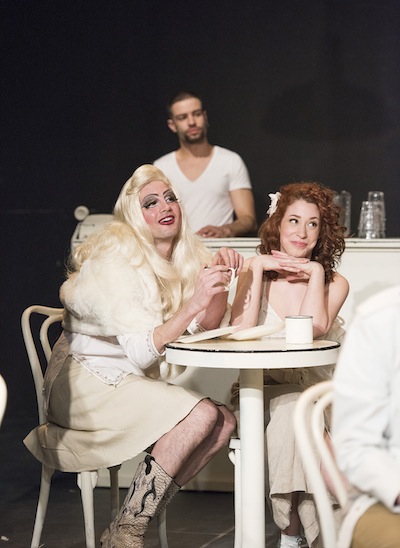
Allan Zinyk as Patrice, left, and David Adams as Bryan in Elbow Room Café: The Musical (Phase 1). (photo by Emily Cooper)

Allan Zinyk and David Adams are veritable doppelgangers for Patrice (Patrick) Savoie and Bryan Searle, who started the Elbow Room Café on Jervis Street in 1983. While the restaurant moved to Davie Street in 1996 and the couple has since taken on another business partner, the heart of the café is Savoie and Searle, and, for many people, “home” is wherever they are.

Elbow Room Café: The Musical (Phase 1) really captures the depth and warmth of their relationship with each other, as well as with their staff and customers. It is a fitting and well-deserved homage to two men who have not only built a successful business, but a community, not to mention raising tens of thousands of dollars over the years for the charity A Loving Spoonful.

The Studio 58 and Zee Zee Theatre collaboration is a work in progress, but its Phase 1 opening on March 21 was a pretty polished effort. It will be interesting to see what changes on the path to its final form. Already, the musical – book and lyrics by Dave Deveau, music and lyrics by Anton Lipovetsky, directed by Cameron Mackenzie – arouses a range of emotions, from belly laughter to touching sentimentality. The songs are catchy and singable, the characters are memorable and relatable, the choreography is appropriately silly and sexy.

photo - Mama Sutra and Earla are among the customers who witness all the drama at the café
Mama Sutra and Earla are among the customers who witness all the drama at the café. (photo by Emily Cooper)

Led by professional actors Zinyk and Adams, the Studio 58 cast was top-notch. The audience gets lost in the life dramas that take place at the café: Tim and Tabby, a tourist couple from Kansas who stop in for a bite to eat on their way to Stanley Park, and are introduced to a whole new world; will Jackie and Jill, broken up for 253 days, get back together, despite all they’ve said to each other and what has happened since their breakup?; will the shy girl (aka Menu) find love at the café?; and Amanda, who finds out as her bachelorette party comes to an end that her wedding won’t take place as planned. Then there’s Patrice and Bryan, both getting older and a little slower – what’s to become of the café once they are no longer able to run it?

These main storylines are all played out in front of an odd, and endearing, assortment of other customers. One of the many notable aspects of this musical is how the supporting cast reacts to what’s going on around them. The full-cast musical numbers are big and bold, and there are some unique roles, such as Autograph, who takes on the personas of various celebrities who have eaten at the café, Tom Selleck and Sharon Stone, for example.

Since the musical is only in the first of a planned three phases, it is likely that the stories, dialogue and/or music will change. Considering who’s involved in the production, however, it should only get better. Then maybe afterward they can start on Jewish Independent: The Musical.

Elbow Room Café is at Studio 58 until March 29. As the musical’s program notes, there is “coarse language and immature content.” For tickets and information, visit studio58.ca.

Format ImagePosted on March 27, 2015March 26, 2015Author Cynthia RamsayCategories Performing ArtsTags Allan Zinyk, Anton Lipovetsky, Bryan Searle, Cameron Mackenzie, Dave Deveau, David Adams, Elbow Room Café, Patrice Savoie, Studio 58
Cooking to fill others’ tables

Cooking to fill others’ tables

Mere days before heading to Israel for a couple of weeks, Sara Ciacci, 90, called the Jewish Independent to make sure that I had received her new cookbook, Sara’s Kitchen: 90 Years of Devotion, 90 Recipes from the Heart (Gateway Rasmussen, 2015), and that I had all the information I needed about the Jewish Food Bank. For Ciacci, food and tzedaka are inextricably connected with life and community.

“Sara Ciacci is the beating heart of Temple Sholom’s kitchen,” reads the cookbook’s introduction. “From her kiddush lunches to the Sisterhood catering committee, second seders, women’s seders and the annual Yom Kippur break-the-fast, Sara has made a mission of nourishing her congregation since its earliest days. She is queen of all hamantashen, blintzes and latkes, and, every year, she and friend Leonor Etkin produce challot by the dozen for Temple Sholom’s High Holiday celebrations. Sara also makes the Vancouver Jewish Food Bank her priority, and all the hungry in our community will be the beneficiaries of all the money raised from the sale of Sara’s Kitchen.”

The Jewish Food Bank supports close to 400 Jewish individuals each year, according to its 2013-2014 report. Ciacci shared with the Jewish Independent an email she wrote to the Jewish Family Service Agency, which co-funds the food bank with Jewish Women International-B.C. and community donors. In it, she traces her memories of the service agency back 80 years, to the Depression era, when, like many families in the Jewish community, she writes, “my mother, two sisters and I needed help. I also remember Theresa Blumberg, the social worker who came to our home and found a reason to look in the food pantry, to talk with me and ask about school. She also found time to visit me during the 18 months that I was in the children’s preventorium for tuberculosis. It was Miss Blumberg who made sure that I had proper shoes and school supplies. My only possession from childhood is an 11th birthday book inscribed, ‘To my dear Sara, from Theresa Blumberg.’…

“My adult association with the Jewish Food Bank started in 1984 when our president, Jean Cohen, was helping a Jewish senior and found canned cat food in her cupboard. She did not have a cat. Jean brought the idea of a food bank for seniors and immigrants to our board. We then approached the Jewish Family Service Agency (JFSA) and an unofficial partnership was born. B’nai B’rith Women (now JWI-BC) would be responsible for collecting food and JFSA counselors chose the recipients. Hampers were provided based on a list that identified recipients only by a numbered card that specified their specific needs.”

Organized for a number of years by “two wonderful women who are no longer with us,” Renee Lifchus for BBW (now JWI-BC) and Isabel Lever from JFSA, “We packed the first hampers … in Safeway paper bags on the workbench in Carol Fader’s basement…. Hampers contained non-perishable food items that our members donated or collected from friends and family.”

In this tradition of community, several recipes in Sara’s Kitchen are Ciacci’s “by way of being begged, borrowed, copied, changed or invented.” The sources of these recipes are acknowledged, which adds to the community feel of this cookbook.

There are three chapters, starting with most everyone’s favorite meal: dessert. The second chapter comprises Passover recipes, the third, “and everything else.” There is an index for quick finds, a page on which to note your favorite recipes and their page number for easy reference, as well as a couple of pages to write in a few of your own recipes. Each section is headed by a full-color page of some of the treats waiting to be made.

The desserts section starts with a few tips, such as the need to chill cookie dough for at least an hour. Ginger snaps, blueberry drop cookies, and apple and honey cake bread pudding with butterscotch sauce are among the 36 pages of desserts to try after Passover.

In addition to the Passover conversion table – offering substitutes for flour and Graham cracker crumbs, for example – there is a spice guide, and pieces of advice offered throughout, such as how to ripen avocados more quickly and how to make radish roses. Appropriately, on page 90, is “Sara Ciacci’s Recipe for a Rich Full Life,” featuring nine wise ingredients.

Since I’m reviewing this cookbook in the Jewish Independent’s Passover edition, the recipes I tested are all kosher for the holiday: spinach vegetable kugel, red cabbage and almond crisps. Everything turned out according to plan, except the almond crisps, which were golden brown in about half the suggested time. I will remember this next time I make them because they are so good and easy to make, there will be a next time.

SPINACH VEGETABLE KUGEL

3 large carrots
10 oz package frozen spinach, thawed
1 medium onion
2 stalks celery
1 cup chicken [or vegetable] bouillon
3 eggs
3/4 cup matza meal
salt and pepper to taste

Preheat over to 350˚F. Grease an eight-inch square pan.

Cut up and grate carrots. Set aside. Chop spinach, onion and celery. Place in a two-quart saucepan. Add grated carrots and bouillon. Cook over medium heat for 15 to 20 minutes until vegetables are soft.

Place the eggs and matza meal in a mixing bowl. Stir in cooked vegetables. Season with salt and pepper. Spread the mixture evenly in the baking pan. Bake, uncovered, for 45 minutes. Cut into squares before serving.

RED CABBAGE

1 medium onion
1 average-size red cabbage
4 medium apples
1/4 cup canola oil or butter
1/2 cup water
3 tbsp (or more) red wine vinegar
3 tbsp sugar
1 tsp salt
3 or 4 whole cloves
1 tsp caraway seeds (optional)

Slice onion and sauté in oil/butter until translucent. Shred cabbage. Peel, core and slice up apples. Place cabbage in a pot and top with the sliced apples. Add water and remaining ingredients. Place on medium-low heat and simmer one hour (or longer), stirring occasionally until cabbage is tender.

Adjust vinegar/sugar to taste. Some lemon juice can be substituted for the vinegar.

ALMOND CRISPS
Perfect for Passover, these cookies also make a great gluten-free option at any dessert buffet.

3 cups sliced almonds with skins, lightly toasted
1/2 cup sugar
2 egg whites. at room temperature
1/2 tsp vanilla (optional)

Preheat oven to 350˚F. Line cookie sheet with parchment paper.

In a large bowl, mix (do not beat) egg whites with sugar. Add vanilla. Stir in almonds.

Using a tablespoon, make mounds of mixture on cookie sheet and flatten into thin rounds with your fingers dipped in cold water or with the back of a spoon. Bake for 20 minutes or until golden brown.

Turn off the oven and leave cookies in the oven with door open for 10 more minutes.

Makes 20 to 22 cookies.

For copies of Sara’s Kitchen, contact Darcy Billinkoff at [email protected].

Format ImagePosted on March 27, 2015March 26, 2015Author Cynthia RamsayCategories LocalTags cookbook, Passover, recipes, Sara Ciacci, Temple Sholom
Preserving the music of film

Preserving the music of film

New Budapest Orpheum Society ensemble, from left to right: Danny Howard, Iordanka Kissiova, Mark Sonksen, Ilya Levinson, Don Stille, Philip Bohlman, Stewart Figa and Julia Bentley. (photo from Cedille Records)

A different type of “soundtrack” has recently been released: New Budapest Orpheum Society’s As Dreams Fall Apart: The Golden Age of Jewish Stage and Film Music 1925-1955 (Cedille Records, 2014).

NBOS is an ensemble in residence in the humanities division at the University of Chicago. The group has released three CDs: Dancing on the Edge of a Volcano: Jewish Cabaret Music, Popular and Political Songs, 1900-1945 (Cedille Records 2002) and Jewish Cabaret in Exile (Cedille Records 2009), as well as a CD to accompany the book Jewish Musical Modernism, Old and New (University of Chicago Press 2008), which is edited by NBOS artistic director and narrator Philip V. Bohlman.

Bohlman is the Mary Werkman Distinguished Service Professor of the humanities and of music at the University of Chicago. According to his bio, “The study of Jewish music in modernity has provided a primary focus for his research for 35 years and, since 1998, has provided the context for his activities as a performer…. His work in historical performance has been recognized with the Noah Greenberg Award from the American Musicological Society and the Donald Tovey Prize from Oxford University.”

CD cover - As Dreams Fall Apart by New Budapest Orpheum Society As are their previous CDs, As Dreams Fall Apart is both an esthetic and academic effort. The CD booklet includes a lengthy and fascinating essay by Bohlman on sound in film, which, of course, has as its origins the stage. Bohlman takes it to the Jewish cabaret stage specifically.

“In history’s very first synchronized sound film, Alan Crosland’s 1927 The Jazz Singer, the title character, Jakie Rabinowitz takes to the stage as Jack Robin, enacting and envoicing the struggle between Jewish tradition in Samson Raphaelson’s original play, The Day of Atonement, and the dreams of stardom awaiting him in the jazz clubs and vaudeville stages of New York City,” writes Bohlman. “The (real life) jazz singer’s musical transition from stage to film formed at the confluence of real-life transitions for European Jews at the beginning of the 20th century – migration from rural shtetl to urban ghetto, immigration from the Old World to the New – and of allegorical transitions – from religious orthodoxy to modern secularism, from diaspora to cosmopolitanism. As the old order of European empire collapsed in the wake of World War I, the Jewish musical traditions that had metaphorically represented its political and ideological boundaries … gathered new metaphors: those of modernity and modernism, ripe for the tales that would move

from the skits of the cabaret stage to the scenes filling the frames of sound film.”

As Dreams Fall Apart features the work of numerous composers, including Hermann Leopoldi, Hanns Eisler and Friedrich Holländer. The melodies and lyrics range from lively and humorous to sombre and serious. The songs take listeners from a traditional world to dreams of a better future through the tragedy of the Holocaust and, finally, to a more tempered hope in the aftermath of the war.

“Yiddish film musicals were the product of musicians and music on the move, a process of triangulation that witnessed the journeys of actors and directors from the United States, and musicians from Vienna and Berlin, all of whom would gather in Poland for the filming and production of films in the Yiddish studios of Warsaw and elsewhere in Poland and Lithuania,” writes Bohlman. And this movement is reflected in the CD, which starts with a section called On the Shores of Utopia, and the song “Die Koschere Mischpoche” (“The Kosher Family”) – the “opening verse of the original street song in Viennese dialect.” Dream sections follow, with songs like “Wir Ladies aus Amerika / We Ladies from America” and “Composers’ Revolution in Heaven” (which has Chopin, Wagner, Beethoven and Bizet in heaven, angry about all the people on earth making money from their music), before dystopia sets in (“Theresienstadt Potpourri – Aus der Familie der Sträusse / From the Strauss Family”), to be replaced by dreams of Hollywood that quickly fade, to the 10th and final section, From the Ruins of Dystopia, which features three songs by Holländer – and famously sung by Marlene Dietrich – in the Billy Wilder film A Foreign Affair (1948), which was set in Berlin.

Mezzo soprano Julia Bentley and baritone Stewart Figa deliver solid performances on As Dreams Fall Apart, capturing the cabaret style. They are skilfully accompanied by Danny Howard (percussion), Iordanka Kissiova (violin), Ilya Levinson (music director/arranger/piano), Mark Sonksen (bass) and Don Stille (accordion).

Format ImagePosted on March 27, 2015March 26, 2015Author Cynthia RamsayCategories MusicTags As Dreams Fall Apart, Friedrich Holländer, Hanns Eisler, Hermann Leopoldi, New Budapest Orpheum Society, Philip V. Bohlman, University of Chicago

Meet Chani Kaufman

Community and faith can both comfort and oppress. A well-defined environment with clear expectations and rules can allow one to flourish, knowing one’s proper place and purpose in the world, or it can stifle one’s individuality, creativity and spirit, knowing that what is and what is to come is more determined by others than oneself. Self-realization and other universal themes, such as family, love and loss, are explored with a sensitive heart and a deft hand by Eve Harris in The Marrying of Chani Kaufman (Anansi Press Inc., 2014).

book cover - The Marrying of Chani Kaufman by Eve HarrisSince the Jewish Independent received its advance reading copy of Harris’ debut novel, which was first published in England by Sandstone Press Ltd. in 2013, The Marrying of Chani Kaufman was long-listed for the Man Booker Prize. It has received many positive reviews, and this one will be no different in that respect. The novels characters are likeable and relatable; even the most intransigent of them has their understandable reasons for their views and actions. There are no malevolent people in this non-specific Charedi community living in Hendon and Golders Green, in the northwest part of London, England – although some do push moral boundaries in their efforts to get what they want, what they feel is right.

To write a novel that is simultaneously critical of and sympathetic to a community takes skill. Harris writes about religious people, not a religion per se, and she writes about these people with respect and knowledge, humor and pathos. She succeeds in telling a story about people living in a world that will be foreign to most readers and explaining it without becoming stilted or lecturing.

The Marrying of Chani Kaufman centres on four people: the bride and the groom, Chani and Baruch; the rebbetzin; and the rebbetzin’s son, Avromi, who is good friends with Baruch. It starts at Chani and Baruch’s wedding in November 2008 and goes back in time – several months for Chani and Baruch, when he first sees her; to 1981 for the rebbetzin, when she met her husband and began her journey to orthodoxy; and to 2007 for Avromi, when he met and fell in love with Shola, a non-Jewish fellow student at university. When the novel begins, Chani and Baruch are about to start their “real life,” as Chani describes it, the rebbetzin is well into her crisis of faith and Avromi’s double life is becoming difficult to maintain.

By the time the matchmaker arranges for Chani, 19, and Baruch, 20, to meet, at his insistence to his mother – who does not approve of the match for a few reasons, most notably the Kaufmans’ lower economic status – both had been on several arranged dates with other potential mates, to no avail. They both don’t quite fit the mold of the perceived ideal Charedi wife or husband, and both are unwilling to settle.

At school, when she was 15, Chani’s “garrulousness had got her into trouble,” she “was considered audacious but gifted,” “everything interested her – the little she could get her hands on.” She “had learned to walk and not run…. She had longed for freedom of movement but had been taught to restrict her gait.” In agreeing to be married to Baruch, “She hoped that the bell jar might finally be lifted. Or at least she would have someone to share it with.”

That latter hope, at least, does seem possible, as Baruch, too, thought his “life felt narrow: the pressure to succeed, to be a rabbi, to please his father. His quick analytical mind was to be harnessed to the Talmud. The English degree he longed to study remained a blasphemous secret buried in his heart.” As did Chani, he acted out in small ways, listening to rock music or reading novels that were not permitted. So, perhaps together they will be able to negotiate a Jewish life that feeds more of their being and soul. Perhaps there will be a happily ever after for them. Their parents seem reasonably content, albeit with their respective – and not insignificant – problems.

The future well-being of the rebbetzin and her family is also left to readers’ imaginations, the rebbetzin’s questioning seeming to have more far-reaching implications than her son’s transgression. Sparked by a miscarriage – a devastatingly described incident in which the emotional distance between her and her husband becomes apparent – the rebbetzin begins to deal with long-latent grief from a much-earlier tragedy. This process, at least initially, separates her from her family, her community, her faith. Where it takes her is not revealed.

As much as The Marrying of Chani Kaufman offers readers a glimpse into the lives of others, it offers the possibility of finding out more about ourselves and our own place in the world.

Posted on March 27, 2015March 26, 2015Author Cynthia RamsayCategories BooksTags Charedim, Eve Harris
Bold, new menus for Pesach

Bold, new menus for Pesach

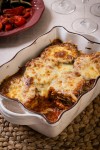
Paula Shoyer’s eggplant parmesan, featured in her latest cookbook, The New Passover Menu. (photo by Michael Bennett Kress)

The New Passover Menu by Paula Shoyer (Sterling, 2014) emboldened me. It was the whole package: the full-color photos, the clear text (blue for tools and ingredients; black for instructions), the organization by menus, the exotic-sounding nature of some of the offerings (gratin dauphinois, anyone?) and Shoyer’s dedication of the book:

“For all the kosher baker fans who asked me to write a cookbook of savory recipes. But, as my friend Suzin Glickman believes, you should still eat dessert first.”

Shoyer, of course, is famous for her baking. Bestselling The New Passover Menu joins her dessert bestsellers The Kosher Baker: Over 160 Dairy-Free Recipes from Traditional to Trendy and The Holiday Kosher Baker. She is a contributing editor to several kosher websites and cookbooks, as well as magazines, and is also a consultant for kosher bakeries and companies. She is no stranger to the Jewish Independent, as an internet search will show, and so it was with excitement that we received her latest cookbook.

In the press material accompanying The New Passover Menu, Shoyer says, “These recipes have been inside my head for years. As a book of 65 recipes, it offers not every possible Passover recipe but rather the best possible versions of food and desserts adapted for the Passover holiday.”

It lays out full menus for the two seders, as well as a Shabbat and Yom Tov menu, and menus for the holiday week, including lunch suggestions. There are several breakfast options and, of course, a lengthy list of dessert choices.

There is a chart of Passover cooking and baking substitutes, and a brief discussion of the holiday and its preparations (removing chametz and kashering the kitchen). Shoyer shares some memories of her seders past, and this leads into a description of the Passover table, the seder plate and its symbolic items, matza, salt water and wine.

Each recipe includes the preparation time, cook time, what items can be prepared in advance (and how long in advance) and all the equipment that will be needed. A brief paragraph accompanies each recipe, either a personal story about it or advice on cooking with some of its ingredients.

It was hard to narrow the selection of which recipes I would try. Since one of my taste testers is vegetarian, I shied away from such tempting creations as Seared Tuna with Olives and Capers with Kale Caesar Salad, and Moroccan Spiced Short Ribs. I opted instead for one main dish – eggplant parmesan – and something unique (and easy to make and transport) that I could bring to my host’s seder – banana charoset.

The New Passover Menu emboldened me in a couple of ways. First, I felt confident to adapt right from the beginning. So, for example, while Shoyer did not call for the eggplant slices to be sprinkled with salt and let sit for awhile to reduce their potential bitterness and bring some of their moisture to the surface (which I dabbed away with paper towel), I did it just in case. The recipe lists tomato sauce but, not wanting to buy or make any – as so many bought brands contain a lot of sodium and to make my own sauce would have been one more thing to do – I used a can of crushed tomatoes and added garlic powder, oregano and pepper to it, ingredients already included in the recipe. Finally, Shoyer offers a frying and a baking method for the eggplant slices, and I picked a middle version: I coated the slices as if for frying but then baked them, drizzling a little olive oil over them once they were laid out in the pan.

As for the banana charoset, I kept to the recipe for the most part, only adding more wine than recommended to brighten it up. I think the banana I selected for the mixture was on the too-ripe side. One thing to note with the charoset is that it tasted even better the next day, so I’d make it in advance if possible. The bold part of this recipe is that I pretty much insisted on bringing it to a seder once I’d tasted it.

The following recipes are reprinted from the cookbook, so the “I” and “my” from here on refers to Shoyer. Enjoy!

EGGPLANT PARMESAN

Serves: 12–15. Prep time: 10 minutes. Cook time: 20 minutes to fry eggplant; 35-40 minutes to bake. Advance prep: may be assembled one day in advance, fully baked three days in advance, or frozen; thaw completely before reheating. Equipment: cutting board, knives, measuring cups and spoons, two shallow bowls, large frying pan, nine-by-13-inch baking pan, silicone spatula.

Eggplant parmesan is one of my favorite Italian dishes. It is best made by my brother Adam Marcus, who has paid his rent for occasionally living with us by lovingly making his master version of this dish with a homemade sauce. Although I try to avoid frying foods (except for doughnuts and chicken once a year), I find that eggplant parmesan tastes better made with breaded and fried eggplant slices. If desired, you can grill the slices in the oven until fork-tender and then layer and bake as described below. If you go the healthier route, sprinkle the oven-roasted slices with some garlic powder, salt and black pepper. Depending on the size of the eggplants, you will end up with two or three layers in the pan.

1/3-1/2 cup oil for frying
3 large eggs, beaten
1 1/2 cups Passover breadcrumbs or matza meal
1/2 tsp garlic powder
1 1/2 tsp dried oregano
salt and black pepper
2 medium eggplants, not peeled, sliced into 3/4-inch-thick rounds
1 1/2–2 cups tomato sauce
2 cups shredded mozzarella cheese, or more as needed
1/3 cup freshly grated parmesan cheese

Preheat oven to 350°F.

Place a large frying pan on the stovetop and add 1/3 cup oil. Pour the beaten eggs into a shallow bowl. In another bowl, stir together the breadcrumbs, garlic powder and oregano and season with salt and pepper to taste. Heat the oil over medium-high heat. When the oil is hot, fry the eggplant slices in batches, browning both sides, until fork-tender, about 10 minutes per batch. Transfer to a plate covered with paper towels. Add more oil to the pan between batches if the pan gets dry.

Using a silicone spatula, spread about 3/4 cup of the tomato sauce in the bottom of a nine-by-13-inch baking pan. Place one layer of eggplant slices on top. Sprinkle with one cup of the shredded cheese. Cover with a second layer of eggplant. Pour another 3/4 cup sauce on top and use the spatula to spread the sauce on top of the eggplant pieces. Sprinkle with one cup of the shredded cheese. If you have more eggplant slices, place them on top, then add some tomato sauce and more shredded cheese. Sprinkle the parmesan all over the top.

Cover the pan tightly with aluminum foil and bake for 35 to 40 minutes, or until the eggplant layers are heated through and the cheese is melted. If you assembled the dish in advance and stored it in the fridge but did not bake it, bake for an extra 20 minutes.

BANANA CHAROSET

Makes three cups (serves 25 for seder). Prep time: 10 minutes. Advance prep: may be made three days in advance. Equipment: cutting board, knives, measuring cups and spoons, food processor, box grater, silicone spatula, small serving bowl.

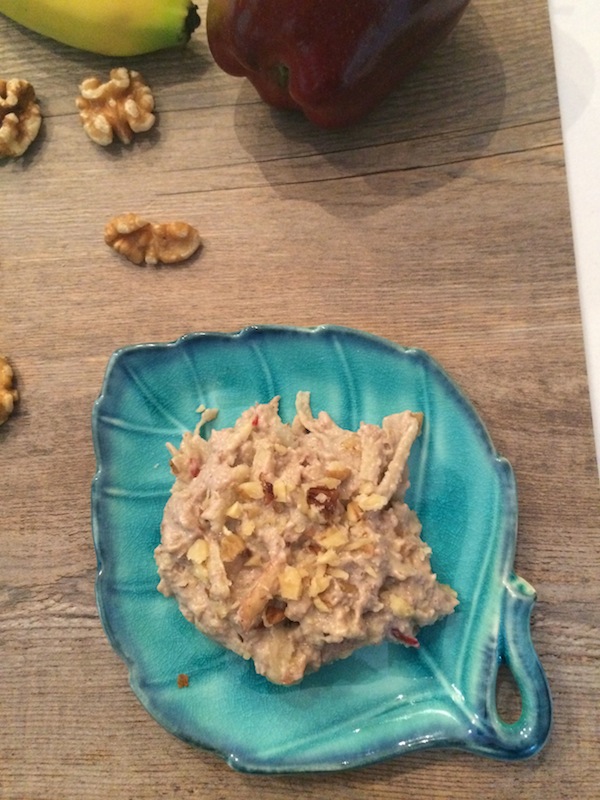
photo - Banana charoset, from Paula Shoyer's The New Passover Menu
Banana charoset, from Paula Shoyer’s The New Passover Menu (photo by Michael Bennett Kress)

Charoset is the element on the seder plate that represents the mortar used by the Israelite slaves to build bricks. Growing up, I had seders almost exclusively at my parents’ house or a handful of other relatives’ homes, and everyone made the same charoset: walnuts, apples and sweet wine all smooshed together. It was only when I began hosting my own seders that I discovered a wide variety of charoset recipes from every corner of the world where Jews have ever resided. This recipe comes from my friend Melissa Arking, who is a fabulous cook. I added chopped walnuts at the end for some texture.

You can buy nuts already ground, with the skin or without. I have a coffee grinder dedicated to grinding nuts. You can also use a food processor, as long as it can reduce the nuts to a fine grind, almost like a powder, when you need almond flour for baking. If you grind nuts for too long, you will end up with nut butter.

3 large ripe bananas
2 cups ground walnuts
2 tbsp sugar
1/2 tsp ground cinnamon
2 tbsp sweet kosher wine
2 apples, shredded on the large holes of a box grater
1 cup walnut halves, chopped into 1/3-inch pieces

In the bowl of a food processor fitted with a metal blade [a hand blender also works], place the bananas, ground walnuts, sugar, cinnamon and wine. Process until the mixture comes together. Transfer to a small bowl, add the apples and chopped walnuts, and stir to combine.

Format ImagePosted on March 27, 2015March 26, 2015Author Cynthia RamsayCategories Celebrating the HolidaysTags charoset, eggplant, Passover, Paula Shoyer, recipes, seder
About the 2015 Passover cover

About the 2015 Passover cover

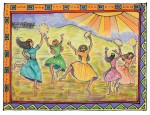
The illustration on this year’s Passover cover, “Miriam Dances,” was created by artist Carol Racklin-Siegel for the book Let My People Go (EKS Publishing, 2011). In this hand-painted silk art, Racklin-Siegel depicts the joy of Miriam the Prophetess leading the women in song and dance after reaching dry land: “Miriam the prophetess, the sister of Aaron, took her drum in her hand and all the women went forth after her with drums and with dances.” (Exodus 15:20)

Racklin-Siegel is an award-winning textile artist and illustrator focusing on custom hand-painted textiles, Judaic textiles, paintings and illustrations. She expresses the spirituality of Judaism by incorporating her textile designs and fabric painting techniques to Judaic and biblical themes. She has illustrated a series of books for children, based on the stories in Genesis, for EKS Publishing Co. in Oakland, Calif. She resides with her family in Israel. Her work can be viewed at pomegranatestudios.com.

Format ImagePosted on March 27, 2015March 29, 2015Author Cynthia RamsayCategories Celebrating the HolidaysTags Carol Racklin-Siegel, Exodus, Passover
Dancing in gratitude

Dancing in gratitude

Serge Bennathan with Erin Drumheller in Monsieur Auburtin, which is at the Dance Centre March 26-28. (photo by Michael Slobodian)

Serge Bennathan’s Monsieur Auburtin is an autobiographical work, which promises to offer “audiences a keyhole through which to rediscover their own childhood dreams, splendidly realized or forgotten through the passage of time.”

Co-presented by the Scotiabank Dance Centre and Chutzpah!Plus March 26-28, Monsieur Auburtin spans Bennathan’s decades-long career, from France to Canada, from student to company artistic director. In addition to being a dancer and choreographer, Bennathan is also a writer and artist. He is known for his collaborations with opera companies, and the projects of the company he founded in Vancouver, Les Productions Figlio, “encompass dance, theatre, music, multi-media, visual art and literary works.”

Among multiple other honors, Bennathan was awarded the 2014 Canada Council Jacqueline Lemieux Prize because of his innumerable “contributions to Canadian dance through his creation work, his performance, his work as a mentor, [and] for his leadership within and beyond his company work. He inspires creativity among those he works with and his impact has been felt in multiple geographical centres and multiple generations.”

JI: Throughout your career, you’ve created personal works, why an autobiographical one at this point?

SB: It came quite organically as a response to a cancer that I was fighting. It made me think about what I love in my life, what made me, the gratitude to be an artist in this world. And how there are a lot of dance works but how we speak rarely about dance with the audience. So, I decided to be a storyteller and talk about how I came to dance and use my life as an artist in dance to talk about other artists that I love and admired. For this, on stage in Monsieur Auburtin, there are with me two dancers, Erin Drumheller and Kim Stevenson, and the composer playing live, Bertrand Chénier.

JI: The last time we spoke was in 2003, about The Invisible Life of Joseph Finch. There, you described your creative process as including up to a year and a half of research before starting to work with the dancers and creative team. How does your process differ, if at all, for a work such as Monsieur Auburtin?

SB: It does not really. It is the same process. I spent a year writing the text for the piece, then another working with the composer Bertrand Chénier. Just talking about life in dance, not talking about choreography but about the essence of dance. Now, here we are, in the studio with two dancers, me and the composer that will be live on stage. The time before is important to create enough stratum, subtext and be able to let go.

JI: From where do you garner the strength/courage to share so much of yourself in your choreography? Does the vulnerability ever scare you? If so, how do you overcome that fear?

SB: We live only once. It is important for me right now to talk to people, and even more important to me in the world we live in, to talk poetically to the audience, through words, movement and music. We all have in us fear, but we also have courage and strength. Doubts are not there to stop us, they are here to make us think deeper. We have to embrace fear to say our truth. And even more when we know that this life is not a dress rehearsal.

JI: [From 1990-2006], you were with Dancemakers in Toronto. What brought you to Vancouver, and how did Les Productions Figlio come to be created?

SB: In 2006, when I stepped down as artistic director of Dancemakers, it was very natural for me to come back to Vancouver. The time that I lived in Vancouver the first time, 1987, ’88, ’89, ’90, defined me as an artist. The people I met at that time became longtime collaborators that continued to work with me through my time at Dancemakers. I loved passionately this community. It is my home in Canada. I created Les Productions Figlio, a production company, to help me create the work I want to create, that is not always dance. I had just come out of 16 years with a dance company and wanted to be lighter as a structure. I create dance, but also theatre and maybe more.

JI: You are also a writer, painter and illustrator. Have you always been interested in these pursuits? What does a typical day or week look like for you, or is there such a thing?

SB: Dance introduced me to these other artistic expressions very organically and I love it. Everything feeds everything. I get up, meditate, write for two hours, paint, continue the day in the studio or the work that I have to do for a creation. Might come back to painting, read, cook, think, dream.

***

Monsieur Auburtin is at the Dance Centre, 677 Davie St., March 26-28, 8 p.m. For tickets ($29/$25/$20), visit thedancecentre.ca or chutzpahfestival.com, or call 604-257-5145.

Format ImagePosted on March 13, 2015March 12, 2015Author Cynthia RamsayCategories Performing ArtsTags Chutzpah!Plus, Dancemakers, Les Productions Figlio, Monsieur Auburtin, Scotiabank Dance Centre, Serge Bennathan
Nisman was a true hero

Nisman was a true hero

Gustavo Perednik, right, with Alberto Nisman in Jerusalem. Nisman’s work inspired Perednik’s novel. (photo from Gustavo Perednik)

The day before he was to present to Argentina’s parliament allegations that the government tried to cover up Iran’s involvement in the 1994 terror attack against the AMIA (Asociación Mutual Israelita Argentina) Jewish community centre, federal prosecutor Alberto Nisman was found shot dead in his home on Jan. 18.

Led by another prosecutor, Nisman’s AMIA case was dismissed last week by a federal judge on the basis of insufficient evidence. An appeal will likely follow (as at press time, it had not), and the case will continue. No one has been found responsible for the bombing of the AMIA, nor that of the Israeli embassy in 1992. Nisman’s suspicious death is under investigation.

image - To Kill Without a Trace book cover
To Kill Without a Trace author Gustavo Perednik speaks at the Waldman Library on March 23.

It is within this context that Argentina-born Israeli writer Gustavo Perednik visits Vancouver (and elsewhere) to discuss his novel To Kill Without a Trace: A Prequel to 9/11. Originally published in Spanish in 2009 by Planeta, the English edition was published by Ontario-based Mantua Books Ltd. on Sept. 11, 2004. It was translated by Dennis Burton, and Vancouverite Elena Feder wrote the foreword.

Written as an historical novel, writes Feder, To Kill Without a Trace “recounts the events leading up to the bombing of the AMIA and beyond, exploring the social and political implications both for Argentina and the world. Never losing sight of the human dimension of the tragedy, Perednik’s lightly veiled fiction is accurately based on reported facts and original legal documents, put at the author’s disposal by none other than the chief investigator of the case, Argentina’s prosecutor, Alberto Nisman.

“As it did for its Spanish readers when it was first released,” Feder continues, “this translation of Perednik’s account will make the AMIA bombing and its aftermath more accessible to its English readers. It will help them unravel the complex threads surrounding the facts and events leading up to and following the bombing, and will steer them through the arcane legal and political intricacies of this decades-long case.”

“I was motivated to write the book when I knew the fantastic work done by Alberto Nisman for justice in Argentina,” Perednik told the Independent in an email interview. “Here you have a man fighting by himself against all odds, inspired by the ideal of pursuing truth by all means. Moreover, I was encouraged by the fact that I was able to get plenty of information on Iranian terrorism thanks to my friendship with Alberto.”

Perednik has published novels, essays and countless articles in anthologies and academic journals. He said he chose the fictional form for To Kill Without a Trace “to make it more readable and compelling. The life of Alberto combines many aspects that are appropriate for a fictionalized chronicle: perseverance, idealistic youth and the metamorphosis of a personality due to the sense of a mission he felt about one specific case – the investigation of the AMIA terror attack.”

Perednik and Nisman met about 10 years ago, “when he read an article I wrote and emailed me that he agreed with me and that we should meet. Once we met, he told me that when he was a teenager he had heard me speak several times at the Jewish institution that I headed in Argentina.”

For the novel, Nisman provided “reports, opinions and projects,” explained Perednik. “Sometimes he also gave me pictures, and he often provided me the names of people who could help me in my research for the book.”

Perednik and Feder have been friends for about 15 years. “She translated my book Judeophobia into English – it is still unpublished,” he said, referring to the English edition. The book, which examines the origins and development of hatred towards Jews and various theories explaining it, has already been published in Spanish, Portuguese and Hebrew.

“It all started when she wrote to me about my article ‘Europe the Aggressor,’” he said. “She was on her way to a conference on Jew-hatred in Paris. She was the Canadian representative. Elena put me in contact with the publisher – Mantua Books – and she was kind enough to write the excellent foreword that helps to understand the case.”

Feder has volunteered many hours to the publication. “I do it out of conviction,” she wrote in an email. “I do it to honor the memory of my parents and the decimated family I never met, courtesy of the Nazis, who serve as models and heroes to the current instigators of hatred against the Jewish people.

“I stand on the side of those who consider Iran’s extensive, long-term and long-ranging aim to take over and cleanse the planet of all ‘infidels,’ instrumental in the resurgence and spread of Jew-hatred worldwide. Like my ancestors, I feel personally at risk, not for what I do or what I may or may not believe in, or where I may choose to live, but for who I am in the distorted lens of those who consider both my life, and this life as a whole, worthless.”

“I think Alberto Nisman’s devotion for the cause of justice should be valued everywhere,” said Perednik, “especially during these times in which the terrorist state of Iran seems to get away with its murderous campaign without anyone having the courage to confront it. Alberto had the courage and paid for it with his life. He was a true hero.”

Perednik will appear on CBS’s 60 Minutes on March 8, at 7 p.m. He will be at the Isaac Waldman Jewish Public Library on March 23, 7 p.m., with Feder. An RSVP is required to 604-257-5111, ext. 248, or [email protected] by March 19.

Format ImagePosted on March 6, 2015March 4, 2015Author Cynthia RamsayCategories LocalTags Alberto Nisman, AMIA, Argentina, Asociación Mutual Israelita Argentina, Elena Feder, Gustavo Perednik, To Kill Without a Trace, Waldman Library

Posts pagination

Previous page Page 1 … Page 78 Page 79 Page 80 … Page 85 Next page
Proudly powered by WordPress