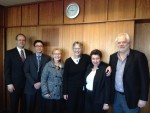
Left to right: Glen Hodges, manager, Mountain View Cemetery; Damian Koo, City of Vancouver legal services; Francie Connell, director, City of Vancouver legal services; Dr. Penny Ballem, city manager; Shirley Barnett, chair, MVJCRP committee; and Herb Silber, Schara Tzedeck Cemetery board. (photo from Mountain View Jewish Cemetery Restoration Project)
“Sometimes it takes awhile,” said Shirley Barnett, chair of the Mountain View Jewish Cemetery Restoration Project. But generally not 124 years! In 1891, Vancouver mayor David Oppenheimer, member of a prominent pioneer Jewish family, was approached by the growing Vancouver Jewish community to reserve a section within the city-owned Mountain View Cemetery to be consecrated and used exclusively for Jewish burials. At the time, when a Jewish person died, they were sent to Victoria, where the community had already established a cemetery.
Oppenheimer knew the small Jewish community of Vancouver well. The Gintzburgers, Weavers, Fleishmans, Golds and Goldblooms traveled in the same circles as the Oppenheimers. They had all emigrated from Western Europe, some via the United States, around the same time and all had prospered. Perhaps, as Barnett speculates, “they had even helped to get Mayor Oppenheimer elected.”
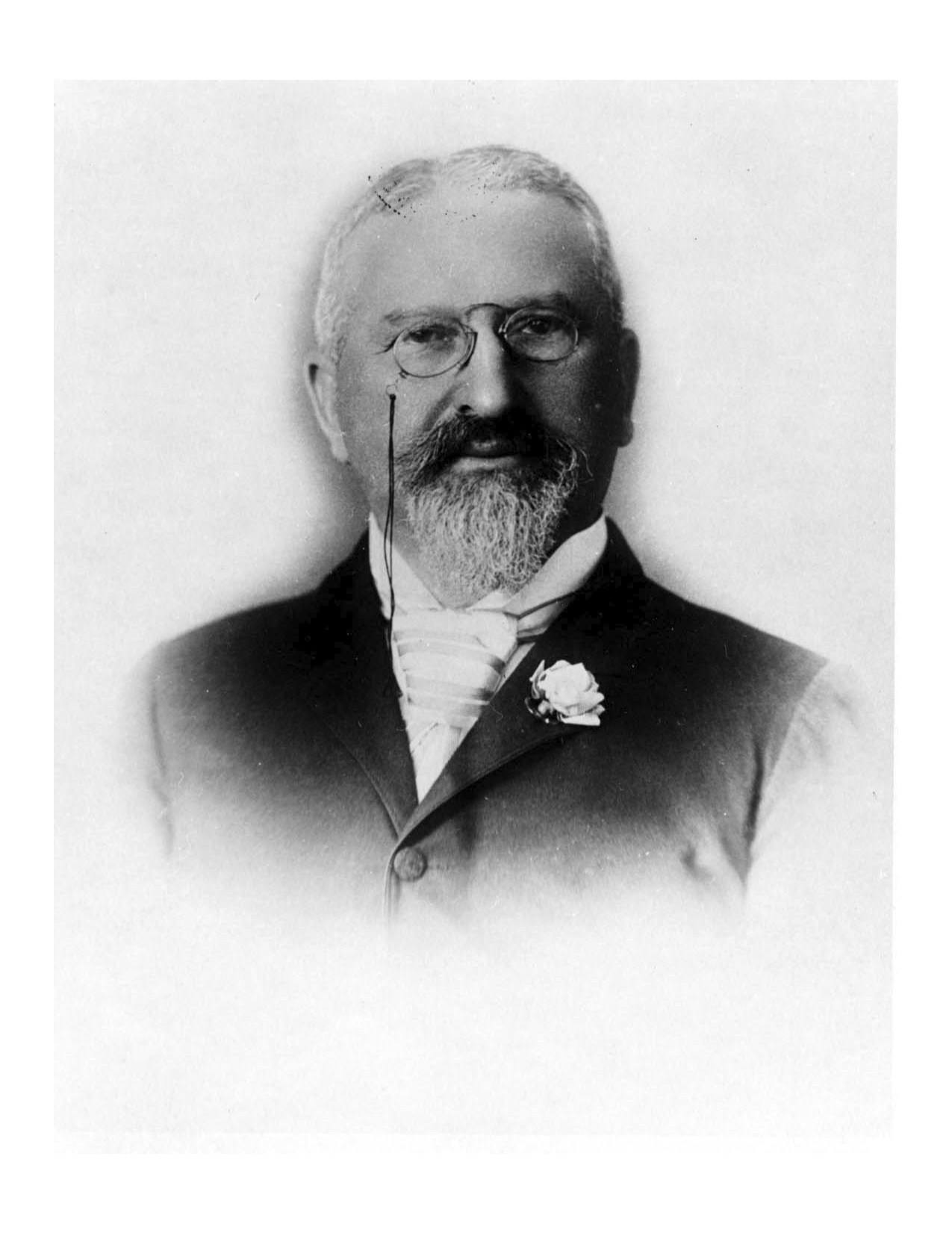
David Oppenheimer, circa 1891. (photo from Jewish Museum and Archives of British Columbia, L.00179)
Oppenheimer was born in Germany in 1834, one of 10 children. He emigrated to New Orleans in 1848 with his sister and four of his brothers. Becoming a bookkeeper, and later a trader in the California gold rush, the Oppenheimers relocated to Sacramento, where David invested in real estate, and married his first wife Sara in 1857. After the gold rush, the Oppenheimer brothers moved to Victoria, establishing stores throughout British Columbia, catering to prospectors and settlers. Also building a real estate portfolio, they expanded their interests in Vancouver.
Although Malcolm MacLean was the first mayor of Vancouver, it was Oppenheimer who is remembered as the “Father of Vancouver.” In his four terms as mayor, from 1888-1891, he implemented many basic civic services: fire department, streetcars, water supply, utilities, schools and parks. He was also a philanthropist, a founding member of the YMCA, Vancouver Board of Trade, Vancouver Club and many charities.
Establishing a Jewish cemetery at Mountain View in 1892 was one of his many accomplishments. Without minutes of meetings or other documentation, however, the only evidence of this was a number of articles published over the years, and the records of burials.
In 2015, 124 years later, the City of Vancouver recognized the historical establishment of the Jewish section at Mountain View and, based on this, an oversight agreement with Schara Tzedeck Cemetery board was signed. The agreement confirms that the cemetery board has the right to oversee all interment and funeral services within that Jewish section.
Although Oppenheimer himself was buried in New York, many of his colleagues were laid to rest at Mountain View. Over the past two years, a restoration of this old cemetery been undertaken. Now complete, the rededication will take place on Sunday, May 3, at 1:15 p.m.
The author enjoying a day of folk music from around the world at Israel’s Jacob’s Ladder festival. (photo from Miri Garaway)
I have always been a folk music aficionado, so when I heard about the Jacob’s Ladder Music Festival in Israel, I planned a trip there entirely around the idea of attending the festival. Not only was it a phenomenal event, it exceeded all my expectations and was the highlight of our month’s stay.
(photo from Miri Garaway)
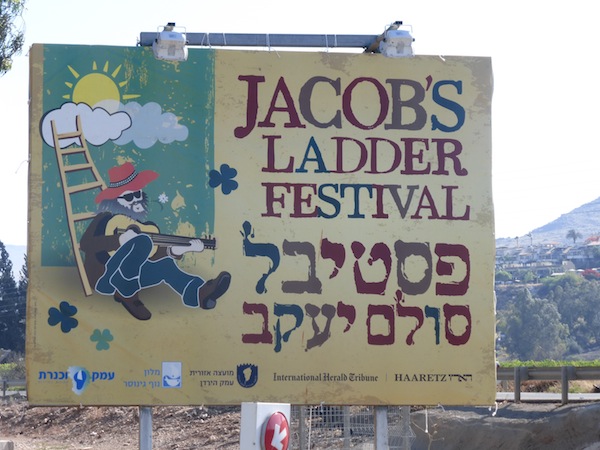
Established in 1976, Jacob’s Ladder (Sulam Ya’akov) is held twice a year, in May and December, with the spring festival on a larger scale. It is billed as “Israel’s friendliest musical and social event, a unique bluegrass, folk, country, blues, Irish and world music extravaganza.” That it was.
With the venue on the grounds of Kibbutz Nof Ginosar on Lake Kinneret, nine kilometres north of Tiberias, the setting could not be more beautiful and the atmosphere is very relaxed, “green” and peaceful. Approximately 4,000 people attend the spring festival, yet it did not feel crowded or overwhelming.
How wonderful to be able to attend a two-and-a-half-day event and know that there is free camping on site, in addition to the pleasant Hotel Nof Ginosar. From the moment we entered the site, on a Thursday afternoon in May 2014, we could feel the energy of the special event that was about to take place.
The organizers have registration down to a science. We bought our tickets upon arrival, received our fluorescent wristbands and joined the throngs of festival goers entering the site. Considering the volume of people arriving, we were amazed that we only had to wait a short time in the line-up for tickets. Pre-festival online tickets helped to ease any congestion.
And, perhaps only in Israel would they provide free agalot, large wheely carts in the parking lot so you can carry all your belongings into the grounds. I found this so civil and convenient and it was fun to watch the hordes of people streaming in with their tents, barbecues, bicycles, chairs, strollers, blankets, duffle bags, food coolers and other camping paraphernalia.
This is a festival that everyone can enjoy: young families, teenagers, baby boomers, aging hippies and young-at-heart seniors. While it originated as more of an anglophone festival, today, many non-anglophone Israelis and tourists attend, too.
The festival is extremely well organized, with activities such as free early morning outdoor yoga and tai chi classes, holistic treatment kiosks, a craft fair, children’s handicraft workshops, a children’s puppet-making workshop, storytelling, juggling, Irish, tap and square dancing workshops. Food booths are also set up on site with pre-purchased tickets to be used throughout the festival.
We chose to stay at the kibbutz guesthouse, Hotel Nof Ginosar. Although the hotel is fully booked for the festival from year to year, the reservations clerk suggested we put our names on the waitlist (this was in October) with a good chance that a room would become available closer to the date of the festival. In the interim, we booked a nearby bed and breakfast to ensure that we had some accommodation in place. We were fortunate that space at the hotel did open up a couple of months before the festival.
It was convenient to stay on site rather than commuting. The hotel is basic, but clean and comfortable and every room has a fridge. The bountiful and delicious Israeli breakfast, included in the room rate, gave us a great start to the day.
While exploring the grounds, I met my Israeli cousin from a nearby moshav, who promptly invited us to his tent for a communal Shabbat dinner. Suddenly, we were among family and friends for a feast. This unexpected rendezvous was indeed a treat.
Jacob’s Ladder is easy to navigate. The main stage is a huge expanse of grass where you can put down blankets, towels or low chairs to reserve a spot for the entire weekend. This is unheard of at most festivals, since you usually have to collect your things at the end of the day and race for the coveted spots each day. It is an unspoken rule at Jacob’s Ladder that if you are not using your space, anyone can sit in your place until you return. The whole area is covered by an enormous see-through tarp, so the sun does not beat directly down on you. Once you are settled in, it is pure joy to sit back, relax and enjoy the outstanding talent and the incredible music. On many occasions, people are moved to get up and dance. You also get to know your neighbors and it feels like a community within a community. It is interesting to make connections with the people who are around you.
There is also the lawn stage, a smaller space with chairs set up on the plaza outside the hotel lobby. Another music venue within the hotel is Hermon Hall, an indoor auditorium, as well as the balcony stage and the sports hall for music and dance workshops.
The performers are often available to meet right after the concert, at a table beside the stage, where they sell their merchandise.
In addition to Israeli artists, musicians come from all over the world to perform at the Jacob’s Ladder. A sampling of some of the stand-outs for 2014 included the Jammin Divas; Maya Johanna, Shay Tochner and Yonatan Miller in a tribute to Pete Seeger; the Slocan Ramblers; and a variety of singers who belted out a moving medley of the songs of Janis Joplin, Joni Mitchell, Eric Clapton and Ray Charles. From the strumming of the Ukeleles for Peace Children’s Orchestra to the lilting sounds of Nava Tehila singing Jewish world music for Kabbalat Shabbat, this was a festival that moved and energized me.
The hotel kindly allows jamming sessions in the lobby and bar areas and people bring guitars, banjos, violins, flutes, clarinets, harmonicas, drums and an assortment of other instruments to showcase their talent. What a wonderful hive of activity and a delight to hear music wafting throughout the hotel. There are also pop-up jamming sessions on the grounds, away from the stages. People-watching is an activity unto itself.
If you want to take a break, there is a swimming pool, as well as the lake beach of the Kinneret, but we came for the music and it was truly an exceptional experience.
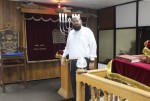
Rabbi Yacob Berezniak in Havana’s Agath Israel synagogue. (photo by Baila Lazarus)
On a small side street in Old Havana, an innocuous sign on a decaying wall announces “Synagoga Adath Israel.”
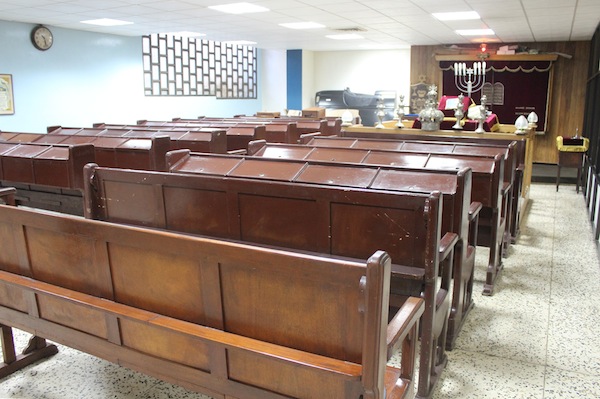
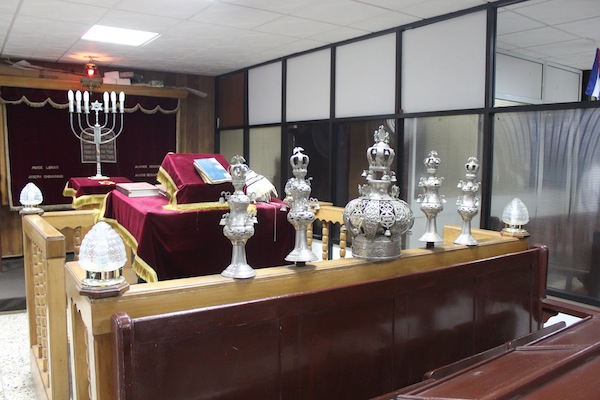
A few steps away, on Picota Street, an entrance leads into the basement of an old building to reveal a modest but well-appointed synagogue that has been serving Cuban Jews for almost 100 years.
Rabbi Yacob Berezniak greets me, though I’ve made no appointment, and talks proudly about the synagogue, but is distressed at the situation with the Jews in Cuba. The community is dwindling, he says, and aging.
Interior of Adath Israel Synagogue in Old Havana. (photos by Baila Lazarus)
The Jewish community in Cuba started growing with an influx from Poland and Russia after the First World War and continued for almost three decades. At its largest, it’s estimated to have been more than 20,000. Not only was it big enough to build and maintain one synagogue, but, as tends to happen in many Jewish communities, it supported a break-away group that moved into a building next door.
After the Cuban revolution, however, changes in the political and economic structure, as well as restrictions on religious observance, caused many Jews to leave – for the United States, Israel and Mexico, among other locations. Today, according to Berezniak, the community numbers only 1,200 in all of Cuba, with 900 being in Havana.
“Most of the members are very old,” he said. “And they’re very poor.”
Poverty in Cuba is a controversial topic. There are those who talk about how the reforms after the revolution provided an ideal lifestyle. Indeed, there are few who would argue that Cuba has had some of the best educational and health reforms in the world. Many foreigners have been coming to Cuba to get health care they may not find in their own countries.
But good health care does not mean that the poorest can afford medications, Berezniak lamented.
There is definitely a two-tiered system in Cuba. Those who are strictly living in the socialist economy have a token stipend that may only amount to a few dollars a month. They receive their money in Cuban pesos (CUP) that are worth about $0.05 Cdn. Their needs are supposed to be met with ration coupons for food and other necessities that often don’t fulfil the requirements of a large family. They live in homes that have been inherited from their parents. If their family grows, they can’t simply move into another location.
Those who have managed to get business licences, especially if serving the tourist industry, have a different story. They are paid in Cuban convertible pesos (CUC) valued at $1 US. A taxi driver can make 50 CUCs for a half-day’s work taking tourists around Havana.
To help the oldest and poorest, Adath Israel offers free meals whenever they can. Every Friday, for example, they have a free fish dinner that fills the synagogue.
“For many of the people who come to that dinner, it’s the biggest meal they will have all week,” said Berezniak, adding that he is also concerned that the Jewish community will simply disappear. “The community has been getting smaller. There are no young people here to support the older ones.”
The poverty and shrinking Jewish population are two reasons why Berezniak welcomes donations – financial and otherwise – to the synagogue. On my visit, a friend and I dropped off bags of clothing, cosmetics and toiletries – items that we take for granted but are very costly in Cuba. Prescription and non-prescription medical supplies are also needed.
With the decision in January by the Obama administration to lift the U.S. embargo of Cuba, it will be easier for certain Americans to travel and bring some supplies in small quantities, but it’s hard to say how long that will take to impact the small country. As well, larger exports are still restricted. Limited products such as telephone, computer and internet technology are now open to trade, and investment in some small businesses is permitted. But general U.S. travel tourism is not open yet. It’s expected that tourist trips will be limited to supervised groups, and there has been no agreement yet about airline flights.
If you are thinking of seeing Cuba, consider going while it’s still building and renovating its infrastructure for tourism. Havana travel agent Ivan Barba said Havana is already almost at its maximum for the number of tourists it can hold; and it will get worse as the U.S. decision opens the door for more.
Food and lodging are still quite affordable, and there are numerous all-inclusive flight and hotel deals direct from Vancouver.
To contact Adath Israel, call 1-537-860-8242 or email [email protected]. Allow a lot of time for email response, however, as internet service is sporadic.
Baila Lazarus is a freelance writer media trainer in Vancouver. Her consulting work be seen at phase2coaching.com.
How fast time flies. Passover is almost here again, and it’s time to prepare a new tutorial, I said to my 7-year-old daughter while getting out a magic box with colorful modeling clay.
At school, we are reading a lot about Passover right now, she said to me. When the Jewish people crossed the dessert, they had camels with them, who carried people and their belongings. Mom, can you teach me how to model a baby camel? Please, mom, can you?
Of course I can, my dear. Come over here, I said, inviting my daughter to join me at the table to work on the model of a baby camel. For the young readers of Jewish Independent, as always, I have prepared pictures to demonstrate the process. Find yourself a comfortable seat and start working on your creation!
1. Take a few pieces of modeling clay and a toothpick. Mostly we will work with orange color, but we will also use some brown, white and black pieces.
2. Prepare equal amounts of clay to form the baby camel’s head, neck, body with two humps and four legs.
3-4. Bend the legs a little in the middle and finish them with brown cushion-like hooves, perhaps parted in the middle front. Connect the neck, body and hooves.
5. For the head, you can use white and black pieces of clay for the eyes. Or blue or green clay, if you have it. Take some brown clay and shape the nose and also give your camel a tuft of hair on top of its head.
6. Cover the tips of the humps and tail with tufts of hair as well. We have made our baby camel! You can now take your new little friend for a walk.
Isn’t it great to make toys with your own hands? You will also make your family happy by adding your creation to the Passover seder table. If you take a picture of your baby camel and print it, you will have a real postcard.
Let your imagination guide you and join our art lab! Send photos of your artwork to [email protected], and you may have a chance to win Curly Orli Goes to Vancouver, a book illustrated with clay pictures.
Wishing you a kosher and happy Pesach, dear friends! See you next time.
Lana Lagoonca is a graphic designer, author and illustrator. At curlyorli.com, there are more free lessons, along with information about Curly Orli merchandise.
The path to Nounou Mountain is a gentle incline through a forest of magnificent Norfolk pine trees. (photo by Lauren Kramer)
There were only a few items in my grocery basket so, when the cashier asked me for $100, I insisted on seeing the receipt. There it was, a single loaf of ordinary brown bread – no seeds, nothing fancy – listed at $7.50. There had to be a mistake, I thought, walking the loaf to the returns department of a Kauai K-Mart. But no, I was told. That was the price. A loaf that would cost $1.99 anywhere else in the United States was $7.50 on the island of Kauai.
We’d come as a family to enjoy a week in the December sunshine of the tropical island and learned quickly it would be anything but an inexpensive vacation. Our first shock was when we’d tried to book a furnished house or flat, thinking it would be a perfect way to avoid the cost of eating out every day. We checked the usual sites: vrbo and airbnb, and the listings showed beautiful accommodations, close to the beach and within our budget. So we booked air and went back to the website to secure a place to stay. That’s when we discovered that all those listings were controlled by agencies and, though they appeared “available” online, when you actually tried to book them, you discovered they weren’t. The “hard sell” began the moment I called the agencies. “There’s nothing left on the island,” the agents would say by way of introduction. Then, after a moment’s pause … “All I have left is this apartment at $350 per night.” Pictures of said apartments showed rooms last updated in the 1970s, tiny places that looked entirely unappealing. We learned visitors to Kauai book their accommodation up to a year ahead, sometimes more. And they pay premium prices for their island sunshine.
After many hours scouring online we found accommodation at a modest three-star resort, where we crammed four people into a tiny room and filled the excuse-for-a-refrigerator with snacks, lunch and breakfast foods. Still, the mostly lousy dinners we were forced to eat in restaurants, dining on food that was consistently overpriced, were memorable only for their pitiful quality.
The Napali Coast on the island’s north side is one of Kauai’s great beauties. (photo by Lauren Kramer)
Kauai Vacation Lesson 1: Book early, ensure you have a kitchen, then visit Costco in Lihue and stock up.
Price sticker-shock aside, we were quickly bowled over by Kauai’s lush beauty. Drive around the island and there are exquisite beaches around every corner, the palm tree-lined stretches of sand you see in brochures, lapped by warm water that makes swimming pure pleasure. We had brought boogie boards and snorkel gear, and spent our days exploring beaches on different parts of the island. In Poipu, which has the island’s busiest beach, we snorkeled over the shallow reefs, while in Port Allen we marveled at a massive monk seal, stretched in languid repose on the shore. In Wailua, the kids surfed for hours, riding small-but-strong waves onto the beach before venturing back for more. In Princeville, we watched a massive turtle swim leisurely, oblivious to the swimmers and snorkelers nearby. With sunscreen and a picnic lunch in hand, the hours spun by beneath the Hawaiian sun, a perfect tonic after the grey, cold winter back home.
Endless stretches of white-sand beaches with tumbling waves means there’s no shortage of space for kids to boogie board or snorkel. (photo by Lauren Kramer)
Kauai Vacation Lesson 2: The beach is all you really need.
“You have to see Waimea Canyon,” folks told us. We had good intentions of visiting the “Grand Canyon of Kauai” but when we started out and learned it would be close to two hours each way, four kids fighting in the back seat, the canyon felt a whole lot less appealing. Instead, we contented ourselves with a hike up Nounou Mountain, through a forest of Norfolk pines with ringed trunks that felt straight out of a fairytale. The hike was exhilarating and muddy, taking us past locals’ back yards, where orange trees hung heavy with ripe fruit. Never has fruit theft felt more appealing – though we kept our hands to ourselves. Later, at one of Kauai’s farmers markets, we had ample opportunity for tasters. We purchased $5 coconuts from a young man who wielded a machete and expertly sliced them so we could drink the sweet milk before devouring the soft interior. And we gratefully accepted samples of colorful rambutan, miniature apple-bananas, massive avocados and Kauai-made chocolate spreads, jams and honey. There’s a farmers market somewhere on the island every day of the week and when you find one, it’s a great opportunity to interact with locals and stock up on fresh local fruit and vegetables. Just don’t even think about bringing them home. Produce export is strictly monitored at the airport and we even witnessed the confiscation of a small container of peeled mango someone had tried to save for the flight.
The only time we opted for a group excursion with a local tourism vendor, we wished afterwards that we hadn’t. The kayak tour we took mentioned a paddle upriver and snorkeling in a secluded cove. What it didn’t mention was that the river was very unremarkable, and that we’d need to commute an hour each way to reach the excursion. The disappointing outing robbed us of a precious day on one of the island’s better beaches and our dinner later that night, at a Hanalei restaurant, represented a new low in our island eating experience.
Kauai Vacation Lesson 3: Rent a car, buy a guidebook and explore on your own.
Lauren Kramer, an award-winning writer and editor, lives in Richmond, B.C. To read her work online, visit laurenkramer.net.
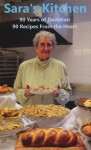
Mere days before heading to Israel for a couple of weeks, Sara Ciacci, 90, called the Jewish Independent to make sure that I had received her new cookbook, Sara’s Kitchen: 90 Years of Devotion, 90 Recipes from the Heart (Gateway Rasmussen, 2015), and that I had all the information I needed about the Jewish Food Bank. For Ciacci, food and tzedaka are inextricably connected with life and community.
“Sara Ciacci is the beating heart of Temple Sholom’s kitchen,” reads the cookbook’s introduction. “From her kiddush lunches to the Sisterhood catering committee, second seders, women’s seders and the annual Yom Kippur break-the-fast, Sara has made a mission of nourishing her congregation since its earliest days. She is queen of all hamantashen, blintzes and latkes, and, every year, she and friend Leonor Etkin produce challot by the dozen for Temple Sholom’s High Holiday celebrations. Sara also makes the Vancouver Jewish Food Bank her priority, and all the hungry in our community will be the beneficiaries of all the money raised from the sale of Sara’s Kitchen.”
The Jewish Food Bank supports close to 400 Jewish individuals each year, according to its 2013-2014 report. Ciacci shared with the Jewish Independent an email she wrote to the Jewish Family Service Agency, which co-funds the food bank with Jewish Women International-B.C. and community donors. In it, she traces her memories of the service agency back 80 years, to the Depression era, when, like many families in the Jewish community, she writes, “my mother, two sisters and I needed help. I also remember Theresa Blumberg, the social worker who came to our home and found a reason to look in the food pantry, to talk with me and ask about school. She also found time to visit me during the 18 months that I was in the children’s preventorium for tuberculosis. It was Miss Blumberg who made sure that I had proper shoes and school supplies. My only possession from childhood is an 11th birthday book inscribed, ‘To my dear Sara, from Theresa Blumberg.’…
“My adult association with the Jewish Food Bank started in 1984 when our president, Jean Cohen, was helping a Jewish senior and found canned cat food in her cupboard. She did not have a cat. Jean brought the idea of a food bank for seniors and immigrants to our board. We then approached the Jewish Family Service Agency (JFSA) and an unofficial partnership was born. B’nai B’rith Women (now JWI-BC) would be responsible for collecting food and JFSA counselors chose the recipients. Hampers were provided based on a list that identified recipients only by a numbered card that specified their specific needs.”
Organized for a number of years by “two wonderful women who are no longer with us,” Renee Lifchus for BBW (now JWI-BC) and Isabel Lever from JFSA, “We packed the first hampers … in Safeway paper bags on the workbench in Carol Fader’s basement…. Hampers contained non-perishable food items that our members donated or collected from friends and family.”
In this tradition of community, several recipes in Sara’s Kitchen are Ciacci’s “by way of being begged, borrowed, copied, changed or invented.” The sources of these recipes are acknowledged, which adds to the community feel of this cookbook.
There are three chapters, starting with most everyone’s favorite meal: dessert. The second chapter comprises Passover recipes, the third, “and everything else.” There is an index for quick finds, a page on which to note your favorite recipes and their page number for easy reference, as well as a couple of pages to write in a few of your own recipes. Each section is headed by a full-color page of some of the treats waiting to be made.
The desserts section starts with a few tips, such as the need to chill cookie dough for at least an hour. Ginger snaps, blueberry drop cookies, and apple and honey cake bread pudding with butterscotch sauce are among the 36 pages of desserts to try after Passover.
In addition to the Passover conversion table – offering substitutes for flour and Graham cracker crumbs, for example – there is a spice guide, and pieces of advice offered throughout, such as how to ripen avocados more quickly and how to make radish roses. Appropriately, on page 90, is “Sara Ciacci’s Recipe for a Rich Full Life,” featuring nine wise ingredients.
Since I’m reviewing this cookbook in the Jewish Independent’s Passover edition, the recipes I tested are all kosher for the holiday: spinach vegetable kugel, red cabbage and almond crisps. Everything turned out according to plan, except the almond crisps, which were golden brown in about half the suggested time. I will remember this next time I make them because they are so good and easy to make, there will be a next time.
SPINACH VEGETABLE KUGEL
3 large carrots
10 oz package frozen spinach, thawed
1 medium onion
2 stalks celery
1 cup chicken [or vegetable] bouillon
3 eggs
3/4 cup matza meal
salt and pepper to taste
Preheat over to 350˚F. Grease an eight-inch square pan.
Cut up and grate carrots. Set aside. Chop spinach, onion and celery. Place in a two-quart saucepan. Add grated carrots and bouillon. Cook over medium heat for 15 to 20 minutes until vegetables are soft.
Place the eggs and matza meal in a mixing bowl. Stir in cooked vegetables. Season with salt and pepper. Spread the mixture evenly in the baking pan. Bake, uncovered, for 45 minutes. Cut into squares before serving.
RED CABBAGE
1 medium onion
1 average-size red cabbage
4 medium apples
1/4 cup canola oil or butter
1/2 cup water
3 tbsp (or more) red wine vinegar
3 tbsp sugar
1 tsp salt
3 or 4 whole cloves
1 tsp caraway seeds (optional)
Slice onion and sauté in oil/butter until translucent. Shred cabbage. Peel, core and slice up apples. Place cabbage in a pot and top with the sliced apples. Add water and remaining ingredients. Place on medium-low heat and simmer one hour (or longer), stirring occasionally until cabbage is tender.
Adjust vinegar/sugar to taste. Some lemon juice can be substituted for the vinegar.
ALMOND CRISPS Perfect for Passover, these cookies also make a great gluten-free option at any dessert buffet.
3 cups sliced almonds with skins, lightly toasted
1/2 cup sugar
2 egg whites. at room temperature
1/2 tsp vanilla (optional)
Preheat oven to 350˚F. Line cookie sheet with parchment paper.
In a large bowl, mix (do not beat) egg whites with sugar. Add vanilla. Stir in almonds.
Using a tablespoon, make mounds of mixture on cookie sheet and flatten into thin rounds with your fingers dipped in cold water or with the back of a spoon. Bake for 20 minutes or until golden brown.
Turn off the oven and leave cookies in the oven with door open for 10 more minutes.
Makes 20 to 22 cookies.
For copies of Sara’s Kitchen, contact Darcy Billinkoff at [email protected].
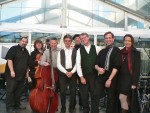
New Budapest Orpheum Society ensemble, from left to right: Danny Howard, Iordanka Kissiova, Mark Sonksen, Ilya Levinson, Don Stille, Philip Bohlman, Stewart Figa and Julia Bentley. (photo from Cedille Records)
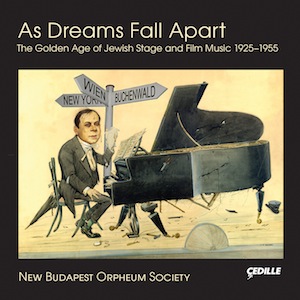
A different type of “soundtrack” has recently been released: New Budapest Orpheum Society’s As Dreams Fall Apart: The Golden Age of Jewish Stage and Film Music 1925-1955 (Cedille Records, 2014).
NBOS is an ensemble in residence in the humanities division at the University of Chicago. The group has released three CDs: Dancing on the Edge of a Volcano: Jewish Cabaret Music, Popular and Political Songs, 1900-1945 (Cedille Records 2002) and Jewish Cabaret in Exile (Cedille Records 2009), as well as a CD to accompany the book Jewish Musical Modernism, Old and New (University of Chicago Press 2008), which is edited by NBOS artistic director and narrator Philip V. Bohlman.
Bohlman is the Mary Werkman Distinguished Service Professor of the humanities and of music at the University of Chicago. According to his bio, “The study of Jewish music in modernity has provided a primary focus for his research for 35 years and, since 1998, has provided the context for his activities as a performer…. His work in historical performance has been recognized with the Noah Greenberg Award from the American Musicological Society and the Donald Tovey Prize from Oxford University.”
As are their previous CDs, As Dreams Fall Apart is both an esthetic and academic effort. The CD booklet includes a lengthy and fascinating essay by Bohlman on sound in film, which, of course, has as its origins the stage. Bohlman takes it to the Jewish cabaret stage specifically.
“In history’s very first synchronized sound film, Alan Crosland’s 1927 The Jazz Singer, the title character, Jakie Rabinowitz takes to the stage as Jack Robin, enacting and envoicing the struggle between Jewish tradition in Samson Raphaelson’s original play, The Day of Atonement, and the dreams of stardom awaiting him in the jazz clubs and vaudeville stages of New York City,” writes Bohlman. “The (real life) jazz singer’s musical transition from stage to film formed at the confluence of real-life transitions for European Jews at the beginning of the 20th century – migration from rural shtetl to urban ghetto, immigration from the Old World to the New – and of allegorical transitions – from religious orthodoxy to modern secularism, from diaspora to cosmopolitanism. As the old order of European empire collapsed in the wake of World War I, the Jewish musical traditions that had metaphorically represented its political and ideological boundaries … gathered new metaphors: those of modernity and modernism, ripe for the tales that would move
from the skits of the cabaret stage to the scenes filling the frames of sound film.”
As Dreams Fall Apart features the work of numerous composers, including Hermann Leopoldi, Hanns Eisler and Friedrich Holländer. The melodies and lyrics range from lively and humorous to sombre and serious. The songs take listeners from a traditional world to dreams of a better future through the tragedy of the Holocaust and, finally, to a more tempered hope in the aftermath of the war.
“Yiddish film musicals were the product of musicians and music on the move, a process of triangulation that witnessed the journeys of actors and directors from the United States, and musicians from Vienna and Berlin, all of whom would gather in Poland for the filming and production of films in the Yiddish studios of Warsaw and elsewhere in Poland and Lithuania,” writes Bohlman. And this movement is reflected in the CD, which starts with a section called On the Shores of Utopia, and the song “Die Koschere Mischpoche” (“The Kosher Family”) – the “opening verse of the original street song in Viennese dialect.” Dream sections follow, with songs like “Wir Ladies aus Amerika / We Ladies from America” and “Composers’ Revolution in Heaven” (which has Chopin, Wagner, Beethoven and Bizet in heaven, angry about all the people on earth making money from their music), before dystopia sets in (“Theresienstadt Potpourri – Aus der Familie der Sträusse / From the Strauss Family”), to be replaced by dreams of Hollywood that quickly fade, to the 10th and final section, From the Ruins of Dystopia, which features three songs by Holländer – and famously sung by Marlene Dietrich – in the Billy Wilder film A Foreign Affair (1948), which was set in Berlin.
Mezzo soprano Julia Bentley and baritone Stewart Figa deliver solid performances on As Dreams Fall Apart, capturing the cabaret style. They are skilfully accompanied by Danny Howard (percussion), Iordanka Kissiova (violin), Ilya Levinson (music director/arranger/piano), Mark Sonksen (bass) and Don Stille (accordion).
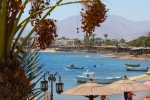
A view of shore from a dive shop in Dahab, South Sinai, Egypt. (photo by B. Simpson via commons.wikimedia.org)
During the upcoming school holidays of Passover, followed by the summer months, many Israelis travel abroad. Europe is only a few hours away by plane, and the beaches of Cyprus and Greece are even closer. Vacations abroad, even including the flight, are often cheaper than local getaways because of the high price of Israeli hotels. However, the Israeli government has issued travel warnings for 41 countries, including Europe and Asia.
“Recent terrorist attacks by Islamic extremists in Belgium, Canada, Australia, France and Denmark raise concerns over additional attacks against Western targets, including Israeli and Jewish targets, by veterans of the fighting in Syria and Iraq who are affiliated with global jihad (including Islamic State) and by local elements inspired by the terrorist organizations.”
The travel warning, issued by the National Security Council Counter-Terrorism Bureau, noted that is illegal for Israelis to travel to “Syria, Iraq (including Iraqi Kurdistan), Iran, Lebanon, Yemen and Saudi Arabia.”
The warning comes amid a spate of attacks on Western and Jewish targets including the Charlie Hebdo magazine and the Jewish supermarket in Paris, the shooting in Denmark and, just this weekend, an attack on a synagogue in London.
Israeli terrorism experts say Israelis do not seem to be the primary target of these attacks.
“Until now there have been two main targets – governmental targets in Western countries and Jewish institutions,” Reuven Ehrlich, a terrorism expert, explained. “Israelis have not been the target, but I cannot tell you what it will be in the future.”
However, the warnings do not seem to be affecting travel plans. Israelis have one of the highest rates per capita of travel abroad, taking two million trips a year, although there are no statistics about how many of them are travelers who fly several times a year. Israeli travel professionals say they are telling their clients to maintain a lower profile.
“We are asking our passengers to be a little quieter, which is a good thing no matter what,” said Mark Feldman, chief executive officer of Ziontours in Jerusalem. “Israelis tend to be loud and raucous and call attention to themselves. We have several groups going to Europe in the next few weeks and we have told them not to congregate in the lobby, not to speak in loud voices and, if possible, not to speak in Hebrew.”
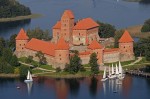
The Jewish Heritage Travel tour to Lithuania, Latvia and Estonia inclues a visit to the historic Trakai Castle, in Trakai, ancient capital of the Grand Duchy of Lithuania. (photo from jhtravel.org)
In August 2015, the Museum of Jewish Heritage: A Living Memorial to the Holocaust will launch a new program devoted to exploring Jewish cultural destinations around the world. From the Baltic states to northern Spain, Cuba and Poland, Jewish Heritage Travel journeys will be unique learning experiences led by experts and accompanied by scholars who will shed light on Jewish life throughout the ages. In addition to private tours and lectures by some of today’s top scholars, many of the trips include opportunities to meet with Jewish community leaders abroad.
“We’re so pleased to be able to team up with Dr. Aryeh Maidenbaum, a world-class expert on educational travel,” said David G. Marwell, director of the Museum of Jewish Heritage.
Maidenbaum earned his doctorate at the Hebrew University of Jerusalem and is a graduate of the Jung Institute of Zurich. He brings with him more than 25 years of experience organizing and leading educational travel programs, including trips focusing on Jewish culture and history and psychology. He will be supported by a dedicated staff and able to draw from the museum’s resources.
The program will launch on Aug. 30 with Jewish Jewels of the Baltic: Lithuania, Latvia and Estonia. Highlights of the trip include the city of Vilnius, the countryside of Lithuania, Latvia and Estonia, the ancient capital Trakai, and the city of Riga, followed by Tallin. Prof. Sid Leiman, an expert on Lithuanian Jewry, will accompany the trip, which will run through Sept. 10.
From Oct. 28-Nov. 8, travelers can explore Mysticism, Music and Poetry: The Jews of Northern Spain with accompanying scholar Prof. Ray Scheindlin, an expert on the Jews of Spain. Travelers will visit Barcelona, Girona, Tarazona, Madrid, El Escorial and Toledo, where they will have the opportunity to tour the city’s surviving synagogues.
Travelers will discover A Marriage of Different Cultures when they arrive in Havana, Cuba, on Feb. 9, 2016. Once there, they will be treated to presentations by local scholars and experts, and an overnight excursion to Cienfuegos and Santa Clara. Along with the chance to meet local community leaders, there will be the opportunity to explore Havana and the outlying provinces and experience the flavor of Jewish life in Cuba.
The inaugural travel season will conclude with a look at Yesterday, Today and Tomorrow: The Jews of Poland, which will take place from May 2-12, 2016. Accompanied by Marwell, travelers will begin in Warsaw, where they will tour the new Museum of the History of the Polish Jews and other sites of interest. The next stop will be the old town of Wroclaw (Breslau), followed by a trip through Poland’s countryside and villages including Lodz. Visitors will continue to Krakow, then to Auschwitz-Birkenau State Museum and to the recently expanded Auschwitz Jewish Centre, for a private tour with the director.
All trips include deluxe accommodations, land transportation, some meals, and all lectures, presentations, guided tours and site entrance fees. For more information and to register, contact Jewish Heritage Travel at 1-825-256-0197 or [email protected], or visit jhtravel.org.
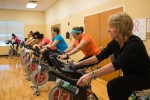
The fitness centre at the Rosen JCC in Orlando, Fla. (photo by Cyndy Phillips)
For Daphna Krupp, her workouts at the Jewish Community Centre (JCC or J) of Greater Baltimore have become somewhat of a ritual. She not only attends fitness classes but also engages with the instructors and plugs the J’s social programs on her personal Facebook page.
“It’s the gym and the environment,” said Krupp. “It’s a great social network.”
Krupp, who lives in Pikesville, Md., is one of an estimated one million American Jewish members of more than 300 Js around the country. Each J – in line with the bylaws of their umbrella organization, the JCC Association of North America (JCCA) – has a fitness centre that serves as one of its core businesses. Often, the fitness centre can be perceived as a for-profit enterprise of the J, with thousands of dollars invested annually in facility maintenance and gym advertising. But Steve Becker, vice-president of health and wellness at JCCA, says that is a myth. “JCCs are not fitness centres, we are engagement centres,” he said. “All fitness-related programs are structured to be relationship-building activities.”
The institution of the J was founded in 1854 as the Young Men’s Hebrew Association (YMHA), to provide help for Jewish immigrants. A Young Women’s Hebrew Association was established as an annex to the YMHA in New York in 1888. The first independent YWHA was set up in 1902. In 1917, these organizations were combined into a Jewish Welfare Board, and later renamed Jewish community centres. “After World War One, the Jewish Welfare Board morphed into an organization to meet the cultural, intellectual, physical and spiritual needs of the Jewish community,” said JCCA communications manager Marla Cohen, noting that physical needs were always part of the equation.
The much-debated 2013 Pew Research Centre study of the American Jewish community found that 62 percent of Jews say being Jewish is mainly a matter of ancestry and culture, rather than religion. The study showed a decline in non-Orthodox individuals involved with the organized Jewish community. As such, communal leaders – from award-winning author and lecturer Dr. Erica Brown to Jewish Agency for Israel president and chief executive officer of international development Misha Galperin – have been calling for increased “low-barrier, high-content” programming to meet Jews where they are. This, says Cohen, is a niche the J can fill. “For some people, aside from High Holiday attendance, working out at the J is probably the only flavor of Judaism they have. The J could be a very big part of these people’s Jewish identity,” Krupp said.
In the last two decades, many Js have opened their doors on Shabbat, in consultation with rabbis and community leaders. “These individuals are not choosing between the JCC and synagogue. They are choosing between everything else – the mall, soccer, snowboarding, you name it – and the J,” said Cohen. “The JCC just gives Jews another option. And many JCCs have stepped in offering meaningful programs for Jews seeking something other than a traditional service.”