Skip to content
  • Home
  • Subscribe / donate
  • Events calendar
  • News
    • Local
    • National
    • Israel
    • World
    • עניין בחדשות
      A roundup of news in Canada and further afield, in Hebrew.
  • Opinion
    • From the JI
    • Op-Ed
  • Arts & Culture
    • Performing Arts
    • Music
    • Books
    • Visual Arts
    • TV & Film
  • Life
    • Celebrating the Holidays
    • Travel
    • The Daily Snooze
      Cartoons by Jacob Samuel
    • Mystery Photo
      Help the JI and JMABC fill in the gaps in our archives.
  • Community Links
    • Organizations, Etc.
    • Other News Sources & Blogs
    • Business Directory
  • FAQ
  • JI Chai Celebration
  • JI@88! video

Recent Posts

  • Eby touts government record
  • Keep lighting candles
  • Facing a complex situation
  • Unique interview show a hit
  • See Annie at Gateway
  • Explorations of light
  • Help with the legal aspects
  • Stories create impact
  • Different faiths gather
  • Advocating for girls’ rights
  • An oral song tradition
  • Genealogy tools and tips
  • Jew-hatred is centuries old
  • Aiding medical research
  • Connecting Jews to Judaism
  • Beacon of light in heart of city
  • Drag & Dreidel: A Queer Jewish Hanukkah Celebration
  • An emotional reunion
  • Post-tumble, lights still shine
  • Visit to cradle of Ashkenaz
  • Unique, memorable travels
  • Family memoir a work of art
  • A little holiday romance
  • The Maccabees, old and new
  • My Hanukkah miracle
  • After the rededication … a Hanukkah cartoon
  • Improving the holiday table
  • Vive la différence!
  • Fresh, healthy comfort foods
  • From the archives … Hanukkah
  • תגובתי לכתבה על ישראלים שרצו להגר לקנדה ולא קיבלו אותם עם שטיח אדום
  • Lessons in Mamdani’s win
  • West Van Story at the York
  • Words hold much power
  • Plenty of hopefulness
  • Lessons from past for today

Archives

Follow @JewishIndie
image - The CJN - Visit Us Banner - 300x600 - 101625

Author: Tamara Szymańska

A journey through war, love

The first time I met Gina Dimant and her husband Sasha was in 2000 at the opening of my exhibition Evidence of Truth at the Sidney and Gertrude Zack Gallery. The exhibition was dedicated to all victims of Nazi concentration camps, which included my grandfather, who survived Auschwitz, only to be killed in the Flossenburg-Leitmeritz concentration camp. Years later, when I joined the Janusz Korczak Association of Canada, I met Gina again. She was the president of the association. I also met there Olga Medvedeva-Nathoo, the association’s co-founder.

I felt quite honored when Gina asked me to write a review of Medvedeva-Nathoo’s new book, Crossroads: A True Story of Gina Dimant in War and Love (K&O Harbor, 2014). Written originally in Russian, the English edition is translated by Richard J. Reisner and Medvedeva-Nathoo. It was launched on Jan. 11 of this year at the Zack Gallery.
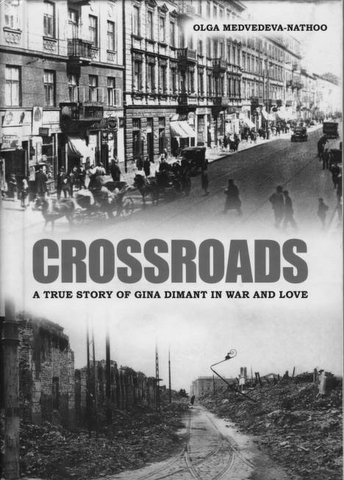
book cover - Crossroads: A True Story of Gina Dimant in War and Love Crossroads is truly an inspired and absorbing account. Born Hinda Wejgsman into a Jewish family in pre-Second World War Warsaw, Gina’s carefree life fell apart when the Nazis invaded Poland. Almost overnight she lost her safe home and, with her parents and sister, had to leave behind extended family, never to see them again.

Crossroads follows the Wejgsmans family, their extraordinary journey in a cattle car from the eastern border of Nazi-occupied Poland to the Union of the Soviet Socialist Republics, and of their fight for survival there. The cold in the car was intolerable, and the Wejgsmans slept on straw, bodies side by side, trying to keep warm. They traveled for more than a month. They were sent to Leninogorsk in northeastern Kazakhstan, near the Altai Mountains, where temperatures dropped to minus 41˚C in winter.

After their arrival, Gina did not go to school because local authorities considered her an adult at 14 and gave her a construction job carrying bricks, four at a time. Gina reflects: “… my main memory from Leninogorsk is not what we ate there, but how terribly hungry we always were. With the feeling of hunger, you couldn’t even fall asleep and, if you fell asleep, then it was with night dreams of food until you woke up with the same daydreams…. In winter evenings when the frost was absolutely intolerable and it was inconceivable even to attempt lying in bed, so as not to freeze to death, we would pace the room in circles, single file.”

The Wejgsman family survived six years in Leninogorsk. Medvedeva-Nathoo points out that it was exactly 72 months, slightly more than 2,000 days.

The postwar return of Gina and her family to Poland necessitated resettling, as Warsaw was in ruins. There was also some serenity, however. In her new town, in Szczecin, Gina’s son from her first marriage, Saul Seweryn, was born. There, she also met her true love, Sasha, and became Gina Dimant.

The Polish 1968 political crisis, known in Poland as the March Events, resulted in the suppression and repression of Polish dissidents and the shameful antisemitic, “anti-Zionist” campaign waged by the Polish Politburo, followed by forced mass emigrations of Polish Jews. Gina remembers: “Poland rejected us unfairly and unjustly. A deep-seated pain lived in us for years…. We were … convinced constantly: there are Poles and there are Poles. Those who were corrupt and added to corruption, and those who sympathized with us … those who gloated over other’s misfortunes and those who were outright angry at our departure.”

Gina, with her husband and son, was displaced again. Looking for a place to settle, they chose Canada because it was a country far away from Europe that accepted new citizens. They arrived here in 1970. Despite their bitter farewell to Poland, their home here was always open to Poles, Jewish and non-Jewish: “A good human being – here was the only essential criterion taken into consideration.”

In Vancouver, in 1999, Gina co-created the Janusz Korczak Association of Canada. In 2013, she was awarded the Gold Officer Cross of the Order of Merit of the Republic of Poland for strengthening relations between Poles and Jews.

Medvedeva-Nathoo writes: “Tragic Polish-Jewish relations notwithstanding, Poles and Jews lived side by side through the centuries and, regardless of what isolationists like to say, their history cannot be separated. The Dimants would always say: ‘… in the years of war, some Poles, obsessed with hatred, denounced Jews, while others risked their own lives to rescue them at a time when Poland was the only occupied country in which the death penalty was in force for anyone who hid the Jews or in some manner helped Jews.’” In the book, Gina reflects that there are many good and bad examples, pointing with triumph to Irena Sendler, a Pole who saved 2,500 Jewish children.

In Crossroads, Medvedeva-Nathoo has chosen to emphasize the battle of the individual and the will to survive set against the backdrop of three different cultures. It is a steadfast piece of writing that presents the stark facts of Gina’s life, set chronologically, starting with the description of her childhood in prewar Warsaw, followed by their postwar experiences, concluding in 2013.

At times, Medvedeva-Nathoo’s book is translated from Russian to English too literally, not taking into account the cultural context of the language into which she is translating. For example, when describing the usefulness of the newspaper Pravda in the USSR as toilet paper, the author translates it as a “nude-paper,” which makes sense only in Polish or Russian. Readers would also benefit from a map illustrating Gina’s journeys.

Crossroads is an historically accurate chronicle and a meticulously researched story that provokes discussion about the hardships and consequences of war, and the survival of one extraordinary family. It can be purchased from Gina Dimant at 604-733-6386.

Tamara Szymańska is a visual artist and a columnist for the Takie Zycie, the Polish biweekly magazine for Western Canada. She lives in Vancouver with her husband and their dog.

Posted on March 27, 2015March 26, 2015Author Tamara SzymańskaCategories BooksTags Gina Dimant, Holocaust, Janusz Korczak Association, Olga Medvedeva-Nathoo, Wejgsman
Tsabari gives voice to place

Tsabari gives voice to place

Ayelet Tsabari’s short stories win Rohr Prize. (photo from @AyeletTsabari)

One of the best contemporary works of fiction I’ve read in the last few years has been Israeli-Canadian Ayelet Tsabari’s The Best Place on Earth, her 2013 debut collection of short stories. The characters and settings draw the reader in effortlessly. The conflicts are both internal and situational, and they feel urgent and real. The writing is intelligent, sexy and restrained. The judges of the prestigious Sami Rohr Prize for Jewish Literature clearly thought so, too, as the book is the newest winner of the $100,000 US award.

I recently caught up with the Toronto-based Tsabari by phone in Israel, where she was visiting family and friends. She is insightful, thoughtful and articulate, as well as warm and humble – she told me she was “shocked” when she heard the news of the prize. We spoke about identity, the short story form, her favorite summer spot, what makes a novel Canadian and Israeli, and how to write a decent sex scene.

One of the first things that comes to mind in Ayelet’s writing is the ethnicity of the characters: almost all are Mizrahi, a label with which she herself identifies. “It was really important to me to have Mizrahi characters who go about their lives, and not having their Mizrahi [identity] be an issue. That’s never questioned when you have stories about Ashkenazis; that’s the default. I wanted to shatter that, to break the pattern.”

Some of Tsabari’s stories are set in Canada. There is a memorable one set on Hornby Island – the tiny B.C. oasis whose peacefulness Ayelet found she was mentally contrasting with the intensity of Jerusalem – and another in Toronto. Most are set in Israel, though, revealing important themes about life, love and loss set against the background of physical insecurity. Ayelet wrote the book in Canada, was mentored by another Canadian author, Camilla Gibb, and acknowledged that others have told her the book possesses a Canadian sensibility.

Ayelet confided that she tried to avoid writing a conventionally “political” book. “I didn’t want to write about the war, about conflict. What I’m interested in is people’s lives…. But I wanted to set it against that backdrop. This is how I grew up; it’s always there, the conflict, that sense of menace.”

Still, she did have what she considers a political aim. She wanted to give voice to a place that is often better known to outsiders through the media. She wanted to “complicate things,” she told me, to “focus on the lives of one family … and one person, rather than the mass of people you see when you watch the news.”

Why the short story form?, I asked her. While she is currently working on a couple of longer-form projects, she told me that she “love[s] the brevity of [short stories]; I love imagining a life in a short span; I love the idea of a collection.” She added, “It’s kind of like traveling…. You get to know people, you really feel like they’re a part of you, you forge what you think are lifelasting relationships, then you move on. And because so many of the characters [in the book] are transient and nomads, immigrants, and travelers, I felt that the container fit….”

As for how to write a good sex scene, Ayelet explained that writers should provide as much detail as they would for any other type of scene, include it only if it advances the plot and, above all, avoid euphemisms. It’s good advice, really, that could be applied to most everyday interactions: as we encounter one another, we should strive to understand the inner lives of people as they really are. And, as readers, we can be grateful for glimpses of our country’s fine new voices helping us understand other places at the same time as we are able to discover new truths about ourselves.

Mira Sucharov is an associate professor of political science at Carleton University. She blogs at Haaretz and the Jewish Daily Forward. This article was originally published in the Canadian Jewish News. For an Oct. 11, 2013, interview with Tsabari (“Making a home in Canada”) about The Best Place on Earth, visit jewishindependent.ca.


Posted on March 27, 2015March 26, 2015Author Mira SucharovCategories BooksTags Ayelet Tsabari, Sami Rohr Prize

Meet Chani Kaufman

Community and faith can both comfort and oppress. A well-defined environment with clear expectations and rules can allow one to flourish, knowing one’s proper place and purpose in the world, or it can stifle one’s individuality, creativity and spirit, knowing that what is and what is to come is more determined by others than oneself. Self-realization and other universal themes, such as family, love and loss, are explored with a sensitive heart and a deft hand by Eve Harris in The Marrying of Chani Kaufman (Anansi Press Inc., 2014).

book cover - The Marrying of Chani Kaufman by Eve HarrisSince the Jewish Independent received its advance reading copy of Harris’ debut novel, which was first published in England by Sandstone Press Ltd. in 2013, The Marrying of Chani Kaufman was long-listed for the Man Booker Prize. It has received many positive reviews, and this one will be no different in that respect. The novels characters are likeable and relatable; even the most intransigent of them has their understandable reasons for their views and actions. There are no malevolent people in this non-specific Charedi community living in Hendon and Golders Green, in the northwest part of London, England – although some do push moral boundaries in their efforts to get what they want, what they feel is right.

To write a novel that is simultaneously critical of and sympathetic to a community takes skill. Harris writes about religious people, not a religion per se, and she writes about these people with respect and knowledge, humor and pathos. She succeeds in telling a story about people living in a world that will be foreign to most readers and explaining it without becoming stilted or lecturing.

The Marrying of Chani Kaufman centres on four people: the bride and the groom, Chani and Baruch; the rebbetzin; and the rebbetzin’s son, Avromi, who is good friends with Baruch. It starts at Chani and Baruch’s wedding in November 2008 and goes back in time – several months for Chani and Baruch, when he first sees her; to 1981 for the rebbetzin, when she met her husband and began her journey to orthodoxy; and to 2007 for Avromi, when he met and fell in love with Shola, a non-Jewish fellow student at university. When the novel begins, Chani and Baruch are about to start their “real life,” as Chani describes it, the rebbetzin is well into her crisis of faith and Avromi’s double life is becoming difficult to maintain.

By the time the matchmaker arranges for Chani, 19, and Baruch, 20, to meet, at his insistence to his mother – who does not approve of the match for a few reasons, most notably the Kaufmans’ lower economic status – both had been on several arranged dates with other potential mates, to no avail. They both don’t quite fit the mold of the perceived ideal Charedi wife or husband, and both are unwilling to settle.

At school, when she was 15, Chani’s “garrulousness had got her into trouble,” she “was considered audacious but gifted,” “everything interested her – the little she could get her hands on.” She “had learned to walk and not run…. She had longed for freedom of movement but had been taught to restrict her gait.” In agreeing to be married to Baruch, “She hoped that the bell jar might finally be lifted. Or at least she would have someone to share it with.”

That latter hope, at least, does seem possible, as Baruch, too, thought his “life felt narrow: the pressure to succeed, to be a rabbi, to please his father. His quick analytical mind was to be harnessed to the Talmud. The English degree he longed to study remained a blasphemous secret buried in his heart.” As did Chani, he acted out in small ways, listening to rock music or reading novels that were not permitted. So, perhaps together they will be able to negotiate a Jewish life that feeds more of their being and soul. Perhaps there will be a happily ever after for them. Their parents seem reasonably content, albeit with their respective – and not insignificant – problems.

The future well-being of the rebbetzin and her family is also left to readers’ imaginations, the rebbetzin’s questioning seeming to have more far-reaching implications than her son’s transgression. Sparked by a miscarriage – a devastatingly described incident in which the emotional distance between her and her husband becomes apparent – the rebbetzin begins to deal with long-latent grief from a much-earlier tragedy. This process, at least initially, separates her from her family, her community, her faith. Where it takes her is not revealed.

As much as The Marrying of Chani Kaufman offers readers a glimpse into the lives of others, it offers the possibility of finding out more about ourselves and our own place in the world.

Posted on March 27, 2015March 26, 2015Author Cynthia RamsayCategories BooksTags Charedim, Eve Harris

Unique fictional viewpoint

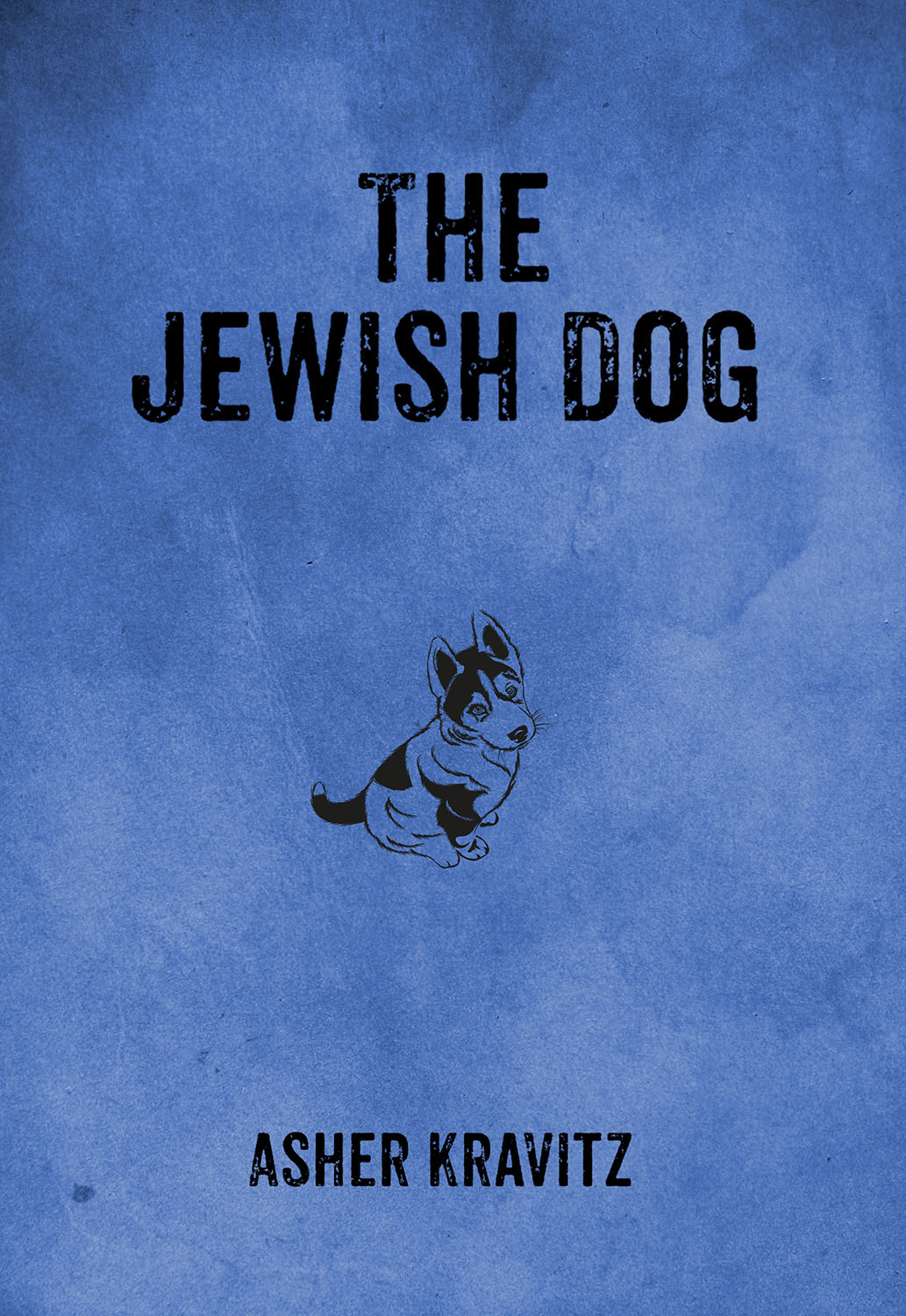
As far as books go – especially books about the Holocaust – The Jewish Dog by Asher Kravitz (Penlight Publications, 2015), published in Hebrew in 2007, is certainly unique. The novel was awarded a citation by the Israeli Publisher’s Association and it is easy to understand why.

Kravitz is a Jerusalem-born physics and mathematics professor and photographer of wildlife. He has written three earlier books: two whodunits and a book about an Israeli soldier in an anti-terrorist unit. The narrator of this novel is a 12-year-old Jewish dog raised by a single mother (a dog, that is) in 1930s Germany.

book cover - The Jewish Dog by Asher KravitzWhen he is born, his mother lives with the Gottlieb family. Despite the family conflict about keeping any of the puppies, when the dog finds the afikoman at the seder, Herschel, the family’s son, declares that the prize is allowing the dog to stay. They name him Caleb.

Caleb is an exceptional animal. He learns to decipher human speech and can read the moods of the adults.

As the story continues, Caleb witnesses the rise of Nazism and the laws being forced upon the family – the housekeeper prevented from working for the Jewish family; the children prohibited from attending school; and Jews forbidden to own a dog.

Caleb is given to a Christian family, where the wife mistreats him, and the story follows his adventures joining a pack, his training as a facility guard dog at Treblinka, and more. All the while, we read Caleb’s philosophical commentaries and are given a great deal of food for thought on human and animal behavior.

Kravitz has produced a well-written novel that is poignant and compelling. Some might say The Jewish Dog is for young adults, but anyone wanting to read a distinctive presentation of the pre-Holocaust and Holocaust period will find this book absorbing.

***

After reading and reviewing this most unusual book, I was prompted to ask the author some questions about this work. When I asked him what prompted him to this type of novel, Kravitz recalled that, as a high school student, he participated in an international quiz about the Second World War, which focused on the Holocaust. One of the anti-Jewish laws enacted by the Nazis was that “raising a dog is prohibited for Jewish families.” He also remembered the images of the signs posted on restaurant and coffee shop doors, “No entrance for dogs or Jews.”

“This is almost a built-in symbol of the Holocaust that connects dogs and Jews,” he said.

Kravitz also related a conversation that he had with an elderly survivor of Auschwitz, who had a deep understanding of dogs and had been a dog feeder in the camp.

The novel began its life as a short story, which Kravitz then expanded. It took more than four years to complete. He said that he studied “the behavior of my own two dogs in order to learn their mannerisms and reactions so that The Jewish Dog would narrate as realistically as possible as a dog.”

Kravitz did not expect the novel to become so popular. “I attribute [its success] to the responsibility I felt for the seriousness of the subject matter and also to the aid I received from the editor who worked with me throughout the writing process,” he said.

Another writer and director adapted the book into a one-man play, which ran in Tel Aviv for almost three years, and The Jewish Dog is now required reading for high school matriculation exams in literature. It has been translated into French, Turkish and English.

Sybil Kaplan is a journalist, foreign correspondent, lecturer, food writer and book reviewer who lives in Jerusalem. She also does the restaurant features for janglo.net and leads weekly shuk walks in English in Jerusalem’s Jewish food market.

Posted on March 27, 2015March 26, 2015Author Sybil KaplanCategories BooksTags Asher Kravitz, Holocaust

An extremist war on women

A small Israeli ultra-Orthodox newspaper in Israel became the target of international ridicule earlier this year after blotting out the faces of three women from a prominent photo of 40 world leaders.

Heads of state were marching through the streets of Paris to demonstrate solidarity with France, opposition to terrorism and support for freedom of expression after Islamic State sympathizers murdered journalists at the satirical magazine Charlie Hebdo and Jewish hostages at a kosher market in a Paris suburb.

HaMevaser, which serves an insular Israeli community indifferent to modernity, seems to have missed the point of the march. HaMevaser editor Binyamin Lipkin defended the altered photo, insisting a photo in the newspaper that included German Chancellor Angela Merkel, Paris Mayor Anne Hidalgo and European Union official Fedrica Mogherini would “desecrate” the memory of the 17 people who were killed.

The incident once again drew attention to the fanaticism of the ultra-religious community in Israel that demands the complete removal of all photos of women in public spaces, tight restrictions on the role of women in public life and severe limits on education for both boys and girls.

book cover - The War Within: Israel’s Ultra-Orthodox Threat to Democracy and the Nation by Yuval Elizur and Lawrence MalkinTwo books, written in a conversational style, came out recently that shine a glaring light on recent controversies sparked by the ultra-Orthodox in Israel. Reading them together provides a broad understanding of the issues.

The War Within: Israel’s Ultra-Orthodox Threat to Democracy and the Nation (Overlook Press, 2013) by journalists Yuval Elizur and Lawrence Malkin, looks at several flashpoints that, the authors say, will invariably turn into even more difficult social, economic and political problems as the ultra-Orthodox population grows.

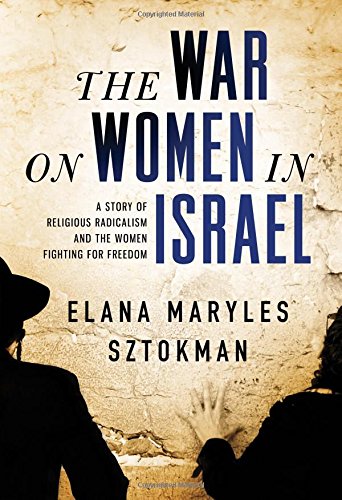
The War on Women in Israel: A Story of Religious Radicalism and the Women Fighting for Freedom (Sourcebooks Inc., 2014 ) by feminist activist Elana Maryles Sztokman, is an unrelenting assault on Israeli society for accepting blatant discrimination against women in almost every aspect of their lives. At times, the book reads like a social activist’s pamphlet demanding justice.

Israel ranks near the bottom among world democracies on the right to religious freedom. The books are reports from the frontlines in the fight for equality, and will be disturbing for those concerned about civil rights in Israel. The writers leave the impression that radical religious voices are shredding the fabric of the country.

Both books offer portraits of the ultra-Orthodox communities and a brief account of the historical context that led to the current problems. The perspective is clearly that of outsiders who have little patience for the ultra-Orthodox way of life. Nevertheless, it is difficult to ignore what they say.

Roughly 10 percent of the country and one-third of Jerusalem are ultra-Orthodox. Those numbers will likely explode within a generation, if current trends continue. The birthrate within the ultra-Orthodox community is twice the national average. As the children grow up, the impact of the ultra-Orthodox community will be felt in many different ways throughout Israeli society.

Students in ultra-Orthodox schools spend their day studying religious texts, paying scant attention to core subjects of English, math and science. Elizur and Malkin say that most students complete their formal schooling without the education or skills to work in a modern economy.

Several ultra-Orthodox schools go further, refusing to allow girls to write final exams in core subjects in order to ensure the girls do not leave school with a high school diploma.

Meanwhile, the economic life within the ultra-Orthodox community is grim and will likely degenerate even further as their numbers increase. The Taub Centre for Social Policy Research, in a report released in December, pegs the poverty rate in the ultra-Orthodox community at 66 percent in 2013, an increase from 60 percent in the previous year. The ultra-religious have the lowest participation rate in employment in the developed world.

And it’s not just a Jerusalem phenomenon. Ultra-Orthodox communities are scattered across the country. In the ultra-Orthodox community of B’nei Brak, half of all children live in families below the poverty line.

Both books provide an account of the historical roots for these circumstances. The ultra-Orthodox communities have relied almost entirely on national subsidies since the creation of the state in 1948. At that time, the rabbis argued that studying Torah and praying had ensured the survival of the Jewish people through centuries of wandering and persecution.

The founders of the state wanted to maintain the Jewish nature of the state. Religious authorities were given unqualified control over marriage and divorce. David Ben-Gurion agreed to exempt the ultra-Orthodox from military service and pay them to spend their days studying in a yeshiva. In exchange, he expected to receive their support in the Knesset.

The arrangement was a trade-off endorsed by most Israelis for more than 50 years. But demographics have shifted. In 1948, 4,000 students were studying in a yeshiva. Today, around 120,000 students study full-time and are dependent on allowances from the government. Many Israelis now are not so comfortable with the arrangement.

The trade-off has also meant that Israel does not have a constitution guaranteeing individual rights and freedoms. The ultra-Orthodox at that time refused to support a constitution, mostly to prevent shifts in the status of women, the journalists say.

The country’s founders forged practical arrangements without any long-term vision, say Elizur and Malkin. It was a colossal mistake. Successive governments have maintained the status quo, in effect placing huge barriers for those fighting for changes.

As women have asserted their right to be treated equally, religious zealots have escalated their tactics, moving from bullying and shouting to spitting, shoving and throwing rocks.

image - The War on Women in Israel: A Story of Religious Radicalism and the Women Fighting for Freedom by Elana Maryles Sztokman book coverThe ultra-Orthodox succeeded in pressuring Israeli public and private companies to ban female faces on transit ads and force women to sit at the back of the bus. Weak protection for secular values, coupled with liberal tolerance for diversity, enabled the ultra-Orthodox to push bus companies in Israel to segregate 150 bus lines across the country, Sztokman writes.

The arrests of women who sing, wear a tallit or pray at the Western Wall have been widely reported. These books provide numerous anecdotes about the confrontations on many fronts, including some outrageous instances of the struggles that some women face in obtaining a Jewish divorce from a vengeful husband. Around 10,000 women in Israel are in limbo, unable to obtain a get (a divorce decree) from the religious courts.

Elizur and Malkin also look at the government-funded rabbinic councils that operate under a minimum of oversight and with their jurisdiction only loosely defined. They assert control over everything from certifying pensions funds to ensuring that water is kosher.

Women disproportionately feel the impact of the institutions run exclusively by males. None of the judges in the religious courts are women. Until recently, even all the supervisors of the mikvehs were male.

The lack of accountability and vagueness over roles has cleared the way for the rabbinical authorities to attempt to expand their control over the lives of all Israelis. Imprecise boundaries have led to recent flare-ups over matters of division of property, child custody, alimony, child support and education. The army is struggling to find a compromise for ultra-Orthodox who are now enlisted. A battle over jurisdiction over circumcision was recently in an Israeli court.

The power of the religious authorities is on display in the most unexpected places. A produce market has separate shopping hours for men and women. Women’s voices disappear from the radio. A women’s health conference excludes accomplished women researchers and prominent women doctors from its program. Young girls cannot sing in public. Daughters are not allowed to stand by the grave of their fathers to say Kaddish.

Despite the dark portrait of the religious divide, both Sztokman and journalists Elizur and Malkin find reasons to be hopeful. Restrictions on seating on buses have been lifted on some lines; women’s faces are returning to some billboards on the street. Even the Women of the Wall can claim some victories.

Momentum is clearly on the side of the ultra-Orthodox. However, a backlash against the most extreme measures has begun to undo some excesses. The authors also find some members of the ultra-Orthodox community are working to change the system from within. Sztokman, for example, finds hope for religious pluralism in Israel from the work of an emerging alliance of Orthodox feminists and secular activists who are pushing for a more egalitarian country.

Robert Matas, a Vancouver-based writer, is a former journalist with the Globe and Mail. This review was originally published on the Isaac Waldman Jewish Public Library website and is reprinted here with permission. To reserve this book or any other, call 604-257-5181 or email [email protected]. To view the catalogue, visit jccgv.com and click on Isaac Waldman library.

Posted on March 27, 2015March 26, 2015Author Robert MatasCategories BooksTags discrimination, Elana Maryles Sztokman, Israel, Lawrence Malkin, ultra-Orthodox, women, Yuval Elizur
Bold, new menus for Pesach

Bold, new menus for Pesach

Paula Shoyer’s eggplant parmesan, featured in her latest cookbook, The New Passover Menu. (photo by Michael Bennett Kress)

The New Passover Menu by Paula Shoyer (Sterling, 2014) emboldened me. It was the whole package: the full-color photos, the clear text (blue for tools and ingredients; black for instructions), the organization by menus, the exotic-sounding nature of some of the offerings (gratin dauphinois, anyone?) and Shoyer’s dedication of the book:

“For all the kosher baker fans who asked me to write a cookbook of savory recipes. But, as my friend Suzin Glickman believes, you should still eat dessert first.”

Shoyer, of course, is famous for her baking. Bestselling The New Passover Menu joins her dessert bestsellers The Kosher Baker: Over 160 Dairy-Free Recipes from Traditional to Trendy and The Holiday Kosher Baker. She is a contributing editor to several kosher websites and cookbooks, as well as magazines, and is also a consultant for kosher bakeries and companies. She is no stranger to the Jewish Independent, as an internet search will show, and so it was with excitement that we received her latest cookbook.

In the press material accompanying The New Passover Menu, Shoyer says, “These recipes have been inside my head for years. As a book of 65 recipes, it offers not every possible Passover recipe but rather the best possible versions of food and desserts adapted for the Passover holiday.”

It lays out full menus for the two seders, as well as a Shabbat and Yom Tov menu, and menus for the holiday week, including lunch suggestions. There are several breakfast options and, of course, a lengthy list of dessert choices.

There is a chart of Passover cooking and baking substitutes, and a brief discussion of the holiday and its preparations (removing chametz and kashering the kitchen). Shoyer shares some memories of her seders past, and this leads into a description of the Passover table, the seder plate and its symbolic items, matza, salt water and wine.

Each recipe includes the preparation time, cook time, what items can be prepared in advance (and how long in advance) and all the equipment that will be needed. A brief paragraph accompanies each recipe, either a personal story about it or advice on cooking with some of its ingredients.

It was hard to narrow the selection of which recipes I would try. Since one of my taste testers is vegetarian, I shied away from such tempting creations as Seared Tuna with Olives and Capers with Kale Caesar Salad, and Moroccan Spiced Short Ribs. I opted instead for one main dish – eggplant parmesan – and something unique (and easy to make and transport) that I could bring to my host’s seder – banana charoset.

The New Passover Menu emboldened me in a couple of ways. First, I felt confident to adapt right from the beginning. So, for example, while Shoyer did not call for the eggplant slices to be sprinkled with salt and let sit for awhile to reduce their potential bitterness and bring some of their moisture to the surface (which I dabbed away with paper towel), I did it just in case. The recipe lists tomato sauce but, not wanting to buy or make any – as so many bought brands contain a lot of sodium and to make my own sauce would have been one more thing to do – I used a can of crushed tomatoes and added garlic powder, oregano and pepper to it, ingredients already included in the recipe. Finally, Shoyer offers a frying and a baking method for the eggplant slices, and I picked a middle version: I coated the slices as if for frying but then baked them, drizzling a little olive oil over them once they were laid out in the pan.

As for the banana charoset, I kept to the recipe for the most part, only adding more wine than recommended to brighten it up. I think the banana I selected for the mixture was on the too-ripe side. One thing to note with the charoset is that it tasted even better the next day, so I’d make it in advance if possible. The bold part of this recipe is that I pretty much insisted on bringing it to a seder once I’d tasted it.

The following recipes are reprinted from the cookbook, so the “I” and “my” from here on refers to Shoyer. Enjoy!

EGGPLANT PARMESAN

Serves: 12–15. Prep time: 10 minutes. Cook time: 20 minutes to fry eggplant; 35-40 minutes to bake. Advance prep: may be assembled one day in advance, fully baked three days in advance, or frozen; thaw completely before reheating. Equipment: cutting board, knives, measuring cups and spoons, two shallow bowls, large frying pan, nine-by-13-inch baking pan, silicone spatula.

Eggplant parmesan is one of my favorite Italian dishes. It is best made by my brother Adam Marcus, who has paid his rent for occasionally living with us by lovingly making his master version of this dish with a homemade sauce. Although I try to avoid frying foods (except for doughnuts and chicken once a year), I find that eggplant parmesan tastes better made with breaded and fried eggplant slices. If desired, you can grill the slices in the oven until fork-tender and then layer and bake as described below. If you go the healthier route, sprinkle the oven-roasted slices with some garlic powder, salt and black pepper. Depending on the size of the eggplants, you will end up with two or three layers in the pan.

1/3-1/2 cup oil for frying
3 large eggs, beaten
1 1/2 cups Passover breadcrumbs or matza meal
1/2 tsp garlic powder
1 1/2 tsp dried oregano
salt and black pepper
2 medium eggplants, not peeled, sliced into 3/4-inch-thick rounds
1 1/2–2 cups tomato sauce
2 cups shredded mozzarella cheese, or more as needed
1/3 cup freshly grated parmesan cheese

Preheat oven to 350°F.

Place a large frying pan on the stovetop and add 1/3 cup oil. Pour the beaten eggs into a shallow bowl. In another bowl, stir together the breadcrumbs, garlic powder and oregano and season with salt and pepper to taste. Heat the oil over medium-high heat. When the oil is hot, fry the eggplant slices in batches, browning both sides, until fork-tender, about 10 minutes per batch. Transfer to a plate covered with paper towels. Add more oil to the pan between batches if the pan gets dry.

Using a silicone spatula, spread about 3/4 cup of the tomato sauce in the bottom of a nine-by-13-inch baking pan. Place one layer of eggplant slices on top. Sprinkle with one cup of the shredded cheese. Cover with a second layer of eggplant. Pour another 3/4 cup sauce on top and use the spatula to spread the sauce on top of the eggplant pieces. Sprinkle with one cup of the shredded cheese. If you have more eggplant slices, place them on top, then add some tomato sauce and more shredded cheese. Sprinkle the parmesan all over the top.

Cover the pan tightly with aluminum foil and bake for 35 to 40 minutes, or until the eggplant layers are heated through and the cheese is melted. If you assembled the dish in advance and stored it in the fridge but did not bake it, bake for an extra 20 minutes.

BANANA CHAROSET

Makes three cups (serves 25 for seder). Prep time: 10 minutes. Advance prep: may be made three days in advance. Equipment: cutting board, knives, measuring cups and spoons, food processor, box grater, silicone spatula, small serving bowl.

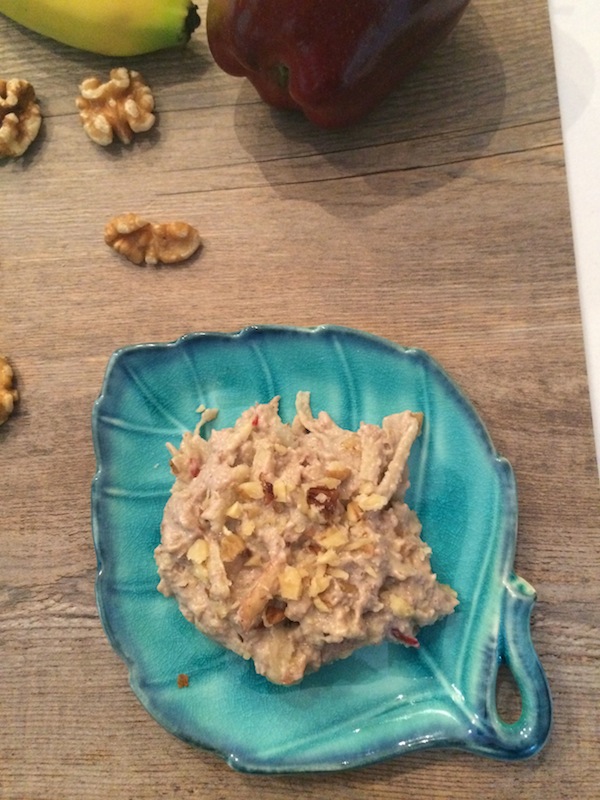
photo - Banana charoset, from Paula Shoyer's The New Passover Menu
Banana charoset, from Paula Shoyer’s The New Passover Menu (photo by Michael Bennett Kress)

Charoset is the element on the seder plate that represents the mortar used by the Israelite slaves to build bricks. Growing up, I had seders almost exclusively at my parents’ house or a handful of other relatives’ homes, and everyone made the same charoset: walnuts, apples and sweet wine all smooshed together. It was only when I began hosting my own seders that I discovered a wide variety of charoset recipes from every corner of the world where Jews have ever resided. This recipe comes from my friend Melissa Arking, who is a fabulous cook. I added chopped walnuts at the end for some texture.

You can buy nuts already ground, with the skin or without. I have a coffee grinder dedicated to grinding nuts. You can also use a food processor, as long as it can reduce the nuts to a fine grind, almost like a powder, when you need almond flour for baking. If you grind nuts for too long, you will end up with nut butter.

3 large ripe bananas
2 cups ground walnuts
2 tbsp sugar
1/2 tsp ground cinnamon
2 tbsp sweet kosher wine
2 apples, shredded on the large holes of a box grater
1 cup walnut halves, chopped into 1/3-inch pieces

In the bowl of a food processor fitted with a metal blade [a hand blender also works], place the bananas, ground walnuts, sugar, cinnamon and wine. Process until the mixture comes together. Transfer to a small bowl, add the apples and chopped walnuts, and stir to combine.

Format ImagePosted on March 27, 2015March 26, 2015Author Cynthia RamsayCategories Celebrating the HolidaysTags charoset, eggplant, Passover, Paula Shoyer, recipes, seder
Charoset’s many variations

Charoset’s many variations

Ashkenazi-style charoset: apples, walnuts, cinnamon and red wine. (photo by Yoninah via commons.wikimedia.org)

What Passover seder symbol is common to all communities but is not mentioned in the biblical passage that enjoins us to eat the paschal offering, matza and bitter herbs? Charoset.

Charoset is loosely defined as a paste of fruit, spices and wine, symbolic of the mortar used by the Hebrews when they were slaves in Egypt.

The word is of unknown origin but may be from the word heres, meaning clay, because of its color. The custom of eating charoset is thought to have come from the time of the Babylonians, who dipped food in relishes or sauces to add flavor.

Some years ago, I surprised all my seder guests by serving both the traditional Ashkenazi version and a Sephardi version of charoset, which everyone loved and wanted in future years.

The New York Times Passover Cookbook, edited by Linda Amster, says that the Iraqi version of charoset is one of the oldest and most time-consuming recipes, dating back to the Babylonian exile of 579 BCE. Made into a jam from dates, grapes, pomegranate and honey, it was a sweetener in the ancient world and is still used by Iraqi, Burmese, Syrian and Indian Jews.

The Talmud says charoset must be sharp in taste and similar to clay in substance and color. Differing geographies is one of the reasons there are differing charoset recipes.

Ashkenazim tend to use apples, chopped almonds, cinnamon, red wine and perhaps even matza meal; sometimes walnuts or other nuts are used. Sephardi and Mizrahi Jews tend to use fruits that grew in Eretz Israel in biblical times, such as grapes, figs, dates, almonds and pomegranates. Israelis often turn charoset into a dessert by adding bananas, dates, orange juice and/or sugar.

Abraham Chill, author of The Minhagim (The Customs), writes that each ingredient symbolizes something different from the Egypt experience. The mixture as a whole stands for the mortar used by the Jews in making bricks, and the cinnamon resembles the color of the bricks they made. Wine represents the blood of the Jewish infants thrown into the Nile. Almonds are used because the Hebrew word for almond, shaked, is also a word that means to accelerate, as G-d accelerated the end of slavery. Apples are used because it was said that Jewish women during that time gave birth to their babies under apple trees in order to avoid detection by the Egyptians.

In her book The Jewish Holiday Kitchen, Joan Nathan states that charoset is “one of the most popular and discussed ritual foods served at the seder.” She says the fruits and nuts refer to verses in the Song of Songs, which mention an apple tree and the garden of nuts; the red wine recalls the Red Sea.

Because the maror or bitter herb is so strong, some say that the real purpose of charoset is to allay the bitterness. As part of the seder, the charoset and maror are placed between matzot to make a sandwich, which is said to have been invented by the first century CE Rabbi Hillel, hence, its name, the “Hillel sandwich.”

There are as many variations on the ingredients of charoset as there are Jewish communities.

Jews from the island of Rhodes use dates, walnuts, ginger and sweet wine. Jews of Salonika, Greece, add raisins. Other Greek Jews use walnuts, almonds, pine nuts, raisins, cinnamon, cloves and red wine and spread it thickly on matza. Turkish Jews include orange.

A Moroccan friend told me she used some of the seven species from the Bible in her charoset: dates, almonds, nuts, pomegranate seeds, figs, wine and cinnamon. Jewish Daily Forward Food Maven columnist Matthew Goodman once wrote in the Forward that Moroccan Jews sometimes make charoset paste and roll it into balls. He says this is a legacy from Jews of medieval Spain, who made the balls of apples, dried fruit, almonds, cooked chestnuts, sugar and cinnamon (but no wine) and then drizzled the balls with white vinegar before serving.

Jews of Venice use chestnut paste, dates, figs, poppy seeds, walnuts, pine nuts, orange peel, dried apricots, raisins, brandy and honey, while Jews of Bukharia use nuts, almonds, dates, raisins, apples and wine. Egyptian charoset contains dates, nuts, banana, apples, wine, cinnamon and pomegranate seeds.

An Iraqi woman told me that instead of a paste type of charoset, they would buy a special date honey and sprinkle chopped nuts on top. Goodman, again in the Forward, explained that its foundation is a syrup, halek, made by boiling dates, straining the liquid and then reducing it over a low flame until thick. Halek is one of the earliest of all sweeteners and may be the source of the reference in “land flowing with milk and honey.” Chopped walnuts or almonds are then added to the syrup. Jews of Calcutta also follow this custom.

A Dutch woman told me that she makes a chunky mixture with more apples and only a few nuts, plus cinnamon, sugar, raisins and sweet wine. Jews from Surinam in Dutch Guiana use seven fruits and coconut.

Following the injunction to have a sharp taste, Persian Jews use dates, pistachios, almonds, raisins, apples, orange, bananas, pomegranate seeds, sweet wine, cloves, cardamom, cinnamon, vinegar and black pepper. Likewise, Yemenite Jews use dates, raisins, almonds, nuts, figs, dates, sesame seeds, apples, pomegranate seeds, grape juice, ginger, cinnamon, cardamom, cloves and black pepper. Jews from Afghanistan pound charoset in a mortar with a pestle and use walnuts, hazelnuts, almonds, apples, sweet wine, pomegranate seeds, dates and black pepper.

One exception I have found to Ashkenazim following the strictly sweet version was a friend whose father’s family came from Galicia. He recalled that their charoset was made from apples, nuts, wine, cinnamon and horseradish.

Here are but a few recipes.

CLASSIC ASHKENAZI CHAROSET

6 chopped apples
1/3 cup chopped nuts
1/4 cup raisins
1 tsp cinnamon
2 tbsp sugar
1/4 cup red sweet wine

Combine apples, nuts and raisins. Add cinnamon, sugar and wine. Depending on your preference, this can also be made in a food processor.

DATE CHAROSET

1/2 cup seeded, finely chopped dates
1/2 apple, grated
1/2 cup chopped almonds
1/8 cup red wine
1/2 tsp cinnamon
1/4 tsp ginger

Combine dates and apple. Add nuts, wine, cinnamon and ginger.

SEPHARDI CHAROSET

1/2 cup chopped dates
1/2 cup chopped raisins
1 cup chopped walnuts
1/4 cup chopped almonds
1/4 cup red wine
2 tbsp lemon juice
1/8 tsp cinnamon

Combine dates and raisins. Add walnuts, almonds, wine, lemon juice and cinnamon. Form into balls.

SPICY CHAROSET

12 figs
1 1/2 cups pitted dates
2/3 cup raisins
2 seeded oranges
2/3 cup almonds
1/2 cup dry red wine
1/4 tsp cayenne pepper
1 tsp cinnamon

In a food processor, coarsely chop figs, dates, raisins, oranges and almonds. Try to keep the fruit chunky unless you prefer it pureéd. Pour into a bowl. Add wine, cayenne, cinnamon and blend.

Sybil Kaplan is a journalist, foreign correspondent, lecturer, food writer and book reviewer who lives in Jerusalem. She also does the restaurant features for janglo.net and leads weekly shuk walks in English in Jerusalem’s Jewish food market.

Format ImagePosted on March 27, 2015March 26, 2015Author Sybil KaplanCategories Celebrating the HolidaysTags Ashkenazi, charoset, Passover, recipes, seder, Sephardi
Chicken for Pesach midweek

Chicken for Pesach midweek

A tagine is a North African, slow-cooked savory stew, named after the earthenware clay pot in which it is cooked. (photo by Iron Bishop via commons.wikimedia.org)

After the sedarim, by midweek, you may be looking for some creative ideas for Passover dinners. Here are three dishes I frequently serve.

A mina is a traditional Sephardi savory layered pie, which is a great way to use up leftover chicken. In Spain and Turkey, it is called mina; in Egypt, maiena or mayena; in Algeria, meguena; and, in Italy, scacchi. The pie is also popular among Jews from the island of Rhodes and Yugoslavia.

A tagine is a North African, slow-cooked savory stew, named after the earthenware clay cooking pot, whose base is flat and circular with low sides. The cover is cone or dome shaped, which traps the steam and returns the condensed liquid to the pot, thus requiring very little liquid when cooking. In a chicken tagine, vegetables or dried fruit, nuts and spices are added.

Finally, leek patties known as kyeftes de prasa in Ladino, kifte in Turkish, keftas or keftes in Greek, are popular among Mediterranean Jews for Passover. I like to add chicken to mine.

CHICKEN MINA
6-8 servings

2 cups cooked, shredded chicken
1/2 cup chopped scallions
1/2 cup chopped Italian parsley
1/4 cup chopped mint
1/4 cup chopped dill
5 eggs
6 matzot
chicken soup
olive oil
1/2 cup tomato sauce
1/4 tsp nutmeg

  1. Preheat oven to 350˚F. Grease a rectangular or oval baking dish.
  2. In a bowl, combine chicken, scallions, parsley, mint and dill. Add two eggs and blend.
  3. In another bowl, combine three eggs, tomato sauce and nutmeg.
  4. Place matzot in bottom of a deep dish. Pour enough chicken soup to soften, about three minutes.
  5. Place two matzot in greased baking dish. Brush with olive oil. Spread half the chicken filling on top. Add two more matzot, brush with oil and spread rest of chicken filling on top. Top with remaining two matzot.
  6. Pour tomato sauce on top. Bake for 45 minutes. Cut into squares to serve.

CHICKEN TAGINE
8 servings

1 cup matza meal
8 pieces of chicken
4 cups chopped onions
2 cups chicken soup
1 1/2 – 3 cups prunes, apricots or other dried fruit
2 tsp cinnamon
1 tsp ginger
1/4 cup lemon juice
2 tsp lemon peel
1 cup slivered almonds
oil

  1. Place matza meal in a shallow dish. Dip chicken pieces in the meal.
  2. Heat oil in a soup pot. Add chicken and brown. Add onions, chicken soup and dried fruit and simmer until chicken is cooked.
  3. Add cinnamon, ginger, lemon juice, lemon peel, and almonds. Simmer another 20 minutes.

CHICKEN-LEEK PATTIES
6-8 servings

3 leeks
1 cup chopped onions
2 cups chopped cooked chicken
2 eggs
1 cup mashed potatoes
1/2 cup matza meal, plus extra
salt and pepper to taste
1 beaten egg
oil

  1. Place cut-up leeks and onions in a saucepan with water, bring to a boil, reduce heat and simmer 30 minutes.
  2. Drain and chop. Add chicken, eggs, 1/2 cup matza meal, mashed potato, salt and pepper and blend.
  3. Place egg in one shallow bowl and additional matza meal in the second bowl. Take chicken mixture and make into patties. Dip into beaten egg then in matza meal for coating.
  4. Refrigerate for awhile at this point if serving later. Before serving, heat oil in a frying pan and fry until patties are brown on both sides. Drain on paper towels.

Sybil Kaplan is a journalist, foreign correspondent, lecturer, food writer and book reviewer who lives in Jerusalem. She also does the restaurant features for janglo.net and leads weekly shuk walks in English in Jerusalem’s Jewish food market.

Format ImagePosted on March 27, 2015March 26, 2015Author Sybil KaplanCategories Celebrating the HolidaysTags chicken, Passover, recipes, seder, tagine
Add culinary flair to Pesach

Add culinary flair to Pesach

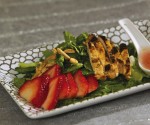
Grilled salad with chicken is one of the many tempting dishes in A Taste of Passover.

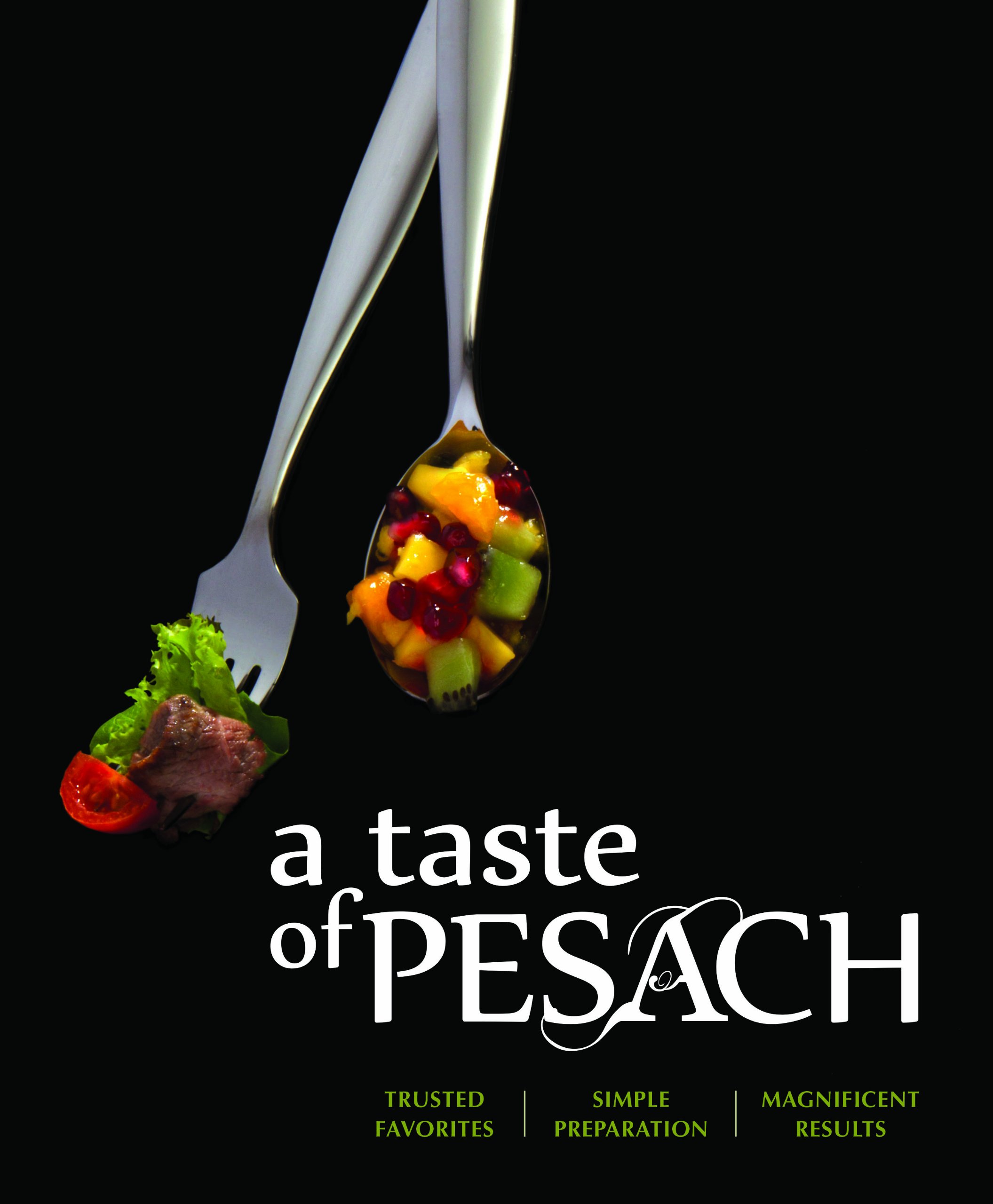
Every now and then, there’s a new recipe book that blows you away with innovative, easy-to-make dishes combined with tantalizing photographs that render you hungry within a couple minutes of flipping through the glossy pages. A Taste of Pesach (ArtScroll, 2014), a project of Yeshiva Me’on Hatorah (in Roosevelt, N.J.), is one such book. It promises to reinvent your Passover menu and inspire you with creative culinary twists and turns during this hungry time of year.

image - A Taste of Pesach  coverMany schools and communities have tried the same technique of compiling a recipe book and selling it as a fundraiser, and that’s how this one had its genesis seven years ago. But while most of those fundraiser books have a short lifespan before they’re recycled or mislaid, A Taste of Pesach is unlikely to follow the same trajectory. For one, it’s a gorgeous book you can’t wait to page through and one you’d be proud to hand over as a gift to a newlywed child or close friend. For another, it’s chock full of irresistible culinary eye candy, with recipes that are for the most part easy, calling on ingredients that are readily available. Look through the book and you find yourself murmuring, “Hmm…. I can do this.”

The mothers who volunteered the 150-plus recipes for A Taste of Pesach are a diverse group but they all want the same things at the end of the day, write the editors in the book’s introduction. “Food that will get rave reviews, user-friendly, visually attractive recipes with accurate cooking times and yields and recipes that have broad appeal and that work. We’re just like you,” they write.

Most of the recipes don’t require a huge spirit of adventure in the kitchen, but rather call for a minor stretch in their use of different ingredients than you might typically incorporate. The sweet potato crisps salad, for example, is a lettuce-based green salad to which strips of fried sweet potato are added as a garnish just prior to serving. The image of this dish is so tempting, it makes you want to reach in and steal a piece of crisp off the topping. This is true for the majority of the recipes, each one prefaced with a photograph and categorized by chapter into appies, soups, salads, fish, poultry, meat, sides, dessert, cake and cookies, and gebrokts. The recipes are accompanied by handy tips on how to make their preparation easier and faster, or how to plate it most attractively. There are traditional old favorites like gefilte fish, chremslach and kugels, and more modern twists or reinvented dishes like unstuffed cabbage, pastrami and spinach-stuffed chicken and cashew-butter muffins.

Extra eye candy is offered in the chapter headers, which display images of seder plates reflecting different times, styles and tastes. Passover is not a time of year that usually excites Jewish taste buds, but A Taste of Pesach promises to add flair, creativity and innovation to your table – without stretching your culinary skills to their limits.

Lauren Kramer, an award-winning writer and editor, lives in Richmond, B.C. To read her work online, visit laurenkramer.net. This article originally appeared in Canadian Jewish News.

Format ImagePosted on March 27, 2015March 26, 2015Author Lauren KramerCategories Celebrating the HolidaysTags Passover, recipes, seder, Yeshiva Me’on Hatorah
A friend on our long journey

A friend on our long journey

The close relationship humans share with yeast is truly ancient, and predates humanity itself. (photo by Lilly M via commons.wikimedia.org)

During the holiday of Passover, we are told not to eat leavened bread (chametz). The leavening of bread is caused by yeast, a single-celled fungus. The yeast induce a chemical reaction called fermentation, which converts water and sugar into alcohol and carbon dioxide. The bubbles of carbon dioxide gas produced during this reaction cause the bread to rise and become porous, ultimately resulting in delicious fluffy bread. The close relationship humans share with yeast is truly ancient, and predates humanity itself.

Since fungi lack mobility, it had often been assumed that they were more plant-like than animal-like. But genetic studies in the 1990s revealed that fungi are actually more closely related to animals than to plants. The common ancestor that animals and fungi share would have probably been single-celled, and resembled in many ways our friend the yeast. So we can consider them very distant cousins (not invited to the Passover seder).

Fruit are an important part of the diet of all apes, including humans and their ancestors. A ripe sweet juicy fruit is full of sugar and water, the key ingredients for fermentation. There are many different varieties of yeast that are found commonly all over the world, on the human body, in the soil, and often on the skin of fruits. Fermentation of ripe fruits due to the presence of such yeast is common in nature, and would have inevitably been eaten by the ancestors of humanity for millions of years. Primatologists have observed various species of monkeys getting drunk off such naturally fermented fruit. To explain this puzzling phenomenon, biologist Robert Dudley at University of California-Berkley formulated the “drunken monkey” hypothesis. Fruit evolved as a means for plants to use animals as a method of seed dispersal; however, if the fruit rots before it gets eaten, the seed doesn’t get dispersed. Alcohol is a volatile molecule, which means it floats around the air very easily. If a fruit begins to ferment, the alcohol molecules spread much further and faster than the smell of the fruit would on its own. Animals, such as monkeys and apes, can, therefore, smell from a greater distance that there is delicious fruit, helping them find and eat the fruits, and thus helping to disperse the seeds of the plant. It is an evolutionary relationship that benefits the plant, the yeast and the animal, a win-win-win scenario.

Moderate consumption of alcohol is in fact healthy and nutritional. Alcohol contains more calories than either carbohydrates (sugar) or proteins. Let us remember that calories were integral to survival before the obesity epidemic of the modern age. Alcohol can also protect against many diseases, especially cardiovascular diseases. Studies have even shown that people who consume alcohol in moderation live longer than those who don’t. Despite the many dangers associated with excessive alcohol consumption, the low doses normally consumed in nature ultimately may have provided a survival advantage to the ancestors of humanity.

The first civilizations arose in part due to intensive cereal agriculture. These cereals were used to make bread and beer. In Mesoamerica, they made a beer from corn, in China with rice and, in Mesopotamia and Egypt, they used barley and wheat to make beer and bread. These innovations that played an integral role in the building of civilization were thanks to yeast. The first writing system ever developed was Cuneiform, in Mesopotamia during the third millennium BCE. Among the first written records in history are references to the production, distribution and consumption of beer. Some scholars suspect that the Jews acquired this beer brewing knowledge during their exile in Babylon. The Hebrew word for drunk, shikur, is thought to be derived from the Babylonian word for beer, shikaru. However, if the story of Passover is to be believed, then perhaps the ancient Israelites brought the knowledge for beer making from Egypt.

Wine, an essential component of any decent Passover seder, also has an ancient history. The earliest evidence for intensive wine production can be found at the archeological site of Hajji Firuz Tepe in modern-day Iran, which has been dated to sometime around 5400 BCE. Genetic analysis corroborates that strains of wine yeast originated in Mesopotamia, but put the date back 10,000 years ago. Some archeologists have speculated that the strains of yeast used for making bread and beer originated from wine yeasts, however the evidence for this remains contentious. Wine and beer were both produced in Egypt, and were important culturally, religiously and medicinally, and Egyptians would bury jars of wine in the tombs of the pharaohs. Analysis of DNA found inside ancient Egyptian wine jars from the tomb of a pharaoh from 3000 BCE identified the same species of yeast used to make wine today: Saccharomyces cerevisiae.

If there were indeed Jewish slaves in Egypt, they would have eaten bread and drank beer and wine, leavened and fermented by the same fungus that we use to leaven bread and ferment wine today; a little old friend that has joined us on our long journey through the vast deserts of time. L’chayim.

Ben Leyland is an Israeli-Canadian writer, and resident of Vancouver.

Format ImagePosted on March 27, 2015March 26, 2015Author Ben LeylandCategories Celebrating the HolidaysTags chametz, Egypt, Passover, Saccharomyces cerevisiae, seder, yeast

Posts pagination

Previous page Page 1 … Page 572 Page 573 Page 574 … Page 649 Next page
Proudly powered by WordPress