Skip to content
  • Home
  • Subscribe / donate
  • Events calendar
  • News
    • Local
    • National
    • Israel
    • World
    • עניין בחדשות
      A roundup of news in Canada and further afield, in Hebrew.
  • Opinion
    • From the JI
    • Op-Ed
  • Arts & Culture
    • Performing Arts
    • Music
    • Books
    • Visual Arts
    • TV & Film
  • Life
    • Celebrating the Holidays
    • Travel
    • The Daily Snooze
      Cartoons by Jacob Samuel
    • Mystery Photo
      Help the JI and JMABC fill in the gaps in our archives.
  • Community Links
    • Organizations, Etc.
    • Other News Sources & Blogs
    • Business Directory
  • FAQ
  • JI Chai Celebration
  • JI@88! video

Recent Posts

  • עשרים ואחת שנים להגעתי לונקובר
  • Eby touts government record
  • Keep lighting candles
  • Facing a complex situation
  • Unique interview show a hit
  • See Annie at Gateway
  • Explorations of light
  • Help with the legal aspects
  • Stories create impact
  • Different faiths gather
  • Advocating for girls’ rights
  • An oral song tradition
  • Genealogy tools and tips
  • Jew-hatred is centuries old
  • Aiding medical research
  • Connecting Jews to Judaism
  • Beacon of light in heart of city
  • Drag & Dreidel: A Queer Jewish Hanukkah Celebration
  • An emotional reunion
  • Post-tumble, lights still shine
  • Visit to cradle of Ashkenaz
  • Unique, memorable travels
  • Family memoir a work of art
  • A little holiday romance
  • The Maccabees, old and new
  • My Hanukkah miracle
  • After the rededication … a Hanukkah cartoon
  • Improving the holiday table
  • Vive la différence!
  • Fresh, healthy comfort foods
  • From the archives … Hanukkah
  • תגובתי לכתבה על ישראלים שרצו להגר לקנדה ולא קיבלו אותם עם שטיח אדום
  • Lessons in Mamdani’s win
  • West Van Story at the York
  • Words hold much power
  • Plenty of hopefulness

Archives

Follow @JewishIndie
image - The CJN - Visit Us Banner - 300x600 - 101625

Author: Ben Leyland

A friend on our long journey

A friend on our long journey

The close relationship humans share with yeast is truly ancient, and predates humanity itself. (photo by Lilly M via commons.wikimedia.org)

During the holiday of Passover, we are told not to eat leavened bread (chametz). The leavening of bread is caused by yeast, a single-celled fungus. The yeast induce a chemical reaction called fermentation, which converts water and sugar into alcohol and carbon dioxide. The bubbles of carbon dioxide gas produced during this reaction cause the bread to rise and become porous, ultimately resulting in delicious fluffy bread. The close relationship humans share with yeast is truly ancient, and predates humanity itself.

Since fungi lack mobility, it had often been assumed that they were more plant-like than animal-like. But genetic studies in the 1990s revealed that fungi are actually more closely related to animals than to plants. The common ancestor that animals and fungi share would have probably been single-celled, and resembled in many ways our friend the yeast. So we can consider them very distant cousins (not invited to the Passover seder).

Fruit are an important part of the diet of all apes, including humans and their ancestors. A ripe sweet juicy fruit is full of sugar and water, the key ingredients for fermentation. There are many different varieties of yeast that are found commonly all over the world, on the human body, in the soil, and often on the skin of fruits. Fermentation of ripe fruits due to the presence of such yeast is common in nature, and would have inevitably been eaten by the ancestors of humanity for millions of years. Primatologists have observed various species of monkeys getting drunk off such naturally fermented fruit. To explain this puzzling phenomenon, biologist Robert Dudley at University of California-Berkley formulated the “drunken monkey” hypothesis. Fruit evolved as a means for plants to use animals as a method of seed dispersal; however, if the fruit rots before it gets eaten, the seed doesn’t get dispersed. Alcohol is a volatile molecule, which means it floats around the air very easily. If a fruit begins to ferment, the alcohol molecules spread much further and faster than the smell of the fruit would on its own. Animals, such as monkeys and apes, can, therefore, smell from a greater distance that there is delicious fruit, helping them find and eat the fruits, and thus helping to disperse the seeds of the plant. It is an evolutionary relationship that benefits the plant, the yeast and the animal, a win-win-win scenario.

Moderate consumption of alcohol is in fact healthy and nutritional. Alcohol contains more calories than either carbohydrates (sugar) or proteins. Let us remember that calories were integral to survival before the obesity epidemic of the modern age. Alcohol can also protect against many diseases, especially cardiovascular diseases. Studies have even shown that people who consume alcohol in moderation live longer than those who don’t. Despite the many dangers associated with excessive alcohol consumption, the low doses normally consumed in nature ultimately may have provided a survival advantage to the ancestors of humanity.

The first civilizations arose in part due to intensive cereal agriculture. These cereals were used to make bread and beer. In Mesoamerica, they made a beer from corn, in China with rice and, in Mesopotamia and Egypt, they used barley and wheat to make beer and bread. These innovations that played an integral role in the building of civilization were thanks to yeast. The first writing system ever developed was Cuneiform, in Mesopotamia during the third millennium BCE. Among the first written records in history are references to the production, distribution and consumption of beer. Some scholars suspect that the Jews acquired this beer brewing knowledge during their exile in Babylon. The Hebrew word for drunk, shikur, is thought to be derived from the Babylonian word for beer, shikaru. However, if the story of Passover is to be believed, then perhaps the ancient Israelites brought the knowledge for beer making from Egypt.

Wine, an essential component of any decent Passover seder, also has an ancient history. The earliest evidence for intensive wine production can be found at the archeological site of Hajji Firuz Tepe in modern-day Iran, which has been dated to sometime around 5400 BCE. Genetic analysis corroborates that strains of wine yeast originated in Mesopotamia, but put the date back 10,000 years ago. Some archeologists have speculated that the strains of yeast used for making bread and beer originated from wine yeasts, however the evidence for this remains contentious. Wine and beer were both produced in Egypt, and were important culturally, religiously and medicinally, and Egyptians would bury jars of wine in the tombs of the pharaohs. Analysis of DNA found inside ancient Egyptian wine jars from the tomb of a pharaoh from 3000 BCE identified the same species of yeast used to make wine today: Saccharomyces cerevisiae.

If there were indeed Jewish slaves in Egypt, they would have eaten bread and drank beer and wine, leavened and fermented by the same fungus that we use to leaven bread and ferment wine today; a little old friend that has joined us on our long journey through the vast deserts of time. L’chayim.

Ben Leyland is an Israeli-Canadian writer, and resident of Vancouver.
Format ImagePosted on March 27, 2015March 26, 2015Author Ben LeylandCategories Celebrating the HolidaysTags chametz, Egypt, Passover, Saccharomyces cerevisiae, seder, yeast
Matza: a symbol of humility

Matza: a symbol of humility

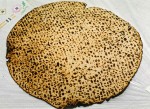
Matza and chametz are both composed of the same letters, except that matza is spelled with a hey and chametz with a chet. The only difference between a hey and a chet is that the chet is completely closed from three sides, while the hey has an opening on top. (photo by Yoninah via commons.wikimedia.org)

On Pesach, we are only allowed to eat matza, not chametz. What is the difference between chametz (leavened bread) and matza? How do they differ?

Matza differs from chametz in two respects:

1) With chametz, the dough rises, while for matza, the dough remains as is. In spiritual terms this means that chametz signifies arrogance, while matza signifies modesty and humility.

Matza is essentially lechem oni, the bread of poverty, of affliction (Deuteronomy 16:3 and Rashi’s commentary on this verse). Matza signifies humility, which manifests itself especially in lechem oni. The mitzva (obligation) to eat matza can only be observed with humility. The matza that the Israelites ate in Egypt was lechem oni.

2) The words matza and chametz are both composed of the same letters, except that matza is spelled with a hey and chametz with a chet.

The hey is similar to the chet. Both consist of three lines and are open from below. The only difference between them is that the chet is completely closed on the top, while the hey has an opening on the upper left side.

image - chet and het
The Hebrew letters chet and het.

The open side below (which chet and hey share) symbolizes that “sin crouches at the entrance.” (Genesis 4:7) The closure on both sides in the letter chet indicates that there is no escape from that fact, i.e., that sin crouches at the entrance. The opening on top, in the hey, indicates that notwithstanding this fact there is an opening above, indicating the possibility to leave one’s condition behind and to become a better person.

It is indeed no more than a small opening, but our sages teach us that G-d says: “‘Open for Me as little as the eye of the needle, and I will open for you like the entrance to a hall.’ For a single thought of self-improvement can change one instantaneously from an altogether wicked person into an altogether righteous person.” (Talmud Kidushin 49b)

These two differences between matza and chametz are interdependent. Where there is conceit and grandiose self-esteem, one doesn’t think of improvement. If there is humility, then, even if one may have stumbled, they will think of improvement. Where there is humility, there is no attempt at self-justification. Rather, one takes honest stock of oneself and, when finding improprieties within oneself, he or she will try to improve. With haughtiness, however, one will always find rationalizations to justify and excuse all doings.

Here’s a story to illustrate this point. When seeing a pauper, the one who seeks to avoid the mitzva of tzedaka will use the argument of Turnus Rufus (Baba Batra 10a), who asked of Rabbi Akiva: “If your G-d loves the poor, why does He not support them?” In other words, for reasons of haughtiness, if one accepts one’s wealth as one’s due and, in fact, feels that they deserve even more than what they already have, why then should they give away any of it? Arrogance doesn’t allow for the reality of another and, therefore, one may take it for granted that the other is not his or her equal. To this person, therefore, it is obvious that the other is poor simply because they don’t deserve any better. As it is surely the Divine Will that the other be poor, why then should one give him anything?

The humble one, possessed of humility, reasons differently.

a) He examines and judges himself whether he is essentially better than the other, and his self-examination leads him to give charity. It is written in Psalms 99:4, “You have done justice and tzedaka in Jacob.” That is, the justice, i.e. the self-judgment, leads him to tzedaka.

b) The humble one contemplates this possibility, but also notes that he himself has been blessed generously in spite of his own deficient status and condition. Thus, he is moved to conclude that we are as children of G-d. As these conditions relate to the mitzva of tzedaka, so, too, they apply to all good deeds.

This year, when we come to celebrate Passover at the festival seders, especially when we eat the matza, and when we are surrounded by our children, grandchildren and guests, we celebrate our people’s freedom from Egypt. Take time to contemplate the spiritual nature of matza, to be humble and feel the needs of our less fortunate friends, family and community members. We are celebrating, as well, the freedom of being able to go from haughtiness to kindness, from our limitations to our freedom. When we celebrate Passover this way, we will naturally feel happy that we are able to help provide what others need.

May this Passover prove to be an inclusive festival, where everyone will be able to rejoice and feel for one another. Wishing you a kosher and happy Passover.

Esther Tauby is a local educator, writer and counselor.

Format ImagePosted on March 27, 2015March 26, 2015Author Esther TaubyCategories Celebrating the HolidaysTags chametz, chet, matza, Passover, tet
We all were once strangers

We all were once strangers

A boat of new immigrants arrives in pre-state Israel on Oct. 2, 1947. (photo from the Palmach Archive via PikiWiki Israel)

The Passover seder begins by welcoming anyone who is hungry, an idea that comes straight from the Book of Exodus (23:9), which states, “You shall not oppress a stranger, since you yourselves know the feelings of a stranger, for you also were strangers in the land of Egypt.”

Later in the Torah, Leviticus 19:33 says, “When a stranger resides with you in your land, you shall not do him wrong.” Leviticus 19:34 repeats this refrain, “The stranger who resides with you shall be to you as the native among you, and you shall love him as yourself, for you were aliens in the land of Egypt; I am the Lord your God.”

Over the generations, the Jewish people have been “aliens” more than once. Well-known examples of Jews leaving their perceived homeland include the Jewish exile to Babylonia after the destruction for the first Temple, those who were fortunate enough to escape Nazi persecution for Israel or the United States, expelled Middle Eastern Jews who were moved to Israel after its founding, or residents of the former Soviet Union who left a life of religious oppression.

The immigrant experience is different for everyone, said Aaron Gershowitz, senior director for U.S. programs at the Hebrew Immigrant Aid Society (HIAS). He told this reporter that the challenges of an individual’s journey often depend on the environment they are leaving and the community to which they are relocating.

Take Inge “Irene” Brenner. She escaped from Nazi Germany on Dec. 28, 1938, for Havana, Cuba. From there, she traveled to the United States, arriving to join her husband in April 1939 at age 19. She immediately took up work at a small factory where she steamed hat plumes. Her employer provided her with the required documentation to book passage for her mother, father and sister to the United States. Due to a lack of funds, the family all lived together in a tiny apartment in New York.

“When I left Berlin, I was 19 and completely single-minded, [telling myself] ‘I must get out and save myself and my parents,’” Brenner said. “We just couldn’t have existed anymore. That is what happened to the rest of my family that didn’t get out – all of them were murdered in the gas chambers. There was nothing else I could do but make it. You just had to make it.”

Gershowitz said that “the economics of surviving” often mark the first several years (or longer) of the immigrant experience. It is only after that period that immigrants become more like others – more focused on family life, a career and a future for their children.

Over time, this was the case for Brenner. Once she and her husband could afford to leave the rest of the family and live on their own, they had two daughters who they raised to be American Jews, as opposed to Jewish Americans. Brenner said she wanted to leave her horrible past behind for a new life, which she feels she received “by the grace of God.”

“She was always proud to be Jewish, but it was always extremely hard for her to talk about how she got here,” said Benjamin Kopelman, Brenner’s grandson.

photo - Lev Golinkin
Lev Golinkin (photo by Diana P. Lang)

Lev Golinkin, author of a memoir on the immigrant experience titled A Backpack, a Bear and Eight Crates of Vodka, noted the irony that Soviet Jews came to the United States in search of religious freedom, yet many of them choose not to practise Jewish traditions, his family included.

“As soon as we could, we got away from the synagogue and Jewish organizations and melded into the secular American world,” he said.

Golinkin, who arrived in the United States from eastern Ukraine in 1989 at the age of 9, surmised that people turned away from religious observance because it was precisely the Jewish faith that made them targets for persecution in the former Soviet Union. Before escaping, Golinkin was being homeschooled because he had been regularly teased and beaten for his Judaism. Religion, therefore, was nothing to celebrate for him.

“I wanted nothing to do with that. I saw being a Jew as a stigma, a disability,” said Golinkin.

But as he grew up, Golinkin’s opinion changed.

“I think it is interesting that the Israelites stayed in the desert and didn’t start over until that generation had passed away. They needed a clean slate, they needed people whose memories are formed in the new land with the new traditions,” he said.

Read more at jns.org.

Maayan Jaffe is an Overland Park-based freelance writer. Reach her at [email protected] or follow her on Twitter, @MaayanJaffe.

Format ImagePosted on March 27, 2015March 26, 2015Author Maayan Jaffe JNS.ORGCategories Celebrating the HolidaysTags Aaron Gershowitz, immigrant, Irene Brenner, Lev Golinkin, Passover, seder
Ancient message of Jewish unity

Ancient message of Jewish unity

A model of King Herod I’s renovated version of the Second Temple in Jerusalem. (photo from Ariely via Wikimedia Commons)

Between 19 BCE and 4 BCE, King Herod I renovated the Jewish Temple in Jerusalem, enlarging and beautifying it. It is during this same period that we first learn of the Jewish pilgrimages to Jerusalem on what are known as the shalosh regalim, the three pilgrimage festivals.

All of the festivals – Passover, Shavuot and Sukkot – centre around the story of the Exodus in some way. But Passover is the first and foremost of the bunch.

Jerusalem always held a special place in the hearts of the Jewish people, but as the Romans built roads and as Herod expanded the Temple, the pilgrimage to Jerusalem became commonplace and served as a message of unity – “one Temple, one God, one Passover” – for all Jews, said Prof. Jonathan Klawans of Boston University’s department of religion.

Yet, detailed writings about what the pilgrimage festivals may have looked like during Temple times don’t exist. According to talmudic scholar Dr. Joshua Kulp, author of Schechter Haggadah: Art, History and Commentary, most knowledge on the subject comes from the works of the ancient historian Josephus. While later writings (such as the New Testament) describe what it was like in Jerusalem during the Second Temple era, those works were written at a much later time and some scholars doubt their accuracy.

It isn’t known where people stayed or slept when they were in Jerusalem, or how many people showed up (though most assume a large number), or what people felt at that time. What is known, Klawans explained, is that the pilgrimages were a social experience that pulled the Jewish people together.

It’s also clear that, for Passover, pilgrimage participants ate in Jerusalem as family units. A representative from each family would take an animal, bring it up to the Temple, and have it slaughtered. Then, the representative would bring the animal back, and the family would cook and eat the sacrificial meat. During this festive meal, families also drank wine, but not a specific number of glasses. They sang songs – specifically, the Hallel prayers, which is also part of the modern Passover seder.

Read more at jns.org.

Maayan Jaffe is an Overland Park-based freelance writer. Reach her at [email protected] or follow her on Twitter, @MaayanJaffe.

Format ImagePosted on March 27, 2015March 26, 2015Author Maayan Jaffe JNS.ORGCategories Celebrating the HolidaysTags Haggadah, Passover, seder, Temple
Elijah in New York City

Elijah in New York City

(photo from PikiWiki Israel)

Her name was Rachel, his was Nathan. And even though separated by two bar stools, they struggled through 20 minutes of awkward conversation before their last names were spoken. Greenberg went with Rachel; Cohen with Nathan.

“Hey, you must be Jewish,” blurted out Nathan, a lonely bachelor whose only other date was Channel 15 on a cold, rainy night in April.

“I bet you’re Jewish, too,”she responded.

Well, things were looking up. Nathan now sat beside her and she responded with a smile at his aggressive move. He’s Jewish, no stranger, she thought.

“What a night for two Jewish buckaroos to be sitting in a western bar in the middle of Manhattan,” said Rachel. “It’s the first night of Passover, you know.”

“Yeah. I’m afraid I’ve neglected ‘my heritage,’ as my father puts it. He lives here in the city – only a few blocks down 57th. My family has a seder every year. They sit around the table – sing childish songs – stuff themselves on a five-course meal and wait for Elijah, the heavenly visitor to drop by. I go to a bar. Usually the one over on 52nd and 8th. This year, my mood took me here. Don’t know why. It’s a heck of a coincidence that I’m sitting next to you.”

“Well, I’m alone in the city. My family is back home in Louisville, Kentucky. Like yours, about now they’re sitting down to a huge meal with a week’s supply of calories and cholesterol. Kosher, but still deadly. And I’m sure they’re singing silly songs, as you put it. Wish I was there.”

“How seriously do they play out the Elijah game? You know the legend. His visit to every Jewish home on seder night. I remember my old man. He’d put down his wine glass, get all serious and open the front door. ‘Hey Pop,’ the 8-year-old who was then me, would shout, ‘If Elijah can pop up at 10 million Jewish homes in a single night, he can get through that wood-paneled front door without your help. A decent burglar can do it in a few minutes. Why not challenge the prophet?’ My old man hated it.”

An old gentleman at the end of the bar looked up with a pained expression.

“I guess so,” remarked Rachel. “Sure I know the Elijah story – our rabbi calls it a midrash – a rabbinic parable – which elevates it a level or two above a legend. It’s one of those unifying articles of faith that every Jew – even the lost ones – enjoys believing. A sweet story, you know. In fact, my rabbi believes that besides visiting many millions of seders on the first night of Pesach, he’s there – on Passover night – wherever two or more Jews are together.”

She had been a little loud. She noticed the old gentleman at the end of the bar had looked up from his drink, a dark purple wine in an ornate silver wine glass. Wonder what they called that drink? Wonder if you got to keep the glass?

Nathan, his arms folded loosely across his chest, had fixed his eyes on her as she talked. She’s got some spirit, he reflected. How his father’s eyes would gleam with passion to hear her declarations of faith.

Rachel brushed her hair back from her face. “Sorry, I got a little carried away – didn’t mean to preach to you. Let’s talk about something else.”

“No, no, I understand. That first night of Pesach is magic, my old man used to say. Makes you remember who you are. Every Jew, he used to say, had a progenitor – an ancestor – in his direct line who walked dry shod on the bed of the Red Sea. If he had perished under Egyptian whips or drowned beneath the waves, I, for example, wouldn’t be sitting at this glitzy bar in 21st-century America talking to a young Jewish lady who believes in a resuscitated prophet who makes a million house calls on one spring night.”

“You know what?” she said suddenly. “I’d love to go to a seder tonight. And there’s no lamb shank, charoset, parsley or bitter herb at your place or mine – but there is at your father’s place. Why don’t we surprise him? We’ll be just in time to greet Elijah.”

Nathan blinked, and nodded. With her, he had a chance. So, linking his arm in hers, he set out on the longest journey any man can undertake. A journey home.

And, at the end of the bar, the dignified but poorly dressed patron held up his wine goblet. “There are no coincidences,” he whispered to the goblet. He glanced hurriedly at his watch and left. He had many calls to make.

Ted Roberts is a freelance writer and humorist living in Huntsville, Ala.

Format ImagePosted on March 27, 2015March 26, 2015Author Ted RobertsCategories Celebrating the HolidaysTags Elijah, Passover
About the 2015 Passover cover

About the 2015 Passover cover

The illustration on this year’s Passover cover, “Miriam Dances,” was created by artist Carol Racklin-Siegel for the book Let My People Go (EKS Publishing, 2011). In this hand-painted silk art, Racklin-Siegel depicts the joy of Miriam the Prophetess leading the women in song and dance after reaching dry land: “Miriam the prophetess, the sister of Aaron, took her drum in her hand and all the women went forth after her with drums and with dances.” (Exodus 15:20)

Racklin-Siegel is an award-winning textile artist and illustrator focusing on custom hand-painted textiles, Judaic textiles, paintings and illustrations. She expresses the spirituality of Judaism by incorporating her textile designs and fabric painting techniques to Judaic and biblical themes. She has illustrated a series of books for children, based on the stories in Genesis, for EKS Publishing Co. in Oakland, Calif. She resides with her family in Israel. Her work can be viewed at pomegranatestudios.com.

Format ImagePosted on March 27, 2015March 29, 2015Author Cynthia RamsayCategories Celebrating the HolidaysTags Carol Racklin-Siegel, Exodus, Passover
A secret Pesach gift awaits

A secret Pesach gift awaits

Daffodils herald the springtime – and the approach of Passover. (photo from commons.wikimedia.org)

I had not seen him check into the inn. And I did not see him that night as we travelers exchanged vodka toasts to Pesach – only 10 days away. But here he was this morning, awaiting the same coach that would take me to my daughter’s seder table. I like to get there early and remind her that her papa – who gave her life, in

cooperation with her mama – loves being in her home, made gefilte fish and is more than willing to evaluate her Pesach culinary efforts.

Anyhow, awaiting the carriage, we clustered together – exulting in a glorious spring day under the giant willow that shaded the station showing off her spring-new leaves as though she was competing with her neighbor, an old, mottled-bark sycamore. Aged, but still capable of spring whimsy. She seemed even showier when the newcomer leaned against her and I could swear the light green of her new leaves gleamed even greener by contrast.

The mysterious stranger glanced at me. I checked him out, too. A stern face, whose only laughter was in his eyes. He was dressed like the rest of us, except he had a jonquil in his lapel. We seated ourselves opposite each other in the coach.

He was the first to speak. “How do you do?” he said, “My name, I’m sure you know, is Elijah. And, I’m sure you know, I’m beginning my Passover planning.”

I involuntarily rose from my seat like I was sitting on a hot, pot-bellied stove and banged my head on the top of the coach. Elijah, Grand Master of the Prophetic Fraternity, sitting with an undistinguished shtetle Jew – me!

“Can you imagine,” he said, “I visit every seder from Chicago to Katmandu. Roughly,” he continued, “we’re talking millions of homes. And on the same night. The same night,” he repeated. “And nobody says, ‘Ellie (that’s what my friends upstairs call me), good job! Great job, Ellie.’ They’re all too busy being impressed with that watery miracle. They’ve talked for 3,300 years now about a breeze that allowed you Israelites to wade across the Red Sea. And they think it’s a miracle that the Master caused a bunch of birds to fall out of the sky to feed you guys. I’ve tasted ’em. Oily, tough, need a ton of spices to get ’em down. Big deal! And that manna. Ever tasted it? Like raw oatmeal. And me? The showpiece of Pesach? I’m hustling to a few million seders. And you think I can drop in – say hello and run next door? No way. I gotta have a shot of wine – a few million sips of wine. You wouldn’t believe my headache the next day.”

I listened. Shocked. Even the Prophetic Master, semi-human/ semi-angel, had the ego of our coach driver, who prided himself in making the run to Minsk in under six hours.

But Elijah wasn’t through. “And that’s not all. Unknown to a cold and frigid world, there’s a precious little secret that only the angels know. On Pesach – if the year has been a sweet one wherein mankind has controlled his hybrid heart – I beckon to springtime, which is waiting in the wings of winter for my call. It’s the great gift the Master has bestowed upon me. It’s my dividend, as you say down here, for my Pesach duties. I call, and nature, everywhere, listens. Springs into action. (I never could resist a good pun.) Timing? It depends on those 36 Tzadiks – God’s spies we call them – who roam the world and annually report. Mankind behaving? Following Torah? I beckon – spring does her thing. It all hangs on human behavior. Sometimes the earth is only gilded with a pale reflection of a bountiful spring.”

He stopped, turned his head to stare at the passing parade of dreary woodlands and grey vales and brown meadows. But I could see red and yellow tulips dancing in his eyes.

By the time I reached Minsk and burst into a living room full of expectantly waiting kids and grandkids – over their hugs and kisses, I could see the daffodils blooming through the living room windows. We must have behaved.

Ted Roberts is a freelance writer and humorist living in Huntsville, Ala.

Format ImagePosted on March 27, 2015March 26, 2015Author Ted RobertsCategories Celebrating the HolidaysTags Elijah, Passover
סוגיית הקמת המדינה הפלסטינית יכולה לגרום למחלקות בין קנדה לישראל

סוגיית הקמת המדינה הפלסטינית יכולה לגרום למחלקות בין קנדה לישראל

ממשלת ישראל החדשה שתקום בקרוב, שוב בהנהגת בנימין נתניהו. (צילום: Ashernet)

סוגיית הקמת המדינה הפלסטינית בשטחים לצדה של ישראל, יכולה לגרום למחלוקת בין ממשלת קנדה ברשות סטיבן הרפר, לבין ממשלת ישראל החדשה שתקום בקרוב, שוב בהנהגת בנימין נתניהו. זאת, לאור הצהרת נתניהו ערב הבחירות כי הוא מתנגד להקמתה של המדינה הפלסטינית, וכי ימשיך את הבנייה בשטחים. נתניהו פשוט ניסה למשוך עוד קולות ממפלגות הימין האחרות אל עבר הליכוד.

ממשלת קנדה מאז מונה הרפר לראשות הממשלה ב-2006, תומכת בישראל ועומדת מאחוריה כמעט לאורך כל הדרך. אך בד בבד היא מצדדת בצורה חד-משמעית בפתרון שתי המדינות והענקת זכויות האדמה לפלסטינים. אך יתכן ועתה כאמור צפויה לצוץ מחלוקת ממשית בין שתי הממשלות, לאור הכרזת נתניהו.

בכל מקרה הרפר יבקש הבהרות מנתניהו בנושא זה, לאור הראיון שהעניק לרשת הטלוויזיה האמריקנית אן.בי.סי, ביום חמישי שעבר, מייד לאחר הבחירות. בראיון שינה כביכול ראש ממשלת ישראל את דעתו, וטען כי אינו מתנגד להקמת שתי המדינות. אצל נתניהו כמו נתניהו קשה לדעת באמת עמדתו הברורה, אם יש כזו בכלל, והוא נוטה לשנותה בהתאם לשומע שעומד מולו. במקרה של הראיון עם אן.בי.סי מדובר בנשיא ארה”ב, ברק אובמה, וכידוע שני האישים חלוקים אחד על השני ונמצאים בסכסוך עמוק ומתמשך.

בראיון לרשת האמריקנית ניסה נתניהו להסביר את דבריו, שלהערת המראיינת עומדים בניגוד גמור למה שהכריז ערב הבחירות. הוא אמר: “רעיון שתי המדינות לא השתנה אלא המציאות. אבו מאזן סירב להכיר במדינה היהודית וחתם על הסכם עם החאמס שקורא להשמדתנו. כל שטח שיפונה היום במזרח התיכון נתפס מיד על ידי כוחות איסלמיסטיים. אני לא רוצה פתרון של מדינה אחת. אני רוצה הסכם בר-קיימא של שתי מדינות ובשביל זה הנסיבות צריכות להשתנות”.

מייד לאחר הזכייה בבחירות מיהרו הרפר ושר החוץ שלו רוב ניקולסון, ושלחו לנתניהו ברכות חמות. הרפר הוסיף כי הוא מצפה לעבוד ביחד עם הממשלה החדשה בישראל, וכי לישראל אין ידידה קרובה יותר מאשר קנדה.

מנכ”ל המרכז לענייני ישראל והיהודים בקנדה, שמעון פוגל, העיר על דברי נתניהו שיתנגד למדינה פלסטינית, כי מדובר בהצהרה שנבעה מרצונו להשמיע לבוחריו את מה שהם רוצים לשמוע, כדי שלא יאבד קולות. ואילו ראש התוכנית לביטחון לאומי במרכז לחדשנות במשילות בינלאומית (בווטרלו אונטריו), פן המפסון, אמר כי הצהרת נתניהו היא עלבון למאמצי השלום האחרונים במזרח התיכון של שר החוץ האמריקני, ג’ון קרי. לדברי המפסון אם נתניהו ישנה את דעותיו לאחר הקמת ממשלתו החדשה, ישראל צפויה למצוא את עצמה במסלול התנגשות עם קנדה. המפסון: “למרות שממשלת הרפר התקרבה לישראל יותר מכל הממשלות הקודמות בקנדה, היא עדיין תומכת בפתרון של שתי המדינות, ובאופן רשמי מתנגדת להמשך הבנייה של ההתנחלויות הישראליות. קנדה בחרה להביע את התנגדותה באופן פרטי לישראלים, אבל זה אולי צריך להשתנות, אם נתניהו לא יבהיר את הדברים הקשוחים האחרונים שלו”.

שגריר ישראל בקנדה, רפאל ברק, אומר שיש לקחת את כל ההצהרות בתקופת הבחירות בערבון מוגבל. ברק מציע להמתין להרכבת ממשלת נתניהו החדשה, ולשמוע מה יגיד ראש הממשלה ביום הצגתה בכנסת. זו תהיה מדיניות הממשלה ואז הדברים יהיו הרבה יותר ברורים, מאשר הצהרות קצרות שפורסמו בעיתונים.

לדעתו של ההיסטוריון הקנדי ג’ק גרנשטיין (שמתמחה בפוליטיקה וצבא), התמיכה של הרפר בישראל הייתה ונשארה בלתי מעורערת. להרפר חשובה התמיכה שהוא מקבל מהקהילה היהודית בקנדה, והוא לא מתכוון לאבד אותה.

Format ImagePosted on March 24, 2015March 23, 2015Author Roni RachmaniCategories עניין בחדשותTags Binyamin Netanyahu, Palestinian state, Stephen Harper, two-state solution, בנימין נתניהו, המדינה הפלסטינית, סטיבן הרפר, פתרון של שתי המדינות
Israelis skate into Vancouver

Israelis skate into Vancouver

Canucks alum Eddie Hatoum, originally from Lebanon, with several Arab Israeli athletes. (photo from Jewish Community Centre of Greater Vancouver)

Anyone who caught a glimpse of the 20 young hockey players during their week-long training camp in Vancouver March 4-10 probably didn’t think much of it. That is until they looked a little closer and saw the Canada Israel Hockey School (CIHS) logo all over their jerseys, jackets and bags.

In a joint venture of the Jewish Community Centre of Greater Vancouver and the Jewish Federation of Greater Vancouver, the 10-to-14-year-old boys and girls were hosted by local families, trained by special guest coaches, toured around the city and treated to an unforgettable night by the Vancouver Canucks.

photo - Canada Israel Hockey School students listen to skating coach Barb Adelbaum.
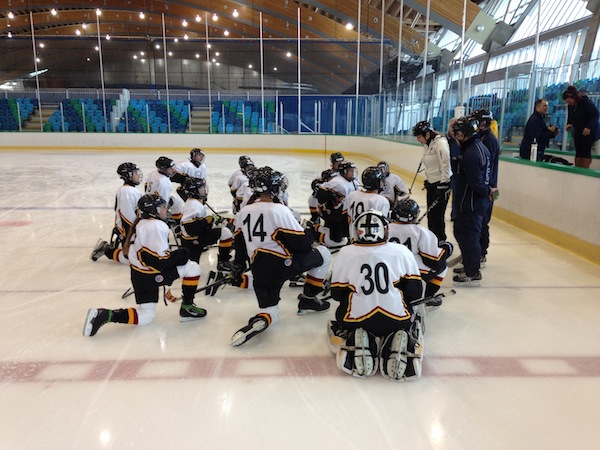
Canada Israel Hockey School students listen to skating coach Barb Adelbaum. (photo from JCCGV)

Aside from its being a hockey school in a country where that sport is as foreign as olive trees are to Vancouver, CIHS is also special for using hockey as a cultural bridge: half the participants touring Vancouver were Jewish and half Arab. Here are a few stories that stood out from the week-long adventure.

Skate like NHLers: After arriving late the night before, the kids wasted no time hitting the ice at the Richmond Olympic Oval. Their first practice was led by Barb Adelbaum, power skating consultant for the Vancouver Canucks and various NHL players around the league. After taking them through some skating drills, Adelbaum noted that many of them had dull skate blades. She connected the team with Cyclone Taylor Sports in Vancouver and arranged to have all 20 pairs of skates sharpened, as well as a much-needed new stick for one of the goalies.

KDHS meets CIHS: On day two, thanks to a Purim-themed professional development day at King David High School, several hockey-playing students from the high school joined the CIHS kids on the ice. Instead of playing against each other, each team was formed from members of both schools, which made for a spirited community game.

photo - CIHS students with skating coach Barb Adelbaum
CIHS students with skating coach Barb Adelbaum. (photo from JCCGV)

Flying like a Raven: When the JCC found out that the CIHS squad included two girls, talks began with the Richmond Ravens Girls Hockey Association on bringing them all together. The Ravens happily obliged, donating one of their ice times to a scrimmage and practice with the Israelis. After fitting the two Israeli girls into Ravens jerseys, a boys versus girls game was played.

All they have is love: Sunday afternoon was spent touring the city. The group walked along the water from Granville Island to Kitsilano Beach. As they approached the beach, Virgin Radio was there, with a large balloon-like ball with “LOVE” written on it, offering folks the chance to be photographed with it. As the Israeli kids swarmed for their photo, the radio station reps were told of the special meaning behind the Jewish and Arab group, standing shoulder to shoulder, symbolizing the love of a game and being a team overcoming other boundaries.

CIHS meet JCC hockey: The Israeli athletes had the opportunity to see what Jewish community hockey was all about in Vancouver. They took in one of the final regular season games of the JCC’s Adult Ice Hockey League, providing a cheering section the local weekend warriors weren’t used to. After the game, the students had their chance to show the JCC league the skills they had brought from Israel, and to play a little hockey with them. Led by the generosity of Daniel and Ariel Wosk, several members of the JCC league donated money for new equipment for the CIHS players (more to come on that below). The Wosk brothers had visited CIHS in February 2014 as part of a hockey team tour and wanted to be involved when the Israelis came to Vancouver.

“The joy and passion that [Jewish] and Arab children were exhibiting together was a sign that with the right influences and opportunities there could be a better future there,” said Ariel. “When we heard that some of the kids were coming to Vancouver, we knew that we wanted to do something for them.”

“A highlight for me was not knowing who was who on the ice, yet their teamwork was excellent,” added Daniel of his time playing with the kids here. “It’s awesome to see their relationships grow in a positive direction … [that] will translate into their daily lives.”

photo - CIHS student being interviewed by CBCs Shane Foxman for Citizen Shane
CIHS student being interviewed by CBCs Shane Foxman for Citizen Shane. (photo from JCCGV)

The final day: The last full day of the CIHS visit had more highlights than an evening news report.

The morning started on the ice, with two members of the Vancouver Canucks Alumni Association as guest coaches, along with local hockey pro and JCC member Harrison May and his brother Kevin.

One of the alum, Eddie Hatoum, was born in Beirut and still speaks Arabic at home. Upon arriving and learning of the mix of the CIHS athletes, he entered the locker room and asked, “Who speaks Arabic?” in his native tongue. Half the room raised their hands with huge smiles on their faces. “We’ve done a lot of work with young groups as the Canucks alumni, but this really warms my heart,” Hatoum said, also smiling. “When I tell my siblings in Ottawa that I got on the ice with these kids, they won’t believe it.”

Hatoum was joined at the practice by B.J. (Blair) McDonald, who once scored 46 goals playing with Wayne Gretzky in the early 1980s.

After the practice, the group headed to Sports Exchange in Vancouver for a shopping spree. With the money from the JCC hockey league players in hand, along with several donations and great deals from the store managers, the team packed six bags’ worth of brand-new gear. The kids also had a chance to pick up some items of their own that they can’t get in Israel.

While it seemed almost impossible for the day to get any better, the CIHS kids and several of their host family friends were treated to an evening with the Canucks that started with a meeting with team president Trevor Linden and chief operating officer Victor de Bonis. De Bonis led the group on a tour of the facility in advance of the Canucks versus Anaheim Ducks game, which they watched from a hospitality suite, where they were offered a buffet dinner and all the popcorn they could eat. Visits to the suite from Adelbaum, McDonald, de Bonis and Canucks mascot Fin topped it all off.

The trip continues: The group said goodbye to Vancouver and hello to a week in Calgary before heading back to Israel. Several JCC league players will meet the kids again next February at an annual recreational hockey tournament in Israel. The Vancouver squad, as usual, will get on the ice with the CIHS for a couple of practices and continue their friendship.

Kyle Berger is Jewish Community Centre of Greater Vancouver sports coordinator, and a freelance writer living in Richmond. For more information on this visit or future hockey trips to Israel, contact Berger at 604-638-7286.

Format ImagePosted on March 20, 2015March 19, 2015Author Kyle BergerCategories LocalTags Canada-Israel Hockey School, CIHS, Hockey, JCCGV, Jewish Community Centre of Greater Vancouver, Jewish Federation of Greater Vancouver
Scouting returns in full force

Scouting returns in full force

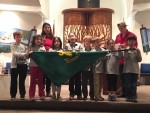
Sholom Cubs leaders Laura Tuan and Isaac Kool with their troops. (photo from Temple Sholom)

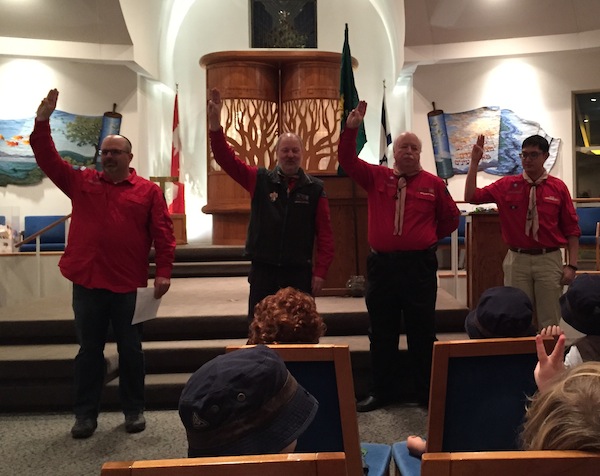
Sholom Scouts celebrated their first milestone when they conducted their first investiture ceremony earlier this month at Temple Sholom.

The ceremony is a central part of Scouts Canada, when new members become invested as scouts. New scouts make the Scout Promise to the Scouts leader and, in response, the Scouts troop leader pledges to help the scout do their best to uphold the promise, setting up a bond between them.

It’s the first time since the 1940s that a Jewish Scouts troop has existed in Western Canada. The rise of Sholom Scouts can be attributed to the vision of Temple Sholom Rabbi Dan Moskovitz.

“I moved here to Vancouver 18 months ago and was blown away by the nature beauty and resources of our surroundings,” he told the Independent. “I wanted to experience them with my children but didn’t want to head out camping or hiking on my own. I was a scout briefly as a child and thought it would be a good organization to explore the outdoors with my children.”

So, approximately a year ago, he went to the Scouts Canada house on Broadway and spoke with one of their representatives about how to start a troop. “I explained my desire and also that I was a rabbi and had access to a building to meet in and a network of other Jewish parents that might want the same experience for their children. He said they had been trying to start a Jewish Scouts group in Vancouver for more than 15 years but didn’t know where to begin, so it was bashert. They started helping right away with open house meetings for parents and kids and we got the word out through social media,” he said.

The boy troop now consists of eight beavers (5- to 7-year-olds) and eight cubs (8- to 10-year-olds) with members from across the Jewish religious spectrum. The children meet biweekly, even though, according to Moskovitz, they will be shifting to a traditional weekly program next year. The children have a bimonthly outdoor event, hiking, camping or another such activity. In May, Sholom Scouts will participate in an area-wide family campout with other Scouts groups from the Lower Mainland.

All Sholom Scouts activities are in line with kashrut observance, with a kosher kitchen on site, and are shomer Shabbat, including services as part of the campground experience.

Before the March 5 investiture ceremony, Moskovitz gave a tour of the synagogue to help another troop, Ryerson, obtain their religion and spirituality badge. There was a falafel dinner, at which the rabbi received an appreciation award from Scouts Canada, followed by Cub Car and Beaver Cubby Racing. The investiture concluded the evening.

In his remarks, Moskovitz explained the symbolism of having the first investiture ceremony in the sanctuary. “Though we have members of our Beavers and Cubs from many different synagogues and parts of the larger Jewish community, the synagogue sanctuary is the sacred place in all of Judaism where the Torah is kept and read, where the community gathers, where the eternal light is kept burning. It’s a place where children celebrate through bar and bat mitzvah their entry into adulthood and, tonight, where we celebrate their preparation for adulthood.”

The ceremony was important for other reasons, as well.

Raphy Tischler, Sholom Scouts Beaver leader, linked it to Jewish holidays such as Sukkot and the Zionist value of “Ahavat Haaretz.” “Living on the West Coast, it is only a natural connection to combine scouting and Judaism. I want the Jewish community to recognize the potential of outdoor programming as part of a well-rounded Jewish experience,” he said.

photo - Left to right: Temple Sholom Rabbi Dan Mozkovitz, Ryerson Cubs leader Lawrence Harris, Pacific Spirit Area commissioner Michael Palmer and Pacific Coast Council commissioner Brandon Jonathan Ma.
Left to right: Temple Sholom Rabbi Dan Mozkovitz, Ryerson Cubs leader Lawrence Harris, Pacific Spirit Area commissioner Michael Palmer and Pacific Coast Council commissioner Brandon Jonathan Ma. (photo from Temple Sholom)

And scouting is a great way to reinforce the values of tikkun olam, according to Isaac Kool, Sholom Scouts Cub leader. “We need to start with our own community, including with the natural world.”

Brandon Ma, Pacific Coast Council commissioner for Scouts Canada, pointed out the parent volunteer aspect. “It is one of the only programs that I know of that parents are involved in the programming with their children at the same time, living, working, growing, having fun….”

Sholom Scouts are currently in need of more volunteers. Becoming a volunteer is a multi-step process that includes a personal interview, provision of three personal references and a police record check. Afterward, there is an online training session and mentoring with a local scout leader, where you learn about programming for youth.

Moskovitz believes it is a great way to bring Jewish parents together with their children. “Ninety percent of your Jewish life is lived outside of the synagogue. Scouts helps raise you in the world as a Jew and in the surroundings. It uses the quote, ‘Don’t separate yourself from the community’ … be a part [of it] but be a Jew,” he said.

“I think it will be amazing for our kids and for the hundreds of non-Jewish scouters and families who will join us and perhaps be exposed to outwardly Jewish kids for the first time,” said Moskovitz. “Our people camped in the desert for 40 years, I think we should be able to handle a weekend.”

Gil Lavie is a freelance correspondent, with articles published in the Jerusalem Post, Shalom Toronto and Tazpit News Agency. He has a master’s of global affairs from the Munk School of Global Affairs at the University of Toronto.


Format ImagePosted on March 20, 2015March 19, 2015Author Gil LavieCategories LocalTags Brandon Ma, Dan Moskovitz, Isaac Kool, Raphy Tischler, Scouts Canada, Sholom Scouts, Temple Sholom

Posts pagination

Previous page Page 1 … Page 573 Page 574 Page 575 … Page 649 Next page
Proudly powered by WordPress