Rolling Stone magazine recently completely retracted a story purporting to delve into an incident of gang-rape on the campus of the University of Virginia. The story was so devoid of basic journalistic processes and fact-checking that it is destined to go down as an object lesson in journalism schools for years to come.
Other incidents, less egregious but still dubious, popped up in the last few days.
Social media was ablaze last week over news that the federal government was preparing to criminalize critics of Israel, specifically by applying Canada’s hate laws against supporters of BDS, the movement to boycott, divest from and sanction Israel.
Advocates of free speech were up in arms – and rightly so. BDS is a movement that seeks the destruction of the state of Israel, in the guise of a one-state solution, and is discriminatory in its targeting of products, people and ideas based on their national origin. It is the contemporary equivalent of book-burning. It is deserving of scorn and contempt. But it is not deserving of legal prohibition in a country that respects free expression.
As it turns out, the very idea that Canada was about to criminalize the BDS movement and its supporters was fabricated almost from full cloth by CBC reporter Neil Macdonald. Macdonald, who has been the subject of years of complaints for anti-Israel bias for his reporting from the Middle East and Washington, had a brief (and somewhat snarky) email exchange with a spokesperson for Canada’s department of public safety.
The exchange began because Public Safety Minister Stephen Blaney, in a speech to the United Nations, promised to take a “zero tolerance” approach to those who boycott Israel. Macdonald demanded clarification of what “zero tolerance” meant.
In the email exchange, the spokesperson cites hate speech legislation, as well as laws around mischief involving religious buildings, and she noted the security infrastructure program that funds communities, such as the Jewish community, to improve security in communal buildings.
The response from the government was probably inadequate and Macdonald should have gotten a comment directly from the minister explaining what he meant by “zero tolerance,” and not used boilerplate from a civil servant (something he himself acknowledged in his exchange). Instead, he went ahead with an inflammatory story that was more conjecture than news, but which had the effect of rousing the reliably tetchy anti-Israel crowds.
This, too, could be an object lesson for future (and current) journalists. As could a story more visible than either of these: the story that Pope Francis declared Palestinian President Mahmoud Abbas an “angel of peace.”
The story of the old terrorist being dubbed an “angel of peace” by the head of Roman Catholicism alarmed those of us who have been impressed with Francis’ approach to world affairs. However, the fault did not lie with the pontiff but with the media.
What Francis said was that Abbas could be an angel of peace – if he made peace with Israel. What the Pope said to Abbas – “May you be an angel of peace” – is a far different thing than what was reported. It was a wish, not a declaration. And it is a wish we could not more heartily share.
Journalism struggles today in the changing landscape of media, tighter budgets, fewer staff doing more tasks – we understand all this. But when some of this country’s and the world’s leading voices of reporting get things so wrong, the institution of journalism suffers even more.
In a world where information (and misinformation) has never been so plentiful, what readers really need are the critical tools to discern fact from fiction and half-truths. In a world of 140-character attention spans, though, do we hope for too much?
I always enjoy seeing my kids bring home assignments from Hebrew school, and last week was no exception. On a map of Israel were labeled five major cities whose names the students had to write in Hebrew. For my part, I delighted in reminding my son that we have relatives or friends in Jerusalem, Tel Aviv and Haifa, and near Be’er Sheva. There was only one problem with the map, I noticed. There was no Green Line. So, to the untrained eye, it looked like Israel’s borders span from the Mediterranean Sea to the Jordan River.
As I often do when I want to tease out a political conundrum, I took to social media. On my public Facebook page, I offered to donate $36 to charity for the first person who can show me a Green-Line-indicated map of Israel currently being used in any Jewish educational setting. Laurie MacDonald Brumberg wrote that a Washington, D.C., Jewish day school has a National Geographic map containing the Green Line hanging in the classroom. Karin Klein of Chicago showed me a Green Line map she said was used at a Schechter day school. And from Gabriel T. Erbs I learned that J Street U has launched an initiative to circulate Green Line maps to educational institutions. Apparently, URJ President Rabbi Rick Jacobs has agreed to champion this among URJ camps and Hebrew schools, according to a March 22 article published on JewSchool by David A.M. Wilensky. Gila Miriam Chait added that Yachad, a pro-Israel, pro-peace group in the United Kingdom, is following suit.
What is at stake in the mapping debate? We all know that Middle East maps are heavily invested with the symbolism of legitimacy and delegitimization. The Palestinians have long been accused of erasing Israel from their school maps of Palestine – both from the Palestinian Authority and from Hamas. An article in the current online Jewish virtual library makes precisely this point. It’s clearly ironic that we are doing the same thing we accuse our adversaries of doing.
Some might argue, however, that since the Green Line is an armistice line, not a border, that there is no need for Israel to include it. It is true that it is not a border, but neither does Israel’s international territory extend eastward from Jerusalem all the way to the Jordan River. The point is, the West Bank is under occupation – whether one sees the occupation as justified or not – and maps should reflect this geopolitical reality.
Now, beyond simply making more accurate and, therefore, educationally useful maps, what might a more politically informed Israel curriculum entail? From my kids, I have heard about the ingenious ways that Israel foiled the Egyptian invasion of 1948, including placing stones in irrigation pipes to create noise simulating artillery. My 8-year-old was impressed. I know that for Yom Ha’atzmaut, their Hebrew school served falafel, and I hoped and expected that my kids will learn some Israeli folk songs. Some folk dancing would be great, too. What I remain less certain about, however, is how much complexity about Israel’s future our kids’ schools are willing to impart. Will kids learn who the “Palestinians” are? I know that I am guilty of frequently muttering to them about “Israel and the Palestinians” without proper context. While narratives of inter-state war can be much simpler to impart, when it comes to the Palestinian civilian aspect of Israel’s founding, and the current military occupation over millions of Palestinians, it’s difficult to know where to begin.
When we learn about the past, it’s equally important to consider the future. In fact, no one knows more about the importance of historical memory in shaping today’s collective political outlook as the Jewish community. As Wilensky writes in the context of the maps, “it’s unpleasant for many to hear, but the final status of a two-state solution – if such a thing can ever be achieved – is going to rely heavily on the Green Line. Putting visual depictions of that reality before the eyes of American Jewry will go a long way toward showing them the somewhat unpleasant truths that will help build a more absolutely pleasant future.”
As for the J Street U’s map initiative, given that Jacobs has pledged to roll them out at Reform schools, I hope he will make Ottawa’s very own Reform Judaism supplementary school an early stop.
Mira Sucharovis an associate professor of political science at Carleton University. She blogs at Haaretz and the Jewish Daily Forward. This article was originally published in the Canadian Jewish News.
Marat Dreyshner in action. (photos from Ella Dreyshner)
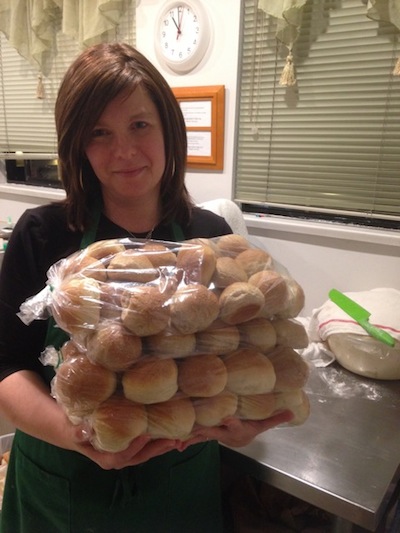
I can tell it’s going to be delicious even before I’ve taken a bite. I’m sitting in the Richmond home of Marat and Ella Dreyshner, owners of iKosherbake. I’m holding a slice of their chocolate chip banana bread. This golden cake is dense and moist; the semi-sweet chocolate is the perfect complement to the fruity sweetness of the bananas.
It all started with bagels. “We love bread in this house,” said Ella. It’s hard to find a good, kosher bagel, but iKosherbake has crafted its own variety. “It all comes down to time,” said Marat. “How long you boil the dough…. It’s a science!”
Over the last year, iKosherbake has gone from making bagels to cakes, to granola and catering birthday parties and personalized cakes.
Ella Dreyshner
It’s not always easy for a husband and wife to share a kitchen, but the Dreyshners have found their groove. Marat’s specialty is their line of savory products, while Ella leads with desserts. While Marat has trained professionally, Ella’s talents have flourished at home.
Marat explained, “She’s gotten to a level that would make a professional chef happy to work with her.”
It’s hard to find a kosher fondant, so Ella makes her own – “I like to paint on the actual fondant.” She has even molded a unicorn by hand. Her other specialties include kosher ice cream sandwiches: chocolate chip cookies filled with pineapple ice cream.
Their granola tells a story of its own. While working with students at Vancouver Talmud Torah, they were challenged to create a dish that included the seven flavors of Israel. The result was a granola bar containing ingredients like honey, olive oil, pomegranate juice and raisins. It was such a hit that they took the recipe home and developed a bagged granola.
The Dreyshners describe the flavor as “the perfect ratio of sweet and salty,” which is borne out when I opened the package at home. Slightly tangy, with a smoky hint of cocoa, the texture is a satisfying blend of chewy fruit and crunchy seeds. And that salty tang really does make the taste buds tingle!
Now that their product line is growing, the Dreyshners are serving the North Shore market, as well. Queensdale Market and City Market on Lonsdale have both snapped up bagels from iKosherbake.
Organic markets are a good fit. iKosherbake uses no additives or preservatives in their cooking and, whenever possible, they purchase ingredients from local, organic growers.
For the Dreyshners, kosher cooking isn’t just about finding ingredients with the right labels. The process of making food is a spiritual experience.
A unicorn custom cake. iKosherbake also makes varieties of bagels, now carried at Queensdale Market and City Market on the North Shore.
“Cooking is an art form that wakens your soul. It’s more than just filling your stomach – it’s digested on a spiritual level, as well,” Marat suggested. He added, “There’s a pleasure in the Torah aspect of the food, but also in the traditional aspect, as well – when you have the opportunity and the good luck to share with friends, family and community, the food becomes something real.”
Ella agreed. For her, kosher baking “symbolizes peace and unity,” by following a strict, methodical process with every recipe. Separating eggs, checking flour, keeping the wet and dry ingredients apart until the right moment: “These steps create a sense of calm and unity, when you finally combine all of these things together.”
For a sneak peek into the Dreyshners’ kitchen, you can watch Marat at work on YouTube with Rabbi Yisrael Shurack in their series of witty videos. In The Rabbi and the Chef, Marat talks about how the food is made, and the rabbi picks up on the symbolic, spiritual significance of dishes. These are lessons in Judaism served at high speed with delicious menus and a side dish of kooky humor.
Shula Klingeris an author, illustrator and journalist living in North Vancouver.
Aleph in the Tri-Cities Society donated more than 150 boxes of organic foodstuffs to the Jewish Food Bank last week. (photo from Aleph in the Tri-Cities Society)
Aleph in the Tri-Cities Society / Israeli Canadian Culture Club donated more than 150 boxes of organic foodstuffs to the Jewish Food Bank last week. The shipment included pasta, raisins, nuts and tea.
Aleph was started in 2009 by Yossi (Joe) Dagan. Wanting to be part of a Jewish/Israeli community, Dagan said that driving to events at the Jewish Community Centre of Greater Vancouver or the Kollel was not easy to do on a regular basis, so he started a Facebook page and sought out compatriots in Coquitlam, where he lives. When he heard people speaking Russian or Hebrew, he would introduce himself.
“We are 306 on the FB page and we have a hard core of about 50-70 families that meet up for gatherings, holiday celebrations, Hebrew learning circle, field trips, bike rides, nature walks, parent meetings, culture shows and sports events,” said Dagan. “Our mission is to connect newcomers, young families and Jews within the Tri-Cities area and beyond.”
In 2013, with the help of Miri Tal, Aleph collaborated with the Jewish Federation of Greater Vancouver and Jewish Family Service Agency until February 2015, when Aleph started their own nonprofit society. In the Facebook post on the recent food bank donation, which can be found by searching “Israeli Canadian Culture Club,” Dagan thanked Dovrat Vitis and Gabrielle Dumont, and noted that the two shipments were worth more than $20,000 in retail value.
“As our group grows and needs expand,” said Dagan, “we are looking for donations going forward to help our group to keep on creating free or very low cost activities for our children. For example, we need immediate support to run our awesome outreach collaboration with the JCC summer camp, Camp Shalom. We are looking to support transportation costs that are needed to rent and operate a bus taking our children from Burnaby, Coquitlam, Port Moody, Port Coquitlam and Langley to the JCC and back every day for seven weeks of summer vacation 2015.” The program is supported by the JCC, JFSA and Federation, but the bus fees are not covered.
The eight visiting Israel Defence Forces veterans at Stanley Park. (photo by David Schwartz)
Eight Israel Defence Forces war veterans, all of them part of the rehabilitation program at Beit Halochem, visited Vancouver earlier this month for eight days. They were guests of Temple Sholom and each of them was hosted by a family here.
Temple Sholom president David Schwartz was one of those hosts. “It’s the fifth visit we’ve had, ever since we joined the Beit Halochem program 10 years ago, and each visit brings us, as a community, to new heights of emotional inspiration,” he said. “Our congregation’s response to this program was amazing and we had some members on the waiting list for the next time. Unfortunately, our group included only eight veterans – if we had more, there would have been no problem to find them a suitable accommodation. It is such a great privilege to host these brave people who sacrificed … for the state of Israel. Each one of them has an amazing story of personal heroism; it is just feels so honorable to have them among us even for a short while.”
Infantry Col. Eitan Matmon, who was injured three times during his military career, the last time on Lebanese soil during the 2006 war, was the highest rank officer among the visitors. It was Matmon’s second visit to Canada, but the first to the West Coast, and the warm weather matched the community’s hospitality. “From the first moment we landed in Vancouver,” he said, “our hosts took care of us and greeted us with the biggest hearts and smiles we could wish for.
“Our guys are struggling every single day to recover, both physically and mentally, from the horrible effects of war,” he continued. “For them to come here and enjoy this amazing scenery, to meet the local Jewish community and to relax and enjoy such a visit is just priceless. We are so thankful to our hosts from Temple Sholom, King David High School, Rabbi [Philip] Bregman from Hillel and everybody else who contributed to this successful visit. We can’t wait to show our friends and family at home what kind of warm support we have found here, on the other side of the planet.”
The group landed in Vancouver on Tuesday, May 5, and visited King David on Thursday, Hillel at the University of British Columbia on Friday, then joined Temple Sholom for Shabbat dinner. They toured Stanley Park and Granville Island, went shopping at Pacific Centre, attended a Vancouver Whitecaps game and traveled to Whistler and Bowen Island before leaving on May 14 for Calgary for five days. Separately, Matmon was among a group of about 50 people who joined a Jewish Museum and Archives of British Columbia tour of historical Jewish sites in Strathcona and Gastown on Sunday, which was when he had a chance to talk with the Jewish Independent.
The first connection between Beit Halochem and Temple Sholom was made by Bregman 10 years ago. Since then, five delegations have visited Vancouver, and Bregman is still excited by the special event. “For us, as North American educators,” he said, “this connection provides such a great opportunity to show our young generation something they have never seen before: personal sacrifice. Our country doesn’t ask for anything from local high school grads, right? You went to school, you graduated, you say thank you and move on with your life. In Israel, they say, ‘No, now you’re going to give us back three years of your life.’ And the young people of Israel keep on doing their mandatory service in such a devotion that can only be admired by our local youth. I’m so glad and proud that this connection has turned into a tradition. The IDF veterans’ visit at the Hillel centre has left our students with a powerful and inspiring message of hope and courage that can only come from one place in the world: Israel.”
For more details on Beit Halochem in Canada, visit beithalochem.ca.
Shahar Ben Haleviis a writer and filmmaker living in Vancouver.
On April 26, Congregation Har El put the patriarch Abraham on trial for attempted murder, assault and unlawful confinement. (photo from Har El)
Har El Synagogue on the North Shore was turned into a court of law on Sunday, April 26, when the community staged a mock trial of Abraham. More than 80 members of the community formed the jury, determining three charges laid against the patriarch: attempted murder, assault and unlawful confinement, all as defined under the Canadian Criminal Code. The charges related to the binding of Abraham’s son, Isaac, as recounted in the Book of Genesis.
Justice delayed is justice denied, it is said, but, even so, an elapse of some 4,000 years between the commissioning of the alleged offences and a trial is unprecedented.
Madam Justice Mary Ellen Boyd (retired B.C. Supreme Court judge) presided. Prosecuting and defence attorneys were Alastair Wade and Warren Millman, respectively, taking on the case pro bono in an interlude from their busy professional lives as Vancouver lawyers. Rabbi Shmuel Birnham provided the biblical background materials, recounting the text of Genesis 22, which formed the Agreed Statement of Facts for the legal proceedings. Birnham also assisted the jury in their deliberations, referencing a number of midrashic commentaries on the events under dispute. Psychiatrist Dr. Fred Shane proved a star turn as expert witness, opining as to the state of mind of Abraham at the time of the incident. Despite the pressures of having to support two wives and an admission of having heard the voice of God, Shane was confident of Abraham’s soundness of mind and that he was fit to stand trial.
The judge gave instructions to the jury, who then asked questions and advocated for and against the defendant.
It was agreed that the entire audience would comprise the jury, whose decision would be by majority vote. After more than two hours of hearing the evidence, arguments and jury deliberations, the jury foreman, Morley Lertzman, returned the verdict as follows: not guilty of attempted murder and assault, but guilty of unlawful confinement. The judge reserved judgment as to the sentence to be imposed.
The morning proved to be an enlightening and entertaining mix of Torah study combined with a refresher on the Canadian criminal justice system.
This event was part of a monthly Sunday morning series called LoxTalks, now in its third year. Programs are varied and, in the past, included presentations like Growing Up Jewish, where congregants shared personal tales of life in Germany, Romania, Hungary, Ireland, Israel and Morocco. This program was followed by Jewish by Choice, at which congregants discussed their experiences with conversion and their lives as Jews. A discussion period with questions from the audience is an essential part of each program.
The final program before the summer break is on May 31 and will feature a talk by Daniel Friedmann, an astrophysicist and author who will discuss a reconciliation of Genesis and current scientific observations. All are welcome from the Jewish and non-Jewish communities, however, please do call the synagogue office ahead of time at 604-925-6488 so the caterers know how many bagels to prepare.
In a separate program, the synagogue will host Dianne Watts, former mayor of Surrey, to share her firsthand knowledge of Israel and its importance in today’s word of business and technology, on June 7, at noon. Tickets to this talk are $18 and an RSVP is required to [email protected] or 604-925-6488, ext. 4.
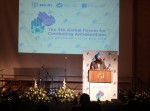
Tim Uppal, minister of state for multiculturalism, at the Global Forum for Combating Antisemitism. (photo from cic.gc.ca)
Canada’s position as a world leader in the global fight against antisemitism was reinforced last week at an international forum that saw experts and dignitaries tackling the issue of hatred towards the Jewish people.
The Hon. Tim Uppal, minister of state for multiculturalism, helped open the fifth Global Forum for Combating Antisemitism and reaffirmed Canada’s commitment to combating hatred and antisemitism in all its forms, including attempts to delegitimize Israel.
“Our government’s commitment to fighting the rise of antisemitism in all its forms is rooted in increased education and interaction between different communities to counter the ignorance and bigotry that spreads this pernicious hatred,” Uppal said in a statement. “We will continue to work to ensure that the horrid atrocities that occurred in the past never happen again.”
While in Jerusalem, Uppal met with businesses and experts to discuss the negative impact the boycott, divestment and sanctions movement would have on all sides in the region.
The forum is the premier biennial gathering for assessing the state of antisemitism globally and formulating effective forms of societal and governmental response. This year, it focused on two main subjects: confronting antisemitism and hate speech on social media, and the rise of antisemitism in Europe’s cities today.
Canada is a member of the International Holocaust Remembrance Alliance (IHRA) (holocaustremembrance.com), an intergovernmental body made up of experts from 31 countries that supports Holocaust education, remembrance and research around the world.
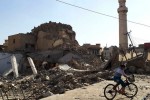
In July 2014, ISIS destroyed the Tomb of Jonah, the biblical prophet revered in Judaism and Islam, which was in the Iraqi city of Mosul. (photo from news-centre.uwinnipeg.ca)
The Islamic State of Iraq and Syria (ISIS) is disconnecting the present population from its past, and they will stop at nothing to achieve this goal, including murdering civilians and destroying cultural, religious and historical sites that interfere with their beliefs.
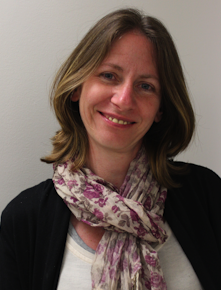
These were the sentiments shared by Winnipeg-based archeologist Dr. Tina Greenfield, who has worked in the Near East and conducted fieldwork in Turkey and northern Iraq under the threat of ISIS. Her University of Manitoba biography says that she is co-director of the Near Eastern and Biblical Archeology Laboratory (NEBAL) in Winnipeg, and is actively analyzing animal bone collections from Tel es-Safi and Tel Burna in Israel, Ziyaret Tepe and Gol Tepe in Turkey, and several sites in Iraq. Her lecture at the University of Winnipeg – ISIS and the Destruction of Archeological Sites in Iraq – was held on April 23.
Dr. Tina Greenfield is working to document archeological sites. (photo from umanitoba.ca)
She prefaced her talk by noting that keeping the population safe is, by far, more important than the artifacts on which she has worked. She then outlined the level of destruction that has occurred to some of the world’s oldest cities, and how she narrowly missed the expansion of ISIS in Iraq last year.
“I’m going to try to add some dimensions into this, so you understand how important this region is and why we should care,” said Greenfield. “So, while I will be discussing the Islamic State and a bit of their history and mantra, I twist into it my own experiences working in this region for the last two years, specifically.
“Yes, there are archeological sites being damaged, but it needs to be put into perspective. There are lives being lost in this region on a monumental scale. While I’m an archeologist, I’m trying to give another perspective. The priority is keeping the people safe in this region.”
The area in question is bordered by Turkey in the north, Iran in the east, and Saudi Arabia in the south. Also in the region, once known as Mesopotamia, are Lebanon, Syria, Jordan, Iraq, Israel and parts of Egypt. In the past, said Greenfield, “Mesopotamia refer[red] to the region between the Tigris and the Euphrates rivers. It’s also referred to as ‘the fertile crescent,’ because animals and plants were domesticated in this region. It’s also known as ‘the cradle of civilization.’”
The world’s earliest cities were built in this area, and major empires emerged from here, as well. Additionally, of historical and biblical interest, the first writings of the story of a great flood also originate there, as do the foundations of mathematics, astronomy, literature and poetry.
“Of all the empires, archeological sites from this region, each one has been damaged from Islamic State,” said Greenfield. “I’m giving you a brief introduction, so you can understand when I show you the sites, what is being damaged.”
The Assyrian Empire stretched from 2000 to 611 BCE, she explained, with its height about 3,000 years ago. “This is arguably the earliest empire of the ancient Near East, and Ashur is the capital of this region,” said Greenfield.
“There were some 19th-century gentleman explorers who came from Europe to try and find evidence of the Bible; they ended up in northern Mesopotamia and they dug these magnificent sites. It was a bit of a competition, because one was from Britain and one was from France.
“They each brought these riches back and displayed them in the British Museum and the Louvre. Suffice it to say, there was an awakening [about this historical time period] and the Mesopotamians and Assyrians were ‘rediscovered.’” It is these places that have sustained the most damage by ISIS out of all the Assyrian sites during the last four years, she said.
The motives and tactics of ISIS are many, she suggested. “We’re talking about terrorism, kidnapping, horrific murders, spreading terror throughout the region,” said Greenfield. “It developed from Al Qaida in Iraq. ISIS took precepts of the organization and beliefs, and developed them even further. It views itself as the restorer of early Islamic learnings. It also believes that it will cleanse the region of anything idolatrous or offensive…. There are eight million Iraqis and Syrians living under the control of ISIS right now. They seek to purify and stamp out anything offensive, idolatrous, any religious manifestations that don’t fit into their general ideas.”
In early 2015, museums and archeological sites became targets of the ISIS advance. “They weren’t picky,” said Greenfield. They targeted “everything from mosques, to churches, tombs, literary hero statues and manuscripts. They don’t want to have any part of that in this new caliphate state.
“They’ve publicized over 50 percent of their destructions in print and on social media. This is highly choreographed, highly targeted. There is no surprise that they have specialists in media. They want to break the link of what they consider heretical association with ancient Mesopotamia, destroying cultural heritage from all ethnic beliefs.”
This conquering tactic “isn’t new,” however. “We can look at Egyptian temples with statues, with faces smashed out, conquerors coming in and declaring things are idolatrous and smashing them. But, this is on a level we’ve never seen before. It’s calculated, choreographed and very well managed.
She continued, “There is looting … they are taking artifacts from these sites and selling them. There’s a massive network from South America to Asia to Europe. They’re selling to finance their organization.”
It’s important to bear witness to the destruction, she added. “Several of my Iraqi colleagues are trying to document, taking their lives in their own hands, essentially, to see what actual damage has been done to these sites. They’re also, in association with international organizations, trying to desperately document sites that haven’t been damaged yet, because we never thought these sites would be damaged and look what’s happened.”
Greenfield recounted that she had received an email on the day of her lecture from someone asking her what they can do, saying this must be stopped and asking by what means it is possible. So, what can be done about the damage being done to the region’s – and the globe’s – historical sites?
It’s an “excellent question,” replied Greenfield. “What do you do? How do we counteract the social media frenzy right now? Do we share them with people? How do we not play into their hands? But, how do you keep people aware of what’s going on?
“ISIS wants the link severed. They want the people gone and the history gone. How do we fight all of that at the same time? In my very humble position, the only thing I seem to be able to do is to continue to go out there – like this September and October again – and document this stuff.”
Since 2010, ISIS has been recruiting within the local population by paying more than government positions. “So, if you’re sitting there as a youth who is completely unhappy with the situation that’s occurred already and you’re offered a lot of money, it’s a no-brainer,” said Greenfield. “They are portraying themselves, in a sense, like Robin Hood, stealing and giving out food, giving out houses. They’re saying they’re protecting their own. Absolutely … there’s this ideology that they’re taking care of their people.”
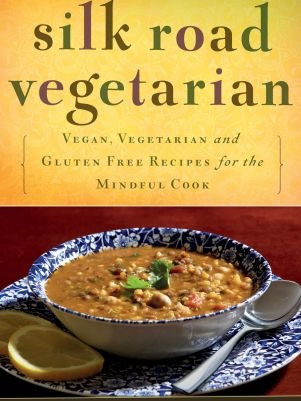
Silk Road Vegetarian: Vegan, Vegetarian and Gluten Free Recipes from the Mindful Cook by Dahlia Abraham-Klein (Tuttle Publishing Co., 2014) contains 121 recipes in eight chapters, several of which would be ideal for Shavuot.
Although Abraham-Klein grew up in New York, her parents trace their ancestry to the Babylonian Exile (now Iraq) and Persian conquest (now Iran) of sixth century BCE. Her ancestors traversed Persia, Afghanistan and Bukhara (capital of Uzbekistan), speaking Farsi and Judeo-Persian. In the early part of the 19th century, they settled in Afghanistan, in the middle of the Silk Road, which was an extensive, interconnected network of trade routes across the Asian continent.
The author’s great-grandfather owned a vineyard in Uzbekistan; her grandmother moved to the United States in the 1950s and grew her own grapes to make wine. The author’s mother and siblings grew up in Kabul, then moved with the family to Israel in 1949. The author’s father, who had grown up in Kabul, lived in India and visited Israel, where he met and married her mother in 1952; they lived in India until 1956.
Abraham-Klein’s family were merchants, absorbing the culture, languages, tastes and cuisines of all the places in which they lived. However, she grew up in New York and, as a teen, became unable to eat wheat, dairy and sugar. She has a master’s degree in education and a degree in naturopathy.
Silk Road Vegetarian contains recipes for bases, condiments and dips such as hummus, tomato paste, za’atar and mango chutney; appetizers including vegan chopped liver, stuffed grape leaves and Italian zucchini fritters; soups like Persian bean and noodle, and pumpkin. Among the salads are minted beet, and Middle Eastern lemon potato. Afghan squash goulash and Bengali potato and zucchini curry are among the main dishes; Bukharan green-herbed and Greek-inspired spanakorizo are among the rice dishes, and sides include sesame noodles and shawarma-spiced potato wedges. The desserts chapter has, for instance, orange blossom date balls and orange zest almond cookies.
The book is enhanced by 174 color photographs. Among these are ones that show how to prepare slivered orange peel, fold stuffed cabbage and remove coconut meat. Because Abraham-Klein has no formal culinary education, she has produced a cookbook that is easy to follow, with interesting cultural and historical notes about each recipe, bold-faced ingredients and numbered instructions. There is also an essay on the spice pantry; others on tofu and legumes; an article on grains; and a feature on food preservation.
COCONUT MILK Can be used as a substitute base for curries, in lieu of cream, and for dairy in desserts.
2 cups water 2 cups grated fresh or frozen coconut
Bring the water to a boil in a large saucepan. Stir in the coconut and then remove from the heat. Cover and let cool.
Purée with an immersion blender. Line a sieve with cheesecloth and set it over a bowl. Pour the purée into the sieve and squeeze the cloth to extract the liquid. Remove the cheesecloth and use the coconut milk right away or store it in the refrigerator for up to two days (shake before using). Makes two cups.
PERSIAN SPINACH AND YOGURT DIP
1 tbsp olive oil 1 large thinly sliced onion 1 minced clove garlic small pinch saffron 1 tbsp hot water 3 cups stemmed, washed and chopped fresh spinach 2 cups thick plain yogurt salt and pepper to taste
Heat the oil in a large skillet and sauté onions for 15 minutes or until they are soft and beginning to color. Stir in garlic and sauté for one minute or until fragrant.
Steep the saffron in a small bowl with hot water. Let sit until water is tinted.
Add spinach to the skillet and sauté for five minutes or until wilted. Add saffron water and stir to combine. Cool completely. Fold in yogurt, season with salt and pepper. Refrigerate for several hours to allow the flavors to meld. Makes six to eight servings.
BAKED LEMON RICE PUDDING
1/2 cup short-grain rice 2 1/2 cups unsweetened coconut milk 2 tbsp packed brown sugar 1/2 tsp pure vanilla extract grated zest of 1 small lemon 1 tbsp chopped vegan butter fresh strawberries or any seasonal berries
Wash and soak the rice according to instructions. Combine rice and coconut milk in an ovenproof casserole dish and set aside for 30 minutes.
Preheat the oven to 150˚F. Add sugar, vanilla, lemon zest and butter to rice mixture and whisk gently to combine. Bake uncovered for 2 to 2.5 hours or until top of pudding is lightly browned.
Allow pudding to cool, then gentle peel off skin at the surface and discard. Chill in refrigerator for about an hour or until pudding thickens. Garnish with strawberries or seasonal berries and serve. Makes four servings.
Sybil Kaplanis a journalist, foreign correspondent, lecturer, food writer and book reviewer who lives in Jerusalem. She also does the restaurant features for janglo.net and leads weekly shuk walks in English in Jerusalem’s market.