

For more cartoons, visit thedailysnooze.com.
Author: Jacob Samuel

Land connections
Dried fruit and almonds are traditionally eaten on Tu b’Shevat. (photo from Gilabrand (talk) via commons.wikimedia.org)
Until Jews began to return to Eretz Israel in 1948, no one thought of them as farmers. For nearly 2,000 years, we had been dispersed throughout the world and, in many places, were not permitted to own land or engage in agriculture. But, in ancient Palestine, we were an agricultural people. We treasured the olive tree, the grape vine and the date palm. The Bible encouraged us to plant “all manner of trees” and forbade the destruction of trees of a conquered land.
Just as we believe that on the first day of the seventh month, Rosh Hashanah, we are judged and our fate for the coming year is inscribed in the Book of Life, so we are taught to believe that trees are similarly judged on the New Year of the Trees, Tu b’Shevat (the 15th day of Shevat, this year Jan. 25), the first day of spring.
This semi-holiday has always been associated with tree planting. In ancient times, one planted a tree at the birth of a child – cedar for a boy, cypress for a girl. Special care was given to these trees on Tu b’Shevat and, when the children married, branches of their own trees were cut for the chuppah (wedding canopy).
It is said that, on the 15th day of Shevat, the sap begins to rise in the fruit trees in Israel. So, we partake of the fruits of the land: apples, almonds, carobs, figs, nuts, dates and pomegranates. The pious stay up very late on the eve of the holiday reciting passages from the Torah that deal with trees and the fertility of the earth. We read the story of how trees and plants were created (Genesis 1:11-18), the divine promise of abundance as a reward for keeping the commandments (Leviticus 26:3-18 and Deuteronomy 8:1-10) and the parable of the spreading vine, which symbolizes the people of Israel (Ezekiel 17).
Sephardi Jews have their own special manual, The Fruit of the Goodly Tree. It was first published in the Judeo-Spanish language, Ladino, in Salonica, composed by Judah Kala’i. Each verse is recited as the relevant fruits are eaten, and some of the verses translate as follows:
- “G-d increase our worldly goods / and guard us soon and late / and multiply our bliss like seeds / of the pomegranate.”
- “For our Redeemer do we wait / all the long night through / to bring a dawn as roseate / as the apple’s hue.”
- “Sin, like a stubborn shell and hard / is wrapped around our ssoul / Lord, break the husk and let the nut / come out whole.”
Each of the fruits has symbolic meaning. The rosy apple stands for G-d’s glowing splendor; the nut represents the three kinds of Jews – hard, medium and soft. The almond stands for swift divine retribution, for it blossoms more quickly than other trees. The fig means peace and prosperity, and the humble carob stands for humility, a necessary element of penitence.
Judaism’s strong ties to agriculture and ecology are captured by Rabbi Yohanan ben Zakai, who once declared: “If you hold a sapling in your hand and hear that the Messiah has arrived, plant the sapling first and only then go and greet the Messiah.”
Dvora Waysman is a Jerusalem-based author. She can be contacted at [email protected] or through her blog dvorawaysman.com.
An evolving experience
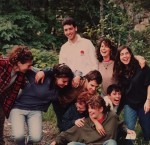
Madrichim at Camp Miriam palling around in summer 1990. The author is in front. (photo from Mira Sucharov)
On a little corner of Gabriola Island lies an enclave of old-style Jewish utopianism. Modeled after a kibbutz, campers (chanichim) and counselors (madrichim) talk about heady topics like radical justice, equal worth, unionization, socialism and Labor Zionism.
They learn Hebrew, engage in physical labor and debate topics like whether O Canada adequately addresses the reality of First Nations, the fate of the Palestinians, and how to make a radically inclusive society within Israel. It’s Camp Miriam, part of the network of Habonim-Dror camps across North America. Among the founders of the camp was my grandmother, Marian Margolis, and I spent one memorable summer there as a counselor in 1990.
A lot has changed in Israel – and especially across the kibbutz movement – over the decades. I spoke to the current rosh (director), 22-year-old Leor Laniado, a student at the University of British Columbia majoring in environmental and sustainable geography.
The camp instils in its campers the value of “shivyon erech ha’adam,” a principle that every human being is of equal worth. It’s heady stuff for 10-year-olds who don’t measure themselves in terms of professional status anyway, but the idea is there. Alongside the usual fare of swimming, sports and crafts, campers choose a daily work branch where each task is valued. Fittingly, bathroom-cleaning detail has become one of the most popular options, Laniado tells me.
Campers also have a long tradition of running a kupah (common fund). An initial donation of pocket money is placed into a pot where campers decide how to spend it. Maybe the kids want to pool the funds for a party, maybe a portion will be donated to charity, maybe one camper needs a new toothbrush and applies to the treasurer – who is, of course, a fellow camper.
Rachel Fishman logged eight years as a camper before joining the staff. She values how much she sees Camp Miriam embodying the ideals of youth empowerment. Within limits, she points out, “youth are given space to make their own society.”
Trilby Smith spent 13 summers at Camp Miriam and is currently vice-chair of the camp committee. She sends both her kids to Miriam so “they can develop a sense of community defined by their peers, so that they can be in an environment that is open to questioning and thinking critically about Israel and what it means to be Jewish, and so that they can learn to be leaders.” And, she added, “So that they can have fun!”
Socialism isn’t the only tricky concept permeating the walls of the dining hall. (Yes, campers even do the dishes.) So, too, is Zionism. “I think that Jews in the Diaspora are facing a crisis of how to support Israel. A lot of madrichim struggle with this internally, especially studying in liberal universities,” Laniado said. It’s about “simultaneous love and criticism” at Miriam. “Recognizing that we’ve created a vibrant Israeli society, there’s a lot of work that remains to be done,” she said.
In Israel, Habonim-Dror partners with Hanoar Haoved on projects such as teaching English in Arab high schools. Called the Shared Existence project, it seeks “a joint liberation of both Israelis and Palestinians, striving towards a diverse and vibrant Israeli commonwealth,” in Laniado’s words.
Struggling with Israeli-Palestinian relations and with Zionism is a common refrain these days, but what Camp Miriam – and Habonim in general – manages to do is offer a way for youth to grapple with these issues head-on rather than abdicate altogether. Abdication – or what sociologists have been calling a “distancing” from Israel and Jewish life – is one of the biggest challenges.
These days, the radical secularism that I recall from the summer of 1990 has been replaced by an inching towards Judaism. While they still forego the Hamotzi in favor of a Labor Zionist chant, campers are now more likely to hear about Jewish values, embrace Jewish texts or be treated to a discussion by the rosh on the weekly Torah portion.
While the simple porridge my Baba Marian made for the campers in the 1950s when she was the first “camp mother” has been supplemented by scrambled eggs, fruit salad, yogurt and granola, along with gluten-free and dairy-free options, Zionism is wrestled with rather than taken for granted as a simple solution to the ills of antisemitism, and a commitment to Hebrew is now paired with a desire to “engage with Arabic language and culture.” The big values – leadership, debate, a commitment to Israel, Jewish identity, justice, labor and inclusiveness – remain.
For more information on Camp Miriam, visit campmiriam.org.
Mira Sucharov is an associate professor of political science at Carleton University. She is a columnist for Canadian Jewish News and contributes to Haaretz and the Jewish Daily Forward, among other publications.
In the Okanagan
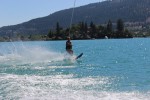
A typical day at camp is split between the waterfront, where campers learn to swim, ski, sail, canoe and kayak, and land, where campers participate in sports, drama, crafts and Jewish programming. (photo from Camp Hatikvah’s Facebook page)
Established in 1937, Camp Hatikvah in the Okanagan offers campers a summer experience that provides balanced emphasis on skill development and relationship building. Campers are immersed in a group setting where they must learn to live, cooperate with and embrace one another. In doing so, they learn a great deal about themselves and what it means to be a member of a community.
During any given summer, close to 400 campers attend Camp Hatikvah. While the bulk of participants are from the Greater Vancouver area, close to 30% come from cities such as Calgary, Los Angeles, San Diego, Seattle, New York, Edmonton, Tel Aviv and Mexico City.
At Hatikvah, campers learn of their shared culture and values, and of their homeland in Israel. During a summer at Hatikvah, campers have an opportunity to participate in Jewish cultural experiences, such as Shabbat, Israeli dancing and Hebrew singing, as well as educational programs about the history and importance of the state of Israel. A typical day at camp is split between the waterfront, where campers learn to swim, ski, sail, canoe and kayak, and land, where campers participate in sports, drama, crafts and Jewish programming.
The camp staff are comprised of approximately 70 Jewish youth from across Canada, the United States and Israel. Most were campers with Hatikvah or its Young Judaea sister camps across Canada. Indeed, when current director and head of staff Liza Rozen-Delman was hired in 2007, she was completing a circle that began years before, when she was at Hatikvah for eight summers, and went from being a first-year staff at 17 to an assistant director at 24.
For more information about Camp Hatikvah, visit the camp’s website, camphatikvah.com, or contact Rozen-Delman at [email protected] or 604-263-1200.
Outside of British Columbia
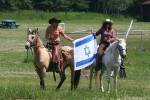
Jewish summer camp combines land and water activities with learning about Israel and Judaism. (photo from Camp BB Riback)
When summer comes to the Pacific Northwest, it’s the best time to head into the great outdoors and, of course, for kids, into the summer camp experience. For Jewish kids in British Columbia, there are not only great local camps – Camp Hatikvah and Camp Miriam – but a few out-of-province options worth considering.
When Camp Solomon Schechter (CSS) was established in 1954, on the shores of Whidbey Island, there was a vision born out of the camp’s now-common catch phrase, “Where Judaism and joy are one.” Sixty-one years later, now located on private, protected lakefront property on the outskirts of Olympia, Wash., the camp is looking to the future again, with the combination of Judaism and joy still central.
A Conservative movement-based summer camp, CSS launched a capital campaign in 2014 called From 60 to 120, with a focus on supporting the next 60 years of growth. In an informational social gathering hosted in Vancouver by the camp on Jan. 10, director Sam Perlin shared plans for the campaign and the new facilities that would be born from it.
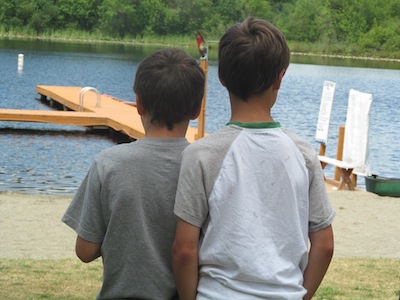
Already halfway to reaching their $12 million goal, Perlin said that if they reach $8 million on time, construction would begin as soon as the summer. New dining and covered sports facilities with programming space are in the works, along with health and welcome centres, all built while preserving and enhancing the camp’s unique wetlands.
The new developments will be a welcome addition to the approximately 120 Canadian campers CSS gets in any given summer, a number Perlin says he hopes will continue to grow. “We have full Canadian buses coming from Canada,” he explained. “We even moved Aleph (First) session to accommodate the Canadian school schedule.”
With several matching grants approved, Perlin noted that Canadians can participate in the matching program to maximize their contributions. He also pointed out that a Canadian donation will be matched with the same number in U.S. dollars, regardless of the exchange rate.
For more information on CSS programming or the campaign, visit campschechter.org or from60to120.org.
* * *
Across the Rockies and into Alberta, Camp BB Riback (a B’nai B’rith camp) is celebrating its 60th anniversary on Pine Lake.
Camp director Jerrod Henoch said they’ve been building up their waterfront program to include learn-to-ski and wakeboard sessions. “Our professional-level ski boat and boom, combined with the expert attention of our waterfront staff, sees even many of our youngest campers get up on water skis for their first time at camp,” he explained.
Of course, with the Alberta-based location, Camp BB also features a horseback riding instruction program.
Camp BB will also be building new camper cabins this spring as part one of their facility enhancement plans.
Although the majority of Camp BB’s participants are from Edmonton, Calgary and Saskatoon, Henoch said they do get several B.C. families every summer as well.
“Camp BB is famous for its inclusive and open camp community and we are especially good at helping new campers from out of province or across the world feel included,” he said. “With one of the largest arrays of activity areas in Western Canada, we have something that every camper will excel at and something that will challenge each camper.”
Henoch said there are several staff and even senior management studying or living in British Columbia with whom a consultation for any interested local families could be set up.
More information on the camp can be found at campbb.com.
* * *
One of the newer Jewish camps in the region is Camp Kalsman. Affiliated with the Reform movement, the facilities are located off the Interstate 5, between Mt. Vernon and Everett in Washington.
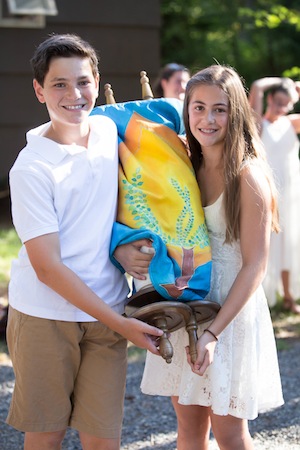
Entering their 10th summer, director David Berkman said this summer will be one big birthday celebration, highlighted by a community-wide party on July 31.
In its first decade, Berkman said the camp’s sense of community has stood out more than anything else.
“The two things that most distinguish Kalsman from other Jewish summer camps are our staff and the community we form with all our participants,” he said. “The Kalsman staff are extraordinary and their dedication to the campers and the camp is amazing. We all work hard to create a sense of family and home away from home. More often than not, campers refer to camp as their home.”
In addition to a heated pool, Camp Kalsman also features a 50-foot tower, a giant swing, a speaking garden and even a petting zoo. With sessions ranging in length from three days to three weeks, the camp serves participants from Grade 2 all the way through high school.
Berkman said Camp Kalsman usually sees three to four dozen campers from north of the border, but he is looking forward to seeing that number grow.
For more information on Camp Kalsman, visit campkalsman.org.
Kyle Berger is Jewish Community Centre of Greater Vancouver sports coordinator, and a freelance writer living in Richmond.

הדולר הקנדי
הדולר הקנדי נחלש משמעותית מול השקל הישראלי. (צילום: Cynthia Ramsay)
הדולר הקנדי כידוע מאבד גובה מול הדולר האמריקני אך גם מול מטבעות חזקים אחרים בעולם, בהם הלירה שטרלינג הבריטית והיורו האירופאי. עתה מתברר שהדולר הקנדי נחלש משמעותית גם מול השקל הישראלי, שנחשב כיום לאחד המטבעות החזקים בעולם. בסוף השבוע האחרון הדולר הקנדי היה שווה ל-2.736 שקל ישראלי. הנה מספר נקודות ציון משמעותיות המצביעות על השינוי בשווי בין שני המטבעות ומראות כיצד הדולר הקנדי נחלש מאז מול השקל. בראשון לינואר השנה הדולר הקנדי היה ברמות של 2.80 מול השקל, בחודש נובמבר אשתקד הדולר הקנדי היה שווה 2.95 שקלים, בינואר אשתקד הדולר הקנדי היה שווה 3.3 שקלים, בדצמבר 2014 הדולר הקנדי היה שווה 3.5 שקלים, בינואר 2013 הדולר הקנדי היה שווה 3.8 שקלים, ואילו בחודש אוגוסט 2012 הדולר קנדי היה שווה למעלה מארבעה שקלים.
הבי ג‘יז נעלמו מהשדה: משטרת אוטווה בודקת מי גנב כוורות עם שלושים אלף דבורים
למתנת החג הזה הזוג ג’י לא ציפה. מריאן ומאט גי’ נדהמו כי בעיצומם של חגי סוף השנה שתי כוורות שלהם נעלמו, ובתוכן למעלה משלושים אלף דבורים. הכוורות הוצבו בשדה חקלאי באוטווה, ומה שנשאר מהן זה שני לוחות עץ מכוסים בשלג וסביבם עקבות בבוץ העמוק של מי שגנב אותן.
הזוג ג’י מפעילים יחדיו את חברת ג’יז ביז לגידול דבורים נותנות דבש ומחזיקים ביותר מעשרים ובארבע כוורות באזור בירת קנדה. הם הקימו את החברה כיוון שמספר הדבורים בקנדה נמצא בירידה מתמדת בשנים האחרונות וזה מדאיג. שתי הסיבות העיקריות לכך: שינוי האקלים והתחממות כדור הארץ, ולאור הגידול בשימוש בחומרי הדברה מצד החלקאים. לדברי מריאן ומאט הדבורים שנגנבו לא יחזיקו בקור הקנדי הקשה ולכן אסור להזיזן בחורף ויש להשאיר את הכוורת במקומן.
הזוג פנה לעזרת משטרת אוטווה והשוטרים מציינים כי מעולם לא הוגשה להם תלונה על גניבת כוורות עם דבורים.
הסינים הבאים ומשתלטים גם על השפה: ישיבות ועד בית בריצ‘מונד מתנהלות במנדרינית
הסינים כך מתברר משתלטים בכל תחום ותחום על אזור מטרו ונקובר לאור מספרם ההולך וגדל. בעיר ריצ’מונד הסמוכה כבר למעלה ממחצית מהתושבים הם ממוצא סינים. הקנדיים המקומיים מרגישים שהסינים משתלטים להם גם על השפה, כיוון שבחנויות רבות בעיר מוצבים שלטים בשפה הסינית בלבד, למרות שבקנדה שתי השפות הרשמיות הן אנגלית וצרפתית. המחוקק מתברר לא פועל ממש לשנות את המצב ולחייב את בעלי העסקים להציב שלטים גם באנגלית. יש לזכור שסינים רבים שגרים בערים אחרות באזור מגיעים לריצ’מונד לקניות ולמסעדות הסיניות הטובות שיש בה.
אנדריאס קרגוט שגר בריצ’מונד נדהם שהשפה הסינית הרשמית מנדרינית הפכה להיות השפה של ישיבות ועד הבית שבו הוא גר. קרגוט ודייר נוסף ביקשו להצטרף לאסיפה האחרונה של הוועד שדנה בתקציב השנתי. יו”ר הוועד אישר להם להגיע אך ציין במכתבו, “שהישיבה תנוהל במנדרינית שהיא השפה העדיפה מבחינת חברי הוועד”.
קרגוט כועס מאוד על הוועד ומציין כי לא מדובר באיזה סוג של מועדון חברתי אלא בישות משפטית לכל דבר, שדיוניה צריכים להתנהל באחת השפות הרשמיות של קנדה. הוא הקליט את הישיבה ובצר לו הגיש תלונה נגד הוועד למועצה לזכויות האזרח, על אפלייה וגזענות.
יו”ר הוועד, אד מאו, אישר שישיבות הוועד אכן מתנהלות במנדרינית והוסיף כי כל מסמכי הוועד נכתבים באנגלית. הוא דחה את טענות קרגוט שהוועד מפלה לרעה את דוברי האנגלית ונוקט במדיניות גזענית.
On road to reconciliation
The Wallenberg-Sugihara Civil Courage Society will honor Chief Dr. Robert Joseph, ambassador for Reconciliation Canada, on Jan. 17. (photo from Jack P. Blaney Awards, Simon Fraser University)
The release of the Truth and Reconciliation Commission of Canada report last year was a turning point in the relationship between Canada and its aboriginal peoples. It is part of a longer and ongoing trajectory of healing, according to Chief Dr. Robert Joseph, who is being honored this weekend as a courageous civic leader.
The Wallenberg-Sugihara Civil Courage Society was founded by members of the local Jewish and Swedish communities, including the honorary Swedish consul, to recognize individuals who help others at great risk to themselves. Joseph, hereditary chief of the Gwawaenuk First Nation on northern Vancouver Island, is the recipient of this year’s Wallenberg-Sugihara Civil Courage Award.
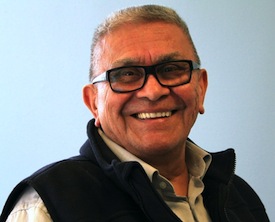
Joseph is ambassador for Reconciliation Canada, an organization intended to “revitalize the relationships among indigenous peoples and all Canadians,” and a member of the National Assembly of First Nations Elders Council.
“At significant personal risk and after facing severe oppression, Chief Dr. Robert Joseph courageously stood up against social injustice to help others,” notes the award citation. “As a residential school survivor, he courageously chose to publicly share his story and the consequences of the abuse and trauma he had endured. This was at a time when the indigenous community was conflicted about bringing the experiences in the residential schools to light and when the larger community was in denial about what happened. Chief Dr. Robert Joseph chose to turn his experience into a vehicle for healing through reconciliation and a will to make sure that this would never happen again.”
In an interview with the Independent, Joseph discussed the progress toward healing his community has made in recent decades.
“Our First Nations people were absolutely in deep despair, not understanding what had happened to us over the course of all that time that residential schools existed,” he said. “But, in the last 20 years, we’ve made remarkable, remarkable progress. And one of the breakthroughs in all of that was survivors like myself began to feel confident enough to tell our stories. We had been walking around in deep shame and despair and brokenness and suddenly we found a way to begin to tell our story.”
A crucial first step, he said, was the federal government’s 1998 Statement of Reconciliation. Though the statement itself was equivocal and not universally appreciated, Joseph said, it was accompanied by funds for survivors and resources for the affected communities.
“I was part of the movement because I was executive director for the Indian Residential School Survivors Society, which was the only organization of its kind at the time,” he said. “So, we began to hold meetings and circles where circles of survivors began to tell their stories and it was deeply, deeply liberating.”
The process expanded, he said, to include representatives of the churches who were complicit in the schools system and later the government and other Canadians.
“We began to recognize that indeed there is a common humanity that exists between all of us and if we can’t harness that common humanity, we’re going to always have these atrocities going on around the world,” he said. The Truth and Reconciliation Commission was a culmination of that progress and Joseph is uplifted by the response of Canadians since the report’s release last year.
“We’ve had a tremendous interest and response from many Canadians about their desire to reconcile,” he said. Even so, the impact of the report was double-edged, he said.
“When the Truth and Reconciliation Commission report was submitted in June, it said that because of a whole number of initiatives and policies, Canada had created, impacted, effected a cultural genocide against the aboriginal people of this country,” he explained. “For me, even as I sat and listened to that, it was sort of a bittersweet report. On the one hand, all of our suffering had been acknowledged and identified in this report. But, on the other hand, as a country together, you and I and everyone who are Canadians were told that genocide was a part of our history.”
He added that he is humbled to receive the Wallenberg-Sugihara Civil Courage Award, which is named in honor of Raoul Wallenberg and Chiune Sugihara, diplomats who, during the Second World War, risked their lives to save Jews from the Nazis.
“I’m really moved by the idea that people who suffered huge indignities, human suffering, who have been through it all like no one else has before, are thinking that somebody as little as I am can be acknowledged by them,” Joseph said.
As he prepares to receive his award, the chief said he is optimistic that Canada is at a crossroad.
“We are so blessed in this country,” he said. “We have all of the rainbow and color of the human race here and we have a chance to engage with each other, to nurture our relationships, to embrace our differences and indeed celebrate them.… But it calls us to our highest order as Canadians to be all that we can be in treating each other with respect and dignity because there is nothing more important than respect and dignity. I think that we are on the right path.”
Joseph will receive his award at an event on Sunday, Jan. 17, at 1:30 p.m., in the Wosk Auditorium at the Jewish Community Centre of Greater Vancouver. The ceremony will be followed by the screening of the film Carl Lutz: The Forgotten Hero, about a Swiss diplomat in Budapest who saved tens of thousands of Jews from the Nazis.

A peek at LimmudVan’16
Eve Jochnowitz (photo from Limmud Vancouver)
Limmud Vancouver, a now-annual festival of Jewish learning, takes place Jan. 30 and 31. The “pan-denominational” event includes seminars, lectures, workshops and discussions on a diverse array of topics. This week and next, the Independent features a few of the presenters who will participate in the local version of the international phenomenon that has now reached more than 60 Jewish communities worldwide.
A national fish story
Eve Jochnowitz calls gefilte fish the national dish of the Ashkenazi Jewish people.
“Wherever you have Ashkenazic Jews, you have the Yiddish language and you have gefilte fish,” she said. “It’s like DNA. It’s in many different permutations and incarnations, but the gefilte fish pretty much goes wherever the Yiddish-speaking Jews go.”
A culinary ethnographer who hosts a Yiddish-language cooking show, Jochnowitz doesn’t want to tip her hand too much in advance of her presentation here this month.
“Let’s just say there are some very surprising variations on gefilte fish out there and let’s just say that the Ashkenazic Jews will come up with ingenious ways to have gefilte fish in the most unexpected situations,” she said in a phone interview from her New York home.
If there are so many variations, then what, at root, defines geflite fish?
“Usually it is made of freshwater fish; in Eastern Europe, most frequently carp, pike and whitefish,” she said. “The more carp there is, the more dark and the more fishy, more flavorful, it is. Some people like it to be more fishy, some people like it to be almost a tofu substitute with the fishiness very understated and the gefilte fish itself being more of a base for some horseradish or egg sauce or whatever it is you choose to put on your gefilte fish.”
It may or may not have matzah meal, it may or may not have sugar, she said.
“This is another very controversial issue with gefilte fish – should it be sweetened or salted or both?” she said. The term itself means “stuffed fish,” but stuffing a fish is very difficult and labor-intensive, so “most gefilte fish is not gefilte.”
Although she is a gefilte fish maven, Jochnowitz stressed that Ashkenazi food is not limited to the familiar.
“Yiddish food is a universe,” she said. “There is much more to Yiddish food and Yiddish cooking than just challah and kugel.”
Her other presentation at Limmud will focus on the little-known phenomenon of Jewish vegetarian cookbooks of the late 19th and early 20th centuries.
Two sides to the story
David Matas, a noted human rights lawyer who represents the organization Justice for Jews from Arab Countries, says the world needs to recognize that Palestinians are not the only refugee population that emerged from the war of 1948-49.
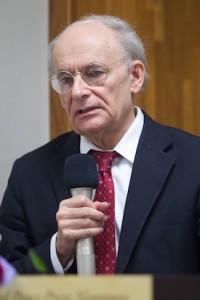
“What we see is two refugee populations that were generated as a result of the Arab invasion to stop the creation of Israel,” he said. “The Jewish population is, in fact, more numerous than the Palestinian.”
The United Nations, with a few exceptions, has been concerned about the Arab refugees from that time, but not the Jewish ones who were forced from their native lands across North Africa and the Middle East, he said. Israel has also not taken a strong lead on the issue until recently, he added.
“Israel, on the whole, has not been a great advocate on this issue historically because there has been the Zionist mythos that people wanted to come to Israel rather than the fact that they came because they were refugees,” he said. “It’s only recently that Israel has itself adopted this position that these people are a refugee population and should be treated in any overall refugee settlement.”
There is also the fact that Jewish refugees have been given citizenship in Israel or other countries, while the Palestinian populations have largely remained stateless.
“The Arab population mostly has not been resettled and, in fact, they’ve grown because their descendants have been classified as refugees,” Matas said. “They’ve remained as a perpetual refugee population. There’s been an attempt to keep this population as a refugee population, as an argument for the destruction of the state of Israel.”
Matas and his organization believe both refugee groups should receive justice. Most likely, he said, a resolution might involve a compensation fund that wouldn’t necessarily come from Israel or the Arab states, but possibly from the United States or third parties willing to facilitate a larger peace settlement.
“That compensation fund would be available to people who were victimized from both refugee populations, as well as their descendants, or something like that,” he said. The idea of compensation for massive human rights violations is not new. “There’s been lots of experience with the Holocaust, amongst other [cases]. You’ve got a kind of jurisprudence and experience to draw on in order to make these programs work.”
While some commentators contend that the refugee issue can wait until later stages of any negotiated settlement, Matas disagrees.
“I think it’s important to bring it in at this stage of the negotiations,” he said. “This Palestinian notion that we are the refugees and the Jews aren’t plays into this false narrative there’s only one victim population when in fact there are two.”
A Polish journey
Jewish Canadians often travel to Poland in search of their family’s roots or as an exercise in history. Norman Ravvin travels there frequently, but he is as focused on the present as on the past.
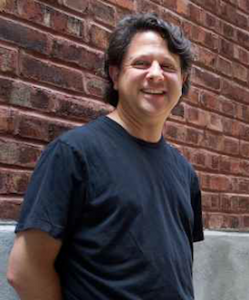
“You can visit Poland on different terms,” said the Montreal academic and author. He will lead a session on traveling Poland that focuses on the major cities of Warsaw, Kraków, Lodz and Poznan, as well as his maternal ancestors’ hometown of Radzanow.
“The overall depiction will be of Poland as a place that is alive and contemporary,” he said. “Aspects of that are related to Jewish memory and parts of it have to do with contemporary Polish life and then the way that one feels as you go back to the ancestral place.”
Things are changing fast in Poland, Ravvin said. The end of communism, the integration into the European Union and the general march of time means things have altered significantly since Ravvin first toured there in 1999. One area of progress relates to Jewish and war-era history.
“In the last 25 years, they’ve become very effective at commemorating Jewish prewar life,” he said. “If you had traveled to Poland in 2000, this wouldn’t necessarily have appeared to be true, but now certainly it is true and, when you walk in Warsaw, the sidewalks are marked with these remarkable inlays which say this was the ghetto wall, so that you step over it and you actually feel that you understand the prewar and the wartime city and now the postwar city.”
Some of the efforts, he speculates, are for the purposes of tourism, but he also acknowledges Polish efforts at education.
“They’re doing a reasonable job of confronting how to live with the shadows of the past,” he said.
Ravvin’s mother’s family fled Radzanow in 1935 and all those left behind were murdered. The family made their way to Canada, eventually to Vancouver, where Ravvin’s grandfather, Yehuda-Yosef Eisenstein, was a shochet (kosher slaughterer).
Ravvin welcomes people to bring their own family history to his presentation.
“If they’re carrying their own version of this story,” he said, “they might warm that up in their minds, their own families’ Polish past, what they know about it, what they wish they knew, if they’ve gone, whether they might go, so that the possibility is the thing they’re considering and then maybe my talk will change the way they think about that.”
For this year’s Limmud schedule, visit limmudvancouver.ca.
Sponsoring Yazidi refugees
Yolanda Papini Pollock, co-founder of Winnipeg Friends of Israel, which initiated Operation Ezra. (photo from Yolanda Papini Pollock)
The Jewish community in Winnipeg has ramped up its efforts to help the Yazidi people, including the sponsorship of families to the city.
“When you look at the plight of the Yazidi people, it kind of mirrors the Jewish reality of 1945,” said Al Benarroch, executive director of Winnipeg’s Jewish Child and Family Services (JCFS). “I’m not going to be one to say that it’s like the Holocaust, but the Yazidis have suffered, over the last 500-600 years, a very significant genocide.
“The Yazidi people have been displaced from that region of the world and have been heavily victimized, murdered and devastated in the millions. And they have nowhere to go to. So, our community and other communities across Canada have really taken this to heart saying, you know, it was a mere 70 years ago that we ourselves were in a similar situation.
“When we say ‘Never again,’ are we just talking about the Jewish people? We see that image of ourselves in the Yazidi plight, and we feel compelled to come forward and act on it. That’s been the message we’ve been putting forward in Winnipeg.”
The group that started this effort in the city is Winnipeg Friends of Israel (WFI), awakening the community to the Yazidis’ situation and the possibility of sponsoring Yazidi refugees to Winnipeg.
“When we heard about the Yazidi massacre in August 2014, we reached out to the Yazidi community,” said Yolanda Papini Pollock, WFI co-founder. “We wanted to hear about the Yazidi plight and support their community by raising awareness.”
WFI invited Nafiya Naso, a Yazidi spokesperson, to share her and others’ stories with the Winnipeg community at the Asper Jewish Community Centre in March 2015.
“After learning about the dire strait conditions of the Yazidis in refugee camps, it was clear to us that we could not sit aside and do nothing,” said Papini Pollock. “We decided to do more than just listen.”
The group initiated Operation Ezra with the goal of sponsoring at least one Yazidi family and of raising awareness of the Yazidis’ plight. They began by partnering with Bridges for Peace, Calvary Temple, the Mennonite Central Committee (MCC), and others. By December, $130,000 (enough for five-plus families) had been raised.
“When we heard Nafiya’s story, we recognized so many similarities to the plight of the Jewish people prior to the establishment of Israel and immediately empathized with her people,” said Papini Pollock. “The Yazidis are an ethno-religious minority and, just like the Jews, they are targeted solely because of their religious beliefs. Many genocide scholars perceive the Yazidis as victims of genocide. The Yazidis have been persecuted 74 times. At one point, there were more than 20 million Yazidis. Today, there are less than one million.”
The Jewish Federation of Winnipeg has helped raise the funds to sponsor as many families as possible and JCFS has taken on the responsibility of managing the resettlement and other services, allowing WFI to do what they do best – connecting on a personal level with people.
Since Operation Ezra was announced, the congregation of Shaarey Zedek has taken on sponsorship of two families under the initiative.
“Collectively, we’re talking about 35 individuals to date who have applications that are or will be submitted,” said Benarroch. “At this point, I think we’re talking about bringing in as many as 50 individuals.
“The more we fundraise, the more we can help. We’ve gotten a hold of many people who are donating furnishings, old televisions and bedding. Someone came forward and said they will donate through their manufacturing company quilts and coats. We are looking for warehouse space.”
The sponsorships are being done through MCC, as they are the only organization in the city that holds a sponsorship agreement with the federal immigration department. This is something Benarroch would like to see change, not due to any lack in MCC’s services, but as an added insurance. “Historically, there was Jewish Immigration Aid Services of Canada (JIAS),” he said. “Located in Toronto, they were the national office for Jewish immigration.
“Because it was a national mandate for that sponsorship agreement and the national office no longer exists, my understanding is that the sponsorship agreement had to be given up. So, now we no longer have a national sponsorship agreement for Canadian Jewish communities. God forbid if we should have a worldwide crisis and the Canadian Jewish communities would be challenged at a national level to take on Jewish refugees.”
While he has been exploring the options regarding making an application to have at least a local sponsorship agreement – “If history repeats itself, as it usually does, you should have that safety” – Benarroch stressed, “I think it’s been amazing to be able to work in partnership with those groups, with the Mennonite community. The Manitoba Multifaith Council sits at the table for Ezra. We get ourselves out there. It’s the right thing to do.”
Some of the most-asked questions by people considering joining the effort, Benarroch said, are “Who are the Yazidis? Are they Muslim? Are they Christian?”
His response is, “They are not Jewish, Christian or Muslim, yet they do share many interesting customs that have a foot in all of those religions. They celebrate their new year … I’m not an expert … in the spring, in their month of Nisan. We, as Jews, also have a month of Nisan. They pray several times a day towards the sun, much like Islam. Yet, they have no formal book or liturgy … no formal Koran, Torah, New Testament, whatever you’d like to call it. It’s an oral tradition.”
Papini Pollock, meanwhile, is finding it hard to wait for the first arrivals. “We will be involved in taking care of the families when they arrive to the best of our abilities,” she said. “We will work with the rest of the Winnipeg community to ensure the refugees have the most natural transition to Winnipeg and to Canada.”
For more information on Operation Ezra, visit jewishwinnipeg.org/community-relations/operation-ezra.
Rebeca Kuropatwa is a Winnipeg freelance writer.
Ruimy in Maple Ridge
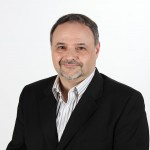
Dan Ruimy (photo from Dan Ruimy via cjnews.com)
If there’s one thing Dan Ruimy is good at, it’s getting people together and promoting dialogue.
Ruimy is the new Liberal member of Parliament for the Pitt Meadows-Maple Ridge riding. A 53-year-old son of Jewish Moroccan immigrants to Canada, Ruimy’s parents, Andre and Jacqueline, moved to Montreal’s Cote-des-Neiges in the mid-1950s. There, they raised their five sons and ran Cantor’s Bakery in Cote-des-Neiges and a grocery store in Habitat 67. Ruimy attended synagogue with his family on the High Holy Days. Later, a career in food and beverage led him all over the country for 27 years, as he filled positions at McDonald’s, A&W and Quiznos.
All that traveling took its toll and by 2011 he was ready to settle down, get grounded in one community and find a place to call home. He chose Maple Ridge and purchased a secondhand bookstore that sold loose-leaf tea. Today, he is still the owner of Bean Around Books & Tea, and credits the tea and coffee shop as having played a pivotal role in his decision to enter politics.
“At Bean Around, I saw what happens when you include people in your community,” he reflected. “Having spent my life in the hospitality industry, my personality is all about social contact. At the tea shop, I saw there was a craving for that, so I’d introduce people to each other and help make connections. It’s quite an amazing thing to watch a 15-year-old engaging an 86-year-old in dialogue. When I started thinking about running for public office, I realized that this is what I could do for my community: create dialogue, bring people together and help people find solutions for the challenges they encounter every day.”
Ruimy feels strongly about community and what comprises it. “The Syrian refugees are a perfect example,” he said. “By including them, we become a stronger community. Isn’t that what Canada is all about? We’re a nation built on immigration. We shouldn’t shun people, we should welcome them with open arms, because that’s our future as well.”
Since being sworn in as a member of Parliament in November, Ruimy has hired extra staff for his shop to accommodate a busy schedule commuting to and from Ottawa. While he’s no stranger to traveling for work, it’s different this time, he said. “This is my home base now, I have a community to come back to. In the past, I’d come back to an empty place where I didn’t know my neighbors and wasn’t involved but, for the first time in my life, I can actually say I’m coming home.”
He plans to open his constituency office in Maple Ridge soon. It’s “tough” to be Jewishly affiliated in Maple Ridge, he said, given that there are few Jews living there. But, in Ottawa, he’s joined the Canada-Israel Inter-Parliamentary Group. “Having those roots is important to me, and I think we lose sight when we’re not involved in that part of our community,” he said.
Ruimy said the key issues he’ll be working on are homelessness, affordable housing, helping struggling seniors, and providing assistance to youth trying to find jobs. “There’s lots of opportunity in Canada but, for some reason, people have difficulty finding the programs,” he said. “I hope to be an agent of change and help bring those opportunities to young people.”
The most exciting moment of his parliamentary career to date was attending the first session in the House of Commons, he added. “For the first time, you’re seeing the 338 people who got elected and, at that moment, it sunk in how lucky I am to have been given this opportunity. It’s a privilege really and I feel proud that people sent me here to represent them, that they put their trust and confidence in me.”
Lauren Kramer, an award-winning writer and editor, lives in Richmond. To read her work online, visit laurenkramer.net. This article was originally published in the Canadian Jewish News.