Skip to content
  • Home
  • Subscribe / donate
  • Events calendar
  • Business Directory
  • FAQ
  • News
    • Local
    • National
    • Israel
    • World
    • עניין בחדשות
      A roundup of news in Canada and further afield, in Hebrew.
  • Opinion
    • From the JI
    • Op-Ed
  • Arts & Culture
    • Performing Arts
    • Music
    • Books
    • Visual Arts
    • TV & Film
  • Life
    • Celebrating the Holidays
    • Travel
    • The Daily Snooze
      Cartoons by Jacob Samuel
    • Mystery Photo
      Help the JI and JMABC fill in the gaps in our archives.
  • Community Links
    • Organizations, Etc.
    • Other News Sources & Blogs
  • JI Chai Celebration
  • JI@88! video

Recent Posts

  • Or Shalom reopens its doors
  • JFS from past to future
  • Need holistic approach
  • Sharing stories, advice
  • Journalist shares fears
  • Skills to live together
  • Road to independence
  • Cutting grass with scissors
  • Zionism as a solution
  • Deceit, desire & the divine
  • Reclaiming sacredness
  • Creative project ideas
  • Summer squares and cobbler
  • Thou shalt … summer commandments
  • Legal help for students
  • Revisiting myth of Lilith
  • Wrong person rebuked
  • Canada’s mixed messages
  • Questions for museum
  • Symposium on antizionism
  • Making soccer political
  • CJPAC lauds Pulver’s impact
  • City recognizes Vrba’s legacy  
  • Organ donation saves lives
  • Theodore’s March premiere
  • A healing Shabbaton
  • Supplying healthy food
  • A chime of metal tags
  • Yellowknife seder a first
  • Ishai energizes, unifies
  • A Lag b’Omer to remember
  • Expanding the healing
  • Hannah Senesh – a unique hero
  • Community milestones … May 2026
  • Деньги до зарплаты на карту Займ до зп онлайн за 5 минут 2026
  • Микрокредит онлайн в Казахстане Микрозайм в Акшамат

Archives

Follow @JewishIndie
image - The CJN - Visit Us Banner - 300x600 - 101625

Author: Embassy of Israel

Creating tech and jobs

Creating tech and jobs

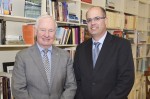
Governor General of Canada David Johnston, left, with Chief Scientist of the State of Israel Avi Hasson. (photo by Sgt. Ronald Duchesne, Rideau Hall)

On March 1, Governor General of Canada David Johnston met Chief Scientist of the State of Israel Avi Hasson to discuss innovation and how Canada and Israel can enhance cooperation in this field. During Hasson’s visit, the Canada-Israel Industrial Research and Development Foundation released its latest impact report.

Established in 1994 under a formal mandate from the Government of Canada and the State of Israel, CIIRDF-funded projects cross many scientific disciplines, technologies and industrial sectors. These include biotechnology, agriculture, information and communications technologies, automotive, natural resource management, public safety and aerospace.

With base funding of $1 million per year from each of the governments of Canada and Israel, CIIRDF stimulates collaborative research and development between companies in both countries, with a focus on the commercialization of new technologies; pools Canadian and Israeli know-how to provide both countries with improved market access, sustainable competitive advantage and long-term market opportunity in global economies; strengthens ties between Canada and Israel, and delivers economic benefits to both countries; and leverages additional regional and sector-based funding that is matched by the government of Israel.

CIIRDF has engaged more than 1,000 participants in partnership development activities, including more than 400 industry leaders who actively contributed to R&D collaboration discussions. It has processed more than 230 bilateral R&D applications and funded 110 projects engaging more than 200 companies from Canada and Israel.

These alliances have enabled the joint development, marketing and sales of more than 50 technologically improved new products for global markets; generated $60 million in initial sales, and $300 to $500 million in additional economic value to collaborating companies; and created hundreds of jobs in both countries.

For the full impact report, visit racineinc.com.

Format ImagePosted on March 11, 2016March 10, 2016Author Embassy of IsraelCategories Israel, NationalTags Canada, Hasson, Israel, Johnston, technology, trade

Proudly in the middle

Slovakia’s elections on the weekend ushered into parliament for the first time a far-right neo-Nazi party of the sort that have made inroads in various parts of Europe over recent years. About the same time this was making news, Donald Trump urged supporters at a rally in Florida to raise their right hands in a pledge to vote. The ensuing scene was – as any sensible person would have foreseen – eerily redolent of a Nazi rally.

Since the collapse of the bipolar Cold War-era status quo, global politics has been unstable. Common enemies make for strange bedfellows and temporary alliances have been the pragmatic responses to regional brushfires, such as the alignment of Shia and Sunni Muslim factions with, respectively, Russian and Western powers. Some Sunni Muslim powers have even been making pleasant noises toward Israel, seeing it as an ally, however unlikely, against the Iranian menace.

These tactical alliances are taking place at a molecular level, too, if we can put it that way. Not only are strange alliances forming between nation-states (and, in some cases, non-state players like Iranian-backed Hezbollah and the Western-backed Free Syrian Army), but ideologies are merging at the edges. The far-right and the far-left, in some instances, are almost indistinguishable.

In their historical forms, communism and fascism in the form of Stalinism and Hitlerism, were the most adamant of enemies. Until they weren’t, thanks to a non-aggression pact, and then they were again, thanks to Hitler’s abrogation of the pact. For the great majority of people in the West who are democrats (whether liberal, conservative, libertarian, social democratic or whatever) the two ends of the political spectrum can look very similar. Both have been responsible for genocides causing millions of deaths and neither respects the human being’s right to individual freedoms.

From a Canadian perspective, we have been blessedly free of anything more than weak startup movements of the far-left and the far-right. The communist party, under different names, had minimal electoral success in the 1930s and 1940s. When the antisemitic far-right permeated the Social Credit movement and later the Reform party, they were fairly successfully shut down. Canada is a place of moderation, a trait we bear smugly (and, therefore, without our alleged national humility) while watching the machinations of American politics today.

Today’s far-left and far-right, which are more recognizable in their traditional forms in Europe, nevertheless have traded off some characteristics. In some instances, European far-right parties, who are almost unanimously anti-immigrant and anti-Muslim, have adopted a convenient philosemitism and pro-Zionism, seeing Israel as a bulwark against radical Islam. At the same time, we are witnessing a growth of not only anti-Zionism but overt antisemitism among components of the left. Notably, the Labor Club at Oxford University, the campus arm of Britain’s second-largest political party, has been recently criticized. According to reports, Oxford Laborites mocked Jewish victims of the Paris terror attacks, made light of Auschwitz, expressed solidarity with Hamas and defended the killing of Israeli civilians, routinely employ the term “Zio,” a slang for Zionist that is usually found only on the most extreme websites, and a former co-chair of the club has said that “most accusations of antisemitism are just the Zionists crying wolf.” It is little solace that the antisemitism seems to have emanated from the Momentum movement, a hard-left stream within the Labor party headed by Jeremy Corbyn, the party leader.

The Oxford debacle is among the most public of countless incidents of Jew-baiting and Jew-hating on the left, but there is much cross-pollination between groups like those who hold Israel Apartheid Weeks and other groups that proudly march under the “progressive” standard.

Antisemitism, it is so often said, is an early symptom of a societal sickness, the first sign of crazy. This is a bit simplistic, though, because antisemitism is so unique, so capable of metastasizing into whatever form of scapegoat a society requires, so ubiquitous and yet still so fundamentally not understood, that blanket statements about it are a fool’s game.

Perhaps it is safe to say this: antisemitism exists in many places, but it is now and has perhaps always been most prevalent at the fringes of the political spectrum. No one should be surprised that it is a dominant characteristic of the far-right as well as the far-left, particularly when those terms themselves seem to have more overlap, or at least more fluidity, than perhaps ever before.

Extremists exist in Canada, as they do elsewhere in the world, and so, too, do inequality and other social issues that have the ability to polarize us, if we let them. But, extremism does not seem to be intrinsic to our land. This good fortune is something we must not take for granted. While people may joke – an example, Why did the Canadian cross the road? To get in the middle! – we have a lot of which to be proud, and something valuable worth protecting. We also, perhaps, have something to teach the world about tolerance and moderation.

Posted on March 11, 2016March 10, 2016Author The Editorial BoardCategories From the JITags antisemitism, Canada, communism, extremism, fascism, Oxford
Cooking healthy, eating well

Cooking healthy, eating well

Rose Reisman’s newest cookbook is Rush Hour Meals: Recipes for the Entire Family. (photo from Rose Reisman)

Cookbook author, chef, television personality and columnist Rose Reisman helps people make better lifestyle choices.

After self-publishing a cookbook in 1988, she focused on healthy eating with Rose Reisman Brings Home Light Cooking (1993), which sold more than 400,000 copies. Since then, she’s been an oft-quoted expert on eating well, has appeared on TV and radio, worked as a teacher, and acted as a health and wellness consultant to businesses.

Reisman attended the Canadian School of Natural Nutrition to become a registered nutritional consultant. The mother of four ran a cooking school for four years, and then launched Rose Reisman Catering in 2004. She is also a nutritionist and adjunct professor at York University’s faculty of health, where she is a founding member of the university’s obesity task force.

Reisman also helps people eat well through the Personal Gourmet, a daily food delivery service launched in 2008 that offers both weight loss and healthy living plans she developed with the help of dieticians and weight management doctors. She has been a spokesperson for the national campaign of Breakfast for Learning and the national awareness campaign for the Canadian Breast Cancer Foundation, and has been an ambassador for the Canadian Diabetes Association.

book cover - Rush Hour Meals: Recipes for the Entire FamilyIn coming weeks, Reisman’s newest cookbook will be released, Rush Hour Meals: Recipes for the Entire Family. It will be her 18th – chai – book guiding readers to a better life.

When she first started cooking, she told the Independent, she was making “very delicious, high-fat foods when everybody flocked to my home. I continued to do that and I became a good cook using loads of butter and cream and chocolate…. But then I found my own family history wasn’t that healthy. I had lost my dad to heart disease in his 50s, my grandmother at 52 to diabetes type 2. Everybody had high blood pressure, high cholesterol and obesity, and I was an overweight child.

“This was all going on in my early 30s. I was slim and running every day, and I had lost the weight I had as a kid, and I figured I was fine. But then I went for a routine physical and my cholesterol was literally off the charts like somebody in their 60s or 70s who’d been eating steak every day.

“I realized that what I ate, even though I exercised and maintained a healthy weight, was still clogging my arteries, and my family history was such that I couldn’t afford to do it. It was then that I turned around, in 1993. I started researching healthier cooking, and I started to write my first book in healthy cooking. I’d written three or four books before that in higher fat meals.”

Like Reisman once did, many people equate being thin with being healthy.

“If you have skinny children, you kind of turn away as they’re eating junk because you think it’s not going to hurt them,” she said. “But what I started to learn is that cholesterol, diabetes, all of these things start when they’re children. Today, they’re finding kids in their early teens who have already got blocked arteries, high blood pressure, diabetes.”

She said that one child out of three born after 2000 will have diabetes type 2.

“I really encourage parents to be the role models at home,” she said. “I used to set the most delicious meals on the table, and they were good. I wasn’t talking vegan style, poached or steamed, but it was heart-healthy fat, and my kids would often turn up their noses. But, over the years, they picked it up, it was in the back of their minds and, today, all four of them, they’re adults, they’re really good eaters, they exercise.

“That’s one of the reasons that I launched into the books, the media, the catering company, the restaurant consulting,” she said, “because it’s really a great way to spread your message.”

It’s also a great way to spread less healthy messages. There are dozens of TV shows on food – a whole network, in fact.

“They call it ‘food porn,’” said Reisman. “It started back when I was entering the food world. I had my own TV show in 1998 to 2002. That was when the Food Network was just starting to get launched. I thought a show like that would never be successful, I thought no one would watch 24 hours a day of food. Boy, was I wrong. People loved it. And the shows got crazier and crazier, and more reality and more extreme.

“They’ve done these studies from Harvard that people who watch these shows are actually heavier than other people. Nobody really wants to watch a healthy cooking show. There’s only one or two healthy cooking shows…. It’s ridiculous. You’re piling up butter to your elbow when you’re mixing, and people just love watching that decadence.

“But, when Paula Deen came out, and she was diabetic, all of a sudden people went, ‘you know, you can’t be that heavy.’

“You don’t see in seniors homes obesity in people in their 80s. If you notice that, people die off in their 70s, 60s, from cancer, heart disease or stroke, or diabetes when you’re obese.”

For people just starting to cook for themselves, a mistake they make, said Reisman is “they can just whip something off, and not measure and not read the recipe.” She said that’s not really possible, “unless you really have a food gene,” and there are only “a handful of people like that. I’d say 99% of us can’t do that.”

Even with years of experience, Reisman still finds new foods that she both enjoys and that are healthy.

“A couple of foods that I like, that allow me to maintain a really healthy body weight, are quinoa and Greek yogurt,” she said. “Quinoa is the only seed-grain that’s considered a complete protein: a half a cup is equal to three ounces of chicken or fish. So, on the day that you don’t want to eat the hormone-injected chicken or the farm-raised fish, you can have quinoa. Put dressing on it, make it with tomato sauce, and it is a powerhouse of nutrients.

“But, the most important thing is, after you eat a bowl of quinoa versus say white rice in a Chinese food situation, [where] you burp, you eat again, you burp … with quinoa, you walk away full and you’ll find you won’t get hungry for about three hours. That’s because the glycemic index, your blood sugar, is rising very slowly, whereas with white rice or with white starch, what I call an empty grain, it’s rising quickly and then it crashes, which means you need more of that food.”

As for Greek yogurt, she said, “you can have it plain or mix it with berries for breakfast. You can even have Greek yogurt with quinoa. Greek yogurt has 18 grams of protein for three-quarters of a cup, which is unbelievable, more than you could ever imagine in eating fish or chicken in the morning, so it’s a super breakfast.”

And what about that morning coffee?

“I think coffee by itself is great, and the studies now prove more and more that it lowers cholesterol, it’s got some great antioxidant powers,” said Reisman. “The key is, you can’t be drinking coffee after coffee after coffee. If you’re starting to get anxious, or you’re not sleeping at night, you’re drinking too much!

“The problem is that coffee shops are mixing in whipping cream and syrup and tons of sugar,” she added. “If you have two double doubles every day, you’ll gain something like 12 to 13 pounds in a year, just from the cream and sugar in those two drinks. It’s not coffee. It’s candy.”

Dave Gordon is a Toronto-based freelance writer whose work can be found in more than 100 publications globally. His is managing editor of landmarkreport.com.

Format ImagePosted on March 11, 2016March 10, 2016Author Dave GordonCategories BooksTags health, Reisman

More to becoming an adult

It’s a bat mitzvah year in our family. We’ve booked the photographer, the caterer, the DJ and the invitation company. Our daughter is studying her parashah and learning to chant the Haftorah and maftir.

Now, it’s time to inject some social justice into the experience, in the form of what have come to be known as “mitzvah projects.” Coming of age in the 1980s, my generation was less social justice-oriented. So what exactly, I wondered, should a “mitzvah project” entail?

I turned to JEDLAB, the Jewish educators’ forum on Facebook. I discovered that there is an organization expressly founded to support kids in their mitzvah project strategies. Called Areyvut (Hebrew for “social responsibility”), the New Jersey-based group offers consulting services – from a free phone consultation to more extensive, fee-based ones – and direct organizing of an array of hands-on, direct-action-style activities in which party guests can participate. Called “chesed fairs,” these might include game-board painting for a social-services agency, hat-making for cancer fighters or cupcake-decorating for a local day centre. Clients need not live in the area, or even in the United States.

Elsewhere, Areyvut teams up with synagogues and youth groups to teach kids to be “mitzvah clowns” for residents of long-term care facilities.

I decided to take up Areyvut’s offer to engage in a free phone consultation on my daughter’s mitzvah project idea. She had chosen a complex topic – addressing the economic effects, particularly around access to housing, of urban gentrification. Talking to Areyvut’s staff reminded me that mitzvah projects need not be confined to financial giving. Advocacy and awareness can be just as important.

I decided to take some of these ideas to my own community. Through word of mouth, I initiated a b’nai mitzvah club to help develop mitzvah project ideas. At the first meeting, which we called “Hot Chocolate for Hot Issues,” I led a workshop to get the kids thinking about a given issue, how to identify deeper causes of the problem and how to consider the range of action one might take to address these problems.

For our mitzvah club this year, each child will identify a pressing issue around which he or she is passionate and then develop an action plan, a plan that should involve at least two of the following: fundraising, political advocacy, public awareness and direct action. Fundraising could involve donating a portion of bar or bat mitzvah gift money, or holding a bakeathon or danceathon. Political advocacy might involve letter-writing to elected officials. Public awareness could include an Instagram campaign increasing public understanding of the issue. And direct action means identifying a relevant organization at which the child can volunteer.

Sometimes, there is an identified need, but not an established organization dedicated to it. In these cases, Areyvut can support kids in being more ambitious – for example, in creating their own nonprofit organization. Billy’s Baseballs grew out of a bar mitzvah initiative where a child organized the sending of decorated baseballs to soldiers stationed abroad.

Daniel Rothner, Areyvut’s founder and director, puts it this way. As Jews, we are supposed to be a “light unto the nations,” engaged in making the world a better place, he told me. And the impact extends beyond the Jewish community, he added. He is also passionate about getting kids to think about the deeper causes. What of Dave, the homeless man who appears at the soup kitchen every week? Why does Dave need to come week after week?

Our own b’nai mitzvah club has come a long way from kids reciting the “today I am a fountain pen” joke. As my daughter said, the bar or bat mitzvah milestone means that “technically, you’re becoming a woman or a man and, once you are [an adult], you have a responsibility to help out with the issues in the world and in our community.”

Mira Sucharov is an associate professor of political science at Carleton University. She is a columnist for Canadian Jewish News and contributes to Haaretz and the Jewish Daily Forward, among other publications. This article was originally published in the CJN.

Posted on March 11, 2016March 10, 2016Author Mira SucharovCategories Op-EdTags Areyvut, bat mitzvah, JEDLAB, social justice, tzedekah
Saying what he wants

Saying what he wants

Ari Shaffir was in Vancouver Feb. 18-20 as part of Just for Laughs NorthWest. (photo from Ari Shaffir)

Ari Shaffir is a long, long way from his yeshivah. The 42-year-old stand-up comedian and actor who lives in New York and Los Angeles appeared in Vancouver Feb. 18-20 as part of Just for Laughs NorthWest and entertained packed audiences with his deep baritone and casual conversation, drawing plenty of laughter.

Shaffir grew up Orthodox and shomer Shabbat in Kemp Mill, Md., attending Hebrew academy and the Jewish day school before spending two years at Beth Midrash HaTorah, a now defunct yeshivah in Jerusalem. When he returned, he enrolled at Yeshiva University in New York. That was the year he lost his religion.

“Mostly it was inward reflection that caused me to turn away,” he said. “I was doing these religious things because I was expected to, and I was succeeding, but I’d never stopped to think why I was doing them. When I really thought about it, I didn’t see a belief inside me. It just wasn’t there.”

At 20, he left Yeshiva University for the University of Maryland, taking arts courses like English and screenwriting. His parents and friends were dismayed by his change in lifestyle. “My friends tried to talk me out of it,” he said. “They would be happier if I were dating a Jewish girl who was a completely worthless human being as opposed to Mother Teresa. When I thought about it, I started feeling mad and decided this is not the way I should live my life.”

When a friend moved to California, Shaffir decided to join him. “I’d done stand-up once in college and had always thought about it, because I was one of the funnier guys at school, but it didn’t seem like a legitimate career,” he said. “Initially, I tried to find a fun regular job, but couldn’t, so I did an open mic one time in California and that was it. I was totally focused.”

Shaffir’s career has been on an upward swing in recent years. His stand-up album Revenge for the Holocaust was released in 2012 and went to No. 1 on iTunes and amazon.com the week of its première. His show Passive Aggressive premièred on chill.com in 2013 and on Comedy Central in 2015, while his weekly storytelling series This is Not Happening premièred on Comedy Central in 2015. Season 2 of This is Not Happening will air this year, and it was recently picked up for a third season on Comedy Central. He hosts the podcast The Skeptic Tank, a weekly interview show that averages more than 100,000 downloads per week, and he just shot a feature film, Keeping Up with the Joneses, slated for release this spring.

He didn’t completely lose his cultural identity, if his performance on Feb. 18 was anything to go by. In one part of his show, he joked about visiting Germany and urinating outdoors anywhere he could, hoping to pee on Hitler’s grave. “If anyone tried to stop me, I’d play the Jew card,” he said. (The part about urinating outdoors was no joke, he admitted in a telephone interview. “I did that.”)

Shaffir says the Bible is now his least favorite book: “There’s a lot of holes in the story.”

He enjoys using material he learned in his religious life in a completely opposite way than how it was intended. “I get joy out of that,” he said. “For example, the Torah says if someone is coming to kill or rob you, you’re allowed to defend yourself up to the point of killing them. A child cost $500,000 to raise and they’re going to take that from you, so the Torah would tell you to kill them to protect your income.”

Defying his parents’ expectations and leaving the community of Kemp Mill wasn’t easy, and there are still things Shaffir misses from that life. “It took my parents years to get over it. My mother was more concerned with me losing the culture of Judaism, the songs on Pesach, the camaraderie. My dad was angry. He had swayed from religion for a little while, but I swayed way further. Years later, he realized he didn’t want to lose me as a son and we were able to move on.”

Shaffir’s casual, unassuming storytelling style accounts for his popularity. His stand-up routine is peppered with sex and toilet jokes, rants on why he hates kids and anecdotes from his travels. Throughout his routine, he appeared relaxed and at ease, and his hour-long performance went by quickly.

If he has any remaining link to his Jewish life, it’s cultural, Shaffir said. “When I hear a news story come on about Israel, my ears perk up a little more than they would about another country. Otherwise, I have nothing left to do with the religion. But I miss the community I had in Kemp Mill, where everyone knew me. You had this gigantic family that you’d see in synagogue every weekend. To lose all that – now I’m on my own and I’m just floating. You lose those friends. You can’t go to restaurants with them because we’re into different things. They’re into family and religion, I’m not into either.”

A page on his website is called Shroomfest and, on it, Shaffir has taken time to write everything he feels others should know about mushrooms. “That’s not a joke, it’s real, and I do it a few times a year,” he said. “I took a lot of time to write that and it helps a lot of people take mushrooms the right way.”

Shaffir described feeling free on stage to say what he wants, but when it catches up with him in a private setting, he feels some guilt and embarrassment. “I feel guilty about all sorts of stuff, not committing to women, not being monogamous. If I’m at a dinner party and it comes up that I had a threesome last week, then, yes, I’m embarrassed.

“I’m proud that I’m a free comedian,” he reflected. “I say and do what I want, what I feel is correct creatively, and both criticism and praise are irrelevant to me. I’m living as a stand-up comedian! It’s one of the coolest jobs in the world and I have an apartment I pay for, just by doing that!”

For a link to his podcast visit arishaffir.com/category/podcast.

Lauren Kramer, an award-winning writer and editor, lives in Richmond. To read her work online, visit laurenkramer.net.

Format ImagePosted on March 11, 2016March 10, 2016Author Lauren KramerCategories Performing ArtsTags comedy, Just for Laughs, Shaffir
This week’s cartoon … March 11/16

This week’s cartoon … March 11/16

For more cartoons, visit thedailysnooze.com.

Format ImagePosted on March 11, 2016March 10, 2016Author Jacob SamuelCategories The Daily SnoozeTags art, thedailysnooze.com
Preparing for the summer

Preparing for the summer

A commercial gutter installation. (photo by Ethoseo via commons.wikimedia.org)

As the season transitions from winter to spring, it’s time to attend to some household maintenance tasks.

Exterior areas. Trim trees and remove vegetation from the siding and roofline. Have gutters and drains cleaned by a roofing contractor, add downspout extensions where needed, repair all damaged, disconnected or leaking gutters. Consider having the perimeter drains scoped by a drain tile specialist. Inspect, clean and repair all dirty vents. Take note of all exterior repairs, caulking and painting that will need to be done over the summer.

Decks and balconies. Remove all debris and clean any mildew from the floor surface, clear drains, check the function of sliding doors and screens, test guardrails for stability. Does anything need painting?

Roof and flashings. Have the roof properly inspected for damage, holes, loose flashing materials, outdated shingles, pooling, etc. Remove all debris and moss to prevent moisture issues.

Air conditioner. Have it serviced and the heat pump cleaned.

Furnace. Check the filter and replace or clean it.

Smoke detectors. If you have not done so in the last six months, test all smoke detectors. Replace them if they are older than 10 years. Instal carbon monoxide detectors in areas by gas-burning appliances and check them as well. Also, all smoke detectors should be interconnected and hardwired throughout the home. If one goes off in the basement, they should be heard on the top levels as well.

Electrical outlets. Make sure they are safe and grounded. Replace all broken cover plates, tighten loose ones. Test the GFCI (ground fault circuit interrupter) outlets and replace expired or damaged ones, both inside and out.

Washing machine. Inspect hose connections. These hoses are always under pressure, so replace rubber hoses with steel-braided ones to help prevent leaks.

Clothes dryer. Check that the vent duct is made from a smooth, rigid metal. Replace corrugated plastic or foil ducts, as they pose a fire hazard.

Attic. Check for signs of poor ventilation, pests, insulation issues, damaged sheathing, mold, duct connections and leaks. Repair all problems with the help of an attic contractor.

Spring cleaning. Purge or sell all items you don’t need. Check for other random tasks: replace light bulbs, do minor repairs to ceilings doors, windows, walls, etc.

Sean Moss is a professional home inspector with his company Sean Moss Home and Mold Inspections, homeinspectorsean.com.


Format ImagePosted on March 11, 2016March 10, 2016Author Sean MossCategories LocalTags home repair, spring cleaning
Technology for your home

Technology for your home

Singlecue recognizes hand motions for remote control. (photo from Singlecue via Israel21c.org)

Bezeq, Israel’s largest telecom, set up in late 2015 a model “smart home” at its Tel Aviv headquarters and in the IKEA store in Netanya to demonstrate its Bhome subscription service – a package of wifi-enabled sensors and monitors to help keep out intruders and save energy. But you don’t necessarily have to live in Israel to take advantage of Israeli smart-home technologies. Here are some of the many options available now or coming soon.

SwitchBee is a Netanya-based startup that provides a platform including programmable switches, a central control unit, a smartphone/tablet application and cloud-based data services. The plug-and-play devices, featured in the Bhome model home, are designed to embed in existing outlets quickly and wirelessly. The company says you can convert a light switch into a smart switch in less than two minutes, or turn your whole house into a smart home in less than 90 minutes. Using the app’s secure dashboard, the user can program custom preferences for each SwitchBee-enabled light or device including on/off and fine adjustments.

Singlecue is made by eyeSight Technologies, a Herzliya company whose machine-vision systems have been built into devices made by OPPO, Lenovo, Toshiba, Hisense, Phillips and other manufacturers since 2005. It is a standalone device that lets you use touch-free gestures to control infrared- and wifi-enabled media and smart-home devices in its range of sight. You can do everything from lowering the thermostat to lowering the TV volume to lowering the blinds.

Ramat Gan digital health company EarlySense has released myEarlySense, an under-mattress automatic sleep-monitoring system designed to integrate with smart-home solutions. Users can adapt their home environment based on the sleep-cycle data collected from the myEarlySense sensor – for example, arming and disarming home security systems, turning off the TV, turning on the coffeemaker and adjusting the thermostat. The myEarlySense technology is built into Samsung’s new SleepSense IoT (Internet of Things) device.

photo - GreenIQ’s Smart Garden Hub allows you to adjust irrigation based on past, current and forecasted weather
GreenIQ’s Smart Garden Hub allows you to adjust irrigation based on past, current and forecasted weather. (photo from GreenIQ via Israel21c.org)

Launched at Home Depot stores across the United States and also sold online, GreenIQ’s Smart Garden Hub allows you to adjust irrigation based on past, current and forecasted weather – without stepping outside – yielding water savings of up to 50%. The device connects to the internet via wifi or cellular connection and is controlled from an iOS or Android app. The Petah Tikva-based company’s app can also adjust outdoor lighting and can connect to a Netatmo weather station and rain gauge or a water-flow sensor for leak detection.

Sensibo’s tagline is “Give your old air conditioner a brain.” The system includes a pod that sticks onto your A/C and heating unit, and an intuitive app that lets you monitor and modify your settings from any smartphone, tablet or computer. If you’ve got a Samsung in the living room, an LG in the bedroom and a Friedrich in the study, Sensibo will control all of them with one interface. A new public API for developers will enable integration of a Sensibo device with other home appliances as well.

SmarTap’s digital shower system, currently available in Israel and the United Kingdom and next year in the United States, was chosen for Bezeq’s Bhome demo to show how the product can reduce water and energy use by enabling precise control of flow and temperature. An app lets users program actions such as preheating the shower, setting a maximum temperature and flow rate, and specifying how high to fill the bath. The Nesher-based company will be adding functions such as automatic leak detection, opening cold-water pipes to prevent freezing and monitoring usage patterns; the software will be upgraded remotely with each new feature. IBM Research in Haifa is now researching how SmarTap can help reduce water and energy use in commercial buildings.

Anything plugged into a power source can be connected to PointGrab’s PointSwitch product to enable gesture-controlled adjustments and on/off actions up to 17 feet away, even in full darkness. This Israeli gesture-control technology is already powering tens of millions of devices made by Fujitsu, Acer, Asus, Lenovo, Samsung, TLC and Skyworth. The company is based in Hod Hasharon.

ENTR is a battery-operated smart lock from Mul-T-Lock in Yavneh. It is designed to be retrofitted into existing doors and lets users control entry from a smartphone, tablet or other Bluetooth-enabled device. You can create or disable virtual keys immediately, lock or unlock the door at pre-programmed times and monitor the system remotely. The underlying algorithms were developed at the Israeli research and development facility of American chipmaker Freescale.

Evoz turns an iOS device into a virtual baby monitor. Its technology is built inside the Belkin-Evoz WeMo monitor (which stores and graphs baby’s cries and analyzes the information to provide parenting tips) and in British Telecom’s next-generation home video devices. Evoz also can be used for monitoring housebound seniors, detecting and sending alerts about safety and security, and evaluating electricity usage.

WeR@Home by Essence, a Herzliya-based company, is a cloud-administered wireless system that lets users manage and communicate with a large variety of third-party-connected home devices, such as lighting, thermostats and door locks.

photo - BwareIT’s SmartH2O home water meter makes it easy to watch water usage on any faucet
BwareIT’s SmartH2O home water meter makes it easy to watch water usage on any faucet. (photo from BwareIT via Israel21c.org)

Attach BwareIT’s SmartH2O home water meter to your sink or shower tap or your garden hose, download the app and you can see exactly how much water your household is using, how long the water is running and at what temperature, and how much it’s costing you. Now being incubated in Startup Scaleup, the European Commission’s IoT accelerator, the device could be on the market within a year to give conservation-oriented users an unprecedented awareness of water consumption. The app will also inform you of any leaks, and show how your water usage compares with the average in your region or country. If you’re proud of how you stack up to your neighbors, you can share your rating on social media.

Last but not least, Mybitat, an IoT company headquartered in Herzliya, is partnering with Samsung to develop a smart-home solution aimed at helping the elderly remain in their own homes longer and enhancing their quality of life. The technology combines advanced sensors, cloud-based software and behavior analytics to monitor an individual’s daily routine and wellness. If it detects changes in behavior or health, the system will send alerts to preselected family members or caregivers.

Israel21C is a nonprofit educational foundation with a mission to focus media and public attention on the 21st-century Israel that exists beyond the conflict. For more, or to donate, visit israel21c.org.

Format ImagePosted on March 11, 2016March 10, 2016Author Abigail Klein Leichman ISRAEL21CCategories IsraelTags Evoz, GreenIQ, Israel, Mybitat, myEarlySense, PointSwitch, Sensibo, Singlecue, SmarTap, SmartH2O, technology, WeR@Home
אפשר למות רק מההמתנה

אפשר למות רק מההמתנה

(waittimes.alberta.ca)

אפשר למות רק מההמתנה: חולה ממתינה “רק” עשר שנים לניתוח אורטופדי

הביורוקרטיה ואוזלת היד של מערכת הבריאות הקנדית שהיא דבר לא חדש גרמה לקטי ברנאפ בת החמישים ושש, להמתין כבר עשר שנים לניתוח אורטופדי. הניתוח המסובך אמור לאחות שני דיסקים בצווארה וכן לאחות את האגן הפגוע שלה. ברנאפ שסובלת מכאבים עזים שנים על גבי שנים, “מבלה” מזה כעשור במיטתה כשכסד כרוך סביב צווארה. כל תקופת ההמתנה הארוכה הזו היא בולעת כמות אדירה של משככי כאבים. הניתוח המיוחל יבוצע בה רק בעוד למעלה משנה. ברנאפ אומרת בתסכול רב: “אני פשוט מבזבזת את כל חיי בלעשות כלום. יכלתי כבר מזמן להיות במקום אחר. מערכת הבריאות נכשלה בטיפול בי”.

לברנאפ שגרה לא רחוק מאדמונטון במחוז אלברטה בעיות אורטופדיות קשות עוד מתקופת הילדות, שנובעות מעקמת ודלקת פרקים ניוונית כרונית. היא נשלחה בשנות השבעים למספר ניתוחים במיניאפוליס שבארצות הברית. ב-1982 היא נפצעה בתאונת דרכים ושוב נשלחה לניתוח בארה”ב. בעשר השנים האחרונות מצבה הבריאותי החמיר מאוד והיא נאלצה להפסיק לעבוד. מאז הוקפצה למספר בדיקות בין רופאים שונים באדמונטון ומיניאפוליס אך לא קיבלה אישור לניתוח. בסוף 2010 הוחלט סוף סוף שתעבור את הניתוח דווקא בוונקובר, אך כיוון שרשימת הממתינים כידוע ארוכה מאוד כאן, המועד נקבע ל-2013. מאז חודש מרץ 2013 הרופא המנתח מוונקובר מחפש את מספר הטלפון של ברנאפ ללא הצלחה. רק בהתערבות עיתונאית שראיינה את ברנאפ לכתבת תחקיר לרשת החדשות של סי.בי.סי, הוא קיבל את הטלפון שלה לאחרונה. ברנאפ צריכה להמתין עדיין בין שנה עד שנה וחצי לניתוח. שר הבריאות של אלברטה פתח בחקירה מואצת לברר מדוע התרחשו כשלים כה רבים וחמורים במערכת, שגרמו לברנאפ להמתין לניתוח כבר למעלה מעשור. זה פשוט בזיון אומרים במערכת הבריאות.

נכנסה וודקה יצאו מים: המשטרה חוקרת מי מילא בקבוקי וודקה במים

מאמן ההוקי הוותיק ריק קרומפטון בן השישים ושתיים מטורונטו רכש בקבוק וודקה מסוג סמירנוף, תוך כוונה לשתות ממנו ביחד עם אשתו מרלין קרומפטון בת החמישים ושש. זאת, בשבת בערב בשעה שהם צופים כרגיל בטלוויזיה. קרומפטון פתח את בקבוק הפלסתיק של הסמירנוף במטבח, ומזג ממנו את המשקה לשתי כוסות וערבב אותו עם תפוזים וסודה. הוא התיישב בנחת מול המסך הדלוק ולקח לגימה מהכוס אך הופתע מאוד מהטעם המוזר. מרלין נכנסה לסלון ובעלה ביקש ממנה לטעום מהמשקה שהכין. ואכן גם היא טענה שלוודקה יש טעם “לא רגיל”. מרלין התעשתה מהר ונכנסה למטבח בבהילות והריחה את המשקה שבבקבוק הפלסתיק, והבינה מייד שהוא חסר ריח כיוון שמדובר פשוט במים. למזלם של בני הזוג הבקבוק לא היה מלא ברעל.

קרומפטון חזר למחרת לחנות המשקאות הממשלתית בה רכש את הסמירנוף והחזיר את בקבוק הוודקה שהכיל מים. הוא קיבל במקום החזר כספי מלא והודיע כי איננו מעוניין להגיש תביעה נגד החנות. הנהלת החנות הזדרזה והורידה מהמדפים את כל בקבוקי הוודקה סמירנוף מפלסתיק. לאחר בדיקה מואצת התברר שאלמוני החזיר את בקבוק הוודקה שקרומפטון רכש. המשטרה נקראה לחקור את הפרשה המוזרה, ומצאה שאותו אלמוני החזיר בקבוקי וודקה נוספים מלאים במים לחנויות משקאות ממשלתיות אחרות שבאזור. עתה מנסים במשטרה לאתר את החשוד במעשה החמור ולהבין את מניעיו. מכל מקום במשטרה מודים שזו חקירה מאוד לא שגרתית והם שמחים לציין שלמזלם של כל הנוגעים בדבר, אף אחד לא נפגע משתיית המים.

Format ImagePosted on March 9, 2016March 8, 2016Author Roni RachmaniCategories עניין בחדשותTags health system, orthopedic, Richard Crompton, vodka, אורטופדי, וודקה, מערכת הבריאות, ריק קרומפטון
A-WA to electrify Biltmore

A-WA to electrify Biltmore

A-WA plays at the Chutzpah! Festival on March 12. (photo by Tal Givony)

For a breakup song, “Habib Galbi” is pretty darn upbeat. And the three women in the video – who are singing of a lover who has left – don’t seem too crushed. In fact, they end up dancing the Yemenite step with three young men in tracksuits and baseball caps, who seem to have popped in from a hip-hop video. Colorful clothing contrasts with bleak desert, a traditional melody pulses with a pronounced electronic beat. In a word, A-WA.

The three women are sisters Tair, Liron and Tagel Haim. They hail from the village of Shaharut in southern Israel. The video for the title track of their first CD was filmed nearby, though the sisters have been based in Tel Aviv for about five years now. “Tel Aviv is one of our favorite cities in the world and one of the coolest places in terms of culture, food, fashion and music,” they told the Independent in an email interview.

And they have been to many cities in recent years, touring all over Israel, Europe and now North America. On March 12, they perform at Biltmore Cabaret as part of the Chutzpah! Festival. The week later they’re in Toronto. The only other place they’ve performed in Canada to date is Montreal. “We had so much fun and we can’t wait to be back again!” they said.

A-WA’s CD Habib Galbi (The Eighth Note, 2015) is described as “electronic, funk/soul, folk, world and country”; its style, “Afrobeat.” Produced by Tomer Yosef of Balkan Beat Box, it comprises 12 traditional Yemenite songs that have been modernized with the help of Yosef’s unique vision, for sure, but the Haim sisters grew up listening to, creating and/or performing an eclectic musical mix, from “Greek music, Yemenite music, jazz, R&B, hip-hop, reggae, progressive rock and more,” according to their website. And they grew up in a culturally mixed household, with their father’s parents having come to Israel from Yemen and their mother being of Ukrainian and Moroccan heritage.

“We grew up in a very musical family,” they explained to the Independent. “Our parents are both music lovers and they used to play records around the house all the time; a lot of Middle Eastern stuff, but also a lot of great pop from the West. Our dad used to play his bouzouki and guitar every day – he’s obsessed with old Greek music. We have one brother and two younger sisters and they all sing and play instruments. Our brother is a sound engineer and he helped us from the very beginning to record demos for the album. Our littlest sister, Tzlil, is working on composing the film score of her dreams.”

When the sisters heard the recording by Yemeni singer Shlomo Moga’a of “Habib Galbi,” they were hooked. “From there,” reads their website, “a door was opened [to] a hidden treasure of ancient Yemenite women’s chanting, that was passed from generation to generation for centuries and has been recorded a few times. Moga’a was one of the only chief curators of these songs and after passing has left a legacy just waiting to be discovered.”

“When we released the track ‘Habib Galbi,’ we had no idea how people would react to it, but we loved it and wanted to share it with the world,” the sisters told the Independent. “We always had a good feeling but the fact that it went viral so fast and reached so many people worldwide is still overwhelming for us. It was such an awesome surprise!”

In an August 2015 article in the Forward, writer Madison Margolin describes A-WA – pronounced Ay-Wah, and meaning yes or yeah in Arabic – as “part of a movement that celebrates Jewish-Israeli cultural roots in Arabic. Now, after decades of discrimination, the younger generation of Mizrahim is rediscovering their Jewish ethnic identity as Middle Easterners and reclaiming their heritage.”

“It seems like there is a revival of Mizrahi culture and also a longing for the magic and simplicity of old times, not only in Israel, but in the whole world, and we think it’s great,” the sisters told the Independent. “People feel a strong desire to explore their histories, especially artists, who are constantly seeking inspiration from their roots. For us, Yemenite culture was always really fascinating and something we are very proud of.”

The sisters said that, in school, they all took dance, theatre, art and voice lessons, and performed as much as they could around the area. But then they went their separate ways for a spell. Tair got a BA in music and did her master’s at Levinsky College of Education, Liron got a degree in architecture and interior design, and Tagel studied illustration and visual communication.

“We started A-WA,” they said, “because we were always already playing music together and just wanted to keep creating, so the project was born. Music was always our passion and having our own band is a dream come true. We actually are best friends (really!) so working together is a lot of fun and it keeps our bond strong.”

About touring, they said, “Being on tour means having a very dynamic schedule with long hours of traveling, but the chance to meet new people, see cool places for the first time, expand our own perspectives, and opportunities to try a lot of different food, make it all worth it. It is also really challenging because of the feeling of being away from our home and family and close friends, but, in a way, it keeps us and the whole band very united.”

While they’ve already started working on their next album, the sisters said, “We’re mainly focused right now on the release of our debut Habib Galbi in the U.S. and Europe, but, in the meantime,” they admitted, “we’re already jotting down songs for the next album and finishing up collaborations with some musicians we’re really excited about. We will always keep true to our funky Yemenite sound and might mix in some English stuff, but as for the Greek” – the music their father loves so much – “we’ll have to wait and see.”

For more on A-WA, visit a-wamusic.com. Their March 12 performance at Biltmore Cabaret, 2755 Prince Edward St., starts at 8:30 p.m. For tickets ($29/$25/$21), call 604-257-5145 or visit chutzpahfestival.com.

Format ImagePosted on March 4, 2016March 3, 2016Author Cynthia RamsayCategories MusicTags A-WA, Chutzpah!, Habib Galbi, Haim, Mizrahi, Shlomo Moga’a, Yemenite

Posts pagination

Previous page Page 1 … Page 531 Page 532 Page 533 … Page 670 Next page
Proudly powered by WordPress