Skip to content
  • Home
  • Subscribe / donate
  • Events calendar
  • News
    • Local
    • National
    • Israel
    • World
    • עניין בחדשות
      A roundup of news in Canada and further afield, in Hebrew.
  • Opinion
    • From the JI
    • Op-Ed
  • Arts & Culture
    • Performing Arts
    • Music
    • Books
    • Visual Arts
    • TV & Film
  • Life
    • Celebrating the Holidays
    • Travel
    • The Daily Snooze
      Cartoons by Jacob Samuel
    • Mystery Photo
      Help the JI and JMABC fill in the gaps in our archives.
  • Community Links
    • Organizations, Etc.
    • Other News Sources & Blogs
    • Business Directory
  • FAQ
  • JI Chai Celebration
  • JI@88! video

Recent Posts

  • Zionism wins big in Vegas
  • Different but connected
  • Survival not passive
  • Musical celebration of Israel
  • Shoppe celebrates 25 years
  • Human “book” event
  • Reclaiming Jewish stories
  • Bema presents Perseverance
  • CSS honours Bellas z”l
  • Sheba Promise here May 7
  • Reflections from Be’eri
  • New law a desecration
  • Resilient joy in tough times
  • Rescue dog brings joy
  • Art chosen for new museum
  • Reminder of hope, resilience
  • The national food of Israel?
  • Story of Israel’s north
  • Sheltering in train stations
  • Teach critical thinking
  • Learning to bridge divides
  • Supporting Iranian community
  • Art dismantles systems
  • Beth Tikvah celebrates 50th
  • What is Jewish music?
  • Celebrate joy of music
  • Women share experiences 
  • Raising funds for Survivors
  • Call for digital literacy
  • The hidden hand of hate
  • Tarot as spiritual ritual
  • Students create fancy meal
  • Encouraging young voices
  • Rose’s Angels delivers
  • Living life to its fullest
  • Drawing on his roots

Archives

Follow @JewishIndie
image - The CJN - Visit Us Banner - 300x600 - 101625

Author: Centre for Judaism

Nominate a mensch

The Centre for Judaism of the Lower Fraser Valley is looking for nominations for its annual Lamplighter Award, which honors a child who has performed an outstanding act of community service.

Candidates must be between the ages of 6 and 18 and nominations of potential recipients must include two references describing the child’s community service. The chosen lamplighter will receive the award Dec. 29 at the Semiahmoo Shopping Centre at a 7 p.m. ceremony attended by Rabbi Falik and Simie Schtroks, directors of the Centre for Judaism, White Rock Mayor Wayne Baldwin and representatives of the cities of Surrey, White Rock, Langley and Delta.

Last year, Richmond twins Sarah and Amy Aginsky received the award for their work hosting a street store for the homeless and impoverished. The project, a one-day pop-up store, gave “shoppers” the opportunity to select apparel and shoes without the exchange of money.

“Chanukah celebrates the victory of light over darkness and goodness over evil,” said Simie Schtroks. “This is a most appropriate opportunity to motivate and inspire young people to make this world a brighter and better place. By filling the world with goodness and kindness, that light can dispel all sorts of darkness.”

To nominate a candidate for the award, contact Simie Schtroks as soon as possible at [email protected].

Posted on December 9, 2016December 7, 2016Author Centre for JudaismCategories LocalTags Lamplighter Award, tikkun olam, youth

Writing Lives project

This fall, a select number of Langara College students embarked on a project to write the memoirs of local Holocaust survivors, capturing personal stories from the Second World War. The project is called Writing Lives: the Holocaust Survivor Memoir Project.

Writing Lives is an eight-month collaboration between Langara’s English and history departments, the Vancouver Holocaust Education Centre (VHEC) and the Azrieli Foundation. In the first half, students learn about the history and impact of the Holocaust. In the second half, students are paired with local Holocaust survivors associated with the VHEC.

“Writing Lives provides an opportunity for students to immerse themselves in the history of the Holocaust beyond physical textbooks,” said Rachel Mines, Langara English instructor, and project coordinator. For example, on Nov. 9, students commemorated Kristallnacht (The Night of Broken Glass) by lighting candles in memory of the violent anti-Jewish events that took place on Nov. 9 and 10, 1938. The course also regularly features a series of guest speakers from different organizations giving their perspective on the events surrounding the Holocaust.

“I feel grateful for the opportunity to investigate the events and prejudices that served as a catalyst for the Holocaust. With the help of survivors, professors, librarians and fellow students, I am learning that individuals, communities and organizations all have agency when it comes to fighting racism, and how we can work together to prevent such tragedies in the future,” said Lucille Welburn, a peace and conflict studies student who is taking the course.

Robin Macqueen, a Langara instructor and chair of the health sciences division, is auditing the course out of personal interest. He said: “This is a fantastic opportunity to engage with and honor people who survived a time of unimaginable prejudice. I’m getting a lot out of the course, and enjoy being a student again.”

For the VHEC, survivor testimonies are seen as a useful and powerful method for teaching about the Holocaust.

“Holocaust testimony provides a connection with people, culture, persecution and survival,” said Ilona Shulman Sparr, education director for the VHEC. “Eyewitness testimonies have proven to be a powerful and effective teaching tool, which affords a personal connection to the events of the Holocaust as we hear survivors’ accounts of their experiences. Testimonies provide a way for students to connect with survivors’ stories and gain an understanding of events that other sources can’t give them.”

This spring, students will be matched with Holocaust survivors to write their memoirs. The memoirs will be archived at the Azrieli Foundation and the VHEC, with a possibility of being published for public awareness.

Posted on December 9, 2016December 7, 2016Author Langara CollegeCategories LocalTags history, Holocaust, memoir, Second World War, VHEC
Young talent in Music Man

Young talent in Music Man

Meghan Gardiner as Marian and Jay Hindle as Harold Hill in The Music Man. (photo by David Cooper)

Few children know what they want to do as a career. Even fewer start on their career goals before they are 10 years old. Yet, having celebrated his bar mitzvah in May, Julian Lokash, 13, has already set a firm foundation for his future. He dreams of running a school for the arts when he is an adult, and he seems to be doing everything right so far to reach that goal.

An irrepressible talent, Julian has focused his life around performing. He has used his summer vacations for the past three years to be a cast member in various productions at Theatre Under the Stars (TUTS) in Stanley Park. Rehearsals take two months and then performances are every other night for the remaining two months of the summer. In TUTS, he has performed in Oliver, Shrek and Beauty and the Beast.

TUTS is interesting because it is performed on a stage that is only two-thirds covered, leaving the front part of the stage, the apron, exposed to the elements. “It’s really fun but when it rains, we get wet and the stage can be really slippery,” said Julian about the challenges of being in an outdoor show in Vancouver. He admitted that some nights he came home covered in mosquito bites. This doesn’t dampen his enthusiasm, however. He plans to try out again for whatever show TUTS decides to present this summer.

photo - Julian Lokash is part of the production’s cast
Julian Lokash is part of the production’s cast. (photo by Brent Lokash)

Although he had a big smile on his face when describing his role in Beauty and the Beast, where he played Mustard in the ensemble, Julian has played a leading role in a professional production. Last December, he starred as James in James and the Giant Peach at Carousel Theatre.

This year, Julian is once again appearing on stage in a December production, this time at Gateway Theatre in Richmond in the classic musical The Music Man.

Being part of a professional production while going to school is a significant accomplishment and shows the level of dedication Julian has to his craft. Rehearsals for The Music Man began on Nov. 6 and carried on until the show opened on Dec. 8.

“We practise six nights a week and, once we start shows, we only have Mondays off,” said Julian. There are even days in the schedule where there are both a 2 p.m. matinée and an 8 p.m. show. He is pretty much giving up his winter break for the production.

When he was in elementary school, Julian was the only one in his French immersion class who was heavily involved in theatre.

“I had friends but no one else was into what I was. Now that I’m in high school in the [Lord Byng Secondary School] arts program, it’s so much better. Everyone thinks the same way as me, has the same interests,” he said. “Half of my classes now are with kids from the arts program. Social studies, English and science are taught from an arts perspective.”

Julian’s peers are now other singers, dancers and actors, who understand the commitment he has to acting, and his teachers are sympathetic to absences he may have due to his rehearsal or performance schedule.

His dance teacher is also used to him taking off long periods from classes. “I take tap, jazz and ballet at Westside Dance. It’s just a few blocks from my house. When I’m in rehearsal, I just have to miss dance,” said Julian.

Julian occasionally has voice lessons and was recently a guest soloist for the Cantata Choir, a semi-professional choir based in Vancouver. His acting training is from Arts Umbrella and Carousel Theatre for Young People.

With such a busy schedule, Julian acknowledges he could not do it without the support of his parents. He is looking forward to his upcoming performance in The Music Man, and continuing on with the Arts Mini program at Lord Byng.

When asked what he thinks of The Music Man, Julian was enthusiastic.

“It’s a very lively musical. It’s infused with humor and the characters are well developed. They really have their own personalities. I think kids can definitely enjoy it as much as adults do.” He said that anyone who likes music and dancing will love The Music Man.

The Music Man runs until Dec. 31. For tickets, visit gatewaytheatre.com.

Michelle Dodek is a freelance writer living in Vancouver.

Format ImagePosted on December 9, 2016December 7, 2016Author Michelle DodekCategories Performing ArtsTags Gateway Theatre, Lokash, Music Man, musicals, TUTS
Internet access and poverty

Internet access and poverty

On Nov. 24., writer Penny Goldsmith spoke at King David High School about PovNet, a B.C.-based anti-poverty network.

When Storming the Digital Divide: The PovNet Story was published in August by Lazara Press, the Jewish Independent received a copy. A history told in words and through illustrations about the B.C.-based online anti-poverty community network, the JI waited until school started, as it seemed the perfect topic for King David High School teacher Aron Rosenberg’s social justice class. And it was.

Once students were into the rhythm of classes and the High Holidays had passed, Rosenberg met with Penny Goldsmith – PovNet founder and a longtime community organizer and advocate – to determine how to address the subject. Goldsmith wrote Storming the Digital Divide, while B.C. artist, writer and activist Kara Sievewright – who has been PovNet’s web coordinator and illustrator since 2005 – created the images, and there are additional drawings by artist, researcher and educator Nicole Marie Burton of Ad Astra Comix, which publishes comics with social justice themes.

Before Goldsmith even did her presentation to Rosenberg’s class on the morning of Nov. 24 – appropriately enough, a day that fell during KDHS’s Random Acts of Chesed Week – the students had homework. In pairs, they had to choose a bubble from the 12-page timeline laid out in the book, which, as the book notes, highlights “selected issues that are an important part of the history of work done by the many advocates and marginalized community members who use PovNet in British Columbia. It also scans the history of technology and organizing as it affects the anti-poverty movement in British Columbia.”

The timeline goes from 1971 – “The first email is sent” – to 2015, which contains several key developments, such as the province’s first seniors’ advocate (Isobel Mackenzie) being appointed and the release of a 40-page report in which “nine social services agencies from across B.C. have asked the ombudsperson of B.C. to launch a systematic investigation into service reductions at the Ministry of Social Development and Social Innovation (the welfare ministry) that shut out many eligible people from accessing social assistance.”

For Goldsmith’s presentation, students were asked to consider their chosen bubble with respect to a few questions: “What does the information in the bubble mean for poor people? For anti-poverty advocates who work with them? For you?” Divided into groups, a table spokesperson shared some of the thoughts that arose from the brief group discussion of the questions. Student Leora Schertzer, in her role as master of ceremonies, made sure that every student who wanted to contribute aloud was invited to do so.

Alternating between group discussion and Goldsmith’s talk, which included visuals of some of the book’s illustrated pages, the students considered questions that Goldsmith and Rosenberg had prepared in advance, such as “What do you think the digital divide might mean?” “What do you think the difference is between charity and anti-poverty work?” and “How do you envision a future online world?”

Once the students had a chance to think about the issues, Goldsmith offered her thoughts, using portions of the book, beginning with an explanation of its title.

“From trying to get a job, finding adequate housing and accessing government services … to networking with fellow advocates and fighting for social change, the internet is now at the very least an essential service,” said Goldsmith. Regarding the accessing of government services, she gave the example of qualifying for welfare, which requires the completion of a 90-screen online application.

She offered a few definitions. “Collins English Dictionary defines the digital divide as ‘the gap between those people who have internet access and those who do not.’ Simple,” she said. “Dictionary.com expands the definition to include ‘the gap between those who are computer literate and those who are not.’ An important addition. Other dictionaries expand the definition to include marginalized communities in developing countries.

“According to a report from the Public Interest Advocacy Centre published in July 2016,” she said, “one-half of low-income Canadians are trading off other household goods or services in order to pay their communications bill – almost one in five (17%) indicated they went without other essential goods such as food, medicine or clothing in order to pay a communications bill.”

A lack of money is not the only barrier to internet access.

“An online space can, by its very structure, leave out marginalized communities,” Goldsmith explained. “If English is not your first language, online communication is not always as easy as being in the same room together with your peers. If accessing a computer is an issue, particularly in rural communities, if technology is daunting – people get left out of the conversation.”

It is these barriers that PovNet also works to diminish.

“PovNet is an online community of social justice advocates, activists, community workers and marginalized people who work in the anti-poverty world in British Columbia and across Canada,” said Goldsmith. “It hosts a public website that provides up-to-date information about welfare, housing and homelessness, unemployment, disability and human rights issues.

“PovNet’s community of users is vast,” she continued. “A disability rights organizer in Nelson goes to the PovNet website to get some information for a community workshop she is doing that night about changes to disability bus passes. A tenant in the Lower Mainland of Vancouver goes online to find an advocate to help him deal with a landlord trying to evict him. Several workers at a women’s centre in a small northern British Columbia town sign up for an online course at PovNetU about dealing with debt because they have so many clients coming into the women’s centre who are being harassed by a local collection agency.

“But what’s important,” she said, “is that everyone who wants to, has to have access to PovNet. That means money for computers, and government commitment to universal bandwidth and internet access. It also means that all of PovNet’s diverse communities have to feel that the network belongs to them.”

book cover - Storming the Digital DivideStorming the Digital Divide contains many illustrated stories from the online anti-poverty community, which bring the facts and figures closer to home, as well as the impact of PovNet over the 20 years since it began in 1997. While Goldsmith is no longer the organization’s executive coordinator – a post she filled for 18 years, until 2015 – she remains passionate about its work. And some of it rubbed off. Here are some of the comments students wrote after her talk.

• “Penny’s presentation exposed me to how reliant our society and greater world is on the internet…. Those who are unable to access the internet or technology are at an automatic disadvantage for workplace opportunities and almost all information.” (Justine Balin)

• “Listening to Penny’s presentation last week gave me an insight into the challenges that people without access to the internet face. Hearing about how some people have to choose between paying for internet access or having dinner made me realize how much I take having internet for granted. I also realized how big of a luxury it is to have my own computer and the privacy that comes with owning my own device. Before hearing Penny speak, I never realized how large of an issue internet access was…. Hearing about PovNet and how they advocate for internet access for those who need it really opened my eyes to a social justice issue that I would have otherwise been oblivious to.” (Talia Buchman)

• “In ‘A PovNet Timeline,’ I chose to focus on the [2008] bubble that states that over 40% of people who died in B.C. of HIV-AIDS died because they never received the necessary treatment because they were poor. Reading this bubble disturbed me quite a bit. I was mostly disturbed because we, as a country, try so hard to be the best society we can possibly be (i.e. equal rights), however still tend to fail at the situation with people living in poverty. We advertise that Canada has free health care, but do we really?” (Michelle Nifco)

• “The cost to live in British Columbia has been rising steadily and the welfare rate has also been rising but not as fast as the cost of living. I am fortunate enough to not be relying on welfare and hope that I will never need to rely on it, but many Canadians rely on welfare cheques every month to keep a roof over their head and food in their stomachs.” (Elle Poirier)

• “What I found immensely important about my experience with Povnet’s work was what they called ‘A PovNet Timeline: A Selective History of Poverty, Anti-Poverty Organizing & Technology in B.C.’ The timeline was extremely motivational and taught me that if citizens have enough passion and drive, they can influence the powers that be, even when it may seem that said powers are completely inflexible or severely rigid. This premise was explored throughout a variety of different events within the timeline.” (Anthony Schokalsky)

Storming the Digital Divide ($12.95) is available from lazarapress.ca.

 

Format ImagePosted on December 9, 2016December 7, 2016Author Cynthia RamsayCategories BooksTags internet, KDHS, King David High, poverty, PovNet
Shabbat Across UBC

Shabbat Across UBC

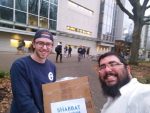
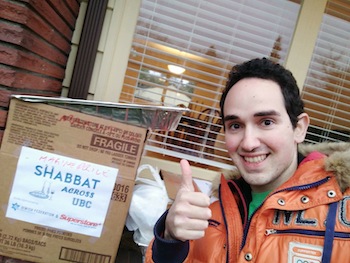
Chabad on Campus, student and other volunteers and Shabbat hosts made Shabbat Across UBC on Nov. 18 possible. (photos from Chabad at UBC)

On Nov. 18, more than 75 students celebrated Shabbat with Chabad on Campus at the University of British Columbia but, this time, they only arrived at Chabad after dinner. Instead of hosting the meal at the Chabad House as usual, there were six different dinners hosted by student volunteers in their residence buildings, after which the students met up at Chabad, where they shared dessert and got a chance to know one another.

photo - Chabad on Campus, student and other volunteers and Shabbat hosts made Shabbat Across UBC on Nov. 18 possibleRabbi Chalom Loeub, who runs Chabad at UBC with his wife Esti, delivered food and supplies, and the hosts invited their friends and neighbors and ran the meal.
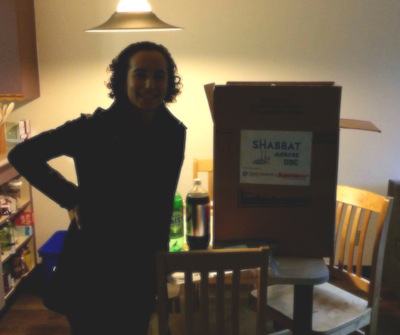
Cordelia Sank is a second-year UBC theatre production student, who volunteered to co-host a dinner in the Fairview Residence block. “Getting the chance to bring together all of the other Jewish students in my residence was very special and inspiring for me,” she said, “and I look forward to attending many more of these dinners in the future.”

photo - Chabad on Campus, student and other volunteers and Shabbat hosts made Shabbat Across UBC on Nov. 18 possibleThe event was a big success, drawing in both seasoned Chabad members and new students, some of whom were experiencing Shabbat for the first time. UBC president Santa J. Ono wrote a letter of congratulation, praising the event as a “wonderful initiative … to build community at UBC.”
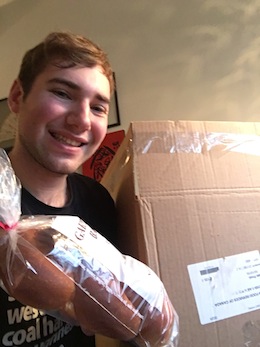
Hani Gorgy is a third-year exchange student visiting from Israel, who has attended many Shabbat meals, classes and programs at Chabad on Campus. “I’ve always felt that Shabbat dinner is a time of spiritual joy,” she said. “Being invited to Shabbat dinners here in Vancouver made me feel welcomed and safe. Meeting so many Jewish people here helped me feel like I’m part of the community.”

photo - Chabad on Campus, student and other volunteers and Shabbat hosts made Shabbat Across UBC on Nov. 18 possibleWeekly Shabbat dinners are only one of the programs that Chabad at UBC offers, including social programs, Torah classes, kosher meals on campus, support and holiday programming for the Jewish community at UBC and other colleges and universities across Vancouver.



The Shabbat Across UBC event was made possible by the sponsorship of the Jewish Federation of Greater Vancouver and the Marine Drive Superstore. Chef Menajem of Forty-One Catering created an impeccable spread, and the student volunteers and Shabbat hosts made this annual event a reality.

For more information about this or other events, contact the Chabad Jewish Student Centre at 778-712-7703, [email protected] or chabadubc.com.

Sydney Switzer is a fourth-year student at Emily Carr University and president of the Chabad Jewish Student Club.

Format ImagePosted on December 9, 2016July 2, 2020Author Sydney SwitzerCategories LocalTags Chabad, Judaism, UBC

Getting through Chanukah

It’s that time of year again! For many, the holiday season is spent with family and is filled with nothing but joy, love, laughter, gratitude and giving. If this is you, you can go ahead and stop reading now…. This piece is for those of us who don’t live on the Hallmark Channel.

Let’s be honest with ourselves. We love our family. At the same time, getting together with our families or our in-laws around the holidays can get stressful, awful or even painful. Some people end up in my therapy office after the holidays, shattered from family celebrations.

If you’re tired of the stressful dynamics in your family, maybe this year it’s time to try something a little different. Let’s call this an early Chanukah list.

Set boundaries. Setting boundaries is the foundation for standing up to the family difficulties that we deal with every year. Maybe the lessons we learned in childhood were to not “stir the pot” and to avoid conflict. The end result of this is that we end up acting as if we are OK when, quite frankly, we aren’t.

When your mother–in-law pulls up an old dig about your weight, you don’t have to sit quietly and let your blood pressure go through the roof. Instead, you can say, “I don’t like it when you make comments about my weight.”

Another way to set boundaries is to put space between yourself and whatever or whomever you’re trying to set boundaries with. You may not be able to control what others say, but you can certainly move yourself to another room or go for a walk.

Don’t regress. Perhaps you always got dragged into being the mediator or the scapegoat in your family when you were growing up. When we, as adults, spend time with our families in the present, we tend to slip back into old roles. Don’t be who you were when you were 14. Be who you are now, even if your family doesn’t see it. If they continue to define you as your past, don’t stoop to their level by doing the same to them. Be the grown-up in the room.

Don’t be held back by the prospect of negative outcomes. You might plan to do things differently around your family, but it doesn’t mean the results will be rosy. You might set boundaries and get a lot of backlash.

This is not advice for the faint of heart. It’s advice to help you survive your family holiday. These are suggestions for people who are tired of getting sucked into the same old family patterns, and are ready to find their voice and get unstuck.

There’s no way to know for sure how your holiday will turn out as you try some of these ideas. At best, you might become a catalyst for actual change in your family and holidays might get better.

But, whether family time improves or continues on as it always has, you can at least know that you are taking charge of your life and taking steps toward a happier you.

Enjoy the latkes!

Lynn Superstein-Raber is a registered psychologist who helps people overcome depression, anxiety and relationship problems. For more information, visit lynnsuperstein.com.

Posted on December 9, 2016December 7, 2016Author Lynn Superstein-RaberCategories Celebrating the HolidaysTags Chanukah, family

Unite in acts of chesed

May 24, 2017, marks the 50th anniversary of a united Jerusalem. In honor of this occasion, the Afikim Foundation, in cooperation with the Israel Ministry of Diaspora Affairs, is launching the Jerusalem50 Global Unity Torah, a global movement that celebrates a reunited Jerusalem with acts of kindness.

“The Global Unity Torah will provide Jews worldwide an unprecedented communal platform to do good and inspire goodness in others,” said Rabbi Raphael Butler, founder of the Afikim Foundation. To purchase a letter, the currency is not in dollars but in acts of kindness.

Individuals and families from all walks of Jewish life will unite with organizations, congregations, agencies, schools and Jewish groups from all corners of the globe to “purchase” their letter(s) in the Torah with acts of chesed (kindness).

With an interactive site in five languages, jerusalem50.org, a social media campaign, pamphlets designed and published in five languages, wall hangings of the sites of Jerusalem set to display in communities around the world, and a traveling exhibition on Jerusalem, the Jerusalem50 movement is set to launch.

“As an innovative incubator, Afikim is where profound Jewish ideas take flight, and we envision Jerusalem50 having a poignant and lasting impact on the Jewish people,” said Butler. “By using kindness as an impetus for change and Jerusalem as a uniting factor, we can transform our world.”

For more information on the Afikim Foundation, visit afikimfoundation.org.


Posted on December 9, 2016December 7, 2016Author Afikim FoundationCategories WorldTags chesed, Jerusalem, tikkun olam
Thousands gather

Thousands gather

(photo by Mendel Grossbaum / Chabad.org)

Rabbis dance with their colleagues at a banquet at the Brooklyn Marine Terminal Pier 8 on Nov. 27. They were among the 5,600 rabbis and guests from 90 countries who gathered in New York for the International Conference of Chabad-Lubavitch Emissaries, an annual event aimed at reviving Jewish awareness and practice around the world. This year’s conference carried added significance, as the North American Jewish community marked 75 years since the Lubavitcher Rebbe – Rabbi Menachem M. Schneerson, z”l – and his wife, Rebbetzin Chaya Mushka, z”l, arrived on U.S. shores from wartorn Europe in 1941. (Courtesy of Chabad.org)


Format ImagePosted on December 9, 2016December 7, 2016Author CHABAD.ORGCategories WorldTags Chabad, emissaries, Judaism
This week’s cartoon … Dec. 9/16

This week’s cartoon … Dec. 9/16

For more cartoons, visit thedailysnooze.com.

Format ImagePosted on December 9, 2016December 7, 2016Author Jacob SamuelCategories The Daily SnoozeTags marriage, thedailysnooze.com
טרודו וקסטרו

טרודו וקסטרו

מנהיגה לשעבר של קובה, פידל קסטרו, שנפטר ב-25 בנובמבר. (צילום: Antônio Milena/ABr via Wikimedia Commons)

ג’סטין טרודו מאבד גובה: תמיכתו בפידל קסטרו גרמה לראש ממשלת קנדה לראשונה לחטוף מכל עבר

ראש ממשלת קנדה מטעם המפלגה הליברלית, ג’סטין טרודו, חטף לראשונה ביקורת קשה מאוד מבית ומחוץ, לאור תמיכתו הנלהבת במנהיגה לשעבר של קובה, פידל קסטרו, שנפטר ב-25 בנובמבר. רבים ממנהיגי העולם המערבי בהם ארה”ב וכמובן מנהיגי האופוזיציה (מהמפלגה הקונסרבטיבית) לממשלת טרודו בקנדה, ביקרו אותו קשות לאור הדבריו שאמר לזכרו של קסטרו. המועמד לנשיאות בארה”ב מטעם המפלגה הרפובליקנית, מרקו רוביו (שהפסיד לדונלד טראמפ), הגדיל לעשות כשאמר: “האם הצהרה זו אמיתית או פרודיה? כי אם זה אמיתי זה מביש”. ואילו פרשן יחסי החוץ של הוול סטריט ג’ורנל, ברט סטיבנס, העיר: “הודעה מחפירה של ג’סטין טרודו. לא ג’סטין, פידל לא ‘שירת’ את העם הקובני. הוא הפך את העם למשרתיו במשך 60 שנה”.

המנהיג הקובני היה ידידו של אביו פייר אליוט טרודו, שהיה המנהיג המערבי הראשון שביקר אותו באי ב-1976, מאז משבר הטילים עם ארה”ב והאמברגו האמריקני. קסטרו לא שכח וב-2000 הגיע להלוויית טרודו במונטריאול. טרודו הבן מיהר לצאת בהצהרה כתובה לאחר שנודע שקסטרו נפטר. בה אמר בין היתר: “פידל קסטרו היה מנהיג גדול מהחיים, ששירת במשך כמעט חצי מאה. היה מהפכן ונואם אגדי, שהביא לשיפור עצום במערכת החינוך וכן מתנגדיו הכירו בהתמסרותו ובאהבתו האדירה לעם הקובני, שרחש חיבה עמוקה ומתמשכת למנהיג”.

האמנם טרודו? מומחה לנושאי קובה וקסטרו, הסופר ובמאי הסרטים, ירון אביטוב, שחי בעבר בקובה, כתב בימים האחרונים רשימה על קסטרו שפורסמה בעיתון מעריב. בין היתר כתב אביטוב: “קסטרו היה אחד העריצים האכזריים ביותר בתולדות המאה ה-20 ונחשב לאכזר ומרושע. הוא רדף את מתנגדיו ורבים הושלכו לכלא ונמקו שם, בעיקר סופרים ועיתונאים. לאורך השנים מאות אלפים גלו מקובה, או ניסו לברוח ממנה למיאמי ברפסודות רעועות, וחלקם נטרפו על ידי כרישים. את הבשורה המהפכנית, שהייתה אמורה לשמש מודל וחיקוי במאבק נגד האימפריאליזם, השחיתות והסיאוב, המיר קסטרו ברודנות מושחתת ומסואבת, שרק מרקסיסטים עיוורים עוד דוגלים בה. במהלך כהונתו העשיר קסטרו את קופתו הפרטית על חשבון העם שהסתפק בנזיד עדשים, עד שזכה להיכלל ברשימת מאה עשירי העולם של המגזין פורבס. קסטרו הפך את קובה לאחת המדינות העניות המרודות בעולם. מדינה שרוב תושביה משתכרים סכומים שלא היו מספיקים לרכישת פלאפל ברחוב דיזינגוף. רוב תושבי קובה מתחננים בפני תיירים שירכשו עבורם תרופות שאין להשיגן, לא מעט מבנותיה מציעות את מרכולתן בשוק הבשר האכזרי, מדינה שסובלת מהפסקות חשמל ומים תכופות, מרבית אוכלוסייתה ניזונה מפנקסי קיצוב וכל אדם שפותח את הפה עלול להיות מושלך למאסר ממושך, ואף גרוע מכך”.

החשש מדונלד טראמפ: ארכיון האינטרנט האמריקני יצור עותקי גיבוי בקנדה

לאור החשש ממדיניותו הבעייתית והמסוכנת של הנשיא הנבחר של ארה”ב מטעם המפלגה הרפובליקנית, דונלד טראמפ, ארכיון האינטרנט האמריקני החליט ליצור עותקי גיבוי לעת חרום בקנדה. בהנהלת הארכיון הדיגיטלי חוששים כי טראמפ מסוגל להפעיל צנזורה קשה שתפגע בחופש הפעולה שלהם, ולכן הוחלט ליצור ‘אתר ראי’ שלא במפתיע ימוקם בשרתים הקנדיים שמעבר לגבול. עלות יצירת עותקי הגיבוי בקנדה תעלה מיליוני דולרים והארכיון מחפש עתה מקורות מימון ותרומות, להפעלת הפרוייקט המסובך.

הארכיון הדיגיטלי האמריקני (שהוא ארגון שלא למטרות רווח) פועל מזה כעשרים שנה, ומאחסן כל העת עמודי רשת. יצויין כי מדי שבוע הארכיון גדל בכשלוש מאות מיליון עמודי רשת חדשים, שכוללים ספרים, סרטונים, תוכנות, מוסיקה ועוד.

Format ImagePosted on December 7, 2016Author Roni RachmaniCategories עניין בחדשותTags Canada, Castro, Cuba, internet, Trudeau, Trump, אינטרנט, טראמפ, טרודו, קובה, קנדה, קסטרו

Posts pagination

Previous page Page 1 … Page 473 Page 474 Page 475 … Page 663 Next page
Proudly powered by WordPress