Juvenile arthritis awareness

Kids on the Block uses a puppet show to teach kids about juvenile arthritis. (photo from Cassie and Friends)

Juvenile arthritis (JA) affects three in 1,000 kids in Canada, making it one of the most common chronic conditions affecting children today. Yet, JA is still relatively unknown and often misunderstood.

According to Jennifer Wilson, executive director of Cassie and Friends Society for Children with Juvenile Arthritis and other Rheumatic Diseases, “Arthritis has been mislabeled as ‘an old person’s disease,’ leaving kids who suffer from JA misunderstood for their differences and the disease’s complications.”

In 2006, David Porte and Debbie Setton discovered that their then-20-month-old daughter Cassie had JA.

“When Cassie was not quite 2 years old, she woke up one morning and couldn’t walk,” recalled her mom, Debbie. “I took her to the children’s hospital and, after X-rays, blood work and several visits by specialists over the next few weeks, we received the diagnosis of JA, a painful, lifelong autoimmune condition.

“Despite being a physician, I remember feeling very scared and alone, especially as Cassie’s disease progressed to involve more and more joints. Both David and I struggled to find information and support to cope with Cassie’s condition.

“About six months after Cassie was diagnosed,” she said, “David entered the Scotiabank Charity Challenge Run. We were overwhelmed with the support we received from family and friends, raising over $18,000 in a few weeks. We decided to do something long-lasting and create a charity that would help other kids and families like us.”

Debbie and David named the Vancouver-based charity Cassie and Friends, and it has been working to transform the lives of kids and families affected by JA and other rheumatic diseases locally and across Canada.

“Cassie’s disease has followed a pretty typical course of flares and remissions,” said Debbie. “At her worst, she had 16 joints affected (knee, ankles, toes, wrists, fingers). During the flares, she was unable to do the things she loves, like dance. In fact, at times, she found it hard just to walk or hold a pen. Thankfully, she is in a remission phase right now, on two different injectable medications to control the inflammation.”

According to Debbie, Cassie sometimes gets sad or frustrated because of her arthritis or its treatment. But, for the most part, Cassie is exceptionally positive and does not let her arthritis stop her. Further, Cassie’s condition has had an impact on her older brother, Ben, making him a more empathetic person after observing his sister’s struggles, said his mom.

“In the beginning, it was difficult for David and me, not knowing anyone else with a child with JA,” said Debbie. “But, now we feel like we have a whole community around us to share in the ups and downs of Cassie’s disease.”

To help kids learn about JA and other rheumatic diseases, David and Debbie created Kids on the Block (KOB) in 2009. And the KOB puppet show has been traveling, mainly around Metro Vancouver, to raise awareness about childhood arthritis, and to educate students and teachers about the issues these children face.

“The life-sized puppets – decked out in Cassie’s toddler clothes – act like real children,” said Debbie. “They help students understand what it’s like to live with JA and their skits illustrate some of the challenges a classmate with JA (or really any disease or challenge) might be facing: pain, isolation, depression and mobility challenges. Students have the chance to ask the puppets questions at the end of the performance. The puppets also help children feel positive about themselves, accepting individual differences and learning valuable personal skills.”
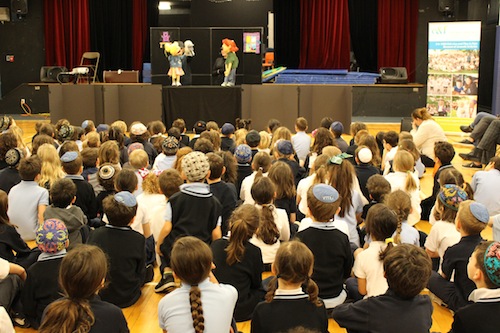
photo - Kids on the Block was at Vancouver Talmud Torah on Jan. 24
Kids on the Block was at Vancouver Talmud Torah on Jan. 24. (photo from Cassie and Friends)

The first-ever performance of KOB was at Vancouver Talmud Torah, when Cassie was in kindergarten. With Cassie about to graduate from the school, the show was brought back for another performance earlier this year. Cassie suggested it would be more special and have a greater impact if she were to introduce the program with her own story. At the show, there were two other children in the audience with either JA or another rheumatic condition.

“It was my suggestion to bring Kids on the Block back to VTT on Jan. 24, 2018, for the younger kids, including my Grade 1 buddy,” said Cassie. “It was fun to introduce the puppet show to the kids. They all know me and I could explain it to them in an easier way, because I am a kid and they are, too.

“I also really enjoyed watching the show again, because I didn’t remember it from kindergarten. After I had done the introduction, I also got many compliments on it because it was in the weekly email.” (Cassie’s presentation can be seen on YouTube.)

“Arthritis in kids is much more than aches and pains,” said Wilson. “JA is a chronic autoimmune disease characterized by uncontrolled inflammation and pain that can occur in any and often several parts of a child’s body. Children with JA will spend countless hours treating their condition and are often confined to the sidelines in sports, school and even life – especially during painful flares.

“For many children,” she said, “JA will also involve complex medical interventions, such as joint replacements, surgeries and aggressive, immune-suppressing medications, like chemotherapy and biologics. There is no cure and there are few treatments that are safe and specific for a growing child. Sadly, that can lead to feelings of embarrassment, social exclusion and even bullying … for a child who is already dealing with a painful, chronic and sometimes invisible disease.”

KOB is 100% free to schools and is intended for students in kindergarten through Grade 4. The show travels to 40 to 50 schools in British Columbia every year. It is supported in part by the sponsorship of Mardon Insurance and Gore Mutual Insurance Foundation.

According to Wilson, Cassie and Friends is the only charity completely dedicated to kids and families affected by juvenile arthritis and other rheumatic diseases. For more information, visit cassieandfriends.ca or email info@cassieandfriends.ca.

Rebeca Kuropatwa is a Winnipeg freelance writer.

Transforming Judaism

Rabbi Benay Lappe, founder and rosh yeshivah of Svara, in Chicago, taught Talmud at Congregation Or Shalom earlier this month. (photo from Or Shalom)

“For all you straight folks, let me tell you – you’re all queer. Your job is to find that queer part of you, wear it on you, walk it through the world. That’s how the world changes.”

Rabbi Benay Lappe, founder and rosh yeshivah of Chicago’s Svara: A Traditionally Radical Yeshivah, made this observation during a lecture at Congregation Or Shalom on March 10. Lappe is a passionate and unique teacher of Talmud, who is “dedicated to bringing the Talmud to the 99%,” meaning the majority of Jews who do not study it.

As Lappe explained at Or Shalom, there are three kinds of queer. The first refers to, as she put it, “me, a lesbian woman, and other people with non-heteronormative sexualities or folks who are trans or non-gender-conforming. The second refers to those who ally themselves with queers, embracing queer culture and rights. The third category is someone profoundly ‘othered’ or marginalized, who owns that experience and walks it through the world as a critique to the mainstream.”

It is in the third sense of the word that Lappe addressed the audience. “The rabbis who wrote the Talmud were a small group of queer, fringey people,” she said, explaining that the talmudic sages were a small group of Jews who responded to a time of crisis in Jewish history with radical creativity. When the Temple was destroyed after centuries of colonization at the hands of the Romans, only one group was poised to respond effectively – the sages who wrote the Mishnah, and their spiritual descendants, who later wrote the Talmud. “When the master story doesn’t work anymore,” said Lappe, “it matters how you respond.”

According to Lappe, for the Jews of that time, some retreated into the old story and built walls around it, many abandoned the Jewish story and assimilated, and a small group remained faithful to the Torah while radically transforming and updating it. The Talmud, she explained, records for posterity how the rabbis evolved Judaism. “The rabbis knew that master stories change,” she said, “and they encoded a set of mechanisms into their new master story that enabled constant change.”

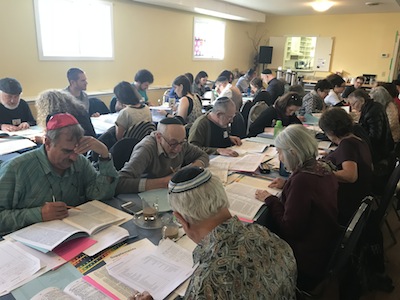
photo - Talmud workshop at Or Shalom
(photo from Or Shalom)

The “new master story” is embedded in the Talmud, which was updated to reflect changing moral and social sensibilities. It shifted Judaism from a Temple-based religion practised in Israel to a home- and synagogue-based one founded on a communal and personal discipline of halachah (Jewish law) that could be practised anywhere. Lappe believes that, through studying the Talmud in a non-fundamentalist way, in a way that gives primacy to the power of our reason and moral intuition in confrontation with the text, we can learn lessons for how to transform and vitalize Judaism today. (Reason is “svara” in Aramaic, the name of her yeshivah.)

According to Lappe, Judaism is once again going through what she calls a “crash,” a shattering of its master story, and the study of Talmud provides us with case studies in how to respond.

Lappe has an enthusiastic supporter in Or Shalom’s Rabbi Hannah Dresner.

“I have known Rabbi Benay for many years; we shared a spiritual community in Chicago,” said Dresner. “She is fun and funny and tough and with the quickest mind. Her crash theory is a different languaging of Reb Zalman Schachter-Shalomi’s theory of paradigm- shifted halachah. This is based on the truth that halachah, as a path, is meant to evolve and move forward, alive in the pilpul, in the wrestling of how we can enact Torah now, in our authenticity.” (Schachter-Shalomi is the founder of the Jewish Renewal movement to which Or Shalom belongs.)

“I always thought I was at the margins of Judaism, being a queer Jewish woman,” said Alicia Jane Fridkin, who attended the weekend teachings. “Rabbi Benay helped me to realize that queer people are not at the margins: we are at the forefront of an ever-changing religion. She illustrated how each era of Judaism began with radical Jews who sought to practise in new and meaningful ways, including the era of rabbinical Judaism that we have been practising for the past 2,000 years.”

Fridkin added, “I immediately blocked off the dates in my calendar for Queer Talmud Camp at her yeshivah, Svara, which I hope to attend this summer.”

Matthew Gindin is a freelance journalist, writer and lecturer. He writes regularly for the Forward and All That Is Interesting, and has been published in Religion Dispatches, Situate Magazine, Tikkun and elsewhere. He can be found on Medium and Twitter.

Limmud is coming up

This year’s Limmud Vancouver takes place April 14-15 at Beth Israel. (photo from Limmud Vancouver)

Limmud Vancouver will be holding its fourth conference April 14-15 at Congregation Beth Israel. The Vancouver program is one of 80 Limmud gatherings around the world, which have developed since Limmud was first founded in the United Kingdom in 1980. Non-denominational and multi-generational, Limmud’s goal is to take participants one step further on their Jewish journey.

Limmud Vancouver opens with a Saturday night event, starting at 7 p.m., that features three diverse presentations. Susan Barocas, the chef and writer who organized President Barack Obama’s Pesach seders, speaks on Tastes Across the Centuries: The Enduring Influence of the Foods of Spain’s Medieval Jews. Laura Duhan-Kaplan, rabbi emerita of Or Shalom and director of inter-religious studies at Vancouver School of Theology, presents Sacred Texts: Three Religious Traditions in Twenty-Five Words or Less. Avi Dolgin, a retired educator who has a longstanding interest in Jewish ritual and midrash – and who also was the founder and first chair of Limmud Vancouver – presents Yonah ben Amitai, Inc.: A Dramatized Midrash. Havdalah and refreshments follow.

On Sunday, the Limmud “buffet” offers a wide variety of speakers, topics and formats. During the day, beginning at 9:30 a.m., there will be five time-slots, with eight presentations in each slot, on subjects such as arts and culture, history, social issues, Israel, healing, spirituality and Torah. Gloria Levi will speak on aging as an opportunity to cultivate wisdom, Dr. Efrat El-Hanany on antisemitic stereotypes in Western art, and Rabbi Binyomin Bitton on a lawsuit about the ownership of valuable manuscripts confiscated by the Nazis. Attendees can participate in Rabbi Susan Shamash’s presentation on women in 19th-century Eastern Europe, in Alden Solovy’s liturgical chevruta and in Miriam Libicki’s talk on cartooning as a way of exploring identity. They can learn from Rabbi Adam Rubin about the revival of the Hebrew language, from Gordon Cherry about Toronto’s antisemitic Christie Pits riot and from Joelle Lake about an enigmatic Qumran scroll found in the Cairo geniza. Current events will be covered in Alycia Fridkin’s presentation on Jewish LGBTQ issues and Rebecca Denham’s session on Jewish addiction community services. There are descriptions of all 40 presentations and speakers at limmudvancouver.ca.

Children and youth programming has been enhanced this year. Limmud collaborates with PJ Library on a session for ages 3-7, with local educators on sessions for kids 8-12, and with the Ismaili Centre in Burnaby on an inter-religious exchange for high school students. Also showcased this year is a children’s hamsa project, dedicated to Ruth Hess Dolgin, z”l, through whom Limmud Vancouver came about.

After attending a Limmud event in Europe, Ruth Dolgin had begun preparations for a Vancouver version when she became ill and, sadly, died, in 2012. Her husband, Avi Dolgin, has carried on with her work. Ruth Dolgin loved and collected hamsas, which have been seen as a symbol of protection and good luck throughout many cultures. Each of the presentation rooms will have a display of hamsa art created by students from the community’s Jewish day schools and after-school programs.

The conference fee is $75 (with special pricing for ages 36 and under). Registration can take place online at limmudvancouver.ca or by phone at 778-776-9215. The fee includes a kosher dairy lunch. In addition to the children’s programs, childcare is available on site, staffed by experienced members of the Habonim Dror Ken Achva.

Limmud gatherings around the world are committed to the egalitarian spirit of volunteerism – all of the organizers and presenters are volunteers, and none of the presenters receives an honorarium. Limmud is funded through donations, and Limmud Vancouver thanks its individual donors, as well as the Snider and Schusterman foundations.

Elizabeth Nicholls is a volunteer with Limmud Vancouver.

Talent agency expands

Back in university, Jeff Jacobson started working in the career he loves – being a talent agent. (photo from Jeff Jacobson)

“When I was a kid, my favourite movie was Jerry Maguire. He was an agent, and I wanted to be one, too,” said Jeff Jacobson, co-owner of Talent Bureau. “Whenever my buddies and I talked about some famous athlete or musician, I wanted to know who represented them.”

Jacobson started on the road to the career he loves when he was at the University of Victoria. “I was a promoter, organized concerts of rap and hip-hop music at UVic,” he said. “We tried to get the performers all they wanted, but I was getting tired of the musicians’ ‘diva’ attitude. I wanted to work with a different kind of performer.”

His chance came in 2007. Still a student at the time, he arranged for Al Gore to speak at the university. “Amazingly, Mr. Gore agreed. He came to Victoria. And I thought: that’s what I want to do. Many people and organizations want speakers at their events. Speakers are much better than musicians. The logistics are easier, too. Musicians often have an entourage, so you need hotels and transportation for at least a dozen people, while a speaker comes alone. Easier to arrange.”

Jacobson graduated in 2008 with a degree in American history. That year, he also organized an event featuring Colin Powell as a speaker.

“History teaches us about great men and women. It’s all about storytelling,” he said. “It’s exactly what I do professionally: bring great men and women to speak to people and help them tell their stories.”

With two powerful speakers behind him already, Jacobson went to work for the National Speakers Bureau. In 2014, he left the company and opened his own, then called Jeff Jacobson Agency.

“I don’t organize concerts or events anymore,” he said. “I’m a middleman. I bring talent and event organizers together.”

He said about 80% of his business comes from speakers.

“When people invite a speaker to speak at their event, they expect more,” he said. “They want social media. They want a YouTube video. We make sure it happens. We facilitate all the extras and help the speakers produce content. We’re a 21st-century agency. We represent the social media generation.”

For Jacobson, being a modern company means that he and his employees aren’t at their small office 9 to 5 every day. Most of their internal communications and business with clients can be done online or over the phone.

“My partner Jeff Lohnes is based in Toronto. We have staff members in Ottawa and in Nelson, B.C.,” Jacobson explained. “At the moment, our team is six people. Last year, we booked talents for approximately 300 events all over the world. We booked speakers for events in Latvia, in New Zealand, but the majority of our business comes from the events in Canada and the U.S.”

In addition to speakers, the agency handles entertainment, mostly bands, but other activities, as well. Companies will come to Talent Bureau, as the company is now called, when they want a celebrity to endorse their product or service, for example. Jacobson listed some of the speakers and organizations he has helped bring together.

“We worked with Rogers and Google, American Express and Sysco, Pfizer and Microsoft. We booked speakers for universities like UBC, McGill and Georgetown,” he said. “Recently, I placed the speakers at the SFU Public Square’s Brave New Work Event – Van Jones from CNN and Anne-Marie Slaughter. I booked former prime minister Stephen Harper to speak at the FarmTech Conference in Edmonton.”

As word-of-mouth has spread about the good job they do, more and more exclusive speakers have been asking Talent Bureau to represent them.

“To handle this level of clients, an agent needs a very thick skin,” Jacobson joked. These clients, he said, “They always want things their way, and we make sure they are satisfied. We also help the organizers to realize their ambitions for their events. We are matchmakers between talents and events.”

In addition to a thick skin, Jacobson said a keen interest in current events and a deep familiarity with pop culture are absolute necessities for his hectic profession. “I have to talk to people in different industries: sports, agriculture, manufacturing, art, science. I have to speak their lingo,” he explained, “be up to speed about everything that happens, be aware of the biggest trends.”

An obsessive consumer of news, Jacobson tweets multiple times a day, but his main focus is people. “You need a sense of humour to handle such a job and you need humility. I always remember that, although I deal with celebrities, I’m not one.”

He also stressed the need to care, to be passionate about his work. “Sometimes, bizarre challenges or obscure requests spring at you, and you must be prepared to deal with them,” he said. “For example, once a client canceled on me…. He was booked to speak at an event but, at the last minute, he remembered his daughter’s graduation and canceled. I had to find a replacement fast. Another time, a client asked the event organizers to build him a canoe on stage. Flexibility is the key.”

In general, Jacobson said he has to prove his value as an agent, earn his reputation every time he books someone. “One of the modern challenges for an agent is the democratization of talent,” he explained. “Everyone has a website. Anyone can approach him or her online, so why do they need an agent? I prove myself by caring about the people I work with. Everyone has a chaotic schedule, and it’s my job to juggle those schedules, to find good opportunities. Every day is like a Rubik’s Cube and, one day, I might even solve it.”

It was just this year that Jacobson and Lohnes rebranded the agency, changing the name to Talent Bureau. “It was a collaborative decision but it’s the right direction,” Jacobson said. “When you say Jeff Jacobson Agency, nobody knows what it is, but when you say Talent Bureau, it’s clear what we do. And we are still new enough in the business to be able to rebrand without damage.”

To learn more, visit talentbureau.com.

Olga Livshin is a Vancouver freelance writer. She can be reached at olgagodim@gmail.com.

Understanding a teen’s brain

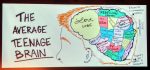
Dr. Mike Teschuk created this image to illustrate how a teen brain prioritizes.

“First thing you’ll notice is the largest lobe is the love lobe,” said Dr. Mike Teschuk, showing an image of how a teen brain prioritizes. “For teenagers, this is the capital lobe. ‘I love my new outfit. I love my girlfriend of two weeks, the latest YouTube video … but not necessarily my parents. Maybe they still do love their parents, but they don’t show it, for sure. You’ll notice, in the smallest corner, is the memory for chores and homework. That’s the smallest part of the teenage brain.”

Teschuk was speaking at a National Council of Jewish Women of Canada event on Feb. 6, held at the Rady JCC’s Berney Theatre in Winnipeg. It offered parents insights and suggestions as to how to best work with their (and other) teens.

Teschuk is a clinical psychologist at the University of Manitoba and with the Winnipeg Regional Health Authority. Besides having parented three adolescents who are now young adults, he has provided clinical services to children, adolescents and parents at the Health Sciences Centre in the department of clinical health psychology for the past 20 years.

According to Teschuk, while addiction to cellphones might be somewhat new, the way a teen brain is drawn to new and different things, and their contempt for authority, has always been present. Knowing this, he said, can help put teens’ odd and/or inconsistent behaviours into perspective for parents, and help them become more effective and empathetic caregivers. Changes that the teen brain goes through can be very intense and overwhelming.

“There is a great little analogy in Ron Clavier’s book Teen Brain, Teen Mind,” said Teschuk. He likens this new, more efficient brain that is emerging to getting a new computer. You get a new computer, it can do so much more than the old one. It takes awhile to get the hang of it, a new operating system. If you’re like me, it can be an intense learning process, sometimes frustrating. Sometimes, you’re overwhelmed. You long for the old computer, because it was more simple. Right? It was more predictable. I think we can feel more empathy for teenagers if we realize that this kind of stuff is happening in the brain.

“These changes create a sense of anxiety and stress. And, though they vacillate, they show signs of more maturity than regression backwards. They don’t want to be treated like a little kid anymore. You get this ambivalence.

“There are interesting studies that show that early to mid teens, when they have to process information and emotional tasks – when you look at the brain with more function and see what’s happening – you see they are using those temporal lobes, the middle of the brain, to process those emotions,” he said. “Eventually, what happens with age is they move into that later stage of adolescence [and] the frontal lobes take over.

“It’s what all parents are waiting for. As the frontal lobes develop, the individual can see into the future more, inhibit their impulsive behaviours, better plan, socialize and make decisions. But remember, this is a work in process,” he cautioned.

Teens become more able to consider hypothetical ideas and are more flexible in their thinking, he said. “You begin to see it by 12, 13, 14 years old – they can consider alternative possibilities. What if there is no God? What if I decide not to continue dance class or hockey … these activities my parents signed me up for when I was 5 years old?”

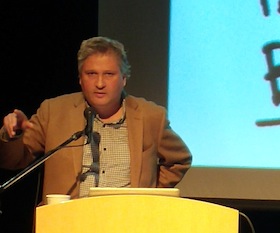
photo - Dr. Mike Teschuk spoke at a National Council of Jewish Women of Canada event on Feb. 6, held at the Rady JCC’s Berney Theatre in Winnipeg
Dr. Mike Teschuk spoke at a National Council of Jewish Women of Canada event on Feb. 6, held at the Rady JCC’s Berney Theatre in Winnipeg. (photo by Rebeca Kuropatwa)

Teschuk is a big proponent of looking at situations from the other person’s perspective. He said laying down the law and being confrontational does not work well with teens. He suggested instead to take the time to understand why they do things a certain way, and to find a way to work together to create a better outcome. This can be done by asking questions and listening, by dialogue.

“So, how do all these changes impact self-esteem?” he asked. “We know it has a big impact. Research says self-esteem often declines during early adolescence, and then improves again as they get a bit older. The idea is there can be discrepancies between who you are and who you think you should be. [Teens] start to reflect on how they are not the ideal person they want to be. At this stage, teens need a lot of reassurance from us. There is a symbolic kind of transition that has to happen. Like, in our family, the transition from the kids’ table to the grown-ups’ table. Going to the grown-up table is about also having your own views to express.”

According to Teschuk, at around 14 years of age, teens go through a “rejecting stage,” they don’t want to be with their parents at all. They want to pretend they don’t even have parents. But, Teschuk reassured the 100-person audience by way of personal example, his 23-year-old daughter, who went through this stage, now likes to go out for coffee with him – so, these things, too, shall pass. Your kids will not feel the same way at 23 as they did at 14, he said.

As parents, he said, we need to recognize that this is a normal stage of development. You don’t have to argue about it or be upset about it. Your teens will feel the need to reject a lot of the things they had until then taken for granted. They want to be independent, but it’s daunting for them.”

According to Teschuk, parent-to-adolescent connectedness is very important, especially when things are rough. Simply by hanging in there as a parent and showing how much you care has a large impact, he said, acknowledging that this is the most fundamental, yet hardest, thing to do when teens push back. “It’s easy to want to reject them, when someone is making your life very difficult,” said Teschuk. “It’s natural to feel that way, but, being able to hang in there is huge.

“Relationships with adults outside the family are important, too – with teachers, coaches, people in church or synagogue, extended family members – having other trusted adults. School connectedness is super-important, too. Schools offer so much more than academics,” he said. “If teens want to go to school because they’re on sports teams, in a play, or some other engaging activities … follow their lead and support them in those interests. Positive peer environments are important … but, of course, parents can have a role in creating those peer environments. Knowing your teenagers’ friends … and making your house a place where they want to hang out is a great strategy.”

Teschuk offered a couple of other tips. He suggested that parents, when driving their kids around, take the time to talk with their children and to connect with them. Also, he said, talking with them in this way gives the teens the chance to talk without being face-to-face, which can be uncomfortable and stress-inducing. Last but not least, Teschuk said family meals are also a great time to connect.

Rebeca Kuropatwa is a Winnipeg freelance writer.
Demystifying nutrition

Cara Rosenbloom is trying to educate people about nutrition. In 2016, she co-authored the cookbook Nourish. (photo from Cara Rosenbloom)

When grocery shopping, how do you decide what to get when you are looking at items not familiar to you? Do you look at the ingredients? Are you drawn to packages that claim to be natural, whole food, organic?

Marketing and manipulation often go hand in hand. And it can be challenging to differentiate between products that actually offer added value and those that just say they do.

For the past 10 years, dietician Cara Rosenbloom has been running Words to Eat By, which provides nutrition education. For example, what does organic really mean in terms of food and nutrition?

When it comes to a product’s organic claims, Rosenbloom said, “I think the most important thing that people need to know about organic is that the word has nothing to do with health. An organic claim on a food does not mean it’s healthier for you. Organic is a method of farming.

“The use of the term ‘organic’ is regulated in Canada and has very clear guidelines about which foods can have that term stamped on it. It has to do with how that product – if it’s an animal, how it was raised … or, if a plant, how it was grown. But, once that organic product is used in a food product, the resulting food may not be a health food. Perfect examples are Kraft Dinner and Doritos. They now have organic versions. Those are not health foods.”

photo - Cara Rosenbloom
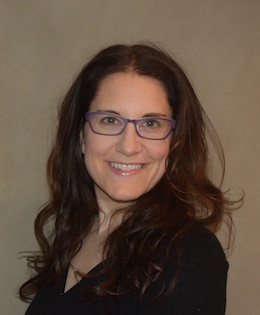
Cara Rosenbloom (photo courtesy)

Rosenbloom said claims that organically grown foods contain fewer chemicals are misleading. “Even foods that are grown organically still use pesticides and fertilizers. They’re just organic versions of it,” she said. “The word ‘chemical’ is not used appropriately in nutrition literature, in the way the media describes food. Many things are chemicals and aren’t bad for you. Water is a chemical! You need a degree in chemistry almost to understand how molecules are put together…. If you think organic food is just grown naturally in the sunshine, you’re wrong. Organic farmers use natural pesticides and herbicides. If you want to call those chemicals, too, then that’s fine.”

Rosenbloom writes a monthly column in the Washington Post, where she focuses on debunking myths and educating the readers about wellness, so people can make informed decisions about their nutrition.

In her interview with the Independent, she touched on how people get scared off by the “dirty dozen,” a list of fruits and vegetables believed to contain the highest amount of pesticides. In 2017, the Environmental Working Group’s dirty dozen were strawberries, spinach, nectarines, apples, peaches, celery, grapes, pears, cherries, tomatoes, sweet bell peppers and potatoes.

Rosenbloom explained that, too often, consumers avoid buying produce altogether if they can’t find organic versions. “That’s obviously the wrong message, and not what any dietician would recommend,” she said. “I wrote an article about how the dirty dozen list doesn’t hold weight in terms of pesticides. It’s a flawed list and has no scientific credibility. I educate people that organic is fine if you choose that, but not to fear fruits and veggies that are conventionally grown. The bottom line is that you need to eat fruits and veggies, whether you choose to eat organic or not, because they’re just a healthy thing in the diet.”

In that Jan. 18, 2017, Post article, Rosenbloom interviewed food toxicologist Carl K. Winter about the dirty dozen list, which, he said, “failed to consider the three most important factors used in authentic risk assessments – the amounts of pesticides found, the amounts of the foods consumed and the toxicity of the pesticides.” And, she notes, “Even the Environmental Working Group doesn’t recommend avoiding the items on its own dirty dozen list. Their website says ‘the health benefits of a diet rich in fruits and vegetables outweigh the risks of pesticide exposure. Eating conventionally grown produce is far better than skipping fruits and vegetables.’”

As for the claim that a product is natural, Rosenbloom explained that, while the organic label is closely regulated, the natural label is not. “Anything can be deemed natural,” she said. “So, it’s not something you want to count on. A lot of foods that are high in sugar, let’s say, can still say they are natural, because sugar comes from plants and that’s natural.

“The word natural doesn’t have a base definition that companies must satisfy in order to use that term on their foods,” she continued. “So, if you look at a product that says it’s natural, it doesn’t really tell you what that means. It lets you figure it out.

“We’re seeing more big companies that make processed food use the word natural – and misuse it. And this is leading to fewer consumers having any trust in the label natural.”

When it comes to vitamin supplements, Rosenbloom said more is not better. “There are certainly times when your body does need certain vitamins, but a lot of people are spending a lot of money on vitamins they just don’t need,” she said. “Then there are false promises made with things like vitamin IV drips and other popular myths.”

Rosenbloom has written about how to tell the difference between processed, ultra-processed and whole foods, as well as how to buy seafood that is produced in a safe, sustainable way, and much more. In 2016, she co-authored a cookbook with Chef Nettie Cronish, called Nourish: Whole Food Recipes Featuring Seeds, Nuts and Beans. It features 100 recipes, all of which are original and co-developed by the authors.

“We focused on beans, nuts and seeds in the book because these are nice sources of protein,” said Rosenbloom. “And nuts and seeds are healthy fats that are underutilized by most people in the diet, with most people relying mainly on animal-based foods for their protein. We wanted to explain that you can include seeds, nuts and beans in everyday recipes, and these 100 recipes show them how.

“It’s not solely a vegetarian cookbook,” she added. “It encourages people – wherever they are at, vegetarian or not, whoever wants to buy the book – to try out the recipes, which include meat, chicken, fish, seafood and vegetarian.

“The idea was to say, ‘Whatever you’re eating, here’s a way to add seeds, nuts and beans, to get more of those healthy ingredients into your diet.’ Take salmon, for example. It might be crusted with sesame seeds, or oatmeal might have some hemp seeds or flax seeds in it. So, we just enrich foods you eat anyway with the goodness of seeds, nuts and beans.”

Rosenbloom is on Facebook and Instagram (Words to Eat By) and her website is wordstoeatby.ca. For her latest Post articles, visit washingtonpost.com/lifestyle/wellness.

Rebeca Kuropatwa is a Winnipeg freelance writer.

Separate but connected lives

“I remember the deep pleasure I had as a child when I first began reading,” author Méira Cook told the Independent. “It was like climbing into a book and pulling the covers down over my head. When I write, I feel as if I’ve returned to that world. My greatest wish is that readers experience the absorption in reading my novels as I’ve had in writing them.”

Cook’s latest novel – her third – is Once More With Feeling (House of Anansi Press Inc., 2017). Readers will be immediately drawn in by the cheerful, optimistic and a bit naïve Max Binder, whose “many friends tend to exaggerate the dozens of half-full glasses – and some of them considerably less than quarter-full, it’s been pointed out by a couple of the more sour and dill-picklish ones – that he has eagerly poured into another until presto, not only is the glass full but it runneth over.”

Because, for Max, “hope is not merely a feathered thing, a bird, or an equation for water and glass. Hope is where he lives, where he hangs his hat and unbuckles his belt.”

So begins Once More With Feeling, with Max at the airport – where he’s never been “without running into someone he knows, however tangentially” – to pick up a visitor he’s invited as a surprise for his wife Maggie on her 40th birthday. The light tone lulls readers unfamiliar with Cook’s previous work into the expectation of a nice, light read, albeit one full of insight into human nature and wry observations on life. But, while there is much humour throughout, the novel is substantive and serious, and the writing demands that readers do some work.

The story of the Binder family – Max, Maggie and their two sons – and the community they live in, Once More With Feeling “explores how different family members are affected by tragedy, and how the Binder family’s trauma ripples out into the larger community,” explained Cook. “The novel began as a series of linked short stories centring on the Binders, but also veering off into other characters and situations. The structure I’d envisioned was of a year in the life of a city (Winnipeg), with each story taking place during a different month. I loved that sense of turning seasons and changing weather that we prairie folk experience so keenly.

“In the process of writing Once More With Feeling,” she continued, “I began to realize that, while we often like to believe that we are the protagonists of our own autonomous stories, really we are all connected, all linked in hidden and sometimes unexpected ways, all parts of a larger novel. In Winnipeg, we cherish the fond belief that we’re connected by two degrees of separation rather than the customary six degrees. I wrote my novel with this in mind – that people who live in different parts of the city, different neighbourhoods, are nevertheless connected not only through mutual friends and acquaintances but also in their shared humanity.”

The connections aren’t always easy to make in Once More With Feeling, and readers who like linear narratives will find the novel challenging. Some of the chapters have little to nothing to do with the Binders. But Cook is a master at creating characters – and Winnipeg would be one of the many in this book – that seem real, like people we know or have known, or who resemble ourselves in ways. The writing is excellent; many passages are hilarious, others are breath-catching. Cook is a perceptive observer and intelligent commentator. Perhaps not surprisingly, she was a journalist in her home country of South Africa.

“I came to Canada in the early nineties and lived for a couple of years in a small town three hours north of Winnipeg,” she said. “I’d previously lived an entirely urban existence in a large, bustling city, Johannesburg, where I was a film and drama reviewer. Suddenly, I found myself in a very small town (the population was about 500), where I could no longer work as a journalist. I’d never seen snow before and, since I’d arrived in February, there was an awful lot of it. I experienced culture shock as a devastating loss of identity, the loss of everything I’d known before. When I looked out my window, the snow seemed as white and blank as a page. I began to write – first poetry, later fiction – as a way of leaving my mark on that page.”

In addition to her three novels, Cook has published five books of poetry. In Canada, she also has lived on the West Coast for a spell.

“My husband and I lived in Vancouver for four years while we were studying. In those four years, I received my PhD in Canadian literature and had three children,” she said. “Despite how fertile a place Vancouver was for us, we returned to Winnipeg for work reasons. (Perhaps we were afraid that if we remained in Vancouver we’d have another three children!) My daughter had her naming ceremony and my twin sons had their britot at Beth Israel Synagogue on Oak.”

image - Once More With Feeling coverOnce More With Feeling has numerous Jewish aspects, from several characters, including Max, to topics such as the Holocaust, and how we remember and learn from it.

“Maggie isn’t Jewish but I didn’t have a specific reason for this in the sense of wanting to portray an intermarried couple,” said Cook. “I was interested in representing a city that is as diverse and vibrant as the Winnipeg I live in.”

For Cook herself, she said, “Judaism has always been important to me but I didn’t always feel that I was important to Judaism. When I was growing up in Johannesburg, my family attended an Orthodox synagogue and I often felt excluded and sidelined as a young girl and, later, as a woman.

“Through the years, I found my way back to my lost religion via the Conservative movement. My family attends an egalitarian synagogue in Winnipeg, where we sit and pray together, and where my daughter had her bat mitzvah six years ago. Watching my daughter reading from the Torah was such a deeply meaningful experience; it inspired the section of the book related from the point of view of the mothers watching their children grow up and become sons and daughters of the commandments.”

This chapter – called “Tree of Life” – is especially poignant, while also providing a critique of various social mores with wit and tenderness. And Cook doesn’t only put a lens on the Jewish community, but also on larger societal issues, such as racism toward First Nations people and the problem of homelessness.

“I don’t censor myself when I write but I certainly do when I revise,” she said about tackling controversial subjects. “Stephen King once said: ‘Write with the door closed, edit with the door open.’ And Hemingway is supposed to have advised: ‘Write drunk, edit sober.’ The model I follow is less decadent but similar in intent: write in a dream, edit when you wake up.”

And how does she know when to step away from the keyboard?

“There is a point where the writing doesn’t feel personal anymore. The story that has for so long been floating in your head or been messily transcribed from longhand notes to a Word document, that story hardens into conviction, becomes real.”

Music that entertains, heals

(photo from jaegerreidmusic.com)

An unexpected kindness reignites a passion for music, which offers an outlet for grief, as well as a new career path. A chance meeting turns into a mutually supportive, productive and enduring musical collaboration. We often forget how much of a role luck – fate, destiny, whatever we call it – plays in our lives. For Judi Jaeger, two occurrences stand out, with relation to her singing and songwriting.

From Way Up Here is Jaeger’s first CD with Bob Reid; she has two prior solo recordings. Released last summer, From Way Up Here features original music by both Jaeger and Reid, as well as covers of some of their favourite songs.

While Reid “is a California native and a fourth-generation Californian on his father’s side,” Jaeger told the Independent, he lived in “Calgary for awhile in the ’70s and also hitchhiked across Canada along the Trans Canada Highway in 1969.”

Jaeger, who lives near San Francisco, moved to California more than 20 years ago, after living in Seattle for almost 10 years, she said. “We moved here because of my husband’s job. We settled here and this is where we have raised our two children, our son Nick, who is 19 and a freshman in college (first year), and our daughter Emma, who is a junior in high school (Grade 11).”

But Jaeger was born in Ottawa. And she spent her teen years in Vancouver – “I went to Eric Hamber High School … where I sang in the swing chorus, played the flute in band class and was in some of the musicals” – as well as attending University of British Columbia. “I am still Canadian deep in my soul despite living in the States for many years,” she said.

Jaeger learned to play guitar when she was 15 – her brother, who is five years older, taught her the basic chords. “I played and sang folk songs for myself, and for friends when I went to Young Judaea summer camps,” she said. “When I was 20, and very busy – I was in college (I went to UBC for a few years and Carleton in Ottawa) – I put it away and didn’t touch it for 25 years.

“I picked it up again through some serendipity when a woman who was working for us as a nanny took my guitar, unbeknownst to me, to be restrung and presented it to me saying, ‘Here it is, now you can play it again,’ because I had been making noises about writing a song to deal with the lingering grief over my mother’s passing a few years before.

“So, I started playing it again after many years. And then, I wrote a song about my mother, which is called ‘Greedy Crime.’ I didn’t know anything about songwriting,” she admitted, “I just wrote a song – sat down and wrote the lyrics in one sitting and then, about a week later, sat down with my guitar and wrote a melody.”

One listen to this beautiful and moving song, which was released in 2007, and it’s obvious that Jaeger has natural talent. But she wanted more from herself.

“Once I had written a song,” she said, “I decided to learn something about songwriting, so I began to take a class at a local guitar shop in Palo Alto, Calif. From there, I began going to open mics to sing and play my original songs.”

Jaeger played in a band for a few years and was in another duo for about five years.

“Through my songwriting community, I learned about an acoustic music camp for adults called California Coast Music Camp,” she said. “It is a nirvana experience where about 100 adults attend a one- or two-week camp to study and play acoustic music. You can learn a new instrument or work on the one you play already. There are concerts and workshops and classes. It is collaborative, supportive and educational all at once. It was the best experience. I went about five times.

“That is where I met Bob Reid. He was one of the instructors at the music camp one of the years I went. On the last night of camp, they always have an enormous Beatles jam. Imagine 40 or 50 people sitting around in a large circle, playing guitar, ukulele, banjo, mandolin, bass, etc., and singing songs together. So, I was standing on the outside of the circle, singing, and Bob was walking around the circle singing harmony with people (he is particularly talented at harmony singing, and part of what people love about our duo is our blend) and he just happened to stop next to me and we hit a note that made him look at me and say, ‘wow.’ That was the extent of our meeting at the camp, but we ran into each other a few more times in the Bay Area, always at music camp events and there was always playing and singing at these events, and people kept saying, ‘Your voices sound so good together.’ So, after awhile, we decided to do something about it, and we formed a duo.”

Reid has sung and played guitar and many other instruments for his whole life, said Jaeger. “He grew up in a musical house – his parents owned a record store in Berkeley, Calif., his mother was a singer and songwriter in the ’60s and ’70s, and his father was a gospel music promoter,” she said. “Bob has played music for adults and for children, in schools and in concerts and at festivals all across the United States.”

Jaeger also grew up in a “home that was filled with music,” as well as “the beautiful cultural aspects of being Jewish, like wonderful food, family gatherings and loving extended family,” she said. “I went to Young Judaea summer camps for years, where there was always singing and dancing and plays. My mother played guitar, my brother played guitar, and my father loved music. We had a record player and lots of records. So, while I am not religious, and not even practising any faith, I have very warm feelings about Jewish culture.”

Jaeger is the daughter of Max Roytenberg – an occasional contributing writer to the Jewish Independent, and the proud father who alerted the JI to Jaeger’s latest CD – and Lorraine Davidson, who died in White Rock, in December 2004, at the age of 71. “And she had been declining for at least 10 years,” shared Jaeger. “So the ‘loss’ began when she was very young. She had a degenerative brain disease like Alzheimer’s.

“I felt cheated and thought she was cheated, too, and I felt angry that she didn’t get to enjoy her senior years or her children and grandchildren as she might have – my children were 3 and 6 when she passed away. I carried those feelings around for a couple years. One day, I just started thinking about this idea, that I would write a song about how I was feeling, even though I had never written a song before. I thought about this for a few months. I love music and always have, and I’ve always loved to sing. Then my guitar came back into my life with fresh strings (as I explained) and this gave me my outlet.

“I thought that maybe if I talked about how I was feeling that it might help other people who were dealing with or had dealt with the same problems and feelings,” she explained. “I can’t tell you how many times after a concert when we have sung ‘Greedy Crime’ people have come up to me and told me how much it meant to them, how they had experienced something similar and how moved they were. I had previously recorded ‘Greedy Crime’ and included it on an earlier solo album but that was many years ago and the song was overproduced. Bob is the one who encouraged me to include it, sung our way, on our first album as a duo because he feels it is such a powerful song. And, with his harmony, it is even more powerful.”

CD cover - From Way Up HereAnother powerful song on From Way Up Here is Jaeger’s “Love Caught Her,” written for the organization Community Overcoming Relationship Abuse (CORA). Jaeger was a lawyer, until she retired from the profession in 1997.

“As a family law attorney,” she said, “I saw domestic violence in my practice. It was there. I began to support my local domestic violence prevention organization (CORA) and I became friends with the executive director. Many years later, when she learned about my songwriting, she asked if I would consider writing some songs for them, and coming to perform them at a fundraiser they were having. I agreed and I wrote two songs for them in 2011. One of them, ‘Love Caught Her,’ is on our Jaeger & Reid album; the other song has never been recorded.

“Then, a couple years ago, the director asked if Bob and I would come to sing at an event they were having to honour people who had died from domestic violence. It was called Voices Not Forgotten. We agreed. When we couldn’t find just the right song to sing at this event, we decided to write it instead. Bob and I wrote a song called ‘Not Another.’ We have played it for CORA two years in a row at the same event. There is a video of this song on our Jaeger & Reid Facebook page, facebook.com/jaegerreidmusic.”

Jaeger and Reid play “house concerts and listening rooms in many different cities in the United States.” The pair came to Vancouver and Salt Spring Island last August, soon after their CD release, and they are hoping to get back to Canada this year.

From Way Up Here was recorded by multiple-Grammy-nominated producer Cookie Marenco at OTR Studios in Belmont, Calif. The title track, explained Jaeger, “is a song that was written by Malvina Reynolds (who wrote ‘Little Boxes’ and ‘Turn Around’ and some hits for the Seekers) and she gave the lyrics to her friend Pete Seeger, who wrote the melody. Bob, who was close friends with Pete and Toshi Seeger for 25 years, had always wanted to hear that song with harmony. It’s his arrangement on our album and is a powerful song.”

As for the original songs on the CD, Jaeger said, “We picked each for its story and its sound and then we brought in other musicians, all friends of either Bob or me, to add their own touch. We recorded so many songs when we were working in the studio that we have enough extra to almost release our second album. But, we have been writing new songs together for the past couple years now, so we have many new ones to record, as well. It is our goal to get our second album recorded and completed quickly.”

If it at all compares to their first recording, it is an album to eagerly anticipate. For more on Jaeger and Reid, visit jaegerreidmusic.com.

Champions of Jewish values

Left to right, Dr. Mehmet Oz, Rabbi Shmuley Boteach, Sean Spicer and Ron DeSantis, at the Champions of Jewish Values International Awards Gala in New York on March 8. (photo by Dave Gordon)

What do an American soldier, a former athlete and a former U.S. press secretary have in common? According to the World Values Network (WVN), they are all – in their own way – defenders of the Jewish people and Israel.

The Champions of Jewish Values International Awards Gala took place on March 8 in New York City at the Plaza Hotel. The event was led by well-known rabbi and author of 32 books Shmuley Boteach, director of WVN.

Several awards were given out, honouring individuals who, according to the network, have shown exemplary actions to further the causes of human rights and the defence of Israel in the public forum.

Former Olympian and reality star Caitlyn Jenner was given the Champion of Israel and Human Rights Award.

“I’ve been thinking about the Jewish community, and how it has affected me several times in my life,” she said. Her father, William Jenner, was part of the unit that liberated Buchenwald concentration camp. Later in life, he showed Caitlyn the pictures that still haunt her to this day.

Jenner broke the decathlon Olympic record in Montreal in 1976. In the 1972 Olympics in Munich, a then-22-year-old Jenner witnessed the terror activity from an adjacent dormitory.

About Israel, she said the Jewish state’s example “should be followed, as a nation that has succeeded in dissolving many of the prejudices against the trans and gay communities. It is now celebrated as having the best city in the world for gays – Tel Aviv.”

She added that Israel is one of only 19 countries where members of the trans community can serve in the army.

In an overall message of inspiration, she said, “Our communities have no borders and our love is without borders. Every person in the world deserves to receive dignity.”

The Elie Wiesel Award was posthumously given to Yonatan Netanyahu and Taylor Force. Netanyahu was killed in the line of duty in the 1976 Entebbe rescue, and Force was a U.S. soldier killed by a Palestinian terrorist in Tel Aviv on March 8, 2016, exactly two years prior to the gala event.

During his life, Wiesel, among other things, wrote the book Night, in which he narrates his own experience as a young boy in Auschwitz death camp, as well as more than 35 other publications dedicated to the subject of the Holocaust.

In introducing the award, American television show host Dr. Mehmet Oz noted, “Elie Wiesel saw a spark of dignity in everyone that he met.”

In presenting the award, Elisha Wiesel (Elie’s son), spoke about how the Force family is advocating for the cessation of American aid to the Palestinian Authority until the PA stops financially rewarding terrorist acts. It is through the Forces’ efforts that the Taylor Force Law has been passed by Congress and now only needs a signature by President Donald Trump to become law.

Accepting the awards were Yonatan’s brother, Israeli Prime Minister Binyamin Netanyahu, via a previously recorded video, and Taylor’s father, Stuart, mother, Robbi, and sister, Kristen.

“Elie Wiesel showed such devotion to our people and showed that we control our destiny,” said Netanyahu in his remarks. “Elie spoke to the soul of our consciences. He was a great warrior on the battlefield of conscience, and can inspire many of us on our own quests for justice.”

As for other honours that were given out, Florida congressman Ron DeSantis was given the Falic Family Defender of Israel Award. In his acceptance, DeSantis said he led a trip to Israel last March to look for appropriate sites for the new U.S. embassy in Jerusalem. The embassy is slated to open May 14, coinciding with the 70th birthday of Israel. DeSantis ended his speech by saying, “At least in terms of the embassy we can say, ‘this year in Jerusalem.”’

Sean Spicer, former White House press secretary, was given the Friend of Israel Award. Of Trump, he said, in regard to how the president would treat Israel, “We knew he was going to be a real friend who was going to get results.”

Dave Gordon is a Toronto-based freelance writer whose work has appeared in more than 100 publications around the world.

A grandfather’s sins

Prof. Roger Frie’s  Not in My Family rises above the merely personal (image from cenes.ubc.ca)

Forty-three years ago, at Vancouver’s first Holocaust Symposium, for which I was the chair, the keynote speaker was the Lithuanian partisan fighter Leon Kahn. His presentation to a large group of high school students described, among other things, how he watched, in hiding, while his mother and sisters were raped and murdered by members of the Einsatzgruppen – the murderous “task forces” mandated to kill Jews by gunshot (the so-called “Holocaust by bullets”) in German-occupied countries. Approximately two million Jews were murdered by the Einsatzgruppen.

After Leon was finished speaking, a tall, blond, blue-eyed boy walked slowly up to the podium. He was, he said, of German origin, and wanted to apologize to Leon. His face revealed how devastated he was. Leon shook his hand and told him, “Look, it wasn’t your fault. Now go on and live your life.”

That was my first experience with deutsche Schuld, German guilt.

There are literally hundreds of books and websites approaching deutsche Schuld from every angle. The author of Not in My Family: German Memory and Responsibility After the Holocaust (Oxford University Press, 2017) is Roger Frie, a Simon Fraser University professor and locally practising psychotherapist who is a third-generation German-Canadian. Based on his profession, he addresses the issue of German guilt in the present book from a personal psychological perspective, using his fear of being exposed as a “bad German,” along with his experience with inherited guilt, as his templates.

Frie’s Not in My Family was triggered, he says, by his mid-life discovery, long hidden by his family, of his beloved grandfather’s Nazi past. The book invites us to follow him as he slowly builds up the courage to go to the archives in Berlin to find the documentation revealing his grandfather’s Nazi membership and wartime activities.

“Opa” was hardly a high-ranking Nazi functionary, it turns out: he was “an ordinary German,” who operated, for all intents and purposes, as a minor motorcycle repairman. (Frie writes more about this apparently apolitical “motorcycle club” later in the book, but one is still left to wonder how the author, already heavily burdened with inherited guilt, would have felt if his Opa were discovered to have been say, a camp guard, or a member of the Totenkopfverbaende, the infamous Death’s Head Units.)

Ironically, Frie has professionally analyzed children of Jewish survivors, and some of his most intimate reflections arise from his wrestling, during these sessions, as to whether or not to reveal that he is himself of German heritage.

image - Not in My Family book coverConstantly throughout Not in My Family, Frie reiterates that he “has an obligation to remember the past” and, while remembering, he has many sincere reflections on post-Holocaust German guilt and responsibility, complicity, prejudice, cowardly denial and “shameful silence” of past issues, as well as, of course, the “need for redemption” and “the problematics of trauma,” especially of his own, rooted in a questionable notion of vicarious perpetration, three generations down the line.

On this last point, clearly, there was a therapeutic dimension for the writing of Not in My Family: it reflects on every page. But the book rises above the merely personal. For example, Frie is brutally honest in rejecting the moral camouflage of the “Germans suffered too” ilk, and on the need to be suspicious of Germans who feel “deluged” with the Holocaust.

Near the end of Not in My Family, Frie reflects that “writing can be a form of discovery, of examining life and making sense of the past.” This book, for him, he admits, was “personally meaningful” and “emotionally draining.” But if, as he puts it, the book “creates a space for dialogue and reflection on the nature of German memory and the Holocaust,” it is a valuable contribution to an ever-growing body of knowledge about how the greatest crime in human history came to be perpetrated by, among others, affectionate, family-loving, probably not dogmatically antisemitic, minor motorcycle repairmen.

Graham Forst, PhD, taught literature and philosophy at Capilano University until his retirement and now teaches in the continuing education department at Simon Fraser University. From 1975 to 2010, he co-chaired the symposium committee of the Vancouver Holocaust Education Centre.