In his first Olympic-distance triathlon, Daniel Meron placed first in the men’s 30-34-year age category. He topped his category in the University of British Columbia Triathlon March 10.
Olympic triathlons see participants swim one-and-a-half kilometres, cycle 40 kilometres and run 10 kilometres. In a sprint triathlon, which also took place the same day, participants swim, cycle and run half those distances. Meron competed in his first sprint triathlon last August.
“I did my first triathlon on a whim,” he said. “I take part in a local boot camp called November Project [a free fitness movement that began in Boston and has spread to other cities]. They exercise at Queen Elizabeth Park every Wednesday morning. I started going over the summer and just began to get to know some truly phenomenal people, people who regularly win or place in ultramarathons, which are 100-kilometre runs that take place over two or three days. I thought I would like to try some sort of event.”
Meron regularly cycles about 16 kilometres to work and has been a lifeguard and swimming teacher for the City of Burnaby since 2004.
UBC Triathlon participants were equipped with timing sensors that measured when they began and finished each segment of the competition. Results were not released on the day of the event, and Meron was pleasantly shocked when he checked his results online.
“It came as a bit of a surprise,” he said. “It was obviously a huge accomplishment just doing an Olympic distance for the first time and so, honestly, winning my age category was just gravy.”
Meron, a UBC alumnus, is a former Hillelnik and served as vice-president of the UBC chapter of the traditionally Jewish fraternity Alpha Epsilon Pi. He is also an actor and acting teacher.
He is slated to do three or four more triathlons in the coming months.
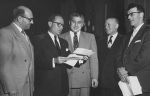
B’nai B’rith, circa 1970. (photo from JWB fonds, JMABC L.09551)
If you know someone in this photo, please help the JI fill the gaps of its predecessor’s (the Jewish Western Bulletin’s) collection at the Jewish Museum and Archives of B.C. by contacting archives@jewishmuseum.ca or 604-257-5199. To find out who has been identified in the photos, visit jewishmuseum.ca/blog.
Pigeon bones from 1,500 years ago. (photo from University of Haifa via Ashernet)
Israel’s Negev Desert has not always been a dusty, almost treeless place – 1,500 years ago, many parts of the Negev were green and produced basic foods. And a new study – led by Dr. Nimrod Marom of the University of Haifa and Tel Hai College, in cooperation with Prof. Guy Bar-Oz and Dr. Yotam Tepper of the Institute of Archeology at the University of Haifa and Dr. Baruch Rosen of the Volcani Centre – reveals the first archeological evidence of the role played by pigeons in Byzantine agriculture: improving and fertilizing soil in vineyards and orchards. Among other goals, the researchers are interested in understanding how the Byzantines managed to maintain a broad-based agricultural system in the desert, and what led to the sudden abandonment and eventual collapse of these flourishing communities.
שגרירת קנדה בישראל, דברה לאיונס, נפגשה לאחרונה עם ראשי הפדרציה היהודית של ונקובר, נציגים של ארגונים יהודים ואנשי עסקים בוונקובר. השגרירה לאיונס כתבה בעקבות הביקור מכתב לפדרציה ובו אמרה בין היתר: “קנדה מאמינה בפתרון שתי המדינות והיא תמשיך לעבוד לקראת מטרה זו, כדי להשכין שלום בין בין ישראל לפלסטינים. לדברי שרת החוץ הקנדית לאור הכזרתו של נשיא ארה”ב” דונלד טראמפ, “מעמדה של ירושלים יבוא לידי פתרון רק במשא ומתן בין הצדדים. אנו ממשיכים במחויבות שלנו להשגת שלום במזרח התיכון, הכולל הקמת מדינה פלסטינית לצד ישראל”. אני עובדת מקרוב עם שגריר ארה”ב בישראל, דיוויד פדרמן, כדי שלקנדה יהיה תפקיד יעיל לתמוך בישראל ובפלסטינים, לצד הקולגות האמריקניים.
קדימה אחורה-אחורה קדימה: בית קפה בוונקובר אוסר להכניס מחשבים בסופי השבוע
בבית קפה בדאון טאון ונקובר החליטו לחזור אחורה ולעצור את הטכנולוגיה בסופי שבוע, כדי לאפשר לקהל הלקוחות כמו בעבר לנהל שיחות עם אחרים, במקום להמשיך ולהסתתר מאחורי הלפטופים שלהם.
הבעלים של קפה מוסאט ברחוב בורארד פינת רחוב הארווד, החליט בשבועיים האחרונים לשנות את המדיניות של המקום ולהנהיג טרנד ישן. מעתה נאסר על הלקוחות לבוא עם מחשבים ניידים בשבת ובראשון. במקביל חלות מגבלות על השימוש בווי פיי לחצי שעה בלבד. וזאת רק למי מהלקוחות שרכשו מוצרים בקופה. השימוש בווי פיי מעבר לכך אינו בחינם עוד בסופי שבוע. שלט על החלון בכניסה לקפה מזכיר ללקוחות להשאיר את הלפטופים בבית בשבת ובראשון.
מעבר לכוונה לאפשר ללקוחות לדבר אחד עם השני כמו פעם יש גם היבט עיסקי מאחורי המדיניות החדשה: לאפשר תחלופה גדולה יותר של לקוחות. לפני השינוי במדיניות רבים מהלקוחות שבאו עם מחשבים ניידים בשבת ובראשון העמוסים יותר, ישבו סביב השולחנות שעות רבות והתמקדו במסכים. המתבונן מהצד ראה “ים” של מסכים אלקטרוניים כאשר המשתמשים בלפטופים שלהם, פשוט הפכו את המקום למשרדם הפרטי, בזמן שאף אחד לא מדבר עם רעהו והמקום היה שקט להחריד. מעתה מאמין המנהל של בית הקפה, קולטר ג’ונס, כי התחלופה של הלקוחות תגבר ואף אחד לא יתפוס מקום לזמן רב מדי.
קפה מוסאט הפך כבר מזמן למוקד מפגש קבוע של רוכבי אופניים חובבים ומקצועים מרחבי העיר. ג’ונס חושב שהאיסור על שימוש במחשבים ניידים בסופי השבוע, יאפשר לקהל הלקוחות לנהל מפגשים של שיחות והתקשרות של אחד עם השני, בצורה נעימה יותר. הוא מציין כי הלקוחות אוהבים את השינוי המרענן ורבים יותר פוקדים את הקפה. רק מעטים כועסים והודיעו כי יחפשו לעצמם בתי קפה אחרים. והם אלה שבוודאי מסוגלים בעזרת המחשבים שלהם לכתוב ביקורת שלילית, על המדיניות החדשה של מוסאט, שלא מתאימה לאורח החיים “האלקטרוניים” שלהם.
בתי קפה נוספים בוונקובר בודקים מקרוב מה נעשה במוסאט, וגם הם שוקלים להנהיג את המדיניות החדשה-ישנה ולאסור על השימוש במכשירים האלקטרוניים בסופי שבוע. חלק מהם פנו למוסאט וביקשו לבדוק לפרטים את המדיניות החדשה שלהם.
בבתי קפה בערים אחרות בקנדה כמו טורונטו, מונטריאול והליפקס כבר נוקטים במדיניות דומה, ומגבילים את שעות השימוש במחשבים הניידים בסופי השבוע וכן בחגים, ואפילו גם בשעות אחר הצהרים העמוסות בימי השבוע הרגילים. חלק מבתי הקפה בערים אלה אף מונעים מהלקחות להטעין את הסלולות של הטלפונים הניידים שלהם. כך נעשה גם במדינות שונות באירופה בהן בריטניה ודנמרק, כאשר הטרנד הישן צובר תאוצה והלקחות מסתבר אוהבים זאת.
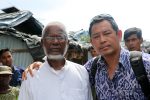
Maung Zarni, right, with a 67-year-old Rohingya man from Maungdaw, who had been a leader at a township level in former prime minister Ne Win’s early days, when Rohingyas were recognized as an ethnic community with full citizenship rights. (photo from Maung Zarni)
Calls are mounting to recognize Myanmar’s violent campaign against the Rohingya as genocide. At the United Nations’ Human Rights Council in Geneva on March 12, Yanghee Lee, special rapporteur on the human rights situation in Myanmar, said she is “becoming more and more convinced that the crimes committed … bear the hallmarks of genocide and call[s] in the strongest terms for accountability.”
Nearly 800,000 Rohingya have fled state-sanctioned and -organized violence in Myanmar (Burma) since August 2017, after the government – blaming an alleged attack on Myanmar’s security forces by Rohingya militants – initiated a brutal campaign of arson, murder and systematic rape and torture against the civilian Rohingya population in Rakhine state. The violence follows decades of oppressive measures against the Rohingya, which, in recent years, have included restrictions on education and medical care, deliberate starvation, state-imposed birth control, property seizure, and removal of citizenship and civil rights.
“These human rights violations constitute nothing less than a slow-burning genocide,” human rights activist Maung Zarni, founder of the Free Burma Coalition, told the Jewish Independent.
With respect to the situation in Myanmar, for months terms like “atrocities,” “military crackdown” or “state-sanctioned violence” have been used to describe it, instead of using the word “genocide.” The UN has previously called what is happening in Myanmar, a majority Buddhist country, whose dominant ethnic group is Bamar, “ethnic cleansing.”
There have been some exceptions to the hesitancy to call the government’s actions genocide. For example, French President Emmanuel Macron called it that last September. And independent tribunals and experts like the International State Crime Initiative and the Permanent Peoples’ Tribunal have also called it genocide. But the media and other international organizations have generally not been using the word.
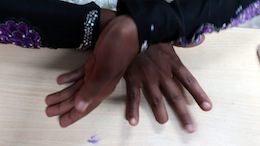
A young girl in a displaced person’s camp shows how her hands were tied behind her while she was raped; one of her finger tips was cut off for resisting. (photo from Maung Zarni)
“There is a high barrier for the use of the term genocide, and I think this is correct,” said Rainer Schulze, professor of modern European history at the University of Essex and founder of The Holocaust in History and Memory journal, speaking at the Berlin Conference on Myanmar Genocide Feb. 26, which the Jewish Independent attended. “We should not use the term genocide lightly. Not every human rights violation, ethnic cleansing or forced resettlement is a genocide. The Genocide Convention gives us a very clear definition, but, with regards to the Rohingya, it is appropriate and must be used.”
Gianni Tognoni, general secretary of the Permanent Peoples’ Tribunal in Rome, agreed. “The UN has been playing with names,” he said at the conference. “To declare something as genocide is to declare it as something intolerable for the international community. Instead, this is delayed.”
“Governments, in general, are very reluctant to use the term genocide for fear that it could damage diplomatic initiatives to secure peace or damage bilateral relationships,” Kyle Matthews, executive director of the Montreal Institute for Genocide and Human Rights Studies at Concordia University, said in conversation with the Independent. “In some cases, governments have refused to label atrocity crimes as a genocide for fear it would force them to take a stronger response, such as intervening militarily.”
The Convention on the Prevention and Punishment of the Crime of Genocide adopted by the UN in 1948 obliges signatories to take concrete steps to respond to genocide. As of December 2017, 149 states had ratified or acceded to the treaty, including Canada. In 2005, all member states of the UN endorsed the Responsibility to Protect (R2P) doctrine, a doctrine Canada was instrumental in promoting. The Canadian government continues to avoid the term genocide, however – although it has taken some steps towards addressing the situation.
“I would say the Canadian government has been one of the most responsible and thoughtful governments in trying to find a solution to protect the Rohingya minority in Myanmar and in neighbouring countries,” said Matthews. “Ottawa has appointed Bob Rae as special envoy to the prime minister to help identify different policy options and strategies for engaging the government of Myanmar. Ottawa also recently imposed economic sanctions on leading figures in Myanmar’s military.”
On Feb. 16, the federal government imposed sanctions, under Canada’s new foreign human rights legislation, against Maung Maung Soe, a high-ranking member of the Myanmar military. “What has been done to the Rohingya is ethnic cleansing,” Foreign Affairs Minister Chrystia Freeland told CBC in a statement that did not use the word genocide. “This is a crime against humanity.”
The sanctions impose a “dealings prohibition,” which freezes an individual’s assets in Canada and renders them inadmissible to enter Canada under the Immigration and Refugee Protection Act.
Matthews said there is much more that we could be doing. Speaking at the Berlin conference, he said, “Broader economic sanctions have to be done immediately. We should look at travel restrictions. We need to demand humanitarian access to Rakhine state [where the remaining Rohingya live, access that is currently denied by Myanmar]. We need to do more economic naming and shaming of who is associating with the regime. Myanmar embassies around the world should be protested.” The government should issue a travel advisory, he said, warning “you are going to a state that is now committing genocide.”
Matthew Gindinis a freelance journalist, writer and lecturer. He writes regularly for the Forward and All That Is Interesting, and has been published in Religion Dispatches, Situate Magazine, Tikkun and elsewhere. He can be found on Medium and Twitter.
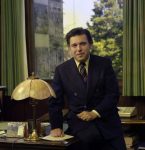
Portrait of Dave Barrett by photographer Fred Schiffer, June 9, 1975. (photo from Jewish Museum and Archives of British Columbia)
More than four decades after he led British Columbia through one of the most tumultuous and consequential epochs in the province’s political history, British Columbia’s first – and, to date, only – Jewish premier is being remembered for an extraordinary life.
Dave Barrett died Feb. 2, several years after being diagnosed with Alzheimer’s. He served as premier for a comparatively short period, from 1972 to 1975, but his policies continue to affect everyday life for British Columbians.
In 39 months – 1,200 days – Barrett’s New Democratic Party government passed 357 diverse and sometimes radical pieces of legislation, more than any single government before or since. The landmark initiatives included the creation of the Agricultural Land Reserve, the Insurance Corporation of British Columbia, a provincial ambulance service and air ambulances, Pharmacare for seniors, neighbourhood pubs, British Columbia’s first ministry of housing, rent controls, the most expansive human rights code in Canada, mandatory kindergarten, reduced teacher-student ratios and the Seabus.
Barrett’s government also proclaimed B.C. Day as a statutory holiday. It established Whistler as Canada’s first “resort municipality” and saved Cypress Bowl from logging, turning it into a provincial park. His government ended logging and mining in provincial parks and banned the export of raw logs, funded the City of Vancouver’s purchase of the historic Orpheum Theatre, raised the minimum wage from $1.50 to $2.50 an hour and created “Mincome,” which guaranteed a minimum income of $200 per month for people over 60. The Barrett record includes the expansion of community colleges, new daycare facilities, French immersion in public schools, and Robson Square, among many other things that we now take for granted.
At a celebration of life in Vancouver March 4, and in interviews with the Jewish Independent, people close to Barrett shared their reflections of the man who led the first socialist government in the province and who was a dominant figure in the life of B.C. politics from 1960 until 1993.
* * *
In his memoir, Barrett: A Passionate Political Life, the former premier recalls growing up on McSpadden Avenue, a one-block spur off Commercial Drive on Vancouver’s East Side, in a house “crammed with books and brimming with lively political discussion.”
His father, Sam, was born in Winnipeg, his mother, Rose, north of Odessa. She was brought to Canada by a Jewish refugee agency after pogroms that followed the Russian Revolution. (In his political life, Barrett would be a strong voice for Soviet Jewry.)
David Barrett was born in Vancouver on Oct. 2, 1930, the youngest of three – his brother Isador was 4 and sister Pearl, 2.
Barrett attended Laura Second elementary and Britannia high school. On weekends, he worked with his father selling fruit and vegetables from a truck and, later, in a retail-wholesale store on Powell Street. After graduating from Britannia, he went, in 1948, to Seattle University, a Jesuit institution that helped cement Barrett’s social justice orientation.
“I had a wonderful time at university, but I was on academic probation muc
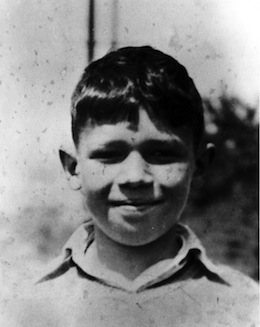
Portrait of Dave Barrett as a boy, circa 1940. (Jewish Museum and Archives of British Columbia L.00029)
h of the time,” Barrett wrote in his book.
Returning to Vancouver in summer and during winter breaks, Barrett continued to help out in the family business. One year, to make money, he sold Christmas trees across the street from his dad’s store. He also worked on a CNR train between Vancouver and Edmonton and for the City of Vancouver, pouring hot tar on cracks in the road.
In 1953, he came home with a bachelor’s in sociology and a minor in philosophy.
In his memoirs, Barrett notes that education was deeply important to his family. One day, he recalls, he received a call from his mother to say that his brother Issy, “already an internationally recognized researcher in ocean sciences, had just earned a PhD with distinction.
“There was a pause and she asked if I got the message. I said, ‘No, Mom, what’s the message?’ And she replied, ‘When are you going to return to school and make something of yourself?’”
Barrett was speaking to his mother from the premier’s office in the B.C. legislature.
* * *
When he and Shirley Hackman decided to get married, when Barrett was 22, his parents did not react positively.
“He thought I was too young to get married,” Barrett recalled of his father’s response. “My mother reverted to her traditional role: she went right up the wall. This progressive mother of mine wanted me to marry a Jewish girl, and Shirley was Anglican.”
The marriage went ahead nevertheless. The couple spent $300 on the reception and scraped coins together to make ends meet in subsequent weeks. Rose’s reservations about Shirley dissolved.
“This woman, who hadn’t wanted her Jewish son to marry a gentile girl, did a complete reversal.” Barrett wrote in his memoir. “Now I was no good. I didn’t deserve this wonderful woman. They had an incredible relationship.”
Barrett got a job at the Children’s Aid Society and later worked with young offenders at Oakalla, an overcrowded provincial prison in Burnaby. But he realized he would have to continue his education to advance in the field.
After he was turned down by the social work school at the University of British Columbia, he visited an older mentor in Seattle, who advised him to apply to St. Louis University, another Jesuit institution, in Missouri. While his grades weren’t good, and he had repeated run-ins with authority figures, Barrett had apparently impressed the priests at Seattle University, whom he credited with facilitating his admission to graduate school.
In St. Louis, with a wife and newborn son, Barrett took a side job at the Young Men’s Hebrew Association, working with teenagers. When he graduated, he was offered a job back home in British Columbia, at the Haney Correctional Institute, for $355 a month. There, he created programs including sports, drama, occupational training and rehabilitation for the inmates.
But he was disenchanted with the correctional system and decided the only way to make systemic change was through politics. So, he announced his intention to run for the legislature, on behalf of the Cooperative Commonwealth Federation (the CCF, which, in 1961, became the NDP). As a provincial employee engaging in politics, Barrett was already poking the bear. He was eventually fired from his job for criticizing the corrections and social services system during his campaign for the nomination.
The Vancouver Sun ran the story big and Barrett was thrust into the spotlight, losing his livelihood but becoming a political sensation before even winning the party’s nomination – which he did, in a first-ballot landslide.
Because the general election was still some time away – and because being a member of the legislative assembly at that time was a part-time job that paid $12,500 a year – Barrett secured a position at the John Howard Society, an organization that works with people in, or at risk of entering, the criminal justice system. It was there that he met Norm Levi, who would also become an MLA and play a central role in Barrett’s government, as the one responsible for welfare policy, including “Mincome.”
Elected to the legislature in 1960 in the constituency of Dewdney, Barrett remained a fixture in Vancouver’s Jewish community through the decade. He attended the relatively short annual sittings of the legislature and spent the rest of the year balancing constituency responsibilities and working at the Jewish Family Services Agency, where his mentor was Jessie Allman, and as director of the Jewish Community Centre, even as he rose in the ranks of provincial politics and was recognized as an emerging star.
* * *
Gloria Levi worked at the JCC when Barrett was director.
“It was a riot,” she told the Independent. Gloria and her husband, Norm, had returned from a two-year stint in Israel at the end of the 1950s and the couple became fast friends with Shirley and Dave Barrett.
As Barrett’s career progressed, he would become Norm Levi’s supervisor at the John Howard Society. Gloria Levi recalled something that drew the two couples together.
“[Barrett] was very respectful and very admiring of Norm and me because we wore our Judaism on our sleeve and he didn’t,” she said. “But it meant a lot to him. I think his whole social ethic came from feeling Jewish. I think his sense of justice was definitely influenced from being Jewish. He was always the one who was seen as different because he was Jewish. He was an East Side kid and he had to fight his way a lot of times.”
The Levi and Barrett daughters, as well as the daughter of another (non-Jewish) NDP stalwart, Stu Leggett, attended Camp Miriam and remain friends today. The parents also hung out in the 1960s and ’70s, playing cards at the Barrett home in Coquitlam.
“Many a Saturday night we would go over to their house – this was when we were all elected – and we’d play poker,” Levi said. “I have to say, the person with the best poker face, who could win, was Shirley Barrett.”
The anecdote is telling not only because of what it says about the poker skills of the wife of the future premier, but because, for whatever else one might discern about Dave Barrett, he rarely would or could conceal his feelings.
* * *
Barrett became leader of the British Columbia NDP in 1969, shortly after the party lost its 12th consecutive election.
Premier W.A.C. Bennett, the Social Credit leader who had led the province since 1952, declared Barrett “the most dangerous leader the socialists have ever had in B.C.”
From the perspective of a premier who had triumphed over opponents in seven provincial elections, Barrett was indeed dangerous.
Barrett had seen how Tommy Douglas, the federal NDP leader, used humour to deflect the electorate’s fear of the left, and Barrett used his natural jocularity to his political benefit. In his memoir, Barrett claims people just laughed at Bennett’s assertions.
“Nobody saw me as a threat,” he wrote. “I was just a social worker, a little overweight, maybe, but quite jolly. A funny little guy.”
In 1972, Barrett led the NDP to victory, taking 38 seats to the Socreds’ 10. While Bennett was reelected in South Okanagan, most of his cabinet was wiped out.
The emotions on election night were overwhelming on both sides. For Social Credit, the Bennett family and their supporters, the era that had seen British Columbia’s most expansive economic growth under a seemingly invincible leader was at an end.
Among New Democrats, for whom losing elections had seemed a congenital disorder, there was disbelief and jubilation. Speaking at the celebration of life for Barrett at the Croatian Cultural Centre on Commercial Drive on March 4, former premier Dan Miller recalled the power of the moment.
“When we won in 1972, the euphoria I experienced that night has never been duplicated,” said Miller, who was premier for six months after Glen Clark resigned in 1999. “Not when I ran myself in 1986, not when we formed a government in 1991, not even when Glen Clark outsmarted and out-campaigned Gordon Campbell to give him a back-to-back victory for the first time for the NDP. And not even when John Horgan formed the government last year.”
Miller compared Barrett to Jean Lesage, the premier of Quebec who, in 1960, ended more than three decades of rule by the Union Nationale and ushered in what came to be known as the Quiet Revolution.
“I think he was transformational,” Miller said of Barrett. “He brought B.C. into the modern era – and I guess you might be able to describe his revolution as a noisy one.”
When Barrett ended the 20 years of Bennett’s premiership, the legislature had no question period, there was no Hansard (the written record of house proceedings), the entire NDP caucus was forced to share a single office with no support staff, and members of the legislative press gallery were earning pocket money writing news releases and speeches for members of Bennett’s cabinet.
Even as resource revenues were filling government coffers in the 1950s and ’60s, Bennett’s parsimony was so legendary that government travel outside the province was banned – to the extent that the premier himself (who preferred the title “Prime Minister of British Columbia”) avoided federal-provincial conferences. Even long-distance telephone calls by cabinet ministers had to be pre-approved by the premier’s office.
Among Barrett’s first acts in office was to improve conditions and funding for opposition MLAs and institute question period.
* * *
Marc Eliesen served as Barrett’s deputy minister and remained one of the premier’s closest friends and confidants to the end.
“I think, in part, the reason why the two of us connected was that we both came from Jewish working-class backgrounds,” Eliesen told the Independent. “While both of us were not religious – we were secular in belief – we had a very proud and conscious recognition historically of what our particular people had done through history in fighting for social justice and economic equality and I think that dominates basically the orientation of where he was going and what he stood for. He never detracted from that. The upbringing by his folks reflected that particular orientation, for lack of a better description, of being for the little guy and wanting to make life a little bit better.”
Eliesen knew Barrett’s parents and described Rose Barrett’s affinity for communism – and for a time, Stalin – as like a religion.
“Dave very clearly saw the extremes, which were not for him,” Eliesen said. Sam Barrett was a Fabian socialist, a gradualist, and that was the ideology that affected young Dave the most, he said. While the younger Barrett was no revolutionary – seeking change through democratic, parliamentary processes, like his father’s approach would dictate – the record of his fairly short time in the highest office was, if not revolutionary, certainly unprecedented and groundbreaking.
* * *
At the end of the emotional, laughter-filled celebration of life, local band Trooper’s 1977 hit “We’re Here for a Good Time (Not a Long Time)” blasted through the house.
While the Barrett administration predated the song by at least two years, legend has Barrett, at his first cabinet meeting, taking off his shoes, getting up on the polished cabinet table and sliding from one end to the other, demanding of his ministers: “Are we here for a good time, or a long time?”
The veracity of this story is ambiguous but, in his memoir, Barrett acknowledges that the choice was made to go for broke. The stars that aligned in 1972 – including a tired incumbent premier, who had served two decades, and a four-way split in the popular vote – might not align again in the subsequent election. (The party would, in fact, lose again four successive times, three of them under Barrett’s continued leadership, before sitting around that cabinet table again.)
“We discussed whether we were really going to make fundamental changes in British Columbia, or whether we would try to hang on for another term, rationalizing that we’d get the job done next time around. We agreed unanimously to strike while the iron was hot,” he wrote.
No government before or since has passed so much legislation or brought so much change to Victoria in so short a time.
The new government doubled the pay of MLAs to $25,000 and made the role more full-time, significantly increased welfare rates and nearly doubled human resources spending as a percentage of the budget (to 15.1% from 8.5%). The new government provided collective bargaining rights, including the right to strike, to government employees. It introduced a new labour code, established the Islands Trust to thwart uncontrolled development on the Gulf Islands, purchased the Princess Marguerite, which maintained ferry service between Victoria and Seattle, refurbished the Royal Hudson steam locomotive and made it a rail tourism attraction, created a police commission to determine policing standards in British Columbia and set out provisions for dealing with complaints against the police from members of the public.
For the first time, legislation required elected and appointed officials to disclose their financial holdings so that the public could see real or potential conflicts of interest. The government increased funding for the arts and legal aid, initiated the province’s first consumer services ministry and introduced Canada’s strongest, at the time, consumer protection legislation. Legislation eliminated succession duties on farms transferring from parents to children.
The Barrett government launched a range of self-determination initiatives for First Nations. It created a provincial Status of Women office and funded women’s shelters and health facilities, including agencies for victims of rape. It overhauled the province’s family court apparatus.
The NDP had condemned the Social Credit regime for what Barrett viewed as allowing the resources of the province to enrich the wealthy, without benefiting the general population. To address this, the government created the B.C. Energy Commission to regulate utilities and monitor oil and gas prices, upped mineral royalties and increased government royalties on coal 600%.
Alarming many in the business sector, the new government became very directly involved in the economy. The NDP government purchased two pulp mills, two sawmills and a poultry operation to prevent them from going out of business. (With the exception of the chicken business, all became profitable.) The government acquired Shaughnessy Veterans’ Hospital, which would be transformed into B.C. Children’s Hospital. And pay toilets were outlawed.
* * *
Barrett’s Jewishness was not a factor, apparently, one way or another in his election. But the fact that British Columbia – and Canada – elected its first Jewish premier was not overlooked by those with negative biases.
Marc Eliesen was raised in Montreal and served as deputy minister to Manitoba’s first NDP premier, Ed Schreyer, before being coaxed to take the same role in Barrett’s Victoria administration.
“When I was there, there was no question that antisemitism was still around,” he told the Independent. “I saw all the letters that would come in. Being the first Jewish premier … Dave never shied away from the fact of who he was. He was very conscious of people criticizing him not necessarily for the policies he was doing but for his ethnic background. I saw that front and centre and it was much more extensive than a lot of people would want to believe. It was reflected also in death threats that came through.”
Eliesen remembers the words of the mayor of Victoria at the time, Peter Pollen, who would go on to become leader of the B.C. Conservative party.
“There is the mayor of Victoria, when I was hired, making comments saying, ‘Dave Barrett could think nothing more of putting us Christians down and surrounding himself with a Jewish coterie.’ That was the kind of thing that was taking place at the time,” said Eliesen. He thought the words would spark outrage, but they didn’t.
“I’ll never forget it,” he said. “It’s one of those things that shocks you at the time.”
* * *
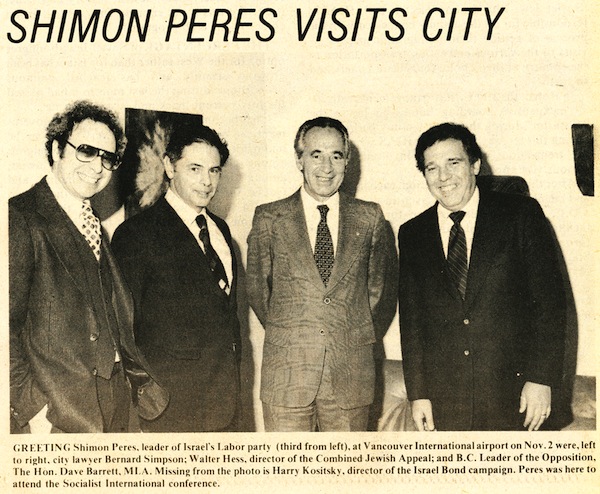
This photo appeared in the Jewish Western Bulletin Nov. 9, 1978.
Bernie Simpson, who later became an MLA in the government of Mike Harcourt, met Barrett in Jewish communal activities and was persuaded by him to join the NDP.
“From a political point of view, he was my mentor,” Simpson said. “I was with him from the very beginning.”
Under Barrett’s tutelage, Simpson became advertising director of the Democrat, the party’s official organ. Advertising sales is a notoriously tough business and that experience would lead Simpson to become one of the party’s leading fundraisers in years to come.
Simpson takes exception to suggestions from some quarters that Barrett was not connected to his Jewishness or to the community.
“There is a perception out there that he didn’t consider himself that Jewish,” Simpson told the Independent. “It’s actually the contrary. I remember distinctly how proud he was of being the first Jewish premier.”
Simpson went on to say that a core group of leaders attempted to convince Barrett to abandon politics and remain at the helm of the JCC, but, Simpson said, Barrett had determined early in the 1960s that he wanted to be premier.
Simpson recounted another memorable incident in Barrett’s time in politics.
Barrett met Shimon Peres at the Vancouver airport. The man who would become the eighth prime minister and, later, the ninth president of Israel, was tired. But the Hadassah Bazaar was on at the time, at the Pacific National Exhibition grounds, and Barrett thought Peres should see it.
Simpson recalled Peres’s initial response, “Hadassah, Shmadassah. I want to go to the Bayshore to rest.”
But Barrett convinced the Israeli leader to go to the then-annual spectacle. The former premier was mobbed. The future Nobel laureate, who had not yet reached the heights of Israeli politics but was already legendary, was largely disregarded.
“He was kind of ignored, Shimon Peres,” Simpson recalled with a laugh. “It’s not all Jews there at the forum at the PNE and Peres was pissed off. But, 15 years later, I see Peres. The first thing he says it is, ‘How is Dave Barrett?’ Remember, this is 15 years later, after we picked him up at the airport. Which goes to show you two things: one is the prodigious memory of Shimon Peres, and the second thing is the charismatic personality of Dave Barrett, that he would leave such an impression on Shimon Peres.”
Peres and Barrett actually did cross paths in Israel shortly after the Hadassah incident, when Barrett was opposition leader. In his book,
Barrett recalls an invitation to a conference in Jerusalem on international terrorism. The confab included Peres, Israel’s then-prime minister Menachem Begin, George Bush, who was then the head of the Central Intelligence Agency, and other world leaders.
For Dave and Shirley Barrett, it was the first trip to the region and, while there was plenty to see outside of business hours, it was also an opportunity to connect with mishpachah. While Barrett’s mother, Rose, had migrated to Canada, her brother had fled to Palestine. On this trip, Barrett finally met his uncle, as well as cousins and second cousins he had never known.
* * *
For all the new government’s ambitious undertakings, there was not only the domestic political situation to consider, but global realities to be faced.
The early 1970s saw a period of steep inflation, caused in part by the Organization of the Petroleum Exporting Countries, whose embargoes were sending global fuel prices through the roof. With oil prices spiking the cost of everything, wage demands naturally responded.
British Columbia was, at the time, among the most highly unionized workforces in North America. During Barrett’s term, inflation led to increasing expectations from private and public employees and, eventually, to the most intense period of labour unrest in the province’s history, with major parts of the B.C. economy halted by strikes.
Barrett brought in back-to-work legislation, an extraordinary act for an avowedly socialist government, and one from which he would not recover. The legislation was seen as an attack on collective bargaining rights and drove a wedge between the NDP and its crucial union supporters.
At the celebration of life, Jim Sinclair, a past president of the B.C. Federation of Labour, joked about the often-strained relations between Barrett’s NDP and the trade union movement.
“I would like to say that the relationship with the labour movement during that time was just rock solid,” he said. “But I think it was more rocky than solid.”
While Barrett’s government frequently clashed with union leaders, Sinclair said, “There was nothing wrong with the relationship between Dave Barrett, the premier of this province, and ordinary working people in this province.”
Meanwhile, the opposition was uniting, with three of five Liberal MLAs and one of the two Conservatives in the legislature defecting to the Social Credit caucus, now led by W.A.C. Bennett’s son, Bill Bennett.
In 1975, just over three years into his mandate, Barrett made a gut decision to go to the polls. Though he had introduced scads of popular initiatives – Mincome among them – he had disrupted every aspect of the status quo. There was probably not a sector, policy area or demographic that had not been affected by his government’s legislation. Many voters were supportive. Plenty were outraged.
Barrett jumped the gun, hoping that he might catch the strengthening opposition before they were sufficiently unified and ready. It was a miscalculation.
“There was reluctance on the part of some members, followed by a fatalistic acceptance,” Barrett writes in his memoir, acknowledging that few in his government thought the gambit would work.
If it was true that Barrett flung himself down the cabinet table at that first meeting asking if they were there for a good time or a long time, the answer came on Dec. 11, 1975. His government was defeated in a landslide and Barrett lost his home riding of Coquitlam.
* * *
Dawn Black was a young mother volunteering to reelect Barrett in Coquitlam in 1975.
She would later follow him into the legislature and to Parliament in Ottawa, where she viewed him as “den father” of the B.C. NDP caucus.
At the celebration of life, Black spoke about a contentious policy decision of the Barrett government from a personal perspective.
“As premier, Dave Barrett named Eileen Dailly as education minister and she was [also] the first woman deputy premier,” Black told the audience. “She banned corporal punishment in the schools, making us the first jurisdiction in Canada [to do so]. And not till a full 30 years later did the Supreme Court of Canada take action on that issue.”
The public blowback to Dailly’s decision, Black said, was enormous and unanticipated.
“You’d have thought they were banning blackboards and textbooks,” she recalled. “The pundits were screaming, they were hysterical that the kids would be running the schools, they’d be running roughshod over the teachers and every school in B.C. would be like a scene out of Lord of the Flies.”
But Black had a different reaction.
“I remember when I was strapped,” she said. “I remember the fury, the humiliation. And I can still feel that sting half a century later. I remember feeling so powerless in the face of the physical force of an adult.”
Banning the strap, she said, forced teachers to find better, more effective ways to keep order in the classroom and ensured that children did not come home traumatized.
“In fact, they learned a whole new lesson. There are better options – there are always better options than violence – to resolve conflict,” Black said to an enormous ovation.
Black also credited the Barrett government’s creation of the B.C. Cancer Agency.
“You are never more powerless than when one of your kids is diagnosed with cancer,” she said. “I’ve gone through that with two of my kids. I can tell you firsthand: going to the cancer agency in B.C. and knowing that your family is going to be treated to the highest standard of care in the world, that meant everything to me and it means everything to all of the other people who go through that door.”
* * *
Marc Eliesen believes part of Barrett’s success was that some people underestimated him.
“Because of his fantastic performance as an orator and an individual who was very funny and [had a] quick wit, there was often the impression that he was an off-the-cuff kind of guy and instantaneous kinds of observations would be made on contemporary political developments,” Eliesen said. “In fact, he was systematic, he was deliberate and he was rigourous. He thought very clearly as to what he wanted to do and how he wanted to do it.
“That government accomplished more than any other government in Canadian history in so little time,” Eliesen said. “I think there were a number of factors responsible for it. Number one was the overall leadership provided by Dave. He had chutzpah. He had political will. He was quite different than what you see in the contemporary political scene where politicians, regardless of their parties, tend to shift positions depending on the political winds.
“The second thing is that he had a cabinet and a caucus that wanted to do things, that wanted to deliver. He allowed a wide scope for them to initiate the kinds of things that they had collectively decided on. It wasn’t what you see today in political affairs, where things at the centre are micromanaged.”
Hindsight suggests Barrett knew he only had one shot.
“Not that there was a kind of a death wish associated with a one-term government,” Eliesen said, laughing. “But they knew the vagaries of political life and they said, look, we’ve got a majority government. We have a mandate from the people. We went out and talked about all these things. Let’s deliver. And they did it with great gusto.”
After the 1975 defeat, the Barretts and the Eliesens went to Manzanillo, Mexico, for a couple of weeks to decide what to do with the rest of their lives.
“Dave decided that, if there was support, he would go back and be the leader of the opposition, and there was support,” said Eliesen, who went on to head Ontario Hydro, Manitoba Hydro and, eventually, B.C. Hydro.
Barrett led his party to two more defeats before retiring as leader. In each of his three defeats, the share of the NDP vote was significantly higher than his winning tally in 1972, but it always came up short against the unified centre-right.
* * *
Joy MacPhail, who served in many senior cabinet portfolios in the 1990s, represented a part of East Vancouver that Barrett had also served after returning to the house in a by-election following his 1975 Coquitlam defeat.
After the NDP was routed by Gordon Campbell’s Liberals in 2001, MacPhail was leader of the opposition from 2001 to 2005, heading a caucus of two that included fellow East Van MLA Jenny Kwan. MacPhail thought she would get some sympathy from Barrett when he visited them at the legislature. Instead, she got tough love.
“He leaned across the desk,” said MacPhail, “and he said to me, ‘Listen, two of you and 77 of those sons of bitches seems like a fair match. Now get in there and do it.’ We went in there, we did it, and we never won a thing, but we felt we could, because of Dave.”
She recalled meeting with the Barretts when Dave was considering a run for federal Parliament, in 1988.
“We were sitting around, the four of us, there was lots of talk about logistics, tactics, strategy, is it good for the province, what would it be like being in Ottawa, and the three of us were talking and Shirley wasn’t saying anything. So I knew that this was not right and I turned to Shirley after a half-hour of the rest of us BSing and I said, ‘Well, Shirley, what do you think?’ And she said, ‘Listen, anything to get the clown out of the house.’”
MacPhail added: “And I want to say, it wasn’t ‘clown.’ But … we’re not allowed to say what she really said.”
MacPhail, who was appointed last year by the new NDP government to head the Insurance Corporation of British Columbia, recalled the history before the provincial auto insurer was in place.
“Working people couldn’t afford to insure their cars, so they were driving around without insurance and there were huge consequences for families in terms of when crashes occurred, and lives were destroyed,” she said. “People who survived but had no ability to heal, get healthcare and pay for the damage they’d done to other lives, as well.… To know that that was done within the first few months of the Barrett government and survives to this day … I can only hope that – and I do see it as my mandate – to bring it back to the great corporation that it once was.”
* * *
B.C. Premier John Horgan credits Barrett for his own attraction to a political career. During the Solidarity movement opposing premier Bill Bennett’s “restraint” program, Horgan went with a friend to a rally on the lawn of the legislature.
“I was not overly political at that time. Two years earlier, I had met Tommy Douglas and I had wanted to be a social worker, but transferred into political science after hearing Tommy Douglas speak,” Horgan told the Croatian centre audience. “Dave would start a little bit low, you had to lean in to hear what he had to say. Then he would start to build and the people in the audience would start to move with him, this way, that way.… That was the power of his delivery. But, more importantly, it was the power of his message. I left the legislature, I walked up Blanshard Street in Victoria, I went into the local NDP office and said, ‘What can I do to help?’”
Glen Clark, another former NDP premier, said that Barrett’s demeanour should be a model for today and he added a quip that brought down the room.
“Social injustice is worse than ever,” Clark said. “Inequality is greater than ever. There is an opioid crisis of immeasurable proportions, with record overdose deaths every year. And perhaps the greatest challenge of our time is solving climate change. In an age of unprecedented cynicism toward government, Dave Barrett taught us that it doesn’t have to be that way. These problems are man-made and, as such, they can be solved … by women.”
* * *
The support Barrett had from his family – his wife Shirley and their three kids – was brought up repeatedly during the celebration of life.
Marc Eliesen said: “Dave would often ask Shirley, ‘Shirley why do you stick around?’ And Shirley would say, ‘Dave, I just want to see what happens next.’”
Gerry Scott, who has run countless campaigns for the NDP, said: “At school, when the kids were asked, ‘What does your dad do?’ The only answer that could be consistent was, ‘He raises hell.’ And they were proud of this.”
All three adult children spoke at the event.
Daughter Jane offered a different answer to the question, “What does your father do?”
“I often told people … he was a plumber. I told him he was up to his neck in…” she said, trailing off. “My friends would say, ‘But aren’t you proud?’ Of course I was. But not for the reason people thought. Plumber, politician, didn’t matter. He was just my dad.”
Son Joe said that Barrett was the same guy at home as he was publicly.
“There was no difference. He was funny, cheerful, always supportive of us. Of course, you’re going to make mistakes in life and he would say, ‘It’s easy not to make mistakes. Just do nothing.’”
Joe Barrett said his father faced Alzheimer’s matter-of-factly.
“He accepted it, he was peaceful, he was courageous and he stoically faced that last challenge right to the end,” he said. “Dad, he celebrated life, he loved life. As the Jews say, ‘To life! L’chaim!’”
Son Dan recalled a light moment in a dark time. One of Barrett’s closest confidants and advisors was Harvey Beech. At a time when death threats against the premier were too common, the two were walking to lunch in Victoria.
“And, one day, walking up Government Street … Harvey was lagging behind and so my dad lays into him: ‘Harvey, what are you doing back there? You gotta get up in front of me. You’re protecting me. This is the premier of the province. Some guys are going to get out and shoot me.’
“Harvey said, without skipping a beat, ‘Dave, they can kill a man but they can’t kill an idea.’ This did not give my dad a whole lot of comfort.”
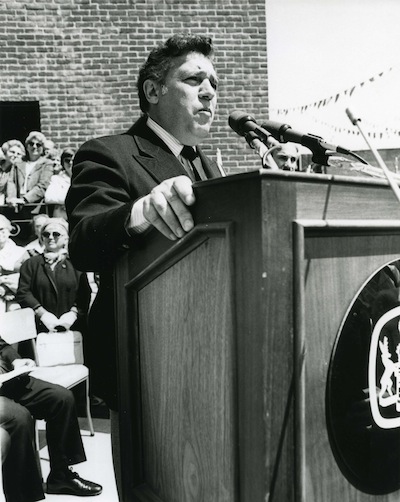
Dave Barrett, then leader of the opposition, offers greetings at the Congregation Emanu-El rededication ceremony in Victoria, June 6, 1982. (photo by Cyril E. Leonoff; Jewish Museum and Archives of British Columbia L.18490)
After the ceremony, Joe Barrett told the Independent that his dad was very proud of his Jewish heritage.
“It was a fundamental, deep part of who he was,” he said. “I was reminded yesterday, one of the very first things that the government did was remove the covenants on property titles. Up until 1972, landowners – I guess in the British Properties in particular – could write ‘no Jews, no Sikhs, no blacks.’ The very first thing they did. He knew who he was and where he came from and he was proud.”
There have not been a great number of Jewish people in B.C. politics, but there are two Jewish cabinet ministers in the current government.
“Dave Barrett, when I was a young man, made tremendous change in British Columbia,” George Heyman, minister of environment and climate change strategy, told the Independent. “The legacies that he left – the [agricultural] land reserve, ICBC, the ambulance service, things we take for granted now, recording proceedings in the legislature, question period – all of them go back to the brief period of ’72 to ’75. He was a warm, funny man. He could rouse a crowd like no one else and it’s an honour to me to have been able to have sat down with him on a couple of occasions and just have a quiet conversation.”
Selena Robinson, B.C. minister of municipal affairs and housing, is proud to note that she represents the riding of Coquitlam-Maillardville, the third Jewish MLA, after Barrett and Levi, to be elected in the area, which would not, by any demographic measure, be termed a “Jewish riding.”
“Unfortunately, I never got a chance to meet him,” Robinson told the Independent, “but I really feel connected to him.” Of Barrett’s legacy, Robinson said, “It really was about tikkun olam, it was about how to heal the world. It was what motivated him and I felt a kindred spirit.”
In a telephone interview, Shirley Barrett recalled Passover seders at her mother-in-law’s home and said her husband was “basically a humanist, but he was a secular Jew.”
“He always was proud to be a Jew,” she said. “He grew up with the values of his parents and he never relented on his heritage. He was an insatiable reader and one of the topics he returned to repeatedly was trying to understand the history of his people.
“He was a reader of everything that he could get his hands on as far as trying to understand why the Holocaust happened and why there was antisemitism,” she said. “He just was so interested in trying to figure out the human psyche.”
* * *
Barrett returned to politics as a member of Parliament from 1988 to 1993. He ran for the federal party leadership in 1989, coming a close second to Audrey McLaughlin on the final ballot.
He hosted a hotline radio program on CJOR, did stints as a lecturer at Harvard and McGill universities, and continued campaigning for New Democrats as long as his health allowed.
Moe Sihota, a former cabinet minister who emceed the celebration of life, remembered what the diversity of Barrett’s cabinet meant to a young Indo-Canadian person. In addition to the first female deputy premier, the Barrett government included two black MLAs and the first indigenous cabinet minister in B.C. history.
“We grew up as kids in Lake Cowichan, a small sawmill community … we always saw colour as a barrier,” Sihota said. “Dave Barrett came along and he never thought that colour was a barrier. Dave, together with the late Emery Barnes, Rosemary Brown and Frank Calder, made all of us kids in the Cowichan Valley believe we could make a change in society.”
* * *
On Cypress Mountain, at one of the most scenic views in this scenic province, looking down across Burrard Inlet at the city of Vancouver and beyond, is a plaque that reads:
“Throughout the 1960s, the future of Cypress Bowl was hotly debated. In 1964, a member of the Legislative Assembly [MLA] by the name of Dave Barrett pressed the minister of forests to honour a commitment to preserve forest lands and Cypress Bowl. What followed was an eight-year effort by MLA Barrett to save Cypress Bowl from chainsaws and residential development. Elected British Columbia’s premier in 1972, his dream was finally realized when his government established Cypress Park as a ‘Class A’ Provincial Park in 1975.
“Dave Barrett was elected to serve as an MLA in British Columbia from 1960 to 1975, and from 1976 to 1983. He was elected as a federal member of Parliament serving from 1988 to 1993. He was awarded the Order of Canada in 2005.”
As Rabbi Dr. Donniel Hartman writes (in this week’s issue), the Exodus story is not one in which humankind is the protagonist. It is the hand of God that creates the circumstances that permit the Hebrew people to escape bondage and, after a time, find freedom.
Still, this did not abrogate the need for human action. The people needed to recognize the successive messages being sent to them and, then, take the opportunity to escape – take that first step into the roiling Red Sea, for example, even before God parted it. A jailer may leave the key within reach of the unjustly imprisoned, but the inmate still needs to reach out and unlock the cell door.
Central to Judaism is the concept that God left the world unfinished and imperfect. It is the work of humankind to complete the work. Bringing about that ideal is the purpose of our existence.
Often, lately, it seems that the global trajectory is moving in the wrong direction. The reelection of Vladimir Putin – by an entirely anticipated landslide, assisted by his control of media and the murder of his opponents – moves Russia further away from the nascent democracy that emerged in the late 20th century. Across the former Eastern Bloc, tyrants and hyper-nationalists are rising. Even in Slovakia, one of the finest examples of democracy emerging from the communist past, people are rising up – this is an encouraging reality – as their government appears to be moving away from its promise.
The fate of the Rohingya people (addressed by Independent writer Matthew Gindin in this issue) is a flashpoint of inhumanity and yet we continue to argue over nomenclature. Is it genocide? Words matter. But, for heaven’s sake, let us take action.
Sadly, almost anywhere one looks in the world, including, of course, in Canada and in Israel, there are injustices, inhumanities and tragedies. The uncertainty facing African refugees in Israel, and still-unaddressed issues of the most basic human rights for First Nations communities – like the right to clean water, education and opportunity – remain scars on Canada’s conscience. To our south, angry rhetoric and divisive leadership sow discontent, distrust and falsehoods in pursuit of political and social advantage. There are literal or figurative slaves needing redemption on every continent.
Jewish tradition emphatically calls us to pursue justice, but perhaps never so ardently as at Pesach. Through our enjoyment of the holiday and the reminders of our bitter history and the components of the seder, the order of our remembrance, may our resolve be strengthened to pursue justice in this year and in the decades to come.
May we strive to not be disheartened by the magnitude and breadth of the work to be done, but inspired by the inestimable number of examples we have before us, locally and elsewhere.
So many in our own community are pursuing justice in their unique ways, from the day school kids who assembled and delivered hundreds of mishloach manot recently to those in need, or Rose’s Angels, who made Valentine’s Day special for hundreds more, or for the hundreds of individuals in our community whose every day is devoted to making the world better for seniors, students, people with special needs or those who just need a comforting companion.
We can be overwhelmed by the ferocity with which news comes at us, and it can seem that whatever we do could provide only a tiny drop in the required ocean of goodness to make this world a better place. But what is an ocean but billions and billions of tiny drops?
This is our mission. We do not repair the world by despairing. We redeem it by our actions. It is, perhaps, up to Canadians who are, by any measure, among the most fortunate people in the world, to rededicate ourselves during this season of remembering and reliving our time in bondage, release and redemption, to finding ways to play our small but irreplaceable part in the enormous work to be done.
“Grow old along with me! The best is yet to be, the last for which the first was made …” begins the poem “Rabbi Ben Ezra” by Robert Browning. Meanwhile, his wife, Elizabeth, immortalized their relationship in her poem, “How Do I Love Thee?” which is an exquisite expression of love, and how it can change a life.
The couple met when Elizabeth was 38 and Robert was 34. After a courtship carried on primarily through letters, they married secretly in 1846, and Elizabeth ran away with Robert to live with him in Italy. Her tyrannical father disowned her – the family was fabulously wealthy from Jamaican rum and slaveholdings, and he thought Robert was a gold digger. The Brownings had a son in 1848.
Elizabeth died in 1861 after a brilliant literary career that, for a time, eclipsed her husband’s – she was considered for the post of England’s poet laureate after the death of William Wordsworth. Robert died in 1889.
“Rabbi Ben Ezra” was published in the collection of poems Dramatis Personae in 1864. Very briefly, it says that, whatever has come before in our lives is but a prelude to what our lives are, and will be.
How many of us have had some event in our histories that we can point to as a crossroad, such as that the Brownings experienced? For most of us, it is hard to think of our past as merely leading us to something even more important. And yet, there is a germ of truth here, whatever our experiences.
For me, I have reason to find some contentment in what I assess are my accomplishments after a life spanning eight decades. And yet, and yet … I know that the things I cherish as worthwhile are known best only by me. There are no plaques or monuments, no citations, few remembrances of my name. The physical evidence of my passage lies in the offspring I contributed to bringing into being. They, every one of them, are self-made, the products of the sum total of their individual efforts to which I can make only a small claim.
Truly, for most of us still around to gaze at life’s battlefield, all we have is what we can make of the day that lies ahead. We can take pleasure in the comfort of a leisurely day in the sun. We can intervene in the life of someone near and dear, or even a stranger, and try to help. We can become active on an issue of public import that we have in the past supported in our minds alone. Given our life experience at any moment in time, we have appreciations and understandings we never could have had before that time, even though our past is what led us to where and who we are.
Like Robert Browning, I do have a momentous event in my life to announce from the rooftops. And I take full credit for being an important party to the life-changing event. Truly, for me, it was “the last for which the first was made.”
For most of us, the lives we arrange do not turn out as we hoped. For example, we all seek relationships in which we can love and be loved in return. Regardless of the positive outcomes that come from pursuing these relationships in good faith, our aspirations are not always fully met.
I was entranced by a creature of the opposite sex in my teenage years, but a lack of self-confidence and courage prevented me from advancing my offering. We both passed on to other partners, and I did not seriously develop a plan of action until I reached widowerhood at the age of 70, some 55 years later. Knowing my intended was also unattached, after planning my approach, almost a year later, I strongly pressed my case. It was my good fortune that I was accepted as a marriage partner.
One does not make a silk purse out of a sow’s ear without a good deal of re-engineering. We have now been together for more than 12 years, a period of learning by both parties.
What’s happening at your house?
Max Roytenberg is a Vancouver-based poet, writer and blogger. His book Hero in My Own Eyes: Tripping a Life Fantastic is available from Amazon and other online booksellers.
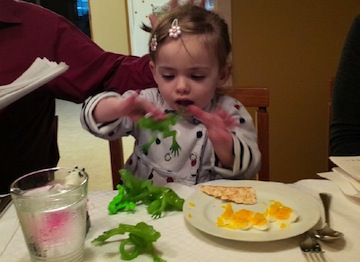
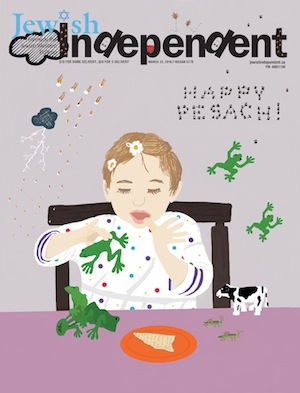
While based on the above photo of my niece Fae at a seder several years ago, the cover art is inspired by all my nieces and nephews: Hannah, 24, Zac, almost 22, Caleb, 17, Fae, 6, and Charlotte, 4. I may not get to as many family seders as I would like, with all of my immediate family living in Ontario, but this photo is just one of many that has adorned my fridge over the years I’ve lived “out here,” and there have been many visits, as well as Skype and phone calls, so I’ve been able to get to know the wonderful people they are, despite the physical distance, and am so proud to be one of their aunts. I am confident that they will contribute, each in their own way, to helping make this a world in which, eventually, everyone has the love and opportunities our family has had.
To create the cover illustration, I scanned a pencil sketch I made from looking at the photo. I emailed the scan to myself so that I could use the app Paper 53 on my iPad to do most of the “painting,” including nine of the 10 plagues. Jewish Independent production manager Josie Tonio McCarthy helped me symbolize the death of the firstborn sons in QuarkXPress – trust me, no letter d’s were harmed in the making of this cover! Josie also refreshed my memory of how to use some aspects of Photoshop, which is where I brought everything together, with the odd embellishment or two, or three.
With wishes from all of us here at the JI for a Pesach sameach.
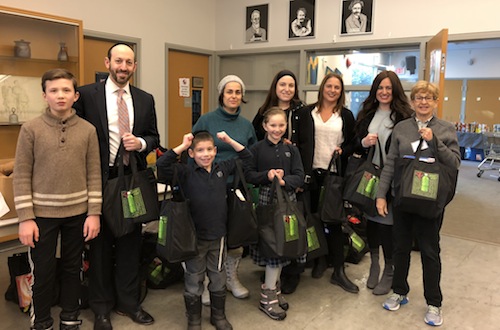
On Feb. 20, students at Vancouver Hebrew Academy packaged more than 200 mishloach manot bags full of non-perishable food items donated by the Marine Drive and Grandview Superstore locations. (photo from VHA)
The atmosphere at the Jewish Food Bank on Feb. 22 at the Peretz Centre for Secular Jewish Culture was almost festive. Adults chatted, kids played, as people made their way through the various lines. Vancouver Hebrew Academy students had already come and gone – having delivered more than 200 mishloach manot packages in anticipation of Purim – and Minister of Justice and Attorney General of Canada Jody Wilson-Raybould had stopped in to visit.
“We were thrilled to be able to distribute the Purim packages through the food bank,” Rabbi Don Pacht, VHA head of school, told the Independent. “It was the idea of Hodie Kahn and Rachael Lewinski, two die-hard VHA enthusiasts … Hodie is a past VHA parent and board member, Rachael is a current VHA parent (and a VHA alum) and board member. They have been largely responsible for building the program to where it is today. They saw this as a great way to bring the lesson of Purim into living colour. So much of the Purim theme revolves around helping others and bringing community together to celebrate – think mitzvot of sending food to neighbours and charitable gifts to those in need. What better way to celebrate as a community than to bring the joy of Purim to more and more families?”
Several VHA students and teachers delivered the mishloach manot bags to the Jewish Food Bank on Feb. 22. (photo from VHA)
“It’s a powerful symbol of love and friendship among our community,” said Richard Fruchter, Jewish Family Services chief executive officer, about the mishloach manot project in the agency’s February e-newsletter. He also noted that, during Wilson-Raybould’s visit, the minister spoke “with JFS about food security, housing and mental health services. She connected with the dozens of volunteers and hundreds of clients who benefit from this twice-a-month service.”
All of the items provided in the 200-plus mishloach manot gift bags were donated by two Real Canadian Superstore locations: Marine Drive and Grandview. “And they have [donated] for several years now,” said Pacht, stressing his gratitude.
In years past, the initiative has included other Jewish schools – Vancouver Talmud Torah, Richmond Jewish Day School, King David High School, Pacific Torah Institute and Shalhevet Girls High School – and “was an avenue to raise funds for all of the Jewish day schools,” said Pacht, as people donated to have Purim packages sent to friends, family and colleagues. Run under the umbrella of VHA, it was the “Vancouver Jewish Day Schools Purim Project,” he added.
“In past years, we have hosted the event at KDHS and had students from all the schools participate in various capacities,” explained the rabbi. “VTT, VHA and RJDS students packing, KDHS students setting up and cleaning up, PTI and Shalhevet students picking up items from Superstore, etc. We also have had parents from all of the schools volunteer their time to assist the packing process and deliver the packages on Purim day.
“This year, we took a step back and did not run the program as a fundraiser. With only 200 packages being prepared, that were then distributed through the Jewish Food Bank, we managed the entire process in-house.”
VHA also sent out “a mailing containing a Purim kit, with some information about the holiday and a few practical goodies as well,” said Pacht.
“What started in Ruth Huberman’s living room – at the time she was a VHA parent and board member (she now has several grandchildren attending VHA) – preparing about 100 packages, mushroomed into a program that reached the farthest corners of our community. We have over 1,200 families we connect with each year!” he said. “After 10 years of doing the same thing, we found it difficult to maintain the same momentum and enthusiasm. We are looking at various alternative models for next year. Something to refresh the program and keep the community engaged.”