Feeling lucky, grateful

Aiden Cumming-Teicher celebrated his bar mitzvah by organizing Our Voices. (photo from Aiden Cumming-Teicher)

Aiden Cumming-Teicher got his start in acting at the age of 9. In the four years since then, he has played leading roles in numerous films and documentaries, receiving several Joey Awards nominations for his acting and winning a Young Entertainer Award in Los Angeles. For Beyond the Sun, he spent two months shooting in Argentina last year. He describes the film as “a religious adventure movie for kids.” The film – which features Pope Francis – was a highlight of his career so far, he said.

This year, Aiden celebrated his bar mitzvah in a novel way: by organizing Our Voices, a film festival that put child and youth filmmakers in the spotlight. Said Aiden of his unusual choice, “I wanted something that wasn’t all about me, something that gave back to other people, gave them the chance to express themselves and the opportunity to be heard and celebrated.”

Our Voices received more than 200 submissions from around the world and the contest culminated in a screening at Hollywood 3 Cinema in Pitt Meadows on Nov. 4. The entries represented a wide range of

genres and narrative styles: documentaries, films about relationships, films about giving kids the tools to deal with anxiety, music videos, comedies. The selections were judged by a panel that included professionals in the movie industry, with Aiden having the final say on the winners. His favourite movie was A Pencil, a satire on Apple. “It didn’t really fit in the categories so we created a Wildcard Award,” said Aiden. “We also made a Tikkun Olam Award for another wonderful film from Australia, Today?, which was about giving kids the tools to express themselves, finding solidarity against bullying.”

Admission for the screening of the 60-plus films was by donation, with the proceeds being donated to B.C. Children’s Hospital. Aiden presented a cheque for $610 to the hospital on Nov. 7, to show his gratitude for the care they have provided him, his friends and family.

“A big part of my life is finding ways to give back, because I know that I have been blessed,” said Aiden. “My family has faced difficult times – such as my mom’s cancer diagnosis a few years back – but we have always found ways to make it through.”

With his parents, Chris and Apis, Aiden helps others, despite whatever adversity he might be facing. “When my mom was sick, we made a kids book to help others going through the same thing. It’s available as a free PDF to anyone that needs it, and some printed copies have been given away too.”

Regarding his approach to tzedakah, he said, “A big part of this is feeling that we are helping to heal the world, even a little. I can’t fix everything, but being a kid doesn’t mean I’m helpless. I can still make a difference, even if it’s a small one.”

He credited his family for his sense of agency. “I am really thankful that I have a very strong, loving family, and that we tackle all challenges together, perform mitzvot together.”

This was certainly the case with a documentary he made on Vancouver Island, about saving at-risk salmon fry during a brutal drought.

Some of Aiden’s philanthropic work has brought him into contact with the harsh potential realities of life as a young adult. In 2016, he received an award at the Wall of Stars, an annual event that celebrates excellence in entertainment, with an emphasis on mutual support among artists. “The best part was that it was presented by Ms. Carol Todd, mother of Amanda Todd,” he said, referring to the teen who committed suicide in 2012 after relentless bullying. “My mom was there to see it,” he said.

Reflecting on the personal rewards of his work, Aiden said, “Making this film festival made me very happy. We got to see so many perspectives from around the world and see so many different lives.”

The big picture, though, is the impact of all this on the world around him. “I have been lucky,” he said, “to be in projects that all have a positive message.”

Shula Klinger is an author and journalist living in North Vancouver. Find out more at shulaklinger.com.


Improving our inclusivity

Rabbi Becky Silverstein, left, and Joanna Ware facilitated the Keshet program held in Vancouver last month. (photos from northeastern.edu and Jordyn Rozensky Photography, respectively)

Last month, a group of Greater Vancouver Jewish organizations sponsored a Keshet program for members of the community. Keshet provides training and support for Jewish clergy, educators, youth workers, counselors, allies and lay leaders to ensure that LGBTQ+ Jews are affirmed, celebrated and included in all Jewish educational and community settings.

The Oct. 22-23 weekend of training had its genesis in the efforts of Shelley Rivkin of the Jewish Federation of Greater Vancouver and Kevin Keystone, a former board member of Temple Sholom Synagogue, who has since moved to Toronto.

After the Union for Reform Judaism passed a resolution affirming the rights of LGBTQ+ people at their biennial meeting in 2015, Keystone brought a motion to the synagogue board to pass a supporting resolution, and recommended bringing Keshet to Vancouver.

“One of the most important reasons to bring in Keshet,” said Temple Sholom Rabbi Carey Brown, “was to present this important inclusion work within the framework of Jewish values and to address specific challenges within Jewish language and culture.”

When Keystone approached Federation, he found a sympathetic ear in Rivkin, who had previously attended a Keshet program. After being approached by the Vancouver Police Department about declaring the Jewish Community Centre of Greater Vancouver an LGBTQ+ safe space, Rivkin had become interested in supporting just such an initiative as Keshet, which she felt was long overdue.

Temple Sholom and Federation met with representatives of the JCCGV, Beth Israel, Or Shalom, Beth Tikvah, Har El, the Jewish Family Service Agency, Yad b’Yad, Hillel BC, and the Centre for Israel and Jewish Affairs. An agreement was reached to sponsor a training weekend, with Federation committing to contributing a significant amount of the funding.

“One of the most heartwarming things was to see how many synagogues and institutions said, ‘We want to be there, we want to help sponsor it,’” said Brown.

The two-day program was facilitated by Keshet’s Rabbi Becky Silverstein and Joanna Ware. It featured five sessions, including Beyond the (Cis)Gender Binary, which focused on youth workers and others interested in supporting youth in a variety of settings; and (Not So) Straight Talk about LGBT Inclusion, which was for Jewish communal professionals looking to explore LGBTQ+ inclusion from a Jewish perspective, and how it applies to their work. On the last day, there was a lunch and learn with Keshet at Hillel House on the University of British Columbia campus, which was open to students, faculty and community members, and two evening sessions. The Tachlis of Inclusion was billed as a more advanced look at LGBTQ+ inclusion, focusing on how board members can make their institutions more inclusive and embracing of LGBTQ+ families and individuals – participants took home an institutional self-assessment resource for further conversation within their organization. The other session, held at Suite Genius Mt. Pleasant and open to LGBTQ+ members of all ages and allies, was titled Intersections: Sharing Stories at the Intersections of Queer Jewish identities.

The community’s response to the training was favourable, with a post-event survey garnering positive responses and many people expressing gratitude for the training, said Rivkin. “Moving forward,” she said, “one thing we want to do is figure out where organizations are on a continuum towards inclusivity, and we need to look at that inventory and see where we want to be and what are some steps we can take.”

Alicia Fridkin, who self-identifies as a Jewish, queer, white settler activist and works as LGBTQ+ counsel for CIJA, had positive things to say about the event. “It was important to make some space for queer and trans Jews in Vancouver to come together around their identities, and to see that communities are committing to having a space for them,” said Fridkin. “It was a good reminder that we all have work to do, and also that we all have come a distance. It is important to give the LGBQT+ community more visibility. Also, the different Jewish communities in Vancouver tend to operate in silos. This was a good example of people coming together.”

Participants in the program are hoping to carry what they have learned into their institutional and personal lives. A group for queer and trans youth is in the planning stages at the JCCGV. Brown said Temple Sholom has begun a review of its infrastructure and communal language, and noted how the synagogue has already made some changes, such as calling people up to the Torah for aliyot according to their preferred pronouns.

Fridkin celebrates those kinds of initiatives. “People are very interested in being in a religious place that is inclusive,” she said. She hopes that these communal discussions about LGBQT+ people can be a model for becoming more inclusive and progressive on other issues, such as interfaith marriage and Israel/Palestine.

“We need to be open,” said Fridkin, “to the experience of the hurt that people in the community have who have been excluded for any reason, and work to address that.”

Matthew Gindin is a freelance journalist, writer and lecturer. He writes regularly for the Forward and All That Is Interesting, and has been published in Religion Dispatches, Situate Magazine, Tikkun and elsewhere. He can be found on Medium and Twitter.

Two states viable

Gershon Shafir was in Vancouver Nov. 9 to discuss some of the issues he raises in his latest book, A Half Century of Occupation. (photo from pages.ucsd.edu/~gshafir)

What does it mean to have a “permanently temporary occupation” in Israel? Gershon Shafir was in Vancouver Nov. 9 to discuss this question. A guest speaker at Simon Fraser University’s School for International Studies, Shafir is an Israeli expat, University of California, Los Angeles, sociology professor and author of the recently released book A Half Century of Occupation: Israel, Palestine and the World’s Most Intractable Conflict.

It’s the 10th book for Shafir and he wrote it specifically for the 50th anniversary of the 1967 war. The permanently temporary occupation is a difficult subject to discuss, he said.

“That’s because the existence of this phenomenon – that Israel is an occupying power – is denied. But what’s going on is an occupation and is considered to be so by the Israeli government itself when arguing in front of the country’s Supreme Court, the international community and the Palestinians that live under it.”

Shafir said the word occupation is a legal term referring to the effective control of a country on a territory over which it has no sovereignty.

“Israel’s occupation is one of the longest belligerent occupations since World War Two and it’s truly exceptional because it’s going into its third generation,” he told the Independent. “In my book, I look at the nature of the occupation, the role played by the Israeli state through settlement, and radicalization by religious settlers. I also study the feasibility of alternative solutions.”

Prior to 1948, Jewish settlement occurred in areas that were least densely populated by Palestinians, allowing the possibility of a separation between the two groups. “But religiously motivated settlers prefer to have their new settlements in the heartland of the most densely populated Palestinian areas, so the settlement process has been radicalized,” said Shafir.

In his lecture, and in more detail in his book, Shafir discussed the extent to which the occupation has transformed the Israeli-Palestinian conflict. As part of his book, he conducted a study that found the built-up area occupied by Israeli settlements is two percent of the West Bank and the demographic ratio of Israeli Jews to Palestinians is 1:7. He questions the widespread consensus that a territorial partition of Palestine and a two-state solution is no longer possible.

“I’ve carefully counted the number of settlers and the places where they reside, and I’ve subdivided settlement into different categories. What you discover is that if you remove 27,000 settlers in the West Bank, a land exchange is possible, as is a territorial partition and a Palestinian state,” he said. “People who say a two-state solution is impossible don’t sufficiently study the feasibility of a one-state solution.”

Shafir added that he’s not advocating a political position in his findings. On the contrary, he’s just suggesting that, based on his research, a two-state solution is still feasible. “Let’s not give up on that idea too soon, because we don’t know what we’ll be walking into,” he advised.

The lecture at SFU was part of a book tour in which Shafir spoke on university campuses in Boston, Seattle, New York and Los Angeles. Shafir comes to this topic with years of pedigree. He was president of the Association for Israel Studies in 2001-2003, and the books he’s authored include Land, Labor and the Origins of the Israeli-Palestinian Conflict, 1882-1914, Being Israeli: The Dynamics of Multiple Citizenship (co-authored with Yoav Peled), which won the Middle Eastern Studies Association’s Albert Hourani Award in 2002, and Struggle and Survival in Palestine/Israel, a collection of life histories, which he co-edited with Mark LeVine.

Lauren Kramer, an award-winning writer and editor, lives in Richmond. To read her work online, visit laurenkramer.net.

The gift of innocence?

The Innocence Treatment by Ari Goelman is a psychological thriller set in 2031 America. 

Looking for a smart, tense, psychological thriller for your teenage reader? Ari Goelman’s The Innocence Treatment (Roaring Brook Press, 2017) would fit the bill. Though, if you’re unsure, you can ask the author himself. Goelman will be doing a reading and book-signing on Nov. 21, 7 p.m., at Book Warehouse on Main Street. He will also be at the Cherie Smith JCC Jewish Book Festival on Nov. 27, 6:30 p.m.

Goelman is originally from Philadelphia. “I moved around the U.S. a bunch before ending up in Vancouver, living mostly in New York City and Boston before I came here,” he told the Independent. “I came to Vancouver gradually, a few months here (1995), a few years here (1997-1999), until finally settling here in 2006. I wanted to make sure I waited until I definitely couldn’t afford to buy a house in the city. As for why, I had family in Vancouver, so, when I was looking into grad schools, I knew it was a fun (and back then) affordable place to live.”

The Innocence Treatment is Goelman’s second book. His first, The Path of Names, for middle-grade readers, received many literary awards and nominations. He also writes short stories and is on the faculty of Kwantlen Polytechnic University. His undergraduate degree in economics is from New College of Florida, he has an MSc in planning from University of British Columbia and a PhD in urban studies from Massachusetts Institute of Technology.

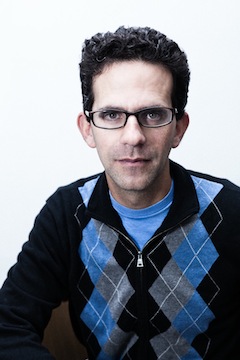
photo - Ari Goelman
Ari Goelman (photo by John Goldsmith Photography)

“One of the first bits of paid writing I ever did was for this very newspaper, when I first came to Vancouver in 1995,” he shared. “True story. A once-off article about Kidsbooks.” True, indeed. The story, “No kidding around,” was published on Sept. 29, 1995, in the Jewish Western Bulletin, the Independent’s predecessor. But back to the present … well, the future.

Goelman sets The Innocence Treatment in his home country in 2031, when “the United States was still enjoying the lull between the first and second uprisings. A drought was drying out the last of the great western forests, but it would be another two years before the massive wildfires that left millions homeless and sparked the second uprising.”

His main character, 16-year-old Lauren was once so innocent that she had to be watched at all times so that no harm would come to her. At first, she is “super-excited” to be undergoing a medical procedure to “fix” her, because then she “won’t be stupid anymore.” But, afterward, she discovers that understanding people and their motivations doesn’t necessarily lead to happier or better outcomes and, more than once, the “new” Lauren must use her ample self-defence skills and literally kick some butts.

“Lauren’s kick-ass qualities naturally emerged from her character,” said Goelman about his strong female lead. “I started with the idea of a character who had spent her whole life very naive and very protected, and I imagined she’d be furious once the veil was lifted and she started to experience the world as it really was. I figured, as well, that after spending her whole life being unavoidably passive, she would be thrilled by her new ability to act and would make the most of those abilities.”

The problem becomes one of self-restraint, which Goelman explicitly explores in a chapter involving an experiment while Lauren is in custody, which I personally found somewhat out of place, or forced.

“What I was trying to do in that chapter was to show Lauren’s inability to control herself, even when she genuinely wants to, both for her own self-interest and to spite Dr. Corbin,” explained Goelman. “That’s what Corbin is really measuring – not Lauren’s fighting ability, but her paranoia and anger. It was a fun chapter to write, because it’s from Lauren’s perspective and she’s aware of the challenge that she’s failing, even as she fails it.”

Overall, The Innocence Treatment is a fun book to read. To use an apt cliché, it is a page-turner. It is also a little scary in its seeming prescience, having been written before the election of Donald Trump and the apparent descent of America.

“Yes, The Innocence Treatment does feel a bit unfortunately prescient at this point,” agreed Goelman. “I’m glad it was published this year, or it would have started seeming less like a near future world and more like the past.”

As for what he thinks the future might hold in reality, Goelman said, “I think the most we can hope for is to slow climate change and deal with its consequences in a fair way that limits human suffering. I’m not real optimistic about our near-term prospects, as I think that nothing good will happen as long as so much of the world’s resources are controlled by so few individuals and families.

“The world of The Innocence Treatment is very much formed by the combination of climate change disaster and the unequal distribution of wealth. And,” said Goelman, “while the election of Donald Trump in the U.S. is the latest and maybe the best example of how these two trends come together, we don’t have to look so far from home. The B.C. Liberals ran this province for 16 years, defunding public education and subsidizing the fossil fuel industry, at the behest of their very wealthy (and largely unregulated) donors.

“On the upside,” he said, “it’s not like the solutions are so complicated – if we get money out of politics, I believe humans can be really brilliant at solving problems collaboratively. So, while I’m pretty pessimistic about any major improvement in the near term, I think it’s very possible to change things for the better – it just requires the political will. There’s a part of The Innocence Treatment where Lauren’s older sister describes the family’s life right after the ‘Emergency’ era permanently reshaped the U.S., and one of the things she remembers is it wasn’t so bad being without power, as people came together to help each other. I think there’s a lot of truth to that. Given the chance, humans are really good at working together. They’re also really good at struggling for dominance and to monopolize scarce resources. It’s anyone’s guess which direction we’re going.”

For the full schedule of the Jewish Book Festival, which runs Nov. 25-30, visit jewishbookfestival.ca.

Step aside fried latkes

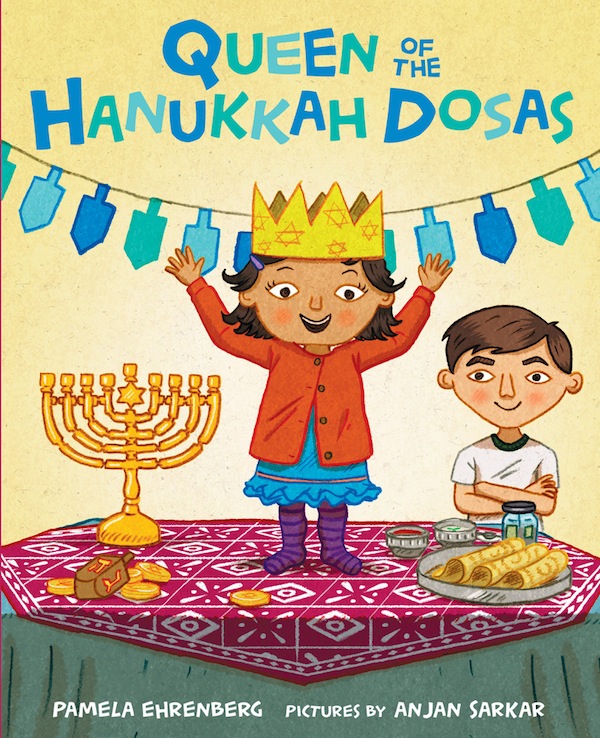
My younger brother has one main rule for my nieces, who are 6 and 4 years old – “No head injuries.” Sounds simple enough, until you see one of them launch themselves off the back of the couch. I could see a bit of them in the character of Sadie in Queen of the Hanukkah Dosas, written by Pamela Ehrenberg and illustrated (beautifully and creatively) by Anjan Sarkar.

“It wasn’t that I didn’t want my little sister, Sadie, to help us make dosas for Hanukkah,” explains her big brother. “The problem was, she climbed too much.” Onto tables, out of cribs, up stacks of cans at the supermarket, Sadie does like to climb. And luckily so, it turns out. But you’ll have to read the book to know why.

book cover - Queen of the Hanukkah Dosas
Queen of the Hanukkah Dosas cover

If the title didn’t give it away, Sadie and her family are a Jewish family with Indian heritage. Instead of latkes, they are celebrating the Holiday of Lights with dosas, and there is a recipe for the Indian pancake in the book, as well as a recipe for sambar, a vegetarian lentil stew made with tamarind paste and many other delicious ingredients.

Queen of the Hanukkah Dosas, published by Farrar, Straus and Giroux (2017), is part of PJ Library, which sends free Jewish children’s books to families with kids from 6 months to 8 years old. B.C. community members can sign up through Jewish Federation of Greater Vancouver or Jewish Federation of Victoria and Vancouver Island.

PJ Library’s selection committee chose Queen of the Hanukkah Dosas because it “loves how this book celebrates the varied cultural and ethnic backgrounds that make up today’s Jewish community, and encourages each of us to be proud of our individuality.”

The book also offers the opportunity to talk about various holiday customs that cut across Jewish cultures. Sadie wears a dreidel costume for some of the book, the family lights the chanukiyah, there is gelt on the table and, of course, dosas are fried, so there’s that miracle of oil to discuss.

Giro d’Italia’s “Big Start” in Israel

Sylvan Adams, 58, is funding the construction of the Middle East’s first Olympic velodrome, slated to open in Tel Aviv in May 2018. (photo from margolin-bros.com/en/project/Velodrom)

In Europe, the Giro d’Italia bicycle race ranks in status with baseball’s World Series or hockey’s Stanley Cup. Since the beloved Italian sports extravaganza’s initial race in 1909, the multi-stage race has never started outside Europe – until now. Next May, the annual event’s starting flag will be waved in the Holy City, thanks in big part to Sylvan Adams – the Montreal billionaire now living in Tel Aviv who himself is a competitive bicycle racer.

Adams, 58, is funding the construction of the Middle East’s first Olympic velodrome, slated to open in Tel Aviv in May 2018, in time for the Israel-based initial part of the 23-day Giro d’Italia. The Israeli team is all but guaranteed to receive one of four wildcard invitations for the race.

The bike-racing stadium, called simply the Velodrome, is part of the National Sports Centre being built by the Tel Aviv Foundation, by Mazor-First Architects. Located on Bechor Shitrit Street in the Hadar Yosef neighbourhood, the complex will gentrify a once-impoverished area. Budgeted at $11 million, the 7,100-square-metre biking facility will be jointly owned by the Olympic Committee of Israel and the Tel Aviv Municipality.

Adams, who made aliyah in December 2015, is honorary president of the organizing committee of the race’s “Big Start” in Jerusalem.

The three-week Giro is widely considered the most beautiful of cycling’s three Grand Tours, ahead of the sporting leviathan of the Tour de France and Spain’s lower-key Vuelta a España. Ministers from Israel and Italy met at Jerusalem’s Waldorf Astoria Hotel in September to sign an agreement that the opening three stages of next year’s Giro will be held in Israel.

Like the other Grand Tours, the modern editions of the Giro d’Italia normally consist of 21 daylong segments (stages) over a 23-day period that includes two rest days. All of the stages are timed to the finish, each stage’s time added to the previous. The rider with the lowest total time is the leader of the race and gets to don the coveted pink jersey, called maglia rosa, worn by the leader of the general classification.

Adams, who has until recently been publicity shy, today lives in a penthouse overlooking the Mediterranean and Tel Aviv’s sea-side bicycle path. A two-time world outdoor cycling champion in his age category, his most recent title was won at the World Masters Championship, held in Manchester, England, in November 2015. Adams, who began cycling competitively more than two decades ago, is a six-time Canadian and 15-time Quebec champion. He won four gold medals at two Pan-American meets, and a total of five golds at the 2009 and 2013 Maccabiah Games.

His dream is to turn Tel Aviv into “the Amsterdam of the Middle East,” i.e. a city as bike-friendly as the Dutch capital. He believes something similar can be done in Tel Aviv, where traffic congestion and a parking shortage are reaching a crisis, as more and more motorists come in from “satellite” cities.

“Petach Tikva, for example, is eight kilometres from the heart of Tel Aviv. That can take an hour to drive some mornings. By cycling, it is 20 to 30 minutes,” he said.

Adams first visited Israel nearly four decades ago. He and his wife of 33 years, Margaret, a native of London, England, met while volunteering on a kibbutz.

Now retired, Adams has given up his involvement with the family business, Iberville Developments Ltd., the real estate giant founded after the Second World War by his father, Marcel Adams, a Romanian-born Holocaust survivor. The younger Adams was its chief executive officer and his son Josh, one of his four children, is now running the company, one of the largest owners of commercial properties in Quebec.

Gil Zohar is a journalist based in Jerusalem.

ביקור חגיגי

נציגי קהילת יהודי טורונטו ביקרו בשכונת אבן גבירול בעיר רחובות שאותה הם מאמצים. (צילום: Little Savage)

ראשי קהילת יהודי טורונטו קיימו בשבוע שעבר ביקור חגיגי בשכונת אבן גבירול בעיר רחובות שבמרכז הארץ (במישור החוף הדרומי), אותה הם מאמצים כבר שנים רבות. ביקור קודם של ראשי הקהילה היהודית באבן גבירול התקיים לפני שתיים עשרה שנים.

האימוץ כולל תרומות נרחבות לתמיכה בתושבי לאבן גבירול (ובשמה הקודם כבר גבירול) מכל הגילאים. הוא כולל: הקמת בית הספר בשכונה (בשנת 1988) על שם ראש הממשלה לשעבר מנחם בגין – שכולל חטיבה הצעירה וכן משמש את לתמידי המגזר החרדי, מתנ”ס, מרכז יחודי לגיל הרח, מרכז שכונתי לבני גיל הזהב וכן מלגות לסטודנטים מקומיים.

בביקור הפעם נכחה משלחת גדולה של ראשי קהילת יהודי טורונטו שמנתה שלוש מאות וחמישים איש. אותם קיבלו בברכה בין היתר ראש העיר רחובות רחמים מלול, סגניו עו”ד מתן דיל וזהר בלום, יו”ר ועדת שכונת אבן גבירול גבי גולן (המנהל קשר קבוע ומתמשך עם ראשי קהילת טורונטו) וכן חברי מועצת העיר תל אביב איטח רונן ואמיר רונן.

המשלחת מטורונטו השתתפה בטקס חגיגי לחנוכת הכיכר בצומת הרחובות יוני נתניהו ובן גוריון (במערב רחובות) על שם יהדות טורונטו. זאת כדי לבטא את הקשר החזק והעמוק בין תושבי שכונת אבן גבירול לבין קהילת יהודי טורונטו. לאחר הטקס התקיים אירוע ברחבה המרכזית של בית הספר על שם בגין, שכלל הפנינג גדול עם מאות מתושבי השכונה.

בתום האירועים אמר ראש העיר מלול: “אנו מוקירים את ראשי הקהילה היהודית בטורונטו על תרומתם הגדולה לשכונה ולעיר רחובות. הקשר הפורה הזה הביא ברכה גדולה בליבה של השכונה המתפתחת הזו. לשותפות זו בינם

לביננו יש משמעות ערכית, חינוכית ולאומית. אם בתפוצות ואם בישראל כולנו עם אחד”.

כפר גבירול וכיום שכונת אבן גבירול נקראת על שמו של הרב שלמה אבן גבירול, שהיה מגדולי המשוררים והפילוסופים היהודים בימי הביניים. לפני מלחמת העצמאות שכן במקום הכפר הערבי אל-קוביבה (בערבית הכוונה לכיפה קטנה או קציצה), שחלקו ננטש וחלקו פונה מידי תושביו (במסגרת מבצע ברק של חטיבת גבעתי במאי 1948). השכונה מורכבת מאוכלוסייה מגוונת של יהודים מהמזרח והמערב. תחילה היא אוכלסה ביהודים שעלו מבולגריה ולאחר מכן מיהודים שהגיעו מתימן. בשנות השישים הגיעו יהודים שעלו ממרוקו, בשנות השבעים יהודים שהגיעו מברית המועצות לשעבר, ולאחר מכן יהודים שעלו מאתיופיה. במשך השנים לאור עליית מחירי הנדל”ן באזור תל אביב עברו להתגורר בשכונה זוגות צעירים, בעיקר במגדלי הדיור החדשים של חברת הבנייה אביסרור.

השכונה ידעה שני פיגועים בשנת 1955: חולית מודיעין ממצריים רצחה בחודש פברואר תושב מקומי. לאחר מספר חודשים באוגוסט חוליית פדאיון רצחה אף היא תושב מקומי.

קצת היסטוריה: בני שבט היין התיישבו באזור קוביבה במאה השלושה עשר, על שרידים של כפר מתקופת הברונזה. השבט הגיע בנדודיו מחצי האי ערב. בהמשך ניצבה במקום העיר אלתקה (אחת מערי הלווים). בתקופת השלטון העותומאני רכשה קרן קיימת לישראל כששת אלפים ושלוש מאות דונם מאדמות הכפר קוביבה. האדמה חולקה לארבעה צרכים עיקריים: לגידולים חקלאיים, לגידולי מספוא, לגידולי שלחין (פרדסים וירקות) וכן לגידולי כרמים (אדמה זו התאימה אף לבנייה).

ברחובות שהוקמה בשנת 1890 מתגוררים כיום כמאה וארבעים אלף תושבים. היא נחשבת לעיר השניים עשר בגדולה בישראל. למעלה מעשרים אחוז מהתושבים הם עולים כאשר רובם (בדומה לשכונת אבן גבירול) הגיעו מברית המועצות לשעבר מתימן וכן מאתיופיה.

And the JI’s 18 Under 36 are …

Congratulations to all of the JI’s 18 Under 36 awardees!

(in alphabetical order)

Rebecca Baron
Ezequiel Blumenkrans
Erin Brandt
Marcus Brandt
Ayelet Cohen Weil
Courtney Cohen
Aaron Friedland
Sam Heller
Talya Mallek
Ariel Martz-Oberlander
Logan Presch
Maya Rae
Mike Sachs
Allie Michelle Saks
David Schein
Rotem Tal
Carmel Tanaka
Rabbi Levi Varnai

Thank you to all of the people who submitted a nomination. We received so many incredible entries. There really are a lot of all-around awesome people under the age of 36 in our community. Choosing only 18 was a difficult task.

Special thanks to our external adjudicator Kara Mintzberg, B.C. Regional Director, Canadian Jewish Political Affairs Committee (CJPAC).

Now that the hard part is done, we hope you will come and help us celebrate these amazing young people and our community. Tickets are only $18 and the event is sure to sell out.

Brave choice to stage Taken

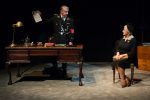
A scene from United Players’ production of Taken at Midnight, which is at the Jericho Arts Centre until Nov. 26. Seen here are Brian Hinson as the Nazi Dr. Conrad and Suzanne Ristic as Irmgaard, Hans Litten’s mother. (photo by Nancy Caldwell)

As a Jew, a lawyer and a child of a Holocaust survivor, I am embarrassed to say that I had never heard of Hans Litten until I saw United Players’ production of Taken at Midnight, which runs to Nov. 26 at Jericho Arts Centre.

Litten was a brilliant young Jewish-German lawyer, known for his defence of opponents of the Nazi movement. In 1931, he had the audacity to subpoena Adolf Hitler as a witness in the trial of four Nazis charged with murder, and subjected him to a grueling three-hour cross-examination, exposing the Nazi party for what it really was – a murderous bunch of thugs. Litten called Hitler “a cross between Baron Munchhausen and Attila the Hun.”

Unfortunately for Litten and the world, within two years Hitler was in power and he started to exact his revenge on his opponents. At midnight on Feb. 28, 1933, after the Reichstag (German parliament) fire, Litten, along with thousands of others, was arrested or, as the Nazis euphemistically called it, taken into “protective custody” at a series of concentration camps. Litten became known as “Hitler’s personal prisoner” – the cocky Jewish lawyer who had dared to expose the Fuhrer’s weaknesses – and, over the years, was subjected to brutal torture and unspeakable degradation as punishment. Despite the valiant efforts of his mother, Irmgaard, to obtain his release over the five years of his incarceration, Litten ultimately committed suicide in Dachau in 1938, which was a bit messy for the Nazis, as they wanted their political prisoners to die accidentally or naturally, not by taking their own lives.

The irony is that Litten was not technically Jewish. His mother was not Jewish and his father had converted to Christianity (to make things easier). As Litten says in the play, “I am an atheist Jew and, prior to that, I was an atheist Lutheran.” Of course, that made no difference to the Nazis, who went back three generations to ferret out Jewish blood.

Playwright and filmmaker Mark Hayhurst’s 2010 BBC films The Man Who Crossed Hitler and To Stop a Tyrant planted the seeds for this staged work. It had its West End (London, England) debut in 2014. Reviewers called it a “masterpiece of theatre not to be missed.” Now, United Players has taken on the formidable task of presenting this gripping story to Vancouver audiences. From the minute you walk into the theatre, the dark, shadowy, stark set – an elevated wooden platform fronted by barbed wire positioned between two floor-to-ceiling red banners emblazoned with black swastikas – is a harbinger of the grim things to come.

The entire cast, mostly comprised of veteran actors, is stellar and, as an ensemble, makes this a truly remarkable theatrical experience. Particular mention has to be made of the two main protagonists – Suzanne Ristic as Irmgaard and Sean Anthony as her son. Ristic is sublime in her portrayal of this strong, heroic woman who takes on the Gestapo establishment in a relentless battle to free her son. She often takes centre stage to talk directly to the audience, thereby breaking down the fourth wall, making for a very intimate encounter. And Anthony plays his difficult role with dignity, yet shows uncompromising defiance. We ache as we watch his physical and mental decline – his transformation from ordinary citizen to bloodied, head-shaven prisoner; a business suit to the striped concentration camp uniform, replete with the obligatory yellow Star of David.

Supporting, but not lesser, performances come from the rest of the cast.

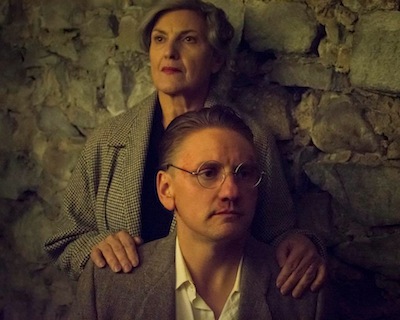
photo - Irmgaard Litten (played by Suzanne Ristic) tries everything to save her son Hans (Sean Anthony) from the Nazis in Taken at Midnight
Irmgaard Litten (played by Suzanne Ristic) tries everything to save her son Hans (Sean Anthony) from the Nazis in Taken at Midnight. (photo by Nancy Caldwell)

Brian Hinson as Dr. Conrad, Irmgaard’s Gestapo contact, portrays a man of culture and intelligence who appreciates this feisty woman and appears to feel affection for her. The scene where they share an ice cream on a summer’s afternoon in a park seems incongruous, juxtaposed against the darkness of this play. Yet it speaks to some form of humanity even in the worst of times.

Litten’s cellmates – Erich Muhsam, an anarchist (played by Richard Hersley) who refers to Hitler as “the Austrian transvestite,” and Carl von Ossietzky, a newspaper editor and winner of the 1935 Nobel Peace Prize (played by Jewish community member Michael Kahn) – show the camaraderie and trust that can evolve from difficult circumstances. The triumvirate produces an amusing reenactment of Hitler’s cross-examination, providing an island of levity in their sea of despair.

Douglas Abel plays Fritz Litten, Hans’ father, as a calm counterpoint to his wife’s intense persona. John Harris, with his posh English accent, is Lord Clifford Allen, an English diplomat, patrician and pacifist who Irmgaard seconds in her quest for her son’s freedom. Allen is able to secure a meeting with Hitler to discuss the matter, but to no avail. Allen’s political attitude highlights the European appeasement zeitgeist of the early 1930s – that Germany was just experiencing growing pains and Hitler was an effective statesman, not a threat to the world. If only it had been so.

The play provides an historical lesson in the rise to power of the fascist Nazi regime and the consequences of speaking truth to power, but, at its heart, it is the story of the love of a mother for her son and her fight, at great personal risk, to try and save him.

As director Michael Fera, states in his notes, this is “an informative and deeply engrossing play about the high price paid for resisting tyranny,” and is as relevant today as it was in 1933. “People are living it now, again. History is repeating itself in many ways.”

Taken at Midnight is a tough watch and an emotional ride but well worth a trip to the Jericho Arts Centre. Kudos to artistic director Andree Karas for having the courage to stage this work. The show runs to Nov. 26, Thursdays to Sundays, 8 p.m., with 2 p.m. matinées Nov. 12, 19 and 26. For more information, visit unitedplayers.com or call 604-224-8007, ext. 2.

Tova Kornfeld is a Vancouver freelance writer and lawyer.