Skip to content
  • Home
  • Subscribe / donate
  • Events calendar
  • News
    • Local
    • National
    • Israel
    • World
    • עניין בחדשות
      A roundup of news in Canada and further afield, in Hebrew.
  • Opinion
    • From the JI
    • Op-Ed
  • Arts & Culture
    • Performing Arts
    • Music
    • Books
    • Visual Arts
    • TV & Film
  • Life
    • Celebrating the Holidays
    • Travel
    • The Daily Snooze
      Cartoons by Jacob Samuel
    • Mystery Photo
      Help the JI and JMABC fill in the gaps in our archives.
  • Community Links
    • Organizations, Etc.
    • Other News Sources & Blogs
    • Business Directory
  • FAQ
  • JI Chai Celebration
  • JI@88! video

Recent Posts

  • Sharing her testimony
  • Fall fight takes leap forward
  • The balancing of rights
  • Multiple Tony n’ Tina roles
  • Stories of trauma, resilience
  • Celebrate our culture
  • A responsibility to help
  • What wellness means at JCC
  • Together in mourning
  • Downhill after Trump?
  • Birth control even easier now
  • Eco-Sisters mentorship
  • Unexpected discoveries
  • Study’s results hopeful
  • Bad behaviour affects us all
  • Thankful for the police
  • UBC needs a wake-up call
  • Recalling a shining star
  • Sleep well …
  • BGU fosters startup culture
  • Photography and glass
  • Is it the end of an era?
  • Taking life a step at a time
  • Nakba exhibit biased
  • Film festival starts next week
  • Musical with heart and soul
  • Rabbi marks 13 years
  • Keeper of VTT’s history
  • Gala fêtes Infeld’s 20th
  • Building JWest together
  • Challah Mom comes to Vancouver
  • What to do about media bias
  • Education offers hope
  • Remembrance – a moral act
  • What makes us human
  • המלחמות של נתניהו וטראמפ

Archives

Follow @JewishIndie
image - The CJN - Visit Us Banner - 300x600 - 101625

Tag: seniors

Canada’s silver tsunami

Canada’s silver tsunami

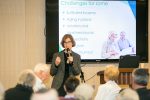
Isobel Mackenzie, seniors advocate for the Province of British Columbia, was the keynote speaker at the Changing Landscape: Pathways Ahead forum Nov. 27. (photo from Jewish Federation)

“Plan for tomorrow!” That’s the message from Isobel Mackenzie, seniors advocate for the Province of British Columbia. With seniors living much longer, there are some urgent issues facing aging Canadians.

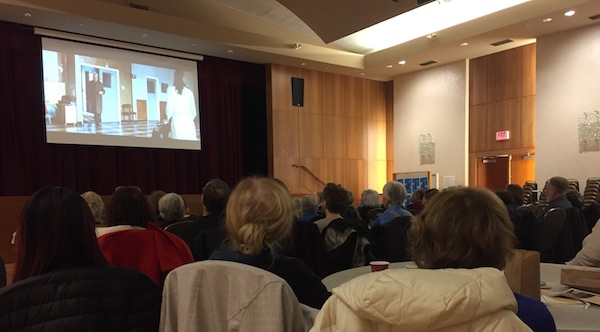
Mackenzie was speaking to a packed house at the Changing Landscape: Pathways Ahead forum on the growing population of older adults in the Jewish community. Hosted by Jewish Federation of Greater Vancouver with the Jewish Community Centre of Greater Vancouver, Jewish Family Services, Jewish Seniors Alliance, Kehila Society of Richmond, L’Chaim Adult Day Care, and Louis Brier Home and Hospital, the forum was held at Beth Israel Synagogue Nov. 27. Three key themes were the focus of the evening: caregiver support; aging in place; and social connections.

Sharing insights into best practices and new opportunities for the Jewish community were: on caregiver support, Dr. Beverley Pitman, regional planner, healthy aging, United Way of the Lower Mainland; on aging in place, Terry Robertson of Parkdale Manor; and, on social connections, Gyda Chud (Peretz Centre for Secular Jewish Culture), Ken Levitt (Jewish Seniors Alliance), Toby Rubin (Kehila Society of Richmond) and Lisa Cohen Quay (Jewish Community Centre of Greater Vancouver).

Referencing the United Way’s Better at Home program, which helps seniors live independently in their own homes while remaining connected to the community, Mackenzie emphasized, “We are under-subsidizing people who are aging at home.” She added that many seniors pay for their own care as they age, despite insufficient income. She highlighted the urgency for government and community agencies to increase their funding for seniors who choose to age in place.

Mackenzie told the capacity crowd that, right now, there are 920,000 seniors over the age of 65 living in British Columbia, which represents 19% of the total population. By 2031, there will be 1.38 million seniors in the province, which will represent 25% of the total population. Referring to “the silver tsunami,” she said we need to start planning for that change now.

Addressing financial issues, Mackenzie said many seniors have less disposable income than their younger counterparts. For example, she noted that, for seniors age 65 and older, the bottom 20% of that group have an annual average single income of $17,000, while the top 20% have an annual average single income of $80,000. For seniors 85 and older, she said, the bottom 20% have an income of $17,500 while the top 20% have an income of $73,000. These numbers have a significant impact on how and where those seniors live. “Disproportionately poorer people live in care facilities,” said Mackenzie.

She also commented that there is a disconnect in terms of public policy and the entitlements available to those 65 and older, when the government is giving the same amount of money to both the rich and the poor.

According to Mackenzie, 94% of all seniors who are 65 or older live independently, while 74% of all seniors who are 85 or older live independently. A full 80% of these seniors are homeowners, she said. However, the remaining 20% are renters who are disproportionately poorer than homeowners. Consequently, they often don’t have enough leftover income to buy necessities like glasses, hearing aids and mobility devices, she said.

On the topic of aging in place, Mackenzie pointed to family members’ overall reluctance to allow elderly relatives to “accept risk”; that is, to live independently. Given the dangers inherent in living at home (stairs, rugs, lack of bathtub rails, etc.), she said relatives sometimes try to “control the risks” by encouraging loved ones to move to a care facility, often against the older person’s wishes. “We have to accept the rights of the [cognitively able] elderly to live at risk,” she said. “They have the right to make their own decisions, even if it’s a risky decision.” The message was, while we want our elderly to be safe, it’s not our choice to make.

In terms of the social isolation of those aging in place, Mackenzie said this depends primarily on the senior’s level of engagement. If their interactions with others are limited, they may feel marginalized. However, feeling useful to themselves and others keeps seniors feeling engaged, which is why we see so many senior volunteers. “Everybody needs to feel useful and is useful, in their own way,” said Mackenzie. She encouraged people not to do things for seniors that they can do for themselves, because “everyone needs a sense of purpose and usefulness.” She stressed that not all seniors are frail and not all seniors need help. Rather than viewing seniors as a problem, she said, we should view them as “an active and valuable citizenry.”

On the issue of caregivers, Mackenzie said, “Not everyone comes to this role equally equipped. We need to give more support to caregivers for the frail elderly and those with dementia. It’s more stressful dealing with someone with dementia than with someone who has a physical disability or disease.”

With the possible exception of the workshop on social connections, whose speakers were from Jewish agencies, but whose workshop the Jewish Independent could not attend, none of the presenters addressed how the community could support Jewish seniors in connecting to their Judaism, culture and traditions as they age. Neither Mackenzie or Pitman, the presenter on caregiver support, differentiated between the needs of Jewish seniors and non-Jewish seniors; the workshop on aging in place also did not specifically address Jewish seniors.

Pitman, however, shared some eye-opening statistics in her workshop. According to the Office of the Seniors Advocate for British Columbia’s 2017 report Caregivers in Distress: A Growing Problem:

• Statistics Canada estimates that there are approximately one million caregivers in the province.

• The work of caregivers is a critical pillar in the healthcare system, allowing seniors to remain at home and delay, or even prevent, costly care options.

• Unpaid caregivers provide roughly three-quarters of care for people who receive care at home in Canada.

• Caregiver tasks range from taking over household duties to providing time-sensitive personal and medical care.

• Caregivers’ most common tasks fall into three broad categories: emotional support, assistance with health and daily living, and care management.

• Caregivers are often information and referral specialists and systems navigators dealing with the health system, the housing system and the legal system.

The 2017 report notes that, on average, unpaid caregivers provide 20 hours per week of informal care and that replacing the care they provide with care from paid caregivers would cost an estimated $3.5 billion in British Columbia. And the report warned that “31% of unpaid caregivers are experiencing symptoms of distress such as anger, depression, anxiety and sleep difficulties.” This number seemed low to audience members who are or were caregivers.

Pitman also shared a sample of the resources available for caregivers, including BC211, 8-1-1 HealthLinkBC, local Jewish and other community support agencies, information and referral services, and libraries. She encouraged caregivers to call the Family Caregivers of British Columbia Caregiver Support Line (1-877-520-3267) if in need and highlighted the United Way’s Better at Home, which can provide light housekeeping, minor house repair, yard work and friendly visits. She offered audience members the 2016 publication United Way of the Lower Mainland’s Family & Friend Caregivers Information and Resource Handbook. While acknowledging that it’s somewhat out-of-date, she said it still contains much valuable information.

Shelley Civkin is a happily retired librarian and communications officer. For 17 years, she wrote a weekly book review column for the Richmond Review, and currently writes a bi-weekly column about retirement for the Richmond News.

Posted on December 14, 2018December 12, 2018Author Shelley CivkinCategories LocalTags Aging in Place, Isobel Mackenzie, lifestyle, seniors
Funding for new equipment

Funding for new equipment

Left to right are Louis Brier Home and Hospital staff Jennifer Belen, Nicole Encarnacion, Carol Bucknor, David Keselman (chief executive officer) and Rozanne Kipnes with MLA George Heyman and Louis Brier resident Roberta Gilmore (holding the cheque). (photo from Louis Brier)

Louis Brier Home and Hospital is one of 88 care homes across British Columbia to receive funding to purchase new safety equipment, as part of the Seniors Safety and Quality Improvement Program (or SSQIP, pronounced “SKWIP”) initiative. The Brier will receive $60,576 of the total $2.6 million in provincial funding allocated.

SSQIP is managed by B.C. Care Providers Association (BCCPA), who process applications from all residential care homes that receive public funding for new equipment intended to improve safety and quality of life for residents. Oversight of SSQIP is provided by representatives from the Ministry of Health, BCCPA, Denominational Health Association and SafeCare BC. Approved applicants may receive up to $500 for each publicly funded resident.

“Our government is proud to invest in thisprogram, which will go towards purchasing new beds to help improve safety andquality of life for those living in residential care homes,” said GeorgeHeyman, MLA for Vancouver-Fairview, who presented the cheque at the Brier onDec. 6. “It’s great to see that Louis Brier Home and Hospital and seniors inVancouver will benefit from new equipment.”In addition to beds and mattress purchases,care homes are investing in new shower chairs, tubs, mobility equipment (suchas floor and ceiling lifts), lighting and visual aids, sensory rooms, musictherapy and ergonomic furniture. Preventative and urgent response systems arealso funded to promote both resident and employee safety.For more information, visitbccare.ca/programs/ssqip.

Format ImagePosted on December 14, 2018December 12, 2018Author Louis Brier Jewish Aged FoundationCategories LocalTags funding, George Heyman, Louis Brier, seniors
Reinventing and renewing

Reinventing and renewing

Shanie Levin and Al Stein opened the JSA Empowerment series season Nov. 30. (photo from JSA)

The first Jewish Seniors Alliance Snider Foundation Empowerment Series session of the 2018/19 year was on the theme of “Renewing and Reinventing Yourself as an Older Adult.” Held on Nov. 30, it was co-sponsored by the JSA and the Sholem Aleichem Seniors of the Peretz Centre for Secular Jewish Culture.

Thirty-five “older adults” gathered to listen to stories on the “Reinventing Yourself” theme, read by Al Stein and me. Gyda Chud, JSA vice-president and SAS coordinator, introduced the session by speaking about the goals of JSA in advocacy, education, information and peer support services. She emphasized the aim of JSA’s motto, “Seniors Stronger Together,” before welcoming the readers.

I shared that it had not been easy to find Yiddish stories translated into English that corresponded to the theme, so Al and I had to look to stories written in English by Jewish writers.

Al began with a short parable from Roman times about a 100-year-old man who was still planting trees. I continued with a story by Grace Paley called Goodbye and Good Luck, which is set in New York in the 1930s – an older woman describes her colourful life to her niece.

Al’s next story was by a Canadian Jewish writer, Jack Ludwick, which was about an older woman who is constantly drawn back to the area of Montreal where she grew up and spent her early married years. The session closed with my reading a short section from Sholem Aleichem’s Menachem Mendel.

A discussion about the pleasure and the purpose of passing on stories to the next generation followed, and then Gyda thanked everyone and invited all to tea, coffee and cookies in the lounge.

The second session in the Empowerment Series will be the film A Song for Marion (Unfinished Song), on Jan. 16, 11 a.m., at the Jewish Community Centre of Greater Vancouver with the JCC Seniors. For more information, call the JSA office, 604-732-1555, or Lisa Quay Cohen at the JCC, 604-257-5111.

The Peretz Centre sponsors a program called Exploring Jewish Authors (in English) on the second and fourth Saturday mornings of each month, as well as Reading Yiddish Authors in Yiddish on the first and third Wednesdays of the month at 11 a.m. For more information, call the Peretz Centre office, 604-325-1812.

Shanie Levin is an executive board member of Jewish Seniors Alliance and on the editorial board of Senior Line magazine.

Format ImagePosted on December 7, 2018December 4, 2018Author Shanie LevinCategories LocalTags Empowerment, JSA, seniors, storytelling
Celebrating the JCC’s 90th

Celebrating the JCC’s 90th

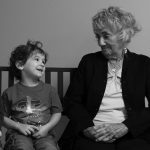
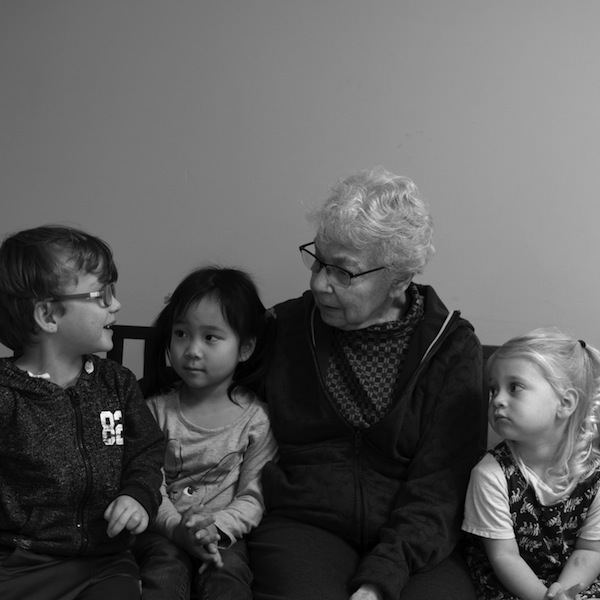
Isabella: What do you do that makes you very happy?

Connor: I like to play with my mommy.

Isabella: Well, if you find something that makes you happy, that’s what you should do.

(photo by Jocelyne Hallé)

***

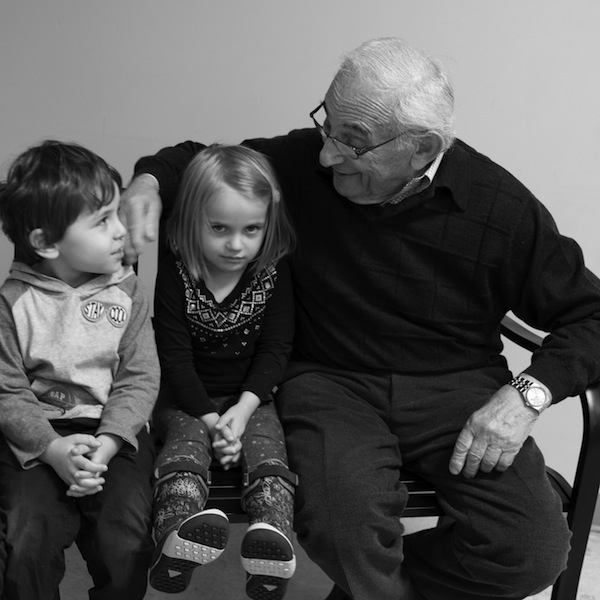
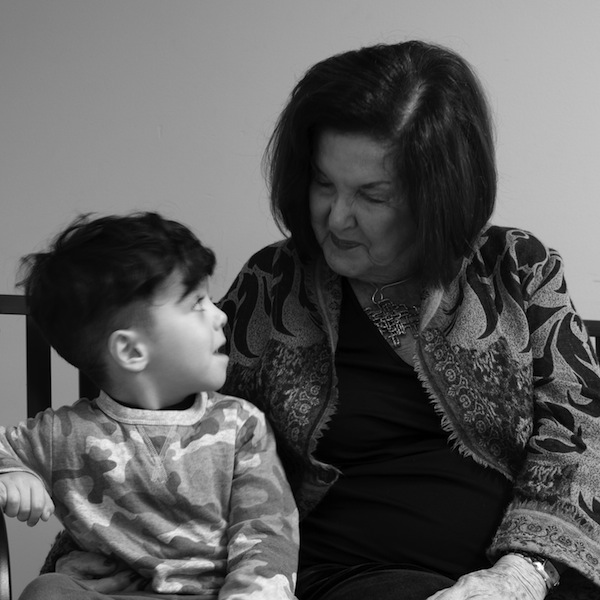
As part of the Jewish Community Centre of Greater Vancouver’s celebration of its 90th birthday, the centre brought together its members who are age 90 and better with children from the Karen and Gary Simkin Family Child Development Centre Preschool.

Preschool director Jennifer Trickett and her staff helped the children create and practise questions that they were curious about to ask the seniors. Questions covered such topics as “What games did you like to play when you were a kid?” and “Do you get hugs from your children?” The children also sang songs.

In addition to being interviewed by the children, the JCC members enjoyed a complementary brunch, and free portraits courtesy of Jocelyne Hallé of Jocelyne Hallé Photography.

The JCC has 25 members who are age 90 and over, most of whom are at the centre multiple times a week to exercise, socialize, learn and play. For more information about special membership pricing for adults age 65-plus, contact membership director Alexis Doctor at 604-257-5111.

*** 

photo - Gloria, Joyce, Shiloh and Asher

Gloria: Where do you live?

Joyce: I live in a condominium.

Gloria: Well, I live in Vancouver.

Joyce: Me, too.

Shiloh: Do you come here in the car?

Joyce: I came in a car today. My daughter drove me.

Shiloh: My mommy drove me!

Asher: Do you live in space?

Joyce: Sometimes I think I do! But, mostly in Vancouver.

(photo by Jocelyne Hallé)

***

photo - Sam and Danny

Sam: Do you ever hug your grandchildren?

Danny: Yes, very big ones, they’re even kissing me, too.

(photo by Jocelyne Hallé)

***

photo - Grace and Milo

Milo: What did you like to play when you were little?

Grace: I liked to play baseball. How about you?

Milo (with a big smile): Me, too.

(photo by Jocelyne Hallé)

Format ImagePosted on December 7, 2018December 4, 2018Author JCCGVCategories LocalTags birthdays, JCC, preschool, seniors
Four volunteers fêted

Four volunteers fêted

Jewish Seniors Alliance’s AGM was held on Oct. 11 at Congregation Beth Israel. (photo from JSA)

The annual general meeting of the Jewish Seniors Alliance was held on Oct. 11 at Congregation Beth Israel. As is customary, the AGM was followed by a gala dinner during which JSA honoured dedicated volunteers from three community organizations for their service to seniors in Vancouver.

The meeting was called to order by JSA president Ken Levitt. He introduced Rabbi Jonathan Infeld of Beth Israel, who gave a short d’var torah on the importance of community actions and involvement with seniors.

Levitt then asked everyone to rise in acknowledgement of JSA members who had passed away over the last year.

Several speakers offered greetings to JSA: Isobel MacKenzie, seniors advocate of British Columbia; Michael Lee, MLA for Vancouver-Langara; Ezra Shanken, chief executive officer of the Jewish Federation of Greater Vancouver; and Gudrun Langolf, president of the Council of Senior Citizens’ Organization of British Columbia (COSCO).

Reports were presented by JSA treasurer Larry Meyer; on peer support services by Gyda Chud for Pam Ottem; on membership by Binny Goldman; from Levitt, as president; and from the nomination committee by Marilyn Berger, who was especially emphatic, urging people who receive Senior Line magazine and are not JSA members to sign up.

In his report, Levitt emphasized JSA’s advocacy role and outlined five issues in particular for which JSA is advocating:

  1. For the B.C. Ministry of Health to provide the 25% more effective flu vaccine free of charge. It presently costs $75 for the high-dose flu shot.
  2. The implementation of a federal pharmacare program.
  3. For the City of Vancouver to allow applications for the provincial homeowners grant to be done in person, without use of a computer, as many seniors have difficulty using computers or do not have access to the internet.
  4. For the B.C. government to initiate a poverty reduction program similar to those that exist in other provinces.
  5. To reduce the need for food banks – JSA had made a presentation to Federation concerning the Food Security Program.

After the reports were completed, Levitt adjourned the meeting and invited everyone to be seated at the festively decorated tables. About 170 supporters of JSA enjoyed a glass of wine and a salmon or vegetarian lasagna dinner that was followed by the presentation of the awards.

This part of the evening was presented by emcee Ed Gavsie, who called upon Langolf to make the presentation to Sheila Pither. Pither has been active with COSCO for 18 years. For the past 10 years, she has coordinated the organization’s Health and Wellness Institute, promoting its expansion from one workshop topic to more than 40. Pither said she was honoured to have been chosen and was grateful to be at the ceremony with friends and family, at age 86, to accept the award.

The next awards went to Muriel Morris and Gary Zumar of JCC Showtime. Maurice Moses presented to Morris and Arnold Selwyn to Zumar.

Morris has been a volunteer piano accompanist since high school. She has accompanied more than 210 concerts since joining Showtime in 2013 and she noted the pleasure she gets when they perform at seniors facilities and she sees the people come alive to the music and the dancing.

Selwyn recounted how Zumar, with his wide experience in audio-visual technologies, has volunteered his services to many Jewish organizations. Zumar started with Jewish Heritage Players more than 40 years ago and has continued for more than 12 years with Showtime. Selwyn called him a volunteer’s volunteer. Zumar responded by thanking everyone at Showtime for this honour.

Toby Rubin of the Kehila Society then presented the final award to Pat Hoffman. Hoffman became involved with Kehila’s Monday Seniors Luncheon at Beth Tikvah 15 years ago. She has been involved in the working committee as the program has expanded to include activities such as English-as-a-second-language, fitness and entertainment. Rubin described Hoffman as the lifeline of the program, the first to arrive and the last to leave. Hoffman expressed her appreciation for the recognition and said she gets much satisfaction from being a volunteer.

While dessert was served, attendees were entertained by jazz singer Jill Samycia, the door prizes and 50/50 tickets were drawn and, after much shmoozing with old friends and dinner, everyone went home having spent the evening honouring four active seniors and again proving the JSA adage “seniors stronger together.”

Shanie Levin is an executive board member of Jewish Seniors Alliance and on the editorial board of Senior Line magazine.

Format ImagePosted on November 9, 2018November 7, 2018Author Shanie LevinCategories LocalTags health, Jewish Seniors Alliance, JSA, seniors, volunteers
Symposium provides healing

Symposium provides healing

The Jewish Seniors Alliance fall symposium on Oct. 28 was about aging across cultures. (photo from JSA)

The Jewish Seniors Alliance fall symposium, Aging Across Cultures, took place on Oct. 28. The program dealt with inclusivity while Jews everywhere were trying to cope with the horrors of what hatred can do. Still newly mourning the victims of the shooting at the Tree Of Life synagogue in Pittsburgh, attending the symposium seemed strange, but it had healing properties.

The afternoon program was a time of unity and solidarity with other cultures. Attendees learned that loving and caring for seniors in our community and for our family elders is a universal value and touches all hearts in much the same way, as well as presenting similar challenges.

In welcoming the crowd, Ken Levitt, president of Jewish Seniors Alliance, turned the subject of the Pittsburgh shooting over to Rabbi Philip Bregman, who was the event chairperson. Bregman served as senior rabbi at Temple Sholom from 1980 to 2013. He is a founding member of Jewish Christian Dialogue (since 1995) and he now functions as Jewish chaplain for the University of British Columbia and is involved with Hillel BC.

Bregman spoke about the brutal murder of people at prayer. He highlighted the many calls he has received expressing sympathy and condolences. He recalled standing outside a mosque in Vancouver after the shootings at a Quebec City mosque in 2017, where six Muslim worshippers were murdered and 19 others wounded. Among the condolences he received after the murders in Pittsburgh was a message of sympathy from the imam in Quebec.

Bregman emphasized the difference between the word “killing,” which he categorized as meaning accidental, and the word “murder,” which is intentional.

“Where do we go from here?” he asked. “We bury our dead, we mourn and we meet as a community,” he said. “We must never allow hatred to win.”

The audience stood for a moment of silence in commemoration of the 11 murdered and those injured, including several police officers.

The afternoon’s program featured a panel consisting of three accomplished women of diverse ethnic origins.

• Zarghoona Wakil is the manager of the Settlement and Integration program at MOSAIC, a nonprofit organization that helps newcomers to Canada. She also supervises MOSAIC Seniors Club, which provides services to seniors of different cultural backgrounds.

• Sinder Kaur is the executive director of health services at SUCCESS, providing a continuum of quality, culturally appropriate care services to seniors with different needs. She has worked in different leadership roles with a passion to help seniors age in place.

• Deanna Lewis, known as Kalkalath, her ancestral name, was recently elected to the Squamish Nation Council, focusing on elders and their care. Kalkalath is a former teacher, working to preserve her Skwxwu7mesh culture, spirituality and language. Raised with the teachings of her grandfather, she knows the importance of knowing who you are and where you come from.

When Bregman introduced the three panelists, he asked them to share a little about themselves and to address the issue of how their various cultures celebrate seniors.

Wakil shared that she is originally from Afghanistan, then lived in Russia. She came to Vancouver 12 years ago and is now studying at Simon Fraser University for a master’s degree in public health. Kaur is Punjabi-born, lived for 20 years in Hong Kong and moved here 17 years ago. Kalkalath’s Squamish Nation family was removed from Khatsahlano (Kitsilano) in the early 1900s and her main efforts are to teach both adults and children the Squamish language.

Despite differing cultures and traditions, Wakil and Kaur both emphasized that it is seniors who hold history in their hands and only upon opening up their hearts are they able to tie generations together and build upon that knowledge for the future generations.

It was difficult to hear that Kalkalath had to learn about her heritage from others, as her history was erased and harshly taken from her elders. It was she who sought to learn about that past and is now feeling connected again, through the learning of her own language and the ways of her people from her grandfather.

A common thread between all the panelists was that grandparents and grandchildren have a special link that allows them to relax and truly enjoy one another while parents are occupied with the comfort and needs of both these family groups.

All three speakers provided vivid descriptions of the issues and areas of concern regarding elders in their cultures. JSA thanked them for their willingness to share personal stories and stories from their communities. The similarities between cultures superseded any differences.

Claudine Malto, director of community programs at Mount Pleasant Neighbourhood House, then spoke about the house’s new initiative: multicultural circles, where seniors share stories, food, textiles, cooking classes, dance and exercise. She noted that people generally like to sit in “pockets,” which creates a divide. The motivation for this project is to answer the question, “How can we best coexist?”

Larry Shapiro, JSA board member and second vice-president, wound up the afternoon with one of the best vocal advertisements for the Jewish Seniors Alliance that we have ever heard.

Attending the symposium made the sun come out, even on a rainy, tear-filled day.

Binny Goldman is an honorary life board member of Jewish Seniors Alliance.

Format ImagePosted on November 9, 2018November 7, 2018Author Binny GoldmanCategories LocalTags culture, health, interfaith, Jewish Seniors Alliance, JSA, multiculturalism, Pittsburgh shooting, seniors
Barbecue for JSA volunteers

Barbecue for JSA volunteers

Jewish Seniors Alliance board member Pam Ottem, who is chair of JSA’s peer support program, with Baruch Azeroual at the JSA volunteer barbecue. (photo from JSA)

On Aug. 22, Jewish Seniors Alliance held its now-annual barbecue for peer support services volunteers, in appreciation of their work with seniors. This year’s celebration, attended by about 50 people, was a joyous affair, with food and musical entertainment, and speeches from volunteers.

Most of the attendees at the barbecue were volunteers or staff of the peer support services program, and a number of JSA board members also joined in the festivities. The food for the meal was contributed by the volunteers.

Charles Leibovitch, JSA peer support coordinator, and Grace Hann, JSA peer support volunteer trainer and supervisor, spoke and welcomed everyone before introducing JSA president Ken Levitt, who thanked everyone for their hard work and mentioned some of the issues for which JSA is advocating, such as a universal pharmacare program.

After Levitt spoke, Leibovitch called on Serge Haber, president emeritus and founder of JSA, to say a few words. Haber spoke about the needs of seniors and how JSA is trying to advocate for and fill some of those needs.

Hann explained about a crowdshare in which some of the volunteers had participated – a listening program that takes place every second Monday, 5-6 p.m., on Bute Street at Davie. Hann also thanked everyone who helped set up the event, including JSA coordinator Liz Azeroual and Azeroual’s husband, Baruch, who did the barbecuing.

The musical trio of Dave and Julie Ivaz and their son, Harrison, provided a wide-ranging performance. They played guitar and sang many songs familiar to the audience.

For more information on JSA, its peer support services, the listening and other programs, visit jsalliance.org.

Shanie Levin, MSW, worked for many years in the field of child welfare. During that time, she was active in the union. As well, she participated in amateur dramatics. She has served on the board of the Jewish Federation of Greater Vancouver and is presently on the executive of JSA and a member of the editorial committee.

Format ImagePosted on September 21, 2018September 20, 2018Author Shanie LevinCategories LocalTags JSA, seniors, volunteering
Musical season ending

Musical season ending

Caviar and Lace entertain at the last session of the 2017/18 Jewish Seniors Alliance Snider Foundation Empowerment Series. (photo by Alan Katowitz for JSA)

On June 25, Jewish Seniors Alliance and the Kehila Society of Richmond co-sponsored the fifth in the JSA’s Empowerment Series program. This year’s theme was “Laughter and Music: Feeding the Soul” and the subtitle for this final event in the season was “Music for our Hearts and Songs We Love.”

Toby Rubin, coordinator of Kehila, introduced the afternoon and welcomed everyone. About 100 enthusiastic attendees dug into the summertime lunch of burgers and hot dogs prepared by Stacey Kettleman.

After lunch, everyone proceeded to the sanctuary to be entertained by Caviar and Lace, comprised of Michelle Carlisle and Saul Berson. The duo performed an eclectic mix of classic, jazz and folk songs. Carlisle plays piano and Berson plays a variety of instruments, from saxophone to clarinet. They both played and sang, encouraging the audience to join in. The mix of oldies, and especially songs from the 1950s, was indeed music to the ears of the listeners, who were familiar with most of the melodies.

A new JSA Snider Foundation Empowerment Series will start in the fall.

Shanie Levin, MSW, worked for many years in the field of child welfare. During that time, she was active in the union. As well, she participated in amateur dramatics. She has served on the board of the Jewish Federation of Greater Vancouver and is presently on the executive of JSA and a member of the editorial committee.

Format ImagePosted on July 13, 2018July 11, 2018Author Shanie LevinCategories MusicTags Caviar and Lace, Empowerment, JSA, Kehila Society, seniors
Celebration and call to action

Celebration and call to action

More than 130 people joined the Chai Tea celebrations June 10. (photo by Alan Katowitz)

“Life is not measured by the number of breaths you take, but by the moments that take our breath away.”
(Rabbi Abraham Twerski)

The Chai Tea celebration on June 10 brought together 135 people to support the work of the Jewish Seniors Alliance and to honour Serge Haber on his 90th birthday.

Educator and writer Matthew Gindin emceed the event, which took place at the Peretz Centre for Secular Jewish Culture. Shelley Rivkin of the Jewish Federation of Greater Vancouver emphasized Haber’s effectiveness in bringing the issues of seniors to the fore in the Jewish and general communities, while Grace Hann, coordinator of JSA’s peer support services (with Charles Liebovitch), described Haber as a visionary who created the program because of his love and commitment to seniors. She told the story of a woman, alone, sick with cancer, who had lost both her eyesight and hearing. Peer support services provided her with three levels of support: a peer counselor, a driver and a friendly telephone caller.

JSA coordinator Liz Azeroual and her assistant, Rita Propp, joined Hann and Liebovitch for a tribute to Haber to the tune of “This Land is Your Land.” Music by Dave and Julie Ivaz filled the room, and Julie Ivaz read a summary of Haber’s biography, which was accompanied by a slide show of some of his life experiences. The musicians then serenaded Haber with a medley of his favourite songs.

Ken Levitt, president of JSA, emphasized the importance of “reinventing oneself,” both in terms of venue and occupation. Haber is a prime example: from being a pharmacy student in Romania, to surviving the Holocaust, to reaching safety in Cuba and then, with the help of an uncle, settling in Montreal in 1950 and coming to Vancouver in 1978. Here, Haber ran Kaplan’s Jewish delicatessen from 1981 until 2000. During that time, he began working with seniors – JSA started as a subcommittee of Federation – and he continues to be productive and active.

At the Chai event, Haber recited the prayer, “Blessed art thou, O Lord our God, King of the Universe, for giving us life, sustaining us and enabling us to reach this season.” His wife Elinor passed away seven years ago; they had been married 57 years and have three children, Wanda, Geoffrey and Stephen. Haber has five grandchildren and one great-grandchild. He acknowledged with affection his friend and partner Sheila Gordon, who supports all his endeavours.

Haber lamented that, whereas JSA is in the business of prevention, the government is mainly concerned with responding to the urgent needs of seniors. A public program of prevention would prolong healthier lives for seniors, he said, and eliminate the expensive costs associated with sickness and mental decay.

The 70 volunteers who work with 175 seniors at JSA are not going to be enough, said Haber. “Sometime, somewhere in your life, rich or poor, you’ll need the services of JSA,” he said.

Throughout the afternoon, tickets were drawn for donated door prizes. The 50-50 draw was won by Carole Kline, who donated the money back to JSA. The grand prize of a night at the Grand Villa Casino Hotel was won by Julia Wallstrom.

Helene Rosen and Marie Doduck were the co-conveners of the Chai Tea. Their efforts and work were acknowledged along with that of Gyda Chud and Propp. Delightful portrait caricature drawings by artist Katie Green were available all afternoon. Gala Catering served up the sandwiches and cake. It was a memorable afternoon.

Tamara Frankel is a member of the board of Jewish Seniors Alliance. Shanie Levin, MSW, worked for many years in the field of child welfare. During that time, she was active in the union. As well, she participated in amateur dramatics. She has served on the board of the Jewish Federation of Greater Vancouver and is presently on the executive of JSA and a member of the editorial committee.

Format ImagePosted on June 29, 2018June 28, 2018Author Tamara Frankel and Shanie LevinCategories LocalTags JSA, seniors, Serge Haber
Bridge thriving at the JCCGV

Bridge thriving at the JCCGV

There were 28 tables of four playing on June 7 at the annual bridge event honouring Marjorie Groberman. (photos by Cynthia Ramsay)

More than 100 people gathered to play bridge at the Jewish Community Centre of Greater Vancouver on June 7 at a special annual event in honour of Marjorie Groberman, who passed away in 2011.

Leah Deslauriers is the former coordinator of JCC Seniors, which is now called Adults 55+ and headed by Lisa Quay.

“Marjorie Groberman was a driving force behind the JCC Seniors department for many years,” Deslauriers told the Independent. “She, along with some other ladies, started a duplicate bridge club at the JCC in 1995. When Marjorie passed away, [her daughter] Hildy Barnett and I created this event in her memory. We named the bridge club after Marjorie, as well.”

Barnett sponsors the meal and door prizes for the annual lunchtime event, and covers extras the club might need, said Deslauriers. For the lunch, “many players baked or brought dessert items for everyone.”

“There were 28 tables of four, so there were 112 people in attendance,” she said. “The club generally has up to 20 tables during regular play, so this was a very large event.”

photo - There were 28 tables of four on June 7The bridge club at the centre started in 1995 with four tables, explained Deslauriers. “Some of the original ladies, who still play today, subsidized the club so it would continue. The original club director was Connie Delisle, who taught many people how to play the game. Then Cathy Miller became director in 2006, when Connie had to retire. Cathy retired at the end of last year and the current director is Bryan Maksymetz, who is a Canadian bridge champion.”

Anyone who knows how to play duplicate bridge may attend. “It is very special,” said Deslauriers, “as many of its regular players are over 80, and many are over 90. I believe Ethel Bellows is the oldest player at the moment. Many of the players come 30 minutes before game time, to socialize over coffee and cookies, and it’s a very warm and friendly game, as far as bridge goes.”

The Marjorie Groberman Open Duplicate Bridge Club currently has more than 350 members, Quay told the Independent. Play takes place on Tuesdays and Thursdays. “The JCC also offers an array of bridge lessons for beginners on up, as well as practise opportunities for skill-building,” she said.

For more information, contact Quay at 604-257-5111, ext. 208.

Format ImagePosted on June 22, 2018June 19, 2018Author Cynthia RamsayCategories LocalTags bridge, games, JCC, Leah Deslauriers, Lisa Quay, Marjorie Groberman, seniors

Posts pagination

Previous page Page 1 … Page 7 Page 8 Page 9 … Page 12 Next page
Proudly powered by WordPress