Skip to content
  • Home
  • Subscribe / donate
  • Events calendar
  • News
    • Local
    • National
    • Israel
    • World
    • עניין בחדשות
      A roundup of news in Canada and further afield, in Hebrew.
  • Opinion
    • From the JI
    • Op-Ed
  • Arts & Culture
    • Performing Arts
    • Music
    • Books
    • Visual Arts
    • TV & Film
  • Life
    • Celebrating the Holidays
    • Travel
    • The Daily Snooze
      Cartoons by Jacob Samuel
    • Mystery Photo
      Help the JI and JMABC fill in the gaps in our archives.
  • Community Links
    • Organizations, Etc.
    • Other News Sources & Blogs
    • Business Directory
  • FAQ
  • JI Chai Celebration
  • JI@88! video

Recent Posts

  • המלחמות של נתניהו וטראמפ
  • Zionism wins big in Vegas
  • Different but connected
  • Survival not passive
  • Musical celebration of Israel
  • Shoppe celebrates 25 years
  • Human “book” event
  • Reclaiming Jewish stories
  • Bema presents Perseverance
  • CSS honours Bellas z”l
  • Sheba Promise here May 7
  • Reflections from Be’eri
  • New law a desecration
  • Resilient joy in tough times
  • Rescue dog brings joy
  • Art chosen for new museum
  • Reminder of hope, resilience
  • The national food of Israel?
  • Story of Israel’s north
  • Sheltering in train stations
  • Teach critical thinking
  • Learning to bridge divides
  • Supporting Iranian community
  • Art dismantles systems
  • Beth Tikvah celebrates 50th
  • What is Jewish music?
  • Celebrate joy of music
  • Women share experiences 
  • Raising funds for Survivors
  • Call for digital literacy
  • The hidden hand of hate
  • Tarot as spiritual ritual
  • Students create fancy meal
  • Encouraging young voices
  • Rose’s Angels delivers
  • Living life to its fullest

Archives

Follow @JewishIndie
image - The CJN - Visit Us Banner - 300x600 - 101625

Tag: recipes

Tahini’s tastiness, versatility

Tahini’s tastiness, versatility

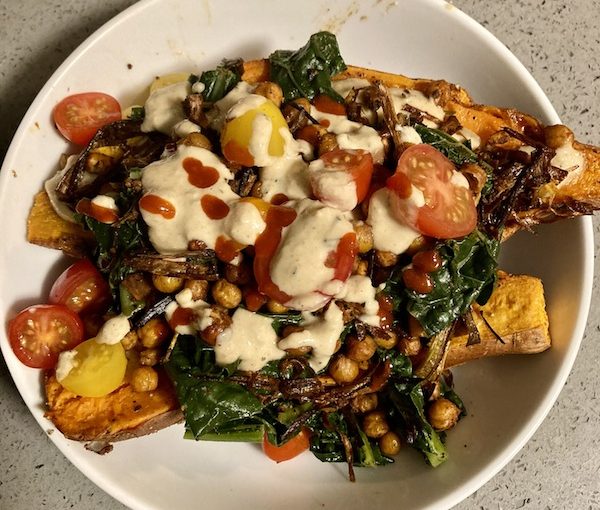
These loaded sweet potatoes were satisfyingly filling. (photo by Ingrid Weisenbach)

In a word: yum. I tried out four recipes in The Tahini Table: Go Beyond Hummus with 100 Recipes for Every Meal by Amy Zitelman with Andrew Schloss. All were delicious. All worth making. I will definitely bring more tahini into my life, but not every day, as the meals are somewhat complicated to make; at least they were for me.

Published by Surrey Books, an imprint of Agate Publishing, the cookbook is gorgeous. The colour photos by Jillian Guyette and the overall look and layout make The Tahini Table as much eye-candy as cooking guide. The first chapter is all about tahini – what it is, how to use and store it, with a foray into hummus and halvah and ingredients one should have close at hand, such as avocados, various oils, garlic and onion, yogurt, different vinegars, date syrup, etc. There is a relatively helpful instruction on how to mince garlic and a section on herbs and spices. Each recipe is labeled with the diets with which it is aligned; vegan or gluten-free or Paleo, for example.

There are six chapters, covering sauces, dips, breakfasts, lunch-type food and sides, main courses and, finally, desserts. While Zitelman promises easy and quick recipes – and perhaps they are if you do as recommended and stock up on the sauces, dressings and dips – I was starting from scratch. The two mains – the benedict and the sweet potatoes – each took almost two hours to make. Only once I started did I see, for example, that one of the benny recipe ingredients was pickled red onion, carrot or radish … go to page 127. So, off to make that before I could proceed. Oh, and don’t be fooled, as I was, by the directions for the pickles – for the benedict, you only need to make pickled onions, so adjust accordingly, unless you’re also wanting to have the carrots and radishes for other purposes. (In the end, I was happy to have made all three, but I was quite hangry while making them.)

Zitelman, who is a co-founder with her sisters of Soom Foods, writes in the introduction, “we founded Soom Foods with a vision that tahini would be a staple pantry item in the American market simply because it is a delicious, nutritious and versatile ingredient. Although this ambition was somewhat far-fetched at the time, tahini is increasingly recognized as a superfood that is rich in omega-6 fatty acids, protein and calcium.” More reason, if I needed it, to experiment further with the recipes in The Tahini Table. Here are the ones I’ve kitchen-tested so far, sans Zitelman’s informative and delightful preambles or suggestions, because of space limitations.

photo - The Tahini Benedict was very tasty
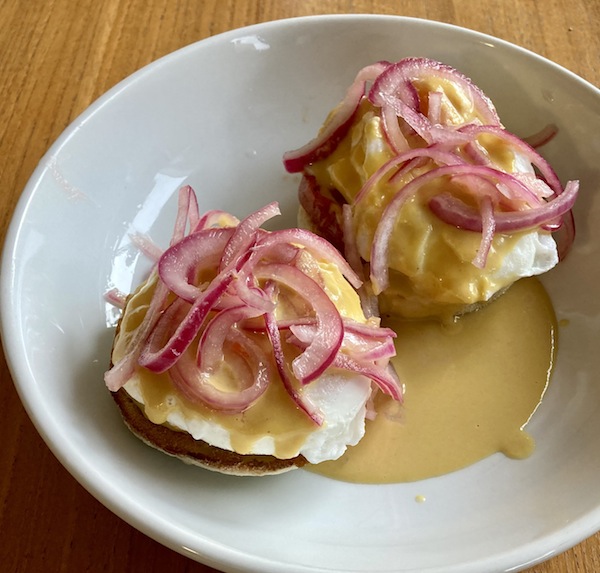
The Tahini Benedict was very tasty. (photo by Ingrid Weisenbach)

TAHINI BENEDICT
(serves two)

sauce
2 large egg yolks
1 tbsp freshly squeezed lemon juice
1⁄4 cup premium tahini paste
1⁄2 garlic clove, chopped
1⁄4-1⁄2 tsp sea salt
2-3 tbsp boiling water

eggs
1 tomato, cut into 4 rounds
3 tsp extra virgin olive oil, divided
fine sea salt and freshly ground black pepper, to taste
1⁄2 tsp ground cumin
1 tbsp white vinegar
4 large eggs

assembly
2 English muffins, split and toasted
1⁄2 cup pickled red onion, carrot or radish (see below)

To make the sauce: Fill a blender with very hot tap water to warm up the container. Wait five minutes, then drain. Add the egg yolks, lemon juice, tahini, garlic, salt and two tablespoons boiling water. Blend on medium speed until just combined, about 30 seconds. If the sauce is too thick, add the remaining one tablespoon of boiling water and blend to combine. Set aside.

To make the eggs: Turn on the broiler to high and position the broiler rack as close to the heating element as it will go.

Coat the tomato rounds with two teaspoons of the oil and set on a broiler pan. Season with salt and pepper and sprinkle on the cumin. Broil until the surface is speckled but the tomato is still firm, about three minutes.

Meanwhile, fill a 10- to 12-inch skillet with water and bring to a boil over medium heat. Add the vinegar.

Crack each egg into a separate cup or ramekin. Gently slip each egg from its cup into the water. Turn the heat to medium-low so that the water in the pan barely simmers.

Poach the eggs until the whites are set and the yolks remain creamy, about two minutes.

To assemble: Put an English muffin on each plate. Top each half with a broiled tomato. Use a slotted spatula to remove each egg from the water, wait a few seconds to let any extra water drain back into the pan, then place it on the tomato. Top each with sauce and a little pile of pickled red onion. Serve immediately.

QUICK PICKLES
(makes about three cups)

6 carrots, peeled and julienned
1 red onion, peeled and very thinly sliced
12 red summer radishes, trimmed and thinly sliced
1 1⁄2 cups apple cider vinegar
1 1⁄2 cups water
6 tbsp honey
1 tbsp fine sea salt
1⁄2 tsp crushed red pepper

Put each of the cut veggies in their own pint container.

In a small saucepan, combine the vinegar, water, honey, salt and crushed red pepper and bring to a boil over medium-high heat. Pour a third of the pickling mixture over each of the veggies. Let cool for about 30 minutes before serving.

Store in closed containers in the refrigerator for up to two weeks.

LOADED TAHINI SWEET POTATOES
(serves four)

1 leek, trimmed, halved lengthwise, thinly sliced (white and pale green parts)
1 (15-ounce) can chickpeas, rinsed and drained
2 tbsp extra-virgin olive oil, divided
1 garlic clove, minced with coarse sea salt
1 tsp ground coriander
1⁄2 tsp ground cumin
1⁄2 tsp smoked paprika
pinch ground cinnamon
fine sea salt and freshly ground black pepper, to taste
4 medium sweet potatoes, halved lengthwise
1 bunch lacinato kale, coarsely chopped
1 cup orange-rosemary tahini sauce (see below)
12 cherry tomatoes, quartered
1⁄4 cup chopped fresh
flat-leaf parsley
hot sauce, to taste

Turn the oven to 400ºF.

Toss the leek and chickpeas with one tablespoon of the olive oil on a rimmed sheet pan. Add the garlic, coriander, cumin, paprika, cinnamon, salt and pepper and toss to coat everything evenly. Push the leek and chickpea mixture to the edges of the sheet pan.

Rub the cut surfaces of the sweet potatoes with the remaining one tablespoon of olive oil and season with salt and pepper. Put the sweet potatoes, cut-side down, in the centre of the sheet pan. Bake until the potatoes are fork-tender, about 45 minutes.

While the potatoes are baking, boil the kale in a good amount of salted water until tender, about 10 minutes.

When the potatoes are tender, put two halves on each plate and flatten them with the back of a large fork. Transfer the kale to the sheet pan and toss with the chickpeas and leeks. Drizzle some of the tahini sauce over the potatoes and pile the veggies on top. Top with more tahini sauce and the tomatoes, parsley and hot sauce.

ORANGE-ROSEMARY TAHINI SAUCE
(makes about 2 cups)

1 tbsp extra-virgin olive oil
2 tbsp finely chopped fresh rosemary leaves
2 garlic cloves, minced with coarse sea salt
grated zest and juice of 1 orange (about 1⁄3 cup)
2 tbsp freshly squeezed lemon juice
1 cup premium tahini paste
1 tsp ground cumin
3⁄4 cup ice-cold water

Heat the olive oil in a small skillet over medium heat just until warm, less than a minute. Stir in the rosemary, remove from the heat and give it 10 minutes or so to cool down and get flavourful.

Meanwhile, combine the garlic, orange juice and lemon juice in a medium bowl. Let it sit for one to two minutes. Whisk the orange zest, tahini and cumin into the garlic mixture until just combined. Don’t worry if it gets thick and grainy. Whisk in the water, a quarter cup at a time, until the sauce is smooth and creamy. It should be the consistency of a creamy salad dressing, like ranch.

Stir the cooled rosemary oil into the tahini.

Store in a closed container in the refrigerator for up to three days.

TEHINA REGINA COOKIES
(makes about 40 cookies)

1⁄2 cup premium tahini paste
1 cup granulated sugar
3 large eggs
1 1⁄2 tsp vanilla extract
1⁄8 tsp almond extract [optional, I’d say, as I could barely taste it]
2 1⁄4 cups all-purpose flour
2 1⁄2 tsp baking powder
1⁄2 tsp fine sea salt
1⁄4 tsp ground cardamom
1 cup white sesame seeds

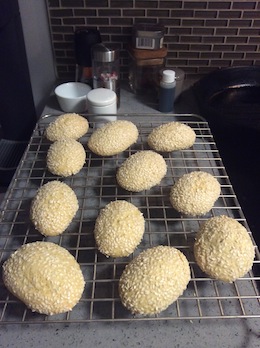
photo - Tehina Regina Cookies – a few never made it to the cooling rack
Tehina Regina Cookies – a few never made it to the cooling rack. (photo by Cynthia Ramsay)

Mix the tahini and sugar in a large bowl until well combined. Beat in the eggs, vanilla and almond extract until the mixture is smooth.

Mix the flour, baking powder, salt and cardamom in a medium bowl, then stir the flour mixture into the batter just until there are no visible dry spots. The dough will be very stiff. Wrap it in plastic and refrigerate for at least one hour or as long as 24 hours.

Set two oven racks near the centre of the oven. Turn the oven to 350ºF. Line two sheet pans with parchment paper or silicone baking mats.

Put the sesame seeds in wide bowl. Scoop the dough with a one-tablespoon measure and arrange as mounds on a big sheet of aluminum foil, plastic wrap or parchment. Wet your hands and roll the mounds into egg-shaped ovals. As each one is made, coat all over with sesame seeds and place on the prepared pans, about one inch apart. You will probably get 13 to 14 cookies per pan.

Bake until golden brown, about 10 minutes. Cool the cookies for two minutes on the pans, then transfer them to wire racks to cool completely. When the pans are at room temperature again, form the remaining batter into cookies and bake in the same way.

Store in a closed container at room temperature for up to two weeks.

Format ImagePosted on December 4, 2020December 2, 2020Author Cynthia RamsayCategories BooksTags Amy Zitelman, Andrew Schloss, baking, cookies, cooking, eggs, Jillian Guyette, potatoes, recipes, Soom Foods, The Tahini Table

Daring to make tofu, quinoa

It started out as a culinary experiment. A desire to try something completely out of my wheelhouse. Something I knew my husband Harvey would not eat. It involved tofu. And peanut sauce. I was sure he’d like the second part. As for eating tofu, he’d rather have his wisdom teeth pulled out through his ears. But I like tofu, so the dish was for me. And, lest you think I’m a selfish cook, let me be clear: this was a lunch experiment. And I knew that Harvey was already taken care of for lunch.

Since I know that online cooks (and their reviewers) never lie (ha!) I took the word of someone who claimed to have the easiest, tastiest recipe for crispy baked tofu with peanut sauce. Optimum word being “easiest.” I have a rule: if a recipe has more than seven ingredients or more than 10 steps, fuggedaboudit. It’s not like I have a day job and a pack of children vying for my attention. But I’ve always questioned the sanity of preparing and cooking for several hours only to have the eating of the meal take 12 minutes. Just doesn’t seem right. So it’s easy or it’s takeout. 

PEANUT SAUCE
(six servings)

1/2 cup creamy peanut butter
1 cup full fat coconut milk
2 tbsp low-sodium soy sauce
2 tbsp maple syrup
2 tsp fresh grated ginger
2 cloves garlic, minced
2 tbsp fresh lime juice (about 1 large lime)
chopped cilantro and chopped peanuts (optional, for serving)

Add all the ingredients to a medium saucepan, turn the heat to medium and stir constantly until smooth and creamy, about five to 10 minutes.

It doesn’t get much simpler than that. You’ll notice I’m not giving you the recipe for the crispy baked tofu. Why? Because it sucked. The recipe I tried called for extra firm tofu and, according to reviews, it was supposed to come out “crispy on the outside and pillowy soft on the inside.” More like tough, rubbery and tasteless. It could have been my bad. I may have cubed it too small and overcooked it. But I’ll never know. Because tofu is not going to be making an appearance in my home again any time soon. Which is not a problem because, as it turns out, the peanut sauce is spectacular on steak, chicken, broccoli and pretty much every other foodstuff. One sauce fits all, so to speak. A sauce for all seasons. Stop me anytime.

On a happier note, I discovered a different Asian recipe that was a big hit with hubby – Asian Quinoa Meatballs. Like tofu, Harvey would rather stick a fork through his hand than eat quinoa, so I had to improvise and use rice instead. But the result was proclaimed “guest-worthy.” I did break my own rule of no more than seven ingredients, but it was worth it.

ASIAN QUINOA MEATBALLS 

1 lb ground turkey (we like dark meat since white is too lean)
3/4 cup cooked quinoa (or rice)
3 cloves garlic, minced
2 green onions, thinly sliced
1 large egg
1 tbsp soy sauce
2 tsp sesame oil
1 tsp Sriracha, or more, to taste (optional)
kosher salt and freshly ground pepper
1/2 tsp sesame seeds

sauce
1/4 cup soy sauce
2 tbsp rice vinegar
1 tbsp freshly grated ginger
1 tbsp brown sugar, packed
1 tsp sesame oil
1 tsp Sriracha, or more, to taste (optional)
1/2 cup water, plus 1 tbsp
2 tsp cornstarch

  1. Preheat oven to 400°F. Line a cookie sheet with parchment paper.
  2. In a large bowl, combine ground turkey, quinoa (or rice), garlic, onions, egg, soy sauce, sesame oil, Sriracha (optional), salt and pepper. Using a wooden spoon, stir until well combined. Roll the mixture into 1.25” to 1.5” meatballs, forming about 18-20 meatballs.
  3. Place meatballs onto the lined cookie sheet and bake for 18-20 minutes, or until all sides are browned and meatballs are cooked through. Turn once during baking.
  4. To make the sauce, whisk together soy sauce, rice vinegar, ginger, sugar, sesame oil, Sriracha (optional) and the half cup of water in a small saucepan over medium high heat.
  5. In a small bowl, whisk together cornstarch and one tablespoon water. Stir into soy sauce mixture until thickened, about two minutes.
  6. Serve meatballs immediately with sauce, garnished with green onion and sesame seeds.

The taste is very gingery, so consider yourself forewarned. And, if you have hypertension, know that this recipe probably contains your week’s allotment of sodium. That said, it makes a great dinner over rice. Or even rice vermicelli noodles. Actually, it would be perfect for appetizers – when we get to hold dinner parties again, post-COVID. Plus, it’s just as good the next day. Keep in mind ground turkey is very lean, so be careful not to overcook the meatballs. I always buy dark meat to ensure more moistness. The recipe is a bit more patchkerai (fiddly and complicated) than I normally go for, but when I get a reaction like I did from my husband, that tells me all I need to know.

If all this pandemic stuff is making you a little stir-crazy, put your spare energy to good use and try out some new recipes. Your loved ones will thank you. Or not. Depending on whether there’s tofu or quinoa involved. I once tried to sneak a little quinoa into a salad and Harvey sniffed it out like a bloodhound. That was the last time I tried to deceive him culinarily. Clearly, his “just-put-it-in-my-bowl-and-I’ll-eat-it” claim is a touch weak. But I can’t blame him. Quinoa is an acquired taste (and smell). Maybe if I put some peanut sauce on it?

Shelley Civkin, aka the Accidental Balabusta, is a happily retired librarian and communications officer. For 17 years, she wrote a weekly book review column for the Richmond Review. She’s currently a freelance writer and volunteer.
Posted on December 4, 2020December 2, 2020Author Shelley CivkinCategories LifeTags Accidental Balabusta, Asian food, peanut sauce, recipes, Thai food, tofu
Variations on latke tradition

Variations on latke tradition

With all the oil used for frying Chanukah potato pancakes – otherwise known as latkes, in what we think is Yiddish, or as levivot in Hebrew – they may be considered an unhealthy food. Yet, each Chanukah, many of us, who are staunch-hearted and old-fashioned, spend time grating potatoes by hand, always accidentally suffering at least one scraped finger. The more modern among us risk coming out with liquid mush by using a food processor or blender.

Why do we keep making these little pancakes year after year? Why do we eat them for Chanukah in the first place? An old folk proverb says: “Chanukah latkes teach us that one cannot live by miracles alone.”

Jewish food writer and cookbook author Joan Nathan contends that the word latke is not in fact Yiddish but rather stems from “a Russian word, latka, and a pastry, from obsolete Russian, oladka, or flat cake of leavened wheat dough.” This, in turn, probably came from a Middle Greek word, eladion, or oil cake, stemming from elaion, meaning olive oil.

Potato pancakes seem to have originated among poor Eastern European Jews, but potatoes did not become a staple until the mid-19th century. John Cooper, in Eat and Be Satisfied: A Social History of Jewish Food, comments that Jews from Lithuania ate pancakes made from potato flour for Chanukah and had borrowed the idea from Ukrainians, who made a potato pancake dish with goose fat called kartoflani platske, which they ate for Christmas. Since Chanukah fell about the same time, and there were plenty of geese to provide goose fat or schmaltz, we could conclude that schmaltz became a substitute for oil. Jews living in the Pale of Settlement in the 17th century probably adapted it for Chanukah as a way to dress potatoes differently for the holiday. Cooper also states that many Eastern European Jews ate buckwheat latkes for Chanukah, while Polish Jews made placki, pancakes, from potato flour and fried them in oil.

Here are a few types of latkes that would be nice to serve during Chanukah.

ROMANIAN ZUCCHINI POTATO LATKES
(six to eight servings)

2 pounds zucchini, peeled and grated down to the seeds
2 large potatoes, grated
1 medium onion, grated
3 eggs
1 tsp vegetable oil (I use canola)
3/4 cup matzah meal (I use flour)
salt and pepper to taste
vegetable oil for frying

  1. Grate zucchini down to the seeds, discard the seeds and squeeze out the liquid.
  2. Peel potatoes and grate. Remove liquid.
  3. Grate onion and add to zucchini-potato mixture.
  4. Add eggs, oil and half a cup of matzah meal or flour. Add more if necessary.
  5. Season with salt and pepper.
  6. Heat oil in a frying pan. Spoon mixture into pan and brown on both sides.
  7. Serve hot with sour cream or applesauce. You can add carrots, parsley and dill.

TUNA LATKES
This recipe came from Starkist Tuna, with adaptations. It makes 16 latkes.

2 cans drained tuna
2 grated potatoes
1 chopped onion
2 eggs
2 tbsp breadcrumbs
3 tsp dry parsley flakes
3 tsp dry chives
salt and pepper to taste
2/3 cup flour
oil

dressing
1 cup sour cream
3 crushed garlic cloves
4 tbsp olive oil
6 tsp dry herbs such as chives, thyme or dill or mixed
1 tbsp sugar
salt to taste

  1. In a bowl or jar with a lid, mix sour cream, garlic, oil, herbs, sugar and salt. Refrigerate.
  2. Heat oil in a frying pan and fry onions until golden.
  3. Crumble tuna in a bowl. Add potatoes, onion, eggs, breadcrumbs, parsley, chives, salt and pepper.
  4. Place flour in a shallow plate. Form round patties and dip in flour. Add oil to frying pan. Fry patties until golden. Drain on paper towels.
  5. Serve on a platter with dressing on the side.

HERBED ZUCCHINI FETA LATKES
With a few changes, this recipe is from Food & Wine and is by Didem Senol, a chef from Istanbul, Turkey, who trained at the New York French Culinary Institute. It makes four to six servings.

4 medium grated zucchini
1 tbsp kosher salt
2 large eggs
1/2 cup flour
1/2 cup chopped dill
1/4 cup chopped parsley
1/2 cup crumbled feta cheese

sauce
1 seeded chopped, peeled cucumber
1 cup sour cream
salt and pepper to taste
vegetable oil

  1. Place zucchini in a colander, sprinkle with salt, toss and let stand five minutes. Squeeze out liquid and transfer to a bowl.
  2. Add eggs, flour, dill, parsley and feta. Refrigerate 10 minutes.
  3. Puree cucumber in food processor and transfer to a bowl. Stir in sour cream, salt and pepper.
  4. Preheat oven to 350°F. Heat oil in a frying pan and then, working in batches, drop tablespoons of batter into the hot oil and fry until brown and crisp. Transfer to a baking sheet and keep warm in oven.
  5. Serve with sour cream-cucumber sauce.

Sybil Kaplan is a journalist, lecturer, book reviewer and food writer in Jerusalem. She created and leads the weekly English-language Shuk Walks in Machane Yehuda, she has compiled and edited nine kosher cookbooks, and is the author of Witness to History: Ten Years as a Woman Journalist in Israel.

Format ImagePosted on December 4, 2020December 2, 2020Author Sybil KaplanCategories Celebrating the HolidaysTags Chanukah, cooking, latkes, recipes
A history of sweetness

A history of sweetness

(photo from pixabay.com)

Although beekeeping as an occupation is not mentioned in the Bible, bees are mentioned four times, honeycombs are referred to eight times and honey is referred to 26 times. Archeologists actually have discovered proof that there was beekeeping and honey 3,000 years ago in a site in northern Israel.

Among Ashkenazim, sweet desserts for Rosh Hashanah are customary, particularly lekach, or honey cake, and teiglach, a hard, doughy, honey and nut cookie. Some say the origin of the sweets comes from a passage in the book of Hosea mentioning “love cakes of raisins.” There is also a passage in II Samuel, which talks about the multitude of Israel, “to everyone a cake of bread and a cake made in a pan and a sweet cake.”

It was Ezra, the fifth-century BCE religious leader who was commissioned by the Persian king to direct Jewish affairs in Judea, and Nehemiah, a political leader and cup bearer of the king in the fifth century BCE, who told the returning exiles to eat and drink sweet things.

Honey cakes traditionally include honey, spices, coffee and brown sugar as major ingredients, but some contain cognac, brandy, orange or lemon peel and nuts. In Curaçao, for example, cinnamon, ginger, nutmeg, raisins, nuts or currants, lemon or orange peel is added. In Zimbabwe, Jews include allspice, cinnamon, cloves, raisins, chopped nuts, brandy and chopped candied fruit in their honey cake.

In That Hungarian’s in My Kitchen, Linda Radke includes a Hungarian recipe from her family, which includes the basic ingredients and orange juice. A cookbook of Russian recipes includes a Ukrainian honey cake, medivik, with the basic ingredients as well as cardamom, orange peel, raisins, walnuts and apricots.

In The Jewish Book of Food, Claudia Roden writes that honey cake was a favourite in Germany as far back as the Middle Ages, and that lebkuchen, honey gingerbread, was also mentioned as early as the 12th century.

According to John Cooper in Eat and Be Satisfied: A Social History of Jewish Food, references to honey cake were made in the 12th century by a French sage, Simcha of Vitry, author of the Machzor Vitry, and by German rabbi Eleazar Judah ben Kalonymos. Cooper writes that, on the new moon in the month of Nissan, boys at Jewish school were given honig lekach, honey cake: “Originally, the names of angels were inscribed on the honey cake and amulets were attached to them, but later this practice was discarded.” According to Cooper, the words lebkuchen and lekach probably came to be related to the German word for lick, lecke.

By the 16th century, lekach was known as a Rosh Hashanah sweet. It also became popular for other lifecycle celebrations, such as betrothals and weddings. Malvina W. Liebman writes in Jewish Cooking from Boston to Baghdad that Crypto-Jews in 16th-century Latin America ate honey cake at weddings, in memory of the honeycomb that an angel gave to Asenath when she married Joseph.

In The Complete International Jewish Cookbook, Evelyn Rose (z”l), a maven of Jewish cooking from England, wrote that the first cakes made with artificial raising agents were honey cake, and honey was the chosen sweetener because sugar was not widely available until the end of the 19th century. As an aside, she also recommends keeping a honey cake in a closed container for a week before serving it, so it will “mature.”

Among the Chassidim, it was customary for the rebbe to distribute lekach to his followers, and others would request a piece of honey cake from one another on Erev Yom Kippur. This transaction symbolized a substitute for any charity the person might choose to receive.

Gil Marks (z”l), in The World of Jewish Desserts, says fluuden, a layered yeast cake, was traditional for Rosh Hashanah among Franco-German Jews. Made with a cheese filling, it could be eaten after a meat meal, since they only waited one hour between meat and dairy. Strudel, from the German word for whirlpool, was also common for Rosh Hashanah among European Jews.

The most traditional cookie for Rosh Hashanah is teiglach, the dough pieces dropped into a hot honey syrup and simmered until brown then left to cool. It has been suggested that this Eastern European sweet was probably invented by some housewife who had dough left over and dropped the pieces into a boiling honey syrup.

Many Jews of Sephardi background make tishpishti for Rosh Hashanah. This cake with walnuts, almonds, hazelnuts or pecans, has a hot syrup poured over it. The syrup can be made with sugar, water and liqueur, according to Rabbi Robert Sternberg in The Sephardic Kitchen. Sternberg also points to rodanchas as a popular Sephardi Rosh Hashanah sweet. These spiral-shaped pastries of phyllo dough contain a pumpkin or squash filling because these vegetables and their shape symbolize the cycle of life and the ascent of the soul into heaven.

Here are some honey cakes to try this year.

TISHPISHTI
Jews who lived in Turkey after being expelled from Spain in 1492 adopted this dish, whose name means “quick and done.” Some say it was always served on Rosh Hashanah, but it was also popular for Passover because it has no flour.

2 cups ground almonds, hazelnuts, pistachios or walnuts
1 cup cake meal
1 tsp ground cinnamon
1/2 tsp ground cloves or allspice
6 separated eggs
1 cup sugar
2 tbsp orange juice
1/2 cup vegetable oil
1 tbsp grated lemon or orange peel
* * *
3/4 cup honey
1/2 cup sugar
2/3 cup water
1/4 cup lemon juice

  1. Preheat oven to 350°F. Grease a rectangular baking pan.
  2. In a mixing bowl, combine nuts, cake meal, cinnamon and cloves or allspice.
  3. In another bowl, beat egg yolks with sugar. Add to nut mixture along with orange juice, oil and lemon or orange peel.
  4. Beat egg whites in another bowl until stiff. Fold into batter. Pour into cake pan and bake 45 minutes.
  5. Place honey, sugar, water and lemon juice in a saucepan. Stir until sugar dissolves. Increase heat, bring to a boil and cook for one minute. Let cool.
  6. Cut cake into squares or diamonds. Drizzle syrup over cake. Serve warm or at room temperature.

MOM’S HONEY LOAF CAKE
I don’t recall my mom baking this, but it was in my collection of recipes as being hers.

3 1/2 cups flour
1/4 tsp salt
1 1/2 tsp baking powder
1 tsp baking soda
1/2 tsp ground cinnamon
1/8 tsp ground cloves
1/2 tsp ground ginger
1/4 tsp ground nutmeg
4 eggs
3/4 cup sugar
1/4 cup vegetable oil
* * *
2 cups honey
1/2 cup strong coffee
1/2 cup raisins
1/2 cup chopped nuts

  1. Preheat oven to 325°F. Grease two loaf pans or a rectangular baking pan.
  2. Combine in a bowl flour, salt, baking powder, baking soda, cinnamon, cloves, ginger and nutmeg.
  3. Beat eggs and sugar in another bowl until fluffy. Add oil, honey and coffee.
  4. Stir in flour mixture. Add raisins and nuts. Pour into pans. Bake for 1.5 hours.

Sybil Kaplan is a journalist, lecturer, book reviewer and food writer in Jerusalem. She created and leads the weekly English-language Shuk Walks in Machane Yehuda, she has compiled and edited nine kosher cookbooks, and is the author of Witness to History: Ten Years as a Woman Journalist in Israel.

Format GalleryPosted on September 11, 2020September 10, 2020Author Sybil KaplanCategories Celebrating the HolidaysTags food, history, honey cake, recipes, Rosh Hashanah, tradition
Summer salads for lazy days

Summer salads for lazy days

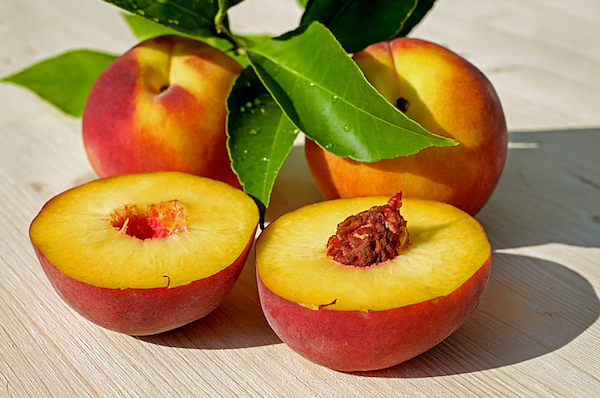
A peach salad not only looks pretty, it’s like a cold culinary shower on a hot day. (photo from pickpik.com)

Recently, I was food-shamed. Not for binge eating. Or for eating too much junk food. But for not eating enough vegetables. Guilty as charged. But seriously? In my own defence, I have a gut (or at least part of one) that doesn’t play nicely in the sandbox with all vegetables. Truth to tell, it can be somewhat of a bully.

Just to set the record straight, I wasn’t always veggie averse. A few short years ago, I could wolf down Caesar salads, corn on the cob and sautéed kale like nobody’s business. It’s mostly a distant memory now, though. But I can still share the love, even if I can’t eat all the food.

Being a bit of a COVID weeny, I’m not entirely comfortable going out to restaurants yet, so I continue to make do at home. Until recently, when the beautiful fresh veggies and fruits started showing up at the party, my fallback positions were fish, chicken and beef; the occasional pasta dish. It was getting a tad dull. So I’m thrilled that I now can eat lighter and fresher.

Here are a few of my favourite lazy summer salads. Nobody likes easy recipes quite like I do. My rule of thumb is this: if a recipe calls for a foodstuff or piece of equipment that a) I’ve never heard of, or b) I don’t know how to pronounce, there’s no way on earth I’m trying it. Hence, lazy-girl recipes are my specialty. The following are not only super-healthy, but they’ll hit the spot on days when you just don’t feel like cooking for real. And what better time to take advantage of all the fresh seasonal fruits and veggies available everywhere in Vancouver? This first salad not only looks pretty, it’s like a cold culinary shower on a hot day.

PEACHY SUMMER SALAD

peaches, diced
Roma tomatoes, diced
can of corn niblets, drained
red or sweet onion, finely diced
fresh mint or basil, chopped or cut chiffonade
blueberries

Throw together a vinaigrette from olive oil and balsamic vinegar and, voilà, you’ve got yourself a refreshing, easy salad that’s a surefire crowd-pleaser. If, however, you’re a card-carrying carnivore like me, you might want to follow it up with an eight-ounce ribeye chaser.

Another summer fave is Sunomono salad. It’s a cold Japanese salad made of rice vermicelli noodles swimming in a rice wine vinegar dressing, if you will. You can add almost about anything to jazz it up, but, being a purist, I only like to throw in some thinly sliced English cucumber and maybe a bit of shredded carrot. If you crave protein, imitation crab will jack it up a notch. There are a variety of recipes for the dressing, but this is my no-fail go-to.

SUNOMONO SALAD

3/4 tsp salt
3/4 cup rice wine vinegar
1/2 cup sugar
small squeeze of lemon juice
few drops of soy sauce
rice vermicelli noodles

Shake the first five ingredients together in a jar, then pour it over cooked and rinsed, cold rice vermicelli noodles. Don’t add too much dressing to each bowl, as it’s quite concentrated – just add enough to cover the noodles. Leftovers can stay in the fridge for a day or two. Sunomono is obviously too flimsy to be a main dish, but it makes a great starter or side dish and goes with everything, particularly fish. Think of it as a Japanese palate cleanser.

For a heartier salad that can double as a main dish (depending on your appetite), I’m a big fan of cold orzo salad. Since this salad is pasta-based, it’s much more filling than just a bowl full of veggies or fruit. And, with the bold-flavoured ingredients, it’s got a depth to it that belies its simplicity.

COLD ORZO SALAD

8 oz orzo pasta
1/2 cup pitted Kalamata olives, roughly chopped (or more, to taste)
4 oz baby spinach (split in two bunches)
6 oz feta cheese, roughly crumbled
1/4 cup pine nuts, lightly toasted on the stove or in the toaster oven (optional)
1/4 cup red onion, finely chopped (optional)
3 tbsp olive oil
1 tbsp balsamic vinegar (or less, to taste)
1 tbsp red wine vinegar (you can substitute lemon juice or regular vinegar)
salt and pepper to taste

  1. Cook the orzo eight to 10 minutes for al dente, or a bit longer if you like it softer. Drain and rinse with cold water.
  2. Puree half the spinach and one tablespoon of the olive oil in a blender. Put cooled orzo in a big bowl and stir in the pureed spinach/olive oil mixture until the orzo is well-coated with the spinach puree.
  3. Roughly chop the other half of the spinach. Lighty mix the chopped spinach, feta cheese, pine nuts, Kalamata olives and red onion in with the orzo.
  4. Make the dressing in a small jar by combining the remaining two tablespoons of olive oil with the balsamic vinegar and the red wine vinegar. Put the lid on the jar and shake it to mix well, or whisk it all together in a small bowl. Pour over orzo mixture and gently mix till it’s all incorporated.
  5. Chill the salad for at least an hour before serving to let the flavours meld.

To round out your meal, buy or make a simple rosemary focaccia. I make one from scratch (in a cast-iron pan) that’s to live for. Sure, it’s easier to buy one, but, if you really want to dazzle your dining companion(s), I suggest putting in the extra effort. Believe me, the effort/reward ratio is huge.

I found my recipe online at flavorthemoments.com/one-hour-rosemary-focaccia-bread and the only things I leave out are the garlic and parmesan, but it’s up to you. You could also add chopped Kalamata or green olives to it, but keep in mind it calls for coarse kosher salt sprinkled on top, so it’s already high in sodium. The focaccia turns outs camera-ready gorgeous and tastes heavenly straight out of the oven, dipped in EVOO (extra virgin olive oil). I mean, who doesn’t love fresh bread? With the hot weather right around the corner (that’s the optimist in me), now might not be the best time to bake bread, but that’s your call. If you ask me, it’s totally worth it.

So, give yourself a break, throw together a salad for dinner and call it a day. If your spouse, partner or you are still hungry after all that, do what I do – order in pizza.

Shelley Civkin, aka the Accidental Balabusta, is a happily retired librarian and communications officer. For 17 years, she wrote a weekly book review column for the Richmond Review. She’s currently a freelance writer and volunteer.
Format ImagePosted on July 10, 2020July 9, 2020Author Shelley CivkinCategories LifeTags Accidental Balabusta, food, fruit, recipes, salads
A grape holiday revival

A grape holiday revival

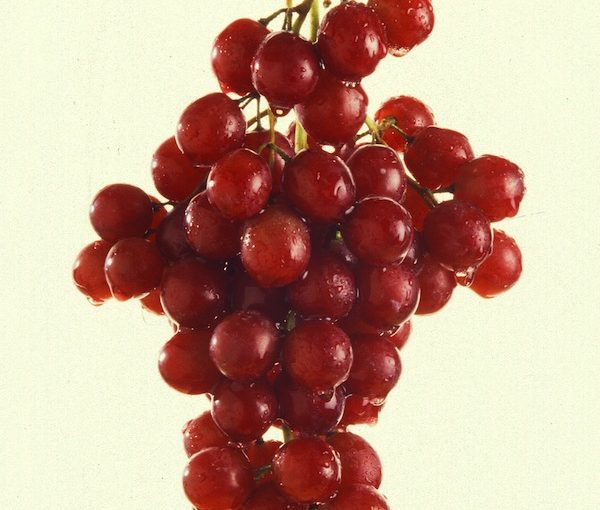
(photo from commons.wikimedia.org)

Most of us are familiar with the spies who were dispatched by Moses to “spy” out the land of Canaan – they cut down a branch with a cluster of grapes on a staff and carried it back. Grapes were part of the summer harvest in ancient Israel. In fact, there was a holiday called Feast of First Fruits and Wine because grapes were the first major crop to ripen. It was not mentioned in the Bible, but in the Dead Sea Scrolls. It was celebrated on the third day of Av (July 24 this year), with Israelites bringing grapes to the Temple. So, here are some grape recipes in case you want to celebrate this little-known holiday.

VINEYARD CHICKEN
(I found this in an Empire Kosher recipe brochure many years ago. It makes eight servings.)

2 4-to-4.5-pound roasting chickens
2 lemons, cut in half
1/4 cup Dijon mustard
4 tsp ground ginger
salt and pepper to taste
2 tsp dry basil
2 tsp your favourite herb
6 peeled, quartered onions
4 cups chicken broth
1 cup orange juice
4 cups seedless red and green grapes
1/4 cup chopped fresh basil or cilantro

  1. Preheat oven to 425°F.
  2. Rinse and pat dry chickens. Squeeze half lemon over each chicken. Place two lemon halves inside each chicken.
  3. Combine Dijon mustard, ginger, salt, pepper and herbs in a bowl to make a paste.
  4. Rub mixture over each chicken and place rest in each cavity. Put chickens into a large roasting pan. Scatter four onions in the pan. Roast 30 minutes.
  5. Meantime, combine giblets, neck, two onions, chicken broth and orange juice in a saucepan. Simmer 25 minutes.
  6. Reduce oven to 375°F. Strain broth and add 1.5 cups to roasting pan. Roast 15 minutes and baste. Repeat three more times. Remove chicken, let rest 15 minutes and cut into serving pieces.
  7. Remove lemons, return chicken pieces to roasting pan, spoon juices and onions over chicken. Scatter grapes over chicken and add remaining broth. Cover and bake 15 minutes.
  8. Serve on a large platter with grapes and juices and sauce. Garnish with fresh basil or cilantro.

MIDDLE EASTERN ORANGE BLOSSOM FRUIT BOWL
(six servings; pareve)

1 fresh pineapple, peeled, cored and cut into slices then quarters from each slice
2 large peeled, sectioned oranges
2 cups seedless red or green grapes
1/4 cup orange blossom flower water or orange-flavoured liqueur
1/4 cup slivered almonds
confectioners sugar
cinnamon
mint sprigs

  1. In a bowl, mix pineapple pieces, orange sections, grapes and orange flower water. Cover and refrigerate two hours.
  2. Put nuts into a small frying pan. Cook and stir until toasted. Remove to a small bowl.
  3. Arrange fruits on a large platter. Sprinkle with confectioners sugar, cinnamon and toasted nuts. Garnish with mint sprigs. Serve cold.

GRAPES IN BRANDY
(five to six servings; dairy)

3/4 cup honey
3/8 cup brandy
1 tbsp lemon juice
1 pound seedless red and green grapes, without stems
1 cup sour cream
lemon peel curls

On the day before serving, mix the honey, brandy and lemon juice. Place the grapes in a large bowl and pour the mixture over them. Cover and refrigerate overnight.

The next day, divide the fruit mixture into serving dishes, champagne glasses or any unusual glass. Spoon sour cream on top of each. Garnish with lemon peel curls.

Sybil Kaplan is a journalist, lecturer, book reviewer and food writer in Jerusalem. She created and leads the weekly English-language Shuk Walks in Machane Yehuda, she has compiled and edited nine kosher cookbooks, and is the author of Witness to History: Ten Years as a Woman Journalist in Israel.

Format ImagePosted on July 10, 2020July 9, 2020Author Sybil KaplanCategories Celebrating the HolidaysTags chicken, Feast of First Fruits and Wine, food, grapes, Judaism, kosher, recipes
Three fave kosher fruit pies

Three fave kosher fruit pies

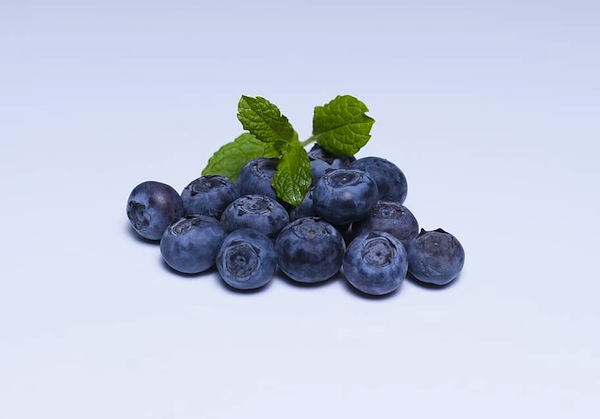
Blueberry Bottom Pie is garnished with blueberries and fresh mint. (photo from pxfuel.com)

When I think of summer, I think of fresh fruit. When I think of fresh fruit, I think of pies. Early pies may have originated with Egyptian cakes and ancient Greek pasties filled with fruit. According to Wikipedia, Medieval England had sweet pies, but they were called tarts, and fruit pies were unsweetened, because sugar was a rare and costly “symbol of wealth.” Also according to Wiki, a pie could have a number of items as its filling, but a pastry would have only a single filling. Fruit pie recipes began appearing in the 15th century. Here are recipes for three of my favourite fruit pies.

PEACH PIE

1 1/2 pounds seeded, sliced peaches
1 cup sugar
2 tbsp unsalted butter or margarine
2 tbsp flour
2 large eggs
pinch nutmeg
nine-inch crust (bought or homemade)

  1. Preheat oven to 350°F. Prepare a nine-inch pie plate with dough.
  2. In a bowl, mix together sugar, butter or margarine, flour, eggs and nutmeg.
  3. Arrange peaches in piecrust. Pour batter over them. Crimp edge of crust.
  4. Bake 50 to 55 minutes or until just set.

BLUEBERRY BOTTOM PIE

2 packages vanilla pudding
1 1/4 cups milk or non-dairy creamer or soymilk
1 1/2 cups pureed blueberries
1/2 tsp cinnamon
2 tsp grated lemon rind
1 baked nine-inch pie shell
3 1/2 cups kosher whipped topping
blueberries and mint leaves for garnishes

  1. Check to make sure which vanilla pudding dissolves with non-dairy creamer or soymilk. Combine one package pudding and a quarter cup milk or non-dairy creamer or soymilk, blueberries and cinnamon. Cook until mixture comes to a full boil. Pour into crust and chill.
  2. Prepare remaining pudding and milk or non-dairy creamer or soymilk. Add one teaspoon lemon rind. Pour into bowl, cover with plastic wrap and chill about one hour.
  3. Fold in one cup whipped topping to refrigerated mixture and spoon over blueberry layer.
  4. Combine remaining whipped topping with remaining lemon rind and spoon over filling. Freeze one hour or refrigerate three hours.
  5. Garnish with blueberries and mint leaves before serving.

FAUX CHERRY COBBLER
(Cobblers generally have a dough-like topping dropped on top of fruit. This cobbler is more like a pie).

2 cups pitted cherries
1 cup sugar
1 cup flour
1 1/2 tbsp baking powder
1 cup milk or soymilk
2 1/2 tbsp melted butter or margarine
brown sugar

  1. Preheat oven to 350°F. Grease a square baking dish.
  2. Combine flour, sugar and baking powder in a bowl. Add milk and melted butter or margarine. Pour into a greased baking dish.
  3. Scatter pitted cherries over batter. Sprinkle the top with brown sugar. Bake for about an hour.

Sybil Kaplan is a journalist, lecturer, book reviewer and food writer in Jerusalem. She created and leads the weekly English-language Shuk Walks in Machane Yehuda, she has compiled and edited nine kosher cookbooks, and is the author of Witness to History: Ten Years as a Woman Journalist in Israel.

Format ImagePosted on July 10, 2020July 9, 2020Author Sybil KaplanCategories LifeTags baking, blueberries, cherries, dessert, food, fruit, kosher, peaches, recipes
Trio of cheesy pastas

Trio of cheesy pastas

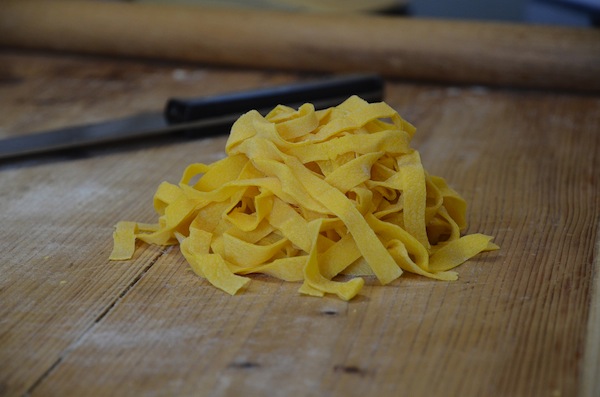
(photo from Umbe Ber/Pixabay)

Every time I do a food column, I look up its history, and I am continually fascinated by what I learn. We all know what is pasta – unleavened semolina mixed with water or eggs and formed into various shapes. It was not until 1874 that the word pasta came into popular use, from the Italian. However, there is mention, as early as the first century CE of fried dough as an everyday food.

Lagana is mentioned in a fifth-century cookbook as an ancient version of lasagna. A kind of boiled dough is mentioned in the Jerusalem Talmud, common in ancient Israel from the third to fifth centuries CE. Dry pasta became popular in the 14th and 15th centuries; tomatoes came to Italy in the 16th century and to Italian cuisine in the 17th century. Pasta became popular in North America with the Italian immigration at the beginning of the 20th century.

How many kinds of pasta do you think there are – long, medium length, short cut, stretch, soup, with fillings and gnocchi? There are 163!

Here are some recipes, which use different kinds of pasta.

MY FAVOURITE LO-CAL FETTUCCINE ALFREDO
4 servings

8 ounces fettuccine noodles
4 cups pareve chicken soup
1 cup low-fat sour cream
2 tbsp low-fat margarine
2 minced garlic cloves
3 tbsp chopped parsley
2 tbsp Parmesan cheese

  1. Cook noodles in chicken soup 12 minutes. Drain. Place in a bowl.
  2. In a frying pan, melt margarine. Sauté garlic one minute. Reduce heat and add sour cream and blend. Add noodles.
  3. Serve with parsley and Parmesan cheese.

CHEESY FETTUCCINE ALFREDO
4 servings

1/3 cup butter or margarine
8 ounces cooked, drained egg noodles
1/2 cup grated Parmesan cheese
1/2 cup grated Swiss cheese
1/2 cup half and half

  1. Melt butter or margarine in a frying pan.
  2. Add noodles and toss well.
  3. Sprinkle with cheese and toss gently until cheeses are melted and blended.
  4. Add half and half just to heat. Serve at once.

PENNE WITH EGGPLANT, OLIVES AND FETA
4-5 servings

3 tbsp olive oil
2 1/2 diced medium red bell peppers
3 chopped garlic cloves
1/2 pound eggplant, cut into 1//2-inch cubes
1 1/2 tsp oregano
1 1/2 cups canned tomatoes in juice diced or 1 pound regular diced tomatoes
1/2 cup thinly sliced fresh basil or 1/4 cup dry
1/4 cup pitted Kalamata or other black-brine cured olives
2 tbsp tomato paste
1 tbsp red wine vinegar
2 3/4 cups crumbled feta cheese

  1. Spray a rectangular baking dish with vegetable spray. Preheat oven to 350°F.
  2. Heat oil in a large pot. Add bell peppers and garlic. Sauté three minutes. Add eggplant and oregano. Reduce heat, cover and cook until eggplant is soft (about 15 minutes).
  3. Add tomatoes, 1/4 cup fresh basil (or 1/8 cup dry), olives, tomato paste and vinegar. Cover and simmer about 12 minutes.
  4. Cook pasta in boiling salt water until just tender. Drain well.
  5. Stir pasta into vegetable mixture. Transfer to baking dish and bake for 20 minutes. Sprinkle with feta and 1/4 cup fresh (or 1/8 cup dry) basil.

Sybil Kaplan is a journalist, lecturer, book reviewer and food writer in Jerusalem. She created and leads the weekly English-language Shuk Walks in Machane Yehuda, she has compiled and edited nine kosher cookbooks.

Format ImagePosted on December 13, 2019December 12, 2019Author Sybil KaplanCategories Celebrating the HolidaysTags cooking, pasta, recipes
Sweetness of chocolate chips

Sweetness of chocolate chips

(photo by Kimberly Vardeman)

Chocolate chips were created when chocolate chip cookies were invented in 1937 – Ruth Graves Wakefield of the Toll House Inn in Whitman, Mass., added cut-up chunks of a semi-sweet Nestlé chocolate bar to a cookie recipe.

The cookies were a huge success, and Wakefield reached an agreement in 1939 with Nestlé to add her recipe to the chocolate bar’s packaging in exchange for a lifetime supply of chocolate. Initially, Nestlé included a small chopping tool with the chocolate bars. In 1941, Nestlé and at least one of its competitors started selling the chocolate in “chip” (or “morsel”) form.

Originally, chocolate chips were made of semi-sweet chocolate, but today there are many flavours of chips, including bittersweet, peanut butter, butterscotch, mint chocolate, white chocolate, dark chocolate, milk chocolate, and white and dark swirled chips.

Here are some of my favourite recipes.

MOM’S CHOCOLATE CHIP COOKIES
5 dozen small cookies

1/3 cup oil (Mom, z”l, used 1/2 cup shortening)
1/4 cup brown sugar
1/2 cup white sugar
1 egg
1 package chocolate chips
1/2 tsp baking soda
1/2 tsp salt (I eliminate this)
1 1/8 cups flour
1/2 cup chopped nuts
1/2 tsp vanilla

  1. Preheat oven to 375°F. Spray cookie sheets with vegetable spray or cover with parchment paper.
  2. Combine oil, sugars and egg in a mixing bowl or food processor.
  3. Add chocolate chips, baking soda, flour, nuts, vanilla (and salt). Blend well.
  4. Spoon on cookie sheets with a teaspoon or tablespoon. Bake for eight to 10 minutes. Remove from oven and let cool on a rack.

ELISHEVA’S CHOCOLATE CHIP OATMEAL COOKIES
I tasted these at a Hadassah Israel meeting. They were made by one of our members and I had to have the recipe.

1 cup margarine or butter, softened (I use 3/4 cup oil)
1 1/4 cups firmly packed brown sugar
1/2 cup white sugar
2 eggs
2 tbsp milk (I use Rich’s non-dairy creamer or soy milk)
2 tsp vanilla
1 tsp baking soda
1 3/4 cups flour
pinch of salt (which I don’t add)
2 cups uncooked oatmeal
1 package chocolate chips
1 cup coarsely chopped nuts (optional)

  1. Preheat oven to 475°F. Place parchment paper on cookie sheets.
  2. Beat margarine or butter (or oil) and sugars until creamy in a bowl. Add eggs, milk and vanilla. Beat well.
  3. Add flour and baking soda (and salt). Mix well.
  4. Stir in oatmeal, chocolate chips and nuts. Mix well.
  5. Drop by rounded tablespoons onto cookie sheet. Bake for nine or 10 minutes for a chewy cookie, 12 to 13 minutes for a crispy cookie.

DIABETIC (SPLENDA) CHOCOLATE CHIP COOKIES
30 cookies

2 cups flour
1 tsp baking powder
1 tsp baking soda
1/4 tsp salt (I never add salt)
1 cup melted butter (I use 1/4 cup + 2 tbsp vegetable oil)
1 cup Splenda brown sugar blend
2 large eggs
1 tbsp vanilla extract
2 cups semi-sweet chocolate chips

  1. Preheat oven to 375°F. Line cookie sheets with parchment paper.
  2. Combine flour, baking powder and baking soda in a bowl. Set aside.
  3. Mix butter (oil) and Splenda in a large bowl. Stir in eggs. Add vanilla and mix. Stir in flour mixture. Fold in chocolate chips.
  4. Drop dough by tablespoon onto cookie sheets. Bake for 11 to 13 minutes. Allow to cool before moving to racks to cool completely.

Sybil Kaplan is a journalist, lecturer, book reviewer and food writer in Jerusalem. She created and leads the weekly English-language Shuk Walks in Machane Yehuda, she has compiled and edited nine kosher cookbooks.

Format ImagePosted on December 13, 2019December 12, 2019Author Sybil KaplanCategories Celebrating the HolidaysTags baking, cookies, recipes
Serve up a gift of food

Serve up a gift of food

Daniella Silver, author of the Silver Platter cookbook series, has recently come out with Variations: Simple and Delicious Dishes. Two Ways (Artscroll Shaar Press).

In The Silver Platter: Simple to Spectacular, Silver offered recipes with basic ingredients, inviting readers to experiment. In The Silver Platter, Simple Elegance, she focused on recipes with a little more creative flair in presentation and attention to detail. In Variations, she shares with readers versatile recipes that can be served at least two different ways.

In the new cookbook, the basic recipe is on the left-hand page, with a note whether it is dairy, meat or pareve or any combination; if it is gluten-free, if it freezes well and the number of servings. The amounts are regular and metric. On the right-hand page is the variation. Both pages have colour photographs. In the book as a whole, there are 251 recipes and 273 photographs.

Variations’ 10 sections are appetizers (like Deli Egg Rolls and Dill Pickle Football Wings), soups (including Vegetarian Vegetable Quinoa Soup and Dinner Steak Soup), salads (such as Panko-Topped Kale Salad and Pretty Brussels Sprouts Salad), fish (French Fried Onion Salmon and No-Mayo Avocado Tuna Salad, for example), chicken (Old-Fashioned BBQ Chicken and Potato Latke Schnitzel, among others), meat (like Brisket Ends and Overnight Shabbos Corned Beef), dairy (Crustless Baby Red Potato Quiche, Baked Broccoli Tots, etc.), grain sides (such as Crispy Garlic Couscous and Fresh Orzo Salad), vegetable sides (like “Everything Bagel” Asparagus and Maple-Glazed Japanese Sweet Potatoes) and desserts (among which are Low-Fat Ginger Biscotti and Olive Oil Salted Raspberry Brownies).

There are a lot of creative ideas for experienced cooks and great new ideas for all cooks to explore. On her website (daniellasilvercooks.com), Silver says, “I wrote Variations because I felt it’s time to change things up. I want readers to get creative with the foods they prepare by understanding that a recipe can be versatile in preparation or presentation.”

As a food writer and cookbook author, I caught a couple of small but obvious technicalities. When Silver suggests a choice of two ingredients – honey or silan, soy sauce or tamari, for example – she does not mention both possibilities in her instructions for the variation.

When she suggests using a prepared pan, she is inconsistent in indicating in her instructions what preparing the pan means – vegetable spray, flour, etc. She is also inconsistent in telling the reader to preheat the oven as an initial step. Lastly, in the prime recipe, she uses numbers in the instructions; in the variations, she does not. Numbering all of the recipes would have made it easier for cooks, and I have done so below. Here are two recipes with their variations.

RUSTIC SHEET PAN CHICKEN
meat, gluten-free, freezes well, yields 4-6 servings

1 3 lb chicken, cut into eighths
4 peeled, trimmed carrots, cut in half crosswise then lengthwise
1 19 oz can chickpeas, rinsed and drained
1 cup dried fruit (raisins, apricots, prunes)
1 tsp kosher salt
1/4 tsp black pepper
2 tsp onion powder
2 tsp garlic powder
3 tbsp sweet paprika
2 tbsp extra light olive oil
3 tbsp pure maple syrup or honey

  1. Preheat oven to 375°F. Line a large rimmed baking sheet with parchment paper.
  2. Trim and discard excess fat from chicken. Arrange chicken, skin side up, in a single layer on prepared pan.
  3. Scatter carrots, chickpeas and dried fruit around chicken. Sprinkle with salt and pepper, onion powder, garlic powder and paprika. Drizzle with oil or maple syrup; toss to coat.
  4. Bake, uncovered, for 50-60 minutes, or until chicken juices run clear when pierced with a fork.

Variation: Rustic Couscous
for a meatless main, omit the chicken

  1. Cook 1 1/2 cups couscous according to package directions.
  2. Toss carrots, chickpeas and dried fruit on prepared baking sheet with spices, oil and maple syrup or honey.
  3. Bake, uncovered, at 375°F for 40 minutes or until golden.
  4. Place couscous onto a large serving platter, top with roasted veggies and dried fruit.

ROSE PETAL APPLE TART
pareve, gluten-free option, yields 10 servings

Dough
1 1/2 cups flour (or gluten-free flour)
1/4 cup brown sugar
1 tsp ground cinnamon
3/4 cup vegetable oil
1 1/2 tbsp vinegar

Filling
5-6 thinly sliced apples
3 tbsp brown sugar
2 tsp ground cinnamon
2 tsp fresh lemon juice

  1. Preheat oven to 375°F. Lightly coat a 9- or 10-inch flan pan or pie plate with nonstick cooking spray.
  2. In a large bowl, combine flour, brown sugar, cinnamon, oil and vinegar. Mix to make a soft dough.
  3. Press dough evenly against bottom and sides of prepared pan.
  4. In a medium bowl, combine sliced apples with brown sugar, cinnamon and lemon juice; gently mix well.
  5. Starting at the outer edge of pan, place apple slices slightly on an angle to form a circle, making sure to overlap the apples. Repeat with additional rows, working your way toward centre.
  6. Place additional apples in any gaps (apples should be tightly packed). Pour on any remaining liquid in apple bowl.
  7. Bake for 45-50 minutes.

Variation: Apple Crisps

  1. Preheat oven to 375°F.
  2. Peel, core and cut apples into large chunks.
  3. Place in large bowl; mix with brown sugar, cinnamon and lemon juice.
  4. Place in individual ramekins. Bake, uncovered, for 25-30 minutes.

Serve either the principle or variation dish hot or at room temperature.

Sybil Kaplan is a journalist, lecturer, book reviewer and food writer in Jerusalem. She created and leads the weekly English-language Shuk Walks in Machane Yehuda, she has compiled and edited nine kosher cookbooks, and is the author of Witness to History: Ten Years as a Woman Journalist in Israel.

Format ImagePosted on November 29, 2019November 27, 2019Author Sybil KaplanCategories BooksTags cookbook, Daniella Silver, food, recipes, Silver Platter

Posts pagination

Previous page Page 1 … Page 4 Page 5 Page 6 Page 7 Next page
Proudly powered by WordPress