Skip to content
  • Home
  • Subscribe / donate
  • Events calendar
  • News
    • Local
    • National
    • Israel
    • World
    • עניין בחדשות
      A roundup of news in Canada and further afield, in Hebrew.
  • Opinion
    • From the JI
    • Op-Ed
  • Arts & Culture
    • Performing Arts
    • Music
    • Books
    • Visual Arts
    • TV & Film
  • Life
    • Celebrating the Holidays
    • Travel
    • The Daily Snooze
      Cartoons by Jacob Samuel
    • Mystery Photo
      Help the JI and JMABC fill in the gaps in our archives.
  • Community Links
    • Organizations, Etc.
    • Other News Sources & Blogs
    • Business Directory
  • FAQ
  • JI Chai Celebration
  • JI@88! video

Recent Posts

  • Sharing her testimony
  • Fall fight takes leap forward
  • The balancing of rights
  • Multiple Tony n’ Tina roles
  • Stories of trauma, resilience
  • Celebrate our culture
  • A responsibility to help
  • What wellness means at JCC
  • Together in mourning
  • Downhill after Trump?
  • Birth control even easier now
  • Eco-Sisters mentorship
  • Unexpected discoveries
  • Study’s results hopeful
  • Bad behaviour affects us all
  • Thankful for the police
  • UBC needs a wake-up call
  • Recalling a shining star
  • Sleep well …
  • BGU fosters startup culture
  • Photography and glass
  • Is it the end of an era?
  • Taking life a step at a time
  • Nakba exhibit biased
  • Film festival starts next week
  • Musical with heart and soul
  • Rabbi marks 13 years
  • Keeper of VTT’s history
  • Gala fêtes Infeld’s 20th
  • Building JWest together
  • Challah Mom comes to Vancouver
  • What to do about media bias
  • Education offers hope
  • Remembrance – a moral act
  • What makes us human
  • המלחמות של נתניהו וטראמפ

Archives

Follow @JewishIndie
image - The CJN - Visit Us Banner - 300x600 - 101625

Tag: Judaism

There is value in diluted wine

Recently, a stranger responded to a forum post I wrote on Ravelry, a knitting website. I’ve worked off and on for many years designing knitting patterns. In the last four years, I’ve been distracted by the pandemic, by moving house and renovation, and the war. I haven’t put out any new patterns for awhile. Then, hit by a variety of antisemitic interactions, I decided I didn’t want to market my past work either. Most of my patterns are like anyone else’s, but a few show my Jewish identity. This includes two kippah knitting patterns and a hamantashen grogger design. 

So, I mentioned my hesitancy about marketing during wartime to a Jewish knitters’ group. Out of the blue, I got a screed from an outsider that shows just why I’m wary. According to this response, I’m one of those “people without a soul.” Among many other comments, it was insinuated that 

Israelis appropriated everything – we even stole hummus. Of course, the “we” showed exactly how jumbled up this person was. She assumed all Jews were Israelis or that all Israelis were Jews. The person didn’t understand the word “antisemitism” at all. It was quite a daunting paragraph. I knew many things about this hateful post were off base, as did others who were on this forum. Despite multiple reports about this screed, however, the website’s owners didn’t respond to us or promptly remove the hateful post.

Meanwhile, my household encountered hateful graffiti about the war in our neighbourhood again, which we reported to the police. This is at least our fifth report; there’s an investigation complete with incident numbers, as most of the graffiti isn’t about the war but simply Jew-hatred.

I then read a biased media report online. Recognizing the name of a journalist associated with it, I contacted her – and here’s where the narrative changes.

The journalist was open to my concerns, thoughtful, and the article was immediately edited. The police contacts I have dealt with have been unfailingly responsive and empathetic. I was comforted by professionals who saw our concerns, indicated they too saw the hate or bias, and acted on it. These were smart people who used their roles to stand up for what is right. Were they allies in every way? I wouldn’t go so far as to say that, but, in these instances, I felt less alone.

As part of my Daf Yomi (page of Talmud a day), I’ve been learning the Babylonian tractate of Bava Batra. In Bava Batra, on page 96, a question arises. At what point is a food so significantly transformed that we need to change the blessing we say when eating it? Rabbi Elliot Goldberg introduces this in an essay on My Jewish Learning, and it gets at the weird gradations we encounter and how to categorize them. On this page, there’s a question that relates to beverages. At what point is a drink derived from grapes so watered down that it’s no longer wine, and now just some sort of flavoured water? I immediately understood this because, centuries later, I’ve also had those bubbly waters flavoured with “real fruit.” Is there any actual nutrition from the fruit in what we are drinking? No, there isn’t. It’s usually just a little grape taste in the carbonated water. It tastes good, but it’s not juice.

My household traveled in September to a family bat mitzvah in New York City. There were many great moments during the weekend, including the bat mitzvah, which was held at the famous congregation, the Society for the Advancement of Judaism. This is where Rabbi Mordecai Kaplan served on the pulpit and the cantor was famous for composing “Hava Nagila.” Reconstructionist Judaism started in this building. There was good food, some great sightseeing. I especially enjoyed the perfect fall weather in Central Park during Shabbat, watching cousins play and chat in the playground. 

Even so, I don’t love travel. A 12-hour journey, two airplanes, an international border and huge crowds can be a drag. Like the diluted wine conversation, it reminds me that not everything is obvious. Some dilution (or travel) is fine. Too much can result in a less pleasurable experience that we must bless and define differently.

On the airplanes, I read a novel, Suzanne Joinson’s A Lady Cyclist’s Guide to Kashgar. At first, it appeared to be a story about women missionaries and their proselytizing efforts in Western China. By the end of the novel, it was about sexual assault, lack of medical care, gender identity, riots and war, colonization, British identity, exoticism, refugees and more. Just like diluted wine, sometimes things are not what they initially appear to be about. A book I sought out as entertainment was something more.

So, too, what we see as entertaining or as a diverting hobby – a knitting project, for instance – can be more. The design is a piece of technical writing, the finished garment keeps us warm and, somehow, discussion about it can turn into an opportunity for those who hate. Even the chore of reporting something can turn positive, via an opportunity for dialogue with a journalist or police officer, or negative, when a site’s moderators and owners fail to respond appropriately or quickly.

During the High Holy Days, we reflect on our behaviour, with clear markers of right and wrong, good and evil. Usually, that is more than enough to think about, but, this year, everything I ponder is tinged with this last year of tragedy, war and its aftermath. As I escape into the outdoors, a good conversation or a novel, I go back to the talmudic conversation about diluting wine. The past year has felt “diluted” to me by the sadness and the war and antisemitism. Yet, I hope, as always, that Sukkot will bring good weather for sitting outdoors, and interesting conversations. Simchat Torah might give me a chance to dance with the Torah with joy and without reservation.  

As I sat in Central Park, a cousin asked me, with only a little smirk, if I was still into “the knitting thing.” I paused. It’s OK to acknowledge that our intellectual energies and what we find entertaining have changed or diluted during this time. Many have changed irrevocably since Oct. 7, 2023. The High Holy Days offer us an opportunity to get back in touch with ourselves and consider who we are. The changes may be hard ones. We may be “diluted” differently, but the change itself isn’t bad. Rather, it’s part of life’s journey. Here’s hoping for sunny moments in the sukkah this fall, but, if it snows instead here in Winnipeg or it rains in Vancouver, we can’t control that. We can just control how we understand and bless it. Gam zu le’tovah, this too is for the best. 

Joanne Seiff has written regularly for the Winnipeg Free Press and various Jewish publications. She is the author of three books, including From the Outside In: Jewish Post Columns 2015-2016, a collection of essays available for digital download or as a paperback from Amazon. Check her out on Instagram @yrnspinner or at joanneseiff.blogspot.com.

Posted on October 11, 2024October 10, 2024Author Joanne SeiffCategories Op-EdTags antisemitism, bias, Canada, daf yomi, ethics, High Holidays, Judaism, Talmud
Combining fun and learning

Combining fun and learning

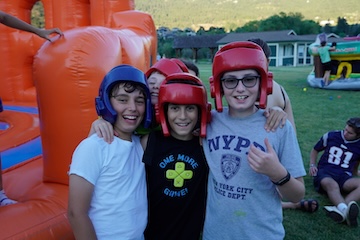
Campers and staff of this summer’s Camp Gan Israel Kelowna. (photo from Chabad Okanagan)

Camp Gan Israel (CGI) Kelowna campers experienced a summer packed with joy, adventure and Jewish education.

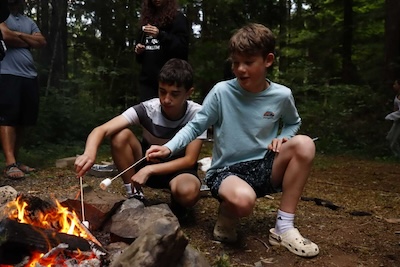
The first week of camp was filled with activities that combined fun with learning about Jewish holidays and traditions. The children baked challah for Shabbat, shaped honey jugs and played at the splash park with the shofar sound for Rosh Hashanah. They created stained glass art for Passover, made edible sukkot (huts) and enjoyed playing “Just 4 Fun” for the holiday of Sukkot. Campers also made candied apples for the High Holidays and dressed up for Purim with a photobooth and kosher hunt, all while receiving education about these special days.

In the second week, campers continued to explore and learn with a variety of activities. They went to Energyplex, enjoyed rock climbing, fruit picking, bowling, science experiments, beading, and visiting the aviation museum. Each activity was paired with lessons about Jewish heroes like Abraham, Jacob, Joseph, Esther and Moses, allowing the children to connect their experiences to the teachings of Judaism’s greats.

Campers were provided freshly made, nutritious lunches every day, helping them stay energized and ready for all the adventures. The staff did a fantastic job ensuring every child had a safe, memorable, fun and enriching experience, while making new friends along the way.

With more than 20 campers and five staff, this has been the largest Camp Gan Israel Kelowna season yet! One parent shared in a video interview that his daughter told him it was the best camp she had ever attended. Another grandparent expressed regret for not having sent her granddaughter the year prior, as well, only hearing about the camp’s wonderful reputation afterward. 

To keep the Camp Gan Israel spirit alive throughout the year, there will be JewQ sessions on Mondays, where the children will continue their Jewish learning journey with dinner, study and fun. For more information on this and other camp and Chabad Okanagan activities and events, visit jewishokanagan.com. 

– Courtesy Chabad Okanagan

Format ImagePosted on September 20, 2024September 18, 2024Author Chabad OkanaganCategories LocalTags camp, Camp Gan Israel, Chabad, education, Judaism, summer
Ways to commemorate Oct. 7

Ways to commemorate Oct. 7

Erev Rosh Hashanah, from Shalom Hartman Institute’s Memory and Hope. For each holiday and Shabbat evening in Tishrei, the institute suggests we light a memorial candle before kindling the holiday and Shabbat lights, and offers an intention to recite before lighting this candle and a text to read afterward (both in English and in Hebrew).

Each year during Elul, the month leading up to the High Holidays, the women of medieval Ashkenaz would measure each of the graves in their community cemeteries with string. They would then dip these lengths of string in melted wax that had been collected from candles lit throughout the year in the synagogue when the community gathered to pray, to study, to cook and to connect. They would light these new candles, each made from string representing the dead and wax representing the living, on Yom Kippur as yahrzeit candles, a way of honouring and remembering deceased relatives.

On Rosh Hashanah, we will welcome a new year. And then, in the midst of the 10 days of repentance that lead up to Yom Kippur, we will reach the one-year anniversary of Oct. 7 and, with it, the anniversary of the day on which at least 1,139 people were killed by Hamas terrorists and more than 240 people were taken hostage. We will pray for the return of the remaining captives, and we will mark the start of the war that has since killed so many in Israel and Gaza.

We have struggled to fully mourn these losses as this war continues to unfold and expand; as not all the hostages have yet returned home; as, in North America, many of us navigate antisemitism in our communities and shifting relationships with local allies. And yet, we feel the need to grieve. The chaggim (holidays) offer us a pause in which we can reflect, cry and pray.

The Shalom Hartman Institute has developed two rituals for the anniversary of Oct. 7, one that spans most of the month of Tishrei, for individuals to use at home, and one for communal gatherings on Oct. 7 or on Shemini Atzeret and Simchat Torah.

Commemorating Oct. 7 at home

Every week, we begin Shabbat by lighting candles. Every Tishrei, we usher in Rosh Hashanah, Yom Kippur, Sukkot, Shemini Atzeret and Simchat Torah by lighting candles. Our ritual for commemorating Oct. 7 at home is woven into these traditions.

More specifically, for each holiday and Shabbat evening in Tishrei, we suggest that you light a memorial candle before kindling the holiday and Shabbat lights. We offer an intention to recite before lighting this candle each night and a short text to read afterward. These materials – inspired by the work of Hagit Bartuv and Rivka Rosner of the Shalom Hartman Institute’s Ritual Centre in Israel and in collaboration with Maital Friedman, Masua Sagiv and me from the Shalom Hartman Institute of North America – connect us with some of the central themes of the last year. Our hope is that the light of the memorial candle, the ner neshamah, literally a soul candle, and light of the festive candles flickering together will connect the strands of our grief and celebration.

Like the candles dipped by the women of Eastern Europe, this ritual honours both the dead and the living. It brings us back to the devastation of Oct. 7, and it also celebrates the artists, soldiers, teachers and ordinary people who helped us through a difficult year. Similarly, while memorial candles are traditionally lit to remember the dead, the ritual invites us to use these candles to light the way for the living – for peace, healing and hope.

While many Israeli Jews light candles on seven evenings from Rosh Hashanah through Simchat Torah, many diaspora Jews light candles on nine, the two additional candles marking the second night of Sukkot and for the start of Simchat Torah. As a statement of Jewish peoplehood, this home-based ritual is for seven nights of candlelighting, so that it will be used in Jewish homes around the world on the same days. If you want to use this ritual to accompany your candlelighting on the second night of Sukkot or on erev Simchat Torah, you might repeat an intention and text or offer an intention and reflection of your own.

Developing this ritual led us to ask about the meaning of memorializing Oct. 7. Is this ritual only about Oct. 7 or is it about everything that occurred that day and since? What do we mean by “heroism” at this time? Are we referring to military bravery or to the ways civilians stepped up to support and protect one another this year as well? Can the entire Jewish world share this one ritual, or have our experiences of this year been too different? What is the right balance between particularistic and universalistic yearnings?

For many of these questions, we looked to our Israeli colleagues to set the tone in creating a ritual that met their needs for their grief and vulnerability this year, as well as their sources of hope and comfort. For other elements, we offer suggestions to adapt the framing or created a slightly different version in the English that we thought might be better suited for those outside of Israel. You may want to use this resource exactly as is, but you may also find yourself adding different texts or focusing on different themes. We encourage creativity and would love to hear from you about how you adapt it to meet your needs for this moment.

Commemorating Oct. 7 in community

Many communities in North America will gather to mark the anniversary of Oct. 7, whether in synagogues, JCCs, Jewish federations, Hillels, schools or other Jewish centres. Our second resource is a collection of texts and prayers to be used in a communal ritual context, including suggestions of three different ways to use these rituals in your community.

The supplement also gave us the opportunity to add more texts, prayers, songs and perspectives, including texts with expressions of grief for the suffering of Palestinian civilians, which did not fit in the more particularistic framework of the home ritual above.

This Elul, as we reflect on the past year and gather up the wicks that measure our lives and our communities, may we continue to find ways to bind our wicks together, to find strength in community and ritual, and may all who mourn this tragic anniversary find comfort among the mourners of Zion and Jerusalem. Shanah tovah. 

Rabbi Jessica Fisher is the director of rabbinic enrichment at the Shalom Hartman Institute of North America. To read and download various Hartman Institute resources, including Memory and Hope: Rituals for Tishrei 5785 and accompanying resources for commemorating Oct.7 in community, visit hartman.org.il.

Format ImagePosted on September 20, 2024September 18, 2024Author Rabbi Jessica FisherCategories Celebrating the HolidaysTags candlelighting, celebrating, High Holidays, hope, Judaism, mourning, Oct. 7, prayers, ritual, Shalom Hartman Institute, yahrzeit

Setting intentions, priorities

This year, the High Holidays fall later than usual, with Rosh Hashanah just a few days before the anniversary of Oct. 7, 2023 – the most tragic date in the history of modern-day Israel. 

The High Holidays offer special opportunities for reflection and renewal, reaffirming what matters most, pursuing positive change and strengthening our connections with others.

As we look back on 5784, we should examine our own actions, reflecting honestly on our challenges and successes, and seeking lessons we can take from our experiences to carry into the year ahead. It’s a time to consider which elements of our lives and our relationships with others need improvement.

This leads naturally to an opportunity to contemplate our intentions and priorities and plan for the future. It is a means of charting a course that aligns with our values and contributes to the strength of our families and our communities.

While Canada remains one of the safest places for Jewish communities, the Centre for Israel and Jewish Affairs’ advocacy – especially since Oct. 7 – has been fueled by a profound dedication to tackling the disturbing rise in antisemitism.

The alarming surge in antisemitism, both online and on the streets, has been deeply shocking. Yet, it has also driven us to forge essential connections with all levels of government, law enforcement, educational institutions and community organizations representing the majority of Canada’s Jewish population and other vulnerable minorities. 

Just as the High Holidays are arriving late this year, so too are long-awaited protections from the government. We have seen some progress, but there is much to be done to ensure “bubble legislation” (safe-access laws to protect defined areas from protests, harassment and hate) becomes common, if not ubiquitous, across Canada. Vaughan, Ont., has adopted an encouraging example, and many other municipalities have expressed serious interest in following suit, but there is still much work ahead. 

Federal online hate legislation has been in development under various ministries for years, and we are not backing down on contributing to and securing this fundamental legislation that will enhance security measures.

The accusations against Israel of war crimes from the International Court of Justice (ICJ) are both absurd and detrimental to Canada and the West’s long-standing policies aimed at achieving peace in the Middle East. If the Canadian government wants to rescue the reputation of the ICJ, it must denounce this evidence of its politicization.

Antisemitism is not a “Jewish” problem. Jew-hatred poses a grave danger to all who cherish our core Canadian values. We know from history that, wherever antisemitism is allowed to thrive unchecked, social malaise and political oppression follow. Its defeat requires a concentrated, multi-pronged approach involving many cultural, political, ethnic and faith organizations, as well as individuals from across the country. Together, we are working to combat antisemitism while building relationships with many partner groups, promoting the Canadian values of dialogue and understanding, tolerance and respect. 

As Canada’s special envoy on preserving Holocaust remembrance and combatting antisemitism, Deborah Lyons, wrote in a July op-ed in the National Post: “Jews did not create antisemitism and … it is not on them to fight it alone.”

As we approach the sad and sombre anniversary of the Oct. 7 massacre, many will join us in honouring the memories of those murdered by Hamas and in praying for the safe return of the hostages and for the restoration of peace to the region. And, if we are so blessed to have welcomed home the hostages by the time you are reading this, we’ll have more to celebrate as we begin the new year.

In the meantime, I wish you a sweet, healthy, peaceful and happy 5785. 

Judy Zelikovitz is vice-president, university and local partner services, at the Centre for Israel and Jewish Affairs.

Posted on September 20, 2024September 18, 2024Author Judy ZelikovitzCategories OpinionTags Centre for Israel and Jewish Affairs, CIJA, Hamas, hate crimes, High Holidays, hostages, Israel, Judaism, Oct. 7, reflection, Rosh Hashanah

Think first, then share news

When I write articles lately, they’re usually columns with an Opinion header near the editorial section. Most writers try to back their opinions up with research and information. I’m no different. However, some readers can be easily swayed regardless of the facts involved. This was clear to me when I ate dinner at a neighbour’s home recently. I chatted with my host about a syndicated columnist who gives succinct opinions about all sorts of world politics.

The writer’s accessible approach makes it seem like his opinions are solid. His tone is breezy and confident. But he covers so many different world events and conflicts that I wondered how he knew so much about it all. My host suggested he had a large staff to help him. I doubted this. Writing’s just not that profitable these days.

Here’s why I grew to doubt this columnist’s work. When it came to how he analyzes Israel and the Middle East, I have some academic background in the subject and I read widely. I saw where I disagreed with his assumptions. In several cases, I had more information about the issues than he presented. I saw his bias. I questioned what I read. Yes, his work is always on the newspaper’s editorial page. It’s always an analysis piece but that doesn’t mean his facts and conclusions are always correct. Now when I read his work, I see the “mansplaining” tone. He’s overconfident and oversimplifies big conflicts. Sadly, I suspect few people call him on it.

My host and I had this exchange while talking about mainstream media. In North America, we like to think our journalism is objective, fair and impartial. When I was a kid, my family visited relatives in France. I noticed the sheer quantity of publications on the French newsstands. More than one relative explained that they subscribed to certain newspapers that represented their political view and bought others with differing views. This way, they could get a full picture of world events. They acknowledged that everyone had biases and that media wasn’t objective. The way to get a fair representation of events was by doing more: more reading, more information gathering, critical comparison and analysis.

My recent Talmud study, from the tractate Bava Batra, has taken me through some fun “tall tale” narratives from Rabbah bar bar Hanna. He was prone to exaggeration. In Bava Batra 73, he sees enormous antelopes and a frog as big as 60 houses. He claims that a dragon swallows the frog, which is then eaten by a raven. The raven then sat in a tree. Can you believe, he says, how sturdy that tree was? 

When Dr. Sara Ronis introduces these stories in the My Jewish Learning essay for this page, she calls them what they are: a real fish tale. (You should have seen the fish that got away!) These myths also perhaps have parallels to a Zoroastrian text called the Bundahishn, according to Drs. Reuven Kipperwasser and Dan Shapira. The stories might be crazy, but they were floating around in the ether of multicultural Babylonian marketplaces. Rabbah bar bar Hanna returns to the study hall with his crazy stories. The other rabbis call him on his nonsense. They insult him and call him names, criticizing his choices. There are lots of modern scholarly opinions about why the other talmudic rabbis do this, and what it means. It’s a topic for academic debate.

However, what if this is an ancient reminder for us? What if, during this period of Elul, when we’re supposed to start doing serious introspection, we’re also supposed to be examining exactly what crazy stories we’re swallowing? Imagine social media and news outlets as our marketplace. Maybe we’re bringing home Zoroastrian tall tales and repackaging them for our own consumption. The rabbis teach us in Bava Batra that swallowing these fish tales whole is not the smartest move. The rabbis ask why Rabbah bar bar Hanna didn’t just stop and think more before bringing this “stuff” home with him.

We’re often plied with misinformation – about the war in Israel, but also about other news. What do we know about Russia and Ukraine, repression in Iran, the Uyghurs or the Sudanese crisis? How much propaganda has been sent our way and who paid for it? It’s hard to tell. Too often, a seemingly objective, sincere journalist’s narrative might mislead us simply because their unconscious bias and opinion is submerged in the text. The editor’s headline guides us, too. 

Worse, sometimes it’s not subconscious bias. Sometimes, it’s bots or outright propaganda, paid for by a country that wants to mess up North American elections or culture. I’m not a conspiracy theorist. I believe that, like the rabbis suggest to Rabbah bar bar Hanna, one should reflect on things you read or hear, really look at them, and think critically. 

This season’s the time when we’re supposed to be examining our deeds since last year. Most of us were guilty of complacency in this past year. Last Sukkot, we couldn’t have imagined what was ahead. If someone had described what was to come, we would have accused them of telling an abhorrent tall tale. For many, Oct. 7 and its aftermath have been one scary, real and gruesome nightmare. 

It’s easy to understand complacency. We want to feel safe. We don’t want there to be metaphorical enormous frogs or dragons around the corner. That said, we owe it to ourselves to be like the rabbis in the study hall who called out Rabbah bar bar Hanna. Those rabbis asked bar bar Hanna to pause and think more about what he saw, read or told them. 

In the spirit of the High Holidays, let’s be true to ourselves. There is plenty of horrific real news for us to share. Let’s read widely first. Let’s keep our eyes open so we recognize bias and what is really happening before we pass something along. Let’s avoid the rumours and speculation, too.

Wishing you a sweet, happy, healthy and peaceful 5785, free of misinformation. 

Joanne Seiff has written regularly for the Winnipeg Free Press and various Jewish publications. She is the author of three books, including From the Outside In: Jewish Post Columns 2015-2016, a collection of essays available for digital download or as a paperback from Amazon. Check her out on Instagram @yrnspinner or at joanneseiff.blogspot.com.

Posted on September 20, 2024September 18, 2024Author Joanne SeiffCategories Op-EdTags bias, critical thinking, daf yomi, High Holidays, journalism, Judaism, objectivity, reflection, Talmud
Be seen and heard this year

Be seen and heard this year

Students from CJPAC’s 2023/24 Generation: Student Leaders Program cohort (photo from CJPAC)

It is Elul, the month before the Jewish new year. Traditionally, this is a time for cheshbon hanefesh, an accounting of one’s soul, before the reflection and repentance of Rosh Hashanah and Yom Kippur. 

This year is not like years past. This year, our individual and community accounts are overdrawn. Instead of looking into how our souls spent 5784, instead of wondering what we could have done better, instead of cheshbon hanefesh, this year should be one of hashka’at hanefesh, investment in our souls. 

As we move towards Rosh Hashanah, Jewish communities and individuals will blow the shofar and recite Psalm 27. This is a daily call to action and a recitation of a mantra that means so much more this year. 

Of David: Hashem is my light and my salvation; whom should I fear?… Though an army may camp against me, my heart will not be afraid; though war rises against me, I will be confident…. Deliver me not to the will of my enemies, for false witnesses are risen against me and breathe out violence…. Look to Hashem; be strong and of good courage! Look to Hashem! (Psalm 27, excerpted)

The 14 verses of this psalm help us examine the past year and focus and inspire us for the coming one. Recited through the High Holy Days until Hoshannah Rabbah, it is a call to make that investment.

The year 5784 was a challenge. It was a year of pain. Through it, the worldwide Jewish community declared, “We will dance again.” Now, the shofar and the words of the psalm force us to confront metaphors made real. Though it seems like we are surrounded by enemies, these verses call upon us to act. If we do, our “head[s] will be lifted” and we will again “offer sacrifices of joy.” “We will dance again” will be realized when we stand up to say, “Hineini.”

Hineini – I am here. It is a word of intentional presence. When God approaches Avraham, Avraham answers, “Hineini.” When Moshe is called to lead, he responds, “Hineini.” Our leaders were not prepared. Nevertheless, when asked, they stepped up. This is the lesson of the High Holy Days. It is a call to action that begins with the individual and moves to the communal. 

It is our time to answer that call. It is time for our community and our allies to stand up and step forward to make a difference and an impact. It is time to say, “Hineini. I am here, I am present.”

The Canadian Jewish Political Affairs Committee (CJPAC) is here and present to help Canadian Jews and their allies be seen and heard.

Now is the perfect time to get involved in politics, with the BC general election set for Oct. 19. You can make a real and tangible impact. CJPAC is here to guide you. In political campaigns, every single volunteer who steps up can be the deciding factor in a candidate’s success. 

It is not the loud, angry voice that makes the lasting impact. The difference is made by people who show up and get the job done. Say “Hineini,” and sign up to volunteer for the candidate or party of your choice.

Sign up for CJPAC emails to stay informed about specialized training opportunities. From Politics 101 to the importance of running for a school board or campaign volunteering, CJPAC’s Advancing Campaign Training (ACT) program will help prepare and connect you. 

In our tradition, what begins with the individual ultimately ends with the community. Sign up with friends for a CJPAC Day of Impact or create your own. By coming together, we inspire future generations. Volunteering with children not only teaches but empowers them to take action – and not just during difficult times.

If you have, or know, a teen in grades 10 to 12, be sure to check out CJPAC’s Generation: Student Leaders Program. Throughout the school year, teens engage in thoughtful discussions with peers, empowering them to participate in the democratic process.

CJPAC’s flagship Fellowship Program trains 50 of the top pro-Israel, politically engaged post-secondary students from across Canada to become the next generation of political leaders. Applications close on Sept. 18.

We make a difference when we show up. The more people who give of their time and efforts, the greater our impact. Connecting with the party or campaign of your choice through CJPAC offers you a tangible opportunity to support the community and build a better Canada.

Listen to the call this Elul. It is time for our community and our allies to stand up and step forward to make this difference. 

Hineini – I am here. 

Hineini – I am ready. 

Hineini – Even if I am afraid, I will be an upstander. I will pray with my feet before and beyond the chaggim (holidays), acting for the future, the future of our children, and of our communities – both Jewish and more broadly Canadian.

Hineini. 

Rabbi Jennifer Gorman is CJPAC national director of outreach & programming. To learn more about CJPAC or sign up to volunteer, visit cjpac.ca or contact Kara Mintzberg at [email protected].

Format ImagePosted on September 13, 2024September 11, 2024Author Rabbi Jennifer GormanCategories NationalTags BC election, CJPAC, democracy, elections, Judaism, Rosh Hashanah, volunteering

Allowing for joyful holidays

My house smells like chicken soup. That is one of the surefire ways to tell that holidays are on the horizon. It’s a cooler summer day. I have two slow cookers “working” to make that all important broth for autumn days to come. Chicken soup is a little thing but it’s one of those small details that I do in advance to make our family holidays special.

I recently read an introduction to a page of Talmud on My Jewish Learning by Dr. Sara Ronis. It examines Bava Batra 60. This page of the Babylonian Talmud resonates with what many of us are wrestling with during this past year of war. To summarize, Rabbi Yehoshua comes upon Jewish people, who, after the destruction of the Second Temple, in 70 CE, chose to become ascetics. They give up eating meat and drinking wine, because these things could no longer be offered in sacrifice at the Temple in Jerusalem. The ascetics suggested that, given the loss of the Temple, life could no longer be as spiritually rich or as physically nourishing.

Rabbi Yehoshua tries to reason with them, asking if they should stop eating bread, since the meal offerings at the Temple have also stopped. The ascetics suggested they could subsist on produce.

Rabbi Yehoshua asked if they would give up eating the seven species of produce offered at the Temple. They said they could eat other produce.

So, Rabbi Yehoshua says, I’m paraphrasing here: “We’ll give up drinking water, since the water libation has ceased.” To that, the ascetics responded with silence – of course. You can’t give up drinking water and stay alive.

Rabbi Yehoshua encourages the people to make space for mourning but to avoid extremes; he suggests that choosing to be an extremist is dangerous. Making space in our life for other things like daily pleasures and regular foods is important. Devoting all our energies to mourning will rob us of life, too.

This story came to mind when I saw the celebratory photos of Noa Argamani, a rescued hostage. She wore a yellow bikini and danced with her father atop others’ shoulders at a party. In addition to having been a hostage, her mother had passed away from brain cancer, only three weeks after Noa’s rescue on June 8. The pure, almost ecstatic joy of the images clashed in a difficult way with the ongoing war, the hostages still in Gaza, and all those suffering in the conflict. Some immediately sought to criticize this behaviour. There are those who said, “if only Jewish women were more modest, the hostages would be returned.” On the other side, some said, “Look at these Israelis celebrating even while Gazans suffer.”

I remember being told at a long ago Simchat Torah celebration that mourners, after a death of a family, shouldn’t dance or sing. Yet, maybe 10 years ago, when my twin preschoolers asked a Moroccan Jewish family in mourning for their mother, to sing with them Mipi El (a Jewish acrostic song, a piyyot, with a traditional Sephardi tune loved by my sons), these older men held up my kids, danced and sang with the Torah. It was a meaningful moment. It was full of emotion. Maybe one can dance with the Torah and celebrate a little – even while mourning. I almost felt their mother, who I never knew, who raised them to be committed and involved Jewish adults, would approve.

Rabbi Yehoshua’s logical argument and suggestion that we hold onto joy even while mourning is important. Making space for all these feelings in our lives is both powerful and hard. Smelling the chicken broth aroma filling my house makes me anticipate the New Year and holidays to come. Also, like many others, I will never be able to celebrate Simchat Torah the same way again. Yet, nothing made me happier than seeing Noa Argamani and her father make the most of every moment they have together. They deserve every happiness.

In this past year, finding ways to be grateful, to anticipate rituals, holidays and joy has felt really heavy at times. Twice in recent weeks, my family has returned home from a fun summer outing to see antisemitic graffiti in our neighbourhood. There is nothing like having to take photographs of a hate crime, call the police to make a report, and send off the photos to B’nai Brith and CIJA as well to turn a sunny family adventure into a downer. I struggle with processing all this and going on with daily life.

So, when someone I follow on Instagram showed off her Instant Pot chicken soup process, I started up my serious chicken broth production. Here’s to getting new batches of chicken soup, that liquid gold, into the freezer, ready to make new positive memories and associations for the fall holidays to come. 

Joanne Seiff has written regularly for the Winnipeg Free Press and various Jewish publications. She is the author of three books, including From the Outside In: Jewish Post Columns 2015-2016, a collection of essays available for digital download or as a paperback from Amazon. Check her out on Instagram @yrnspinner or at joanneseiff.blogspot.com.

Posted on September 13, 2024September 11, 2024Author Joanne SeiffCategories Op-EdTags choosing life, cooking, Judaism, lifestyle, living, mourning, Oct. 7, Rosh Hashanah, Talmud

We must keep asking “why?”

Our short Canadian summer is full of wonder. We try to spend lots of time outdoors, finding things to marvel at on dog walks and even on errands. While we might not be out in the bush too often, we still can spot foxes, deer, woodpeckers, butterflies and moths, as well as magnificent gardens, in our neighbourhood in Winnipeg’s city core. As toddlers and preschoolers, children go through a “why?” phase. Everything is a question. Parents must come up with meaningful but short answers every time. However, as our tweens transition to teens, I have been pleasantly surprised to discover there are still a lot of “whys” being asked.

On a practical level, sometimes I end up saying “that’s a Google question” because I cannot remember every detail of European history. If our resident biology professor dad isn’t home, we’re trying to figure out flora and fauna on our own. (Hint: there’s an app for everything now.) Most of all, I am thrilled that intellectual curiosity is still a thing. Our household still finds space to wonder about how things work, what things are called and why events evolved in one way or another. 

Just the other evening, I admonished our kid about being gracious about gifts. He didn’t know what I meant. We stopped to discuss the phrase “Don’t look a gift horse in the mouth” and take apart what it means. This kind of daily learning is an exciting part of life, and especially in summer, when we have hours at a stretch to talk and think about things, as well as seeing natural wonders, going to museums, meeting new people, reading and listening together. Pursuing this kind of informal learning makes a well-rounded education.

I continue to study Daf Yomi, a page of Talmud a day, and right now we’re studying the tractate of Bava Batra, one of the three Bavas (translated as “gates”) that deal in civil law. I find nuggets of wisdom in these tractates, even as some of them seem dry to other students. If you’re wondering, for instance, who pays for a fence, or making the decisions about erecting a fence across a shared courtyard? The beginning of Bava Batra will help you figure out whether this is possible, and how to get along with your neighbour in the process. Each issue is examined with a “why?” lens.

How does one decide where you’re from? If you’ve lived in many places (I have), this is a real question. Do you define home as where you were born? Where you lived the most years? Which kitchen or garden you liked best? This is examined on Bava Batra 11, which suggests that, if you’ve lived in a city for 12 months, you can be considered a resident. However, if you buy a house earlier than that, or even, according to Rabban Shimon ben Gamliel, land that would be suitable for building a house, you’re immediately considered a resident. This bit of ancient law discussion struck me as useful in an age where so many decisions are made based on where one lives: where one votes, gets health care, sends kids to school and other bureaucratic needs. Establishing residency is still often up for discussion.

There is an advantage to maintaining intellectual curiosity and nurturing critical thinking when it comes to negotiating the world. As recently as a year or two ago, I would have been upset to think that one should be getting news from social media or email newsletters. Now, however, I find access to multiple reports about the Israel-Gaza war in English and Hebrew, through Instagram and X (formerly Twitter). I then end up satiating my curiosity by clicking through to read from multiple other news sources, finding out about elections in Europe, antisemitism worldwide, or even locating (and avoiding) possibly violent protests in my own city. Asking “why? why? why?” becomes a daily necessity in trying to decipher both what’s happening and the political angle of those who write the articles, blogs or tweets.

A recent piece covering humanitarian aid distribution in Gaza on the CBC, for instance, used the word “Hamas” only once, when mentioning “Hamas-led militants” on Oct. 7. The word “Israel” could be found on the page 18 times. While 18 is a lucky number, in this case, it sounds like an uncritical reader could lay blame on one side simply through repetition. One might completely lose sight of why Gazans are in this mess in the first place. If, perhaps, Hamas chose to stop firing rockets into Israel? It might be easier to distribute supplies and return to normality. Also, the journalist mentioned Egypt only twice. Egypt also shares a border with Gaza. Egypt could choose to facilitate humanitarian aid. Whose responsibility is this? The article’s slant, and the journalist’s bio, made me suspect a bias. When examining the journalist’s X posts online, I saw only one side of this conflict emphasized. It didn’t reference anything about Oct. 7 or Israel’s experience.

It can be hard right now to maintain an even keel while facing the barrage of information about the Gaza war, Russia’s war on Ukraine, politics in Canada, the United States and Europe, and the famines and violent conflicts elsewhere in the world. Unplugging and getting out to see and do things with family, taking a vacation, exploring wild places, helps us recalibrate. It can also boost our “why?” skills so we can return refreshed, with energy to analyze all the new craziness as it erupts.

I’ve just begun Bava Batra, but one topic hit early on is where and how to donate charity to do the most good. Bava Batra 8b reminds us that money donated towards “saving captives” is a great mitzvah, the biggest commandment/good deed that one can do. Sometimes, an ancient text can remind us to readjust our priorities. Reading critically and asking “why?” are essential to Talmud and rabbinic discourse. It’s also essential for us. We must keep helping our children ask “why?” We ourselves must maintain the wonder that enables us to stay curiously critical thinkers. 

Joanne Seiff has written regularly for the Winnipeg Free Press and various Jewish publications. She is the author of three books, including From the Outside In: Jewish Post Columns 2015-2016, a collection of essays available for digital download or as a paperback from Amazon. Check her out on Instagram @yrnspinner or at joanneseiff.blogspot.com.

Posted on July 26, 2024July 25, 2024Author Joanne SeiffCategories Op-EdTags bias, critical thinking, Israel-Hamas war, Judaism, lifestyle, Oct. 7, questioning, Talmud

Name inspires artist’s work

Growing up in Vancouver during the 1960s and ’70s, I was the dancer, my brother was the guitarist and my sister was the writer, soon to blossom into a visual artist as well.

Devorah Stone, my sister, is one of the contributors to this year’s Calling All Artists exhibit, which opens at Victoria’s Congregation Emanu-El on Aug. 26. Since the early 2000s, the mostly annual event has celebrated artists of many kinds – sculpture, ceramics, textile, poetry, mixed media, fabric, music – who offer their interpretation of a rabbinical or biblical text that they’ve studied with the synagogue’s spiritual leader, Rabbi Harry Brechner.

photo - Devorah Stone created a honeybee circle for this year’s Calling All Artists exhibit, which opens at Congregation Emanu-El Aug. 26
Devorah Stone created a honeybee circle for this year’s Calling All Artists exhibit, which opens at Congregation Emanu-El Aug. 26. (photo from Devorah Stone)

“This year’s theme is ‘animals’ and since my name means ‘Honeybee’ in Hebrew, I went with that,” Devorah told me. “The bees in my work are all hand-felted, a technique that involves pocking at wool and shaping the form. I decided to present the bees in circles because they are so crucial to the circle of life.”

The artists’ works are up for six months in the shul’s social hall. Devorah has been involved with the event for the last 10 years. Rabbi Brechner gives a lecture on the theme and how it pertains to Jewish traditions, sacred writings and thought once a month for five months before the celebration. This year, his teaching focused on the significant symbolic and ritual roles animals play in Jewish texts.

“I’ve learnt so much about both art and Judaism attending the rabbi’s lectures,” said Devorah. “Anyone can join … you don’t even need to be Jewish.” 

The Calling All Artists project is run by self-proclaimed “den mother” Barbara Pelman. She said there is a chapbook written every year with an explanation of each artist’s creative process and a copy of that is given out to guests.

“In last year’s Calling All Artists, I did the kohain gadol’s (high priest’s) breastplate with references to all the various colour and gem stones as described in the Torah,” said Devorah. “The only difference was the mannequin I used was a woman’s so I pretended that there might have been female priests at the time of the Temple!

“I’ve also done a collage of a person wearing a tallit and the burning bush, a three-dimensional piece of the Rosh Hashanah dinner, and another collage on a wooden cradle of the story of Abraham and Isaac.” 

Devorah has always been fascinated with art.

“As a child, there was nothing better than a box of crayons and endless paper,” she said. “I drew space ships, planets and alien worlds. I also drew castles and princesses. I loved it. My imagination had no limits.” 

In her 20s, Devorah spent four years at the University of Victoria, earning a bachelor of fine arts. All the while, she felt inspired by Emily Carr and Indigenous art.

“I loved the way Carr personified nature and her magnificent trees,” she shared. “I marveled at the complexities, elegance and craftsmanship of the First Peoples of the land.”

Our parents also brought us up with a strong Jewish identity.

photo - Devorah Stone
Devorah Stone (photo courtesy)

“Being Jewish, I was taken by the imaginative work of Chagall, his goats and houses and how everything seemed to be floating or suspended,” said my sister. “Later on, I began to be influenced by the school of Bauhaus design, especially Kandinsky, his calculated and yet whimsical designs.” 

After Devorah moved to Victoria 20 years ago, she joined the Pandora Arts Collective Society. The group exhibits its works at the Little Fernwood Gallery twice a year and Devorah recently sold a painting there.

The collective is a community of people whose mandate is to facilitate and support mental health through the social and educational benefits of a free and welcoming creative arts space. The studio is open to everyone: professionals, students and beginners. The atmosphere is especially sensitive to people who are using art therapeutically. Devorah is on their board and has planned events for them in the past.

“We inspire and mentor each other,” she said. “I have learnt so much about art from that group. I’ve been introduced to many different kinds of art and artists, as well as being influenced by so many artists in our synagogue. The joke is that you can’t throw a rock without hitting an artist in Victoria!” 

When she was living in and around Vancouver, Devorah brought up three children, two of whom live in the Lower Mainland. She visits all of us frequently and spends a lot of time on the ferry.

“I love doing fast sketches of the scenery as it goes by,” she said. “I also do fast sketches at outdoor concerts and festivals, which Victoria has so many of.” 

Devorah uses pencil crayons, acrylic paint and watercolours, creates collages and sometimes three-dimensional art made out of whatever she can find.  

“I love experimenting and I feel that all my art is influenced by being Jewish,” she said. “It all has a profoundly Jewish way of seeing nature and of being.”

The best way to view Devorah’s art is through Instagram @devlovesart. 

Cassandra Freeman is a journalist and improviser who lives in East Vancouver.

Format ImagePosted on July 26, 2024July 25, 2024Author Cassandra FreemanCategories Visual ArtsTags art, Calling All Artists, collage, Devorah Stone, education, Emanu-El, Harry Brechner, identity, Judaism, multimedia, painting
Tri-Cities community grows

Tri-Cities community grows

Co-directors of Chabad of the Tri-Cities Rabbi Mottel and Nechama Gurevitz with their children. (photo from Tri-Cities Chabad)

Since he arrived just under two years ago, Rabbi Mordechai (Mottel) Gurevitz has had a very active and wide-ranging schedule. He’s been organizing programs and events and, most importantly, building community in the Tri-Cities (Coquitlam, Port Coquitlam and Port Moody). 

Gurevitz, co-director of Chabad of the Tri-Cities, gave the Independent a few examples of the growth he has witnessed. This year’s Passover seder brought in nearly 50% more attendees compared to 2023. There was a similar increase in attendance for a Ten Commandments reading and ice cream in the park gathering during Shavuot. 

For Lag b’Omer on May 26, the largest Jewish event in Tri-Cities history was held at Rocky Point Park. Hundreds of people came out in the rain for a day filled with music, featuring Vancouver band Tzimmes, dancing, art, a marketplace, a magic show, bouncy castles and, of course, mouthwatering food.

Gurevitz, a Brooklyn native, arrived in the Tri-Cities in November 2022 with his wife, Nechama, who hails from Portland, Ore. In a recent interview, he told the Independent that he adores the region and is very happy and amazed to see the interest in the Jewish community for Jewish activities – and, he added, he regularly has to replenish his supply of mezuzot.

“We feel grateful for where we live,” he said. “It is such a beautiful, growing community. Geographically, it is a beautiful place with beautiful people. I feel privileged to be in this position to lead. It is not something I take lightly. I am really happy that we are here.”

The goal of Chabad of the Tri-Cities programming is to raise the Jewish profile and increase the sense of Jewish community in the area, Gurevitz explained. He gets the most joy, he said, when he hears from community members about connections they have made through his efforts, such as two sets of parents arranging a play date for their children after meeting at a Chabad event.

“One of the challenges of the Tri-Cities is that it is geographically spread out. Organically, there is a challenge for a community to grow because people are all over. What we are finding is that, by creating infrastructure, it is blossoming,” he said.

The region’s population comprises people of all ages, and many young families. As a result, there are programs to meet the needs of various demographics, from teen activities to special groups for men and women, in addition to a Hebrew school, weekly Torah classes and Kabbalat Shabbat meals. The programs have been well received, Gurevitz said, and have created a space for people to come together.

“All of these are cogs in the machinery. Each of them is important on its own, but, in the greater picture, what is emerging is a vibrant Jewish community. Jews are hanging out with other Jewish people. There is a place to celebrate our traditions, connect and meet new friends,” Gurevitz said.

On March 10, Tri-Cities Chabad celebrated the milestone of completing a sefer Torah. Along the way, there was great excitement, as members of the community dedicated letters and chapters for the new scroll.

photo - Rabbi Mottel Gurevitz writes the final letter of the Chabad of Tri-Cities community Torah
Rabbi Mottel Gurevitz writes the final letter of the Chabad of Tri-Cities community Torah. (photo from Tri-Cities Chabad)

“There is something very unifying about a community writing a Torah,” Gurevitz said. “The energy in the room that day was something so special, with the joy and the celebration and people of all ages kissing the Torah. That was a real monumental event this year.”

Gurevitz, who also teaches at Vancouver Hebrew Academy, jokes that he has two full-time jobs. A typical day might have him teaching in Vancouver in the morning and returning to the Tri-Cities in the early afternoon to have meetings, run programs, prepare for events and reach out to people.

“As a rabbi, I believe our first priority is our fellow Jews’ physical well-being, then we can care for their spiritual well-being. I am being there for people, helping however we can. The part I like most is meeting people and making those connections,” he said.

On July 2, at 7 p.m., Chabad of the Tri-Cities will put together an event to mark the 30th yahrzeit of the Lubavitcher Rebbe, Menachem Mendel Schneerson. Titled An Evening of Inspiration, the event will feature Rabbi Meir Kaplan, leader of Chabad of Vancouver Island. 

“Our very existence in the Tri-Cities, a boy from Brooklyn walking around looking like a rabbi in Coquitlam, is to the Rebbe’s credit. We are gathering to pay tribute to the Rebbe. What was unique about him is that he made leaders and empowered individuals,” said Gurevitz, pointing to the 5,000 Chabad centres currently operating in more than 100 countries. “We will reflect on how the Rebbe’s legacy could inspire us to live a more meaningful and purposeful life.”

For more information, visit jewishtricities.com. 

Sam Margolis has written for the Globe and Mail, the National Post, UPI and MSNBC.

Format ImagePosted on June 28, 2024June 27, 2024Author Sam MargolisCategories LocalTags Chabad, Chabad of the Tri-Cities, Judaism, Mottel Gurevitz, Nechama Gurevitz, Torah, Vancouver Hebrew Academy

Posts pagination

Previous page Page 1 … Page 8 Page 9 Page 10 … Page 67 Next page
Proudly powered by WordPress