Song of healing is a hit

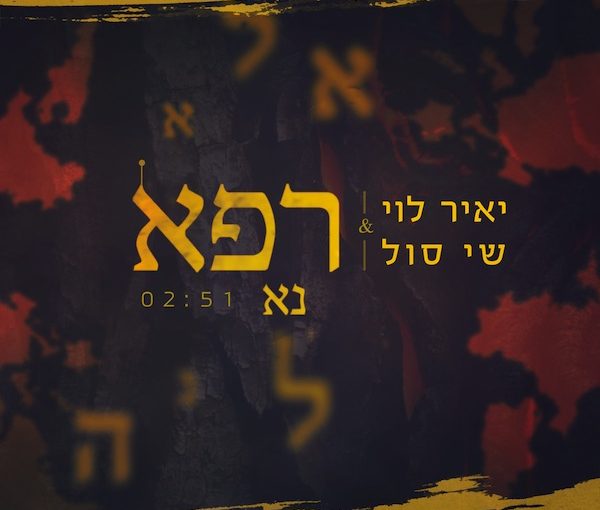
Israeli artists Yair Levi and Shai Sol sing Moses’s prayer to heal his sister Miriam of leprosy. The song, “Refa Na,” has resonated with people during the pandemic.

The song “Refa Na” (“Heal Her Now’”) by Israeli composer Yair Levi, together with vocalist Shai Sol, has become a global hit during the current COVID-19 pandemic.

Based on Moses’s prayer to heal his sister Miriam after she contracted leprosy, the song was released on Levi’s Facebook page April 6. The lyrics include the words, “O Lord, heal her now. O Lord, I beseech thee. Then we will be strengthened and healed” (Numbers 12:13) and Levi’s original is in multiple languages: Hebrew, as well as English, Spanish, French, German, Chinese, Arabic, Russian, Hindi and Swahili. The song has been picked up in dozens of covers, from Lebanon to Argentina.

When Levi’s grandmother fell ill, he composed a tune incorporating Moses’s prayer for his sister’s wellbeing. The song has resonated throughout the world during the current pandemic, garnering hundreds of thousands of views and shares.

“My grandmother had an illness unrelated to coronavirus, but the pandemic obviously affected everyone, myself included,” Levi, 31, told Ynet news portal. “Due to the epidemic, I received the names of people in need of prayer and a list of about 20 names accumulated on my fridge. Every day, I would say a prayer for the sick, and I searched for words and a tune related to medicine.”

Then Levi remembered the “Al na refa la” prayer in Numbers.

“I took my guitar and composed the music for it on the spot and, since I have a recording studio in my home, I recorded the song within a week.”

Levi then approached Sol, a vocalist with Miqedem, a band that composes and sings Psalms all around the world.

“In quarantine and with no way to actually meet, she recorded herself,” Levi said.

After posting the song on social media, he said, “It was amazing. We received many responses and translations. Immediately after we released the song, it was shared online by evangelist Christians, Jewish communities, and even the Friends of the IDF organization.”

But not only the obvious audiences were enthusiastic.

“We have received cover versions from all over the world, including from a Lebanese singer, and, on Saturday evening, I received three new covers from Namibia … India and a Brazilian singer, Fortunee Joyce Safdie, who performed the song live on her Instagram page,” he said.

“Getting so many messages from people all around the world is incredible,” he added. “If I have the privilege to spread prayer around the world, to me, it’s just crazy. When people from all over the world translate and sing a prayer for health, it feels like it is literally the End of Times.”

During his three-year service in the Israel Defence Forces, Levi – who grew up in Israel’s secular mainstream – became intrigued by traditional Judaism. A turning point in his life came on May 31, 2010. Serving as a naval commando, his elite unit stormed the MV Mavi Marmara, one of six ships in the Gaza Freedom Flotilla attempting to breach Israel’s blockade of the coastal enclave. Nine Turkish activists were killed in the incident, while 10 IDF soldiers from Levi’s unit were wounded. After the sea battle, Levi was determined to join an IDF officer course. But, at the age of 26, he decided to pursue a musical rather than military career.

“I spoke with my commander, who told me people often regret what they had not done,” Levi said. “It opened my eyes and I realized that the flotilla incident pushed me in the direction of the course, but my real dream was to make music and become a singer.”

Levi has released two albums, Breathing Again (2016) and Let Go (2017).

“People see me as a religious person but I don’t like labels,” he said of his oeuvre.

To hear more of Levi’s music, visit yairlevi.bandcamp.com/releases.

Gil Zohar is a writer and tour guide in Jerusalem.
Culture & accessibility

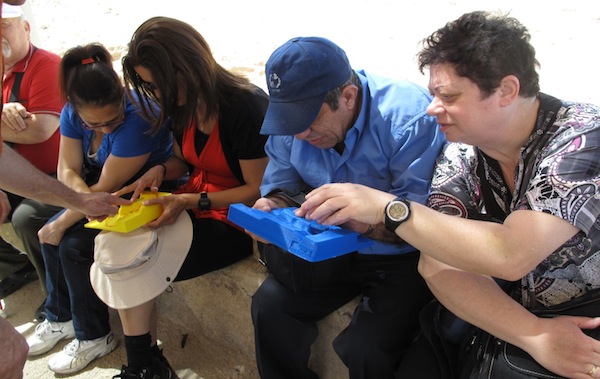
Visitors to Masada learn more about the site through Gadi Mathov’s miniature model of the landmark. (photo from Mathov Design)

What would it take to make museums, cultural sites and tourist attractions more accessible to people with visual, intellectual or developmental disabilities? For the past 25 years, Israeli professional miniaturist Gadi Mathov has been working on solving this problem using models.

At Masada National Park, for example, people with visual impairment can understand the site’s unique topographical structure and history through Mathov’s 3D tactile models.

“We also created for them miniature models of siege vessels that illustrate the Roman siege of Masada,” he explained. “The way I define it, a model is a physical representation of a product or an idea. A model is a medium that allows people to communicate and pass along ideas between them.”

Mathov Design models are used in leading cultural institutions such as the Israel Museum and sites managed by the Israel Antiquities Authority and the Israel Nature and Parks Authority. Mathov also cooperates with the Commission for Equal Rights of Persons with Disabilities, the National Insurance Institute and the Access Israel nonprofit organization.

Mathov Design’s 100-square-metre model of Jerusalem, featuring the Temple Mount, the Tower of David, the Knesset, the new Jerusalem Light Rail and other iconic structures, can be seen in Times Square in New York City as part of the Gulliver’s Gate project.

Birdwatching via models

Agamon Hula, a must-visit birdwatching and natural beauty attraction in northern Israel, is also enhanced by Mathov’s models. Here, he cooperated with Pnina Ceizler, Keren Kayemeth LeIsrael-Jewish National Fund’s northern region projects and accessibility coordinator, and KKL-JNF’s chief ornithologist Yaron Charka to make the site’s research station a place of interest for people with disabilities – visitors can see and/or feel models of the birds that migrate in the area, as well as special globes and maps that highlight migratory routes.

“There are quite a few models that we’ve created to enhance the experience for people with visual impairments,” said Ceizler. “We see that it’s useful for everyone, also for children with disabilities or with autism.”

The accessible experience at the research station has proved to be a huge hit, she told Israel21c. She tried it out on a group of people with visual impairments before opening it up to private visitors and organized trips for schools and people with special needs.

“They enjoyed this whole experience up close. They were impressed and admired everything,” she said of the accessible centre’s first visitors.

Back to the future

Mathov has worked in his profession for 37 years, but it came about quite by accident. “It was a temporary job while I was an architecture student, and then I found out that I liked it better,” he recounted.

Decades later, he’s still in love with the job. “They’ll have to take me out of here in a coffin,” he joked, speaking of his workshop in the central city of Lod.

Along with cultural institutions, his clients include the defence establishment and medical instrumentation companies.

Mathov is not worried about work drying up in the age of technological advancement. “There’s nothing more comfortable or clearer than a model,” he said. “There are dozens if not thousands of uses.”

Lately, it’s become much easier and cheaper to create a model. “The biggest development was the introduction of what we call computerized production,” Mathov explained, citing 3D printers, lasers and CNC (computer numerical control) machines. “Each of these technologies helps us create a much more complex and higher-quality product in less time and for a cheaper price.”

Mathov hopes that, one day, people will be able to print out models at home of the places they’re planning on visiting. “Today, no one goes to the store to buy music; no one goes to Blockbuster to watch a movie. I imagine that, when you’ll want a miniature model, you won’t go to a miniaturist. You’ll be able to download them and print them by yourself,” he explained.

However, printing is only the end of a process that begins with human creativity. Mathov said a model should contain “the human spark of the soul of the person who created it.”

And, while he mourns the disappearance of craftsmanship, Mathov is a firm believer in advancement. “You have to keep on looking forward,” he said. “To understand what the technologies are and where they’re heading; how to adopt them or compete against them or circumvent them.”

For more information, visit mathov.co.il/English.aspx.

Israel21c is a nonprofit educational foundation with a mission to focus media and public attention on the 21st-century Israel that exists beyond the conflict. For more, or to donate, visit israel21c.org.


We’re all in this together

Does it seem like people are behaving more kindly this week? Maybe it’s the sunshine. But maybe it’s the realization, amid all the alarming news and concerns over the spread of coronavirus, that we are all, truly, in this together.

We live in particular times that may be defined – especially as exemplified by some political leaders and their followers – as uncharitable, xenophobic, chauvinistic, mean-spirited and self-interested. These attitudes have been demonstrated, among other ways, in the attitudes of many people toward migrants from other places. These ideas trickle down to the way we treat one another – in traffic, in online interactions, in schools and workplaces, in voting – behaving in ways that take into consideration only (or mostly) our own well-being at the expense of the well-being of others. There are magnificent exceptions, of course, everyday acts of kindness and gestures of humanity great and small. But our age, it can probably be agreed, includes a lot of pettiness, intolerance and plain old snark.

Our parents or grandparents understood the meaning and necessity of sacrifice for the greater good. The communal effort during the Second World War, on the home front and among those serving, was a generationally defining undertaking. While wars, sadly, have continued, in our corner of the world, the burden has fallen on an increasingly smaller number of people – those families with members in the service. But, for at least a generation of North Americans, we have not been called upon for an unavoidable collective sacrifice for the greater good. Again, this is not to say that many people are not sacrificing for the greater good – individuals are devoting themselves to causes greater than themselves, including climate change, but they are doing so by choice. They may be driven by desperation, fear, environmental justice or other motivations, certainly, but, ultimately, it is voluntary.

Then along comes a virus with apparently incalculable potential to cause illness and death and we realize that we are not so separate after all. While they have resisted on issues like climate change, governments worldwide have stepped up (some of them more slowly and irresponsibly than others) and taken seriously the science that predicts grave consequences if we do not take urgent actions now. And individuals, in the first days of what will be an unprecedented period of unknown duration, appear surprisingly amenable to following government-issued restrictions on behaviour for the hope of long-term health, not only for themselves but for those who are more vulnerable due to age or underlying health conditions.

There is nothing good about a global pandemic. But good things happen when people act in unity to advance collective well-being. Individuals and groups have responded with astonishing immediacy when called upon to act. Places of public meeting, including restaurants and cafés, have faced the painful but unavoidable truth that they have to temporarily change their service model. This will have untold economic and social impacts as staff are displaced, with concentric circles as these workers lose purchasing power and these realities ripple through the economy, already suffering multiple unknowns and slowdowns.

In our community, synagogues and communal organizations have adopted stringent and unprecedented measures, many canceling live services and opting for alternative venues like online learning.

We witness the immediacy of these factors’ economic ripples. As our community cancels public events, advertisements are understandably pulled from our newspaper. As a result, we have made the choice to cancel an additional issue next month, and not publish for two weeks, April 10 and 17, rather than the scheduled one-week hiatus. We will have a healthy Passover issue on April 3 and we urge you to support our work and celebrate the holiday by considering advertising or inserting a greeting message in that issue or in the ones resuming April 24 and after.

In the meantime, as we come together to confront this very serious challenge, we are reminded, as Temple Sholom’s Rabbi Dan Moskovitz writes in this week’s issue writes in this week’s issue, we do not do so as Canadians or Chinese or Italians or Israelis. We are people living in different places who face the same pathogens and the same reality.

In Jewish tradition, the value of pikuach nefesh, of saving a life, overrides almost every other consideration. Among other things, this suggests that we should view our current situation through a slightly altered lens. While all of us should be doing everything we are advised to avoid getting the virus, we should be doing so not only, perhaps not primarily, for our own health, but in order to prevent us transmitting it to another person. For many of us who are younger or do not have underlying health concerns, COVID-19 could be a very unpleasant inconvenience. For others we know and love, it could be far more serious.

The top advice we have received is to wash hands with soap frequently and thoroughly, and also to stay home to avoid physical contact as much as possible. Some people are suggesting we treat these days like Shabbat. Spend time with family. Read books. Take a walk. Engage in passive activities. Turn off electronics for a time to avoid the noise of the world which, at this time, is particularly loud.

And be kind to one another. If you know of a senior or other person whose health could be endangered by going out, do their shopping. See what else they might need. Call your family and friends. Set up a virtual dinner party or a play date for your kids. Since you’re not spending money on restaurants and theatre, consider donating to charity and arts organizations.

This is all good advice. But we suspect, given some unscientific observations of kindness and communal care in the last few days, that most of us already know what to do.

For more information and latest updates from Canada’s public health authorities: canada.ca/en/public-health/services/diseases/coronavirus-disease-covid-19.html.

Play’s vital importance

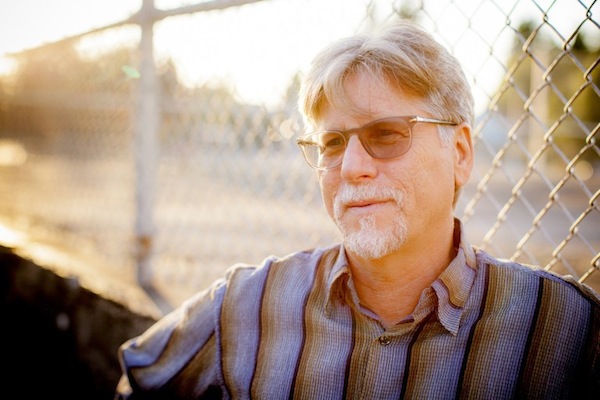
Shepherd Siegel, author of Disruptive Play. (photo by Laura Totten)

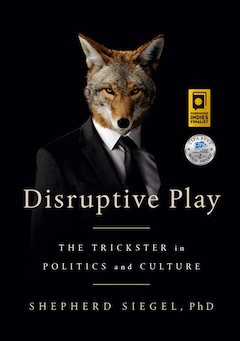
Shepherd Siegel is a hardcore idealist. At least, it would seem so, based on his book Disruptive Play: The Trickster in Politics and Culture (Wakdjunkaga Press, 2018).

“What if we didn’t take everything so seriously and capitulate to the competitions of war and business?” he writes. “What if we let our utopian dreams and desires out to play, out of the box? What if we did more than talk about it and constellated our lives around play and art instead of work and commerce?

While all about play, Siegel’s 358-page analysis is more academic than whimsical. A writer, musician and educator, he earned his doctorate at University of California Berkeley and has more than 30 publications to his credit. Quickly into the book, he admits the inherent difficulties in writing on this topic: “By attempting to put play, an irrational activity, into the rational fictions of words, I fear that naming this magic will dispel it.” And, to some extent, it does, but his prose is clear and engaging; his examples well-explained and well-researched.

Siegel defines three types of play. Original play is what kids up to three years old do; it has no purpose except fun, it is spontaneous and creates a sense of belonging. Cultural play entails games with winners and losers; it involves learning skills through practise, it comprises rules and moral lessons. Disruptive play “disrupts the normal functioning of society”; it is “resistance to contest-based society and a public affirmation of the natural play element that pervades all life.”

Disruptive players – or tricksters – have existed throughout history, in both oral and writing-based cultures. Siegel gives some 25 examples, beginning with the trickster Wakdjunkaga, whose precise origins are unknown, but whose story comes from the Winnebago (or Ho-Chungra) tribe, “which emerged in northwestern Kentucky in roughly 500 BC. From 500 AD and for about a thousand years, they lived in what is now Wisconsin.” He ends with the Yes Men: “Jacques Servin and Igor Vamos are known by many aliases, but they are Andy Bichlbaum and Mike Bonanno when they are the Yes Men,” and they operate under the motto, “Lies can expose truth,” using guerilla theatre and other tactics, Siegel writes, to “embarrass and proclaim the sins of those who would wage unjust wars, destroy the environment, or cause the suffering and death of other people.”

image - Disruptive Play book coverSiegel discusses in depth several trickster tales from various parts of the world. He analyzes King Lear’s Fool, Bugs Bunny and The Simpsons in this context, as well as real people, such as Alfred Jarry, Marcel Duchamp, Andy Kaufman, Abbie Hoffman and others, and movements like dadaism in art, the Beat Generation in literature and rock and roll in music. He also offers a couple of models on which a play society could be based: the Fremont Solstice Parade in Seattle and Burning Man in Nevada.

While acknowledging that there are many problems in the world, Siegel foresees a time when society will be able to meet all of its members’ basic needs. When this time comes, he writes, “the greatest remaining problem will be one of establishing and maintaining societies of trust. Play, as we shall see, absolutely requires trust in order to thrive, even to exist.” However, until that time comes, disruptive play – which threatens power brokers and structures – is a dangerous venture.

“Playful adults, artists, the poor, people with disabilities and deviators are all sent to the margins,” writes Siegel. “From the 17th-century development of military tactics and the industrial revolution of the 18th century came a more prescriptive sense of the normal and the suppression of carnival celebrations and urges … thus the binding of the Trickster spirit. The concentration of power, by its very nature, requires divesting this spirit, treating the Trickster as the Fool or court jester. But eventually the Fool makes fools of those who would constrain, punish and repress Trickster spirit.”

Unfortunately, while most of the tricksters Siegel highlights do indeed have their time in the sun and they manage, for awhile, to speak truth to power and get people to question their values and society’s direction, their lasting impact has been minimal, even if they themselves have proven memorable. The potential for building a play society – given Siegel’s convincing argument that capitalism or commercialism and play are antithetical – is a long shot. The models of Fremont and Burning Man are small-scale, time-bound events and do not seem feasible as models for society as a whole, for any length of time.

That said, Siegel’s is an exciting vision. “As (and if) our society achieves economic, environmental and social balance, the search for a meaningful life will take on greater importance and become more complex,” he writes. In this utopia, play, which “has meaning but not purpose … is the perfect antidote for existential crisis in a world of questionable purposes. Only by entering a state that discards purpose – that plays – might our true purpose be discovered.”

Jewish films span the globe

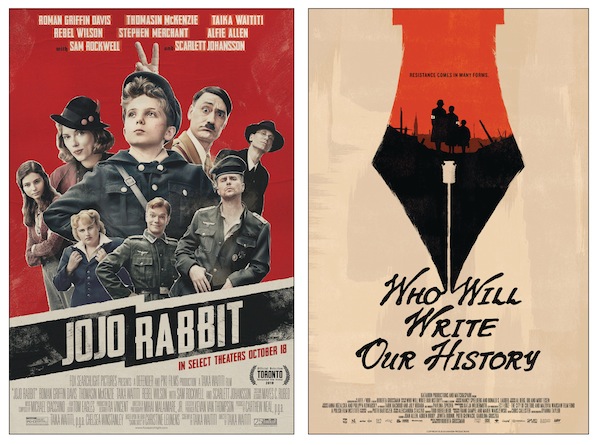
Taika Waititi’s Jojo Rabbit and Roberta Grossman’s documentary Who Will Write Our History were two standouts in Jewish film last year.

Last year was a busy one, but not a great one, for Jewish-related movies. There was plenty to see, but only a couple films – Jojo Rabbit and Uncut Gems – broke through the clutter to make an impact.

While Jewish characters were front and centre in high-profile TV shows – The Marvelous Mrs. Maisel, The Kominsky Method and Broad City – in movies, they were largely relegated to glorified cameos, such as Al Pacino as old-school agent Marvin Schwars in Once Upon a Time in Hollywood and Alan Alda as menschy divorce attorney Bert Spitz in Marriage Story.

Jewish artists and celebrities were, as always, exceedingly popular among documentary makers. Sammy Davis, Jr.: I’ve Gotta Be Me, televised on PBS’s American Masters, and Ask Dr. Ruth led the parade, which included less-widely-seen portraits of singer-songwriter Leonard Cohen (Marianne and Leonard: Words of Love) and actor Anton Yelchin (Love, Antosha).

Picking a Top 10 was a bit of a challenge for 2019. Here are the films that left a mark.

Jojo Rabbit: The most ambitious and audacious film of the year was made by a Maori Jew from New Zealand. Taika Waititi, the director of Marvel’s Thor: Ragnarok, radically adapted Christine Leunens’ novel into a sharp satire of Nazi racism and groupthink that garnered the San Francisco Bay Area Film Critics Circle Award for best screenplay.

Who Will Write Our History: My only criticism of Jojo Rabbit is that it didn’t convey the depth of the Holocaust’s horror. Roberta Grossman’s artful documentary about the men and women in the Warsaw Ghetto who secretly amassed an archive of documents and diaries that would survive (if they didn’t) fills in a missing historical chapter for people of all ages. (See jewishindependent.ca/a-different-kind-of-resistance.)

Prosecuting Evil: The Extraordinary World of Ben Ferencz: The last surviving U.S. attorney from the Nuremberg trials has an impeccable memory, a spotless moral compass and enormous gravitas. This terrific doc serves as an inspiring counterpoint to Matt Tyrnauer’s slick biography of another Jewish lawyer from New York, Where’s My Roy Cohn?, who lacked an iota of integrity.

Uncut Gems: What makes Howard run? Jewelry hustler and compulsive gambler Howard Ratner (Adam Sandler, impressively manic) races around New York City to keep his increasingly angry debtors at bay. En route, Benny and Josh Safdie’s nerve-jangling drama rips the Band-Aid off black-Jewish relations.

Mike Wallace is Here: Avi Belkin examines another iconic New York Jewish character, the penetrating TV journalist who made 60 Minutes essential viewing, entirely through archival TV footage. It is one of the smartest and best documentaries of 2019.

Synonyms: Nadav Lapid’s abrasive, semi-autobiographical drama about a self-loathing young Israeli army veteran’s effort to shed his identity in Paris won the Golden Bear for best film at the Berlin International Film Festival. It is painful and revealing, with some flashes of humour.

Tel Aviv on Fire: Sameh Zoabi’s clever comedy about a Palestinian soap opera writer trying to navigate the demands of his bosses and an Israeli checkpoint commander was one of nine (!) films with Jewish themes among the official submissions for the best international film Oscar.

Transit: German director Christian Petzold transposed Jewish novelist Anna Seghers’ 1944 story of refugees trying to flee France to an enigmatic time and place that has echoes of both the past and the present.

To Dust: Shawn Snyder’s debut feature explores the grief process through a Chassidic cantor (Geza Rohrig of Son of Saul) who wrangles a community college science professor (Matthew Broderick) into his obsessive investigation into how his wife’s body will return to dust. Meanwhile, his sons worry that he’s possessed by a dybbuk.

Fiddler: A Miracle of Miracles: A crowd-pleasing, by-the-numbers doc about the historical (shtetl life) and literary (Sholem Aleichem) roots, creative development and enduring cross-cultural popularity of the Broadway musical Fiddler on the Roof. Formulaic, but Jewish through and through.

Some of the best films of the year won’t open in North America until 2020. The Ophir Award-winner Incitement powerfully dramatizes the life of Yitzhak Rabin’s assassin, leading up to his irreparable act. Roman Polanski’s well-reviewed portrayal of the Dreyfus affair, An Officer and a Spy, has opened across Europe but awaits a North American distributor (a long shot given the likelihood of protests and boycotts).

Czech director Vaclav Marhoul’s harrowing adaptation of Jerzy Kosinski’s Second World War-set novel The Painted Bird is also on European screens, with a U.S. release likely now that it was shortlisted for best international film. In that eventuality, look for it during its brief run – and on next year’s Top 10 list.

Michael Fox is a writer and film critic living in San Francisco.


Let’s be more Jewish

It’s an inflammatory question. When attacks against Jews occur, as they are in increasing and alarming numbers in North America – including an incident of hateful graffiti at Camp Miriam on Gabriola Island recently – people ask why. Why Jews?

The problem with the formulation is that it suggests there is a justifiable answer to that question. It would be akin to asking, upon seeing statistics of domestic violence, why women?

Throughout the ages, scholars, pundits and philosophers have listed factors in Jewish theology and culture that confound, scare or irk others and contribute to antisemitic ideas and acts. The steadfast refusal to accept more dominant “successor” religions invites theological reactions. Adherence to cultural practices make Jews outsiders, to varying degrees, in every society. Jewish success in a range of fields invites envy.

But these explanations are all largely nonsense when it comes to the sorts of antisemitic acts we are seeing today. The primary explanation why, for so many people, it is all about Jews is counterintuitive – it is not about Jews at all.

For the most part, probably, the core motivation for engaging in racist and antisemitic acts has less to do with the victims than it does with the perpetrators. The definition of scapegoating is the assignment of sin or guilt onto an empty vessel that is then sacrificed. The hate and violence we are witnessing are almost certainly acts of scapegoating that reflect something amiss in the worldview of the perpetrators. These are people who identify problems in their lives or their world and seek an external entity to blame. Jews are history’s greatest scapegoat, regardless of our actual presence in any particular place. Notably, studies indicate that antisemitism is greatest in places where there are no Jews and it has perhaps always been thus. Shakespeare created the character Shylock hundreds of years after Jews were expelled from England, for example.

This is not comforting. If there were something more discrete motivating these incidents, perhaps they could be rationally contested. That the motivations are based on irrational projections makes them difficult to fight.

It is routinely said that Jews are the canaries in the coal mine of a society. The dehumanizing imagery this employs aside, it is undeniable that Western society today is experiencing some deeply troubling trends, from the emergence of “illiberal democracy” in the erstwhile democracies of Eastern Europe and Turkey to the stark chasms between partisans in still-healthy democracies. Rapid economic changes spark social and political reactions. The greatest migration of people on the planet in generations causes real or perceived threats to the status quo in the countries where these migrants are headed. And this is to leave aside the geopolitical dangers we face in relations with Iran, North Korea and many other flashpoints, as well as from decentralized terror groups that defy international boundaries. We are perhaps more surprised than we should be that, in the face of these developments and uncertainties, a number of people seek out that scapegoat of first resort: Jews.

As a result, stories are emerging of Jews going “undercover,” of being less inclined to be identified as Jewish in places like New York. There are other stories of Jews increasingly learning self-defence skills. Self-protection is primary in any situation and no one should be condemned for taking short-term measures in the midst of danger.

In the longer-term, though, there is an alternative to being (or appearing) “less Jewish.” If the root of this problem is not Jews, but disordered responses to a troubled world, then the answer, while not easy and most certainly idealistic, would be to be more Jewish, to embrace even more energetically a Jewish way of being and doing. We may not be able to change the distorted perspective of an antisemitic individual. But if, through our agency, we can promote fairness, tzedek (justice) and chesed (lovingkindness), we will advance a world in which people will not need to seek scapegoats.

Is it a fair burden that this labour should fall to Jews? Perhaps not. But maybe this is what we have been chosen to do in this moment in history.

A time to learn who we are

For many kids, camp is the only time they find themselves in a less structured environment. (photo from pixabay.com)

I remember the days when going to camp was the annual ritual, part of the summer holiday agenda. In our Winnipeg Jewish community, camps were standard practice. It seemed to me that all of my friends were going to be there, but there were always new faces. Some of them would prove to be the companions of my growing up.

Camp was there to free us from the constraints of everyday life, school and parental supervision. For some of us, being out there, in a natural setting, was the only time we ever found ourselves in a less structured environment, as most of us were city-dwellers. And there were always elements of Jewish culture to be shared.

But what I remember most of all was the consciousness that I was alone in a way different from the ordinary. I was in a cabin or a tent where most of my companions were strangers, at least at the start of the summer. Parents were far away. There was a counselor, but he or she was more like a referee than a parent. Whatever issues might arise between my companions and me, resolution would require direct negotiation without intervenors.

Here was an opportunity to test out our interpersonal skills and discover whether we would be leaders or followers, and in what areas did we have knowledge we could share. Here we could discover what issues might be important to us in person-to-person relationships. It had a different feel than our relations with siblings but with the intimacy of living together. We might even have to get into a physical fight if a conflict were grave enough. Would we allow someone to bully us? I certainly had to develop my capacities in these areas in my home environment.

In my case, I went the whole route: camper, counselor, program director. I can honestly say that the camping experience was my personal proving ground for skills I would hone and embellish throughout my life. In retrospect, I realize how important these occasions were for me.

I had the good fortune to attend a camp in my teen years that included subsisting for a few days in a wilderness environment. We hiked. We canoed. We even spent some time in a lake waiting for rescue when our canoe foundered in a sudden storm. I actually have started a fire by rubbing two sticks together. I have slept several nights in a forest with my companions listening to all the mysterious night sounds. We never saw a wolf or a bear, but we got to use copious amounts of mosquito repellent. I have lugged in the groceries and I have cooked food over an open fire. Potatoes are easy, but eggs are more difficult. The experiences were unforgettable.

Max Roytenberg is a Vancouver-based poet, writer and blogger. His book Hero in My Own Eyes: Tripping a Life Fantastic is available from Amazon and other online booksellers.

Many milestones for Wosk in 2019

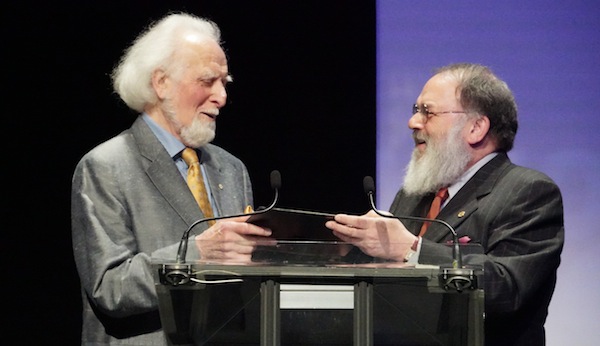
Dr. Yosef Wosk, right, with Max Wyman, 2017. (photo by Fred Cawsey)

The Yosef Wosk Poetry Initiative at the Jewish Community Centre of Greater Vancouver, which began in 2009, marked its 10th year with a celebratory gathering of artists and poets and with the publication of a commemorative book earlier this year. In addition, the Yosef Wosk Poets’ Corner, along with the adjacent Poet Laureates Garden, was inaugurated on the newly renovated top floor of the downtown central Vancouver Public Library – it was named in recognition of Dr. Yosef Wosk’s decades-long support of the VPL.

Wosk was an early major donor to the redevelopment of the eighth and ninth floors and the roof of the central branch of VPL and was asked to serve as honourary chair of the VPL campaign in 2018/19. The architect for the renovations, as for the library itself, was Moshe Safdie, while Cornelia Hahn Oberlander designed an extensive garden to complement her roof garden that crowns the award-winning structure.

In the library world, Wosk – who has established more than 400 libraries on all seven continents over the past 20 years – was able to fund more than 50 new initiatives in 2018/19, including 20 libraries in remote Himalayan villages and 37 in Jewish communities throughout the world.

As a writer and publisher, Wosk’s work has appeared in a number of publications. Most recently, these include having curated and written the preface for Memories of Jewish Poland: The 1932 Photographs of Nachum Tim Gidal, featuring photographs by Gidal from Wosk’s and the Israel Museum’s collections (Gefen Publishing, Jerusalem and New York, 2019). He also initiated and funded a biography, written by Christopher Best, of Faye Leung, the effervescent pioneer in the Chinese and real estate communities, affectionately known as the Hat Lady (Warfleet Press, 2020).

Wosk’s essay “On the Wings of Forever” was published in the online Ormsby Review this year in collaboration with the Canadian Academy of Independent Scholars. The editor’s preface notes that: “With prose as profound and learned as it is clear and accessible, here Wosk examines and appreciates the role of museums and museum workers in the digitizing modern world. It’s not gloom ’n’ doom. Instead, he outlines what he calls ‘a stirring vision, one of innovative technology on a human scale, heart-centred and soul-sized.’”

In collaboration with the Canadian Museums Association, Wosk helped transform the President’s Award into the President’s Medal; he also commissioned the medal and wrote the introduction in the booklet that accompanies the honorific, which was first awarded in 2019.

The province-wide Max Wyman Award for Critical Writing in the Arts, which was inaugurated by Wosk in 2017, formed an alliance this year with the VIVA Awards (the Shadbolt Foundation), which will begin in 2020.

In academia, Wosk was reappointed this year as an adjunct professor in humanities at Simon Fraser University and completed four years as a Shadbolt Fellow at SFU, where he was recently named a Simons Fellow.

During the year, Wosk served on 11 boards in the Jewish and general communities in areas such as education, medical research, museums, libraries, literature, business and the arts. These boards have included the Vancouver Holocaust Education Centre, Schara Tzedeck Cemetery Board, CHILD Foundation, Museums Foundation of Canada and Pacific Torah Institute. He was also an ambassador for the Vancouver Sculpture Biennale and is completing a second term with the B.C. Arts Council.

Living’s Jewish aspects

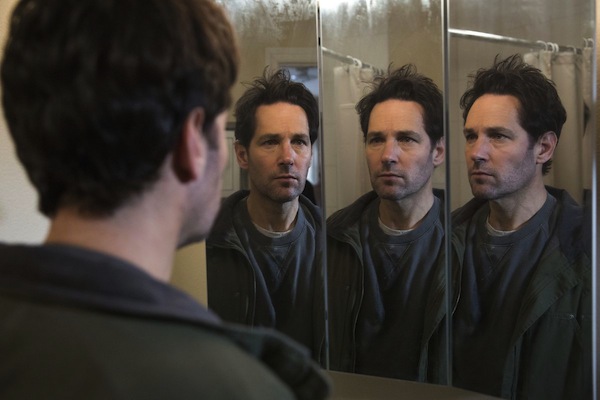
A still from the Netflix show Living With Yourself, co-starring Paul Rudd.

As the secular New Year approaches, many people make resolutions, in an effort to become a better person. What if there were a shortcut? What if, for a tidy sum, you could be transformed, virtually overnight, into the person you’ve dreamed of being?

This the conundrum posed by the Netflix show Living With Yourself, an eight-part series released in late October, starring Paul Rudd and Aisling Bea, who play spouses Miles and Kate Elliot. Rudd is also one of the executive producers.

The premise is this: Miles, a shlub discontent with and disconnected from his wife, and suffering career ennui, discovers a “spa” that offers a treatment to improve his charm and confidence. For a small fortune, they promise, a “new you.” And so, a shlemiel enters and a gentleman exits. Just one problem: [spoiler] it’s actually a cloning lab and, unbeknownst to Miles and Clone Miles, the two men exist and, later, each must contend with the other in his life.

Rudd’s 25 years of movie experience includes Ant Man, Anchorman, Knocked Up, 40-Year-Old Virgin and Clueless. On television, he played Mike Hannigan in Friends and appeared in Reno 911, among other things.

The New Jersey-born actor hasn’t been shy in publicly discussing his Jewish identity. He kibitzed a bit about his Jewishness in an interview segment of Between Two Ferns. In an episode of Finding Your Roots, he found out that his grandfather, Davis Rudnitsky, fought the Nazis, only to return home to England to face antisemitism. In 2017, Rudd played his first (overtly) Jewish character, Moe Berg, in the biopic The Catcher Was a Spy, about a baseball player who joins the Second World War effort as an undercover agent.

In Living With Yourself, there is one explicit Jewish moment, when a Holocaust survivor tells Miles an off-colour anecdote about the Shoah, involving pork. But there are also hidden Jewish themes. For example, envious of a colleague’s extraordinary success in the office, Miles is spurred by the prospect that his technological makeover could help him outperform this coworker. Though Judaism has no problem with someone being motivated to accomplish because of another’s success, the Torah warns against jealousy. The ninth commandment is one obvious caution against such sentiment: “Thou shalt not covet.” Another is Joseph’s brothers (Genesis 36), who, enraged with jealousy, sell Joseph into slavery. In a sense, Miles and Clone Miles are like brothers, and they develop petty and spiteful jealousies, wanting the best of both worlds, but not able to have it.

If only Miles initially had derived fulfilment and was grateful for what he had, he wouldn’t be in this much trouble. Ethics of Our Fathers (Pirkei Avot) (4:1) advises just that: “Who has wealth? The one who is pleased with his lot.” The meaning isn’t limited to “wealth” of materials, of course, but the wealth of blessings that are bestowed upon us, including, for most of us, our loved ones, our safety, our employment and access to the necessities of life.

Notably, though, Miles versus Clone Miles is illustrative of the yetzer hara (good inclination) and the yetzer hatov (bad inclination) at battle with each other. Interestingly, neither character is completely good nor bad, but a combination, reflecting the real, complicated, human condition, where we have both inclinations competing inside us.

Often, we are able to convince ourselves of the nobility of our decisions – that is, find a good reason for our perhaps less-than-good action; explain away the importance of a choice’s potential harm. Paradoxically, the yetzer hatov has a sneaky side. To explain this, author and radio host Dennis Prager often cites the late Rabbi Wolfe Kelman, former head of the Conservative rabbinate. He once told Prager that he had his yetzer hara under control, but his yetzer hatov “always got him into trouble.”

Rarely do ordinary people wake up each morning and strive to make another human miserable. Still, we must wrestle with our “other” selves, overcome our justifications and egos, to make principled choices. Every day is a lesson in living with ourselves.

Dave Gordon is a Toronto-based freelance writer whose work has appeared in more than 100 publications around the world.

Camp should be “wow!”

Hanging out around a campfire with friends is one of the things many kids love about summer camp. (image from pxhere.com)

Every year when I was a child, the first day back at school after the summer break, we’d be expected to write an essay on “What I did during my summer holidays.” Back then, my family were so poor I rarely did anything much, but I was blessed with a fertile imagination so I concocted an amazing list of activities. After all, the first rule for a writer, which was my ambition even then, is never to let the truth interfere with a good story. Oh, how I would have loved to go to a summer sleepaway camp.

Fortunately, times have changed and my kids and various grandchildren have had that opportunity. So, I’ve rounded up relatives, kids, their friends and my friends, to ask what they loved and hated about summer camp.

These are some of the reactions I got in the “hate” department. “The toilets and showers – ugh!” “The mosquitoes, which feasted on my blood every day.” “My girlfriend, who was prettier than I was, got all the boys interested in her, especially the one I liked.” “The others were better at sports than I was, and I couldn’t swim. They laughed at me.”

None of those I quizzed however, failed to have lots of reasons to list under “things I loved.” “We put on a musical at the end of camp, and we did everything, including painting the scenery. It was great!” “Parents Day, when they would visit the camp and bring us wonderful things to eat, that they rarely bought for us at home. The chocolates were divine.” “I learnt all kinds of crafts, that I still do sometimes. We were taught basketry, jewelry-making, ceramics and how to press flowers.” “One day, we had a Backwards Day – it was terrific fun. We even wore our clothes inside out.” “I loved the campfires, under the stars. We’d sing together, roast potatoes and onions, it was heaven. I can still remember the feeling of being among friends under a sky filled with stars, and the wind in the treetops. I think that was true happiness.”

Whether or not a camp will be a positive experience for a child largely depends on the parents’ preparation. Don’t send them to a camp you once attended and enjoyed without considering how the camp may have changed or the difference between your needs and desires and those of your child.

Think about what your child needs – to learn new skills, develop more self-confidence and independence, maybe to improve proficiency in certain areas. For the latter, there are lots of specialty camps such as tennis, horse-riding, hiking, adventure, backpacking or gymnastics.

The camp you choose will depend on the age and level of independence of the child. The first sleepaway camp can be very frightening for a young child and sometimes the best way to prepare them is to take them beforehand to the campsite and explain all the activities that will take place there.

Teenagers usually welcome escaping home and discipline for awhile and spreading their wings. No matter what the age, you need to consider and investigate the accessibility of the camp, its medical facilities and security arrangements. You also need to consider any fears your child might have, such as if a below-average athlete will feel comfortable trying new skills and be allowed to work on them at their own pace. Often it helps if they have a friend or two among the campers and, of course, try to meet the counselors to assess that they are competent and sympathetic.

A camp has the potential to offer a child many positive and rewarding experiences. They can be fun, healthy and relaxing. Many of the programs provide an opportunity to develop new skills, and become more responsible and independent. The main reaction I got from kids who’d been to a good camp was: “Wow! It was great. I want to go again this year!”

Dvora Waysman is a Jerusalem-based author. She has written 14 books, including The Pomegranate Pendant, which was made into a movie, and her latest novella, Searching for Sarah. She can be contacted at dwaysman@gmail.com or through her blog dvorawaysman.com.