Skip to content
  • Home
  • Subscribe / donate
  • Events calendar
  • News
    • Local
    • National
    • Israel
    • World
    • עניין בחדשות
      A roundup of news in Canada and further afield, in Hebrew.
  • Opinion
    • From the JI
    • Op-Ed
  • Arts & Culture
    • Performing Arts
    • Music
    • Books
    • Visual Arts
    • TV & Film
  • Life
    • Celebrating the Holidays
    • Travel
    • The Daily Snooze
      Cartoons by Jacob Samuel
    • Mystery Photo
      Help the JI and JMABC fill in the gaps in our archives.
  • Community Links
    • Organizations, Etc.
    • Other News Sources & Blogs
    • Business Directory
  • FAQ
  • JI Chai Celebration
  • JI@88! video

Recent Posts

  • עשרים ואחת שנים להגעתי לונקובר
  • Eby touts government record
  • Keep lighting candles
  • Facing a complex situation
  • Unique interview show a hit
  • See Annie at Gateway
  • Explorations of light
  • Help with the legal aspects
  • Stories create impact
  • Different faiths gather
  • Advocating for girls’ rights
  • An oral song tradition
  • Genealogy tools and tips
  • Jew-hatred is centuries old
  • Aiding medical research
  • Connecting Jews to Judaism
  • Beacon of light in heart of city
  • Drag & Dreidel: A Queer Jewish Hanukkah Celebration
  • An emotional reunion
  • Post-tumble, lights still shine
  • Visit to cradle of Ashkenaz
  • Unique, memorable travels
  • Family memoir a work of art
  • A little holiday romance
  • The Maccabees, old and new
  • My Hanukkah miracle
  • After the rededication … a Hanukkah cartoon
  • Improving the holiday table
  • Vive la différence!
  • Fresh, healthy comfort foods
  • From the archives … Hanukkah
  • תגובתי לכתבה על ישראלים שרצו להגר לקנדה ולא קיבלו אותם עם שטיח אדום
  • Lessons in Mamdani’s win
  • West Van Story at the York
  • Words hold much power
  • Plenty of hopefulness

Archives

Follow @JewishIndie
image - The CJN - Visit Us Banner - 300x600 - 101625

Shoes with celebrity appeal

Shoes with celebrity appeal

Stuart Weitzman built up his father’s business into an empire. (photo by Phillip Pessar)

There are so many styles of women’s shoes, including the stiletto, platform, wedge, kitten, sling backs, peep toe, mule or sneakers. Unlike our favourite outfits, the fit of our shoes doesn’t change much in relation to our waistlines. A great pair of shoes can boost our confidence and turn a “shlumpy” outfit into something eye-catching. Marilyn Monroe declared, “Give a girl the right pair of shoes and she can conquer the world.”

Renowned designer Stuart Weitzman was born into a shoe business family. But, while his father had started a shoe company in Massachusetts in the 1950s, Weitzman’s goal was a career on Wall Street and he went to and graduated from the Wharton School. However, after his father died, he started to make the transition from talented hobbyist sketcher to acclaimed shoemaker. His strong work ethic coupled with an eye for style created the prevailing Weitzman empire. His designs flew off the shelves of upscale stores and filled pages of top fashion magazines.
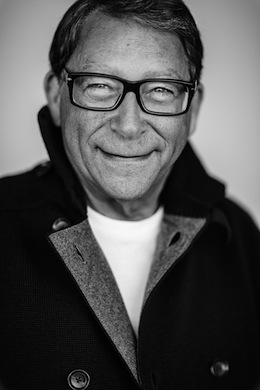
photo - Stuart Weitzman
Stuart Weitzman (publicity photo)

In 1971, Weitzman partnered with a Spanish shoe factory, Caressa. In 1986, Weitzman bought all the shares from his Spanish partners and became independent. Success over the years led to Weitzman’s ownership of nine factories throughout Spain, which granted him the ability to keep his upscale shoe brand at a price 30% to 50% lower than that of his contemporaries. At his peak, Weitzman owned 120 private boutiques and sold globally in department stores.

Fifty years in the business has attracted a large following of shoe enthusiasts to Weitzman’s creations, including celebrities like Beyoncé, Kim Cattrall, Jennifer Aniston and Taylor Swift. In 2002, Weitzman fashioned a pair of million dollar shoes, almost literally dripping in diamonds, worn by actress Laura Harring to the Academy Awards. He also designed the most popular nude sandal worn among celebrities, which has become a classic and essential for many women.

Weitzman sold his company to Coach for an estimated $574 million in 2015. At the age of 76, he remains the creative director. It is now Weitzman’s wish to find a successor, as his two grown children, Rachel and Elizabeth, have chosen different routes.

Weitzman and his wife, Jane Gershon, worked together to build the business. Together, they also became philanthropists, donating to many causes, but also establishing the foundation Pencils of Promise, which focuses on opening schools in Ghana, Laos and Guatemala.

Weitzman and Gershon are passionate about their Jewish roots and work to ensure the future of Jewish communities and Jewish heritage. Consequently, a substantial amount of their contributions and time commitments revolve around Jewish institutes and causes around the world.

Weitzman, an avid ping-pong player, participated in the Maccabiah Games in Israel in 2009 and 2013. Also in 2013, he made a donation of $1 million to Maccabi USA. “My participation in the Maccabiah Games was one of the greatest experiences of my life!” he has said.

A man used to working 16-hour days in a creative environment doesn’t seem set on a quiet retirement. The list of projects he has planned is long. A top priority is constructing a Jewish museum in Madrid dedicated to Spanish Jewry. On the horizon is producing a Broadway musical with Sir Trevor Nunn about the life of Andy Warhol.

Just in case the wedding superstition is true, let us do as the bride is advised – whatever our footwear, let us remember to exit with our right foot first to ensure a lucky day.

Some shoe facts

  • 40,000 years ago, it seems, people began wearing shoes
  • the first women’s boot was made for Queen Victoria in 1840
  • sneakers were first made in America in 1916
  • heels were added to shoes in the Middle East to lift the shoe from the burning sand
  • Marie Antoinette had 500 pairs of shoes
  • the only shoe museum in North America is the Bata Shoe Museum, in Toronto
  • gold and silver coins placed inside a bride’s wedding shoe is an old Swedish custom
  • Chinese brides throw one of their red bridal shoes to the roof of their house to ensure the couple’s happiness
  • Altocalciphilia is the name for having a high heel fetish

Ariella Stein is a fashion writer based in Israel.

Format ImagePosted on September 7, 2018September 6, 2018Author Ariella SteinCategories Visual ArtsTags business, fashion, shoes, Stuart Weitzman
Relish the New Year’s apples

Relish the New Year’s apples

(photo by Jonathunde)

Although summer is still in full swing, apples come into the markets here in Israel before Rosh Hashanah. I love apples; they are probably my most favourite fruit, especially in fall and winter. Here are some apple recipes for your holiday table.

BAKED APPLE RELISH
I found this recipe in a women’s magazine 40 years ago but it still makes a good accompaniment for chicken or meat.

6 small baking apples, core removed, scooped out insides leaving a shell, setting the scooped out insides in a bowl
2 tbsp butter or margarine
1 cup chopped onions
1 cup chopped tomatoes
1/4 cup raisins
1 tbsp chopped fresh ginger or 1/2 tsp ground ginger
1/4 tsp dry mustard
4 tbsp red fruit preserves
4 tbsp cider vinegar
1/4 tsp crushed red pepper (optional)

1. Preheat oven to 400°F.

2. Melt butter or margarine in a large frying pan. Add onion and sauté five minutes.

3. Add chopped apples, tomato, raisins, ginger, mustard, one tablespoon preserves, one tablespoon vinegar, and red pepper, if using. Cook five minutes or until mixture starts to thicken.

4. Spoon into hollowed out apples. Arrange apples in a shallow baking pan.

5. Add remaining preserves and vinegar to frying pan and heat a few minutes. Pour over apples.

6. Bake for 30-45 minutes.

HONEY AND APPLE CAKE
I found this recipe of an Israeli chef from a Bnei Brak bakery in a local newspaper. It makes two loaves.

4 eggs
3/4 cup sugar
3/4 cup oil
1 cup honey
2 1/2 cups flour
1 tsp baking powder
1 tsp baking soda
1 cup strong fruit tea
1 tsp cinnamon
1 tsp ground ginger
1/4 tsp ground cloves
2 to 3 green apples, cut into small cubes

1. Preheat the oven to 350°F. Oil two loaf pans.

2. In a mixing bowl, beat eggs and sugar for two minutes in a mixer at medium speed. Add oil then honey and mix.

3. In another bowl, mix flour, baking powder, baking soda, cinnamon, ginger and cloves.

4. Add to egg-sugar-oil-honey mixture. Mix until smooth.

5. Add tea and apples and mix.

6. Pour batter into two loaf pans. Bake for 40 minutes.

MY FAVOURITE MICROWAVE APPLE CHUTNEY
I make this chutney for our favourite fish curry, but it can be used with other dishes as well. Makes two cups.

1/3 cup chopped lemon
1 chopped garlic clove
1 2/3 cups chopped apples
3/4 cup brown sugar
1/2 cup raisins
1 tbsp ground ginger
dash chili powder
2/3 cup cider vinegar

1. Place all ingredients in a microwavable dish. Microwave four minutes.

Sybil Kaplan is a journalist, lecturer, book reviewer and food writer in Jerusalem. She created and leads the weekly English-language Shuk Walks in Machane Yehuda, she has compiled and edited nine kosher cookbooks, and is the author of Witness to History: Ten Years as a Woman Journalist in Israel.

Format ImagePosted on September 7, 2018September 7, 2018Author Sybil KaplanCategories Celebrating the HolidaysTags apples, recipes, Rosh Hashanah
The mitzvah of challah

The mitzvah of challah

On Rosh Hashanah, the challah is round and sweet, symbolizing our collective wish for a good, sweet year. (photo by Przemyslaw Wierzbowski)

It was two years ago that I fell in love with challah. I attended a challah baking workshop at a Jewish retreat and, at that point, the extent of my challah knowledge was that it’s sold in delis, comes in a plastic bag with a twist tie and makes great French toast. I was a challah virgin. This was around the same time that I was test-driving a more observant Jewish life, and figured it behooved me to learn more about our people’s famous braided egg bread. Little did I know how profoundly the workshop would affect me.

There we were, 40 or so Jewish women, up to our elbows in yeast dough, patiently following the instructor’s directions. She explained what each ingredient symbolizes, and how making challah each week is an auspicious time for Jewish women to pray for what they want and need. I was hooked. When it came time to make the blessing over the challah, that’s when I lost it, and became emotional. Something about a sisterhood of Jewish women gathered around tables doing something their mothers and grandmothers had been doing for generations struck a chord deep within me.

As I said the blessing, with my eyes closed and my hands atop the soft dough – “Baruch atah Adonai, Eloheinu, melech ha’olam asher kidshanu b’mitzvotav v’tzivanu, l’hafrish challah” – tears poured down my cheeks like they would never stop. The woman sitting next to me (almost a complete stranger) heard my sniffling and put her arm around me. I’m sure she was puzzled by my tearful response and, truth to tell, I was embarrassed, but I was overcome and just couldn’t help myself. Somehow, the mitzvah of making challah, and all that it symbolizes in our collective identity as Jewish women, hit me.

It mattered, in a deep-seated way, that I was part of something much bigger than myself – something inextricably tied to my Jewish roots, something to which I had paid scant attention over the years. I knew this activity would become a meaningful part of my life from that moment on. Challah is far more than just a food to sustain my family and me physically. It fills us spiritually as well. And that’s the most beautiful taste in the world.

Long story short, I now bake challah on a regular basis, for others and myself. It reminds me of who I am at my core. It draws me closer to my community of Jewish friends and acquaintances, and places me smack in the middle of what is real and true – my Yiddishkeit. Who knew that combining a few essential ingredients could produce such an inexplicable gift in my life?

It’s no secret that every Jewish custom is significant on a spiritual level. With Rosh Hashanah approaching, I set out to learn how to make one of the many unique symbols of the Jewish New Year – the round challah. The rest of the year, we make braided challot and dip them in salt, but, on Rosh Hashanah, the challah is round and sweet, symbolizing our collective wish for a good, sweet year. Its circular shape, which represents the cycle of life, has no beginning and no end, thereby symbolizing the continuity of the Jewish people. You could also say it’s a metaphor for the endless blessings that God sends us. Another interpretation is that the round challah resembles a crown, symbolizing the supreme power and authority of God.

As Rosh Hashanah nears, it’s a time for personal introspection and the beginning of our individual and collective teshuvah (return or repentance). We get ready to reflect, repent and ask for forgiveness. It’s a time to elevate ourselves and direct our thoughts and deeds toward a higher, more purposeful end. At precisely this time, when our thoughts turn to repentance and resolutions for improvement, the round challah reminds us that the opportunity for teshuvah is never-ending. This Rosh Hashanah, may we all be successful in elevating ourselves from our current reality into a higher, more spiritual state of being, on both an individual and collective level.

For those of you who want to learn more about the significance of baking challah, there’s a fascinating book called The Mitzvah of Challah by Esther Rivka Toledano (ArtScroll Mesorah Publications, 2018). The author dives deep into what is undeniably a mitzvah granted especially to women. She shares the history, the halachic (Jewish legal) guidelines, several recipes and lots more. The book goes far beyond the basics for those who really want to understand and embrace the mitzvah of challah.

May we all have a sweet, happy, healthy and prosperous New Year. L’shana tova u’metuka!

Shelley Civkin is a happily retired librarian and communications officer. For 17 years, she wrote a weekly book review column for the Richmond Review, and currently writes a bi-weekly column about retirement for the Richmond News.

Format ImagePosted on September 7, 2018September 6, 2018Author Shelley CivkinCategories Celebrating the HolidaysTags baking, challah, history, Judaism, Rosh Hashanah, tradition, women
A High Holidays stew

A High Holidays stew

A sudden powerful gust of wind whipping through an open window slammed the door shut…. (photo from wikiHow)

It was one of those hot and humid fall days in Montreal and my sister-in-law “Sadie” decided to make a stew. After all of her baking and cooking for the upcoming High Holidays, she put a pot of simple stew for today’s dinner on the stove to simmer while my brother, “Seymour,” and I made ourselves comfortable in the den. Sadie promptly joined us to watch Coronation Street, as she and Seymour did every day. As a visitor from Winnipeg, I was quite content to go along with their routine. Engrossed in the program, we didn’t notice a change in the weather until a sudden powerful gust of wind whipping through an open window slammed the door shut between the den and the kitchen aaaand … waaaait for it … the doorknob hit the hardwood floor with an earsplitting bang!

We stared in stunned silence at the door and the floor – then at each other in disbelief. Seymour’s expression looked more steamed than the stew in the pot. His face fumed frustration, turning a range of shades from pink to red to purple.

“That doorknob has been giving us trouble for weeks!” he shouted. “I’ve told the concierge of our apartment building umpteen times but he still hasn’t gotten around to repairing it.” Anger spewed forth like an explosion of fireworks.

Well, Sadie saw no problem.

“Just pick it up and screw it in,” she told him in a matter-of-fact manner.

Though he didn’t say anything, his eyes shot daggers in her direction. Then he turned his attention to the doorknob. Over and over, he tried. He twisted and turned it every which way, trying to thread one half with the other. But it wouldn’t work.

“What’s the big deal?” she asked.

“The big deal,” he oozed with sarcasm, “is there’s nothing for it to grab onto. It won’t screw in.”

Now I began to stew a little. We searched for something that could be used as a tool and the best we could find was a coloured pencil but it proved to be uncooperative. After numerous failed attempts, we had to face facts. We were locked in! And there was no phone in the den.

Worry grew to panic. A quick glance between Sadie and me communicated silently with the realization that, not only would the stew continue to simmer on the stove unattended, but Seymour was diabetic and would need to take his insulin shot soon. He was too focused on the doorknob to consider the ramifications of the situation and no one was going to tell him. He would become hotter than the combined temperature of the room and the stew in the pot.

Never mind that he was wearing nothing more than a pair of Fruit of the Loom boxer shorts, which had to be held up manually. The elastic waistband had stretched beyond usefulness. Seymour began to pace around the tiny room, circumventing the furniture, one hand on his shorts, with the two of us following behind like caged animals. The vision of a sitcom popped into my head, and it would have been laughable had the situation not been a reality at the time.

More than an hour passed and we were orbiting the room once again, hoping for a solution. The suffocating humidity was unbearable and Seymour was sweating profusely. This triggered the panic button for Sadie and me and we did what any trapped humans would do. We banged and kicked furiously on the wall of the adjacent apartment and screamed at the top of our lungs.

“Why is it that neighbours complain about the sound of footsteps in slippers but are deaf to purposeful, raucous noise?” I wondered out loud. I could see beads of sweat begin to gather on Sadie’s brow and I knew it was more than just the temperature.

More time slipped by. We turned our attention to the only alternative – the window. The apartment was two storeys up at the rear of the building, which offered an emergency exit on the main floor. Pedestrian traffic was rare.

“I can jump out the window,” offered 68-year-old osteoporotic Sadie in desperation. “There’s a soft cushion of grass below. I may break a few bones but it won’t kill me.”

“Are you crazy?” we shouted.

For a brief moment, I considered flinging my own osteoporotic self out the two-storey window but a quick reality check from my cohorts reminded me my situation was no different.

“Maybe our little group should start the Day of Atonement today because this is ‘the day’ we really need it?” offered Sadie.

Suddenly, from our window view, we saw a man appear at the emergency door. A frantic Seymour leaned out the window and shouted, “Help! Help!” That was our cue to raise the volume and we chimed in chorus to increase the decibels – to no avail.

“Maybe he doesn’t understand English,” suggested Sadie (as if our frantic cries needed interpretation).

“Well, what language would you like to try?” quipped Seymour.

“I don’t know. Try French.”

So, the three of us bellowed like bulls, “Aider! Aider!”

The man looked up. Great! We had his attention. Then, just as suddenly, he disappeared through the emergency door without any acknowledgement to us. Now we were all in a stew. We were doomed.

Fifteen long, tortuous minutes passed before the sound of a key jiggling in the apartment door jolted our attention. Then the wife of the concierge removed the den’s door hinges, releasing us from our prison. With joy and relief, Seymour, still holding up his shorts with one hand, body soaking sweat as if he had just come out of the shower, embraced her with a one-armed hug and planted the wettest kiss on this angel of mercy.

In the calm aftermath, Seymour took his insulin and we all sat down to relish our evening meal. We never did find out who the stranger at the emergency exit was that day so we could thank him. A visitor, we were told, just passing through.

And the stew? Well, it was just right – tender and moist. Bon appetit! And shana tova.

Libby Simon, MSW, worked in child welfare services prior to joining the Child Guidance Clinic in Winnipeg as a school social worker and parent educator for 20 years. Also a freelance writer, her writing has appeared in Canada, the United States, and internationally, in such outlets as Canadian Living, CBC, Winnipeg Free Press, PsychCentral and Cardus, a Canadian research and educational public policy think tank.

Format ImagePosted on September 7, 2018September 6, 2018Author Libby SimonCategories Celebrating the HolidaysTags family, High Holidays, storytelling
Every year, a new beginning

Every year, a new beginning

Barring disaster, this season’s apple harvest would be bountiful. (photo from maxpixel.net)

“I don’t want to do my job any more.” That loud thought just popped into Rabbi Yohon Abrahms’ head.

It was dawn, and the birds were singing. He was lying in bed alone, staring up at the whitewashed wooden ceiling of his small house. Alone.

Summer in Chelm had been hot, with enough rain to produce a bumper crop of wheat, rye, corn, squash, barley and buckwheat. Hard work. Lots of sweat. In a small village like Chelm, when it was time for ingathering, all hands, even the rabbi, joined in the work. From daybreak to dark for nearly a month, the fields had been full of neighbours working and laughing and complaining.

The whole world thought that everyone in Chelm was always happy but, of course, there was complaining. As Rabbi Kibbitz, the wise old man, often said, “Kvetching is one of the greatest pleasures in life! It’s free and opportunities are plentiful. Anyone can kvetch! And you should!”

The harvest was hard. Back-bending, blister-raising, mind-numbingly repetitive tasks. Reach, cut, lift, wrap, tie, and a small sheaf of buckwheat stood in the field, drying under the sun. Bend, grasp, twist, pick, turn, place the cucumber in a basket. Curse the sharp thorn that poked through a hole in the worn leather glove. And repeat.

It had been bliss. For weeks on end, Rabbi Abrahms had lived in his community, outside his house, surrounded by fellows, outside his mind. All summer, he had not had a moment’s peace to think about his own problems. Instead, he’d rushed from field to field, with the occasional visit with Reb Schlum, the butcher, to perform his job as mashgiach, overseeing the ritual slaughter of chickens and cows. He barely had time to eat and, when he fell asleep at night, it was an exhausted and dreamless slumber that left him feeling eager and refreshed in the morning.

Yesterday, though, the last of the crops had been harvested. The fresh vegetables were on their way to market or into barrels for pickling. The seeds in the field weren’t dry enough to begin threshing.

“Enjoy your rest,” said Reb Cantor, the merchant, over his shoulder as he drove his cart toward Smyrna. “Rosh Hashanah is coming soon and, this year especially, Rabbi Kibbitz is going to need your help.”

The great Rabbi Kibbitz was old. He had always been old. When Rabbi Abrahms first moved to Chelm decades ago, Rabbi Kibbitz had seemed ancient. Now he was practically prehistoric, eating nothing but the healthy chicken soup made by his beloved wife, Mrs. Chaipul (she kept her name, which is another story). Rabbi Kibbitz was beginning to fail. Everyone knew it, but nobody would say it. Soon, beloved Rabbi Kibbitz was going to die.

“Chak, chak, chak.” A red-spotted bluethroat, pecked at a piece of straw outside Rabbi Abrams window. “Chak, chak.”

Rabbi Abrahms did not want to lead the Rosh Hashanah and Yom Kippur services by himself. For years, he had assisted, ready to take over whenever the senior rabbi got tired or needed a break. But Rabbi Kibbitz had been an indomitable bear of a man, davening his prayers from side to side in his peculiar fashion long after younger men grew weak and sat down for a rest.

Rabbi Abrahms did not want to stand on the bimah alone. Truth be told, he did not want to stand on the bimah at all. For years, he’d been picking at that scab, a sore spot in his thoughts, that perhaps being a rabbi was not for him.

It was nonsense, of course. He had studied hard to become a rabbi. He had moved to Chelm to accept the position. He had worked hard as a maschgiach and even harder to teach the stubborn children in the village’s small yeshivah. Being a rabbi had consumed his life. Of course, he was a rabbi.

He was 55 years old, and still the junior rabbi. What else could he be?

He was not married, something that the yentas in Chelm tutted him about regularly. As a younger man, he had loved and lost and, until it was necessary, he would not walk that road again. So he had no children to occupy his mind and time.

He had written some small books: a thin catalogue called The Wildlife of Chelm and the Nearby Black Forest, an English and Hebrew Haggadah that had been published by someone in America named Maxwell House, even a slender humorous novel in the style of the Russians. Writing, though, was not a job that would pay for eggs and tea and firewood.

“Chak, chak,” the bluethroat chided.

Foolish thoughts.

But, even after Rabbi Kibbitz left the world behind (may that day be distant), Rabbi Abrahms knew that he would always be the junior rabbi of Chelm.

It wasn’t the relative position or lack of prestige that bothered him. Rabbi Abrahms hated listening to other people’s troubles. He didn’t like cheering people up. He was bored with morning prayers, afternoon prayers, evening prayers and Sabbath prayers, let alone the special prayers for holidays and festivals. He dreaded officiating over wedding and bris ceremonies. Visiting the sick made him feel sick. And the idea of saying the Mourner’s Kaddish at Rabbi Kibbitz’s funeral left him weak and heartbroken.

Even being called Rabbi Abrahms chafed like a burr.

“My name is Yohon,” he whispered at the wall. “Can’t you see?”

Perhaps if he had mentioned his affliction to Rabbi Kibbitz a few years earlier, they could have worked something out. Put an advertisement in the Jewish newspaper in Pinsk for a new rabbi for Chelm. Or together found passages in the Torah or Mishnah that would have eased his mind.

But the great man was dying. Rabbi Abrahms shouldn’t trouble him.

Maybe he wouldn’t die this year. Maybe there would be time.

Barring disaster, this season’s apple harvest would be bountiful.

Sukkot was early, right at harvest time, and Rabbi Abrahms would take to the fields, climb the thin triangular ladder with a basket looped over his shoulder. Reach. Pick. Drop. Until the basket was full.

Then move the ladder to another tree, and begin again.

Every so often, he would stop, near the top of a tree heavy with fruit. He would lean against the trunk, take a bite of a crisp just-picked apple, and look up through the leaves at the wide, blue sky.

Mark Binder is a writer and storyteller, who lives in Providence, R.I. He is the author of more than 20 books and audio recordings, including The Brothers Schlemiel, a novel of Chelm. Follow him on Instagram, @MarkBinderBooks, or visit his website markbinder.com.

Format ImagePosted on September 7, 2018September 6, 2018Author Mark BinderCategories Celebrating the HolidaysTags Chelm, Rosh Hashanah, storytelling
To embrace teshuvah

To embrace teshuvah

“King David Playing the Harp,” by Gerard van Honthorst, 1622. All of the biblical heroes are imperfect, as are we. (photo from artsandculture.google.com)

One of the beautiful ideas behind Rosh Hashanah and Yom Kippur is the notion that we need to reflect, review and rethink who we are and what we have achieved in our lives. We should never see who we are and what we have created as the ultimate expression of who we ought to be. There must always be a gap between who we are and who we ought to be, between reality and our aspirations. When our aspirations are fulfilled, there must be something wrong with our aspirations.

This is the fundamental idea behind teshuvah and its challenge to us – to embark on a process of self-criticism and reflection. To embrace teshuvah is the ultimate aspiration of our humanity, for the highest level that humans can achieve is not one of fulfilling all our values, but of constantly maintaining a tension in which goals serve as a foundation to evaluate the lives we have created and to challenge us to move forward and beyond.

An expression of this idea is found in the biblical depiction of heroes, all of whom are imperfect. We are never given a hero who embodies everything. Sometimes, it’s embarrassing. The biblical heroes seem too human, permeated by too much imperfection. The Bible is teaching us that being a hero doesn’t mean that one is devoid of imperfections; it means that one must do something about those imperfections.

By elevating these people to be our ideal, it challenges us to emulate them. You are going to fail like Moshe or Avraham. You are going to sin like David. There are going to be multiple dimensions of your life, whether it’s in your worship of God, with your spouse, with your children or with your friends, where you’re not going to be who you ought to be. Welcome to the human story. Our religion has no fantasies about human beings. It has aspirations from human beings.

For human beings to embody the aspiration of self-criticism and reflection, it is not only the individual who must be open to change but also the societies within which we live. People around us often want us to remain who we are. People don’t want us to change. They have gotten used to and comfortable with our imperfections, for it gives legitimacy to theirs.

Some rabbis in the Talmud were deeply worried about the social pressure to maintain mediocrity and lock everyone within the status quo of their failings. As a result, in Tractate Baba Kama 94b we find the following teaching:

It once happened with a certain man (thief) who desired to repent and make restitution (to those from whom he stole). His wife said to him: “Fool, if you are going to make restitution, even the clothing which is on your back would not remain yours.” He consequently refrained from repenting. It was at that time that it was declared: “If robbers or usurers are prepared to make restitution, it is not right to accept it from them, and he who accepts it does not obtain approval of the sages.”

A thief’s desire to complete his or her process of self-correction by making restitution is clearly understood and valued. The problem is that this standard may inhibit them from beginning the process. A lifetime of harm cannot be erased and, as a result, may lock us in our imperfections under the argument that one can never really begin again. “Fool, if you are going to make restitution, even the clothing which is on your back would not remain yours.”

In response, the rabbis teach that we have a responsibility towards each other to enable these new beginnings. A Jewish society is one where we make sure that reflection, self-criticism, self-evaluation and the ability to accept new horizons and new ideas are things society fosters and encourages, even at a high cost. We are individually responsible to not merely refrain from hindering each other’s growth, but that we must be willing to forgo what is rightfully ours in order to ensure that our fellow citizens will grow and change.

A Jewish society is not simply characterized by a high level of kashrut or Shabbat observance. A Jewish society is one where we allow others to do teshuvah, where we are not threatened by others’ desires to move in a new direction. A Jewish society is one that understands that to be fully human is not to accept our failings: to be fully human is to aspire to overcome them.

Shana tova to us all.

Rabbi Dr. Donniel Hartman is president of the Shalom Hartman Institute and author of the 2016 book Putting God Second: How to Save Religion from Itself. Articles by Hartman and other institute scholars can be found at shalomhartman.org.


Format ImagePosted on September 7, 2018September 6, 2018Author Donniel Hartman SHICategories Celebrating the HolidaysTags Judaism, Rosh Hashanah, Torah, Yom Kippur
Seeing God’s humanity, our own

Seeing God’s humanity, our own

A mosaic of the Akeida in Bet Alfa National Park in Israel. (photo from hartman.org.il)

For many of us, the approach of the Jewish New Year offers an opportunity to take a moment from our harried lives to reflect on life’s “big” questions. It is a time for many of us – across the religious spectrum – to think about our relationships with ourselves and our families, with our tradition and with God. For those of us who choose to spend Rosh Hashanah in synagogue, the holiday offers the opportunity to participate in a communal reading of some of our most sacred and paradigmatic collective narratives, which in turn have the potential to illuminate some of our most pressing personal dilemmas.

Two of the most important biblical stories we revisit every Rosh Hashanah are the binding of Isaac (known in the Hebrew parlance as the Akeida) and Abraham’s argument with God regarding the fate of the inhabitants of Sedom. These two accounts represent two different religious anthropologies: one of sacrificial self-surrender and one of assertive moral challenge. As I have previously written, the personal moral empowerment displayed by Abraham in the story of Sedom – his insistence on his own ethical intuition and God’s acceptance, in turn, of those claims – is, for me, the foundation of the covenantal relationship.

The account of the Akeida, on the other hand, presents a distinct moral dilemma: How do we begin to understand a God who would ask His most loyal follower to sacrifice his beloved son? There are many ways to approach the theological puzzle that is the Akeida. This Rosh Hashanah, as we pause to examine not only our relationship to the divine, but our personal family relationships as well, I propose rereading the story of the Akeida by looking at God’s character through an anthropomorphic lens.

Before I begin describing God in human terms, however, it is important to remember that we have a long and deep tradition of doing so. The Bible is replete with images of God experiencing “human” emotions. Throughout the biblical narrative, we are presented with a God who is alternately angry, jealous or ego-driven.

During the Jewish people’s sojourn in the desert, for example, Moses, like Abraham before him, finds himself in the position of having to plead with God not to destroy a people – in this case, the Jews of the desert generation. The Bible describes God in nakedly human terms, as Moses finds that he has to, in some way, appeal to God’s ego. The Midrash describes Moses grabbing hold of God and saying to Him, “I’m not going to let you do what you want to do to the Jews.” Moses even appeals to God’s public relations considerations: he reminds God that He not so recently delivered this desert people from bondage in Egypt; if He kills them now, the other nations will say that He took them out of slavery only to slaughter them in the wilderness. Moses tells God in no uncertain terms that he will not help facilitate a people’s destruction.

Moses has to convince God not to allow His “emotions” to overpower Him, not to let His anger consume Him. This is but one example of many throughout the Bible and the Midrash of profound anthropomorphism, of portraying God as a character full of human weaknesses, with the potential to be both vulnerable and volatile.

In examining the story of the Akeida, we are compelled to ask, How could the God of the covenant – the God who promised Abraham that a great and multitudinous nation would emerge from his son Isaac – command that Isaac be killed? How are we able to understand the covenant in light of this seemingly unfathomable dictum? In attempting to understand the God of the Akeida, and what the Akeida might mean for us today, I have found it helpful to look at God as a parent.

God made the covenant with Abraham. But, after He did so, He got nervous, He suddenly felt scared. He had given over enormous power to human beings and He felt His ego being threatened. Thus, when God commands Abraham to “Take your son,” Abraham senses intuitively that it is not a moment in which to approach God with his moral claims. When God says, “Take your son,” Abraham understands that the God who is speaking – the God of the Akeida – is a God who experiences His own authority as under siege.

Abraham knows that the moment of the Akeida is not a moment for encounter or dialogue, but a moment that requires silence. It is a moment when Abraham knows that his only choice is to be quiet and submit. Abraham, a lover of God, senses the divine mood. When Abraham stood in front of God at Sedom, it was, in part, because he felt that it was a time when he could approach God; he sensed that God was in a willing position, that there was a possibility that He would be receptive to Abraham making covenantal demands.

Abraham’s response to God is analogous to a child’s response to a parent who the child knows is feeling challenged or threatened. There are times in a family’s life when a child knows intuitively – as Abraham knew intuitively – that there’s an opportunity for discussion, a moment when he can be critical of his parents, and his parents will be receptive to what he has to say. But there are other moments when a child understands that his parent is feeling insecure; moments when the mother or father is terrified of losing his or her authority. A child knows that is not the moment to try to encounter the parent in critical relationship; it’s not the moment to remind the parent that, in the past, he or she has encouraged critical reflection. That is a reality of family life: parents can become terrified of losing their position of power; they can become frightened that their children misjudge their encouragement of critical reflection as a negation of their parental authority. So, in some way, I attribute to God the same weakness or the same dilemma. He feels threatened. He feels that He must assert His power and test His child.

Before the Akeida, Abraham is referred to as ohavai elokim, a lover of God. Subsequent to the Akeida, he is referred to as yerei elokim, a fearer of God. The question we are faced with is why must God demand Abraham’s submission and fear? Why was his love not enough? To understand the God of the Akeida, we have to understand that God has conflicting forces within Him. The Midrash on the Akeida paints a very strange portrait of a God who says to the Jewish people, “Please pray for me. Please pray that my attribute of compassion will overcome my attribute of justice.”

Who is this God that must pray to human beings for help in overcoming His impulses? Who is the God that needs to ask human beings to remind Him of compassion? The Midrash illuminates for us the reality of a God who is struggling to reconcile the opposing forces within Him. It is my view that the Akeida is a moment of God’s struggle within Himself. God tests Abraham because of God’s own internal difficulty balancing justice with compassion, fear with love.

How can we talk about God experiencing an internal struggle? The great contemporary biblical scholar Yohanan Muffs argues that it is only in human terms that we can most authentically grasp the nature of the divine. I share Muffs’ view that God’s humanity, so to speak, is essential to a true understanding of Him. Yet it is not only 20th-century thinkers such as Muffs, Abraham Joshua Heschel and I who have portrayed God in starkly mortal terms. Drawing on the tradition of the Bible and the Midrash, the rabbis of the rabbinic period routinely discussed God as having an interior emotional life. While this approach did not fit in with medieval philosophy, which maintains that God cannot take on any human form, that any change or emotion in God is a sign of imperfection, the great figures of the rabbinic period were not frightened to speak of God in the language of human psychology.

It is this tradition that empowers me to think of God in terms of psychodynamic maturation: to cite His shift from being a figure of complete and total authority to a figure who works in concert with human beings. It is the deep rabbinical tradition of ascribing human qualities to God that enables me to see a God who decides to become accountable to human beings.

And it is this precedent of anthropomorphism in the rabbinic canon that informs my view of the God of the Akeida as a parent struggling with his identity, grappling with the competing values within Him. He loves Abraham and He has planned great things for him, but God is beset by his own internal dilemmas, by his own conflicting emotions. This is the God of the Midrash, the God who says to Moses, “Hold me back, Moses, I’m losing myself.”

If this is a bold way of discussing the divine, it is no bolder than the way the Bible itself discusses God. Rather than diminish God in our eyes, looking at God in human terms enables us to understand Him on a deeper level. The God who experiences emotion, who experiences internal struggle, is a God who can enter into a relationship of mutual accountability with human beings. The God who experiences His own psychodynamic reality is the God of covenantal spirituality.

This Rosh Hashanah, as we examine our relationships with our parents and our children, with ourselves and with our tradition, we are all faced in some form or another with the challenge of balancing compassion with justice, authority with love. As the Jewish New Year draws closer, let us allow ourselves to draw on the wisdom of our shared narratives as we struggle to reconcile the competing values within us.

Rabbi Prof. David Hartman (1931-2013) was founder of the Shalom Hartman Institute. Articles by Hartman, z”l, and other institute scholars can be found at shalomhartman.org.

Format ImagePosted on September 7, 2018September 6, 2018Author David Hartman SHICategories Celebrating the HolidaysTags Akeida, Judaism, Rosh Hashanah, teshuvah, Torah
הסוכן הכפול לשעבר של עיראק

הסוכן הכפול לשעבר של עיראק

סוכן המוסד לשעבר: “עזרתי לישראל לחשוף את תוכנית הגרעין של סוריה” – חלק שני. (צילום מחוסיין עלי סומדייה)

המשך הראיון עם הסוכן הכפול לשעבר של עיראק, ולאחר מכן של המוסד, חוסיין עלי סומדייה (53), שגר בקנדה ומנסה למנוע את גירושו בשנית לתוניסיה.

ב-2016 רשויות ההגירה החליטו בפעם נוספת לבדוק את תיק של סומיידה, בין היתר בטענה שלא כל המידע שנמסר להם מדוייק. הרשויות הגיעו למסקנה שבאקלים הפולטי הנוכחי לא יעונה לו כל רע בתוניסיה, ואף אחד לא יזכור את עברו. זאת בין היתר, לאור העבודה שתוניסיה לא משמשת עוד הבסיס של הארגון לשחרור פלסטין. סומדייה לא וויתר והגיש כאמור ערעור על עמדת הממשלה. הוא ממשיך לטעון כל הזמן כי כאחד ששיתף פעולה עם ישראל נשקפת לו סכנת חיים ממשית, אם יחזור למדינה ערבית כלשהי. סומדייה: “המילה המוסד היא המילה מפחידה ביותר והשנואה ביותר בעולם. כל אחד יודע שמי שקשור למדינה היהודית, יעשה לו לינץ’ על ידי ההמון ברחובות של כל עיר ערבית אליה יגיע”.

ספר לי מדוע הגעת בשנות ה-80 לאנגליה?

ב-1982 עת הייתי בן 17 נסעתי ללימוד באוניברסיטת סלפורד במנצ’סטר. באותם ימים אבי, עלי סומדייה, שימש שגריר עיראק בבלגיה. בחופשות הייתי מגיע לבריסל ונשאר ללון עם המשפחה.

הקשר עם המחובראת נוצר בין היתר בעקבות היות סומדייה בן השגריר. הוא מסר מידע למחובראת שהביא בין היתר לחשיפת כשלושים וחמישה איש ובני משפחותיהם. לדברי סומדייה כפי שצוטטו בעיתון הקנדי “הוא הוטרד מהעובדה שהוא עובד בעצם למען המפלצת סאדם ומכונת ההרג שלו, ולכן החליט לחצות את הקווים ולהתחיל לעבוד עם המוסד”. עוד טען כי במסגרת עבודתו עבור המוסד הוא אסף מודיעין על השגרירות של עיראק בבריסל, וכן ריגל אחרי סורים ופלסטינים.

מה הביא אותך בעצם לעבוד עם המוסד?

תחילה עבדתי עם המוחבראת אך לא יכלתי לסבול עוד את מה שהעריץ סאדם חוסיין עשה בעיראק. יכלתי לכן לפעול כנגד עיראק עם האיראנים, הסורים או הישראלים. עוד בתור ילד הדמות האידאלית עבורי הייתה של המרגל הישראלי בסוריה – אלי כהן שעשה היסטוריה, ורציתי להיות כמוהו. החלטתי שישראל היא האופציה הטובה ביותר עבורי וזה אכן מה שעשיתי. כמובן שעובדת היותו של אבי שגריר עזרה לי מאוד.

איך יצרת קשר עם המוסד באירופה?

ב-83 ביקרתי בשגרירות ישראל בלונדון ויבקשתי לדבר עם נציג המוסד. לאחר מספר ימים יצרו עימי קשר שני אנשי המוסד. יוסף שכמובן הוא שם בדוי, עמו נפגשתי בלונדון. וכן מי שהיה אחראי עליו אדם מבוגר יותר שדיבר ערבית במבטא עיראקי, שהגיע הישר מישראל. שני אנשי מוסד אחרים עשו לי בחינה בבית מלון בבריסל, בו נוהגו לשהות צוותי האוויר של אל על. במשך כחמש שעות שאלו אותי הרבה מאוד שאלות. ניסו לבדוק את איי. קיו שלי, הזיכרון, הדימיון, ידע במספרים ועוד.

איך התחלת לעבוד עימם?

לאחר שעברתי את הבחינה מונה לי מפעיל אחד בשגרירות ישראל בלונדון שנקרא מוריס, ומפעיל נוסף בשגרירות ישראל בבריסל שנקרא דניאל. אני קיבלתי את הכינוי אסד סייפי ובכל פעם שהתקשרתי לאחת מהשגרירויות, הם העבירו מייד את שיחת הטלפון לאחד המפעילים. הפגישות בלונדון התקיימו במלון באזור המרכז העמוס בתיירים, לא רחוק מהחנות של סלפריג’ז באוקספורד סרייט. ואילו בבריסל נפגשנו בקפה שהיה במרחק כעשר דקות הליכה ממגורי השגרירות העיראקית. אף פעם לא נפגשנו במנצ’סטר ששם למדתי וגרתי. כך שהייתי נוסע ברכבת ללונדון או שכאמור נפגש עימם בזמן החופשות שלי בבריסל.

Format ImagePosted on September 5, 2018September 4, 2018Author Roni RachmaniCategories עניין בחדשותTags "המוסד", Hussein Ali Sumaida, Israel, Mossad, spy, חוסיין עלי סומדייה, ישראל, סוכן הכפול
Challenges improve life

Challenges improve life

Israeli judo master Arik Zeevi will speak at FEDtalks Sept. 16. (photo from JFGV)

When we’re faced with a challenge, most of us are naturally cautious. But, says Israeli judo master Arik Zeevi, if you have a passion for something, go for it, explore it and, even if you fail, “you will always be proud that you took the challenge.”

Zeevi, who will be one of four keynote speakers at this year’s FEDtalks Sept. 16, advises in a 2014 TED Talk, “Go for the challenge because, I personally think that, by taking a challenge, that is the best way to grow, to improve your life.”

In that TED Talk, Zeevi shares the story of his experience at the 2001 World Judo Championship. Having trained intensely for two years and becoming a national hero in Israel – and with his journey to the championship being filmed by a team of videographers – Zeevi was “knocked out” (in judo terms, his opponent “threw [him] by ippon”) two minutes after setting foot in the ring.

Undaunted by losing the world championship match, Zeevi, a lightweight, registered to fight in the open match in which fighters of any weight could spar. Friends and colleagues warned him to back out, and the Israeli media fretted over what injuries he might sustain. But, Zeevi beat one opponent, a second, then a third; the fourth knocked him down. Though he failed to win the gold medal, he took the silver – and set a precedent. In the years that followed, having witnessed Zeevi’s success, more and more lightweights competed in the open category, and also won medals. The match morphed into its own championship event.

Zeevi won many judo medals in his time, and he is the 2000, 2003, 2004 and 2012 European champion. He is currently ranked eighth in the world, though he retired from fighting in 2012. Today, Zeevi is an inspirational speaker whose main income comes from talking to companies about what he calls “the similar worlds of sports and business.”

“It is all related,” he told the Jewish Independent, “excellence in sport and excellence in life.”

Zeevi also heads the nonprofit Israeli Foundation for Olympic Excellence (IFOE), which hires and funds Olympic coaches who identify, support and train Israeli children and youth they hope have Olympic potential.

“We scout kids who have talent, we try to nurture them and connect them to the sport that is right for them,” said Zeevi. “You could be Michael Phelps, but unless you’re living next to a swimming pool, you’ll never know.

“The biggest problem in Israeli sport,” he said, “is that all sports are coached by amateurs in private clubs. The coaches are getting income according to the numbers of kids, putting quantity over quality. Professional coaching is rare.”

Zeevi grew up in a tough neighbourhood in Bnei Brak and knows what it is like to have few opportunities.

“My coach was very young, and he was like an older brother to me,” said Zeevi. The coach played a role for Zeevi that he is now trying to play for others. “He pushed me to discover myself,” explained Zeevi. “Around 12, I became very serious. Before that, I was just trying to be part of something. At 12, I got my first invitation to train on the national team. My coach was a Soviet Georgian guy – they are fighters, warriors. By 13 or 14, I was already very big, and he pushed me to fight bigger guys. When 15, I won the championship against seniors over 21. He did a great thing for me, pushing me like that. When you find an athlete, you have to challenge them.”

It is the appreciation for what sports did for him that motivates Zeevi to make high-level training available to more young people. “I really believe in sports as education,” he said. “It is the best way to stimulate mental skills, and it teaches you how to deal with stress, failure, difficulty.”

Zeevi himself has three children. His daughter won the Israeli championship in gymnastics, and his middle son is into basketball and judo. Zeevi said his son has also taught him the lesson that sometimes pushing is not what brings success. “The more I push him forward, the more he goes backward,” he said, “so I have to take a gentler approach. The most important thing is just to be there for them. Then they will succeed.”

While in Canada, Zeevi will also be visiting a judo club in Toronto, which is run by an Israeli friend from his training days. There, he will be giving a master class for advanced fighters before he returns to Israel for Yom Kippur.

FEDtalks, which launches the Jewish Federation of Greater Vancouver’s annual campaign, is being held this year on Sept. 16, 7 p.m., at the Vancouver Playhouse. For tickets and more information, visit jewishvancouver.com.

Matthew Gindin is a freelance journalist, writer and lecturer. He is Pacific correspondent for the CJN, writes regularly for the Forward, Tricycle and the Wisdom Daily, and has been published in Sojourners, Religion Dispatches and elsewhere. He can be found on Medium and Twitter.

Format ImagePosted on August 31, 2018August 29, 2018Author Matthew GindinCategories LocalTags Arik Zeevi, FEDtalks, Israel, Jewish Federation, judo, philanthropy, sports

Opening Pandora’s box

Maxime Bernier quit the Conservative party last week, at the precise moment that Conservatives from across the country were gathering in Halifax for their national convention, preparing for the federal election that is 13 months away.

Canadian political history would suggest that the former cabinet minister’s departure and his promise to form a new federal political party will be little more than a footnote in the history books when all is written.

The ostensible point of division between Bernier, who came a very close second to Andrew Scheer in last year’s Conservative leadership contest, is supply management. Supply management is an agricultural policy that limits supply in an attempt to stabilize prices so that Canadian farmers can make a decent living. It’s the reason we pay what we do for cheese, milk and poultry and it is prefaced on the understanding that the few extra dollars we pay weekly keeps the agricultural sector viable.

Bernier, who lambasted his former party over the issue, is correct. Support for such meddling in the economy is antithetical to conservative economic values. But it is an oddly Canadian consensus by which parties across the spectrum essentially accede to the status quo for political, if not policy, reasons. Opponents of Bernier in last year’s leadership race expressed fears that his opposition to supply management would undermine the Conservatives precisely where they are most popular: in rural Canada.

If less interventionist economic policies become the basis for Bernier’s new political party, it is hard to imagine how it will catch fire among Canadian voters. From a political standpoint, such a platform seems like a loser from the gate.

But there is a potential wild card in this scenario. Though he skirted the subject during his news conference last week, Bernier’s recent social media statements play to xenophobic, anti-immigrant sentiments. This, far more than economics, has the potential to get the attention of Canadian voters.

The Liberal government under Prime Minister Justin Trudeau likes to be associated with openness and a welcoming diversity, which contrasts nicely with developments to the south. But a recent poll suggests Canadians may not be as settled on this approach as some of us would like to believe.

The poll asked whether Canadians believed that there are too few, too many or the right number of immigrants to Canada. Overall, 18% of Canadians said there are too few immigrants coming to Canada, while 38% said there were too many and another 38% said the numbers were about right. The poll’s breakdown by party label indicates just how divisive this discussion could become. Only 12% of self-declared Liberals said that Canada has too many immigrants, while 73% of Conservatives hold that position.

Canadians, to an extent, have avoided opening a Pandora’s box in the form of a national discussion about immigration, perhaps happy in our complacency and self-image as a welcoming place. If Bernier’s new party – or, indeed, if the Conservatives – see an opening, we may be about to lift the lid somewhat on this issue.

If Bernier decides that he has nothing to lose and something to gain from upsetting accepted wisdom, it won’t necessarily prove a winning formula for his new party. However, if, by raising these topics, he forces other parties to articulate more specifically the generalized approach to multiculturalism and diversity that we take for granted, we may be headed for a reckoning on immigration, diversity and openness.

The election of Doug Ford as premier of Ontario suggests that populist messages are not anathema to Canadian voters. The Quebec provincial election, now underway, may very well provide a test case for some of these ideas that challenge our cherished notions of diversity.

When voter turnout hovers around the 50% mark, mobilizing one’s political base can be as crucial as convincing the undecided. If suspicion of outsiders appears likely to excite an identifiable core of the electorate, ambitious politicians will certainly consider how they might benefit by exploiting it.

Confronted by a heckler in Quebec last week, the prime minister shut her down by dismissing her as racist. It turns out, she may well be. But she also may not be the voice in the wilderness that some, including the prime minister, would like to believe. These people, too, will demand to be represented in Parliament and in the national discussion.

The rest of us, then, will need to have more than happy axioms and comforting self-satisfaction if we are to successfully defend diversity, inclusiveness and the social and economic value of new Canadians.

Posted on August 31, 2018August 29, 2018Author The Editorial BoardCategories From the JITags Canada, Conservatives, elections, immigration, inclusion, Justin Trudeau, Maxime Bernier, politics

Posts pagination

Previous page Page 1 … Page 347 Page 348 Page 349 … Page 650 Next page
Proudly powered by WordPress