Skip to content
  • Home
  • Subscribe / donate
  • Events calendar
  • News
    • Local
    • National
    • Israel
    • World
    • עניין בחדשות
      A roundup of news in Canada and further afield, in Hebrew.
  • Opinion
    • From the JI
    • Op-Ed
  • Arts & Culture
    • Performing Arts
    • Music
    • Books
    • Visual Arts
    • TV & Film
  • Life
    • Celebrating the Holidays
    • Travel
    • The Daily Snooze
      Cartoons by Jacob Samuel
    • Mystery Photo
      Help the JI and JMABC fill in the gaps in our archives.
  • Community Links
    • Organizations, Etc.
    • Other News Sources & Blogs
    • Business Directory
  • FAQ
  • JI Chai Celebration
  • JI@88! video

Recent Posts

  • Zionism wins big in Vegas
  • Different but connected
  • Survival not passive
  • Musical celebration of Israel
  • Shoppe celebrates 25 years
  • Human “book” event
  • Reclaiming Jewish stories
  • Bema presents Perseverance
  • CSS honours Bellas z”l
  • Sheba Promise here May 7
  • Reflections from Be’eri
  • New law a desecration
  • Resilient joy in tough times
  • Rescue dog brings joy
  • Art chosen for new museum
  • Reminder of hope, resilience
  • The national food of Israel?
  • Story of Israel’s north
  • Sheltering in train stations
  • Teach critical thinking
  • Learning to bridge divides
  • Supporting Iranian community
  • Art dismantles systems
  • Beth Tikvah celebrates 50th
  • What is Jewish music?
  • Celebrate joy of music
  • Women share experiences 
  • Raising funds for Survivors
  • Call for digital literacy
  • The hidden hand of hate
  • Tarot as spiritual ritual
  • Students create fancy meal
  • Encouraging young voices
  • Rose’s Angels delivers
  • Living life to its fullest
  • Drawing on his roots

Archives

Follow @JewishIndie
image - The CJN - Visit Us Banner - 300x600 - 101625

New year, new attitude

One of my twins urges us, after every meal, to offer him dessert. What started as a “desserts on Shabbat, weekends and holidays” and “dessert is a sometimes food” became ”let’s have dessert after nearly every lunch and dinner,” all summer long. He has a sweet tooth. He can often sway us with temptations. It’s hard to resist.

My other twin is often self-limiting when it comes to food. He eats lots of fruits and vegetables, gets full quickly, and often tells his brother, “no, it isn’t a dessert night.” He’s sometimes a little too much into self-denial. It’s a weird sort of sibling pressure and a complicated dichotomy to manage as a parent.

Recently, I studied page 53 of the talmudic tractate Ketubot (marriage contracts). Dr. Sara Ronis offered an introduction from My Jewish Learning. She highlighted an episode in this page of Talmud that describes just how tricky peer pressure can be. It’s a complicated story, so I’m going to summarize Dr. Ronis’s account. Rav Pappa’s son is marrying Abba of Sura’s daughter. They’re writing up the ketubah. Rav Pappa invites his colleague, Yehuda bar Mareimar, along. Abba is a person of limited financial means and Rav Pappa talks through all the potential financial constraints without letting his colleague get a word in edgewise. Then Rav Pappa insists Yehuda should come inside for the ketubah writing.

Yehuda sits silently. Abba feels worried that Yehuda is angry with him. Abba feels pressured and writes an enormous amount of dowry into the marriage contract. It’s all the money he has. Then Abba says (paraphrasing here): “What, you still won’t talk? I have nothing left!”

Yehuda sees the damage and finally speaks up. “Well, don’t act for my sake, this isn’t OK with me.” Then Abba says to Yehuda, “OK, I’m going to retract this.” Then the kicker comes. Yehuda responds (again paraphrasing): “I didn’t speak up so you would be ‘that kind’ of person who retracts a legal document.”

Essentially, this story is a tragedy about social pressure. Even silence can wreck things when a person is very sensitive to peer pressure and power dynamics.

In the great dessert debate at my house, I’ve observed how variable brothers who love each other can be when it comes to this kind of pressure. I’ve got one twin like Rav Pappa (talks a blue streak, seems occasionally clueless and sometimes applies pressure when it comes to dessert) and another kid, maybe like Abba, who is overly self-conscious and senses his parents’ hesitancy. He feels the social pressures so strongly that he overdoes it and self-limits sometimes even when the dessert is offered.

Over the High Holy Days every year, we’re listing a whole slew of sins and failures. Even though the landscape has changed and some of us may be streaming services rather than attending in person, the liturgy doesn’t change. Some of us feel heavily concerned and pressured to repent for the community for every sin on the list, even the ones that well, frankly, we couldn’t possibly have committed. Others of us are not engaged or aware of the pressure, possibly still out in the metaphorical synagogue hallway during services, still trying to cut deals or make potential business connections with others.

It used to be, in a pre-pandemic world, in many congregations, that women would wear new clothing and new hats, in a “see and be seen” Jewish New Year version of the Easter Parade. The pressure to dress up in a certain way is another kind of social pressure.

Perhaps the first step towards understanding the complexity of our social pressures and how to manage these interactions is to recognize that they exist. Once you “see” some of these issues, it’s hard to un-see them. We can then begin to reflect on how to manage the pressures and do better.

I’ll be honest. Although I love dessert, I also have the self-limiting guilty dessert tendencies. Finding that “middle ground” between the all-dessert-all-the-time routine and the “we don’t deserve dessert’” is a path we all may struggle to find. Acknowledging this dynamic and saying out loud that Twin A should stop pressuring us to eat sweets and Twin B should allow himself a scoop of chocolate ice cream sometimes – this is part of speaking and observing this aloud.

When my kids attended Chabad preschool, their birthday parties included cupcakes with lots of icing and a special moment. Each year, the teacher would ask my twins what new mitzvah (commandment) they would take on to celebrate their new age. Like Rosh Hashanah, it was a new year and a chance for self-reflection. The answers of 2-, 3- or 4-year-olds were typically funny ones, but the social pressure was realistic and pushed them towards doing good things. It was often something like, “I’m going to be nicer to my brother” or “I’m going to try to hit people less when I’m angry.”

Sometimes I wonder if we, as adults, could use the pandemic changes to step back, recognize the social complexities around us, and treat Rosh Hashanah and Yom Kippur differently. It’s a whole new year, like those preschool party mitzvah choices. We might experience vastly different things from social situations. We may be heavily influenced by powerful people like Yehuda bar Mareimar. Perhaps we’ve been overexcited and clueless like Rav Pappa. Or, like Abba of Sura, we lose everything because we feel pressured to do things against our own best interests.

Here’s to a meaningful, restful and contemplative holiday, full of love and, yes, good food, including – moderate amounts of – dessert. Wishing you a sweet, honey-filled and happy 5783!

Joanne Seiff has written regularly for CBC Manitoba and various Jewish publications. She is the author of three books, including From the Outside In: Jewish Post Columns 2015-2016, a collection of essays available for digital download or as a paperback from Amazon. Check her out on Instagram @yrnspinner or at joanneseiff.blogspot.com.
Posted on September 16, 2022September 14, 2022Author Joanne SeiffCategories Op-EdTags Judaism, lifestyle, parenting, Rosh Hashanah, Talmud

Solace in accomplishments

When I assess all the positive things that Jews have contributed to humanity, and contrast that with the treatment my people have undergone as recompense, I am at a loss.

Jews conceived a supreme being responsible for the creation of the material world. They also saw that this being insisted on moral laws to be obeyed by the humans He brought into being to be masters of the planet He had peopled. The Jews believed that this unitary deity, replacing the multiplicity of single-purpose idols and demigods, would reward the righteous who obeyed His laws with a future beyond the grave that all humans face. They also hoped these laws would make it easier for humans to live together in peace. The ideas were so powerful that, even though they were transmuted and altered through Christianity and Islam, they ultimately captured the hearts of millions and, today, billions.

In its early days, as they struggled for wider support, the Jewish followers of Jesus, and some of those they recruited, altered some of the tenets of Jewish observance and deified their leader. Further, the church established in Jesus’s name adopted the New Testament, which they established to replace the Hebrew Bible, containing the assertion, not borne out by available historical record, that his fellow Jews killed Jesus.

With the ultimate success of the new church, Jews have faced millennia of murder, forced conversion, exclusion and persecution from Christianity’s adherents. And Islam followed suit in condemnation because Jews would not accept their version of the story Jews had been telling.

Out of this crucible of trial by fire and sword, hate and exclusion, remnants have survived over the centuries, since most Jews left their native lands. Treated as strangers everywhere they ended up, they maintained a culture that has bred individuals of extraordinary talent, wisdom and ingenuity out of all proportion to their numbers.

When Jews were at last liberated from the restrictions placed upon them by various rulers of various lands, the contribution that Jews began to make to the welfare of their communities exploded across the whole range of human activity. Yet, hatred of Jews, official and random, remains a fact of life nearly everywhere.

As a youngster, I grew up in Canada, in a time when there were places in which Jews could not buy property. There were jobs from which Jews were excluded. There were courses in university where enrolment of Jews was limited.

One of my childhood acquaintances, the product of a Jamaican father and a German mother, lived in similar circumstance to ourselves, in an area on the edge of being a slum. We often spoke of our aspirations for future advancement. He had a talent for drawing. If I had a talent for anything, it was not obvious.

 Almost a lifetime later, we reengaged and had a number of debates. When I mentioned some of the contributions Jews had made to humanity, making particular reference to recent discoveries made by scientists in Israel, they appeared of little significance to him. He cautioned me about being too tribal, indicating that national origins were irrelevant. Then, he stated that the creation of Israel had been a world blunder.

The contributions being made in Israel dispute that point. That it exists at all is a miracle. The current rallying of nations around the world to support Ukraine was not in evidence when Israel confronted the armies of seven invading Arab countries, in addition to internal terrorism, at the time of its birth in 1948.

An arid country, Israel converts seawater to freshwater with solar power. That solar power fills much of its energy needs, as it lacks natural resources. It is a pioneer in agricultural techniques that it markets to the world to conserve water.

It commits one of the highest percentages of the national budget to research and development, funding medical and technological advances that are being used around the world. Its medical advances have enabled people who couldn’t, for whatever reason, to walk, to hear or to see. It used its entire population to identify the best methods for preventing the spread of COVID-19.

No emergency anywhere in the world lacks an Israeli team if their aid is welcome, and they are often the first on the scene to save lives. It has one of the highest patent applications per million people in the world.

And Israel is a haven for any Jew in distress around the world. Its initial Jewish population was 800,000. After almost 75 years, it is more than six million, in a country of more than nine million, most of the balance being Arabs with citizenship.

Yet, some, even many, consider all this a blunder! And, as Jews, we face challenges to our safety and survival wherever we are located.

The outsize contributions made by Jews in every field, out of all proportion to their numbers, is a matter of public record. The explanation for it is puzzling. My conclusion centres on the nature of the Jewish community in the diaspora and in the Israeli national consciousness.

Communities in the diaspora inherited their format, as dictated by religious authorities in ancient Israel. Each community was responsible for meeting the needs all its inhabitants, children’s education and care for the poor included. This was reenforced in the diaspora by hostile surroundings, with internal literacy and educational priorities being in stark contrast to what existed in environments around them.

Most importantly, I believe, was a sense of common destiny, each Jew knowingly accepting responsibility for the welfare of one’s fellows. I believe that, when Jews entered the wider world, this individual consciousness was transmuted into a drive to be of service to the public as a whole. And these feelings dictated the choice of careers and the values of Jewish entrepreneurs. The community priority on education did the rest in the pursuit of excellence.

The wrongs of the past, it seems, will not be righted. We must earn our satisfactions from our accomplishments.

Max Roytenberg is a Vancouver-based poet, writer and blogger. His book Hero in My Own Eyes: Tripping a Life Fantastic is available from Amazon and other online booksellers.

Posted on September 16, 2022September 14, 2022Author Max RoytenbergCategories Op-EdTags antisemitism, Israel

Back to the magic – Camp Miriam

Earlier this summer, I gave each of my Tzofimot (Grade 8 campers) metal kitchen tongs and told them that we were crabs. Then we all ran around the camp click-clacking our tong pincers and yelling “Crabs!” at the top of our lungs, to the amusement and confusion of everyone we encountered. Next, we headed to the pool for a nighttime crab swim. As we swam around our little “ocean,” I realized how wonderful it felt to be silly again, and it was clear my campers felt the same way.

In 2020, Camp Miriam pivoted and managed to run a day camp despite COVID. In 2021, we were able to return to Gabriola Island for a short time and spend three amazing weeks there. But this year was the first normal summer any of us – staff and campers alike – had had in three years.

It turned out that the thing we needed most was permission to be silly again; a release from the heaviness that these recent years have been. As crazy as it sounds, the simple joy of pretending to be a crab and, for a moment, not caring about anything else, was the perfect antidote to the fear and masks and insulation of the pandemic.

This summer was one of the most rewarding experiences of my life, a phrase which, if I’m honest, I say basically every summer after camp ends. But the additional element of this summer was getting to help my campers – and me – remember and re-learn that silliness is a vital part of life. Sitting and talking with them was meaningful and special, running cool educational programming for them was exciting and interesting, but the most special parts of the summer were the times where all of us let go of our inhibitions and were just goofy. Being crabs, singing “Solidarity Forever” at the top of our lungs from our kayaks, or creating synchronized swimming routines in the pool, it all just felt so freeing.

Being a camp counselor is the hardest thing I have ever done. It requires late nights, constant emotional presence and endless amounts of energy and enthusiasm. The reward is that I get to hang out with incredible campers while we splash around in the pool, cheering and giggling and pretending – and that makes it all worthwhile.

It’s possible that I’m reading too much into a fun activity we ran for our kids. Maybe Crab Night wasn’t as profound as I’m making it out to be, but, for me, it epitomized the magic of this first full summer at Camp Miriam since the pandemic started. Small moments of silliness were what made it feel like a regular summer again. It felt like we had truly returned to camp’s essence: a space to be ourselves, to have fun and to connect with people who care about one another.

Shani Avrahami Saraf is a third-year student at the University of British Columbia and this was her 12th summer at Camp Miriam and her fourth summer as a camp counselor.

Posted on September 16, 2022September 14, 2022Author Shani Avrahami SarafCategories Op-EdTags Camp Miriam, COVID, summer
Albania’s many legends

Albania’s many legends

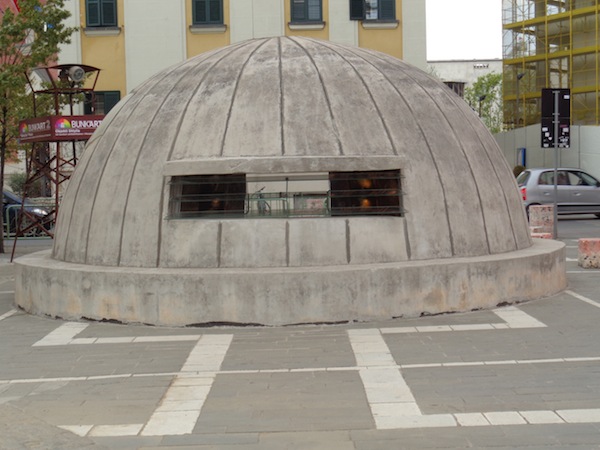
A bunker in Tirana, Albania, that is now the Bunk’Art art and history museum. (photo by Deborah Rubin Fields)

Albania is a country of great contrasts. It has stunning, clean beaches, so gorgeous that locals refer to them as the Albanian Riviera, and it also has hills and mountains that spring up in all directions. The contrasts seem to extend to Albanians themselves – Enver Hoxha, Albania’s longtime communist dictator, who died in 1985, started off as a partisan fighting the Italians and Germans in the Second World War.

Until not too long ago, Albania existed in isolation. Long before COVID-19 raised its head, Hoxha had kept the country shut off from the world. This is remarkable, given that Hoxha had at various periods aligned his Marxist-Leninist politics with the Soviet Union and China.

As in other communist regimes, many Albanian citizens became suspect during Hoxha’s 40-year reign. They were imprisoned, tortured and murdered. Further, over a 20-year period, Hoxha went on a bunker-building spree. He worried that Albania might be invaded by its neighbouring countries and by the Soviet Union. Between 1971 and 1983, at extreme cost to the general economy, Hoxha had more than 173,000 bunkers constructed. Hundreds of soldiers and civilians died in work accidents. Once the bunkers were built, local citizens as young as 12 years of age were expected to defend them from invaders. The bunkers were only abandoned in 1992, seven years after Hoxha died.

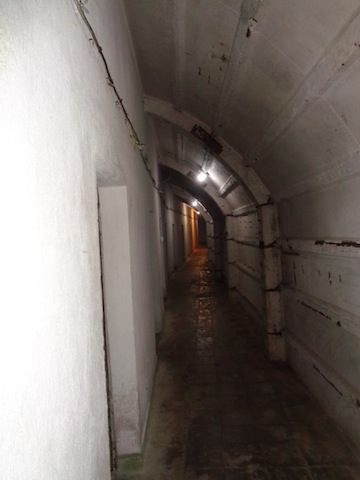
Today, some of the bunkers have other uses. In the capital of Tirana, for example, one series of bunkers has been converted into the Bunk’Art, an art and history museum. In Gjirokastra, there is the Cold War Tunnel Museum.

photo - Part of the Cold War Tunnel Museum in Gjirokastra, Albania
Part of the Cold War Tunnel Museum in Gjirokastra, Albania. (photo by Deborah Rubin Fields)

Hiking is also a fantastic way to see this beautiful country, although, in more remote parts of the country, older Albanians do not speak English and the younger, English-speaking generation is leaving Albania to seek their fortunes in other parts of Europe. Also be aware that even visiting castles requires a bit of hiking over either loose or highly polished stone, so it may be advisable to use walking sticks.

Generally, when people talk about blue eyes, they mean the eye colour of other humans or of their pets. But, in Albania, the Blue Eye is a lovely nature site. Reaching unknown depths (divers have gone down as far as 50 metres without reaching the bottom), the Blue Eye is more accurately a blue hole fed by an underground spring.

Albanian mythology recalls mountain spirits who live near springs and torrents in the northern Albanian Alps. These spirits or zanas are courageous and often protect Albanian warriors, but they can also go the other way, doing evil.

Even some of Albania’s mountains have stories. Take Mt. Tomor, for instance. Baba Tomor, or Father Tomor, is the personification of the mountain, a range whose highest peak is in central Albania. Baba Tomor appears as an older man with a long white beard that reaches his belt. Four eagles serve as his assistants. His bride is the young Earthly Beauty. When his territory is threatened, Tomor battles his enemy, Mt. Shpirag. The furrows running down Shpirag’s mountainside are said to be the knocks Tomor gave to Shpirag. Ultimately, the two fought to their deaths. The young bride is said to have drowned in her tears, which then became the Osum River.

Indeed, this is a country with many local legends. Take the story related to Shkoder’s Rozafa Castle. Apparently, the walls of this ninth-century BCE castle kept collapsing. Only when Rozafa (the wife of one of the three brothers building the castle) was enclosed in the castle walls did it stabilize and remain standing. Booker Prize-winning Albanian writer Ismail Kadare based his book The Three-Arched Bridge on this legend.

One of the spots to visit in Gjirokastra is called Sokaku i te Marreve, or Mad People Street. On this street, there is the reconstructed home of the above-mentioned – but sane – writer Kadare.

More interesting things about Gjirokastra include the Gjirokastra Castle, which houses the remnants of a U.S. Air Force Lockheed T-33. Some claim Albanian forces downed the jet during the Cold War (1957). Others say the plane was an American spy jet forced to land at Tirana’s Rinas Airport in December 1957 after developing mechanical problems and flying off course. Both scenarios are unlikely, but they make for good stories.

In a country that has almost no Jews, it is intriguing to know that (protectively covered by sand) Sarande has mosaics containing images of a shofar, a menorah and an etrog. Apparently, back in the fourth- or fifth-century CE, the Jewish community had its own synagogue in Sarande. According to the late Ehud Netzer and the late Gideon Foerster – the Israeli archeologists who dug there (along with an Albanian team) – this synagogue even had a ritual bath.

In contrast to radical Islam, there is Albania’s Bektashi Order, a Sufi Islamic creed with a long mystic tradition in Albania. The Sufi faith does not force devotees to observe the basics of traditional Islam. For example, the Bektashi creed allows for the drinking of alcohol and does not demand men and women be segregated, nor that women wear a veil. Curiously, this order appreciates Sabbatai Zvi, who was a false messiah, according to most Jews. Baba Mondi, the spiritual leader of the Bektashi sect, calls Sabbatai Zevi a dervish – a Farsi word for a spiritual Muslim who ascetically devotes his life to serving Allah; the term has also been used to describe, in rare instances, a Jew.

Ironically, Berat, the city of 1,001 windows, has a Jewish history museum established by the late Prof. Simon Vrusho, who wasn’t Jewish. Since his passing, the small Solomon Museum has been run by his widow. This museum exemplifies the good relations Albanian Jews had with both the Muslim and Christian community. Amazingly, local non-Jews saved almost 2,000 Jews during the Holocaust.

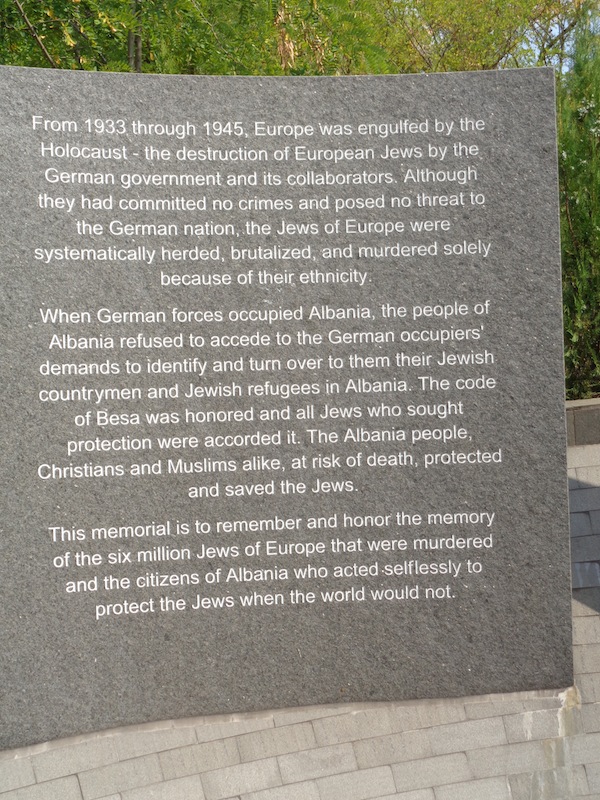
In Tirana’s Grand Park, there is a newly installed Holocaust memorial. It consists of three large plaques in Albanian, English and Hebrew, highlighting the stories of Albanians who saved Jews during the war.

photo - The English plaque of the Holocaust memorial in Tirana
The English plaque of the Holocaust memorial in Tirana. (photo by Deborah Rubin Fields)

Relatively unknown is an Albanian tragedy that exemplifies the worldwide refugee problem. In 1997, the ship Katër i Radës departed from the Albanian port city of Vlora, carrying 120 refugees fleeing the violence that had engulfed the country following that year’s massive collapse of pyramid schemes. On March 28, 1997, the Italian navy warship Sibilla – acting in accordance with an Italian blockade of Albania (designed to prevent refugees from entering the country) – intercepted, rammed and sunk the Katër i Radës in the strait of Otranto, killing 81 of the refugees aboard. Among the victims were many women and children.

Since ancient times, Jews have lived in Albania. However, there are a few theories about how and when Jews arrived there. According to historian Apostol Kotani, Jews may have first arrived in Albania as early as 70 CE, as captives on Roman ships that washed up on the country’s southern shores. Others report that, in Roman times, Jews already lived in the port of Durres. The Jewish population has fluctuated over the centuries, but most of the Jewish population made aliyah in the 1990s and, today, only a few Jews remain.

Deborah Rubin Fields is an Israel-based features writer. She is also the author of Take a Peek Inside: A Child’s Guide to Radiology Exams, published in English, Hebrew and Arabic.

Format ImagePosted on September 16, 2022September 14, 2022Author Deborah Rubin FieldsCategories TravelTags Albania, Bunk’Art, Cold War, history, Holocaust, legends
Some basics of goalball

Some basics of goalball

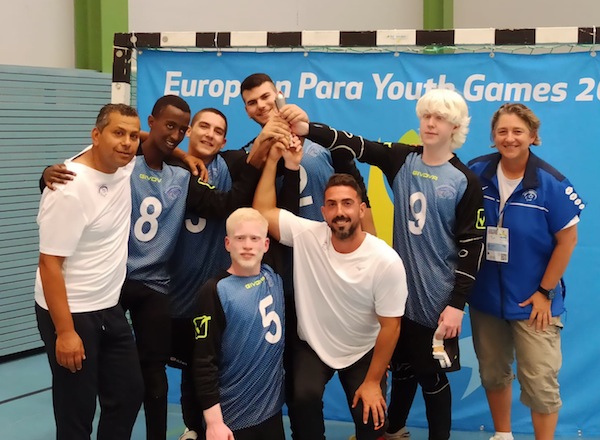
This past summer, Israel’s male youth goalball team won the European ParaYouth Games. (photo by  Lilach Weiss)

Can you imagine a sporting event in which the audience sits in silence? Well, this is how goalball is played. Why? So that the visually challenged players can hear the bells inside the game ball.

And, speaking of the ball, it differs quite a bit from a soccer ball. In addition to having eight small holes in it – which allow the players to hear the two bells inside of it – the hard rubber ball is approximately 76 centimetres in circumference and weighs 1.25 kilograms. By contrast, a standard soccer ball has a circumference of 68 to 70 centimetres and weighs significantly less, between 400 and 450 grams.

To ensure fair competition, goalball participants must wear opaque eye shades. All international athletes must be legally blind, meaning they have less than 10% vision and are classified as B3 (partial sight), B2 (less sight than B2) or B1 (totally blind).

The goalball court has slightly raised markings so each player knows where their post is and the game is played indoors on a court measuring 18 metres long and nine metres wide, usually with short walls to help keep the ball inside. Again, this is different from soccer, which is played on a field that is 125 metres by 85 metres.

Each game is broken down into two 12-minute sessions with a three-minute break between the first and second halves. There are six players on a goalball team, with just three members playing at any one time.

Each goalball player has a specific job. The centre is the most responsible for defence, as they have the ability to support the left or right wing. The right winger defends the right-hand side of the goal and the left winger the left, but both are also main attacking players. The objective, as with most such games, is to score the most goals.

The team area is the first defence section, which starts from the goal line. In this area, defenders are allowed to block and control the ball to stop it from entering the goal.

The landing area starts at the end of the defence line. In this section, the attacking player can move around to take a shot at the opposing goal. The neutral areas are safe zones that provide space for defending teams to hear the ball coming towards them.

Here is how the game is played in a few situations. When the defending team blocks the ball, thus preventing a goal, the game continues. When the ball is blocked and then crosses the sideline, the play is restarted by the team that blocked the ball. When the ball is thrown over the sideline, the other team restarts the game.

Players protect the goal on their hands and knees. Unlike in soccer, the ball is not kicked, it is thrown from either a standing position underarm, or rolled. To reduce the sound and make it difficult for the opponents, players try to release the ball close to the floor. They can also make the ball quieter by spinning it. The team is given a foul if their player doesn’t throw the ball within 10 seconds of touching it.

Blind soccer, another sport played by visually challenged players, differs from goalball in several ways. For instance, while players in both games wear eye covers, players in blind soccer chase the ball in an upright position. Blind soccer halves are longer, at 20 or 25 minutes, and, in blind soccer, each team has five players on the pitch at any time, four outfield players who are visually impaired and a goalkeeper – who need not be visually challenged.

Israeli goalball coach Raz Shoham said most of the injuries in the game come from over-use of the body and not from being hit by the ball. In Israel, players’ free time is limited by the fact that almost all of them work or study.

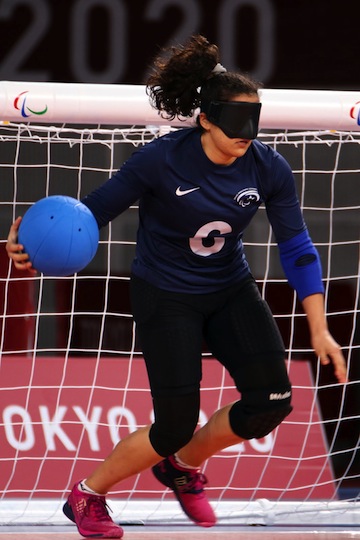
photo - Goalball player Lihi Ben David in action at the Toyko Paralympic Games in 2020
Goalball player Lihi Ben David in action at the Toyko Paralympic Games in 2020. (photo by Keren Isaacson)

Before each practice, there is a 40-minute warmup session in which players exercise their torso, hands and legs. Practices are held on Thursdays and Fridays in four locations: Beer Sheva, Jerusalem, Tel Aviv and Afula. Men and boys practise mostly in Afula, while the women practise mostly in Jerusalem. Practice times are a function of when the sports auditorium is available.

Traveling can sometimes be an issue. Shoham explained that a strong player showed up at the team’s summer camp and wanted to continue playing after the summer ended, but there was a problem getting her from her village to practices. On the other hand, sometimes players leave the sport for a stretch of time and then return. Take Orel, who started playing while still in elementary school, left for a few years and now, at the age of 15, is a key player on the male youth team.

According to Shoham, goalball players range in age. At the moment, the oldest person who comes out to play is a 65-year-old grandmother. Currently, on the official playing teams, the oldest player is 35. The official team players get a few thousand shekels for playing, but it is not like regular soccer, in which team members frequently earn high salaries.

Israeli goalball players are expected to attend some 25 practices a month. And there have been good results from the hard work. Just this past summer, Israel’s male youth goalball team – players Asad Mahamid, Doron Hodeda, Shai Avni, Ariel Alfasi and Orel Ybarkan – won the European ParaYouth Games.

Coach Snir Cohen knew before the tournament that he had good players, but said he just didn’t know how good. His goal is developing this youth team into a strong adult team.

Nineteen-year-old player Lihi Ben David, who plays left wing, spoke with the Independent about her recent training experience in Brazil. The cost of the trip was largely covered by the Israel Sports Association for the Disabled (ISAD). The Israeli and Brazilian players conversed in English. She said it was refreshing to learn about a different culture. The hard part for Ben David, who is an observant Jew, was playing during the nine mourning days of the Hebrew month of Av.

Deborah Rubin Fields is an Israel-based features writer. She is also the author of Take a Peek Inside: A Child’s Guide to Radiology Exams, published in English, Hebrew and Arabic.

Format ImagePosted on September 16, 2022September 14, 2022Author Deborah Rubin FieldsCategories IsraelTags goalball, inclusion, Israel, Raz Shoham, sports

A traditional break fast recipe

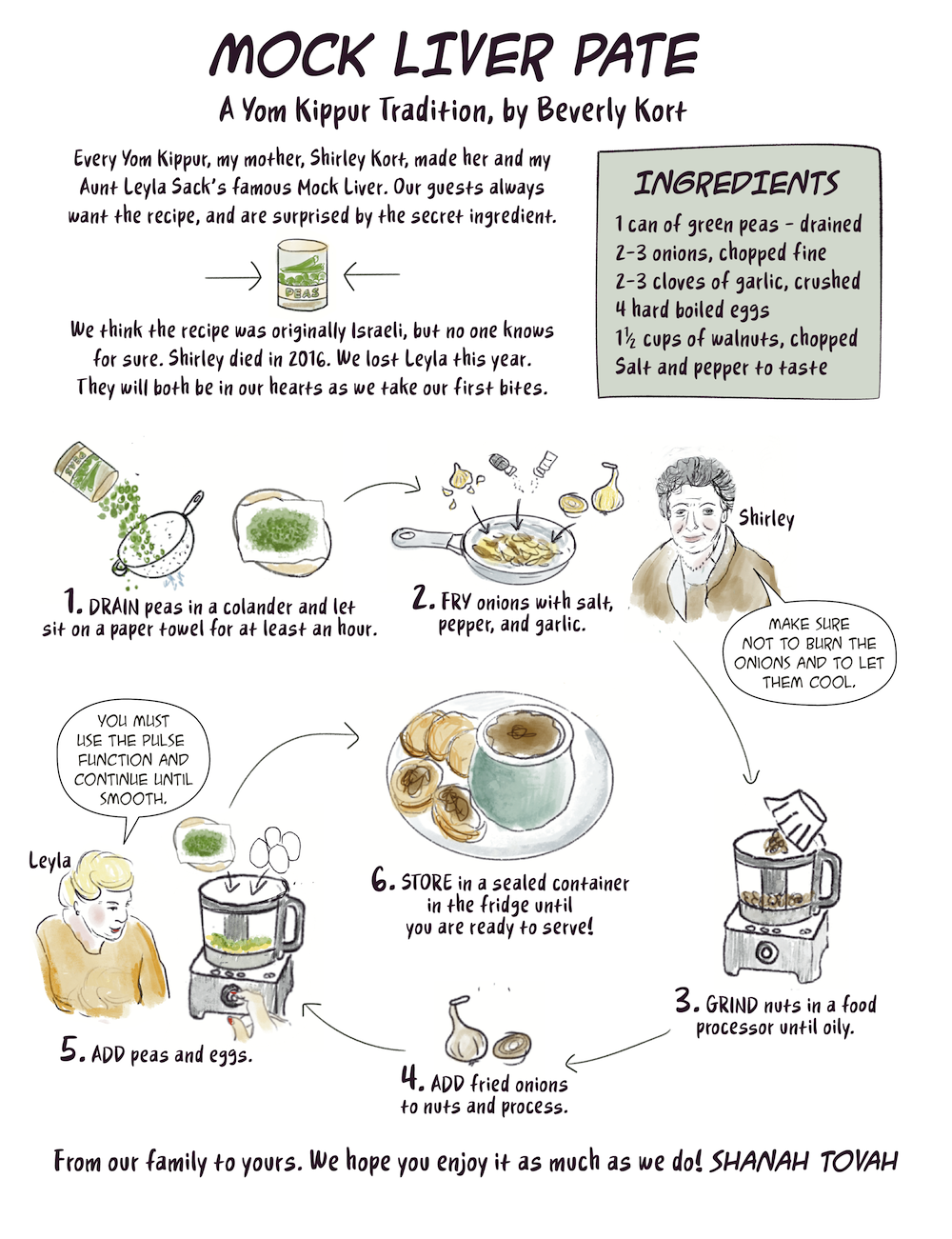
image - illustrated Mock Liver Pate recipe

Beverley Kort is a registered psychologist by day and a cartoonist in her off hours. She has a private practice in Vancouver

Posted on September 16, 2022September 14, 2022Author Beverley KortCategories Celebrating the HolidaysTags cooking, Leyla Sacks, recipes, Shirley Kort, Yom Kippur
Sweet apples for New Year

Sweet apples for New Year

(photo from flickr / s2art)

My favourite fall/winter fruit is apples, and not just because they are a main symbol of Rosh Hashanah, helping us start off the new year with a sweet dip of honey. I believe the adage that an apple a day keeps the doctor away. Although the phrase was uttered by Benjamin Franklin, it originated in 1866 in Wales – “eat an apple on going to bed and you’ll keep the doctor from earning his bread.”

Why are apples healthy? They may lower high cholesterol and blood pressure; they have fibre, which can aid digestion; they support a healthy immune system; are a diabetes-friendly fruit; and the antioxidants in apples may play a role in cancer prevention.

All that aside, they just taste great. Here are some recipes to try out, one of which features another New Year’s symbol – the pomegranate.

MOTHER’S ROSH HASHANAH APPLE CAKE

2/3 cup vegetable oil
2 cups brown sugar
2 eggs
2 tsp cinnamon
1 tsp ground cloves
2 cups applesauce (or 2 finely chopped apples)
2 tsp baking soda dissolved in 1 tsp wine
4 cups flour
2 tsp vanilla
2 cups raisins
1/2 to 1 cup finely chopped nuts

  1. Grease two cake pans. Preheat oven to 350°F.
  2. With an electric or hand mixer, cream oil and sugar.
  3. Add eggs, cinnamon and cloves.
  4. Add applesauce, dissolved baking soda and blend. Add flour, vanilla, raisins and nuts.
  5. Pour into the well-greased cake pans and bake for 45 minutes or until a toothpick inserted in the centre comes out clean.

APPLE ENCHANTMENT
(This recipe was in my files from the 1970s, from Carmel wine company.)

1/4 cup sugar
1/4 cup caramel amaretto
grated rind and juice of 1 orange
4 large, firm apples

  1. In a saucepan, combine sugar, amaretto, orange rind and juice. Bring to a boil.
  2. Peel, core and thickly slice apples. Place in the pan as they are sliced. Reduce heat and simmer until apples are tender and liquid has evaporated.
  3. Remove to a dish. Chill.
  4. Garnish with shredded coconut or whipped cream.

BAKED STUFFED APPLES
(This recipe by Ann Chantal Altman is from a 2001 Food & Wine cookbook.)

3 tbsp lightly toasted slivered blanched almonds
1.3 ounces of finely crumbled kosher amaretti (almond-flavoured Italian macaroons)
1/3 cup dry currants
2 tbsp brown sugar
1/2 tsp cinnamon
finely grated zest of 1 lemon
2 tbsp softened unsalted butter or margarine
4 apples
1 cup apple juice
2 tbsp dark rum

  1. Preheat oven to 375°F. Grease a square baking dish.
  2. In a bowl, mix almonds with amaretti crumbs, currants, brown sugar, cinnamon and lemon zest.
  3. Remove interior core and seeds of apples within half-inch of bottom. Score apple skin lengthwise at 1.5-inch intervals and arrange in the baking dish. Spoon filling into apples. Pour apple juice and rum around the apples.
  4. Bake for 20 minutes. Cover loosely with foil and bake 45-50 minutes longer or until apples are very soft. Transfer to plates. Spoon juices on top.

QUICK AND EASY MICROWAVE APPLE COMPOTE

4 large apples
3 to 5 tbsp water or apple juice
1/4 to 1/2 tsp cinnamon
2 to 3 tsp sugar

  1. Cut apples in small pieces, discarding cores. Place in a microwave-safe dish with water or apple juice.
  2. Cover and microwave on high for three minutes. Stir and microwave for two more minutes.
  3. Add cinnamon and sugar. Cover and microwave for one to two minutes or until tender. Sprinkle some sugar on top.

APPLES BAKED IN POMEGRANATE SYRUP

4 apples, cored and cut into 16 wedges each
juice from half a pomegranate
apple juice
1/3 cup apricot preserves
1/2 tsp cinnamon
seeds from half a pomegranate

  1. Use non-stick vegetable spray on a microwavable baking dish.
  2. Place apple wedges in the dish.
  3. Squeeze juice from half a pomegranate and add apple juice to make 1/2 cup.
  4. Add preserves and cinnamon and mix well. Pour over apples and coat. Cover.
  5. Microwave on high for two minutes and stir. Continue until apples are barely tender, at least two minutes more.
  6. Remove seeds from remaining pomegranate half, discard white pith. Sprinkle over apples and serve.

Sybil Kaplan is a Jerusalem-based journalist and author. She has edited/compiled nine kosher cookbooks and is a food writer for North American Jewish publications.

Format ImagePosted on September 16, 2022September 14, 2022Author Sybil KaplanCategories Celebrating the HolidaysTags apples, baking, recipes, Rosh Hashanah
Fish dishes for dinner, lunch

Fish dishes for dinner, lunch

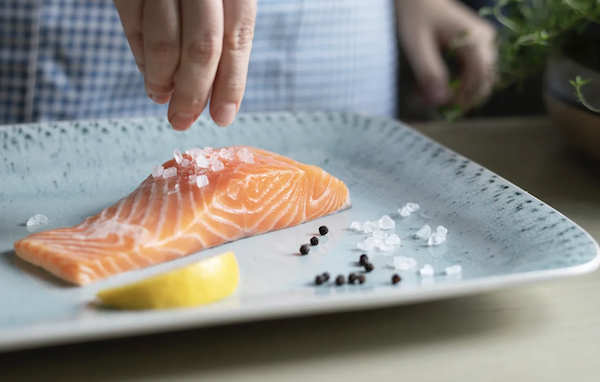
A fish head is one of the symbols of the Rosh Hashanah meal, so why not add a fish dish to the menu? (photo from rawpixel.com)

Soon we will celebrate Rosh Hashanah, for which a fish head is a symbol of leadership (be the head and not the tail) and fertility. This is reason enough, perhaps, to include fish on the holiday dinner or lunch menus. If so, here are a few recipes you could try.

TUNA AIOLI
(8 servings)

2 cups mayonnaise
4 large minced garlic cloves
2 tbsp lemon juice
1/2 tsp dry mustard
2 10-ounce packages frozen Italian green beans
4 7-ounce cans drained tuna
2 20-ounce cans drained sliced beets
8 sliced carrots
2 thinly sliced red or white onions

  1. In a bowl, blend mayonnaise with garlic, lemon juice and mustard. Cover and refrigerate.
  2. Cook green beans following package directions.
  3. Arrange tuna, beets, carrots and onions on a serving platter. Serve with mayonnaise-garlic sauce.

FISH AND ARTICHOKE SALAD
(6 servings)

1 pound fish of your choice
1 cup pareve chicken soup (or vegetable stock)
1/2 cup dry white wine
1 14-ounce can drained and quartered artichoke hearts
2 tomatoes, cut into eighths
1/2 cup halved black olives
1/4 cup olive oil
2 tbsp fresh lemon juice
1/4 cup chopped fresh parsley
salt and pepper to taste
a few lettuce leaves
4 chopped green onions

  1. Place fish, soup and wine in a saucepan. Bring to a boil. Turn off heat and let cool.
  2. Place fish in a bowl with artichoke hearts, tomatoes and olives.
  3. In a small bowl, whisk oil, lemon juice, parsley, salt and pepper. Pour over fish and toss to mix.
  4. Cover and refrigerate overnight or at least three hours.
  5. Line a bowl with lettuce leaves. Spoon in fish mixture. Garnish with green onions.

GRILLED SALMON SALAD
(8 servings)

8 centre-cut salmon fillets
1/4 cup olive oil
1/4 cup fresh lime juice
salt and pepper to taste
8 cups rinsed, dried and coarsely chopped arugula leaves
4 cups halved cherry tomatoes
1/2 cup diced red onion
salt and pepper to taste
2 tbsp olive oil
2 tbsp red wine vinegar

  1. Place salmon in a shallow dish. Combine oil, lime juice, salt and pepper and pour over salmon. Marinate in refrigerator 30 minutes, turn and continue marinating 30 minutes more.
  2. Oil a grill. Grill salmon, skin side down, 8-13 minutes, until medium rare.
  3. Meanwhile, combine arugula, tomatoes, red onion, salt, pepper, olive oil and wine vinegar.
  4. Place a salmon fillet in the centre of each dinner plate. Divide the salad equally and place each portion atop a piece of fish.

Sybil Kaplan is a Jerusalem-based journalist and author. She has edited/compiled nine kosher cookbooks and is a food writer for North American Jewish publications.

Format ImagePosted on September 16, 2022September 14, 2022Author Sybil KaplanCategories Celebrating the HolidaysTags cooking, fish, recipes, Rosh Hashanah

Chicken with a French twist

Chicken always makes for a nice holiday meal. For a special treat, however, try out these French kosher chicken entrees.

CHICKEN DIJON
(8 servings)

1/4 cup water or vegetable oil
1 tsp garlic powder
1/2 cup Dijon mustard
1 tsp dry Italian seasoning
8 boneless skinless chicken breast halves
lemon slices or fresh herbs

  1. Preheat oven to 375°F.
  2. In a plastic bag, combine mustard, water or oil, garlic powder and Italian seasoning. Add chicken and shake to coat.
  3. Place chicken in a baking pan. Bake for 20 minutes or until done.
  4. Garnish with lemon slices and fresh herbs.

CHICKEN LEGS COQ AU VIN
(I’ve adapted slightly Chef Eric Ripert’s recipe that was in Food & Wine. It makes 8 servings.)

16 chicken drumsticks
salt and pepper
6 tbsp flour
1/4 cup canola oil
1 cup finely chopped carrots
1 cup finely chopped onions
1 cup finely chopped celery
3 cups chopped mushrooms
4 thinly sliced garlic cloves
1 cup brandy
2 tbsp tomato paste
1 bottle dry red wine
2 cups chicken stock
4 thyme sprigs

  1. Heat oil in a large pot.
  2. Season chicken with salt and pepper and dust with 1/4 cup flour. Add chicken to pot and cook over high heat five minutes. Remove to a plate.
  3. Add carrots, onions, celery, mushrooms and garlic and cook five minutes.
  4. Add brandy and cook one minute. Stir in tomato paste and two tablespoons flour. Add wine, chicken stock and thyme and bring to a boil.
  5. Return chicken to pot, cover and simmer 1.5 hours. Remove chicken.
  6. Simmer sauce until reduced by half, about 10 minutes. Discard thyme. Return chicken to sauce and heat.

CHARDONNAY-BRAISED CHICKEN THIGHS
(I’ve made a few changes to cookbook author Grace Parisi’s recipe that was in Food & Wine. It makes 8 servings.)

4 tbsp unsalted margarine
4 tbsp olive oil
16 chicken thighs
salt and pepper to taste
1/2 cup flour
8 peeled, quartered shallots
2 pounds parsley root or parsnips, cut into 3-by-0.5-inch pieces
2 rosemary sprigs
2 cups Chardonnay or dry white wine
3 cups chicken soup

  1. Preheat oven to 425°F. Melt margarine in a large frying pan with oil.
  2. Season chicken with salt and pepper and dust with flour. Add to frying pan, skin side down and cook until brown, about six minutes. Place on a plate.
  3. Add shallots, parsley root or parsnips and rosemary and cook one minute.
  4. Add wine and cook three minutes or until reduced by half.
  5. Add chicken soup and bring to a boil.
  6. Place chicken skin side up in frying pan and place in oven. Braise 25 minutes or until cooked through.
  7. Broil chicken for three minutes. Return to stove and boil until sauce is thickened, about three minutes. Discard rosemary. Transfer to bowls and serve.

Sybil Kaplan is a Jerusalem-based journalist and author. She has edited/compiled nine kosher cookbooks and is a food writer for North American Jewish publications.

Posted on September 16, 2022September 14, 2022Author Sybil KaplanCategories Celebrating the HolidaysTags chicken, recipes, Rosh Hashanah

ביורוקרטיה קשה נוסח ישראל

במדינת ישראל הבירוקרטיה חוגגת ומקשה על החיים. לאחר מותי אמי, אחי ואני נדרשנו לטפל בצוואתה ובצוואה של אבא, ולוודא שהיא בוצעה כהלכה. אחי וחמשת ילדיו ואני יורשים את דירת ההורים בתל אביב, ואילו הכסף שהיה מונח בחשבון הבנק של ההורים יחולק בין אחי וביני. כביכול צוואה פשוטה אך לאור הבירוקרטיה הישראלית הכל הפך למסובך

להלן מספר דוגמאות שיבהירו את הבעיות שבדרך

בנק הפועלים ששם להורי יש את החשבון קיבל את כל החתימות של הילדים של אחי, של אחי ושלי. כיוון שאני גר מחוץ לישראל, עדיין לא ידוע לנו האם אם בנק הפועלים יבקש ממני גם אישור מהקונסוליה הישראלית, בנוסף לזה שהבאתי עורך דין ונוטריון בוונקובר. כיוון הליך הבדיקה של הבנק עלול להימשך שבועות ארוכים, החלטתי לטוס לסן פרנסיסקו כדי להשיג אישור של הקונסוליה הישראלית שם של חתימתי. אם הבנק אכן יבקש אישור זה בעוד מספר שבועות המסמכים יהיו כבר אז בידי אחי (לאחר שאשלח אותם אליו בדואר אקספרס)

חשבון נאמנות עורכי הדין של שני הצדדים בנוגע למכירת הדירה בתל אביב, אמור להיפתח בבנק לאומי. אחי קיבל מידע כי גם בנק לאומי יעלה דרישות כמו בנק הפועלים בנוגע לחתימות שלי. בנק לאומי בשלב מוקדם זה עדיין לא ביקש דבר ואחי לא מעוניין לעורר את המתים. צריך לקוות שעד מועד נסיעתי בתוך מספר ימים, נדע היכן אנו עומדים מול בנק זה. אם גם הם יבקשו אישור על חתימתי אוכל להביא אותו מהקונסוליה בסן פרנסיסקו, בדומה לאישור המיועד לבנק הפועלים. אם בנק לאומי לא יעדכן אותנו עד יום נסיעתי תהיה לנו בעייה קשה

עורכי הדין של רוכשי הדירה דורשים כמו שני הבנקים, שכל שבעת היורשים ימלאו טפסים ויחתמו עליהם במסגרת העברת מסמכים לטאבו. אני אמור לקבל מסמך כזה מאחי עד ערב הנסיעה, ואז אקח גם אותו לקונסוליה הישראלית בסן פרנסיסקו לקבל את האישור שלהם

עבור אלה שגרים בקנדה, השגת חתימות על מסמכים משפטיים שיוכרו במדינות אחרות מאוד מסובכת. זאת כיוון שקנדה לא חתומה על אמנת האג משנת אלף תשע מאות שישים ואחת. לכן בידי עומדות שתי אפשרויות. הראשונה – להחתים עורך דין ונוטריון מקומי על הטפסים. לאחר מכן לשלוח את הטפסים שלו לאישור ממשלת בריטיש קולומביה שנמצאי בעיר ויקטוריה. ולאחר מכן עלי לקבל גם את האישור של הקונסוליה הישראלית בטורונטו

לחילופין אני יכול לגשת ישירות לקונסוליה הישראלית בקנדה. תחילה חשבתי שעדיף לי לטוס שוב לישראל, להגיע לבנקים ומשרדי עורכי הדין השונים,  לחתום על כל המסמכים הנדרשים ולגמור הכל מול הפקידים הקטנים, בתוך חמש דקות. אך כיוון שזה יקר בטירוף ואין לי יותר כוח לטוס כל כך הרבה שעות, מדובר בפעם השלישית השנה, חשבתי תחילה לטוס לקונסוליה הישראלית בטורונטו. בגלל מגפת הקוביד, הקונסוליה בטורונטו לא מספקת בימים אלה שירותים לישראלים בונקובר. בסוף מצאתי רעיון טוב וזול יותר – הקונסוליה הישראלית בסן פרנסיסקו. הקונסוליה בסן פרנסיסקו, גם היא בגלל מגפתי הקוביד, לא מספקת בימים אלה שירותים לישראלים בסיאטל הסמוכה לוונקובר. לכן אני טס לסן פרנסיסקו. קבעתי כבר פגישה בקונסוליה הישראלית שם, ויש לי גם הזדמנות הזדמנות ראשונה לבקר לראשונה בעיר היפה הזו. מי היה מאמין שצוואה כה פשוטה אשר כוללת דירה אחת וחשבון בנק אחד תהפוך למסע בירוקרטי בלתי סביר, בלתי הגיוני ואף לא אנושי. חבל שבישראל זה קורה

Posted on September 14, 2022August 24, 2022Author Roni RachmaniCategories עניין בחדשותTags bureaucracy, death, family, Israel, ביורוקרטיה, ישראל, מות, משפחה

Posts pagination

Previous page Page 1 … Page 161 Page 162 Page 163 … Page 664 Next page
Proudly powered by WordPress