Skip to content
  • Home
  • Subscribe / donate
  • Events calendar
  • Business Directory
  • FAQ
  • News
    • Local
    • National
    • Israel
    • World
    • עניין בחדשות
      A roundup of news in Canada and further afield, in Hebrew.
  • Opinion
    • From the JI
    • Op-Ed
  • Arts & Culture
    • Performing Arts
    • Music
    • Books
    • Visual Arts
    • TV & Film
  • Life
    • Celebrating the Holidays
    • Travel
    • The Daily Snooze
      Cartoons by Jacob Samuel
    • Mystery Photo
      Help the JI and JMABC fill in the gaps in our archives.
  • Community Links
    • Organizations, Etc.
    • Other News Sources & Blogs
  • JI Chai Celebration
  • JI@88! video

Recent Posts

  • Or Shalom reopens its doors
  • JFS from past to future
  • Need holistic approach
  • Sharing stories, advice
  • Journalist shares fears
  • Skills to live together
  • Road to independence
  • Cutting grass with scissors
  • Zionism as a solution
  • Deceit, desire & the divine
  • Reclaiming sacredness
  • Creative project ideas
  • Summer squares and cobbler
  • Thou shalt … summer commandments
  • Legal help for students
  • Revisiting myth of Lilith
  • Wrong person rebuked
  • Canada’s mixed messages
  • Questions for museum
  • Symposium on antizionism
  • Making soccer political
  • CJPAC lauds Pulver’s impact
  • City recognizes Vrba’s legacy  
  • Organ donation saves lives
  • Theodore’s March premiere
  • A healing Shabbaton
  • Supplying healthy food
  • A chime of metal tags
  • Yellowknife seder a first
  • Ishai energizes, unifies
  • A Lag b’Omer to remember
  • Expanding the healing
  • Hannah Senesh – a unique hero
  • Community milestones … May 2026
  • Деньги до зарплаты на карту Займ до зп онлайн за 5 минут 2026
  • Микрокредит онлайн в Казахстане Микрозайм в Акшамат

Archives

Follow @JewishIndie
image - The CJN - Visit Us Banner - 300x600 - 101625

Category: World

Academics reject boycott

Academics reject boycott

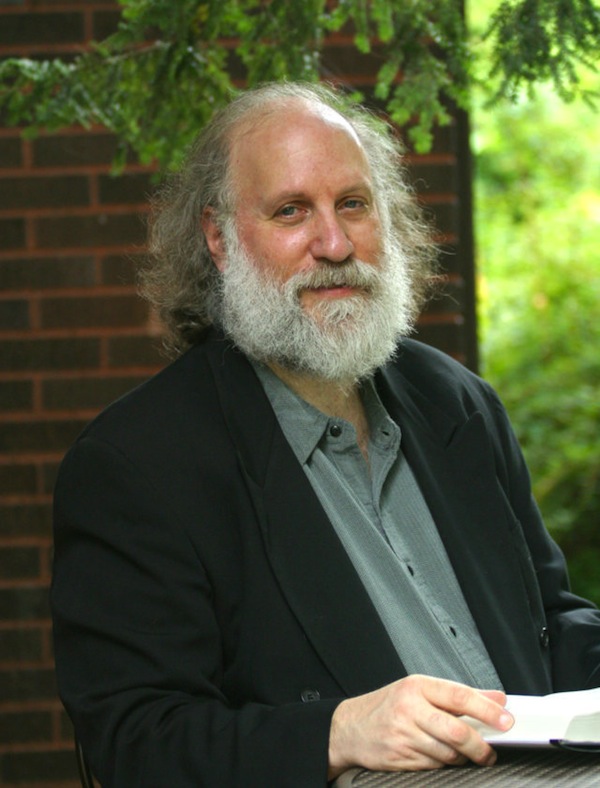
Prof. Cary Nelson, an opponent of the academic boycott of Israel, teaches at the University of Illinois at Urbana-Champaign. (photo from cjnews.com)

Opponents of an academic boycott of Israel scored back-to-back victories at a conference of the Modern Language Association (MLA) earlier this month, defeating a pro-boycott resolution while gaining sufficient votes to pass a resolution that calls on the organization to specifically refrain from endorsing a boycott.

The second of the resolutions at the Jan. 5-8 event, which passed by a 101-93 margin, stated that the Palestinian campaign for an academic and cultural boycott of Israel “contradicts the MLA’s purpose to promote teaching and research” and would curtail debates with Israeli academics, “thereby blocking possible dialogue and scholarly exchange.”

The first, pro-boycott resolution, which accused Israeli universities of perpetuating violations of international law while denying academic freedom and educational rights to Palestinians, was defeated by a vote of 113 to 79.

A third resolution, which refers to attacks on Palestinian scholars and students by Palestinian political organizations, was shelved after the first two successful votes, according to Prof. Cary Nelson, an opponent of the academic boycott of Israel.

“We got everything we asked for,” said Nelson, who teaches modern poetry and literary theory at the University of Illinois at Urbana-Champaign. “We weren’t so confident going in.”

According to the U.S. Campaign for the Academic and Cultural Boycott of Israel, about a dozen academic organizations have endorsed the boycott, divestment and sanctions (BDS) movement, including the African Literature Association, the American Studies Association, the Association for Humanist Sociology, the National Association of Chicana and Chicano Studies Annual Conference, and the Native American and Indigenous Studies Association.

The MLA was founded in 1883 to strengthen the study and teaching of languages and literatures.

Nelson, author of The Case Against Academic Boycotts of Israel, said he has been fighting boycott-related resolutions at the MLA for 10 years, and he expects similar motions attacking Israel will continue at the next delegate assembly in 2018.

Boycott advocacy at the MLA has been trending up among younger faculty members in the last three years, Nelson said, but opponents also have been recruiting support from younger academics. Most MLA members are agnostic about the issue and would rather the organization stick to matters that concern them, he added.

Nelson said opponents of the boycott resolution worked hard on the floor at the convention in Philadelphia to convince delegates to oppose a boycott. “We tried to convince members it’s none of the MLA’s business. It doesn’t need a foreign policy,” he said.

Opponents circulated a 10,000-word report on the issue, outlining the case against boycott and noting factual misrepresentations in the case being presented by its proponents.

Rebecca Comay, a professor of philosophy and comparative literature at the University of Toronto, was one of two co-sponsors of the pro-boycott resolution at the MLA conference.

“After five decades of a brutal military occupation, with the situation only deteriorating, it is time for the international community to act,” she said, explaining why she pushed the boycott resolution. “Given that there is no prospect of significant change happening from within (and as the Israeli leadership moves ever rightward), BDS is the most effective means – at this point the only means – of intervening on behalf of Palestinian human rights.

“Boycott is a non-violent, legal tactic that has historically proved effective in seemingly intractable situations. South Africa is a pertinent example,” she told the CJN via email. Comay said Palestinians have been “dispossessed, disenfranchised and stripped of the fundamental human rights that we take for granted. These rights include a basic right to education and academic freedom.”

Asked why Israel should be singled out, Comay responded, “Israel is susceptible to boycott in a way that other countries (Saudi Arabia, Syria, Russia, etc.) simply are not. As the so-called ‘only democracy in the Middle East,’ Israel is actually susceptible to global public opinion, as the panicked reaction to the BDS movement clearly demonstrates. Israel has in any case already been ‘singled out’: it receives an unprecedented amount of U.S. military and economic aid (to the tune of $38 billion over the next 10 years) – [former president Barack] Obama’s parting gift to Israel – that’s more than to all the countries of sub-Saharan Africa, Latin America and the Caribbean combined.”

Nelson said the BDS movement is growing within the humanities and social sciences, but less so in the hard sciences. However, much of the propaganda it advances is inaccurate, he said, noting that Israel has doubled the number of Palestinian and Arab students in Israeli universities in just the last 10 years. The student body at some schools, like the Technion and the University of Haifa, where he’s an affiliated professor, is more than 25% Arab, he said.

Yael Halevi-Wise, an associate professor in the English department at McGill University, said a small but influential group of leftist academics – “the radical caucus” – has been pushing the boycott proposal for several years.

“If you look at the BDS strategy, it’s a form of bullying. Omar Barghouti takes credit for the BDS and he says he would like to help Israel euthanize itself,” she said.

Halevi-Wise said the boycott effort “is an attempt to isolate and demonize our fellow colleagues in Israel.” Most of those colleagues, she said, are pro-peace and support a two-state solution, and some of the professors who would be affected are Arabs, she said.

“We had to work very hard to get through, because Israel is being maligned so frequently,” she added.

The resolution urging the MLA to refrain from boycotts now goes to the group’s executive council, which will determine if there are legal or constitutional issues posed by its language. From there, it will be forwarded to the organization’s membership for ratification.

– For more national Jewish news, visit cjnews.com

Format ImagePosted on January 20, 2017January 17, 2017Author Paul Lungen CJNCategories WorldTags anti-Israel, BDS, boycott
Developer of multiple apps

Developer of multiple apps

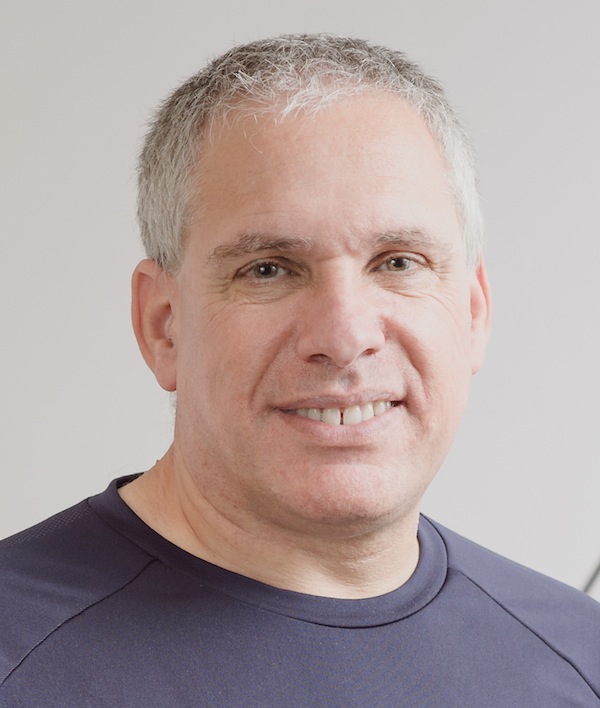
Israeli app developer Uri Levine. (photo from Uri Levine)

This could be the year you start saving all kinds of money and time from using apps, and you may have Israeli Uri Levine to thank for it.

Levine, a computer programmer, investor and start-up guru, was a Waze co-founder (with two others), as well as president of the Israel-based company from 2007 to 2013.

Waze’s platform provides drivers an opportunity to post real-time alerts about any traffic situation for other drivers, anywhere in the world. Four years ago, Google bought Waze for a reported $1.3 billion US, said to be the largest buyout in the history of Israeli high tech.

“Waze had to be sold,” Levine told the Independent. “Only Google knew how to monetize it in a gigantic way that we could never be able to do.” Today, 50 million people use the app.

Since his Waze days, Levine has been hard at work producing other apps meant to help consumers. To name a few, Engie connects to your car’s diagnostic computer, informing you of precisely what needs repairs before going to the mechanic. For people looking for discounted hotel rooms, Roomer helps people who want to offload non-refundable hotel reservations. Then there’s Fairfly: once people have bought their airplane tickets, the service searches for a cheaper flight. Similarly, with FairSale, another after-purchase app, once you’ve already bought an item, you scan your receipt with your phone, and the service will keep tabs on when the store has a price guarantee. According to Levine, about $130 billion is lost by American consumers alone because they don’t know about, or they ignore, low-price guarantees.

In 2009, while still working at Waze, Levine launched the app FeeX with a $100,000 investment. The aim is to help people save money on financial services and investment funds. The idea came to him during the economic downturn, at a time when funds in his own investment portfolio lost a fifth of their value, and he had been charged what he thought was an unjust bank user fee.

“After I argued with them, they reimbursed me. That’s when I wanted to find ways to expose hidden financial fees,” he said. “FeeX examines people’s portfolios and suggests similar investments that have less expensive fees.”

In the United States, he said, people pay about $600 billion annually to investment managers for retirement and other funds. Today, there are about 30,000 users of FeeX in America and about 100,000 in Israel.

Levine holds a bachelor’s of economics from Tel Aviv University, but his love for programming came earlier. In 1981, at age 16, he acquired his first computer, a Sinclair ZX – in its day, it was one of the most popular computers globally, with just two kilobytes of memory. By way of example, most microwave ovens manufactured in 1982 had more functionality.

One of Levine’s first jobs was as a software developer in the Israeli army. Later, he became a developer at Comverse, a telecommunications company in Israel. About 20 years ago, Comverse was one of the largest employers of software engineers, and a high-tech industry success story.

“I would nearly say that the economics degree provided me with a point of view, but the real study was in the army and, later, on the job as a developer,” he said.

Often asked for his advice on how to launch a start-up, Levine offered a five-step approach: “First, fall in love with the problem – not the solution. Second, make mistakes fast; the biggest enemy of good enough is perfect. Third, focus – it’s very easy to defocus. You have to say no to everything else which is not solving the problem. Fourth, half of the startups fail because they realize that the team is not right and they don’t fix it. And, finally, understand who your users are, and what their perception of the problem is.”

As for apps, those wishing to create and launch one should have this goal in mind, he said: “Create value for the users, and make it simple to get to the value.”

Dave Gordon is a Toronto-based freelance writer whose work has appeared in more than 100 publications around the world.

Format ImagePosted on January 20, 2017January 17, 2017Author Dave GordonCategories WorldTags apps, technology
Rivlin in Georgia

Rivlin in Georgia

Israeli President Reuven Rivlin at the Great Synagogue in the city of Tbilisi, Georgia, on Jan. 10. (photo by Haim Zach / IGPO via Ashernet)

At the Great Synagogue in Tbilisi, Israeli President Reuven Rivlin spoke about the history of Jews in Georgia, and the close ties that have existed over the years between Georgia and Israel. He said the connection “is good, yet we must do more.”

He noted, “The Jewish heart, the close bond with the Jewish community here, adds extra special essence to the ties between the two countries. Just this last Shabbat, we read in the Torah of Judah, who was ready to be held as a guarantee in place of his brother Benjamin. The mutual responsibility is the secret of the strength of the people of Israel, so it was in the past and so it is today. Jews in Israel and around the world have a responsibility for each other, we are one people. We will do all we can to perpetuate and to preserve the warm bond with you and with the Georgian people, and I am certain we will succeed.”

Earlier in the day, Rivlin met with Irakli Kobakhidze, chair of the Georgian parliament.

Format ImagePosted on January 20, 2017January 17, 2017Author Edgar AsherCategories WorldTags Georgia, Israel, world Jewry
Kosher food abounds

Kosher food abounds

Kimchi seems to be the latest kosher craze. Here, Yeun Sun Shin, manager of South Korea’s Dongbangfood Oil Co. Ltd., shows off some of the company’s products at Kosherfest, which took place Nov. 15-16 in New Jersey. (photo by Dave Gordon)

Jewish fare extends well beyond the traditional Ashkenazi knish, kneidlach and kugel. Kimchi is the latest kosher craze, at least evidenced by the throngs of those who sampled it at Kosherfest, the annual food exhibition, which this year took place Nov. 15-16, at Meadowlands Exposition Centre in New Jersey.

For the uninitiated, the Korean staple is a cabbage-based food that contains white radish and spices.

Kosher-certified Koko’s line also includes gochujang (fermented red pepper paste) and doenjang (fermented soybean paste). Ziporah Rothkopf, Koko’s chief executive officer, not only boasted that her creations were the first of their kind in the kosher world, but that they were also among Kosherfest’s “best product award-winners,” and that she matched mainstream kimchi’s flavorings without including the usual shrimp brine.

Kosherfest, explains its website, “gives manufacturers, distributors and suppliers of kosher-certified products and services the opportunity to reach thousands of mainstream and independent kosher trade buyers from across the globe.”

The exhibition hall contained the expected offerings, but with a twist: hummus, including chocolate and orange-flavored; myriad wines, including ones called Moses and Unorthodox; artisan cheeses galore; endless new fruit beverages and sweets. There was even kosher toothpaste, SprinJene, which, unlike other toothpastes, say its spokespeople, doesn’t contain traces of animal enzymes, a no-no in the kosher world. (Non-Orthodox Judaism allows the consumption of any toothpaste.)

Nearly 300 exhibitors and companies were represented from around the world, including South Africa, Sri Lanka, Great Britain, Canada, Japan, Costa Rica, Korea, Czech Republic, Ukraine and, of course, the United States.

From the Philippines, FOCP presented organic coconut products, LTA Foods presented banana chips. From India came Lalah’s tamarind products, Eastern spices and Nila nuts.

Australia’s MC Foods came to show off their boutique salad dressings and marinades, with the hope of finding a distributor in the Americas. From Russia came Baltika beer, said by its spokesperson to be the second bestselling brew in Europe, behind Heineken – the company produces five billion litres a year and each of the 17 beverages in the brand has kosher certification, even though beer generally does not require it.

However, contrary to popular belief, nori, which is used in sushi, poses a unique kashrut obstacle, even if it contains “100% seaweed.” Rabbi Binyomin Y. Edery, the mashgiach of Kosher Japan, explained that kosher nori, despite being a vegetable from the ocean, requires a special process, as well as rabbinical supervision. Unbeknown to many, seahorses (not kosher) and various non-kosher fish eggs become intermingled with the seaweed and must be filtered out for the seaweed to be deemed kosher, a process that is not done at non-kosher manufacturing plants.

The workaround for the kosher world, said Edery, is to harvest the seaweed in a certain two-hour window prior to daybreak, when the waters are coldest and the creatures are least likely to swim.

Moving from ocean water to bottled water from the Czech Republic’s Fromin, which is collected from an artesian well 275 metres deep, and is sold in glass bottles that can cost up to $35 US for 1.5 litres. Available in North Africa and Europe, the kosher-certified company sought a North American distributor.

According to chairman Martin Landa, although water does not require a hechsher (kosher certification), he said many consumers want to be doubly assured there are no treif (non-kosher) additives or non-kosher products made in the bottler’s vicinity.

From Betula Pendula, also in the Czech Republic, comes goat colostrums – the fluid secreted by female goats right after giving birth, which is used in skin cream and immune-boosting pills.

In other quasi-milk news, Israel-based Mashumashu, makers of vegetarian, dairy-free artisan cheeses, including cheddar, gouda, mozzarella and feta, showed off how their products melt easily on a pizza, and boasted that few people could tell the difference between the real deal and their cheeses.

Meanwhile, the gluten-free trend has caught on with dozens of Kosherfest’s exhibitors, including Soupergirl of Washington, D.C., run by former comedian Sara Polin. She said she “sought a healthy, kosher and delicious soup” with “only ingredients you can pronounce,” so she made some. Among her company’s many products are curried split pea apple kale, lentil butternut squash, and beet gazpacho. She has been featured in the Washington Post and O, The Oprah Magazine.

Also on the gluten-free train was Florida-based DelaRosa, whose executive vice-president Yehudith Girshberg claims to be the only kosher, gluten-free and organic oat producer. They also make organic wines, vinegars, olive oils and tahini.

It appears as though the kosher world will soon be indistinguishable from regular supermarket fare, with the availability of kosher pepperoni and “cheese” pizza, kosher “facon,” kimchi and even duck sausage. If things continue on this trajectory, in the near future, there may be little kosher food makers can’t successfully imitate.

Dave Gordon is a Toronto-based freelance writer whose work has appeared in more than 100 publications around the world.

Format ImagePosted on December 16, 2016December 15, 2016Author Dave GordonCategories WorldTags food, kashrut, kosher
Connecting to a legacy

Connecting to a legacy

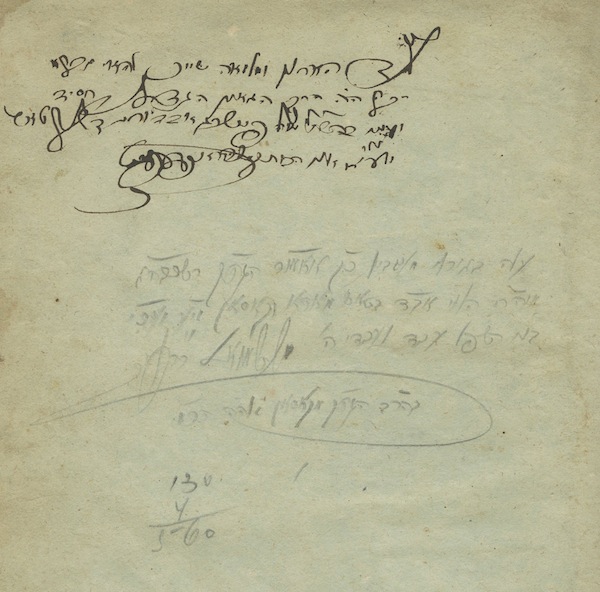
The inscription in the Tosher Rebbe’s first copy of Kehilat Ya’akov, which recently sold at auction for $4,920 US. (photo from IMP Media Group Ltd.)

Even with the passing of the fourth Tosh Rebbe, Rabbi Meshulam Feish Segal-Lowy II, in 2015, Tosh Chassidut still exists in rural Quebec. The Tosh dynasty was founded in the 1800s and has roots in the Chassidic tradition, tracing their tradition back to the Ba’al Shem Tov.

Last month offered a unique opportunity to connect to the legacy of the Tosher Chassidut. The copy of Kehillat Ya’akov owned and used by the first Tosh Rebbe, Rabbi Meshulam Feish Segal-Lowy I, was available for auction at Kedem Auction House in Jerusalem. It was passed down within his family, and made it to the United States when his great-grandson fled Hungary. At the Nov. 15 auction, the item sold for $4,920 US.

The first Tosher Rebbe was a leading rabbi in the greater Jewish community in Hungary due to his standing in Torah and commitment to helping Jews. A 1966 article in the Canadian Jewish News by Norman Abrahams described the Tosher Rebbe’s dedication to his followers, many of whom were Holocaust survivors who turned to him for guidance: “This great man stays up most of the night fulfiling the many requests for advice and prayer and it is not uncommon to see him eating breakfast, his first meal of the day at five o’clock in the afternoon.”

Born in 1811 in Moravia (part of modern-day Czech Republic), Lowy I gained a reputation for his holiness and ability to perform miracles and became the first Tosh Rebbe, as well as a leading rabbi in Hungary. He received rabbinic ordination from Rebbe David (Spira) of Dynow, one of the leading rabbis of his time.

Although he passed away at 62, the first Tosher Rebbe had enormous impact on Torah Judaism. Lowy I served as rabbi and av beit din (literally, father of the court) of the city of Nyirtass, Hungary, and was known for his commitment to Torah. People came from all over to receive his blessings.

In 1873, a cholera epidemic broke out and killed almost 200,000 people in Hungary alone. The rebbe prayed to be an atonement for the Jews and, after his death, the epidemic did indeed come to an end.

The Tosh dynasty continued after Lowy I’s death, but was almost completely destroyed during the Holocaust. His namesake and great-grandson, Lowy II, was appointed rebbe by the few surviving Chassidim of his father, Rebbe Mordechai Marton Lowy, who was murdered in Auschwitz with most of his extended family.

Lowy II was born in Nyirtass in 1921, managed to survive the Holocaust in the Hungarian Labor Service and was liberated by the Red Army from a camp outside Marghita in October 1944. In 1946, he married Chava Weingarten, a direct descendant of the Noam Elimelech (Rebbe Elimelech Weisblum of Lizhensk). After being appointed rebbe, he set up court in Nyiregyhaza, but, in 1951, fearing the communist government, he ordered his followers to leave Hungary and immigrated to Canada, settling in Montreal.

Committed to maintaining the integrity of the Chassidut that his great-grandfather had started, and concerned about outside influence, in 1963, he decided to move his Chassidim to Boisbriand, Que., a small rural area now known as Kiryas Tosh.

After his death in 2015, Lowy II’s son, Rabbi Elimelech Segal-Lowy, became the next Tosher Rebbe.

The piece of Tosh history that was for sale is also inscribed by the first Tosh Rebbe’s grandson, Rabbi Moshe Shmuel Rottenberg, who received it from his father, Rabbi Yehosef HaLevi, author of Bnei Shileshim.

Format ImagePosted on December 16, 2016December 15, 2016Author IMP Group Ltd.Categories WorldTags Chassidim, Holocaust, Judaism, Tosh

Unite in acts of chesed

May 24, 2017, marks the 50th anniversary of a united Jerusalem. In honor of this occasion, the Afikim Foundation, in cooperation with the Israel Ministry of Diaspora Affairs, is launching the Jerusalem50 Global Unity Torah, a global movement that celebrates a reunited Jerusalem with acts of kindness.

“The Global Unity Torah will provide Jews worldwide an unprecedented communal platform to do good and inspire goodness in others,” said Rabbi Raphael Butler, founder of the Afikim Foundation. To purchase a letter, the currency is not in dollars but in acts of kindness.

Individuals and families from all walks of Jewish life will unite with organizations, congregations, agencies, schools and Jewish groups from all corners of the globe to “purchase” their letter(s) in the Torah with acts of chesed (kindness).

With an interactive site in five languages, jerusalem50.org, a social media campaign, pamphlets designed and published in five languages, wall hangings of the sites of Jerusalem set to display in communities around the world, and a traveling exhibition on Jerusalem, the Jerusalem50 movement is set to launch.

“As an innovative incubator, Afikim is where profound Jewish ideas take flight, and we envision Jerusalem50 having a poignant and lasting impact on the Jewish people,” said Butler. “By using kindness as an impetus for change and Jerusalem as a uniting factor, we can transform our world.”

For more information on the Afikim Foundation, visit afikimfoundation.org.


Posted on December 9, 2016December 7, 2016Author Afikim FoundationCategories WorldTags chesed, Jerusalem, tikkun olam
Thousands gather

Thousands gather

(photo by Mendel Grossbaum / Chabad.org)

Rabbis dance with their colleagues at a banquet at the Brooklyn Marine Terminal Pier 8 on Nov. 27. They were among the 5,600 rabbis and guests from 90 countries who gathered in New York for the International Conference of Chabad-Lubavitch Emissaries, an annual event aimed at reviving Jewish awareness and practice around the world. This year’s conference carried added significance, as the North American Jewish community marked 75 years since the Lubavitcher Rebbe – Rabbi Menachem M. Schneerson, z”l – and his wife, Rebbetzin Chaya Mushka, z”l, arrived on U.S. shores from wartorn Europe in 1941. (Courtesy of Chabad.org)


Format ImagePosted on December 9, 2016December 7, 2016Author CHABAD.ORGCategories WorldTags Chabad, emissaries, Judaism
Dance in support of refugees

Dance in support of refugees

Children learn the #iamchild dance routine created by Israeli-Turkish therapist and journalist Michal Bardavid. (photo from iamchildproject.com)

There’s a new dance routine on social-media sites that has five catchy poses and one enormously powerful message.

The #iamchild dance-therapy routine is part of a project in support of Syrian children affected by ongoing civil war. It was created by Israeli-Turkish journalist Michal Bardavid to give emotional and moral support to millions of the world’s refugee children.

In addition to being an international correspondent for China Central Television, Bardavid is a psychological counselor and a certified dance therapist. After meeting hundreds of Syrian children in refugee camps on the Turkish-Syrian border, she created a motivational dance exercise made up of five positively worded sentences accompanied by five movements to show the kids that someone cares.

The five phrases – “I am loved,” “I am a child,” “I am safe,” “I am a whole person,” “I am beautiful” – are spoken in Arabic.

“The accompanying movements make the emotion more concrete as children say the sentences out loud,” Bardavid writes about the project.

In honor of United Nations Universal Children’s Day on Nov. 20, a day that promotes “international togetherness, awareness among children worldwide, and improving children’s welfare,” Bardavid uploaded a call-to-action video – in English and Turkish – asking people to join the movement and show support for the Syrian kids.

So far, she has documented 600 Syrian refugee children and 350 Turkish schoolchildren doing the #iamchild dance routine. Children in Israel, Iraq, Spain, the United Kingdom and Turkey have sent in heartwarming homemade videos of how they perform the dance routine.

“#iamchild is about empowering Syrian refugee children, creating solidarity among Syrian and international children, and increasing global awareness on the issue,” writes Bardavid.

Bardavid wants to reach as many Syrian refugee children as possible via social media and word of mouth. “It’s important to remember Syrian kids are actually the ones most affected by the conflict,” writes Bardavid, noting that she hopes her #iamchild project will “induce a positive emotion even if for a brief moment.”

Israel21C is a nonprofit educational foundation with a mission to focus media and public attention on the 21st-century Israel that exists beyond the conflict. For more, or to donate, visit israel21c.org.

Posted on November 25, 2016November 23, 2016Author Viva Sarah Press ISRAEL21CCategories WorldTags #iamchild, dance, Israel, refugees, Syria
Memorial to Mumbai terror victims

Memorial to Mumbai terror victims

Israeli President Reuven Rivlin lays a wreath in memory of the victims of the 2008 Mumbai terror attack at the Chabad House. To Rivlin’s left is First Lady Nechama Rivlin. (photo from Israel Government Press Office via Ashernet)

Israeli President Reuven Rivlin and First Nechama Rivlin participated in a Nov. 21 memorial ceremony for victims of the 2008 Mumbai terror attack at the Chabad House – Rabbi Gavriel and Rivka Holtzberg, Bentzion Kruman, Rabbi Leibish Teitelbaum, Yoheved Orpaz and Norma Rabinovich.

Also at the ceremony at Taj Palace Hotel were Chennamaneni Vidyasagar Rao, governor of Maharashtra state of India, other senior state officials, leaders and members of the Jewish community, and members of the business and academic delegation who accompanied the president on his state visit to India.

“As we stand here, we say clearly that terror will never win…. Our values of democracy and freedom are strong and we will defend them with all our might,” said Rivlin. He added, “We must act and work together: to share intelligence and best practices, to keep our peoples safe, to protect our borders, our towns and cities. India and Israel stand shoulder to shoulder in this fight. This is our duty to the memory of the victims, and will be the legacy we leave for future generations.”

Format ImagePosted on November 25, 2016November 23, 2016Author Edgar AsherCategories WorldTags Chabad, India, Israel, Mumbai, terrorism
Unique rabbinical road

Unique rabbinical road

Sandra Lawson is studying at Reconstructionist Rabbinical College. (photo from Sandra Lawson)

Sandra Lawson, an African-American lesbian who converted to Judaism after being raised in a secular home, is now studying to be a rabbi at Reconstructionist Rabbinical College, in Wyncote, Penn.

Born in St. Louis, Mo., Lawson’s dad was in the military, so the family moved around a lot, though mainly stayed in the Midwest. Her dad was a military recruiter and career counselor.

“My dad was raised a Christian, but I really had no religious upbringing when I was a child,” Lawson told the Independent. “I knew about Jesus, and we would occasionally get invited to church, but there really was no religion in our house.

“On my mom’s side, we had a back story of an ancestor who was Jewish. Like folklore, it really meant very little to me until I started on this Jewish path myself.”

This path began when Lawson was an undergraduate student and needed another class to graduate. The only course available at the time was one on the Hebrew Bible, which Christians refer to as the Old Testament. The teacher was a Christian academic from Kenya.

“When I got to the class, the teacher told everyone they needed to get a Bible for the class,” said Lawson. “But, he said to not get a King James version, as, he said, it’s a bad translation.

“This class opened my mind a little bit to the Bible as a piece of literature. He made the Bible acceptable for me. It wasn’t a book to be feared. Years later, I have a Jewish girlfriend and her sister invites me for Shabbat dinner. I thought, I like this. It’s really cool. I shared with my girlfriend at the time that an early ancestor was Jewish, but that I know nothing about Judaism.”

From that first Shabbat dinner, Lawson went to her girlfriend’s family home every Friday night.

“They weren’t Orthodox,” said Lawson. “They were just a modern family that would stop everything for Shabbat. It was really cool. I loved the ritual. I loved how open the family was. I loved how they accepted and treated me.”

Around this time, Lawson met Rabbi Joshua Lesser of the Reconstructionist Congregation Bet Haverim in Atlanta. Lesser hired Lawson as his personal trainer and, over the course of the two or three years she worked in that capacity, their friendship evolved and he invited her to his shul.

“I was hesitant,” admitted Lawson. “I shared with him the story of my great-grandfather. Eventually, I did go and I fell in love with the community – not necessarily Judaism, at the time – but I loved the community. That’s how I got interested.

“I started going to services regularly. The community has straight people, gay people and kids but, mostly, it is a space where I felt like I could be myself – something I’d never experienced before in a religious community.”

Lawson went on to learn more about Judaism and, in 2003, she told Lesser she was thinking about converting. In the conversion classes she took, the teacher helped her see a broader view of Judaism.

“I loved the class,” said Lawson. “I loved learning about the Jewish calendar and reading the Bible again, as a piece of literature. I loved learning about Jewish history.”

After about a year of studies, the class was over. And, on Oct. 13, 2006 – the day before her 35th birthday – she converted to Judaism.

Lesser asked Lawson to be a congregational representative on the board for the gay members of the synagogue. A year later, when gay marriage was a hot topic in the presidential election debate, Lawson took her stance a bit further.

“It was sort of funny, because I didn’t know anyone in my gay life who was even thinking about trying to change marriage laws,” she said. “We were all just happy that we could be legally gay. Josh [Lesser] asked if I wanted to join the gay and lesbian task force, as they were coming to Atlanta to do some training. I was like, sure. And he’s like, the good thing about it is, they need more diversity. They need more black and brown voices on these issues.”

Lawson later joined a clergy-based group working on the issue. This group, according to Lawson, was all over the map as far as sexual orientation and most everything. But, what they did agree on was that the state had no business legislating what you did behind your own closed doors.

“The more I started to do volunteer work, the more I realized I wanted to have a more powerful effect, more ability to effect change … that I would need the title of rabbi … and here we are today, as I work on becoming one,” said Lawson.

“Obviously, I’m different. There aren’t a lot of rabbis that look like me. I think being on the edge of the fringes of Judaism allows me to be more flexible or more creative in the things I do.”

One of the required classes that Lawson took last year was on entrepreneurship and thinking outside of the box. During that time, she was approached by the Jewish owner of a local vegan café she went to often, asking if she would be willing to lead services at the café on Friday evenings.

“I went back to class and told my teacher about it,” said Lawson. “I wrote it up as a grant … so I had the grant to lead services at this Lansdale café (outside Philadelphia).”

They have been running services at the café for months now. Every Friday, Lawson shows up with two vegan challot and grape juice. Arnold (the café owner) sets up the place and invites friends and customers to stay for the service.

“Every time, we’ve had at least a minyan,” said Lawson. “It’s been a lot of fun. People can show up as they are, with their sandals, their shorts. We sing. We do a little Torah and welcome the Shabbat.

“People come because they want to see what’s happening in the café … I think it was last week, Arnold had a flautist there, and people came to hear this guy play the flute. Also, I think, in May, there was a couple there who were not Jewish, but they had been taking a Christian class on Judaism. The class was finished, they saw this service and came to learn more about Judaism.”

Next on Lawson’s mind is leading services outside. “I don’t know how I’m going to pull it off yet,” she said. “Right now, I’m in this stage of trying to get a lot of buzz around different ways that people can do Shabbat.

“My dream, I don’t know when it will happen, is to have a Shabbat morning service in the future, in a park. I’m someone who, I see God in nature a lot. To be running in the woods, when the sun is coming up, is the best way for me to pray in the morning. I know a lot of people could connect their Judaism to nature. I haven’t quite figured it out yet, but I hope to.”

Lawson is set to graduate rabbinical school in 2018.

Rebeca Kuropatwa is a Winnipeg freelance writer.

Format ImagePosted on November 11, 2016November 11, 2016Author Rebeca KuropatwaCategories WorldTags Jewish life, Judaism, Reconstructionist, spirituality

Posts pagination

Previous page Page 1 … Page 19 Page 20 Page 21 … Page 33 Next page
Proudly powered by WordPress