Skip to content
  • Home
  • Subscribe / donate
  • Events calendar
  • News
    • Local
    • National
    • Israel
    • World
    • עניין בחדשות
      A roundup of news in Canada and further afield, in Hebrew.
  • Opinion
    • From the JI
    • Op-Ed
  • Arts & Culture
    • Performing Arts
    • Music
    • Books
    • Visual Arts
    • TV & Film
  • Life
    • Celebrating the Holidays
    • Travel
    • The Daily Snooze
      Cartoons by Jacob Samuel
    • Mystery Photo
      Help the JI and JMABC fill in the gaps in our archives.
  • Community Links
    • Organizations, Etc.
    • Other News Sources & Blogs
    • Business Directory
  • FAQ
  • JI Chai Celebration
  • JI@88! video

Recent Posts

  • Zionism wins big in Vegas
  • Different but connected
  • Survival not passive
  • Musical celebration of Israel
  • Shoppe celebrates 25 years
  • Human “book” event
  • Reclaiming Jewish stories
  • Bema presents Perseverance
  • CSS honours Bellas z”l
  • Sheba Promise here May 7
  • Reflections from Be’eri
  • New law a desecration
  • Resilient joy in tough times
  • Rescue dog brings joy
  • Art chosen for new museum
  • Reminder of hope, resilience
  • The national food of Israel?
  • Story of Israel’s north
  • Sheltering in train stations
  • Teach critical thinking
  • Learning to bridge divides
  • Supporting Iranian community
  • Art dismantles systems
  • Beth Tikvah celebrates 50th
  • What is Jewish music?
  • Celebrate joy of music
  • Women share experiences 
  • Raising funds for Survivors
  • Call for digital literacy
  • The hidden hand of hate
  • Tarot as spiritual ritual
  • Students create fancy meal
  • Encouraging young voices
  • Rose’s Angels delivers
  • Living life to its fullest
  • Drawing on his roots

Archives

Follow @JewishIndie
image - The CJN - Visit Us Banner - 300x600 - 101625

Category: News

Outside of British Columbia

Outside of British Columbia

Jewish summer camp combines land and water activities with learning about Israel and Judaism. (photo from Camp BB Riback)

When summer comes to the Pacific Northwest, it’s the best time to head into the great outdoors and, of course, for kids, into the summer camp experience. For Jewish kids in British Columbia, there are not only great local camps – Camp Hatikvah and Camp Miriam – but a few out-of-province options worth considering.

When Camp Solomon Schechter (CSS) was established in 1954, on the shores of Whidbey Island, there was a vision born out of the camp’s now-common catch phrase, “Where Judaism and joy are one.” Sixty-one years later, now located on private, protected lakefront property on the outskirts of Olympia, Wash., the camp is looking to the future again, with the combination of Judaism and joy still central.

A Conservative movement-based summer camp, CSS launched a capital campaign in 2014 called From 60 to 120, with a focus on supporting the next 60 years of growth. In an informational social gathering hosted in Vancouver by the camp on Jan. 10, director Sam Perlin shared plans for the campaign and the new facilities that would be born from it.
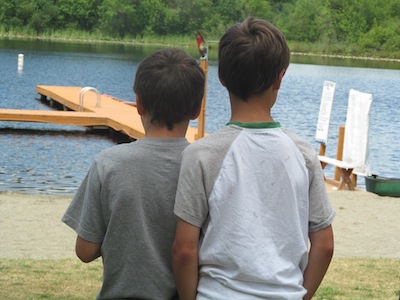
photo - Jewish summer camp combines land and water activities with learning about Israel and Judaism
(photo from Camp Solomon Schechter)

Already halfway to reaching their $12 million goal, Perlin said that if they reach $8 million on time, construction would begin as soon as the summer. New dining and covered sports facilities with programming space are in the works, along with health and welcome centres, all built while preserving and enhancing the camp’s unique wetlands.

The new developments will be a welcome addition to the approximately 120 Canadian campers CSS gets in any given summer, a number Perlin says he hopes will continue to grow. “We have full Canadian buses coming from Canada,” he explained. “We even moved Aleph (First) session to accommodate the Canadian school schedule.”

With several matching grants approved, Perlin noted that Canadians can participate in the matching program to maximize their contributions. He also pointed out that a Canadian donation will be matched with the same number in U.S. dollars, regardless of the exchange rate.

For more information on CSS programming or the campaign, visit campschechter.org or from60to120.org.

* * *

Across the Rockies and into Alberta, Camp BB Riback (a B’nai B’rith camp) is celebrating its 60th anniversary on Pine Lake.

Camp director Jerrod Henoch said they’ve been building up their waterfront program to include learn-to-ski and wakeboard sessions. “Our professional-level ski boat and boom, combined with the expert attention of our waterfront staff, sees even many of our youngest campers get up on water skis for their first time at camp,” he explained.

Of course, with the Alberta-based location, Camp BB also features a horseback riding instruction program.

Camp BB will also be building new camper cabins this spring as part one of their facility enhancement plans.

Although the majority of Camp BB’s participants are from Edmonton, Calgary and Saskatoon, Henoch said they do get several B.C. families every summer as well.

“Camp BB is famous for its inclusive and open camp community and we are especially good at helping new campers from out of province or across the world feel included,” he said. “With one of the largest arrays of activity areas in Western Canada, we have something that every camper will excel at and something that will challenge each camper.”

Henoch said there are several staff and even senior management studying or living in British Columbia with whom a consultation for any interested local families could be set up.

More information on the camp can be found at campbb.com.

* * *

One of the newer Jewish camps in the region is Camp Kalsman. Affiliated with the Reform movement, the facilities are located off the Interstate 5, between Mt. Vernon and Everett in Washington.
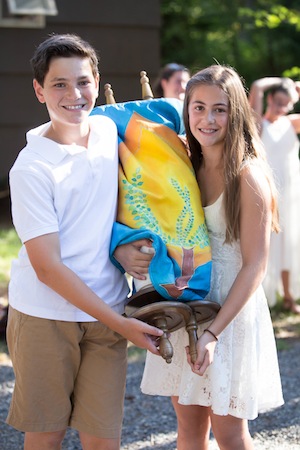
photo - learning Torah at Camp Kalsman
(photo from Camp Kalsman)

Entering their 10th summer, director David Berkman said this summer will be one big birthday celebration, highlighted by a community-wide party on July 31.

In its first decade, Berkman said the camp’s sense of community has stood out more than anything else.

“The two things that most distinguish Kalsman from other Jewish summer camps are our staff and the community we form with all our participants,” he said. “The Kalsman staff are extraordinary and their dedication to the campers and the camp is amazing. We all work hard to create a sense of family and home away from home. More often than not, campers refer to camp as their home.”

In addition to a heated pool, Camp Kalsman also features a 50-foot tower, a giant swing, a speaking garden and even a petting zoo. With sessions ranging in length from three days to three weeks, the camp serves participants from Grade 2 all the way through high school.

Berkman said Camp Kalsman usually sees three to four dozen campers from north of the border, but he is looking forward to seeing that number grow.

For more information on Camp Kalsman, visit campkalsman.org.

Kyle Berger is Jewish Community Centre of Greater Vancouver sports coordinator, and a freelance writer living in Richmond.

 

Format ImagePosted on January 22, 2016January 21, 2016Author Kyle BergerCategories WorldTags Camp BB Riback, Camp Kalsman, Camp Solomon Schechter, Conservative movement, CSS, David Berkman, Jerrod Henoch, Pine Lake, Reform movement, Sam Perlin, Whidbey Island
הדולר הקנדי

הדולר הקנדי

הדולר הקנדי נחלש משמעותית מול השקל הישראלי. (צילום: Cynthia Ramsay)

הדולר הקנדי כידוע מאבד גובה מול הדולר האמריקני אך גם מול מטבעות חזקים אחרים בעולם, בהם הלירה שטרלינג הבריטית והיורו האירופאי. עתה מתברר שהדולר הקנדי נחלש משמעותית גם מול השקל הישראלי, שנחשב כיום לאחד המטבעות החזקים בעולם. בסוף השבוע האחרון הדולר הקנדי היה שווה ל-2.736 שקל ישראלי. הנה מספר נקודות ציון משמעותיות המצביעות על השינוי בשווי בין שני המטבעות ומראות כיצד הדולר הקנדי נחלש מאז מול השקל. בראשון לינואר השנה הדולר הקנדי היה ברמות של 2.80 מול השקל, בחודש נובמבר אשתקד הדולר הקנדי היה שווה 2.95 שקלים, בינואר אשתקד הדולר הקנדי היה שווה 3.3 שקלים, בדצמבר 2014 הדולר הקנדי היה שווה 3.5 שקלים, בינואר 2013 הדולר הקנדי היה שווה 3.8 שקלים, ואילו בחודש אוגוסט 2012 הדולר קנדי היה שווה למעלה מארבעה שקלים.

הבי ג‘יז נעלמו מהשדה: משטרת אוטווה בודקת מי גנב כוורות עם שלושים אלף דבורים

למתנת החג הזה הזוג ג’י לא ציפה. מריאן ומאט גי’ נדהמו כי בעיצומם של חגי סוף השנה שתי כוורות שלהם נעלמו, ובתוכן למעלה משלושים אלף דבורים. הכוורות הוצבו בשדה חקלאי באוטווה, ומה שנשאר מהן זה שני לוחות עץ מכוסים בשלג וסביבם עקבות בבוץ העמוק של מי שגנב אותן.

הזוג ג’י מפעילים יחדיו את חברת ג’יז ביז לגידול דבורים נותנות דבש ומחזיקים ביותר מעשרים ובארבע כוורות באזור בירת קנדה. הם הקימו את החברה כיוון שמספר הדבורים בקנדה נמצא בירידה מתמדת בשנים האחרונות וזה מדאיג. שתי הסיבות העיקריות לכך: שינוי האקלים והתחממות כדור הארץ, ולאור הגידול בשימוש בחומרי הדברה מצד החלקאים. לדברי מריאן ומאט הדבורים שנגנבו לא יחזיקו בקור הקנדי הקשה ולכן אסור להזיזן בחורף ויש להשאיר את הכוורת במקומן.

הזוג פנה לעזרת משטרת אוטווה והשוטרים מציינים כי מעולם לא הוגשה להם תלונה על גניבת כוורות עם דבורים.

הסינים הבאים ומשתלטים גם על השפה: ישיבות ועד בית בריצ‘מונד מתנהלות במנדרינית

הסינים כך מתברר משתלטים בכל תחום ותחום על אזור מטרו ונקובר לאור מספרם ההולך וגדל. בעיר ריצ’מונד הסמוכה כבר למעלה ממחצית מהתושבים הם ממוצא סינים. הקנדיים המקומיים מרגישים שהסינים משתלטים להם גם על השפה, כיוון שבחנויות רבות בעיר מוצבים שלטים בשפה הסינית בלבד, למרות שבקנדה שתי השפות הרשמיות הן אנגלית וצרפתית. המחוקק מתברר לא פועל ממש לשנות את המצב ולחייב את בעלי העסקים להציב שלטים גם באנגלית. יש לזכור שסינים רבים שגרים בערים אחרות באזור מגיעים לריצ’מונד לקניות ולמסעדות הסיניות הטובות שיש בה.

אנדריאס קרגוט שגר בריצ’מונד נדהם שהשפה הסינית הרשמית מנדרינית הפכה להיות השפה של ישיבות ועד הבית שבו הוא גר. קרגוט ודייר נוסף ביקשו להצטרף לאסיפה האחרונה של הוועד שדנה בתקציב השנתי. יו”ר הוועד אישר להם להגיע אך ציין במכתבו, “שהישיבה תנוהל במנדרינית שהיא השפה העדיפה מבחינת חברי הוועד”.

קרגוט כועס מאוד על הוועד ומציין כי לא מדובר באיזה סוג של מועדון חברתי אלא בישות משפטית לכל דבר, שדיוניה צריכים להתנהל באחת השפות הרשמיות של קנדה. הוא הקליט את הישיבה ובצר לו הגיש תלונה נגד הוועד למועצה לזכויות האזרח, על אפלייה וגזענות.

יו”ר הוועד, אד מאו, אישר שישיבות הוועד אכן מתנהלות במנדרינית והוסיף כי כל מסמכי הוועד נכתבים באנגלית. הוא דחה את טענות קרגוט שהוועד מפלה לרעה את דוברי האנגלית ונוקט במדיניות גזענית.

Format ImagePosted on January 19, 2016January 19, 2016Author Roni RachmaniCategories עניין בחדשותTags Andreas Kargut, bees, Canadian dollar, human rights, Mandarin, Marianne Gee, Matt Gee, Ottawa, Richmond, shekel, אוטווה, אנדריאס קרגוט, דולר הקנדי, זכויות האזרח, מאט גי', מנדרינית, מריאן גי', ריצ'מונד, שקל
On road to reconciliation

On road to reconciliation

The Wallenberg-Sugihara Civil Courage Society will honor Chief Dr. Robert Joseph, ambassador for Reconciliation Canada, on Jan. 17. (photo from Jack P. Blaney Awards, Simon Fraser University)

The release of the Truth and Reconciliation Commission of Canada report last year was a turning point in the relationship between Canada and its aboriginal peoples. It is part of a longer and ongoing trajectory of healing, according to Chief Dr. Robert Joseph, who is being honored this weekend as a courageous civic leader.

The Wallenberg-Sugihara Civil Courage Society was founded by members of the local Jewish and Swedish communities, including the honorary Swedish consul, to recognize individuals who help others at great risk to themselves. Joseph, hereditary chief of the Gwawaenuk First Nation on northern Vancouver Island, is the recipient of this year’s Wallenberg-Sugihara Civil Courage Award.

photo - Chief Dr. Robert Joseph
Chief Dr. Robert Joseph (photo from Wallenberg-Sugihara Civil Courage Society )

Joseph is ambassador for Reconciliation Canada, an organization intended to “revitalize the relationships among indigenous peoples and all Canadians,” and a member of the National Assembly of First Nations Elders Council.

“At significant personal risk and after facing severe oppression, Chief Dr. Robert Joseph courageously stood up against social injustice to help others,” notes the award citation. “As a residential school survivor, he courageously chose to publicly share his story and the consequences of the abuse and trauma he had endured. This was at a time when the indigenous community was conflicted about bringing the experiences in the residential schools to light and when the larger community was in denial about what happened. Chief Dr. Robert Joseph chose to turn his experience into a vehicle for healing through reconciliation and a will to make sure that this would never happen again.”

In an interview with the Independent, Joseph discussed the progress toward healing his community has made in recent decades.

“Our First Nations people were absolutely in deep despair, not understanding what had happened to us over the course of all that time that residential schools existed,” he said. “But, in the last 20 years, we’ve made remarkable, remarkable progress. And one of the breakthroughs in all of that was survivors like myself began to feel confident enough to tell our stories. We had been walking around in deep shame and despair and brokenness and suddenly we found a way to begin to tell our story.”

A crucial first step, he said, was the federal government’s 1998 Statement of Reconciliation. Though the statement itself was equivocal and not universally appreciated, Joseph said, it was accompanied by funds for survivors and resources for the affected communities.

“I was part of the movement because I was executive director for the Indian Residential School Survivors Society, which was the only organization of its kind at the time,” he said. “So, we began to hold meetings and circles where circles of survivors began to tell their stories and it was deeply, deeply liberating.”

The process expanded, he said, to include representatives of the churches who were complicit in the schools system and later the government and other Canadians.

“We began to recognize that indeed there is a common humanity that exists between all of us and if we can’t harness that common humanity, we’re going to always have these atrocities going on around the world,” he said. The Truth and Reconciliation Commission was a culmination of that progress and Joseph is uplifted by the response of Canadians since the report’s release last year.

“We’ve had a tremendous interest and response from many Canadians about their desire to reconcile,” he said. Even so, the impact of the report was double-edged, he said.

“When the Truth and Reconciliation Commission report was submitted in June, it said that because of a whole number of initiatives and policies, Canada had created, impacted, effected a cultural genocide against the aboriginal people of this country,” he explained. “For me, even as I sat and listened to that, it was sort of a bittersweet report. On the one hand, all of our suffering had been acknowledged and identified in this report. But, on the other hand, as a country together, you and I and everyone who are Canadians were told that genocide was a part of our history.”

He added that he is humbled to receive the Wallenberg-Sugihara Civil Courage Award, which is named in honor of Raoul Wallenberg and Chiune Sugihara, diplomats who, during the Second World War, risked their lives to save Jews from the Nazis.

“I’m really moved by the idea that people who suffered huge indignities, human suffering, who have been through it all like no one else has before, are thinking that somebody as little as I am can be acknowledged by them,” Joseph said.

As he prepares to receive his award, the chief said he is optimistic that Canada is at a crossroad.

“We are so blessed in this country,” he said. “We have all of the rainbow and color of the human race here and we have a chance to engage with each other, to nurture our relationships, to embrace our differences and indeed celebrate them.… But it calls us to our highest order as Canadians to be all that we can be in treating each other with respect and dignity because there is nothing more important than respect and dignity. I think that we are on the right path.”

Joseph will receive his award at an event on Sunday, Jan. 17, at 1:30 p.m., in the Wosk Auditorium at the Jewish Community Centre of Greater Vancouver. The ceremony will be followed by the screening of the film Carl Lutz: The Forgotten Hero, about a Swiss diplomat in Budapest who saved tens of thousands of Jews from the Nazis.

Format ImagePosted on January 15, 2016January 15, 2016Author Pat JohnsonCategories LocalTags Chiune Sugihara, First Nations, Robert Joseph, Truth and Reconciliation Commission, Wallenberg-Sugihara Civil Courage Award
A peek at LimmudVan’16

A peek at LimmudVan’16

Eve Jochnowitz (photo from Limmud Vancouver)

Limmud Vancouver, a now-annual festival of Jewish learning, takes place Jan. 30 and 31. The “pan-denominational” event includes seminars, lectures, workshops and discussions on a diverse array of topics. This week and next, the Independent features a few of the presenters who will participate in the local version of the international phenomenon that has now reached more than 60 Jewish communities worldwide.

A national fish story

Eve Jochnowitz calls gefilte fish the national dish of the Ashkenazi Jewish people.

“Wherever you have Ashkenazic Jews, you have the Yiddish language and you have gefilte fish,” she said. “It’s like DNA. It’s in many different permutations and incarnations, but the gefilte fish pretty much goes wherever the Yiddish-speaking Jews go.”

A culinary ethnographer who hosts a Yiddish-language cooking show, Jochnowitz doesn’t want to tip her hand too much in advance of her presentation here this month.

“Let’s just say there are some very surprising variations on gefilte fish out there and let’s just say that the Ashkenazic Jews will come up with ingenious ways to have gefilte fish in the most unexpected situations,” she said in a phone interview from her New York home.

If there are so many variations, then what, at root, defines geflite fish?

“Usually it is made of freshwater fish; in Eastern Europe, most frequently carp, pike and whitefish,” she said. “The more carp there is, the more dark and the more fishy, more flavorful, it is. Some people like it to be more fishy, some people like it to be almost a tofu substitute with the fishiness very understated and the gefilte fish itself being more of a base for some horseradish or egg sauce or whatever it is you choose to put on your gefilte fish.”

It may or may not have matzah meal, it may or may not have sugar, she said.

“This is another very controversial issue with gefilte fish – should it be sweetened or salted or both?” she said. The term itself means “stuffed fish,” but stuffing a fish is very difficult and labor-intensive, so “most gefilte fish is not gefilte.”

Although she is a gefilte fish maven, Jochnowitz stressed that Ashkenazi food is not limited to the familiar.

“Yiddish food is a universe,” she said. “There is much more to Yiddish food and Yiddish cooking than just challah and kugel.”

Her other presentation at Limmud will focus on the little-known phenomenon of Jewish vegetarian cookbooks of the late 19th and early 20th centuries.

Two sides to the story

David Matas, a noted human rights lawyer who represents the organization Justice for Jews from Arab Countries, says the world needs to recognize that Palestinians are not the only refugee population that emerged from the war of 1948-49.

photo - David Matas
David Matas (photo from Limmud Vancouver)

“What we see is two refugee populations that were generated as a result of the Arab invasion to stop the creation of Israel,” he said. “The Jewish population is, in fact, more numerous than the Palestinian.”

The United Nations, with a few exceptions, has been concerned about the Arab refugees from that time, but not the Jewish ones who were forced from their native lands across North Africa and the Middle East, he said. Israel has also not taken a strong lead on the issue until recently, he added.

“Israel, on the whole, has not been a great advocate on this issue historically because there has been the Zionist mythos that people wanted to come to Israel rather than the fact that they came because they were refugees,” he said. “It’s only recently that Israel has itself adopted this position that these people are a refugee population and should be treated in any overall refugee settlement.”

There is also the fact that Jewish refugees have been given citizenship in Israel or other countries, while the Palestinian populations have largely remained stateless.

“The Arab population mostly has not been resettled and, in fact, they’ve grown because their descendants have been classified as refugees,” Matas said. “They’ve remained as a perpetual refugee population. There’s been an attempt to keep this population as a refugee population, as an argument for the destruction of the state of Israel.”

Matas and his organization believe both refugee groups should receive justice. Most likely, he said, a resolution might involve a compensation fund that wouldn’t necessarily come from Israel or the Arab states, but possibly from the United States or third parties willing to facilitate a larger peace settlement.

“That compensation fund would be available to people who were victimized from both refugee populations, as well as their descendants, or something like that,” he said. The idea of compensation for massive human rights violations is not new. “There’s been lots of experience with the Holocaust, amongst other [cases]. You’ve got a kind of jurisprudence and experience to draw on in order to make these programs work.”

While some commentators contend that the refugee issue can wait until later stages of any negotiated settlement, Matas disagrees.

“I think it’s important to bring it in at this stage of the negotiations,” he said. “This Palestinian notion that we are the refugees and the Jews aren’t plays into this false narrative there’s only one victim population when in fact there are two.”

A Polish journey

Jewish Canadians often travel to Poland in search of their family’s roots or as an exercise in history. Norman Ravvin travels there frequently, but he is as focused on the present as on the past.

photo - Norman Ravvin
Norman Ravvin (photo from Limmud Vancouver)

“You can visit Poland on different terms,” said the Montreal academic and author. He will lead a session on traveling Poland that focuses on the major cities of Warsaw, Kraków, Lodz and Poznan, as well as his maternal ancestors’ hometown of Radzanow.

“The overall depiction will be of Poland as a place that is alive and contemporary,” he said. “Aspects of that are related to Jewish memory and parts of it have to do with contemporary Polish life and then the way that one feels as you go back to the ancestral place.”

Things are changing fast in Poland, Ravvin said. The end of communism, the integration into the European Union and the general march of time means things have altered significantly since Ravvin first toured there in 1999. One area of progress relates to Jewish and war-era history.

“In the last 25 years, they’ve become very effective at commemorating Jewish prewar life,” he said. “If you had traveled to Poland in 2000, this wouldn’t necessarily have appeared to be true, but now certainly it is true and, when you walk in Warsaw, the sidewalks are marked with these remarkable inlays which say this was the ghetto wall, so that you step over it and you actually feel that you understand the prewar and the wartime city and now the postwar city.”

Some of the efforts, he speculates, are for the purposes of tourism, but he also acknowledges Polish efforts at education.

“They’re doing a reasonable job of confronting how to live with the shadows of the past,” he said.

Ravvin’s mother’s family fled Radzanow in 1935 and all those left behind were murdered. The family made their way to Canada, eventually to Vancouver, where Ravvin’s grandfather, Yehuda-Yosef Eisenstein, was a shochet (kosher slaughterer).

Ravvin welcomes people to bring their own family history to his presentation.

“If they’re carrying their own version of this story,” he said, “they might warm that up in their minds, their own families’ Polish past, what they know about it, what they wish they knew, if they’ve gone, whether they might go, so that the possibility is the thing they’re considering and then maybe my talk will change the way they think about that.”

For this year’s Limmud schedule, visit limmudvancouver.ca.

Format ImagePosted on January 15, 2016January 15, 2016Author Pat JohnsonCategories LocalTags David Matas, Eve Jochnowitz, gefilte fish, human rights, Limmud, Norman Ravvin, Poland
Sponsoring Yazidi refugees

Sponsoring Yazidi refugees

Yolanda Papini Pollock, co-founder of Winnipeg Friends of Israel, which initiated Operation Ezra. (photo from Yolanda Papini Pollock)

The Jewish community in Winnipeg has ramped up its efforts to help the Yazidi people, including the sponsorship of families to the city.

“When you look at the plight of the Yazidi people, it kind of mirrors the Jewish reality of 1945,” said Al Benarroch, executive director of Winnipeg’s Jewish Child and Family Services (JCFS). “I’m not going to be one to say that it’s like the Holocaust, but the Yazidis have suffered, over the last 500-600 years, a very significant genocide.

“The Yazidi people have been displaced from that region of the world and have been heavily victimized, murdered and devastated in the millions. And they have nowhere to go to. So, our community and other communities across Canada have really taken this to heart saying, you know, it was a mere 70 years ago that we ourselves were in a similar situation.

“When we say ‘Never again,’ are we just talking about the Jewish people? We see that image of ourselves in the Yazidi plight, and we feel compelled to come forward and act on it. That’s been the message we’ve been putting forward in Winnipeg.”

The group that started this effort in the city is Winnipeg Friends of Israel (WFI), awakening the community to the Yazidis’ situation and the possibility of sponsoring Yazidi refugees to Winnipeg.

“When we heard about the Yazidi massacre in August 2014, we reached out to the Yazidi community,” said Yolanda Papini Pollock, WFI co-founder. “We wanted to hear about the Yazidi plight and support their community by raising awareness.”

WFI invited Nafiya Naso, a Yazidi spokesperson, to share her and others’ stories with the Winnipeg community at the Asper Jewish Community Centre in March 2015.

“After learning about the dire strait conditions of the Yazidis in refugee camps, it was clear to us that we could not sit aside and do nothing,” said Papini Pollock. “We decided to do more than just listen.”

The group initiated Operation Ezra with the goal of sponsoring at least one Yazidi family and of raising awareness of the Yazidis’ plight. They began by partnering with Bridges for Peace, Calvary Temple, the Mennonite Central Committee (MCC), and others. By December, $130,000 (enough for five-plus families) had been raised.

“When we heard Nafiya’s story, we recognized so many similarities to the plight of the Jewish people prior to the establishment of Israel and immediately empathized with her people,” said Papini Pollock. “The Yazidis are an ethno-religious minority and, just like the Jews, they are targeted solely because of their religious beliefs. Many genocide scholars perceive the Yazidis as victims of genocide. The Yazidis have been persecuted 74 times. At one point, there were more than 20 million Yazidis. Today, there are less than one million.”

The Jewish Federation of Winnipeg has helped raise the funds to sponsor as many families as possible and JCFS has taken on the responsibility of managing the resettlement and other services, allowing WFI to do what they do best – connecting on a personal level with people.

Since Operation Ezra was announced, the congregation of Shaarey Zedek has taken on sponsorship of two families under the initiative.

“Collectively, we’re talking about 35 individuals to date who have applications that are or will be submitted,” said Benarroch. “At this point, I think we’re talking about bringing in as many as 50 individuals.

“The more we fundraise, the more we can help. We’ve gotten a hold of many people who are donating furnishings, old televisions and bedding. Someone came forward and said they will donate through their manufacturing company quilts and coats. We are looking for warehouse space.”

The sponsorships are being done through MCC, as they are the only organization in the city that holds a sponsorship agreement with the federal immigration department. This is something Benarroch would like to see change, not due to any lack in MCC’s services, but as an added insurance. “Historically, there was Jewish Immigration Aid Services of Canada (JIAS),” he said. “Located in Toronto, they were the national office for Jewish immigration.

“Because it was a national mandate for that sponsorship agreement and the national office no longer exists, my understanding is that the sponsorship agreement had to be given up. So, now we no longer have a national sponsorship agreement for Canadian Jewish communities. God forbid if we should have a worldwide crisis and the Canadian Jewish communities would be challenged at a national level to take on Jewish refugees.”

While he has been exploring the options regarding making an application to have at least a local sponsorship agreement – “If history repeats itself, as it usually does, you should have that safety” – Benarroch stressed, “I think it’s been amazing to be able to work in partnership with those groups, with the Mennonite community. The Manitoba Multifaith Council sits at the table for Ezra. We get ourselves out there. It’s the right thing to do.”

Some of the most-asked questions by people considering joining the effort, Benarroch said, are “Who are the Yazidis? Are they Muslim? Are they Christian?”

His response is, “They are not Jewish, Christian or Muslim, yet they do share many interesting customs that have a foot in all of those religions. They celebrate their new year … I’m not an expert … in the spring, in their month of Nisan. We, as Jews, also have a month of Nisan. They pray several times a day towards the sun, much like Islam. Yet, they have no formal book or liturgy … no formal Koran, Torah, New Testament, whatever you’d like to call it. It’s an oral tradition.”

Papini Pollock, meanwhile, is finding it hard to wait for the first arrivals. “We will be involved in taking care of the families when they arrive to the best of our abilities,” she said. “We will work with the rest of the Winnipeg community to ensure the refugees have the most natural transition to Winnipeg and to Canada.”

For more information on Operation Ezra, visit jewishwinnipeg.org/community-relations/operation-ezra.

Rebeca Kuropatwa is a Winnipeg freelance writer.

Format ImagePosted on January 15, 2016January 15, 2016Author Rebeca KuropatwaCategories NationalTags Al Benarroch, immigration, JCFS, Jewish Child and Family Services, refugees, WFI, Winnipeg Friends of Israel, Yazidi, Yolanda Papini Pollock
Ruimy in Maple Ridge

Ruimy in Maple Ridge

Dan Ruimy (photo from Dan Ruimy via cjnews.com)

If there’s one thing Dan Ruimy is good at, it’s getting people together and promoting dialogue.

Ruimy is the new Liberal member of Parliament for the Pitt Meadows-Maple Ridge riding. A 53-year-old son of Jewish Moroccan immigrants to Canada, Ruimy’s parents, Andre and Jacqueline, moved to Montreal’s Cote-des-Neiges in the mid-1950s. There, they raised their five sons and ran Cantor’s Bakery in Cote-des-Neiges and a grocery store in Habitat 67. Ruimy attended synagogue with his family on the High Holy Days. Later, a career in food and beverage led him all over the country for 27 years, as he filled positions at McDonald’s, A&W and Quiznos.

All that traveling took its toll and by 2011 he was ready to settle down, get grounded in one community and find a place to call home. He chose Maple Ridge and purchased a secondhand bookstore that sold loose-leaf tea. Today, he is still the owner of Bean Around Books & Tea, and credits the tea and coffee shop as having played a pivotal role in his decision to enter politics.

“At Bean Around, I saw what happens when you include people in your community,” he reflected. “Having spent my life in the hospitality industry, my personality is all about social contact. At the tea shop, I saw there was a craving for that, so I’d introduce people to each other and help make connections. It’s quite an amazing thing to watch a 15-year-old engaging an 86-year-old in dialogue. When I started thinking about running for public office, I realized that this is what I could do for my community: create dialogue, bring people together and help people find solutions for the challenges they encounter every day.”

Ruimy feels strongly about community and what comprises it. “The Syrian refugees are a perfect example,” he said. “By including them, we become a stronger community. Isn’t that what Canada is all about? We’re a nation built on immigration. We shouldn’t shun people, we should welcome them with open arms, because that’s our future as well.”

Since being sworn in as a member of Parliament in November, Ruimy has hired extra staff for his shop to accommodate a busy schedule commuting to and from Ottawa. While he’s no stranger to traveling for work, it’s different this time, he said. “This is my home base now, I have a community to come back to. In the past, I’d come back to an empty place where I didn’t know my neighbors and wasn’t involved but, for the first time in my life, I can actually say I’m coming home.”

He plans to open his constituency office in Maple Ridge soon. It’s “tough” to be Jewishly affiliated in Maple Ridge, he said, given that there are few Jews living there. But, in Ottawa, he’s joined the Canada-Israel Inter-Parliamentary Group. “Having those roots is important to me, and I think we lose sight when we’re not involved in that part of our community,” he said.

Ruimy said the key issues he’ll be working on are homelessness, affordable housing, helping struggling seniors, and providing assistance to youth trying to find jobs. “There’s lots of opportunity in Canada but, for some reason, people have difficulty finding the programs,” he said. “I hope to be an agent of change and help bring those opportunities to young people.”

The most exciting moment of his parliamentary career to date was attending the first session in the House of Commons, he added. “For the first time, you’re seeing the 338 people who got elected and, at that moment, it sunk in how lucky I am to have been given this opportunity. It’s a privilege really and I feel proud that people sent me here to represent them, that they put their trust and confidence in me.”

Lauren Kramer, an award-winning writer and editor, lives in Richmond. To read her work online, visit laurenkramer.net. This article was originally published in the Canadian Jewish News.

Format ImagePosted on January 15, 2016January 15, 2016Author Lauren KramerCategories LocalTags Dan Ruimy, Liberals, Maple Ridge, Pitt Meadows
Best interest of child

Best interest of child

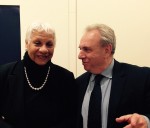
Keynote speaker Senator Anne Cools with Janusz Korczak Association of Canada president Jerry Nussbaum. (photo from JKAC)

The third session of the six-part Janusz Korczak Lecture Series “How to Love a Child” took place Nov. 25 at the Robert H. Lee Alumni Centre. Co-sponsored by the University of British Columbia faculty of education and the Janusz Korczak Association of Canada, this well-attended lecture – The Evolution, Current Status and Future of the “Best Interests of the Child” Principle in the Protection of Children’s Rights – drew people from all walks of life. Among the attendees were teachers, children’s rights activists, Janusz Korczak association members, the general public and students.

The lecture’s moderator, Dr. Edward Kruk, associate professor of social work at UBC, who specializes in child and family policy, opened the evening’s program, while I brought Dr. Janusz Korczak into focus by briefly discussing the fate of children in war zones, relating the topic to Korczak’s care of children during the Second World War.

The Hon. Anne Cools, senator for Toronto Centre-York and Canada’s longest serving senator, was the keynote speaker. Among her many accomplishments in social services, she founded one of Canada’s first battered women’s shelters. Her talk centred on what has been done in the best interest of the child. She spoke about the ramifications in her areas of expertise – domestic violence, divorce, child custody and shared parenting – and how the interaction of politics, government and the law provide a complex arena in which the child’s fate is often lost.

The three panelists that followed Cools each shed light on a different aspect of children’s well-being.

Beverley Smith, representing the field of child care, is a longtime women’s and children’s activist from Calgary. Among many honors, she received the Queen’s Golden Jubilee Award for her work. She spoke about working parents and daycare, including how this separates children from their loved ones and how the worth of a stay-at-home parent’s work (usually the mother) is undervalued by the government. In this context, she referred to Korczak, who, among other things, acted in the best interest of the child by advocating that children’s voices need to be heard on the subject of their own care and needs.

The second panelist, Cecilia Reekie, a member of the Haisla First Nation, is an adoptee. Sitting on many boards, her expertise is in the areas of aboriginal culture, truth and reconciliation. She represented the field of child protection, speaking from the heart and sharing her story with the audience. She said that she was lucky to eventually have been adopted by people who became caring and supportive parents, thus enabling her to grow and succeed in life. However, she said, many other aboriginal children have not had such luck. In fact, she said, “indigenous children are disproportionately represented in the child protection/welfare system across Canada.”

The final panelist, Eugenea Couture, is an author, mentor and advocate for child custody law reform. She is the recipient of the 2014 YMCA Power of Peace Medal and the 2014 Foster Children’s Day Award. Because of her own experience of having gone through divorce and child custody trials, she knows how divorce can become a war zone, the children its casualties. “How can we expect a child who is ripped from their family environment to feel worthy of love and belonging?” she asked. “It will not matter what they hear, because the backlash of taking them into care already speaks volumes of trauma.”

To register for the next lecture in the Janusz Korczak series – The Human Rights of Aboriginal Children, with keynote speakers Dr. Mary Ellen Turpel-Lafond, B.C. representative for children and youth, and Dr. Michael DeGagné, president and vice-chancellor of Nipissing University – visit jklectures.educ.ubc.ca. There is no cost to attend. The lecture takes place on Jan. 21, 7 p.m., at the alumni centre.

Lillian Boraks-Nemetz is a Vancouver-based author and a board member of the Janusz Korczak Association of Canada.

Format ImagePosted on January 15, 2016January 15, 2016Author Lillian Boraks-NemetzCategories LocalTags Anne Cools, Beverley Smith, Cecilia Reekie, Eugenea Couture, Janusz Korczak Association
Shaping Israel’s tech future

Shaping Israel’s tech future

Nir Kouris addresses a Tomorrow Israel gathering. (photo from israel21c.org)

Nir Kouris is one of those hyper-accomplished young Israelis who cannot be described in a single phrase. Digital brand manager, tech evangelist, growth hacker, startup mentor, technology conference organizer, wearable-tech adviser, IoT enthusiast – these are all apt labels, but he prefers to call himself simply “a person who loves the future.”

He does not only mean that he loves futuristic technologies, though he really, really does. His passion is nurturing Israel’s future tech leaders by connecting them with peers and experts across the world.

In addition to NK Corporate Digital Strategy, the business he started in 2003 at age 20, Kouris got the ball rolling with eCamp, co-founded in 2008 to bring Israeli and overseas kids together for an American-style summer experience in technology. He founded Innovation Israel – a community for Israeli startups, entrepreneurs, investors, venture capitalists, angels and developers – together with Ben Lang, an American eCamper who moved to Israel five years later at age 18.

Kouris has organized Hackathon Israel, Tel Aviv Hackathon Day and World Hackathon Day, all attracting hundreds of young programmers. In 2014, he helped launch Israel’s first Wearable Tech Conference, headlined by Silicon Valley trendsetters.

Perhaps Kouris’ most ambitious endeavor is Tomorrow Israel, a movement to boost technology education and opportunities in Israel through worldwide collaboration.

“When I was 12, I read a book that changed my life, Dig Your Well Before You’re Thirsty,” Kouris told Israel21c. This bestselling guide to networking taught him, “If you want to be somebody, go to tech conferences.” And so he did.

“I was always the youngest person at these events and, at one of them, a Microsoft marketing manager asked me what I was doing there; I was only a kid. I promised myself to treat people equally, to listen to people of all ages, because nobody did that for me. That’s why I always dedicate time to young people,” said Kouris, who turns 34 in May.

At the Israeli Presidential Conference Facing Tomorrow, held annually from 2008 to 2013 at the behest of former president Shimon Peres, Kouris was dismayed to see no young faces among the distinguished presenters and few in the audience.

“I proposed creating Tomorrow Israel to take Peres’ vision into reality, a global movement connecting Israeli teens to others using the universal language of technology,” he explained. “I don’t believe in waiting for government officials and people with titles to take responsibility. I believe in regular people taking responsibility for our lives – not for fame, but because we really care and we love doing it.”

At first, Kouris rented venues to present workshops and lectures, and then Google Campus in Tel Aviv offered free space. Global technology gurus began accepting his invitations to Tomorrow Israel meetups, and he started sponsoring local and national conferences and hackathons for kids from Israel and elsewhere.

The Tomorrow movement has spread to Holland, the United Kingdom, India, America and Australia. Though there’s no official age limit, most participants are under 21.

“It’s not an age, but a way of thinking. We attract people wanting to make their countries better through entrepreneurship,” Kouris said. “It’s like a VC for people. Tomorrow is all about smart and good people because being a good person matters most.”

The Amsterdam municipality, Google for Education and other entities have approached Kouris about collaborating with Tomorrow. Members are forming teams and launching projects together via national and international Tomorrow Facebook groups. Kouris is proud that Israel is the nexus of this activity.

“Before Tomorrow, everybody heard the negative stuff about Israel and now they all want to come here to see our startup culture. We’re proving we can find new channels of communicating with the next generation of leaders and empower other nations to be startup nations,” Kouris said. “We have something strong and solid in our hands.”

eCamp becomes Big Idea

When Kouris was a teen in the early days of the internet, he’d sit at the computers in his school library in a village near Afula, earning money by registering and selling domain names.

During his military service, he was sent to work in American Jewish summer camps. “I was inspired to make something like that in Israel, combining the American camp experience with the Israeli tech story,” he related.

He co-founded eCamp after dropping out of college (“What I was learning in class was about the past, and I had to deal with the future”) and working briefly at a high-tech startup. Now called Big Idea, the camp is still going strong, but Kouris left after a year to build his branding consultancy and organize for-profit conferences supported by corporate sponsorships and ticket sales.

“Israelis usually don’t pay for conferences, so it has to be something exceptional you can’t get anywhere else,” explained Kouris, who says his favorite hobby is “meeting people smarter than myself.”

He’s persuaded big names like Robert Scoble, a top American tech evangelist, and Prof. Steve Mann, “the father of wearable technology,” to come to Israel along with participants from China, Europe and the United States. “They come on their own budget because they feel these conferences are the best,” Kouris said.

Kouris is planning two international confabs in Israel for 2016, one to present outstanding technologies to the world on behalf of Innovation Israel; the other a free Tomorrow gathering to introduce the established global tech community to the next generation.

The single Herzliya resident said he is “having great fun and traveling the world” as he helps shape the future of Israel.

Israel21C is a nonprofit educational foundation with a mission to focus media and public attention on the 21st-century Israel that exists beyond the conflict. For more, or to donate, visit israel21c.org. Visit israel21c.org/forget-tablets-the-next-breakthrough-is-wearable-audio to listen to Viva Sarah Press speak on TLV1 to Nir Kouris about Israel’s role in this trend.

Posted on January 15, 2016January 15, 2016Author Abigail Klein Leichman ISRAEL21CCategories WorldTags eCamp, Israel, Nir Kouris, technology
יחסים יותר מאוזנת?

יחסים יותר מאוזנת?

ראש הממשלה בנימין נתניהו נפגש עם ראש ממשלת קנדה ג’סטין טרודו בוועידת האקלים של האו”ם. (צילום: youtube.com)

האם רוחות קרות מנשבות מקנדה: ג’סטין טרודו צפוי להנהיג מדיניות יותר מאוזנת כלפי ישראל

ראש ממשלת קנדה החדש מטעם המפלגה הליברלית, ג’סטין טרודו, לא דומה כלל לראש הממשלה היוצא מטעם השמרנים, סטיבן הרפר, שהובס בבחירות הפדרליות האחרונות שהתקיימו בחודש אוקטובר. זאת גם בנוגע לייחס למדינת ישראל. טרודו נחשב עדיין לראש ממשלה “ירוק” כיוון שהוא בתפקיד מספר חודשים ספורים, אך כבר ניתן להבחין שמערכת היחסים ההדוקה ביותר בין ישראל לקנדה שאיפיינה את ממשלת הרפר, לא תחזור על עצמה. הרפר הרגיש מאוד בנוח עם ראש ממשלה של ישראל, בנימין נתניהו. שיאו של הקשר ההדוק הזה בין שני האישים, בא לידי ביטוי בביקור ההיסטורי של הרפר בישראל התקיים בחודש ינואר 2014. המשלחת הגדולה של של הרפר לישראל כללה פעילים בולטים בקהילה היהודית הקנדית. חלק מהם הוטסו במטוס שלו וחלק אחר “רק” התארחו בישראל על חשבון משלם המיסים הקנדי.

טרודו קיבל טלפון מנתניהו מייד עם זכייתו בבחירות בחודש אוקטובר. שני האישים נפגשו לשיחה קצרה ומתוקשרת היטב בסוף חודש נובמבר, במסגרת ועידת האקלים בפריז. הפגישה הייתה אמנם חיובית אך לא הזכירה במאום את חמימות היחסים בין הרפר לנתניהו. טרודו הודה לנתניהו על שהזמין אותו לבקר בישראל באופן רשמי אך הודיע שישמח להגיע “כשזה יתאפשר”?

בתשע וחצי שנות כהונתו של הרפר הוא נחשב לתומך הגדול של ישראל בעולם. וכידוע הוא עמד מאחורי ישראל בכל עניין ועניין. טרודו לעומת זאת כמו אביו, פייר אליוט טרודו ששימש רה”מ קנדה בשנים 1968-1979 ו1980-1984, צפוי להנהיג מערכת יחסים יותר מאוזנת עם ישראל, תוך ניסיון לחזק את הקשרים עם מדינות ערב, שנחלשו בתקופת הרפר. שר החוץ שלו, סטפן דיון, אמר כבר הזדרז והודיע שקנדה מבקשת לחזור לתפקידה המסורתי (לפני עידן הרפר), ולהיות מתווך הוגן בין הצדדים במזרח התיכון, תוך חיזוק הקשרים עם מדינות ערב. להערכת פרשנים ממשלת טרודו לא תתמוך עוד אוטומטית בישראל וכל נושא יבחן לגופו. הממשלה הקנדית צפויה להשמיע גם ביקורת קשה יותר על ההתנחלויות והבנייה בשטחים. טרודו כמו הרפר תומך בפתרון של שתי המדינות פלסטין לצד ישראל והוא בוודאי יזכיר זאת לראשי ישראל בדחיפות רבה יותר, כאפשרות היחידה להשגת שלום באזור. לפני השבעתו לראש הממשלה טרודו התקשר לראשי הקהילה היהודית בקנדה, הבטיח להם להמשיך ולעבוד בשיתוף פעולה מלא עימם והזכיר שוב את תמיכתו החשובה בישראל.

טרודו כמו אביו הודיע כי קנדה בתקופתו תתנגד לחרם על ישראל “שזה סוג חדש של אנטישמיות”. אך מצד שני הוא בחר לא הגיב על ההחלטת האיחוד האירופאי מחודש נובמבר, לסמן מוצרים מיוצרו בההתנחלויות. הרפר בוודאי היה נוהג אחרת. בנושא איראן הגרעינית הרפר עמד בקו אחד עם נתניהו (אך לא לא קיבל את “נאום הקווים האדומים” של נתניהו באומות המאוחדות). לעומתו טרודו מצדד בהסכם בין איראן למעצמות ואירופה. לדבריו: “מדובר בצעד בכיוון הנכון”.

טרודו שלח ברכה ליהודים קראת החנוכה שהייתה הרבה יותר צנועה, לעומת הברכות החמות והארוכות של הרפר. טרודו בוודאי לא ינהג כמו שהרפר שלקראת ראש השנה, היה שולח כרטיסי ברכה אישיים (עם תמונה שלו ומשפחתו) לרבים מבין חברי הקהילה היהודית. הדבר עורר תמיהה כפולה: כיצד משרדו של הרפר ידע מהן הכתובות של היהודים, ומדוע קהילות זרות אחרות לא “זכו” לקבל כרטיסי ברכה ממנו. הרפר ידע להעריך את כוחה הפוליטי של הקהילה היהודית כאן שכיום היא השלישית בגדולה בעולם מחוץ לישראל.

Format ImagePosted on January 13, 2016January 13, 2016Author Roni RachmaniCategories עניין בחדשותTags antisemitism, Binyamin Netanyahu, boycott, Iran, Israel, Justin Trudeau, Stéphane Dion, Stephen Harper, איראן, אנטישמיות, בנימין נתניהו, ג'סטין טרודו, חרם, ישראל, סטיבן הרפר, סטפן דיון, קנדה
טרודו לראשת השנה החדשה

טרודו לראשת השנה החדשה

 ראש הממשלה, ג’סטין טרודו, מברך פליטים סוריים לקנדה. (צילום: cic.gc.ca)

טרודו לראשת השנה החדשה: יש לתמוך בנזקקים ובמעמד הביניים

ראש הממשלה, ג’סטין טרודו, פירסם אגרת לקראת השנה החדשה והדגיש את הצורך לתמוך בנזקקים, מיעוטי יכולת, פליטים. וכן במעמד הביניים שכה נחלש בתקופת ממשלת השמרנים של הרפר. טרודו הזכיר באגרת את האיומים על קנדה והערכים הקנדיים כמו ביטויי שינאה, ומעשי אלימות שמכוונים נגד קהילות דתיות.

ממשלת טרודו פועלת כידוע להביא כעשרים וחמישה אלף פליטים סוריים לקנדה. עד לסוף 2015 הממשלה הצליחה להביא כמה אלפי פליטים והיא צפויה לעמוד במשימתה עד לסוף 2016. בהקשר זה יצוין כי אחת הסיבות שהביאו לנפילתו של סטיבן הרפר, שכ-71 מהציבור הקנדי ביקש להחליפו, נעוצה בעבודה שלא היה רגיש כלל לנושא הפליטים הסוריים.

אין רוב לפינוי מרצון: עשרה תושבים מונעים את פינוי ליטל ביי איילנדס בשניופאונדלנד ולברדור

תושבי הישוב ליטל ביי איילנדס שבמזרח קנדה לא יודעים אם הם צריכים לצחוק או לבכות. זאת כיוון בגלל התנגדות נחרצת של עשרה מהתושבים שגרים בישוב, הם לא יכולים לקבל את הצעת ממשלת מחוז ניופאונדלנד ולברדור ולעבור למקום אחר.

ליטל ביי איילנדס נחשב לישוב הקטן ביותר בקנדה כיום וגרים בו עתה רק מאה וחמישה תושבים. לפי תקנון המחוז דרוש רוב של תשעים אחוז כדי לקבל החלטות הרות גורל ומשמעותיות כמו פינוי ישובים. בהצבעה שנערכה לאחרונה בסוגיה זו תשעים וחמישה מהתושבים אמרו “כן” לפינויי ועשרה אמרו “לא” לפינוי. ההצעה נפלה כי התומכים השיגו רוב של רק 89.47 אחוז ולא תשעים אחוז.

החיים בישוב המבודד והמוקף בים מכל צדדיו לא קלים והגישה אליו אפשרית רק באמצעות מעבורת או סירות. מרבית התושבים (כארבע במאות במספר) שגרו בו נטשו אותו בשנים האחרונות, וכמעט ואין בו תעסוקה מלבד תיירות. בליטל באיי איילנדס יש בית ספר אחד עם שני תלמידים ומורה, תחנת כיבוי אחת ומלון קטן אחד. וכן כדאי לדעת לא פחות משתי כנסיות. ממשלת ניופאונדלנד ולברדור הציעה לתושבים לעזוב את ליטל ביי איילנדס מרצון ולעבור לישובים אחרים במחוז, שהגישה אליהם נוחה יותר. הממשלה הבטיחה לכל אחד מהמתפנים מאתיים ושבעים אלף דולר כפיצוי. כאמור בשלב זה הפינוי לא יוצא אל הפועל והפרק הראשון של הפינוי מרצון יסתיים. בקרוב יגיע בוודאי הפרק השני.

נפתחה הדלת במערכת המשפט הקנדית: לראשונה מונה שופט טרנסג’נדר לאחד מביתי המשפט

לראשונה מונה בקנדה שופט טרנסג’נדר. בימים אלה קייל מקנזי מתחיל לשמש שופט בית המשפט המחוזי של מחוז מניטובה, שממוקם בויניפג. מקנזי בן הארבעים וארבע הוא טרנסג’נדר מוצהר. הוא נאלץ להתמודד מול חמישה מועמדים נוספים לתפקיד השופט ונבחר על ידי ועדת שיפוטית עצמאית. במערכת המשפט מקצה לקצה ברכו על המינוי החדש וציינו כי מקנזי ראוי לתפקיד השופט המחוזי, קודם כל בגלל ניסיונו הרב כעורך דין וכשרונו המקצועי היוצא דופן. במערכת הוסיפו: “כמובן שמערכת המשפט מחוייבת להיות שוויונית ופתוחה אך תחילה על השופטים להיות איכותיים וטובים”. מקנזי הוא בסך הכל השופט הטרנסג’נדר השלישי בלבד בכל יבשת צפון אמריקה והוא מצטרף לשני עמיתיו המכהנים בארצות הברית.

מקנזי שימש בחמש השנים האחרונים תובע מטעם פרקליטות המדינה בנושאי משפחה, מסחר ומשפט אזרחי. במקביל כיהן גם סגן נשיא של לשכת עורכי הדין של מניטובה. הוא עבר תהליך של שינוי מין מאישה לגבר עוד בתקופת לימודיו בית הספר התיכון.

לפי הערכה בכל העולם יש פחות מעשרים טרנסג’נדרים מוצהרים שנבחרו לתפקידים ציבוריים בכל הרמות השונות של הממשלות.

Format ImagePosted on January 5, 2016January 4, 2016Author Roni RachmaniCategories עניין בחדשותTags Justin Trudeau, Kael McKenzie, Little Bay Islands, refugees, Syria, ג'סטין טרודו, ליטל ביי איילנדס, פליטים סוריים, קייל מקנזי

Posts pagination

Previous page Page 1 … Page 268 Page 269 Page 270 … Page 323 Next page
Proudly powered by WordPress