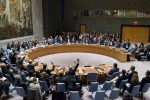
מועצת הביטחון של האומות המאוחדות שהכריזה בשבוע שעבר כי ההתנחלויות של ישראל בשטחים אינן חוקיות. (צילום: UN/Manuel Elias)
ראש ממשלת קנדה לשעבר, סטיבן הרפר, יוצא נגד החלטת מועצת הביטחון של האומות המאוחדות שהכריזה ביום שישי בשבוע שעבר כי ההתנחלויות של ישראל בשטחים אינן חוקיות ויש לפנותן. כידוע ארה”ב נמנעה בהצבעה ולא הטילה וטו כך שנסללה הדרך לקבל את ההחלטה נגד ישראל וההתנחלויות. לעומת זאת ממשלת קנדה ברשות ג’סטין טרודו, בחרה עד כה שלא להגיב כלל להחלטת מועצת הביטחון. אם זאת סביר להניח שטרודו התומך בפתרון שתי המדינות בוודאי היה מישר קו עם מועצת הביטחון.
הרפר בעצם הגיב בחשבון הטוויטר שלו לתגובה של הנשיא הנבחר של ארה”ב, דונאלד טראמפ, שאמר בטוויטר כי לאור החלטת מועצת הביטחון את הדברים הבאים: “בנוגע לאו”ם – הדברים יראו אחרת אחרי ה-20 בינואר”. כידוע טראמפ יכנס לתפקידו בבית הלבן ב-20 בינואר 2017 (כ-90 אלף גולשים אהבו את דברי טראמפ). הרפר תמך בתגובת טראמפ להצבעה והודה על על התנגדותו הפומבית להחלטת מועצת הביטחון (כ-2,500 גולשים תמכו בדברי הרפר)”.
בתגובה לדברי הרפר הגולשים באינטרנט מיהרו להביע את עמדתם בעד ונגד. להלן שלוש תגובות “מעניינות ונאורות” התומכות בדברי הרפר, שמוכיחות שוב באיזה תקופה אנו נמצאים, כאשר אנשים מרשים לעצמם להגיד הכל. אחד הגולשים כתב: “קנדה צריכה מספר התקפות טרור מאסיביות. אולי זה יעורר את האידיוטים שיבינו עם מה ישראל צריכה להתמודד מדי יום מול האיסלאם”. גולש אחר: “אובמה מראה את צבעיו האמיתיים בנוגע לאו”ם המושחת והפוך. אני שמח שהוא עוזב”. ועוד גולש: “זו הנקמה של אובמה כיוון שמורשתו לא אומרת כלום אחרי ה-20 בינואר. טוב להרפר. עתה היכן טרודו עומד?”
משחקים בלגו: העירייה מצאה דרך להתקרב לתושבים
בוונקובר כמו בערים אחרות אין קשר חם בין העירייה לתושבים המקומיים, שממעטים להגיע למפגשים משותפים. בהנהלת העירייה של ונקובר הגיעו למסקנה שצריך למצוא דרך להתקרב אל תושבי העיר. לאחר בדיקות מקיפות שונות שכללו בין היתר משאל לתושבים באינטרנט, נמצא הפתרון המיוחל: קוביות לגו. מתברר שמשחק הלגו יוצר קשר בלתי אמצעי ומתמשך בין הצדדים שמשתתפים בו. מועדון הלוגו של ונקובר הובא בסוד העניין והפך לשותף מרכזי בפרוייקט החדש בין העירייה לתושבים. המועדון אחראי מעתה על אספקת חמישים סטים של קוביות למפגשים בין שני הצדדים. חברי המועדון בונים דגם ראשוני של נשוא הפגישה למשל מרכז קניות חדש, והמשתתפים שיושבים סביב שולחן גדול, ממשיכים בבניית הפרוייקט וכל מה שסביבו, תוך כדי שיחה. בהנהלת העייריה מציינים שהלוגו מאפשר לתושבים להיפתח יותר בקלות לנושאים שונים, ומספר התושבים שמגיע למפגשים הולך וגדל. בהם צעירים ובני נוער שהעייריה חפצה לשמוע גם את דעתם בנושאים שונים ובעיקר אלה הקרובים להם.
צים מרחיבה את השירותים באוקיאנוס האטלנטי כולל קנדה וארה”ב
חברת הספנות הישראלית צים החליטה להרחיב את שירותיה באזור האוקיאנוס האטלנטי, שכוללים גם את קנדה וארה”ב. כל זאת לשפר את שירותי הפריום בין החופים המזרחיים של קנדה וארה”ב עם ארצות הים התיכון – איטליה וצרפת.
השינויים שכוללים הוספת הקווים עם הפעלת חמש אוניות יבואו לידי ביטוי החל מחודש אפריל 2017. הנמלים בארה”ב אותם יפקדו האוניות הם: ניו יורק, נורפולק וסוואנה. ואילו בקנדה מדובר בנמל של הליפקס. הנמל בהפליקס נחשב לאחד החשובים ביותר בקנדה והוא משמש לנקודה המוצא המרכזית של קנדה לספינות שמפליגות לאירופה. אגב רבים מהמהגרים לקנדה נחתנו לראשונה בנמל הליפקס.
B.C. Finance Minister Michael de Jong speaks at the Canadian reception in Tel Aviv, kicking off the Nov. 13-17 trade mission to Israel. (photo from flickr.com/photos/bcgovphotos)
In November, B.C. Minister of Finance and House Leader Michael de Jong led a provincial trade mission to Israel. The invitation to delegates was sent by the minister and Dr. Moira Stilwell, MLA for Vancouver-Langara.
“A lot of the impetus for this [mission] derived from the tech sector, the health sciences sector, the cybersecurity sector itself here in B.C., who said, look, we are seeing increasing opportunities and we’d like to explore those further, is the government prepared to work with us?” de Jong told the Independent in a phone interview. “And that led to a conversation between myself and Moira – of course, she has been, for many years, a big proponent of growing the bilateral relationship – and, out of that emerged this formal trade delegation.”
It was de Jong’s second mission to Israel. His first was about five years ago, during his tenure as the province’s minister of health.
“The role the government and a minister can play is to help facilitate partnerships and contacts between people, and this particular group had done a lot of that work themselves,” he said. “So, for example, the Rick Hansen Institute had already created the beginnings of a partnership with Hadassah [Medical Centre] and we saw that go to the next level in terms of formalization. We went out to Technion University, which is this world-leading institute – in their hallway, they feature Nobel laureates the way other institutions feature alumni – it’s quite remarkable…. [On] the cybersecurity side, some of the folks who were with us are even now actively pursuing with colleagues in Israel opportunities for exchange and for trade and, ultimately, that’s what this is all about.”
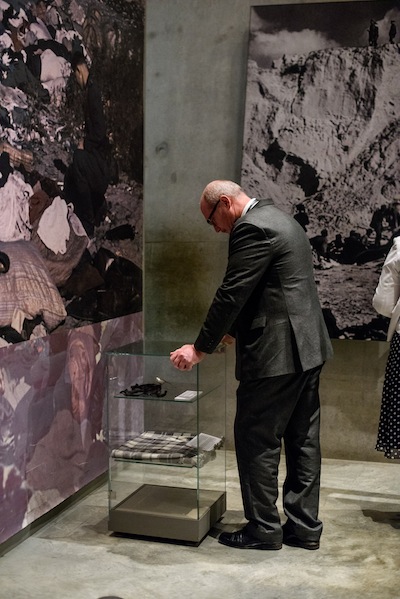
Finance Minister Michael de Jong at Yad Vashem during the November B.C. trade mission to Israel. (photo by Yuval Yosef)
Delegates on the Nov. 13-17 mission traveled to Tel Aviv, Jerusalem, Beersheva, Haifa and the West Bank to meet with various government, university and other stakeholders. Among those accompanying de Jong was Nico Slobinsky, director of the Centre for Israel and Jewish Affairs, Pacific Region. CIJA hosted an optional tour and Shabbat dinner on Nov. 18 for delegates who stayed after the mission was officially over, Slobinsky told the Independent.
“CIJA was delighted by the Government of British Columbia’s initiative to lead a trade delegation to Israel composed of B.C. entrepreneurs and professionals involved in life sciences and cybersecurity,” he said. “This mission assisted in cementing existing relationships, creating new partnerships and promoting opportunities in the province by deepening the economic, cultural and academic ties between Israel and B.C.”
One of those ties was with the Centre for Health Evaluation and Outcome Sciences (CHÉOS), a centre of the Providence Health Care Research Institute and the University of British Columbia faculty of medicine.
“Israel is viewed as a world exemplar in science, technology and commercialization – a place where we can learn, but also can share best practices from B.C.,” said Prof. Robert Sindelar, who, among other things, serves as an advisor to CHÉOS. He added, “Having participated in valuable and hugely beneficial B.C. trade missions previously to China and India, I said yes immediately when I had received the invitation to consider participating in a B.C. trade mission to Israel from the B.C. Ministry of International Trade.”
About the November trip, he said, “From our very first meeting in Israel to the very last meeting, I was continually impressed by our Israel hosts’ efforts to: 1) openly and candidly share valuable insight and details of their successes and endeavors with our delegation, and 2) the immediate connection in person or via email within 24 hours of an event to further explore potential opportunities and collaborations. Thus, we are already working together on several possible collaborations between Israel and B.C.”
Being a multidisciplinary health research centre, CHÉOS looks “to partner and collaborate with synergistic and like organizations researching at the cutting-edge of health and wellness,” said Sindelar. “Thus, true partnerships and collaborations with the best health-outcomes organizations in the world – sharing knowledge, skills and new methodologies – is a continuing goal for us. Each and every life-science event planned for the B.C. trade mission to Israel provided an opportunity and unique ideas for possible collaborations for CHÉOS health scientists and clinicians at a world-class level.”
Of course, the relationship with Israel extends beyond British Columbia to all of Canada.
“There is this very strong political and cultural tie,” said de Jong. “I think we still underachieve with respect to trade. I think there is genuine room for growth on the trade front. There are some emerging opportunities, as Israel begins to explore offshore energy potential.”
As well, “we have room to learn from the ‘start-up nation,’” said de Jong. “You go down to Beersheva, for example, and see how they have managed to create a technology hub in concert with the university there and the community there, and you see elements of that beginning to develop in British Columbia, in the Lower Mainland, in Victoria, but there are some real lessons to be learned.
“Frequently, the conversations began with the Israeli representatives reminding us of the unique challenges that they face and how innovation is borne out of necessity – smaller population base, smaller country, neighbors that aren’t always particularly friendly and, in some cases, are downright hostile, and, out of that, out of necessity, innovation has emerged. At one point, I replied to a group, acknowledged that and said I want you to think about another form of necessity. Imagine four-and-a-half million people in an area the size of Europe … well, that’s our circumstance. That breeds a different kind of innovation … 35 million people in a country that’s the second-largest country in the world. And so, we have to innovate in order to achieve a standard of living that is amongst the highest in the world, with vast distances and a very small population base, and we may have something to teach you about that. Different circumstances, both have required a degree of unique innovation, and two countries that have performed remarkably well economically.”
The cost of the trip, which included travel to Israel and England for the minister and his chief of staff, came in slightly below the ministry’s $25,000 estimate, said de Jong.
“It costs money,” he said. “You go to these hotels and, if you can find one that’s below $300 a night, you’re lucky. It’s not cheap.”
But, he explained, “It’s well spent if it facilitates business and trade. If it doesn’t, then it is not a sound investment. We try to track the trade stats and the partners that came with us and do the follow-up.”
Regarding that follow-up, he said, “Well, the trade ministry, who were also represented on the trip, will be following up with the members of the delegation; in some cases, providing additional information to folks we met in Israel. In a couple of cases, there are groups there who have indicated a desire to come here to follow-up. The ultimate test of success is the degree to which investment flows out of Israel into British Columbia and out of B.C. into Israel, and we see increased levels of commerce and trade in goods and services. We can dress it up any way we want, but that’s the measure of success. If, a year or two from now, our trade levels remain the same, then it hasn’t been a success.”
To those who support the boycott, divestment and sanction movement, de Jong said, “I disagree with the approach. I see benefits for British Columbia in developing and enhancing the trade relationship, benefits for Canada; I see benefits for Israel, I see benefits for the region. I met with the finance minister for the Palestinian Authority, went into Ramallah, had a conversation, obviously got a perspective on some of the economic challenges that they are facing. I had met earlier that day or the day previous with the Israeli health minister. There is a vexing challenge there, and I’m not going to pretend to have the recipe for resolution, but I do know that Canada and Canadians are well-regarded within Israel and, my impression was, amongst the Palestinian officials. To the extent that we can encourage or influence the prospect of negotiations and resolution, so much the better.”
After the mission to Israel, de Jong stopped in London, where British Columbia was honored by the London Stock Exchange for innovation in financial capital markets.
“As finance minister over the last five years, there’s a bit of a pattern,” said de Jong of his international travel in general. “After the budget, I’ll usually do a tour involving the North American markets, so Toronto, Montreal, New York, Boston, Chicago, that sort of triangle, if you will. We also have a lot of investors in Europe, so every second year, there will be a European show.
“As forestry minister, those were the years we were opening up the China market and were very active there, happily. It’s paying dividends now. And, more recently, we were the first government anywhere in the world to issue what are called ‘dim sum and panda bonds,’ one is offshore, one is onshore, Chinese currency bonds.
“Earlier, I mean just before I was in Israel, I was in India. We were the first government anywhere in the world to issue what are called ‘masala bonds,’ rupee-denominated bonds. We’re able to do these things because we’re triple-A … so we can go where no one has gone before … and break new ground. On the way back from Israel, I stopped in London, and the reason the stock exchange wanted to honor British Columbia was for creating an entire new trade through this masala bond. We issue it out of London and now, of course, others are following.”
According to Jewish Federation of Greater Vancouver chief executive officer Ezra Shanken, in his Nov. 18 e-newsletter, other local Jewish community members who joined the B.C.-Israel mission were Candace Kwinter, who is on Federation’s Israel and overseas affairs committee and CIJA-PR’s Local Partnership Council; Paul Goldman, who is CIJA’s immediate past chair; and Eli Mann, chief executive officer of Shield4UC, who also serves on Federation’s community security advisory committee.
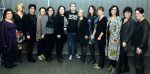
Can We Talk About … event committee, left to right: Karen Dana (event co-chair), Jenn Ritter (event co-chair), Harriet Zimmer, Rietta Floom, Einat Paz-Keynan (JCFS staff), Meytal Lavy (JCFS staff), Michael Landsberg, Sherry Lercher-Davis, Randee Pollock (JCFS staff), Danita Aziza (JCFS board chair), Pam Vine, Tara Greenberg and Jill Atnikov. (photo from Jewish Child and Family Service Winnipeg)
On Nov. 3, as part of Jewish Child and Family Service Winnipeg’s series Can We Talk About …, TSN celebrity Michael Landsberg spoke about Darkness and Hope – Depression, Sports and Me.
Landsberg has suffered from anxiety for as long as he can remember, and depression for the past 18 years.
“In 2009, I spoke about it publicly for the first time,” Landsberg shared with those gathered at Shaarey Zedek Synagogue. “I told everybody I knew. I just hadn’t used the platforms available to me to discuss it [until then], because I didn’t think it was relevant to anyone’s life.
“One day, when I was, by chance, interviewing someone who had suffered from depression, I asked him about it. I commented that I, too, had suffered. The next day changed my life.”
Landsberg received emails from people saying that the interview had been the first time they had heard two men discussing their struggles with depression; in particular, without sounding embarrassed or seeming weak.
“Because of that, they said their lives were changed,” said Landsberg. “Since that moment, I’ve tried to do exactly the same thing over and over again in as many venues as I can, including in Winnipeg.”
Landsberg tries to find ways to bring the topic to the fore whenever he feels it’s appropriate or thinks he has the opportunity to make a difference, whether it’s a public talk he’s headlining or a discussion on radio, TV or the internet.
“Every time I say I suffer from this illness and I’m not ashamed, embarrassed or weak, it changes someone’s life,” he said. “My coming out gave a purpose to this illness. It allowed me to take this poison that’s been inside me, that’s detracted from my life…. It allowed me to help someone else … so my poison is someone else’s medicine. That makes me feel good and makes me feel like I have a place in the world other than the one I was occupying before.”
According to Landsberg, before going public, his level of contribution to society was neutral, like most people’s. But, since coming out and talking about how his depression makes him feel and how it robs his self-confidence and self-esteem – yet he’s not ashamed of it – he’s no longer neutral.
“I think what I have to share most of all is me,” he said. “The more deep I go, the more details I give, the more of my struggles – not just that I’m struggling, but how my struggles feel – the more valuable it is to someone else. You want people to say, in the audience, ‘That’s me.’ And ‘Oh my gosh. My husband has that illness and I never knew that’s what was going on in his head. I understand better now.’
“I think we’re in a time now when every person is really deciding what side of history they’re on. Do you want to be on the side of history that’s changed the way we deal with mental health or do you want to be on the other side? I try to encourage people to get on the right side of it.”
Landsberg has always been a sharer and encourages others to share their struggles. As there is a deep sense of hopelessness and loneliness when it comes to depression, he said it is critical to encourage others to listen and realize they are not alone with the illness.
“More so than any event than I’ve ever been to, I was riveted and was really grabbed by several of the questions [posed to me in Winnipeg],” Landsberg told the Independent. “They weren’t so much questions as they were statements about audience members’ own situations.
“If you have a good night and you do it the right way, and there’s an audience that’s engaged that way, you’ll hear stories that have never before been shared – empowering people to share.
“My analogy is always, what I’d really like to do, is to have everyone in Canada who suffers from this illness [get together] – in the basement of a synagogue or a church, where Alcoholic Anonymous meetings take place – and [have] each of us draw from the collective strength and, at the same time, make deposits into that strength. When you turn to someone for help, you ultimately give them strength just by asking for it. That’s the spirit we felt in Winnipeg.”
One female audience member shared that she has had cancer and that it has come back, adding that she has suffered from depression for 15 years. Landsberg recalled, “She said, ‘You know, I have to be honest with you, I’ll take the cancer over the depression.’
“Also, an army veteran shared that he served in the army for 12 years and that, when he returned to Canada, there were 13 of them in his army group who had served and that, now, there are only two – the other 11 took their own lives. He said, ‘I was in the closet, so to speak, and felt desperately alone and unable to reach out. I watched a TV show you [Landsberg] did two years ago and thought, wow, if he can share, I can, too.’
“That’s enough reason to keep doing this for the rest of my life – just the knowledge that doing something that’s so easy for me, takes no effort, is a joy, [is helping]. To get up on stage and use my struggles for someone else’s benefit … it’s so easy, yet the payoff can be so massive.”
When it comes to helping a loved one who suffers from depression, Landsberg said one should start by admitting they cannot fully understand, as they have never had the disease. Then, they should ask their loved one what they want from them.
“That’s a huge thing – telling me what not to do,” said Landsberg. “The second thing is to reduce guilt. Many of us who have this illness like to please those around us. But, when we’re sick, we lose that ability, because we’re not ourselves – we can’t. I feel terribly guilty when I’m not the person I want to be.
“The people around me aren’t living their lives better because I’m there. Quite the opposite. I feel terrible that I’m actually worrying them, that I’m actually making the room worse because I’m in it. But, if you reduce my guilt, it will make a difference.”
As for someone who discovers they have the disease, Landsberg suggested education, as the more one knows about one’s illness, the more they can be an advocate and fight.
“Then, establish the thought that I will fight for my happiness,” he said. “And that’s incredibly difficult to commit to because the illness takes the life, the drive, out of us. It makes us apathetic. It makes us really incapable of doing stuff, or highly challenged to do stuff.
“If you commit to fighting for your happiness, that’s a big step. If you commit to sharing, that’s a big step. Sharing is incredibly difficult for most people because they feel shame and embarrassment. They feel like their illness is a weakness.
“You can overcome that, to some extent, by educating yourself. When you go on the internet and Google ‘depression’ and get five billion hits, you realize that 10% of the population right now may be feeling similar to you.
“People take their lives – 4,000 every year in Canada, 40,000 in the United States, and there are 25 attempts likely for every ‘successful’ suicide … that means 100,000 suicide attempts. We know there’s at least 10 to one that think about suicide, but don’t attempt it; suicide becomes appealing to them and plays out over and over in their brain.
“If you start realizing you’re just like a million other people in this country, then you’ll realize this is a sickness, not a weakness. All of these people, people that take their lives because they’re in so much pain, that’s not weakness.”
Landsberg added that speaking with someone who you know is struggling with depression is the easiest way to start sharing and healing, as you know they will not judge you and that they understand you.
“Winnipeg people liked what I did, so they went home with something,” said Landsberg. “But, I think I went home with more. I took away more than I left. What I took away were stories from people who I felt privileged to listen to…. I just loved it.”
Jason Aginsky (photo from Centre for Judaism of the Lower Fraser Valley)
The Centre for Judaism of the Lower Fraser Valley has announced the recipient of its annual Lamplighter Award, which honors a child who has performed an outstanding act of community service.
Jason Aginsky, a 16-year-old Grade 11 student at McMath Secondary in Richmond, was the second-youngest participant in the B.C. Ride to Conquer Cancer in August 2016, when he rode the 250 kilometres from Surrey to Seattle over two days.
“He’d announced eight months earlier that it was a cause he was determined to support and no safety concerns raised by his worried mother could deter him,” said Mark Aginsky, Jason’s father.
Jason was motivated to do this ride after losing his grandmother, Shirley Kramer, to ovarian cancer in 2003, when he was just 3 years old. He joined the Village Idiots, a group of riders in the Steveston area, and, after raising close to $4,000 to support the B.C. Cancer Agency, powered through the race.
“We followed him on Day 1 by car and he was utterly exhausted, on the brink of admitting he’d ‘bitten off more than he could chew’ by participating,” his father recalled. “The winds were against the riders that day and it was hard going. But, when it comes to determination, Jason has it in spades and he pushed through on Day 2, waiting hours at the last stop so he could cross the finish line with other members of the group who were well behind him.”
In total, this year’s participants in the B.C. Ride to Conquer Cancer raised $7.1 million for cancer research.
Jason will receive the Lamplighter Award on Dec. 29 at the Semiahmoo Shopping Centre at a ceremony attended by Rabbi Falik and Simie Schtroks, directors of the Centre for Judaism, White Rock Mayor Wayne Baldwin, and representatives of the cities of Surrey, White Rock, Langley and Delta.
“Chanukah celebrates the victory of light over darkness and goodness over evil,” said Simie Schtroks. “This is a most appropriate opportunity to motivate and inspire young people to make this world a brighter and better place. By filling the world with goodness and kindness, that light can dispel all sorts of darkness.”
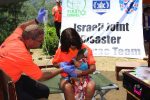
The World Health Organization has recognized Israel’s medical rescue teams and Israel Defence Forces’ field hospital as Type 3, the highest ranking for any foreign medical rescue team and field hospital in the world. (photo from United Hatzalah)
On Nov. 28, the World Health Organization (WHO) began a three-day meeting in Hong Kong, during which they recognized Israel’s medical rescue teams and Israel Defence Forces’ field hospital as Type 3, the highest ranking for any foreign medical rescue team and field hospital in the world. Israeli Deputy Minister of Foreign Affairs Tzipi Hotovely attended on behalf of Israel.
United Hatzalah, Israel’s national volunteer emergency medical services organization, and the Israelife Foundation, a conglomerate of Israel-based rescue organizations that respond to disasters worldwide, welcomed the award.
“We want to praise and thank all of the dedicated volunteers, staff and soldiers in all of the rescue services throughout the country. Their dedication and selfless acts of kindness in saving lives at home and abroad are officially being recognized on the world stage and, due to their efforts, Israel has become a world leader,” said Dov Maisel, United Hatzalah vice-president of international operations.
With the ceremony, Israel became the 17th foreign medical team to be classified by WHO, and it currently boasts the highest ranking. The process to achieve the ranking took nearly a year of in-depth reviews to ensure that Israel’s field hospitals met all of the criteria.
Besides the simple value of recognition, the Type 3 classification will also have some real ramifications. The classification ensures that Israeli rescue and medical teams will be the first allowed on the scene of future disasters regardless of where they happen and it will further cement Israel’s position as a world leader in emergency medicine.
Israel is not only the only Type 3 medical response team in the world, it is also the only one to be recognized by WHO that comprises a “military component” in the form of the IDF field hospital. Some aspects of the classification deal with the ethics of emergency care, and having a military branch receive the Type 3 classification highlights the ethical standing of that body.
The person behind the WHO classification system is Dr. Ian Norton, a specialist in emergency medicine and former head of his native Australia’s emergency response team. Norton developed the WHO system – which ranks foreign medical teams into Type 1, Type 2 and Type 3 – in 2013.
The different types refer to the number of patients that can be treated and the level of difficulty of the procedures that can be offered by a medical response team. Even with the high standards, Israel’s field hospital surpasses the requirements, offering more medical care than is required to be classified as Type 3. For example, the Times of Israel reported that a Type 3 field hospital needs 40 inpatient beds, whereas Israel’s has 86, and a Type 3 ranking requires the hospital to have two operating rooms, whereas Israel’s has four. Israel also qualified for the Type 3 category by employing teams that offer additional “specialized care,” such as burn units, dialysis units, obstetrics and gynecology teams, and reconstructive plastic surgery units. The IDF field hospital also received accolades for its abilities to provide exemplary levels of plastic surgery, and obstetrics and gynecology care. These latter qualifications establish the team as a “Type 3 plus.”
In addition to the field hospital, Israel was praised for the work done by its volunteer evacuation and emergency response teams, such as United Hatzalah, Zaka and Israelife. These teams of volunteer responders have conducted search and rescue operations and provided emergency medical services in disasters all over the world. Most recently, United Hatzalah sent Maisel, an emergency paramedic, to be a medical liaison and consultant as part of the Jet911 multinational response team that responded to the destruction caused by Hurricane Matthew in Haiti in October.
Other disasters to which the IDF field hospital and Israel medical response teams have responded include the earthquake in Turkey in 1999, the earthquake in Haiti in 2010, the typhoon in the Philippines in 2013 and the devastating earthquake that shook Nepal in 2015.
Kirkland Lake students paint a mural as part of the Indigenous Awareness project. (photo from Toronto Heschel School)
The Toronto Heschel School has announced the recipients of its first-ever social justice Prize for Teaching Excellence 2016. The top award goes to Erin Buchmann at the Kirkland Lake District Composite School in Ontario, which took first prize for its Indigenous Awareness program. Second prize goes to Todd Clauer at Hyman Brand Hebrew Academy, a Jewish day school in Overland Park, Kan., for its Upper School Social Justice Project.
Heschel, a Toronto Jewish school, invited educators around the world – including public, private and religious schools of all denominations – to share how they bring social justice into the classroom through heritage, culture or religion. The call was issued in THINK Magazine, Heschel School’s semi-annual educational thought publication, last November. It invited educators to submit their original class projects and school initiatives that met the following criteria: Is it rooted in heritage, culture or religion; does it inspire social responsibility in children; and has it been implemented successfully?
Toronto Heschel is committed to encouraging today’s youth to be citizens of the world by celebrating and recognizing teachers who use their students’ identity and cultural values to incorporate social justice learning as part of the everyday school curriculum. The award received entries from across Canada, the United States and Israel, and collected many inspiring stories of teachers and students committed to making positive change in the world.
The completed mural, which was painted by Kirkland Lake students as part of the Indigenous Awareness project. (photo from Toronto Heschel School)
Buchmann took top honors for the project Indigenous Awareness, based on the Seven Grandfathers’ teachings – core cultural values that teach responsibility to self-govern, take care of the land and one another by standing up for social justice. Students created a large mural in the school, installed an art installation called “Red Dress” around the school and dramatized the Seven Grandfathers’ teachings in a play. The project resulted in a 100% pass rate in the class, where there had been 50% failure level before. The school is also now expanding its aboriginal studies program to include a junior and senior course in 2016.
“We are so proud to win the Prize for Teaching Excellence,” said Buchmann. “The Truth and Reconciliation Commission calls on Canadians to act to promote equality and fairness. We are creating opportunities for students to explore and celebrate their individual identities and heritage while promoting social justice for all. By encouraging and supporting students to take action, we are taking steps towards reconciliation, promoting awareness of social issues and creating a more inclusive environment in our school and our community.”
The Upper School Social Justice Project, which won the second Prize for Teaching Excellence 2016, is implemented across three years of high school. Clauer teaches his students that their Jewish heritage teaches them to embrace and pursue justice through everyday advocacy for the dignity of all peoples, and all faiths.
The project saw Hyman Brand students focus their study and engagement on inequity in access to health care in their community; promoting voter engagement; and campaigning for free, universal, early childhood education. The project, conducted in partnership with a local charter school, also took students – Jewish and African-American, more advantaged and less advantaged, city centre and suburban – on a civil rights journey across the southern United States.
Named for Rabbi Abraham Joshua Heschel, the Toronto Heschel School was founded in 1996 to give children the spirit of awe and wonder as they learn. The school teaches social justice through the philosophy and social action leadership modeled by Heschel. It is a pluralistic Jewish day school, which means it welcomes all Jewish children; it now has more than 270 students (junior kindergarten through Grade 8) from Reform, Conservative, Reconstructionist, Orthodox and secular families. Jewish thinking and ethics are integrated throughout the curriculum to deepen learning, enrich school culture and inspire social responsibility. For more information, visit torontoheschel.org.
Following a successful diet, many people are dismayed to find their weight rebounding – an all-too-common phenomenon termed “recurrent” or “yo-yo” obesity. Worse still, the vast majority of recurrently obese individuals not only rebound to their pre-dieting weight but also gain more weight with each dieting cycle. During each round of dieting-and-weight-regain, their proportion of body fat increases, and so does the risk of developing the manifestations of metabolic syndrome, including adult-onset diabetes, fatty liver and other obesity-related diseases.
As recently reported in Nature, researchers at the Weizmann Institute of Science have shown in mice that intestinal microbes – collectively termed the gut microbiome – play an unexpectedly important role in exacerbated post-dieting weight gain, and that this common phenomenon may in the future be prevented or treated by altering the composition or function of the microbiome.
The study was performed by research teams headed by Dr. Eran Elinav of the immunology department and Prof. Eran Segal of the computer science and applied mathematics department. The researchers found that, after a cycle of gaining and losing weight, all the mice’s body systems fully reverted to normal – except the microbiome. For about six months after losing weight, post-obese mice retained an abnormal “obese” microbiome.
“We’ve shown in obese mice that, following successful dieting and weight loss, the microbiome retains a ‘memory’ of previous obesity,” said Elinav. “This persistent microbiome accelerated the regaining of weight when the mice were put back on a high-calorie diet or ate regular food in excessive amounts.”
Segal elaborated: “By conducting a detailed functional analysis of the microbiome, we’ve developed potential therapeutic approaches to alleviating its impact on weight regain.”
The study was led by Christoph Thaiss, a PhD student in Elinav’s lab. Thaiss collaborated with master’s student Shlomik Itav of Elinav’s lab, Daphna Rothschild, a PhD student of Segal’s lab, as well as with other scientists from Weizmann and elsewhere.
In a series of experiments, the scientists demonstrated that the makeup of the “obese” microbiome was a major driver of accelerated post-dieting weight gain. For example, when the researchers depleted the intestinal microbes in mice by giving them broad-spectrum antibiotics, the exaggerated post-diet weight gain was eliminated. In another experiment, when intestinal microbes from mice with a history of obesity were introduced into germ-free mice – which, by definition, carry no microbiome of their own – their weight gain was accelerated upon feeding with a high-calorie diet, compared to germ-free mice that had received an implant of intestinal microbes from mice with no history of weight gain.
Next, the scientists developed a machine-learning algorithm, based on hundreds of individualized microbiome parameters, which successfully and accurately predicted the rate of weight regain in each mouse, based on the characteristics of its microbiome after weight gain and successful dieting. Furthermore, by combining genomic and metabolic approaches, they then identified two molecules driving the impact of the microbiome on regaining weight. These molecules – belonging to the class of organic chemicals called flavonoids that are obtained through eating certain vegetables – are rapidly degraded by the “post-dieting” microbiome, so that the levels of these molecules in post-dieting mice are significantly lower than those in mice with no history of obesity. The researchers found that under normal circumstances, these two flavonoids promote energy expenditure during fat metabolism. Low levels of these flavonoids in weight cycling prevented this fat-derived energy release, causing the post-dieting mice to accumulate extra fat when they were returned to a high-calorie diet.
Finally, the researchers used these insights to develop new proof-of-concept treatments for recurrent obesity. First, they implanted formerly obese mice with gut microbes from mice that had never been obese. This fecal microbiome transplantation erased the “memory” of obesity in these mice when they were re-exposed to a high-calorie diet, preventing excessive recurrent obesity.
Next, the scientists used an approach that is likely to be more unobjectionable to humans: they supplemented post-dieting mice with flavonoids added to their drinking water. This brought their flavonoid levels, and thus their energy expenditure, back to normal levels. As a result, even on return to a high-calorie diet, the mice did not experience accelerated weight gain.
“We call this approach ‘post-biotic’ intervention,” Segal said. “In contrast to probiotics, which introduce helpful microbes into the intestines, we are not introducing the microbes themselves but substances affected by the microbiome, which might prove to be more safe and effective.”
Recurrent obesity is an epidemic. “Obesity affects nearly half of the world’s adult population, and predisposes people to common life-risking complications such as adult-onset diabetes and heart disease,” said Elinav. “If the results of our mouse studies are found to be applicable to humans, they may help diagnose and treat recurrent obesity and this, in turn, may help alleviate the obesity epidemic.”
Also taking part in the study were Mariska Meijer, Maayan Levy, Claudia Moresi, Lenka Dohnalova, Sofia Braverman, Shachar Rozin, Dr. Mally Dori-Bachash and staff scientist Hagit Shapiro of the immunology department, staff scientists Drs. Yael Kuperman and Inbal Biton, and Prof. Alon Harmelin of the veterinary resources department, and Dr. Sergey Malitsky and Prof. Asaph Aharoni of the plant and environmental sciences department – all of the Weizmann Institute – as well as Prof. Arieh Gertler of the Hebrew University of Jerusalem and Prof. Zamir Halpern of the Tel-Aviv Sourasky Medical Centre.
ממשלת קנדה בראשות ג’סטין טרודו, תשקול שוב את האפשרות לרכוש את מטוסי הקרב החמקניים האף-35. עלות המטוס אמריקני מתוצרת לוקהיד מרטין נאמדת בסכום שיא של כמאה ועשרה מיליון דולר. זאת למרות הביקורת מגורמים שונים בקנדה ומחוצה לה על העלויות הגבוהות הכרוכות ברכישתו.
המפלגה הליברלית הודיעה במפורש בקמפיין הבחירות שלה להחלפת ראש הממשלה הקודם, סטיבן הרפר, כי אם טרודו יבחר לראשות הממשלה החדשה הוא לא ירכוש את האף-35 עבור חיל האוויר הקנדי. אך בחודשים האחרונים ממשל טרודו כבר לא נשמע חד משמעי בהתנגדותו למטוס, שאמור להחליף את מטוסי הסי.אף-18 הישנים. וכאמור נשמעים קולות אחרים בממשלה ואופציית רכישת האף-35 שוב עומדת על הפרק.
במקביל לחשיבה המחודשת בקנדה הנשיא הנבחר של ארה”ב, דונלד טראמפ, יצא שוב בהצהרה שלופה מהמותן כי פרוייקט האף-35 הוא יקר מדי ויצא מכלל שליטה. הנזק המיידי: מניית לוקהיד מרטין נחתכה בבורסה האמריקנית, וההפסד נאמד בכשני מיליארד דולר. הפנטגון הזמין תשעים מטוסי אף-35 לחיל האוויר האמריקני בעלות כוללת של 391 מיליארד דולר. טראמפ יכול לנסות לבטל או להקטין את העיסקה עם לוקהיד, אך כל שינוי תלוי באישור הקונגרס, שברובו עומד מאחוריה. לוקהיד מצידה טוענת כי היא השקיעה סכומים גבוהים כדי להביא להורדה במחירו של המטוס (ירד כבר בכשבעים אחוז). יצור האף-35 מהווה כעשרים אחוז מההכנסות של מפעל לוקהיד מרטין וארבעים וחמש חברות אמריקניות שותפות בפרוייקט, שיצר כמאה ארבעים אלף מקומות עבודה.
האף-35 יכול להגיע למהירות של 1.6 מאך, טווח הטיסה שלו 2,220 ק”מ, אורכו 15.7 מטר, גובהו 4.3 מטר ומוטת הכנפיים שלו 10.7 מטר. המטוס יכול לשאת כ-16 טון של פצצות, טילים ודלק. (צילום: f35.com)
ישראל קיבלה בראשית שבוע שעבר את שני המטוסים הראשונים של האף-35, מתוך השלושים ושלושה שנרכשו כבר על ידה, ושירכיבו שתי טייסות. הקבינט המדיני- ביטחוני של ממשלת ישראל החליט בחודש שעבר לרכוש עוד שבעה עשר מטוסים. אז גם תורכב טייסת שלישית בחיל האוויר. יצויין כי הממשל האמריקני אישר למכור לישראל בסך הכל שבעים וחמישה מטוסי אף-35. חיל האוויר הישראלי בשיתוף פעולה עם התעשיות הצבאיות, ישביחו מספר מערכות של המטוס בהן: פיקוד, שליטה, תקשורת ומיחשוב. בנוסף ישראל תתקין במטוס מערכות נשק מקומיות ומיכלי דלק גדולים יותר מהמקוריים. וכן תחזוקת המטוס תתבצע בישראל ולא במרכזים האזוריים של לוקהיד מרטין בארה”ב ובמספר יבשות נוספות. חיל האוויר הישראלי יקים גם מרכז לוגיסטיקה ייעודי למטוסים בבסיס שבנבטים, אליו הגיעו שני המטוסים הראשונים בשבוע שעבר.
המטוס מכונה בארץ “אדיר” וישראל היא המדינה הראשונה במזרח התיכון שמחזיקה בו. אחת עשר מדינות שותפות בפרוייקט האף-35 בנוסף לארה”ב: קנדה, בריטניה, איטליה, הולנד, אוסטרליה, דנמרק, נורווגיה, טורקיה, יפאן, קוריאה וישראל.
האף-35 יכול להגיע למהירות של 1.6 מאך, טווח הטיסה שלו 2,220 ק”מ, אורכו 15.7 מטר, גובהו 4.3 מטר ומוטת הכנפיים שלו 10.7 מטר. המטוס יכול לשאת כ-16 טון של פצצות, טילים ודלק. הוא בעל יכולת טיסה חמקנית ללא זיהוי המכ”מ. אורך חייו של המטוס היקר מוערך בחמישים וחמש שנים.
לא בטוח שהמטוס המשוכלל יעמוד בציפיות של אילו שרוכשים אותו. בעיות בהליכי הפיתוח הפכו את האף-35 לפרוייקט הביטחוני היקר ביותר בתולדות ארה”ב. לא מעט תקלות ליוו את הליך פיתוח המטוס בהן: קריסת מערכת המיחשוב, גילוי סדקים באחת הכנפיים, תחזוקה יקרה ואיטית, רמת רעש גבוהה מאוד וצבע מתקלף. הרוסים והסינים טוענים מצידם כי פיתחו מכ”מים שיכולים לאתר את מטוס הקרב החמקן. טווח המטוס כחמקן הוא 1,100 ק”מ בלבד ומקרה כזה הוא לא יוכל להגיע מישראל לאיראן.
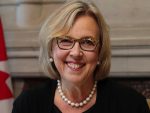
Green Party of Canada leader Elizabeth May. (photo from cjnews.com)
Federal Green Party of Canada Leader Elizabeth May said she was able to support a revised policy on the Israeli-Palestinian conflict because it rejects the boycott, divestment and sanctions (BDS) movement against Israel, but still puts the onus on the Jewish state to move towards a two-state solution.
At a special general meeting held Dec. 3-4 in Calgary, 350 members voted to pass a policy titled “Measures to pressure the government of Israel to preserve the two-state solution: addendum to current
Middle East policy.” It replaced a policy titled “Palestinian self-determination and the movement for boycott, divestment and sanctions” that passed in August at a Green party convention in Ottawa.
“It needs to be said very clearly that the BDS movement does not understand the issue properly and is in fact undermining the peace process itself,” May told the CJN the day after the addendum passed.
Immediately following the August convention, May firmly opposed the policy that supported the BDS movement.
“The reason I couldn’t accept our policy in August is because it looked very much as though we were adopting the BDS movement. And the BDS movement, although there are well-meaning people who support it, when you get down to it, their core goals do not include at all … the right of the state of Israel to exist,” May said.
At that time, May considered stepping down as leader as a result but, following a family vacation, she ultimately announced she would stay on as leader, partly because the party’s executive council agreed to call a special meeting to give members the opportunity to revisit the BDS resolution.
The amended policy states, among other things, that the “Palestinian people are among the indigenous people of the geographic region now designated as Israel and the OPT [occupied Palestinian territory],” and it supports “only non-violent responses to violence and oppression, including economic measures such as government sanctions, consumer boycotts, institutional divestment, economic sanctions and arms embargoes.”
It calls for a ban on products produced “wholly or partly within or by illegal Israeli settlements, or by Israeli businesses directly benefiting from the illegal occupation,” and it calls on the Canadian government to repeal the House of Commons resolution that condemned the BDS movement last February.
According to a statement by Thomas Woodley, president of Canadians for Justice and Peace in the Middle East, Green members voted 85% in favor of the revised policy.
Although the policy remains critical of Israel and still supports boycotts, divestment, sanctions and arms embargoes, its drafters were careful not to specifically endorse the international BDS movement. May insists the Green party is committed to a two-state solution.
“We condemn anyone who imagines that they don’t support, unequivocally, the right of the state of Israel to exist. That prefacing is critical to understanding the addendum,” she said.
“We’ve never been a party that was afraid to say out loud that we are critical of the decisions of the Israeli government from time to time. I think many Israelis are also critical of the decisions of the government from time to time.”
May said retired Israeli generals and intelligence officers who accuse Israeli Prime Minister Binyamin Netanyahu of undermining the peace process and weakening security for Israelis “make the case better than we can as Canadian Greens that there needs to be a course correction on the occupation, expansion of illegal settlements and so on…. We’d rather be aligning ourselves with criticisms that come from within the state of Israel, than with a movement that doesn’t understand the critical necessity to defend the right of the state of Israel to exist.”
May said she understands that the policy won’t sit well with many members of the Jewish community, but added, “There are a limited number of mechanisms that governments and parties can use to signal to a foreign government that we think you’re making a mistake here, while at the same time, remaining allies.”
Shimon Koffler Fogel, chief executive officer of the Centre for Israel and Jewish Affairs, said in a statement that the group condemns the resolution, “which confirms the Green party has been co-opted by extreme activists who – in their obsessive campaign of prejudice against Israelis – threaten the party’s own credibility and relevance in Canadian politics.
“The new policy is rife with historical distortions and places the Green party at odds with the Canadian consensus that BDS is discriminatory and counter-productive to peace. The Ontario legislature just voted by a tenfold margin to reject the differential treatment of Israel, underscoring how out of touch the Green party has become.”
The statement also pointed to the policy’s assertion that Palestinians are Israel’s “indigenous people,” and the implication that Jews have no ancestral or indigenous roots in Israel.
“Elizabeth May and the party’s leadership have turned their backs on the mainstream Jewish community, including the many Jewish Greens who no longer feel welcome,” he said, adding that despite calling attention to the Green party that the vote would take place on Shabbat, excluding observant Jews from the vote, the vote was held on Dec. 3.
Although May rejected the idea of boycotting Israel, she made a distinction between “legal Israel” and “illegal Israel.”
“I’d go out of my way to buy a product that is labeled a product of Israel from within the legal boundaries of Israel. But, personally, I prefer not to buy products that come from an area that is in illegally occupied territories, which, again, even retired members of the Israeli Defence Forces are saying are making life less secure for legal Israel.”
B’nai Brith Canada chief executive officer Michael Mostyn said he was encouraged by the rejection of the BDS movement.
“No matter how the party came to this position, it is a positive thing for Canadians that, once again, the antisemitic BDS movement has been rejected. It is especially significant given the amount of energy, time and resources being poured into the promotion of the antisemitic BDS movement by certain factions within the Green party.”
That being said, Mostyn added there is still misinformation in the policy.
“For example, the very characterization of settlements as ‘illegal’ under Article 49 of the Geneva Convention is either a deliberate misreading of that document, or complete ignorance of international law,” he said.
King David High School Grade 8 students Noam, Judd and Joey, collecting bread from COBS. (photo from facebook.com/foodstashfoundation)
Nov. 21 saw the start of King David High School’s now-established RAC Week. Started as part of the Random Acts of Kindness program – adapted as Random Acts of Chesed – this is a five-day celebration of paying it forward. Whether it’s picking up garbage, helping the homeless or moving furniture, every activity gives the students a chance to experience the rewards of helping others.
This year, The Giving Tree formed the basis for RAC Week’s good deeds. Illustrations from Shel Silverstein’s book about unconditional love decorated the main hall and foyer. Heartwarming messages read “Kindness is Contagious,” “Spread the Love” and “Smile! It’s RAC Week!”
RAC Week takes the students outside their comfort zones. According to the director of Jewish life at KDHS, Ellia Belson, this year’s destinations were chosen based on feedback gleaned from last year’s offerings. “The Grade 12s wanted to go where there was the greatest need,” she said.
Among the destinations were the Kerrisdale police detachment, Quest Outreach and Admiral Seymour Elementary School. At the school, which is on Keefer Street, they witnessed an unfamiliar degree of tension – and fighting – among the kids. KDHS student Ethan (Grade 10) described how he “tried to get people to play together who might not do so normally.”
During RAC Week, heartwarming messages read “Kindness is Contagious,” “Spread the Love” and “Smile! It’s RAC Week!” (photo by Shula Klinger)
Under the guidance of teacher Matt Dichter, Grade 8 student Noam accompanied Food Stash Foundation on their daily rounds. Started by David Schein, a former teacher at KDHS, the foundation was created to help reduce food waste in the Vancouver area. FSF collects leftover items from grocery stores, such as Whole Foods, at the end of each work day. Food Stash then delivers the food to where it’s needed most: more than 15,000 kilograms of food since September, said Schein. On the morning of Nov. 22, deliveries were made to the Kettle Society, Mount Pleasant Neighborhood House, Tenth Church and Oasis Café.
The RAC group from KDHS rescued food from COBS Bread, Greens, Fresh is Best and a number of other sites. The numbers speak volumes. Every year, each Canadian throws away approximately 127 kilograms of food. KDHS kids rescued 135 kilograms in a single day.
“I really liked working with the kids because it is a great way to raise awareness of food waste in the younger generation,” Schein told the Independent. “Half of food waste happens at home, so they can now go home and speak to their parents, start influencing food choices.” He added, “Saving me some lifting was also nice!”
With its emphasis on community service, RAC Week is a concentrated course in educating the emotions, as well as the intellect. Noam described how “it felt good to give back.” Asked whether his work with Food Stash had had an impact on his daily life, he answered with a definite yes. His intentions were clear, as he explained, “even finishing what’s on your plate” can have an impact on food wastage.
RAC Week offers a curriculum of social responsibility best taught outside the classroom, where students develop an awareness of other kids’ lives and struggles. The conversations that take place after the outings present an opportunity to reflect on these struggles and express gratitude for their own station in life. It also allows the students to teach one another, under Belson’s guidance, about what each group learned.
While the kids spoke animatedly about their excursions, their most energetic, personal and heartfelt responses were to Belson’s simple question, “What does chesed mean to you?”
At this, it seemed that half the students raised their hands, speaking with passion and clarity about “giving and not taking” (Ella). Connell quoted from the film Fantastic Beasts and Where to Find Them, with the admonition, “Be a giver, not a taker.” Ethan spoke at length about how it’s easy to “take for granted a loving home, a loving family…. It’s a week to recognize that by giving back.” Jordana agreed, talking about the importance of seeing “how others live – even so close to us. It made a difference.”
Sometimes, the greatest lessons in life can be taught in the simplest of ways. Adi talked about “being a mensch, helping people who have less, making people feel happier, making them smile.”
Shula Klinger is an author, illustrator and journalist living in North Vancouver. Find out more at niftyscissors.com.