Doctors talk about COVID

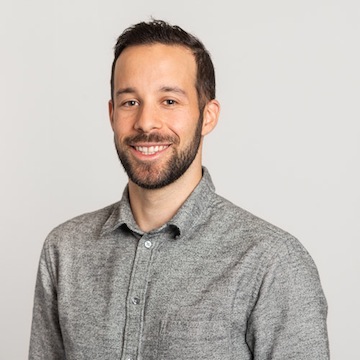
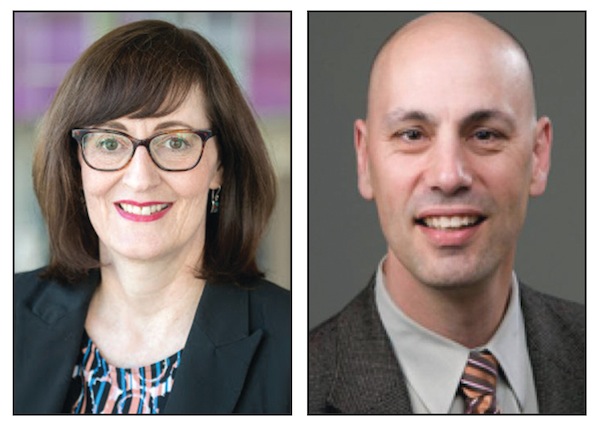
Dr. Patty Daly and Dr. Eric Grafstein were the featured speakers of Temple Sholom’s May 1 Let’s Talk About It webinar. (photos from Temple Sholom)

Temple Sholom began the first of a series of four (possibly five) webinars, called Let’s Talk About It, on May 1 with a public health forum that featured guest speakers Dr. Patty Daly, Vancouver Coastal Health’s chief medical officer, and Dr. Eric Grafstein, the regional head of emergency at VCH and Providence Health Care.

Together, the doctors provided a report from the medical frontlines in Vancouver, as the city responds to the COVID-19 pandemic. They later addressed several concerns raised by members of the community.

Grafstein offered reassuring remarks for those who may be apprehensive about visiting emergency departments. “Emergency departments are a safe place to go during a pandemic,” he said. “If you have things like chest pains or symptoms that you think may be a stroke, then you should be coming to the emergency department.”

Emergency visits declined sharply after a state of emergency was declared in British Columbia on March 18, dropping by half compared to last year, suggesting that people might be holding off from visiting the hospital, he said.

“When people come to a hospital with suspect cases, they are segregated. People who do not have COVID are not put at risk,” Grafstein said. As of the webinar date, about two people per 1,000 who had come to an emergency department in VCH had tested positive for COVID-19, he said.

Physical distancing in the emergency department is done through placing COVID patients in a different area than other patients. The risk of infection is further reduced by fewer people coming to EDs and creating more space in the hospital, he said.

Grafstein said the supply of personal protective equipment for medical workers is secure.

Though the first case of COVID-19 in British Columbia was identified on Jan. 15, the spread of the virus to the region came in early March, likely the result of traffic between British Columbia and the state of Washington, the first area in the United States to experience an outbreak. The number of reported cases in VCH peaked in mid-March and there has since been a decline.

Vancouver’s numbers have compared favourably to those of Toronto and Montreal, and the vast majority of cases here have been mild, said the doctors. The population most at risk is the elderly. Many of the deaths in the region have occurred at long-term-care facilities.

“We’ve done a very good job of flattening the curve – not only in our region but across B.C.,” Daly said. “Our modeling suggests that we can think about lifting some of the measures we have in place.”

Indeed, the province announced its Restart Plan last week. Outpatient services and elective surgeries are to be among the first medical activities to be resumed. An increase in the number of outdoor spaces that the public can access is also planned.

Some daycares – for the children of essential workers – have already reopened, and it is hoped that students will return to schools before the end of the academic year. Bars, restaurants and personal service businesses, such as hairdressers, could potentially reopen in the coming weeks as well, as long as measures, similar to those in grocery stores, are in place.

Universities may return to classes in the fall, though many classes will remain virtual.

There have been few cases of COVID-19 in the region among those under the age of 18, and day camps for children might take place this summer, said Daly.

Gatherings for groups of 50 or more people, such as weddings, funerals and religious services, will be among the last restrictions to be lifted.

“It will be done slowly and in a way that doesn’t lead to a dramatic increase in cases,” Daly said.

“The ultimate solution is a vaccine,” she said.

Neither doctor could predict when a vaccine would be ready, though some trials appear promising. Both doctors reinforced the messages that officials everywhere have been giving for months: stay home if you are sick, cough or sneeze into your elbow, don’t touch your face and wash your hands frequently.

“Anyone with the classic symptoms for COVID – fever, shortness of breath, cough, loss of sense of smell, nausea, diarrhea – should be tested,” Grafstein stressed.

Calling 811 will provide a person with the nearest testing facility. Every positive result is followed up and people who may have had close contact with that person are reached and advised to stay home for 14 days.

VCH covers a population of 1.25 million people, encompassing not just Vancouver but Richmond, the North Shore, the Sunshine Coast and some rural communities, such as Powell River. As of May 8, there had been 866 reported cases of COVID-19 within the VCH region; of those, 78 patients have died and 583 have recovered and discontinued isolation.

“As we open things up, we are doing everything we can to prevent a second wave. We need to also continue to help the most vulnerable,” Daly concluded.

Convened by Temple Sholom’s Rabbi Dan Moskovitz, the webinar was co-sponsored by the Jewish Federation of Greater Vancouver and was attended by more than 200 people. A video recording of the event can be found on Temple Sholom’s website and on YouTube.

Other talks in the Temple Sholom series have been discussions on financial planning and on effective parenting; a session on estate planning is scheduled for May 20.

Sam Margolis has written for the Globe and Mail, the National Post, UPI and MSNBC.
Diverse Jewish communities

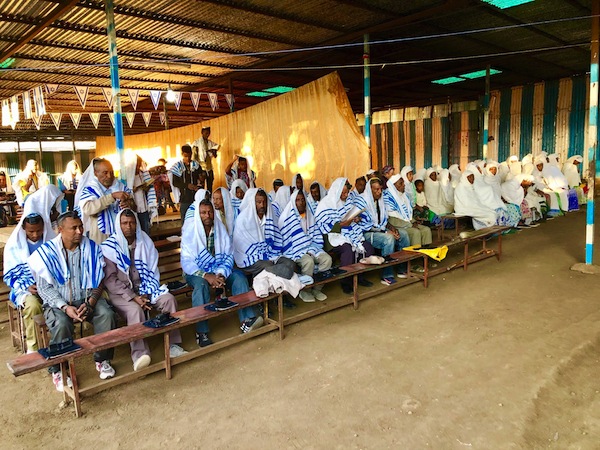
Morning prayers in Gondar’s Tikvah Synagogue. (photo from David Breakstone)

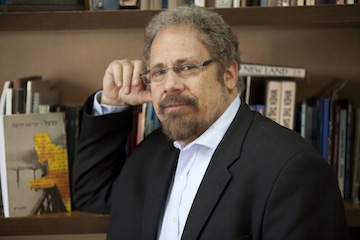
Since Dr. David Breakstone, deputy chair of the executive of the Jewish Agency, had to cancel his scheduled talks in Calgary and Winnipeg because of COVID-19, the Jewish Independent reached him by phone to learn more about his planned topic – Beta Israel and the Emerging Jewish Communities of the Amazon and Latin America.

Born and raised in the United States, Breakstone made aliyah in 1974 and has been involved with Jewish education for more than 50 years.

“The Jewish Agency (JA) really is the largest global Jewish organization that represents the full spectrum of the Jewish people,” said Breakstone. “JA itself is a partnership of the World Zionist Organization, the Jewish Federations of North America. It makes for a very dynamic, stimulating environment with incredible reach and ability, impacting our major issues and agenda items regarding world Jewry. To be in a position to impact all of that and influence things is, for me, a very exciting and demanding challenge.”

JA’s four major goals are connecting Jews around the world to one another, their Jewish heritage and to Israel; facilitating aliyah; serving those in need in Israeli society and fighting antisemitism; and assuring the safety and security of Jews everywhere.

The term Beta Israel refers to the Ethiopian Jewish community, thought to be descendants of the Hebrew tribe of Dan, explained Breakstone.

“Back in the 1950s, the JA was building schools and developed a teaching seminary in Ethiopia to work with the community,” he said. “Ethiopian Jewry has presumably been around for thousands of years, but has only been known about for the last 1,000 years…. The Beta Israel are unquestionably fully Jewish. Ovadia Yosef, chief rabbi of Israel back in 1973, confirmed the decision of a response of the Radbaz [David ben Solomon ibn Abi Zimra] from the 16th century. What’s happened, however, is that there are those of Jewish descent from Beta Israel who, over the years, converted to Christianity … and, so, there are major questions still being argued about whether they converted out of duress or whether they converted freely or for economic reasons.”

photo - Dr. David Breakstone, deputy chair of the Jewish Agency
Dr. David Breakstone, deputy chair of the Jewish Agency. (photo from David Breakstone)

Regardless, said Breakstone, “There’s full agreement by the authorities in Israel on whether they are all … zera Israel (of Jewish seed), even if they are not, according to halachah [Jewish law], Jewish.”

The JA is involved with this community because of its Jewish roots. Today, said Breakstone, there are somewhere between 7,500 and 9,000 people from this community who have been waiting anywhere from 10 to 20 years or more to be allowed to make aliyah, all of whom have close relatives in Israel. The JA, he said, is committed to bringing to Israel all Ethiopians who are eligible to come.

Breakstone noted that there are other isolated Jewish communities throughout Africa, South America and India, which he referred to as “the emerging communities of Jews around the world.”

“The Ministry of the Diaspora, a couple of years ago, expressed a great deal of interest in these emerging communities,” he said. “And they put together a very high-level committee that really delved into the issue in depth and came up with the astounding figure of – believe it or not – some 350 million people around the world who have some sort affinity to the Jewish people.

“Affinity is a very vague term,” he cautioned. “In fact, a recent DNA report indicated that 24% of Latin Americans had a significant amount of Jewish DNA…. Most claim ancestry going back to the Marranos, Conversos and Crypto-Jews from Portugal and Spain who had moved to South America and kept various traditions going.

“In Brazil,” he said, “there was supposed to be – they just got notification that it was cancelled – there was going to be the first conference of Jewish communities of Brazil that are not recognized by the established Jewish community there … all of whom are connected through their belief that they are descended from Marranos, Conversos.”

Despite the cancelation of the conference, the Jewish Federation of Brazil is in contact with those communities and is exploring whether or not to recognize them and invite them into the larger community.

“At this point,” said Breakstone, “the JA is also exploring the history in conjunction with the established Jewish community, trying to figure out what to do with those who have not been part of the traditional Jewish establishment and yet, are living life as Jews. That’s quite an interesting phenomenon.”

Uganda is home to a Jewish community that claims no Jewish roots, Breakstone added. In that community, the founding chief was converted by Christian missionaries more than a century ago. And the chief, becoming well-versed in religious studies through the Bible, decided Judaism was the right path.

“Since 2002, they started going to formal conversion, through the worldwide Conservative movement,” said Breakstone. “They now have a local rabbi who studied at one of the Conservative movement theological seminaries … in California and they are fully embraced by the Conservative Jewish world. The JA, too, officially recognizes them as being Jewish. They’ve had a number of people come to Israel through various programs and a number of them are in the process of making aliyah.

“I think the diversity of the different Jewish communities, backgrounds, traditions and cultures that people bring to Jewish life are also something to be celebrated,” he said, “as it broadens the Jewish mosaic.”

Rebeca Kuropatwa is a Winnipeg freelance writer.

Rewriting memory not sci-fi

(printed with permission from ©Mount Sinai Health System)

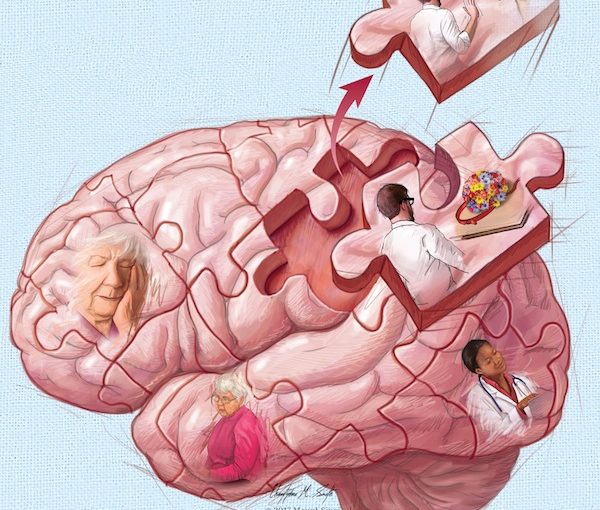
To alleviate trauma victims’ suffering, specialists are working to reduce the emotion attached to painful memories. A leader in this field is Israeli-born scientist Daniela Schiller, who has been living in New York for the last 10 years, working as director of the Laboratory of Effective Neuroscience at Mount Sinai School of Medicine.

“I’m interested in emotions in general, because emotions can limit our freedom,” said Schiller, giving fear as an example. “It’s something that is very limiting. It’s like a dictator is taking over our brain and controlling our emotions, thoughts, decisions and behaviour.”

According to Schiller, we have the ability to change the emotions we experience, including when it comes to memories of trauma. “We have much more flexibility,” she said. “It’s a dynamic process and we can engage in that process.

“We used to think of this as a one-time process – memory creation – wherein you have them forever. In the ’60s, there was a hint that maybe it’s not a one-time process and that, actually, when you retrieve a memory, it might return to an unstable state, something similar to a newly formed memory. Then, it has to be stored again. It was termed ‘reconsolidation,’ because you repeat that process of storage.”

Schiller explained that returning a memory to an unstable state is a built-in mechanism that allows people to mix in new data about an event that happened. This built-in sensibility allows for better predictions in the future – it’s a survival system.

With the reconsolidation of memory becoming better understood, scientists are trying to find ways to use the process in real-life scenarios with trauma victims, including people suffering post-traumatic stress disorder. However, since the process also can be used to manipulate memory in a negative way, there are ethical questions that need to be addressed. At the recent Harvey Weinstein trial, for example, expert psychologist Elizabeth Loftus was called on behalf of the defence to explain how memory can change over time.

“You can easily influence eyewitness testimony when you do an investigation, by the way you ask questions and shake people’s memories,” explained Schiller. “You can plant information, and they will generally believe that this is what they remember.”

Loftus pointed to the fragility of memory, including the neurological basis to that effect, said Schiller. And, in her testimony, Loftus shared that the presence of mind-altering chemicals, like drugs and alcohol, can affect how memory is stored.

The research Schiller is conducting is geared to finding ways to lessen the emotional volume involved. “We want them to understand what happened, but the memories have to be manageable emotionally,” she said. “And the emotional advantage you had in your past or in your childhood, the emotions wear out, they become less and less emotional. Memory changes and, if it doesn’t, that means it’s a problem.”

Schiller speculated that many of the treatments that already exist capture only part of the process. For example, treatment with a therapist could be toward memory activation – meaning, you would be going into your traumatic memory. While you were in that memory, your therapist would work with you to change the emotional tone of it.

“In animals,” said Schiller, “we know the cellular processes that indicate memory is now moving and that it has been mobilized into a stable state where things are now happening and, now, you can either block it with a drug or with behaviour. We have very accurate measurements. But, with humans, we don’t know. We don’t know still what it means if the memory is actively stable in the brain. We speculate that, if you express it and you show emotions, it’s probably unstable. And then, you’d move forward and either get the drug or do behavioural therapy of some sort.

“For example, image extinction, wherein you think about the event and re-script it in a certain way, so it gives you the possibility to rewrite it – there are many different methods. There can be indirect methods that generate interference, like doing something else or using a blocker drug. These are all methods that can reactivate the memory.”

Although research on humans has shown some promise, Schiller said much more research is needed before any treatments can be developed. “We are still looking for the exact way to manipulate it to some degree, especially to tailor it to each individual,” she said.

What Schiller finds promising is that it’s a natural process – one that people practise every day, unconsciously. With that in mind, we should be able to find ways to do it consciously, by thinking about particular memories we want to rewrite and incorporate new information, she said. “Align yourself to reactivate it and try to incorporate it into the present. Again, this is not scientific advice on how to do it – this is what the science sees, the direction you can take.”

In studying the brain patterns of sleeping subjects who have experienced trauma, scientists have pinpointed where the subject’s memory was processing the parts of the trauma that induced emotion, causing bodily changes.

“They are unconscious to some extent, until they reach the conscious level and you have feelings and interpretations,” said Schiller. “That’s a whole different level and whole different process in the brain. So, we do need to look at these various levels, and then we need to adjust our therapy to these levels.

“I think it has deep meaning and I think it’s still within the scientific domain, but it will get interesting when these insights get more and more into the social realm and public awareness … because people tend to think of their memories as accurate, especially their emotional memories. I hope that the more we understand and the more science progresses, the more people will learn about it. And, the more it will change and give us flexibility, freedom, and more tools for change.”

Rebeca Kuropatwa is a Winnipeg freelance writer.

Global Yom Ha’atzmaut

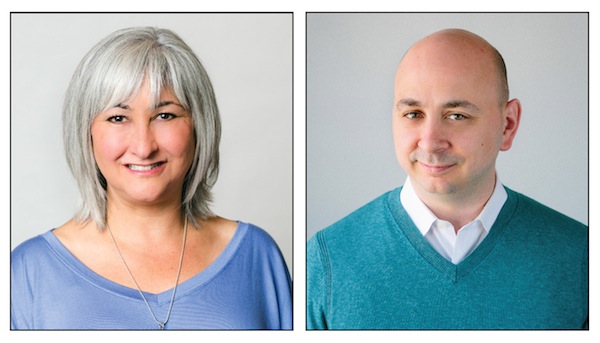
Pam Wolfman and Ezra Shanken talk with the JI about how Jewish Federation and our community are facing the challenges of COVID-19. (photos from JFGV)

This year’s Yom Ha’atzmaut community celebration will feature international singers, actors, chefs and politicians. And the audience will also be from around the world.

On April 29, 11 a.m. PST, the Jewish Federations of North America (JFNA) is hosting a one-hour virtual celebration for Israel’s 72nd birthday, which will be followed by other programming. With the theme of “What Israel Means to Me. What Israel Means to Us,” the hour-long event will include Matisyahu singing a medley of “One Day” with representatives from the

Jewish Agency for Israel’s Partnership2Gether communities and other Jewish leaders sharing messages of hope and celebration; actor Joshua Malina talking about Israel’s battle against COVID-19; singing brothers Ben, Henry and Jonah Platt; chefs debating the merits of falafel and cookbook author Adeena Sussman teaching how to make it; Isaac Herzog sharing a story about Israel’s War of Independence and paying tribute to former Israeli president David Ben-Gurion; footage of Israel’s official Independence Day Ceremony on Mt. Herzl and a message from Israeli President Reuven Rivlin; and the singing of Hatikvah.

Normally, of course, our community would be marking the occasion locally, but COVID-19 changed all of that.

“The Yom Ha’atzmaut event is complex to organize, from the standpoint of searching for the artists who will perform, fundraising and marketing, and other logistics. We usually start planning the event almost as soon as the day after the prior year’s celebration, so there was a lot of work to un-do,” Pam Wolfman, chair of the local Yom Ha’atzmaut committee, told the Independent. “Everyone involved in our event planning has been extremely supportive, and we were able to cancel our event without any significant financial penalty.

“If there is a silver lining to be found, it is the opportunity to be able to join together with JFNA and Jewish communities from all over the world to celebrate ‘with’ Israel. It’s definitely something to look forward to!”

Thanking If’at Eilon-Heiber, Jewish Federation’s director of overseas and Israel affairs, and the whole Federation team, Wolfman said, “I also want to express my gratitude to our Yom Ha’atzmaut sponsors, donors, community partners and those who purchased tickets before the event was changed for all their support.”

For Wolfman, the annual event is important for several reasons.

“I’ve always felt so grateful to live in Vancouver, in large part because we have such a vibrant and diverse Jewish community,” she said. “Jewish Federation’s annual Yom Ha’atzmaut event allows everyone in our community to come together to celebrate and unite around Israel – the beautiful country, her people, the wonderful music and culture – and to simply have an evening of fun!

“When it became clear that we would have to cancel our original plans due to COVID-19, it was very disappointing for all of us on the Yom Ha’atzmaut committee and Jewish Federation staff. And we all felt strongly that it was vital to continue this cherished tradition for our community. Joining Jewish Federation of North America’s online event was a great solution.”

“Our community is experiencing tremendous upheaval and, at the same time, we have seen signs that we are more resilient and connected than ever,” Ezra Shanken, chief executive officer of the Jewish Federation of Greater Vancouver, told the Independent about the current situation.

“Our community organizations have been hit very hard – the challenges they are experiencing are unprecedented. Nearly all of them were forced to close their physical doors, and they remain closed for the foreseeable future,” he said. “Many of them have lost their sources of revenue, be it rental or programming income, or from having to cancel scheduled fundraising events. And, many of the people they serve have increased needs during this crisis and are turning to the Jewish Family Services Community Care Hotline for assistance.

“It is heartening to see how swiftly and effectively many of our community organizations have pivoted,” he said. “The day schools have transitioned quickly to online learning, while the JCC, synagogues and other organizations have introduced a wide variety of online programs and services. Young adults have stepped up to volunteer to help seniors.

“Our advocacy agent, the Centre for Israel and Jewish Affairs, is working with all levels of government to secure support for nonprofit organizations, and has played a major role in achieving success on that front – not just for the nonprofits in our community, but for nonprofits across Canada.”

Jewish Federation is monitoring the community’s health and the impacts of COVID-19, said Shanken. “We are in constant contact with our partner agencies, and responded quickly to address urgent increased community needs by releasing more than $500,000 in targeted emergency funding to see them through the first 30 days of impact. We know that this is but a first step, and that more vital financial, operational and emotional support will be needed. We’ll continue to work closely with our community agencies and organizations to assess their needs, identify opportunities for collaboration, and determine where best to focus our short- and long-term support for the greatest impact.

“I see the strength of our community every day,” he added. “While there are many challenges to overcome, if we continue to stick together and care for each other, I believe we will emerge from this crisis stronger than ever. Ultimately, it’s up to all of us to define where our community will be.”

Shanken has joined various efforts on the ground, helping deliver seder meals with Lubavitch BC, for example.

“Anytime we are able to bring warmth and connection into people’s lives is extremely valuable, especially at times like these,” he said. “Delivering food and medicines, calling people to see how they are holding up – these points of connection can make an incredible difference in someone’s life.

“The COVID crisis, while extremely challenging in so many ways, has prompted many of us to pause to check in with loved ones, friends, colleagues or someone we might know in the community, to get back to basics and remember what is truly important. The tremendous outpouring of support that I have witnessed on so many levels has been inspiring, and a shining example of klal Israel.”

Jewish Federation has a COVID-19 resources page on its website, jewishvancouver.com, which will “help community members easily find information about the many programs and services that are available through community organizations and government agencies,” said Shanken. “We’ll continue to provide the community leadership, planning and crucial planning assistance that our community relies on, as we navigate this pandemic together. It’s what we’re here for.”

He stressed, “Even though we are all physically apart, it is easier and more important than ever to connect.”

As for our local annual Yom Ha’atzmaut celebration, Shanken said it “has always been a special opportunity to bring our community together and show our support for Israel. We are reminded daily that Israel is also in a time of crisis. This year, with our participation in JFNA’s virtual celebration, it will be even easier for people to take part in the event. Every year, we think about other Jewish communities that are also celebrating Israel’s independence. This year, we can literally celebrate with them, in real time. It will be a great show of solidarity at a time when we especially value connection.”

In addition to the Yom Ha’atzmaut celebration, this year’s commemoration of Yom Hazikaron will also take place online. “As bereaved families live with their loss daily, we gather once a year to recognize their grief and pain, and to give them a communal hug,” said Geoffrey Druker, chair of Jewish Federation’s Yom Hazikaron committee, in a release.

From April 26 to 28, community members will be able to light virtual candles for fallen soldiers and victims of terrorism, and there will be a remembrance ceremony on Zoom on April 27, 7:30 p.m., which will include poems, readings, songs and a moment of silence. To be a part of the gathering, register at jewishvancouver.com/yhk2020.

To register for the April 29 Yom Ha’atzmaut celebration, visit jfeds.org/yomhaatzmaut; you can also sign up for alerts leading up to the live global event at jewishtogether.org/yomhaatzmaut. For more information on the ways in which our Jewish Federation is helping the B.C. Jewish community, visit jewishvancouver.com/news/community-support-2020.


Security, magic in gardening

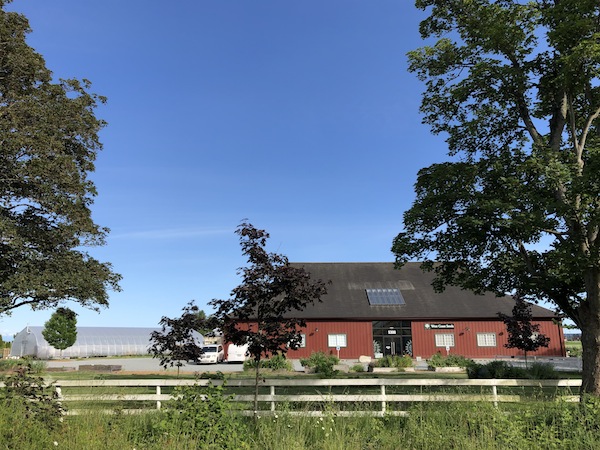
While temporarily closed to the public, West Coast Seeds is still getting seeds to gardeners via garden centres, grocery stores and the mail. (photo from West Coast Seeds)

The pandemic and its associated social and economic impacts have focused attention on food security, as well as the therapeutic benefits of gardening in times of turmoil.

This is part of the message from a local company specializing in organic seeds. West Coast Seeds, a Delta-based company that was founded in 1983 and bought by Craig Diamond a half-dozen years ago, has a mission to “encourage sustainable, organic growing practices through knowledge and support … eating locally produced food whenever possible, sharing garden wisdom, and teaching people how to grow from seed.”

photo - Aaron Saks is West Coast Seeds’ director of finance
Aaron Saks is West Coast Seeds’ director of finance. (photo from West Coast Seeds)

Aaron Saks, the company’s director of finance and son-in-law of Diamond, said getting back to basics, like growing your own food, seems to be one of the responses to the social isolation associated with the COVID-19 pandemic.

“We’ve seen a big push toward food security,” said Saks. “Both ensuring that you know where your food is coming from and getting healthy produce when it might not be readily available other places.”

While so many things are off limits – public parks, basketball courts, beaches – those with backyards can still get in the soil and be in touch with Mother Nature, said Saks.

West Coast Seeds is a pioneer in organic and non-genetically-modified agriculture. Since the Diamond family took over the company, they have refurbished a heritage barn in a rural part of Ladner to be their headquarters, where they have their warehouse and a retail operation, which is temporarily closed to the public. The products are also distributed wholesale to garden centres and grocery stores and they do a large mail order business, which has been ideally suited to adapting to the new reality of the pandemic.

The Diamonds are a fourth-generation British Columbia-based family, notes the West Coast Seeds website: “Since Craig’s grandfather, Jack Diamond, came to Canada in 1927 as a young man and purchased his first business in 1940, the Diamonds have been engaged as leaders in business. They continue to follow the principles of community and philanthropy set by Jack, and further exemplified by his son, Charles. The values of West Coast Seeds resonate deeply with the Diamond family and they are committed to uphold this tradition.”

The values of repairing the world that underpin the Diamond family ethos and the West Coast Seeds mission, Saks said, are being demonstrated globally right now as individuals step up to help their neighbours in this challenging period.

“I think everybody has seen the propensity of society to want to give back at this time,” he said. “One of the pillars of our company is actually tikkun olam.”

The company donates seeds for class projects, school gardens, community education and nonprofit organizations.

The company is balancing the safety of warehouse employees with the need to get seeds to the public, said Saks, expressing gratitude to the staff team for distancing, while still getting product to customers.

“We’re thrilled that they’re able to get seeds, that they’re able to grow, that they can support their local garden centre, support growing their own food and be able to get healthier foods, live healthier lifestyles, as a result of gardening. That’s what we’re trying to do. We’re trying to give back wherever we can and create joyful moments,” he said.

When times are tough, said Saks, something comparatively simple like putting a seed in the ground can help people through.

“That mystical thing about gardening,” he said. “Every time it germinates, it’s just a crazy thing, like magic.”

For more information, visit westcoastseeds.com.

Community milestones … Lubavitch seders, JCC Jewish Book Award nominees

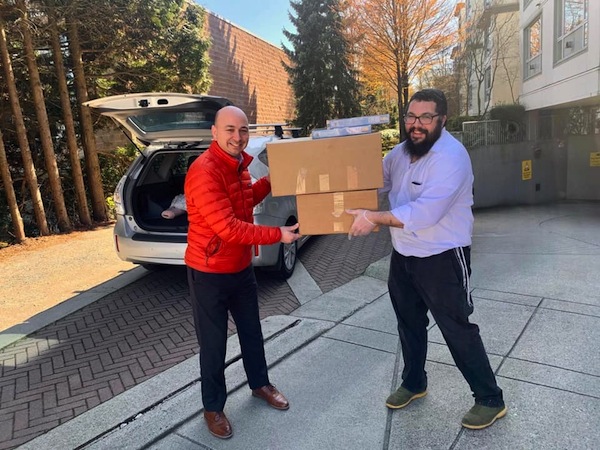
Ezra Shanken, executive director of Jewish Federation of Greater Vancouver, and Rabbi Chalom Loeub, chaplain of Chabad Jewish Student Centre, Vancouver, help with the delivery of seder meals. (photo from Lubavitch BC)

Lubavitch BC had its largest communal seder ever, with more than 1,000 participants. Families in Vancouver, Richmond, Surrey, Langley, Coquitlam, Burnaby, the North Shore and other areas of the province, enjoyed a complete seder with all the trimmings. And now is the time to say thank you to everyone who made this happen.

Firstly, Rabbi Yitzchak and Henia Wineberg, Rabbi Schneur and Shainy Wineberg, Rabbi Dovid and Chaya Rosenfeld thank Chabad of Richmond and the Community Kollel for partnering with Lubavitch BC to ensure that this project reached the largest number of people; Maple Grill, FortyOne Catering, Miriam Sklar and Lizzy Vaknin for their help with the organization and logistics; Sklar and Meir Jerbi for their help with packing and distribution; David and Diana Benjamin, Ezra Shanken, Glenn Berlow and numerous others for their help with the deliveries; and Rabbi Falik and Rebbetzin Simie Schtroks for coordinating the Langley and Surrey pickups and deliveries.

This project was not easy to accomplish in a short time. Extra amounts of matzah, wine, Haggadot, seder plates and Kiddush cups had to be sourced; ingredients and merchandise had to be purchased; and 1,000 meals had to be cooked and packed under the strict protocols of health and safety during COVID-19. Dozens of heartfelt notes of appreciation were received from members of the community, who shared how the project allowed them to have a wonderful Pesach under these difficult circumstances.

* * *

A program of the JCC Jewish Book Festival, the Western Canada Jewish Book Awards celebrate excellence in writing on Jewish themes and the achievements of authors from Western Canada. The shortlist for the 2020 honours was recently released. The winners were to be announced at a ceremony April 23, but that celebration has been postponed till later in the fall. The nominees are as follows.

  • The Nancy Richler Memorial Prize for Fiction: Daniel Goodwin (The Art of Being Lewis), Alex Leslie (We All Need to Eat) and Rhea Tregebov (Rue des Rosiers).
  • The Pinsky Givon Family Prize for Non-Fiction: Allan Levine (Seeking the Fabled City), Naomi K. Lewis (Tiny Lights for Travellers) and Heidi J.S. Tworek (News from Germany).
  • The Diamond Foundation Prize for Children/Youth: Jackie Mills (Little Synagogue on the Prairie), Ellen Schwartz (The Princess Dolls) and Harriet Zaidman (City on Strike).
  • The Lohn Foundation Prize for Poetry: Alex Leslie (Vancouver for Beginners), Dave Margoshes (Calendar of Reckoning) and Tom Wayman (Helpless Angels).
  • The Kahn Family Foundation Prize for writing on the Holocaust: Olga Campbell (A Whisper Across Time), Susan Garfield (Too Many Goodbyes) and Martha Salcudean (In Search of Light).

Sisterhood building bridges

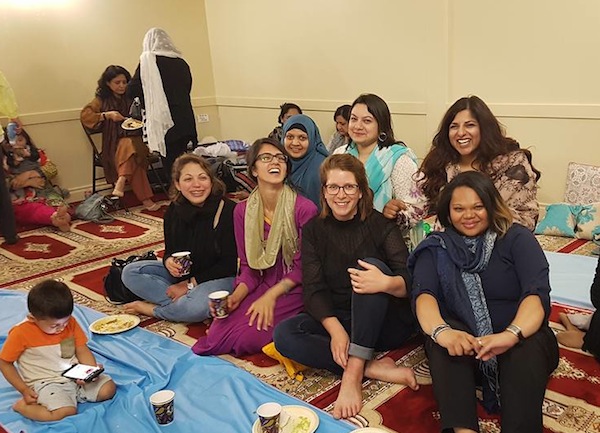
Members of Sisterhood of Salaam Shalom enjoy a Ramadan Iftar dinner together at a local mosque. Naz Qureshi is at top right and Rabbi Gila Caine is seated in the front row, second from the right. This photo was taken before the COVID-19 crisis. (photo from Naz Qureshi)

Sisterhood of Salaam Shalom, which works with Jewish and Muslim women to combat hate, stereotyping and prejudice, has chapters in the United States, England and Canada. After a trip to Israel in 2017, Naz Qureshi, who is Muslim and whose parents are from Pakistan, decided to start up a Salaam Shalom chapter in her own city, Edmonton.

“I’ve been to Israel/Palestine twice,” Qureshi told the Independent in a recent interview. “It’s one of my favourite places to go. I love to see the political dynamics, because … I can weave in and out of both sides. I’m Muslim, so the Palestinians get me. But yet, I’m very Western, so the Israelis get me, too. I don’t wear a hijab. I’m not seen as a threat. I can see it from both sides. I think that, because I’m also a South Asian Westerner, of course, the conflict is near and dear to my heart and I’m passionate about it, but I’m not as invested in it as a Middle Easterner would be.”

During Qureshi’s 2017 visit to Israel, she said, “Completely by chance, this Orthodox rabbi and I started talking about religion and we ended up becoming extremely good spiritual friends. We realized that our faiths have so much in common.”

On her way back to Edmonton, via Toronto, Qureshi happened upon an ad for Sisterhood of Salaam Shalom and reached out when she got home. She contacted Temple Beth Ora’s Rabbi Gila Caine.

“Gila was completely interested,” said Qureshi. “I said, ‘OK, this is perfect, because you’re a rabbi and you can bring the Jewish women, and I can bring the Muslim women.’”

Each leader managed to find a half dozen interested women from their communities, and they began meeting on a monthly basis in homes and places of worship.

“Initially, you don’t broach the Israel-Palestine topic, because you’re just going to have a breakdown of communication right there,” said Qureshi. “Instead, we started with similarities. And it’s not just like, ‘OK, let’s eat some baklava and hummus.’ No. You delve into really interesting topics, like our holidays, our festivals. Salaam Shalom provides you with a whole binder if you’re not able to work on your own topics. They’re really good at guiding you.”

By eliminating stereotypes and hate, and developing friendships, participants begin seeing the other’s points of view and standing up for one another.

To help create intimate friendships, chapters are kept small. “You can’t hate somebody who you end up liking,” said Qureshi. “And then you think, ‘Wow, this person is a lot like me.’

“I think that when that happens – I’ve seen it over and over again from both sides – it creates really interesting dynamics. When you see that wall fall, it’s like the Berlin Wall cracking and this realization that, ‘Oh, my God … this person is not evil, they’re really interesting and fun to be around.’”

At one of the meetings, members were asked to share a personally meaningful story from their faith tradition. “I remember one, I think it was my favourite,” said Qureshi. “We were at Gila’s house and Gila shared about the Kiddush cup. I’d brought zamzam water (Muslim blessed water) and explained its significance. We ended up toasting zamzam water in the Kiddush cup and it was amazing…. When we left, we all had that warm fuzzy feeling in our hearts.”

Just before the coronavirus outbreak, the group had planned to have an event to assess participants’ interest in continuing, but the gathering had to be postponed.

“What I really like about Salaam Shalom is the intimate, smaller group discussions,” said Qureshi. “You get past the formalities, past your name and what do you do, and you delve into real issues and gain an appreciation and learning from one another.

“There is so much Islamophobia and antisemitism on both sides and I really wish that people would just go out and make a Muslim or Jewish friend, and then you can see this closeness that exists.

“I think it’s maybe also so important for women especially to be doing this work because it’s easier for us … no matter where you fall on the spectrum, liberal, conservative … we tend to be more open.

“We can portray Muslims not in this negative stereotypical light, too,” she added. “We’re not all terrorists, we’re not all crazy…. It’s really important to sow those seeds wherever you can.

“Going back to my Israeli friend, the Orthodox rabbi, he feels so close to Palestinians he knows now … whereas before, he was a completely different person. Now, I think, from knowing me and when we talk about religion and the shared stories and our deep love of God and respect, he feels this closeness to Palestinians.”

After Qureshi’s phone interview with the Jewish Independent, she shared a message she received from her rabbi friend, which read: “The other day, when I came home after one of my rounds, I tried to park the minibus in the usual spot and there was this guy who told me that he cannot clean the area because I park there, so I parked somewhere else. Later, I go over to him and ask what days he comes to clean, so I know when not to park. He was a Muslim and he said, ‘I like you.’ He said he recognized me from before. Apparently, he used to sweep the area some time ago and remembers that I used to compliment him and say a good word. Anyway, he literally kissed me! It took me by complete surprise! Who would think of [a Muslim] kissing a Jew? Anyway, we exchanged numbers and now there’s another Muslim friend added to my list.”

Qureshi reflected, “Hearing this message made my Monday morning. I got off the train feeling elated and walked the remaining blocks to work. The sun shone a little brighter and the cooling breeze appeared to be sent directly from the heavens above! The scene was playing over and over in my mind. ‘Who would kiss a Jew?’ Why, a Muslim could and would kiss a Jew! And what had elicited such a strong emotional response? That a Jew could and did act kindly to a Muslim.”

Rebeca Kuropatwa is a Winnipeg freelance writer.

Culture & accessibility

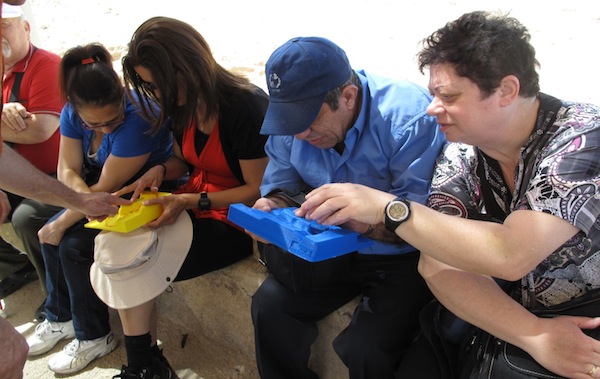
Visitors to Masada learn more about the site through Gadi Mathov’s miniature model of the landmark. (photo from Mathov Design)

What would it take to make museums, cultural sites and tourist attractions more accessible to people with visual, intellectual or developmental disabilities? For the past 25 years, Israeli professional miniaturist Gadi Mathov has been working on solving this problem using models.

At Masada National Park, for example, people with visual impairment can understand the site’s unique topographical structure and history through Mathov’s 3D tactile models.

“We also created for them miniature models of siege vessels that illustrate the Roman siege of Masada,” he explained. “The way I define it, a model is a physical representation of a product or an idea. A model is a medium that allows people to communicate and pass along ideas between them.”

Mathov Design models are used in leading cultural institutions such as the Israel Museum and sites managed by the Israel Antiquities Authority and the Israel Nature and Parks Authority. Mathov also cooperates with the Commission for Equal Rights of Persons with Disabilities, the National Insurance Institute and the Access Israel nonprofit organization.

Mathov Design’s 100-square-metre model of Jerusalem, featuring the Temple Mount, the Tower of David, the Knesset, the new Jerusalem Light Rail and other iconic structures, can be seen in Times Square in New York City as part of the Gulliver’s Gate project.

Birdwatching via models

Agamon Hula, a must-visit birdwatching and natural beauty attraction in northern Israel, is also enhanced by Mathov’s models. Here, he cooperated with Pnina Ceizler, Keren Kayemeth LeIsrael-Jewish National Fund’s northern region projects and accessibility coordinator, and KKL-JNF’s chief ornithologist Yaron Charka to make the site’s research station a place of interest for people with disabilities – visitors can see and/or feel models of the birds that migrate in the area, as well as special globes and maps that highlight migratory routes.

“There are quite a few models that we’ve created to enhance the experience for people with visual impairments,” said Ceizler. “We see that it’s useful for everyone, also for children with disabilities or with autism.”

The accessible experience at the research station has proved to be a huge hit, she told Israel21c. She tried it out on a group of people with visual impairments before opening it up to private visitors and organized trips for schools and people with special needs.

“They enjoyed this whole experience up close. They were impressed and admired everything,” she said of the accessible centre’s first visitors.

Back to the future

Mathov has worked in his profession for 37 years, but it came about quite by accident. “It was a temporary job while I was an architecture student, and then I found out that I liked it better,” he recounted.

Decades later, he’s still in love with the job. “They’ll have to take me out of here in a coffin,” he joked, speaking of his workshop in the central city of Lod.

Along with cultural institutions, his clients include the defence establishment and medical instrumentation companies.

Mathov is not worried about work drying up in the age of technological advancement. “There’s nothing more comfortable or clearer than a model,” he said. “There are dozens if not thousands of uses.”

Lately, it’s become much easier and cheaper to create a model. “The biggest development was the introduction of what we call computerized production,” Mathov explained, citing 3D printers, lasers and CNC (computer numerical control) machines. “Each of these technologies helps us create a much more complex and higher-quality product in less time and for a cheaper price.”

Mathov hopes that, one day, people will be able to print out models at home of the places they’re planning on visiting. “Today, no one goes to the store to buy music; no one goes to Blockbuster to watch a movie. I imagine that, when you’ll want a miniature model, you won’t go to a miniaturist. You’ll be able to download them and print them by yourself,” he explained.

However, printing is only the end of a process that begins with human creativity. Mathov said a model should contain “the human spark of the soul of the person who created it.”

And, while he mourns the disappearance of craftsmanship, Mathov is a firm believer in advancement. “You have to keep on looking forward,” he said. “To understand what the technologies are and where they’re heading; how to adopt them or compete against them or circumvent them.”

For more information, visit mathov.co.il/English.aspx.

Israel21c is a nonprofit educational foundation with a mission to focus media and public attention on the 21st-century Israel that exists beyond the conflict. For more, or to donate, visit israel21c.org.


Israeli start-up’s Beehome

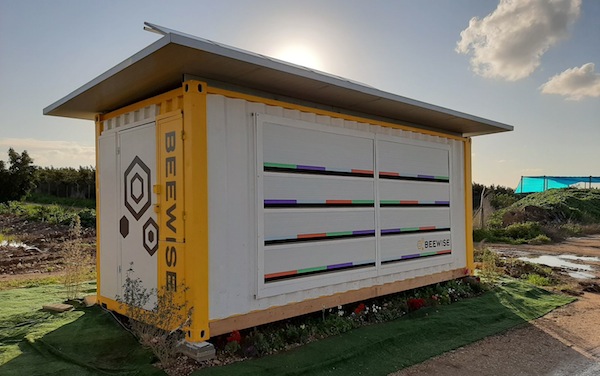
Beewise wants to replace traditional, wooden hives with high-tech, autonomous ones. (photo from Beewise)

What do cucumbers, avocados and coffee all have in common? Aside from being absolute necessities (yes, avocados, too), they’re all crops pollinated by bees. And, if things keep heading in the current direction, we’re screwed.

Bees are extremely important. About one-third of all plants and plant products consumed by humans are dependent on bee pollination. Unfortunately, the combination of modern demand and natural stresses such as climate change, pests and illness mean that the global bee population is dying at a dizzying rate, endangering our diets and well-being.

To combat this, efforts are being made to rehabilitate the bee population. In Israel, these endeavours are given a very Start-Up Nation twist, complete with computer vision, artificial intelligence and precision robotics, which are all part of the world’s first autonomous beehive, developed by Israeli start-up Beewise. Called Beehome, it’s a device that can house up to 40 bee colonies – that’s two million bees – and take care of their health and upkeep through an app on the beekeeper’s phone or tablet.

“It’s what’s called a disruptive innovation,” said Beewise chief executive officer Saar Safra. “We’re coming to replace all the beehives in the world.”

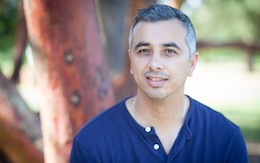
photo - Beewise chief executive officer Saar Safra
Beewise chief executive officer Saar Safra. (photo from Beewise)

The idea for an autonomous beehive came from Safra’s business partner, Eliyah Radzyner. A beekeeper by profession, Radzyner was aghast at the fact that beekeeping methods have not progressed for ages. He was convinced that a computer, machine or robot could do a much better job, and joined forces with Safra, a serial entrepreneur.

At present, most beehives around the world look like they did some 150 years ago – plain wooden constructions whose upkeep requires beekeepers to dress in full hazmat mode and light a smoker before opening them up, taking care of pests, supplying the bees with food and water and harvesting the honey. All this extensive manual labour means that commercial beekeepers, who take care of most of the bees in the world, only get to each hive about once every few weeks. Lots of bees are lost in between rounds to illness, pests and other problems.

“If you manage to identify the problem at the outset and take care of it in a specific manner, then, first off, it will be a lot less invasive; second, you’ll resolve the problem before it becomes a concern; and, third, you’ll save the bee,” Safra explained.

“We built a beehive that knows how to do these things,” he said, listing its three main components: artificial intelligence, computer vision and precision robotics.

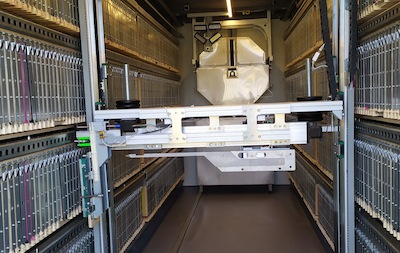
The first, he said, is in charge of recognizing and identifying problems at the very outset. A real-time response is then carried out using computer vision to detect and monitor the situation, with precision robotics executing the required solution. The only things in the autonomous hive that require a human hand are filling the water and food and collecting the honey, which is harvested by machine.

photo - In Beewise's hives, even the honey is harvested by machine
In Beewise’s hives, even the honey is harvested by machine. (photo from Beewise)

While there are other companies trying to take care of bees amid the crisis, no one else has built an autonomous beehive. Currently in beta stage, Beehome is now being used by some commercial beekeepers.

“At first, there’s skepticism, because it’s so left-field,” Safra noted. “The moment we show people the device and that it works, there’s unbelievable excitement.

“There are beekeepers who are second, third or fourth generation. The beekeeper sees how his business is disappearing before his eyes, on his watch,” he added. “Then you suddenly show him this technology, this solution, and he sees that it works. Imagine what a relief that is.

“The idea that we’re saving bees using technology is an amazing thing,” Safra said. “When you take AI and apply it to traditional industries that haven’t been touched in 150 years, the yield is incredible.”

The funding for Beewise came from venture capital funds, as well as from European and Israeli grants. And doing business in Israel has been wonderful, said Safra, who returned to the country some two years ago after 15 years in the United States.

“The ecosystem in Israel is amazing. It’s simply optimized for start-ups,” he said. “There’s also a crazy infrastructure in terms of services and everyone knows how to work in startup mode.”

Beewise aims to be the new standard, Safra said. “There are 90 million beehives around the world. They’re all wooden beehives that don’t work anymore.

“We’re doing well by doing good,” he concluded. “Every hive that I create and which functions and succeeds – the result is more bees alive.”

For more information, visit beewise.ag.

Israel21c is a nonprofit educational foundation with a mission to focus media and public attention on the 21st-century Israel that exists beyond the conflict. For more, or to donate, visit israel21c.org.


Emergency services available in community

The Jewish Federation of Greater Vancouver has released $400,000 to address the immediate needs of its local partner agencies over the next month. The funds will address needs in the key areas of food security, to increase the capacity of the food bank and other food distribution programs in our community; housing support, subsidies for community members unable to make their rent payments; seniors services, to help them stay safe, healthy and connected to community while they are self-isolating in their homes; tuition support so that families with children in Jewish day schools can keep their children enrolled; subsidies for Jewish programs, daycare, summer camps and part-time educational programs; and support so that Jewish supplementary schools can provide alternatives to classroom learning and maintain uninterrupted delivery of Judaic studies to the children and families they serve.

For more on Federation’s response to the COVID-19 crisis, as well as what other community organizations are doing at this time, visit jewishvancouver.com/covid-19-updates.

***

With the support of Jewish Federation, Jewish Family Services (JFS) has launched the JFS Community Care Hotline as an emergency response resource. It is available from 9 a.m.-9 p.m., seven days a week and staffed by JFS to provide emergency essential services. Priority services include meal or food bank grocery delivery; counseling/emotional support; and friendly phone “visiting.”

There are three ways to contact JFS for help: call 604-558-5719, email communitycare@jfsvancouver.ca or complete the form at jfsvancouver.ca/jfs-cares.

If you know anyone who needs to lean on JFS at this time, please share this information via your social media networks and other forms of communication. JFS also has a volunteer registration page, as many people have offered to help.