Jewish Icelanders preparing and celebrating Pesach with Chabad last month. (photos from Rabbi Berel Pewzner via Karen Ginsberg)
During a trip to Iceland in 2010, I had the pleasure of talking with a small number of Jews who called Iceland home. My connections were facilitated by a former colleague who had served from 2006 to 2009 as Canada’s ambassador to Iceland and happened to know that one of her locally employed staff members had Jewish family roots. From that initial serendipitous connection, came several more and, with each interview, I was able to gain some perspective on what kind of Jewish community exists in contemporary times in the country. I titled the article, “Like driftwood from Siberia,” because it seemed the most poignant metaphor – like driftwood, most of the Jews known to be in Iceland sort of washed up on the country’s shores as a result of a marriage or where they had been taken by their studies.
Shortly after the original article was published in 2010 by the Jewish Independent and by the national Icelandic newspaper, which serves the Icelandic diaspora in Canada, I received a phone call from an American Chabad rabbi, Berel Pewzner, seeking information about my experiences.
I have come to know that Rabbi Pewzner is drawn to Jewish life in remote and unique locations around the globe, so I am not sure whether Iceland was already on Chabad’s radar in terms of a small Jewish population in need of support or whether something in the JI article struck a chord. Whichever it might have been, a recent note from Rabbi Pewzner informed me that Chabad student rabbis have been visiting in Iceland for Yom Kippurs and Pesachs for the last five years, “bringing the warmth of Judaism to all.” He shared with me that during these annual visits, the student rabbis have been able to identify and visit with more than 100 Icelandic Jews, including 15 individuals who were new to the rabbis this particular year.
On Pesach, Chabad provides matza for all among those 100 Jews who wish some and then, to everyone’s delight, they hosted more than 60 participants for a full seder this year. Some of these newly located Icelandic Jews have been located as far from Reykjavik as the Faroe Islands.
In 2010, when I first traveled there, Iceland’s economy was in very rough shape. Many Icelanders felt that the recession they were then in would not reverse itself as quickly as other recessions had, and that they simply had to get used to the fact that their assets, both financial and real, were worth very much less than they would have liked. For some – particularly those who had family or business connections in other countries – it was easier to leave Iceland and begin again elsewhere. Rabbi Pewzner tells me that this sentiment is much less in evidence today. To the contrary, there is a now higher level of in-migration to Iceland than in the past. According a 2013 Statistics Iceland report, migration into Iceland is highest from Poland and Lithuania, but the next highest migration comes equally from Denmark, Germany, Latvia, the United Kingdom and the United States. While it is impossible to know for certain why people migrate, this report suggests living conditions, family reunifications, policies around gender equality and because of the natural splendor of the country. In Rabbi Pewzner’s recent experiences, he finds that American Jews of all levels of practice have included themselves in the recent upswing in migration to Iceland.
A May 1, 2015, article by Jenna Gottlieb, published in the Forward, supports Rabbi Pewzner’s observations. It reports that about 50% of the Jews now known to be in Iceland gathered for Rosh Hashanah services. The Ashkenazi food is undoubtedly a draw but so, too, is the rather unique opportunity during the Days of Awe to see the aurora borealis over the nighttime Icelandic sky.
It is very much the case that the Jewish population in Iceland continues to come into the country “like driftwood from Siberia,” to study, work, or because they are part of an interfaith marriage. Most are more secular than religious, but the common thread running through the community is the desire to retain and, with Chabad’s help, maintain a connection to their Jewish heritage. While Icelanders are considered accepting of Jews as individuals, Rabbi Pewzner noted that the Icelandic government in recent years has been deeply critical of Israel for its recent military incursions into Gaza.
It was truly a gift to receive the recent communications from Rabbi Pewzner about how things are moving forward in Iceland, with Chabad’s support, for the Jews within the country.
On the occasion of the 85th anniversary of the Jewish Independent, it is also a reminder that the information that is shared through a community newspaper helps to build community in many places, near and far.
Should anyone wish to contribute financially to the costs of these activities in Iceland or learn more about Chabad’s work there, visit jewishcayman.com/donatetoday for more information.
Karen Ginsberg is a travel writer living in Ottawa.
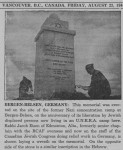
This photo and caption appeared in the Jewish Western Bulletin, Aug. 23, 1946.
May 5, 1945, is firmly etched in my “child’s” mind for that was the day of my family’s liberation or, more accurately, what remained of my family. The German occupation had been brutal and, with the collaboration of thousands of Dutch Nazis, 108,000 Dutch Jews had been deported and nearly all were murdered. Of those sent to Auschwitz and Sobibor, approximately 4,500 survived. Of Holland’s total prewar Jewish population of 140,000, fully 80% were murdered.
I had survived with my Christian hiders, Albert and Violette Munnik, and my “sister” Nora, their 12-year-old daughter. When I was reunited with my parents who had miraculously survived also, I had come to love the Munnik’s as my own family, and I was Robbie Munnik, not Robbie Krell. But I was given back, not without protest, a Jewish child who had no experience with Judaism but was nevertheless hunted for being a Jew.
In Nazi-occupied countries, 93% of Jewish children were murdered. Some escaped just before the war, a few thousand during the war through clandestine operations. But overall, no more than one in 10 survived. That is the nature of genocide. Murder the children.
Holland has somehow managed to maintain a reputation of comparative decency during the war years. Some of this good will emanates from the story of Anne Frank who left behind a diary written during her days in hiding in an attic in Amsterdam. The Frank family did in fact receive heroic assistance from Miep Gies, as did I from the Munniks and my father from the Oversloot family.
But of roughly 14,000 Dutch Jewish children in hiding, over half were betrayed. And, of course, so were the Franks. That adorable, intelligent adolescent Anne and her family were deported on the second to last train from Westerbork to Auschwitz on Sept. 3, 1944, three months after D-Day! She died an agonizing death of hunger and typhus in Bergen-Belsen. Only her father survived.
I write this piece on the 70th anniversary of liberation, a gift of 70 years of life. Who could imagine it? During the war, death had been a close companion, confirmed shortly after the war by the chilling reports that came our way from the few survivors that returned and from the photos that formed part of the news. I heard the descriptions of torture and murder from eyewitnesses. They were there. They had seen and suffered. And their lives and ours had been destroyed. No grandparents, no aunts or uncles. Two other children in our family survived, one also spared in hiding, the other, smuggled into Switzerland. That was it.
And what have I learned over these 70 years? The Holocaust imprint never leaves and no day passes without reminders. Had we tried to forget, it would have proved impossible. From the moment that the world discovered what had been done, the antisemites began their effort to deny what happened. Holocaust denial followed the campaign of murder with the effort to murder memory.
No wonder. Nearly everyone had blood on their hands. The British Mandate of Palestine was closed to Jewish immigration, preventing European Jewish refugees from fleeing. Canada and the United States had closed their doors. The Jews of Europe were trapped and murdered with technological efficiency, aided and abetted by Jew-hating collaborators in almost every country dominated by the Nazi invaders. The only way to be freed from guilt would be for the Shoah not to have happened. But the perpetrators were unable to erase the evidence. The Holocaust is the best-documented massive crime of murder and theft in human history.
Over the years, I have also learned of the systematic betrayal of visionary Jewish leadership who fought for the reestablishment of a Jewish nation-state in what is now Israel from the 1890s. No, Israel is not the result of the genocide inflicted upon European Jewry. If it were, Jews would not have had to fight the British colonialists in 1945-1947 to achieve freedom. And Holocaust survivors trying to reach Palestine would not have been incarcerated in camps in Cyprus.
The victory over the Ottoman Empire led to the establishment of a number of Arab states. Only the British promise of the 1917 Balfour Declaration’s intent to establish a home for the Jewish people went unfulfilled. The 1920 San Remo Conference affirmed that intent, only to witness the British carve off 80% of the territory known as British Mandatory Palestine to create the Emirate of Trans-Jordan. To add insult to injury, it was decreed that no Jew could settle there. This travesty resulted in the remaining 20% to be contested by Jews and Arabs to this day.
I was in Israel in 1961. The Western Wall of the Temple, the holiest site in Judaism, was controlled by Jordan and Jews were forbidden access. During Jordan’s illegal occupation from 1948-1967, all the synagogues in east Jerusalem were destroyed. Nor had Jordan advanced the cause of their Arab brethren or established a Palestinian state in the territories held.
I was at the Eichmann trial. I saw the architect of the annihilation of my people. Over time, it appears that a great deal of European posturing over Israel and its policies are an attempt to deflect attention from the horrendous misdeeds of the European past. There is a concerted effort to make Israel look like a nation with a brutal bent and whose activities, even those in self-defence are painted with the brush of Nazi and/or apartheid terminology. How offensive! How cruel! Its practitioners deny antisemitism for they have found a new outlet for Jew hatred, anti-Zionism. Israel has become the Jew of nations.
It is disconcerting, indeed, to witness the dawn of liberation 70 years ago descend into a night of renewed hate. I seek a measure of comfort in the words of Martin Luther King, Jr., and Eric Hoffer, the longshoreman philosopher. Dr. King wrote, “Israel is one of the great outposts of democracy in the world and a marvelous example of what can be done, how desert land can be transformed into an oasis of brotherhood and democracy. Peace for Israel means security, and that security must be a reality.” And Hoffer, “I have a premonition that will not leave me; as it goes with Israel so will it go with all of us. Should Israel perish, the Holocaust will be upon us all.”
I have to hope that antisemitism will be opposed and extinguished wherever it flourishes and that Israel’s right to exist will be protected. Then our liberation will have acquired meaning.
Robert Krell, MD, is professor emeritus of psychiatry at the University of British Columbia, and founding president of the Vancouver Holocaust Education Centre.
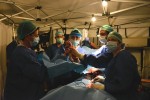
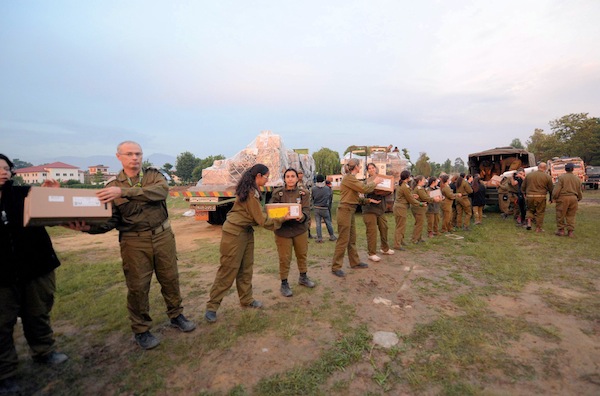
Israel is contributing to efforts to aid and assist the Nepalese government to reach, rescue and treat injured victims of the recent earthquake. The IDF has set up a comprehensive field hospital and also has flown out emergency rations and tents. (photos by IDF via Ashernet)
After Nepal was hit by the biggest earthquake in 80 years, the American Jewish Joint Distribution Committee (JDC) is aiding thousands of survivors through its relief efforts with partners on the ground, and is dispatching its disaster relief team from Kathmandu to remote villages to deliver aid and assess emerging needs in hard-hit areas. The team is assisting in the delivery of first-aid and shelter supplies, hygiene items, oral re-hydration solution, food packages and other supplies to 1,400 families over the coming days.
“Even while we’re helping survivors to heal throughout Nepal, we know more must be done and urge the public to continue its generous support of critically needed relief in this devastated country,” said Mandie Winston, director of JDC’s International Development Program. “Millions of Nepalese are facing harrowing conditions and the need for their immediate care, recovery and reconstruction efforts is required to secure Nepal’s future. Our efforts are focused on that path and to ensure the dignity of every human life along the way.”
To date, JDC has operated on three fronts in Nepal: the deployment of its expert disaster relief team on the ground; the support of locally based partners to ensure medical care and relief supplies within days of the quake; and the packing and shipping of medical and humanitarian supplies from the United States. These efforts have ensured life-saving medical treatment, food, clean water and shelter for Nepalese victims still reeling from the disaster. It has also enabled the assessment of needs and delivery of aid in real time, in tandem with changes on the ground, and the coordination of JDC’s network of local and international non-governmental partners working in Nepal.
These partners include the IDF Field Hospital, Tevel b’Tzedek, UNICEF, the Afya Foundation, the All India Disaster Mitigation Institute, Sarvodaya – Teach for Nepal, Heart to Heart International and Magen David Adom.
JDC has provided immediate relief and long-term assistance to victims of natural and man-made disasters around the globe, including the Philippines, Haiti, Japan and South Asia after the Indian Ocean tsunami, and continues to operate programs designed to rebuild infrastructure and community life in disaster-stricken regions.
JDC’s disaster relief programs are funded by special appeals of the Jewish Federations of North America and tens of thousands of individual donors to JDC. JDC coordinates its relief activities with the U.S. Department of State, USAID, Interaction, the Israeli Foreign Ministry, Israeli agencies and the UN coordination mechanism OCHA.
To contribute to the Nepal relief efforts, contact Jewish Federation of Greater Vancouver at 604-257-5100 or visit jewishvancouver.com/nepal-relief-fund.
The 2014 Jewish Federation annual campaign has closed with a record achievement of $8 million, which is an increase of $290,000 from last year. Funds will support critical programs and services on which thousands of community members rely.
Harvey Dales, general chair of the campaign, said it is “a true community achievement – for our community, and by our community. I remain amazed and inspired by this community and the support received from thousands of donors and hundreds of volunteers. In fact, 93% of the total was raised by volunteer canvassers, who contacted their fellow community members to discuss how they could help address the needs of our Jewish community. Despite ever-increasing demands made on us all, the love and generosity that our donors bestow on those in need of a little more support is astounding. This incredible $8 million achievement is significant, particularly in terms of the people, programs and institutions that will benefit from our commitment to tzedaka.”
One of the keys to success was a fund that saw donors’ new and increased gifts doubled through a matching gifts program supported by several major donors. This helped inspire many donors to make first-time gifts to the campaign or to increase their gifts, and helped the campaign reach its record.
Jewish Federation was named a top 20 charity in British Columbia by the Vancouver Sun in 2012 – the most recent rankings to date – and scored particularly well with respect to its low administrative and fundraising costs. Canada Revenue Agency guidelines indicate the cost of fundraising should be below 35%, but Jewish Federation’s is below this with a net cost of fundraising for the 2014 annual campaign of 12.5%.
From the pages of the JI
Jewish Federation of Greater Vancouver describes itself as an organization “committed to strengthening the quality of Jewish life locally, in Israel and around the world, and to creating a vibrant, caring and inclusive community. Its work is inspired by the Jewish values of tikkun, tzedaka, klal Israel and chesed,” working “in collaboration with many partners locally, nationally and abroad. Its efforts are combined with other Jewish communities in Canada through Jewish Federations of Canada-United Israel Appeal, and in Israel through Keren Hayesod-United Israel Appeal and the Jewish Agency for Israel.”
Federation has been around longer than most of us, and the JWB/JI has been reporting on its activities from the very beginning.
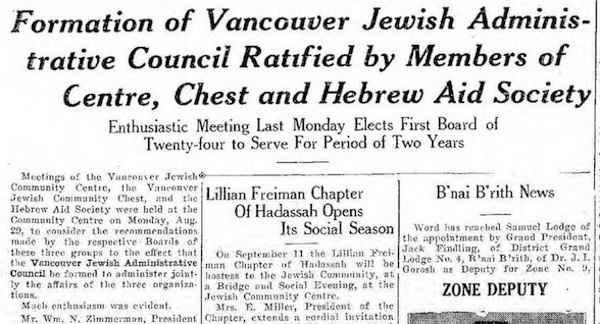
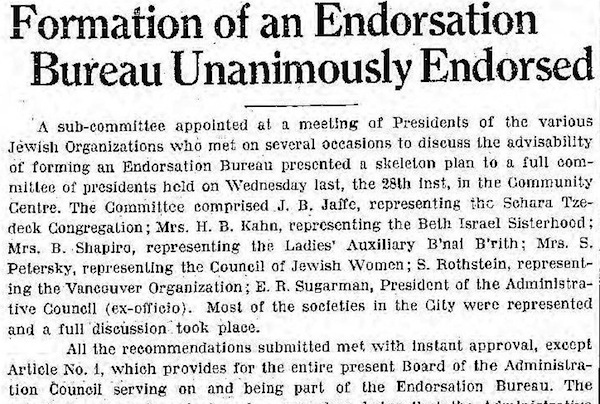
The Sept. 1, 1932, JWB reports on the creation of the “Formation of Vancouver Jewish Administrative Council Ratified by Members of Centre, Chest and Hebrew Aid Society.” The subheading reads, “Enthusiastic Meeting Last Monday Elects First Board of Twenty-four to Serve For Period of Two Years.” A year later, in July 1933, the JWB reported, “Formation of an Endorsation Bureau Unanimously Endorsed.” The full text of both articles follows.
From the JWB, 1932
Meetings of the Vancouver Jewish Community Centre, the Vancouver Jewish Community Chest, and the Hebrew Aid Society were held at the Community Centre on Monday, Aug. 29, to consider the recommendations made by the respective Boards of these three groups to the effect that the Vancouver Jewish Administrative Council be formed to administer jointly the affairs of the three organizations.
Much enthusiasm was evident.
Mr. Wm. N. Zimmerman, President of the Vancouver Jewish Community Centre, opened the meeting, convened as the Community Centre meeting. He explained briefly the purpose of the meeting, and the advantages to be derived through amalgamated administration, not only in the saving of administrative costs, but in the conservation of time and energy of the workers in the community. He stated, “This amalgamation of administration will not only save money for the three organizations, but will avail for us the best men and women power of the city, that will administer the affairs of the three Boards jointly.”
Upon motion by Dr. S. Petersky, and seconded by L. Gorosh, the members of the Vancouver Jewish Community Centre ratified the recommendation of their Board of Governors, and approved the formation of the Vancouver Jewish Administrative Council.
Following this motion, the meeting of the Jewish Community Centre adjourned, and the Vancouver Jewish Community Chest meeting was called to order.
In the absence of Mrs. M. Koenigsberg. President of the Vancouver Jewish Community Chest, Mr. Wm. N. Zimmerman was requested to preside at the Chest meeting.
The Trustees of the Community Chest, through their acting chairman, Mr. Zimmerman, brought before their members their recommendation as follows: “The Trustees of the Vancouver Jewish Community Chest recommend the formation of the Vancouver Jewish Administrative Council, for the purpose of jointly administering the affairs of the Vancouver Jewish Community Centre, the Vancouver Jewish Community Chest, and the Hebrew Aid Society.”
After considerable discussion by members of the Chest, regarding the proposed amalgamation of administration, and after the Constitution of the Administrative Council was read by Mr. E.R. Sugarman, it was unanimously resolved by the Chest members “That the Vancouver Jewish Administrative Council be formed to jointly administer the affairs of the Vancouver Jewish Community Centre, the Vancouver Jewish Community Chest, and the Hebrew Aid Society.” The Chest meeting then adjourned.
Mr. M. L. Greene, President of the Hebrew Aid Society, was called to preside at the meeting, convened as the Hebrew Aid Society. His interpretation of the situation was that the Hebrew Aid Society would remain intact under the advisorship and control of the Administrative Council. After considerable discussion as to the status of the respective organizations under the Administrative Council, the vote was taken, and the Hebrew Aid Society approved the recommendation of their trustees, “That the Vancouver Jewish Administrative Council be formed to jointly administer the affairs of the Vancouver Jewish Community Centre, the Vancouver Jewish Community Chest, and the Hebrew Aid Society.”
Following the motion, the meeting of the Hebrew Aid Society was adjourned, and Mr. W.J. Levin, acting chairman of the Vancouver Jewish Administrative Council, presided.
Mr. Levin stated, “This Administrative Council is created for the welfare of the Jewish Community in Vancouver. The men and women who in the past were able to give freely of their time to communal activities, are now forced to devote a large part of their time to business owing to the depressed economic conditions prevailing. Organizations in the city have been suffering through lack of proper workers. This joint administration will not only save administrative costs, but will conserve and co-ordinate the time and energy of the volunteers. We will unite as one, and work for a common purpose, the welfare of the Community.”
Mr. E.R. Sugarman moved that the constitution as read be adopted for the Vancouver Jewish Administrative Council. This motion was seconded by Dr. Petersky, and carried.
Nominations
The Chairman explained that under the Constitution as adopted, a Board of 24 must be elected and that the sub-committee working out plans for the formation of the Vancouver Jewish Administrative Council have nominated 21 names for election. To this list could be added nominees from the floor. The enthusiasm of the meeting was so great that thirty names were nominated, and those elected to the first Board of the Vancouver Jewish Administrative Council are as follows: M.H. Brotman, Sam Chess, Mrs. Nellie GeShaye, E.M. Goldsmith, L. Gorosh, M.L. Greene, A.G. Hirschberg, Mrs. H.B. Kalin, I.J. Klein, A.O. Koch, Mrs. M. Koenigsberg, J.L. Kostman, J.J. Lechtzier, P. Lesser, N.C. Levin, W.J. Levin, Mrs. H.A. Nemetz, J. Reed, H. Rosenbaum, S. Rothstein, I. Stein, E.R. Sugarman, Wm. N. Zimmerman and H.B. Kahn.
***
From the JWB, 1933
A sub-committee appointed at a meeting of Presidents of the various Jewish Organizations who met on several occasions to discuss the advisability of forming an Endorsation Bureau presented a skeleton plan to a full committee of presidents held on Wednesday last, the 28th inst, in the Community Centre, The Committee comprised J.B. Jaffe, representing the Schara Tzedeck Congregation; Mrs. H.B. Kahn, representing the Beth Israel Sisterhood; Mrs. B. Shapiro, representing the Ladies’ Auxiliary B’nai B’rith; Mrs. S. Petersky, representing the Council of Jewish Women; S. Rothstein, representing the Vancouver Organization; E.R. Sugarman, President of the Administrative Council (ex-officio). Most of the societies in the City were represented and a full discussion took place.
All the recommendations submitted met with instant approval, except Article No. 1, which provides for the entire present Board of the Administration Council serving on and being part of the Endorsation Bureau. The principal argument against such a procedure being that the Administrative Council was elected for the specific purpose of administering the affairs of the Hebrew Aid, The Jewish Community Centre and the Community Chest, and with a representation of twenty-four members they would have increased powers for which their constitution did not provide, and which would enable them if they so desired to veto any project brought before them by the increased new representatives. The Chairman, Mr. E.R. Sugarman, explaining that by virtue of the newly formed organization each new member elected would have a seat of the Administrative Board and become part and parcel of the Board. If it were, however, necessary he felt that the Board though elected for two years (of which they had only served one) would be willing to resign en masse and that a new election could take place and such alterations as were necessary would be made in the Constitution of the Administrative Council at a meeting of Contributors specially called for that purpose.
This explanation seemed to allay the objections raised and on a vote being taken every representative present voted unanimously [in] its favor. It was further arranged that the plan be submitted to a mass meeting on Sunday, July 30, at which meeting the delegates of the Western Conference in Winnipeg would be present and submit their report.
Report of the Sub-Committee
We, the Sub-Committee appointed by the Chairman, E.R. Sugarman, to bring in a skeleton plan for the formation of an Endorsation Bureau in Vancouver, DO HEREBY BEG TO STATE that we have seriously considered the question from all angles and make the following recommendations to you:
That the existing organization, known as the Vancouver Jewish Administrative Council, be enlarged to include the Presidents of fifteen organizations, a list of which we hereby append, and this newly constituted body have the powers heretofore existing in the Administrative Council and be further clothed with the power to supervise and endorse all matters or projects of a community nature whether the same be initiated by organizations or groups of individuals.
That the said body further be considered in the position of speaking on behalf of the whole Jewish Community of Vancouver, particularly in matters which are submitted to the Community to act as a unit.
The right to supervise or interfere with the private management of any organization shall be specifically eliminated.
That endeavours be made immediately to consolidate the Junior Organizations into a Council of their own and when so consolidated the Juniors to have not more than two representatives on the new Board.
That a mass meeting of the citizens of Vancouver be called immediately for the purpose of submitting this new proposition to the Community and have its endorsation of this plan.
All of which is respectfully submitted,
(Signed) E.R. SUGARMAN, Chairman.
The list of organizations referred to is as follows: Samuel Lodge B’nai B’rith, Zionist Organization, Ladies’ Auxiliary B’nai B’rith, Hadassah Organization, Council of Jewish Women, The Schara Tzedeck Organization, Beth Israel Congregation, Community Talmud Torah, Cemetery Board, Ladies’ Auxiliary Talmud Torah, Pioneer Women’s Society, Achudth Society, Poalie Zion Society, Mizrachi Society, The Beth Israel Sisterhood.
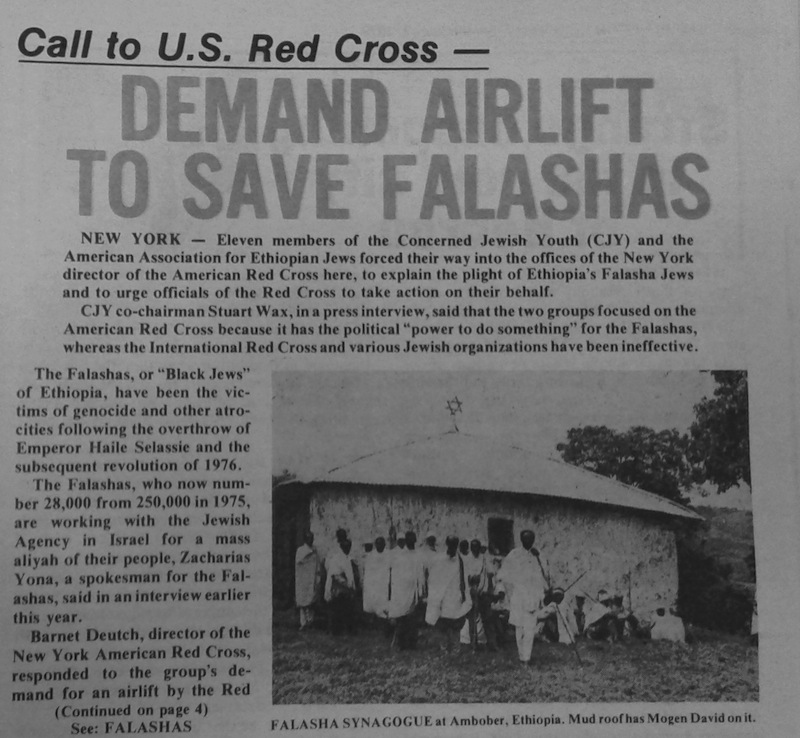
Growing up, the writer was involved in community campaigns to help free Soviet and other Jews suffering state-sponsored, organized persecution. These campaigns were international and Vancouver youth also participated in them. Here are but two of the many items in the JWB about these causes: top one is from 1982; below, from 1976.
I was recently reminded of a fashion-activist item many Jewish teens of my generation wore: the stainless-steel Soviet Jewry bracelet. Etched with the name and date of arrest of a single Jewish dissident in the Soviet Union, each bracelet transmitted to the wearer a deep and penetrating sense of social justice and tribal consciousness. I wore mine proudly, and recall being equally pleased to be selected from my seventh grade class to present handmade cards of encouragement to Avital Sharansky, the wife of jailed activist Anatoly Sharansky (later Israeli politician Natan Sharansky), when she visited Vancouver in the mid-1980s on her global campaign to secure his release.
With the last of the Jewish communities having been freed from state-sponsored, organized persecution (other campaigns as my generation was growing up included the freeing of Ethiopian and Syrian Jews), there is little in the way of that Soviet Jewry bracelet campaign to bind today’s Jewish teens together in such a single, uncontroversial way. The modern state of Israel represents an ongoing cause, of course, but that issue is much more fraught: should a Jewish teen wear a bracelet etched with the name of a fallen Jewish soldier, or the name of one of the 182 Palestinian children currently (as of February 2015) being held in Israel detention – according to data provided by Defence for Children International? When it comes to social justice and activist solidarity, the issue of Israel is clearly complex.
I decided to poke around to see what Jewish teens these days are concerned with when it comes to issues and activism. What I found was a dizzying array of causes. From the website of the Orthodox NCSY (National Conference of Synagogue Youth), I found reports of teens volunteering with Habitat for Humanity and with Oklahoma tornado victims. Both USY (Conservative Judaism’s United Synagogue Youth) and NFTY (the Reform movement’s North American Federation of Temple Youth) select an annual theme to guide their social action and tikkun olam efforts: for 2014, USY chose “a focus on acceptance and tolerance including but not specific to gender, special needs, LGBTQ and racial equality,” according to its website. NFTY chose a similar theme for 2014-15: sexuality and gender equality. Habonim-Dror, which has various active local chapters, or kenim (nests), included a Maryland referendum initiative, for example, to campaign for undocumented high school graduates to become eligible to pay in-state university tuition fees.
Other Jewish educators I polled from the Jewish educators’ network JEDLAB reported that their teens are involved in various issues, including suicide prevention, food banks, poverty, water issues, peace/conflict resolution, mental health awareness and advocacy, women’s rights and empowerment, LGBTQ activism, medical marijuana, vaccines, human trafficking, transgender acceptance, orphans in western Kenya and child soldiers.
A report from the Jewish Teen Funders network attempts to aggregate data from 71 Jewish teen foundations in the United States and Canada during 2013-14, showing where the total of nearly $1 million in philanthropic dollars went. Across 362 grants awarded, the top five issue-areas in descending order were: youth, education, special needs, chronic illness and poverty.
And none of this even begins to capture the array of charitable and social awareness efforts represented in today’s mitzvah projects popular among 12- and 13-year-olds marking their bat and bar mitzvahs, a trend that was absent in my generation, as I recall, anyway. As a complement to that, here in Ottawa, my own shul has been running a monthly b’nai bitzvah class by Cantor Jeremy Burko, which has been including discussion of Jewish-history-informed social justice topics, such as labor conditions in the fashion industry.
What’s the takeaway from this big picture? On one hand, there is no longer a single cause (if there ever was one) that unifies Jewish teens. And that means that tribalism is likely being replaced by a sense of universalism: the sense that social justice must necessarily cross ethnic and religious boundaries. On the other hand, today’s Jewish teens are no doubt indeed being united in the very belief that through Jewish social action, they can repair the world in a global, nuanced and holistic sense. So, while I admit to feeling some nostalgia for the simplicity of the worldview embodied in the Soviet Jewry bracelet I wore with pride and even some excitement, I think we should feel buoyed by the youthful energy and optimism in our midst that the world is ours – and theirs – for the repairing.
Mira Sucharov is an associate professor of political science at Carleton University. She blogs at Haaretz and the Jewish Daily Forward. This article was originally published in the Ottawa Jewish Bulletin.
Editorial in the Jewish Independent’s predecessor, the Jewish Western Bulletin, March 20, 1931.
The JI spoke with four friends of the newspaper from longtime Vancouver Jewish community families about the value and future of a Jewish community newspaper: Gary Averbach, Shirley Barnett, Bernie Simpson and Yosef Wosk. We asked each the same four questions and they replied by email. Their responses are printed below.
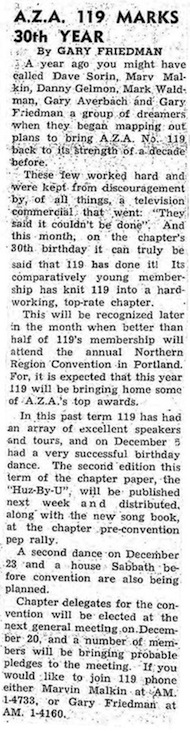
Not only are the community members interviewed here longtime Vancouverites but they have been involved in communal life for decades. The announcement on the right is from 1959, and comments on how a group of youth including Gary Averbach brought “AZA No. 119 back to its strength of a decade before.”
GARY AVERBACH
1. Is it important to have a Jewish community newspaper? If so, what are some of the reasons?
It’s difficult to answer this question because it seems so obvious that having a community newspaper is vitally important. We need a forum and a notice board for opinions and events in the community and, if there was not a publication dedicated to providing that forum and bulletin board, our community would suffer an irreplaceable loss.
2. What do you think the JI/JWB specifically has contributed (contributes) to the community?
For the most part, the JI/JWB has always been a bulletin board for the Jewish community, informing us about major – and minor – events and happenings. Whether they be reports on events that have occurred in the community – including the greater Canadian and worldwide Jewish community – or just informing us of births and deaths, b’nai mitzvahs and weddings, or local upcoming happenings. If not the JI/JWB, where would this come from?
3. In what ways, if any, is having a print version of value, versus only having an online publication?
For the next decade at least there will be a demand – albeit likely a decreasing one – for a printed version of the JI. That isn’t so much to provide for the very few people who still don’t or can’t use a computer, but to those of us who still prefer to hold a newspaper in their hands
4. Do you think that a Jewish community paper will be relevant for your grandkids’ kids?
I don’t even know what my grandchildren will be using to access their news in 10 years’ time, never mind what my great-grandchildren will prefer. But I’m fairly certain it won’t be print media as we now understand it. However, that in no way diminishes the need for a community forum and bulletin board giving a Jewish viewpoint on matters of local, national and international events – specifically items that directly involve Jews and, of course, Israel. So, whether it’s an online version, as we now know it, or some further refinement that we can barely imagine now, there will still be a need to inform our local Jewish community by the JI or some similar outlet.
SHIRLEY BARNETT
1. Is it important to have a Jewish community newspaper? If so, what are some of the reasons?
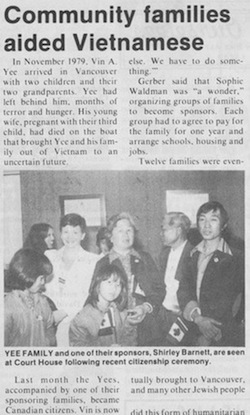
Among Shirley Barnett’s many community involvements is helping Vietnamese refugees come to Vancouver. This article is from June 1984.
Yes, for sure. I would like more reporting of issues in the community rather than just of events.
2. What do you think the JI/JWB specifically has contributed (contributes) to the community?
Exactly that – a sense of community and interaction.
3. In what ways, if any, is having a print version of value, versus only having an online publication?
For me, for sure. I like to read it over a morning coffee, and still cut and clip.
4. Do you think that a Jewish community paper will be relevant for your grandkids’ kids?
Probably not.
BERNIE SIMPSON
1. Is it important to have a Jewish community newspaper? If so, what are some of the reasons?
It is extremely important for the Jewish community, which is spread throughout the province, particularly the Lower Mainland, to have a Jewish community newspaper. There is no question that the viability of printed media has been affected by easy access to online papers, however, it is noted that just about every ethnic community in British Columbia still has printed media, which is read primarily by the older generation.
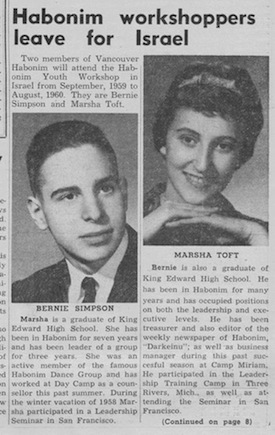
This article from 1959 is but one of many recording Bernie Simpson’s participation in Habonim and other community organizations, including the Jewish Western Bulletin.
For example, in the Indo-Canadian community there are at least one dozen papers, half of which are in Punjabi. However, two of the most prominent papers, the Voice and the Link, have been in existence for more than 30 years, and are able to attract substantial advertising and are thriving within the community.
The Korean community has at least six papers, primarily in Korean. The Vietnamese community has at least four papers. The Chinese community has a countless number of newspapers, which attracts readers from the various regions from where the Chinese community has come, including Taiwan, Mainland China and Hong Kong.
Admittedly, however, those communities have far more significant numbers than the Vancouver Jewish community, and that may be the reason why those papers are more economically viable.
The Jewish community newspaper, by definition, helps promote a community by giving news as to various events that are happening, not only in Vancouver but in outlying areas.
It is also a vehicle to announce important fundraising activities and to give proper recognition to those who are honored in the community.
The reporting of international news particularly as it relates to Israel is important, and also the editorial content. I believe that we are fortunate in having editorial content that is objective. The letters to the editor, by and large, are articulate and represent, on occasion, a different view than the mainstream Jewish community may have, particularly with regards to Israel, and this view should be welcomed as it serves as a catalyst for thoughtful thinking on sensitive subjects.
The stature of the Jewish community would be diminished considerably in the eyes of the non-Jewish community if there was not a Jewish community paper. There is still the view that the Jewish community is well organized, speaks with one voice on contentious issues, is socially active in liberal causes and even responds to tragedies throughout the world, and I would think that the image of the community will be tarnished considerably if a community paper did not exist.
2. What do you think the JI/JWB specifically has contributed (contributes) to the community?
To a certain extent this question is partially answered by my response to Question 1.
I believe that this paper helps keep the community focused and together, and it takes into consideration all aspects of the political spectrum as it relates to the three levels of government and objectively reports what is happening in Israel.
We are indeed fortunate to have the publisher (working with various editors), who is an outstanding journalist as is evident by the many awards that the Jewish Independent has won.
If it would happen in the future that the Jewish Independent did not exist, then that void very well could be filled with a community publication that lacks the objectivity that the present Jewish Independent has. For a brief period of time several years ago, such a paper did exist, and it was quite clear what the agenda of that paper was. In the Jewish Independent’s small way, it does help the debate with regards to the peace process in Israel between the Israelis and the Palestinians and the concept of a two-state solution.
3. In what ways, if any, is having a print version of value, versus only having an online publication?
I think, at this point, the majority of the readership are still of the generation where they don’t naturally gravitate every day to their computer or their mobile to see what news comes out this week in the Jewish Independent.
Longtime members of the community have had ingrained in them that towards the end of the week, the Jewish Independent will arrive. It often stays around the house until the next edition. I would think also that it would be harder to get advertising revenue if you’re only online.
4. Do you think that a Jewish community paper will be relevant for your grandkids’ kids?
Frankly, I’m not terribly concerned about the answer to that question, nor is it really relevant to the present situation. I am a senior member of the Jewish community now; my grandchildren are 6, 3, 2 and 1. It’s impossible for me, who on my best of days has difficulty directing my attention to the immediate past, to focus on whether the paper will be relevant for my grandkids’ kids, which would be around 30 years in the future.
I don’t think that we should be too concerned about that question, but what we should be concerned about is how we can make the Jewish Independent more economically viable.
One obvious answer is an increase in subscriptions. Perhaps, an active volunteer campaign could be conducted by members of the community to try to sign up more subscribers. This will make it easier to get advertising revenue.
It may be that there should be “an advisory board” set up to advise the present publisher as to how to make the paper more attractive to advertisers and to readers.
There is a great deal of talent within the Jewish community (well-known reporters who are still active, retired reporters with national papers, etc.); this is a resource that perhaps should be called upon.
Also, an advisory committee of individuals – businesspeople – can lend help financially, if the situation arises.
RABBI DR. YOSEF WOSK
1. Is it important to have a Jewish community newspaper? If so, what are some of the reasons?
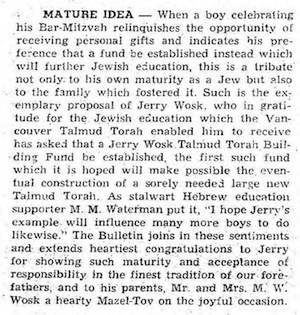
Yosef (“Jerry”) Wosk’s decision to donate funds to Vancouver Talmud Torah on the occasion of his bar mitzvah in 1962 drew the attention of editor Sam Kaplan.
Yes, I feel it is important to have a community newspaper. It helps to gather and focus information about the extended family that is the community. It covers diverse topics, such as social events, politics, education, births and deaths, special interest groups, as well as emotional and intellectual concerns.
2. What do you think the JI/JWB specifically has contributed (contributes) to the community?
The newspaper has tried to be a neutral newsgathering and dissemination site. It carries articles that represent the full spectrum of the community, thereby fostering information and conversation.
3. In what ways, if any, is having a print version of value, versus only having an online publication?
The value of a print edition is that it can be read on Shabbat, it is easily accessible to everyone, including technophobes. It is always open and easy to read. Articles can be cut out and distributed. Having a hard copy on your desk or table gives it an immediate physical presence and material voice. In addition, a newspaper or magazine laying around in a public common area or even in a private home will attract readers who may not open an electronic device and search for a particular media address. The electronic edition may provide a number of supplementary links and also be available through a quick search, but it does not negate the value of a printed edition.
4. Do you think that a Jewish community paper will be relevant for your grandkids’ kids?
Who knows? However, newsgathering and dissemination in one form or another has always been of interest to the human condition and, so, I project that a community newspaper will still maintain its value in the future.
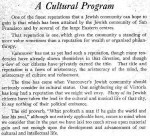
The Feb. 5, 1931, editorial, “A cultural program,” in the Jewish Western Bulletin laid out some of the hopes, dreams and challenges to the beginnings of organized arts and cultural programming in the Jewish community of Vancouver. In many ways, today’s challenges echo the challenges of 84 years ago: arts and culture requires participation and support. They also require belief; belief that they form the bedrock of any healthy, sustainable community and are a way to celebrate and connect to the past while envisioning a brighter future.
The JI spoke with the directors of five mainstays of the local Jewish arts and culture scene in 2015 – the Cherie Smith JCC Jewish Book Festival, Chutzpah!, the Sidney and Gertrude Zack Gallery, the Vancouver Film Centre and the Vancouver Jewish Folk Choir – and asked them the same five questions. Their responses follow.
CHERIE SMITH JCC JEWISH BOOK FESTIVAL Nicole Nozick, director
1. Could you give a brief history of your organization?
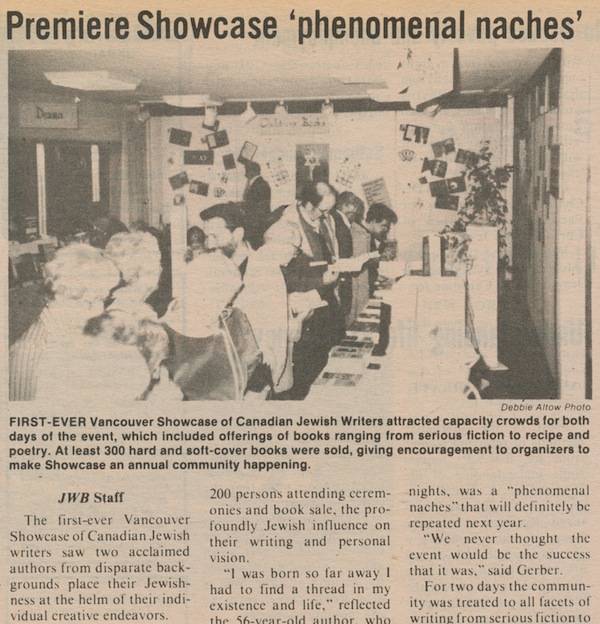
The JCC Jewish Book Festival (JBF) was founded in 1984 by a small group of book club friends led by Vancouver writer and publisher Cherie Smith. The group decided to create a forum to showcase Jewish writers to Vancouver audiences. After Cherie passed away, the Smith and Rothstein families established an endowment fund in her honor to support the festival in perpetuity and placed it under the stewardship of the Jewish Community Centre of Greater Vancouver.
The first book festival, Jewish Western Bulletin, May 1984.
The JBF – which celebrates its 31st year this November – has grown into a literary event of some magnitude, featuring award-winning international authors, showcasing Canadian writers, supporting local authors and publishers, and encouraging a love of reading across all generations. Despite its exponential growth, the JBF has not lost sight of its original core values and mission. The mostly volunteer-led operation echoes the passion of its original founders, many of whom continue to attend and support festival events to this day.
2. When did you become involved with it and what drew you to it?
I have always been an avid reader and, at a very young age, I recall making a solemn declaration to my classmates that “books are my best friends.” To this day, you’ll never find me without a book in my bag to keep me company wherever I may be. When the position of festival director presented itself in 2008, it was the perfect opportunity to marry my professional experience in management and production with my passion for reading and writing. Equally important, the part-time hours of the position allowed me to have the time I wanted to be with my young children.
3. What are some of the ways in which your organization has contributed to the community over the years? ie. Why is it important for the community to have/support?
As bearers of the auspicious moniker “The People of the Book,” it is hardly surprising that literature plays such a significant role in the Jewish community, and our Vancouver Jewish community has shown itself to be more erudite than many in North America. The Vancouver JBF is on an equal footing in terms of participating authors, events, duration and audience as festivals from much larger Jewish communities, including Atlanta, Houston and San Diego. Further, the Vancouver JBF far exceeds other Jewish book festivals in Canada such as Toronto, Winnipeg and Calgary in its scope, outreach and operations. This is testimony to our community’s passion for literature and learning, and the arts.
It has been a pleasure to introduce our already well-read audiences to new writers – and to welcome old favorites. The festival’s focus on Israeli writers has had an important impact not only on our Jewish community but has had far-reaching impact on the community at large – both in Vancouver and across Canada. Etgar Keret, one of Israel’s foremost “new generation” writers credits his appearance at the JBF and subsequent interview broadcast on CBC’s Writers & Co. with his increasing success in Canada and sold-out speaking engagements in Toronto and Ottawa. (Keret will appear at the 2015 Vancouver Writers Festival.)
4. What are some of the challenges in keeping it going? Are there specific ways in which community members could help with those challenges?
The book publishing world has gone though unprecedented change and upheaval in recent years. Increasingly, sophisticated technologies that introduced us to tablets, smartphones and e-readers have taken a heavy toll on the simple pleasure of reading a book. In this new age of shortened attention spans and 140-character communication, fewer and fewer people are making the time and applying the focus required to read a book. This is evident not least in the closure of countless bookstores and the bankruptcy of many publishing houses. One of our most important challenges at the JBF is to keep books and reading relevant not only to our current society but to generations to come.
The JBF has adapted to these changing circumstances in order to remain current and vital. Examples include collaborating with Chapters/Indigo to introduce e-readers to our bookstore, changing the scope of the bookstore’s inventory, creating new programs that incorporate digital technology. The JBF also incorporated emerging technologies to showcase international authors: for example, Etgar Keret, whose opening night gala interview was presented via international video-conferencing.
Of course, other important issues such as budget constraints have a detrimental effect not only on the JBF but on many arts and culture organizations. In times of economic uncertainty, arts organizations often bear the brunt of decreased funding, as both government and private sector funding is impacted. At the JBF, we are very blessed to be supported by a loyal and strong donor support base who recognize the crucial role literacy and literature plays in our society. This generous base has helped to keep the JBF sustainable.
5. What are some of the benefits, in your opinion, of the arts in general and why it’s important to have arts and culture in one’s life?
Without the magic of art and culture in our lives, the world would be a drab and dreary place, indeed. Though misquoted, the great bard, William Shakespeare, declared that “music is the spice of life,” and he was right – though certainly his reference was to all of the arts. Reading a good book opens our minds to new worlds, feeds our souls, impacts us in the way that little else can.
***
CHUTZPAH! FESTIVAL AND THE NORMAN AND ANNETTE ROTHSTEIN THEATRE Mary-Louise Albert, artistic managing director
1. Could you give a brief history of your organization?
The Norman and Annette Rothstein Theatre (NRT), housed in the Jewish Community Centre, is a professionally equipped 318-seat performing arts proscenium theatre. It was established to enhance the cultural life of both the Jewish and general communities and is one of the Lower Mainland’s few mid-size proscenium theatres. The annual Chutzpah! Festival, Chutzpah!’s Creation Residencies, workshops for urban and rural youth and young adults program and Chutzpah!PLUS are our main professional programming activities.
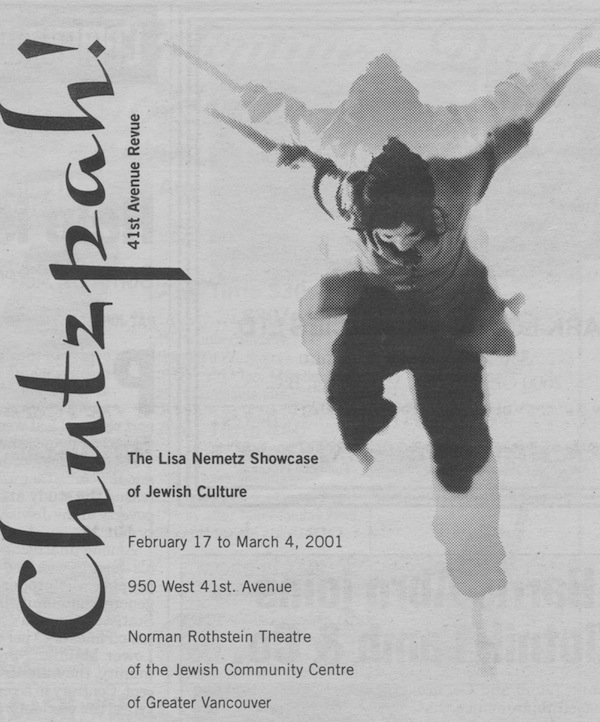
Part of an ad in the JWB, February 2001. Current Chutzpah! Festival director Mary-Louise Albert is the dancer featured.
The Chutzpah! Festival, established in 2001 and named in honor of the late Lisa Nemetz, is one of the most respected international festivals in B.C. and Canada. Chutzpah! is known for presenting world and Canadian premières; supporting the creation of new work by way of multi-week dance residencies in the NRT with confirmed presentation of the residency work; and 2015 brought satellite dance festival residencies, youth workshops and performances to the North Island region of B.C., an exciting area of program growth and outreach.
2. When did you become involved with it and what drew you to it?
My first involvement in the Chutzpah! Festival was performing in the very first Chutzpah! in 2001. The founding artistic director of the festival, Brenda Leadlay, also put me on the poster. I was a professional dancer for over 17 years, and, after my second child was born, I left company life and freelanced as an independent dancer doing project and solo work, mainly. My company years had been with Anna Wyman Dance Theatre, Karen Jamieson Dance Company, Judith Marcuse Dance Company and apprenticing with Les Grands Ballet Canadian. My show in the inaugural Chutzpah! Festival was a shared evening with Toronto’s Kaeja d’Dance.
Shortly after this performance, I transitioned out of dance and studied arts management and business administration at Capilano University and BCIT. About a year after graduating from BCIT with a post-diploma of technology in business administration, the JCC hired me as the artistic managing director. My first Chutzpah! Festival as the AMD was the 2005 one, and I will never forget the fun photo shoot with Boris Sichon as the photographer snapped (I’m revealing my age) away for that year’s perfect poster image.
3. What are some of the ways in which your organization has contributed to the community over the years? ie. Why is it important for the community to have/support?
For the past 10 years, Chutzpah! has been programming Israeli artists to the point where they make up the most numbers of our international artists. The importance of connecting Israeli artists to B.C. (and in most cases to Canada for the first time) helps develop an understanding of Israeli culture and the amazing complexities of its arts.
The exciting and entertaining multifaceted ways the performing arts accomplishes this understanding of Israel is a mainstay of the festival. No other festival in Canada programs the range or number of artists from Israel as we do. We have brought known artists and large groups such as Batsheva Dance Company, Kibbutz Contemporary Dance Company, Balkan Beat Box and the Idan Raichel Project, which we have presented in progressively larger productions. Many of our Israeli artists have been unknown to Canadian audiences, but we have still given these eclectic talented performers the opportunity to tour internationally, such as with Idan Sharabi and Dancers, Zvuloon Dub System, giving Yemen Blues and Maria Kong their first North American shows, Ish Theatre, Dudu Tassa, Itamar Boracov, Uri Gurvich and many more.
These artists perform in our home, the JCC, in the Rothstein Theatre, as well as off site and out into the general community. It is a sharing of Jewish arts and culture with the Jewish and general communities. The Lower Mainland Jewish community is integral in helping us with this and the loyalty of the Jewish community and its willingness to take a chance with artists they don’t know is so appreciated and keeps us going. When I looked out into the audience of our Chutzpah!PLUS concert with Ester Rada at the Imperial this year, my heart melted as I saw so many familiar faces. We can’t do what we do without this support.
Another area we are proud of is our commitment to programming world premières by B.C. artists, as well as our multi-week Creation Residencies. Supporting artists this way is paramount to artistic growth. This past year alone saw three world premières by B.C. artists and the year before we had three, as well.
4. What are some of the challenges in keeping it going? Are there specific ways in which community members could help with those challenges?
One of the biggest challenges is that with a festival the size of Chutzpah!, most artists (and, in particular, international artists) have to be programmed and committed to before most granting and donation revenue is secured, often one or two years in advance. Maintaining and increasing corporate and donor sponsorship is important to the sustainability of the festival. We have yearly support for our programming from government funders, such as Canada Council for the Arts and Canadian Heritage. A challenge is that we are a Canadian festival that programs many artists from another country, Israel. We are very grateful for annual support from the Jewish Federation of Greater Vancouver and the Israel Consulate, for instance, who help us with expenses relating specifically to our Israeli programming, as they know how important our Israeli programming is to the community. And … the community helps us so much by attending shows!
5. What are some of the benefits, in your opinion, of the arts in general and why it’s important to have arts and culture in one’s life?
The arts engage on multiple levels, such as opening up new dimensions and developing creative expression as a stimulus for spiritual and ethical understanding. Exposure to the performing arts allows for the nurturing of inventiveness as a tool to develop self-discipline, self-motivation and self-esteem. Participating in artistic activities helps to gain the tools necessary for understanding the human experience, adapting to and respecting others’ ways of working and thinking, developing creative problem-solving skills, and communicating thoughts and ideas in a variety of ways.
The strength of Jewish arts and culture embraces and promotes the blossoming of divergent forms and points of view, and shares it with audiences from diverse communities. Many Jewish artists connect us to the differing aspects of the Jewish Diaspora. Exploring beautiful tensions and contradictions in these juxtaposed, but parallel, experiences helps feed a rich and engaging life.
***
SIDNEY AND GERTRUDE ZACK GALLERY Linda Lando, art gallery director
1. Could you give a brief history of your organization?
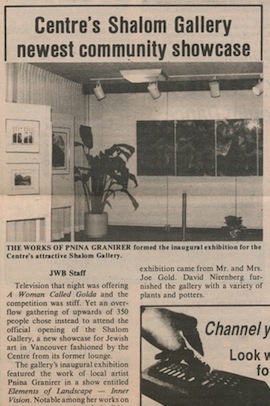
The gallery began as the Shalom Gallery in the Jewish Community Centre; the then size of the gallery was 19’ by 40’ (760 square feet). The current size is 22’ by 40’, with excellent lighting and a high ceiling with skylights.
The Zack Gallery started life as the Shalom Gallery, JWB, May 1982.
In 1988, the gallery received a donation from the Sid and Gertie Zack family, and the gallery was renamed the Sidney and Gertrude Zack Gallery of the Jewish Community Centre of Greater Vancouver. At that time, the gallery was designed as part of the overall Phase II renovation project of the JCC.
The gallery has as goals: to create and promote a gallery of stature in which only high-calibre artwork (in all media) is shown, featuring artists of local, national and international reputation; to encourage the serious Jewish artist; to promote understanding of contemporary artistic concerns; and to participate in multi-cultural events.
2. When did you become involved with it and what drew you to it?
I have been an art dealer with a gallery presence in Vancouver for 30 years. It was time for me to make a change in my life, to have less responsibility and to become more a part of the community. At one time, I was a board member of the JCC and I was on the Zack Gallery committee for many years, as well, so I have always been drawn to the JCC and the gallery. As you can well imagine, I am very comfortable running the gallery, dealing with artists, having openings, etc.
3. What are some of the ways in which your organization has contributed to the community over the years? ie. Why is it important for the community to have/support?
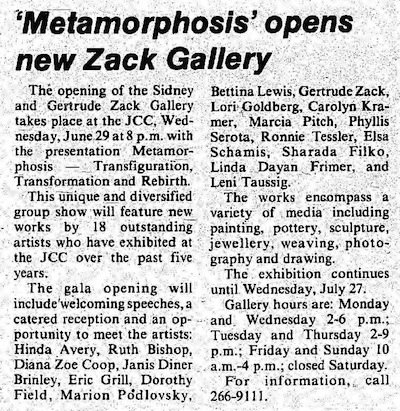
The Zack Gallery opened with a group show, JWB, June 1988.
The Zack Gallery has supported Jewish artists for many years. There have been shows that relate specifically to Jewish and or Israeli themes, as well as shows by Israeli artists. The gallery is a venue for Jewish artists who are not necessarily mainstream to show their work. It is unique in the city. It is important to support the gallery, as arts and culture are a huge part of the glue that holds the community together.
4. What are some of the challenges in keeping it going? Are there specific ways in which community members could help with those challenges?
Artists are always underfunded/underpaid. Part of the cost of having a show falls upon the artist. Funding is always a challenge.
Community support would be wonderful. I would be happy if more people supported the gallery by coming to the many openings, talks, poetry readings, etc. That would be very satisfying.
5. What are some of the benefits, in your opinion, of the arts in general and why it’s important to have arts and culture in one’s life?
As I stated, arts and culture are community glue. They bring together artist and patron, student and teacher, ideas and realization. Creativity is what is left when there is nothing else.
***
VANCOUVER JEWISH FILM CENTRE Robert Albanese, executive and artistic director
1. Could you give a brief history of your organization?
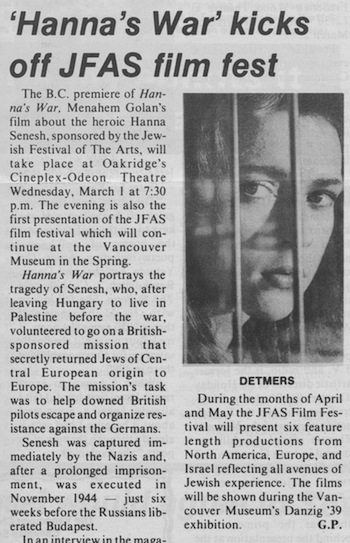
Jewish films were first brought to Vancouver [by what is now known as the Vancouver Jewish Film Centre] under the umbrella of the Jewish Festival of the Arts, a community organization that was founded in May 1984. Films were sought out that showcased the diversity of Jewish culture, heritage and identity. In 1988, the Festival of the Arts morphed into the Vancouver Jewish Film Festival and, as demand from community organizations for Jewish film grew beyond an annual festival, the name was changed in 2013 to the Vancouver Jewish Film Centre to better reflect the breadth of offerings presented year round.
2. When did you become involved with it and what drew you to it?
In 2009, I was approached by the CEO of Jewish Federation and asked to take a meeting with the executive committee of the board of directors of the Vancouver Jewish Film Festival. The board was conducting a search for a new executive director.
The Jewish Film Centre developed out of the Jewish Festival of the Arts Society, JWB, February 1989.
At the time, I had held the position of director of exhibitions for the Vancouver International Film Festival for the previous 10 years. I had also been a general manager for Cineplex Entertainment. I was a successful photographer with a background in film-set photography and had previously been the managing director of Montreal’s premier repertory cinema.
The offer from the board of the Jewish Film Festival would allow me to bring to the organization 30 years of professional experience in all aspects of the film industry. In addition to the executive director position, I would also be their artistic director. The opportunity to make a difference, to contribute to the arts in our community was the “icing” on a long career in the film business. The added opportunity to grow the organization was a challenge I was eager to undertake.
3. What are some of the ways in which your organization has contributed to the community over the years?
The film centre has held an annual Vancouver Jewish Film Festival for 27 years; it is the longest-running Jewish film festival in Canada. We have engaged our community by bringing the best quality films that inspire, entertain, educate and connect us to the diversity of Jewish culture. The Vancouver Jewish Film Centre was founded to preserve and showcase our Jewish culture, heritage, identity, and we reach all members of the community. Our annual film festival is presented in a mainstream cinema, a secular environment, and is open to all who want to attend. It is a major social event that brings the community together. Film is the most reasonably priced form of cultural entertainment available today.
Film accesses and engages the broadest community. We are deeply committed to outreach and we work tirelessly with community organizations to bring films to their stakeholders. Generally speaking, the film centre is an organization with the potential to reach the whole Jewish community.
It’s Jewish continuity through storytelling in today’s visually oriented world.
4. What are some of the challenges in keeping it going? Are there specific ways in which community members could help with those challenges?
The film exhibition industry has changed dramatically in just a few short years. Everything is now digital, and the technology required for state-of-the-art presentation is very expensive. Film costs and venue rentals have risen through the roof; movie theatres with the proper screening equipment are in short supply. In spite of all of this, we have responded to the increased demand for more film presentations from our greater Jewish community. We travel to community organizations with projector and screen in hand to bring the films directly to them. We are co-presenting Victoria’s first Jewish film festival this November. We are facilitating film with the Okanagan Jewish community. We’ve facilitated numerous fundraising film events throughout the community for Jewish organizations of all kinds. All of the above means increased costs for us at the same time that our community in general is faced with aging infrastructures with large capital campaigns in place. That often means cultural entities are left struggling to attract funding from the community, funding required to keep us vibrant and relevant.
Our attendance has been growing year over year and is a direct result of the quality of both the films and the presentations. However, since relocating the annual film festival to the Fifth Avenue multiplex cinema we’ve seen a number of community members walk by our screenings to attend a “Hollywood” film in the next auditorium. The most obvious way to help is to attend the films we present; the old mindset of what constitutes a Jewish film no longer applies. The films we present are world class and just as good, if not better, than any other film showing in that multiplex today.
We always welcome more help from volunteers. Assisting us to bring our offerings to the community is a real way a community member can help.
Finally, we are soon launching our first-ever endowment campaign with matching funds from dedicated donors. We hope and trust the rest of our community will support this effort.
5. What are some of the benefits, in your opinion, of the arts in general and why it’s important to have arts and culture in one’s life?
There is a mountain of documentation from researchers all over the world about the benefits of having art and culture in one’s life. In my opinion, in the case of the Jewish Film Centre, we bring people together. Film opens a dialogue where none may have existed before. It can fill us with pride, self-esteem; it can literally break down barriers by allowing us to experience the life of the other. Film can help foster a sense of belonging and pride within a community. Film can preserve a collective memory and foster a continuing dialogue about the past.
The Vancouver Jewish Film Centre exists for this, we convene an inclusive community that celebrates, educates, entertains and inspires through thought-provoking films. We present the stories about the many diverse aspects of Jewish life. We aspire to be a cultural organ of the Jewish community in Vancouver, in British Columbia, and to act as a repository of culture for future generations.
***
VANCOUVER JEWISH FOLK CHOIR Donna Modlin Becker, program coordinator, Peretz Centre for Secular Jewish Culture
1. Could you give a brief history of your organization?
The Vancouver Jewish Folk Choir of the Peretz Centre for Secular Jewish Culture was founded in 1980 by conductor/arranger/ composer Searle Friedman with the aim of keeping Jewish music alive and educating both Jewish and non-Jewish audiences to a world cultural treasure. The choir has about 25 members, both adults and seniors, and at present performs between eight and 10 times per year, both at the Peretz Centre and at venues within and outside of the Jewish community.
2. When did you become involved with it and what drew you to it?
Vancouver Jewish Folk Choir third season ad in the JWB.
In the late 1990s, I was looking for a choir to join, and found the Vancouver Jewish Folk Choir. I was excited to be singing in Yiddish, which I grew up surrounded by, and pretty quickly felt very at ease with the other choir members. The older people reminded me of the grandparents I lived with growing up in a Jewish community in Brooklyn; politically, and in many other ways, I was very culturally comfortable in the choir. And it gives me great pleasure to be singing in the language of my ancestors – I feel I am honoring them with my music. And I love the beautiful minor mode of so much of the repertoire.
3. What are some of the ways in which your organization has contributed to the community over the years? ie. Why is it important for the community to have/support?
Some of the ways in which the choir has contributed to the community, in no particular order:
• Thanks to founder Searle Friedman and current director David Millard, the choir is keeping the Yiddish repertoire alive. (Not only to entertain the old people, but also for the sake of future generations, I think keeping our Yiddish roots alive and visible as long as possible is hugely important.)
Both Friedman and Millard have arranged traditional and contemporary Yiddish music (and other Jewish music) for choir. Over the years, the choir has focused more and more on Yiddish, and exposed audiences to a wide variety of songs in that language, as well as major works by Srul Irving Glick, Mordecai Gebirtig, Max Helfman and others.
• In addition to regular performances at the Peretz Centre, which include holiday celebrations and an annual major concert, the choir also performs a Chanukah concert annually at two seniors homes – the Louis Brier and South Granville Park Lodge. In the last few years, the choir has also performed its Pesach repertoire at the Louis Brier. We hear from the people who work with the residents at both venues that many people who are very cognitively impaired in other areas can still relate to music, and people who can no longer speak are still able to sing. The joy we feel in the audience at the Louis Brier as we offer them songs both familiar and new is palpable.
• The choir gives people who like to sing a chance to sing in some of the languages of our people – Yiddish, Hebrew, Ladino and English – and an opportunity to socialize with other people who also enjoy singing this music. Many of the people in the choir have no other connection to the Peretz Centre.
• The choir has also performed at other venues, such as the Jewish Community Centre, the Richmond Seniors Centre, CityFest, VanDusen Festival of Lights, and the Federation of Russian Canadians. In this, we provide an outreach to the broader community, and expose wider audiences to Jewish music beyond modern Israeli or religious music or klezmer.
4. What are some of the challenges in keeping it going? Are there specific ways in which community members could help with those challenges?
The main challenge is cost. At present, the conductor, accompanist and three section leaders are paid on a weekly basis. We often have to hire additional voices for major concerts, as well.
Two major ways that community members could help with those challenges: join the choir, and come to the concerts! Another way: write support letters that the choir can use in grant applications.
5. What are some of the benefits, in your opinion, of the arts in general and why it’s important to have arts and culture in one’s life?
I touched on some of this previously in regards to stroke victims and other cognitively impaired people responding to music long after they are no longer able to respond to other forms of communication. But, in more general terms, what would life be without arts? The question is so huge; all I can think of to say is: “Hearts starve as well as bodies, give us bread but give us roses, too.”
It is with warm memories and appreciation that I reflect on the opportunity I had from 1970 through 1985 to serve, at different times, as the Jewish Western Bulletin’s editorial assistant, city-desk editor and assistant editor – all the while helping report on the world’s ongoing number-one story: the Middle-East situation … and the Jewish people, their survival, culture, religion and history.
The Greater Vancouver and B.C. Jewish communities were growing rapidly during those years and its diverse members – with, at that time, no internet, email or 24-hour all-news TV channels – primarily looked to the paper as a key source of information for major local, national and international Jewish issues and stories.
Bringing those stories to Bulletin readers during those pre-computer days, with its absence of word-processing and page-layout software, was often a very arduous endeavor, with copy that had to be typewriter-written and then often retyped, and pages that could only be slowly hand-designed. Additionally, the then standard usage of large linotype printing machines (running in the back of the Bulletin offices, and operated by four persons) resulted in a much longer and more involved production process than the one found today, where late-breaking stories can be readily included using digital technology.
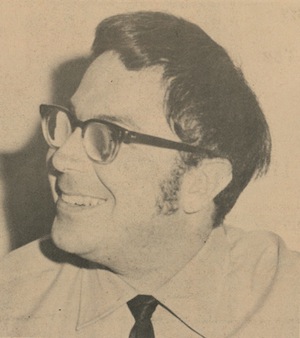
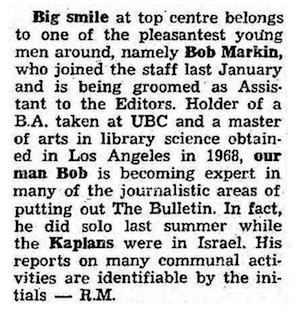
Description of Bob Markin, JWB, 1970.
Guiding the paper with excellence were the exceptionally dedicated and talented publishers and senior editors, Sam and Mona Kaplan. One goal was prevalent in all of the JWB’s undertakings during those years: to extensively and objectively cover important news and issues that affected the well-being and life of the Jewish people; to serve and advance, as best as possible, the B.C. and Canadian Jewish community, its individuals and organizations and, of course, Israel and world Jewry.
In serving the community, the Bulletin often focused on supporting Zionism, alerting the readership to antisemitic threats and incidents, and reporting on immigration issues. Readers could regularly find wide coverage of local community events and organization happenings, feature articles on community issues, in-depth profiles of local personalities and leaders, etc…. and the Lazar (Between Ourselves) column, with its breezy, informal style of “breaking” community news-gossip, was usually a must-read for JWB readers.
The culture scenes were far from neglected, with reporting by theatre, art, music and, yes, Jewish stamps, columnists and reviewers. The full-range of lifecycle milestones, such as births, b’nai mitzvahs, engagements, weddings and obituary announcements, were regularly printed.
Jewish news from across Canada and worldwide was extensively covered, with emphasis, of course, on the ever-changing situation in Israel and the Middle East, as well as the special plights at that time facing Soviet Jews and Ethiopian Jewry.
Throughout my 16 years at the paper, I found that participating in each issue’s production was truly an ongoing highlight, resulting in a strong feeling of exhilaration as the approaching deadlines brought with them an intensity in office visitors, copy submissions, planning, writing and editing, phone calls, the sounds of typesetting, etc. Other memorable times included the privilege of meeting visiting and local VIPs for stories and feature profiles, and taking part in a special Jewish Agency-sponsored tour of Israel for North American Jewish journalists, during which participants met many key leaders.
The staff always came through. When heavy snows closed offices around the city, we were at the JWB ensuring that the paper got out. When postal strikes thwarted distribution, we made arrangements for copies to be picked up, free of charge, at key community locations. And when large holiday editions saw production-time pressure, the typesetters would work all night to make sure that the paper would be in readers’ hands on time.
The Bulletin always respected the challenge of objectively and completely reporting on the full spectrum of what was happening in the Jewish world.
It was very interesting, challenging work and an utmost privilege and pleasure to work with this wonderful community.
A singles ad placed in the Bulletin by father-son team Ron and Steve Freedman in 1992 led to the engagement (in 1997) of their son/brother David to Betty-Mae Coblenz, who were married in 1998.
Ron Freedman, who passed away in December 2014, worked for the Jewish Western Bulletin / Jewish Independent for 46 years. As we mourned his loss with his family at a ceremony celebrating his life, his son David shared the story of how his father and his brother Steve, who has worked at the paper for more than 30 years, used the power of community media to change his life.
As Alex Kliner explained in his May 15, 1998, Menschenings column:
“David Freedman was baffled. Three young women had responded to his personals column ad in the Jewish Western Bulletin. But wait! He had never placed an ad. But whatta ya’ gonna do? His curiosity was aroused. So he agreed to meet Betty-Mae Coblenz for coffee. They talked for hours. Not long ago, Betty-Mae Coblenz became Betty-Mae Freedman.
“And the mysterious ad? It seems David’s dad, Ron, and brother, Steve, (both JWB staffers) had placed it in the personals under David’s name. It was a joke! Not a bad joke, eh? And what’s more, it obviously pays to advertise in the JWB!”
בפועל בלקברי רכשה את חברת הסטארט-אפ הישראלית וואצ’דוג. (צילום: Kārlis Dambrāns via wikimedia.org)
בלקברי עושה עלייה מובטחת: תיפתח לראשונה מרכז פיתוח בישראל
חברת הסמרטפונס הקנדית בלקברי (שהמטה שלה נמצא בווטרלו אונטריו) תיפתח לראשונה מרכז פיתוח בישראל. המרכז בפתח תקווה ויועסקו בו כמאה עובדים. זאת במסגרת הרחבת פעילותה ונסיונותיה לשפר את הטכנולוגיה ואבטחת המידע שלה, ולהגדיל את נתח השוק במגזר העסקי שבשוק הסמרטפונס.
בפועל בלקברי רכשה את חברת הסטארט-אפ הישראלית וואצ’דוג, לפיתוח טכנולוגיה לאבטחת מסמכים וקבצים. הגוף שמשתמש בטכנולוגיה שלה יכול לשלוט טוב יותר במידע ובקבצים שלו. הוא יכול לדעת היכן נמצאים הקבצים שלו בכל רגע נתון, ולהשמיד אותם מרחוק במקרה הצורך. בלקברי תצטרף את הטכנולוגיה של וואצ’דוג לשירותי הפורטפוליו שלה, למיגון מערכות ההפעלה.
עלות רכישת וואצ’דוג על ידי החברה הקנדית מוערכת בין מאה למאה וחמישים מיליון דולר. וואצ’דוג הוקמה ב-2008 ולצורך פעילותה גוייסו השקעות בסדר גודל של כ-30 מיליון דולר.
יו”ר ומנכ”ל בלקבריי, ג’ון צ’ן, הצליח לעצור את הידרדות החברה שכמעט והביאה לסגירתה. הוא פיטר עובדים, שיפר מערכות והתייעלות, והתמקד בתחום התוכנה הארגונית. תחת ניהולו יוצאים מכשירים שמעניינים את השוק לשם שינוי, בהם ‘פספורט’. 200 אלף מכשירי ‘פספורט’ נמכרו ביום אחד, עת הדגם יצא לשוק בספטמבר אשתקד. והמלאי הראשוני שלו אזל בתוך עשר שעות בלבד. בעיון בדוחו”ת הרבעוניים של בלקברי שפורסמו בסוף מרץ עולה כי החברה הצליחה לבלום את את הצניחה בהפסדיה, ורשמה לראשונה לאחר שנים רווח נקי (של 28 מיליון דולר).
בהודעה להוציא לעיתונות הסביר צ’ן מדוע בלקברי רכשה את וואצ’דוג: “בלקברי ממשיכה כל העת להגדיל את מעטפת אבטחת המידע, כך שהיא תוכל לאפשר שיתוף מידע יותר מאשר הגבלתו. רכישה זו היא צעד נוסף קדימה בהפיכתה של בלקברי לפלטפורמה המובילה לתקשורת סלולרית, תוכנה וישומים מאובטחים, התומכת בכל מכשיר ובכל מערכת. הודות לרכישת סקוסמרט אשתקד, השותפות שלנו עם סמסונג, מאמצעי הפיתוח שלנו והרכישה הזו של וואצ’דוג, אנו יכולים כעת לספק תקשורת מאובטחת מקצה לקצה הכוללת שיחות קוליות, הודעות טקסט, תקשורת נתונים וכעת גם שיתוף קבצים מסוכרן”.
ועוד חדשות בנוגע לבלקברי: הסכסוך עם טי-מובייל האמריקנית הסתיים לאחר כשנה, והאחרונה תחזור למכור מכשירים של בלקברי.
קסדה עם שני ראשים: חייל שאיבד אותה לפני 70 שנה ציווה להחזירה למי שמצא אותה
ג’ורדן צ’יאסון (21) מהעיר מונקטון שמזרח המדינה הוא אספן של ציוד צבאי ישן. לפני כשנה הוא רכש בחנות מקומית לציוד צבאי ישן קסדה ב-30 דולר. לאחר שבדק את הקסדה מקרוב מצא שחרוט עליה השם גו’רג’ ג’ונסטון ומספרו האישי. הוא חיפש מידע על ג’ונסטון ומצא שהוא עדיין חי ואפילו גר באותה עיר. צ’יאסון החליט להביא את הקסדה לג’ונסטון בן ה-93, והמפגש עימו ועם אשתו אנני היה מרגש ביותר. הזקן לא האמין שיתאחד מחדש עם הקסדה שלא ראה במשך עשרות שנים.
ג’ונסטון הצעיר לחם עם הכוחות הקנדיים במלחמת העולם השנייה בבלגיה, הולנד, צרפת ובריטניה. הוא השתמש בקסדה במשך שש שנים, לדבריו היא הצילה אותו לא פעם. עם סיום המלחמה ופתיחת החגיגות הגדולות הקסדה אבדה. ג’ונסטון חזר הביתה למונקטון ושכח ממנה.
ג’ונסטון נפטר לפני מספר שבועות בגיל 94 ולפני מותו ציווה להחזיר את הקסדה לצ’יאסון. אלמנתו מסבירה מדוע: “בשנת חייו האחרונה בעלי וצ’יאסון הפכו לחברים קרובים. בעלי חשב שרק צ’יאסון יוכל לשמור על הקסדה היקרה הזו”. צ’יאסון מוסיף: “עם סיום הלוויה משפחת ג’ונסטון ניגשה אליה ומסרה לי את הקסדה למשמרת. אני בכיתי וכולם בכו”.

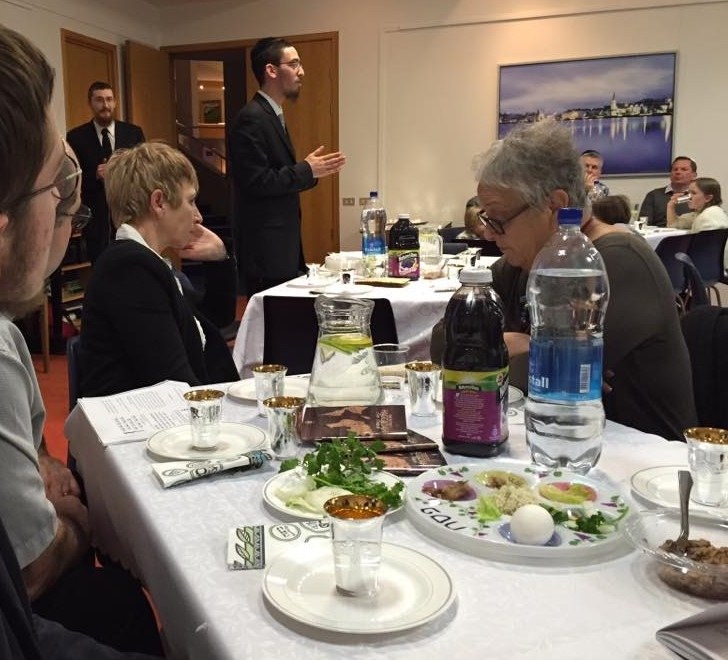
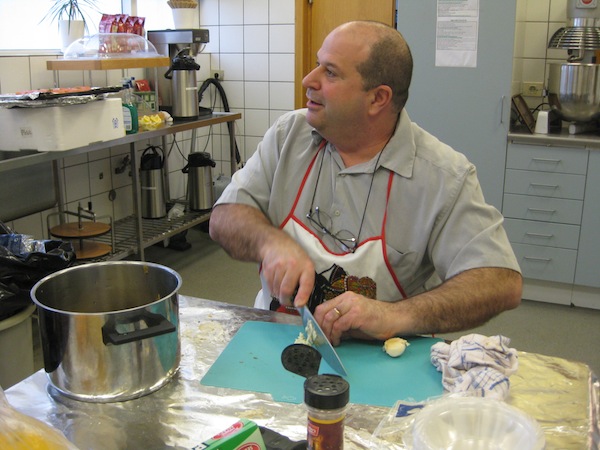 On Pesach, Chabad provides matza for all among those 100 Jews who wish some and then, to everyone’s delight, they hosted more than 60 participants for a full seder this year. Some of these newly located Icelandic Jews have been located as far from Reykjavik as the Faroe Islands.