Art as a form of storytelling

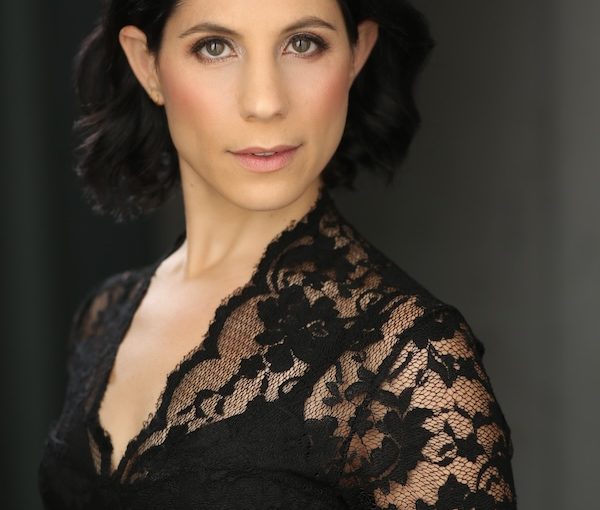
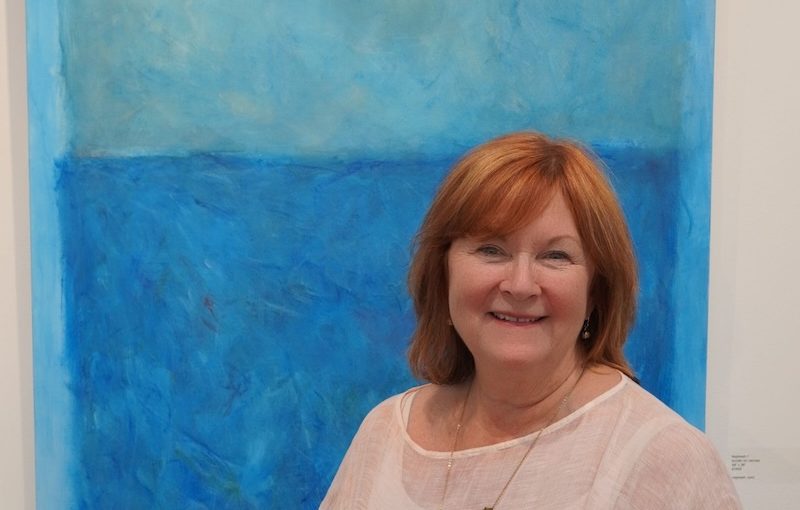
Sarah Dobbs is the new manager of the Sidney and Gertrude Zack Gallery at the Jewish Community Centre of Greater Vancouver. (photo from Zack Gallery)\

The Sidney and Gertrude Zack Gallery has a new manager, Sarah Dobbs, who showed an early affinity for her chosen field.

“My first time as a gallery host happened when I was about 8 years old,” she told the Independent. “My father was a journalist and a travel writer, and we lived in many countries when I was young: Spain, France, Morocco. Everywhere, my parents took me to art galleries, and I loved it.

“In the 1960s, while we were in Mexico, we often went to the local market. My father bought colourful folk sculptures. It was long before they became popular, we started collecting them. After we returned to Toronto, my family decided to have an exhibition of our collection. I was there, too. I enjoyed talking to people who came to see the show. I told them stories about this sculpture and that one. I liked sharing another culture with the people in my city. This entire experience had a huge impact on me. Even though I was young, I realized that art was storytelling. Art reflects our understanding of people and cultures.”

After receiving her degree in art history from the University of British Columbia and a master’s of education from the University of Toronto, Dobbs worked in the art world for more than 30 years.

“I ran commercial galleries and public galleries,” she said. “In the mid-’90s, I opened my own gallery, where I displayed mostly abstract art. I love abstract. Anyone can read their own story in an abstract painting.”

One of Dobbs’s most interesting projects happened when she was the director of the Burnaby Art Gallery.

“Part of my job there was to increase our interactions with the community,” she 

explained. “I started an outreach program for people who would never go to an art gallery on their own, specifically youths right out of jail. They were young. Most of them had yet to graduate from high school. We gave them disposable cameras and suggested they take photos of what was important in their lives (but not drugs). Then they would do collages of their photos and we displayed those collages in local bus shelters. Those collages reflected the teens’ lives, perhaps helped them to come to terms with it. The collages were also an opportunity for all of them to share their lives and their concerns with the wider public. I’m proud to say that all of our participants graduated from high school.” 

Projects like this, integrating art and public awareness, have accompanied Dobbs throughout her career. From 2002 to 2008, she worked in Ireland, at the National Gallery of Ireland and at the Irish Museum of Modern Art.

“We worked with hospital patients, but it wasn’t art therapy,” she said of that experience. “It was just doing art, participating. It reminded sick people of their healthy selves.”

Everywhere she has worked, Dobbs has helped people tell their stories through art, helped them deal with their suffering.

“In 2004, I was invited by a nurses’ charity to go to Sri Lanka for five weeks, to help the tsunami victims,” she recalled. “So many died there, children, old people. So much pain. I tried to do what I could to help, to ease that pain – I brought 98 kilos of art supplies with me.”

Later, in Kenya, she lived in a women’s peace-building village for a time.

“There were women from different tribes there, the tribes that were at war, that committed atrocities towards each other. But those women tried to build peace,” said Dobbs. “We would sit together and share stories. When women from different tribes saw similarities in their stories, felt their stories resonate with everyone, it helped in the peace-building process.”   

Dobbs has curated about 200 art exhibitions. In her opinion, deep knowledge of the art world is only part of being a successful curator.

“Of course, you have to be passionate about art,” she said. “But you also have to be very organized. You need to be patient with the artists – they are very sensitive. Encouraging artists, especially young artists, boosting their confidence is paramount. It helps them tell their stories. And you also need to be aware of who is going to see the art – to keep balance between artistic expression and public understanding. Sometimes, the latter could be a challenge. Another ongoing challenge is convincing people that art has value.”  

Those challenges can be exhausting, and even a successful art curator occasionally needs a break. Dobbs took such a break during the pandemic. The timing made sense, as most public spaces closed in 2020.

“For three years, I ran an integrated clinic, including traditional medicine, a naturopath, a massage therapist, etc. A break is good,” she said, “but I always come back to art. Sharing art with everyone is my joy.”

That’s why when the JCC announced that the Zack Gallery needed a new manager, she applied for the position.

“I have known about the Zack Gallery forever,” Dobbs said. “It is a wonderful place, a blend between a public gallery and a commercial art space. The gallery runs community exhibits. There is a theatre next door, which brings people in before the shows and during the intermissions. Children come in often. That is how art education starts for most of us, when a child wanders into an art gallery.” 

Olga Livshin is a Vancouver freelance writer. She can be reached at olgagodim@gmail.com.
Plays offer understanding, release

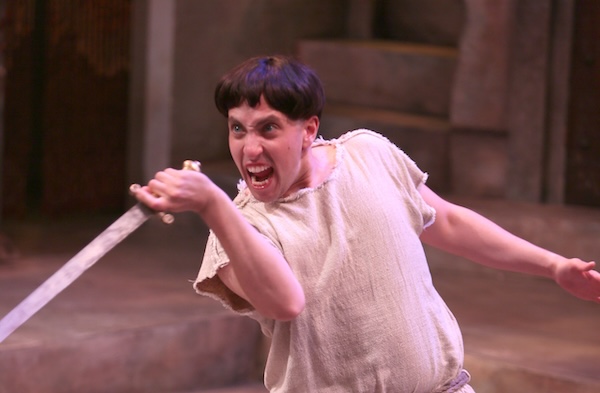
Dromio in The Comedy of Errors. Bard on the Beach runs into September. (photo by Tim Matheson)

Every day, we are bombarded with news about war, hate, crime, inflation, the list goes on. How to make sense of it all? Often, good theatre can provide deeper meaning and understanding of the world, or at least offer us a break from the world. Cue Shakespeare and his 400-year-old lens that is remarkably accurate in contemporary times…. And that takes us to Bard on the Beach.

Last issue, I reviewed Bard’s productions of Twelfth Night and Hamlet (jewishindependent.ca/bard-plays-with-tradition). This issue, I start with Measure for Measure, then move to The Comedy of Errors.

In Shakespeare’s Measure for Measure, the Duke of Vienna has enacted laws outlawing sex between unmarried couples. He then leaves the city in the control of puritanical Angelo and disguises himself as a friar to observe what happens. A young man, Claudio, is prosecuted for the crime of impregnating his girlfriend and is sentenced to death. When the condemned man’s virginal sister, Isabella, a novitiate in a local nunnery, comes to plead for his life, Angelo is smitten. He offers to save Claudio’s life if Isabella will sleep with him. What a great platform to explore the male hierarchy, corruption, sexual predators, coercion and authoritarian control.

photo - Tal Shulman as Abhorson in Measure for Measure
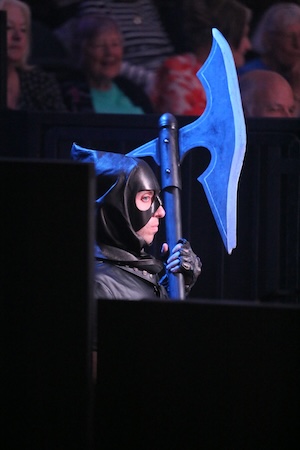
Tal Shulman as Abhorson in Measure for Measure. (photo by Tim Matheson)

In the Bard production, director Jivesh Parasram has taken the story and, in an absurdist twist, made premarital dancing the offence punishable by death. The setting: the disco-crazed 1970s and ’80s, in the glitzy Club Europa. Act 1 opens with hooded monks frenetically dancing on a neon-lit dance floor replete with a disco ball, presided over by a silver-clad, fox-head-wearing DJ (Jewish community member Tal Shulman, who later does duty as the black-hooded executioner, Abhorson). The Duke (a superb Scott Bellis) rips off his monk robes to reveal a sparkly suit as he dances his way over to Angelo (a staid, suspendered Craig Erickson) and hands him authority over the city. The edict is given – tansen verboten (dancing forbidden) – but that does not stop an erotic pas de deux between Claudio (Jeremy Lewis) and Julietta (Tess Degenstein), leading to Claudio’s arrest and imprisonment.

When Isabella (Meaghan Chenosky) is told of her brother’s fate by Lucio (Karthik Kadam), she rushes to Angelo’s office. At first, she is rebuffed but then Angelo offers her Claudio’s life in return for a dance. She grapples with the request, wanting to save her brother’s life, but refuses, threatening to expose Angelo’s hypocrisy. His response: no one will believe her. Sound familiar? 

To save Claudio’s life and retain Isabella’s chastity, a plan is hatched to switch Mariana (Leslie Dos Remdios), Angelo’s previous lover, to dance with the cad. A huge panda bear head is part of the subterfuge.

Meanwhile, there is a side story of two “dance hall workers,” who are worried about the morality laws and the impact they will have on their “business.” The pair become involved in the plot to free Claudio. For how it all ends, you’ll have to see the play.

Throughout the production, the foxy DJ pops up to play the hit tunes as the cast busts out into various, often raunchy, dance moves. Kadam also plays Master Kevin Bacon and performs some impressive footwork to the theme song from the movie Footloose.

The set is fab (thanks to designer Ryan Cormack), the costumes hip (credit to Alaia Hamer), the dancing energetic (kudos to choreographer Krystal Kiran) and the oldies but goodies nostalgia-inducing. If the opening night audience reaction is any measure of its success, Bard’s take on Shakespeare’s “problem play” is destined to be the hit of the season. It certainly will bring in a younger crowd. 

***

Playing on alternate nights with Measure for Measure (and with the same cast) is Shakespeare’s shortest work, The Comedy of Errors, about two sets of identical twins separated at birth in a shipwreck. Egeon (Bellis), a merchant from Syracuse and father of one of the sets of twins, has been arrested and sentenced to death in Ephesus for breaking a law that prevents people from traveling between the two cities. Seeking leniency, he tells the Duke (Degenstein) why he is there. Many years before, he had a wife and identical twin sons (both named Antipholus), who had identical twin servants (both named Dromio). During the shipwreck, he saved one son and his servant while his wife and the other son and servant were washed away. His Syracusean son, Antipholous, has taken Dromio to look for his lost brother. Now Egeon is looking for both his sons. A 24-hour reprieve is granted. Conveniently and unbeknownst to anyone, both sets of identical twins are in Ephesus. Of course, that sets the scene for confusion, mistaken identities, slapstick humour and hilarious miscues. There even is a goofy exorcism.

Director Rebecca Northan (who helmed last year’s Goblin Macbeth) has set the play in its proper period, ancient Greece. Once in the tent, you feel like you are in an open Mediterranean market with colourfully decked out vendors hawking their wares – silks, carpets, gold – mingling with the audience as they take their seats.

Northan has chosen to have one actor play both twins in a set, which can be confusing and will keep you on your toes. Lanky Antipholus (Lewis) wears a red and blue shoulder sash. When the red side is showing, he is from Syracuse; the blue, Ephesus. Meanwhile, diminutive Dromio (Shulman) also uses red/blue swatches to signal his identity. Shulman is very funny and his talent is evident as he frantically races around the stage, and in and out of the tent. 

The main confusion surrounds the purchase of a gold chain that has yet to be paid for although money has been tendered. Where is the necklace? Who has the money? Who paid for what?

The second area of confusion is the relationship between Ariana (Chenosky), the wife the Ephesian Antipholus and her husband, who likes to “go out with the boys.” When she sends her servant to fetch him home and finds that he does not recognize her (wrong twin) and that he has fallen for her sister, Luciana (Cynthia Yusuf), she explodes. In all of this, Kadam, playing both a coquettish courtesan and an Urdu-speaking merchant, steals the show. I wish he had been on stage more.

As usual in any Bard comedy, all’s well that ends well and all becomes clear. Tying everything together is great behind-the-scenes work: the set (Cormack), costuming (Christine Reimer), sound design (Ben Elliott) and lighting design (Hina Nisihoka). My only complaint is that, as the actors did not have microphones, some of the dialogue is lost. And some of the shtick works and some does not, but it is in the name after all – a comedy of errors. Come early to take advantage of the artisan market set outside the performance venue.

For tickets to any of the four Bard productions, visit bardonthebeach.org or call 604-739-0559. 

Tova Kornfeld is a Vancouver freelance writer and lawyer.

Grateful to do what she loves

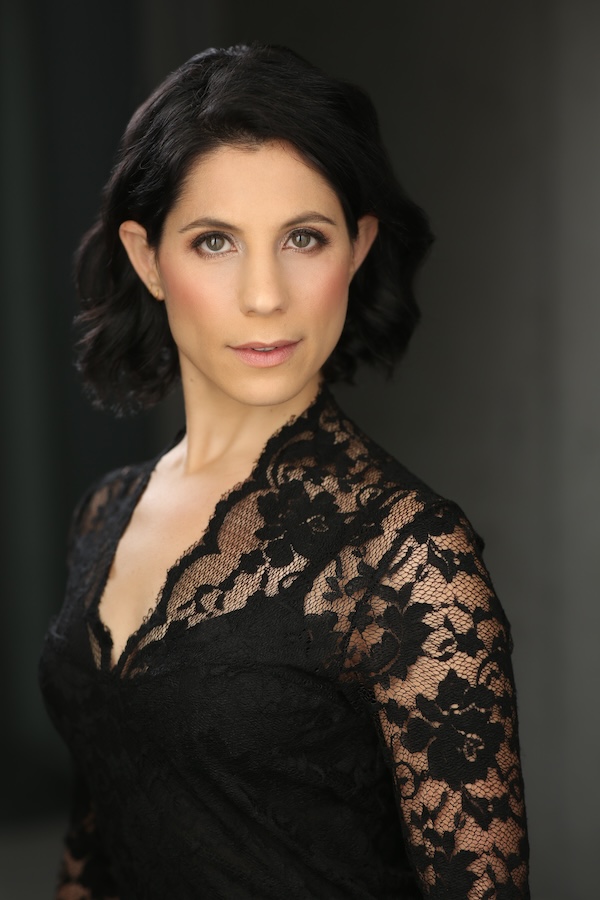
Advah Soudack (photo courtesy)

I watched Hallmark’s Love, Lights, Hanukkah! on television but never imagined that I would meet the actress who played Becky Berman, the lead character’s half-sister. But Advah Soudack lives right here in East Vancouver. 

This spring, I organized a series of Playback theatre classes for people with lived experiences of mental health challenges and addictions, which was funded by the Consumer Initiative Fund. Laen Hershler, a member of Vancouver Playback Theatre, recommended Soudack to teach the classes.

Soudack taught with enthusiasm, determination and emotional honesty. She gained the trust of the students quickly and soon they were leaping up on stage to improvise one another’s stories and emotions. 

“I had a wonderful time teaching Playback these past few weeks,” she said. “I was amazed and inspired by the bravery I witnessed in the class. I loved working with a group of artists coming from all walks of life, some with years of theatre and improv experience and others with very little.

“I think the thing I enjoyed most about teaching Playback … with this specific group of individuals, was witnessing a group of people who didn’t know each other at first, come together, play, explore, trust, allow themselves to be vulnerable, share with open hearts, let go and create together as if they had been working as a troupe for a long time.” 

Soudack’s enthusiasm for the theatre began when she was a child.

“I grew up with a lot of music in my home. My dad was very musical and played the piano, and my mom was always singing around the house,” she said.

“In elementary school, I had a music teacher named Donna Piper and she saw my flair for performing and told my parents to take me to audition for The Music Man with a company called Greater Vancouver Opera Society,” she added. “At 8 years old, in leggings my mom had bought me in France, a fitted T-shirt and a funky baseball hat, I sang ‘Wadda Wadda Wadda’ and played the air trumpet. I got the part!” 

photo - Advah Soudack
Advah Soudack (photo courtesy)

Soudack regularly teaches improv to children. For several years, she took her considerable talent to Perry Ehrlich’s Gotta Sing! Gotta Dance! performing arts summer camp at the Jewish Community Centre of Greater Vancouver. There, she taught improv and ensemble-building exercises and assisted director Chris McGregor. She also “created and ran the finishing school program, which taught kids audition skills, from entering the audition room to character creation, and how to prepare monologues and songs.”

Soudack recently completed two seasons at Bard on the Beach with A Midsummer Night’s Dream and Henry V. Other recent theatre credits include Courage Now, The House at Pooh Corner and a touring production of Glory. You may have seen her on television in Blockbuster and/or The Christmas Contest. She is also known for her work as an actor in animated films, including My Little Pony, Polly Pocket, Lego Friends, Beyblade Burst Evolution and Adventures of Ayuma. 

She says that all the roles she has played have been challenging and fulfilling. 

“I feel like I have grown and learned from every role I have played and every theatre project I have been part of,” she said. “I guess one role that sticks out for me is the role of Lucille Frank from Parade, which I portrayed about six years ago with Fighting Chance Productions. This was one of the first roles back from a hiatus I had taken from theatre. I had been forcing myself to audition again, anything that came my way, even if I was scared sh*tless.”

When she got the role, she began a journey into the world of Leo and Lucille Frank. Leo Frank was wrongfully convicted of murdering a young girl in 1913, and was lynched by a mob who broke into the prison when his death sentence was commuted to life imprisonment. Lucille Frank defended her husband through everything, dying in 1957, long before Leo Frank was posthumously pardoned in 1986.

“I was at the downtown library for days and spent many hours reading old, archived newspaper articles about the case, reading books and looking up everything I could find that had information about the young, Jewish couple living in Atlanta, Ga.,” said Soudack, adding that the roles she finds most exciting are the ones based on real people and events. When the research involves history, she is always extra excited.

“I feel very honoured that I have had the opportunities that I have had to work in the arts in Vancouver,” she said. “I feel very grateful to be able to do what I love and what inspires me and makes my heart feel full. It is also a gift to be a vessel for others’ stories and bring them to life for this community.” 

Soudack spent time in Israel about 10 years ago. 

“When Oct. 7 happened, I felt very strongly about going. I am still wanting to go and plan to make a trip in the near future,” she said. “I have so many family members in Israel and it feels like a second home. Whenever I am there I always think, ‘OK, this is home, I feel like I belong here.’ There is something about the energy of the country and the people that makes me feel alive and vibrant.”

Soudack is a proud graduate of the University of Alberta’s bachelor of fine arts’ acting program. In Hebrew, Advah means “little wave” or “crest of the wave.” 

Cassandra Freeman is a journalist and improviser who lives in East Vancouver.

JI picks up four Rockowers

Israeli writer Gil Zohar (standing, seventh from the left) with other 2024 Rockower Award winners in Nashville, Tenn., last month. (photo by Bill Motchan)

At the annual conference of the American Jewish Press Association, which took place in Nashville, Tenn., June 2-4, Israeli freelance writer and tour guide Gil Zohar was there in person to collect his Rockower Award for Excellence in Jewish Journalism. He won an honourable mention for the article “Identifying the victims,” published by the Jewish Independent Nov. 10, 2023. The Independent picked up four Rockowers this year, for work published in 2023.

Zohar’s article (jewishindependent.ca/identifying-the-victims) won in the Wild Card Category – Award for Excellence in Writing about the War in Israel: News and Feature Writing. It explains how staff at the Israel Defence Forces’ Shura base were working around the clock at the time to identify the remains of the 1,200 people murdered in Israel by Hamas terrorists on Oct. 7, 2023, a process made more grisly and difficult because of the extreme brutality of the attack.

Winning first place in the Wild Card Category for weekly and biweekly newspapers was “New era for world Jewry” by Chaim Goldberg, published by Intermountain Jewish News (Denver, Colo.). Taking second place was “A letter from Israel: It’s okay to start dreaming” by Chaim Steinmetz, published in the Jewish Journal of Greater LA (Los Angeles, Calif.).

The Jewish Independent won first place for weekly and biweekly newspapers in the category of Excellence in Single Commentary with Helen Mintz’s article “Opportunity for healing” (jewishindependent.ca/opportunity-for-healing). Originally presented as a d’var Torah at Or Shalom Synagogue, it was “intended as a beginning of a conversation about how we, as Canadian Jews, can heal our relationship with Ukrainians and Ukraine.” Of the article, the Rockower jury wrote: “A powerful reminder that there are many ways to view complex histories. The beautiful way the story is told is both intimately personal and ultimately universal.”

Taking second place in the Single Commentary category was “Wokeism and the Jews: A reckoning” by Monica Osborne (Jewish Journal of Greater LA), with “The inside story of how Palestinians took over the world” by Gary Wexler (also for the Jewish Journal of Greater LA) receiving an honourable mention.

Local musician, composer and bandleader Moshe Denburg earned the Jewish Independent second place for Excellence in Arts – Review/Criticism, weekly and biweekly newspapers, with his review “Erez’s new CD shows mastery” (jewishindependent.ca/erezs-new-cd-shows-mastery). The Rockower jury wrote: “Sounds like a great CD.”

Placing first Excellence in Arts – Review/Criticism was “Oppenheimer, and the lesson of brainy Jews” by Thane Rosenbaum (Jewish Journal of Greater LA) and Tabby Refael received an honourable mention for the article “For a deaf woman from Iran, freedom never sounded so good” (Jewish Journal of Greater LA).

Winnipeg freelance writer Joanne Seiff won the Independent its fourth award, placing second in the category of Excellence in Writing about Jewish Thought and Life. The JI submitted three of her articles for consideration: “Women’s rights evolve,” “Honouring others in death” and “A yearly reminder to return.” The first article (jewishindependent.ca/womens-rights-evolve) talks about parallels between modern events and talmudic discussions – in particular laws that limit women’s ability to control their own bodies. The second article (jewishindependent.ca/honouring-others-in-death) is about how Jewish tradition could inform the debate that ensued after the remains of four murdered Indigenous women were found in Winnipeg-area landfills, and the third piece (jewishindependent.ca/a-yearly-reminder-to-return) connects the renovation of Seiff’s home with the month of Elul and teshuvah, usually translated as repentance, but also meaning return. “Returning to our best selves might require us to listen, pay attention to our gut feelings, do some renovation,” she writes.

In summing up Seiff’s articles, a member of the Rockower jury commented: “I would love to live in Winnipeg, only to read Joanne Seiff regularly. She is an intelligent writer.”

First place in this category for weekly and biweekly newspapers went to “Ten measures of beauty, of fragility, of hope” by Tehilla Goldberg (Intermountain Jewish News) and Refael won another honourable mention, for the article “I’m an observant Jew, and I need Christmas music more than ever before.” 

To read the writing of all the 2024 Rockower winners, visit ajpa.org.

Talkin’ about the JI

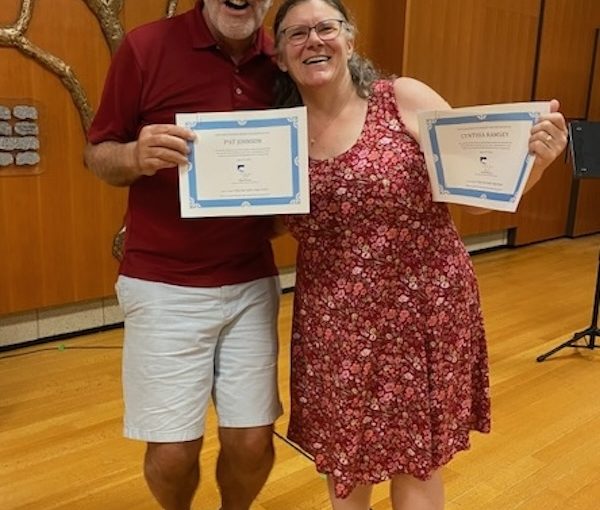
Pat Johnson and Cynthia Ramsay after their presentation about the Jewish Independent at Congregation Har El’s Seniors Lunch July 17. The pair were asked to participate by lunch organizers Tim Newman and Kala Solway. They each received a certificate of thanks and a thank-you gift from Noga Vieman, the synagogue’s programming and education director. (photo by Lorraine Katzin)

A picture is worth a thousand words

In the first few years of 1900, my paternal grandparents – who had been married since 1886 – came to a decision. Economic life in Pinsk was too challenging and a drastic lifestyle change was required. So, in 1905, my grandfather, Yehiel Rubachka, age 34, journeyed alone from Pinsk (then under control of czarist Russia) to find work in Toronto. He knew Yiddish and a bit of Russian, having served in the Russian army for three years. He left behind my 27-year-old grandmother, Liba, and their four young children, Bessie (born in 1899), David (1902), Minnie (1903) and Herschel (1905), in Pinsk Karlin. Today, Karlin might be called a suburb of Pinsk.

On the one hand, Pinsk, with its sizeable and well-organized Jewish population (according to Yad Vashem, 21,819 or 77.3% of the city’s population, in 1896) offered the comfort of the familiar. On the other hand, living conditions were not good. By the time my grandfather left Pinsk, he and my grandmother had buried five children. There were also political and social issues, such as the fact that, in czarist Russia, Jews by and large lived under restrictions: forbidden to settle or acquire land outside the cities and towns, legally limited in attendance at secondary school and higher schools, virtually barred from legal professions, denied the right to vote for municipal councilors, and excluded from serving in the navy or the guards. Not to mention the repercussions of the failed 1905 Russian revolution, and the deaths and damage done by periodic Cossack attacks.

It is not clear what my grandfather’s relocation ultimately meant. For all intents and purposes, entering Canada was fairly easy; he did not need a passport or a visa to enter the country. But did he go to Toronto to test the waters so to speak – perhaps Canada would turn out to be no better than eastern Europe? Or was his plan, from the start, to make enough money to bring over the rest of the family? Or was it all left open-ended? On the birth certificate of one of my aunts, his occupation in Canada was listed as a (humble) rag collector. 

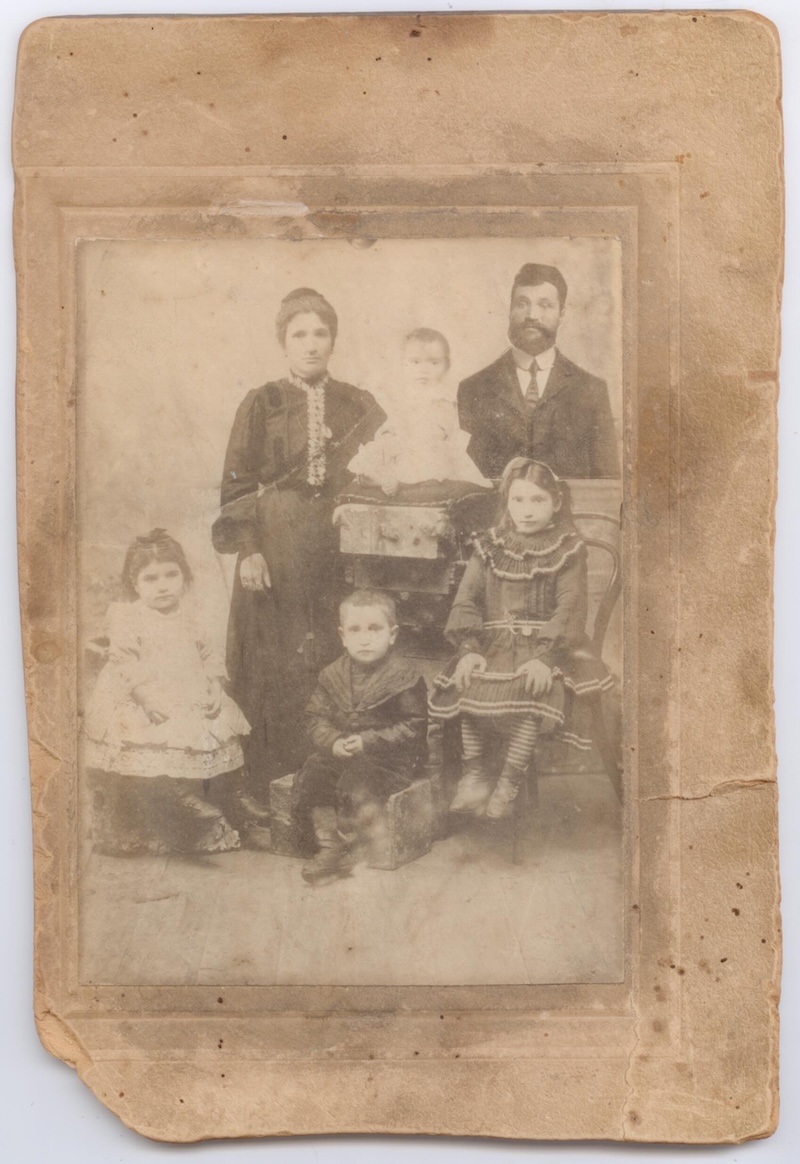
In any case, around 1906, my grandparents decided a family portrait was needed. (Since my Uncle Herschel still looks like an infant, this photo was probably produced earlier than the 1910 date my father held to.) The problem, of course, was that the family was based in two distant locations, Toronto and Pinsk. So how was such a picture taken? 

photo - Deborah Rubin Fields' grandfather and family
A family living on separate continents in the early 1900s has a photo with everyone in it. (photo from Deborah Rubin Fields)

According to Rita Margolin, a Yad Vashem historian, glass plate negatives were in use from the 1850s through the 1920s. They were popular with both amateur and professional photographers. In these years before courier and other delivery services, it would have been tricky to safely send glass negatives, they might have shattered in mailing. This suggests that some other method was used for putting together the two photos that became the family portrait.

Margolin further elaborated that a Pinsk photographer named Rendall might have made the composite image, as he was active in Pinsk in 1910. She pointed out, however, that photographers generally displayed their name on the photos they took, and my family’s photo is lacking a signature both on the front and the back side. (It is probably not a good idea with my unskilled hands to search for a signature by separating this very old photo from the cardboard to which it is pasted.) The lack of signature might mean that the photo I have is a copy and not the original.

Early 20th-century photo studios preferred photomontage – the production of images by physically cutting and joining combined photos – to create, for instance, tall-tale postcards. Tall-tale postcards are also known as “exaggerations.” Examples of these kinds of postcards include hilarious old farming photos in which farmers are seen pushing a wheelbarrow or a wagon containing giant harvested onions or enormous potatoes. 

According to my father, the late Sidney (also known by his Yiddish name, Sheya) Rubin, z’l, my grandfather was added to the picture. One photographer with whom I consulted agreed that this is a likely scenario, as normally the head of the family would be prominently featured in the front, rather than the back, row of a photo. 

In my family’s photograph, my grandmother is standing, facing the camera, straight on and straight-faced. My Aunt Bessie is sitting on a wooden chair while my Aunt Minnie is sitting on what might be a tree stump. My Uncle Dave is sitting on a suitcase. The baby, my Uncle Herschel, dressed in some sort of baby’s gown, sits atop a stack of cases. My grandfather, with a somewhat wistful look on his face, is cleverly placed behind a trunk, with only his upper torso visible.

My grandfather’s family left Pinsk and joined him in Canada in 1911. Sadly, all the relatives who remained in Pinsk were killed in the Shoah. My father’s family settled at Toronto’s 13 Leonard Ave. Between 1880 and 1928, 70,000 Jews left Russian-held territory for Canada.

Four more children were born in Toronto. These included two more aunts, one uncle and my father. Rachel or Rae was born in 1911, Birdie (often called by her Yiddish name Faigel) was born in 1913, Harvey (often called Mo) was born in 1915 and my father was born in 1917. My father’s family, however, did not remain in Toronto. In 1920, they moved to the United States, settling in Chicago. Along the way, the family name was changed to Rubin. My grandfather’s first name was anglicized to Joseph and my grandmother’s first name was anglicized to Elizabeth (or Lizzie). My grandfather became a naturalized American citizen in 1953. By that time, he had been living in the United States for more than 30 years but, still, he signed his naturalization papers in Yiddish.  

As a child, I remember visiting the street where my father had lived as a young child. Perhaps surprisingly, the missionaries still had a close-by storefront. According to reports, missionaries had been “working” in the area since the time my grandfather was living in Toronto. Although they apparently succeeded in converting very few Jews, it did not stop them from trying for years on end.

Photoshop and other digital photo editing tools are a great help to today’s photographers. In the early 1900s, of course, computers and such programs did not exist. Yet, in the early 1900s, photographers on two continents managed to make a composite image nonetheless. 

Deborah Rubin Fields is an Israel-based features writer. She is also the author of Take a Peek Inside: A Child’s Guide to Radiology Exams, published in English, Hebrew and Arabic.

משמרות המהפכה של איראן ארגון טרור

ממשלת קנדה הכריזה על משמרות המהפכה של איראן כארגון טרור. זאת לאחר שבמשך שנים הממשלה של ג’סטין טרודו סירבה לקדם את המהלך למרות לחצים מצד הקהילה האיראנית במדינה

לאור זאת בנקים בקנדה יוכלו להקפיא נכסים השייכים לפעילי הארגון, והמשטרה המקומית יכולה להעמיד לדין אנשים שתומכים בארגון מבחינה כלכלית או פיזית

ההחלטה הנוכחית מגיעה אחרי שבמשך שנים חברי פרלמנט מהאופוזיציה הקנדית וחברי הקהילה האיראנית בקנדה דרשו להכיר במשמרות המהפכה כארגון טרור – אך עד כה, הממשלה של ג’סטין טרודו סירבה לעשות זאת. הלחצים לפעול נגד משמרות המהפכה התעצמו בינואר לפני ארבע שנים, אחרי שכוחות הארגון הפילו מטוס קנדי שטס מעל טהרן, כשבאירוע נהרגו מאה שבעים וחמישה נוסעים כולל שמונים וחמישה קנדיים

שר החוץ של ישראל, ישראל כ”ץ, בירך על ההחלטה ואמר שאיראן ביחד עם תשתיות הטרור שלה, חייבת להיות אחראית לפשעים ולזוועות שביצעה ולטרור שהיא מפיצה ברחבי המזרח התיכון וברחבי העולם. חייבים לעצור את איראן עכשיו לפני שיהיה מאוחר מדי

ועוד בנושא המזרח התיכון הבוער: ארגון סטודנטים פרו-פלסטיני הודיע שישיק מחנות קיץ לנוער בקנדה. בתוכנית: פעילות גופנית, דיונים פוליטיים, לימודי ערבית, ושיעורי היסטוריה מהפכניים. בתוכנייה של מחנה הקיץ מופיעים רעולי פנים עטופים בכאפייה ומנופפים במקלעים. ארגון סולידריות למען זכויות האדם הפלסטיניותיערוך מחנה קיץ לנוער באוניברסיטת מקגיל במונטריאול.  יכללו בו אירועים של פעילות גופנית, לימודי ערבית, מלאכת יד תרבותית, דיונים פוליטיים ושיעורי היסטוריה המוגדרים מהפכניים

ארגון מצעד החיים הבינלאומי הפועל ממונטריאול, גינה בתוקף את מחנה הקיץ המתוכנן להתקיים בקמפוס האוניברסיטה. הארגון אמר שהוא מבוהל מההכרזה על הקמת המחנה, שבתוכנייה שלו מופיעים מחבלים רעולי פנים עטופים בכאפייה המנופפים במקלעים מהסוג שמשתמשים בו ארגוני הטרור חמאס, שיזם את המתקפה הרצחנית בשבעה באוקטובר, וחיזבאללה, שתוקף את צפון ישראל בימים אלה. עוד נמסר מהארגון כי פעילויות כאלה המכוונות לצעירים אינן מקובלות במוסד המוקדש לחילופי רעיונות חופשיים. יוזמה זו עלולה להכתים קשות את המוניטין של אוניברסיטת מקגיל, שהיא אחד מהמוסדות האקדמיים הוותיקים והיוקרתיים ביותר בקנדה, עם היסטוריה ארוכת שנים של מחקר ומלגות. הארגון הפציר באוניברסיטה לגנות את גילויי השנאה והאלימות המסוכנים הללו, ואף להסיר את המאהלים הבלתי חוקיים ברחבי הקמפוס. כמו כן, הארגון דורש להסיר מיד פוסטים מסיתים לאלימות נגד ישראלים ויהודים ברשתות החברתיות השונות

שמואל רוזנמן, יושב ראש מצעד החיים, ופיליס גרינברג היידמן, נשיאת הארגון, התייחסו למקרה ואמרו שחינוך לצעירים לעולם לא צריך לעודד שימוש באלימות. כאשר פעולות של סטודנטים, המקודמות על ידי מדיה חברתית, גורמות לניצולי שואה לחשוש מדריסת רגל בקמפוס וחשש לעתיד נכדיהם. זה ברור שגם האוניברסיטה וגם ארגוני מדיה חברתית איבדו את דרכם עכשיו. הגיע הזמן למצוא את הדרך חזרה

ניצולת השואה אנג’ל אורוש, תושבת מונטריאול, אמרה בעת אירוע מוזיאון השואה של העיר שמה שקורה היום במקגיל כל כך מפחיד אותה. היא נולדה באושוויץ-בירקנאו. והגיעה לקנדה באלף תשע מאות שבעים ושלוש כדי לברוח מהאנטישמיות. עכשיו הנכדים  שלה סובלים. ירו לעבר בית הספר ובית הכנסת שלהם. זה פשוט בלתי נסבל. היא מבועתת מהסטודנטים האלה. היא הוסיפה כי מדובר במוסד אקדמי ברמה הגבוהה ביותר. זה בלתי נסבל שהנכדים שלה צריכים לעבור את מה שהיא ברחה בגללו מהונגריה. היא כל כך מתוסכלת וכועסת ולא מוצאת את המילים לבטא את הרגשות שלה כאשר הדמעות זולגות

Teachers file rights complaint

A screenshot of the Anti-Oppression Educators Collective’s resources page. The AOEC is a provincial specialist association of the BC Teachers’ Federation.

A group of BC teachers has filed a complaint against their union with the BC Human Rights Tribunal, alleging a culture of discrimination against Jews.

BC Teachers Against Antisemitism filed a complaint last week, after the BCTF rejected a proposal to create a provincial specialist association devoted to developing resources around antisemitism and Holocaust education.

The provincial government announced last year that Holocaust education would become mandatory in BC public schools for the first time in 2025. Provincial specialist associations within the BCTF develop and disseminate resources on areas of relevance, such as social studies, culinary arts and Aboriginal education. The proposal to create a PSA to develop the materials teachers will need when Holocaust education becomes a mandatory part of the Grade 10 social studies curriculum next year was rejected by the branch of the BCTF that vets the groups.

Paul Pulver, the lawyer representing the teachers, said this is only part of the complaint. He did not provide the text of the complaint to media, as he is adhering to the letter of the tribunal’s regulations and waiting for the quasi-judicial body to formally make the documents in the case public.

“There is a whole raft of allegations,” he said. “They involve the fact that pro-Palestinian or anti-Israel groups and members within the BCTF are able to, and encouraged to, state their position and lobby for their position and encourage change in support of their position, and those who do not agree with them are silenced and oppressed and discriminated against.”

The rejection of the PSA focused on antisemitism and Holocaust education is but one example, he said. 

One PSA, called the Anti-Oppression Educators Collective (AOEC), with the imprimatur of the BCTF, is publishing and distributing and disseminating materials Pulver calls “quite anti-Israel, anti-Zionist, frankly anti-Jewish.”

“It publishes false accusations about occupation and genocide,” he said. 

The TeachBC website, an official BCTF platform advertised as “your go-to site for free downloadable lesson plans, posters and classroom resources,” contains no materials about the Holocaust or about antisemitism, Pulver said, but includes “some really harsh anti-Israel, anti-Zionist, anti-Jewish materials,” including a poster that says “Zionists, f*** off.” After controversy around some of these items, the BCTF appeared to remove some of the AOEC’s materials from the website.

“As a teacher who isn’t interested in putting on a keffiyeh and lobbying for pro-Palestinian goals and objectives, or pro-Hamas goals and objectives as the case may be, you’re persona non grata, you’re a second-class citizen,” Pulver said. “And they are sick of it,” he said of his clients.

Rich Overgaard, director of BCTF’s communications and campaigns division, told the Independent, would not comment on the substance of the complaint.

“The Federation values the critical role of the Human Rights Tribunal in upholding the BC Human Rights Code and, in respect for this process, as well as any members that may be involved, will not comment before the tribunal has reviewed the matter,” he said in an email. 

Pulver does not expect a speedy resolution, although the BCTF could resolve the case by entering discussions to find a solution.

“But, if that doesn’t happen, it’s just like any other human rights complaint,” he said. “It goes to the Human Rights Tribunal and information is exchanged and, ultimately, there’s a hearing and they make a decision.”

If the complaint goes to a hearing, the process could stretch late into the year or further.

“Unfortunately, the wheels of justice within a number of administrative bodies in the province grind slowly and the Human Rights Tribunal is no exception,” he said. “We are looking at months, plural.” 

The teachers’ complaint is a tip of the iceberg, in one professional area, of what Jews in British Columbia and beyond are experiencing today, said Pulver.

“This is a microcosm of what’s going on in our daily life and in the daily work life of people who are Jewish or have pro-Israel or pro-Zionist views,” said the lawyer, who is a partner with Pulver Crawford Munroe LLP. “They are facing discrimination, they’re facing oppression, intimidation, they are being ostracized. In this case, they are being prevented from exercising democratic rights that, as union members, they ought to have and be able to exercise. They are in fear on a regular basis because they hold views or have origins that are not well-received in the current climate. I think anybody who cares about that sort of thing – which should be everybody – would look at this and say they deserve to be treated fairly, and they are not right now.” 

Bard plays with tradition

Nathan Kay as Sir Andrew in Bard on the Beach’s production of Twelfth Night. (photo by Tim Matheson)

Summer is here again and with it comes that perennial favourite, Bard on the Beach. This year, the BMO Main Stage hosts Twelfth Night and Hamlet, well into September.

First up, Twelfth Night, from Shakespeare’s later period, was written to provide light entertainment for the close of the 12 days of Christmas. Director Diana Donnelly’s adaptation for this comedy is to set it in a carnival-like atmosphere in Illyria, to take advantage of the chaotic shenanigans served up in the narrative (including a fight scene using table tennis paddles). As stated in the show notes, “Illyria is peopled with a bizarre mix of characters: a ringmaster, strongman, rocketman, clowns, pirates and several fortune tellers.”

In Twelfth Night, twins Viola (Kate Besworth) and Sebastian (Charlie Gallant) are separated after a shipwreck. Viola washes up on the shores of Illyria into the midst of the circus. Thinking that her brother has perished, she disguises herself as a man (Cesario) to work for magician Count Orsino (Aidan Correia). Meanwhile, the Count is trying to woo circus star Countess Olivia (Olivia Hutt) and sends Cesario out to do the deed. However, Olivia is not interested in the Count, being preoccupied with other tragic events in her life, and falls for the messenger while the messenger falls for the Count, making for an interesting love triangle.

Add to the mix Olivia’s drunk-but-well-meaning uncle Sir Toby Belch (Marcus Youssef) and his foolish sidekick Sir Andrew Aguecheek (Nathan Kay), cunning maid Maria (Evelyn Chew), the Fool (Anton Lipovetsky, doing double duty as musical director) and, in a gender reversal, the Countess’s puritanical, let-there-be-no-fun manager Malvolia (Dawn Petten), who secretly pines for the Countess, and the mayhem takes off. Amid all this, Sebastian reappears on the Illyrian scene, leading to comical mistaken identity scenarios. 

You might as well call this Bard iteration Twelfth Night: The Musical, as cast members often burst into song – terrific original ones by local composer Veda Hille – giving credence to a famous line in the play, “If music be the food of love, play on.” While I found the first act somewhat disjointed and confusing, trying to figure out what was going on when and with whom, the second act saved the day and the enthusiastic cast/music made up for any shortcomings in this adaptation.

To that end, kudos to understudy Besworth, who got the call a day before opening night to step into the shoes of Camille Legg and, without the benefit of rehearsal, gave a sublime performance. Hutt is charming as the Countess, Youssef is as good-humoured as you can get and Gallant does able double duty for the musical bits with guitar and drum work. Bard veteran Andrew Wheeler is the Ringmaster and controls the pace of the circus (when he can). Petten is a standout and takes the concept of emoting to new heights in a sparkly yellow cat suit when she is spun around on the “Wheel of Misfortune,” while being punished by Belch and his cronies for her kill-joy attitude. Very much an ensemble cast, special mention has to be made of the two Jewish community cast members, Kay and Lipovetsky, whose comedic timing and antics will keep you in stitches. 

Costumer Mara Gottler has scored a home run with costumes that can only be described as fabulous – particularly Hutt’s colourful sequined frock and a flowing, white, asymmetrically hemmed wedding dress (I want this dress!) complemented with black suede stiletto boots. All the costumes are suggestive of a carnival and set designer Pam Johnson gives the audience a multi-hued circus with colourful games, ladders, balls and banners. 

Purists may wince at the liberties taken with the original script but this production will be a hit with those in the summer crowd who are looking for a Shakespeare Lite experience.

For something completely different, there’s Hamlet. I loved, loved, loved it! I have seen many productions of Hamlet but this one is by far the one that gave me the most clarity in understanding the story. This is Shakespeare at his finest. 

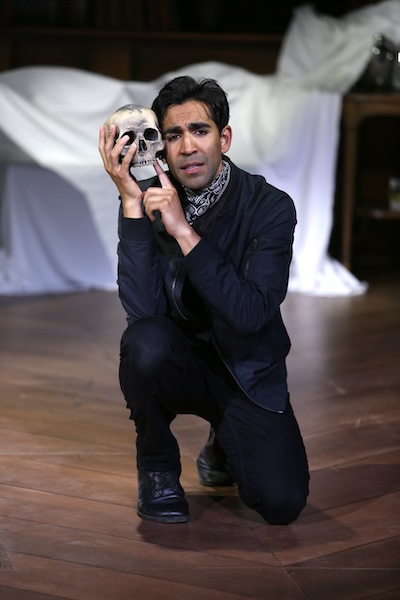
Stephen Drover, adapter and director, in a brilliant twist of chronology, starts the play off with Hamlet on stage orating the suicide soliloquy (usually in the third act). Right away, we see the angst of the prince as he grapples with life and death (“to be or not to be”). His life is a mess – his uncle Claudius kills his father, the king of Denmark, and takes the throne; his mother, Queen Gertrude, marries Claudius; his best friends from university, uildenstern and Rosencrantz, betray him; and his girlfriend, Ophelia, kills herself. What’s left to live for? It is the dread of what might come after death that “makes cowards of us all” and so Hamlet chooses life on this “mortal coil.”

photo - Nadeem Phillip Umar Khitab as the title character in Bard’s Hamlet
Nadeem Phillip Umar Khitab as the title character in Bard’s Hamlet. (photo by Tim Matheson)

Hamlet is set on his fateful path by an eerie visit from the ghost of his father, who describes his murder most foul and importunes his son to avenge his death. Feigning madness, Hamlet sets off to right what is rotten in Denmark amid the wealth and power of the royal court. 

The action includes a foray into a graveyard where actor Lipovetsky injects some moments of lightness into an otherwise dark tale with his comedic take on the gravedigger. We also are privy to the funeral of Ophelia and, in the finale, an epic fencing duel culminates in multiple deaths, including a poignant farewell for Hamlet. Kudos to fight director Jonathan Hawley Purvis for his choreography of this sequence. Choreographer Lisa Goebels also provides some stunning freeze frame dance moments showcasing some fancy footwork by the older royals.

In another interesting staging twist, the original play-within-a-play device, which mimics the king’s death (poison in his ear), becomes a song from traveling performers, played by Christine Quintana and Lipovetsky.

Pam Johnson’s set is a cavernous library with floor-to-ceiling bookshelves and secret doors that allow the actors to enter and exit the stage seamlessly. A huge crown hangs from the ceiling and plays a critical role in the final scene. Being set in the present time allows for contemporary costumes – tattered jeans, T-shirts for the young, fitted dresses and pant suits for Gertrude and double-breasted suits for the older gents, courtesy of costume designer Barbara Clayden. 

While this is Hamlet’s story, it really is only made possible through the teamwork of a very skilled cast. Nadeem Phillip Umar Khitab is the quintessential Hamlet, with his physical presence and determination palpable as he undertakes his filial task of revenge. (Starting Sept. 2, Hamlet will be played by Chirag Naik.) Besworth is an ethereal Ophelia who sees no option but to take her life when both her brother, Laertes (Kay), and her father, Polonius (Wheeler), forbid her to have anything to do with Hamlet. Munish Sharma plays Claudius; Jennifer Clement, Gertrude; Ivy Charles and Aidan Correia, Guildenstern and Rosencrantz; and Youssef, the Ghost.

For tickets to any of the Bard productions, visit bardonthebeach.org or 604-739-0559. Comedy of Errors and Measure for Measure run on the smaller Howard Family Stage. 

Tova Kornfeld is a Vancouver freelance writer and lawyer.

Upheaval, good and bad

The French elections Sunday resulted in a hung parliament, with no party coming close to forming a working majority in the lower house. Given the choices French voters faced, this may be the best possible outcome.

The results were a surprise. The far-right National Rally, led by Marine Le Pen and founded by her father on neo-fascist roots, was widely anticipated to win. This would have been a long-dreaded victory for far-right extremism in Western Europe.

Dissatisfaction with the moderate President Emmanuel Macron was a significant factor, but the failure of the president’s party also reflects a larger trend across Europe toward the political extremes and away from the centre. This shift forced French voters into what, for many, was an unpalatable choice. Sunday’s election was the second round in a two-part process, the first round having eliminated many of the Macron-aligned candidates and forcing voters to choose between Le Pen’s party and a coalition of centre-left and far-left parties.

While Le Pen attempted to convince many French that her party had abandoned its antisemitism roots, the far-left leader Jean-Luc Mélenchon, in some ways, has taken up the antisemitic baton. He has repeatedly picked fights with the main French Jewish communal agency, employed what many hear as antisemitic dog whistles and condemned Macron’s acknowledgement of the complicity of some French people during the Holocaust, including in the notorious Vel’ d’Hiv Roundup of Jews. He has even dug up the ancient allegation that Jews crucified Jesus. So long are the litany of Mélenchon’s affronts to Jews that indications are that many Jews, possibly a plurality, opted for the far-right in Sunday’s vote. Additionally, many Jews apparently felt betrayed by the urging of Macron and other ostensibly moderate French leaders to support the left-wing bloc over the right-wing bloc.

Imagine Jews feeling it was safer to vote for a party born in fascism than a leftist bloc that includes individuals who don’t even make pretenses that they reject antisemitism. 

This sense of being squeezed from all sides is not a new or unfamiliar discomfort for French Jews, who have been abandoning that country for years. Terror attacks, often perpetrated by radicalized individuals originating or descended from former French colonies in North Africa and other Muslim-majority countries, have undermined what sense of security Jews had there. A litany of shocking crimes has occurred in the past two decades, including grisly antisemitic murders, a mass shooting at a kosher grocery store and, last month, the gang rape of a 12-year-old Jewish girl by perpetrators hurling antisemitic slurs.

Coincidentally, just three days before the French elections, a general election in the United Kingdom provided a dramatically different message.

In the previous election, the Conservatives, then under Boris Johnson, crushed the Labour Party, which was led by Jeremy Corbyn, a vocal anti-Israel voice and someone many British Jews perceive to be antisemitic. An internal party investigation and a government watchdog group denounced “a culture within the party which, at best, did not do enough to prevent antisemitism and, at worst, could be seen to accept it.”

While the Conservative government elected in 2019 stumbled from one disaster to another through a succession of failed party leaders and prime ministers, the Labour Party underwent what may prove to have been one of the most profound rehabilitations in modern political history.

The new Labour Party leader, Sir Keir Starmer, now the prime minister, promised he would “tear antisemitism out of our party by the roots.” 

The party undertook an intensive process purging those accused of creating the antisemitic culture – and Corbyn himself was ousted from the party (though he was easily reelected as an independent in his longtime constituency).

After one of their worst defeats in generations an election earlier, the Labour Party emerged July 4 with one of the most whopping landslide victories in British history. 

Among the 400 or so Labourites who will sit in the 650-seat House of Commons when the new government convenes, there are almost certain to be some who will demonstrate recidivist antisemitic tendencies. It will be up to the new prime minister and his team to demonstrate clearly and quickly that this sort of rhetoric and behaviour will not be accepted. 

The uplifting message is not so much that the Labour Party won the election – we can agree or disagree on their policies and approaches. The nearly miraculous thing that has happened is that a democratic party has provided an example for reasonable politicians everywhere of how to pull a movement that had been dangling over a dangerous ledge of extremism back to a reasoned and tolerant position.

The fact that such a rehabilitation is even possible, let alone achievable by a single determined leader in a mere couple of years, should be a message of profound hope to people who value tolerance and inclusivity and who oppose antisemitism.

Perhaps we have too much naïve optimism. But it is worth clinging to.

If Starmer’s efforts at cleaning up the antisemitic mess he was left with proves successful in the long-term, people in democracies around the world should be flocking to Labour Party headquarters to find out how it’s done.