Flamenco dance, music

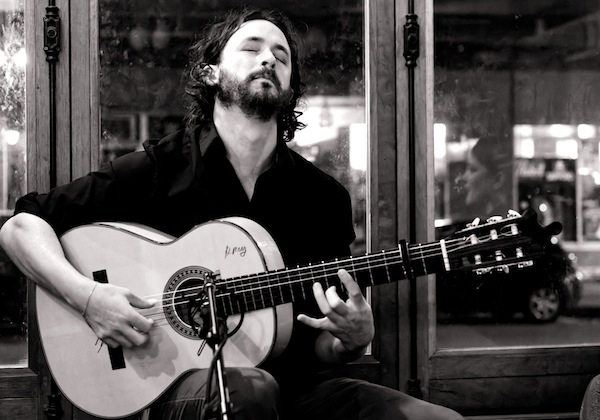
Henry Garf (photo by Herve Lebley)

Montreal guitarist and member of the Jewish community Henry Garf takes part in this year’s Vancouver International Flamenco Festival. Presented by Flamenco Rosario, the festival features live performances, with both ticketed and free events.

Garf performs at the Waterfront Theatre Sept. 23, as part of Kara Miranda’s company. Sombras/Shadows is a live music and dance presentation with projections reflecting personal experience both visually and thematically. Shadows are explored as interplay between light and dark, through the lens of Swiss psychiatrist Carl Jung’s theories of the Shadow Self. A parallel search is for intangible shadows of the past, Miranda’s ancestral roots, living in the shadow of the flamenco greats that came before and the masters that reign today and finally accepting and actualizing her shadow side.

Garf also teaches a master class at the Scotiabank Dance Centre Sept. 24, with Alvaro Echanove, called Theory and Practice: Exploring the Skills of Improvisation, Dynamics and Active Listening through Palmas. Palmas is a style of handclapping that accompanies flamenco dance.

Other master classes take place Sept. 17 and 18, with Mucha Muchacha, and on Sept. 24, with Albert Hernandez. Other ticketed shows include Mucha Muchacha at the Rothstein Theatre Sept. 16. Their eponymous show started as theoretical and practical research about women artists from the “Generation of the 27th,” known as Las Sinsombrero, and evolved into a contemporary dance project focused on the ideas of empowerment, determination, voice, participation, freedom and cooperation. The performance is developed from force-driven movement, effort, celebration and physical exhaustion. They put “at risk” traditional Spanish dance’s corporeality in a confrontation with contemporary dancing.

The two other shows at the Waterfront Theatre are Anastassiia Alexander on Sept. 22, performing The Machination of Memories Suppressed, based on the poem “Maquina de Olvido,” which Alexander wrote, and the performance contains elements of spoken word with dance; and Flamenco Rosario on Sept. 24, with Nuevo III, a collection of new choreographies by Ballet Nacional de España choreographer Albert Hernandez, Granada’s Sara Jimenez and Rosario Ancer.

On the afternoons of Sept. 3 and 4, free performances take place on the Picnic Pavilion stage at Granville Island. The Saturday features Mozaico Flamenco, A.J. Simmons and company, Bonnie Stewart, Jhoely Triana, and Michelle Harding and Calle Verde. Performers on the Sunday are Mozaico Flamenco, Kara Wiebe, Harding and Verde, Linda Hayes, and Stewart. There is also a free 20-minute workshop on Sept. 4 for children at noon, and a 30-minute one for adults at 12:20 p.m.

For registration, tickets and more information, visit vancouverflamencofestival.org.

– Courtesy Vancouver International Flamenco Festival

Be an ambassador of light

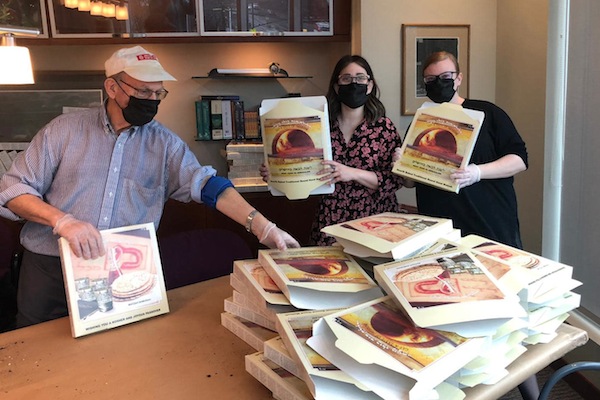
Ambassadors of Light putting together more than 2,000 packages of matzah at Lubavitch BC. (photo from Chabad Lubavitch of BC)


Ambassadors of Light in Kelowna. (photo from Chabad Lubavitch of BC)

“A little light pushes away a lot of darkness” – this quote from the Lubavitcher Rebbe (Rabbi Menachem Mendel Schneerson) was the impetus for the creation of a new program initiated by Chabad Lubavitch of British Columbia in response to the experiences of the last few years. These have included COVID-19, war in Ukraine, poor economic conditions and political upheaval, leaving so many in loneliness, depression and despair.

Ambassadors of Light is a year-long series of campaigns in commemoration of the Rebbe’s legacy and the 120th anniversary of his birth, which was celebrated in April of this year. It is designed to combat darkness and infuse the Jewish community of British Columbia – as well as other Jewish communities – with light.

The local project is a coordinated effort of the 10 Chabad centres serving the province. It is divided into six separate campaigns that encourage love and sharing, and doing mitzvot with friends and family. Each one is infused with creative materials to enhance the experience.

The first campaign began in March and extended through April, with distribution of Shmurah matzah for Passover. Each participant received free handmade matzah, an activities package and, most importantly, a second set to hand out to a friend. True joy comes when we “pay it forward”!

The second campaign, which took place over May and June, focused on the theme of Jewish books. Every Jewish home shines when it is adorned with books of Jewish learning, faith and prayer. People received the gift of a new Jewish book for their home library and one for a friend.

The current campaign is to ensure that every Jewish home in British Columbia has kosher mezuzot affixed to the doorposts of their homes. There are two parts to this campaign:

Part 1: First-time front-door mezuzah. Be an ambassador and introduce the gift of “Mitzvah Mezuzah” to a Jewish friend, co-worker or family member who doesn’t yet have one on their front door.

Part 2: See the Scribe. For those who already have mezuzot, bring them for a check-up to one of the in-person See the Scribe events. A certified scribe will be at various Chabad centres throughout the province for a full day, and he will be checking mezuzot for authenticity or errors. You will also have the option to book a time for the rabbi to come directly to your home to install your mezuzah – or you can take instructions on how to do it yourself. Check the website ambassadorsoflight.ca for the days, times and locations of these events.

The Ambassadors of Light initiative has already had an effect.

“Thank you for this wonderful gift before Passover. You’ve made our holiday so special!” said Igor, a student in Kamloops, who himself volunteered to become an Ambassador of Light. He distributed Passover matzah and other holiday goods to more than 20 more Jewish families in Kamloops through the campaign.

Rabbi Chalom and Esti Loeub from Chabad UBC shared, “One of our students’ parents (who we had never met before) received a gift of a Jewish book from their son. They were so impressed by the concept that brought their son to share Judaism with them in a creative way … and they loved the book about fascinating Jewish concepts.”

In Okanagan, Rabbi Shmuley Hecht received the following text: “Hello Rabbi Shmuley…. I took only one of the books on Jewish living, but, on reflection, I would like to get another four, if possible – one for each of my children.”

“Now, as we begin the third of six sweeping education and sharing themed campaigns of the Ambassadors of Light program, the impact is growing and the feedback is enormous,” said Rabbi Dovid Rosenfeld of Lubavitch BC, one of the team members leading the project. “People care, and people are being cared for. The circle continues to revolve, turning each recipient into a giver as well.”

Rabbi Yitzchak Wineberg, head director of Chabad Lubavitch of B.C., noted, “The sense of unity that this Ambassadors of Light program has created is incredibly heartwarming … and very telling. People are just so touched by the surprise gifts they’re receiving from their own fellow community members, and that is something that the Rebbe has been encouraging throughout the years as well.”

All in all the project has reached more than 70 cities, attracted more than 200 volunteer ambassadors and impacted thousands of people. Still to come are the shofar and lulav campaign, the menorah campaign and the Shabbat candles campaign.

To become a part of the program, contact your local Chabad. For details, visit  ambassadorsoflight.ca.

– Courtesy Chabad Lubavitch of British Columbia

Argue for the sake of heaven

When they were having their animated disagreements so many centuries ago, could the wise Jewish sages Hillel and Shammai have imagined how much we would still look to them today to help us navigate our fragmented world?

Mishna Avot, a third-century collection of teachings, reminds us that “any mahloket (disagreement) that is l’shem shamayim (for the sake of heaven) will continue to exist, but one that is not for the sake of heaven will not continue to exist. What is a disagreement that is for the sake of heaven? This is a disagreement of Hillel and Shammai.”

In our world that is both full of beauty and goodness and yet also permeated with divisiveness and polarization, Hillel and Shammai remind us that it was, and is, possible to hold opposing views while still respecting and learning from one another. A disagreement for the sake of heaven is one in which the parties are motivated by a genuine desire to seek the truth of the matter. There is no selfishness or lust for power. Rather, the disagreement is approached with humility, curiosity and a willingness to listen.

I recently completed an eight-week Mahloket Matters alumni fellowship through the North American branch of the Pardes Institute of Jewish Studies. I had previously studied at this pluralistic yeshivah (place of study) in Jerusalem, which is itself exemplary in demonstrating diversity, inclusiveness and a willingness to face challenging issues in respectful, cooperative and productive ways. What attracted me to applying for the fellowship was the topic – civil discourse. We would be delving into how to navigate difficult conversations and disagreements. When we all met, virtually, at the first class, we found that we shared a common concern about the fragmentation and jagged edges in our world, as well as a desire to learn and to equip ourselves with more skills to better navigate the types of thorny issues we face in our world.

Our studies were grounded in Jewish texts, which provided wonderful launch points for many of our discussions. We shared thoughts and ideas about what it means to have a disagreement l’shem shamayim and tried to bring those ideas forward to today. As Hillel and Shammai taught us, it is possible that sometimes both sides can be right and still hold opposing views. It’s also possible to debate an issue without harming relationships. Entrenched positions leave little room for genuinely listening to the other side or having the humility to admit that one might be wrong, qualities much needed for any truly healthy and productive disagreement.

U.S. Supreme Court Justices Ruth Bader Ginsburg and Antonin Scalia, may their memories be blessed, perhaps provide a more contemporary example of Hillel and Shammai. They were judges who held vastly different views on many issues and yet had a warm and lengthy friendship, never mind a shared love for opera, which they often indulged in together. In a statement that Bader Ginsburg released to the public on the death of Scalia in 2016, she said: “We disagreed now and then, but when I wrote for the Court and received a Scalia dissent, the opinion ultimately released was notably better than my initial circulation. Justice Scalia nailed all the weak spots – the ‘applesauce’ and ‘argle bargle’ – and gave me just what I needed to strengthen the majority opinion.”

Over the eight weeks of our studies, our diverse group from all over North America questioned, challenged, debated and confronted a multitude of issues, from moral foundations to creating our own mini Sanhedrin(Jewish High Court), taking on the role of judges and tackling some controversial issues from all angles. It was an enriching and meaningful experience, the fruits of which we are each now able to bring back to our own communities, with the hope that the small ripples we create through sharing our learning will radiate outwards and help, even in small ways. Help to smooth some of the sharp edges, soften rigid positions and create the safe spaces people need to have productive and healthy disagreements that create the fertile potential for new solutions to emerge – all for the sake of heaven.

Elisheva Gray is a lay leader and active member of the Victoria Jewish community and an alumna of the Pardes Institute of Jewish Studies.

Working to embrace change

We’re hoping the school bus will know to pick up our twins at the right address when school starts. They’re starting Grade 6 this fall. We’ve finally gotten good at figuring out the back-to-school letter, so we send them with most of the right supplies.

Yesterday, I took them shoe shopping, because, apparently – even though kids’ feet grow all year round – you can only buy sneakers for them before school starts. I even know where their lunch kit is located. Last year, the kids got good at packing their lunches – with mom supervision, of course.

I dread the start of school. It’s full of pitfalls. Inevitably, the bus doesn’t come, maybe one twin has a conflict and gets in trouble, or the teacher isn’t connecting with the other one. Things don’t always go smoothly. I have to line everything up as well as I can and hope for the best.

We’d be way ahead of schedule if it weren’t for one thing. We moved this summer. We only moved a short distance. It’s a little less than two kilometres if you walk from our old house, built in 1913, to our new one, also built in 1913. The differences lay in the neighbourhoods, zoning and a few other details.

Our “old” house was entirely habitable, aside from some walls cracked by nearby construction. It’s currently for sale as I write this. We staged it with our furniture and now we’re sleeping on the floor at the “new” house.

Our current home is almost twice as big as the previous one. It has a bigger yard in a quieter neighbourhood, amazing woodwork, a library, leaded glass, two enclosed sun porches, a second floor open-air porch, and more. It’s got all the fine details one might expect of a house built for a doctor who was the head of the Manitoba College of Physicians and Surgeons in 1913. It’s also got only one working bathroom – several remain broken – and only about half of a kitchen. The other half of the kitchen was demolished due to some, umm, small issues like freezing pipes, and structural concerns that need to be fixed.

We moved for a variety of reasons, but we loved how close the new home would be to the synagogue we attend most of the time. To be more clear, the synagogue we used to attend in person and now mostly livestream, due to the pandemic! We imagined that the easy walking distance would be great if Shabbat observant relatives came to stay, for instance. We like walking in nice weather. Then? Things changed.

It turned out the synagogue needs to do big renovations. It has just “moved out” of the building for two years to have asbestos removed, the HVAC system fixed and a few other updates done. Services will now be held in two other places in the Jewish community – both of which require driving. Oh well.

Change is challenging. Our dog isn’t ready to be by herself in the new house. She let us know this yesterday. She broke out of the third floor bedroom, where we had left her for an hour, complete with her dog bed, the radio on, a dollop of frozen peanut butter, and several other treats. She greeted us, in high anxiety, at the first floor front door with all the same toys surrounding her. While we appreciate her intelligent, Houdini-like abilities, we still do sometimes need to leave home. This morning, we signed up to a new dog daycare at the last minute so we could attend a weekend bat mitzvah for a family with whom we’re close.

I could go on with examples because, with the pandemic fluctuations, the house move and other work changes, our life is really keeping us on our toes just now. Like many people, we’re continuing to roll with it. What else can we do?

Around us, we see people nostalgic for some mythical normal they want to get back to experiencing. I’m stymied by this because, at least in Manitoba, even as pandemic restrictions go away, more people continue to die due to COVID. It ain’t over yet, folks.

When I bump into friends or neighbours while walking the dog, everybody asks how we’re managing. We’re probably more deadpan or low-key than people expect. I mean, what are our other options?

At the dinner table, I mentioned these exchanges with my husband and he said, “You know, I’m out of bandwidth right now. I hope that I act appropriately and keep moving.” That is when it hit me that, during these times of big stress, it isn’t uncommon to act this way. We function automatically. When I taught high school, my students called it “home training.” Jewish tradition might call it “derech eretz” or “how to behave.” We’re all doing the best we can, relying on basic skills and manners learned in childhood about how to do the right thing.

We hope that, in every autopilot email, conversation with a neighbour or phone call, we’re behaving in an upright and kind way. Right after we mention this lack of bandwidth, we remember how lucky and grateful we are. We have a home, food and clothing. During this summer of “the great move,” we’re doing fine. We’re not facing any of the many awful things that Jews have had to face. It’s not the Inquisition, a pogrom, the Holocaust or, in 2022, time spent in bomb shelters in Israel or Ukraine.

In Pirkei Avot 2:5, Hillel offers a long list of instructions for how to behave, including: “In a place where there are no people, strive to be a person.” Every day, if Jews recite any prayers at all, we’re reminded to be grateful, caring, appreciative people. The emphasis is to be a mensch, an upright, good person, even in a moment when no one else might be acting as such, or when no one else is around.

It’s really easy to get worked up and dread transitions and the start of new challenges. It’s harder for me to step up, not just face these changes, but to embrace them with good humour and enthusiasm. I wake up each day, heave myself up from the mattress on the floor, recite a very informal Modeh Ani (a prayer of gratitude for waking up) and hope I will meet the day with the right intention. Someday soon, when our furniture makes the move, too, I hope it will feel like less of an effort to get up and meet the challenge.

I hope you have a great start to the school year, and that you are also celebrating some big milestone events! Here’s hoping it all goes smoothly.

Joanne Seiff has written regularly for CBC Manitoba and various Jewish publications. She is the author of three books, including From the Outside In: Jewish Post Columns 2015-2016, a collection of essays available for digital download or as a paperback from Amazon. Check her out on Instagram @yrnspinner or at joanneseiff.blogspot.com.

ישראלים בקנדדה

מהצצה לאתר של קבוצת ישראלים בקנדה שמופיע בפייסבוק ניתן להבין מה הם רוצים, מה חסר להם, מה הם מחפשים ובמקביל מה יש להם להציע. קרוב לששת אלפי ישראלים חברים בקבוצת ישראלים בקנדה שנוסד בנובמבר אלפיים וחמש עשרה בטורונטו.

הנה לקט של שאלות, בקשות והצעות חברי הקבוצה השונים המתפרסמות באתר הקבוצה בפייסבוק:

לני מציעה למכירה גחנון קובנה במחיר שמונה דולר ליחידה. כולל תוספות של ביצה, סחוג ורסק במחיר שלושה עשרה דולר ליחידה.

שמעון שגר בישראל טס החודש לקנדה והוא קיבל שני חיסונים. הוא שואל האם הוא צריך לבצע בדיקת קוביד לפני הטיסה?

יובל שגם הוא גר בישראל שואל האם רישיון הנהיגה הישראלי שלו תופס גם בקנדה? או צריך להוציא רשיון נהיגה בינלאומי לפני שמגיעים לכאן?

רות שואלת את מי מבין אלה שעברו את הגבול לבאפלו ארה”ב עם רכבם: האם צריך לעשות בדיקות קוביד? האם מעבר הגבול פתוח כבעבר עשרים וארבע שעות ביממה?

סמדר שגרה בטורונטו מחפשת להשכרה בית שלם בן ארבעה חדרים באזור טורנהיל בטורונטו.

אלמוג שגר בישראל מציין שהוא נמצא במדינה כבר שלוש שנים, אחרי שגר בארה”ב במשך ארבע שנים. אלמוג מעוניין עתה להגר לקנדה והוא מחפש עבודה כטכנאי לתקן דלתות מתכת לחניות פרטיות, או כמנעולן, כשיש לו ניסיון רב בשני התחומים. הוא מציין עוד כי ישמח לקבל עזרה ומידע בדבר הגירה, הקהילה היהודית בקנדה, כשרות וכל מה שיש להוסיף בנושא.

סאו שגר בישראל שואל איך ואיפה מוציאים ויזת תייר לקנדה? מה העלויות וכמה זמן זה לוקח? הוא רוצה בחודשים ספטמבר ואוקטובר לטוס לקנדה עד חודש ימים, ושואל האם שבועיים יספיקו לטייל בוונקובר ובטורונטו, או שזה לחוץ מדי מבחינת הזמן? שאו מציין שראה גם את הרכבת השקופה ומדובר כנראה ברכבת נוסעת מוונקובר לבאנף שבאלבטרה וכידוע הכרטיסים שלה יקרים ביותר.

אלינה מישראל שואלת האם מישהו יודע אם צריך לתרגם את חוזה הגירושין לאנגלית ואת האישור של האבא שמאפשר לילדים להגר לקנדה?

עדי מישראל מספרת כי משפחתה שוקלת להגר לקנדה (באזור טורונטו והסביבה). מדובר בזוג הורים ושלושה ילדים בני שש, שמונה ושתיים עשרה. עדי במקצועה היא קוסמטיקאית ומניקוריסטית והיא שואלת האם היא יכולה בתחום הזה שלה לעבוד כעצמאית בטורונטו? או שהיא צריכה ללמוד את התחום מחדש?

ויקה מישראל אומרת כי היא בעלה וילדתם שוקלים להגר לקנדה. היא שואלת מי מכיר יועץ הגירה אמין בישראל, מבין אלה שבעזרתו הם היגרו לקנדה בשנים האחרונות?

אוריאל הוא אזרח קנדי המשרת בצה”ל ביחידה קרבית ועכשיו הוא משתחרר. הוא מחפש עבודה עם שכר טוב במונטריאול.

נינה הגרה בטורונטו מחפשת יועצת הגירה לקנדה.

לירון הגרה בישראל מספרת שהיא ואחותה מגיעות לקנדה למשך חודש ימים. היא מוסיפה שהן צריכות כרטיסים לסלולר לכדי להיות בקשר אחת עם השנייה, ושואלת על המלצות היכן לרכוש אותם במחירים מוזלים?

מוטי מחפש עורך דין מעולה המתמחה בהגירה לקנדה, ויש לו באמת ניסיון רב וידע בכל ההליכים.

דודו מישראל מחפש במונטריאול קייטרינג כשר במחיר סביר עבור חינה לפני החתונה.

ארינה שואלת היכן מומלץ לקחת חופשה בן עשרה ימים בקנדה? מבקשת לתת עדיפות למקומות עם חופים, מים ועגמים. היא כבר הייתה בקולונה וקמפלוס ומעדיפה לגלות מקומות חדשים.

יבול מישראל קיבל קבל שני חיסונים שפג תוקפם והוא שאול האם הוא יכול להיכנס לקנדה?

חמש שנים לעבודה מהבית

לפני חמש שנים קיבלתי אישור מהמנהלים הבכירים במקום העבודה שלי לעבור לעבוד מהבית. ארזתי את מעט החפצים שלי שהיו במשרד בדאון טאון ונקובר והעברתי אותם לביתי. חברת הובלה העבירה את הכל השאר, כולל: מחשב, שולחן למחשב עם שני מוניטורים, כיסא משרדי, מגירות על גלגלים ועוד.

לראשונה בחיי עבדתי מהבית בקביעות וזה מאוד מאוד מתאים לי. כמבקר החברה אני צריך שקט בסביבה, בזמן שאני עובד ובודק האם הכל נעשה בחברה כשורה. מכל מקום בגלל אופיי אני מעדיף תדיר לעבוד לבד, לא בקבוצות, לא בצוותים ולא עם אחרים. סוף סוף הגשמתי את רצוני ואני עובד מהבית וזאת עוד הרבה לפני מגפת הקוביד.

המשרד של החברה נמצא במרחק של פחות מחמש עשרה דקות הליכה מביתי, כך שאם אני צריך להגיע לפגישה או לדיון כלשהו, זה נמצא ממש קרוב אלי. ובעצם אני יכול ליהנות משני העולמות: לבצע את העבודה יומיומית שלי מהבית ולהגיע למשרד כשצריך.

אחרי הצבא עת גרתי בישראל: התחלתי לעבוד בדרך כלל במקומות עבודה שיותר קרובים לביתי בזמן שגרתי אז בירושלים. הדבר נמשך עת עברתי לתל אביב. גרתי במרכז העיר ומקום עבודתי תמיד היה במרחק הליכה קצר.

כשעברתי לוונקובר לפני שבעה עשרה וחצי שנים, במרבית הזמן אותו נוהג שלי נשמר. אני גר במרכז ומקום העבודה קרוב. במשך עשר השנים הראשונות כאן שכרתי דירה קטנה ברחוב בארקלי בווסט אנד בסמוך לסנטלי פארק. אחרי שבעה חודשים של חיפושים אחרי עבודה התחלתי לעבוד במחסן של חברה לאספקת תכשיטים. כל יום צעדתי למחסן במשך כ-45 דקות. את אותה דרך עשיתי בהליכה בחזרה לבית. לאחר מספר חודשים עברתי לחברה העוסקת בגבייה ותפקידי היה לחפש מידע ובעיקר מספרי טלפון של חייבים. (זאת, עקב התמחותי בחיפוש מידע ולאור העובדה ששימשתי עיתונאי בישראל במשך שנים רבות). כמובן שמיקומה של החברה היה בדאון טאון של ונקובר, ובמרחק של כעשרים דקות מביתי לכל היותר. עבדתי בחברת הגבייה למעלה משבע שנים ורק בשנה האחרונה שלי שם קרה שינוי מהותי. בגלל שינוי בבעלות בקרב בעלי המניות והעליה המהותית בשכר הדירה, החברה עזבה את הדאון טאון ועברה לעיר ברנבי הסמוכה לונקובר. המשרדים החדשים מוקמו בצפון ברנבי בסמוך לברנדווד מול. כיוון שאני לא מחזיק ברכב מאז שעברתי לוונקובר, נאלצתי כל יום לבזבז קרוב לשעה כדי להגיע לעבודה. הייתי נוהג ללכת ברגל עד תחנת הרכבת הקלה של סקייטריין, ברחוב בווררד. ומשם הייתי מגיע לתחנת הרכבת של ברנדווד מול בברנבי, והולך ברגל עוד מספר דקות עד למשרד.

זו הייתה השנה האחרונה שלי בחברת הגבייה. משם עברתי לעבוד בחברה המספקת הלוואות בסב-פריים למי שאינו יכול לקבל הלוואות מהבנק, בשל קרדיט גרוע. בחברה זאת אני עובד במשך למעלה משמונה השנים האחרונות ממש עד היום.

בחצי השנה הראשונה שלי: משרדי החברה היו ממוקמים במערב העיר (במקריות בקרוב למחסן התכשיטים בו עבדתי בעבר). לאחר מכן עברנו לשמחתי לדאון טאון, כך שהייתי צועד כיום יום כחמש עשרה דקות למשרד. לפני כשבע שנים עברתי לדירה משלי בצד השני של רחוב בארקלי, בסמוך לרחוב בווררד. שוב מדובר היה במרחק הליכה קצר של כחמש עשרה דקות מהבית למשרד. ולפיכך העיקרון שלי לעבוד קרוב לבית נמשך כמעט כל חיי בישראל וכן בקנדה.

כאמור לפני חמש שנים ממש שברתי את העיקרון של עצמי והתחלתי לעבוד מהבית. אני מקווה שזה ימשך לעד.