
Dealing with asylum seekers

A celebration of Sigd at Ruppin College. (photo from Ruppin College)

From 1967 until the First Intifada, Palestinians filled a similar role in Israel to that of foreign labourers in many Western countries, often working in construction, agriculture and other occupations in which Israeli citizens weren’t interested. But, once the Intifada began in the late 1980s and Israel started restricting the passage of Palestinians to and from Israel, there were acute labour shortages.

According to Prof. Galia Sabar, president of Israel’s Ruppin Academic Centre (or Ruppin College), a few other factors contributed to this situation. Specifically, there was the migration of Jews from the former Soviet Union, she said. “So, you have these two mega historical events – the closure of the entrance of Palestinian workers … at the time, there were about 120,000 Palestinian workers coming in and out every day to Israel…. And, on the other side, you had about a million Jews coming within a period of less than two years.

“The Israeli government had several options. One was to have Israeli citizens work in these fields. Another was to have the new migrants [do the] work. The third one was to bring back the Palestinians. And, the fourth option was to bring in international migrant workers to do the job.”

The Israeli government chose the fourth option. However, said Sabar, “The Israeli government opted to ignore the experience in other Western countries. Now, we’re not talking about the 1960s; this is the 1990s. If the Israeli government or decision-makers would have just looked west to Germany and France, they would have noticed what the long-term consequences would be. But, you don’t bring them for a short period of time and, when the work is done, kick them out. It just doesn’t work. That is exactly what happened in Israel.

“With the Palestinians, they came to work in the morning and went back to their homes in the West Bank and Gaza at night. Israelis benefited from cheap labour and didn’t pay the price that most countries did with conventional migrant workers. Once you bring in international migrant workers, they establish families and demand rights.

“Once the borders were open and visas were issued for international migrant workers – and the price Israelis paid for their labour was much lower than paying for Israelis – then all hell broke loose. By 1996, there were already 180,000 visas issued to international migrant workers.

“Once the Israeli economy and borders were open to international labour migrants from specific countries with work visas, others without working visas started coming, too – from Latin America and the African continent. They came in on tourist or pilgrim visas and overstayed their visas … becoming illegal or undocumented migrant workers.”
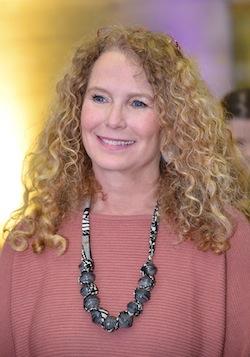
photo - Galia Sabar
Galia Sabar (photo from Ruppin College)

Sabar started her research in the mid-1990s on communities of Guineans, Nigerians, and Kenyans. She recalled, “We had, at one point, representatives from about 25 different African countries in Tel Aviv alone – my first research was on African churches in Tel Aviv. The Jewish, predominantly white, city had about 55 to 60 different independent African churches just near the central bus station in southern Tel Aviv.

“A Guinean man or woman came and brought other relatives. Kids were born and whole new ecosystems of foreign migrant communities developed in Israel … around construction sites and agricultural places, and in and around the big city where people found work.

“I think most Israelis, until the early 2000s, preferred to ignore what was going on and enjoyed the cheap labour. If, before, a normal family had to take care of an elder person or sick person, they had to pay thousands and thousands of dollars to get 24/7 care. But, here you’d bring a Thai or Philippine caregiver and pay her $800 to $900 … so why worry about the long-term consequences?”

Eventually, in early 2000, the government began deporting undocumented migrant workers. Within a very short period of time, about half of the 250,000 undocumented workers were deported.

“I followed them after they were deported back to Africa, mainly West African countries,” said Sabar. “Since the beginning of the 2000s, I’ve been studying African asylum seekers, mainly Sudanese, who came via the border between Israel and Egypt, to Israel. I followed them after they returned to South Sudan in 2012. “Some who were in Israel for 10 or 12 years had savings and gained new skills, ideas, and resettled back home successfully. The other group was not as well off when they went back home. Their savings were slowly eaten away by their families. They were really wandering around. There were some who were devastated and had no future back home.”

Sabar’s focus now is on what she calls “the second wave,” with which Israel has been grappling since late 2006 – asylum seekers, mostly from Darfur and South Sudan, who came to Israel via Egypt claiming asylum. By 2012, the total number of asylum seekers had reached 60,000.

“Israel never had an office that deals with asylum requests, because we didn’t have asylum seekers coming in or refugees,” said Sabar. “It was only one or two, here or there. We’d get a boat with several dozen Vietnamese … but that was nothing. Then, suddenly, from 2006 on, we have thousands of people coming into Israel seeking asylum.

“In the beginning, it was Darfurians who were considered to be genocide survivors, and South Sudanese, which Israel has special relation with. So, Israel came up with this new idea, like an umbrella protection visa, [and] between 2006 and 2017, the 60,000 Sudanese and Eritreans built their lives in Israel. They worked, earned salaries, rented rooms, had kids, created families, lived full lives. Most of them lived in and around big cities where they could find work.”

Some Israeli ministers and other politicians started calling African asylum seekers a cancer in the heart of the Jewish nation and a “hygienic danger,” said Sabar – statements that, not so long ago, were directed at European Jews.

“I think that, owing to our own history and supposedly Jewish values, we can’t adopt this attitude,” she said. “A few thousand African asylum seekers are not a threat to the state of Israel, to the Jewish character. They are not. There have been no more asylum seekers coming into Israel since the erection of the border (between Israel and Egypt).

“We have now, in 2018, 37,000 African asylum seekers. Now, the state of Israel either puts them in jail or forces them to go to Uganda and Rwanda. But, they don’t come from there…. Where did they get this idea? Why? Because they’re both from Africa? They’re black, so that’s why we can deport them? The idea that the Israeli government is going to take thousands of Sudanese – some of them survivors of genocide – and throw them into Rwanda is terrible.”

Sabar went to Rwanda and Uganda on research missions in 2012, 2013 and 2014. She interviewed asylum seekers who were pushed out of Israel, back into refugee life, but in countries with far less than Israel’s gross domestic product and economic growth. Sabar said Israel should share the burden with the rest of the world and give asylum seekers a temporary home.

Although her efforts have mostly fallen upon deaf ears, the Dalai Lama has taken notice and has bestowed upon her the Unsung Heroes of Compassion award. “I thought it was one of these online scams, but then I communicated with them and realized it was real,” said Sabar. “I feel truly honoured, excited, and very, very surprised that the Dalai Lama acknowledges the fact that academics who do research can bring about real change. That is truly inspiring and gives me, up until today, energy to continue training my students to be critical thinkers and develop empathy for others while doing their research.

“All our students at Ruppin are encouraged to do some kind of activism as part of their academic training. A very high percentage of our students are socially engaged and active.”

While Sabar acknowledged that all sovereign states have the right and the duty to protect, first and foremost, their own citizens and territory, she is adamant that countries “should all have big doors, windows and avenues for those less fortunate seeking asylum, letting them in for temporary shelter and protection.”

Rebeca Kuropatwa is a Winnipeg freelance writer.

Okanagan celebrates 25th

Steven Finkleman, vice-president of the Okanagan Jewish Community, takes a moment to enjoy some Israeli dancing. (photo by Misty Challmie)

When the founders of Kelowna’s fledgling Jewish community decided to open a building, they couldn’t call it a synagogue.

The B.C. government of the day would contribute a third of the construction costs toward a community centre but nothing if it were a church or synagogue. So, a small group of dedicated volunteers named it the Okanagan Jewish Community Centre and got the funding.

The building – also known as Beth Shalom Synagogue – features a sanctuary alongside a large kitchen, library and daycare. Twenty-five years after its dedication in the heart of British Columbia’s Okanagan Valley, a dozen original members and 50 supporters celebrated the milestone with Israeli dancing, humour and heartwarming stories.

Steven Finkleman, who led the event, reminisced about how a few retired couples kept the Jewish religion “alive in these boonies” by getting together at various houses. Members gathered regularly for services at a church after they formalized their community at an inaugural meeting in 1983.

“We met at St. Michael’s Anglican Church. For us, it was St. Moishe’s,” said Finkleman, who grew up in Winnipeg. “The question wasn’t, ‘Do we need a building?’ It was, ‘If someone dies, where do we put them?’ So a cemetery was most important.”

As more Jews moved into the Okanagan, momentum grew. Then-newcomer Mel Kotler, a businessman from Montreal who ran the Western division of Fabric-land, helped launch the community’s first cemetery drive. The committee bought pews, bimah artifacts and an ark from a synagogue that closed in Moose Jaw, Sask. Members contracted Emil Klein, a retired rabbi living in nearby Winfield, to lead services in houses and at St. Moishe’s.

Soon, they picked out a burial site overlooking a lake north of Kelowna, making it the only Jewish cemetery between Metro Vancouver and Calgary. After shifting the focus to establishing a centre, lawyer Robert Levin met with developers of a new subdivision in Kelowna’s North Glenmore area to negotiate a location. They agreed the Jewish community would put in a daycare to serve the neighbourhood as part of the deal.

Plans were drawn up for a $400,000 building, and a successful fundraising dinner followed. Once built, two former members of the Moose Jaw synagogue helped carry in two Torahs for the dedication in October 1992. More than 300 people attended the ceremony, which included a six-foot challah. Among the dignitaries were British Columbia’s former premier, Dave Barrett, member of the Legislative Assembly Cliff Serwa and B.C. Liberal leader Gordon Wilson.

Today, about 60 families – with Orthodox, Conservative and Reform backgrounds – support the centre. Visiting rabbis and cantors lead services, and children learn about Judaism at Hebrew school. Rabbi Shaul Osadchey and Cantor Russ Jayne of Calgary’s Beth Tzedec Congregation currently travel to Kelowna four times a year for Jewish holidays.

“They have the skill set we don’t have,” said Okanagan Jewish Community president Mondy Challmie. “When people have questions of a religious nature that we’re unable to answer, we encourage them to email or call Rabbi Osadchey.”

To celebrate the 25th anniversary, Cantor Russ sang a Hebrew-English version of Leonard Cohen’s “Hallelujah.” Israeli dancers – who have practised every week for 14 years at the centre – performed. Member of Parliament Stephen Fuhr and Kelowna Councilor Mohini Singh gave speeches. And everyone shared a nosh, a slideshow and plenty of laughs.

As the party wound down and people folded up the chairs, Finkleman reflected on the biggest challenge for this tight-knit but tiny congregation.

“Generating interest, support and commitment in a small community – distant from a major Jewish centre – was difficult. It still is a challenge, but, when the building opened, it served as a focal point for recent arrivals in the Okanagan. We were very honoured to have some of the original members present. We miss those who are no longer with us.”

For more information, visit ojcc.ca.

Don Plant is a retired journalist and member of the Okanagan Jewish Community in Kelowna. He’s now studying archeology and helped excavate an Early Bronze Age site in Israel last summer.

Bursting with colours and joy

Artist Lauren Morris at the opening of her solo show, Dressed in Colour, at the Zack Gallery Jan. 25. (photo from Lauren Morris)

Dressed in Colour, Lauren Morris’s new solo exhibition at the Zack Gallery, perfectly reflects the artist’s relationship with the world. “Everything about me is colour,” she said in an interview with the Independent. “Colours bring this show together.”

This is Morris’s second solo show at the gallery, the first having been in 2015. She is known for her vivid flowers and colour-infused compositions.

“I always explore new colours, always learn, always take new photos. Living in Vancouver makes me want to paint even more colours,” she said.

Inspiration has not always come easily, though.

“About five years ago, I took a sabbatical. I didn’t paint for more than a year, didn’t know what to paint. I was stuck,” she said. “Before that period, I always used someone else’s vision as a starting point: photographs I found online, other artists’ pieces. But it stopped working for me. Then, I realized that it doesn’t matter what I paint. I began taking my own photographs. Now, I base everything I paint on my own experiences. I love nature, I enjoy flowers, and it all comes out in my art.”

Influenced by nature, Morris creates large canvases where colours, shapes and light intertwine into unique flowery abstractions, beautiful but never photographic or even realistic. Her flowers come from her imagination, with depth and texture adding meaning. “There is always something mystical in my paintings, something unknown,” she said. “A lot is going on in every picture, and the multiple layers create reflections.”

Morris paints with acrylics, but this medium, despite its growing popularity, has its quirks. “Acrylics dry fast, and they often become dull when dry,” she explained. “To brighten the images, I use varnish on top of acrylics. Varnish makes the magic come out. People even ask me if I paint in oils.”

photo - “Water Lilies” by Lauren Morris
“Water Lilies” by Lauren Morris.

Her flowers are larger than life. One can’t even see the overall image until one is at a distance from the work. “When I paint, I often stand back a lot,” Morris said of her creative process.

For her, a painting is never finished until it is no longer in her possession. “Yesterday, I saw something wrong in one painting in this show,” she said the day before the exhibit’s opening night. “Something bothered me, so I brought my paints and touched it up.”

Sometimes, she starts a painting with a preconceived image, but, like living things, her pieces frequently have a mind of their own. “My paintings often surprise me, and I always allow them to happen,” she said. “If I planned something else, but the image evolved somehow, I find it fascinating. If something doesn’t work, I fix it. I don’t have an anxiety. I don’t fear the canvas.”

Morris trusts her intuition, and it makes her paintings vibrant. It also makes her an excellent teacher. Lately, she has been teaching adult art workshops at the Designers Collective. “Most of my students are beginners,” she said. “They come to the workshop and they’re unsure. They think they can’t paint. I teach them not to be afraid. I bring art to people. I tell them: there are no mistakes in art. It’s not about technique. Art is a self-exploration. If you don’t like something you already painted, we’ll cover it up with something new. Maybe the old image will peek through, like a reflection of something different…. I try to make people believe in themselves. It’s almost a therapy class.”

She applies the same approach of playful exploration to her own work, fearlessly searching for beauty in her art. “I’m never bored when I paint. My art excites me. I get absorbed by my paintings,” she said happily.

Morris’s canvases seem to thrum with the strands of silent music, a quiet serenade of water lilies in a deep-green pond or a loud trumpeting from the white, extravagant bouquet exploding with elation.

“Before, I always listened to classical music when I painted, but, a few years ago, I stopped,” she said. “Now, I paint in silence. I still love music, but not when I paint. Maybe, it happened because there is so much noise around us, with the internet and the city life.” She doesn’t want the ambient noise of the urban sprawl to interfere with her paintings. “I want to create a mood,” she said. “I want to make people happy.”

Not surprisingly, people find delight in her paintings. In the past five years, she has been participating in the Eastside Culture Crawl, and sales – a challenge for any artist – have been encouraging. She has donated several of her paintings to various medical establishments around Vancouver, and her website also gets lots of traffic.

Her commissions have become almost a business, and she treats them as such. She starts practically every day with a few hours in her studio. “Each painting becomes a project to complete,” she said. “When clients come to me with a commission, my interior designer’s background kicks in. They have a vision of what they want: a size, a shape, a place on a wall in their home. I understand someone’s vision. It doesn’t make me feel constricted. If I’m able to get their vision right – the size, the colour scheme, the overall impression – I’m glad.”

Dressed in Colour is on display until Feb. 24. For more information about Morris and her work, visit lmdesignsstudio.com.

Olga Livshin is a Vancouver freelance writer. She can be reached at olgagodim@gmail.com.

RJDS students help Variety

The goal of the Richmond Jewish Day School student council committee this year was to help purchase a Sunshine Coach for Variety Club. From left to right are Rachel Marliss, Shai Rubin, teacher Reesa Pawer and Nate Brown. (photo from RJDS)

The Richmond Jewish Day School student council started three years ago. While there used to be elections, as of this year, any Grade 6 or 7 student can join, and we’re now called the student council committee. From its very beginning, the committee has done fundraisers for charities, such as the Richmond Animal Protection Society, the Jewish Food Bank and Variety – The Children’s Charity.

photo - Among other initiatives, RJDS students sold flowers to raise money for Variety. Pictured here are, left to right, Jonathan Estok, Noa Ben-David and Hannah Karasently-Saltoun with teacher Dara Nelson (in the back)
Among other initiatives, RJDS students sold flowers to raise money for Variety. Pictured here are, left to right, Jonathan Estok, Noa Ben-David and Hannah Karasently-Saltoun with teacher Dara Nelson (in the back). (photo from RJDS)

Many of the students at RJDS agree that giving and helping means the world to us, and a lot of students at our school, including members of our committee, have given to various causes.

In past years, we have done bake sales, non-uniform days and flower sales in support of charities. Most recently, we did a highly successful flower sale in front of our school – we sold every single bouquet, and we were interviewed by Global TV. Our goal was to raise $1,049 in support of Variety to help purchase a Sunshine Coach, and the goal was surpassed fairly quickly.

We wanted to raise money for Variety because of what they do for children who are less fortunate and need medical attention. Our fundraising will hopefully make a difference to these kids, and put smiles on the faces of some of those in need.

Shai Rubin is a Grade 7 student at Richmond Jewish Day School. Because of their efforts, RJDS students will appear on the Variety telethon Feb. 11, between 1:30 and 2:30 p.m. The telethon is a daylong broadcast on Global BC.

Dave Barrett’s legacy

British Columbia lost a larger-than-life figure last Friday. Dave Barrett was the son of Russian-Jewish immigrants, he grew up in the Commercial Drive neighbourhood of East Vancouver and became British Columbia’s first – and so far only – Jewish premier.

Though he led the province for just a little more than three years, his legacy was substantial. His New Democratic Party government – another first in B.C. history – created the Agricultural Land Reserve, the Insurance Corporation of British Columbia, strengthened labour laws and substantially reformed the welfare system. His government created Pharmacare, increased the minimum wage, created the air ambulance service, introduced French immersion in the B.C. school system, initiated consumer and human rights protection legislation and – not to be forgotten – banned pay toilets.

Author Tom Hawthorn, writing a few days ago in The Tyee, said that Barrett at the podium was “by turns a rabble-rousing firebrand, an Old Testament scold and a Borscht Belt comedian.”

He infuriated many on the right and some on the left, including trade unions whose refusal to back him in 1975 helped lead to his early defeat. He also made some enduring enemies in the Jewish community. In his last interview with the Independent, Barrett acknowledged that some never forgave him for recalling the legislature on Yom Kippur.

But his self-deprecating humour made him hard not to appreciate. He liked to tell the story about how a newspaper, during one of his election campaigns, hired an astrologer to assess his and his opponents’ characters. The seer declared that Barrett must be a passionate lover. In his nightly call home, as he retold the story, he asked his wife Shirley if she had seen anything interesting in the news that day.

“No, Dave,” she said, “just the same old lies.”

Barrett was a social worker by training and vocation, but he was elected to the B.C. legislature at the age of 30 and remained active in politics for the next 33 years. Though his victories were numerous, he was no stranger to political losses. He lost his first bid to become party leader in 1969, and lost his own riding when his government was defeated in 1975. He returned to Victoria through a by-election and led the party to two more defeats before retiring as party leader. But he was not done with elective office. In 1988, he was elected to Parliament and he ran for the leadership of the federal NDP, losing narrowly to Audrey McLaughlin. He lost his seat in the 1993 election and retired from politics.

He knew that his time in power could be short and he wanted to make the biggest impact he could. Barrett was a bold leader whose drive turned out to be part of his legacy and part of his undoing. He was a model of idealism, influenced in part by his family’s heritage. It was quite a life for a working-class Jewish kid from Commercial Drive.

On access to palliative care

The way a society treats its most vulnerable speaks volumes about its principles. There are few more vulnerable than those reaching the end of life. The physical, emotional, interpersonal and spiritual challenges confronted at life’s end are immense. Just as we expect our healthcare system to be there for us throughout our lives, so too must it support each of us – and our families – as we enter life’s final chapter.

Palliative care is a policy issue that has the potential to touch every family across the country. According to the Canadian Hospice Palliative Care Association, only 15% to 30% of patients approaching the end of life have access to palliative care. With Canada’s population continuing to age, existing shortfalls in the system will only grow in the coming years.

While the federal government has taken the vital step of announcing additional federal funds for home care and palliative care, more can be done to ensure that no patient seeking palliative care is denied. This is why the Centre for Israel and Jewish Affairs (CIJA) has taken a lead role in mobilizing an interfaith coalition to urge Ottawa to take action on this issue.

Working with Catholic, Evangelical and Muslim allies, CIJA’s efforts achieved a key milestone in late 2017, when Parliament passed Bill C-277. This bill, which received strong support from MPs across party lines, called for the establishment of a national palliative care strategy. Our next step is to ensure that the national strategy that flows from Bill C-277 strengthens end-of-life care for all Canadians.

For this reason, in partnership with others, CIJA is organizing an expert working group to provide us with advice regarding Canada’s national palliative care strategy. An essential portion of these suggestions will be based on the patient and family experience, which is why I invite every reader to consider whether they have personal insights they can share with us.

Can you attest to the importance of high-quality palliative care, perhaps having had a loved one who received excellent end-of-life care? Or, do you have a family member who, despite seeking it, was unable to access appropriate hospice or palliative care? We want to hear your stories – and government policymakers need to hear how these policies affect real lives. Email info@cija.ca to share your experiences with palliative care.

It is an extraordinary act of chesed to care for a person in their final days of life. Our healthcare system, in which Canadians rightly take pride as evidence of our nation’s innate sense of kindness, must do better to ensure that those who need palliative care are never denied this essential service.

Steve McDonald is director, policy and strategic communications, at the Centre for Israel and Jewish Affairs (CIJA).

Money still unclaimed

Thousands and thousands of dollars belonging to Jewish institutions and individuals are sitting unclaimed at the Bank of Canada.

Banks and federally chartered trust and loan companies are required to transfer to the Bank of Canada all unclaimed bank balances maintained in Canada in Canadian currency that have been inactive for a period of 10 years. According to the Bank of Canada’s website (bankofcanada.ca), at the end of December 2016, approximately 1.8 million unclaimed balances, worth some $678 million, were on the bank’s books. More than 93% of unclaimed balances were under $1,000, representing 26% of the total value outstanding. In 2016, the bank paid out $15 million to account holders. The oldest balance dates back to 1900.

At the Bank of Canada, there are many small amounts payable to Jewish organizations, including ones that are currently active. There are also some organizations that may no longer be active, which is why money in their name is languishing at the Bank of Canada. It is unfortunate that money intended to benefit Jewish organizations, charities or other causes, should not be used for the intended purpose, but instead sits unclaimed at the bank. Many of these organizations must have successor organizations or responsible persons that, with a little effort, could prove their right to claim the funds.

To discover whether a group you are now or have previously been associated with has such a balance, you should do the following:

  1. Go to bankofcanada.ca.
  2. Type “unclaimed balance” into the search box.
  3. Once you reach the unclaimed balances registry, type one word of the organization name into the search box and scroll through the results.
  4. If you see a name that is familiar, open the link.

If there is a bank account untouched for 10 years, the organization will pop up, along with the name and address of the originating bank. Then you can make a claim for the money through a process set out on the website. You will have to prove that the account was yours, and the website explains how to do that.

You can search by province, or by “all” (of Canada). Each year, on Dec. 31, the Bank of Canada adds another year’s unclaimed bank accounts to the website.

Members of the Canadian Jewish community should try to reclaim funds that were intended for use in the community.

Here are some of the words searched that found unclaimed balances belonging to Jewish groups or institutions: Jewish, Hebrew, tikvah, congregation, Canadian friends, beth, bnai, b’nai, rabbi, synagogue, temple, Torah, Talmud, Israel, Jerusalem, Moshe, Habonim, Zionist, ohel, Na’amat, chevra, camp, JCC, eitz, beit, chaim, kosher, yeshiva, Yiddish.

For example, the Bank of Canada holds $3,311.02 for an organization called Canadian Friends of Tikvah Lay in Ontario. It also holds $256.94 for Yeshiva of the Northwest, whose last transaction date was in 1992 in Vancouver, and $108.69 for the Edmonton Jewish Women’s Baseball League, untouched since 1997.

There may be some hurdles to jump to establish the right to the $953.08 of the Yiddish Drama Company in Toronto, untouched since 1979. However, there are at least a dozen Jewish community centres and congregations in towns across the country that should have very little difficulty in obtaining their unclaimed bank balances.

Few of the amounts found were large – but should any of the money raised or donated for a Jewish cause, charitable or not, be left at the Bank of Canada? Some effort should be made by the community to locate these funds and use them as they were intended.

You should also check your own name and those of family members, especially those family members who died more than 10 years ago, as there are sometimes bank accounts that heirs were unaware of at the time of death and that show up at the Bank of Canada years later. The process for obtaining personal unclaimed funds is also quite simple, and requires establishing your identity and your right to the funds.

Not to be confused with the funds held at the Bank of Canada, the province of British Columbia has its own, government-affiliated B.C. Unclaimed Property Society. It seems to hold more funds for individuals rather than organizations. Its website (unclaimedpropertybc.ca) says:

“Each year, millions of dollars in British Columbia goes unclaimed in dormant credit union accounts, forgotten insurance payments, unclaimed wages, overpayment to debt collectors, as well as unclaimed proceeds from courts, tax offices and unadministered estates and intestates (death without a will and next of kin cannot be notified). The British Columbia Unclaimed Property Society (BCUPS) helps reunite British Columbians with their forgotten or unclaimed assets. We hold unclaimed property as the custodian for rightful owners under the Unclaimed Property Act.”

The BCUPS website also provides an easy way to search, but if you find your name, you will find no further information about the amount of funds or the source of the funds being held for you, until you contact the society. You could think of it as a form of treasure hunt, where you expend no money, but you do expend your time, and maybe there will be a treasure chest or at least a few coins at the end of the hunt.

Felicia Folk is a retired lawyer living in Vancouver.

In spirit of Jewish law

The other night, I sat on the couch with my husband in an attempt at togetherness. We watched an episode of Madam Secretary. It was our second attempt. On the first try, worn out, I was about to fall asleep when my spouse suggested that we save it for another time so I could go to bed. It was, he pointed out, supposed to be fun. Sticking to the initial “date time” wasn’t working. Thank goodness for the PVR.

The show we watched was full of allusions to knitting and design, which are parts of my freelance work. I cringed inwardly, preparing for derogatory comments about “women’s work.” To my surprise, the textile theme was respectful. A man with PTSD takes up knitting as part of his therapy – it helps him focus his mind. A first-year university student struggles with a design assignment – she comes away with a couture dress, but not before we hear the sounds of her sewing machine at work in the background. Best yet, when her sister begins to panic at modeling the dress, the student gives her a pep talk, saying, “Pull yourself together, be strong. Do this, I need you.” What started as a frivolous thing – “help me out at this fashion show” – became more. It became a chance to succeed academically, and to use inner strength to prevail over a trying situation. The episode showed strong women and struggling men seeking to be their best selves.

All this came to mind later, in the context of a Talmud class. I signed up for a Jewish Theological Seminary online course. With the wonders of technology, I can hear lectures by Rabbi Dr. Judith Hauptman, who is a gifted teacher and intellect. Her course has an interesting premise – looking at situations when “law meets life.”

She began with basic information, and got started studying talmudic text. Whenever I study Talmud (or any older text), I have to remember the inherent inequalities. Women were seen as subservient, with less agency than we think is appropriate today. Through careful reading, we saw lists of tasks wives are obligated to perform for their husbands (Bavli Ketubot 61a) and a discussion about how one might “wash” – sprinkle water on – a floor on Shabbat (Bavli Shabbat 95a). (This last reference was not cleaning so much as providing a form of air conditioning and reducing dust on an extremely hot Shabbat in Babylonia.)

Hauptman showed us how women’s interpretations allowed them both to obey the spirit of Jewish law, and to accomplish what needed to be done. In more than one place in these readings, the rabbis (all male) allude to the fact that women were smart and had power or agency. Even if the language of the Talmud relegates women to being “property of a man’s house,” the women in these stories shine through as being shrewd and savvy.

We think sometimes that our lives are infinitely more complicated, sophisticated and detailed than those in the nostalgic past. Yet, these talmudic texts reminded me that, more than 1,500 years ago, smart people focused on the details that make our households and lives function. We may have a way to record entertainment now (and a TV!) or access to machine-produced clothing, but our fundamental concerns are similar. How are we to balance the spirit of our commitments with the laws’ requirements? What is the intention of our roles? How do men and women balance and subvert traditional roles in order to cope? How do our household tasks make life comfortable and/or meaningful?

The first text we studied refers to tasks that wives perform for their husbands: grinding grain, baking bread, doing the laundry, cooking, nursing his babies, making his bed, and working with wool. When she has wealth and servants, she can avoid some of these household obligations. As we studied this text together, I was knitting a wool sweater I’d promised to finish for one of my kids. I thought the webcam was trained up, only on my face. No, as it turned out – a friend, also taking the class, in New York, said she could see my knitting.

That’s OK. In the end, the more things change, the more they stay the same. Regardless of your level of observance, we still wrestle with these issues. Women often interpret Jewish law and tradition when it comes to household details. If one doesn’t have enough servants or financial resources, or even enjoys knitting and finds it focuses the mind, one might still be working with wool.

A recent study indicated that, in Reform Jewish congregations, rabbis who are women are paid less than their male counterparts. Women have fewer positions “at the top” as senior or sole congregational rabbis. We continue, even in the most progressive Jewish movements, to struggle with pay equity and gender roles.

The Talmud is an essential part of Jewish oral law, but it’s also literature, with narratives that shed light on daily life. A current TV show portrays a woman as U.S. Secretary of State, and shows that interaction with fibre arts is still an important, useful and viable thing to devote time to creating, no matter your gender.

In both the show’s legal negotiations and this talmudic text, we’re taught that, sometimes, the spirit of the law, the intention, is more important than the letter of the law. Through all the big decisions, it’s sometimes the small household details that make people’s lives rich. I’ll keep knitting handmade sweaters for my kids – and studying Talmud. Even in these times, there’s a place for both.

Joanne Seiff writes regularly for CBC Manitoba and various Jewish publications. She is the author of three books, including From the Outside In: Jewish Post Columns 2015-2016, a collection of essays available for digital download or as a paperback from Amazon. See more about her at joanneseiff.blogspot.com.

Jewish take on health issues

Attendees engaged with panelists, left to right, Drs. Eric Cadesky, Brian Bressler and Jennifer Melamed at a Kollel event Jan. 29. (photo from Kollel)

A small but passionate group gathered at the Ohel Ya’akov Community Kollel Jan. 29 to engage with Drs. Brian Bressler, Eric Cadesky and Jennifer Melamed on the topic of Canadian Health Care Challenges Through the Jewish Lens, which focused on the legalization of marijuana, the treatment of addiction, the practice of harm reduction, the opioid crisis and medical assistance in dying (MAiD).

Cadesky, who chaired and moderated the event, is a family doctor in Vancouver and president-elect of Doctors of B.C.; until last summer, he was also medical coordinator at the Louis Brier Home and Hospital, a position he held for some eight years. Bressler is a gastroenterologist at St. Paul’s Hospital and a clinical assistant professor in the University of British Columbia’s department of medicine, while Melamed is co-owner of the Alliance Clinic, an addiction services facility in Surrey.

Bressler framed the conversation in terms of what he called the four principles of medical ethics for a healthcare provider: autonomy, respecting a patient’s choice and their right to understand and consent to treatment; beneficence, doing or recommending everything that could benefit a patient; nonmaleficence, taking into account all known risks to a patient and doing no harm, or the least amount possible, if harm is unavoiadable; and justice, making treatments available to all patients.

“I wouldn’t distinguish between those principles and Jewish ethical principles,” said Bressler. “I think they’re entirely consistent.”

Within this framework, the doctors’ dialogue with the audience took place.

One exchange was sparked by Melamed’s criticism of harm reduction clinics. “This is the dilemma we face,” she said, “is addiction insanity? Should we respect the patient’s autonomy even if the addiction has impaired that autonomy and they are not truly free to make decisions for themselves anymore because of the effects of the addiction?”

She said, “I refuse to accept harm reduction as the end result, as the highest result for my patients.”

Arguing that there “is really no such thing as a safe injection,” she said she believes such clinics are doing more harm than good.”

An audience member countered that recovery might be a realistic goal for working and middle-class patients, who have seemingly more to recover for; but, for addicts living in extreme poverty, who have a history of trauma and/or mental illness, they may not have a realistic chance of recovery. “With harm reduction, we keep them away from crime and treat them like human beings.”

The Kollel’s Rabbi Avraham Feigelstock said that, from a Jewish point of view, the community has a responsibility to do everything in its power to help a person recover. However, the question of how harm reduction clinics could go beyond their current purpose and move towards recovery was not pursued.

Discussing opioid use, Bressler expressed both a cautionary approach, based on his own practice (Crohn’s patients are at particular risk for addiction), and the opinion that it is important to focus on addressing the sources of pain, not just pain itself.

Both Bressler and Melamed were negative about the legalization of marijuana and its use in a medical setting. They said there was some evidence that marijuana was effective for a very limited number of conditions – neuropathic pain and nausea were mentioned – but that the risks of marijuana, such as cognitive impairment and a link to developing psychosis, were well-evidenced.

Melamed expressed concern about what she thinks will be the massive costs of policing marijuana intoxication, among drivers or industrial workers, for example.

When one person raised the potential of increased teen use of the drug, Melamed said teens were already using and she didn’t fear an increase, though she was concerned about the potential for increased use among adults.

Another audience member suggested the Jewish community should protest marijuana’s legalization.

The doctors took a less defined stance towards medical assistance in dying. Both Bressler and Melamed said they had personal and professional experience with it but did not take a stand in favour or against it, instead highlighting issues to consider. Bressler acknowledged the right of Canadians to MAiD but also pointed out that the practice conflicts with Jewish law.

Feigelstock said the general principle in Judaism is to prolong life but not necessarily to prevent death. “According to Jewish law, generally speaking, you may choose not to do things to prolong the life of someone who is dying,” he explained, “and you may give medicines to relieve suffering, which have the side effect of possibly shortening life, but you do not do something that will directly kill the patient. Every case must be dealt with separately, however, case by case; one cannot make general statements about what to do.”

Matthew Gindin is a freelance journalist, writer and lecturer. He writes regularly for the Forward and All That Is Interesting, and has been published in Religion Dispatches, Situate Magazine, Tikkun and elsewhere. He can be found on Medium and Twitter.

Looking younger, naturally

Father and son team, Lou and Darryl Segal, of Herbal Glo. (photo from Darryl Segal)

It’s difficult enough to start and build one successful business, let alone two. But Lou Segal and his family have done just that.

Segal began his career as a pharmacist working in Cape Town, South Africa. Having received his formal training in Pretoria, South Africa, he had also started blending natural products to help his customers with their ailments. He was one of a few pharmacists who specialized in pharmacognosy, the study of how plants or other natural sources can be used for medicinal purposes.

The course of his career took a dramatic change when he took a safari vacation in Mozambique. It was during this trip that he noticed an interesting phenomenon. “The people of one particular tribe had incredibly thick, full hair and younger looking skin as compared to the people of the other tribes,” said Segal.

With help from the chief of the tribe, Segal learned that, for certain ceremonies, “these particular people would gather plants, roots, flowers, leaves and the extracts from the barks of trees and mix these all into a paste form. Then they would apply this mixture to their face and heads.”

Segal took some of the mixture back to Cape Town, where he added various percentages of it to his own products; scalp formulas, shampoos and conditioners, as well as to his anti-aging skin care products. With encouraging feedback – his customers reported less hair loss, thicker hair growth and that they thought they looked younger – the products did very well.

As a teenager, Segal’s son, Darryl, became interested in his father’s business, in how natural ingredients can help people overcome all kinds of hair and skin care issues. But, before he could become more involved in the business, the Segal family decided to leave South Africa, given the political situation.

Lou, his wife Friedah and their adult children Darryl and Janine headed to Vancouver, where their other children, Basil and Ramona, had moved earlier. The family couldn’t take much with them, so they arrived in Vancouver in 1979 with little money – but they had all their formulations.

“It is never easy when you build a life and business in one country, then realize that you have to give that all up, move to a new country and start all over again,” Darryl Segal told the Independent. But his father was confident that they could start again and achieve success. And they did.

Based on their earlier work, the father and son team were able to rebuild the family business in Canada. Also a pharmacist, Darryl Segal first had to re-qualify at the University of British Columbia (having come from another country) and then spent seven years at Shoppers Drug Mart in Kerrisdale; he also researched and added to his father’s formulations. In 1986, the Segals established Herbal Glo, making products with “natural essential nutrients” that “contain none of the harmful chemicals like parabens, formaldehydes and phthalates,” said Darryl Segal.

It was a rough start, admitted the younger Segal, as nobody knew them in Vancouver. But he and his father helped “boost each other even when things got rough,” he said.

At first, the Segals relied on a manufacturer to make their hair-care products. Six years ago, they opened their own factory in Richmond. “We expand as we need and as space becomes available,” said Darryl Segal. Herbal Glo products are manufactured, bottled and labeled here, before being sold both locally and worldwide.

The Segals have three brands: Herbal Glo, which can be found in health food stores; Segals Solutions, available in beauty salons; and Feels like a Facelift, which is sold in drugstores, like London Drugs. They have also written a book, called Hair for Life, which is on its fifth edition.

In addition to their own endeavours, Darryl Segal enjoys helping others create their own brands. Herbal Glo offers a “one-stop shop” that helps people choose and manufacture formulations, as well as design logos and handle packaging. “We persevered in the fiercely competitive world of the cosmetic industry. Now I am able to give back by helping others,” he said.

Herbal Glo, which has a staff of 10, recently earned the company its third National Nutrition Award. In addition to not using harmful chemicals in their products, the Segals do not test their products on animals, their products do not contain any animal ingredients, they are gluten-free and they contain organic ingredients whenever possible.

Almost 40 years after coming to Canada, the Segals are still working together. Lou Segal, who is 92, said he still enjoys coming to work, and offers advice where he can. Said Darryl Segal of his father, “He is still passionate about helping people all over the world to see and feel results with his formulations.”

A third generation of the Segal family has begun working with the company. Darryl Segal’s son, Daniel, completed a qualification in cosmetic compounding from University of California, Los Angeles, in April of last year.

“I’ve always enjoyed working in my father’s factory,” said Daniel Segal, who has shown his passion for organic, natural ingredients – such as jojoba oil and shea butter – with the development of a new blend of moisturizer.

And so Herbal Glo continues to grow.

Shula Klinger is an author and journalist living in North Vancouver. Find out more at shulaklinger.com.