Skip to content
  • Home
  • Subscribe / donate
  • Events calendar
  • News
    • Local
    • National
    • Israel
    • World
    • עניין בחדשות
      A roundup of news in Canada and further afield, in Hebrew.
  • Opinion
    • From the JI
    • Op-Ed
  • Arts & Culture
    • Performing Arts
    • Music
    • Books
    • Visual Arts
    • TV & Film
  • Life
    • Celebrating the Holidays
    • Travel
    • The Daily Snooze
      Cartoons by Jacob Samuel
    • Mystery Photo
      Help the JI and JMABC fill in the gaps in our archives.
  • Community Links
    • Organizations, Etc.
    • Other News Sources & Blogs
    • Business Directory
  • FAQ
  • JI Chai Celebration
  • JI@88! video

Recent Posts

  • Sharing her testimony
  • Fall fight takes leap forward
  • The balancing of rights
  • Multiple Tony n’ Tina roles
  • Stories of trauma, resilience
  • Celebrate our culture
  • A responsibility to help
  • What wellness means at JCC
  • Together in mourning
  • Downhill after Trump?
  • Birth control even easier now
  • Eco-Sisters mentorship
  • Unexpected discoveries
  • Study’s results hopeful
  • Bad behaviour affects us all
  • Thankful for the police
  • UBC needs a wake-up call
  • Recalling a shining star
  • Sleep well …
  • BGU fosters startup culture
  • Photography and glass
  • Is it the end of an era?
  • Taking life a step at a time
  • Nakba exhibit biased
  • Film festival starts next week
  • Musical with heart and soul
  • Rabbi marks 13 years
  • Keeper of VTT’s history
  • Gala fêtes Infeld’s 20th
  • Building JWest together
  • Challah Mom comes to Vancouver
  • What to do about media bias
  • Education offers hope
  • Remembrance – a moral act
  • What makes us human
  • המלחמות של נתניהו וטראמפ

Archives

Follow @JewishIndie
image - The CJN - Visit Us Banner - 300x600 - 101625

Month: June 2017

Bringing hope, saving lives

Bringing hope, saving lives

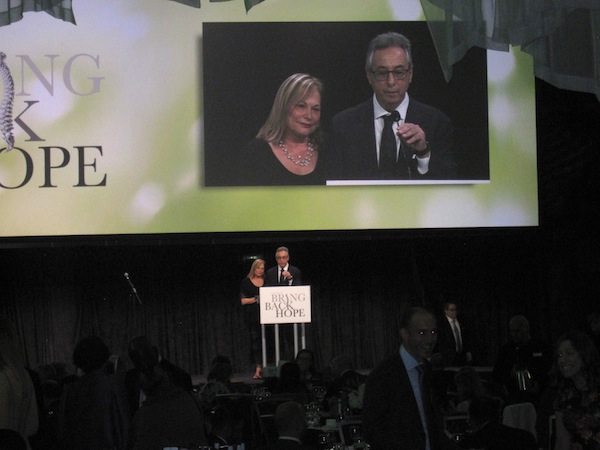
Right to left: Peter Legge interviews Dr. Rick Hodes and Dr. Oheneba Boachie-Adjei. Three of Hodes’ adopted children joined them onstage. (photo by Cynthia Ramsay)

An Evening to Bring Back Hope on June 8 raised almost $2 million for the work of Dr. Rick Hodes, medical director of Ethiopia for the American Jewish Joint Distribution Committee (JDC) and senior consultant at Mother Teresa Mission; spine surgeon Dr. Oheneba Boachie-Adjei, president and founder of FOCOS (Foundation of Orthopedics and Complex Spine) in Ghana; and the University of British Columbia Branch for International Surgical Care.

photo - Bring Back Hope co-chairs Nanci and Gary Segal
Bring Back Hope co-chairs Nanci and Gary Segal. (photo by Cynthia Ramsay)

The evening at Vancouver Convention Centre-East began with remarks from representatives of the three main religious communities in attendance: Jewish, Christian and Muslim. A two-minute video that was introduced by Justin Segal – son of gala co-chairs Gary and Nanci Segal – and Tesfaye Anagaw – who has become a part of the Segal family – showed the many things that had been accomplished with the funds raised at the previous Evening to Bring Back Hope, which took place in 2012.

There were greetings from senior representatives of JDC, Jewish Federation of Greater Vancouver and the UBC Branch, as well as an onstage interview by Peter Legge of Hodes and Boachie-Adjei, with many stories about the courage of their patients.

Gary Segal spoke about how he was inspired to help by Anagaw, Hodes and Boachie-Adjei. He met first met Hodes as part of a 2007 Federation/JDC trip to Ethiopia, where he learned that Anagaw’s spine had collapsed from tuberculosis and could not be operated on in Ghana. With the help of the Segals and others, the young man, then 18, arrived here in mid-2009 and received the life-saving surgery he needed at Vancouver General Hospital.

photo - Rick Hansen, left, and Tesfaye Anagaw
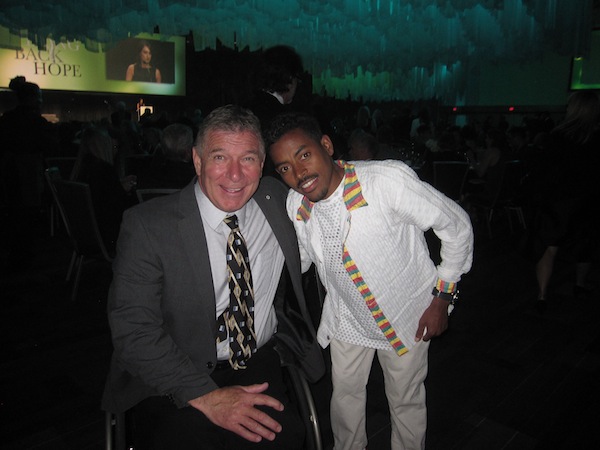
Rick Hansen, left, and Tesfaye Anagaw. (photo by Cynthia Ramsay)

The story of Mesfin Yanna, one of Hodes’ heart patients, was told through a video and the reading of an essay he wrote for his high school graduation in Atlanta – these were followed by his appearance onstage, holding his 5-year-old son. “This is a man who would have died twice were it not for Rick but has gone onto a productive life and one of giving back,” said Segal after the event.

Looking back, he said the event achieved his main goals: raising a large sum of money to support Hodes’ work and save as many lives as possible, to “inspire everyone in the room and, for at least that one night, bring a ray of light into an often-dark world filled with unfathomable violence and infuse people with a message of hope for our common humanity.”

Both Hodes (with three of his adopted sons) and Anagaw came to Vancouver from Ethiopia for the event, and stayed for a visit.

Format ImagePosted on June 30, 2017June 29, 2017Author Bring Back HopeCategories LocalTags Bring Back Hope, Ethiopia, FOCOS, Gary Segal, Jewish Federation, Joint Distribution Committee, Oheneba Boachie-Adjei, Rick Hodes
Community birthdays, awards

Community birthdays, awards

Team BC Junior Olympic level 10 (16+) were bronze medalists in the 2017 Canadian Championships in Artistic Gymnastics that took place in Montreal May 25-28. Congratulations to the whole Gymnastics BC team, which included 18-year-old Rachel Rubin-Sarganis (third from the left). (photo from Gymnastics BC)

***

photo - Sylvia Hill
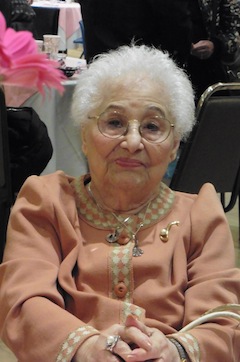
Sylvia Hill (photo from Jewish Seniors Alliance)

In the Pirkei Avot (Ethics of Our Fathers), we learn the saying, “Teach us to number our days so that the experiences of life should provide us with wisdom that only years can bring.” How fortunate we are that we have this exceptional woman, Sylvia Hill, admired by all who know her.

Sylvia has been part of the Jewish Seniors Alliance of Greater Vancouver since its inception and is an honourary life member. On June 6, Sylvia turned 103 years old. We honour her as she continues to inspire us with her staunch resolve to advocate for better lives for seniors – be it in the home where she was once president of the residents or within the community at large.

In the newsletter put out by the Snider Campus, Sylvia was called “the Face of Louis Brier” and was honoured during morning services on June 10, with a special kiddush following. On the day, we of JSA proudly wished you, dear Sylvia, a yom huledet sameach, a happy birthday, and we wish you continued good health for many years to come … beez (until) 120, and thriving, as has been the theme of JSA’s Empowerment Series this season. Continue being a beacon of light for us to follow!

With love and deep respect.

* * *

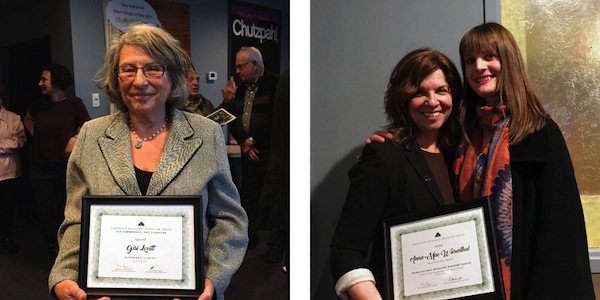
At the annual general meeting of the Vancouver Holocaust Centre Society for Education and Remembrance on June 14, Gisi Levitt received a Life Fellow Award for her 12 years of service as VHEC’s director of survivor services.

The Meyer and Gita Kron and Ruth Kron Sigal Award for Excellence in Holocaust Education was awarded to Anna-Mae Wiesenthal, who teaches Jewish history and English at King David High School. She recently worked together with VHEC on the Student Docent Training Initiative, a successful pilot project in which volunteer students from KDHS were trained to become docents. Two of the student docents, Milena Markovich and Jacqueline Belzberg, did an outstanding job of sharing with the audience their experiences of guiding their fellow students through the VHEC exhibition In Defiance: Jewish Resistance During the Holocaust.

photos - Gisi Levitt, and Anna-Mae Wiesenthal, left, and VHEC education director Ilona Shulman Spaar
Gisi Levitt, and Anna-Mae Wiesenthal, left, and VHEC education director Ilona Shulman Spaar. (photos from VHEC)

* * *

On June 20, Women in Film & Television Vancouver celebrated leaders for their outstanding work and contribution to advancing opportunities for women with their annual Spotlight Awards. This year’s recipients included Mark Leiren-Young, who received the Iris Award.

The Iris Award is given to a person who has demonstrated a commitment to the promotion of female creators and their screen-based works, either through curating or programming or through print and online media sources. Named after the Greek mythological figure Iris, associated with communication, messages and new endeavours.

Leiren-Young was also one of the finalists for the 2017 BC Book Prizes’ Hubert Evans Non-Fiction Prize for The Killer Whale Who Changed the World (Greystone Books).

Killer whales had always been seen as bloodthirsty sea monsters. That all changed when a young killer whale was captured off the west coast of North America and displayed to the public in 1964. Moby Doll – as the whale became known – was an instant celebrity, drawing 20,000 visitors on the one and only day he was exhibited. He died within a few months, but his famous gentleness sparked a worldwide crusade that transformed how people understood and appreciated orcas. Because of Moby Doll, we stopped fearing “killers” and grew to love and respect “orcas.”

Leiren-Young is a journalist, filmmaker and author. His Walrus article about Moby Doll was a finalist for the National Magazine Award and he won the Jack Webster Award for his CBC Ideas radio documentary Moby Doll: The Whale that Changed the World.

* * *

It was a banner year for the Leo Awards, which received a record 1,295 entries, from 301 unique programs in 14 different categories. Among the finalists was David Kaye – for best lead performance by a male in a motion picture for his work in Cadence and as part of the cast of Grocery Store Action Movie, which was nominated in the category of best music, comedy or variety program or series.

Format ImagePosted on June 30, 2017June 29, 2017Author Community members/organizationsCategories LocalTags Anna-Mae Wiesenthal, David Kaye, Gisi Levitt, gymnastics, Holocaust Centre, Jewish Seniors Alliance, KDHS, Leo Awards, Mark Leiren-Young, Rachel Rubin-Sarganis, Sylvia Hill, VHEC, women
Mystery photo … June 30/17

Mystery photo … June 30/17

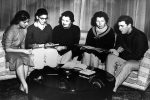
Beth Israel group reading, 1965. (photo from JWB fonds, JMABC L.09870)

If you know someone in this photo, please help the JI fill the gaps of its predecessor’s (the Jewish Western Bulletin’s) collection at the Jewish Museum and Archives of B.C. by contacting [email protected] or 604-257-5199. To find out who has been identified in the photos, visit jewishmuseum.ca/blog.

Format ImagePosted on June 30, 2017June 29, 2017Author JI and JMABCCategories Mystery PhotoTags Beth Israel, history, JMABC, museum
הערים היקרות בעולם

הערים היקרות בעולם

המדד מצביע השנה באופן מפתיע על העיר לואנדה (בירת אנגולה) כעיר היקרה בעולם. (צילום: oneVillage Initiative)

חברת הייעוץ הבינלאומית מרסר פרסמת כמדי שנה את מדד יוקר המחייה של הערים היקרות בעולם. המדד מצביע השנה באופן מפתיע על העיר לואנדה (בירת אנגולה) כעיר היקרה בעולם. העיר הזולה ביותר היא תוניס (תוניסיה) שממוקמת במקום ה-209. לקנדה יש חמש ערים ברשימה: ונקובר במקום ה-107, טורונטו 119, מונטריאול 129, קלגרי 143 ואוטווה 152. ישראל מיוצגת על ידי תל אביב במקום ה-17.

תשע הערים המשלימות את העשירייה הראשונה הן: הונג קונג (הונג קונג), טוקיו (יפן), ציריך (שווייץ), סינגפור (סינגפור), סיאול (דרום קוריאה), ז’נווה (שווייץ), שנחאי (סין), ניו יורק (ארה”ב) וברן (שווייץ). שווייץ מתברר יש ייצוג של שלוש ערים בעשירייה הראשונה.

הסקר שכולל 209 ערים בולטות בעולם מתבסס על השוואת מחירים של למעלה מ-200 תחומים שונים בהם: דיור לרכישה והשכרה, מזון ושתייה, תחבורה ודלק, ביגוד והלבשה, בידור ותרבות. המידע נועד לעזור לחברות בינלאומיות שמעוניינות לנייד עובדים בין מדינות. לפי המדד החדש הערים האירופיות ממשיכות לרדת בדרוג העולמי ולעומתן הערים האסיתיות עולות מעלה.

העשירייה השנייה כוללת את: בייג’ין (סין), טיינג’ין (סין), שנג’ן (סין), מוסקבה (רוסיה), ויקטוריה (סיישל), נג’מנה (צ’אד), תל אביב (ישראל), קינשסה (הרפוליקה הדמוקרטית של קונגו), גואנגג’ואו (סין) ודובאי (איחוד האמירויות הערביות).

העשירייה השלישית כוללת את: אוסקה (יפן), סן פרנסיסקו (ארה”ב), אבו דאבי (איחוד האמירויות הערביות), לוס אנג’לס (ארה”ב), סידני (אוסטרליה), טאיפיי (טאיוואן), סאו פאולו (ברזיל), קופנהגן (דנמרק), לאגוס (ניגריה) ולונדון (בריטניה המאוחדת).

העשירייה הרביעית כוללת את: ברזוויל (קונגו), שיקגו (ארה”ב), נאנג’ינג (סין), ליברוויל (גבון), נגויה (יפן), סנט פטרסבורג (רוסיה), הונולולו (ארה”ב), דאקה (בנגלדש), וושינגטון (ארה”ב) ובואנוס איירס (ארגנטינה).

העשירייה החמישית כוללת את: מיאמי (ארה”ב), שן-יאנג (סין), נומאה (קלדוניה החדשה), אביג’אן (חוף השנהב), צ’ינגדאו (סין), מלבורן (אוסטרליה), צ’נגדו (סין), אוסלו (נורווגיה), ג’יבוטי (ג’יבוטי) ופרת’ (אוסטרליה).

העשירייה השישית כוללת את: בוסטון (ארה”ב), ריאד (ערב הסעודית), בירות (לבנון), אקרה (גאנה), מנאמה (בחריין), ריאו דה ז’ניירו (ברזיל), מומבאי (הודו), אשגבאט (טורקמינסטן), עמאן (ירדן) ואבוג’ה (ניגריה).

העשירייה השביעית כוללת את: אוקלנד (ניו זינלד), דאלס (ארה”ב), פריס (צרפת), ווייט פליינס (ארה”ב), מונטווידאו (אורגוואי), דבלין (אירלנד), סנטיאגו דה צ’ילה (צ’ילה), יאנגון (מיאנמר), בנגקוק (תאילנד) ויאונדה (קמרון).

העשירייה השמינית כוללת את: קנברה (אוסטרליה), מילאנו (איטליה), בריזביין (אוסטרליה), יוסטון (ארה”ב), פורט אוף ספיין (טרינידד וטובגו), סיאטל (ארה”ב), אדלייד (אוסטרליה), וינה (אוסטריה), סאן חואן (פוארטו ריקו) ורומא (איטליה).

העשירייה התשיעית כוללת את: דוחה (קטר), מוריסטאון (ארה”ב), אטלנטה (ארה”ב), בנגי (הרפובליקה של מרכז אפריקה), אמסטרדם (הולנד), ולינגטון (ניו זילנד), מינאפוליס (ארה”ב), פנמה סיטי (פנמה), ג’קרטה (אינדוניזיה) והלסינקי (פינלנד).

העשירייה ה-10 כוללת את: קונאקרי (גינאה), מסקט (עומאן), דקר (סנגל), יאונדה (קמרון), דטרויט (ארה”ב), מנילה (הפיליפינים), הו צ’י מין סיטי (וייטנאם), מינכן (גרמניה), ניו דלהי (הודו) וקליבלנד (ארה”ב).

העשירייה ה-11 כוללת את: סנט לואיס (ארה”ב), האנוי (וייטנאם), באנדר סרי בגוואן (ברוניי), בריסל (בלגיה), לימה (פרו), שטוקהולם (שבדיה), ונקובר (קנדה), לוקסמבורג (לוקסמבורג), פיטרסבורג (ארה”ב) וסן חוסה (קוסטה ריקה).

העשירייה ה-12 כוללת את: גואטמלה סיטי (גואטמלה), נירובי (קניה), כווית סיטי (כווית), מדריד (ספרד), פנום פן (קמבודיה), פורטלנד (ארה”ב), פרנקפורט (גרמניה), ג’דה (ערב הסעודית), טורונטו (קנדה) וברלין (גרמניה).

והעשירייה ה-13 כוללת את: ברצלונה (ספרד), דיסלדורף (גרמניה), טשקנט (אוזבקיסטן), קיטו (אקוודור), המבורג (גרמניה), ברזיליה (ברזיל), ריגה (לטביה), במקו (מאלי), מונטריאול (קנדה) ופואנט-א-פיטר (גוודאלופ).

Format ImagePosted on June 28, 2017Author Roni RachmaniCategories עניין בחדשותTags cost of living, Luanda, Mercer, Tel Aviv, Vancouver, וונקובר, יוקר המחייה, לואנדה, מרסר, תל אביב
Kimmel plays Shylock

Kimmel plays Shylock

Bard on the Beach’s The Merchant of Venice is set in modern times, where the character of Shylock, played by Warren Kimmel, is a high-powered businessman. (photo by David Cooper)

Among the Shakespearean works being presented by Bard on the Beach this season is The Merchant of Venice, which is being complemented with a short run of local playwright and Jewish community member Mark Leiren-Young’s one-man show Shylock. Fellow Jewish community member Warren Kimmel has taken on the daunting task of playing Shylock in both the main production and its eponymous companion piece.

There is continuing controversy over whether or not theatrical companies should produce Merchant. There are those who say the play should be relegated to the dustbin of history while others champion it as an opportunity for meaningful dialogue about outsiders and otherness.

In Merchant, Bassanio, an eligible Venetian bachelor, wishes to “wed wealthily” and woo the beautiful heiress Portia. To do so, he needs money. Enter his friend, Antonio, a successful merchant of Venice, who can guarantee a loan. Jewish moneylender Shylock is approached. Shylock, who has been ridiculed and despised by the citizens of Venice, especially Antonio, sees an opportunity for revenge and agrees to make the loan in return for Antonio’s bond, which, if forfeit, would give Shylock a “pound of Antonio’s flesh.”

Meanwhile, Portia’s father has devised a test for eligible suitors to win his daughter’s hand. The antics of the three suitors vying for the prize provide some comic relief for the tragedy that follows. Bassanio wins his lady but learns that Antonio’s ships have all been wrecked at sea and that the merchant cannot pay back the loan. Shylock is insisting upon his “pound of flesh” so Bassanio makes haste back to Venice.

This leads to a powerful courtroom scene where Portia, disguised as a young lawyer, makes an emotional plea in her “quality of mercy” speech. However, Shylock insists upon his legal rights and wins the suit. Just as he is about to take his “prize,” Portia points out to him that he is restricted to exactly one pound of flesh and not one drop of Christian blood is to be shed, or else Shylock will forfeit his own life. Shylock agrees to walk away but is nonetheless systematically stripped of all his possessions and forced to convert to Christianity.

“I was very flattered when Christopher Gaze, the artistic director, asked me to play Shylock in both plays,” Kimmel told the Independent. “This will be my Bard debut and the first time that I have played a really serious dramatic role in Canada, as my background has mostly been in musicals.”

Kimmel, born in South Africa, was trained in classical theatre at the Royal Academy of Dramatic Art in London, England. He compared Shakespeare’s iambic pentameter verses to the rhythm in songs, so there is no problem there, but he has been grappling with how to present this iconic character to audiences.

“The problem I have with the play is the portrayal of Shylock,” he said. “It is very complicated because it is antisemitic. But, at the same time, it is not just black and white. Shylock is not a nice guy, he is a piece of work – but a complicated one. On one side, he is an aggressive businessman but, on the other, he lost his wife, had a hell of a life and loves his daughter more than anything, perhaps too much … to the point that she wants to escape and does so by taking his money and running off with a gentile. So, I have an inner conflict to resolve to get into the character so that it makes sense to me.”

“That really is the central question, isn’t it – is this play sympathetic or not? This is the first time a Jew on stage has been portrayed as anything close to human and we can say Shakespeare is amazing for doing this. Or, let’s be honest, it is an antisemitic piece and the guy is basically cast as the villain for whom you have absolutely no sympathy.”

Some productions portray Shylock in a sympathetic light, while others paint him as the quintessential villain. “That really is the central question, isn’t it – is this play sympathetic or not? This is the first time a Jew on stage has been portrayed as anything close to human and we can say Shakespeare is amazing for doing this. Or, let’s be honest, it is an antisemitic piece and the guy is basically cast as the villain for whom you have absolutely no sympathy.”

This is the fourth time Bard will have produced Merchant and Kimmel is the third Jewish actor to take on the role. “You don’t have to be Jewish to play Shylock, just like you don’t have to be black to play Othello. However, I do believe there is a cultural sensitivity that a Jewish actor brings to the role,” said Kimmel.

Many with even only a passing knowledge of literature know who Shylock is, and the iconic “Hath not a Jew eyes” soliloquy is as well known as Hamlet’s “To be or not to be.”

“Funnily enough,” said Kimmel, “doing that soliloquy is not what worries me about the piece…. You can do it as a plea for justice or you can do it with more of an aggressive tone,” he said, paraphrasing the speech’s main point, “But what about us? We are the same as you, so we don’t need to take this from you anymore.”

“I have decided that I am not going to play it as a victim,” said Kimmel.

As to the courtroom scene where Shylock demands his “pound of flesh,” he said, “I think I have to play him there as a vengeful kind of guy, I just don’t see any other way to do it. Some productions try to show the struggle between the good soul and the bad soul, but I see him as unrelenting in his quest for the forfeit, even though he has been offered up to three times the original amount of the loan and even though he is aware that what he is doing is wrong, fully aware, but he can’t stop himself.

“That is what happens with big emotions like revenge – one gets tunnel vision. I sing a piece of the [Maurice] Ravel Kaddish, which is very ornate, just before the courtroom scene. The point of that is to show Shylock’s mindset, ‘Look, my wife is dead, my daughter is dead [to me], I have nothing left to live for, I am going to take this man’s pound of flesh.’ I think that I would like to play the character as sinister but understandable – that this is a steely, powerful guy who is saying, just because people are prejudiced against you, does not mean you have to be a victim.”

Bard on the Beach’s Merchant is being set in modern-day Venice.

“It is a pretend world, it has to be,” said Kimmel. “It is a corporate banking world of suits that centres around a group of high-powered businessmen. Shylock is one of them. He is savvy and a very powerful guy by virtue of the fact that he has a lot of money. There is a tension there in the play itself as, despite his money, he is treated as a second-class citizen. We are not playing up the religious aspect in terms of costuming so that the only outwardly visible sign of his Judaism will be the yarmulke that I will be wearing – he is a modern Jew.”

On the issue of whether or not the play is too offensive for contemporary sensitivities, Kimmel is thoughtful.

“I don’t think you should look at it with post-Holocaust eyes,” he said. “The fact that this version is set in modern times makes it even more difficult to digest. In the actual period, 1500, Jews were essentially reviled wherever they lived, and Shakespeare was just reflecting the animus of the time.”

Despite the antisemitism, Kimmel feels that the play is one of the great works of literature and that it is important to see it.

“I feel that, as actors, if we are not doing something that is offending someone, why are we doing it? We are supposed to provoke dialogue and conversation.”

Noting that “there is way too much political correctness in the world right now,” he said, “I feel that, as actors, if we are not doing something that is offending someone, why are we doing it? We are supposed to provoke dialogue and conversation. For example, when people are spitting on Shylock and calling him a dirty Jew, that has to be part of the story so you get what is going on. You can’t ask, does it offend you because people are spitting on you? That’s the story and that is part of why he goes and tries to cut someone’s heart out. You have to be driven to that, so what would drive you to do that? Once you get the back story, then you see the context of his actions.”

Kimmel believes audiences will get something different out of this version of the play than from the three previous productions. One of the reasons for this belief, he said, is that the director, Nigel Shawn Williams, is playing on the theme that we are all outsiders at one point or another. Kimmel wants people to leave the theatre challenged to sort out their feelings about what they have just seen.

Shylock will run for one week in September. In this work, the actor who plays Shylock comes out after the final performance of Merchant – the play has been shut down due to public pressure and, as part of a talk-back, the actor defends his participation in it as a Jew and explains why it is important to stage Shakespeare’s play.

“I am more excited about that piece because, with it, I know exactly where I am at and I get the arguments from both sides,” said Kimmel. “It was written specifically for Bard and Vancouver to run alongside its 1996 Merchant production with local community member David Berner playing the Jewish actor.”

Kimmel said, “The play seems to say that you can’t censor something just because it offends you. Why can’t you have a Jewish villain? Why don’t we just stop doing anyone who is in any way compromised?”

Audiences will be exposed to a range of perspectives on history, censorship, identity and the meaning of art in this intensive 90-minute offering, which is being directed by first-time Bard director Sherry Yoon, who will be fleshing (pun intended) out the play with projections and sound effects.

“Shylock is a character that has endured for over 400 years. He is the best-known Jewish character in literature. There are people the world over who know what a shylock is. That is because he is so fascinating. Jews are fascinating people.”

“This is the first great Shakespearean character,” said Kimmel of Merchant’s Shylock. “After this comes Othello, Hamlet and Lear. It is really the first time Shakespeare goes from silly comedies with twins with mistaken identities to serious roles that fascinate humanity through time. Shylock is a character that has endured for over 400 years. He is the best-known Jewish character in literature. There are people the world over who know what a shylock is. That is because he is so fascinating. Jews are fascinating people.”

The play had been used to incite hatred against Jews – the Nazis in particular promoted it because it fit in with their worldview.

“That is exactly why it is important for everyone to see Merchant for themselves,” said Kimmel, “so you don’t get the story secondhand – you should be exposed to it, not told about it.”

Bard on the Beach runs until Sept. 24. Its other productions this season are Much Ado About Nothing, Winter’s Tale and Two Gentleman of Verona. For the full schedule and tickets, visit bardonthebeach.org.

Tova Kornfeld is a Vancouver freelance writer and lawyer.

Format ImagePosted on June 23, 2017June 21, 2017Author Tova KornfeldCategories Performing ArtsTags antisemitism, Bard on the Beach, Shakespeare, theatre, Warren Kimmel
Weinberg art floors Delbrook

Weinberg art floors Delbrook

Artist Mia Weinberg works on “Close to Nature’s Heart” at Delbrook Community Centre, which will see its official opening June 24. (photo © Mia Weinberg)

In spring 2014, an open call was circulated inviting artists to submit proposals for artworks to be included in the new Delbrook Community Centre in North Vancouver. In response, 64 artists from across Canada and the United States submitted expressions of interest. Among the few chosen was Mia Weinberg’s “Close to Nature’s Heart.” The official opening takes place at the community centre June 24, but visitors can see it at the centre anytime.

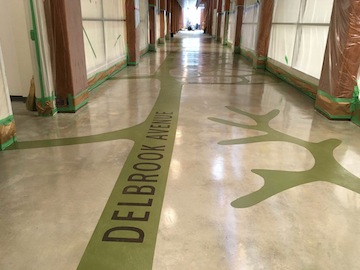
Weinberg’s “Close to Nature’s Heart” transforms the floor surface of the centre’s main lobby level and adjoining exterior plaza into a giant canvas. A unique cement skimming process was used to embed the image of a magnified leaf skeleton, complete with stem and veins, across the polished cement floors. The artwork invites visitors to “come in and play,” as many of the leaf veins display the names of local streets. For newcomers to the facility, the street names provide a visual prompt to navigate through the space.

photo - The artwork invites visitors to “come in and play,” as many of the leaf veins display the names of local streets
The artwork invites visitors to “come in and play,” as many of the leaf veins display the names of local streets. (photo © Mia Weinberg)

As an artist specializing in site-specific public art projects, Weinberg is driven by the belief that art has the potential to make us more present and engaged in our world. Born in London, England, she moved to Vancouver in 1987 and graduated from Emily Carr University in 1994. Since that time, her work has been exhibited across Canada and internationally. Her art practice explores the interplay between the natural environment and the places where we live, our personal memories and our collective civic and cultural stories.

“In my public art projects,” writes Weinberg in her artist’s statement, “I often juxtapose imagery of local plants and maps of the surrounding area to celebrate connections between them, and to uniquely ground each piece in the place where it will be installed.”

About “Close to Nature’s Heart,” she explains, “The big leaf on the floor is a fanciful approximation of reality, not a realistic street map – a visual invitation to engage the imagination. Children, their parents and visitors of all ages will see the individual components of their neighbourhood – the streets where they live – reimagined as vitally connected to each other and part of a living, thriving organism that draws its strength from each individual part and in turn nourishes the whole. It is my hope that the artwork will spark an ongoing sense of play among kids as they seek out their own streets and their friends’ streets. On a more practical level, the veins will provide visitors with a subtle and beautiful visual wayfinding that will guide them into and out of the building and to the reception desk from the elevators.”

For more about Weinberg’s public artwork, visit miaweinberg.com/engraving. For information on the other two works selected by Delbrook Community Centre, visit nvrc.ca.

Format ImagePosted on June 23, 2017June 21, 2017Author Delbrook Community Centre & Mia WeinbergCategories Visual ArtsTags Delbrook, Mia Weinberg, North Vancouver, public art

Canada, Israel, Jews

When Canada belatedly opened its door to Jewish refugees – to some of the surviving remnant after the Holocaust – it did so not out of an abundance of humanitarianism but because of economic necessity, the need for skilled and unskilled workers in a booming economy.

Regardless of the motivation, that influx of refugees redefined Jewish identity in Canada. The increased Jewish population and the institutions they spawned essentially built the community we know today.

As former Vancouverite Adara Goldberg described in her book Holocaust Survivors in Canada: Exclusion, Inclusion, Transformation, 1947–1955, the institutions that we now see as the organized Jewish community were created for and by the refugees and immigrants who came after the war. By contrast, those who came to the United States after the war were greeted by and largely assimilated into a strong Jewish community already in progress.

This has had several corollaries. The worldview of Canadian Jewish institutions – and, though not easily verifiable, probably a majority of Jewish Canadians individually – is imbued with the understandable anxieties imprinted on those who witnessed the rise of fascism and lived through it.

On the flip side, the Canadian Jewish community as we know it can be said to have been born almost contemporaneously with the state of Israel. Again, while Zionism is entwined with the American Jewish community, that community had many other preexisting cultural and political dimensions. In Canada, the rebirth and survival of the Jewish state occurred at the most impressionable period in the community’s history. As well, the idea of Jewish self-determination as the surest path to individual and collective security resonated powerfully with a community disproportionately made up of survivors of the Shoah. Moreover, Canada’s approach to multiculturalism, especially after 1967, differed from the American “melting pot” and suspicion of “dual loyalties.”

So, the nature of Diaspora-Israel relations is different for Canadians versus Americans. Yet, some of the challenges are the same.

A new essay by David Hazony, editor of the American Jewish magazine The Tower, takes a new tack on the topic of American Jewry’s existential challenges. The Jewish population is not only declining, he notes, but changing. The only demographic that is flourishing is the Orthodox, which is not necessarily reflective of what would have been recognized as “American Jewry” in the 1950s and ’60s. The two most-recognized paths to avoid assimilation, he says, are currently orthodoxy and aliyah – but he suggests a third way.

Hazony posits that the answer to challenges facing American Jews right now is a little more Israel. The essay reviews concerns that American (read: Diaspora) Jews and Israelis are talking across a widening divide. Hazony’s suggestion is that Americans, who have for generations viewed Israel as a political cause, begin to integrate Israeliness as a cultural characteristic and embrace it as the future of their Diaspora identity. For instance, he says, Diaspora Jews immersing ourselves in Israeli cinema, even with subtitles, will give us a remedial entry point into the culture.

Language – not an easy thing to learn, particularly for notoriously unilingual Americans, Hazony acknowledges – is another important entry point.

“Without Hebrew,” he writes, “any approach to Israeliness will be like walking into an enormous library in a foreign language but relegated to the tiny English-language section.”

He suggests a network of Hebrew language and culture centres modeled on the French example. How many times have you driven by the Alliance Française building south of Oakridge?

Finally, travel. Just 27% of Americans have visited Israel more than once, he notes. To understand a place, you have to go there.

The essay is fascinating and offers ideas that could both strengthen Diaspora communities and narrow the gap between us and our Israeli cousins.

As Canada Day festivities unfurl in the coming days, we will see the familiar dictum “The world needs more Canada.” In some ways, we can proudly say, the world would indeed be a more peaceful, cooperative and respectful place if Canadian models were emulated elsewhere. Like any country, we have our flaws, our oppressive history and current inequalities. But, as countries go, we’re pretty good.

Hazony is taking a similar tack, arguing that Diaspora Jews need a little more Israeliness.

In Vancouver, we are very fortunate that our Jewish community centre has, for longer than we can remember, recognized the vital importance of connections with Israel. A plethora of other Israel-related organizations keep these bonds strong.

While pondering what is great about Canada in the coming week, we might also reflect on the value of integrating more Israeli culture into our lives. It can enrich us individually and enhance Canadian multiculturalism, too.

Posted on June 23, 2017June 21, 2017Author The Editorial BoardCategories From the JITags Canada, David Hazony, Diaspora, Israel, multiculturalism

Good relationships matter

My parents, married 52 years, have a long-standing joke. Sometimes, they would go out and everything would be a disaster. We’d be in the neighbourhood pizza joint and someone would throw up. Or, one kid would spill something sticky all over somebody else. There would be a fly in the soup. We’d have a fight. The car would break down. We’d have an encounter with a terribly nasty person. Then, my mom would turn to my dad, poke him, and say, “Listen, Seiff, if this were a first date, I’d never go out with you again!”

Sometimes we’d all laugh but, often, we’d turn away with a wry smile, because that was all we could manage. Later, we knew it would be funny, because we didn’t base everything on that one outing … but sometimes people do! How often does one bad (Jewish) encounter ruin a first date, a first visit to a new synagogue, a networking opportunity? How can we salvage these awful experiences?

In the Torah portion B’midbar (Numbers 1:1-4:20), which we read last month, there’s a lot of census-taking and numbers. This isn’t counting every person, but those who can fight when assembling a military. There’s order in this parashah, so we understand that a strong army, or even a strong society, needs to be well-organized and administered. We need leaders, as mentioned in Numbers 1:16. Rashi points out that the elected ones, the chieftains of their tribes – “These were those called of the congregation; those who were called upon for every matter of importance that happened in the congregation.” We read edah as a tribe, but it can also mean a social or ethnic group (Yemenite Israelis, for instance) or a congregation.

Numbers matter, and good administration matters – but it isn’t all that matters. When Dr. Ron Wolfson came to visit Winnipeg in April as the Shaarey Zedek Synagogue scholar-in-residence, he asked a group of lay leaders and Jewish professionals, “How many Jewish people live here?” Immediately, there was an undercurrent of talk. Indeed, how many of us are in Winnipeg? My next thought was – does it matter?

In the same Torah portion of B’midmar, Nadav and Abihu are mentioned, in Numbers 3:4. However, because they offered “alien fire” (an unacceptable sacrifice) in the Sinai, they were struck down. Others were counted in their place. Nadav and Abihu made one bad mistake. They had one bad encounter (one bad date?) with the Almighty. That’s all it took for them to be killed and knocked out of Judaism forever.

It takes many positive encounters to reinforce a relationship. So, a Jewish person needs repeated positive experiences in a Jewish community to keep coming back. Some shake off a bad experience or two with a smile, joke or laugh. However, it depends on the person, and what happened. It can take “one bad date” to be turned off forever.

Wolfson described how small things make a huge difference in how we relate to one another. Greeting someone with a smile, offering them a warm participatory musical experience, some honey cake or a hug can make all the difference. These things aren’t expensive. They aren’t hard to do – but for some reason, many congregations still resist any change at all, even if it’s an entirely positive community-building shift that costs little or nothing to implement.

A joke followed. What does it say above the ark, the aron hakodesh, at your congregation? At Shaarey Zedek, it says, “Know before whom you stand.” Wolfson said that all shuls probably should have a different tag line – “But we’ve always done it this way.”

If you are entirely satisfied with how things go in your Jewish community, by all means, don’t change a thing. Keep doing what you’re doing. However, if you’re not satisfied? If your children don’t want to join, or the membership is declining, or people aren’t volunteering or contributing to your organization in the way you’d like, you need to stop and ask if the way you’re doing things is really working. Is your approach still relevant? Is it inclusive? Does it create positive encounters that matter?

B’midbar teaches us that numbers and administration matter – but only if you have committed members or people to count. Negative experiences can strike us down (like Nadav and Abihu) or just be a bump in the road, if you have a healthy long-term relationship. I was struck, at the end of a whole weekend of this Jewish learning and enrichment, by how energized some participants were with many good ideas for the future.

At the same time, I encountered those who said, “Thank you, but …” and wanted to say how they disagreed, what was wrong and what wouldn’t work here. Have you ever found that kvetching – without offering solutions – makes positive change?

Ever read the children’s book Stone Soup? A motivated, positive community can feed many people with a stone, some old vegetables, and maybe a stewing hen. Throw in some donations of flour and yeast and you have bread. It’s not expensive. It’s not hard to do. Yet, one must consistently ignore the naysayers while doing it. Are we willing to step up and make suggestions for building good, long-term Jewish community relationships?

Good. Bring your old carrots and dried up root veggies. Our skills and Jewish congregations can make something delicious together. Inexpensive solutions, kindness, smiles and constructive suggestions welcome. Let’s build our numbers by welcoming folks to the table with what we’ve got. Even a humble soup tastes better, or a song sounds richer, when we make it and sing it ourselves.

Joanne Seiff, a regular columnist for Winnipeg’s Jewish Post and News, is the author of a new book, From the Outside In: Jewish Post Columns 2015-2016. This collection of essays is available for digital download, or as a paperback from Amazon. See more about her on joanneseiff.blogspot.com.

Posted on June 23, 2017June 21, 2017Author Joanne SeiffCategories Op-EdTags community, relationships
Roots cultivates peace

Roots cultivates peace

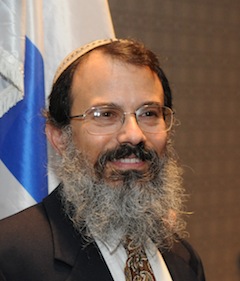
Left to right: Ali Abu Awwad, Shaul Judelman and Rabbi Hanan Schlesinger. (photo by hiddensparksphotography.com)

By bringing together Jewish settlers and Palestinian refugees, Roots is trying to help achieve peace.

Rabbi Hanan Schlesinger is one of the leaders of this group, which was established in 2014 by Ali Abu Awwad and Shaul Judelman. In being involved, Schlesinger said he is following in the steps of Rabbi Menachem Froman, who, “for most of his career, for three or four decades, advocated getting Palestinians who we live among to come to a point of dialogue, reconciliation and understanding.

“Froman’s students started a movement called Eretz Shalom, Land of Peace,” explained Schlesinger. “This organization did some activities to bring together Palestinians and Israelis, but really never made it off the ground. When he died, in 2013 … the students who were following in his footsteps, in terms of dialogue connections between Palestinians and Israelis, felt that they had better do something to continue his legacy…. Otherwise, it’s going to be gone.

“Those students, with his widow, in the last week of January 2014, had a little event together with some Palestinians they’d met, which brought together about 15 people from each of the sides. And, 95% of the people there were Israelis and Palestinians who’d met the other side during their lifetime, [were] involved a little bit in reconciliation. The one person there who had never been before was me.”

Schlesinger was deeply affected by the event. He had lived in Gush Etzion for 30 years, and had never met a Palestinian. And, upon meeting some of them, he realized how distorted his idea was of Palestinians.

“I went into a spiritual introspection of revisiting who I was and what I was doing on this land,” Schlesinger told the Independent. “And I forced myself to begin a journey that was leading me to examine many of my core beliefs – realizing it wasn’t just me and my people, that there was another people here who also belong here.

“Without really meaning to, I found myself creating a movement that was embodying this need to open up eyes and hearts, and continue my spiritual process, as well as help others in the spiritual process … that we, the Jews, are not the only ones in this land … that there are other people here and we need to take into account their existence, their humanity, their needs, their suffering.”

Schlesinger met with Palestinians who had been working toward a solution for more than a decade, but only with secular Israelis in Tel Aviv. Until Schlesinger made the connection, they had not sat down with Jewish settlers.

“They’d never met their own neighbours, who are religious Jews, who are deeply connected to the land in a religious, historical sense,” said Schlesinger.

As was the case with Schlesinger, these Palestinians began to undergo a transformation in their understanding. The Israelis with whom they had spoken before then had explained Zionism as of 1948, sometimes as far back as the 1880s. But the secular Israelis had never explained, because, Schlesinger said, they didn’t really know themselves, the ancient Jewish connection to the land – the land from the Jordan to the Mediterranean.

“These Palestinians were getting to know the foundations of Zionism and the Jewish history, culture and religion … just as I was getting to know the fact that there are Palestinians and that they have been living here for many, many years,” said Schlesinger. “Both sides were undergoing revelations.”

Seeing these positive results on a micro-level, with one another, they decided to create a foundation for macro-transformation.

photo - Rabbi Hanan Schlesinger
Rabbi Hanan Schlesinger (photo from Roots)

According to Schlesinger, the Oslo Accord did not go far enough. He explained, “It didn’t involve religious Jews or settlers who are deeply connected to the roots of the conflict, the land and history. It marginalized them and swept under the rug, ignoring the roots of the conflict. On the Palestinian side, it didn’t involve observant Muslims. It didn’t involve people deeply connected to the land and history – the people today that they call ‘Hamas.’”

With about a thousand people from each side stepping up and coming to events, Schlesinger understands this is only a drop in the bucket. But, he takes solace in the fact that this is only the beginning.

“Those who do hear of us on both sides, most are critical or skeptical … [seeing us as] ridiculous or traitorous … [because we believe] the other side is worthy to talk to … is human,” said Schlesinger. “It’s really hard going, an uphill struggle. I’ll even say that, especially for our Palestinian partners, it’s particularly challenging. They’re being confronted in their societies and are asking themselves how they can allow themselves to go against the accepted narrative.”

Roots has created different activities with a focus on the youth, keeping in mind the larger goal of transforming Israeli and Palestinian societies.

“For the Palestinians, in their society, ‘dialogue’ is a dirty word,” said Schlesinger. “Dialogue is just a way for the Israelis to buy time before they completely take over their land and destroy them…. Again, their narrative is that Israelis just want to talk and that nothing comes of it.

“When we organize our summer camp and photography workshop, we have to really make it clear to Israelis that the goal is not [only] to get to know the Palestinians. The goal is to get to know them, so that we will have a foundation to bring peace and justice.”

Roots is now working with high school students, where the youth meet three times a month and have joint activities, meals, field trips and conversations about identity, narrative and truth. “This is creating ongoing connections that are powerful,” said Schlesinger.

The group is working to develop political awareness on both sides. They are finding that this aspect is moving much faster on the Palestinian side, as their situation is more dire.

“For the Israelis living here, life is more or less normal,” said Schlesinger. “Every once in awhile, someone is attacked with a knife or a gun and someone may be killed or injured, and that’s a terrible tragedy. But, most people are not killed in terrorist attacks and most don’t have children with relatives killed. Most people have normal lives.

“On the Palestinian side, it’s different. They live under military occupation every single day and they are suffering: suffering from poverty, disenfranchisement and from having their dignity stripped of them.

“I say all that to explain that although on the Israeli side the status quo, is not so bad and most people are willing to live with it … on the Palestinian side, the status quo is insufferable. Our hope is nothing less than peace, justice and reconciliation.”

A documentary has been made about Roots. Called The Fields, it focuses on the founding leaders on both sides – Schlesinger and Judelman on the settlers’ side and Awwad and Khaled Abu Awwad on the Palestinian side. A trailer of it can be watched at friendsofroots.net.

Rebeca Kuropatwa is a Winnipeg freelance writer.

Format ImagePosted on June 23, 2017June 21, 2017Author Rebeca KuropatwaCategories IsraelTags Arab-Israeli conflict, Hanan Schlesinger, Israel, Oslo Accord, Palestinians, peace
Jews under the rule of Timur

Jews under the rule of Timur

A statue of Amir Timur. (photo by Deborah Rubin Fields)

The 14th century was not a great time for European Jewry, to say the least – there were various kinds of persecution, including forced conversions, expulsions and massacres, especially in Western Europe. Yet, the Jews of what is now Uzbekistan got through this period relatively unmolested.

Turko-Mongol military leader Timur (Iron), who ruled from 1370 to his death in 1405, is also known historically as Tamerlane, from the Persian Timur-i lang (Timur the Lame), and Amir Timur (or Temur).

Timur conquered central Asia and parts of India – today’s Iraq, Iran, Afghanistan, Pakistan, Azerbaijan, Georgia, Uzbekistan, Turkmenistan, Tajikistan, Kyrgyzstan, large chunks of Turkey and Syria, and the northwestern portion of India. While it is estimated that his armies killed 17 million people, about five percent of the global population at the time, it seems he left Jews alone.

“Over the years, the moral justification for [Timur’s] campaigns … had evolved into a formality,” writes Justin Marozzi in Tamerlane: Sword of Islam, Conqueror of the World. “If the objects of his attentions happened to be Muslim, as they almost invariably were, then they had become bad Muslims. If they were infidels, so much the better.” Yet Michael Shterenshis, in Tamerlane and the Jews, contends that Timur did not consider Jews as infidels, at least not infidels needing to be violently eliminated, perhaps because they had no political ambitions and all they sought was Timur’s protection.

It would seem that Timur’s Jews were of more service alive than dead – which is a good thing, as Timur once reportedly constructed 28 towers from 70,000 of his enemies’ skulls, each tower consisting of 2,500 heads. According to Shterenshis, the ruler primarily used his Jewish subjects as taxpayers and skilled artisans. Jewish weavers and dyers contributed greatly to his efforts to rebuild the region and to reinstitute the abandoned Silk Road, which connected Europe to Asia.

Yu Datkhaev’s The Bukharan Jews is mentioned in Alanna E. Cooper’s Bukharan Jews and the Dynamics of Global Judaism. According to Cooper, Datkhaev argues that the term “Bukharan Jews” came to be after Timur moved several hundred Jewish families from Bukhara to Samarkand to assist in overhauling Samarkand, his designated capitol. These Jews reportedly lived near Timur’s recently rehabilitated and stunning Registan.

Timur’s Jewish subjects appear to have been loyal followers. Indeed, while Jews are not mentioned in his court history, there is a preserved letter from Herat physicians who ask the permission of Shah Rukh (one of Timur’s sons) to treat Timur’s injured soldiers. Significantly, they are offering their services to the state army, notes Shterenshis.

photo - Timur depicted on Uzbekistan’s 500 som note
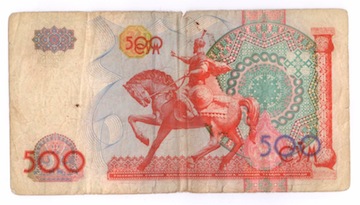
Timur depicted on Uzbekistan’s 500 som note. (photo by Deborah Rubin Fields)

Timur seemingly responded in kind. He never issued anti-Jewish proclamations, laws, orders or restrictions. He never oppressed the Jews for being Jews, says Shterenshis. Under Timur, he adds, Jews were able to own houses and land, and they could be farmers – the regime did not impose upon Jews the role of moneylenders.

Jews under Timur’s reign were better off than the Jews of Europe and those in the Mamluk Sultanate, but were worse off than those who lived under the Mongols of China. Under Timur, Jews enjoyed a legal, but inferior status, writes Shterenshis. In contrast to their appointed role in other countries, Timur’s Jews were not particularly used as translators or envoys and their main occupations seem to have been as artisans, local merchants and doctors, says Shterenshis, noting that Jewish doctors under Timur did not enjoy the enhanced status they had previously, from the 10th to 12th centuries. Nonetheless, in local Jewish legends, Tamerlane is painted in a favourable light, says the historian, and is even supposed to have moved the Prophet Daniel’s remains to a tomb in Samarkand.

Some sources indicate that the Jewish presence in Samarkand pre-dates Timur’s rule. Tenth-century Samarkand (as well as Khorezm, Osh and Kokand) apparently hosted famous Jewish scholars, known in the singular as khabr, a word derived from the Hebrew chaver (friend or colleague), “which they used to distinguish themselves from ‘commoners,’” writes Irena Vladimirsky in “The Jews of Kyrgyzstan” (bh.org.il/jews-kyrgyzstan).

Indeed, the notion that Jews had been living in Central Asia prior to Timur’s rise to power is reinforced by the late-12th-century traveling Jewish chronicler Binyamin M’tudela (Benjamin of Tudela), who described this community as having as many as 50,000 members, among them “wise and very rich men.” Furthermore, the Samarkand community apparently appointed someone as nasi (head) of their community, who collected the requisite taxes of a recognized ahl al-demma (protected group).

In that period, Jews reportedly made Samarkand a major Jewish centre, and community members contributed to the construction of Samarkand’s aqueduct.

In the centuries after Timur, Jews came to dominate the region’s textile and dye industry, according to historian Giora Pozailov.

Uzbekistan’s aging Jewish population is now mainly concentrated in the cities of Tashkent, Samarkand and Bukhara. Even before the demise of the Soviet Union, Uzbek Jews began leaving, mainly for the United States and Israel. As the JTA article “Dwindling at home, Central Asia’s Bukharian Jews thrive in

Diaspora,” which can be found at ucsj.org, notes, Bukhara’s two synagogues almost never open at the same time, so that at least one of them has a minyan.

Deborah Rubin Fields is an Israel-based features writer. She is also the author of Take a Peek Inside: A Child’s Guide to Radiology Exams, published in English, Hebrew and Arabic.

Format ImagePosted on June 23, 2017June 21, 2017Author Deborah Rubin FieldsCategories WorldTags Diaspora, history, Tamerlane, Temur, Timur, Uzbekistan

Posts pagination

Previous page Page 1 Page 2 Page 3 … Page 6 Next page
Proudly powered by WordPress