Benefits from finding your I

What was your growing-up story like? If we are fortunate, we are in a nurturing environment as we scramble to make some sense of the world around us, with little sense of who or what we are. We are all the sensations we react to, hunger, cold, heat, pain, pleasure, more instinctive than rational. When do we develop a sense of self, an idea of what it is we might want rather than what those around us might wish for us?

For me, the smoke began to clear by the time I was in Grade 5, about the age of 11 or 12. Suddenly, it seemed to me, I had a sense of self, and opinions about what was going on around me in the world. Not only that. The opinions of others were less important. I had begun reading voraciously, learning of a world that had a past that had shaped my present. My immigrant parents’ views had begun to disappear as reference points; my feeling was that I knew more about the real world we lived in than they could possibly understand.

By the time I was in my mid-teens, I felt I was fully in charge of my life. I was under the family roof, but the things going on in my head, the plans and actions I contemplated, were formulated and carried out with almost no reference to parental guidance. I generated the funds to permit me independent action from an early age. Was it just me? Was I the only one who was obnoxiously opinionated by the time he was a teenager? I was fortunate that my parents did not stand in my way. It doesn’t happen to everybody like that.

Gaining a consciousness of oneself as separate from those around us, with an independent will, especially, independent from those in positions of authority, is a big thing. The sense of being an independent identity may come long before we achieve independence, but it surely must come first. We may begin by feeling a rising sense of rebellion, exasperation with the lack of understanding by those around us. We may begin to object to decisions made for us, about us, without consultation. We may begin to object to rules of the game, which we find erroneous, obtuse, nonsensical or unjust. We may say nothing, but a knot of resistance, even anger, may begin to form. Our I begins to take shape. We may even be wrong, lacking all the information needed to make a correct decision. We learn to negotiate those things.

An independent will can form at any age. Sensitivity on the part of those in authority, inviting expressions of opinion, can stimulate development. An authoritarian environment can delay it. Doesn’t it take some people a long time to achieve a sense of I? One wonders at the history behind that. How much goes on in the mind as part of this process? How much conflict does it generate? How many experience damaging environments that prevent a proper development, haunting their adult lives. Don’t some people spend a lifetime in counseling working through their feelings? Don’t some people take pills to quiet the questions? We really have to work through this stuff to become happy campers, to make a success of what we hope to do in life. How many people do I know who, even in their 50s and 60s, are agonizing about relationships with parents that still leave them anxious, angry and confused about their self-worth? How can we successfully interact with a life partner with this monkey on our back?

Yet some of us who have lived through the worst seem to get through it relatively unscathed. Perhaps a parent or family member saved the day. Or they met the right person early on who got them on the right track. Or they just had the right stuff to see beyond the sickest parts of the people they were in forced contact with and sloughed it all off. What we do know is that a healthy sense of I, a healthy sense of self-worth, a positive self-image, is crucial to making it through to adulthood with some chance of happiness. With it, we can handle being knocked down a peg or two by the inevitable reverses we will face over the years. We can pick ourselves up, dust ourselves off and step back into the fray.

Max Roytenberg is a Vancouver-based poet, writer and blogger. His book Hero In My Own Eyes has just been published.

For the love of G-d and man

Our Bible, according to my estimation, tells us repetitively to love G-d. How can we comply with this mandate? I love my wife, kids, a few highly select friends who owe me money, even the cat. And I love lamb chops with garlic and lemon. But my Creator and Judge? There’s an inter-dimensional enigma here. An emotional warp. How can it be?

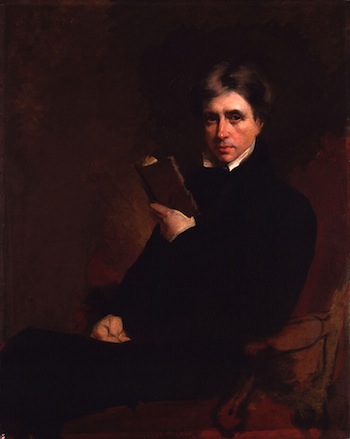
photo - James Henry Leigh Hunt by Samuel Laurence (1817–1884)
James Henry Leigh Hunt by Samuel Laurence (1817–1884). (photo from National Portrait Gallery NPG 2508 via Wikimedia Commons)

Strangely, Leigh Hunt, an English poet who probably never met a Jew, answered the question with a Jewish slant. He was a Londoner who lived 2,000 miles west of Chassidism’s headquarters in Poland. He was an aristocratic Englishman who, unlike his Polish contemporaries, wore a frock coat and did his best work on the Sabbath. He was a good Episcopalian, but somehow saw the world through Jewish eyes. The poet, in an inspired mood, wrote a work of 18 short lines, singing the same love-thy-neighbor theme that’s in our prayer book. Unintentionally, it is a very Jewish poem: an angel alights in the room of Abou Ben Adhem, an exemplary soul who:

“… saw within the moonlight in his room
making it rich like a lily in bloom.
An angel writing in a book of gold
the names of those who love the Lord.”

Abou Ben Adhem, in a flash, sits up in his bed only half-awake, but alert enough to know that his visitor is not his cousin from Cincinnati. Am I in your golden book, he wants to know. (“Exceeding peace had made Ben Adhem bold.”) The angel sadly shakes his head.

But the man with a heart for humanity is not disheartened. “Well,” he says, “put me down as one who loves his fellow man.”

The angel notes the words of Abou Ben Adhem and disappears. Next night, he’s back in the dim bedroom “with a great wakening light” and his fateful list of those who love the Lord. “And lo, Ben Adhem’s name led all the rest.”

Loving your fellow man is like loving G-d, an insight initially proclaimed by our Tanach.

I’ve heard it said that the hardest part of being a good Jew is loving your fellow man. Now I didn’t originate that – it’s probably in the Talmud or maybe in the Tanach from some bitter prophet like Jeremiah. But, sadly, it’s true. Didn’t G-d Himself tell us we’re a stiff-necked people? Easy-going, sweet, lovable people don’t cure polio, don’t split the atom and don’t win Nobel prizes. They’re too busy displaying their love. There’s some furnace running in the core of great people that keeps them from election as most popular kid in school or fraternity/sorority presidency. You wouldn’t have enjoyed a beer and a bowl of pretzels with Einstein. Your Uncle Louie was probably much better at small talk.

In all the English vocabulary, the hardest word to define is love. It has no synonym, only antonyms. It thinly communicates when it describes our relationship with our fellow creatures, even the four-legged ones. But it miserably fails to describe our feeling to our Creator, even though I count the mandate more than 150 times in the Tanach.

In nature, love flows down, not up. A river originating in a mountain peak flows down to water the animal and plant life at its base. I’m convinced that parents, especially mothers, love their children more than kids love their parents. Survival of the species demands it. Our limited human understanding comes closest to defining divine love by loving our fellow human creatures. And, while we’re talking about love and G-d and man and English poets, let me remind you of Alexander Pope, another famous English Bard. He’s clearly on my side: “The proper study of mankind is man,” he says. “Presume not G-d to scan,” which to my understanding says the Creator lies beyond our telescopes.

What is love? We understand friendship. We know all about lust. We understand why your heart glows when your wife makes kreplach in chicken soup, your favorite. And even closer to your emotional warmth is the sensation of holding in your arms your newborn child. But words fail when we try to cozy up to the Lord. There is awe, respect and reverence, but love?

I’ve never met anyone who loved G-d and could explain that exotic emotion. It cannot be expressed any more than a fish expresses his love for water, his medium. Maybe the prophets and Leigh Hunt were on to something. Love thy fellow man. That, itself, is an awesome challenge. But may be the only road to the celestial palace.

Ted Roberts is a freelance writer and humorist living in Huntsville, Ala. His website is wonderwordworks.com.

Kosher food abounds

Kimchi seems to be the latest kosher craze. Here, Yeun Sun Shin, manager of South Korea’s Dongbangfood Oil Co. Ltd., shows off some of the company’s products at Kosherfest, which took place Nov. 15-16 in New Jersey. (photo by Dave Gordon)

Jewish fare extends well beyond the traditional Ashkenazi knish, kneidlach and kugel. Kimchi is the latest kosher craze, at least evidenced by the throngs of those who sampled it at Kosherfest, the annual food exhibition, which this year took place Nov. 15-16, at Meadowlands Exposition Centre in New Jersey.

For the uninitiated, the Korean staple is a cabbage-based food that contains white radish and spices.

Kosher-certified Koko’s line also includes gochujang (fermented red pepper paste) and doenjang (fermented soybean paste). Ziporah Rothkopf, Koko’s chief executive officer, not only boasted that her creations were the first of their kind in the kosher world, but that they were also among Kosherfest’s “best product award-winners,” and that she matched mainstream kimchi’s flavorings without including the usual shrimp brine.

Kosherfest, explains its website, “gives manufacturers, distributors and suppliers of kosher-certified products and services the opportunity to reach thousands of mainstream and independent kosher trade buyers from across the globe.”

The exhibition hall contained the expected offerings, but with a twist: hummus, including chocolate and orange-flavored; myriad wines, including ones called Moses and Unorthodox; artisan cheeses galore; endless new fruit beverages and sweets. There was even kosher toothpaste, SprinJene, which, unlike other toothpastes, say its spokespeople, doesn’t contain traces of animal enzymes, a no-no in the kosher world. (Non-Orthodox Judaism allows the consumption of any toothpaste.)

Nearly 300 exhibitors and companies were represented from around the world, including South Africa, Sri Lanka, Great Britain, Canada, Japan, Costa Rica, Korea, Czech Republic, Ukraine and, of course, the United States.

From the Philippines, FOCP presented organic coconut products, LTA Foods presented banana chips. From India came Lalah’s tamarind products, Eastern spices and Nila nuts.

Australia’s MC Foods came to show off their boutique salad dressings and marinades, with the hope of finding a distributor in the Americas. From Russia came Baltika beer, said by its spokesperson to be the second bestselling brew in Europe, behind Heineken – the company produces five billion litres a year and each of the 17 beverages in the brand has kosher certification, even though beer generally does not require it.

However, contrary to popular belief, nori, which is used in sushi, poses a unique kashrut obstacle, even if it contains “100% seaweed.” Rabbi Binyomin Y. Edery, the mashgiach of Kosher Japan, explained that kosher nori, despite being a vegetable from the ocean, requires a special process, as well as rabbinical supervision. Unbeknown to many, seahorses (not kosher) and various non-kosher fish eggs become intermingled with the seaweed and must be filtered out for the seaweed to be deemed kosher, a process that is not done at non-kosher manufacturing plants.

The workaround for the kosher world, said Edery, is to harvest the seaweed in a certain two-hour window prior to daybreak, when the waters are coldest and the creatures are least likely to swim.

Moving from ocean water to bottled water from the Czech Republic’s Fromin, which is collected from an artesian well 275 metres deep, and is sold in glass bottles that can cost up to $35 US for 1.5 litres. Available in North Africa and Europe, the kosher-certified company sought a North American distributor.

According to chairman Martin Landa, although water does not require a hechsher (kosher certification), he said many consumers want to be doubly assured there are no treif (non-kosher) additives or non-kosher products made in the bottler’s vicinity.

From Betula Pendula, also in the Czech Republic, comes goat colostrums – the fluid secreted by female goats right after giving birth, which is used in skin cream and immune-boosting pills.

In other quasi-milk news, Israel-based Mashumashu, makers of vegetarian, dairy-free artisan cheeses, including cheddar, gouda, mozzarella and feta, showed off how their products melt easily on a pizza, and boasted that few people could tell the difference between the real deal and their cheeses.

Meanwhile, the gluten-free trend has caught on with dozens of Kosherfest’s exhibitors, including Soupergirl of Washington, D.C., run by former comedian Sara Polin. She said she “sought a healthy, kosher and delicious soup” with “only ingredients you can pronounce,” so she made some. Among her company’s many products are curried split pea apple kale, lentil butternut squash, and beet gazpacho. She has been featured in the Washington Post and O, The Oprah Magazine.

Also on the gluten-free train was Florida-based DelaRosa, whose executive vice-president Yehudith Girshberg claims to be the only kosher, gluten-free and organic oat producer. They also make organic wines, vinegars, olive oils and tahini.

It appears as though the kosher world will soon be indistinguishable from regular supermarket fare, with the availability of kosher pepperoni and “cheese” pizza, kosher “facon,” kimchi and even duck sausage. If things continue on this trajectory, in the near future, there may be little kosher food makers can’t successfully imitate.

Dave Gordon is a Toronto-based freelance writer whose work has appeared in more than 100 publications around the world.

Help from Muslim neighbors

Moriah Congregation’s prayer books were among items destroyed in the Haifa fires. (photo from masorti.org)

The Masorti Foundation for Conservative Judaism in Israel put out an international call for donations to help Moriah Congregation rebuild from the ashes after the recent week-long wildfires that raged across Israel. But it was two small, local initiatives that put the damaged synagogue into the headlines.

On Nov. 30, a group of worshippers from all faiths attended a special prayer service for the new Hebrew month of Kislev and to show support for the rebuilding of the community. A local member posted Facebook photos of the service. One of the photos showed 20 saplings donated by a man from Baqa al-Gharbiyye, an Arab city in the Haifa district, as a gift to replace the trees in the courtyard that had been burned in the fires.

And he wasn’t the only one bearing gifts.

Two Muslim tradesmen from Umm al-Fahm, another Arab town in the Haifa district, also came to the service and were greeted with great applause for their contribution of wood panels to the synagogue.

Moriah Congregation – the oldest Conservative synagogue in Israel – suffered extensive damage in the fires. The whole second floor and roof of the building were destroyed, including their beit midrash, all of their books, their education wing and their youth club.

At first, the Moriah community turned to a Jewish carpenter for help. He agreed to work pro-bono but asked that the synagogue pay for the wood. He went to get a price quote from wood suppliers Walid abu-Ahmed and Ziad Yunis. When they heard that the previous tables were destroyed in the fires that devastated 13 neighborhoods in Haifa, they chose to donate enough wood for 10 tables.

“I had tears in my eyes when I heard what was happening,” Rabbi Dov Hiyon, who heads the Moriah community, told Ynet news. “It was so emotional to hear that Muslims were asking to donate to a Jewish synagogue. I’ve invited them to evening prayers to personally thank them.”

“I decided to help and not receive any payment,” abu-Ahmed told the Hebrew daily news site. “Jews and Arabs live together in Haifa, and there is no discrimination. We must continue with this coexistence and promote peace.”

Israel21C is a nonprofit educational foundation with a mission to focus media and public attention on the 21st-century Israel that exists beyond the conflict. For more, or to donate, visit israel21c.org.

Connecting to a legacy

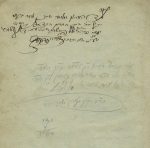
The inscription in the Tosher Rebbe’s first copy of Kehilat Ya’akov, which recently sold at auction for $4,920 US. (photo from IMP Media Group Ltd.)

Even with the passing of the fourth Tosh Rebbe, Rabbi Meshulam Feish Segal-Lowy II, in 2015, Tosh Chassidut still exists in rural Quebec. The Tosh dynasty was founded in the 1800s and has roots in the Chassidic tradition, tracing their tradition back to the Ba’al Shem Tov.

Last month offered a unique opportunity to connect to the legacy of the Tosher Chassidut. The copy of Kehillat Ya’akov owned and used by the first Tosh Rebbe, Rabbi Meshulam Feish Segal-Lowy I, was available for auction at Kedem Auction House in Jerusalem. It was passed down within his family, and made it to the United States when his great-grandson fled Hungary. At the Nov. 15 auction, the item sold for $4,920 US.

The first Tosher Rebbe was a leading rabbi in the greater Jewish community in Hungary due to his standing in Torah and commitment to helping Jews. A 1966 article in the Canadian Jewish News by Norman Abrahams described the Tosher Rebbe’s dedication to his followers, many of whom were Holocaust survivors who turned to him for guidance: “This great man stays up most of the night fulfiling the many requests for advice and prayer and it is not uncommon to see him eating breakfast, his first meal of the day at five o’clock in the afternoon.”

Born in 1811 in Moravia (part of modern-day Czech Republic), Lowy I gained a reputation for his holiness and ability to perform miracles and became the first Tosh Rebbe, as well as a leading rabbi in Hungary. He received rabbinic ordination from Rebbe David (Spira) of Dynow, one of the leading rabbis of his time.

Although he passed away at 62, the first Tosher Rebbe had enormous impact on Torah Judaism. Lowy I served as rabbi and av beit din (literally, father of the court) of the city of Nyirtass, Hungary, and was known for his commitment to Torah. People came from all over to receive his blessings.

In 1873, a cholera epidemic broke out and killed almost 200,000 people in Hungary alone. The rebbe prayed to be an atonement for the Jews and, after his death, the epidemic did indeed come to an end.

The Tosh dynasty continued after Lowy I’s death, but was almost completely destroyed during the Holocaust. His namesake and great-grandson, Lowy II, was appointed rebbe by the few surviving Chassidim of his father, Rebbe Mordechai Marton Lowy, who was murdered in Auschwitz with most of his extended family.

Lowy II was born in Nyirtass in 1921, managed to survive the Holocaust in the Hungarian Labor Service and was liberated by the Red Army from a camp outside Marghita in October 1944. In 1946, he married Chava Weingarten, a direct descendant of the Noam Elimelech (Rebbe Elimelech Weisblum of Lizhensk). After being appointed rebbe, he set up court in Nyiregyhaza, but, in 1951, fearing the communist government, he ordered his followers to leave Hungary and immigrated to Canada, settling in Montreal.

Committed to maintaining the integrity of the Chassidut that his great-grandfather had started, and concerned about outside influence, in 1963, he decided to move his Chassidim to Boisbriand, Que., a small rural area now known as Kiryas Tosh.

After his death in 2015, Lowy II’s son, Rabbi Elimelech Segal-Lowy, became the next Tosher Rebbe.

The piece of Tosh history that was for sale is also inscribed by the first Tosh Rebbe’s grandson, Rabbi Moshe Shmuel Rottenberg, who received it from his father, Rabbi Yehosef HaLevi, author of Bnei Shileshim.

Beef versus legumes

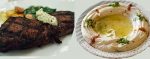
If the entire population of the United States changed their diet from a beef-heavy plan to one based on chicken, it would be possible to feed 120 to 140 million more people with the same resources. (photo from wis-wander.weizmann.ac.il)

How much does a steak really cost? Or chicken nuggets, or a plate of hummus? New research by Prof. Ron Milo and Alon Shepon of the plant and environmental sciences department of the Weizmann Institute of Science, together with Prof. Gideon Eshel of Bard College in New York, took a look at the figures – including the environmental costs – of the different foods we eat. The research appeared in Environmental Research Letters.

The data for the study came from figures for cattle and poultry growing and consumption in the United States. To compare, the researchers calculated the nutritional value of each – usable calories and protein – versus the environmental cost. The latter included the use of land for fodder or grazing and the emission of greenhouse gases in both growing the food and in growing the animals themselves.

Chickens, according to the study, produce much more edible meat per kilogram of feed consumed, and they produce their meat faster than cattle, meaning more can be grown on the same amount of land. For every 100 calories and 100 grams of protein fed to beef cattle, the consumer ends up with around three calories and three grams of protein. For poultry, that figure is about 13 calories and 21 grams of protein.

The researchers then asked what would happen if the entire population of the United States were persuaded to change their diet from a beef-heavy plan to one based on chicken. Their answer: it would be possible to feed 40% more people – 120 to 140 million more people – with the same resources.

What would happen if the same population was persuaded to adopt an entirely plant-based diet? That is, instead of using land to grow cow or chicken feed and then eating the animals, to use that land to grow nutritional crops – mainly legumes, including peanuts, soya, garbanzos and lentils. These can supply all of a person’s nutritional requirements, except vitamin B12, which can be obtained from nutritional yeast.

A separate study, published in Environmental Science and Technology – “Environmentally optimal, nutritionally aware beef replacement plant-based diets,” by Milo, Shepon, Gidon Eshel and Elad Noor – suggests that an extra 190 million people could eat off the same environmental resources in this way.

“If we changed our diet, we would change the environmental price we pay, with every meal,” said Shepon. “Eating a plant-based diet can both meet our nutritional requirements and save on land use, as well as the release of greenhouse gases into the atmosphere and excess nitrogen from fertilizers into the water supply. These are real costs that we all bear, especially when people eat beef.”

Milo’s research is supported by the Leona M. and Harry B. Helmsley Charitable Trust; Dana and Yossie Hollander, Israel; and the Larson Charitable Foundation. Milo is the incumbent of the Charles and Louise Gartner Professorial Chair.

For more on the research being conducted at the Weizmann Institute, visit wis-wander.weizmann.ac.il.

Going with the flow in Petra

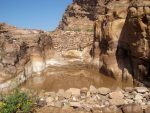
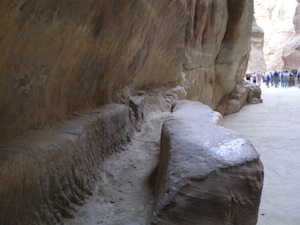
An ancient water reservoir at Petra. (photo by Orli Fields)

Desert living is tough. The toughest part of it is having water fit for consumption. Nobody knew this better than the Nabatean people. The desert was their home.

Some 2,600 years ago, the Nabateans daringly accepted the challenge of finding and supplying water to their people. They did this by building desert towns with life-sustaining water systems.

Archeologists and hydrologists have studied the waterworks at the Nabatean town of Petra. They report that Petra stood in a huge desert canyon, in what is today the country of Jordan. This area receives little rain. Petra gets only about six inches of rain a year. Temperatures go from a low of 34°F to a high of 94°F (1.1°C-34.4°C). For about half the year, the daytime temperatures are quite high. Yet 30,000 people once lived in Petra.

Petra is far from any ocean, sea, river or lake, but the Nabateans did not lack for water. Three things made this possible: the Nabateans had very smart water engineers, they had skilled builders and they had talented water managers.

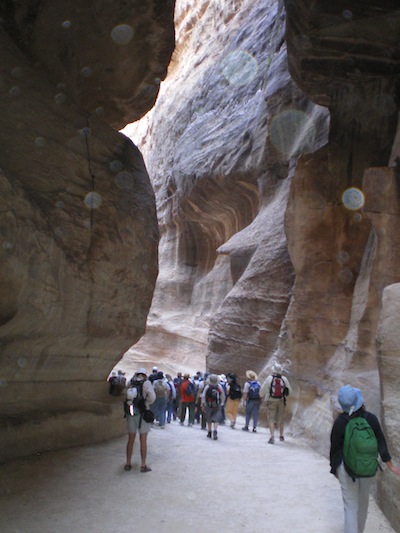
photo - Petra’s water engineers had to consider the ups and downs of yearly rainfall, the ups and downs of temperature, and the ups and downs of Petra’s mountainous surroundings
Petra’s water engineers had to consider the ups and downs of yearly rainfall, the ups and downs of temperature, and the ups and downs of Petra’s mountainous surroundings. (photos by Deborah Rubin Fields)

The engineers’ biggest worry was getting Petra to save as much water as possible. So, first, they designed a water system covering the whole city. The system collected a maximum amount of water from two sources: from rain and from local springs.

The engineers had several considerations. For instance, they had to worry about the ups and downs of yearly rainfall. They had to take into account the ups and downs of temperature. And they had to overcome the ups and downs of Petra’s mountainous surroundings.

photo - closeup of mountain pipelineThe engineers also had to lower the risk of the system getting blocked. They realized that water pipes that ran along the side of a mountain would be hard to clean. Thus, they designed special water filters. These filters made it easy to trap and remove rocks or silt. If there were particles, they would settle in the reservoirs, not in the pipes. The engineers’ design was practical. It functioned throughout the year and, importantly, provided for a lot of water storage. It included crisscrossing water pipelines, channels, dams, tunnels, reservoirs and cisterns (totaling some 200 surface and underground units).

When looking at Petra’s water system, it is important to note how it was built. There were no motorized digging machines or hauling trucks, of course. All work was done by hand. The chisel was probably the most commonly used tool and, with this simple tool, builders carved an amazing water system.

Water managers had to maintain good water pressure and water flow. Too much pressure, for example, would cause a pipe to break, and that would result in wasted water. The managers’ goal was to maximize flow while minimizing leakage. They did this in part by operating a partial flow of water.

Also to reduce water leakage, the water managers used a particular kind of pipe. This pipe was often made from clay baked at high temperatures; it was short, with thin walls. Even with this innovation, Petra’s mountains and its irregular rainfall and temperatures must have meant that water managers were always on the alert.

And, sometimes, they were really “put to the test” – for example, when a large camel caravan entered Petra. When a large group of dusty and thirsty traders and animals arrived, it meant one thing: a sudden increase in the demand for water. Water would be needed for drinking and bathing. For such situations, water managers needed to ensure that back-up water sources were working.

In times of real emergency, the Nabateans had numerous storage centres. Scientists figure that some sites held three weeks’ emergency supply while other sites held several months’ supply. Thus, inhabitants had some insurance against a siege or drought.

Scientists have estimated that about 12 million gallons (or more than 45 million litres) of fresh spring water ran through Petra’s water channels daily. Water was relatively plentiful and also accessible – residents could easily reach the water that ran into nearby fountains.

The Nabateans also traveled through present-day Israel. Along what is today recognized as the UNESCO World Heritage Incense Route, the Nabateans established forts and settlements. In agricultural communities such as Shivta, they “captured” rainwater to grow grapes for wine production.

Both in travel and at home, the Nabateans’ water systems were as complex as they were practical. Even in ancient times, they overcame the harshness of desert living. They harnessed its unpredictability and thrived.

Deborah Rubin Fields is an Israel-based features writer. She is also the author of Take a Peek Inside: A Child’s Guide to Radiology Exams, published in English, Hebrew and Arabic.

Navigating Northern Ireland

The HMS Caroline, a First World War light cruiser, is worth visiting. (photo by Deborah Rubin Fields)

Identified for so long – from the late 1960s to the late 1990s – by “the Troubles,” peace appears to be bringing both social and political stability to Northern Ireland. This, in turn, has led to an economic upswing.

Greater Belfast, and some of the other coastal towns, such as Derry, once had successful shipbuilding and textile industries. At the height of Belfast’s shipbuilding, for instance, Harland and Wolff, the biggest company, employed 35,000 workers. Edward James Harland and Gustav Wilheim Wolff, who came from a German-Jewish family, started this company in 1861. They designed and built the White Line ships, the most famous of which was the doomed Titantic.

Heavy industries suffered during the Depression and were later largely knocked out of the game by the terrible decline during the Troubles – the 30-year conflict between the unionist and mostly Protestant majority, who wanted to remain part of the United Kingdom, and the nationalist/republican and mainly Catholic minority, who wanted an independent Northern Ireland – by Chinese industry and/or both. Today, Belfast’s scaled-down dock industry focuses on ship repair and iron works.

Over the past 10 years or so, Northern Ireland has moved creatively to remember its more glorious industrial past. It maintains the history of shipbuilding in two ways: by awarding historic preservation distinction to two large, biblically named shipyard cranes, the Samson and the Goliath, and by recently expanding the whole area, which is referred to as the Queen’s Island, to encompass the Titanic Quarter. If visiting, worth seeing are the HMS Caroline, a First World War light battle cruiser, local businesses (studios, etc.), educational facilities and apartment buildings, and worth doing are such leisure activities as boating and cycling.

Northern Ireland’s maritime culture dates back hundreds of years. Paralleling the region’s general history, Northern Ireland’s naval life features a lot of rough water. Some locals might tell you it was the fairies, banshees and vampires that caused nautical disasters, but non-believers will tell you human error or unpredictable stormy weather caused numerous shipwrecks.

Thus, for example, while the Spanish had the money and manpower to fight the British fleet in the late 16th century, the rough coast of Northern Ireland, on-board disease and a scarcity of supplies wiped out a not-insignificant part of the Spanish Armada, mockingly referred to by non-Spaniards as the “Invincible Armada.”

Since the late 1960s, Northern Ireland divers and archeologists have sought to locate some of the many ships that foundered along their coast. Fascinatingly, underwater discoveries are now exhibited in Derry’s Tower Museum and at Belfast’s Ulster Museum. Shipwreck sites are likewise marked along the stunning Giant’s Causeway cliff path.

While on the subject of walks, Northern Ireland offers a lot of unspoiled, green countryside. If you’re outfitted correctly, hiking is a great way to see this stunning part of the world.

Northern Ireland’s extended social, religious, political and economic battles ended in 1998. Probably nothing currently recalls the Troubles more than the murals painted in Belfast and Derry. What visitors might not realize is that a significant number of the murals are actually part of the high walls separating the unionist (largely Protestant) neighborhoods from the nationalists (mostly Catholic) neighborhoods. Since the peace agreements, the barbed wire at the top of the walls has been removed, and the gates that nightly lock the sectarian neighborhoods are bolted by a private security firm rather than by British military or police.

The murals cover a wide range of topics. Understandably, some of these locally painted murals focus on remembering the significant events of the Troubles, such as the civil rights marches and Bloody Sunday. Some of the art portrays political allegiance; some pays tribute to dead paramilitary fighters; and some are memorials to murdered children.

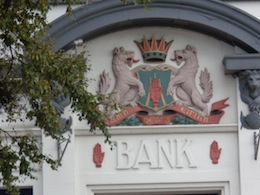
photo - Bangor Bank, adorned above its doorway with three Red Hands of Ulster
Bangor Bank, adorned above its doorway with three Red Hands of Ulster. (photo by Deborah Rubin Fields)

Today, however, the murals have expanded their scope to include conflicts from around the globe, such as the Israeli-Palestinian conflict. The pro-Israeli mural on Northumberland Street is dedicated to Lt.-Col. John Henry Patterson, a Christian Zionist who commanded the Jewish Legion in the First World War. The pro-Israel mural seems to receive less respect than the Palestinian and, this past summer, it was vandalized in a reported hate crime. Similarly, two years ago, an Ulster History Circle plaque erected at Israeli President Chaim Herzog’s Belfast birthplace was removed following defacement and building vandalism.

While on the subject of symbols of Northern Ireland, you may notice an open hand, often painted red, over building lintels. While it is hard to pinpoint the exact origin of what is known as the Red Hand of Ulster, it bears a similarity to Judaism’s “hand of God.” In Judaism, the “hand of God” has been a fairly common symbol, generally referring to God’s stepping into human affairs, but can be a subject in and of itself. Moreover, in both Judaism and Islam, the five-fingered hamsa is used as an amulet against the evil eye.

Belfast has a small assortment of sites with a link to Judaism, its texts or symbols. For example, in front of Customs House, there is a large stone water trough dedicated to Francis Calder, who founded the SPCA in Belfast. The trough contains a quote from Proverbs 12:10: “A righteous man regarded the life of his beast.” Close by is Albert Memorial Clock, dedicated to Queen Victoria’s husband. Undoubtedly better known for the way the tower leans, due to a sandy base, it has six-pointed stars carved into the stone.

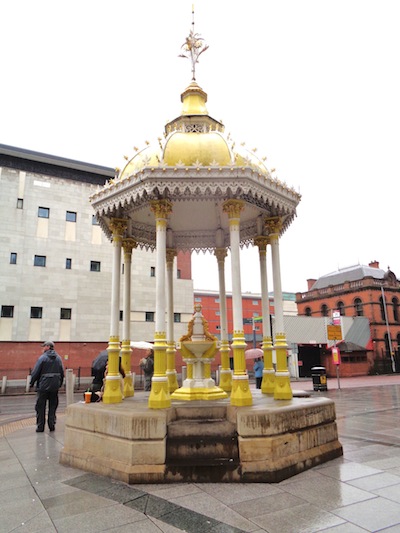
photo - Jaffe Fountain in Belfast
Jaffe Fountain in Belfast. (photo by Deborah Rubin Fields)

Not far from downtown’s Victoria Square shopping mall, there is a striking yellow fountain donated by Daniel Joseph Jaffe (1809–1871), the founder of the Jewish community. Jaffe’s son, Sir Otto, was the mayor of Belfast twice (1899 and 1904). Sadly, his German birth led to his leaving Northern Ireland. During the First World War, when the Germans torpedoed the Lusitania near Cork in May 1915, anti-German sentiment rose to the point where, even as a leading industrialist, philanthropist and naturalized U.K. citizen, Jaffe was accused of being a German spy. He left Northern Ireland in 1916 for London, England.

The most known Jewish and Canadian connection to Northern Ireland is a tragic one. On April 2, 1912, the Titanic left its Belfast shipyard. At its Southampton launching, it carried an unidentified number of Jewish passengers, some wealthy, established Jews, but many poor Jews seeking a better life in the United States. When the Titanic sank around Newfoundland on April 15, 1912, a small number of unidentified Jewish deceased were buried at Baron de Hirsch Cemetery in Halifax, N.S.

If you plan to travel to Northern Ireland, read This Man’s Wee Boy: A Childhood Memoir of Peace and Trouble in Derry by Tony Doherty and Reading in the Dark: A Novel by Seamus Deane, and listen to Tommy Sands’ “There Were Roses.” Seek in-person and/or virtual assistance from the attentive staff at Discover Northern Ireland, Northern Ireland’s tourist facilities (discovernorthernireland.com) and visit the small Belfast Jewish community’s website (belfastjewishcommunity.org.uk) and its lively Facebook page. While you’re in the country, you can attend Shabbat morning study sessions and services.

Deborah Rubin Fields is an Israel-based features writer. She is also the author of Take a Peek Inside: A Child’s Guide to Radiology Exams, published in English, Hebrew and Arabic.

Bevis Marks 315 years later

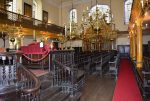
The interior of Bevis Marks Synagogue looking towards the ark and with the bima in the left foreground. The ark is made of oak, but painted to look like Italian marble, as are the supports to the ladies gallery. (photo by Edgar Asher)

Britain’s oldest synagogue, Bevis Marks, was built in 1701. Now situated in the heart of London’s Square Mile business district, the synagogue has been in continuous use since its foundation.

In 1655, Rabbi Menasseh ben Israel arrived in London from Holland with a petition to Oliver Cromwell asking that Jews be allowed to once again to settle and live in England and begin to trade – they had been banned from the country some 366 years earlier. In 1656, Cromwell agreed, despite opposition from London merchants.

Jews had been living in England since Roman and Anglo-Saxon times. In 1066, William the Conqueror encouraged Jewish craftsmen and merchants to move to England from northern France. However, in 1290, Jews were banished altogether from England.

Bevis Marks Synagogue was, from its very beginning, an Orthodox congregation set up to serve the Sephardi Jews in the area. The need to build the synagogue came about because of the increase in the Jewish population of the neighborhood and the lack of other synagogues in the area.

photo - The central candelabrum, one of seven that hang in Bevis Marks, was a gift from the community of Amsterdam at the time of its original construction
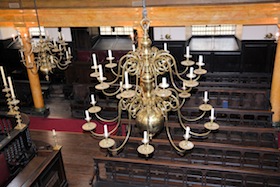
The central candelabrum, one of seven that hang in Bevis Marks, was a gift from the community of Amsterdam at the time of its original construction. (photo by Edgar Asher)

In early 1698, a committee was set up, consisting of the leading Sephardi leaders in the neighborhood to look into the possibility of building a new synagogue to cope with the influx of Jews moving into this part of London. In February 1699, a contract was signed for the building of a new, larger synagogue and, in September 1701, Bevis Marks Synagogue was dedicated. The interior décor, layout and furnishing were based on the design of the main Sephardi synagogue in Amsterdam, which had been completed in 1675. The central candelabrum, one of seven that hang in Bevis Marks, was a gift from the community of Amsterdam at the time of its original construction.

The prominent Renaissance-style ark was painted to look as though it is made of colored Italian marble; in fact, it is surprisingly made entirely of oak. The 12 pillars, representing the 12 tribes of Israel, which support the ladies gallery, are also made of oak and painted to look like Italian marble.

Bevis Marks became the centre of the English Spanish and Portuguese Jewish community and was also the home of the community’s chief rabbis.

Bevis Marks has always been intimately associated with London, so much so that on the eight occasions when a Jewish lord mayor has been elected, Bevis Marks has been the destination of the new lord mayor’s first official duty. It has made no difference if the mayor followed the Sephardi or Ashkenazi rite. Many notable Jews have had association with Bevis Marks, including Moses Montefiore, who was also a big benefactor of the synagogue; prime minister Benjamin Disraeli’s father Isaac; and Daniel Mendoza, who was an English boxing champion in the late 18th century.

Several seats in the synagogue, even today, are roped off with a red cord to be reserved for notable people who have been associated with Bevis Marks. One seat in particular was the reserved seat of Montefiore. Now, this seat is a seat of honor reserved for a distinguished visitor, such as a Jewish lord mayor. In 2001, Prince Charles occupied the seat during the synagogue’s 300th-year commemoration ceremony. In 2006, prime minister Tony Blair was guest of honor at the synagogue during the ceremony marking the 350th anniversary of the resettlement of Jews in England.

London, from a Jewish standpoint, has undergone many changes. Over the years, Bevis Marks, apart from being the flagship synagogue of the Sephardi community in Britain, has had a large catchment area around London’s Square Mile. Two things happened to affect the attendance at the synagogue, however. First, many Jews who had become more affluent moved to other parts of London and, second, the city itself and its financial district were redeveloped from being primarily residential to large office blocks.

Nonetheless, Bevis Marks still managed to hold regular but less well-attended services. At one point, the once proud centre of the Spanish and Portuguese Jews looked like it might become an historic landmark, rather than remain a vital house of prayer. After all, the community itself designated Lauderdale Road Synagogue in northwest London as the community’s administrative headquarters. In addition, the number of British Jews claiming affiliation with any Jewish community organizations fell precipitously over a span of 50 years. Many British synagogues were on the verge of closing down or amalgamating with other synagogues in the same district.

In 1955, there were an estimated 410,000 Jews in the United Kingdom; by the time of the national census in 2001, this figure was down to only 270,000. The question on the census form asked, What denomination do you consider yourself to belong to?

Bevis Marks still attracts many visitors from all over the world, both Jewish and non-Jewish. With a few exceptions, its interior is exactly how it looked some 315 years ago. When all is said and done, the building remains a place to offer up prayer, despite some trouble, in recent times, to gather a minyan of 10 men to hold a prayer service. However, the rebuilding of London’s Square Mile and its surrounding neighborhood has brought new blood to Bevis Marks, as the developments have included up-market expensive homes, particularly in the nearby dockland areas. Young Jewish businesspeople are once again making use of the synagogue and Bevis Marks is secure in its future both as a unique architectural building and an active synagogue.

Wonders of Mediterranean

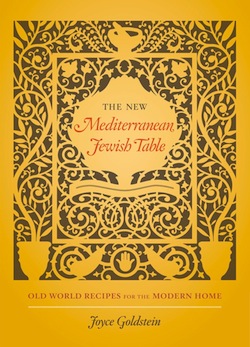
Joyce Goldstein was chef and owner of Square One restaurant in San Francisco; prior to that, she was chef at Chez Panisse café. Today, she is a cooking teacher, restaurant consultant and cookbook author. Her bibliography lists 60 cookbooks, the most recent being The New Mediterranean Jewish Table (University of California Press, 2016).

The introductory essays are very informative – “Jews in America,” “Mediterranean Jewish Communities” and “Old World Food in a New World Kitchen.” Goldstein reminds us that “not all Jewish cooking traditions come from Eastern Europe,” and that the delicious and varied cuisines of North African and Mediterranean Jews “have been nearly unknown until recently.”

She writes, “This Mediterranean Jewish cookbook for the modern kitchen will build and expand on carefully selected recipes from many of my cookbooks.” The recipes are from the cultures of the Sephardim (those expelled from the Iberian Peninsula), the Maghrebi (those from Morocco, Tunisia, Algeria, Libya and Egypt) and Mizrachi (Jews from Muslim lands since biblical times).

book cover - The New Mediterranean Jewish TableAfter an explanation about kosher laws and the food of Jewish holidays, there are 11 cookbook chapters covering appetizers, spreads and salads (49 recipes), savory pastries (21 recipes), eggs and fritters (24 recipes), soups (29 recipes), rice, pasta and grains (31 recipes), vegetables (48 recipes), fish (46 recipes), poultry (23 recipes), meat (49 recipes), condiments and preserves (24 recipes) and desserts (51 recipes). There are a whopping 395 recipes in all.

Each chapter has an explanatory essay, in addition to a list of ingredients and instructions. The volume is so large: recipes go from page to page.

The publisher calls this “an authoritative guide … a treasury filled with vibrant, seasonal recipes … the story of how Jewish cooks successfully brought the local ingredients, techniques and traditions of their new homelands into their kitchens.”

Just reading about the origins of each recipe is a wonderful learning experience, but here are two recipes to try.

ARTICHOKE SOUP (CREMA DI CARCIOFI)
(serves six to eight)

juice of one lemon
12 artichokes
3 tbsp unsalted butter
2 cloves minced garlic
12 ounces russet potatoes, peeled and diced or 1/2 cup white rice
3 cups vegetable broth plus more for thinning as needed
salt and freshly ground black pepper
chopped toasted hazelnuts or pine nuts or chopped fresh flat-leaf parsley or mint for garnish
milk or heavy cream as needed for thinning (optional)

Have ready a large bowl of water to which you have added the lemon juice.

Working with one artichoke at a time, trim the stem to two inches if it is tender, then peel away the dark green fibrous outer layer. If the stem is tough, trim it off flush with the bottom. Pull off and discard all of the leaves. Pare away the dark green areas from the base. Cut the artichoke in half lengthwise and carefully remove the choke from each half with a small pointed spoon or a paring knife, then cut each half lengthwise into quarter-inch slices and slip them into the lemon water.

Melt the butter in a large saucepan over medium heat. Drain the artichokes, add to the pan and sauté for a few minutes.

Add the garlic, potatoes and about 1.5 cups of the broth or enough just to cover the artichokes. Cover the pan and simmer over medium heat until the artichokes are very tender and almost falling apart, 25 to 30 minutes.

Remove from the heat and cool slightly. In batches, transfer to a food processor and purée until smooth, then return the purée to the saucepan.

Add the remaining 1.5 cups broth and reheat, adding more broth if needed to achieve a consistency you like. You can also add a little cream or milk if you prefer a richer soup.

Season with salt and pepper.

To intensify the artichoke flavor, make the soup a few hours or a day ahead and reheat at serving time. To serve, ladle into soup bowls and garnish with hazelnuts, pine nuts, parsley or mint.

TURKISH HAZELNUT TEA CAKES (GATEAUX DES NOISETTES)
(makes 24 small cakes)

1 vanilla bean, cut into small pieces
3/4 cup granulated sugar
1 3/4 cups all-purpose flour
2 tsp baking powder
1 1/2 tsp ground cinnamon
1/4 tsp ground cloves
1/4 tsp salt
1/4 freshly ground black pepper
6 eggs
1 cup plus 3 tbsp unsalted butter, room temperature
1/2 cup confectioners sugar
grated zest of 2 lemons or 1 lemon and 1 orange
1 1/3 cups toasted, peeled and ground hazelnuts

Butter 24 muffin pan cups, dust with flour and tap out the excess.

In a spice mill or food processor, grind the vanilla bean with the sugar until the bean is ground to a powder.

In a small bowl, sift together flour, baking powder, cinnamon, cloves, salt and pepper.

In a separate bowl, beat together butter, confectioners sugar and vanilla sugar until creamy and pale. Add eggs and lemon zest and beat until incorporated. Fold in nuts and flour mixture until combined.

Spoon batter into muffin cups, two-thirds full. Let rest for one hour.

Preheat oven to 400°F. Bake until a toothpick inserted into the centre emerges dry, about 15 minutes. Remove from oven and turn on to racks. Let cool completely.

Sybil Kaplan is a journalist, foreign correspondent, lecturer, food writer and book reviewer who lives in Jerusalem. She also does the restaurant features for janglo.net and leads walks in English in Jerusalem’s market.