Unique book group

The next novel up for discussion at the Jewish-Muslim women’s book group is The Red Tent.

One Sunday in July led to several new experiences for yours truly, a 23-year-old Jew living on Vancouver’s North Shore. For starters, it was my first time in a mosque, it was my first time in Delta and it was without a doubt my first Jewish-Muslim book gathering. Thankfully, it wasn’t my first time reading a book in less than 24 hours, as my decision to attend the gathering after seeing it mentioned in this very newspaper, was pretty spur of the moment.

The book group’s second-ever session was held at Baitur Rahman Mosque, a building that, upon first impressions, was slightly imposing – British Columbia’s largest mosque, dwarfing any synagogue I’ve come across – but which proved home to an incredible amount of warmth. The warmth began with smiles when I entered the room late – it was a longer journey than I expected – and continued through the entire two-hour session about the book (I Am Malala by Malala Yousafzai with Christina Lamb), and well into the snacks and chats afterwards.

Having been greeted by 30 or so women from both Jewish and Muslim backgrounds, there was the classic ice-breaker – going round in a circle, saying one’s name, a little bit about yourself and an interesting fact. I may not have been able to beat one woman’s fact (she used to be a stilt walker) but my relatively young age meant I stood out.

This lengthy introduction introduced me well to the thoughtful, kind group. In true Canadian spirit, they were from so many different places and cultures. The Muslim women in particular had a heartening appreciation for their country. One said she “liked Canada very much”; another one-upped her, exclaiming, “I am one of the luckiest people alive” for having been welcomed here. There’s no doubt that the women from both religions were of a progressive stance – the bulk of Jews was from egalitarian Or Shalom synagogue, while the Muslim women were part of the Ahmadiyya community, which has been persecuted relentlessly by more orthodox Muslim groups.

As conversation began about the book, it became clear that everyone was so lovely – was I the only person who hadn’t helped Syrian refugees settle in Canada? – that I began to wonder if the group was a case of “preaching to the converted.” Surely the people most ignorant, and most in need of education about other religions, weren’t the type who would turn up to this group? A cynic by nature, this worry stayed with me during the (fairly fleeting) discussions about the book and the (much longer) follow-up conversation about the link between religion and education, how and whether you can teach critical thinking, and other thought-provoking questions.

So, I reached out to the organizers from both sides. The email chains that followed gave me insight into two great communities and their prior interfaith ties, as well as into two pioneering women: Tiferet Welch from the Jewish community and Aisha Naveed from the Ahmadiyya Muslim Jama’at. They provided some strikingly similar answers to my questions, illustrating how much common ground can be found between the two religions (religions that, evidently, don’t always see eye to eye).

About why the book group came about, it seemed that the books were simply a way of facilitating discussion about religion itself. Welch said she decided to make the group happen after meeting some of the Muslim women, who “stated their knowledge of Judaism and, hence, Jews, was extremely limited,” but they were “fueled with a strong desire to know more.” Naveed said “the book club was initiated to remove common misconceptions between the Jewish and Islamic faith,” explaining to me how her community believes in interfaith dialogue to “encourage learning” and “prevent ignorance.”

The women were also on the same wavelength about the group’s future – Naveed called it “an organic venture” and Welch said “we want to see it progress organically.” They were both proud of what it had accomplished in such a short time: Naveed proclaimed it “a huge success,” while Welch described the discussions as “open” and “honest.”

And what did they have to say to my “preaching to the converted” angst? Naveed said that, because interfaith gatherings “are a form of open and safe space,” they mean you learn a great deal about one another. Welch said “there needs to be a distinction made between being open and being knowledgeable.” In layman’s terms: those who attend the group are open, but that doesn’t mean they’re knowledgeable, and the group aims to educate.

Welch also pointed out that, because the event is promoted, for instance, via Or Shalom’s electronic bulletin, geography is a non-issue. Theoretically, people all around the globe can subscribe to the group and see how progressive it is. And, she reminded me that, once this article is published, other Jews will know about it, and thus the group’s potential for change is increased.

With that in mind – how to sell the group to someone reading this? I’ll break it down, simply and honestly, into three points.

First off, the reading material is quality. The first session the group discussed the book Faithfully Feminist: Jewish, Christian and Muslim Feminists on Why We Stay, edited by Amy Levin, Gina Messina-Dysert and Jennifer Zobair. It led to a worthwhile discussion on how both religions are traditionally patriarchal, and what this has meant for female faith in male-dominated arenas. For me, having started off dubious about I Am Malala, the second session’s read proved a powerful one. The youngest-ever Nobel Peace Prize winner’s account is both humble and knowledgeable, a memoir that explains well the Taliban’s rise, Pakistan’s history and politics, and the monumental importance of educating girls.

Second, the discussions that stem from the books are as intelligent as they are interesting. The two-hour discussion flew by at the mosque – the only thing I can compare it to is a dream university seminar or tutorial; i.e. one not ruined by hung-over students unable even to blag the required reading. Participants were incredibly educated and respectful. We covered moral values and where they should be learned, we discussed the media’s portrayal of religion and our internal prejudices, and I gained a ton of insight into a religion that many of us could, and should, know more about. Their actual definition of jihad – as education; a clear rejection of terrorism – which hung proudly in the room, struck me as particularly vital in this day and age.

Third, the post-discussion food is fantastic. The informal portion of the event, where we stood eating (delicious snacks) and chatting, was where we all connected more personally and more deeply. I found out what it’s like to be judged immediately and constantly for wearing a hijab, and how it feels to be asked where you’re from, to reply saying “Canada,” and then receive a demanding “No, but where are you really from?” On a more light-hearted note, I found out how pleasing it is to interact with people outside my usual social circle, to do something new and to spend a Sunday afternoon with a group of thoughtful, inspiring women from all over. Oh, and did I mention how good the food is?

The group’s next meeting – about The Red Tent by Anita Diamant – is scheduled for Dec. 18, 2-4 p.m., at Or Shalom. Women interested in attending are advised to follow Or Shalom’s web page or subscribe to its email list, and to RSVP Welch at twilla.welch.1@gmail.com.

Rebecca Shapiro is the associate editor of vivalifestyleandtravel.com and a travel blogger at thethoughtfultraveller.com. She’s been published in the Guardian, Elle Canada and the Huffington Post, as well as various other Jewish newspapers in the United Kingdom and Canada. She currently resides in Vancouver, having previously lived in London, Shanghai and Toronto.
Chutzpah! tix now on sale

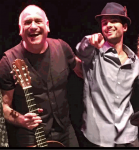
David Broza, left, and Ali Paris will perform in concert. (photo from Chutzpah! Festival)

Tickets are now on sale for the 17th annual Chutzpah! Lisa Nemetz International Jewish Performing Arts Festival, which will run from Feb. 16 to March 13, at venues including Rothstein Theatre, York Theatre, Scotiabank Dance Centre and the Biltmore Cabaret.

“We are all excited for another year of presenting an electrifying array of internationally acclaimed dancers, musicians, comedians and theatrical artists to our audiences in Canadian, Western Canadian and world premières. We’re headed for an energizing and thrilling journey from stand-up comedy to theatrical drama to rich global music to explosive and elegant dance!” said Mary-Louise Albert, Chutzpah!’s artistic and managing director.

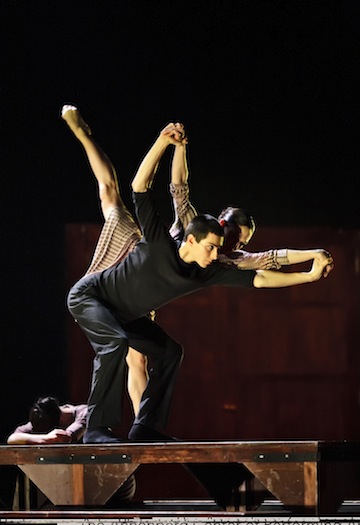
photo - Italy’s Spellbound Contemporary Ballet returns to Vancouver, bringing with them Carmina Burana
Italy’s Spellbound Contemporary Ballet returns to Vancouver, bringing with them Carmina Burana. (photo by Mariano Bevilacqua)

As it does every year, the 2017 Chutzpah! Festival dance series presents some of the most sought-after contemporary choreographers in the world. This year’s performances include the return of Italy’s Spellbound Contemporary Ballet with their full-length Carmina Burana; Israel’s Yossi Berg and Oded Graf Dance Theatre with their acclaimed 4Men, Alice, Bach and the Deer; and Kyle Abraham/Abraham.In.Motion (United States) brings a mixed repertoire of some of Kyle Abraham’s most popular works in their Western Canadian première. Vancouver’s Shay Kuebler/Radical System Art première their completed and full-length version of Telemetry, while local choreographer and performer Tara Cheyenne Friedenberg and Italy’s award-winning Silvia Gribaudi navigate the role of comedy as a catalyst to questions of gender, culture and language and understanding – this is world première presented with the Dance Centre. As well, in Chutzpah! Plus (May 13-14), there is Birds Sing a Pretty Song (Canada/United States/Israel/Argentina), an exploration through dance, film, interactive media and live music created by Rebecca Margolick and Maxx Berkowitz during a yearlong fellowship in New York City with LABA: A Laboratory for New Jewish Culture.

Among the Chutzpah! Festival 2017 musical highlights is Grammy-winners the Klezmatics 30th Anniversary Tour (United States). In concert together will be David Broza, whose music reflects the three different countries in which he was raised (Israel, Spain and England), and Ali Paris, who fuses Middle Eastern and Western music styles, and plays the qanun, a rare 76-string zither that dates back to the 14th century. Also in concert together will be Shalom Hanoch – touted as “the King of Israeli Rock” and compared to musicians such as Neil Young and Mick Jagger – who will be joined on stage by his longtime music producer, partner and keyboard player Moshe Levi.

Now based out of Chicago, Marbin, founded by Israeli guitarist Dani Rabin and Israeli saxophonist Danny Markovitch, is a progressive jazz-rock band, and MNGWA [ming-wah] opens their performance, mixing elements of psychedelic rock, dub, African rhythms, and vocals in four languages. Israeli singer Maya Avraham, who is known by Chutzpah! audiences from her performances with the Idan Raichel Project, comes to Vancouver with her band of Israeli and American musicians, and Lyla Canté (United States/Israel/Japan/Argentina) also joins the festival – exploring the intersection of Sephardi, flamenco and Ashkenazi music. For Chutzpah! Plus (April 2), composer Landon Braverman and Friends put on an evening of musical theatre – while currently based in New York, Braverman is originally from Vancouver.

With respect to theatre, one of this year’s Chutzpah! highlights is Wrestling Jerusalem, created and performed by Aaron Davidman. Set in America, Israel and Palestine, the play follows one man’s journey to help understand the Israeli-Palestinian conflict. Davidman’s solo performance is a personal story that grapples with the complexities of identity, history and social justice.

Another theatre draw is Folk Lordz, high-speed and multicultural improv featuring two members of Edmonton-based Rapid Fire Theatre, which was co-created by Todd Houseman and Ben Gorodetsky and brings together the unlikely combination of Cree storytelling, Chekhovian character drama and spontaneous comedy.

Comedy highlights include Mark Schiff (United States), who has headlined major casinos and clubs and has appeared many times on both The Tonight Show with Jay Leno and Late Night with David Letterman. He has had HBO and Showtime specials, was a featured act at the Montreal Comedy Festival and regularly opens for Jerry Seinfeld.

Also on the comedy front, there is a double bill: Ali Hassan and Judy Gold. Canada’s Hassan appears in his one-man show Muslim Interrupted; Hassan is a stand-up comedian, actor, chef and radio and television celebrity, and is the host of Laugh Out Loud on CBC Radio and SIRIUSXM. Gold’s (United States) most recent TV appearances include guest-starring roles on Louie, Broad City, The Unbreakable Kimmy Schmidt and Inside Amy Schumer, and she has a recurring role on the upcoming series on TBS Search Party. Gold has had stand-up specials on HBO (Cable Ace Award), Comedy Central and LOGO and was twice nominated for the American Comedy Award for funniest female comedian.

After the success of Chutzpah’s first literary event in 2016, this year’s Chutzpah! features author Christopher Noxon in Hollywood Stories, a special pre-festival event. Noxon is an author, journalist and illustrator and his humorous and unflinching Plus One is a novel about an interfaith family set in contemporary Los Angeles. Noxon is married to television writer and producer Jenji Kohan, creator of Orange is the New Black. This event is presented with the Cherie Smith JCC Jewish Book Festival and will take place on Feb. 5.

Single tickets for Chutzpah! range from $23 to $50 and are on sale now from chutzpahfestival.com, the festival box office, 604-257-5145, or Tickets Tonight, 604-684-2787. Chutzi Packs are also available – see four different shows for $94 – and new this year is a special five-show dance pack for $115.

Tickets will be available in-person starting Jan. 30 at the on-site festival box office at the Jewish Community Centre of Greater Vancouver. For hours and other information, visit chutzpahfestival.com.

Sharing Muller’s table

Our Table is a beautiful hostess gift for that special occasion or that friend who loves cooking and never tires of inspiring culinary reads.

There are cookbooks you whip out of your kitchen cupboard 45 minutes before dinner in search of something easy, bright and new, and there are cookbooks you take to bed with you for reading pleasure. Our Table (Artscroll, 2016) by Renee Muller falls into the latter category, not because you won’t want to try her recipes, but because there’s a lot of reading involved in many of them.

Muller is a Swiss native who moved to the United States in 2002 and, by winning a recipe contest, landed a regular column in Whisk, a pullout food feature of the national Jewish weekly Ami Magazine. Our Table is a compendium of her favorite kosher recipes, “a cuisine that is heimish yet laced with aromas of my youth,” she writes in the introduction.

The dishes encompass all the usual categories – soups, salads, appetizers, fish and dairy, meat, chicken, snacks, desserts and breads. Many of them are laced with stories about family secrets related to the particular recipe, or how the recipe came into being. For her fragrant standing rib roast recipe, for example, there’s an essay on how and why she created the recipe, as well as tips on how far in advance to make it and how to prevent it from drying out. Her Sugo Della Nonna (Italian-style tomato sauce) contains a half page on the definition of comfort food and the feeling it delivers when she makes it. “I see myself, sitting at Nonna’s table, as a child, feeling nourished and happy,” she writes.

Muller’s insights are written in a conversational style with lots of anecdotes about her family thrown in. By the time you’re finished reading this book, you feel like you know her personally – and you can’t help but like this impassioned chef who adores cooking for her family and friends. That’s because Muller’s enthusiasm is contagious, but also because some of her dishes go way beyond the usual suspects. There is a recipe for onion crisps, a whole page on the art of roasting chestnuts, one on toffee apples, one titled “Really, really good whole wheat challah” and another for brown buttered pear salad. And the pictures? Whoa. They are amazing, mouthwatering bites of full-page color that will leave you salivating as you plan your next dinner party. Most of the recipes are not terribly complex either, they’re just new combinations of ingredients most of us know well and use regularly.

Muller is that friend we all want in our lives – the one whose cooking is fabulous, who isn’t shy about sharing her recipes and whose conversation is full of funny stories, notes from her past and sage bits of wisdom. There are times when the essays feel perhaps a tad too long but, nonetheless, Our Table is a 270-page hardcover recipe book worth having, a beautiful hostess gift for that special occasion (Chanukah?) or that friend who loves cooking and never tires of inspiring culinary reads.

Lauren Kramer, an award-winning writer and editor, lives in Richmond. To read her work online, visit laurenkramer.net.

A visit to Mount Herzl

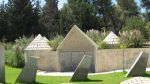
On Mount Herzl is a memorial to the more than 4,000 Ethiopian Jews who died attempting to reach Israel. (photo by Deborah Rubin Fields)

The 29th of the Hebrew month of Cheshvan – this year, it fell on Nov. 30 – is a day of celebration for the Israeli Ethiopian community and a national Israeli holiday. Late in the afternoon, thousands of people gather in Talpiot (southern Jerusalem) on the Haas Promenade for Sigd, the day marking the acceptance of the Torah, and celebrating their history and culture.

photo - The memorial to Ethiopian Jews is multifaceted
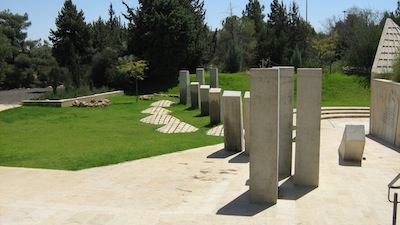
The memorial to Ethiopian Jews is multifaceted. (photo by Deborah Rubin Fields)

Despite the enormous loss of life and the discrimination faced by Israelis of Ethiopian descent, Sigd still is, in part, a prayer to make it possible to reach Israel. The Knesset legislated the Sigd Law in 2008, which made 29 Cheshvan a national holiday. The Knesset also legislated 28 Iyar (the Hebrew month that falls roughly in May) as the memorial day for community members who died making the journey to Israel. And, the year prior, in 2007, the Israeli Ministry of Immigration and Absorption in cooperation with the World Zionist Organization and the Israeli Defence Ministry unveiled a memorial to the more than 4,000 Ethiopian Jews who died attempting to reach Israel. Located on Mount Herzl, this stirring monument gives official recognition to the community’s largely unknown suffering. Until it was commemorated, the only existing monument stood in southern Jerusalem, at Kibbutz Ramat Rachel.

Starting at the end of 1979 and continuing for some four years, the Ethiopian Jewish community uprooted itself en masse to fulfil its dream of coming to Israel. It was both a physically exhausting and mentally terrifying journey. In Ethiopia’s forests and Sudan’s deserts, thousands were robbed, beaten, raped and even murdered. If there are graves for the fallen, they are far away from Eretz Yisrael.

The Mount Herzl memorial reminds visitors not just of the Ethiopian villages, but of an entire life left behind. Explanations are mounted in Amharic, Hebrew and English. In Hebrew, eight panels dramatically narrate 1) the exodus from Ethiopia from a boy’s perspective, 2) the events along the way, as explained by the group’s head, 3) life in Sudanese refugee camps, from a mother’s recollections, and 4) the actual departure for Israel, as related by the kes, or religious head of the community.

To learn more about Ethiopian Jews’ journey to reach Israel, Baruch’s Odyssey: An Ethiopian Jew’s Struggle to Save His People by Baruch Tegegne, as told to Phyllis Schwartzman Pinchuk, and the children’s book The Storyteller’s Beads by Jane Kurtz are recommended reads. As for movies, there are Mekonen: The Journey of an African Jew, directed by Rivka Shore; Live and Become, directed by Radu Mihaileanu; Zrubavel, directed by Shmuel Beru; and Yiftach’s Daughter, directed by Einat Kapach.

Deborah Rubin Fields is an Israel-based features writer. She is also the author of Take a Peek Inside: A Child’s Guide to Radiology Exams, published in English, Hebrew and Arabic.

“Extraordinary” jug found

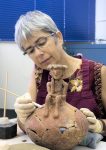
(photo from Israel Antiquities Authority via Ashernet)

Described by Israel Antiquities Authority (IAA) archeologists as “extraordinary,” a jug estimated to be some 3,800 years old – seen here being restored in an IAA laboratory – was found by high school students taking part in a Land of Israel and Archeology matriculation stream excavation. This excavation is part of a new training course offered by IAA and the Ministry of Education, which seeks to connect the students with the past and help prepare the archeologists of the future. The jug, which is from the Middle Bronze Age, was found in Yehud (near Ben-Gurion International Airport) at a site being examined prior to planned construction of residential buildings. Also found, in addition to the jug, were items such as daggers, arrowheads, an axe head, other vessels, a churn for making butter, sheep bones and what are very likely the bones of a donkey.