Keeping the weight off

(image from wis-wander.weizmann.ac.il)

Following a successful diet, many people are dismayed to find their weight rebounding – an all-too-common phenomenon termed “recurrent” or “yo-yo” obesity. Worse still, the vast majority of recurrently obese individuals not only rebound to their pre-dieting weight but also gain more weight with each dieting cycle. During each round of dieting-and-weight-regain, their proportion of body fat increases, and so does the risk of developing the manifestations of metabolic syndrome, including adult-onset diabetes, fatty liver and other obesity-related diseases.

As recently reported in Nature, researchers at the Weizmann Institute of Science have shown in mice that intestinal microbes – collectively termed the gut microbiome – play an unexpectedly important role in exacerbated post-dieting weight gain, and that this common phenomenon may in the future be prevented or treated by altering the composition or function of the microbiome.

The study was performed by research teams headed by Dr. Eran Elinav of the immunology department and Prof. Eran Segal of the computer science and applied mathematics department. The researchers found that, after a cycle of gaining and losing weight, all the mice’s body systems fully reverted to normal – except the microbiome. For about six months after losing weight, post-obese mice retained an abnormal “obese” microbiome.

“We’ve shown in obese mice that, following successful dieting and weight loss, the microbiome retains a ‘memory’ of previous obesity,” said Elinav. “This persistent microbiome accelerated the regaining of weight when the mice were put back on a high-calorie diet or ate regular food in excessive amounts.”

Segal elaborated: “By conducting a detailed functional analysis of the microbiome, we’ve developed potential therapeutic approaches to alleviating its impact on weight regain.”

The study was led by Christoph Thaiss, a PhD student in Elinav’s lab. Thaiss collaborated with master’s student Shlomik Itav of Elinav’s lab, Daphna Rothschild, a PhD student of Segal’s lab, as well as with other scientists from Weizmann and elsewhere.

In a series of experiments, the scientists demonstrated that the makeup of the “obese” microbiome was a major driver of accelerated post-dieting weight gain. For example, when the researchers depleted the intestinal microbes in mice by giving them broad-spectrum antibiotics, the exaggerated post-diet weight gain was eliminated. In another experiment, when intestinal microbes from mice with a history of obesity were introduced into germ-free mice – which, by definition, carry no microbiome of their own – their weight gain was accelerated upon feeding with a high-calorie diet, compared to germ-free mice that had received an implant of intestinal microbes from mice with no history of weight gain.

Next, the scientists developed a machine-learning algorithm, based on hundreds of individualized microbiome parameters, which successfully and accurately predicted the rate of weight regain in each mouse, based on the characteristics of its microbiome after weight gain and successful dieting. Furthermore, by combining genomic and metabolic approaches, they then identified two molecules driving the impact of the microbiome on regaining weight. These molecules – belonging to the class of organic chemicals called flavonoids that are obtained through eating certain vegetables – are rapidly degraded by the “post-dieting” microbiome, so that the levels of these molecules in post-dieting mice are significantly lower than those in mice with no history of obesity. The researchers found that under normal circumstances, these two flavonoids promote energy expenditure during fat metabolism. Low levels of these flavonoids in weight cycling prevented this fat-derived energy release, causing the post-dieting mice to accumulate extra fat when they were returned to a high-calorie diet.

Finally, the researchers used these insights to develop new proof-of-concept treatments for recurrent obesity. First, they implanted formerly obese mice with gut microbes from mice that had never been obese. This fecal microbiome transplantation erased the “memory” of obesity in these mice when they were re-exposed to a high-calorie diet, preventing excessive recurrent obesity.

Next, the scientists used an approach that is likely to be more unobjectionable to humans: they supplemented post-dieting mice with flavonoids added to their drinking water. This brought their flavonoid levels, and thus their energy expenditure, back to normal levels. As a result, even on return to a high-calorie diet, the mice did not experience accelerated weight gain.

“We call this approach ‘post-biotic’ intervention,” Segal said. “In contrast to probiotics, which introduce helpful microbes into the intestines, we are not introducing the microbes themselves but substances affected by the microbiome, which might prove to be more safe and effective.”

Recurrent obesity is an epidemic. “Obesity affects nearly half of the world’s adult population, and predisposes people to common life-risking complications such as adult-onset diabetes and heart disease,” said Elinav. “If the results of our mouse studies are found to be applicable to humans, they may help diagnose and treat recurrent obesity and this, in turn, may help alleviate the obesity epidemic.”

Also taking part in the study were Mariska Meijer, Maayan Levy, Claudia Moresi, Lenka Dohnalova, Sofia Braverman, Shachar Rozin, Dr. Mally Dori-Bachash and staff scientist Hagit Shapiro of the immunology department, staff scientists Drs. Yael Kuperman and Inbal Biton, and Prof. Alon Harmelin of the veterinary resources department, and Dr. Sergey Malitsky and Prof. Asaph Aharoni of the plant and environmental sciences department – all of the Weizmann Institute – as well as Prof. Arieh Gertler of the Hebrew University of Jerusalem and Prof. Zamir Halpern of the Tel-Aviv Sourasky Medical Centre.


Creative thinking and doing

Digivations is again offering its LEGO+Arts Imaginerium camp at the Jewish Community Centre of Greater Vancouver and elsewhere this summer. (photo from digivations.com)

Some kids will be spending the summer hanging out with crawly critters, walking a highwire, creating video games or dusting for fingerprints.

Day camps – no longer the stuff of just arts and crafts or swimming lessons – today offer youth an endless array of quirky skill sets, intersecting fun with new learning experiences.

Bugs without Borders in Toronto, as one example, gives kids aged 5 to 12 a chance to interact with flying and buzzing creatures, including exotic insects and reptiles. They’ll learn all about what the bugs eat, how they live and how they spend their days. Trips include fields and ponds, to observe and collect various insects and amphibians.

From mud and ponds to swinging in the air, there’s Circus Camp at Toronto’s Harborfront, for ages 9-14. Experienced circus professionals lead instruction that includes juggling, stilt-walking, acrobatics, highwire, trapeze, mini-trampoline and clowning.

North of Toronto, at the McMichael Art Gallery, ArtVenture kids aged 5-15 partake in many streams of activities: sculptures, painting, science and art, animation, puppetry and instrument making.

For the science inclined, there’s University of Toronto Mississauga Forensics Camp, for ages 9 to 13. Campers scour a crime scene investigation, dusting for fingerprints, collect and analyze clues and learn the science behind all of those CSI shows.

Meanwhile, closer to home, at Vancouver’s Stanley Park, is Eco Detectives Summer Day Camps, for ages 7-11. Kids can embark on an “exciting educational adventure amongst the giant trees, sandy beaches and hidden wetlands of Stanley Park,” according to the camp’s website.

photo - Pear Tree Education offers several day camp options
Pear Tree Education offers several day camp options. (photo from pear-tree.ca)

Pear Tree Education’s Summer Camp Vancouver, for ages 5-14, is at the learning centre in Kitsilano. Those aged 5 to 6 can make “flubber” and learn kitchen science; those 10 to 14 can learn graphic design; “Pear”formers ages 10 to 14 learn dance, musical theatre and acting; and Film Noir, for ages 10 to 14, includes screenings, creating a film and directing skills.

Also local, run out of the Jewish Community Centre of Greater Vancouver, is Halutzim Youth Adventures camp, for those entering grades 5 to 8. Campers will explore adventures in waterslides, skim boarding, hiking and biking, as well as a four-day camping excursion. The JCCGV offers several other day camp options as well, for kids as young as 2.5 years old.

Digivations, headquartered in Vancouver, offers a series of overnight and day camps, which teach youth about science, engineering, technology, cultural arts, creative writing and movement. At their 23-acre Leavenworth, Wash., camp, the summer overnight experience is dubbed Camp Demigod.

“We create different imaginative projects based on what is current and topical,” co-founder Anne Deane Berman told the Independent.

A third to a half of the overnight camp kids happen to be Jewish, she added, leading them to include Shabbat services.

When the camps began six years ago, they had nine kids. To date, nearly 5,000 kids have participated, she said. Expected next summer is also Sci-Fi Fantasy and Theatrical Combat, for ages 8 to 14, focusing on combat swordsmanship, story-making and costume design.

As it did last summer, this August at the JCCGV, Digivations is offering several day options, including LEGO+Arts Imaginerium, for kids 6 to 12, during which campers solve challenges through LEGO and rocket building, art projects and theatre. In Tsawwassen and North Delta, the organization is offering Camp Half-Blood as well as LEGO+Arts Imaginerium and a couple of other creative technology- and innovation-focused camps.

Meanwhile, at the Innovation Academy and World Building Day Camp, students aged 10 to 14 create new inventions through the lens of alternative energy, ecosystems, transportation, genetics or synthetic biology. The camp also offers access to computer and virtual reality equipment.

For something further afield, or at least much further east (and south), there’s Youth Digital in North Carolina, which offers kids ages 8-16 various technology learning experiences, such as App Camp, 3-D Game Design, and Animation. At the end of their session, campers will have created their own playable apps and games.

“It’s pretty amazing, actually,” said one of Youth Digital’s co-founders, Aaron Sharp. “They start with a blank white screen and make these pretty incredible games they’ve taken from start to finish.”

While there are other courses offered with other companies in these categories, Sharp said they’re either simplistic drag-and-drop or college level courses, but, for youngsters, there are no other game design courses in between that require programming.

“The reason why it’s so important for kids to design games, it’s taking something they love to spend time with so much … you can take that, and tell them they can create games, and be on the creative side of technology. It blows their minds.”

Dave Gordon is a Toronto-based freelance writer whose work has appeared in more than 100 publications around the world.

Nothing beats the experience

Sarah, left, and Amy came back from Jewish camp gushing with the joy of Judaism. (photo from Lauren Kramer)

Come on Mom, let’s bench after dinner tonight!” My 13-year-old daughters are just back from three weeks at Jewish camp and, for the first time ever, they’re suggesting we say birkat hamazon. I try to conceal my shock and pure pleasure and act nonchalant, as if this is something I hear every day. But, inside, my heart is singing. Amy and Sarah have come back gushing with the joy of Judaism, their eyes alight as they describe how much fun they had, especially on Shabbat.

There are lots of stories about dances and boys, of course. At 13, there’s nothing more exciting than having a boy ask you to the dance. Or taking a late night swim in the lake with your cabin-mates and heading to bed at midnight. But it’s the Judaism they celebrated and lived at camp that’s made the strongest impression on my kids. The decade’s worth of seders, Shabbat meals at home, synagogue visits and holiday festivities with their family can’t even come close to leaving them this excited about their Jewish identities.

I’d seen the research about Jewish sleepaway camp and its profound effect on Jewish children. Considered one of the most impactful ways to imbue your child with a strong, proud appreciation of their Yiddishkeit, Jewish camps are prime recipients of funding and scholarships from philanthropic organizations like the Harold Grinspoon Foundation. But, it’s one thing to read the data, and quite another to see your children beaming with positive Jewish energy and making their parents promise they’ll send them back to camp next year.

At Jewish camp, my twins received an intensive Joy of Judaism course, but one devoid of stress or a sense of deliberate learning. Rather, the instruction they received was experiential, conveyed in the chorus of song as kids bench together after meals, sing Jewish songs around the campfire, eat kosher food (and love it!) and gather each morning around the Israeli flag.

My son, now 16, had convinced his sisters to go. “You’ll love it,” he assured them, regaling them with stories of his camp antics. The girls knew they wanted to try it, but at first weren’t convinced they were ready to leave home. One was homesick months before she even boarded the bus at the prospect of being away from Mom, Dad and the comfort of her own bed. As her fears and apprehensions heightened in the weeks before camp, I imagined a series of worst-case scenarios. Camp counselors calling me about my distraught child, tearful conversations over the telephone and the sense of disappointment and failure she’d feel if she left for camp but came home early.

I voiced my concerns to the camp counselors, raising a warning flag that this was a kid they would need to look out for. I sent letters and emails daily and I scrolled through the hundreds of photographs posted online each day, so that worried parents like me could be comforted by the smiling faces of their kids thriving at Jewish camp. Forty-eight hours after they left, I called to check up. “They’re fine,” their counselor reassured me. “They’re having the time of their lives and they’ve not been homesick for a second!”

I knew deep down my girls would have an amazing time, of course. But I forgot how completely Jewish camp can change your perceptions of Judaism – from a religion full of restrictive rules to one that’s filled with meaning, celebration, camaraderie and pride.

No question about it, Jewish camp has changed my girls’ lives.

Lauren Kramer, an award-winning writer and editor, lives in Richmond. To read her work online, visit laurenkramer.net.

Mystery photo … Dec. 23/16

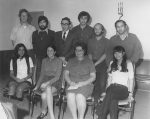
A group of people at Hillel, 1970. Back row, left to right: unidentified, Richard Bass, Rabbi Marvin Hier, Bob Golden, unidentified, unidentified. Front row, left to right: unidentified, unidentified, unidentified, Hildy Groberman. (photo from JWB fonds, JMABC L.11673)

If you know someone in this photo, please help the JI fill the gaps of its predecessor’s (the Jewish Western Bulletin’s) collection at the Jewish Museum and Archives of B.C. by contacting archives@jewishmuseum.ca or 604-257-5199. To find out who has been identified in the photos, visit jewishmuseum.ca/blog.

פרשת האף-35

קנדה שוקלת שוב את האפשרות לרכוש את המטוסים האמריקנים היקרים. (צילום: f35.com)

ממשלת קנדה בראשות ג’סטין טרודו, תשקול שוב את האפשרות לרכוש את מטוסי הקרב החמקניים האף-35. עלות המטוס אמריקני מתוצרת לוקהיד מרטין נאמדת בסכום שיא של כמאה ועשרה מיליון דולר. זאת למרות הביקורת מגורמים שונים בקנדה ומחוצה לה על העלויות הגבוהות הכרוכות ברכישתו.

המפלגה הליברלית הודיעה במפורש בקמפיין הבחירות שלה להחלפת ראש הממשלה הקודם, סטיבן הרפר, כי אם טרודו יבחר לראשות הממשלה החדשה הוא לא ירכוש את האף-35 עבור חיל האוויר הקנדי. אך בחודשים האחרונים ממשל טרודו כבר לא נשמע חד משמעי בהתנגדותו למטוס, שאמור להחליף את מטוסי הסי.אף-18 הישנים. וכאמור נשמעים קולות אחרים בממשלה ואופציית רכישת האף-35 שוב עומדת על הפרק.

במקביל לחשיבה המחודשת בקנדה הנשיא הנבחר של ארה”ב, דונלד טראמפ, יצא שוב בהצהרה שלופה מהמותן כי פרוייקט האף-35 הוא יקר מדי ויצא מכלל שליטה. הנזק המיידי: מניית לוקהיד מרטין נחתכה בבורסה האמריקנית, וההפסד נאמד בכשני מיליארד דולר. הפנטגון הזמין תשעים מטוסי אף-35 לחיל האוויר האמריקני בעלות כוללת של 391 מיליארד דולר. טראמפ יכול לנסות לבטל או להקטין את העיסקה עם לוקהיד, אך כל שינוי תלוי באישור הקונגרס, שברובו עומד מאחוריה. לוקהיד מצידה טוענת כי היא השקיעה סכומים גבוהים כדי להביא להורדה במחירו של המטוס (ירד כבר בכשבעים אחוז). יצור האף-35 מהווה כעשרים אחוז מההכנסות של מפעל לוקהיד מרטין וארבעים וחמש חברות אמריקניות שותפות בפרוייקט, שיצר כמאה ארבעים אלף מקומות עבודה.

photo - The F-35 can reach a speed of Mach 1.6, its flight range is 2,220 kilometres; it is 15.7 metres long, 4.3 metres tall and its wingspan of 10.7 metres. The plane can carry about 16 tons of bombs, missiles and fuel
האף-35 יכול להגיע למהירות של 1.6 מאך, טווח הטיסה שלו 2,220 ק”מ, אורכו 15.7 מטר, גובהו 4.3 מטר ומוטת הכנפיים שלו 10.7 מטר. המטוס יכול לשאת כ-16 טון של פצצות, טילים ודלק. (צילום: f35.com)

ישראל קיבלה בראשית שבוע שעבר את שני המטוסים הראשונים של האף-35, מתוך השלושים ושלושה שנרכשו כבר על ידה, ושירכיבו שתי טייסות. הקבינט המדיני- ביטחוני של ממשלת ישראל החליט בחודש שעבר לרכוש עוד שבעה עשר מטוסים. אז גם תורכב טייסת שלישית בחיל האוויר. יצויין כי הממשל האמריקני אישר למכור לישראל בסך הכל שבעים וחמישה מטוסי אף-35. חיל האוויר הישראלי בשיתוף פעולה עם התעשיות הצבאיות, ישביחו מספר מערכות של המטוס בהן: פיקוד, שליטה, תקשורת ומיחשוב. בנוסף ישראל תתקין במטוס מערכות נשק מקומיות ומיכלי דלק גדולים יותר מהמקוריים. וכן תחזוקת המטוס תתבצע בישראל ולא במרכזים האזוריים של לוקהיד מרטין בארה”ב ובמספר יבשות נוספות. חיל האוויר הישראלי יקים גם מרכז לוגיסטיקה ייעודי למטוסים בבסיס שבנבטים, אליו הגיעו שני המטוסים הראשונים בשבוע שעבר.

המטוס מכונה בארץ “אדיר” וישראל היא המדינה הראשונה במזרח התיכון שמחזיקה בו. אחת עשר מדינות שותפות בפרוייקט האף-35 בנוסף לארה”ב: קנדה, בריטניה, איטליה, הולנד, אוסטרליה, דנמרק, נורווגיה, טורקיה, יפאן, קוריאה וישראל.

האף-35 יכול להגיע למהירות של 1.6 מאך, טווח הטיסה שלו 2,220 ק”מ, אורכו 15.7 מטר, גובהו 4.3 מטר ומוטת הכנפיים שלו 10.7 מטר. המטוס יכול לשאת כ-16 טון של פצצות, טילים ודלק. הוא בעל יכולת טיסה חמקנית ללא זיהוי המכ”מ. אורך חייו של המטוס היקר מוערך בחמישים וחמש שנים.

לא בטוח שהמטוס המשוכלל יעמוד בציפיות של אילו שרוכשים אותו. בעיות בהליכי הפיתוח הפכו את האף-35 לפרוייקט הביטחוני היקר ביותר בתולדות ארה”ב. לא מעט תקלות ליוו את הליך פיתוח המטוס בהן: קריסת מערכת המיחשוב, גילוי סדקים באחת הכנפיים, תחזוקה יקרה ואיטית, רמת רעש גבוהה מאוד וצבע מתקלף. הרוסים והסינים טוענים מצידם כי פיתחו מכ”מים שיכולים לאתר את מטוס הקרב החמקן. טווח המטוס כחמקן הוא 1,100 ק”מ בלבד ומקרה כזה הוא לא יוכל להגיע מישראל לאיראן.

May defends new resolution

Green Party of Canada leader Elizabeth May. (photo from cjnews.com)

Federal Green Party of Canada Leader Elizabeth May said she was able to support a revised policy on the Israeli-Palestinian conflict because it rejects the boycott, divestment and sanctions (BDS) movement against Israel, but still puts the onus on the Jewish state to move towards a two-state solution.

At a special general meeting held Dec. 3-4 in Calgary, 350 members voted to pass a policy titled “Measures to pressure the government of Israel to preserve the two-state solution: addendum to current

Middle East policy.” It replaced a policy titled “Palestinian self-determination and the movement for boycott, divestment and sanctions” that passed in August at a Green party convention in Ottawa.

“It needs to be said very clearly that the BDS movement does not understand the issue properly and is in fact undermining the peace process itself,” May told the CJN the day after the addendum passed.

Immediately following the August convention, May firmly opposed the policy that supported the BDS movement.

“The reason I couldn’t accept our policy in August is because it looked very much as though we were adopting the BDS movement. And the BDS movement, although there are well-meaning people who support it, when you get down to it, their core goals do not include at all … the right of the state of Israel to exist,” May said.

At that time, May considered stepping down as leader as a result but, following a family vacation, she ultimately announced she would stay on as leader, partly because the party’s executive council agreed to call a special meeting to give members the opportunity to revisit the BDS resolution.

The amended policy states, among other things, that the “Palestinian people are among the indigenous people of the geographic region now designated as Israel and the OPT [occupied Palestinian territory],” and it supports “only non-violent responses to violence and oppression, including economic measures such as government sanctions, consumer boycotts, institutional divestment, economic sanctions and arms embargoes.”

It calls for a ban on products produced “wholly or partly within or by illegal Israeli settlements, or by Israeli businesses directly benefiting from the illegal occupation,” and it calls on the Canadian government to repeal the House of Commons resolution that condemned the BDS movement last February.

According to a statement by Thomas Woodley, president of Canadians for Justice and Peace in the Middle East, Green members voted 85% in favor of the revised policy.

Although the policy remains critical of Israel and still supports boycotts, divestment, sanctions and arms embargoes, its drafters were careful not to specifically endorse the international BDS movement. May insists the Green party is committed to a two-state solution.

“We condemn anyone who imagines that they don’t support, unequivocally, the right of the state of Israel to exist. That prefacing is critical to understanding the addendum,” she said.

“We’ve never been a party that was afraid to say out loud that we are critical of the decisions of the Israeli government from time to time. I think many Israelis are also critical of the decisions of the government from time to time.”

May said retired Israeli generals and intelligence officers who accuse Israeli Prime Minister Binyamin Netanyahu of undermining the peace process and weakening security for Israelis “make the case better than we can as Canadian Greens that there needs to be a course correction on the occupation, expansion of illegal settlements and so on…. We’d rather be aligning ourselves with criticisms that come from within the state of Israel, than with a movement that doesn’t understand the critical necessity to defend the right of the state of Israel to exist.”

May said she understands that the policy won’t sit well with many members of the Jewish community, but added, “There are a limited number of mechanisms that governments and parties can use to signal to a foreign government that we think you’re making a mistake here, while at the same time, remaining allies.”

Shimon Koffler Fogel, chief executive officer of the Centre for Israel and Jewish Affairs, said in a statement that the group condemns the resolution, “which confirms the Green party has been co-opted by extreme activists who – in their obsessive campaign of prejudice against Israelis – threaten the party’s own credibility and relevance in Canadian politics.

“The new policy is rife with historical distortions and places the Green party at odds with the Canadian consensus that BDS is discriminatory and counter-productive to peace. The Ontario legislature just voted by a tenfold margin to reject the differential treatment of Israel, underscoring how out of touch the Green party has become.”

The statement also pointed to the policy’s assertion that Palestinians are Israel’s “indigenous people,” and the implication that Jews have no ancestral or indigenous roots in Israel.

“Elizabeth May and the party’s leadership have turned their backs on the mainstream Jewish community, including the many Jewish Greens who no longer feel welcome,” he said, adding that despite calling attention to the Green party that the vote would take place on Shabbat, excluding observant Jews from the vote, the vote was held on Dec. 3.

Although May rejected the idea of boycotting Israel, she made a distinction between “legal Israel” and “illegal Israel.”

“I’d go out of my way to buy a product that is labeled a product of Israel from within the legal boundaries of Israel. But, personally, I prefer not to buy products that come from an area that is in illegally occupied territories, which, again, even retired members of the Israeli Defence Forces are saying are making life less secure for legal Israel.”

B’nai Brith Canada chief executive officer Michael Mostyn said he was encouraged by the rejection of the BDS movement.

“No matter how the party came to this position, it is a positive thing for Canadians that, once again, the antisemitic BDS movement has been rejected. It is especially significant given the amount of energy, time and resources being poured into the promotion of the antisemitic BDS movement by certain factions within the Green party.”

That being said, Mostyn added there is still misinformation in the policy.

“For example, the very characterization of settlements as ‘illegal’ under Article 49 of the Geneva Convention is either a deliberate misreading of that document, or complete ignorance of international law,” he said.

– For more national Jewish news, visit cjnews.com

A week of kindnesses

King David High School Grade 8 students Noam, Judd and Joey, collecting bread from COBS. (photo from facebook.com/foodstashfoundation)

Nov. 21 saw the start of King David High School’s now-established RAC Week. Started as part of the Random Acts of Kindness program – adapted as Random Acts of Chesed – this is a five-day celebration of paying it forward. Whether it’s picking up garbage, helping the homeless or moving furniture, every activity gives the students a chance to experience the rewards of helping others.

This year, The Giving Tree formed the basis for RAC Week’s good deeds. Illustrations from Shel Silverstein’s book about unconditional love decorated the main hall and foyer. Heartwarming messages read “Kindness is Contagious,” “Spread the Love” and “Smile! It’s RAC Week!”

RAC Week takes the students outside their comfort zones. According to the director of Jewish life at KDHS, Ellia Belson, this year’s destinations were chosen based on feedback gleaned from last year’s offerings. “The Grade 12s wanted to go where there was the greatest need,” she said.

Among the destinations were the Kerrisdale police detachment, Quest Outreach and Admiral Seymour Elementary School. At the school, which is on Keefer Street, they witnessed an unfamiliar degree of tension – and fighting – among the kids. KDHS student Ethan (Grade 10) described how he “tried to get people to play together who might not do so normally.”

photo - During RAC Week, heartwarming messages read “Kindness is Contagious,” “Spread the Love” and “Smile! It’s RAC Week!”
During RAC Week, heartwarming messages read “Kindness is Contagious,” “Spread the Love” and “Smile! It’s RAC Week!” (photo by Shula Klinger)

Under the guidance of teacher Matt Dichter, Grade 8 student Noam accompanied Food Stash Foundation on their daily rounds. Started by David Schein, a former teacher at KDHS, the foundation was created to help reduce food waste in the Vancouver area. FSF collects leftover items from grocery stores, such as Whole Foods, at the end of each work day. Food Stash then delivers the food to where it’s needed most: more than 15,000 kilograms of food since September, said Schein. On the morning of Nov. 22, deliveries were made to the Kettle Society, Mount Pleasant Neighborhood House, Tenth Church and Oasis Café.

The RAC group from KDHS rescued food from COBS Bread, Greens, Fresh is Best and a number of other sites. The numbers speak volumes. Every year, each Canadian throws away approximately 127 kilograms of food. KDHS kids rescued 135 kilograms in a single day.

“I really liked working with the kids because it is a great way to raise awareness of food waste in the younger generation,” Schein told the Independent. “Half of food waste happens at home, so they can now go home and speak to their parents, start influencing food choices.” He added, “Saving me some lifting was also nice!”

With its emphasis on community service, RAC Week is a concentrated course in educating the emotions, as well as the intellect. Noam described how “it felt good to give back.” Asked whether his work with Food Stash had had an impact on his daily life, he answered with a definite yes. His intentions were clear, as he explained, “even finishing what’s on your plate” can have an impact on food wastage.

RAC Week offers a curriculum of social responsibility best taught outside the classroom, where students develop an awareness of other kids’ lives and struggles. The conversations that take place after the outings present an opportunity to reflect on these struggles and express gratitude for their own station in life. It also allows the students to teach one another, under Belson’s guidance, about what each group learned.

While the kids spoke animatedly about their excursions, their most energetic, personal and heartfelt responses were to Belson’s simple question, “What does chesed mean to you?”

At this, it seemed that half the students raised their hands, speaking with passion and clarity about “giving and not taking” (Ella). Connell quoted from the film Fantastic Beasts and Where to Find Them, with the admonition, “Be a giver, not a taker.” Ethan spoke at length about how it’s easy to “take for granted a loving home, a loving family…. It’s a week to recognize that by giving back.” Jordana agreed, talking about the importance of seeing “how others live – even so close to us. It made a difference.”

Sometimes, the greatest lessons in life can be taught in the simplest of ways. Adi talked about “being a mensch, helping people who have less, making people feel happier, making them smile.”

Shula Klinger is an author, illustrator and journalist living in North Vancouver. Find out more at niftyscissors.com.

There is danger in autocracy

Last week, an Israeli artist erected a life-sized golden statue of Israeli Prime Minister Binyamin Netanyahu in Tel Aviv’s Rabin Square. Reminiscent of the golden calf with its connection to forbidden idolatry, artist Itay Zalait said he was making a statement about freedom of speech in Israel and what he sees as a type of idolatry growing around the man sometimes called King Bibi.

Citizens gathered around the statue, arguing about its meaning and various interpretations. Because the installation was erected without a permit, city officials ordered it removed but, before the artist could do so, it was toppled by a bystander and left laying on its side like the figure of a deposed despot.

In addition to the prime minister’s office, Netanyahu occupies the portfolios of foreign minister, economy minister, minister of regional cooperation and communications minister.

In this latter role, Netanyahu has appointed figures to oversight positions that have allowed them to put a finger on the scale in support of media outlets that are sympathetic to the government. Similarly, American casino magnate Sheldon Adelson bankrolls the newspaper Israel HaYom, which is widely seen as a propaganda machine for Netanyahu.

The Netanyahu government is also seen as threatening the broadcast news sector, having undertaken an effort to replace the state-run broadcaster with a more complimentary version, only to reverse course when it appeared the new agency would also be insufficiently uncritical. Like other politicians in democratic countries, Netanyahu has found some popularity among his supporters by picking fights with the media, including individual reporters who report things unfavorable to the prime minister.

While discourse in Israel remains legendarily vibrant, evidence that the government may be attempting to influence or control aspects of journalistic freedom are rightly drawing deep concern. And this concern is exacerbated by evidence of other tendencies within Israeli society that seem to reflect authoritarian, anti-democratic and discriminatory inclinations.

Education Minister Naftali Bennett is having “ethical rules” drawn up for what university lecturers can and cannot say about politics. Culture Minister Miri Regev has promoted a bill to retroactively cut funding to cultural institutions that do not meet the government’s standard of “loyalty” to the state of Israel.

On a different, but similarly ham-fisted front, there is the attempt to legislate the public broadcast of the muezzin, the five-times-a-day call to Muslim prayer, which begins before dawn. Granted, not everyone is keen to have daily pre-dawn loudspeaker broadcasts, whatever the purpose, but such a move against a religious minority already experiencing myriad forms of discrimination calls into question fundamental issues of multiculturalism and respect for religious freedom and pluralism that need to be addressed.

The rabbinate has also weighed in on a few issues that have outraged progressive and feminist Israelis.

Crediting a 15th-century scholar, the Sephardi chief rabbi Yitzhak Yosef declared that women and yeshivah scholars are forbidden from serving in the Israel Defence Forces or performing national volunteer service. He claimed that women had been permitted to go to war at times in Jewish history, but only to cook and clean. The comments come at a time when Israel has seen a four-fold increase in the number of women combat soldiers and as some segments of the political spectrum and civil society are speaking up against what they see as the unsustainable tradition of military exemptions for the ultra-Orthodox.

Then there is Eyal Karim, who was recently sworn in as chief rabbi of the IDF. During his confirmation hearings, Karim was forced to explain earlier comments that seemed to justify the rape of non-Jewish women during wartime. He apologized, saying that his comments were a theoretical consideration of biblical permissions and prohibitions. Karim has also stated that women should not serve in the IDF, or sing at army events.

These and other developments have combined with the Netanyahu government’s warm reaction to Donald Trump’s election to raise alarm among some that Israel is on a path similar to the populist, authoritarian phenomenon seen in the United States and much of Europe. In so many ways, Israel’s body politic is sui generis, utterly unlike any other democracy on earth. Yet it should not surprise that what emerges among its closest allies should also find a place among Israelis.

Trump, tweeting from his gold-embossed chambers in Manhattan, is exhibiting plenty of monarchical characteristics. European political upstarts are glorifying strongmen of the past and, in some cases, of the present, in the form of the Russian leader Vladimir Putin. When these sorts of autocratic inclinations arise in Israel, they should be opposed there, just as they should be everywhere.

Laughter a vital salve

“It’s that time of year, when you are wondering what to get your husband, father, uncle, friend, or any other smooth dude in your life … so why not get them that greatest of all gifts: laughter. And what’s funnier than prostate cancer? After all, it’s basically pee, poo and (no) boners, what’s not to like?”

So reads the Nov. 30 post on the Facebook page of Finger Up the Bum: A Guide to My Prostate Cancer by Michael Hart Izen (Leola Productions, 2016), which features illustrations by Izen’s brother, Jon Izen, as well as some by his father, J. Roy “Sneeze” Izen. These cartoons are on the edgy side, and might offend some people, but the humor is vital, not just for the book, but for Izen, his family, his friends – for survival. The ability to see humor in even the grimmest of situations is something to be valued.

book cover - Finger Up the BumThis is one of the many takeaways from the book. Another, which appears most succinctly at the end of a short promotional video on Facebook, is “Finger up the bum … get ’er done!” In other words, men should buck up, go to the doctor and get a prostate exam.
Izen had none of the risk factors for prostate cancer. He had symptoms about which he was worried – he had to pee more often, he had some “softwood lumber issues.” After much poking, prodding and testing, trying various treatments for what might be wrong, he finally found out he had prostate cancer. He was 45. He was told, “With the removal of the prostate and hormone therapy to follow, people in your condition have a 60% survival rate in the next five years.”

After surgery, hormone therapy, radiation and all the side effects – about which Izen is candid – just when his body seemed to start functioning again, at age 49, he found out the cancer had spread. “Sure, there is always hope for some new medication or another, but the cancer is in my liver, so the best they can do is delay the inevitable,” he writes. “There is no cure. At least I am not yet at the stage where they are offering to make me comfortable.

“So now I’ve signed up for a few clinical trials and, luckily, the first of the new meds seems to be working. Hopefully, this buys me some more time, because I’m not ready to go.”

The book is dedicated to the Vancouver Prostate Centre and B.C. Cancer Agency who are trying to keep him alive, but the main dedication is to his wife, Gina Leola Woolsey. And, of course, Izen is not only thankful for her helping him shape his “ragtag ramblings … into the almost Shakespearean tale” that is Finger Up the Bum, or that “she did the research to recommend Page Two Strategies, Kickstarter and other key people on this project.” (The Kickstarter campaign raised more than its $25,000 goal to cover publishing and related costs.)

“When I was having my initial troubles,” he writes, “it was Gina who kept sending me back to the doctors to get answers. When I was not always completely forthright with my doctors, it was Gina who made me tell them everything. When my doctors were content to just pass things off as one of those things, it was Gina who made us all reconsider our next course of action. When I came home from the hospital after surgery, it was Gina who nursed me back to health with good food and great care.”

Izen thanks his brother, parents and daughter (who also helped on the book project) and many others. This might be the less obvious takeaway from this book: the importance of the people in your life, and being grateful for them. In contemplating what lies ahead, Izen says he doesn’t need “a greatest regrets tour” – “I’m not looking for more time to rewrite my life; I only want more of what I already have.”

Finger Up the Bum is available from amazon.ca, chapters.indigo.ca, smashwords.com and barnesandnoble.com, or directly from Izen, michael@izen.ca.

B’nai mitzvah connections

Teens from Temple Sholom’s sister congregation, Tzur Hadassah, in Israel. Rabbi Stacey Blank is on the far right. (photo from Rabbi Dan Moskovitz)

Derech L’Torah is a b’nai mitzvah orientation program currently offered by Temple Sholom, which pairs a group of Vancouver b’nai mitzvah with their Israeli counterparts. The Israeli families come from Tzur Hadassah, Temple Sholom’s sister community just outside of Jerusalem in the pre-1967 territory of the Judean hills. The ongoing dialogue has illuminated both similarities and differences between Israelis and Canadians preparing for the rite of passage.

“In Israel, boys are more often motivated to have bar mitzvahs by social pressure, whereas girls often desire to make a statement,” said Rabbi Dan Moskovitz of Temple Sholom. “They may be motivated by egalitarian, feminist ideals in a culture where the religious sphere is still more dominated by patriarchy.”

Canadian b’nai mitzvah may assume that Israelis will have a substantial leg up on bar or bat mitzvah preparation, but that is not necessarily the case. Canadians may actually have more synagogue experience than their Israeli compatriots, and Israelis find liturgical Hebrew something like Canadians find Shakespearean English.

“Whether Israeli or Canadian, both are going through the gateway of this liminal moment,” said the rabbi, “and both are being immersed in Jewish time and Jewish ritual.”

Among the parents, there are more similarities than differences, said Moskovitz.

In Israel, a bar mitzvah is not “required” for Jewish identity, whereas, in Canada, those who don’t have a bar mitzvah rarely cultivate a strong Jewish identity as they grow up.

“Both sets of parents want their children to be successful, without them feeling too pressured, and, for both, some of them are guiding their children through something they themselves may have walked away from.”

One of the main benefits of the program, said Moskovitz, is the way that it joins together parents of b’nai mitzvah into a cohort to connect with and support each other.

The program starts in the spring of Grade 6 and goes to the fall of Grade 7. Among the Temple Sholom contingent, the students tend to be about one-third from Vancouver Talmud Torah and Richmond Jewish Day School, and most of the rest have a supplementary school background.

The partnership between Temple Sholom and Tzur Hadassah aims to create a vibrant connection between Reform Jews in Canada and Israel and goes beyond the Derech L’Torah program. Visitors to Israel from Temple Sholom have attended Shabbat dinners and synagogue services at Tzur Hadassah, and Temple Sholom supported a community garden project there. Rabbi Stacey Blank of Tzur Hadassah has taught an adult education at Temple Sholom via Skype, and Moskovitz and Blank have published articles in each other’s temple bulletins.

Matthew Gindin is a freelance journalist, writer and lecturer. He writes regularly for the Forward and All That Is Interesting, and has been published in Religion Dispatches, Situate Magazine, Tikkun and elsewhere. He can be found on Medium and Twitter.