A precious space in Ireland

Machzikei Hadas can be found on Rathmore Villas in Dublin. (photo from jewishgen.org)

When my bride and I lived in Dublin, we were strangers in a foreign land. Our refuges were the synagogues of the tiny Jewish community. It was there we found instant acceptance. We were in Dublin, escapees from the harsh extremes of temperature in the places where we used to live. Original products of Winnipeg, we had left Ottawa to pursue a life of retirement in Ireland. Recently married, we were getting to know each other again after leading separate lives since acquaintance in our teen years.

In Ireland, we benefited from the welcoming embrace of the country’s cradle-to-the grave social system, in spite of being alien residents. Seeking community associations, we joined a synagogue, the Dublin Jewish Progressive Congregation. It had the merit of permitting men and women to sit together, important to us at the time. However, we found that environment less fulfilling, and I began to attend another, more orthodox, establishment. Although it was in the main synagogue in Dublin where we had our Orthodox marriage – we were married previously by a justice in Canada and a progressive rabbi in Jerusalem – in the end, we found it, as well, less welcoming than we liked. Finally, we became firmly attached to a shtiebel, which is the subject of this memoir.

When I attended, Machzikei Hadas had maximum capacity of about 50 male worshippers. It was located in the annex of a house. Among the benches for seating were tables, which were used, after the services, for food and drink. About a third of the space was devoted to seating for women, behind a barrier with a curtained screen. Alcoves at the back had a small kitchen and a children’s playroom, with a door providing a separate entrance for women. A pulpit stood in the centre of the main room on the traditional raised area, used for reading from the Torah. The cantor, a volunteer from the group, led the services. The room was bare. The only adornments were a decorated cover for the cubicle where the scrolls were kept in the front of the room, and an embellished covering on the pulpit where the Torah was read.

The synagogue is managed by a group of about 10 men, with the assistance of some of their wives. The total membership is small. Aside from holidays, the congregation convenes once weekly, every Saturday morning. Ritual (Ashkenazi) is strictly observed. Men and women sit separately except for the Kiddush. When the time comes to eat and drink, men and women are seated cheek by jowl. One of the abiding attractions of this place is the generous table that is set after services each week, complete with bottles of Irish whiskey. Rarely are these returned to the cupboard with any contents. The participants look to salvation in their spirits and I have many times departed this place elevated in spirit, but somewhat the worse for wear.

The men in this congregation are of an independent-minded cast. They have resisted the blandishments of the main congregation in Dublin for decades, to maintain their independence. Every Saturday involves a struggle to ensure that the necessary 10 men are assembled for a formal service. Each attendee is precious, and his arrival is greeted with appreciation for his presence, as a member of a select group. Each regular has his appointed place to sit.

A unique feature of services is that they are often unruly, as the members exchange news and discuss notable occurrences during the past week. All join in the service at the appropriate places, but otherwise the exchange of news and views continues, nearly unabated, during their time in this place. I gloried in the down-to-earth atmosphere.

Members are chosen each week to mount the central platform, to have their name, and their father’s name, celebrated, in reading portions from designated chapter in the Torah. I was always thrilled to be called up, to have my father’s name announced. To me, it was as if my father could hear his name called out and he could witness that I was keeping his memory alive. Each time I had the opportunity, I loudly exclaimed the requisite prayer, to awaken my father from his slumbers.

Each of the principals in the synagogue I grew to know was in some way markedly distinct from my experience with any other group to which I have belonged. Each, in his way, was key to the successful operation of the synagogue. Attendance, management, security, accumulation of food and drink supplies, almost everyone played a role, often supplementing needs from their own pockets.

David, the secretary, a young man, seemed to be a prime mover. He carried the concerns of the synagogue in his mind at all times. Inhabiting the rough-and-tumble world of classic car sales, he was nonetheless devout in his observance.

Michael, the president, seemed to perform his role under David’s prompting, taking everything with collegial grace. More “laissez-faire,” he was an enthusiastic participant in the consumption of Irish whiskey. He often brought his beautiful, wilful, but adorable 5-year-old son with him to synagogue.

The triumvirate was rounded out by Terry, the inveterate cantor. A convert to Judaism, he progressed through the prayer agenda, in spite of the babble behind him, and would cheerfully give up his place to visiting presenters. With his American wife, Karen, he was a mainstay of the synagogue, and a fierce defender of all elements of ritual observance. We looked over our shoulders to see if he was watching when we transgressed. We are hoping and prayerfully expecting the Deity to be more lenient in His judgments of us than was Terry.

Melvin, my seatmate, took care that I did not blunder in my observance, using the right book, reading the right page. Richard, an Irish convert who spent time on kibbutz in Israel, sat behind us. A civil servant, he has shared with me the mysteries and intricacies of Irish bureaucracy and politics. Sturdy participants in the demolition of many a whisky container, I would gladly have them by my side, anywhere, whatever I had to face.

Joe, a truly lovable mensch, sat across the aisle. He and his brother Robbie, many years in Ireland, still bear the accents they brought with them from Slovakia. Purveyors of parchment, they are the synagogue Cohens, necessary for the reading of the scrolls. Robbie is the synagogue treasurer, openly eager for a tip on the stock market.

Alec sits at the back. He is a retired person of the legal profession and the real brains of our outfit. He was usually at the centre of discussions, dispensing wisdom and wit.

Monty was my real favorite, and we had a meeting of the minds. With him, I shared my deepest secrets and my tendency to violent extremism in defence of Israel. He sat far forward in splendid isolation, focused on his worship. He did occasionally join us for a bite and a wee dram. I am regularly in contact with him to this day, years after I have departed the Emerald Isle.

Eddie was a more recent returnee, coming from some other Irish place. A Levi, he played a ritual role. He was our mellifluous cantor on many occasions, generous with his time and effort. Enthusiastic of voice and social commentary, he disapproved of our unruly behavior in the back of the room. He appeared to be discomfited by too much public attention to the Jewish fact and the attention garnered by Israel’s struggle to survive. We have different views as to Jewish public policy, but he was often a cheerful addition to our services.

There are too many others to enter into detail. What a pleasure it was to have been to be a part of all this! How can I express fully the depth of my feeling of kinship, the strength of my appreciation for having been made so welcome within this community? The participants may have seemed at times cavalier in observance, but they cling fiercely to their synagogue and its perpetuation. I have been moved to tears there by my readings in the scrolls, and filled with joy, my enthusiasm raucous, in singing some of the prayers together with my fellow Jews. When we sang out together, my voice roared – I wished to sing louder and louder so the Divine would hear – and my heart soared to be there with my brothers in that place.

A stranger, I was embraced and made to feel a part of this tribal fellowship. There, I felt free to worship in my own way. There, one’s foibles might be the subject of critical humor, but they were accepted. Some of my best times in Ireland were spent in that place. I am grateful and thankful for all those who made that precious corner of Jewish life what it was. It remains with me always as something I seek in other congregations. I celebrate it and its members. Am Yisroel chai!

Max Roytenberg is a Vancouver-based poet, writer and blogger. His new book, Hero In My Own Eyes, is forthcoming.

Mystery photo … Oct. 28/16

Louis Brier Home, 1965. (photo from JWB fonds, JMABC L.12338)

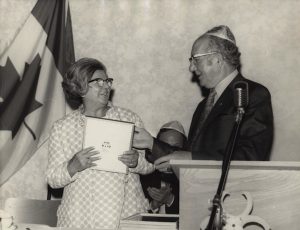
photo - B’nai B’rith, woman receiving an award, 1971
B’nai B’rith, woman receiving an award, 1971. (photo from JWB fonds, JMABC L.12175)

If you know someone in these photos, please help the JI fill the gaps of its predecessor’s (the Jewish Western Bulletin’s) collection at the Jewish Museum and Archives of B.C. by contacting archives@jewishmuseum.ca or 604-257-5199. To find out who has been identified in the photos, visit jewishmuseum.ca/blog.

New Safdie-designed campus

Israel Antiquities Authority’s new 36,000-square-metre, three-level National Campus for Archeology of Israel, designed by architect Moshe Safdie to descend like excavation strata, is still under construction. (photo by Ardon Bar Hama, Israel Antiquities Authority, via Ashernet)

Located on Museum Hill in Giv’at Ram between the Israel Museum and the Bible Lands Museum in Jerusalem, the facility will allow the public to see some of the tens of thousands of archeological items presently being held in store rooms and to watch, through windows, conservation being carried out on a variety of national treasures. Twenty-six donors, together with a significant contribution from the state, made it possible to go ahead with the $105 million project, which is expected to be complete in about a year’s time.


בחירות בארצות הברית בלוטו

מתברר שהתנהלותו של דולנד טראמפ בקמפיין הבחירות שלו גורמת נזק וכאב ראש, למערך יחסי הציבור שנערך לפתיחת מלון הדירות טראמפ, ברחוב ווסט ג’ורג’יה בדאון טאון ונקובר. (צילום: Roni Rachmani)

לפי תושבי בריטיש קולומביה קלינטון תזכה בנשיאות לבחירות בארה”ב: כך לפחות מצביעים ההימורים באתר של הלוטו קורפורשיין

הקנדים היו מאוד רוצים להצביע בבחירות לנשיאות ארצות הברית שיערכו בשמונה בנובמבר. זאת כיוון שהם יודעים שהתוצאות יכולות להשפיע משמעותית על היחסים עם השכנה מדרום. אך למעט אלה שמחזיקים בדרכון כפול (קנדי ואמריקני) ולכן כן ויוכלו להצביע, הרוב הדומם בקנדה יצפה בתוצאות הבחירות מול מסך הטלוויזיה.

אך מתברר שהתושבים המקומיים יכולים לשחק בנדמה לי ולהמר על מי שלדעתם המועמד שיזכה בנשיאות. זה עולה כמובן כסף וזה אף חוקי בקנדה (לגילאי 19+). ההימורים על הבחירות בארה”ב מתבצעים באתר הלוטו קורפורשיין של בריטיש קולומביה. לעומת זאת יצויין אין אפשרות לקנדים להמר על תוצאות הבחירות המקומיות או הפדרליות בקנדה. בלוטו קורפורשיין אומרים כי רבים רבים מהמרים על הבחירות בארה”ב, שעולות כיום על כל ההימורים האחרים של התאגיד. אגב גם במחוזות מניטובה ונובה סקוטיה ניתן להמר על הבחירות בארצות הברית.

לפי מצב ההימורים הנוכחי בבריטיש קולומביה מועמדת המפלגה הדמוקרטית, הילרי קלינטון, תזכה בבחירות מול מועמד המפלגה הרפובליקנית, דולנד טראמפ, ביחס שעומד על 1.18. כך שמי שכמעט הולך על בטוח ומהמר על קלינטון נניח בסכום של מאה דולר יזכה במאה ועשרים דולר, עם אכן היא תזכה בבחירות. ואילו ההימורים לטובת טראמפ עומדים ביחס הרבה יותר גרוע שעומד על 5.20. כך שמי שמסתכן ומהמר על טראמפ נניח בסכום של מאה דולר יקבל לא פחות מחמש מאות ועשרים דולר, אם דווקא הוא ינצח בבחירות.

photo - The hotel was scheduled to open in August this year. Then the opening was postponed for the fall but this did not happen
המלון היה אמור להיפתח בחודש אוגוסט השנה. לאחר מכן הפתיחה נדחתה לסתיו אך גם זה לא קרה. (צילום: Roni Rachmani)

לדברי הלוטו קורפורשיין של בריטיש קולומביה לפחות כארבעים אחוז מהמהמרים תומכים בקלינטון ואילו פחות מעשרים וחמישה תומכים בטראמפ. כל ידיעה שמגיעה מטעם מחנות שני המועמדים מורגשת היטב בזירת המהמרים. וכידוע כל הזמן מגיעות חדשות מקלינטון ומטראמפ, שגרמו למערכת בחירות לנשיאות ארה”ב להיות לחסרת תקדים בשערוריות ובלכלוכים שלה.

בינתיים מתברר שהתנהלותו של טראמפ בקמפיין הבחירות שלו גורמת נזק וכאב ראש, למערך יחסי הציבור שנערך לפתיחת מלון הדירות טראמפ, ברחוב ווסט ג’ורג’יה בדאון טאון ונקובר. המלון היה אמור להיפתח בחודש אוגוסט השנה. לאחר מכן הפתיחה נדחתה לסתיו אך גם זה לא קרה. מסיבות לא ידועות הפתיחה של המלון נדחתה שוב והפעם לראשית שנה הבאה. לדעת מומחים בעלי הפרוייקט הולבורן גרופ מעדיפים להמתין עד לסיום הבחירות והקמפיין הנוראי של טראמפ שיורה לכל עבר, ורק אז לקיים מסיבת פתיחה של המלון. הולבורן גרופ מפרסמים באמצעי המדיה מזה זמן תחרות להשתתף באירוע הפתיחה הרשמי של המלון. הזוכה בתחרות יובא ברכב מפואר למלון, יקבל לינת חינם ללילה, ישא אישור וי.איי.פי וכן יפגוש אישית את משפחת טראמפ. לאור התנהלותו השערורייתית של טראמפ, מתברר שלא רבים קופצים על המציאה להשתתף בהליך התחרות.

במקביל לקמפיין הבחירות של טראמפ כמה עשרות תושבים מקומיים השתתפו לאחרונה בהפגנה ליד מלון הדירות, תוך שהם מניפים כרזות בגנותו ומבקשים לעודד את הציבור האמריקני להביס אותו בבחירות.

כזכור ראש עיריית ונקובר, גרגור רוברטסון, ניסה ללא הצלחה להפעיל לחץ על הולבורן גרופ, להוריד השם טראמפ ממלון הדירות. סקר אחרון שנערך בקנדה מצביע על כך שכשישים ושניים אחוז מהאזרחים רוצים שהשם טראמפ יורד מבתי המלון והדירות בטורונטו וונקובר.

הפרמייר של מחוז בריטיש קולומביה, כריסטי קלארק, קוראת לכולם גנות את עמדותיו הסקסיסטיות של טראמפ כלפי נשים. לדברי קלארק יש לדאוג לכך ששיחות מסוג כזה ומחשבות מסוג כזה לא יהפכו לנורמליזציה.

הזכייה הרגה אותו

בחודש פברואר של שנת 2006 עת היה בן עשרים וארבע, זכה דניאל קרלי שגר בעיר סנט קתרין בלא פחות מחמישה מיליון דולר, בהגרלת הלוטו של אונטריו לוטו אנד גיימבלינג קורפורשיין. (צילום: Lottery & Gaming Corp. via thestar.com)

במקרה של דניאל קרלי ממחוז אונטריו אפשר להגיד בביטחון שהטפשות מנצחת. בחודש פברואר של שנת 2006 עת היה בן עשרים וארבע, זכה קרלי שגר בעיר סנט קתרין בלא פחות מחמישה מיליון דולר, בהגרלת הלוטו של אונטריו לוטו אנד גיימבלינג קורפורשיין. ואילו עתה בגיל שלושים וחמש ללא דולר בכיסו, חייו השתנו מקצה לקצה והוא נכנס לאחרונה לכלא לשנתיים וחצי על הברחת קראק קוקאין.

את מה שעבר קרלי בעשר השנים האחרונות אפשר לתעד סרט קשה לעיכול, עם פתיחה מבטיחה וסוף נוראי. לאחר הזכייה החליט קרלי לתרום כספים למספר ארגונים בהם, לקרן שאירגנה אירועים לאנשים חולים. משום מה הוא החליט להשאיר את מרבית כספי הזכייה הגדולה שלו בבנק ולהינות מהריבית. חלק לא מבוטל מהכסף הושקע בבר שקרלי פתח. לאחר מספר שנים נולד לו ילד (שכיום הוא בן שבע) מבת זוגתו דאז (כאשר השניים הספיקו בינתיים להיפרד).

באופן מדהים להפליא “הצליח” קרלי לשרוף למעלה ממחצית מכספי הזכייה בתוך השלוש השנים הראשונות, על רמת החיים הגבוהה שלו. בעותה עת במקביל הוא החל להשתמש בסמים קשים בכמות גדולה, עד שהפך למכור לקוקאין והרואין. לטענת עורכת דינו רבים מאלה שהכירו אותו, ניצלו את תמימותו והוציאו ממנו כספים בסכומים גבוהים. הוא פשוט לא ידע כיצד לתנהל עם כספי הזכייה, ובעיקר מול אנשים שהוא לא היה בליגה שלהם. הסוף המר כאמור ידוע וקרלי הסתבך בפלילים לאחר שהבריח קראק קוקאין. זאת כדי לממן את השימוש בסמים הקשים עד לבסוף הוא נתפס. המשטרה ניהלה מעקב אחריו ואחרי שותפיו לפשע במשך כתשעה חודשים, ומצאה שהוא פועל במסגרת ארגון פשע גדול ומוכר באונטריו.

לאחר שנעצר החליט קרלי לעבור הליך ארוך של שיקום וגמילה מסמים קשים. בית המשפט העליון של סנט קתרין פסק לקרלי שנתיים וחצי בכלא. אילו היה לו עבר פלילי העונש היה גבוה עוד הרבה יותר. ועתה כשהוא יושב בכלא הפדרלי בוודאי יש לו מספיק זמן לחשוב כיצד הפך ממיליונר חופשי לחסר כל כלוא. לסרט על קרלי אין סוף הוליוודי.

נסיעה לא שיגרתית: שוטרים עצרו זוג שעשה סקס בזמן נהיגה

לשוטרים בניידת לא היה ברור מדוע המכונית שלפניהם באחד הכבישים הראשיים של ריצ’מונד, לא נוסעת ישר אלא זזה מצד לצד ללא הפסקה. שני השוטרים הגבירו את המהירות והבחינו ששני בני הזוג ברכב יושבים יחד במושב הנהג. ומהתקרבו לרכב הם נדהמו לראות שהם עושים ממש סקס תוך כדי נסיעה. השוטרים הורו מייד נהג לעצור בצד הכביש ולפתוח את החלון. הנהג עצר את רכבו ותוך שהוא מתנשף ומזיע, הוא העביר את בת זוגתו למושב שלידו ופתח בקושי רב את החלון. השוטרים ציינו בדוח שכתבו לאחר האירוע כי הנהג “התקשה להתרכז בנהיגה”. הצעיר בן התשע עשרה קיבל בו במקום קנס גבוה בגובה חמש מאות וחמישים דולר על נהיגה חסרת אחריות, נהיגה ללא חגורה ועל מעשה שאסור ברבים.

בתחנת המשטרה לא זוכרים מקרה יוצא דופן שכזה של נוסעים שעשו סקס תוך כדי נהיגה בכביש ראשי. מפקד התחנה בהודעה לעיתונות הציע לזוגות למצוא מקום פרטי ולא על הכביש לקיוום יחסי מין. בחשבון הטוייטר של המשטרה נכתב בין היתר כי: “אחד השוטרים שלנו עצר זוג שקיים מגע מיני ברכב. הליך קבלת הרשיון ובדיקת זהות הנהג היה ארוך מן הרגיל”.

Putting heart into city

Heart of the City festival participants. (photo by David Cooper)

Community is at the heart of what Ruth Howard, Maggie Winston and Sharon Kravitz do, so it is no wonder they are participating in the Heart of the City Festival, which features more than 100 events at more than 40 locations throughout the Downtown Eastside Oct. 26-Nov. 6.

One of the projects is Realms of Refuge, which Howard (of Toronto’s Jumblies Theatre) describes as “an episode of Jumblies’ Four Lands national tour, which itself grew out of our 2015 west-to-east-coast tour, Train of Thought, for which Vancouver Moving Theatre was a key partner.” VMT is the main presenter of Heart of the City, and Howard has known VMT’s co-founder and artistic director Savannah Walling since 2003.

Realms of Refuge’s “four lands” concern senses, memory, history and dreams, explained Howard. “Over the course of the [two-week] residency, artists and community members create and bring to life these lands, through drawing, miniature models, words, music, movement and conversation. There will be drop-in art-making sessions at the Interurban Gallery (the project’s home-base), as well as some workshops in other locations with community groups and partners…. An open-ended number of people of all ages, backgrounds and abilities can take part in the activities and come to enjoy the evolving artwork.”

photo - Ruth Howard
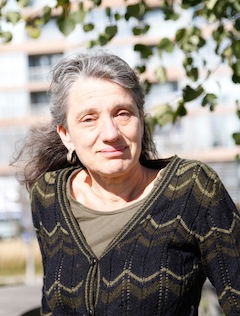
Ruth Howard (photo by Liam Coo)

The intent of the project, said Howard, is “to spark thought and conversation and promote curiosity and understanding about the lives and experiences of people living on the same land.

“The ‘evolving gallery’ form, which I first invented and started to play with at Jumblies in 2009, involves setting up the framework for artistic creation in a gallery, studio or other suitable public venue, launching the starting point and facilitating its growth over a period of time. Generally, it starts with visual arts activities and then moves on to include words and simple performance. The idea is, rather than opening a gallery exhibition to be viewed in its finished state … we set the context for something that can’t happen unless diverse people come and take part; the nature and specifics are determined by those participating people, and we celebrate its closing state.”

Howard founded Jumblies in 2001. “I was always seeking ways to combine esthetic and social values and impact, and to blur distinctions between process and product; audience and participant; story and history; ritual and theatre; art and life,” she said.

“In 1990, I encountered the British ‘community play’ form, brought to Canada by writer Dale Hamilton, in a production in the Guelph area called The Spirit of Shivaree. This was for me a life-changing experience: I found a form of art-making that combined epic-scale theatre with wholehearted social inclusion and an astonishing capacity for social change.”

Howard wants to make art in ways “that don’t fit into standard disciplinary delineations,” to collaborate with others who have skills and perspectives she doesn’t, to learn “from people, places and stories that have tended to be left out of our cultural mainstream” and to “bring people together across real and perceived differences and remove restrictive delineations,” such as “youth” or “marginalized people.” She wants to “create an exciting, accepting and nourishing home and creative/social worlds in which my children – and also my friends, family, neighbors, colleagues and co-inhabitors of the land – can grow up and live,” as well as “have quirky ideas large and small and have the freedom to explore, develop and realize them.” She would like for art to be “at the heart of life.”

When asked if Judaism or Jewish culture has influenced her, Howard said, “My mother was a German Jewish refugee, whose immediate family escaped to England in 1938, just after Kristallnacht. Her father was a businessman and excellent amateur violinist, and her mother was a painter, well established in the Hamburg avant-garde arts scene before the war. I was brought up with a strong non-religious Jewish identity. As an adult, I joined a Toronto secular leftist Jewish organization (the United Jewish People’s Order and their summer community, Camp Naivelt), in which community I brought up my three children.

“Altogether my Jewish sensibility is hugely relevant to my life and work,” she said. “I was brought up with art as an essential part of life – both doing it … and witnessing it…. I was also brought up absorbing that it is important never to leave anyone out; not to support, tolerate or ignore separation of people into exclusive groups; always to have space at the table for unexpected guests; to welcome everyone; that ‘never again’ means ‘never for anyone.’”

Through her association with UJPO, Howard “learned to interpret and celebrate Jewish holidays for their social and cultural relevance to struggles of all humanity for survival, freedom and dignity.” She has created an oral history/theatre project with Camp Naivelt and, more recently, adapted a series of Passover seders to include the telling of other vital stories, such as Toronto’s indigenous history.

“When I first heard the word genocide used in relation to the treatment by European settlers of Canada’s indigenous people, I was stopped in my tracks; it was something that I couldn’t put aside…. Since then, I have made it a priority to learn and form relationships so that the work of Jumblies could support First Nations recovery, justice, equity, and new awareness for all of us who live here…. My ongoing artistic preoccupations include inherited memories of and present relationships with eradicated places, and the interplay and relative merits of remembering and forgetting. These themes are woven into the Four Lands/Realms of Refuge project. It isn’t particularly a Jewish project, but it springs from my particular Jewish mind … and the Vancouver iteration, with its focus on places of refuge, happens aptly to take place during Sukkot.”

Jewish culture has also influenced Winston, who grew up in a secular family.

“My upbringing in a family that is very engaged in politics, culture and the arts has definitely influenced who I am and how I approach the world,” said Winston. “I do believe that being culturally Jewish has contributed to my sense of being an advocate for others, of being confident in my ability to ask questions and explore ideas, and in feeling as though I am part of a greater community. Growing up in the United States in a suburb of Baltimore that was pretty white and Christian, I did feel different from my peers even though Baltimore has a huge Jewish population. Enjoying that feeling of differentness has led me to being a creative professional.

“Jewish folklore is a great source of inspiration and I would love to learn more,” she added. “My solo puppet and clown show Just Enough is based on the Yiddish folktale Joseph’s Overcoat, in which something is made from nothing and then passed down through family. In my version, it features a grandmother (a puppet) and her granddaughter (me, as a clown). The grandmother makes a quilt out of her old clothes for her baby granddaughter and, as she grows up, the grandmother cuts and sews it into other things for her until all that is left is a button.

photo - Maggie Winston
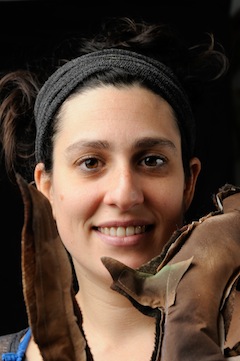
Maggie Winston (photo by Juliana Bedoya)

“As a theatre artist,” she said, “I am drawn to ritual and tradition in many forms. I have always found support for my work in the Jewish community, not only in Vancouver (through the JCC and the Chutzpah! Festival), but in other places around the world. I have started to make a few connections in the Jewish community in Montreal and am excited to see what evolves there.”

Winston only recently moved to Montreal, where her mother and grandparents grew up there. “Every summer of my life has been spent at our family cottage in Morin Heights, Que., just one hour from Montreal,” said Winston.

When she graduated in 2005 with a BA in puppetry performance from Sarah Lawrence College in New York, she wanted to move to Canada and, in the end, chose Vancouver “because I knew I could get to know people in the arts community easily through my relatives. Actually, it was through my aunt that I was originally connected to Terry [Hunter] and Savannah [Walling] of VMT back in 2008 when I got to be involved in We’re All in This Together, a shadow project in the DTES.”

However, “the pang of Montreal called me more and more,” so, this past January, she made the move. “The reason why I’m back in Vancouver right now is because of some other projects I had already planned last year…. Right now, in addition to working for Heart of the City, I’m collaborating on a music and puppetry project with Laura Barron (Instruments of Change), facilitating students in a Vancouver elementary school and then repeating the same project with students at a school in India. We did a similar program two years ago, and had already decided it would happen again this year.”

With Heart of the City, Winston is both an artist liaison, as well as a performer. She’ll be in It’s a Joke! – which has the theme “‘Stand-up for mental health” – with the Assembly, a group she’s been with about four years. “We are a playful and lofty collective of process-oriented, performance-driven, self-identifying women clowns, producing shows two to three times a year,” she said.

“Our performances at Gallery Gachet [on Oct. 28] will feature a few of the regular members of the Assembly doing short solo or duo acts from some of our previous shows,” she said. “In terms of the theme of the event … I can’t speak for stand-up comedy, as I’ve never done that before, but I can say that my mental health has been significantly affected for the better by my experience with clown. I know many other people who are similarly influenced. I hope the audience who attends this evening will get a taste of the deep psychological and spiritual power this art form has.”

Winston was in the festival last year with her solo show Just Enough and she has participated for several years – and will again this year – with Healthy Aging for the Arts, a program at Strathcona Community Centre. The group started in 2005, and it “consists of Cantonese-speaking women between the ages of 70 and 95. Every year, we explore a different style of puppetry with a theme that resonates with the members of the group. Sharon Bayly and myself have been the lead facilitators for the last five years.”

Winston noted that most of the seniors have been together since the beginning. “We all have aged together,” she said, “and I’ve been able to see the direct positive effect that art-making has on the well-being of these women.”

Despite the obvious importance of community in her work, Winston said, “I didn’t know that I was a community-engaged artist until other people started to identify me as such and until I started understanding the language of and paradigms of the art form.”

She said, “I always just did the kind of work that interested me and I got involved in whatever projects I could. I came to Vancouver with the intention of being a professional puppeteer and quickly discovered that, if I wanted to make puppet shows, I had to educate everyone around me, collaborate with artists of other disciplines and be as inclusive as possible…. Community engagement to me is simply sharing what I love to do with others. It’s about creating something together from scratch – from the ideas of those involved in the project…. I was never interested in being a traditional theatre artist, going to auditions, headshots, taking directions without having a say in them; I just wanted to tell stories and perform them creatively. Community engagement became an avenue for doing that.”

Community, in particular the DTES, is a focal point for Kravitz.

photo - Sharon Kravitz
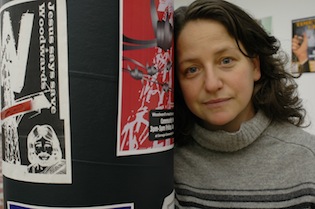
Sharon Kravitz (photo by Ken Tabata)

“I felt a connection to the Downtown Eastside and particularly the Carnegie Centre almost immediately upon moving to Vancouver. I volunteered at Carnegie and then, the following year, I proposed a community public art project on the corner of Main and Hastings. My first night in the Carnegie in the winter of 1993 and my first summer on the corner are moments I will never forget. Coming there helped me become more of the person I wanted to be and so it will always have a very special place in my heart.”

Kravitz will come to Heart of the City with We Can’t Afford Poverty, “a participatory project that highlights the widening gap between rich and poor through community-driven art.”

“We will be making several appearances throughout the festival,” she said. “We’ll be co-hosting a print-making workshop with WePress, we’ll be taking part in the documentary night, we’re having an exhibit of kids’ art in the third floor gallery and we’ll be popping up throughout the festival with our mobile video soapbox.”

The arts play countless roles in individual and community health, she said. “The act of making art together and the bonding that happens through that process, the ability individually to respond to external and internal issues creatively helps us feel less powerless. It changes how we think, and it can change how others think.”

For Kravitz, in Judaism, “like all faiths, there is the common belief in how we treat others, and the knowledge that there is something in the world greater than all of us, who and whatever that is to someone. I grew up knowing that we needed to help each other, and it’s why were all here – to make things better for each other.”

Most Heart of the City events are free or by donation: visit heartofthecityfestival.com.

VTT campus officially opens

Vancouver Talmud Torah head of school Cathy Lowenstein at the Sept. 25 ceremony that officially opened the school’s new building. (photo by Lara Shecter)

Vancouver Talmud Torah recently completed a comprehensive redevelopment and renovation of its campus and, on Sept. 25, a ceremony was held in the new double gymnasium of the school to officially open the new building.

Members from all parts of the community came out to see the space the school has been touting as embodying “the concepts of 21st-century learning.” The event included an introduction by Cathy Lowenstein, head of school, as well as words from the campaign chairs, Dan Pekarsky and Alan Shuster. While thrilled at having reached the goal of $20 million in their first campaign, they hope that enthusiasm for the new school will spur the community to give additional financial support.

Lowenstein clarified the need for a second fundraising campaign in an email interview. “Twenty million dollars was the amount we knew we would need to be able to finish any project we started, including the underground parkade,” she explained. “By proceeding when we did, we were able to develop the parkade jointly with the BI [Congregation Beth Israel]. That saved us over $2 million and the disruption of excavating beneath the school that we would have faced if we had waited. In the meantime, we completed the final program design, engineering and budgeting for the new school and, once we had that information, set a final budget and campaign goal of $27.5 million.”

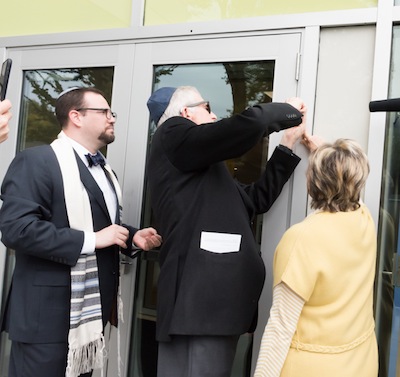
photo - Vancouver Talmud Torah Rabbi Marc Kasten looks on as Gordon and Leslie Diamond, lead donors, affix a mezuzah to the school
Vancouver Talmud Torah Rabbi Marc Kasten looks on as Gordon and Leslie Diamond, lead donors, affix a mezuzah to the school. (photo by Lara Shecter)

Those present at the opening event were impressed by the beauty, modernity and scope of the new campus. In addition, Andrew Merkur, a parent with two children currently attending VTT, was awed by the spirit of generosity and community. “I’m kvelling inside!” he said. “There are so many people who don’t even have children here and they still give of their time and money. It’s so wonderful to see how multi-generational the caring for the kids is.”

Lowenstein acknowledged two audience members from the first graduating class of VTT in 1954, who now have grandchildren in the school. And Marcy Schwartzman and Larry Vinegar arrived with their children, who are in their 20s. “I’m a VTT grad and both of my kids went here,” said Schwartzman. “We all wanted to see what the building is like.”

Rose and Fred Mikelberg came to scout the space with their 2-year-old granddaughter. “She’ll be here next year. It’s exciting and such a beautiful building,” said Rose Mikelberg.

One of the hallmarks of this modern building is the flexibility of space both for school purposes and potential rental. The spacious common areas, flooded with natural light, include a dining area adjacent to the kosher kitchen. It overlooks the gym and can be used as a viewing area for sports events or as a secondary area if someone wanted to host a large party. Open spaces between classroom “pods” (age-related clusters of rooms) serve as informal meeting places for students as well as places to engage in class group work.

The synagogue area is called a “sanctified space and multi-purpose room.” It bears the following inscription: “Robert and Marilyn Krell and Family – Dedicated to Robert’s Christian family, Albert and Violette Munnik, and their daughter, Nora, whose lives defined righteousness, having risked their lives to save his during the Holocaust in the Hague.” Pekarsky said, “The school community will be reminded of the heroism of this family and this story will continue to inspire VTT for generations to come.”

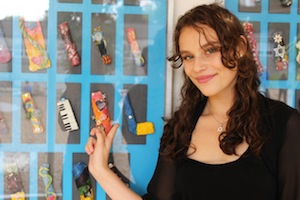
photo - Keren Katz, class of 2016 graduate and one of the Hallelujah Singers, points to the mezuzah she made as part of a class project to leave a legacy to the school. The project, facilitated by VTT parent and artist Dina Sacks, will continue with future graduating classes to fill the Glassman Gallery with original, student-created mezuzot containing a special Jewish-themed wish
Keren Katz, class of 2016 graduate and one of the Hallelujah Singers, points to the mezuzah she made as part of a class project to leave a legacy to the school. The project, facilitated by VTT parent and artist Dina Sacks, will continue with future graduating classes to fill the Glassman Gallery with original, student-created mezuzot containing a special Jewish-themed wish. (photo by Jennifer Shecter-Balin)

“Judaic offerings is an area that we know we must improve,” acknowledged Lowenstein, saying that having a new school rabbi, Rabbi Marc Kasten is a step in that direction. A trip that Grade 7 students will take to the Museum for Human Rights in Winnipeg for the first time this year is another. “We are the first elementary school in Canada to do a trip like this and we’re very grateful to the Asper Foundation, Diamond Foundation and Federation for their financial support, without which it wouldn’t be possible,” said Lowenstein.

Other new programs the expanded school will be able to support include after-school basketball, floor gymnastics, musical theatre, mixed media art, hip-hop and jazz for girls, floor hockey, badminton, field hockey and STEM Lego robotics. All of these programs are offered at market cost to students interested in these extracurricular activities. The learning commons area is open after school until 4:30 p.m. for what Lowenstein described as parents needing after-school options at low or zero cost.

The new school can accommodate up to 650 students. Although exact numbers were not available about current enrolment, Lowenstein said “enrolment is up slightly” and reported growth in the early years programming, which serves as a feeder for the regular school. “Early years enrolment is really thriving!” she said. “Of the 70 students in preschool (age 3) and junior kindergarten (age 4), 35 students are in the full-day licensed programs.”

The new classrooms are enormous, with some of the latest educational technology. Students have access not only to two full-sized gyms but also a turf-covered playing field that covers the entire roof of the new building.

Shuster said, “VTT is poised and ready to embrace the next chapter in its story.”

Michelle Dodek is a freelance writer living in Vancouver.

Letters offer insights

Prof. Debórah Dwork (photo by Jonathan Edelman)

Nearly two decades ago – and a full half-century after the end of the Second World War – a man in Switzerland cleaning out the apartment of his deceased aunt came across a stash of more than 1,000 letters. The discovery disclosed the aunt’s comparatively simple but valiant acts during the Holocaust and provides new insights into the lives of Jewish children and parents separated during the Holocaust.

The aunt, Elisabeth Luz, was an unmarried Protestant woman living near Zurich who appears to have stumbled into a role as the sole connection between hundreds of divided Jewish families. Because postal service between belligerent nations was restricted during the war, neutral Switzerland provided a potential channel for communication. Through what appears to have been happenstance aided by the compassion of a single devoted individual, thousands of letters made it to their intended recipients – and the record they provide demonstrates what families chose to say, and not say, in furtive missives in times of crisis.

The nephew knew that he had stumbled upon something important. He was familiar with the book Children with a Star by Prof. Debórah Dwork, a definitive study of the experiences of Jewish children under Nazism and the adults who helped them. He contacted Dwork to ask if she would like the letters. Dwork, Rose Professor of Holocaust History and founding director of the Strassler Centre for Holocaust and Genocide Studies at Clark University, in Massachusetts, now possesses the letters and has studied them for years. She will be in Vancouver in just over two weeks to speak at the community’s annual Kristallnacht Commemorative Lecture about what they tell us about families during the Holocaust.

Dwork cannot be certain how Luz came to be the intermediary for hundreds of families.

“From what I can piece together – and this is what I believe is the case – there was a refugee camp, sort of an internment camp, not a concentration camp, for refugees that had been established by the Swiss government in that town,” Dwork said. Luz went to the camp to give voluntary aid, Dwork believes, “to show with her presence that she cared about their plight.”

One of the men in the camp asked Luz whether she would be so kind as to send a letter to his wife.

“From there, it snowballed,” said Dwork. “Some of the letters that I have from the children, for example, say, ‘you don’t know me but Susie told me that you are an auntie who is willing to write to our mothers,’ and so on.”

The parents were mostly in “Greater Germany” – Germany and the areas it occupied. The children had mostly been sent to places thought to be safe, including Britain, France, Belgium and the Netherlands.

Remarkably, the letters do not end in 1945. In the course of being a conduit between hundreds of parents and their children, Luz became a confidant to many of them – “Tante Elisabeth” – and remained in contact with several who continued their correspondence. The fact that the collection of letters exists at all is due in part to the fact that Luz hand-copied each one, believing that this would be less likely to catch the attention of war-era postal censors. She maintained the originals.

“Parents sent their letter to her, she copied every letter and then sent it on to the children and the children did the same in reverse,” said Dwork.

Some of the children were on the Kindertransport, the effort to transfer Jewish children from Germany and Nazi-occupied Europe to the United Kingdom, while others were sent by their parents to places considered safer for Jewish children.

“There were a number of children who were sent to family members or to friends or to religious organizations by their parents independently, individually,” she said, adding that there is much to be learned from the letters. “It tells us an enormous amount about family, the importance of family and the way in which family members use letters as thread to bind the family together. I think also it tells us about how children absorbed, adjusted, adapted – or did not adjust or adapt – to their ever-changing lives.”

What the letters do not always indicate is the fate of the families who sent them.

“We know a lot about the children who went on the Kindertransport to Britain, because they survived,” said Dwork. Less is known about the children sent to Belgium, the Netherlands and France. “Many of them did not survive as the Germans conquered and occupied those countries,” she said.

Of those who continued corresponding with Luz long after the war, many had lost their parents.

“Because of the relationship that developed between the children and Elisabeth Luz, those who continued to write, by and large, were now young adults whose parents did not survive and she, Elisabeth Luz, was the last tie to their prewar and wartime life,” explained Dwork. “So, she had become their confidant and that’s very important, the way Elisabeth became a confidant to the parents and the children.”

Vancouverites should join her in November not only to hear specifics about the contents of the letters, but also to reflect on some of the broader issues raised by a collection of this sort, which is a focus of Dwork’s academic work.

“The larger question, I think, is how do people keep in contact?” she said. “What do parents in Greater Germany say to their children? And what do children tell their parents about their daily lives?”

While the letters represent voices from the past, they have much to say to people today. “This is a very human story,” said Dwork. “And, as we are looking at refugees today far-flung from one spot to another, it may help us to think about how each one is a member of a family.”

The Kristallnacht Commemorative Lecture takes place Nov. 1, 7 p.m., at Congregation Beth Israel.

Pat Johnson is a communications and development consultant for the Vancouver Holocaust Education Centre. This article first appeared in VHEC’s Zachor.

Stop zombie-vampires

Rowan Jang provides an example of the zombie-vampires audiences can expect to encounter in The Zombie Syndrome: Dead in the Water. (photo by Emily Cooper Photography)

Last year, I was one of a group of “specialists” who gathered outside Trout Lake Community Centre to embark on our mission, which related to a downed alien spaceship. While the details of that mission must remain confidential, one aspect can be revealed – it was loads of fun. It was also a great cardio workout, not just because of the running from zombies, but the screaming, both from fear and excitement.

This year, the Virtual Stage is gathering teams (audiences) of 18 on Granville Island every 30 minutes from 6:30 to 8:30 p.m. nightly until Oct. 31 to help find Special Forces operative Frank Johnson. As per the mission description, Johnson “was hunting down former government geneticist Mattias Van Cleave when he fell off the radar. Van Cleave, a suspected vampiric psychopath, is believed to be responsible for a string of recent murders, and the sudden appearance of zombie-vampire mutants across the Lower Mainland. The audience must determine Johnson’s whereabouts and ensure his mission to stop Van Cleave is completed at any cost.”

As with the four previous Zombie productions, The Zombie Syndrome: Dead in the Water makes use of the latest technology – this year, it’s Apple’s new location-based iBeacon.

“I am very interested in how emerging technologies can excite live audiences and breathe new life into theatre as an art form,” Virtual Stage artistic director, Zombies series creator and Jewish community member Andy Thompson told the Independent. “I am very narrative-driven as an artist, and the iBeacons have been a delightful tool in the creation of The Zombie Syndrome: Dead in the Water.”

The decision about what technology to use, Thompson said, “involves a process of questioning what is readily accessible and available, not only for myself as a producer, but also for today’s audiences. What is free within smartphones today? What is new and exciting? How can these gadgets drive a story forward? What can people afford? What can our company afford?

“I am also constantly imagining what the next big thing in technology might be, as well as its potential future societal impact,” he added. “My vision of concern for the future with ‘social media on steroids’ in my musical Broken Sex Doll is one example of this. I am also assessing what exciting new technologies are present today and how they may aid in live storytelling. In the particular instance of this show, the iBeacons roll out narrative content in a very interactive and engaging way as the audience moves from site to site.”

As the audience moves quickly along – both because they are “racing against the clock” and because there are scary things lurking in the dark – the possibility of an accident, miscue or technical glitch is much higher than for a standard production.

“We rehearse as many possibilities as we can,” said Thompson, “but the most important preparation we have is to be ready for anything: the ‘known unknowns,’ as Donald Rumsfeld might say. So far, the audiences have been completely surprising to us in how they navigate the problems we present to them. So, it is fresh and exciting every performance. The personalities of the individual audience members also greatly affect the flow and feel of each show. We did a lot of improvising in the rehearsal process so the actors are very prepared and on their toes.”

One unexpected moment – of which Thompson said “there have been many” – took place during last year’s mission, “when the entire site flooded on our closing performance at Trout Lake. We had about one hour to physically relocate most sites to higher ground, rehearse it in the new areas, and get as many technical elements in place as we could. We managed to pull off a derivative of the show, which was a miracle and a testament to our amazing crew and performers.”

As to what participants can expect this year, Thompson said, “Audiences will be traveling by sea at one point, which we are thrilled about. They will be confronted with a new breed of mutant zombie-vampires that cannot be killed. The iBeacon technical aspect to the show is also a Canadian theatre première, so people will be testing that tech out with their smartphones in a live entertainment environment like they have never done before. And yes, there might be running….”

For mission tickets, visit thevirtualstage.org/zombies. Participants should dress for the weather and moving quickly; the show is rated PG-13.

Consumerism meets identity politics

This is Part 2 of a two-part series. The first examined Oberlin College’s “Jewish problem.”

When Nathan Heller’s “Letter from Oberlin: The Big Uneasy” appeared in The New Yorker (May 30) his sub-headline asked: “What’s roiling the liberal-arts campus?”

At least for some Jewish students, Oberlin’s obstacles to Jewish life are signs of two roiling processes: “identity politics” and higher education’s drift toward business models in which students primarily are customers.

From its origins in 1833, Oberlin College has been at the forefront of social changes. In particular, no institution in the United States has an older coeducational baccalaureate program. As well, before the Civil War, members of the Oberlin community were active in movements to abolish slavery. The college advertises that it “regularly admitted African American students beginning in 1835.”

Oberlin’s avant-garde history influences student applications and admissions, as well as faculty recruitment – and some unexpected campus activities. For example, in December 2015, unnamed members of the Africana community referred to Oberlin’s legacy and/or public relations when they delivered to the administration an undated multi-page list of “demands not suggestions,” which included a “four percent annual increase in black student enrolment”; “divestment from all prisons and Israel”; “that spaces throughout the Oberlin College campus be designated as [segregated] safe space for Africana identifying students” (exclusively?); that several professors (identified by name) should be subject to “immediate firing”; and that other professors should be given preferential treatment.

Oberlin College proclaims efforts to ameliorate affronts or afflictions perceived by cohorts such as African-Americans, Muslims, students with physical handicaps and non-heterosexual students. A “Campus Climate Report” (May 19, 2016) also includes a section on problems experienced by some Jewish students, but does not specifically deal with reports that “progressive” protesters who confront other forms of bigotry often deny the significance of antisemitism.

This phenomenon occurs on other campuses, too.

In August, the Washington Post published an op-ed focused on “an Iranian Jew,” Arielle Mokhtarzadeh, who traveled “to attend the annual Students of Color Conference” at the University of California, Berkeley. There she found: “Over the course of what was probably no longer than an hour, my history was denied, the murder of my people was justified, and a movement whose sole purpose is the destruction of the Jewish homeland was glorified. Statements were made justifying the ruthless murder of innocent Israeli civilians, blatantly denying Jewish indigeneity in the land, and denying the Holocaust in which six million Jews were murdered.”

Also in the Post, Molly Harris, a student at McGill University, addressed students just beginning post-secondary education: “Get ready to meet new people, learn things that fascinate you, and figure out who you are and who you want to be.

“If you’re Jewish, you should probably also prepare yourself for the various forms of anti-Israel sentiment, and maybe even antisemitism, you’re likely to encounter on your new college campus.

“In the past year alone, as a Jewish student at McGill University in Montreal, I’ve been called a ‘Zionist b—.’ I’ve been told several times that Jews haven’t suffered (never mind the Spanish Inquisition, Eastern European pogroms and centuries of violence and marginalization leading up to the Holocaust). I’ve seen my friends mocked for their Judaism in crude, hateful language on popular anonymous social media platforms.”

Following his May “Letter from Oberlin,” Heller again wrote in The New Yorker (Sept. 1): “Students … may try out defensive ethno-racial flag waving, religious and political dogmas, athletic and fraternal self-segregation…. My work elsewhere has made me think that this isn’t just an Oberlin, or liberal, thing.”

Indeed, on Aug. 5, the New York Times printed a front-page article about racial and identity politics at many campuses. This reporting was not about Oberlin, but it named other “small, selective liberal arts colleges” as well as Ivy League universities. An Amherst graduate said, “As an alumnus of the college, I feel that I have been lied to, patronized and basically dismissed as an old, white bigot….”

But perhaps Oberlin still is a cultural leader. In an Aug. 27 article, the Times mentioned Oberlin as a counter example to the University of Chicago, which sent first-year students a letter saying Chicago did not support “trigger warnings” and did not condone “safe spaces” nor disruptions of speakers. (Disclosure: I was a Chicago faculty member from 1968 to 1970.)

In Frank Bruni’s June 23 New York Times essay about Oberlin – as one of the campuses “roiled the most by struggles over political correctness” – he wrote: “Students at Oberlin and their counterparts elsewhere might not behave in such an emboldened fashion if they did not feel so largely in charge. Their readiness to press for rules and rituals to their liking suggests the extent to which they have come to act as customers – the ones who set the terms, the ones who are always right – and the degree to which they are treated that way.”

Bruni built upon a poignant essay about “Customer Mentality,” written in February 2014 for Inside Higher Ed by a Western Carolina University assistant professor of English, Nate Kreuter. When students transformed into customers, Kreuter observed concomitant re-purposing of campus infrastructure, curriculum and faculty.

Bruni provided photographs of water parks with pools and slides on campuses, and described campus entertainment complexes, golf putting greens and other resort-like amenities. He also wrote: “Small wonder that grade inflation is so pronounced and rampant, with A’s easy to come by and anything below a B-minus rare.”

Barry Schwartz, professor of psychology at Swarthmore, told Bruni: “There’s a big difference between teaching students and serving customers.”

Kreuter in 2014 noted that the student-as-customer business model had adverse consequences within and beyond academic programs: “The impulse to protect the brand also frequently compels universities to shirk responsibility when missteps or scandals occur, rather than immediately taking responsibility and corrective action.” He argued that administrators may “protect the brand” in instances of “high-profile college athlete crime” or sexual assaults or injuries from fraternity hazing.

A Times essay (Sept. 4, 2016) by a Yale faculty member, Jim Sleeper, argued that right-wing “wealthy donors” exaggerate negative impacts of political correctness, while they promote more potent poisons. But he also agreed that: “Most university leaders serve … pressures to satisfy student ‘customers’ and to avoid negative publicity, liability and losses in ‘brand’ or ‘market share.’…”

Oberlin College’s publicists like to recall the institution’s abolitionist era rather than its place in the history of the Anti-Saloon League and Prohibition. So perhaps it is not surprising that Prof. Joy Karega could post anti-Jewish materials and conspiracy theories for many months, and that Oberlin administrators and trustees reacted only last March, after Karega generated condemnation both online and in worldwide print media – likely to harm Oberlin’s brand.

At the University of Lethbridge, Prof. Anthony Hall’s “globalization studies” promoted “open debate on the Holocaust” and claims that the 2001 destruction of New York’s World Trade Centre was a “Zionist job.” Administrators tolerated Hall for 26 years – suspending him only this month, after news stories about “possible violations of the Alberta Human Rights Act.”

During my one-to-one conversation with Oberlin College president Marvin Krislov in April, he told me that many students gave Karega high ratings. From a marketing perspective, favorable student evaluations may help justify annual tuition above $51,000 – costs above $66,000 including room and board. But if students give high ratings to a predilection for bigotry and conspiracy theories (and lack of scholarly accomplishment) then something has gone wrong with their education.

Bruni’s essay asked, “But what does the customer model [of college students] do to their actual education?” One Oberlin graduate responding to The Atlantic in December 2015 wrote: “There is now an atmosphere of close-mindedness, intellectual submission, conformity and fear.”

College and university emphasis on marketing to customers likely is linked to cost.

Tuition – and every other post-secondary education expense – has increased at a pace beyond general inflation (or household income gains). Consequently, total student debt in the United States now is about $1.2 trillion, according to the August Forbes – exceeding total credit card debt or the total of automobile financing in the entire American population.

This precarious state of affairs may be a response to reported correlation between higher education and greater lifetime earnings or lower unemployment; but correlation does not indicate cause and effect. Bruni refers to “an expectation among many students that their purchase of a college education should be automatically redeemable for a job….” But, as Kreuter wrote, “A post-secondary education is not a guarantee of success. It is not the straightforward purchase of a better future. It never has been.”

At Oberlin, in fact, the student newspaper published an article in March 2014 stating that “40% of [our] 2013 graduates are unemployed, and one-third of graduates are working in positions that do not require a degree.”

Of course, many Oberlin students and graduates have priorities other than high-income jobs; but one unidentified correspondent, writing to The Atlantic in December 2015, stated: “Oberlin students [do] want what other college students are asking for, whether they phrase it this way or not: better control of the college’s money.”

Oberlin, unlike most American campuses, has no fraternities or sororities. Historically, students lived in residences supervised by the administration, which also oversees most meals. So, students see what Oberlin does with funds for their food. But why have many top-tier media published articles discussing campus food complaints at the college?

The emphasis of complaints has not been that the food tastes bad, has dubious nutritional value, etc. Oberlin food complaints instead focus on meals that particular students deem to be culturally inappropriate or disrespectful. Mainstream media regard Oberlin’s food criticisms as curiosities sufficiently ludicrous to entertain a wide range of readers; but these cultural food fights are quite logical outcomes when the student-as-customer model meets racial and identity politics at the topic of food.

Likewise, identity issues can lead students to denounce “cultural appropriation,” not only in meals, but also in other aspects of life – clothing, terminology, music, books, even the curriculum. Novelist Lionel Shriver says that, if she did not reject criticisms of “cultural appropriation” in literature, then “all I could write about would be smart-alecky 59-year-old, five-foot-two-inch white women from North Carolina.”

And, as customers, students can demand not to take certain courses. At Oberlin, one of the “unmalleable” demands in December 2015 was that, in the Oberlin Conservatory, “seeing as how most jazz students are of the Africana community they should not be forced to take courses rooted in whiteness” of classical music.

In the New York Times, Krislov wrote: “American higher education is at a crossroads, as it was in the 1960s when college students were galvanized by the Vietnam War and the civil rights movement.”

But I do not accept that anti-Zionist petitions or Africana demands for specific foods and segregated “safe spaces” in Oberlin buildings somehow are comparable to my classmates’ efforts in the 1960s civil rights movement and later protests against U.S. war policy in Vietnam. (On the campus of Kent State, one of Oberlin’s neighbors, U.S. National Guard troops shot and killed unarmed students during anti-war protests in May 1970.)

In spring of 2016, one student on the cusp of graduation said, “I’m going home, back to the ’hood of Chicago, to be exactly who I was before I came to Oberlin.”

Marc Chafetz explained – in the New York Times – why that remark disturbed him: “I graduated 41 years ago…. Oberlin changed me profoundly. I found out how little I actually knew about the world, and it unleashed a hunger to learn that has never dissipated.”

No matter what identities students bring or what paths they follow afterward, higher education should involve them in exploration and intellectual discovery – and civil encounters with one another.

Ned Glick lives in Vancouver. His baccalaureate is from Oberlin College and his PhD is from Stanford. After teaching at the University of Chicago, he had University of British Columbia appointments in mathematics, in statistics and in the faculty of medicine. He retired to emeritus faculty status in 1992.