Soul-opening retreat experience

Let me start by saying that I grew up a secular Jew. As I’ve gotten older, my desire for more Yiddishkeit has increased tenfold. Long story short, I went from being a “High Holidays-only Jew” to someone who lights candles every Friday night, attends shul every Shabbos and goes to Torah classes regularly.

My latest quest to embrace Judaism took the form of the 2016 National Jewish Retreat. Sponsored by the Rohr Jewish Learning Institute and Chabad, this six-day retreat took place in Palm Desert, Calif. More than 1,400 Jews from all over North America settled in to the enormously lavish JW Marriott for Jewish learning and fun.

I’m stopping here because I know that when I got to Chabad, many of you shut down and/or entertained a plethora of preconceived notions and stereotypes: black hats, long coats, lots of rocking and davening, strict Shabbos rules. Think again.

Even I was skeptical, wondering whether I’d be judged for my “immodest” clothing, my limited Jewish observance and my lack of Torah knowledge. But, no sooner did I get there, than a variety of religious and not-so-religious folks introduced themselves and welcomed me warmly. From that point on, I was hooked.

The programs comprised 150 lectures and 75 speakers. Keep in mind the retreat was only six days long, so I had to choose my topics wisely. All told, I attended 29 lectures. And I even had time to go the washroom once or twice. From 9 a.m. till late into the night, I had the honor of learning from world-renowned speakers, listening to radio talk-show host Dennis Prager, attending a Dudu Fisher concert, viewing the stunning art of Barbara Hines, and enjoying Jewish comedian Robert Cait.

The main event, the retreat sessions, covered a wide spectrum of topics including practical lessons from the Tanya; discovering purpose and mission in life; Jewish medical ethics; the pursuit of happiness and gratitude; the relevance of G-d in 2016; handling personal struggles, pain and suffering; a challah bake; a talk about why bad things happen to good people; Jewish law; living with faith; the legacy of the Lubavitcher Rebbe; Israel’s inclusive army; the miracle at Entebbe; wine tasting; the historical relationship between Jews and Muslims; antisemitism; how to pray with passion and purpose; the future of Israel and Zionism; Jewish history and mystical prophesies; the feminist challenge of 2017; a farbrengen for women; and leadership. And that’s just the tip of the iceberg.

Focusing on the personal more than the political, historical or global, the sessions I attended were nothing short of awe-inspiring. Never having experienced intense spiritual Jewish learning like this, I was a human sponge. It sparked something visceral in me and my emotions ran wild. (Read: I’m emotionally incontinent and my tears overflowed early and often.)

My favorite sessions included a class on the Tanya, which is an early work of Chassidic philosophy and a “one size fits all” life manual. It’s basically the “GPS for life” and encourages us all to live with purpose and meaning.

I also attended a couple of sessions on the Rebbe and the secret of Chabad. While some people consider Chabad a radical sect of Judaism, it has actually become the mainstream, because of the Rebbe’s focus on outreach to Jews around the world. He considered outreach the key to continuing Yiddishkeit. The Rebbe was without doubt the most influential rabbi in modern history. A revolutionary figure and an inspiration, he created an “army” of shluchim (emissaries), who set up Chabad houses around the world to inspire Jews in Jewish traditions and education. As a result, Chabad is considered a “vanguard of change” and leaders in the community.

A session called The Pursuit of Happiness reinforced the idea that happiness and blessings are directly correlated. And, since happiness is a choice, we should direct our emotions towards positive things. In essence, we’re really products of our choices, not our circumstances.

Pain and Suffering was a session about transforming pain into growth. The speaker made a poignant observation about grief having “energy.” He posited that, when a person can harness that energy, they can change the world. He also pointed out, from studies, that people with faith have more resilience and strength. In his words: “You don’t know the power of faith until you have nothing left but faith.”

There were lots of social events at the retreat, too. I got particularly emotional during the challah bake, while lighting Shabbat candles with 600 other women, and singing and dancing after Havdalah with more than 1,400 Jews from my new Jewish “family.”

And then there was the gourmet kosher food. When I heard about the 24/7 tea room, I expected a small room with maybe some Danish and coffee, then I saw the football-field-length foyer with fruit, candy, chips, cookies, sandwiches and various beverages. That was during the weekdays. On Saturday night, at around 11 p.m., I experienced my first melaveh malkah meal: a lavish buffet that symbolically escorts the departing Shabbat queen. Imagine vegetarian burger sliders, innumerable cheesecakes, pastries, a crepe station, a pasta station, lox and bagels, an ice cream station, and more. At midnight, I thought to myself, “Do I keep eating or do I sleep?”

I came back bubbling with enthusiasm, anxious to tell my husband Harvey all about it. When the descriptions and tears of joy were done, he said: “So, I guess you drank the chicken soup.” You bet I did. And boy was I thirsty!

A huge thank you goes to Rabbi Yechiel Baitelman of Chabad of Richmond for encouraging me to attend the retreat. I could never have imagined how it would alter how I think and feel about being Jewish. Truly, it was a soul-opening experience.

Every single day was a blessing of inspiration and spiritual holiness for me. Sharing my stories from the National Jewish Retreat is my way of sharing the blessings. I only hope that you get to experience it for yourself one day.

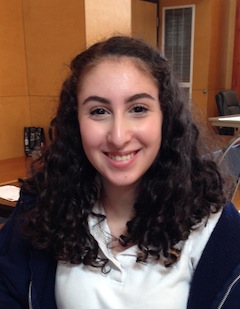
Shelley Civkin recently retired as librarian and communications officer at Richmond Public Library. For 17 years, she wrote a weekly book review column for the Richmond Review, and currently writes a bi-weekly column about retirement for the Richmond News. She’s also busy exploring her Yiddishkeit.

Finding joy

From the solemnity of Yom Kippur, we move into the season of rejoicing, Sukkot. As with many of our traditions, this one has multiple layers. The shelters for which the holiday is named represent temporary dwelling places, the transitory generations on the way from bondage in Egypt to the Promised Land and, by extension, the impermanence or fragility of Jewish security.

It would be an understatement to say that the creation of the state of Israel 68 years ago changed Jewish perceptions of ourselves and our place in the world. The existence of a Jewish state presented an alternative for Jewish people living in places of repression and danger. For Jews living in free countries, like Canada, Israel is a source of pride but also the source of a deeply complicated and often challenging reconfiguring of our identities. Diaspora Jews, prior to the success of Zionism, were subject to the changing winds and whims of local populations and leaders. For a few years after the War of Independence, Israel was widely admired around the world as a model of what a new country can be. This was also a time in history when antisemitism may have been at its lowest ebb, or at least at its least visible. For emerging postcolonial states in 1950s and ’60s Asia and Africa, Israel’s head start provided a template for independence and progress.

After the 1967 war, though, the perception of Israel morphed from a model for post-colonialism to one of neo-colonialism, and Palestinians replaced Jews as a cause for progressive peoples. In the time since, Diaspora Jews have often been placed in the position of defending (or not defending) things that Israel does. Yet it remains a haven for Jews who are threatened in their homelands, including, incredibly, in parts of Europe. For those Jews who feel safe in our countries, Israel is also a beacon – of Jewish diversity, knowledge and technological innovation.

The Promised Land, as our historical narrative tells us, was not a place of permanent joy. Twice the Temple would be destroyed and the people dispersed. The impermanence of Jewish sovereignty, even after the ancient return of the exiles, would carry on another two millennia until 1948. The sukkah is a symbol, too, of that impermanence.

And yet, it also represents a joyfulness based on our people’s adaptability and willingness to find a unity and presence even in places and times of disunity and impermanence. And, at the end, we observe Simchat Torah, a celebration of the written word that many believe is the very reason a homeless people were able to maintain cohesion and continuity through generations of dispersion.

Making mensches at KDHS

During the afternoon of Character Day, King David High School hosted a fair at which students could learn about – and sign up for – volunteer positions in the Jewish community and around the city. (photo from KDHS)

On Sept. 22, King David High School students celebrated Character Day. It was a day for both quiet introspection and animated group discussions about what makes human beings tick, and how we can reach our full potential, individually and as members of society.

KDHS is “committed to integrating tikkun olam into all students’ experiences, both during the school day and beyond,” said visual arts teacher Wendy Oberlander. And Character Day dovetails neatly with the school vision for students’ social-emotional learning.

Character Day began 10 years ago as the brainchild of San Francisco filmmaker Tiffany Shlain, whose work in film and technology has been recognized with numerous nominations and awards. Her new mission is Let It Ripple, which uses film as the medium to educate and inspire children to become activists pushing for positive social change. The program is massive, reaching 24 countries as far-flung as Mexico, India and Australia. Approximately 75,000 events were hosted, worldwide.

“Character Day presented us with a frame within which to launch this year’s service program,” said Oberlander.

At KDHS, the day started with three of Let It Ripple’s videos, which were seen by every student.

Lu Winters is the school’s social-emotional counselor. She is leading the school in a year-long project based on middot (character traits).

According to Winters, the Let It Ripple videos – The Science of Character, The Adaptable Mind and The Making of a Mensch – nurture self-knowledge, encouraging students to take what she calls “an inventory of themselves.” The films ask, “What are your strengths and which do you want to develop?” exploring qualities like creativity, humility, self-control and gratitude.

According to KDHS’s e-newsletter, “The central idea of character traits that is described in the film The Making of a Mensch will form the basis for TAG [teacher advisory groups] this year.”

Character Day is now an established fixture for the students of KDHS. It has grown and evolved over the six years that Winters has taught at the school. Since joining the staff, she has seen a move toward a richer and more inclusive and varied program of offerings. She described an array of sporting, spiritual and drama activities, as well as support groups for LGBTQ students.

photo - Inbar ben Moshe
Inbar ben Moshe (photo from KDHS)

This Character Day, Winters sat in with two classes to see how the activities were being received by the students. “They were really engaged,” she said.

“They said it is always easy to dismiss buzz words, but instead of brushing off words like honesty and generosity, they talked about being self-aware, about being a better person; they responded sincerely and thoughtfully,” said Winters.

During the afternoon, the school hosted a volunteer fair organized by Ellia Belson, director of Jewish life and events. At the fair, students could learn about – and sign up for – positions in the Jewish community and around the city. Booths were hosted by the B.C. Society for the Prevention of Cruelty to Animals, Ronald McDonald House, Louis Brier Home and Hospital, Vancouver General Hospital, Canadian Jewish Political Affairs Committee and the Walking School Bus.

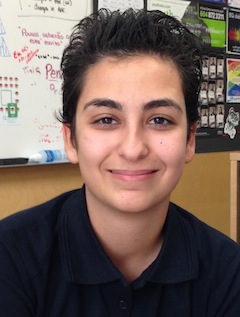
The impact of the program came across loud and clear, in conversation with the kids themselves. They expressed their enthusiasm and drive for positive change. Inbar ben Moshe, in Grade 11, said the day was “inspiring!”

“It opened our minds to how we can improve our lives and the lives of others,” she said, and spoke of a determination to “really work on myself, to embrace the different aspects of myself.” She wants to volunteer by mentoring children, helping them to resist peer pressure and make good decisions.

photo - Sappir Gini
Sappir Gini (photo from KDHS)

A Grade 10 student, who chose to remain anonymous, spoke about his own struggle with stress and the importance of learning to regulate one’s emotions. “It was interesting and it really influenced me,” he said. “It encourages people to think beyond what they already know; to get rid of stress by focusing on what you are good at.”

Sappir Gini (Grade 10) already reads to her nine-year-old brother and spoke of her ambitions in forensic science. She found the videos “inspiring, they made me want to learn more…. We saw how a bunch of people can come together and change things, people who are so eager, so curious – they can really make a difference.”

Sappir’s goals have crystalized as a result of participating in Character Day. She talked about her love of reading history books, and how she aims to be a reading mentor in inner city schools. Summing up the spirit of Character Day, she said, “Your imagination can take you anywhere – once you can read, you can do anything.”

Shula Klinger is an author, illustrator and journalist living in North Vancouver. Find out more at niftyscissors.com.

Demon renews dybbuk

(photo from krakowpost.com)

The first “character” we meet in Marcin Wrona’s coolly fascinating Demon is a yellow bulldozer, rolling menacingly through the empty streets of a Polish village. It’s a harbinger, as well as a metaphor, but of what?

Bulldozers dig, and they bury. Both tasks are central to the plot of Demon, which seizes on the disturbing idea of the dybbuk – a ghost who takes possession of a bridegroom on his wedding day – and reimagines it in the contemporary world. A world, that is, in which the Holocaust is part of our experience – even for those who have buried it in hopes of forgetting.

A Polish-Israeli co-production that is by turns deeply unsettling and absurdly funny, Demon follows the arrival of handsome architect Python (Israeli actor Itay Tiran of Lebanon) from England for the unambiguously happy occasion of his wedding. The groom is Polish, like his lovely bride Zaneta (Agnieszka Zulewska) and her family, but we have the disquieting feeling from the get-go that he is apart, on his own, an innocent outsider who has (in horror-film tradition) unknowingly ventured into a situation of unimaginable dangers.

Setting to work on the yard behind the decrepit farmhouse that Zaneta’s family owns and has bequeathed to the couple, Python hops on the ominous, aforementioned bulldozer. A noise makes him stop almost immediately, whence he discovers that he has unearthed bones.

So begins Python’s descent from a rational, regular guy to a tormented figure of unreachable despair. Unfortunately, but also comically, his transformation mostly takes place during the marathon rain- and vodka-soaked reception following the wedding ceremony.

Wrona and writer Pawel Maslona freely adapted the latter’s 2008 play, whose title translates as “Adherence” or “Clinging.” The director’s decision to shift the setting to a wedding was clearly inspired by the 1937 Polish-Yiddish film Der Dibek (The Dybbuk), itself adapted from a play by Shimon Ansky.

In the press notes, Demon producer Olga Szymanska says, “We wound up doing a lot of research into the history of the [dybbuk] story, not to mention Jewish-Polish history in general. If you read the studies on the dybbuk, those who became possessed by the spirit find themselves unable to speak. It originated in a very orthodox society of Jews, so it was the idea of this voice that could never have been heard which was longing to be heard.”

Given the clue or two I planted above, and this review’s appearance in a Jewish publication, you will have an idea of the general nature of the long-suppressed secret that the spirit who inhabits Python desperately wants uttered. The specific details are melancholy and enigmatic, and Wrona conveys them with chilling effectiveness. (The viewer is haunted also by the knowledge that Wrona died – reportedly of suicide – at 42, shortly after the film’s world première a year ago.)

It’s always of interest when Polish filmmakers choose to address their country’s past and the spectre of antisemitism, in part because they (and their fellow citizens) have historically been more reluctant to do so than their German and French counterparts. So, Demon provokes memories of Aftermath, the excellent Polish thriller from 2012 that likewise involved the physical excavation of the Jewish past (gravestones, in this case) and also invoked an otherworldly presence.

The kind of movie that lingers in the mind for days afterward, Demon contains any number of images that don’t just stick but demand to be puzzled over further. The more literal-minded viewer, meanwhile, will find plenty to mull in the movie’s slicing comments on present-day Poland.

Demon screens at Vancity Theatre Oct. 28-Nov. 1. In Polish, English and Yiddish with English subtitles, it is rated R for language and some sexuality/nudity.

Michael Fox is a writer and film critic living in San Francisco.

הפסידה בתביעה

אישה שזכתה בעבר בלוטו הפסידה במשפט נגד חברתה שלא החזירה לה הלוואה, ונהנתה מעליית מחירי הנדל”ן בוונקובר. (צילום: lotto.bclc.com)

תושבת ונקובר שהרוויחה בהגרלת הלוטו 6/49 שהתקיימה בחודש ינואר 2007 למעלה מארבעה מיליון דולר, הפסידה בתביעה שנדונה בית המשפט נגד חברתה הטובה, שסירבה להחזיר לה הלוואה בגובה ששת מאות אלף דולר.

אנון רוסאס ילידת הפילפינים, הסכימה לעזור לחברתה הטובה איסבל טוקה, שגם היא מהפילפינים, לאחר שזכתה בהגרלה הגדולה. שתי הנשים הכירו בבית ספר בקנדה בשנת 2004. רוסאס העניקה לטוקה הלוואה בגובה ששת מאות אלף דולר, ובנוסף נתנה לה שלושים אלף דולר כמתנה. כל זאת כדי לעזור לה ברכישת בית במזרח ונקובר. טוקה הבטיחה להחזיר את שש מאות אלף דולר לרוסאס כעבור שנה, אם כי היא לא קבעה בתאריך המדוייק. לאור ההיכרות העמוקה והאמון ההדדי בין הצדדים שום מסמך לא נחתם בין שתי החברות מהפיליפינים.

בתום השנה הראשונה טוקה לא החזירה את הכסף לרוסאס אך היא הבטיחה לעשות זאת כעבור שנה. וכך מדי שנה טוקה עמדה בסירובה להחזיר את הכסף ושוב חזרה והבטיחה להחזירו בשנה שלאחר מכן. לרוסאס נמאס לבסוף מהסחבת הארוכה של טוקה, שדחתה את בקשתה להחזיר את השש מאות אלף דולר מדי שנה בשנה. בחודש יולי 2014 הגישה רוסאס תביעה נגד טוקה לבית המשפט העליון של מחוז בריטיש קולומביה. בכתב ההגנה טענה טוקה כי רוסאס העניקה לה את השש מאות אלף דולר במתנה, ולכן יש מקום לדחות את התביעה. בית המשפט דחה לבסוף את התביעה של רוסאס בטענה שלא נחתם הסכם בין הצדדים עם תנאים מפורטים, והיא לא יכלה להוכיח כי נתנה את הכסף לטוקה כהלוואה. בית המשפט ציין עוד כי ממילא רוסאס יכלה להגיש את התביעה נגד טוקה (במסגרת הדין האזרחי) לא יאוחר בתום שבע שנים, מיום ביצוע העברת הכסף בין השתיים, דהיינו עד ינואר 2014. אך התובעת הגישה את תביעה באיחור של חצי שנה (כאמור בחודש יולי) ולכן נסגר בפניה חלון ההזדמנויות להגיש את התביעה. רוסאס הפסידה כידוע במשפט וכן גם את חברתה הטובה טוקה. ואילו טוקה אמנם הפסידה את חברתה הטובה רוסאס, אך היא הרוויחה מעליית מחירי הנדל”ן בוונקובר והבית שהיא רכשה בששת מאות ושלושים אלף דולר, שווה כיום כמליון וחצי דולר.

תאי שינה בספרייה: ואיזה מסכנים הסטודנטים שלומדים עכשיו בחוץ

סטודנטים כידוע לומדים שעות ארוכות ביום ובלילה וקורה לא מעט, שהם תופסים תנומה קלה בשיעורים ובעיקר נרדמים בספריות. לאור זאת החליטה הנהלת המכון לטכנולוגיה של בריטיש קולומביה (בי.סי.אי.טי) להציב שני תאי שינה בספרייה שאחד’ מהקמפוסים שלה (שנמצא בברנבי). אם הניסוי יצליח יוצבו תאי שינה נוספים בחלקים אחרים של הקמפוס.

תאי השינה עשויים מפלסתיק מעוגל ומזכירים קפסולות גדולות שלקוחות מסרטים בדיוניים. בתאים הפשוטים כיביכול מותקנים: דלת שננעלת מבפנים, מזרון נוח ותאורה. הסטודנטים יכולים לנוח בתא עד עשרים דקות כדי שיוכלו להתאושש ולחזור ללמוד במלוא המרץ. עלות רכישת תא שינה מוערכת בכאלף ומאה דולר, והמימון מגיע ממכירת משקאות ודברי מאכל במכונות האוטומטיות שבקמפוס.

תגובת הסטודנטים חיובית. אחד מהסטודנטים אף הרחיק לכת וציין בדף הפייסבוק שלו, כי אפשר אפילו לעשות סקס בתאים בעשרים הדקות. תגובת הנהלת המכון לא איחרה לבוא: “תאי השינה נמצאים בפיקוח מצלמות כל הזמן והם ממוקמים קרוב לדלפק הצוות בספרייה. בכל מקרה התאים צרים מדי מלהכיל שני אנשים”.

Some battles need fighting

Author Deborah E. Lipstadt, right, with actor Rachel Weisz, who portrays Lipstadt in the film Denial. (photo by Liam Daniel/Elevation Pictures)

In 1996, Deborah Lipstadt, an American historian and author of Denying the Holocaust, was sued by British Holocaust denier David Irving. Unlike in the United States, British courts put the onus on the defendant to prove they did not libel the plaintiff. But this trial had larger stakes than whether Lipstadt (and her publisher, Penguin Books) were guilty of libeling Irving by characterizing him as a denier of the Holocaust. To media and many in the general public, the case put the Holocaust on trial.

A major motion picture scheduled for release Oct. 7 in Montreal, Toronto and Vancouver, is a retelling of the events around the trial. The film, Denial, starring Rachael Weisz as Lipstadt, captures the contending forces inside and outside the Jewish community as the trial burst onto the global news cycle.

Lipstadt told the Independent in a telephone interview Sunday that the film focuses emphatically on actual events. Insubstantial details may have been changed – a meeting portrayed as taking place in a restaurant actually took place elsewhere; she didn’t own a dog at the time of the trial – but the substance of the film was subject to absolutely no dramatic or artistic licence.

“Every word that comes out of David Irving’s mouth is exactly as he said it,” Lipstadt offered by way of example. In fact, the film opens with remarks Irving made in Calgary and every statement he makes throughout the film seems intended not to convince but to rub salt in historical wounds.

The film captures Lipstadt’s frustration with the strategy of her British legal team, which refused to allow Lipstadt or survivors of the Holocaust to testify. Lipstadt thought she would be seen as a coward for not speaking in court and, in a poignant scene in the film, she promises a survivor of the Holocaust that the voices of survivors will be heard. Her lawyers stood firm, however. This was not to be a trial about the Holocaust, they insisted, nor was it a trial about Lipstadt. It was about whether Irving was what Lipstadt had said in her book: a denier of the Holocaust.

She sparred with the legal team throughout but, in retrospect, she is completely happy with their strategy.

“Absolutely 110%,” she said. “First of all, we won. Second of all, not only did we win, but we got the most damning judgment, one of the most crushing libel judgments against anyone that has ever been issued, certainly in recent years, against anyone in England. [The judgment] calls the man a liar, a falsifier of history, his version of history is mendacious, that no sane, thinking historian could ever doubt the existence of gas chambers at Auschwitz. In fact, everything we needed. Obviously, the lawyers’ strategy was precisely the right one. It would not have added anything to have me go in on the stand. It would not have added anything to have survivors go on the stand. This wasn’t an emotional excursion to make me feel good that I can stand up there and challenge Irving or could give survivors a modicum of comfort that they could stand and confront him. This was to win a major case and that was what it was about.”

In fact, of the whole experience, which on film appears to be a horribly emotional and wrenching multi-year battle through arcane legalities and unanticipated notoriety, Lipstadt would only change one thing if she could.

“I might have learned to trust the lawyers faster than I learned to trust them,” she said.

The trial and the events around it did not affect her academic career – she was then and is now a professor at Emory University in Atlanta – but it allowed her a bigger stage.

“It gave me a far higher profile than I had before,” she said. “I don’t think it’s changed me, but it’s changed the size of the megaphone I happen to have to speak out on things.”

While Lipstadt was not formally involved in the making of the film, she credits the filmmakers and Weisz, who depicted her, for their willingness to engage her.

“No film will be made if the author of the book is going to be meddling,” she said. “They would never go ahead with that. But the filmmakers were exceptionally generous with wanting my input … passing the script by me, meeting with me, the director coming to Atlanta to meet with me, the screenwriter coming to meet with me, and Rachel Weisz asking for my help … in my spending time with her and hanging out with her and talking with her. Not just about the role, but about myriad things. They gave me far more input than is normally the case.”

When she saw a pre-final cut of the film the first time, it was with a test audience in a multiplex, and it left her “sort of speechless,” she said.

“You can buy your popcorn and your oversized Coca-Cola and go into your reclining chair and there was my story on the screen,” she said. “It was very weird. It was very, very stunning and very, very weird.”

She hopes the film helps people understand that not everything is subject to opinion.

“There are facts,” she said. “There are not two sides to every opinion. Not everything is up for grabs. There are facts, opinions and lies. I could say to you, it’s my opinion that the earth is flat. Well, just because it’s my opinion that the earth is flat doesn’t make it flat. Not all opinions hold water. Some opinions are based in ridiculous, nonfactual … claims.”

She also encountered, particularly in Britain but elsewhere as well, Jewish individuals and groups who believed that by not settling with Irving and instead going to trial, Lipstadt was giving Irving a platform he did not deserve. Similar to the way she came around to see her legal team’s strategy as the right course, Lipstadt believes those who thought she should settle now realize that going to trial was the right course.

“You can’t fight every battle, but there are certain battles you cannot turn away from and certain battles you have to take on,” she said. “There were lots of people who didn’t want me to fight this and I did and I’m glad I did. And I think they are glad I did, too. Lots of those people came around and recognize that we were right and they had been wrong.”

A new consul general

Left to right: Nico Slobinsky, director of the Centre for Israel and Jewish Affairs, Pacific Region; Galit Baram, consul general of Israel to Toronto and Western Canada; Sara Lefton, vice-president of CIJA, Greater Toronto area; and Judy Zelikovitz, vice-president of CIJA University and Local Partner Services. (photo from CIJA-PR)

“There is never a dull moment,” Galit Baram, the new consul general of Israel to Toronto and Western Canada, told the Independent. “It is a whirlwind of names, people I should meet and new faces to remember.”

Baram said adaptability and versatility are key in the life of a diplomat, and her relish for her job comes through when speaking with her. Baram, who is married to a fellow diplomat and has two children, arrived in Toronto to replace D.J. Schneeweiss, the former consul general, in August. “I am looking forward to this new chapter, this new adventure,” said Baram.

Baram was born in Jerusalem. She has previously served as counselor for public affairs and coordinator of academic affairs at the Israeli embassy in Washington, D.C. (2009-2012); counselor for economic affairs in Cairo (2006-2009); and counselor for political affairs in Moscow (1998-2003). Most recently, she was the director of the Department for Palestinian Affairs and Regional Cooperation (2013-2016).

Baram’s first posting was in Moscow. This was particularly exciting for her, she told the Independent, because of her Russian-Israeli background. “For me, this was closing a circle representing my family and my country,” she said.

Her favorite Russian novelist? Leo Tolstoy, she said, the late works. Her single favorite Russian novel is Mikhail Bulgakov’s underground classic, The Master and Margarita.

Russia has one of the largest diplomatic communities in the world, and her time there was a great learning experience, she said. With 1.6 million Russians in Israel, the relationship between the two countries is an important one.

After Russia, Baram spent “three fascinating years in Cairo.” There, she was involved in bringing Israel and Egypt’s business sectors together. She left full of respect for businesspeople on both sides, she said. During her tenure, an important trilateral agreement was signed between Israel, Egypt and the United States, the Qualified Industrial Zones Agreement, which led to strengthening of economic ties and the mutual exchange of expertise.

In Washington, Baram brought her talents to bear on increasing academic cooperation between Israeli and American universities, before returning to Israel to head the Department for Palestinian Affairs and Regional Cooperation. Her duties focused on building aspects of civil society and cooperation between Israelis, Palestinians and neighboring countries. One of the key issues she sought to address was water.

“Water is going to be a central issue in the region,” said Baram. “Israel is leading the world in desalination technology, since the 1970s, and, in recent decades, has increasingly shared this technology around the world. Regionally, we supply water to Jordan (since 1994) and to the Palestinians. We are more than willing to share with more neighbors in the region.”

Baram also worked with a long list of Israeli nongovernmental organizations that cooperate across the Middle East in bridging the gap between different countries and groups of people, particularly young people. “We need to show that the young people can live together,” she said.

“I believe that, when it comes to the Middle Eastern region, education is a key element in regional stability,” she explained. “Jews, Arabs and Palestinians need to learn about each other. Animosity, mutual suspicion and ignorance are major problems. The best way to overcome this is to bring together young people and to bring together communities, and to build mutual understanding.”

Baram said she feels very comfortable in Canada – “Israel and Canada have very friendly and close relations, very warm,” she said. “There are many similarities between us. Both countries are very multicultural, and are always growing and changing. Canada and Israel share many important values in the spheres of human rights, democracy and pluralism. I am happy to say that Israeli diplomats feel very warmly welcomed in Canada.”

Baram added that she is very impressed with Canada’s Jewish institutions and their activities, and has found the community to be very well-organized and warm.

Baram hopes “to expand tourism and business connections between Israel and Canada, to invite Canadians to Israel to look for opportunities together, and to maintain close relations between the Jewish Diaspora and Israel.”

She said she has every intention to travel Western Canada as soon as possible, and plans to visit Vancouver soon to get acquainted with the Jewish community here.

She also added, “I would like to take this opportunity to say shanah tovah, a peaceful and successful year in Israeli-Canadian relations, and peace and happiness and health to us all.”

Baram and the consulate in Toronto can be followed on Facebook and Twitter as “Israel in Toronto.”

Matthew Gindin is a freelance journalist, writer and lecturer. He writes regularly for the Forward and All That Is Interesting, and has been published in Religion Dispatches, Situate Magazine, Tikkun and elsewhere. He can be found on Medium and Twitter.

Canadian tributes to Peres

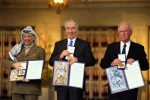
The Nobel Peace Prize laureates for 1994 in Oslo, from left to right: Palestinian Liberation Organization chairman Yasser Arafat, Israeli foreign minister Shimon Peres and Israeli prime minister Yitzhak Rabin. (photo by Saar Yaacov, GPO)

A towering figure, one among the founding generation of Israelis, Shimon Peres served as president, prime minister and in various key cabinet posts. He died Sept. 28 at the age of 93. Canadians joined in the international chorus of leaders mourning his death.

“Every so often, our lives are graced by the presence of truly remarkable individuals. They teach us invaluable lessons about compassion, fairness and generosity. They give us innumerable memories and a life of service that changes societies for the better,” said Gov. Gen. David Johnston.

“Shimon Peres meant so much to Israel, to Jewish people in Canada and around the world, and to the friendship between our nations. He called Canada an extraordinary friend during his state visit to our country in 2012, and I remember quite clearly the impression he left on me as a socially conscious man, driven by his love of Israel,” Johnston stated. “Though he is no longer with us, I hope that the legacy he left – as former president and prime minister of Israel and as a Nobel Peace Prize recipient – will let us strive for a better, more peaceful world. He will be missed and remembered by all those whose lives he has touched.”

Prime Minister Justin Trudeau issued a statement saying, “Shimon Peres was, above all, a man of peace and a man dedicated to the well-being of the Jewish people.

“Over the course of his long and distinguished life, Mr. Peres made enormous contributions to the founding and building of the state of Israel. He was devoted to promoting understanding between his country and its neighbors, and shared a Nobel Peace Prize for his efforts to create peace in the Middle East.

“Mr. Peres was an internationally respected statesman and a great friend to Canada. He visited our country often, and helped build relations that remain strong to this day.

“On behalf of all Canadians, Sophie and I offer our deepest condolences to the family and friends of Mr. Peres – and to the people of Israel. His legacy as a tireless advocate for peace will not be forgotten.”

Rona Ambrose, leader of the Official Opposition Conservative party, stated, “Few have accomplished more for the advancement of Israel and the Jewish people than Shimon Peres. His legacy spanned more than six decades in public service and as a political figure. He was a man who was the architect of Israel’s robust defence strategy, and someone who also won the Nobel Peace Prize in an attempt to find peace with the Palestinian people.

“Israel today is a steadfast ally to the West and all those who cherish democracy and pluralism. Israel’s strength is due in no small part to Shimon Peres and his foresight in advocating for peace while ensuring the nation he loved had the means to protect itself and its citizens in a turbulent world.

“Shimon Peres’ relationship with Canada was strong and lasting. In the 1950s, he visited Canada to secure assistance for the fledgling state. This soon cemented the special relationship between Canada and Israel, and he paid tribute to Canada on his 2012 visit when he said Canada is ‘an extraordinary friend’ and ‘never indifferent, never neutral.’”

Businessperson and former diplomat Arie Raif knew Peres well. He considered the Israeli leader his mentor and first met him as a teenager in the Israeli Knesset. Peres was a visionary, an elegant individual who never lost the common touch, who felt just as home with cooks and workers as with prime ministers and diplomats, he said.

Raif recalled an incident as a youth, when Peres visited the staff at the Knesset before Passover. He greeted them all with a warm embrace and wished them a happy holiday. Raif was able to meet the future prime minister, president and cabinet minister because his mother was the sous-chef in the Knesset at the time. Later, he would go on to work with Peres, and he opened the Canadian Peres Centre for Peace Foundation in Toronto.

Peres’ like will never be found again in Israel, Raif said. He possessed unique qualities that can’t be duplicated. As someone born in Europe, he brought something to Israel that the do-it-quick Israelis are lacking – a long-term vision for the country and the region.

Raif credited Peres with promoting peace and convincing his colleague, then-Israeli prime minister Yitzhak Rabin, to agree to the Oslo accords and shake Palestinian leader Yasser Arafat’s hand. That was something Rabin resisted for a long time.

Raif noted that, while a committed advocate for peace, in his earlier years, Peres played a key role in ensuring Israel possessed the means for its defence. In the 1950s, as director of the Ministry of Defence, “he made sure Israeli security forces got the best available weaponry and, according to the foreign press, he was the one who negotiated with the French for unconventional weapons” – Israel’s nuclear plant.

Canadian Jewish organizations also paid tribute to Peres.

“President Shimon Peres was a visionary, statesman, philanthropist and a giant of Israeli life whose private and professional accomplishments over seven decades read like the history of the modern state of Israel,” said David Cape, chair of the Centre for Israel and Jewish Affairs. “As a strong proponent of conflict resolution who earned a Nobel Prize for his efforts, Peres embodied the timeless aspiration of the Israeli people for a future in which their children will live in peace and security.”

“Shimon Peres was a vital force in shaping Israel,” said Julia Berger Reitman, chair of Jewish Federations of Canada-United Israel Appeal. “His contributions in the political and security fields are unparalleled. He was one of modern Israel’s defining figures.”

Friends of the Simon Wiesenthal Centre issued a statement offering its condolences and JSpaceCanada, a progressive Zionist organization, issued a statement saying it “mourns the passing of Shimon Peres, a source of optimism and inspiration for Israel and for the worldwide Jewish community…. He is mourned not only by Israel’s allies throughout the world but also by members in the Palestinian leadership who seek real peace.”

Meanwhile, Montreal MP Anthony Housefather addressed Parliament, noting that, “rarely does a man embody a country, but Shimon Peres was indeed such a man. He was a part of every bit of Israeli history, big or small, since before the nation was founded.

“Israel and the rest of the world lost an exceptional human being … a great statesman who dedicated his life to promoting peace and dialogue. He was a source of inspiration to many people all over the globe, myself included. Through his enduring commitment to the principles of justice and human dignity, he always worked in the best interest of his people.”

Also addressing Parliament, Toronto MP Michael Levitt said, “the international community has lost a giant.

“Shimon Peres was a peace builder, a public servant who embodied the boundless energy, optimism and desire of Israelis to seek peace in a region fraught with immense challenges.

“In his 66 years in public life, President Peres dedicated himself to fostering peace between Israelis and Palestinians, as exemplified in his leadership role in forging the Oslo accords.

“President Peres’ contributions extend far beyond peace and diplomacy. He was a driving force for innovation, inspiring Israelis to dream and think big. Unquestionably, his influence contributed in no small part to the rise of the ‘start-up nation.’… Israelis have lost a founding father, but his legacy will continue to shine.”

– A longer version of this article and more national Jewish news can be found at cjnews.com

Reflecting on election

In the last federal election, Mira Oreck was the NDP candidate for the riding of Vancouver Granville. (photo from Mira Oreck)

Nearly one year after the Canadian federal election, I had a chance to sit down with Mira Oreck (by phone), the NDP candidate for the riding of Vancouver Granville. I had knocked on doors with Mira during the early days of the campaign while I was visiting Vancouver that summer and I was eager to hear her reflections, particularly from a Jewish community standpoint.

Mira’s Jewish community affiliations run deep. She attended Beth Israel Hebrew School and Camp Ramah, she was president of her United Synagogue Youth region and served on the USY international board. She later went on to serve as regional director of Canadian Jewish Congress. Today, she is a member of Or Shalom Synagogue. Mira recalled being “overwhelmed” by how “members of the Jewish community connected with the campaign. People were genuinely curious and excited by the idea that someone from our community could be in Parliament.”

Unlike many other Canadian ridings, Mira said, the riding of Vancouver Granville was “primed for the conversation” around Jewish and Israel issues. And, since she already knew many Jewish community members and leaders personally, she said didn’t need to make cold calls to introduce herself. So, she was intrigued by a snippet of advice she heard someone give to one of her opponents who would indeed be making those rounds. The advice? The candidate should never mention the word “peace.” Apparently, to more conservative Jewish ears, “peace” is code word for being anti-Israel.

It’s a fascinating tidbit to me, since my reference point in academic circles is the reverse: many on the “far left” of the Israel-Palestine debate understand peace to be problematically “pro-Israel,” which is to say representing a complacent adherence to the status quo, without the hard work needed to challenge injustice. Whatever the correct referent is, this suggests how loaded is the discourse around Israel. It’s hard for candidates to speak their mind, knowing that every phrase could be a landmine.

But, on Israel, Mira insisted she kept her message consistent: against BDS, pro two-state solution. Her goal, as she put it to voters, was to “see peace in my lifetime … and not try to perpetuate ingrained ideas of the ‘other.’”

As much as she didn’t shy away from using the term “Zionist” to describe herself – despite some on her campaign preferring she not – Mira tried to emphasize that single-issue voting (for example, on Israel) has its limits. “I would say to voters that we are having an election in Canada and, first and foremost, my role as MP is to be concerned with the country we are governing.” For that matter, Mira said there were not “distinguishable differences on party platforms regarding Israel and Palestine. I wanted to know from [voters] what they thought the significant differences were; often people couldn’t name any.” Still, the topic of Israel came up “a lot less” than she expected. Instead, people in the Jewish community, she said, talked “about Bill C-51, refugees, climate change, child care … overwhelmingly more than I heard them talk about Israel.” The campaign, she said, “was a really good reminder” that “our community is not at all homogeneous.”

Sometimes, aspects of how politics played out as she engaged with members of the community saddened her. She recalled talking to a group of Jewish seniors, some of whom had been her Hebrew school teachers. They were Conservative party backers. “There was no amount of knowing me, coming from the Beth Israel synagogue and my connections to Israel, that enabled them to give me a fair hearing.” It was hard, she said. “I felt like they weren’t willing to know me for who I was, or the values that I hold.”

And there were times in the campaign where Mira had conversations that alarmed her but left her feeling hopeful. When she met with students at King David High School, she was shocked by some inflammatory descriptions of Palestinians. These students said things “that didn’t make sense, but were clearly coming from a very fear-based place,” she said.

Mira stood her ground. “I was really tough with the kids; really challenging them. I wasn’t trying to win over their votes; I was trying to have a real conversation with them about issues.” Later that afternoon, Mira recounted, two kids showed up to volunteer on her campaign. “It was a reminder,” she said, “that, while there were a few loud kids with strong opinions, others were thinking critically.”

Currently on maternity leave from being director of public engagement at the Broadbent Institute, a non-partisan think tank that describes itself as “championing progressive change through the promotion of democracy, equality and sustainability,” Mira – to me – represents the best our community has to offer when it comes to the sort of critical thinking she describes, and trying to make a difference, even if the nature of the electoral game means that one doesn’t always come out on top.

Mira Sucharov is an associate professor of political science at Carleton University. She is a columnist for Canadian Jewish News and contributes to Haaretz and the Jewish Daily Forward, among other publications.

Helping build brighter future

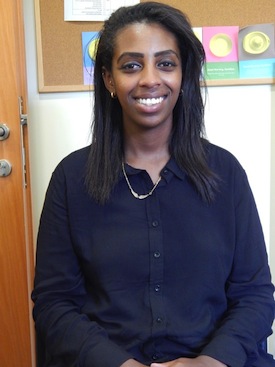
Jewish Federation of Greater Vancouver and the local Jewish community recently hosted Ethiopian-Israeli students Mazal Menashe and Ahuva Tsegaye. (photo by Cynthia Ramsay)

Every second year, the Jewish Federation of Greater Vancouver hosts two Ethiopian students from the Interdisciplinary Centre in Herzliya. This allows the students to come to Canada and intern in their chosen fields, giving them not only the educational experience but an advantage in finding work after graduation. The students also act as ambassadors for Israel while in the community and interacting with various local groups.

This year, Federation hosted Mazal Menashe and Ahuva Tsegaye. While in Vancouver for the month-long internship, the students stayed with host families Sam and Sandra Reich in Richmond and Ben and Nancy Goldberg in Vancouver; they spoke at synagogues, churches and schools.

photo - Mazal Menashe
Mazal Menashe (photo from JFGV)

In 1991, when Operation Solomon airlifted 14,325 Ethiopian Jews to Israel in 36 hours, Menashe and Tsegaye were babies. Tsegaye’s mother, who was a midwife, gave birth to her alone on the way to Addis Ababa for the airlift, on the outskirts of Gondar. Menashe, granddaughter of Qes (Ethiopian for rabbi) Menasse Zimru, was born in Addis Ababa while her mother and father awaited the Israelis.

Menashe and Tsegaye both grew up in Israel, overcoming poverty and occasional racism to become successful young women.

Upon arriving in Israel, Tsegaye’s family lived first in Jerusalem, then Haifa, then Kfar Hahoresh in the north and, finally, Migdal Haemek, where they still live today. Her mother is a homemaker, and her father, who works for the city as a street cleaner, is now semi-retired.

Menashe’s family first moved to an absorption centre in Mabu’im in the south, near Beersheva. They lived there for a year before moving to Netivot, where they stayed until Menashe was 6, and then to Ashdod, where they live today. Her mother is a caregiver for the elderly and her father works in a factory.

Both Menashe and Tsegaye served in the Israel Defence Forces.

Menashe was drafted to the IDF in 2010, and completed training in the Logistics Corps as an outstanding soldier. After serving in the Paratroopers Brigade for two months, she was asked to go into officers’ training, which she did, becoming responsible for a company of 150 soldiers. When she was released from the army after five years, it was with the rank of lieutenant.

Tsegaye served for six and a half years, the only member of her family to become an officer. She served in an air traffic control unit in the air force as an instructional officer, and completed her service with the rank of captain.

“Serving in the IDF was the most empowering experience of my life,” said Tsegaye. Menashe agreed.

photo - Ahuva Tsegaye
Ahuva Tsegaye (photo from JFGV)

Menashe and Tsegaye didn’t meet in the IDF, but rather at the Interdisciplinary Centre, where they are both enrolled. In August, Jewish Federation brought them to Vancouver to work as interns in their respective fields: Menashe in law and Tsegaye in organizational psychology.

“We feel so blessed, so appreciative for what the Jewish Federation has done for us,” said Tsegaye. “And we are very grateful to have the platform to be advocates for Israel abroad.”

Both Menashe and Tsegaye have faced many challenges to get where they are now. Ethiopians in Israel face racism, poverty and challenges related to cultural and linguistic integration. The two students were both present at the mass protests that took place in Tel Aviv and Jerusalem last year calling for an end to racism and police brutality against Ethiopian-Israelis.

Menashe and Tsegaye broadcast strength and optimism. “We cannot wait for other people to save us,” they agreed. “We are not waiting for a savior, we will work hard and make the change ourselves.”

The power to shape their own lives, and their optimism about their ability to make the lives they want, are recurring themes in Menashe and Tsegaye’s conversation. This is fitting for members of the generation that is changing the realities of Ethiopian-Israeli life in Israel. “Our generation is entering the professional classes,” noted Menashe. “We are making a new future for Ethiopian-Israelis.”

Tsegaye added that the younger generation of Ethiopian-Israelis gives her hope. She told of going to a kindergarten where a nephew is enrolled and seeing a black doll. “I had never seen a black doll before in my entire life,” she said. “The younger Ethiopian-Israelis are much more integrated. They see themselves as Israelis.”

For community members wanting to support Jewish Federation programs such as this one, the annual campaign runs to Nov. 30. For more information, visit jewishvancouver.com.

Matthew Gindin is a freelance journalist, writer and lecturer. He writes regularly for the Forward and All That Is Interesting, and has been published in Religion Dispatches, Situate Magazine, Tikkun and elsewhere. He can be found on Medium and Twitter.