You don’t have to be a sports fan to have been intrigued by the biggest story in the National Football League the past month.
Colin Kaepernick, the now back-up quarterback of the San Francisco 49ers made a stand (or a kneel, per se) in support of the imbalance he sees in how African Americans are treated in the United States by refusing to stand for the US national anthem before games.
Kaerpernick, who is of mixed race, stated that he will not stand for the anthem of a country that does not offer African Americans proper respect and equal treatment.
Colin Kaepernick from Wikipedia
The response has been mixed, with either loud voices calling Kaepernick’s actions a distraction to his team or screams from patriotic Americans raucously booing the quarterback any chance they get for betraying his country.
A seemingly small few have supported his right to take a knee (although his jersey soon became the hottest on the market).
I am not here to get into a debate over the Black Lives Matter movement or even to discuss the issue of equal rights in the United States. That’s for another forum.
While I appreciate all sides of the argument around pro athletes using their platform to make political statements, my take on this issue lies within the question of what a national anthem is supposed to represent.
Whether you agree with Keapernick’s opinion on the state of affairs in his country or not, a national anthem is a show of pride, of patriotism, of love and affection for the country you live in. It is a way to say “I love you” to your country.
But if you are not proud of the country you live in, pay taxes in, work in, contribute to society in, then you should not be expected to unconditionally stand and sing her praises.
Just as a child who is abused by her father should not be expected to unconditionally say “I love you” simply because he is her father, citizens of the United States should not be expected to sing The Star Spangled Banner unconditionally if they feel their community is being abused by their country. Nor should they be asked to leave “if they don’t like it.”
Kaepernick, and the many athletes who have since followed his lead, are staying. And they are asking more from their country if their country wants them to stand and say “I love you.”. Kaepernick has stood in front of any microphone that asks the question and stated exactly what he expects for from his country. He is not proud to be an American right now and he is not wrong to feel that way.
I have also heard many argue that the singing of anthems are a time to show respect to the many men and women who have given their lives for their country, and I respect that take. However, I also suspect those men and women would be rolling in their graves right now if they knew what the country had done with those rights and freedoms they fought to defend. Did they die so that political corruption and immoral behavior would lead the way in their country? Did they die so that America would have only two legitimate political choices at each election? So that children would be born into homes that identified themselves as either Republican or Democrat regardless of the petulant child that was leading their party
I’d like to think not.
Rather than starting every conversation on the topic with the words “I’m proud to be an American, but…”, ALL Americans should be demanding more from their country.
Clashes with police, race wars, mass shootings, ridiculous gun control debates, and the ultimate embarrassment of Donald Trump being considered a legitimate candidate to run their country are embarrassing for the so-called leaders of the free world.
I respect any American for feeling proud of many of the things their country has stood for over the years. More specifically, I respect the challenges of managing the responsibility of playing the worldwide role the USA accepts on a daily basis. But today, in the United States, it is ok not to be so proud.
Standing for a national anthem should not be a requirement of being a citizen of a country. Doing what you can to support, advocate for or improve that country should be. Kaepernick’s actions were designed to instigate much-needed debate and awareness in his country. This will serve them far better than unconditionally standing for a song.
Let’s hope he decides, once again, to stand proud.
ביקור ראשון לנסיכים המלכותיים ויליאם וקייט במחוז בריטיש קולומביה וטריטוריית יוקון, ביחד עם ילדיהם הקטנים ג’ורג’ (בן השלוש) ושרלוט (בת השנה וארבעה חודשים). הביקור הקודם של הנסיכים בקנדה נערך ב-2011 מיד לאחר חתונתם (באפריל 2011), עת ביקורו במחוז אלבטרה.
הנסיך ויליאם, הדוכס מקיימברידג’ והנסיכה קייט, הדוכסית מקיימברידג’, הגיעו במטוס (של חיל האוויר של קנדה) ביום שבת אחר הצהריים ונחתו בבירה ויקטוריה. כל הביקור הרשמי כמתחייב בתקנון (ממלכות חבר העמים הבריטי), ממומן על ידי משלם המיסים הקנדי. עם נחיתתם, קיבלו אותם נציג המלכה אליזבט המושל של קנדה, דיוויד ג’ונסטון ואשתו שרון ג’ונסטון, ראש ממשלת קנדה, ג’סטין טרודו ואשתו סופי גרגואר טרודו, נציגת המלכה המושלת של בריטיש קולומביה, ג’ודי גאושון, והפריימר של בריטיש קולומביה, קריסטי קלארק ובנה היימש קלארק. אלפי תושבים המתינו שעות לקבל בחום ואהבה את הזוג המלכותי הבריטי בשדה התעופה של ויקטוריה.
ויליאם וקייט שמו לעצמם למטרה לפגוש הפעם בביקור העמוס לעייפה בן שמונת הימים, נציגים של שכבות שונות באוכלוסיה, ובעיקר את החלשים בבריטיש קולומביה ויוקון. וכן הם ביקשו לראות מקרוב מה קורה בנושא איכות הסביבה בטריטוריות השונות של האינדיאנים.
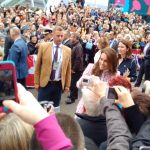
וויליאם וקייט הגיעו מוויקטוריה לקוהל הרבור בוונקובר במטוס צף, ביום ראשון לקראת אחת עשרה בבוקר. הם התקבלו כאן על ידי עשרות אלפי תושבים שהמתינו להם משעות הבוקר המוקדמות, בג’ק פול פלז’ה שליד הלהבה של אולימפיאדת ונקובר 2010. תחילה עברה קבוצה גדולה של עיתונאים וצלמים. לאחריהם אנשי ביטחון ומשטרה רבים. עם הגעתם של ויליאם וקייט, רבים החלו לצרוח ומהצלמות צילמו ללא הפסק. הפעם ללא ליווי הילדים הרגישו השניים יותר חופשיים לנוע בשביל הבטוח, שנוצר עבורם בין המבקרים הרבים. וויליאם לחץ ידיים ודיבר עם הקהל בצד השמאלי של השביל, ובאותה עת קייט עשתה את אותו הדבר בצד הימני. לאחר מכן השניים נכנסו ללימוזינה מפוארת ובלווית מכוניות ביטחון ומשטרה רבות, הם נסעו במהירות להמשך הביקור בדאון טאון, שכלל מספר תחנות.
ויליאם וקייט נפגשו עם נציגים של ‘הפירסט ניישן’ (אינדיאנים) אתמול בוונקובר איילנד, והיום בוונקובר. הם ביקרו במעון מיוחד לנשים בהריון ואימהות צעירות (‘שיוואי’), שסובלות מבעיות נפשיות והתמכרויות לסמים ואלכוהול, בדאון טאון אייסט סייד. לאחר מכן הם ביקרו במוסד של ארגון שירותי ההגירה של בריטיש קולומביה, שמטפל בפליטים חדשים שהגיעו מסוריה, גם הוא ממוקם בדאון טאון אייסט סייד (ג’סטין טרודו הסביר בביקור לנסיכים כיצד ממשלתו מטפלת בשיתוף פעולה עם האזרחים בשלושים ואחד אלף פליטים, שהגיעו כבר מסוריה). לאחרי כן השניים השתתפו בטקס קבלת פנים באולם ‘בטאלס גארדן’ בדאון טאון, למנהיגים צעירים בעלי הישגים מרחבי קנדה, כולל נציגים של נבחרות קנדה למשחקים האולימפיים ולמשחקי אולימפיאדת הנכים, בריו דה ז’ניירו. האירוע כלל נאום של ראש הממשלה טרודו.
החלק האחרון בביקור המאוד מתוקשר של הזוג המלכותי בוונקובר, באמצעות אמצעי תקשורת מכל העולם, כלל את התחנה של משמר החופים בחוף של קיצ’לאנו. השניים הגיעו למקום בסביבות שלוש אחר הצהריים, וניפגשו עם נציגים שונים של צוותי חירום והצלה, נושא הקרוב אישית לוויליאם, שעד לאחרונה הטיס בעצמו מסוק של צוותי החירום בבריטניה.
אל הזוג הצטרפו בחלקים מהביקור בוונקובר, כאמור ג’סטין טרודו ואשתו סופי, קריסטי קלארק, וכן ראש עיריית ונקובר, גרגור רוברטסון. עם סיום הביקור בקיצ’לאנו טסו הנסיכים בחזרה לוויקטוריה, לבית הממשלה בו הם לנים עם ילדיהם.
הסרט ‘מעברלהריםוהגבעות‘ מספרעלאישצבאשהשתחררלאחרעשריםושבעשניםשלשירות, וחוזרלביתוומשפחתושממנההיהרחוקכלאותןשנים. (צילום: מפסטיבלהסרטיםהבינלאומישלונקובר)
ארבעה סרטים ישראלים משתתפים בפסטיבל הסרטים הבינלאומי של ונקובר שיפתח השבוע
שוב יצוג מכובד לקונלוע הישראלי בפסטיבל הסרטים הבינלאומי של ונקובר, שנחשב לאחד מאירועי הקולנוע החשובים ביותר של צפון אמריקה. ארבעה סרטים של יוצרים ישראלים ישתתפו בפסטיבל הסרטים הבינלאומי של ונקובר, השלושים וחמישה בספר, שיפתח השבוע.
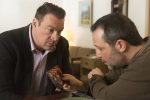
הסרט הראשון הוא ‘בין הגדרות’ (באורך 85 דקות) של הבמאי אבי מוגרבי, בשיתוף פעולה עם הבמאי חן אלון. מדובר בקופרודוקציה ישראלית-צרפתית. הסרט הדוקומנטרי מתעד סדנת תיאטרון של מבקשי מקלט בישראל שהגיעו מאריתריאה וסודן. הזרים כלואים במתקן חולות. הסרט בוחן את מעמדם הקשה של מבקשי המקלט בישראל. וכן דן בסוגיות הכואבות: מדוע הם החליטו לעזוב את מולדתם, אי הסדרת מעמדם כפליטים בישראל וכן יחסי הגולמין והקשרים בין הישראלים עצמם לפליטים. בסרט משולבות טכניקות יוצאות דופן ששייכות לעולם התיאטרון. הסרט יוקרן פעמיים בפסטיבל: ביום שלישי (ה-30 בחודש) באחת אחר הצהריים וכן ביום ראשון (ה-2 באוקטובר) ב-6.30 בערב.
הסרט השני הוא ‘מעבר להרים והגבעות’ (באורך 90 דקות) של הבמאי ערן קולירין, עם המפיק אילון רצ’קובסקי. מדובר בקופרודוקציה ישראלית-גרמנית. הסרט שמתרחש בירושלים, מספר על איש צבא שהשתחרר לאחר עשרים ושבע שנים של שירות, וחוזר לביתו ומשפחתו שממנה היה רחוק כל אותן שנים. הוא מגלה שמאוד קשה לו להסתגל בחזרה לחיים בישראל (שמחוץ לצבא). איש הצבא לשעבר מצטרף לחברה שעוסקת בשיווק ערכות לדיאטה, דבר שמסבך מאוד את היחסים עם משפחתו. כך הוא מגלה עד כמה הוא עצמו רחוק מהחיים מודרניים שנעים כיום סביב חומריות וכסף. הסרט יוקרן פעמיים בפסטיבל: ביום חמישי (ה-6 באוקטובר) בשעה 10:45 בבוקר וכן ביום ראשון (ה-9 באוקטובר) בשעה 9.15 בערב.
הסרט השלישי הוא ‘ג’אנקשן 48’ (באורך 97 דקות) של הבמאי השנוי במחלוקת אודי אלוני. מדובר בקופרודוקציה ישראלית-גרמנית-אמריקנית. הסרט עוסק בשני צעירים אמנים ערביים שגדלים בגטו הפלסטיני של לוד, העיר הענייה ורבת הפשע שידועה כאחד ממרכזי הסחר בסמים הגדולים שיש בישראל. קשר אהבה העמוק ביניהם והמוסיקה שהם יוצרים, משמשים ככלי נשק להילחם בדיכוי שמפעילה החברה הישראלית מצד אחד, ובלחצים שמפעילה החברה הערבית השמרנית מהצד האחר. סרט יוצא דופן זה מתאר את הדור החדש של הערבים בישראל ומחוצה לה, שמחפש חיים נורמליים ומודרניים באמצעות אהבה ומוסיקה. הסרט יוקרן פעמיים בפסטיבל: ביום ראשון (ה-9 באוקטובר) בשעה 9.30 בערב וכן ביום שלישי (ה-11 באוקטובר) בשעה 11.30 בבוקר.
הסרט הרביעי הוא ‘ויטה אקטיבה’ (באורך 125 דקות) של הבמאי ערן אושפיז. מדובר בקופרודוקציה ישראלית-קנדית. הסרט הדוקומנטרי הוא ביוגרפיה אינטלקטואלית אישית של הפילוסופית היהודייה ילידת גרמניה, חנה ארנדט. הפילוסופית הגרמניה ידועה לאור המושג שטבעה “הבנלאיות של הרוע”, כאשר אפיינה את הרוע הנאצי באמצעות דמותו של הצורר אדולף אייכמן. הסרט עוקב אחר חייה של ארנדט והקשר עם הפילוסופיה שלה. משלובים בו חומרי ארכיון נדירים בהם קטעים של משפט אייכמן שלא הושמעו עד כה. מדהים עד כמה האמירות החשובות שלה שלה מתאימות גם למציאות חיינו היום. הסרט יוקרן פעמיים בפסטיבל: ביום שבת (ה-1 באוקטובר) בשעה אחת בצהריים וכן ביום רביעי (ה-5 באוקטובר) בשעה 9.15 בערב.
פסטיבל הסרטים הבינלאומי של ונקובר יפתח ביום חמישי השבוע (ה-29 בחודש), ויימשך במשך כשישה עשר ימים עד יום שישי (ה-14 באוקטובר). הסרטים יוקרנו בשישה בתי קולנוע ואולמות תיאטרון שונים ברחבי ונקובר. הפסטיבל יתמקד בנושאים יוצאי דופן רבים ושונים בהם: סרטים מהודו, איראן, אפריקה, המזרח התיכון, סיפורים איסלמיים וזכויות האזרח.
The European Parliament. (photo by Treehill via Wikimedia Commons)
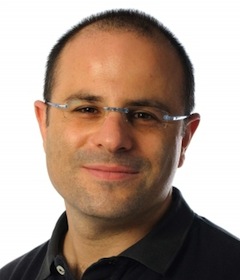
Dr. Sharon Pardo is a member of the department of politics and government at Ben-Gurion University of the Negev and the director of the Centre for the Study of European Politics and Society. He has been awarded the Ad personam Jean Monnet Chair – and was the first Israeli scholar to receive it. He also was elected to join the advisory council of Konrad-Adenauer-Stiftung, a think tank funded by the German government, another singular accomplishment for an Israeli scholar. Pardo was in Vancouver last month, where he gave a lecture at the Jewish Community Centre of Greater Vancouver.
A major theme of Pardo’s research is the disjunction between the public stance the European Union has taken on Israeli policies – its “normative position” – and the economic and trade relationships between individual member countries and Israel. Contrary to the common perception that the EU is anti-Israel, Pardo argues that the reality is much more complicated.
“The truth is that trade relations proceed with no regard to the normative position,” explained Pardo to the Jewish Independent in an interview at the Fairmont Hotel Vancouver on Aug. 21. “That is, in fact, the very thing that allows the EU to speak with one voice – the fact that individual member countries know that their own trade relations with Israel will not be affected by the normative position of the EU.”
The professor explained that there are two different voices, “the normative voice on the supranational level and the economic voice on the trade-relations level, on the realpolitik level of the individual member countries. We could say that Europe has a split personality.”
Dr. Sharon Pardo of Ben-Gurion University of the Negev spoke in Vancouver in August. (photo by Dani Machlis, BGU)
The facts on the ground are that Israel and the EU have such extensive relations that, for most practical purposes, Israel is already a member of the EU, said Pardo. EU members have well-developed trade relations with Israel, and the EU and its members fund research and development and other initiatives in Israel. The EU accounts for 35% of Israeli trade, said Pardo, and perhaps 41% of Israelis are would-be citizens of the EU.
Pardo contends that the critical position of the EU towards Israel on issues related to the occupation and Israel’s wars are not intended for external consumption at all, but are actually directed inwards as a means to establish an integrated European identity.
“These normative positions are being used to shape the new European identity through asserting shared values,” he said. “They are for internal consumption. The EU has striven to unite 508 million citizens around a set of values – the rule of law, human rights, etc. – which are perceived as European values. Since 1957, Europe has been asking the question, ‘Who are we? How do we define ourselves?’ One way to define ourselves is against the other. Israel is the ultimate other: Israel is part of us, but Israel is what we are not.”
Citing as an example of the emptiness of many of the EU’s statements, Pardo pointed to the 2012 EU guidelines for the territories occupied by Israel.
“We call these ‘guidelines for nothing,’” said the professor. “There are a total of five research institutions in the territories, none of them were ever supported by the EU. There was one institution, Ahava, a private project which received some funding. The reason it is so easy for the EU to author those guidelines is that there is no trade there. A total of 0.6% of Israeli trade with the EU comes from the territories.”
As an expert on the EU, Pardo can also speak to Brexit. He calls it “an accident, both at the U.K. and EU levels. Brexit was not meant to issue in a real British exit,” he said. “Little Britain surprised David Cameron – the amount of euro-skepticism was underestimated.”
Pardo worries that there will be dire consequences for Britain, and potential negative fallout for Israel as well.
“This is going to be a nightmare for the British economy and the city of London,” he said. “The EU has no choice but to crush the city of London because it will be unregulated in its competition against other European capitals. The EU cannot offer them a good deal – they can only be offered the worst deal possible, and they will be offered the worst deal possible. Theresa May is stuck with this strange decision, which is a result of PR companies manipulating the British public. Just imagine having now having to negotiate 192 new trade agreements with the rest of the world!”
While Pardo is optimistic about the relationship between Israel and the Jewish people and the British leadership, he is concerned about the effects of Brexit on Israel as a country.
“David Cameron was one of the friendliest European leaders to Israel, and Theresa May will also be friendly. She has been a friend to the Jewish people and an enemy of antisemitism,” he said.
But, he added, “Brexit can weaken the European integration project and have major implications for Israel.”
Pardo said it is essential for Israel to adopt a more explicit “grand strategy” with regards to the EU.
“Israel needs the EU,” he said, “and we need to be clearer about what we want from our relationship and how we plan to conduct it. We will not serve our own interests with the kind of anti-EU rhetoric that some Israeli politicians employ simply to get votes from an Israeli public that resents the normative positions of the EU.”
Matthew Gindinis a Vancouver freelance writer and journalist. He blogs on spirituality and social justice at seeking her voice (hashkata.com) and has been published in the Forward, Tikkun, Elephant Journal and elsewhere.
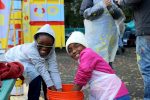
Young community members in Harlem participate in the painting of a shipping container inside of which fresh produce is grown. (photo by Nick Smith)
Seed Street, a hydroponic farming venture and food-justice initiative that grows fresh produce inside shipping containers, arrived in Harlem in the summer of 2015. It was brought there by Leigh Ofer and Hannah Bronfman.
The idea came from an environmental justice class Ofer took in college, as well as Bronfman’s deep ties to the Harlem community and her advocacy for healthy living and positive body image.
“Even with time and less financial stress than a family, it was still expensive and challenging to eat and live healthy with so much misinformation out there … I was confused and searching for sustainable ways to live and eat healthfully while living in a big city,” said Ofer. “Women, in particular, in our modern-day society, can be so disconnected from our bodies. I felt a tremendous sense of disillusionment with the current food system and anger at how deep-seated interests have infused our system with toxic Franken-foods.”
Ofer believes this issue is at the heart of America’s health crisis. “It’s really impossible to eat well, to feed your mind, body and soul,” she told the Independent. “Growing up in Israel, in an agricultural society, eating healthy was a by-product of living. You don’t think about it. But, in the U.S., it takes jumping through hoops just to eat healthy – a total polar opposite on the spectrum.
“This was having a profound effect on me. I felt it in everything – my skin, my well-being, my energy, but I count myself as one of the lucky ones. If I was having a hard time eating and living well, how was a young family managing? I felt a deep sense of obligation to do something about this.”
When Ofer was searching for solutions, she came across a new development in agriculture. Cutting-edge farmers and technology geeks were building hydroponic farms inside shipping containers. The idea immediately resonated with Ofer, partially because of her family background in shipping.
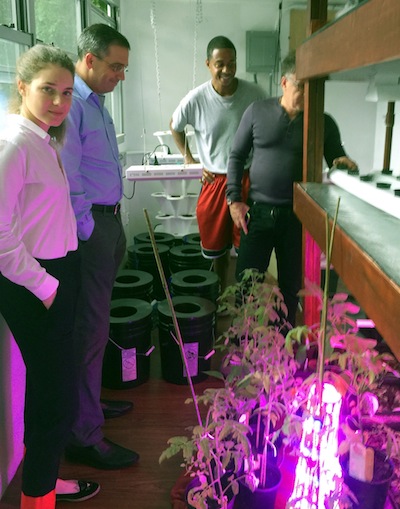
Leigh Ofer checks out the Seed Street hydroponic farm in Harlem. (photo from Seed Street)
“It was a no-brainer to transform freight containers into highly productive urban farms using the latest technologies and minimal resources to reconnect urban communities to fresh food,” she said. “It made perfect sense, harnessing the power of new technology to revitalize urban neighborhoods, introduce farming jobs and reeducate a community about where food comes from.”
When Ofer met Bronfman a couple of years after having come across this idea, the two decided to take a leap of faith together and go for it. With limited resources, they kicked things off with one container. It landed at their community partner’s yard – the Children’s Aid Society – in July 2015, and they have been growing tomatoes, leafy greens, herbs, peas and cucumbers ever since.
“We are retrofitting freight containers with hydroponic growing technology and bringing the farm back to the city,” said Ofer. “You can put these farms almost anywhere. Each farm container has a very high yield, equal to about an acre of traditional farming and using 90% less water and 75% less fertilizer. All you need is an electrical outlet to hook up to and a water supply. We had a plethora of tasty, healthy veggies in our last harvest.
“We got started by partnering with the Children’s Aid Society at their central Harlem location,” she explained. “We piloted our grow farm in their backyard playground a little over a year ago. In January, we launched the volunteer-run youth development urban farming program, serving 60 youth from central and east Harlem. Our proprietary Grow, Move and Create program engaged the youth three days a week in healthy activities, such as yoga, hydroponic farming and entrepreneurship.”
The program was successful and involved the community and especially kids, who learned by doing how foods grow and the different ways food can be eaten and enjoyed. Community members participated in planting, harvesting, managing the farm stand and creating recipes for the fresh produce they brought home, not to mention yoga. At the end of the modules, the kids shared a presentation with the parents – a business plan, a recipe book or yoga stretches, depending on their group’s focus.
Heading into 2016, Ofer said there were three pillars she and her team wanted to address with the program: accessibility of fresh, healthy food; sustainability; and the sharing of knowledge and information.
“Most importantly, in order for us to be successful, we needed to address the issue of economic security,” she said. “We believe you can fill lettuce bags all day long, but if people don’t have access to good food, a base sense of financial security and practical knowledge about food and health, it’s going to be useless.”
For the second phase of the Seed Street urban farming initiative, the focus was shifted to economic development as a more effective way of empowering community members and improving food justice, by providing food education and nutrition information.
“Basically, what we’re doing is increasing opportunity for a community to have economic independence and helping them to take ownership of their health and nutrition,” said Ofer. “We want to ensure our model is not just another organization out there that does community gardening. We want it to be one that addresses the inequities and is also functional, taking needs of the community into account and including community stakeholders in the planning, growing and harvesting of foods and ideas.”
Seed Street is currently evaluating technology suppliers and sites for the commercialization of five to six container farms in Harlem. They are strengthening their partnerships and learning, through collaboration, the best ways to partner with other local youth development, food-justice, employment, and health and wellness advocacy programs.
The container farms operate year-round, allowing continuity in education and providing ongoing employment for the operator, unlike an outdoor garden that closes for winter.
“When I started the project, my dream was to build farms in Israel and Palestine, because I could visually see that it would be a beautiful way to bridge two sides and actually grow produce together and work on a shared initiative together,” said Ofer. “My dream continues to evolve, but I clearly envision us creating a model for collaboration and conflict resolution.”
Beit Vancouver is a centre for youth at risk in Kiryat Shmona. (photo from Jewish Federation of Greater Vancouver)
The Etzbah HaGalil, or Galilee Panhandle, is the northernmost part of Israel, a “finger” of land extending into Syria and Lebanon, with its southeastern border also touching on Jordan. Militarily and geopolitically vulnerable, Etzbah HaGalil is also far removed from any urban centres, rendering it somewhat cut off from Israel’s economic and cultural heartlands, as well as its government infrastructures. For all of these reasons, young people growing up in Kiryat Shmona, one of the Etzbah’s major towns, face particular challenges.
Add to the above the fact that many immigrants are drawn to the Etzbah by cheaper housing. As in any other country, newcomers to Israel have a particular need for social services and community institutions to help them integrate into society and flourish. Yet those are the very things that have been hard to find in the Etzbah. Enter Beit Vancouver, a centre for youth at risk in Kiryat Shmona.
Originally built by the British Jewish community campaign (United Jewish Israel Appeal) in the early 1980s and held by the Israeli Housing Ministry, the youth centre that would eventually become Beit Vancouver was built near a major public high school in Kiryat Shmona. Inadequate operating support left it deserted for many years and the centre was in need of rescue in 2004 when the Partnership2Gether Coast-to-Coast steering committee identified it as a high-priority project in the region. P2G is a partnership between Jewish Federation of Greater Vancouver and five other Jewish communities across Canada, and the steering committee includes representatives from the Canadian and Israeli communities in the partnership.
In 2005, three Vancouver-based families (the Diamond, Heller and Libin families) visited the region and donated funds for the renovation and renewal of operations at the centre. Beit Vancouver was scheduled to open July 11, 2006, but that day turned out to be the first day of the Second Lebanon War, which delayed the centre’s opening until September 2006.
The initial operating years of Beit Vancouver were strong, with rapid growth. An infusion of funds from the Israel Emergency Campaign beyond the initial commitments from the core funders helped.
Juvenile delinquency dropped dramatically in the region and, in 2008, the centre was singled out for national recognition for excellence in providing services to youth.
Unfortunately, 2009 saw both a reduction in funding and changes in staff that led to a decline in the centre’s effectiveness. A visit by Vancouver Federation staff in 2009 inspired a strong intervention with the city administration to force attention to the state of the program and building. Three core partners – Vancouver Jewish Federation, Kiryat Shmona and the Rashi Foundation – each committed to a revitalization of Beit Vancouver, with ongoing operating funding at a sufficient level.
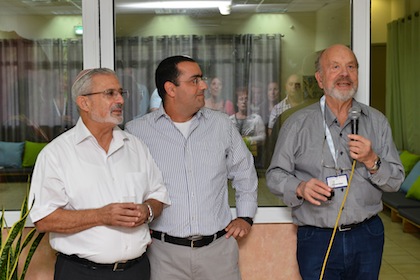
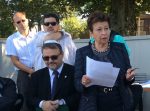
At the launch of the Friends of Beit Vancouver recognition wall on a mission led by Anita and Arnold Silber, Arnold Silber addresses the audience. He is joined by, left to right, Nissim Malka, mayor of Kiryat Shmona, and Eran David from Jewish Federation of Greater Vancouver’s Israel office. (photo from Federation)
The centre reopened in March 2010 and the level and quality of programming has grown steadily. When a financial crisis in Kiryat Shmona caused the closure of all other community centres in the city, Beit Vancouver stayed open, providing full-scale services to hundreds of youth on a daily basis.
“This centre is really essential for the youth of Kiryat Shmona,” said Ezra Shanken, Vancouver Jewish Federation chief executive officer. “The community is lacking many things we take for granted. There is no movie theatre in Kiryat Shmona. It is incredibly important that the youth there have somewhere to go.”
And, not only that, but the Beit Vancouver building has been used for emergency housing and relief for Israeli children in communities under attack. For example, when under fire from Gaza, children from Sderot were bused to Beit Vancouver.
Federation currently funds three programs at Beit Vancouver: Net@, Merkaz Ma’ase and Youth Futures. Krembo’s Wings is under review to be funded for 2017.
Net@ is an education program that helps high school students achieve high-level computer skills. The program has produced 5,000 graduates and is the only one of its kind in the region that integrates Muslim, Jewish and Christian youth in joint activities.
Merkaz Ma’ase is a leadership program for young adults designed to deliver equal opportunities and social mobility. It engages at-risk youth in a year of volunteer service after they graduate high school and before they begin their army service.
Youth Futures is a community-based intervention that aims to help children in junior high who are notably at risk for failure or withdrawal. Children are referred to Youth Futures by teachers, social workers and others who observe their need for help, shown by poor attendance, failing grades and behavioral problems. The child is paired with a trustee who acts as a bridge between the child, the family, the school and the public system.
Lastly, Krembo’s Wings provides weekly social activities for young people living with any type of motor, cognitive or sensory disability. The program helps these children become part of community life.
Shanken encourages Vancouver Jews to make Beit Vancouver part of their Israel trip. “Having a place that bears our name creates a bridge that can connect our communities,” he said.
Vancouverites can designate donations for Beit Vancouver through the Federation’s annual campaign, which was launched last week. For more information, visit jewishvancouver.com.
Matthew Gindinis a Vancouver freelance writer and journalist. He blogs on spirituality and social justice at seeking her voice (hashkata.com) and has been published in the Forward, Tikkun, Elephant Journal and elsewhere.
Belle Jarniewski (fifth from the left) is one of the co-founders, with Sumera Sahar (fourth from the left), Perry Kimelman and Dr. Rory Dickson of the Muslim-Jewish Dialogue Group of Winnipeg. (photo from Belle Jarniewski)
Started in Winnipeg last year after a visit from Rabbi Shaul Osadchey of Calgary’s Beth Tzedec, Belle Jarniewski and Perry Kimelman believe that a local dialogue group with Muslims and Jews will do a lot of good for both communities.
Jarniewski is chair of the Freeman Family Foundation Holocaust Education Centre, a position she has held since 2008. And, just recently, she began a two-year term as president of the Manitoba Multifaith Council, the first woman and the first Jewish person to hold that position.
“The Manitoba Multifaith Council had brought in Rabbi Shaul Osadchey of Calgary for its Multifaith Leadership Breakfast in 2015 and I was intrigued to hear how successful he had been in his own interfaith dialogue work and to hear how well he had reached out to the Muslim community there,” she told the Independent.
Jarniewski approached her synagogue with the idea of seeing if she could work with them to hold the kinds of events with which Osadchey had seen success, but received little interest. So, she decided to start a group independently of an institution.
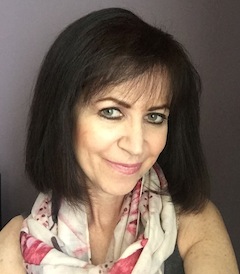
Belle Jarniewski (photo from Belle Jarniewski)
“Perry and I are also members of the Arab-Jewish Dialogue Group, which discusses (primarily) the Arab-Israeli conflict, but seems to eschew any real discussion of religion,” she explained. “Both of us have been active in interfaith work for quite some time and have many connections to wonderful people. We felt that was something that was missing. Once we realized that both of us had long been interested in starting just such a group, we put our heads together to see what would be the best way forward.”
Of course, to get the idea off the ground, they needed a Muslim partner or two. They found a perfect match in Sumera Sahar, a member of the Canadian Council of Muslim Women (CCMW). The second Muslim co-convener they found was Dr. Rory Dickson of the University of Winnipeg’s department of religion and culture. And, with that, the four set out to build membership, which is now a balanced mix of almost 40 Jews and Muslims (by invitation only). Members have been proposed by other members, as well as by the conveners.
“It is important that those who join are interested in dialogue with each other, are interested in religion and culture – our own and each other’s – and accept the very few rules we have imposed upon ourselves,” said Jarniewski.
These rules, she said, include “no discussion of politics – there is already another group established for that very reason – and, as well, both groups decided early on that we preferred not to involve clergy. If someone wishes to join, they must be referred through a member.
“We also have a closed group discussion through our private Facebook page, which seems to work very well. The ages of our members are from university through … well, I don’t ask … I would say in the 60s.
“The diversity of religion streams and origins of both Jewish and Muslim members contributes to some wonderfully rich discussions,” she continued. “The group is all about learning about each other’s religion and culture and each other, and getting to know one another. For far too long, Muslims and Jews have had, at best, a polite relationship with each other, but haven’t really gotten to know one another and learned just how much our two religions have in common.”
The group has held a number of evening get-togethers, learning about Sharia and halachah side by side. “The word Sharia evokes, for most Westerners, the most extreme form of Islamic law,” said Jarniewski, “but we learned that Sharia is far more complex than this simplistic interpretation.
“One night, we had Dr. Ruth Ashrafi talk about the role of women in Jewish law and Drs. Rory Dickson and Ahmet Seyhun lecturing on family law in Islam. On another night, we had a great discussion about halal and kashrut.
“At our very first meeting, one of our Jewish members, who hails from Iran, recited a Muslim prayer in flawless Arabic. What an icebreaker that was!”
Sahar told the Independent this group “is an important initiative and much needed, given the popular and often-unchallenged notion that somehow Jews and Muslims are historical and natural adversaries.”
Sahar is an executive member of CCMW’s Winnipeg chapter, the co-coordinator of a community food bank serving Arabic-speaking refugees and has recently been invited to sit on the board of the Manitoba Multifaith Council.
The core objective of the Muslim-Jewish dialogue group is that Muslims and Jews get to know one another directly without the filter of religious or political organizations. Sahar contends that most, if not all, group members believe that the group is a crucial step toward countering antisemitism and Islamophobia and, most importantly, to bridging communities.
Like Jarniewski, Sahar has made good friends and formed a much better understanding of the similarities both religions share, not just religiously, but also as minority religious communities.
“Being a minority community has its challenges, and both Jews and Muslims share similar anxieties and concerns,” said Sahar. “We share the struggle of gaining acceptance and inclusion without losing our religious values and identity. We are also subject to the question of representation – who speaks for us?
“Both communities are pluralistic and diverse but, as is the case with most minority groups, we are often represented in the media and popular discourse as a single voice. I was struck to learn that this issue is as much a source of frustration for the Jewish members of the group as it is for the Muslim members.”
The dialogue group has provided a platform to discuss such issues and suggest some strategies to overcome them. The convenors are pleased to see the sincerity with which group members have engaged with one another and are hopeful in their potential to build understanding.
“I feel that it is more important than ever to speak up when unfortunate statements are made in these rather difficult times that attack Muslims and Islam,” said Jarniewski. “These statements are generally mired in stereotypes and ignorance. It is important that our community realize they are received in the Muslim community in the very same way that the Jewish community is hurt by antisemitic comments.”
Jarniewski is well aware that, across Canada, there are Jewish-Muslim groups such as the one in Winnipeg who are coming together to engage in dialogue. “Little by little, groups such as ours will have a very positive effect,” she said.
Jarniewski quoted Catholic priest and Swiss theologian Hans Küng: “No peace among the nations without peace among the religions. No peace among the religions without dialogue between the religions. No dialogue between the religions without investigation of the foundation of the religions.”
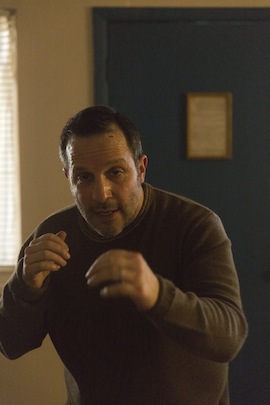
Aleks Paunovic, left, and Ben Ratner in scene from the short film Ganjy, which Ratner hopes one day to develop into a feature. (photo from Ben Ratner)
Vancouver Jewish community member Ben Ratner steps back into his acting boots for his latest, ground-shaking film, Ganjy, premièring at this year’s Vancouver International Film Festival, which runs Sept. 29-Oct. 14.
Ganjy, directed and written by Ratner, is centred on the character of Ganjy (played by Ratner), a former boxer who is in bad shape, suffering from dementia pugilistica and living in squalor. With the support of his former-boxer friends, he endeavors to survive and lead a dignified life.
A large part of the inspiration for and foundation of Ganjy was Ratner’s encounter and interaction with his hero Muhammad Ali at the screening of the film Facing Ali in 2009, along with Ganjy co-star Aleks Paunovic. They both had the opportunity to spend a considerable amount of time with Ali and the boxer’s inner circle. “It was just a mind blowing, life-affirming experience for Aleks and I,” said Ratner.
Ganjy was filmed in February 2016, and Ali passed away four months later.
“The topical subject matter of dementia, particularly in sports-related head injuries, and the recent passing of Muhammad Ali makes Ganjy hugely relevant and, in our opinion, very important at this time,” said Ganjy co-producer Tony Pantages. “Of course, when we shot the film, we didn’t know Ali would pass away only months later, as we were in our final post, but we were honored to be able to pay tribute to him with the film.”
Ratner has launched an Indiegogo crowdfunding campaign to cover the basic costs of filming – all cast and crew took deferred wages – and anything raised over the $15,000 goal will be split between the promotion of the film and entry into notable film festivals, and the Muhammad Ali Parkinson’s Foundation.
“In Ganjy, Ben Ratner’s exquisite performance as the eponymous lead character tenderly but powerfully reminds us of the undeniable side-effects of the boxing trade,” said Pete McCormack, the award-winning writer and director of Facing Ali and I Am Bruce Lee, who saw Ratner’s short film in an advanced screening.
The three co-stars of Ganjy – Paunovic, Zak Santiago and Donny Lucas – are all experienced actors and former amateur boxers. Paunovic plays Marko, who quit boxing, opened a business and became “the Perogie King”; Santiago plays Jorge “El Matador” Zavala; and Lucas plays Cecil Livingston. Ratner also spent time in the amateur ring as a youth, winning gold at the 1981 B.C. Winter Games and competing in the Canadian Junior Championships in 1982. The latter fight led to a concussion at the hands of Howard Grant (a future Olympian), forcing Ratner into retirement.
Ratner thinks that Ganjy will resonate with the Jewish community.
In Ganjy, Ben Ratner plays the title character, who is, among other things, suffering from dementia pugilistica. (photo from Ben Ratner)
“People don’t think of Jews as boxers these days, but, back in the ’30s and ’40s, there were a great many Jewish champs: Benny Leonard, Barney Ross, Max Baer, Battling Levinsky; in Canada, we had Sammy Luftspring. These were tough bastards, immigrants living in poverty with no other way to put bread on the table.”
He added that the film is about more than boxing. “It’s about the will of the human spirit to overcome adversity, survive and flourish,” he said. “Who knows that better than Jews?”
Filmed over two long days in a questionable motel in Surrey, the cast and crew, including director of photography Pieter Stathis, assistant director Gordie Macdonald, production designer Josh Plaw and Pantages worked together to bring the film to fruition. In true independent filmmaking style, Ratner and co-star Paunovic spent a night in the motel guarding the equipment and feeding the cockroach, which guest starred in the film.
Ratner said he probably only slept two hours that night: “I had nightmares about skin disease breaking out on my legs.”
Ratner worked with his long-term mentor and acting coach Ivana Chubbuck in preparation for his role as Ganjy. Chubbuck is known for her bestselling book The Power of the Actor and for working with Sylvester Stallone on his ultimately Golden Globe-winning, Academy Award-nominated performance in Creed.
“In his touching, yet unsentimental self-directed short film, Ganjy, Ben Ratner gives a performance and directs a piece that is a testament to the human spirit,” said Chubbuck. “No matter how much battering, both emotionally and physically, a human being can withstand, there is a survivor in all of us. Ganjy is this, and more.”
Among Ratner’s many accomplishments are 100-plus film and television credits, as a multiple-award-winning actor, writer, director and producer. As but one example, at the 2013 Leo Awards, Ratner’s Down River won for best director and best feature film screenplay, and the film garnered nine wins and 12 nominations, including best world showcase feature, at the 2014 Soho International Film Festival in New York City.
Ratner has starred in numerous feature films that have played at top festivals worldwide and has had various types of roles on North American TV shows.
“I’m just finishing a fun acting job, a supporting role in a film called Wonder, with Julia Roberts, Owen Wilson, Mandy Patinkin and Jacob Tremblay, the amazing kid from Room,” said Ratner. “After wearing so many hats on Ganjy, it’s a relief to be a small part of a big film, to just focus on playing my role the best I can and staying out of the way when I’m not called upon to perform.”
Wonder is set for release in April 2017.
Also keeping Ratner busy is his coaching work. He has run his own studio in Vancouver, Haven, for more than 10 years.
“In some ways I am Ganjy,” Ratner said. “I’ve been doing this showbiz thing a long time, about 27 years, and I’ve got banged up along the way. But I’ve got a lot of fight left in me, and there’s no way I’m going down!”
The goal is to eventually develop Ganjy, which runs 14 minutes, into a feature-length film. But the immediate future is focused on the Indiegogo campaign and promoting the film.
“I have been creating my own work since 1990,” said Ratner, “and this is the first time I’ve ever done a crowdsourcing venture. In some ways, I feel uncomfortable asking people for money to fund our film when there are so many people in the world who desperately need help to stay alive. On the other hand, Jews have always understood the importance of art in society, and have made it a priority to create and support it. As Albert Einstein said, ‘creativity is contagious, pass it on.’”
Ganjy screens at VIFF on Oct. 2 and 8, preceding the film Marrying the Family. The full festival schedule and tickets are available at viff.org. To contribute to the fundraising campaign, visit indiegogo.com/projects/ganjy-film.
Alice Howellis a graduate of the University of Otago, New Zealand, with a BA in film and media studies and a BSc in psychology. She has worked in the entertainment industry as a performer for 12 years and, most recently, as a writer and director. She lives in Vancouver, where she counts herself lucky to be one of Ben Ratner’s acting students at Haven Studio.
Shirley Barnett, chair of the Jewish cemetery restoration project, led the proceedings. (photo by Cynthia Ramsay)
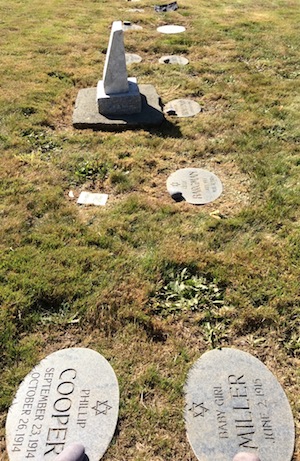
Headstones for the graves of 87 babies and children were unveiled at Mountain View Cemetery’s Jewish section on Sept. 11. (photo by Cynthia Ramsay)
On Sept. 11, a small crowd gathered at the Jewish section of Mountain View Cemetery for the unveiling of 87 headstones for babies and children who had passed away between 1893 and 1996.
Shirley Barnett, chair of the Jewish cemetery restoration project, which began in 2012, welcomed attendees. She acknowledged several of the people who greatly contributed to the project, and noted there is still a need for financial support.
“There is work to be done yet,” she said. “There are at least 40 or 50 adult burials that do not have headstones.… We have about 10 or 11 baby and children’s headstones that we did not cover today; we’re still researching the data on those.”
Rabbi Andrew Rosenblatt of Congregation Schara Tzedeck said a few words about how the loss of children is treated in the Tanach, while Rev. Joseph Marciano chanted the prayers for the unveilings.
Before the service, however, Barnett paid tribute to Helen Aqua, who donated the funds for all of the 87 headstones unveiled that day.
“I am but a small piece of this project, and most proud to have been part of this restoration,” said Aqua.
The project also received $27,000 toward the restoration from the federal government’s Canada Western Economic Diversification Infrastructure Canada 150 Grant.
Helen Aqua donated the funds for all of the headstones unveiled that day. (photo by Cynthia Ramsay)
Representing the Government of Canada, Dan Ruimy, member of Parliament for Pitt Meadows-Maple Ridge (Liberal), spoke.
“Just to be here today is very special to me,” said Ruimy, who is Jewish. He said the ceremony was “a solemn reminder of the early pioneers and their families who have helped shape and build this community.”
He said he was proud that the government was “able to help with this meaningful project.”
People were invited to walk through the cemetery, and Daniella Givon led a tour, using a guidebook created by the Jewish Museum and Archives of British Columbia.
Dr. Peter Gary discusses A 20th Century Passion, which is set to première in Jerusalem Oct. 17, in a documentary-in-the-making by Hilary Pryor and David Malysheff. (screenshot from a20thcenturypassion.org/documentary)
For most of his life, Dr. Peter Gary never spoke of the three years he spent in Majdanek, Dachau and Bergen-Belsen from the ages of 17-21, or that he and his mother were shot and left for dead on Christmas Eve, 1941. Yet, in 1993, after immigrating to Canada and British Columbia, he founded the Victoria Holocaust Remembrance and Education Society and began to lecture in schools up and down Vancouver Island and in coastal British Columbia. Over the years, he has spoken to more than 65,000 children and youth, college and university students – imparting his message that you can’t live with hate, you can only die with hate.
A 20th Century Passion is an oratorio Gary has composed that depicts the story of the Holocaust and the years preceding and following it, from the end of the First World War through the Nuremburg trials. It is a huge piece – the score alone is 587 pages – that requires a full orchestra, an adult and a children’s choir as well as four soloists plus the conductor. That’s more than 100 people involved in the performance, which is set to première Oct. 17 in Jerusalem – if there is enough to finance the rehearsals, logistics and everything else needed to bring it to life.
Gary’s wife, Judy Estrin, talks about the fundraising project in a video at gofundme.com/20thcenturypassion. She and others involved in the project are asking that people give today. Instead of a latte, give to the music. Challenge your friends to give. If each of the 65,000-plus students who heard Gary’s message over the last 25 years gave $2 to $5, the concert would be funded, a documentary made – Hilary Pryor, executive producer, and David Malysheff, documentarian, have already more than 14 hours of film “in the can” – and there would be funds to donate to help the dwindling number of survivors left.
Gary, a classically trained composer, wrote both the score and the libretto of A 20th Century Passion in the 1970s as a remembrance of the children murdered by the Nazis. The piece has never been performed. (For more on the work and a planned concert in British Columbia that was canceled, see jewishindependent.ca/holocaust-survivor-peter-garys-oratorio.)
In his talks to high school students, Gary speaks about hate, about bullying, about the Holocaust. He leaves them with a message: stamp out hate. This message is more important than ever, as the horrors visited upon Gary and his family are being repeated.
Here is an excerpt from the libretto of A 20th Century Passion by Gary:
Why do you hate me so much? What have I done to you? – You really haven’t, but you are a Jew! For this alone you have to hate…. Why don’t you see me as human, awake? You must have some feeling, So many of us, not knowing – just killing…. Whether it’s many that I kill or few Matters so little, since you are a Jew! Look at our women, they’re mothers like yours; Our whimpering children, the frightened old…. Don’t you have young ones, or fathers who…. Oh yes we have them, but none of them Jew! Our leader decided for all you to die! We are the masters and do as told…. Being big, strong and hardened and bold…. Look how I’m smiling the same smile you have, Whenever I’m bleeding my blood is the same red. I’m speaking the same voice, Our hands are the same…. I told you, you fool Jew, I told you in vain…. You are not worthy, not human, that’s that! I pity you man – When you finish killing – you too are dead.