Skip to content
  • Home
  • Subscribe / donate
  • Events calendar
  • News
    • Local
    • National
    • Israel
    • World
    • עניין בחדשות
      A roundup of news in Canada and further afield, in Hebrew.
  • Opinion
    • From the JI
    • Op-Ed
  • Arts & Culture
    • Performing Arts
    • Music
    • Books
    • Visual Arts
    • TV & Film
  • Life
    • Celebrating the Holidays
    • Travel
    • The Daily Snooze
      Cartoons by Jacob Samuel
    • Mystery Photo
      Help the JI and JMABC fill in the gaps in our archives.
  • Community Links
    • Organizations, Etc.
    • Other News Sources & Blogs
    • Business Directory
  • FAQ
  • JI Chai Celebration
  • JI@88! video

Recent Posts

  • Sharing her testimony
  • Fall fight takes leap forward
  • The balancing of rights
  • Multiple Tony n’ Tina roles
  • Stories of trauma, resilience
  • Celebrate our culture
  • A responsibility to help
  • What wellness means at JCC
  • Together in mourning
  • Downhill after Trump?
  • Birth control even easier now
  • Eco-Sisters mentorship
  • Unexpected discoveries
  • Study’s results hopeful
  • Bad behaviour affects us all
  • Thankful for the police
  • UBC needs a wake-up call
  • Recalling a shining star
  • Sleep well …
  • BGU fosters startup culture
  • Photography and glass
  • Is it the end of an era?
  • Taking life a step at a time
  • Nakba exhibit biased
  • Film festival starts next week
  • Musical with heart and soul
  • Rabbi marks 13 years
  • Keeper of VTT’s history
  • Gala fêtes Infeld’s 20th
  • Building JWest together
  • Challah Mom comes to Vancouver
  • What to do about media bias
  • Education offers hope
  • Remembrance – a moral act
  • What makes us human
  • המלחמות של נתניהו וטראמפ

Archives

Follow @JewishIndie
image - The CJN - Visit Us Banner - 300x600 - 101625

Month: June 2015

Truth and reconciliation

Earlier this month, the Truth and Reconciliation Commission released the summary of its compendious report on the history and legacy of the Indian residential schools system. As the testimony of more than 6,750 witnesses to the commission demonstrated, that dark history, which lasted more than a century, has had catastrophic impacts on individuals and communities across the country.

There has been some controversy over the commission’s use of the term “cultural genocide” to describe the process by which the schools intended to eradicate the vestiges of First Nations culture from the children. However, as the summary document notes, “the central goals of Canada’s aboriginal policy were to eliminate aboriginal governments; ignore aboriginal rights; terminate the treaties; and, through a process of assimilation, cause aboriginal peoples to cease to exist as distinct legal, social, cultural, religious and racial entities in Canada.”

There were 3,201 registered deaths of children in residential schools, but estimates are that nearly twice that many died – a proportion, the commission notes, that about equals the fatality rates of Canadian soldiers in the Second World War. Only half of registered deaths cited a cause, most commonly tuberculosis. Pneumonia, influenza, fire and suicide were also too-common causes of death among the children.

Over more than 100 years, an estimated 150,000 children were confined to the constellation of 139 schools, most of which were run by churches acting on behalf of the federal government. There are about 80,000 living survivors.

Traditional clothes were removed and discarded, native languages generally forbidden. Physical, sexual and psychological abuse permeated the schools, as witnesses recounted harrowing experiences at the hands of white authority figures.

Even the ostensible purpose of the schools – education – was usually sublimated to forced labor, in which children were used to run the facilities that incarcerated them.

In 2008, Prime Minister Stephen Harper apologized for the Canadian government’s role in residential schools, but the commission explicitly urges the country to move from “apology to action.”

There are 94 recommendations in the TRC’s report, including that the government should acknowledge that the state of aboriginal health today is a result of previous government policies. On education, the report urges legislation on aboriginal education that would protect languages and cultures and close the education gap experienced by First Nations peoples. It calls for a public inquiry into missing and murdered aboriginal women and girls. It asks for a national council for reconciliation to report on reconciliation progress and an annual State of Aboriginal Peoples report to be delivered by the prime minister. A statutory holiday should be created, the report says, to honor survivors, their families and communities, and memorials, community events and museums should be funded.

“We have described for you a mountain. We have shown you a path to the top. We call upon you to do the climbing,” Judge Murray Sinclair, the commission chair, said in releasing the report.

The commission’s recommendations are a call to action not only for the government but for Canadian citizens. We must ensure that we as individuals and collectively as Canadians take seriously the commission’s findings and that our governments act in ways that respect this history and ameliorate its impacts as much as possible.

Six Jewish organizations – Ve’ahavta, the Centre for Israel and Jewish Affairs, the Canadian Council for Reform Judaism, Reform Rabbis of Greater Toronto, the Canadian Rabbinic Caucus and the Toronto Board of Rabbis – issued a statement of solidarity and action acknowledging the residential schools experience and its contemporary consequences.

As Jewish Canadians, we have devoted ourselves to remembering and educating about our own history and it is heartening to see our communal organizations acknowledging and standing up for the experiences of other communities. We, too, can join in the reconciliation process in many ways, beginning with the very small act of signing the solidarity pact, which can be found at statementofsolidarity.com.

The pact’s call to action includes a commitment “to meaningful public education in the Jewish community and beyond, and outreach to indigenous communities to guide us to help improve the quality of life of indigenous peoples.” At press time, its events/initiatives section asked visitors to “stay posted,” but it is up to all of us to make sure that we act in solidarity, not merely voice it.

All Canadians have an interest in making sure our government and society is held accountable for our past and that we do everything possible to ensure a better future for aboriginal Canadians. Because of our own history, Jewish Canadians have perhaps a special role in seeing this process through.
Posted on June 19, 2015June 17, 2015Author The Editorial BoardCategories From the JITags First Nations, Inuit, Métis, Murray Sinclair, reconciliation, solidarity pact, TRC
Hang out, learn or engage

Hang out, learn or engage

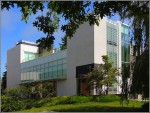
Hillel BC’s home on the University of British Columbia campus, the Diamond Foundation Centre for Jewish Campus Life. (photo by ThosGee via panoramio.com)

It’s been a tumultuous year on the University of British Columbia campus for Hillel BC, one filled with victories, but also with some disappointments. The Jewish Independent interviewed Hillel BC’s executive director, Rabbi Philip Bregman, on the challenges his organization has faced to date and on what is yet to come.

JI: What has the past year been like at Hillel?

PB: We’re seeing a resurgence of antisemitism the likes of which have not been seen for many years, and we’re seeing it right across the board of the 550 Hillels across North America. It has come primarily as a result of the boycott, divestment and sanctions movement against Israel. While incidents in the past would come and go, this one is a much more organized attack against Jews and Israelis on campus. And it’s not about boycotting products. The BDS movement is about three Ds: the demonization of Israel, the delegitimization of Israel, and the double standard that’s used with regard to Israel and the rest of the world. In this regard, the BDS movement has been fairly successful. On campuses in particular it’s created a real angst, a real discomfort for Jews, for Israelis. That’s its purpose.

JI: Can you talk about the recent referendum on campus, wherein the SPHR (Students for Palestinian Human Rights) asked students to vote on whether or not they supported their student union in instituting BDS on campus?

PB: Again, it wasn’t about boycotting products. They didn’t even let the students know what products needed to be boycotted. It was just a blanket statement that was absolutely absurd. When SPHR did mention a couple of products, it became obvious that it was absurd that any of those would go forward. For example, SPHR said they were going to boycott Caterpillar, because its machinery has destroyed Palestinian homes. I pointed out to them that the new Student Union Building at UBC was excavated with Caterpillar machinery. Should that then be boycotted? They didn’t answer. The second product they said they wanted to boycott was Motorola Solutions. I pointed out that this company is responsible for the operating systems of all Androids, and asked, “Are you telling the student body and AMS [Alma Mater Society, the student union] that no one on campus can use anything but iPhones?” The third product was Sabra Hummus. I told them that, in 2000, the Strauss Dipping Co., which owned Sabra Hummus, sold 50% of its shares to Pepsi Cola, and that over 60% of the vending machines in the Student Union Building are Pepsi products. Again, they didn’t answer.

Initially, before it was circulated, we appealed the referendum on the grounds that it was creating toxicity on campus. The AMS ombudsperson agreed with us that it was a terrible resolution, but the AMS board didn’t even comment on her report, which was tremendously disappointing. So, the referendum went out to the student body, and there was a lot of intimidation with regard to signing it. Later, the AMS found a number of signatures on the ballots were illegal….

At the end of the day, the SPHR fell short of the quorum they needed to pass the referendum. They needed 4,100 signatures, which represents eight percent of the eligible voters at UBC. They got about 3,500 votes. However the anti-BDS movement got 2,700 votes, which was more than double the number of votes in the rest of Canada, voting against BDS.

This BDS movement that we’ve had to deal with this past year was all-consuming. I have a magnificent staff and some magnificent student leaders who really were in the trenches day in and day out. I was in constant contact with the UBC administration about this, letting them know that the BDS movement is not an issue of free speech but one of hate speech.

JI: What kind of relationship does Hillel UBC have with Muslims on campus?

PB: When I first introduced myself to the representative from SPHR and suggested we start a dialogue, she told me, “We have a no dialogue policy with you people. If we talk to you, we will be condoning your murderous and genocidal ways.” We have been successful in reaching out to other Muslim groups on campus, however, including the Muslim Students Association and the Pakistani Students Association. We’ve had all sorts of collaborative programs, some light and some heavy. The idea is dialogue, not agreement.

JI: How are Jewish students at UBC responding to the BDS movement?

PB: At Hillels across North America, probably no more than five percent of the Jewish students on any campus really get into this fight. But we have a Jewish student population of about 1,200 and half of those voted against the BDS referendum.

JI: Going forward, who are you most likely to reach out to on campus?

PB: In fighting this resolution, we quickly realized where we should spend our limited time, energy and manpower: with graduate students, science students, law and medicine. Most of the statements in favor of BDS were coming from students in liberal arts backgrounds, and we were not going to win their hearts and minds. We were looking for people who would look at this referendum critically and understand what it was really about – the demonization and elimination of the state of Israel.

In general, the greatest group of students on campuses today tends to be those that are apathetic. I believe in a vote there would absolutely be more people opposed to us than supporting us. But I think that because we were out tabling every day, sharing and distributing information, we got some of those people who thought of voting yes, but voted no. And most of it was respectful dialogue.

JI: What kind of place is Hillel at UBC today?

PB: Hillel is a big tent, a place where individuals come in and just hang out. Some want to learn and engage in other types of conversation, and there’s a vast array of opportunity no matter where you are on the spectrum of Jewish life. It’s also a place of fantastic food, so people come for our Wednesday hot lunches, known to be the best meal on campus. You don’t have to be engaged in any type of politics to be involved at Hillel, although last year that was very much a part of what we were doing. Hillel is also the place of dialogue with other groups, such as the UBC chaplaincy, which holds meetings in our facility every second week for ministers, priests, rabbis, imams and Buddhists. And we encourage other clubs to come and program with us.

JI: What are your fears going into the next academic year?

PB: My fear is that this issue will continue to come back. Birthright is only getting a fraction of the younger Jewish generation in their 20s and 30s to Israel. In various reports that have come out, when they’ve asked Jewish university students if it mattered to them if Israel did not exist, 50% said no, it did not matter. This group is buying into what they see about Israel in the media and what they hear on campuses from fellow students and professors.

So, I wonder, what’s the responsibility we have as parents, teachers, mentors to a younger generation? To allow something like BDS to run its course when you know it’s not in the best interest of student life, because it’s under the rubric of “free speech”? Where is the limit, the line? This is not about trying to shut down criticism of the state of Israel.

Still, I’m hopeful. Our tent at Hillel is big, we have phenomenal student leadership and we’re there to hear all sorts of opinions as long as they don’t endanger individuals on one side, or call for the eradication of the state of Israel. There’s a huge area in between. Our task is to continue to attempt to raise Jewishly proud, courageous, knowledgeable mensches.

Lauren Kramer, an award-winning writer and editor, lives in Richmond, B.C. To read her work online, visit laurenkramer.net.

Format ImagePosted on June 19, 2015June 17, 2015Author Lauren KramerCategories LocalTags antisemitism, BDS, boycott, Hillel BC, Philip Bregman, UBC, University of British Columbia
Reform has new prayer book

Reform has new prayer book

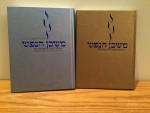
This month, the Reform movement’s new High Holiday prayer book, Mishkan HaNefesh, is being published. It replaces Gates of Repentance, which has served the movement since 1978, and is a companion to the movement’s siddur, Mishkan T’filah, which was published in 2007.

“It was an innovative siddur in a number of ways,” Rabbi Hara Person, publisher and director of CCAR Press, the Central Conference of American Rabbis’ publishing division, told the Independent. “It includes a lot of poetry and other kinds of readings that haven’t historically been in prayer books. It includes both the faithful translation of the text alongside, in some cases, alternative translations.

“The approach is multi-focal. It’s not an approach that says there is only one way to read our tradition or prayer. Instead, it opens up to people different ways of understanding, and struggling and grappling, with the text and tradition … and with theology.”

As an example of the new machzor’s increased accessibility, Person explained that, as does Mishkan T’filah (Sanctuary of Prayer), Mishkan HaNefesh (Sanctuary of the Soul) includes transliteration throughout for all of the prayers. “We wanted it to be open and welcoming to people, no matter what their background or how much or little a Jewish education they have,” she said.

About the diversity of the people sitting in the pews, she added, “Some may not be Jewish at all. They might be there with a Jewish spouse or partner. We don’t want to tell them that there’s nothing there for them. We want them to be able to learn and participate to the extent that they’re comfortable.”

Another significant aspect of the machzor is its inclusivity. “For over 25 years,” said Person, “we’ve been speaking up about inclusion of gay and lesbians in our communities on every level, so this is just another piece of that. That’s true for anybody who walks through our doors.”

This meant that the language of some of the prayers had to be updated.

At the heart of the prayers that talk about a bride and groom, for example, is the love between a couple. “So, we changed the language to reflect that and to not exclude gay and lesbian couples,” said Person. “Also, regarding being called to the Torah, we felt it should reflect the view and acceptance of all people, including those struggling with gender identity … calling people from the ‘house of’ as opposed to referring to them as ‘the son or daughter of.’…”

These most recent changes follow those that have come before regarding the increased participation and recognition of women.

“I think the Reform movement has a long history of egalitarianism, even from the very start,” said Person. “Even before women were rabbis, the Reform movement did away with separate seating in synagogues, so very early on in the history of the Reform movement, men and women were allowed to sit together in synagogues.

“So, these are just further steps in that progression of treating everybody with dignity and with a sense of equality and inclusiveness, and a way of saying we are all created in the image of God … women as well as men. It’s true for gay or straight or trans. Why would we exclude some but not others? It’s part of our value system to be inclusive.”

The new machzor has been in the works for a long time.

“We did a tremendous amount of piloting ahead of time,” said Person. “The book was in development for five or six years. Over those years, we had about 350 congregations across North America who piloted different sections of it.”

Some other interesting features of the new machzor are the poetry – from American and also Israeli writers – and art.

“We worked with an artist in New York named Joel Shapiro,” explained Person. “He created an opening piece of art for each of the services. They are woodblock cuts. He spent a huge amount of time studying the services and prayers and was inspired to create the art for the services.

“For me,” she continued, “it’s really exciting because some people love poetry and that’s going to … be a way into the prayer book and into the experience of worship for them. For others, it will be the commentary, and for others still, it will be the art…. Art may open the door for them and help them walk in. It’s really exciting that we were able to do all these things within the prayer book.”

A large-print version of Mishkan HaNefesh will also be available, as will an e-book version. “There is a percentage of people who actually use machzors before the holidays to do their own spiritual preparation,” said Person. “This book has so much in it for that. For a tablet, maybe they’d use it ahead of time, but not bring it to synagogue. I don’t know.”

For more information about the new machzor, visit ccarpress.org.

Rebeca Kuropatwa is a Winnipeg freelance writer.

Format ImagePosted on June 19, 2015June 17, 2015Author Rebeca KuropatwaCategories Celebrating the HolidaysTags CCAR Press, Hara Person, High Holidays, inclusivity, machzor, Mishkan HaNefesh, Reform Judaism
Triple treatment for cancer

Triple treatment for cancer

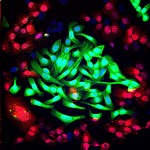
Lung cancer cells (green) cultured together with normal lung cells (red). The triple-antibody combination EGFR, HER2 and HER3 strongly impairs the survival of tumor cells while sparing normal cells. (Modified confocal microscopy image by Maicol Mancini, lab of Prof. Yosef Yarden, via wis-wander.weizmann.ac.il)

Lung cancer is the leading cause of cancer death worldwide, responsible for some 1.59 million deaths a year. That figure is due, in part, to the fact that the cancer often returns after what, at first, seems to be successful treatment. And the recurring cancer is often resistant to the chemotherapy and other drugs that originally drove it into remission. According to new research by the Weizmann Institute’s Prof. Yosef Yarden, a new strategy involving a three-pronged approach might keep an aggressive form of lung cancer from returning.

photo - Prof. Yosef Yarden
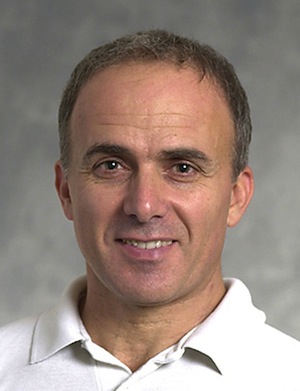
Prof. Yosef Yarden (photo from National Cancer Institute via commons.wikimedia.org)

The research arose out of some puzzling results of clinical trials, said Yarden. One class of relatively common lung cancers, which carry a particular mutation in a receptor on the cell membrane, called EGFR, can be treated with a sort of “wonder drug.” This drug keeps a growth signal from getting into the cell, thus preventing the deadly progression and spread of the cancer. But within a year, those with this mutation invariably experience new cancer growth, usually as a result of a second EGFR mutation. To prevent this from happening, researchers had tried to administer another drug, an antibody that is today used to treat colorectal cancer. This drug also obstructs the passing of the growth signal by stopping EGFR. Even though the antibody drug should have been able to effectively block the EGFRs – the growth receptors – including those generated by the second mutation, clinical trials of this drug for lung cancer did not produce results. “This finding ran counter to everything we knew about the way tumors develop resistance,” said Yarden.

How do the cancer cells manage to circumvent the blockade put up by an anti-EGFR antibody? In the new study, which appeared earlier this month in Science Signaling, Yarden and his student, Maicol Mancini, discovered what happens to cancer cells when they are exposed to the receptor-blocking antibody.

“The blocked receptor has ‘siblings,’ other receptors that can step up to do the job,” explained Yarden. Indeed, the team found that when the main receptor (EGFR) continued to be blocked, one of the cell’s communication networks was rerouted, causing the siblings to appear on the cell membrane instead of the original receptor. The finely tuned antibody did not block these, and thus the cancer cells were once again “in business.” The researchers uncovered the chain of protein communication in the new network that ultimately leads to appearance of the sibling growth receptors. This new network may overcompensate for the lack of the original receptor, making it even worse than the original. In addition, the team found that the rewired network sometimes included the participation of another molecule, known as receptor tyrosine kinase MET, which specifically binds to one of the siblings. This signaling molecule is often found in metastatic cancers.

Once the researchers discovered how the blockade was breached, they set out to erect a better line of defence. Yarden and his team created new monoclonal antibodies that could target the two main growth receptor siblings, named HER2 (the target of the breast cancer drug Herceptin) and HER3. The idea was to give all three antibodies together – the two new ones and the original anti-EGFR antibody – to preempt resistance to the treatment. Indeed, in isolated cancer cells, applying the triple treatment prevented them from completing the rewiring necessary for continuing to receive growth signals.

Next, the team tried the three-pronged approach on mouse models of lung cancer that had the secondary, resistance mutation. In these mice, the tumor growth was almost completely arrested. More importantly, further research showed that this treatment reined in the growth of the tumor while leaving healthy cells alone.

Although much more research is required before the triple-treatment approach makes it to the clinic, Yarden is hopeful that it will change not only the treatment protocol for lung cancer, but the understanding of the mechanisms of drug resistance. “Treatment by blocking a single target can cause a feedback loop that ultimately leads to a resurgence of the cancer,” he said. “If we can predict how the cancer cell will react when we block the growth signals it needs to continue proliferating, we can take preemptive steps to prevent this from happening.”

Also participating in this research were Drs. Nadège Gaborit, Moshit Lindzen and Tomer Meir Salame of the biological services department, and Ali Abdul-Hai, also of Kaplan Medical Centre; and research students Massimiliano Dall’Ora and Michal Sevilla-Sharon; together with Prof. Julian Downward of the London Research Institute.

Yarden is the recipient of the 2015 Leopold Griffuel Prize for fundamental research, awarded by the major French association for fighting cancer, called ARC Foundation for Cancer Research. He is the incumbent of the Harold and Zelda Goldenberg Professorial Chair in Molecular Cell Biology.

Weizmann Institute news releases are posted at wis-wander.weizmann.ac.il, and are also available at eurekalert.org.

Posted on June 19, 2015June 17, 2015Author Weizmann InstituteCategories IsraelTags EGFR, lung cancer, Weizmann Institute, Yosef Yarden
JNF park named after Baird

JNF park named after Baird

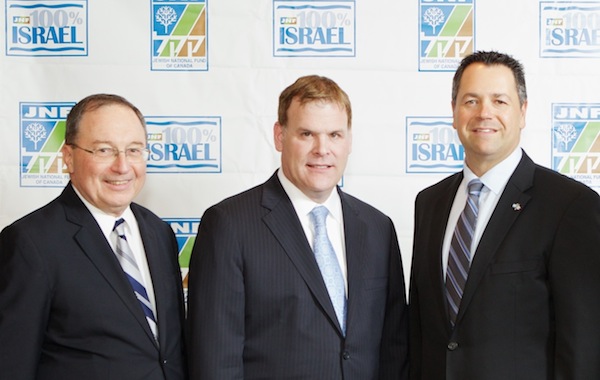
Left to right: Josh Cooper, Frank Sirlin, John Baird, Avi Dickstein and Ilan Pilo. (photo from Jewish National Fund, Pacific Region)

On June 7, the Jewish National Fund, Pacific Region, hosted the 2015 Negev Dinner at the Four Seasons Hotel in honor of Canada’s former minister of foreign affairs, John Baird.

In his speech, Baird summed up Israel and Canada’s friendship, saying, “Canada doesn’t stand behind Israel, but rather, walks shoulder to shoulder with Israel.”

Ilan Pilo, JNF Jerusalem emissary and executive director of JNF-PR, said, “Mr. Baird is a man of integrity and a true friend to Israel. JNF was grateful to honor him for his leadership on the world stage, for years of devoted service to the citizens of Canada, his dedication to the Jews of Canada and to the state of Israel. Thanks to John Baird’s outstanding leadership, Canada has become Israel’s most unwavering ally.”

photo - Left to right: Rafael Barak, John Baird and Josh Cooper
Left to right: Rafael Barak, John Baird and Josh Cooper. (photo from Jewish National Fund, Pacific Region)

Among the 350 guests at the dinner were Minister of Justice Suzanne Anton, representing the province, representatives of major Jewish institutions, as well as many community rabbis. Also in attendance were Rafael Barak, Israel’s ambassador to Canada; Josh Cooper, chief executive officer of JNF of Canada; and Avi Dickstein, executive director of the research and development division of KKL-JNF. All three dignitaries spoke of the uniquely warm relationship between Canada and Israel.

Proceeds from the dinner will support the creation of the Sderot Memorial Park in Israel, which will be named after Baird. This multi-functional urban park will host sports, leisure and recreation activities, as well as community events, and will provide children and their families with playground and fitness facilities. The new park will lift the morale of the residents of the city, which has been the ongoing target of rocket attacks from the Gaza Strip since 2001, as well as provide a venue for community activities and contribute to improving the quality of life for residents.

Format ImagePosted on June 19, 2015June 17, 2015Author Jewish National Fund Pacific RegionCategories LocalTags Ilan Pilo, Israel, Jewish National Fund, JNF, John Baird, Sderot
Celebrating 30 years

Celebrating 30 years

Among those celebrating L’Chaim’s 30th anniversary were original board members, left to right, Sylvia Gurstein, Gloria Hendin and Marion Poliakoff. (photo from L’Chaim)

More than 70 people gathered recently in the L’Chaim Lounge at the Jewish Community Centre of Greater Vancouver to celebrate the 30th anniversary of L’Chaim Adult Day Centre, which provides a “day out” for usually home-bound elderly Jews.

The audience was welcomed by Annica Carlsson, L’Chaim administrator, and Claire Weiss, acting president of L’Chaim, who described its growth. Originally offered at Beth Israel Synagogue, the program had to move to larger quarters at the J in 1995. It now provides programming three days a week, adding up to more than 1,900 client days a year for older adults who can still function with some degree of independence, but are unable to attend other community activities. L’Chaim also initiated a program for Jewish seniors in Richmond, which was taken over five years ago by Chabad of Richmond.

Speaking at the 30th anniversary celebration were three of the program’s founders: Sylvia Gurstein, Gloria Hendin and Marion Poliakoff. Poliakoff described how she represented National Council of Jewish Women in the beginning, enlisting a partnership with the late Irma Zack, who was acting on behalf of the Jewish Family Service Agency. Other present and former board members told anecdotes about their involvement, praising the staff and programming.

At L’Chaim, speakers on timely topics, music and exercise have always been program highlights. Current activities also include the use of iPods and headphones, which were purchased with a donation in memory of Dr. Betty Horodesky. This donation also financed the purchase of new lift chairs and a commercial cooler.

L’Chaim participant Ekatarina Chernyavskaya, 92, gave a heartfelt speech about how the program is her “home away from home” and enables her to stay connected with the Jewish community.

Celebrants also enjoyed “nibbles” provided by L’Chaim’s cook and a birthday cake baked by Nava Creative Kosher Cuisine. Annette Wertman entertained on the piano.

For more about L’Chaim, visit lchaim.ca.

Format ImagePosted on June 19, 2015June 17, 2015Author L’Chaim Adult Day CentreCategories LocalTags Annette Wertman, Annica Carlsson, Claire Weiss, Ekatarina Chernyavskaya, Gloria Hendin, L’Chaim Adult Day Centre, Marion Poliakoff, Nava, Sylvia Gurstein

Meet Minnie’s family

What a mouth on Minnie! And I don’t mean it pejoratively. (I just wanted to get your attention.) Grandma Minnie Bloch is articulate and sensitive as she meticulously narrates the three-generational story that includes her own early life with her husband, their move to the United States from Eastern Europe, and the family she creates.

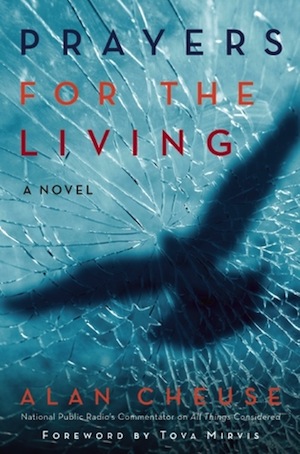
book cover - Prayers for the Living by Alan CheuseMinnie is the narrator/observer – acting almost like a Greek chorus – in the stirring new novel Prayers for the Living (Fig Tree Books, 2015), written by veteran novelist and National Public Radio literary critic Alan Cheuse.

Although she is not educated (in the formal sense), her intelligence and life experience enables her to depict for us so many living characters: her son Manny, who is a Reform rabbi and a businessman; his psychologically impaired wife, Maby; their problem-laden daughter, Sarah; and Manny’s mistress, Florette, a Holocaust survivor and a member of Manny’s congregation. Into this mix, we must also include Maby’s brother, Mord, who takes brother-in-law Manny into the family business.

How does Minnie narrate the rise and fall of this middle-class Jewish family? By telling her story to friends during occasional coffee-klatch meetings, portraying with motherly calm and painterly skill all the people she has encountered. Minnie has not personally experienced all the events she narrates, but she assembles them from talks with her son and other family members, from overheard conversations, and even from information discovered by reading pertinent private journals, which she cleverly doesn’t call “snooping” but “learning.”

Behind the voluble narrator, who speaks always from the heart, and often with poetic grace, stands the artistry of Cheuse, a sharp-eyed writer who brilliantly is the voice behind the voice.

Although the central narrator in Prayers for the Living (an ironic title, an inversion of the Kaddish, known as the Mourner’s Prayer, or Prayer for the Dead) is Minnie, the protagonist of the book is Manny, well-regarded by his congregation, who splits his duties between rabbinic work and business, ultimately not a happy partnership.

As the novel progresses, we learn of daughter Sarah’s missteps in college, Maby’s mental imbalance and alcoholism, and Manny’s visits to Florette, who is ostensibly painting her rabbi’s portrait but has other non-esthetic designs on him. In her telling, Minnie does not hide her family members’ flaws. The character of the book’s heroes, often shaped by earlier events, in combination with the exigencies of the present, leads them to their destined paths.

Cheuse plans the suspense, gives the hints of things of come, and arranges for Minnie to occasionally offer remarks akin to: “But I’ll tell you about that a bit later….” By so doing, he achieves a unique fluidity of time zones.

Minnie is the bedrock of the family, the only solid and trustworthy character in the book. She has perfect pitch for the rhythms of speech of Jewish women of a certain age, and faithfully reproduces the conversations of other characters in Prayers for the Living. This enables Cheuse to penetrate the psyches of his characters, their hopes and tremors.

Some central events are tiny sparks that build up to the conflagration that follows. Among them: Minnie, in Europe, fleeing from a groom that has been forced upon her; an accident in New York involving Minnie’s husband, which her son, Manny, witnesses; and Sarah, caught strumming a guitar on Yom Kippur by her rabbi dad.

By the riveting end of the book, whose intricacies and trajectory you have to discover for yourself, you can’t wait for one page to lead to another. You have a sense of what is going to happen – Minnie gives you little choice – but you still hope it won’t happen. Maybe a surprise will come your way. Perhaps

Minnie’s assessment is wrong. But even if you suspect what will happen and you know why, you still don’t know how it will happen.

Thank you, Minnie, for sharing with us your words and thoughts, your motherly wisdom and compassion. Yes, it all comes from Minnie’s mouth – to our ears and to our hearts.

Curt Leviant’s most recent book is the short story collection Zix Zexy Stories. This review was previously published on nyjournalofbooks.com.

Posted on June 19, 2015June 17, 2015Author Curt LeviantCategories BooksTags Alan Cheuse, Prayers for the Living

Fathers of biblical greats

The great epic poet Homer once said, “For rarely are sons similar to their fathers; most are worse, and a few are better.” In honor of Father’s Day, here are some quick facts about some rather unfamous (though not all infamous) fathers of famous biblical characters.

Terah, father of Abraham. The biblical verse is mostly silent on Terah’s life and times, its brief description of his family and travels serving only to set the stage for the story of Abraham. But various ancient interpretive traditions grew around the character of Terah in the imagination of the rabbis, especially as they pertain to the spiritual evolution of Abraham. Terah is portrayed in the Midrash as a typical worshipper of Mesopotamian gods, perhaps even a priest, who kept a sizable collection of stone idols. His precocious son Abraham, so the familiar tale goes, having become convinced of the powerlessness of these images, smashed all but the biggest one to pieces, then left his hammer in the remaining statue’s hands. When a furious Terah later demanded an explanation for the disaster, Abraham cleverly blamed the one idol he’d left standing, claiming that a fight had erupted in which it was the sole victor!

Elkanah, father of Samuel. Elkanah had two wives, like many men of his day, but had only been able to have children with one of them. The biblical narrator tells us that it was his other wife, Hannah, who was his favorite of the two. Hannah was greatly depressed by her infertility and Elkanah, in what is perhaps one of the earliest accounts of male insensitivity, responds: “Hannah, why do you weep? And why do you not eat? And why does your heart grieve? Am I not better to you than 10 sons?” (I Samuel 1:8) In fact, having a son was so important to Hannah that she made a deal with God: if granted a son, she offered to permanently lend him to the service of the divine. Thus, Samuel, when he came of age, became the servant of the High Priest Eli, and grew to be one of the great prophets of Israel.

Jesse, father of David. The importance of the genealogy of David to both Jewish and Christian messianic thought has helped make Jesse a more familiar name than some of the other dads on our list. Jesse is said to have descended from Judah, the fourth son of Jacob, who in Jewish lore was given the rightful kingship of Israel. The book of I Samuel contains the dramatic account of Samuel visiting the house of Jesse in Bethlehem, having been instructed by God that one of the man’s sons has been chosen to replace the weakened King Saul. Jesse innocently offers Samuel his oldest, tallest son Eliab, assuming him to be the best man for the job, but he and Jesse’s next six sons are all rejected by God until the youth David is called in from the sheep pastures. Jesse later has a hand in David’s fate, when he sends the lad to bring bread and cheese to his older brothers, who are stationed at an Israelite military base preparing for war with the Philistines. It is there that David hears the taunts of the enemy champion Goliath, and launches the bold challenge that would propel him to becoming one of the most celebrated monarchs in history.

Manoah, father of Samson. Manoah was descended from the tribe of Dan, and also had a wife with whom he could not conceive. He and his wife were eventually visited by an angel, who told them that they would soon have a son, but commanded them to raise him as a nazir, a consecrated individual who cannot drink wine or have their hair cut, according to biblical law. This they did, and the result was the super-strong and highly temperamental Samson. As a young man, Samson became interested in taking a Philistine woman as a wife, to which his parents protested, “What, there’s not enough Israelite girls around here?” (See Judges 14:3 for the exact quote.) Nonetheless, despite his disappointment, Manoah makes the trip to meet the woman and negotiate her marriage to his son, perhaps to be a supportive dad, but perhaps because there was simply no arguing with Samson.

Binyamin Kagedan has a master’s in Jewish thought from the Jewish Theological Seminary of America. To read more from Kagedan, visit jns.org.


Posted on June 19, 2015June 17, 2015Author Binyamin Kagedan JNS.orgCategories Celebrating the HolidaysTags Elkanah, Father’s Day, Jesse, Manoah, Terah
This week’s cartoon … June 19/15

This week’s cartoon … June 19/15

For more cartoons, visit thedailysnooze.com.

Format ImagePosted on June 19, 2015June 17, 2015Author Jacob SamuelCategories The Daily SnoozeTags father-son relationship, technology, thedailysnooze.com
עשרים שנות פעילות בישראל

עשרים שנות פעילות בישראל

אייר קנדה שבסיסה במונטריאול מפעילה קו יומי בין הערים טורונטו ותל אביב. לאחרונה מופעל בקו זה מטוס הבואינג החדיש (הדרימליינר). (צילום: CNW Group/Air Canada)

 אייר קנדה מציינת עשרים שנות פעילות בישראל

חברת התעופה הלאומית של קנדה אייר קנדה מציינת בימים אלה עשרים שנות פעילות עניפה בישראל. לאור זאת החברה הקנדית קיימה אירוע חגיגי בנמל תל אביב בהשתתפות כמה מאות אורחים. בין האורחים: מנהלת אייר קנדה בישראל, רות בן צור ובכירים של החברה שהגיעו במיוחד מקנדה.

אייר קנדה שבסיסה במונטריאול מפעילה קו יומי בין הערים טורונטו ותל אביב, שנחשב לעמוס במיוחד (ואילו חברת אל על מפעילה שתי טיסות בשבוע בין תל אביב לטורונטו). לאחרונה מופעל בקו זה מטוס הבואינג החדיש 787-9 (הדרימליינר). לישראלים שנוחתים בטורונטו יש אפשרות לבצע טיסות המשך עם אייר קנדה ליעדים נוספים בקנדה, ליותר מחמישים יעדים בארצות הברית וכן למרכז ודרום אמריקה.

קנדה וישראל חתמו בראשית השנה על הסכם תעופה חדש שיביא לגידול במספר הטיסות בין שתי המדינות, במסגרת לידידות המתפתחת ביניהן בשנים האחרונות. בהתאם להסכם אייר קנדה ואל על יוכלו להגדיל את מספר הטיסות (של נוסעים ומטען) לשתיים עשרה בשבוע, ולאפשר לחברות הבנות שלהן גם כן לטוס בין המדינות. ההסכם כולל אף הגברת שיתוף פעולה בנושאי אבטחה.

רשות שדות התעופה של ישראל מציינת כי אשתקד טסו כ-148 אלף נוסעים בין קנדה לישראל. מדובר על גידול של כחמישה אחוזים לעומת שנה קודם לכן.

ועוד חדשות מקבוצת אייר קנדה: חברת הבת לטיסות לאו קוסט רוג’ החלה להפעיל טיסות ישירות, בקו מונטריאול ונציה. מדובר בהפעלת שתי טיסות בשבוע (באמצעות מטוסי בואינג 767) בין שתי הערים, עד אמצע חודש אוקטובר. הטיסות ממונטריאול יוצאות בימים חמישי ושבת בערב (9.30), ונותחות למחרת לפני הצהריים (11.40) בוונציה. ואילו הטיסות מוונציה יוצאות בימים שישי וראשון אחר הצהריים (1.25), ונוחתות במונטריאול גם כן אחר הצהריים (4.25).

צרות של עשירים שזכו בלוטו: זוכה ב-50 מיליון לא רוצה ששמו יתפרסם וזוג שזכה ב-1.6 מיליון לא מפסיק לריב

סוף סוף נמצא הזוכה מבריטיש קולומביה בהגרלת ה-50 מיליון דולר, שהתקיימה לפני שנה. הזוכה המאושר המתין שנה שלמה לאסוף את זכייתו, ועתה לאחר שהגיע למשרדי בריטיש קולומביה לוטו קורפוריישן, הוא דורש ששמו לא יתפרסם. בקורפוריישן מציינים כי בהתאם לתנאי המשחקים שמם של הזוכים יפורסם ברבים, והנושא עבר להתדיינות משפטית.

זוג מהעיר ספרוס גרוב שבאלבטרה הסתבך בצרה איומה. הם זכו בכ-1.6 מיליון דולר בהגרלת הלוטו, ומאז לא מפסיקים לריב. הזוג הסכים להתארח בתוכנית “ד”ר פיל” של הפסיכולוג ד”ר פיל מק’גרו.

אדווין ורקארק זכה עם חברים בעבודה ב-50 מיליון דולר, כשחלקו של כל אחד מהעובדים עומד על כ-1.6 מיליון דולר. מאז החיים שלו ושל אשתו ג’ודי הפכו לסיוט גדול.

ג’ודי טוענת שמאז הזכייה בעלה הפך לאדם כועס וחשאי, והוא שומר מרחק ממנה. אדווין טוען מצידו שהכסף שלו והוא יחליט מה לעשות בו, בו בזמן שהיא רוצה להיות שופתה מלאה בהחלטות. ג’ודי ביקשה שירכשו בית ובעלה העביר לה חצי מיליון דולר לשם כך, אך הפסיק לשלם את החשבונות השוטפים והכל נופל עליה.

אדווין טוען מצידו שאשתו ממשיכה לשמור על מסגרת הנישואים רק בגלל הזכייה בכסף. הוא התחיל לשתות לאחרונה כדי להימנע מהנידנודים של ג’ודי, שיש לה לדבריו “אובססיה לכסף עם סימנים של דולר בעיניים”. הוא העביר לג’ודי חצי מיליון דולר לרכישת הבית, אך הכסף נעלם והיא לא מסוגלת להסביר לאן. אדווין מדגיש שהוא זכה בכסף ויש לו את הזכות הבלעדית להחליט מה לעשות בו.

Format ImagePosted on June 17, 2015Author Roni RachmaniCategories עניין בחדשותTags Air Canada, Edwin Verkerk, Israel, lottery, Ruth Ben-Zur, אדווין ורקארק, אייר קנדה, ישראל, לוטו, רות בן צור

Posts pagination

Previous page Page 1 Page 2 Page 3 Page 4 … Page 6 Next page
Proudly powered by WordPress