Skip to content
  • Home
  • Subscribe / donate
  • Events calendar
  • News
    • Local
    • National
    • Israel
    • World
    • עניין בחדשות
      A roundup of news in Canada and further afield, in Hebrew.
  • Opinion
    • From the JI
    • Op-Ed
  • Arts & Culture
    • Performing Arts
    • Music
    • Books
    • Visual Arts
    • TV & Film
  • Life
    • Celebrating the Holidays
    • Travel
    • The Daily Snooze
      Cartoons by Jacob Samuel
    • Mystery Photo
      Help the JI and JMABC fill in the gaps in our archives.
  • Community Links
    • Organizations, Etc.
    • Other News Sources & Blogs
    • Business Directory
  • FAQ
  • JI Chai Celebration
  • JI@88! video

Recent Posts

  • Sharing her testimony
  • Fall fight takes leap forward
  • The balancing of rights
  • Multiple Tony n’ Tina roles
  • Stories of trauma, resilience
  • Celebrate our culture
  • A responsibility to help
  • What wellness means at JCC
  • Together in mourning
  • Downhill after Trump?
  • Birth control even easier now
  • Eco-Sisters mentorship
  • Unexpected discoveries
  • Study’s results hopeful
  • Bad behaviour affects us all
  • Thankful for the police
  • UBC needs a wake-up call
  • Recalling a shining star
  • Sleep well …
  • BGU fosters startup culture
  • Photography and glass
  • Is it the end of an era?
  • Taking life a step at a time
  • Nakba exhibit biased
  • Film festival starts next week
  • Musical with heart and soul
  • Rabbi marks 13 years
  • Keeper of VTT’s history
  • Gala fêtes Infeld’s 20th
  • Building JWest together
  • Challah Mom comes to Vancouver
  • What to do about media bias
  • Education offers hope
  • Remembrance – a moral act
  • What makes us human
  • המלחמות של נתניהו וטראמפ

Archives

Follow @JewishIndie
image - The CJN - Visit Us Banner - 300x600 - 101625

Month: June 2015

Dunbar makes movie

Dunbar makes movie

Left to right, Susan Skemp, Ken Charko and James E. Taylor are making a movie about Dunbar Theatre’s history. (photo by 5U54N & J4M35 Productions)

To celebrate Dunbar Theatre’s 80th anniversary, the theatre is making a short film about its history to enter into film festivals around the world and for film and music awards in Canada. One of the goals is to raise awareness of the theatre, one of the few independent theatres still around.

“Our short film will showcase all eight decades the theatre has been playing movies for the Dunbar community. With the use of old movie clips, newsreels, actors, models, music and their resident ghost, Delores, we intend on making a very entertaining film,” said Susan Skemp (producer, writer and songwriter) in an email to the Independent.

The production team includes Skemp, Ken Charko (executive producer and owner of the Dunbar Theatre) and James E. Taylor (director, writer, editor). One of the many participants in putting together the film is Jewish community member Adam Abrams, who will voice one of the newsreels.

“I came up with the idea to make the film last December when Ken Charko and I were discussing what to do to celebrate the theatre’s 80th,” Skemp explained. She said she suggested making a movie about a movie theatre and Charko liked the idea; then Taylor joined the production team as director.

“We have assembled a wonderful group of people and I have likened us to Orson Welles and his Mercury Players group,” said Skemp.

“My idea for the script really came from the theatre and the people from the community who have passed through its doors and the films that have played on the screen. Even though the film is a history of the theatre, our goal is to make it as entertaining as possible,” she stressed. “The fact that the theatre has a ghost helps.”

The crowdfunding goal to bring the film to fruition is $20,000. Contributions to the fundraiser at fundrazr.com/campaigns/fxGG2 come with different perks for each donation level: from a DVD and an invitation to a red-carpet screening ($25), to those items plus two tickets to any film at the Dunbar ($100), to a film credit as an associate producer ($500), to listing as a producer ($2,500).

Format ImagePosted on June 12, 2015June 10, 2015Author Cynthia RamsayCategories TV & FilmTags Dunbar theatre, James E. Taylor, Ken Charko, Susan Skemp

Reconciliation efforts

Ve’ahavta and the Centre for Israel and Jewish Affairs (CIJA) were among the Jewish organizations participating in the ceremonies supporting the Truth and Reconciliation Commission (TRC), an independent commission whose mandate is to acknowledge experiences, impacts and consequences of Indian residential school (IRS) experiences. The TRC promotes awareness and public education, while working to complete an historical record of the 150-year history of the IRS system and its impacts. The TRC also works to encourage and guide a process of reconciliation and renewed relationships with all Canadians.

Ve’ahavta and CIJA presented a public statement of solidarity and action on behalf of six Jewish organizations – Ve’ahavta, CIJA, Canadian Council for Reform Judaism, Reform Rabbis of Greater Toronto, Canadian Rabbinic Caucus and Toronto Board of Rabbis – which formally acknowledges the residential school experiences, impacts and consequences, as well as the inequalities faced by aboriginal (First Nations, Inuit and Métis) communities today. The statement reads:

“The pursuit of a just society is a fundamental concept at the core of Judaism. We, the signees, are motivated by the Jewish values of compassion, sharing, repairing the world and working towards justice for all. We, therefore, commit to a high level of meaningful action in partnership and solidarity with the indigenous peoples of Canada….

“The shared experiences between Jewish and indigenous communities offer a foundation of mutual understanding and unity. Our common histories include persecution, intimidation, forced assimilation and discrimination. These realities bind our two communities. We believe that our mutual values of family, language, culture, elders, and spiritual and ritual preservation – along with the connections to self-determination, kinship and homeland – bring our voices and communities together….

“Historically, indigenous peoples experienced traumatic social change, institutional violence and prolonged attempts to forcibly assimilate them into the Canadian whole. Today, indigenous peoples face disproportionately lower socio-economic conditions as compared to non-indigenous Canadians. There are dramatic disparities in the areas of education, health and well-being, life expectancy, employment, housing, living conditions, average income and access to social services, and over-representation in the justice and social assistance systems. It is important to bring to light an understanding of the history and legacy of these policies, including the residential school system, in order to achieve a just society….

“We believe that partnership and relationship-building must be based on mutual respect, cooperation and understanding. On both the community and individual level, we commit to develop partnerships as a means of celebrating diversity and learning from our respective cultures, unique heritage and traditional knowledge. Through patient and respectful dialogue, we will build capacity in our community for collective participation in promoting social justice together with indigenous peoples….

“We, the signees, commit ourselves to meaningful public education in the Jewish community and beyond and outreach to indigenous communities to guide us to help improve the quality of life of indigenous peoples. We encourage all Jews to build bridges and explore the similarities that bind all humanity, accepting and rejoicing in the differences that make us unique and in the diversity that enriches us all.”

For more information on the TRC, visit trc.ca. To sign the solidarity statement, visit statementofsolidarity.com.

Posted on June 12, 2015June 10, 2015Author Ve’ahavta and CIJACategories NationalTags CIJA, First Nations, Inuit, Métis, reconciliation, residential schools, Ve’ahavta
Shul needs help after flood

Shul needs help after flood

Daniel Ogorek and Morgan Davis rescue Rabbi Emeritus Joseph Radinsky in a canoe. (photo from UOS)

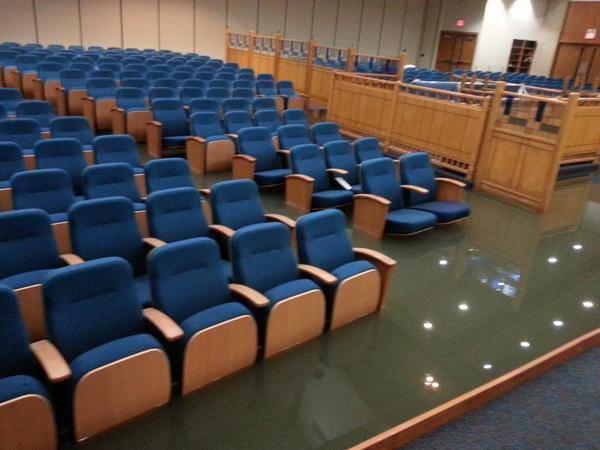
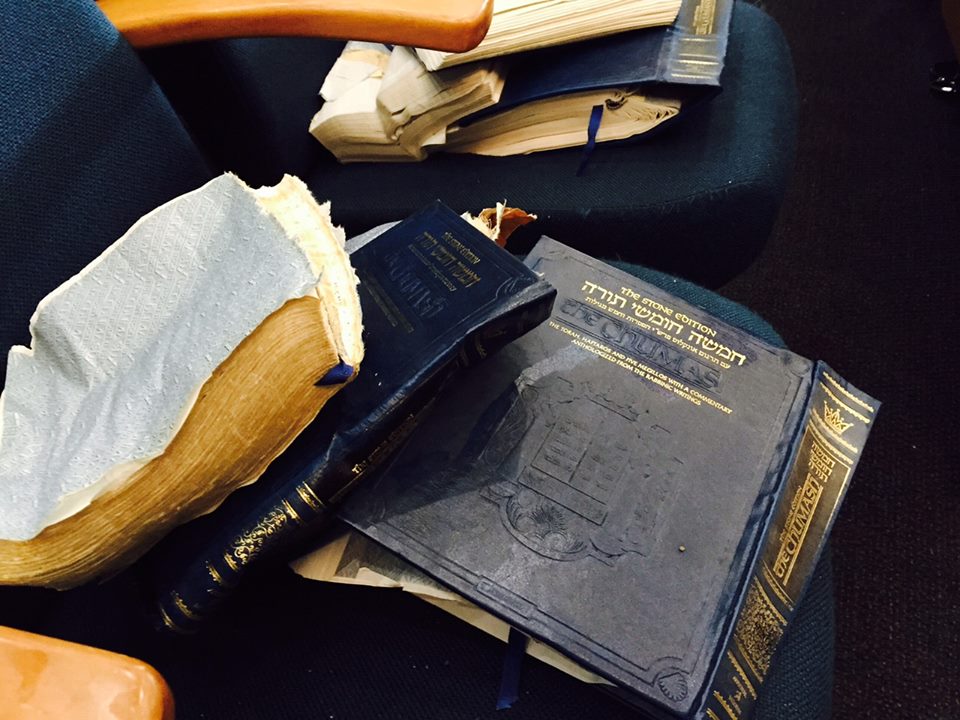
The historic flooding that hit the Houston area late last month dealt an especially hard blow to the city’s Jewish community. The United Orthodox Synagogues of Houston suffered extensive, significant damage in almost every area of the complex, as did many of the homes of its local congregants. The devastated synagogue is also home to the Goldberg Montessori School.

photo - The flooded synagogue sanctuary
The flooded synagogue sanctuary. (photo from UOS)

“It will take months to repair our spiritual home,” said Rabbi Barry Gelman. It will also take millions of dollars. Parts of the Meyerland area, including UOS, spent the days after the flooding May 26 under up to four feet of water and, while the floodwaters have receded, the recovery is only beginning.

photo - The synagogue’s damaged chumashim
The synagogue’s damaged chumashim. (photo from UOS)

For nearly 50 years, UOS has actively served as a community beacon for the Meyerland area residents, but now the synagogue is forced to turn to its neighbors for help. They are raising funds to support not only the structural repairs needed on the buildings themselves, but they hope to offer a portion to some of their members who are in critical need. Max Reichenthal, UOS president and local business owner, said many of the more than 300 families who attend the synagogue received extensive damage to their homes, vehicles and belongings. He said UOS members have been extraordinarily comforted in their darkest hour by the outpouring of all manners of support they have received, not just from local synagogues, but from community organizations throughout the United States. The community is hopeful that donations will continue to come through the UOS website, uosh.org, to fund the relief effort.

Format ImagePosted on June 12, 2015June 10, 2015Author United Orthodox SynagoguesCategories WorldTags Barry Gelman, flood, Houston, Max Reichenthal, UOS
Moishe House moves

Moishe House moves

Ben Groberman outside of Moishe House’s new location in the 41st and Granville neighborhood. (photo from Ben Groberman)

The Vancouver chapter of Moishe House has found a new home. It will be the third location since the local branch started here three and a half years ago.

Vancouver Moishe House is part of an international nonprofit organization. Originally started in Oakland, Calif., in 2006, the organization’s mission is to provide a gathering place for young Jewish students and professionals who are looking to engage with their peers in a non-formal setting. The houses are run by three to five local students – in Vancouver, it’s generally been four students – who get rent subsidies in exchange for planning and organizing weekly events. Currently, there are 77 chapters of Moishe House around the world. While more than 50 of them are in the United States, there are houses in 16 other countries, including two in Israel (Jerusalem and Tel Aviv) and two in Canada, the other house nationally being in Toronto.

The Vancouver house started in 2011 in East Vancouver, where it was active for two years, then it moved to Point Grey, gaining popularity with nearby University of British Columbia students. It’s now located in the Granville Street and 41st Avenue area.

One of the current residents, Ben Groberman, believes that the new location will offer opportunities to the house and its residents.

“We are very happy with our move,” said Groberman over the phone while unpacking boxes in his new room. “Most of our community members live along the Granville and Oak corridor; it will be convenient for them to join in.

“It also provides us with great opportunity to work with our community partners on some new ideas and programs that will draw new people to our events. We had a wonderful time at Point Grey, we had good connection with Hillel and the UBC students; now we hope to reach new people and engage with some new crowd.”

The new house also will allow the addition of another member to the core group and, in the coming weeks, there will be a change in residents. Two incoming members from Ontario will replace current residents returning to that province and the fifth member, who will join the house from California, will move in next month.

After settling in, Groberman promises to be in full action for the summer and beyond.

“The best way to join the events is to contact one of the house members over Facebook or join our email list,” he said. “We have events for all kinds of people, from Shabbat dinner, Sunday brunch, movie nights, feeding the hungry; we have Havdala parties on Saturday nights, BBQs, going to museums, galleries, watching sports together. It’s always changing, and you get to meet so many people, it’s an amazing experience. I feel very privileged to take part in it and love to share the experience with others.”

Moishe House is designed for Jewish people in their 20s and 30s but others are invited to join their activities by emailing [email protected].

Shahar Ben Halevi is a writer and filmmaker living in Vancouver.

Format ImagePosted on June 12, 2015June 10, 2015Author Shahar Ben HaleviCategories LocalTags Ben Groberman, Moishe House

A Jewish take on Magna Carta

The 800th anniversary of the Magna Carta falls on June 15. It is a significant document not only in the history of England and the history of democracy, but also in the history of the Jews. There is a surprising (to some) aspect to the seminal document of British constitutional monarchy.

If you tune into the right channels on the wireless this weekend – don’t you love how that word has gone from archaic to high-tech in less than a generation? – you will probably hear much about the anniversary of this pivotal document. You might not hear about the Jewish angle to the story.

The Magna Carta emerged, effectively, as a constitutional document in the days when constitutional limits to the rights of kings were unknown. England’s King John was confronted by 25 barons who weren’t so happy with their relationship and, lo, faced with the threat of insurrection, he became the accursed monarch who, with the stroke of a quill, under duress, set the stage for the limitations of divine right that have resulted in the reduced British monarchy we see today.

Eight centuries ago, the king had his barons and knights, the nobles had their vassals and so on down the feudal pecking order. And then there were the Jews.

Jews in England at that time, and in many places at other times, existed outside the carefully proscribed feudal system. There were advantages to this exclusion – who wants to be a serf? – until there were not. The king was the protector of the Jews, which seemed like a sweet deal – until it was not.

Like nobles, Jews had a direct relationship with the monarch. Unlike nobles, they had little in the way of leverage when the relationship went south. For the masses, there was nothing endearing in the Jews’ special relationship to the king.

The Magna Carta is a document that, for the first time, set limits on the rights of the king in his relations with his nobles and, by extension, theoretically anyway, his public. Appropriately enough, it also outlined the relationship between the king, nobles and Jews.

This turned out to be a problem. The Bible forbids “usury,” the application of interest on loans “to your brother.” Christians, under a widespread interpretation, would not lend with interest to other Christians. The ironic corollary to this is that Christians did not lend at all, or at least not often. Jews, on the other hand, forbidden from owning land, banned from many of the crafts guilds, were seriously limited in their professional options. Jews found niches as butchers and in some other fields, but moneylending was a lucrative option where few options existed. It was also a dangerous position for a socially vulnerable group. Who doesn’t love a lender in the brief period of time when you need money? But who needs the demands for repayment?

At a time – the first time – when the king was being held to account, being in cahoots with the monarch was not a summer day in Yalta. Or Dorset, as the case may have been.

Since Jews could not own real estate, debtors who died saw their estates confiscated by the Jews’ protector, the king. The Magna Carta codified that, if a subject died indebted to a Jew, the obligation owed would revert to the king, but without interest. Likewise if the Jewish debt-holder dies – if the Jew to whom money was owed died before the debt was repaid, the interest would be forgiven.

Another clause specified that debts were to be paid through liquid assets, not through land, which meant that the king could not expand his real estate holdings through his relationship with Jews, thereby reducing the value to the king of this special relationship. And new taxes were imposed on Jews that exhausted the community economically, further reducing their worth to the monarch.

When John’s son, Henry III, was on the throne in 1253, he declared: “No Jew remain in England unless he do the king’s service, and that from the hour of birth every Jew, whether male or female, serve us in some way.”

By the end of that century, the last Jew was expelled from England, a consequence, in no small part, of clauses in the Magna Carta and their intended and unintended consequences.


Posted on June 12, 2015June 10, 2015Author The Editorial BoardCategories From the JITags antisemitism, Magna Carta, monarchy
This week’s cartoon … June 12/15

This week’s cartoon … June 12/15

For more cartoons, visit thedailysnooze.com.

Format ImagePosted on June 12, 2015June 10, 2015Author Jacob SamuelCategories The Daily SnoozeTags sandwich, thedailysnooze.com
Creating, choosing kids’ art

Creating, choosing kids’ art

A son’s fascination with diggers has led to many other farm-related and animal designs. (photo by Shula Klinger)

When our son, Joel, started to talk, most of what he said was, digger, referring to the large machines that dig earth, so I started drawing them for him. Soon, he became passionate about tractors, so I started drawing those, too – because, like you, I would bend over backwards to meet my child’s needs.

Our Joel has always known his mind. And he has always known that his mother will turn herself into a pretzel when it comes to his education. I also learned how to draw forklifts, dump trucks and specialized mining equipment: road headers, skid steers and face shovels. Essential knowledge for every pretzel-shaped mother.

After several months and hundreds of diggers later, I had a box full of cut-out vehicles. I bought colored card stock and cut out what I hoped were the last 12 diggers. I framed them in an old IKEA frame and put it in Joel’s room, intending to hang it later.

Joel had his own plans, of course. It turns out that 2-year-olds aren’t particularly worried about hanging pictures at the proper height. Instead, his picture sat on the floor where he could poke the glass, name the vehicles and chatter at length to his pictures.

Having thought of his picture as something colorful to fill a spot on his wall, I soon learned that it was a bunch of other things: a teaching aid, a prompt for language development and a favorite companion. It was a comfort, a reflection of his passions and his developing identity. And, sure, it was in his bedroom sometimes, but mainly it traveled to whichever room he was playing in. I never did hang it up.

The diggers were followed by new designs for other families, and countless hours of conversation with them about art. I learned that very young children have strong opinions about shape, color and which medium is best for their project. I learned how art appreciation plays a role in family relationships that is just as significant as the time we spend on outings or reading together. It’s spiritual time, like meditating together, or contemplating abstract ideas, from the biggest ideas to why spiders are able to climb on ceilings without falling off.

The photos I received of toddlers teaching infant siblings about their art showed me that images can be a catalyst for extraordinary reactions in even the youngest kids. I also had my mind changed about what kinds of art children wanted. When a mother asked me if I offered custom versions of my posters, I hesitated. When I realized that she wanted a copy of diggers, “but in girl colors,” I got to work.

When choosing art for our children, there is much more to the decision than meets the eye. Of course, we want the content and color scheme to appeal to our young connoisseurs. We hope that it will complement the design of the room that surrounds it. But, as we see and hear how children respond to this art, it reminds us, as parents, that our own eyes need to open as wide as theirs.

Art appreciation is a kind of literacy and it can lead to explorations of identity, of self-expression, of relationship to and with others. It can elicit feelings of pride in ownership, feelings of attachment and a sense of agency. As she looks at an image, a child’s gaze can be curious, critical, contented, peaceful, excited, inspired. A child may be solving problems, learning about the world or checking his understanding of an issue. Indeed, they have the same types of reactions as adults. Art can engage, stimulate and challenge young minds, which is why we need to take care when choosing pieces for children’s spaces.

Megan Zeni and Kelly Johnson are dedicated to creating fun, educational spaces for children. Both former teachers, their company, Room to Play, helps families make the most of their homes, to create spaces that are stimulating without being cluttered or overwhelming. “Art sets the tone in room; colors, patterns and textures can have a calming or energizing impact,” explained Zeni.

These are all elements to consider, especially as we remember that the art we’re choosing may be the last thing a child looks at as his eyes close at night. Here are some things to think about when choosing or making art for young children:

  • Children have favorite colors from a very early age.
  • What do they care about?
  • Does the art fill a wall and strike a chord?
  • Does it inspire the child to touch it, talk to it?
  • Does it spark a conversation between your child and you or a sibling?

Questions to think about and ask your child, to encourage a sense of attachment and ownership of the art, include:

  • What do you see? What do I see?
  • Which colors do you see?
  • How many…?
  • Which element is the biggest? Which is the smallest?
  • Should we frame it?
  • Where should we hang it? Should we bother?

Shula Klinger is an author, illustrator and journalist living in North Vancouver.

Format ImagePosted on June 12, 2015June 10, 2015Author Shula KlingerCategories Arts & CultureTags Kelly Johnson, Megan Zeni
Razzmatap fills the Rothstein

Razzmatap fills the Rothstein

Gwen Epstein is the second on right in this photo of Sister Suffragette, performed by Razzmatap. The troupe’s upcoming show at the Rothstein has already sold out. (photo from Razzmatap)


The audience at the Norman Rothstein Theatre on June 27 will be treated to a uniquely entertaining show – The Best of Razzmatap.

The local amateur tap ensemble’s members are all women, among them representatives of diverse professions – from a judge, to a teacher, to a physical therapist – and a range of ages, from 40s to 80s. Founder, director and choreographer Jan Kainer talked to the Independent about the group’s roots.

“When my daughter was 7, I started a little class with some of her friends, so she would have an opportunity to tap dance. One class grew to several classes at Kerrisdale Community Centre and, in about 1987, I added an adult class. It was just for fun and fitness. After about six months of class, I asked the adults if they wanted to participate in a Christmas concert. Only one person was willing but, by yearend, the group had worked up the courage to dance in public, and they never looked back…. After we started doing performances and competitions, we decided we needed a name. Everyone put in suggestions, and we voted on Razzmatap.”

The initial core members are still with the ensemble, and several new members have joined through the years, explained Kainer. “The dancers’ average age is 65,” she said. “Our oldest dancer is 86, and I do have to take her health and strength into consideration. I choreograph around the strengths of the dancers in the group, so it forces me to work at making the dances interesting.”

A multiple-award-winning troupe, the upcoming show at the Rothstein, like many Razzmatap events, is already sold out. Kainer thinks the group’s success is largely due to her dancers’ obvious delight on stage. “My group has learned over the years how to tell a story and how to express the joy they feel when dancing. I think it shows.”

One of the dancers, Gwen Epstein, shared her enthusiasm with the JI. “Our teacher Jan Kainer is wonderful,” Epstein said. “When she works on new dances, she tries to give everyone a small solo, to showcase what the individual dancers do best, but, most of the time, we dance as a group, and everyone participates in almost everything.”

Epstein joined Razzmatap about 20 years ago but, like Kainer, she has danced most of her life. “I always liked dancing,” she said. “My mom was a ballet teacher. Of course, I started with ballet classes but I liked tap dance better.”

She took tap dancing lessons until high school, then took a break from her late teens to early 20s. When she got married, she resumed dancing and never stopped, not while raising her three children and not while working full time as a microbiologist.

“I was with a couple of different groups for awhile,” she remembered. “When my daughter was 6, I took her to tap dancing lessons and learned that the teacher also had an adult group. I joined it. It was Razzmatap.”

According to Epstein, the group participates in several tap dance competitions every year and usually wins. “We like to compete,” she explained. “We’ve competed in B.C. and in Germany. We also traveled to New York, Chicago and San Francisco for workshops. We danced in Tap on Broadway in New York. It was fun.”

Everything connected to her favorite group is fun for her. “Tap dance is such a happy activity. The music is lively. You dance and you think of Fred Astaire and Singing in the Rain. You want to smile. Even though none of us is very young, dancing makes us feel young. People come to rehearsals and complain – my knee hurts, my back aches, my feet are sore, some wear knee braces – but then we start dancing and we dance.”

The group usually rehearses twice a week for two hours, but now they have increased to three times a week in preparation for the new show, and everyone is excited. “Everyone has to come to the rehearsals,” she said. “We’re all very enthusiastic about the coming show.”

In the June 27 performance, Epstein will appear in nine dances out of 10, but her favorite is the one where she gets to reminisce on stage – in dance, of course. “I perform in my mom’s clothing in that dance, and it makes me think of her. This dance is very important to me, especially now, when she passed away.”

Each dance of Razzmatap is a story, told in music and movement. Some pieces have serious historical connotations, while others invoke a vague sense of nostalgia or memories of bygone eras. Of course, to create the right ambience for such dances, the performers need multiple props.

“We make all our props ourselves,”

Epstein said. “One dance needed human-sized man puppets as our dancing partners. Another needed suitcases. And then there are costumes. Of course, Jan sets the tone, like the color or sequins, but we make them.”

Epstein has quite a collection of costumes by now, from 20 years’ worth of dancing. “I keep them all in labeled boxes. It’s interesting when we have to travel with all of them.”

Epstein enjoys all aspects of performing: the spotlight, the music, the public. “Before the show, you’re nervous, but after, you feel such a thrill,” she said. “And the audience loves our shows. They are smiling, laughing…. I like entertaining people. When I was young, I didn’t think to make dance a career. I still think it’s nice to have a good job and a hobby you love, but if I had another chance, I might have chosen to be a professional dancer.”

Olga Livshin is a Vancouver freelance writer. She can be reached at [email protected].


Format ImagePosted on June 12, 2015June 10, 2015Author Olga LivshinCategories Arts & CultureTags dance, Gwen Epstein, Jan Kainer, Razzmatap, Rothstein Theatre
Driverless cars one step closer

Driverless cars one step closer

Prof. Zvi Shiller in the RAV Lab. (photo from israel21c.org)

Within a few years, you may be traveling in a car with nobody at the wheel. Whether you call it an autonomous, driverless or self-driving vehicle, this automobile of the near future needs a host of complex components, some now under development at Israeli companies and academic laboratories.

“You will be able to go to, let’s say, Paris or Tokyo, rent a car, swipe a card and tell it where you want it to go. You won’t have to know the area or the traffic rules,” explained Prof. Zvi Shiller, founder of the department of mechanical engineering and mechatronics at Ariel University and director of its Paslin Laboratory for Robotics and Autonomous Vehicles (RAV Lab).

The biggest benefit will be fewer traffic accidents than we have today – which cause more than 30,000 casualties annually in the United States alone – by eliminating human error in driving. But that requires a very, very smart car.

In the RAV Lab, Shiller and his students are developing algorithms that will automatically modulate speed and handling in response to constantly changing, unpredictable road conditions. Driverless cars will need this capability to meet future safety regulations.

“Today’s driverless cars, introduced by leading car companies such as Ford, Volvo and even Google, can drive very well on a road that is smooth and flat. Our research is about driving over a surface with bumps, ruts and hills,” said Shiller. “This is much more difficult because you can easily lose stability on that kind of terrain. If you’re driving too fast over a bump, you may jump into the air. You have to know at which speed you can drive safely without losing contact with the ground. You may need off-road driving capabilities less than 10% of the time, but you can’t trust a car that cannot handle those 10%.”

The current research continues Shiller’s work at the University of California-Los Angeles Laboratory for Robotics and Automation, which he founded and headed for 14 years before joining Ariel University in 2001.

At the RAV Lab, Shiller and his students have developed a small mobile robot that manoeuvres between obstacles at high speed, showing how the driverless car would handle itself.

“I haven’t seen a similar robot moving as fast,” said Shiller. “This stems from our ability to compute the optimal velocity that exploits the robot’s motion capabilities.”

A couple of years ago, the lab published their results from testing a simple version of this algorithm against one developed at the Massachusetts Institute of Technology, where Shiller earned graduate degrees in mechanical engineering.

“Our algorithm computes a collision-free path among 70 tightly spaced obstacles in half a millisecond, compared to 500 milliseconds (0.5 seconds) it took the algorithm from MIT,” he reported. “That’s 1,000 times faster!”

RAV Lab’s technology could be one of a few systems for driverless cars to come out of Israel. The different systems address everything from motion planning to cyber-security.

Among the companies working on self-driving car technologies is Jerusalem-based Mobileye, whose driver-assistance software is already built into approximately 3.3 million vehicles worldwide. Mobileye reportedly is collaborating with American electric car manufacturer Tesla on developing its driverless vehicle.

Shiller said that one of the most difficult functions to automate is the 3-D mapping system to take the place of human perception in identifying and avoiding moving and stationary hazards in the car’s vicinity.

“Researchers are still working on this,” he said. “Once we map the region around the vehicle, we can use this information to do the next part, which is planning the vehicle’s motion. That’s where my research comes in.”

Making life easier

Over the years, Shiller’s students have produced robots that climb stairs, clean windows, operate wheelchair lifts, dispense pills, push baby strollers uphill, turn pages and accomplish other everyday tasks. They’ve built up a portfolio of almost 90 robotic products over the last 10 years to solve daily life problems in a futuristic way. “Some of these are world firsts,” said Shiller.

The RAV Lab’s research has been supported by Israel’s ministries of science, transportation and defence, the Israeli Space Agency, General Motors and the Paslin Foundation.

As head of the Israeli Robotics Association (IROB), Shiller is optimistic that Israel can become a world leader in smart robotics.

“Quite a few of the Israeli robotics companies are world leaders in their fields,” he said, citing examples such as Robomow, the Dolphin swimming pool cleaner, the SpineAssist surgical device, Mobileye and the ReWalk exoskeleton.

“The research we do in Israel is state of the art,” said Shiller. “I believe that if we build upon the infrastructure developed over the last 25 years in the remarkable Israeli high-tech industry, we can become world leaders in robotics as well.”

For more information, visit ariel.ac.il/sites/shiller/ravlab.

Israel21C is a nonprofit educational foundation with a mission to focus media and public attention on the 21st-century Israel that exists beyond the conflict. For more, or to donate, visit israel21c.org.

Format ImagePosted on June 12, 2015June 10, 2015Author Abigail Klein Leichman ISRAEL21CCategories IsraelTags automotive, driverless cars, high-tech, RAV Lab, robotics, Zvi Shiller
Five-minute charger

Five-minute charger

StoreDot’s technology would enable drivers to charge their car batteries in less time than the company needs to explain how it works. (screenshot from israel21c.org)

StoreDot made headlines when it unveiled its prototype instant phone battery charger at last year’s Microsoft ThinkNext exhibition in Tel Aviv. The flash-battery/flash-charger unit could be available on smartphones by the end of this year. And, at the 2015 ThinkNext in early May, the Israeli company announced that it intends to demonstrate its five-minute ultra-fast-charge car battery next year.

This groundbreaking technology would enable drivers to charge their car batteries in less time than StoreDot needs to explain how it works.

StoreDot specializes in cost-effective, environmentally friendly nanotechnologies using organic materials that increase electrode capacitance and electrolyte performance. This is the recipe for making batteries that can be fully charged in minutes rather than hours.

While competitors in the electric-vehicle space seek to increase mileage per battery charge, StoreDot is focusing on dramatically reducing charging time.

“This is part of our larger initiative to commercialize a proprietary game-changing technology of fast-charging batteries that would transform the lives of smartphone users as well as drivers,” said StoreDot chief executive officer Doron Myersdorf.

The privately owned StoreDot, incorporated in Israel in 2012, also announced the opening of its new facility in Herzliya, housing an organic chemistry lab, battery material development lab and R&D battery production line.

Israel21C is a nonprofit educational foundation with a mission to focus media and public attention on the 21st-century Israel that exists beyond the conflict. For more, or to donate, visit israel21c.org.

Format ImagePosted on June 12, 2015June 10, 2015Author Abigail Klein Leichman ISRAEL21CCategories IsraelTags Doron Myersdorf, high-tech, StoreDot, ThinkNext

Posts pagination

Previous page Page 1 … Page 3 Page 4 Page 5 Page 6 Next page
Proudly powered by WordPress