Skip to content
  • Home
  • Subscribe / donate
  • Events calendar
  • News
    • Local
    • National
    • Israel
    • World
    • עניין בחדשות
      A roundup of news in Canada and further afield, in Hebrew.
  • Opinion
    • From the JI
    • Op-Ed
  • Arts & Culture
    • Performing Arts
    • Music
    • Books
    • Visual Arts
    • TV & Film
  • Life
    • Celebrating the Holidays
    • Travel
    • The Daily Snooze
      Cartoons by Jacob Samuel
    • Mystery Photo
      Help the JI and JMABC fill in the gaps in our archives.
  • Community Links
    • Organizations, Etc.
    • Other News Sources & Blogs
    • Business Directory
  • FAQ
  • JI Chai Celebration
  • JI@88! video

Recent Posts

  • Sharing her testimony
  • Fall fight takes leap forward
  • The balancing of rights
  • Multiple Tony n’ Tina roles
  • Stories of trauma, resilience
  • Celebrate our culture
  • A responsibility to help
  • What wellness means at JCC
  • Together in mourning
  • Downhill after Trump?
  • Birth control even easier now
  • Eco-Sisters mentorship
  • Unexpected discoveries
  • Study’s results hopeful
  • Bad behaviour affects us all
  • Thankful for the police
  • UBC needs a wake-up call
  • Recalling a shining star
  • Sleep well …
  • BGU fosters startup culture
  • Photography and glass
  • Is it the end of an era?
  • Taking life a step at a time
  • Nakba exhibit biased
  • Film festival starts next week
  • Musical with heart and soul
  • Rabbi marks 13 years
  • Keeper of VTT’s history
  • Gala fêtes Infeld’s 20th
  • Building JWest together
  • Challah Mom comes to Vancouver
  • What to do about media bias
  • Education offers hope
  • Remembrance – a moral act
  • What makes us human
  • המלחמות של נתניהו וטראמפ

Archives

Follow @JewishIndie
image - The CJN - Visit Us Banner - 300x600 - 101625

Tag: Holocaust

Journey is a crucial experience

Journey is a crucial experience

The Coast-to-Coast March of the Living group, as well as a few Israeli youth, in Israel. (photo from Talya Katzen)

This past spring, I took part in the March of the Living 2015 program – a two-week trip to Poland and Israel, where people from 45 different countries are brought together to learn about the Holocaust and the current state of Judaism in Israel.

The trip was the most emotional and heartbreaking two weeks of my life. I never could have anticipated the kind of life-changing journey I was about to embark on.

photo - Participants in March of the Living stand together in front of the ashes of those murdered in the concentration camp, Majdanek
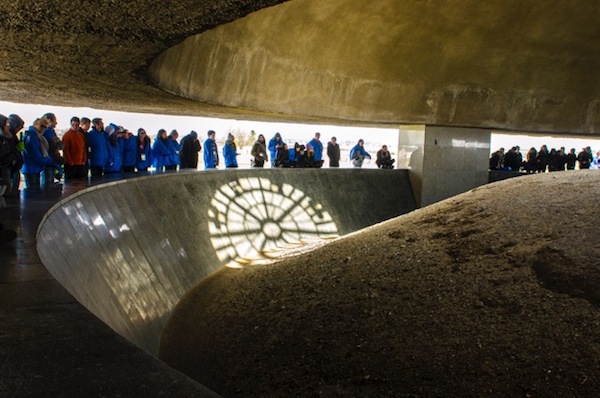
Participants in March of the Living stand together in front of the ashes of those murdered in the concentration camp, Majdanek. (photo from Talya Katzen)

The week in Poland was extremely draining, and I came to many realizations. I felt so strongly about things I simply cannot put into words. Our pre-trip informational sessions came nowhere near to preparing me for what I was going to witness. How can anything prepare you for walking through a gas chamber where, just 70 years ago, thousands of innocent lives were erased each day? Pictures may speak louder than words, but physically being there is like a blood-curdling scream right in your face.

Each day’s event was a new brick dropped on my shoulders and, as the bricks piled up, I came to appreciate more and more the wonderful life I have been blessed with. The weather in Poland was cold and windy, spitting rain into our eyes as we walked through extermination camps, cemeteries and ghettos in our warm down coats and hats. Our complaints about the cold were no match to the below-zero temperatures that those starving prisoners in the thousands of concentration camps across Europe had to face day in and day out.

The tour of Majdanek concentration camp was truly an experience that will be with me for the rest of my life. The defining moment of the journey was visiting the monument that holds the ashes of the victims of the camp. A recording of the prisoners, just liberated from Bergen-Belsen, singing “Hatikvah” began to play as we all stood hand-in-hand. My mind was blank and completely full at the same time. The mutual sorrow all we marchers felt was overpowering. A connection to one another that I doubt will ever be broken.

photo - Left to right, Talya Katzen, Hayley Kardash, Shauna Miller and Alyssa Diamond participate in Yom Ha’atzmaut celebrations in Israel
Left to right, Talya Katzen, Hayley Kardash, Shauna Miller and Alyssa Diamond participate in Yom Ha’atzmaut celebrations in Israel. (photo from Talya Katzen)

This feeling of grief was flipped on its back upon our arrival in the beautiful state of Israel, a country that is now home to Jews who have survived some of the worst events in history – and prospered. I was fortunate to be there during the festival that celebrates Israeli Independence Day. Israelis gather together to celebrate community and overcoming many hardships. Having just experienced the height of grief in Poland, I could not have been more grateful for Israel, and the promise it holds for the Jewish people. Of course, our celebrations of freedom were constantly overshadowed by the memory of those who perished in Europe, who never had the chance to visit our homeland. It made me realize how absolutely crucial it is for young Jewish people of the world to experience this journey so that we may never forget.

March of the Living taught me that I have family all over the world who are just as passionate about keeping Judaism alive as I am, and that it is completely up to us to carry the torch from generation to generation, to keep the flame of the Jewish people burning forever. I am a third-generation survivor and it is my duty to be a witness, to live out the lives of those who never had the chance to see their 10th or 18th or 85th birthday simply because of who they were. Hitler and the Nazis may have been successful in murdering millions of people who didn’t fit their blueprint of the ideal race, but they failed miserably in taking away our Jewish identity. I am a person, I am a witness, I am a Jew, and no one can take that away from me.

Talya Katzen originally wrote this article as a Lord Byng Secondary school assignment. Jewish Federation of Greater Vancouver offsets the cost of March of the Living by $2,000 for each local participant. The funds for this are generated through the Federation annual campaign, and are distributed to participants through the Israel and Overseas Connections fund. Jewish Federation also provides support through staff resources, program leader training and participant education.


Format ImagePosted on July 24, 2015July 22, 2015Author Talya KatzenCategories Op-EdTags Holocaust, Israel, Majdanek, March of the Living, Yom Ha'atzmaut

The JI wins two Rockowers

Earlier this month, the American Jewish Press Association announced the winners of this year’s Simon Rockower Awards for Excellence in Jewish Journalism, which honor achievements in Jewish media published in 2014. In its division (newspapers with 14,999 circulation and under), the Jewish Independent garnered two first places.

image - 2015 Rockower Winner  First Place SealPublisher and editor Cynthia Ramsay won the first place award for excellence in writing about Jewish heritage and Jewish peoplehood in Europe for her article “World Musician at Rothstein” (Nov. 21, 2014), about the work of Lenka Lichtenberg. The group Art Without Borders was bringing Lichtenberg to Vancouver from her home base of Toronto for a solo performance at the Norman and Annette Rothstein Theatre. The article includes reviews of Lichtenberg’s three most recent CDs and how, in all of her music, “the memory and traditions of those who have lived before can be heard – they are celebrated, and merge with the memories, traditions and passions of Lichtenberg and the artists with whom she collaborates.”

The JI editorial board – Pat Johnson, Basya Laye and Ramsay – won the paper’s other award: first place for excellence in editorial writing. The three editorials that comprised the winning entry were “The message is universal” (March 7, 2014), about plans for the Canadian National Holocaust Monument to be constructed in Ottawa; “The spirit of Limmud” (Feb. 14, 2014), about how the vision and passion of one woman, Ruth Hess-Dolgin z”l, significantly enriched our community by initiating the movement to bring Limmud here; and “Uniquely set apart for exclusion” (May 9, 2014), about the Conference of Presidents of Major American Jewish Organizations decision to exclude J Street from the group.

The Rockower awards will be presented at AJPA’s annual conference, which, for the second year in a row, is scheduled around the Jewish Federation General Assembly being held in Washington D.C. Nov. 8-10. AJPA sessions will be held Nov. 9-11. The entire list of Rockower winners can be found at ajpa.org/?page=2015Rockower.

Posted on June 26, 2015June 25, 2015Author The Editorial BoardCategories From the JITags AJPA, American Jewish Press Association, Basya Laye, Conference of Presidents of Major American Jewish Organizations, Cynthia Ramsay, Holocaust, J Street, Lenka Lichtenberg, Limmud, Pat Johnson, Rockower, Ruth Hess-Dolgin

Teaching on the Holocaust

One of the most powerful books I read as a preteen was Fran Arrick’s Chernowitz. A young adult novel about bullying and antisemitism, I recently revisited it as I read it aloud to my own kids. Told mostly in flashback form, the novel leads up to an episode of revenge by the victim to the antisemitic bully, followed by a school assembly about the Holocaust led by the school principal as an attempted antidote. While the victim goes through tremendous personal growth as he realizes the limits of vengeance, his tormenter is portrayed as blinded by bigotry and beyond redemption.

I wondered how the themes would hold up a generation later and in the context of my own kids’ lives. Given that at the time I first read it I attended Jewish day school and was surrounded by almost all Jewish friends, I wondered how my kids – who are one of only a few Jewish kids at their large public elementary school – would react. I like to think that their Jewish identity is solid and their friendships nurturing enough to feel secure from the ignorance from which racism and prejudice stems. On this, time will tell.

The theme of revenge is also apt in today’s political climate, where cycles of violence are all too prevalent on a global scale. While it can taste sweet at the time, revenge – rather than justice-seeking – all too often leaves a bitter aftertaste. The book succeeds in mining this ethical complexity. I also appreciate the author’s unvarnished treatment of bigotry and the lesson around how important and sometimes challenging it is to keep parent-child communication open and flowing.

But the book’s final scene – that of the school assembly where graphic Holocaust footage is shown to the students – left me wondering. Assuming empathy and awareness are good antidotes to all kinds of prejudice including antisemitism, how much exposure is too much, particularly when it comes to images of Nazi atrocities?

My own kids know that their paternal grandfather was a survivor of Auschwitz. They have heard of Hitler – he is a common word in their vocabulary, for better or worse, and they know something of the Holocaust. But, as I read the final pages of Chernowitz to them aloud, I found myself omitting much of the excruciatingly graphic imagery, which included references to Mengele’s victims.

When it comes to Holocaust education, the consensus now seems to be that graphic imagery should be used “judiciously,” in the words of the U.S. Holocaust Memorial Museum – and “only to the extent necessary to achieve the lesson objective. Try to select images and texts that do not exploit the students’ emotional vulnerability or that might be construed as disrespectful to the victims themselves,” the museum advises educators on its website.

Julie Dawn Freeman, a professor of history, has warned that exposing students to too much graphic imagery can backfire in multiple ways: it can desensitize students to the subject, it can provide students with a sense that classroom trust has been violated, it can unwittingly provide a voyeuristic experience and it can dehumanize as well as stereotype the victims.

On all of these counts, the fictional principal’s shocking assembly, while well-intentioned, probably failed.

For these and other reasons, many of us have tended to focus on individual perspectives. In this vein, Anne Frank’s diary has, of course, had great impact. And many educators have made wonderful use of direct survivor testimony. When my father-in-law Bill Gluck was younger, he made a point to visit Vancouver schools and community centres to share his tale of survival. I have been fortunate to host Ottawa’s David Shentow in my course at Carleton. But, as we know, and as my own family experienced firsthand this year with the loss of my father-in-law, our own loved ones in the form of Holocaust survivors won’t be around forever.

Prejudice, hatred, suffering and revenge are heady themes for kids and preteens. Whatever our methodology for getting students to think ethically, at the very first, we can work our hardest to get them to think about basic impulses like kindness.

Mira Sucharov is an associate professor of political science at Carleton University. She blogs at Haaretz and the Jewish Daily Forward. This article was originally published in the Ottawa Jewish Bulletin.

Posted on June 26, 2015June 25, 2015Author Mira SucharovCategories Op-EdTags Bill Gluck, Chernowitz, David Shentow, Fran Arrick, Holocaust
Help Ringelblum doc

Help Ringelblum doc

Emanuel Ringelblum (left), Rachel Auerbach (third from the left) and other Jewish intellectuals in Poland, 1938. (photo from whowillwriteourhistory.com)

Many Vancouverites will remember the 2008 traveling exhibit hosted by the Vancouver Holocaust Education Centre called Scream the Truth at the World: Emanuel Ringelblum and the Hidden Archive of the Warsaw Ghetto. It provided an overview of Warsaw historian Ringelblum and a secret group, Oyneg Shabbes (Joy of Sabbath), who during the Holocaust worked to document and preserve material relating to their experiences. The artifacts they buried in milk cans and metal boxes – some 30,000 items – were found in the rubble of the Warsaw Ghetto in 1946.

Now, Katahdin Productions is raising funds to make a feature documentary about Ringelblum and the Oyneg Shabbes archive. The film, Who Will Write Our History, is based on the book of the same name by historian Samuel Kassow.

Writers, artists, scholars, journalists, poets and diarists, more than 60 diverse people, handpicked by Ringelblum, collected and recorded as much as possible about every aspect of life in the ghetto – poems, paintings, photographs, underground newspapers, essays on hunger, smuggling, the Jewish police, clandestine schools and literary evenings and more. Their common goal was to ensure that the truth would survive even if they did not, as was the case with Ringelblum.

Only three members of Oyneg Shabbes survived the war. Among them was Rachel Auerbach, a prolific writer who would spend the rest of her life memorializing Ringelblum and Oyneg Shabbes. It is Auerbach’s writing and point of view that will provide the narration and narrative structure of the film. She will be voiced in the film by Academy Award-nominated actress Joan Allan.

In 1946, before Auerbach left Poland for Israel, she and the other two Oyneg Shabbes survivors led rescuers to the location of the first cache of the ghetto archive. The rescuers unearthed 10 metal boxes that had been buried on the eve of the Warsaw Ghetto Uprising. A second cache of two milk cans was discovered when Polish construction workers were building new apartment buildings on the site of the former ghetto. The third cache was never found and is believed to be buried under what is now the Chinese embassy in Warsaw.

Directed and produced by Roberta Grossman with Nancy Spielberg as executive producer, Who Will Write Our History (whowillwriteourhistory.com) will make the story accessible to millions of people around the world. Katahdin Productions’ documentaries include Blessed is the Match: The Life and Death of Hannah Senesh, which won the audience award at 13 film festivals, was broadcast on PBS, nominated for a Primetime Emmy and shortlisted for an Academy Award; Hava Nagila (The Movie), which was the opening or closing night film at more than half of the 80 film festivals where it screened, and was released theatrically; and Above and Beyond, about Jewish-American pilots who volunteered to fly for Israel in its War of Independence, which earned 20 audience awards and critical acclaim. (For an article on the latter, visit jewishindependent.ca/spielberg-opens-film-festival.)

The goal of the Indiegogo fundraising campaign is to raise $100,000 to fund 10 days of shooting in Warsaw in fall 2015. On average, each day of shooting costs $10,000. Some days are much less expensive; for example, shooting exteriors of streets in Warsaw involves only a small crew. Other days are quite involved. For example, shooting recreations of key events in the story with props, costumes, actors, lighting, sets, stages, etc., requires a crew of 20+ people and costs as much as $20,000 per day. If the $100,000 goal is not reached, it will mean fewer filming days in the fall; if it is exceeded, there will be more, as needed to complete production.

For more information, including a video about Who Will Write Our History, visit indiegogo.com/projects/who-will-write-our-history-production#/story. There is about a week and a half left to contribute to the campaign.

Format ImagePosted on June 26, 2015June 25, 2015Author Katahdin Productions with JICategories TV & FilmTags Emanuel Ringelblum, Holocaust, Katahdin, Nancy Spielberg, Oyneg Shabbes, Rachel Auerbach, Roberta Grossman
Rescuing the Rafiach

Rescuing the Rafiach

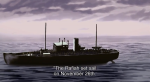
A screenshot from Gad Aisen’s documentary, which has its Canadian première at the Rothstein Theatre June 28.

After the Holocaust and the Second World War, the British government that controlled Mandate Palestine severely limited Jewish immigration, continuing the restrictive policies from before the war. But the Jewish underground in pre-state Israel was operating a steady movement of illegal transports bringing Jews – mostly Holocaust survivors – from Europe to the Yishuv.

In November 1946, the ship code named Rafiach set off from Yugoslavia with 785 passengers. Twelve days into the voyage, a storm forced the ship to seek refuge in a bay on the tiny Greek island of Syrna but it ran aground and, within an hour, sank. The vast majority of passengers survived, crawling from the water onto the island, which is little more than a craggy rock, or jumping from the ship before it was fully immersed. It is not known exactly how many passengers drowned.

Among those who survived and eventually made it to Palestine were Lili and Solomon Polonsky z”l. Their daughter, Tzipi Mann, lives in Vancouver. She knew that her parents and some of their friends had been on the ship, but she had never delved into details. By the time her curiosity was piqued, her parents had passed away. But her quest to uncover the story of the Rafiach and its passengers has led to a documentary film that will screen here in its Canadian première on June 28.

Code Name: Rafiach is directed by Israeli filmmaker and television personality Gad Aisen, but he credits Mann as being the driving force behind the project.

Aisen is the creator of a TV show on Israel’s Channel 10 called Making Waves, about nautical topics. He served seven years in the Israeli navy before obtaining an MFA in cinema from Tel Aviv University. He had never heard of the Rafiach before he was approached by a student of Mevo’ot Yam Nautical School, who thought it would make a good topic for Aisen’s TV show.

Code Name: Rafiach is a story about Holocaust survivors finding a place in the world and also about the Jewish underground risking their lives to smuggle Jews into Mandate Palestine. There are many narratives of this sort, Aisen acknowledged, but the Rafiach’s tragedy and the rescue make this one especially poignant.

Because it is not possible to produce a story of nearly 800 people, the filmmaker decided to focus on a few individuals. One is Shlomo Reichman. Known to the circle of people around the film as “Shlomo the baby,” Reichman, now a grandfather, was thrown to safety from the ship.

“This man’s story was particularly touching because he was a newborn,” Mann said in a telephone interview. “He was three weeks old and he was tossed onto the rocks, but he wasn’t sure who tossed him. Was it his father, or was it someone else? For Shlomo, this has been sort of the core of his existence – who tossed me onto the rocks?”

The fact that the passengers were Holocaust survivors magnifies the impact of the incident, Mann said.

“If you can imagine Holocaust survivors having to deal with this,” she said. “There were so many personal, emotional issues attached to everything.”

In interviews, Mann and Aisen learned that adults who first made it to shore from the listing ship lay on the rocks to create a softer landing for those coming after.

For Mann, the Rafiach became a sort of obsession.

“In 2010, just one morning I thought, I need to find out more about this,” she said. “My intention was originally to try to write a book and I thought the only way I can do this is by being in Israel.”

She made arrangements to head for Jerusalem and enlisted the help of her cousin, Sara Karpanos, who lives there. They put an ad in an Israeli newspaper and the response was so overwhelming the pair had to rent a hotel space for a reunion of 200 Rafiach survivors and, in some cases, their children and grandchildren.

Unbeknownst to the two women, Aisen was already on the story. After being turned on to the history of the ship, Aisen had connected with an instructor at Israel’s naval high school who had led his students on a dive and recovered a couple of artifacts from the hulk of the Rafiach.

From what had seemed like lost history, Mann saw the story of the Rafiach begin to reveal itself. “A complete mystery was unraveling in front of me,” she said.

For Aisen, the story of the Rafiach “captured my heart, and I feel particularly connected to this story from many aspects, as a sailor, an Israeli and Jewish.”

To tell the history of the Rafiach in a documentary, he decided to use animation, which allowed him to be more creative than merely showing interviews with survivors.

“It enabled me to present the film in the present tense and not as a memory from the past,” he said. “It took me about six years to create the film, five journeys abroad, months in the archives, 300 hours of footage and a year’s work of three animators. But one of the more challenging things was to get to the wreck of the Rafiach and to dive and film inside.”

In a way, Aisen said, making the film let him vicariously live the life of an underground commander of an immigrant ship.

The Vancouver Jewish Film Centre presents Code Name: Rafiach on June 28, 7 p.m., at the Rothstein Theatre. Tickets are $10 and available at vjff.org.

Pat Johnson is a Vancouver writer and principal in PRsuasiveMedia.com.

Format ImagePosted on June 19, 2015June 17, 2015Author Pat JohnsonCategories TV & FilmTags Gad Aisen, Holocaust, Rafiach, Tzipi Mann, Vancouver Jewish Film Centre, VJFC
B.C. Achievement honor for Krell

B.C. Achievement honor for Krell

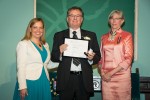
Dr. Robert Krell with the Hon. Coralee Oakes (left), minister of community, sport and cultural development, and the Hon. Judith Guichon, OBC, lieutenant governor of British Columbia. (photo from B.C. Achievement Foundation)

On April 24, 2015, Dr. Robert Krell was among those honored at the 12th Annual British Columbia Community Achievement Awards ceremony held at Government House in Victoria, where he received a B.C. Community Achievement Award medallion and certificate.

“These honorees exemplify what it is to go above and beyond; to do what needs to be done and to give without question their time and energy for the betterment of their communities,” said Keith Mitchell QC, representing the British Columbia Achievement Foundation.

In a personal letter received from the premier of British Columbia, Christy Clark, Krell was honored for his “many years of commitment to developing anti-racism, antisemitism and Holocaust education programs for people of all ages. By establishing the Vancouver Holocaust Education Centre in 1994 and documenting Holocaust survivors’ testimonials, you have ensured that no one will ever forget what Jewish people went through during the war. Your work with child survivor groups is further testament to your dedication to helping people gather together, talk to one another and know they are not alone in dealing with the aftermath of what they and their families experienced.”

Hidden as a child in the Netherlands during the Holocaust, child and family psychiatrist and University of British Columbia professor emeritus, Krell understands the necessity of Holocaust remembrance: learning from its lessons, providing education, supporting survivors and ensuring their stories are not lost. In addition to founding the VHEC, he also founded a group for child survivors, giving voice to their experience.

Format ImagePosted on May 29, 2015May 27, 2015Author B.C. Achievement FoundationCategories LocalTags child survivor, Holocaust, Robert Krell, Vancouver Holocaust Education Centre, VHEC
Combating antisemitism

Combating antisemitism

Tim Uppal, minister of state for multiculturalism, at the Global Forum for Combating Antisemitism. (photo from cic.gc.ca)

Canada’s position as a world leader in the global fight against antisemitism was reinforced last week at an international forum that saw experts and dignitaries tackling the issue of hatred towards the Jewish people.

The Hon. Tim Uppal, minister of state for multiculturalism, helped open the fifth Global Forum for Combating Antisemitism and reaffirmed Canada’s commitment to combating hatred and antisemitism in all its forms, including attempts to delegitimize Israel.

“Our government’s commitment to fighting the rise of antisemitism in all its forms is rooted in increased education and interaction between different communities to counter the ignorance and bigotry that spreads this pernicious hatred,” Uppal said in a statement. “We will continue to work to ensure that the horrid atrocities that occurred in the past never happen again.”

While in Jerusalem, Uppal met with businesses and experts to discuss the negative impact the boycott, divestment and sanctions movement would have on all sides in the region.

The forum is the premier biennial gathering for assessing the state of antisemitism globally and formulating effective forms of societal and governmental response. This year, it focused on two main subjects: confronting antisemitism and hate speech on social media, and the rise of antisemitism in Europe’s cities today.

Canada is a member of the International Holocaust Remembrance Alliance (IHRA) (holocaustremembrance.com), an intergovernmental body made up of experts from 31 countries that supports Holocaust education, remembrance and research around the world.

Format ImagePosted on May 22, 2015May 21, 2015Author Citizenship and Immigration CanadaCategories WorldTags antisemitism, Holocaust, IHRA, Tim Uppal
The anniversary of liberation

The anniversary of liberation

This photo and caption appeared in the Jewish Western Bulletin, Aug. 23, 1946.

May 5, 1945, is firmly etched in my “child’s” mind for that was the day of my family’s liberation or, more accurately, what remained of my family. The German occupation had been brutal and, with the collaboration of thousands of Dutch Nazis, 108,000 Dutch Jews had been deported and nearly all were murdered. Of those sent to Auschwitz and Sobibor, approximately 4,500 survived. Of Holland’s total prewar Jewish population of 140,000, fully 80% were murdered.

I had survived with my Christian hiders, Albert and Violette Munnik, and my “sister” Nora, their 12-year-old daughter. When I was reunited with my parents who had miraculously survived also, I had come to love the Munnik’s as my own family, and I was Robbie Munnik, not Robbie Krell. But I was given back, not without protest, a Jewish child who had no experience with Judaism but was nevertheless hunted for being a Jew.

In Nazi-occupied countries, 93% of Jewish children were murdered. Some escaped just before the war, a few thousand during the war through clandestine operations. But overall, no more than one in 10 survived. That is the nature of genocide. Murder the children.

Holland has somehow managed to maintain a reputation of comparative decency during the war years. Some of this good will emanates from the story of Anne Frank who left behind a diary written during her days in hiding in an attic in Amsterdam. The Frank family did in fact receive heroic assistance from Miep Gies, as did I from the Munniks and my father from the Oversloot family.

But of roughly 14,000 Dutch Jewish children in hiding, over half were betrayed. And, of course, so were the Franks. That adorable, intelligent adolescent Anne and her family were deported on the second to last train from Westerbork to Auschwitz on Sept. 3, 1944, three months after D-Day! She died an agonizing death of hunger and typhus in Bergen-Belsen. Only her father survived.

I write this piece on the 70th anniversary of liberation, a gift of 70 years of life. Who could imagine it? During the war, death had been a close companion, confirmed shortly after the war by the chilling reports that came our way from the few survivors that returned and from the photos that formed part of the news. I heard the descriptions of torture and murder from eyewitnesses. They were there. They had seen and suffered. And their lives and ours had been destroyed. No grandparents, no aunts or uncles. Two other children in our family survived, one also spared in hiding, the other, smuggled into Switzerland. That was it.

And what have I learned over these 70 years? The Holocaust imprint never leaves and no day passes without reminders. Had we tried to forget, it would have proved impossible. From the moment that the world discovered what had been done, the antisemites began their effort to deny what happened. Holocaust denial followed the campaign of murder with the effort to murder memory.

No wonder. Nearly everyone had blood on their hands. The British Mandate of Palestine was closed to Jewish immigration, preventing European Jewish refugees from fleeing. Canada and the United States had closed their doors. The Jews of Europe were trapped and murdered with technological efficiency, aided and abetted by Jew-hating collaborators in almost every country dominated by the Nazi invaders. The only way to be freed from guilt would be for the Shoah not to have happened. But the perpetrators were unable to erase the evidence. The Holocaust is the best-documented massive crime of murder and theft in human history.

Over the years, I have also learned of the systematic betrayal of visionary Jewish leadership who fought for the reestablishment of a Jewish nation-state in what is now Israel from the 1890s. No, Israel is not the result of the genocide inflicted upon European Jewry. If it were, Jews would not have had to fight the British colonialists in 1945-1947 to achieve freedom. And Holocaust survivors trying to reach Palestine would not have been incarcerated in camps in Cyprus.

The victory over the Ottoman Empire led to the establishment of a number of Arab states. Only the British promise of the 1917 Balfour Declaration’s intent to establish a home for the Jewish people went unfulfilled. The 1920 San Remo Conference affirmed that intent, only to witness the British carve off 80% of the territory known as British Mandatory Palestine to create the Emirate of Trans-Jordan. To add insult to injury, it was decreed that no Jew could settle there. This travesty resulted in the remaining 20% to be contested by Jews and Arabs to this day.

I was in Israel in 1961. The Western Wall of the Temple, the holiest site in Judaism, was controlled by Jordan and Jews were forbidden access. During Jordan’s illegal occupation from 1948-1967, all the synagogues in east Jerusalem were destroyed. Nor had Jordan advanced the cause of their Arab brethren or established a Palestinian state in the territories held.

I was at the Eichmann trial. I saw the architect of the annihilation of my people. Over time, it appears that a great deal of European posturing over Israel and its policies are an attempt to deflect attention from the horrendous misdeeds of the European past. There is a concerted effort to make Israel look like a nation with a brutal bent and whose activities, even those in self-defence are painted with the brush of Nazi and/or apartheid terminology. How offensive! How cruel! Its practitioners deny antisemitism for they have found a new outlet for Jew hatred, anti-Zionism. Israel has become the Jew of nations.

It is disconcerting, indeed, to witness the dawn of liberation 70 years ago descend into a night of renewed hate. I seek a measure of comfort in the words of Martin Luther King, Jr., and Eric Hoffer, the longshoreman philosopher. Dr. King wrote, “Israel is one of the great outposts of democracy in the world and a marvelous example of what can be done, how desert land can be transformed into an oasis of brotherhood and democracy. Peace for Israel means security, and that security must be a reality.” And Hoffer, “I have a premonition that will not leave me; as it goes with Israel so will it go with all of us. Should Israel perish, the Holocaust will be upon us all.”

I have to hope that antisemitism will be opposed and extinguished wherever it flourishes and that Israel’s right to exist will be protected. Then our liberation will have acquired meaning.

Robert Krell, MD, is professor emeritus of psychiatry at the University of British Columbia, and founding president of the Vancouver Holocaust Education Centre.

Format ImagePosted on May 15, 2015May 14, 2015Author Robert KrellCategories Op-EdTags antisemitism, Bergen-Belsen, Holocaust, Israel, liberation
Time to work-study abroad

Time to work-study abroad

The author at the Great Wall. (photo by Rebecca Shapiro)

Finishing university for me, like many others, brought with it employment worries and life dilemmas, alongside the obligatory cheesy graduation shots. My parents had just moved from North London to West Vancouver, post father’s mid-life crisis. I had no idea where I was now based, let alone what I wanted to do with the rest of my life, thanks to that cross-continent move and an unspectacular arts degree.

This led to my spur of the moment application to intern in Shanghai through CRCC Asia, the biggest provider of work experience placements in China. My family was confused, my friends intrigued, but knowing that the company had organized more than 5,000 internships for students and graduates worldwide, I felt secure. That was, until I arrived. The journey from Pudong’s sprawling airport taught me plenty: the vast majority of people in China don’t speak English, nor do they follow traffic rules of any sort or bother to hide their gawping at your Western appearance.

Thankfully, everyone on other internship placements was lovely, as was the media production company I worked at. The city itself was beautiful, buzzing and completely bonkers. I demolished street food daily and consumed glitzy clubs’ free alcohol almost as often, resulting in a lot of hungover sightseeing. In between weekends away hiking the Yellow Mountains and evenings making dumplings, my lifelong hobby of writing became a solid career aspiration. I set up a blog, nabbed some work experience at an ex-pat magazine and eventually bagged a coveted internship at ELLE Canada.

Aside from job gains, a more curious side effect of this trip, for me, was a renewed pride in my religion. As the only practising Jew on the internship scheme, I felt a duty to explain festivities and traditions and set a good example. This resulted in my British friend calling me “the keenest Jew” he had ever met, a title I promptly failed to live up to when Yom Kippur was spent guzzling water after a heavy night out.

Keeping kosher also proved a near impossible challenge. Though my only fluent Mandarin sentence was a proud “I don’t eat pork,” being fully vegetarian in China would have meant far too much plain rice for my liking. Sorry, all.

But, there were some success stories for Jewish life in China. After three years spent actively avoiding Chabad in my university city of Leeds in the United Kingdom, I found myself on their home turf during Rosh Hashanah in Shanghai. Back home, I would have spent the Jewish New Year in relative indifference, but in this foreign function room I was touched by how many Jews living in China had made the effort to assemble for prayer and the customary apples and honey. I met people of all ages, listened to their stories, shared mine, and engaged in what all Jews love best – eating good food, and a lot of it.

Pressure from my parents meant that my Jewish duties did not stop there. Having not yet found the financially stable, nice – and most importantly Jewish – lawyer of their dreams, I would at least fit in a dose of Jewish history. And so commenced a trip to the Shanghai Jewish Refugee Museum. Small, but filled with extremely interesting exhibits, it taught me that Shanghai accepted 30,000 Jewish refugees fleeing the Holocaust, between 1933 and 1941. It also led me through the Tilanqiao historical area, which has preserved the only features of Jewish refugee life inside China during the Second World War. Hardly surprisingly, this experience solidified both my adoration for Shanghai and my love for Judaism.

So, there you have it: the unlikely relationship between interning in China and Jewish pride.

photo - Shanghai skyline
Shanghai skyline. (photo by Rebecca Shapiro)

Not convinced to follow my lead? Your resumé will be. If there’s one thing employers like more than work experience, it’s international work experience. In a recent survey of 10,000 employers in 116 countries, 60% of respondents said they would give extra credit to graduate applicants who had worked abroad. In terms of my particular internship program, 89% of students and graduates who intern though CRCC Asia are employed in a graduate-level job within three months of returning home.

Unfortunately, only 3.1% of Canadian university graduates currently participate in study or work abroad program. The comparative stats for those in the United Kingdom, United States and Australia fall between 18% and 38%.

But, in the words of Bob Dylan, the times they are a’ changing. University leaders recently met in Calgary to discuss strategies for globally mobile students; CRCC Asia just announced a partnership with the University of British Columbia to offer internships in several Chinese cities; and graduates are increasingly starting to take the plunge.

I, for one, couldn’t welcome the trend more. Canadian businesses, and diplomatic and trade relations, sure aren’t complaining either. Give it a try and, who knows, you might even rediscover your religious roots.

Rebecca Shapiro is a freelance journalist, amateur photographer and blogger at thethoughtfultraveller.com. A recent politics graduate, she manages to maintain bases in London, Vancouver and Toronto, while focusing a disproportionate amount of time planning new adventures. She has been published in the Times (U.K.), Huffington Post (U.K.), That’s Shanghai (China) and ELLE Canada.

Format ImagePosted on May 8, 2015May 6, 2015Author Rebecca ShapiroCategories WorldTags CRCC Asia, Holocaust, Shanghai Jews
Film on fate of Polish town

Film on fate of Polish town

Filmmaker Haya Newman’s father Ozer Fuks grew up in Wolbrom, Poland. He escaped the town in 1939. (photo from wolbrom.pl)

The town of Wolbrom, Poland, had a population of around 10,000 in 1939; about half of the residents were Jewish. Because it was very close to the German border, it was occupied on the day the Second World War began with the invasion of Poland on Sept. 1, 1939.

Haya Newman, a Vancouver teacher of Yiddish and now a filmmaker, has spent the past several years investigating what happened to the Jews of Wolbrom. On April 14, the evening before the community gathered to mark Yom Hashoah, Newman premièred her documentary Wolbrom: My Father’s Hometown in Poland before a packed audience at Temple Sholom.

Newman’s father, Ozer Fuks, came from the town, and trouble began well before the invasion of the Nazis. When Ozer was 4 years old, his father was murdered in front of his leather goods shop. In 1939, Fuks was in the Polish army and he managed to escape the Nazis through the Soviet Union.

photo - Filmmaker Haya Newman’s father Ozer Fuks grew up in Wolbrom, Poland. He escaped the town in 1939
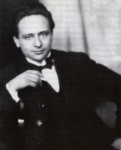
Filmmaker Haya Newman’s father, Ozer Fuks. (photo from Haya Newman)

The project of assembling information on her father’s hometown began from almost nothing, given that her late father kept his past during the Holocaust secret.

In her attempts to gather information, Newman visited the few remaining members of her father’s family in Israel. When that branch of the family opted to leave Europe for Mandate Palestine, Newman said, the remaining family told them they were crazy, heading to a barren desert. They are the only members of her father’s family that survived.

Newman’s documentary, which was filmed by her husband, Tim Newman, follows her first to Israel and then to Wolbrom, in search of the missing pieces.

The outline of the story of Wolbrom’s Jewish residents is similar to that of Jews in thousands of other Polish villages, towns and cities.

The Jewish residents were rounded up by the Nazis and their collaborators. Some were shot on the spot while the rest were forced on a six-day march that circled back to the same town. The able-bodied who survived were forced into slave labor.

In 1941, about 8,000 Jews from the surrounding area were forced into the ghetto in Wolbrom. Eventually, some were transported to concentration camps. But most of them met a grisly fate closer to home.

A memorial was erected in 1988, apparently by residents of Wolbrom themselves, remembering the 4,500 Jews killed and buried in mass graves outside the town.

“This must be carved in Polish memory as it is carved in stone,” the memorial reads in Polish.

Walking to the site, Newman ran into locals who shared some of the stories that had come down from the older villagers.

Three holes were dug in a clearing, they said, and planks were placed across them. The Jews were ordered to undress and as they individually walked across the planks, they were shot and fell into the ravines. When the dirt was pushed over the bodies, one local recounted, the earth cracked from the movement of those still alive.

A story survives of a boy who did not. A youngster managed to escape through the forest as the murdering was going on. Police chased after him, calling out to local boys who were tending cows to catch him, which they did. An officer stood on the boy’s hands and shot him point blank.

Wolbom’s synagogue was turned into a pile of rubble during the war. The Jewish school is now an agricultural supply store – with Nazi graffiti covering the doors. While Newman said she was largely greeted with warmth during her visit, which took place in 2005, she sensed some defensiveness among Poles.

“The fact of the matter is that 90 percent of Polish Jews were killed and a lot had to do with the Polish population,” she said, adding that hundreds of Jews who had been in hiding and survived were killed after the war by Poles. There are 327 documented cases of killings, either individual murders or in pogroms in the immediate aftermath of the war, but estimates are that as many as 2,000 Polish Jews who survived the Holocaust were murdered after liberation.

The reactions from some of the locals caught on video are intriguing.

“There is nothing to look for,” said one man, “You can’t turn back time.”

Another told her, “Take it easy, it’s all in the past.”

Newman visited the home where her grandmother had lived and the woman who resided there at the time was somewhat nonchalant about the property’s provenance.

“When we bought the house, it was empty,” she said.

Other residents spoke of the horror and upset felt by non-Jewish people at the fate of their Jewish neighbors. One woman said her mother picked up Yiddish playing with the Jewish kids in town before the war. Others provided helpful information to direct Newman to the relevant sites of the former Jewish community.

Overall, the people of Wolbrom were open and very willing to speak with her, she said. “It seemed like they were waiting for me there.”

It has been 10 years since the trip that formed the backbone of the film and Newman noted that it is not only the survivors who are passing away, but the eyewitnesses who can add to the fullness of what happened during that period.

“Within five, 10 years, they are not going to be there anymore,” she said.

Rabbi Dan Moskovitz spoke after the screening and referenced the just-ended Pesach holiday to emphasize the need to tell the stories of the more recent past. Just as the Hagaddah marks the narrative of the Exodus, he said, today’s generation should be recording the narratives of this era.

“We need to tell our stories so our children can tell them the way we tell the Hagaddah,” he said. “Go home, write down and tell your story.”

Newman’s next projects include a documentary about Yiddish on the West Coast, a film about her mother’s hometown in Poland and another about Vancouver singer Claire Klein Osipov.

Pat Johnson is a Vancouver writer and principal in PRsuasiveMedia.com.

Format ImagePosted on April 24, 2015April 23, 2015Author Pat JohnsonCategories LocalTags Fuks, Haya Newman, Holocaust, Shoah, Wolbrom

Posts pagination

Previous page Page 1 … Page 39 Page 40 Page 41 … Page 43 Next page
Proudly powered by WordPress