Skip to content
  • Home
  • Subscribe / donate
  • Events calendar
  • Business Directory
  • FAQ
  • News
    • Local
    • National
    • Israel
    • World
    • עניין בחדשות
      A roundup of news in Canada and further afield, in Hebrew.
  • Opinion
    • From the JI
    • Op-Ed
  • Arts & Culture
    • Performing Arts
    • Music
    • Books
    • Visual Arts
    • TV & Film
  • Life
    • Celebrating the Holidays
    • Travel
    • The Daily Snooze
      Cartoons by Jacob Samuel
    • Mystery Photo
      Help the JI and JMABC fill in the gaps in our archives.
  • Community Links
    • Organizations, Etc.
    • Other News Sources & Blogs
  • JI Chai Celebration
  • JI@88! video

Recent Posts

  • Or Shalom reopens its doors
  • JFS from past to future
  • Need holistic approach
  • Sharing stories, advice
  • Journalist shares fears
  • Skills to live together
  • Road to independence
  • Cutting grass with scissors
  • Zionism as a solution
  • Deceit, desire & the divine
  • Reclaiming sacredness
  • Creative project ideas
  • Summer squares and cobbler
  • Thou shalt … summer commandments
  • Legal help for students
  • Revisiting myth of Lilith
  • Wrong person rebuked
  • Canada’s mixed messages
  • Questions for museum
  • Symposium on antizionism
  • Making soccer political
  • CJPAC lauds Pulver’s impact
  • City recognizes Vrba’s legacy  
  • Organ donation saves lives
  • Theodore’s March premiere
  • A healing Shabbaton
  • Supplying healthy food
  • A chime of metal tags
  • Yellowknife seder a first
  • Ishai energizes, unifies
  • A Lag b’Omer to remember
  • Expanding the healing
  • Hannah Senesh – a unique hero
  • Community milestones … May 2026
  • Sharing her testimony
  • Fall fight takes leap forward

Archives

Follow @JewishIndie
image - The CJN - Visit Us Banner - 300x600 - 101625

Tag: elections

Candidates for office

Candidates for office

Election day for municipal governments across British Columbia is Saturday, Oct. 20. In Vancouver, advance voting opportunities are available until Oct. 17, from 8 a.m. to 8 p.m. (photo by Cynthia Ramsay)

Members of British Columbia’s Jewish community have been involved in many pursuits over the decades. With some notable exceptions, few have pursued elective office. And this election continues the tradition. Of the hundreds of people running for city councils, school boards, regional district boards and the Vancouver park board, the Independent has identified only four members of the community running in the Oct. 20 elections, though there may be others. Here is a glance at their platforms and motivations.

Herschel Miedzygorski
Independent candidate for Vancouver city council
voteherschel.ca

photo - Herschel Miedzygorski
Herschel Miedzygorski

Herschel Miedzygorski’s priorities include clean and safe streets, increased night transit and more funding for the arts. He wants to deter real estate speculation and speed up permitting processes for middle-class homes.

Miedzygorski has had a career as a restaurateur in Vancouver and Whistler, running Southside Deli in the resort municipality for 25 years and being involved in food ventures in the city. He has sold his food interests and now represents Giant Head Estate Winery, based in Summerland, B.C., to restaurant clients.

“I was born and raised in Vancouver,” he said. “My father had a secondhand store on Main Street for 60 years, it was called Abe’s Second Hand. That was my mom and dad.… We all grew up on Main Street.”

Miedzygorski has coached football and soccer and spends time at the Jewish Community Centre of Greater Vancouver. He was asked to run with a couple of the city’s political parties, he said, but “I just want to be an independent voice.”

Ken Charko
Coalition Vancouver candidate for Vancouver city council
coalitionvancouver.ca
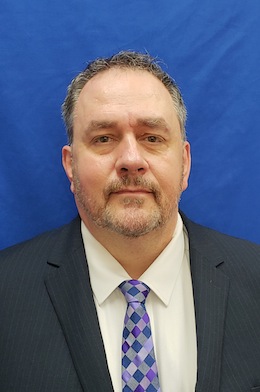
photo - Ken Charko
Ken Charko

Ken Charko owns Dunbar Theatre. He is president of the Hillcrest Community Centre and a director of the Motion Picture Association. He considers himself a “champion of the arts.”

“I’m very supportive of the arts,” he said. Charko wants to make arts and culture more accessible to all.

He also seeks a line-by-line review of the city’s budget and wants fair bylaws for hardworking people and small businesses.

“I’ve got good business credentials,” Charko said. “I understand small business. I’ve been there. But I’m really going to try to focus on the arts and things that matter to the arts community.”

He is running with Coalition Vancouver after breaking with the NPA because they appointed, rather than electing, their nominees.

“There is no party that completely represents all my views,” he said. But Coalition Vancouver aligns with his approach to fiscal accountability and socially progressive outlook, he said.

Steven Nemetz
Independent candidate for Vancouver park board
stevennemetz.com
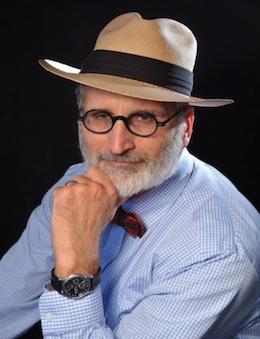
photo - Steven Nemetz
Steven Nemetz

Steven Nemetz is running for Vancouver park board because the time is right.

“It speaks to me at this stage of my life – father, grandfather – and I grew up in the city,” he said. “I grew up intimately familiar – because my father was a great outdoorsman – with these parks.”

Nemetz is a lawyer and holds a master’s in business administration and a rabbinic ordination. He created the “pop-up shul” Shtiebl on the Drive for the High Holy Days this year.

Having lived in various cities, notably New York, Nemetz wants to bring to Vancouver some ideas that have worked in other places. Inspired by the High Line, a park created from an old elevated railway in Manhattan, Nemetz suggests saving the Georgia and Dunsmuir viaducts (which are slated for demolition) and creating an elevated park in the space between them and extending that park east and west. A second High Line-style recreation space could work along the Broadway corridor, he said, incorporating transit hubs, Vancouver General Hospital and other existing assets.

He advocates a “privileges card” for city residents that would mean they pay no parking fees at any parks.

“There are 650,000 residents of the city of Vancouver,” he said. “There are over 10 million visitors a year.” A slight price increase for non-residents could offset the loss of revenue from locals, he said. “The residents of the city of Vancouver pay taxes. They support their infrastructure. They shouldn’t have to pay more for the use of facilities that they primarily support by way of small nickel-and-diming, like parking at Kitsilano Beach and Jericho.”

Nemetz looks at Mountain View Cemetery, 106 acres at the heart of the city, and sees potential for repurposing it to respectfully accommodate more living residents.

“We are not talking amusement park,” he said. “It could be something very unique, world-class in a way, that’s different.”

Norman Goldstein
Richmond First candidate for Richmond school board
richmondfirst.ca
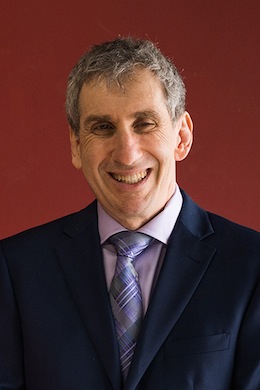
photo - Norman Goldstein
Norman Goldstein

Norman Goldstein is a former Richmond school trustee seeking to return to the board.

“The best thing for all people, including the Jewish people, is an open, accountable government that adheres to the rule of law,” he told the Independent. “The laws need to be crafted by caring, competent people, who understand that the strength of a society rests on how fairly and inclusively all citizens are treated. This is what I believe and this shapes who I associate with and trust politically.”

His priorities for education include moving forward with the Sexual Orientation and Gender Identity (SOGI) policy passed by the Richmond school board.

“This has been, unfortunately, a very polarizing issue in Richmond,” he said. “To my understanding, the opposition to SOGI is based either on misunderstanding what the policy says – please, read the policy – or on deep-seated prejudice that is not self-recognized as such.”

Goldstein holds a doctorate in mathematics and taught and researched at the university level. He later completed a master’s of computer science and spent 21 years at MacDonald Dettwiler and Associates in Richmond, retiring in 2013.

“The Richmond School District has had a long, proud history of inclusion,” he said. “A major tool in this endeavour has been to integrate all learning levels into the same classroom. This socializes students to understand and appreciate each other.”

Election day for municipal governments across British Columbia is Saturday, Oct. 20. In Vancouver, advance voting opportunities are available until Oct. 17, from 8 a.m. to 8 p.m. Advance voting dates and times differ by jurisdiction. More details are at vancouver.ca/vote or on the website for your municipality.

Format ImagePosted on October 12, 2018October 9, 2018Author Pat JohnsonCategories LocalTags elections, Herschel Miedzygorski, Ken Charko, Norman Goldstein, politics, Richmond, Steven Nemetz, Vancouver
Reflections on elections

Reflections on elections

(photo by Cynthia Ramsay)

Advance voting is underway across British Columbia for municipal elections that culminate Oct. 20.

There are many dedicated, informed people with excellent ideas running for office in Vancouver and in communities across British Columbia. This is especially fortunate, since this year saw what may be the greatest number of incumbents in recent memory opt not to seek reelection. Of the 10 members of Vancouver city council, for example, only three are running for reelection. (One is running for mayor.) Mayor Gregor Robertson is also leaving the scene.

A similar change is evident across Metro Vancouver, where an inordinate number of incumbent mayors and councilors have chosen not to continue serving. Part of this may be coincidence and part may be that new funding rules put in place by the province have made the task of running more challenging, in some ways. Whatever the reasons, Vancouver and many other communities face a major realignment in our local politics.

Especially at a time like this, it is a little disappointing that there are not more individuals from the Jewish community who have chosen to offer themselves for office. It has been encouraging, on the other hand, to see the number of people from the community who are volunteering on campaigns and taking a very active role in engaging with candidates. The candidates forum for several mayoral hopefuls, sponsored by the Centre for Israel and Jewish Affairs (CIJA) and the social service agency SUCCESS, was well attended. Another event, organized by CIJA and the Canadian Jewish Political Affairs Committee, allowed people to speak one-on-one with those who would like to be mayor of Vancouver.

There are, of course, not a lot of “Jewish issues” in local elections, though candidates for mayor addressed a number of things that are of concern to the Jewish community at a recent candidates forum. (For story, click here.) Ensuring that our municipalities remain welcoming, safe places for members of every ethnocultural community is a top priority. Part of that comes from people in positions of leadership leading by example. We have seen, in the United States, Europe and elsewhere, the licence that can be given to people with ill will when leaders choose to engage in incendiary language. It has been reassuring that there have, to date, been no serious incidents in local campaigns of overtly divisive language or strategies.

While the atmosphere has not been terribly divisive, division is the key word for traditional political parties in Vancouver.

Vision Vancouver, which has dominated the city for the last decade, has collapsed, not even managing to put up a candidate for mayor. The Non-Partisan Association (NPA) is a house divided, with at least two new parties emerging from disaffected former members.

The likelihood of independent candidates being elected to Vancouver city council and boards – as well as to the mayor’s chair – has probably never been greater. It could be an interesting mix for the next four years, with a constructive amalgam of different ideas coming together to synthesize into good policy – or it could be four years of chaos.

On the topic of chaos … a word about Vancouver’s at-large voting system. It is difficult enough to make an informed choice for the one position of mayor with 21 people contesting the race. It is an entirely different ballgame to try to make sense of the 137 candidates running for the 26 positions on city council, school board and park board. There is simply no way to expect reasonable, ordinary people to inform themselves adequately about this number of candidates.

Vancouverites have been floating the possibility of a ward system for decades but still face this daunting and compendious ballot every election. A ward system would not be without it faults – it could have the effect, for example, of elected officials representing their narrow constituencies against the broader interests of the city at large – but it would certainly permit average voters to become more familiar with the candidates who would represent them.

For now, though, this is the system we are in. And finding our way through it and voting with the best information we can access is the least we can do as citizens of a democracy. Despite the fact that local government is the one that has the most direct impact on our everyday lives, it is also the one that tends to attract the lowest voter turnout.

The last election saw a turnout of about 43%, which is comparatively good for a local election. (The one before that saw less than 35% turnout.) Some observers have suggested that the circus-like circumstances this year could help voter turnout, with so many new groups and independent candidates trying to get their supporters to the polls. Still, with 21 candidates for mayor – at least a half-dozen of them serious contenders – the possibility of someone taking the position with, say, 25% of the vote, is a real possibility. If turnout were to rise to a comparatively healthy level of, say, 50%, that would still mean the mayor has a mandate from a mere 12.5% of voters.

But, consider this from your perspective as a voter: the power of your one ballot to influence the outcome may be higher than ever.

Format ImagePosted on October 12, 2018October 9, 2018Author The Editorial BoardCategories From the JITags democracy, elections, politics, Vancouver

Opening Pandora’s box

Maxime Bernier quit the Conservative party last week, at the precise moment that Conservatives from across the country were gathering in Halifax for their national convention, preparing for the federal election that is 13 months away.

Canadian political history would suggest that the former cabinet minister’s departure and his promise to form a new federal political party will be little more than a footnote in the history books when all is written.

The ostensible point of division between Bernier, who came a very close second to Andrew Scheer in last year’s Conservative leadership contest, is supply management. Supply management is an agricultural policy that limits supply in an attempt to stabilize prices so that Canadian farmers can make a decent living. It’s the reason we pay what we do for cheese, milk and poultry and it is prefaced on the understanding that the few extra dollars we pay weekly keeps the agricultural sector viable.

Bernier, who lambasted his former party over the issue, is correct. Support for such meddling in the economy is antithetical to conservative economic values. But it is an oddly Canadian consensus by which parties across the spectrum essentially accede to the status quo for political, if not policy, reasons. Opponents of Bernier in last year’s leadership race expressed fears that his opposition to supply management would undermine the Conservatives precisely where they are most popular: in rural Canada.

If less interventionist economic policies become the basis for Bernier’s new political party, it is hard to imagine how it will catch fire among Canadian voters. From a political standpoint, such a platform seems like a loser from the gate.

But there is a potential wild card in this scenario. Though he skirted the subject during his news conference last week, Bernier’s recent social media statements play to xenophobic, anti-immigrant sentiments. This, far more than economics, has the potential to get the attention of Canadian voters.

The Liberal government under Prime Minister Justin Trudeau likes to be associated with openness and a welcoming diversity, which contrasts nicely with developments to the south. But a recent poll suggests Canadians may not be as settled on this approach as some of us would like to believe.

The poll asked whether Canadians believed that there are too few, too many or the right number of immigrants to Canada. Overall, 18% of Canadians said there are too few immigrants coming to Canada, while 38% said there were too many and another 38% said the numbers were about right. The poll’s breakdown by party label indicates just how divisive this discussion could become. Only 12% of self-declared Liberals said that Canada has too many immigrants, while 73% of Conservatives hold that position.

Canadians, to an extent, have avoided opening a Pandora’s box in the form of a national discussion about immigration, perhaps happy in our complacency and self-image as a welcoming place. If Bernier’s new party – or, indeed, if the Conservatives – see an opening, we may be about to lift the lid somewhat on this issue.

If Bernier decides that he has nothing to lose and something to gain from upsetting accepted wisdom, it won’t necessarily prove a winning formula for his new party. However, if, by raising these topics, he forces other parties to articulate more specifically the generalized approach to multiculturalism and diversity that we take for granted, we may be headed for a reckoning on immigration, diversity and openness.

The election of Doug Ford as premier of Ontario suggests that populist messages are not anathema to Canadian voters. The Quebec provincial election, now underway, may very well provide a test case for some of these ideas that challenge our cherished notions of diversity.

When voter turnout hovers around the 50% mark, mobilizing one’s political base can be as crucial as convincing the undecided. If suspicion of outsiders appears likely to excite an identifiable core of the electorate, ambitious politicians will certainly consider how they might benefit by exploiting it.

Confronted by a heckler in Quebec last week, the prime minister shut her down by dismissing her as racist. It turns out, she may well be. But she also may not be the voice in the wilderness that some, including the prime minister, would like to believe. These people, too, will demand to be represented in Parliament and in the national discussion.

The rest of us, then, will need to have more than happy axioms and comforting self-satisfaction if we are to successfully defend diversity, inclusiveness and the social and economic value of new Canadians.

Posted on August 31, 2018August 29, 2018Author The Editorial BoardCategories From the JITags Canada, Conservatives, elections, immigration, inclusion, Justin Trudeau, Maxime Bernier, politics

Redefining antisemitism

An Illinois congressional district leans so heavily Democratic that no serious figures contested the Republican nomination for this fall’s midterm elections. As a result, an avowed Nazi has become the official Republican standard bearer in the suburban Chicago area.

The issue is not that he stands a hope of winning. He doesn’t. The critical test is the degree of unanimity with which the mainstream body politic of the United States comes together to condemn the candidate and reject the normalization of his positions. So far, results are tepid.

Some GOP figures are advising voters not to cast a ballot in the race, which seems like bad advice in a democracy. Others are saying, simply, “Don’t vote for the Nazi,” without suggesting voters support the Democrat. When asked if he was urging Republicans to support the Democrat in the district, Illinois Governor Bruce Rauner simply said, “No.”

We have been seeing far too many examples of Americans putting party over country and humanity recently. President Donald Trump has been able to get away with his worst excesses only through the support of a Republican Congress.

Nevertheless, for whatever limits partisanship puts on bulwarks to bad things, most Americans agree Nazism is bad and should be condemned.

A more ambivalent reaction is taking place in the United Kingdom. The British Labour party has been embroiled for some time in a very serious internal conflict around antisemitism. Senior party figures, including MPs, have uttered (or expressed on social media) things that any “woke” person would recognize as founded on antisemitic premises. In some cases – including in a “closed” Facebook discussion group of which party leader Jeremy Corbyn was a part – the most medieval and unequivocal stereotypes, accusations, conspiracies and Jew-hatred have gone unchallenged.

Members of the party have been kicked out after being subjected to internal party investigations for antisemitic rhetoric. But some have been allowed back in and others have been let off without any censure, even after expressing what the most casual observers would recognize as unacceptable attitudes toward a minority group.

A reckoning has been coming. So, in an effort to set some ground rules, a party committee adopted a definition of antisemitism last week that will serve as the measuring stick in upcoming investigations around whether party figures have or have not engaged in antisemitic rhetoric or behaviour.

The party based their new rules on the standards created by the International Holocaust Remembrance Alliance (IHRA) – criteria that have attained a degree of consensus as perhaps the most conclusive definition we can hope to develop for something as amorphous as antisemitism. The guidelines have been adopted by governments and quasi-governmental agencies worldwide, including Britain’s, but the Labour party thought the guidelines could use some improvements – and so they made their own tidy edits.

The Labour party’s red pen took out references that assign antisemitic intent to the equation of Zionism with Nazism. They deleted the parts where the IHRA says that antisemitism includes accusing Jewish people of being more loyal to Israel than their home country. Under the new Labour party rules, it’s OK to say that Israel’s very existence is racist. Holding Israel to a higher standard than any other countries is also fine with the party.

In short, the Labour party retrofitted the definition of antisemitism to comport with the attitudes and actions of their members, instead of forcing their members to adhere to international standards that reject antisemitism.

The new rules also put the onus on the victims to prove intent, which is almost unprovable. In effect, a Labour member can say whatever they wish – “ZioNazi” is a favourite, it seems – as long as they declare that their intent was not antisemitic. For whatever else this represents, it is a betrayal of a core tenet of the global progressive movement: that those who experience discrimination are the ones who get to define it.

As disturbing as the antisemitism crisis in U.K. Labour is – especially as Theresa May’s Conservative cabinet is imploding and a new election could come any day – it is an important moment for addressing left-wing antisemitism throughout the West.

It is one of the first formal, structured discussions we have seen in Western countries around the issue of defining, identifying and censuring antisemitism within mainstream political discourse. It is not a good thing that it is necessary, but it is good that the necessary discussion is taking place.

Of course, this could go (at least) two ways. Labour could experience a backlash over their efforts to redefine antisemitism to their political benefit, realize that they are far outside acceptable discourse and undertake a genuine correction. Alternatively, they could stick with their highly problematic definition of antisemitism, leave their substantial problem of institutional anti-Jewish bias in place and still win the next U.K election. In which case, they will have moved the goalposts of acceptable discourse in dangerous new directions, with implications that go far beyond Britain.

Posted on July 13, 2018July 11, 2018Author The Editorial BoardCategories From the JITags antisemitism, Britain, elections, politics, racism, United States

Merkel’s election win

Angela Merkel was returned for a fourth term as Germany’s chancellor on Sunday, defeating her main Social Democrat opponent, as well as a seemingly global surge toward populism. However, while she succeeded, her vote share declined – and the footnote of the election turns out to be the bigger story.

The far-right Alternative for Germany (AfD) party came third, taking about 13% of the vote and entering parliament for the first time. The result was as good as any polls had predicted, meaning that some people who voted for them probably didn’t feel comfortable sharing their voting intentions with pollsters. The party was formed just four years ago, amid an anti-immigrant and anti-refugee backlash in response to Merkel’s liberal approach to the crisis caused by the Syrian civil war. In response, Merkel reined in her liberal approach somewhat, possibly saving her party from defeat. Just a few months ago, Merkel’s reelection appeared to be in doubt.

The success of Merkel’s conservative bloc is a sign that, when push comes to shove, German voters trust her steady hand at a time when the European Union and the world is in upheaval. While immigration remained a central issue in the election, its potentially negative impact on Merkel’s chances may have been blunted by the overarching desire for stable government.

In the face of Brexit and various economic crises in EU member states over recent years, Merkel emerged as the unequivocal leader of the vision of European unity. German voters endorsed her overall approach. But the emergence of AfD is worrying, though not surprising. Extremist parties have been burgeoning all over Europe – and extremism is flourishing in the United States. It would have been stunning if Germany completely avoided this trend.

For their part, the Social Democrats had been in a governing agreement with Merkel’s conservatives and, as is often the case in such scenarios, found themselves at a disadvantage in differentiating themselves from the incumbent government when putting their case to voters. They may choose to rebuild their party from the opposition side, rather than form another coalition with Merkel. However, if they choose to cooperate with the conservatives, that will put the third-party AfD in the enviable position of official opposition. This would give the radical right grouping even greater prominence than their 13% vote share would seem to justify.

“We will change this country,” declared Alexander Gauland, a co-leader of the AfD, on Sunday night. These are eerie words coming from the leadership of a group that promises a return to traditional German “volk” values, glorifies the Nazis and has been accused of racism and antisemitism.

The extremists will have an unprecedented platform (at least in the postwar era) in German politics and, even lacking legislative power, will be able to give voice to ideas that have largely been taboo in the German body politic for the past 70 years.

Yet, we should not allow the dark lining to obliterate the silver cloud. The election secured a stable, reliable and moderate direction for Germany that is good for Europe, the world and, not incidentally, Israel.

In its manifesto, Merkel’s party acknowledged a “special responsibility of Germany toward Israel” and earlier equated the BDS (boycott, divestment and sanction) movement with the Nazi campaign to boycott Jewish businesses. Under Merkel’s leadership, Germany has continued and strengthened its very close alliance with the Jewish state. The German government has been a bulwark, to the extent that a single government can be, against the anti-Israel movements at the EU and the United Nations.

In election after election in Europe over the past year, worst-case scenarios have been avoided. Extremist parties have made inroads, but generally less than anticipated. The AfD’s relative success may be seen as a protest vote, in which case we may be seeing its zenith. In any case, Germans will now get a clear view of what the party stands for – and will have the opportunity to stand up in opposition to the divisive and xenophobic policies the AfD promotes.

Posted on September 29, 2017September 28, 2017Author The Editorial BoardCategories From the JITags Angela Merkel, antisemitism, democracy, elections, Germany, politics, racism

B.C. election roundup

In his pre-election interview with the Jewish Independent, B.C. Green party leader Andrew Weaver acknowledged his ideal scenario might be to hold the balance of power in a minority legislature.

The results of the May 9 election were in fact so tight that the outcome will not be known until at least May 24, and even then additional recounts may hold up final determination of what the new government will look like. Pending the counting of absentee ballots and at least two judicial recounts, the results have the incumbent B.C. Liberals under Premier Christy Clark with 43 seats, the NDP under John Horgan 41 and the Greens with three seats.

For Jewish community members running in the election (and profiled by the Independent prior to the vote), the results were a draw. New Democrat George Heyman, MLA for Vancouver-Fairview, was re-elected, defeating another member of the Jewish community, Liberal Gabe Garfinkel.

Green candidate Michael Barkusky was defeated in Vancouver-Quilchena. And, in Coquitlam-Maillardville, New Democrat Selina Robinson was re-elected, defeating her Liberal challenger by about 2,500 votes – a comparative landslide compared with her 2013 margin of 41 votes, which was the closest race in the province.

Vancouver-Langara Liberal MLA Moira Stilwell did not seek re-election.


Posted on May 19, 2017May 17, 2017Author Pat JohnsonCategories LocalTags BC, elections, politics
Student vote result different

Student vote result different

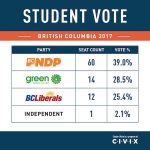
More than 170,000 elementary and high school students participated in CIVIX’s Student Vote program for the 2017 B.C. provincial election. (image from CIVIX)

More than 170,000 elementary and high school students participated in the Student Vote program for the 2017 B.C. provincial election, including students from King David High School and Richmond Jewish Day School.

After learning about the electoral process, researching the parties and platforms, and debating the future of British Columbia, students cast ballots for the official candidates running in their local electoral district.

As of 4:15 p.m. on election day, May 9, 1,092 schools had reported their election results, representing all 87 electoral districts in the province. In total, 170,238 ballots were cast by student participants; 163,923 valid votes and 6,315 rejected votes.

Students elected John Horgan and the B.C. NDP to form government with 60 out of 87 seats and 39.0% of the vote. Horgan won in his electoral district of Langford-Juan de Fuca with 55.7% of the vote.

Andrew Weaver and the B.C. Greens took 14 seats and would form the official opposition, receiving 28.5% of the popular vote. Weaver won in his electoral district of Oak Bay-Gordon Head with 48.9% of the vote.

Christy Clark and the B.C. Liberals won 12 seats and received 25.4% of the vote. She was defeated in her district of Kelowna West by NDP candidate Shelley Cook; Clark receiving 32.1% of votes cast, compared to Cook’s 35.8%.

Students also elected independent candidate Nicholas Wong in Delta South. Wong defeated Liberal candidate Ian Paton by 10 votes.

This is the fourth provincial-level Student Vote project conducted in British Columbia. In the 2013 provincial election, 101,627 students participated from 766 schools.

Student Vote is the flagship program of CIVIX, a national civic education charity. CIVIX provides learning opportunities to help young Canadians practise their rights and responsibilities as citizens and connect with their democratic institutions. Its programming focuses on the themes of elections, government budgets and elected representatives.

The Student Vote project for the 2017 B.C. provincial election was conducted in partnership with Elections BC and with support from the Vancouver Foundation, the B.C. Teachers’ Federation and the Government of Canada.

Format ImagePosted on May 19, 2017May 17, 2017Author CIVIXCategories LocalTags BC, British Columbia, education, elections, KDHS, RJDS, voting
Green leader condemns BDS

Green leader condemns BDS

B.C. Green party leader Andrew Weaver, MLA for Oak Bay-Gordon Head. (photo from Andrew Weaver)

Andrew Weaver calls the two-party system that typifies B.C. politics a “dichotomy of dysfunction.” As leader of the provincial Green party, he hopes to hold the balance of power in the next legislature so that his party can “hold to account either the B.C. Liberals or the B.C. NDP.”

“That would be a very, very wonderful situation,” Weaver told the Independent. While he is ostensibly running to be premier of the province, the scientist and MLA for Oak Bay-Gordon Head acknowledged he would be satisfied with a lesser role. Some opinion polls have suggested that Weaver, the first and only Green elected to the B.C. legislature, may be joined by other Green colleagues after the May 9 election. If the race between the Liberals and the NDP remains close across the province, that could put the Green party in an enviable position in the next legislature.

“I’d be very pleased,” Weaver said of the potential to hold the balance of power in a minority government. “One of the reasons why that’s important for people to know is, frankly, people don’t trust the Liberals right now. I see that all around. But they also don’t trust the B.C. NDP. Our role, if we should if we form the balance of power, is to actually hold to account either the B.C. Liberals or the B.C. NDP because they can trust us. The others can’t be trusted but we are convinced that people could get behind us and trust us to actually ensure that the others, if we were in a balance of power, actually follow through with what they say they would do.”

While touting his party’s comprehensive platform, which he urges Jewish Independent readers to review online, he also emphasized the quality of candidates the party has recruited.

“They’re not career politicians, they are stepping aside from their careers because, honestly, they can’t stand by and watch what’s going on anymore, this dichotomy of dysfunction,” he said.

Weaver, who was elected MLA in 2013 and became party leader in 2015, was the Canada Research Chair in climate modeling and analysis in the School of Earth and Ocean Sciences at the University of Victoria. He has been at UVic for 25 years and has degrees from UVic and Cambridge University and a PhD in applied mathematics from the University of British Columbia.

On issues of community security and culturally appropriate delivery of services, Weaver insisted that, before committing to any actions affecting ethnocultural groups, his party would consult with the communities in question.

“The first thing you would do is consult with those ethnocultural groups to ensure that what you think is the best approach is also what they think the best approach is,” he said. “I think that, in government, we do not have all the solutions.”

On threats and violence against minority groups, such as the desecration of the Jewish cemetery in his hometown of Victoria, Weaver said leaders have a role in shaping public opinion by “expressing clear and unequivocal disdain for hatred – hatred in all forms. There is nothing positive that can ever come of it.”

Supporting cultural events and other avenues where communities can learn about one another is critical to society’s cohesion, he said.

“Celebrating our diversity is one of the strongest things that can happen,” said Weaver, noting that his wife, who is Greek, grew up when Greeks were discriminated against in Canada and his mother, who is Ukrainian, faced discrimination growing up in Montreal.

“Celebrating our diversity is critical to embracing diversity,” he said. We have cultural festivals in Victoria and Vancouver – these need to be supported and celebrated because you break down barriers when people meet each other. When people get together and they talk … they share more commonalities than they do actual things that they disagree on. What’s important is the celebration of our multicultural values, ensuring that there are funds available, ensuring that there are places available that will bring cultures together, rather than apart.”

Education is another key to multicultural success, Weaver added.

“We’ve gone through extensive reevaluation of the curriculum to ensure that indigenous values and rights and culture is covered appropriately in our K-to-12 system, but that should be true of all multicultural values,” he said. “When a child is born, they don’t even understand what prejudice is. Prejudice is a learned concept, it’s not something that a child understands. So, if one is able to develop an educational system that promotes tolerance, promotes respect for diversity, promotes multicultural values, promotes religious tolerance, you’re not dealing with any perceived kinds of barriers to inclusion early on. [The Green party has] a major investment that we propose in the K-to-12 system and one of the things we’re hoping to do is ensure that teachers can deliver the new curriculum, which does have more multicultural values expressed in it, and to ensure that barriers early on are not put up.”

Involving cultural communities in the delivery of social services is good for the communities and the government, Weaver added.

“You are going to get a lot further partnering, for example, with the Jewish community to provide social support for those who share the Jewish values, culture, religion, than you would trying to impose a one-size-fits-all model,” he said.

This extends to Green support for independent schools.

“Continued funding for the independent system is critical because there are people who determine that their children are best served by an education system that provides the curriculum – because that’s provincially mandated – but does so in a manner that shares the values and cultures that the child is being educated in. So, for example, a Jewish school, we would support the independent funding to continue there, same with a Sikh school, same with a Christian school. It’s important though that the province maintain control of the curriculum to ensure that it’s consistently taught across society.”

Weaver has been an outspoken opponent of the anti-Israel boycott, divestment and sanctions movement.

“Solutions to complex issues come through dialogue and bringing people together, not dividing and picking winners or losers,” he said.

Last year, the federal Green party passed a resolution endorsing BDS. Weaver condemned it forcefully and publicly.

“It’s just not my style,” he said. “It’s not the B.C. Greens’ style to be divisive and hurtful. We are here to be inclusive and bring people together…. You’re there to actually broker solutions and that’s what troubled me so much about the federal Green party. What had happened there, clearly, was they had had a large sign-up of members going into the convention and it was just outrageous that this policy – I’m not a member of the federal Green party, just so you know – but it was outrageous that this would end up on the floor for discussion.… It’s not something that would have made it to the floor of the B.C. Greens, it would never have got past our policy committee.”

He is particularly passionate on this matter in part because of the experience of his mother’s family in Ukraine.

“They were kulaks,” he said, referring to a category of independent peasant farmers who were declared “class enemies” under Stalinism. The family’s farm was collectivized, Weaver’s grandfather was sent to Siberia and his mother and grandmother were interned in a camp.

Another experience that impacted him was meeting a survivor of the Holocaust who came to see him when a billboard in the Victoria area, paid for by a group called Friends of Cuba, called for a boycott of Israel.

“She was devastated,” Weaver recalled of the meeting. “People who live these horrific stories and bring them home, when you hear them, you can only imagine what they’ve gone through. And when you see people really taking positions that I don’t think are fully informed, comments that are divisive positions … they don’t understand the hurt that they are doing. By putting that up, they don’t understand that they are hurting people.… It is tone deaf.

“Everybody recognizes that the situation in the Middle East is one where there is a lot of tension. But we also have to recognize that there is one stable democracy in the Middle East and we have to work with that democracy and ensure that the values that we instil within our society are consistent with the embrace of inclusive values that we expect others to follow.… We need to be very careful about how we approach the situation. It’s very volatile and we need to understand it better before we just start blindly picking winners and losers.”

The Independent invited the leaders of the B.C. Liberals, the New Democratic Party and the Greens to be interviewed for our election coverage. The Liberal campaign did not make their leader available. An interview with NDP leader John Horgan appeared in the March 31 issue and is available at jewishindependent.ca.

Format ImagePosted on April 28, 2017April 26, 2017Author Pat JohnsonCategories LocalTags Andrew Weaver, British Columbia, elections, Green party, politics
NDP values in kishkes

NDP values in kishkes

Selina Robinson, current MLA and NDP candidate for Coquitlam-Maillardville. (photo from Selina Robinson)

Coquitlam is not known as a hotbed of Jewish life, yet Selina Robinson notes that the area has been represented by three Jewish members of the legislature over the past few decades.

Riding boundaries frequently change, but the area was represented by Dave Barrett, when he was premier of the province, later by Norm Levi and, since 2013, by Robinson, in the riding now called Coquitlam-Maillardville. She appeared initially to lose last time around, but won by 41 votes in a recount. She’s not counting on a landslide this time, she said – she’ll be happy just to win on election night.

Robinson’s roots run deep in the Jewish community. Moving from Montreal to Richmond as a teen (she was Selina Dardick then), she remembers standing in the school hallway with a boy in a turban – two non-Christians excused every morning while their classmates recited the Lord’s Prayer. After high school, she went to Israel for a year, where she did an ulpan and Livnot U’Lehibanot, a program exploring Israel and Jewish heritage through hiking, community service, seminars and interactions with Israelis.

Returning to British Columbia, she was an administrator for Habonim Camp Miriam and later ran Lubavitch’s Camp Gan Israel. Meanwhile, she was studying at Simon Fraser University, obtaining a master’s degree and beginning a career in family therapy. She was headhunted to become director of counseling at the Jewish Family Service Agency and later served as associate executive director there. Her political career began on Coquitlam city council. In the legislature, she has been the New Democratic Party spokesperson for local government, sports and seniors.

She understands issues of affordability, she said, because she and her husband were on the Jewish cutting-edge putting down stakes in Coquitlam when they married 30 years ago. Part of the solution to affordability, she said, is providing more diversity of housing. Now that her kids are grown, they do not require the single-family suburban family home and could free it up for a larger family. They want to stay in the neighbourhood, where they are longtime active members of the Burquest Jewish community, but there are no townhouses or other appropriate options for them.

Different kinds of housing, such as the co-op model that is more secure than rental and not as expensive as individual homeownership, could improve the situation, she said. “We need to look at purpose-built rental and how to influence and encourage market-built rental.”

Affordable, accessible daycare in the province is also a pillar of affordability, according to Robinson, who calls daycare expenses “another mortgage payment every month.”

Another issue where Robinson has a personal perspective is her party’s promise to reinstate the B.C. Human Rights Commission, which the B.C. Liberals disbanded more than a decade ago.

“It speaks volumes that we take this seriously and there is a place for you to go to if you believe you’ve been discriminated against,” Robinson said. She was a surrogate mother for a friend’s baby and, in 2001, went to the Human Rights Commission over the legal definition of who was the baby’s mother.

“I had to register the birth under my name as the mother,” she said, even though she was not genetically related, as the baby she carried was conceived from the mother’s egg and the father’s sperm.

“Fatherhood is determined based on genetics but motherhood is based on from whom the baby was ‘expelled or extracted.’ That’s discriminatory. It should be based on genetics. So we took the government to court and the Human Rights Commission accepted the claim and then the government caved.”

Without the commission, someone who feels discriminated against would be required to go to court at their own expense, she said.

Robinson commends the provincial government for providing $100,000 to the Jewish community for increased security, and she recently signed a letter of support for a mosque in her area that is also seeking security funding.

“I think we have to address immediate risk,” she said. “But I think there’s a lot of work for us to do around making sure that people understand that this isn’t tolerated and to challenge discriminatory practices that do exist.”

Cuts to education over the past 16 years, she said, have led to reductions in things that might be considered “extras,” like taking opportunities to explore other cultures. Combined with these reductions, there are more families in which both parents are working, so few can get involved in providing extracurricular activities, as Robinson did when her kids were young, inviting classes to their sukkah and visiting to discuss Jewish topics with their public school classes.

“Those are the things that went by the wayside,” she said. “It allows for ‘others’ to be unfamiliar and, therefore, to be not trusted. And, therefore, hate can grow because of that gap.”

As NDP spokesperson for seniors, Robinson visits facilities and appreciates the role ethnocultural communities play in the delivery of social services.

“The fact that we have the Louis Brier and that it’s so established, and the Weinberg [Residence] … it’s so important,” she said, “for this community and not all communities have that.… I think government should support that, in helping ethnic groups make sure that their seniors have the comforts that they need and they can live their lives as the people that they are and how they’ve lived their entire lives.”

On the movement to boycott, divest from and sanction Israel, Robinson said she has “real problems with it.”

“My understanding of the BDS movement is to destroy the state of Israel,” she said. “I think that’s not OK. I support the state of Israel. I think the idea of not having a state of Israel is destructive and I do think that’s antisemitic.”

While she opposes BDS, she emphasized that people are free to make choices about where they invest or spend, and she defended the right of people to criticize any government.

“I didn’t like what [Stephen] Harper was doing. It doesn’t make me anti-Canadian, it just makes me an engaged person, an engaged Jew who is paying attention to what’s going on in the world around me.”

As British Columbia addresses economic development issues, Robinson urges them to look to Israel.

“When people talk about resource development here in Canada, particularly here in British Columbia, and they say, ‘Well, what else would we do?’ I say, ‘Well, take a look at Israel.’ They have no resources except people and they invest in their people and their people are amazing.… I want to see British Columbia take parts of that model – yes, we have resources and we should develop them wisely – but we have people and, when we invest in people, anything and everything is possible, and I think Israel’s an excellent example of that. I think we have a lot to learn from Israel. I would like to see a lot more of that.”

As Jewish voters ponder their options for the May 9 election, Robinson insists the NDP is the natural choice.

“I think that, in our hearts, our Jewish hearts, in our kishkes, we are New Democrats,” she said. “Jewish values are New Democrat values.”

Format ImagePosted on April 28, 2017April 26, 2017Author Pat JohnsonCategories LocalTags British Columbia, elections, NDP, politics, Selina Robinson
Apartheid impacted views

Apartheid impacted views

Michael Barkusky, Green candidate for Vancouver-Quilchena. (photo from Michael Barkusky)

Michael Barkusky was a teenager when he canvassed for Helen Suzman’s anti-apartheid Progressive Party in South Africa’s 1970 election. Now, he is the Green party candidate in Vancouver-Quilchena. An old friend told him, “You were always good at spotting trends ahead of time.”

“I thought that was a great compliment,” Barkusky told the Independent. “I’m kind of used to being with small parties that everybody writes off as not really relevant yet that, over time, become very relevant.”

He has given a great deal of thought to the ethical behaviour of governments.

“If you were a morally aware individual, you kind of knew that there was this huge moral question about how the whole society ran in South Africa,” he said.

Barkusky left South Africa in 1980 and came to Vancouver to do a master’s in business administration at the University of British Columbia. He obtained a certified general accountant designation in 1985, the same year he became a Canadian citizen. He has run an accounting practice since then, while also at times working for nongovernmental organizations like the Rainforest Solutions Project and the Coastal First Nations alliance.

While he said the Green party is seeing a surge in the campaign – a recent poll showed the party in first place on Vancouver Island – Barkusky admitted his bid is a longshot. He is running in one of the safest Liberal seats in the province. Vote-splitting may result in interesting upsets in some ridings, but Quilchena would be a shocker.

“I’ve taken on a very tough riding,” said Barkusky, who served with incumbent Liberal MLA Andrew Wilkinson on the board of the B.C. Mountaineering Club. “What I want to do is have a very issue-oriented, respectful-of-my-opponents contest in which we talk about ideas and we talk about where the province is heading.”

He wants British Columbians to see the environment and the economy as inextricably related.

“People often tend to think of the environment as a side issue, a minor issue in politics, and tend to say, well, the Green party is mostly for that, so it’s not really concerned about the economy,” he said. “In my view, these things are all very closely interconnected. We believe in an economic strategy that will give us prosperity but not at the expense of our future, and my worry is that the B.C. Liberals, in particular, with their focus on traditional economic indicators – particularly what will make the GDP go up the most – give up a tremendous amount in terms of stewardship of our natural capital, or the innate riches that make British Columbia such a spectacular place to live.”

Addressing recent incidents in Canada and elsewhere, in which Muslims and Jews have been targeted, Barkusky said there are opportunities for intercultural solidarity, adding that it is important that communities stand together at times like these.

“Some of those who are threatening both vulnerable groups are the same people with the same racist attitudes,” he said.

Confronting prejudice is a matter of education, but it can also be a matter of modeling behaviour, he suggested.

“We should look to what we can do through education because dealing with it through criminal law is really the last resort. It’s what you do when all else has failed,” he said. “The education area is where we should be most active. I think we’re doing quite well, really, in teaching tolerance in the schools in a jurisdiction like B.C. I think we can perhaps model it a bit better in our public life and the way we conduct politics. A slightly less sneering, adversarial style of politics would be helpful. In the Jewish community, we can do that, too, in the way that we have our own internal debate as Jews about Israel.”

Barkusky is well versed in the diversity of discourse in the Jewish community.

“I went to a Jewish high school in Cape Town, Herzlia High School, and our headmaster was probably more of a Likudnik than a labour Zionist, but my mother was more of a labour Zionist. So, there were always debates … about South Africa, about Israel, about other things that were going on in the world.”

Growing up in the apartheid era caused ambivalent feelings, he said, because Jews “had to deal with our role in a society in which we were actually legally classified with the privileged.

“It was a complex history because Jews were very prominent in the struggle against apartheid, but there were plenty of Jews who thought, ‘thank God they’re persecuting someone except us.’ They were maybe not enthusiastically participating in making the lives of black people miserable, but they weren’t too concerned about it and were more concerned about whether the establishment of the time might dislike them if they were too strong in their opposition. Those tensions ran through the Jewish community of South Africa the whole time that I lived there.”

Barkusky has a nuanced perspective on the use of the apartheid label against Israel.

“To me, apartheid wasn’t just a monstrous system that I read about in a book,” he said. “It’s a system that I saw in action.”

Even so, he rejects the idea that comparisons can’t be made.

“You can compare anything to anything,” he said. “The point is, what conclusions do you draw when you compare it?… I don’t like a simpleminded comparison because the situation is different in a number of ways, the history is different, but I don’t think it’s something that should be silenced.”

There may, in fact, be something to be learned, he said. The way the current constitution in South Africa was arrived at may have some lessons for a resolution of the Israeli-Palestinian situation, he suggested.

On the issue of the movement to boycott, divest from and sanction Israel, Barkusky said he doesn’t agree, but avoids getting on a moral high horse about it.

“I personally think it’s not the greatest way to conduct politics,” he said. “Persuasion, discussion and education, thinking things through, looking at the evidence, makes much more sense.”

Boycotts can also harm the people they are intended to help, he warned.

“I continued to buy South African wines after I moved here from South Africa, not because I particularly wanted to support the government but because I thought that boycotting the wines would put farm workers out of work and the farm workers were mostly not white,” he said.

Barkusky blames the Israeli government for some of the criticism aimed at the country.

“I do find the current government in Israel so far to the right that it’s very hard to not see them as, in some sense, the author of their own misfortune,” he said, but added: “I think a situation in which Israel is treated as the worst example of human rights abuses on the planet is really just ridiculous. It’s just not in keeping with the evidence.”

Format ImagePosted on April 28, 2017April 26, 2017Author Pat JohnsonCategories LocalTags British Columbia, elections, Green party, Michael Barkusky, politics

Posts pagination

Previous page Page 1 … Page 7 Page 8 Page 9 Page 10 Next page
Proudly powered by WordPress