Skip to content
  • Home
  • Subscribe / donate
  • Events calendar
  • Business Directory
  • FAQ
  • News
    • Local
    • National
    • Israel
    • World
    • עניין בחדשות
      A roundup of news in Canada and further afield, in Hebrew.
  • Opinion
    • From the JI
    • Op-Ed
  • Arts & Culture
    • Performing Arts
    • Music
    • Books
    • Visual Arts
    • TV & Film
  • Life
    • Celebrating the Holidays
    • Travel
    • The Daily Snooze
      Cartoons by Jacob Samuel
    • Mystery Photo
      Help the JI and JMABC fill in the gaps in our archives.
  • Community Links
    • Organizations, Etc.
    • Other News Sources & Blogs
  • JI Chai Celebration
  • JI@88! video

Recent Posts

  • Or Shalom reopens its doors
  • JFS from past to future
  • Need holistic approach
  • Sharing stories, advice
  • Journalist shares fears
  • Skills to live together
  • Road to independence
  • Cutting grass with scissors
  • Zionism as a solution
  • Deceit, desire & the divine
  • Reclaiming sacredness
  • Creative project ideas
  • Summer squares and cobbler
  • Thou shalt … summer commandments
  • Legal help for students
  • Revisiting myth of Lilith
  • Wrong person rebuked
  • Canada’s mixed messages
  • Questions for museum
  • Symposium on antizionism
  • Making soccer political
  • CJPAC lauds Pulver’s impact
  • City recognizes Vrba’s legacy  
  • Organ donation saves lives
  • Theodore’s March premiere
  • A healing Shabbaton
  • Supplying healthy food
  • A chime of metal tags
  • Yellowknife seder a first
  • Ishai energizes, unifies
  • A Lag b’Omer to remember
  • Expanding the healing
  • Hannah Senesh – a unique hero
  • Community milestones … May 2026
  • Sharing her testimony
  • Fall fight takes leap forward

Archives

Follow @JewishIndie
image - The CJN - Visit Us Banner - 300x600 - 101625

Tag: elections

Politicians make their pitches

Politicians make their pitches

BC New Democratic Party candidate Kelly Greene, left, represented the incumbent party in Richmond-Steveston, and BC Conservative Party candidate Michelle Mollineaux, who is challenging Greene for the seat, spoke at a candidates forum last month, hosted by Beth Tikvah and CIJA.

British Columbia’s Oct. 19 election is now short days away. While provincial politics has not traditionally been a forum for issues of culturally specific concerns to Jewish voters, matters like public safety in response to rising antisemitism, and problematic developments in the education system, have focused attention for Jewish voters.

These concerns took centre-stage at a candidates forum co-organized by Beth Tikvah Congregation, in Richmond, and the Centre for Israel and Jewish Affairs Sept. 22. Hate crimes, British Columbia’s Anti-Racism Act, the definition of antisemitism, communal security, law enforcement and a host of other issues were addressed by election candidates representing the BC New Democratic Party and the BC Conservatives. The BC Green Party was invited to send a representative but did not.

Kelly Greene, the NDP member of the legislative assembly for Richmond-Steveston, represented the incumbent party. She said she has been having conversations with parents and students who are experiencing antisemitism.

“There is fear where there wasn’t before,” Greene said, declaring that schools need to be safe and welcoming for everyone. She pointed to the NDP government’s commitment to implementing mandatory Holocaust education and said the NDP government has instituted a “suite of actions,” including improved antiracism data collection, new hate crime policies for prosecutors to address wilful promotion of hatred, and the creation of a racist incident hotline.

More needs to be done, she acknowledged. “It is a work in progress, to be honest,” she said.

On the International Holocaust Remembrance Alliance (IHRA) Working Definition of Antisemitism, Greene said the government needs “to be nimble” and should avoid including specific definitions in legislation. She cited the spike in anti-Asian hate during the COVID pandemic as an example of unanticipated incidents, responses to which could be hindered by narrowly defined descriptions of the problem.

The Conservatives disagree on this point. Michelle Mollineaux, the Conservative candidate challenging Greene in Richmond-Steveston, said her party – win or lose – will bring the adoption of the IHRA definition to the floor on the first day of the new legislative session.

Mollineaux noted that her party has released a comprehensive antisemitism strategy, in which they promise a special advisor on antisemitism and Jewish community affairs, collaboration for safety in the community and schools, and an investigation into bias in classrooms.

“Antisemitism is the most heinous crime against the Jewish community,” said Mollineaux, who called for more antisemitism programs in schools and increased education about Jewish people, history and the Holocaust.

“Oct. 7 was a reflection of the ignorance of what the Jewish people have been facing,” she said.

No ideologies – or Palestinian flags – should be allowed in public school classrooms, Mollineaux said. “Children need to feel safe,” she said. “Students are not safe”

Mollineaux said, “Universities should limit the amounts of protests that are going on. Those kinds of ideologies have to stop.… What they’re doing is wrong because it breeds hate.”

Addressing legislation that would create “bubble zones” around sites such as Jewish schools and community centres to prevent disruptive protests, New Democrat Greene called it a “sad reflection” that any institution needs such protections, as hospitals did during the pandemic to prevent anti-vaccine activists from impeding access to facilities.

Mollineaux did not disagree with the possibility of using bubble zones but said there needs to be more focus on the underlying problems. Education, embracing all cultures and “understanding where we came from,” must be the means to making such bubble zones unnecessary.

“How many bubbles do we have to keep building?” she asked. 

Shane Foxman, a former journalist and now director of development for Vancouver Talmud Torah elementary school, moderated the forum, and asked why public expressions that seem to contravene hate crime laws are not resulting in criminal charges.

Greene responded that the New Democrat government has hired more prosecutors to reduce the workload and provided new guidelines to the Crown on suspected hate crimes.

Mollineaux said “police are under-resourced” and alleged that courts give “a slap on the hand” to perpetrators so that victims are revictimized and offenders “get off scot-free.” She called the court system a “revolving door.” She also called for mandatory antisemitism training for all police and politicians. 

“We need to get this under control,” she said.

On the cost of living and issues affecting children and families, both candidates agreed that more needs to be done. 

Mollineaux said children with special needs are not getting the educational supports they require and children in provincial care are aging out and becoming homeless adults. 

On housing, Greene noted that the most recent statistics show rental prices declining in Metro Vancouver, even as they rise across Canada. She said the speculation and vacancy tax has freed up 20,000 more units of housing, while the government is building more. 

Access to family doctors is improving, Greene added, with more than 800 family doctors hired in the last year alone.

Beth Tikvah’s Rabbi Susan Tendler delivered an Indigenous land acknowledgement and blew the shofar.

Another Jewish community election forum, featuring candidates in the riding of Vancouver-Langara, was to take place Oct. 9, after the Independent’s deadline.

The election landscape took a dramatic turn last month, when an agreement between Conservative party leader John Rustad and BC United leader Kevin Falcon resulted in BC United (formerly the BC Liberals) suspending their campaign in an effort to unite the right-of-centre vote. Some former BC United candidates are now running as independents, including two in Richmond.

Election day is a Saturday, but there are many ways to vote. Anyone can vote by mail. Advance voting is available at designated locations in every constituency Oct. 10-13 and Oct. 15-16 from 8 a.m. to 8 p.m. Voting is also possible at any district electoral office. Full details are available at elections.bc.ca. 

The Centre for Israel and Jewish Affairs has a BC Election Hub at cija.ca/bc_election_hub. This resource outlines community priorities and contains a range of other information. CJPAC, the Canadian Jewish Political Affairs Committee, has election-related information at cjpac.ca. 
Format ImagePosted on October 11, 2024October 10, 2024Author Pat JohnsonCategories LocalTags BC Conservatives, BC election, BC NDP, Beth Tikvah, Centre for Israel and Jewish Affairs, CIJA, elections, Kelly Greene, Michelle Mollineaux, politics, Richmond-Steveston, townhall
Running on core values

Running on core values

Nina Krieger is the BC New Democratic Party candidate in the riding of Victoria-Swan Lake on Vancouver Island. (photo from ninakrieger.bcndp.ca)

Nina Krieger, former executive director of the Vancouver Holocaust Education Centre, will be the New Democratic Party candidate for Victoria-Swan Lake in the Oct. 19 provincial election. She will be vying for the seat vacated by the minister of transportation and infrastructure in the present cabinet, Rob Fleming, who announced this summer that he will not be seeking reelection.

Krieger told the Independent that her work at the VHEC and her decision to seek public office were inspired by having grown up in a family of teachers, with a father who was a union leader, and the values that permeated her home: education and helping others.

“In my household, I learned about the importance of institutions in society, such as unions, that support people when they are facing challenges,” said Krieger, who believes that the BC NDP have acted on this philosophy while in government.

Krieger was the VHEC’s executive director for 12 years and its education director for six. Under her stewardship in recent years, she has positioned the VHEC, located in the Jewish Community Centre of Greater Vancouver, to be part of JWest, the redevelopment of the JCC, which will mean increased availability of childcare, more seniors services, and expanded arts and cultural spaces, among other things. 

“The forward-looking and hopeful work of VHEC and the JWest project speak to the shared responsibility to uplift one another, which is at the heart of my values, Canadian values and the BC NDP’s values,” Krieger said.

Her choice to enter the political arena during this, in her view, critical election is led by a desire to bring people together in this era of increased social and philosophical polarization.  

“I would like to use my voice, and my experience as someone who has led and bridged communities, to work to build a better BC for all. Times are challenging right now, and I believe that we need a government that is fighting for you and your family and your ability to live a good life,” Krieger said.

Similar to ridings throughout the province, housing, health care and the cost of living are top-of-mind for voters in Victoria-Swan Lake. Krieger points to plans the NDP has put in place to build hundreds of thousands of new homes and dozens of new hospitals, to reduce ICBC rates and to lower the costs of childcare. Each of these items, she warned, could be on the budgetary chopping board were John Rustad and the BC conservatives to take power.

“We all want the same things: to afford the costs of everyday life, to have access to quality health care when we need it, and to have strong services that we can count on, from childcare to long-term care. We want to be part of strong, safe, prosperous and caring communities,” Krieger said.

One consistent thread in the NDP’s campaign has been to draw attention to the propensity of some in the BC Conservative Party to lend to too much credence to, if not openly adhere to, conspiracy theories. 

“As a Holocaust educator, I know about the danger of conspiracy theories. Students of history and observers of politics know that conspiratorial rhetoric has real consequences. It sows distrust in government and distrust between communities and between neighbours,” Krieger said. “Unfortunately, John Rustad and several BC Conservative candidates have a track record of peddling untruths and conspiracies, something that is dangerous to the fabric of civil society.”

Krieger is one of two Jewish candidates known to the JI among the more than 300 people competing for 93 seats in the 2024 race. In this capacity, and as someone who has led a Jewish organization, founded by Holocaust survivors, she believes she can serve as a connection between government and the Jewish community, so that government understands the experiences of Jews in the province, and can act in a way that is guided by this understanding. 

“I am committed to bringing my experience and insights to the vital task of building a more just and inclusive society, where the safety, security and well-being of Jewish people and all people are prioritized,” she said.

Amid the surge in antisemitism across the province and around the world since the Hamas attacks on Israel a year ago, Krieger sees a role for an MLA to connect with Jews in British Columbia. She said she has experienced the same pain and anxiety many in the Jewish community have felt in the wake of Oct 7.

“Countering antisemitism requires a whole-of-society commitment that includes the active participation of governments and civil society. If I am elected, I will do my part and will connect with Jewish constituents to ensure their lived experiences are brought forward in provincial discussions,” Krieger said.

Premier David Eby understands these concerns, Krieger said, pointing to a hate-crime prosecution policy that includes fighting antisemitism and the provision of anti-hate security funding to the Jewish Federation of Greater Vancouver. Nonetheless, she and Eby agree that more needs to be done to ensure everyone in the province feels safe.

Although foreign affairs are not a provincial matter, Krieger said MLAs play a critical role in listening to local communities affected by global conflicts and in supporting people in British Columbia by providing a sense of security. Moreover, she stressed, many in the province are deeply affected by the Israel-Hamas war and it is distressing for all people of good conscience to witness suffering and the loss of life.

“While the conflict in the Middle East will not be solved at the provincial level, there is a responsibility to counter antisemitism, Islamophobia and hate of all forms in our society, and to ensure that people feel safe in our public spaces and public institutions,” Krieger said.

As head of the VHEC, Krieger consulted with the Ministry of Education and Childcare about making Holocaust education mandatory for high school students in the province, starting in the fall of 2025.

“We know that learning about the Holocaust can help young people be more resilient to antisemitism, xenophobia and conspiracy theories,” she said. “If elected, I would welcome an opportunity to contribute to ongoing efforts to strengthen Holocaust education and combat antisemitism.”

Should she win a seat, Krieger imagines that she also will have a role to play in ensuring that there is a diversity of lived and professional experiences around the caucus table, and in bringing her expertise with intercultural work, as well as countering antisemitism and hate, to the role of MLA.

There is a great deal at stake in this election, Krieger said, and this was her motivation to seek office under the NDP tent. The NDP’s seven-year tenure, she said, has made strides in improving housing, health care and affordability. 

“Now is not the time for cuts to programs and services. Now is not the time to take away cost savings. Now is not the time to cancel initiatives that are starting to make a difference in the lives of people. Now is not the time to question climate science or make decisions based on conspiracy theories,” Krieger said.

Since its formation in 2009, the Victoria-Swan Lake riding has voted solidly in favour of the NDP, with Fleming obtaining a sizable majority in each of the last four provincial elections. 

Sam Margolis has written for the Globe and Mail, the National Post, UPI and MSNBC.

Format ImagePosted on October 11, 2024October 9, 2024Author Sam MargolisCategories LocalTags BC election, BC NDP, elections, Nina Krieger, politics, Vancouver Island, Victoria-Swan Lake
Issues close to heart

Issues close to heart

Policy priorities of Claire Rattee, the BC Conservative Party candidate in the riding of Skeena, include mental health and addictions, low-income housing, emergency weather shelters, economic development, and antisemitism. (photo from conservativebc.ca)

There is not much of a Jewish community in Kitimat, but Claire Rattee hopes that, if she is elected to the legislature in the northwest riding of Skeena this month, she will be able to raise the visibility.

Rattee originates from the Lower Mainland and moved to Kitimat 13 years ago. She served a term on Kitimat city council, ran twice for the federal Conservatives and is now seeking to be elected as the Conservative MLA for the sprawling riding, which encompasses Terrace, as well as Kitimat, and smaller communities along the Alaska border and in the interior of the region. The constituency has a history of swinging between parties. It has been won in the past two elections by Ellis Ross, who was elected as a BC Liberal and is leaving provincial politics to run federally as a Conservative. The Liberal party became BC United and subsequently folded its campaign. Rattee said the decision to unite the right-of-centre campaign was felt palpably in her door-to-door campaigning.

“We were already looking very good here in this riding at that point,” she said. “But that definitely changed things significantly.… Now, it’s essentially just going to be a two-way race between myself and the NDP candidate.”

Rattee is running against Terrace city councilor Sarah Zimmerman, who was nominated as the BC NDP candidate in June.

Close to Rattee’s heart are policies around support for people experiencing addictions.

“In my later years of high school, I basically had some problems with drugs … where I was in active addiction and my family was obviously trying to help me to get out of that and, eventually, I decided that I was ready,” she told the Independent.

Rattee turned 19 in treatment and then thought a change of environment would be helpful. After moving to Kitimat, she became an entrepreneur and sought to get involved in the community. 

“Obviously, with my background, I’ve got a lot of passion for addressing the issues of mental health and addictions,” she said. “The lack of treatment facilities in this region is extremely frustrating for me, just based on the experiences that I went through.” 

Low-income housing and emergency weather shelters for people experiencing homelessness are also priorities. Economic development in the region is an issue she championed on council, she said, and she wants the area recognized as the economic driver it is in the province.

Rattee’s parents converted to Judaism around the time she was born, she said, but sent the kids to Christian schools.

“We are not Orthodox,” she said. “My father ran a sort of church service and we had about 50 people that were a part of that organization and my father still runs Bible study every Saturday and I try to partake in that via Zoom when I can.”

Asked to clarify if she considers herself Christian or Jewish, Rattee said that she and her three siblings consider themselves Jewish.

“It’s a little bit confusing,” she said. “Not to get into the weeds on it too much, but I would essentially consider ourselves converts. My father was raised Catholic but he converted to Judaism when I was born and so we follow Torah, we respect the Talmud, but we’re not Orthodox.” Her mother also converted, she said, but returned to Christianity after the parents separated.

Rattee said she is proud that her party has released a “comprehensive antisemitism strategy.” The proposal, unveiled Sept. 20, calls for the adoption of the International Holocaust 

Remembrance Alliance’s definition of antisemitism; linking funding for universities to accountability on student safety, including that of Jewish students; launching an investigation into Samidoun, a Vancouver-based group with ties to extremism; increased provincial funding for JWest, the redevelopment of the Jewish Community Centre of Greater Vancouver; and an inquiry into the BC Teachers’ Federation on issues of Israel and Palestine, among other commitments.

“Particularly right now in this political climate, we’re seeing a significant rise in antisemitism,” said Rattee. “We’ve been very clear from the outset, our party leader has been clear from the outset, that we stand with the Jewish people, we stand with Israel.” 

Format ImagePosted on October 11, 2024October 9, 2024Author Pat JohnsonCategories LocalTags BC Conservatives, BC election, Claire Rattee, elections, politics
Pondering your vote choice

Pondering your vote choice

The Centre for Israel and Jewish Affairs has developed an online “election hub” for navigating the issues.

Topics that might be considered “Jewish issues” in a political context are generally more federal in nature. Foreign affairs as they relate to Israel are top of mind for Jewish voters, as are things like hate crimes and discrimination, which fall under criminal law and national legislation.

Jewish advocacy organizations, of course, have generally stressed that all issues are Jewish issues in that they affect Jewish citizens. Jewish values of tikkun olam and social justice more broadly have often guided Jewish voters and their constituent agencies to emphasize initiatives like poverty reduction, housing and social welfare, as well as multicultural harmony.

The British Columbia election Oct. 19 has perhaps been imbued with added relevance for Jewish voters given events of the past months. Public security, which is a responsibility of all levels of government, has been front of mind for Jewish individuals and agencies because of the spike in antisemitic rhetoric, threats and incidents, especially since the Oct. 7 terror attacks in Israel of a year ago. Not unrelatedly, the removal of the Jewish community’s voice in government, former cabinet minister Selina Robinson, over remarks about the historic nature of the land on which Israel was reestablished, and her subsequent resignation from the BC New Democratic Party caucus, has to some extent undermined the relationship between the current government and many members of the Jewish community.

The Centre for Israel and Jewish Affairs has developed an online “election hub” for navigating the issues.

“Jewish voters in BC have several things to consider when they cast their ballot,” Nico Slobinsky, vice-president for the Pacific region of CIJA, told the Independent in a statement. “This election season falls in the middle of the Jewish High Holy Days and the first anniversary of the Oct. 7 terrorist attacks committed by Hamas. During this time, it is important that we consider policies that strengthen family, community and safety for all that are targeted by hate. I encourage community members to educate themselves on the party platforms and to get involved in the democratic process by voting and volunteering.”

CIJA’s online resource includes information on voting, links to the platforms of the political parties and detailed information on issues CIJA and its constituents have identified as priorities.

“Our community is stronger when we all practise our democratic duty and vote!” said Slobinsky.

Among the topics CIJA identifies is the implementation of mandatory Holocaust education in the province’s educational curriculum. A year ago, the province committed to making education about the Holocaust mandatory in Grade 10. Until now, it was theoretically possible for a BC student to graduate without learning anything about the Shoah. CIJA contends that Holocaust education “meaningfully reinforces ‘never again,’ and encourages responsible citizenship for all British Columbians.”

Relatedly, CIJA is calling on the next government to collect and publish data pertaining to hateful incidents or cases of discrimination reported in the province’s kindergarten to Grade 12 education system and to implement training programs for all staff in BC schools around various manifestations of hatred.

On hate crime and related incidents, CIJA is asking the government to mandate the public reporting of hate incidents by every police force across the province, a step they say would assist investigators in tracking offenders, as well as helping develop and implement strategies to keep communities safe. These data, CIJA suggests, should be disclosed in an annual report from the relevant government departments.

The government should also provide additional resources to strengthen existing police hate crime units and to fund the establishment of such units where they do not yet exist. Special emphasis should be placed on online hate, the resource hub recommends, as this is where individuals are often incited to carry out real-world hate crimes.

Crown prosecutors should be trained, and policy directives updated, to emphasize the public interest in addressing hate-motivated crimes, CIJA recommends. They also urge the government to increase support for safety and security at cultural and religious institutions where existing programs are not currently covering all expenses, including at places of worship, community centres, childcare facilities and summer camps.

On other issues, CIJA continues to press for continued and expanded government commitments to culturally appropriate long-term care, while also making life more affordable for seniors aging in place by reducing the costs of home care, renovations and health services not covered by the provincial health funding system. CIJA recommends more funding for culturally appropriate adult day centres and programming to prevent social isolation.

On the always relevant topic of real estate and affordability, CIJA calls on the future government to permanently exempt nonprofit housing societies from the obligation to pay the property transfer tax and to work with municipalities to adopt the provincial government’s housing income limits for units where a tenant’s rent is based on income. 

Adopting a transparent standard for determining affordability, according to CIJA, would make it easier for not-for-profit affordable housing organizations to navigate municipal regulations. CIJA also recommends the government work with housing providers to ensure affordable housing options that accommodate ethnocultural communities, families, seniors, single parents, persons with disabilities and those with complex care needs.

Additional issues addressed in CIJA’s election hub include implementing a living wage strategy for frontline workers and ensuring adequate consultation with small employers and the not-for-profit sector. 

“Whether they are single- or two-parent families, the government should ensure that these families earn enough to provide necessities including food, shelter, clothing, transportation and childcare,” the resource says. “Consultation will ensure that small employers and not-for-profits are adequately supported.”

CIJA calls for more affordable childcare spaces. More “culturally sensitive, high-quality, affordable childcare spaces would allow more parents to work outside the home and better support families financially,” says the guide.

The organization also calls for increased program funding and supports so families that have children with disabilities, children and youth with support needs and complex medical needs have timely, universal and portable access to care. 

“This care includes early intervention assessments, family respite, medical and in-home support, and resources in schools,” says CIJA.

They recommend making the full amount of the $300 temporary income and disability assistance supplement permanent and to explore further increases, including to the annual earnings exemption. They urge the government to provide equitable and stable access to funding for ethnocultural service agencies that provide culturally appropriate food dignity programs, including for children and youth who do not have access to an affordable school lunch program.

In addition, CIJA calls on the government to lead a trade mission to Israel, inviting business leaders, policymakers, and provincial and municipal representatives to build relationships with Israel’s tech industry and learn best practices. 

The election hub is online at www.cija.ca/bc_election_hub. Watch for more BC election coverage in upcoming issues of the Independent. 

Format ImagePosted on September 13, 2024July 21, 2025Author Pat JohnsonCategories LocalTags BC elections, British Columbia, Centre for Israel and Jewish Affairs, CIJA, elections, Nico Slobinsky, policy issues
Be seen and heard this year

Be seen and heard this year

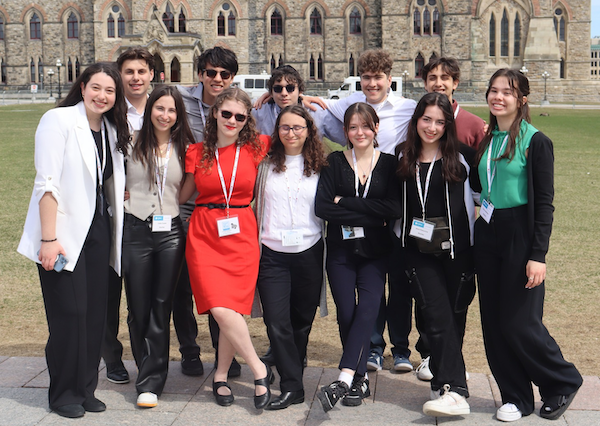
Students from CJPAC’s 2023/24 Generation: Student Leaders Program cohort (photo from CJPAC)

It is Elul, the month before the Jewish new year. Traditionally, this is a time for cheshbon hanefesh, an accounting of one’s soul, before the reflection and repentance of Rosh Hashanah and Yom Kippur. 

This year is not like years past. This year, our individual and community accounts are overdrawn. Instead of looking into how our souls spent 5784, instead of wondering what we could have done better, instead of cheshbon hanefesh, this year should be one of hashka’at hanefesh, investment in our souls. 

As we move towards Rosh Hashanah, Jewish communities and individuals will blow the shofar and recite Psalm 27. This is a daily call to action and a recitation of a mantra that means so much more this year. 

Of David: Hashem is my light and my salvation; whom should I fear?… Though an army may camp against me, my heart will not be afraid; though war rises against me, I will be confident…. Deliver me not to the will of my enemies, for false witnesses are risen against me and breathe out violence…. Look to Hashem; be strong and of good courage! Look to Hashem! (Psalm 27, excerpted)

The 14 verses of this psalm help us examine the past year and focus and inspire us for the coming one. Recited through the High Holy Days until Hoshannah Rabbah, it is a call to make that investment.

The year 5784 was a challenge. It was a year of pain. Through it, the worldwide Jewish community declared, “We will dance again.” Now, the shofar and the words of the psalm force us to confront metaphors made real. Though it seems like we are surrounded by enemies, these verses call upon us to act. If we do, our “head[s] will be lifted” and we will again “offer sacrifices of joy.” “We will dance again” will be realized when we stand up to say, “Hineini.”

Hineini – I am here. It is a word of intentional presence. When God approaches Avraham, Avraham answers, “Hineini.” When Moshe is called to lead, he responds, “Hineini.” Our leaders were not prepared. Nevertheless, when asked, they stepped up. This is the lesson of the High Holy Days. It is a call to action that begins with the individual and moves to the communal. 

It is our time to answer that call. It is time for our community and our allies to stand up and step forward to make a difference and an impact. It is time to say, “Hineini. I am here, I am present.”

The Canadian Jewish Political Affairs Committee (CJPAC) is here and present to help Canadian Jews and their allies be seen and heard.

Now is the perfect time to get involved in politics, with the BC general election set for Oct. 19. You can make a real and tangible impact. CJPAC is here to guide you. In political campaigns, every single volunteer who steps up can be the deciding factor in a candidate’s success. 

It is not the loud, angry voice that makes the lasting impact. The difference is made by people who show up and get the job done. Say “Hineini,” and sign up to volunteer for the candidate or party of your choice.

Sign up for CJPAC emails to stay informed about specialized training opportunities. From Politics 101 to the importance of running for a school board or campaign volunteering, CJPAC’s Advancing Campaign Training (ACT) program will help prepare and connect you. 

In our tradition, what begins with the individual ultimately ends with the community. Sign up with friends for a CJPAC Day of Impact or create your own. By coming together, we inspire future generations. Volunteering with children not only teaches but empowers them to take action – and not just during difficult times.

If you have, or know, a teen in grades 10 to 12, be sure to check out CJPAC’s Generation: Student Leaders Program. Throughout the school year, teens engage in thoughtful discussions with peers, empowering them to participate in the democratic process.

CJPAC’s flagship Fellowship Program trains 50 of the top pro-Israel, politically engaged post-secondary students from across Canada to become the next generation of political leaders. Applications close on Sept. 18.

We make a difference when we show up. The more people who give of their time and efforts, the greater our impact. Connecting with the party or campaign of your choice through CJPAC offers you a tangible opportunity to support the community and build a better Canada.

Listen to the call this Elul. It is time for our community and our allies to stand up and step forward to make this difference. 

Hineini – I am here. 

Hineini – I am ready. 

Hineini – Even if I am afraid, I will be an upstander. I will pray with my feet before and beyond the chaggim (holidays), acting for the future, the future of our children, and of our communities – both Jewish and more broadly Canadian.

Hineini. 

Rabbi Jennifer Gorman is CJPAC national director of outreach & programming. To learn more about CJPAC or sign up to volunteer, visit cjpac.ca or contact Kara Mintzberg at [email protected].

Format ImagePosted on September 13, 2024September 11, 2024Author Rabbi Jennifer GormanCategories NationalTags BC election, CJPAC, democracy, elections, Judaism, Rosh Hashanah, volunteering

No slow news days here

In the journalism biz, summer is generally considered slow news season. That’s why our publishing schedule takes a bit of a hiatus. Then there are years like this one.

Rarely in political history has anything so upended American politics than the debate by President Joe Biden against former president Donald Trump June 27. Biden’s performance was deemed so portentous of defeat that a groundswell of Democratic party operatives mobilized to replace him on the ticket mere weeks before the election.

Avoiding potentially divisive competition, the party instantaneously rallied around Vice-President Kamala Harris, who then selected Minnesota Governor Tim Walz as her running mate and, according to early opinion polls, the race has been completely shaken up. This week’s Democratic National Convention was the Harris-Walz ticket’s effort at solidifying the momentum that began with her selection a month ago.

Practically the only bad news the Democrats have had during this honeymoon period has been the disruptions at Harris rallies and at the convention by anti-Israel campaigners and those pushing for an end to the Gaza war. As the vice-president said to one group of hecklers, “If you want Donald Trump to win, say that.” 

Israel’s opponents are not the only ones agitated by the Democrats position on the Gaza war. At the fringes of the pro-Israel movement are those who believe a President Harris would undermine the US-Israel relationship and those who have particular concerns about Walz. In fact, both candidates are effectively in line with the mainstream Democratic party and larger American consensus, which recognizes the invaluable and special relationship between the two countries.

On the other hand, pro-Trump Zionists, who insist that the former president’s rhetoric and family connections guarantee a degree of loyalty to Israel, premise these assumptions on the flawed idea that Trump has loyalty to anything beyond his own self-interest or that he subscribes to any coherent position on anything. And they ignore his connections to and endorsements of far-right and antisemitic figures and movements. As we saw on Trump’s 180-flipflop on electric vehicles after he was endorsed by Tesla-founder Elon Musk, or on bitcoin or on TikTok after donations and endorsements from other billionaires, Trump has no core principles. It would not be in the interest of Israel, American Jews, Jews around the world, or the rest of the world to trust the future to a person who is demonstrating increasingly erratic behaviour and policies.

The Democratic party’s comparatively speedy defenestration of their incumbent president has inspired some members of Canada’s Liberal party to wonder if such a political decapitation might happen here.

The incumbent government is stuck in opinion polls far behind the opposition Conservatives, led by Pierre Poilievre. The loss of an erstwhile safe Liberal seat in a Toronto by-election in June has a number of Liberals wondering if self-preservation demands the replacement of Prime Minister Justin Trudeau as leader. This fall’s return to Parliament – and probably the outcome of two upcoming by-elections, especially one in a relatively safe Liberal seat in a Montreal suburb – will almost certainly determine whether the Liberals stand by their man or take a lesson from their cousins to the south. 

Still closer to home, British Columbia politics has been heating up over the summer. The BC Conservative party under leader John Rustad is polling higher than that party has dreamed in about a century. Since being thrown out of the BC Liberal caucus two years ago, Rustad has taken the failing provincial Tories – a party that last won an election in 1928 – to opinion poll heights of a few points off top spot.

Kevin Falcon, whose disastrous rebranding of the BC Liberals to BC United seems to have left millions of voters unclear on what party he leads, is now in the single digits and faces complete obliteration, if polls are to be believed. Fears of a split centre-right vote (a perennial driver in BC politics for a century or so) seems to have been obviated by an overwhelming consensus by non-NDP voters to rally around the BC Conservatives.

Of course, campaigns matter. When voters realize that Falcon’s party is the one they used to know as the BC Liberals, some may return to familiar patterns, especially since BC United has frantically prevailed on Elections BC to allow them to include both their new and old names on this fall’s ballots.

It all just goes to show that you should take nothing for granted. With the BC election on Oct. 19, the US election on Nov. 5 and a minority Liberal government with increasingly uneasy backbenchers (and frontbenchers), the slow news season of the summer seems likely to usher in a rather exciting autumn. It’s going to be a bumpy ride. 

Posted on August 23, 2024August 22, 2024Author The Editorial BoardCategories From the JITags American election, BC Conservatives, BC election, BC United, democracy, Democratic convention, elections, Harris-Walz, John Rustad, Kevin Falcon, voting

Upheaval, good and bad

The French elections Sunday resulted in a hung parliament, with no party coming close to forming a working majority in the lower house. Given the choices French voters faced, this may be the best possible outcome.

The results were a surprise. The far-right National Rally, led by Marine Le Pen and founded by her father on neo-fascist roots, was widely anticipated to win. This would have been a long-dreaded victory for far-right extremism in Western Europe.

Dissatisfaction with the moderate President Emmanuel Macron was a significant factor, but the failure of the president’s party also reflects a larger trend across Europe toward the political extremes and away from the centre. This shift forced French voters into what, for many, was an unpalatable choice. Sunday’s election was the second round in a two-part process, the first round having eliminated many of the Macron-aligned candidates and forcing voters to choose between Le Pen’s party and a coalition of centre-left and far-left parties.

While Le Pen attempted to convince many French that her party had abandoned its antisemitism roots, the far-left leader Jean-Luc Mélenchon, in some ways, has taken up the antisemitic baton. He has repeatedly picked fights with the main French Jewish communal agency, employed what many hear as antisemitic dog whistles and condemned Macron’s acknowledgement of the complicity of some French people during the Holocaust, including in the notorious Vel’ d’Hiv Roundup of Jews. He has even dug up the ancient allegation that Jews crucified Jesus. So long are the litany of Mélenchon’s affronts to Jews that indications are that many Jews, possibly a plurality, opted for the far-right in Sunday’s vote. Additionally, many Jews apparently felt betrayed by the urging of Macron and other ostensibly moderate French leaders to support the left-wing bloc over the right-wing bloc.

Imagine Jews feeling it was safer to vote for a party born in fascism than a leftist bloc that includes individuals who don’t even make pretenses that they reject antisemitism. 

This sense of being squeezed from all sides is not a new or unfamiliar discomfort for French Jews, who have been abandoning that country for years. Terror attacks, often perpetrated by radicalized individuals originating or descended from former French colonies in North Africa and other Muslim-majority countries, have undermined what sense of security Jews had there. A litany of shocking crimes has occurred in the past two decades, including grisly antisemitic murders, a mass shooting at a kosher grocery store and, last month, the gang rape of a 12-year-old Jewish girl by perpetrators hurling antisemitic slurs.

Coincidentally, just three days before the French elections, a general election in the United Kingdom provided a dramatically different message.

In the previous election, the Conservatives, then under Boris Johnson, crushed the Labour Party, which was led by Jeremy Corbyn, a vocal anti-Israel voice and someone many British Jews perceive to be antisemitic. An internal party investigation and a government watchdog group denounced “a culture within the party which, at best, did not do enough to prevent antisemitism and, at worst, could be seen to accept it.”

While the Conservative government elected in 2019 stumbled from one disaster to another through a succession of failed party leaders and prime ministers, the Labour Party underwent what may prove to have been one of the most profound rehabilitations in modern political history.

The new Labour Party leader, Sir Keir Starmer, now the prime minister, promised he would “tear antisemitism out of our party by the roots.” 

The party undertook an intensive process purging those accused of creating the antisemitic culture – and Corbyn himself was ousted from the party (though he was easily reelected as an independent in his longtime constituency).

After one of their worst defeats in generations an election earlier, the Labour Party emerged July 4 with one of the most whopping landslide victories in British history. 

Among the 400 or so Labourites who will sit in the 650-seat House of Commons when the new government convenes, there are almost certain to be some who will demonstrate recidivist antisemitic tendencies. It will be up to the new prime minister and his team to demonstrate clearly and quickly that this sort of rhetoric and behaviour will not be accepted. 

The uplifting message is not so much that the Labour Party won the election – we can agree or disagree on their policies and approaches. The nearly miraculous thing that has happened is that a democratic party has provided an example for reasonable politicians everywhere of how to pull a movement that had been dangling over a dangerous ledge of extremism back to a reasoned and tolerant position.

The fact that such a rehabilitation is even possible, let alone achievable by a single determined leader in a mere couple of years, should be a message of profound hope to people who value tolerance and inclusivity and who oppose antisemitism.

Perhaps we have too much naïve optimism. But it is worth clinging to.

If Starmer’s efforts at cleaning up the antisemitic mess he was left with proves successful in the long-term, people in democracies around the world should be flocking to Labour Party headquarters to find out how it’s done. 

Posted on July 12, 2024July 10, 2024Author The Editorial BoardCategories From the JITags antisemitism, elections, extremism, France, politics, United Kingdom
Tory leader woos Jews

Tory leader woos Jews

BC Conservative leader John Rustad speaks with an audience member at a June 20 event at Schara Tzedeck Synagogue. (photo by Pat Johnson)

It has been 96 years since the Conservative party won a provincial election in British Columbia. The last time a Conservative was elected to the BC Legislature was a 1978 by-election. So, the rapturous reception BC Conservative leader John Rustad and several of his local candidates received from a mostly Jewish crowd at Schara Tzedeck Synagogue recently may have been a phenomenon unseen in generations.

Public opinion polls over the last year have consistently put the BC Conservatives in second place, ahead of the BC United party, which was known as the BC Liberals before a rebranding last year. The four sitting Conservative MLAs, including Rustad, were all initially elected as BC Liberals and later crossed the floor. 

The June 20 event was convened by Saul Kahn, a Jewish community leader who acknowledged he has not been politically active before. The synagogue, he noted, was a venue and the Conservatives’ presence there did not represent an endorsement.

Rabbi Andrew Rosenblatt, Schara Tzedeck’s senior rabbi, said he would welcome any politicians who want to meet and answer questions from the community. He noted that the event took place three weeks to the day after an arson attack on the synagogue and said the Jewish community is deeply concerned about developments in education in the province at all levels – primary, secondary and post-secondary. 

Rustad, the MLA for Nechako Lakes, an enormous riding sprawling across central British Columbia, lamented the situation.

“We shouldn’t need to have security,” he said, noting that churches and other institutions rarely even have to consider the issue. “We’ve allowed antisemitism to take root. We are not standing up and saying it’s wrong. It starts in our schools.”

Anybody who is promoting hate in the province should be criminally charged, he said, and, if they are not Canadian citizens, the federal government should consider deporting them.

Schools should be “teaching kids how to think not what to think,” said Rustad, and he promised to rescind the provincial government’s policy on sexual orientation and gender identity, commonly called SOGI. While promising to remove SOGI, Rustad pledged to support all students and pursue anti-bullying policies.

The leader, who has been in the legislature since 2005 and served in cabinet under premier Christy Clark, promised to go through all material in the education system “with a very critical eye” toward issues of ideology, gender and the environment. He said he assumes the BC Teachers’ Federation will fight back on issues like SOGI, which he calls the “sexualization of our children,” but said some of the things being taught in school could not be put on television or said in the legislature.

The party leader condemned anti-Israel protesters on BC university campuses.

“How is it that this is OK?” he asked. “People do not have the right to incite hate.”

He floated the possibility of holding back funding or otherwise putting pressure on universities to respond to this sort of activism.

Rustad condemned the province’s approach to addiction, saying that safe supply is “creating the next generation of addicts.” He called for long-term care and supports that help people get off drugs. 

“I don’t think it’s OK as a society to say it’s OK for them to live on the street,” said Rustad. 

Addressing the physical addiction is one thing, he added, but providing supports so that people coming off substances do not fall back into old habits and relationships must be part of the recovery process.

Rustad would like the province to gain the sort of autonomy over immigration that Quebec has been granted, “not from the perspective of saying people can’t come, but identifying those with the skill sets we need,” he said.

Housing construction needs to be ramped up and immigrants who can work in those sectors need to be encouraged, he said. Likewise, the province should be working with post-secondary institutions overseas to address issues of credentials before new Canadians move so that people can integrate smoothly into the economy when they arrive.

The foreign buyers’ property tax allows British Columbians to, he said, point at others and say “they are the problem” for high housing costs.

The province’s new densification policies overrule municipalities’ official community plans, he said. These “sound great” in terms of housing, said Rustad, but do not consider sewers and other infrastructures.

Dallas Brodie, the Conservative candidate taking on BC United leader Kevin Falcon in Vancouver-Quilchena, shared her “Israel coming-of-age story.” She had practised law for 10 years and served as a legal aid criminal defender for young offenders before getting into broadcasting. She intended to do legal analysis but broadened her scope to become a producer for CBC in Toronto and Ottawa and later for CKNW talk radio in Vancouver. She noted a media double standard in which, for example, if a pro-Israel speaker were booked, management would demand equal time for an anti-Israel voice. The process became so onerous, she said, “you just stop covering the topic of Israel altogether.”

Eventually, Brodie became host of a weekly program on the University of British Columbia campus station CITR, which she refers to as a “viper’s nest of Marxist thought.” There, she said, she was told not to say the word “Israel” on the air because it is upsetting to people. This UBC connection put Brodie in touch with staff at the campus Jewish organization Hillel, who included Brodie on trip to Israel that she says presented a balanced introduction to the region.

“Even the Palestinian perspective was presented to us,” she said.

The next year, she participated in March of the Living, where participants visit the Nazi death camps.

Running for the provincial legislature, Brodie said some people suggested that including her strong support for Israel in her political biography might hurt her chances, but she insisted on including it.

“My party more than supports my position and stands firmly and strongly behind me,” she said. “I will never go wobbly.”

Vancouver-Langara Conservative candidate Bryan Breguet, an economist who teaches at Langara College, noted that his institution became “internationally famous” last fall after a colleague (later fired) celebrated the atrocities of Oct. 7.

Breguet reflected on a recent incident in which a Burnaby public school teacher engaged in a “thought experiment,” asking students whether Israel had a right to exist. He questioned what the public reaction would have been to a thought experiment asking whether slavery should or should not have been abolished.

Breguet said he traveled to Israel in 2007 and was shocked to see the separation barrier in the process of construction. What shocked him, he said, was that the wall “hadn’t been built decades earlier.”

John Coupar, the party’s candidate in the newly created riding of Vancouver-Little Mountain, cited his 12 years of experience as an elected Vancouver park commissioner and his efforts to save the Bloedel Conservatory. 

He condemned the provincial government’s “failed experiment to legalize drugs” and called for “treatment, recovery and safe streets.”

He addressed antisemitism and condemned the governing New Democrats for their choice of candidate to run in the riding he is contesting.

“Your community is suffering deeply,” he said, before criticizing the governing NDP who he says “doubled down” by nominating Vancouver city councilor Christine Boyle as the NDP candidate in Little Mountain, “the only councilor to vote against IHRA [the adoption of a working definition of antisemitism] not once but twice.”

“This is absolutely appalling to me,” Coupar said.

A question from the audience addressed concerns that a failure to unite Conservative and BC United voters could result in a reelected NDP government. Rustad said discussions to fuse the parties, or to form some sort of electoral alliance, were unsuccessful, a failure Rustad placed on the other party.

He claims his party’s polling and analysis suggest that, if the two parties merged under the Conservative banner, the election would result in a six-seat majority for the Conservatives while, if they coalesced under the BC United banner, the NDP would win by 20 seats.

The election is on Oct. 19. 

Format ImagePosted on July 12, 2024July 10, 2024Author Pat JohnsonCategories LocalTags BC Conservatives, British Columbia, Bryan Breguet, Dallas Brodie, democracy, elections, John Coupar, John Rustad, politics
Not your parents’ Netanyahu

Not your parents’ Netanyahu

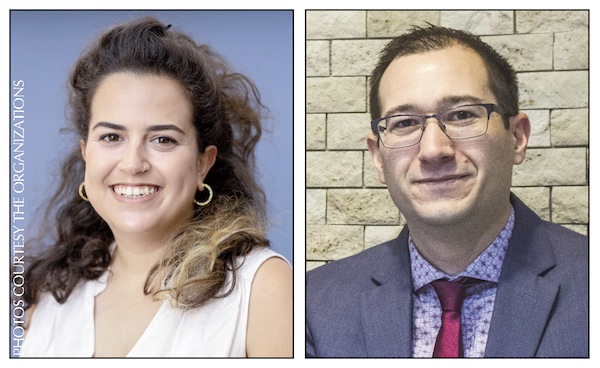
Lihi Shmuely of Israel Hofsheet and Ben Murane of the New Israel Fund of Canada. (photos from the organizations)

Binyamin Netanyahu is the longest-serving Israeli prime minister and should be a known quantity. The government he leads now, however, is unlike anything the country has seen in the past, according to a leading Israeli activist who participated in a cross-Canada speaking tour.

“This is different,” said Lihi Shmuely, deputy director of Israel Hofsheet. “This is completely new to us. This is a very extreme, radical government that we’ve never seen before.”

Israel Hofsheet (Israel Be Free) works to increase freedom and equality in the areas of religion and state, as well as Jewish pluralism in Israel, particularly focusing on civil options for marriage, gender equality, pluralistic Shabbat in the public realm and LGBTQ+ rights.

Even some voters who supported parties that are now in the governing coalition are expressing regret, she said. Many supported right-wing parties based on national security issues or a range of other policies.

“Now they understand that it comes as a whole package, that these people who promised national security … [are] not just racists but also chauvinists and homophobes and misogynistic people who are promoting legislation that will hurt the very core, the liberal and democratic core, of Israel,” said Shmuely.

She warned that people should take members of the new government seriously when they advance what appear to be extreme policy positions. To contextualize what is happening, she compared the reaction in the United States when the U.S. Supreme Court overturned Roe versus Wade, the precedent-setting reproductive rights case.

“We thought this was already set in stone, the Supreme Court has decided and that’s it,” Shmuely said. Returning to the Israeli situation, she warned that some people do not believe that the more extreme statements or policies – even the formally agreed-upon coalition agreements – will actually be codified in legislation or policy. “They will do what they say they’ll do. So, we need to take it very, very seriously.”

Evidence suggests many Israelis are taking it seriously. Rallies throughout the country against the range of legislation and proposals – most notably the subjugation of the Supreme Court to the elected Knesset, as well as women’s equality and LGBTQ+ rights, the status and rights of Palestinians in the West Bank, and encroachments of religion into the public sphere. People who have never been political in the past are getting involved and even attending the mass rallies that take place every weekend.

“We don’t have this privilege anymore, to say, I will not get involved,” Shmuely said, adding that Israelis are facing existential questions. “I feel like we are asking ourselves, what are we? Are we a Jewish state? Are we a democratic state? Are we a liberal democracy? Is there a contradiction between all of them? It feels like these days we are writing the rest of our history.”

Shmuely’s grandmother is a Holocaust survivor and, in recent months, has been saying, “This is not the country that I ran away from Europe for.”

While emphasizing urgency, Shmuely counters that it is not too late to alter course.

“I do think we are under terrible threat and I do think that it’s not too late,” said Shmuely. “It’s almost – but it’s not yet. We still have a lot to do.”

A major focus for opposition groups is this October’s municipal elections across Israel.

“These are sort of like the midterms in the States,” she said. Aside from this, municipal governments also have power to push back against national trends. For example, some municipalities have expanded transportation services to Shabbat.

Shmuely was supposed to be in Vancouver March 1 for a program at Or Shalom synagogue. However, she was stuck in Toronto after contracting COVID and appeared virtually. In person was Ben Murane, executive director of the New Israel Fund of Canada. His group supports civil society organizations in Israel that advance socioeconomic equality, religious freedom, civil and human rights, shared society and anti-racism efforts. Their Vancouver event was co-sponsored by Or Shalom, and the advocacy groups Peace Now and Ameinu.

Murane highlighted what he sees as recent positive developments.

“We couldn’t have anticipated that every Saturday there would be 100,000 protesters coming out – 300,000 last weekend,” he said. Security officials, business leaders, the heads of universities, lawyers, the press council and others who might previously have remained silent on contentious issues are speaking out, said Murane, and high-tech businesses are giving employees time off to attend protests.

“We couldn’t have anticipated that, in the past few weeks, major Diaspora voices who, between you and me, are usually the ones arguing against criticism of Israel, would be coming out saying, please criticize the government of Israel,” he said. “The Jewish Federations of North America issued a very surprising and precedent-breaking statement against the court override. You see individuals like [former Canadian justice minister] Irwin Cotler coming out, you see [former head of the Anti-Defamation League] Abraham Foxman and, for whatever it’s worth, Alan Dershowitz also saying something.”

He cited the resignation of Avi Maoz from cabinet last week as a positive outcome, partly due to public opposition. Maoz is head of the far-right Noam party, which advocates against equality for women and LGBTQ+ people. He resigned from cabinet, though not from the governing coalition, when he realized that Netanyahu was unlikely to implement numerous of his priorities.

“Avi Maoz came in with very bold intentions and then met all of this intense resistance and found that his agenda is not going to be as easily advanced,” he said. The rest of the coalition realized, according to Murane, that it would cost a great deal of political capital for the government to allow Maoz to get his way. “We are seeing them say, Avi, you’re not going to get everything you want, and he quits in a huff.… This is evidence that some of this is actually working, that it may appear a pyrrhic victory, but these are the dribs and drabs of what impact looks like in these moments.”

The role of groups like his and its partners on the ground in Israel is eternal vigilance, Murane said.

“Part of the role of civil society is to let nothing go unchallenged. Nothing,” he said. “Even if our odds of actually completely forestalling it are slim, part of the victory is to make an atrocious thing merely bad and to make the political powers that are advancing these initiatives expend a great deal of political capital in order to get what they want, by making them waste time and energy.”

Murane addressed the extraordinary violence that took place in the Palestinian village of Huwara Feb. 26, where rampaging Jewish settlers engaged in what has been called by some a “pogrom” that left one person dead, almost 400 wounded, and homes and businesses set afire. The attack was revenge for a terror attack the same day, in which Israeli brothers Hallel Yaniv, 21, and Yagel Yaniv, 19, were murdered.

“We’ve seen settler violence,” said Murane. “It’s been on the increase. It’s a real thing. It’s a fact of life for Palestinians from the territories. But to have dozens of settlers go into a village with impunity and commit the violence they committed, that is a new thing.”

He said civil society organizations must draw as much attention as possible to such incidents, including promoting the use of body cameras for police and wider availability of video cameras for civilians.

Incidents like these cloud the reality of evolving Israeli views on Arab-Jewish political cooperation, he said. Over the last several election cycles, opinion polls have indicated a steep increase in the proportion of Israelis who support Arab-Jewish political cooperation, from about 30% a couple of years ago to a majority today. The inclusion of an Arab political party in the last coalition government was groundbreaking.

“That’s a huge change in Israeli society that, a year ago, we didn’t even imagine it was possible,” Murane said. In the 2022 election, he said, “unless you are voting for the right-wing, you are implicitly voting for more Jewish-Arab political partnership.”

Or Shalom’s Rabbi Hannah Dresner introduced the event.

“I think it’s an important time for me to acknowledge that the democracy that I imagine as part of that beautiful place that I called Israel through my whole growing up and adulthood is really a selective democracy, a democracy for some and not for all,” she said. “That is a very important aspect of my concern at the moment – not just what happens with the loss of democracy but what is that democracy and how can it be a democracy that serves all who live in the land of Israel?”

Format ImagePosted on March 10, 2023March 9, 2023Author Pat JohnsonCategories IsraelTags Ben Murane, elections, governance, human rights, Israel, Israel Hofsheet, Lihi Shmuely, Netanyahu, New Israel Fund, NIF, politics, protesters

Standing by our family

If a member of your family were in crisis, would you abandon them? Even if the crisis were partly self-inflicted, of course you would stand by them.

In a metaphorical way, this is the issue facing Diaspora Jews in considering Israel right now. Whether you agree or disagree with the direction of the new government, it is undeniable that Israel is in a crisis. Each weekend, for several weeks, between 100,000 and 300,000 people have marched in the streets in opposition to a range of government policies, particularly proposed judicial “reforms” that many critics view as a threat to the fundamental democratic character of the country.

Watching from afar, these events are discouraging and worrying – and these emotions mingle with what might already be a degree of ambivalence, disappointment and many other sentiments. It is not always easy to be a supporter of Israel overseas. We have struggled in the face of decades of condemnation, some legitimate, some outlandish exaggerations. It would be easier, for some of us, to walk away.

Israelis do not have the luxury of walking away. And if one looks at Israel today and says, “That does not reflect my Judaism, my politics, my values,” remember: it does not reflect the Judaism, politics or values of most Israelis either.

The Israeli government we see today is the result of a tail wagging the dog, a reality facilitated by coalition politics and the desperation of Binyamin Netanyahu to regain power at almost any cost.

In many instances, people who voted based on concerns about national security find themselves appalled at policies around women’s equality, LGBTQ+ rights, the place of minorities in the country, the treatment of Palestinians in the West Bank and, of course, the overriding threats perceived in the attempts to meddle with the infrastructure of the Israeli judiciary – the wellspring from which much of Israel’s liberal character has come.

Most Israelis did not knowingly vote for leaders who would see the settler violence against Palestinians in the village of Huwara and endorse it, vindicate the perpetrators and incite further, even more destructive and possibly murderous violence. This latter example – of politicians (or anyone else, for that matter) openly celebrating and inciting racist violence – should disgust everyone, no matter their political stripe.

Overseas organizations that are connected with Israel – not least the Jewish Federations of North America – have spoken out officially in ways that are unprecedented in the history of Israel-Diaspora relations. Some of these statements have been comparatively mild in the minds of many observers, who view this as genuinely a time for full-throated disapproval. The fact that they are speaking out at all, however, is significant.

One of the side effects of all this is the debunking of the popular accusations that the tendency to keep negative comments within the family reflects “uncritical support for Israel.” This idea, that Zionism is a form of congenital disorder unrooted in reason, has never been true but it is now discredited. For what that’s worth.

Relatedly, individuals and groups who for years have been slandering Israel with hyperbole are now learning that they have exhausted the arsenal of vocabulary when actual events call for some strong language.

There is some reason for optimism. Isaac Herzog, Israel’s president, who has been cast by events into a role unlike the relatively ceremonial function that the office usually carries, said this week that a compromise may be in the offing on the contentious judicial reforms. Moreover, the resignation from cabinet last week of Avi Maoz, a far-right extremist, appears to be evidence that the government is wearying of fighting a multiple-front war. It is believed that Maoz realized the government wasn’t going to impose his racist, misogynistic and homophobic policies and so took his marbles home. There are reports of more turmoil in the ranks, which could drag the government and the country back toward a little sanity.

On the one hand, this should not invite a slackening of the pressure. There is a movement afoot among Diaspora Jews (and others) to discourage world leaders from meeting with extremist members of the Israeli government. Whether or not that will have much effect on anything, it is a valuable expression of revulsion for people who, like Bezalel Smotrich, incited (and then walked back) his call to “wipe out” the Palestinian village where Jewish settlers recently attacked innocent civilians.

On the other hand, anyone who is considering walking away from Israel, of abandoning the emotional energies of this fight, should consider who it is they would be abandoning in the process. A government is fleeting – although the lasting damage a single government can do is significant. But, Israel is the embodiment of the Jewish people’s national self-determination. To walk away from that is to walk away from more than bad government policy. It is to walk away from history. To walk away from everything that one’s ancestors hoped for, prayed for and built.

More importantly, it is to abandon to their own devices the very people in Israel with whom we probably most closely agree, who are struggling nobly to preserve the vision of Israel that many or most of us believe to be an ideal.

When a family member is in crisis, we do not abandon them. We engage. We help. We confront and intervene, if necessary. We do not walk away. In fact, this is precisely the moment when we dig deepest into our resources and do everything we can to make right what is wrong.

Posted on March 10, 2023March 9, 2023Author The Editorial BoardCategories From the JITags Diaspora, elections, governance, human rights, Huwara, Israel, Netanyahu, settlers, violence

Posts pagination

Previous page Page 1 Page 2 Page 3 … Page 10 Next page
Proudly powered by WordPress