Skip to content
  • Home
  • Subscribe / donate
  • Events calendar
  • News
    • Local
    • National
    • Israel
    • World
    • עניין בחדשות
      A roundup of news in Canada and further afield, in Hebrew.
  • Opinion
    • From the JI
    • Op-Ed
  • Arts & Culture
    • Performing Arts
    • Music
    • Books
    • Visual Arts
    • TV & Film
  • Life
    • Celebrating the Holidays
    • Travel
    • The Daily Snooze
      Cartoons by Jacob Samuel
    • Mystery Photo
      Help the JI and JMABC fill in the gaps in our archives.
  • Community Links
    • Organizations, Etc.
    • Other News Sources & Blogs
    • Business Directory
  • FAQ
  • JI Chai Celebration
  • JI@88! video

Recent Posts

  • Sharing her testimony
  • Fall fight takes leap forward
  • The balancing of rights
  • Multiple Tony n’ Tina roles
  • Stories of trauma, resilience
  • Celebrate our culture
  • A responsibility to help
  • What wellness means at JCC
  • Together in mourning
  • Downhill after Trump?
  • Birth control even easier now
  • Eco-Sisters mentorship
  • Unexpected discoveries
  • Study’s results hopeful
  • Bad behaviour affects us all
  • Thankful for the police
  • UBC needs a wake-up call
  • Recalling a shining star
  • Sleep well …
  • BGU fosters startup culture
  • Photography and glass
  • Is it the end of an era?
  • Taking life a step at a time
  • Nakba exhibit biased
  • Film festival starts next week
  • Musical with heart and soul
  • Rabbi marks 13 years
  • Keeper of VTT’s history
  • Gala fêtes Infeld’s 20th
  • Building JWest together
  • Challah Mom comes to Vancouver
  • What to do about media bias
  • Education offers hope
  • Remembrance – a moral act
  • What makes us human
  • המלחמות של נתניהו וטראמפ

Archives

Follow @JewishIndie
image - The CJN - Visit Us Banner - 300x600 - 101625

Tag: dance

A further peek at Cohen’s Orfeo

A further peek at Cohen’s Orfeo

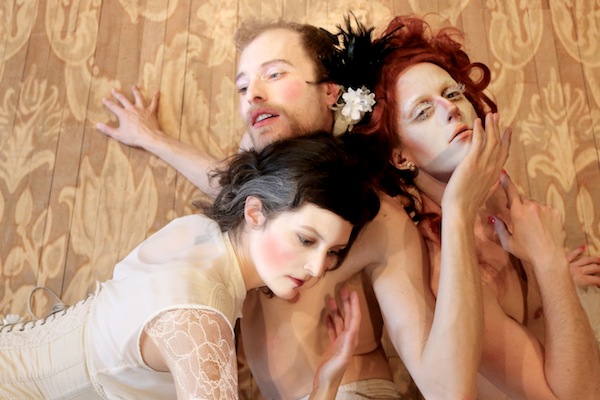
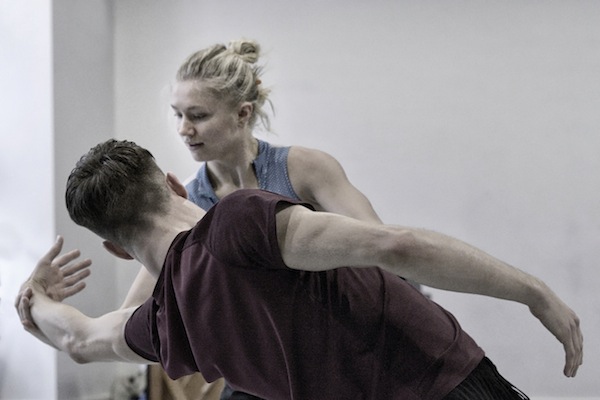
Dancers Jeremy O’Neill, Ted Littlemore and Kate Franklin. (photo by Idan Cohen)

Last May, Idan Cohen introduced local audiences to his reimagining of Christoph Willibald Gluck’s opera Orfeo ed Euridice. He will share more of this ongoing work in EDAM dance company’s Spring Choreographic Series, in which he is a guest artist, along with Jennifer McLeish-Lewis.

In six performances between April 10 and 20 at EDAM’s home at the Western Front on East 8th Avenue, Cohen and McLeish-Lewis will present new work, while EDAM, under artist director Peter Bingham, will present a directed improvisation.

“I was introduced to Peter and the EDAM family through Linda Blankstein, who I met through the DanceLab residency I took part in last May at the Dance Centre,” Cohen wrote the Independent in an email from London’s Heathrow Airport, as he waited for his flight back to Vancouver. “Among the many other roles through which Linda supports Vancouver’s arts community, she is on the board of EDAM, and was kind enough to introduce my work to Peter.

“The space and people at EDAM were very welcoming,” said Cohen, who is artistic director of Ne. Sans Opera and Dance. “Peter invited me and the performers to take his daily morning classes, and offered this wonderful opportunity for me, Ne. Sans and the artists collaborating on this piece – musicians/dancers Jeremy O’Neill, Ted Littlemore and Kate Franklin.”

The part of Orfeo ed Euridice that Cohen will showcase next week is called Trionfi Amore (in English, The Triumph of Love).

“In Greek mythology, Orpheus [Orfeo, in Greek] was a musician and a poet who had the ability to enchant all living creatures through his musical gift, and could even stop the waves of the ocean from rolling,” explained Cohen. “In an attempt to bring his newly married wife Eurydice back to life from the dead, Orfeo persuades the guardians of the underworld to allow him entry to their kingdom.

“Trionfi Amore deconstructs the key elements and motives of the story and puts it into a contemporary context. We integrate dance with a bit of live music in a piece that speaks of love, and of the power of music and art to move, entertain and touch us. We also look at the power of art to manipulate, exploring the ways in which different aspects of love can be transformed into the act of performance. I am focusing on the ‘love story’ part of the mythological tale, recreating its themes through the intimacy and fragility of the body.”

For more about Orfeo ed Euridice, see jewishindependent.ca/the-power-of-music-and-love. For tickets to one of the EDAM Spring Choreographic Series performances, visit edamdance.org.

Format ImagePosted on April 5, 2019April 2, 2019Author Cynthia RamsayCategories Performing ArtsTags choreography, dance, EDAM, Idan Cohen, Ne. Sans, opera, Orfeo ed Euridice
Glory tour starts soon

Glory tour starts soon

The original cast of Glory. (photo by Barbara Zimonick)

I hope Glory inspires audience members to look up the Preston Rivulettes and learn how amazingly driven, committed, skilled and bad-ass these female hockey players were,” Advah Soudack told the Independent.

The Rivulettes were entered into the Canadian Hockey Hall of Fame in 1963. According to the website of the Rivulettes Junior Hockey Club, “The team played an estimated 350 games between 1930 and 1940, tying three and losing only two. In that 10-year span, the Rivulettes were 10 times the winners of the Bobbie Rosenfeld Trophy that was presented each year to the champions of Ontario. They were also six-time winners of the Eastern Canadian championship and the Elmer Doust Cup that went with it. They won the trophy each time they competed for it. The team’s crowning achievement was capturing the Lady Bessborough Trophy as Canadian champions no less than six times.”

“Their determination, their courage, their fight and their passion” were what inspired Tracey Power to write Glory, which starts its touring run March 29-30 at Kay Meek Arts Centre in West Vancouver.

Power was also interested in 1930s Canada, which “presented many personal challenges, a national depression, the growth of international hatred that would ultimately become the Second World War, and how those international relations greatly affected Canadian multicultural relations, antisemitism and sexism, to name just a few.

“Through hard times,” she said, “we often turn to sport or entertainment for escape, for community and for strength. For me, the women on this team and their coach represented not just a team of hockey players, but a country fighting to survive.”

Glory premièred last year, and the touring production brings with it some changes, including two new actors, Andrew Wheeler as the team’s coach, Herb Fach, and Soudack as the character Marm Schwartz.

photo - Tracey Power
Tracey Power (photo from Gateway)

“The choreography grows and strengthens with every run,” said Power of other changes. “I’m a huge believer in trying new ideas, and the more detailed we can be in our storytelling, the more exciting it will be for our audience. There may be some new text ideas that come out of rehearsal. I’m always open to a new play exploring new territory each time we go back into rehearsal.”

Kate Dion-Richard reprises her role as Helen Schwartz.

“Tracey reached out to me a couple of years ago to play the part of Helen in a workshop and reading for the show,” said Dion-Richard. “A few months after the workshop, I auditioned formally for the role. That included reading a couple of scenes, as well as taking part in a group dance call. The dance was a new style of ‘swing-skate’ that Tracey had created, which incorporated swing dance moves of the 1930s with hockey skills and plays.”

It is not an accident that Jewish community members have been cast as the real-life Jewish sisters.

“Marm struggles with being able to get the education she wants because of quotas universities had at the time; she fights back against antisemitism and must find ways to deal with her anger both on the ice and off. Helen is confident in her femininity and struggles to figure out how such an aggressive sport fits within the expected view of a woman of that time. It has always been important to me to have Jewish actors play these roles,” explained Power.

“During the development of the play,” she said, “the conversations we had were instrumental in bringing the characters’ truths to the stage. I am not Jewish, but it’s my duty as the playwright to understand the souls and bones of these women and what they went through. I’m extremely thankful to Kate Dion-Richard, Gili Roskies [who played Marm last year] and Advah Soudack for being so open and honest with me about their own Jewish history.

“Bobbie Rosenfeld was one of the most famous Canadian athletes of the 1920s/30s,” she added. “She was an Olympic gold medalist and, among many other sports, played hockey for the Toronto Pats. She inspired many women to follow their athletic dreams – including Hilda Ranscombe, who was the Hayley Wickenheiser of the Preston Rivulettes – and, much like Marm, she also fought against antisemitism in her sport and life.”

“The awareness of, frustration and personal experience with antisemitism are a big part of Marm’s storyline and journey in this show,” said Soudack. “I personally have not experienced the extent of antisemitism that Marm experiences in this story, however, my close family members have, and I can understand and imagine what it would be like. I feel that I bring my strong sense of Jewish identity to the role of Marm, with all its deep-rooted traditions and expectations. I also share and connect with the concern and, at times, discomfort Marm feels with being Jewish in a world where antisemitism lingers right around the corner.”

photo - Kate Dion-Richard
Kate Dion-Richard (photo from Gateway)

Dion-Richard, whose Jewish side of the family is from London, England, grew up hearing stories of living through the war from her grandparents. “Those stories stay with me and in many ways is why this role is so close to home,” she said. “Although Helen is Canadian, the antisemitism felt in Canada in the 1930s was strong and I am able to connect to that through my family’s experiences. Also, on a lighter note, I married a man who isn’t Jewish and so did my character, so that’s a nice similarity.”

And there are other connections for Dion-Richard, who was a hockey fan before taking on this show. “My large extended family of Richards are huge Montreal Canadiens fans due to our distant cousin Maurice Richard (‘The Rocket’),” she shared, “and I grew up on the West Coast, so the Canucks were frequently on the television at home. I have definitely become more of a fan since doing this show – especially of women’s hockey. The Canadian women’s team is incredible and I’d love to meet them and chat about their experiences as women in a traditionally male-dominated sport. I’d also love to know if they know about the Rivulettes!”

Soudack admitted to not having been much of a hockey fan before she started her research and work on Glory. “My husband is a big fan, so I always hear him talking about it, and get dragged onto his computer to watch videos of amazing plays and goals,” she said. However, since Glory, she has become more interested in the game. “I recently went to Thunderbird Stadium to watch the UBC Women’s Hockey playoffs,” she said. “Their commitment, drive and talent were inspiring. I was moved to tears as I sat there, thinking of Hilda, Nellie [Ranscombe], Marm and Helen, realizing and deeply understanding why they loved the game so much.”

photo - Advah Soudack
Advah Soudack (photo from Gateway)

About sports and the relevance of the Rivulettes’ experiences for today’s audiences, Soudack said, “It still feels the same, in regard to women not having the same opportunities and not really being seen as equals to men in athletic ability. I find it sad that young girls can fall in love with a sport and be exceptional at it, like Hilda Ranscombe; however, there is no future career they can look toward. Once the war was over, women’s opportunity to play sports vanished, whereas the men’s opportunities and careers took off.”

“Women not only had to fight for ice time – often having to play and practise in the very early hours or very late hours of the day; essentially when the men didn’t need the ice – but they also had to fight to be taken seriously,” said Dion-Richard. “Many of the reports of the women’s hockey games included remarks about the apparent lack of femininity within the game and some even questioned the sex of the players because of how aggressive the women were. Also, women were unable to be professional hockey players. The men were paid and the women weren’t. As a woman living in 2019, I still see the need to fight for equality with pay, representation and respect.”

Directed by James MacDonald, Glory has some minor profanity and is recommended for ages 9+. The Western Canada Theatre production – which includes Katie Ryerson as Hilda and Morgan Yamada as her sister, Nellie – heads to Gateway Theatre in Richmond April 4-13 after the March 29-30 Kay Meek shows, then to Capitol Theatre in Nelson April 16, Vernon’s art centre April 18 and Coquitlam’s Evergreen centre April 23-27. It also travels to Ontario, where it plays in several communities over the course of a few months.

“I’d love to add that this show has something for everyone,” said Dion-Richard. “The Canadian history is so important to know, as well as the fight for respect and equality that these women pushed for. They really paved the way for all of us and I hope we can show how grateful we are to them for that. This is a show that could be a link for people who don’t normally go to the theatre. It fuses sport and theatre with Canadian history, and the story is as relevant today as it was in the 1930s.”

Format ImagePosted on March 22, 2019March 20, 2019Author Cynthia RamsayCategories Performing ArtsTags Advah Soudack, cultural commentary, dance, history, Hockey, Kate Dion-Richard, Rivulettes, Tracey Power, women
Gotta Sing! 2019 registration

Gotta Sing! 2019 registration

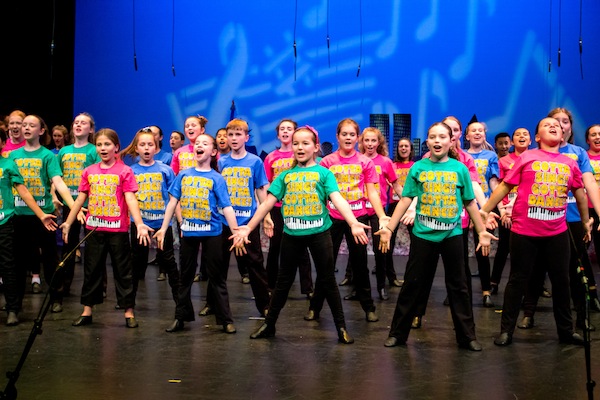
(photo from JCCGV)

For the past 24 summers, Gotta Sing! Gotta Dance! has attracted hundreds of enthusiastic and talented participants from throughout Canada, the United States and Israel, many of whom have gone on to successful careers in the performing arts. The deadline is April 1 to apply for this summer’s sessions, which take place at the Jewish Community Centre of Greater Vancouver July 2-25 and Aug. 6-29.

The director and creator of Gotta Sing! Gotta Dance! is Perry Ehrlich, who received an Ovation Award and the Canadian Bar Association’s Community Service Award (acknowledging his dedication to working with children and musical theatre). A composer, pianist, teacher, arranger, producer, adjudicator, writer and talent coordinator, Ehrlich also directs ShowStoppers performance troupe (theimpresario.ca).

Gotta Sing! Gotta Dance! is taught by a faculty of professional instructors, each working in his or her respective field, including musical directors Wendy Bross Stuart and Diane Speirs; director Chris McGregor; choreographers Anna Kuman, Jason Franco, Keri Minty and Meghan Anderssen; acting coach Amanda Testini; and Mariana Munoz and Charlie Weaver, set construction and costume co-ordination.

Peter Birnie, former theatre critic for the Vancouver Sun, commented that the faculty members “are all teaching in a carefully choreographed nesting of studies that takes place all over the JCC and culminates in a big, brassy show. I try to attend every year, and always come away just as thrilled as the parents and families with the level of talent on display. It is about the joy that comes from singing your lungs out and dancing your hooves off.”

This year’s final production in each session – called Shamilton – will take place in the Rothstein Theatre and feature an original script and a broad repertoire of music from Broadway and movie musicals.

The Finishing School will again be offered for serious musical theatre students attending Gotta Sing! Gotta Dance! and it will feature approximately 10 sessions from 3:15 to 5:15 p.m., after the regular program, which will run 9 a.m. to 3 p.m. Finishing School students will receive instruction in audition technique, presentation of songs and scene work, and will participate in intensive dance workshops and meet with well-known professionals in the theatre community.

The Boot Camp Dance – for those either new to dance or wanting to refine their skills – will also be offered.

The cost to attend Gotta Sing! Gotta Dance! is $750 for JCCGV members and $850 for non-members. Scholarships are available through the Babe Oreck Memorial Fund, the Phyliss and Irving Snider Foundation, and others for those with financial need.

For more information and registration, visit jccgv.com/performing-arts/gotta-sing-gotta-dance.

Format ImagePosted on March 15, 2019March 14, 2019Author Gotta Sing! Gotta Dance!Categories Performing ArtsTags dance, education, JCC, musical theatre, Perry Ehrlich, youth
Dance explores our relationships

Dance explores our relationships

Noam Gagnon’s Vision Impure performs Pathways at the Roundhouse, as part of the Vancouver International Dance Festival, which runs March 4-30. (photo by Erik Zennström)

“It’s important that dance and art ask questions, even without necessarily explicitly spelling out the answers,” Noam Gagnon, artistic director of Vision Impure, told the Independent.

Vision Impure presents the world première of their latest contemporary dance work, Pathways, at the Roundhouse Performance Centre March 20-23, as part of the Vancouver International Dance Festival, which runs March 4-30.

“The works I create are not meant to be stories but rather are meant to be seen as a series of powerful images and states that hopefully anchor, engage and stimulate the audience to have their own powerful experience,” said Gagnon, who is a member of the Jewish community.

Pathways is described as a work that “illuminates the stories we share, exploring the intricate push and pull of relationships impacted by urban living. Simple moments lead to more complex ones, questioning our ability or inability to connect with one another and what makes us react more strongly to some than to others.” It was performed as a work-in-progress at last July’s Dancing on the Edge festival.

“Pathways has lengthened and developed considerably since Dancing on the Edge,” said Gagnon. “It is now a full-length work, approximately one hour long, presented in two parts with an intermission in between. The company has continued the research and investigation into Part 2, which informs what has already been seen, what else was potentially needed, and then added the alterations necessary to create better cohesion for Pathways as a full work.”

Gagnon is an award-winning choreographer and his work has been performed internationally. He is regularly commissioned by dance artists and companies, and is an associate dance artist of Canada’s National Arts Centre. He has collaborated often with other artists, and Pathways is no exception.

“The creation of Pathways has been a long process of research and accumulation in multiple cities involving multiple companies and dancers,” said Gagnon. “The initial concepts for Pathways started germinating in May 2012 during a choreographic laboratory under the mentorship of Davida Monk at Dancers Studio West (DSW) in Edmonton, where I was given the opportunity to develop the original concept on seven amazing dancers.

“In 2014, I was invited to create a dance work on 17 crazy, generous student dancers at L’Ecole de danse contemporaine de Montréal (EDCM). It was in Montreal where the first version of Pathways Part 1 came to life and was subsequently presented as part of the EDCM Professional Program spring presentation Danses de Mai, Opus 2014.”

Back in Vancouver, in 2017, Gagnon was invited to create a work for EDAM’s (Experimental Dance and Movement’s) Spring Choreographic Series and to develop additional material for the piece with a few other dancers. And, in the spring of 2018, he said, “I was invited by Lesley Telford to do research/creation at Arts Umbrella on nine of their very gifted PReP program emerging dance professionals, further expanding on some of the concepts of the previous works.”

The development of Pathways continued in 2018 with nine dancers at Simon Fraser University’s School for the Contemporary Arts and 27 dancers at Modus Operandi.

“The current cast of 10 incredible young dancers for the new full-length version of Pathways, to be presented at Vancouver International Dance Festival (VIDF), has been my heart, soul and brain,” said Gagnon.

In addition to the dancers involved, composers James Coomber (Vancouver) and Guillaume Cliche (Montreal) created Pathways’ sound design.

“My creative process always starts with images, which evoke various states in me initially and then evolve, arousing strong desires within my imagination that make me want to act upon them. Then the hard work and countless hours to bring a piece to the stage begin,” explained Gagnon.

“For the Pathways project,” he said, “I first came up with a series of questions, with answers coming from the responses of each of the dancers. I then started to generate a physical vocabulary, which would become my text. I immediately reshaped the movement vocabulary that was given to me in order to generate a more cohesive bank of movements and to ensure that all the artists involved were part of the same world. With this bank of movements, I then started gathering and creating worlds of moving physical landscapes in various states of action and transformation. Each movement phrase evolved over time to support the vision that first drove me initially.

“It is also extremely crucial for me to tailor the work perfectly for who is dancing it and to always create the strongest structure possible,” he added. “I then challenge or reshape the work with movement that creates strong intent and keeps these incredible dance artists alive and real in the world I have envisioned.”

Part of Vision Impure’s mission is to create “performances that explore the intricacies of human relationships and the dynamic tension that move us … [and to reflect] the intimate concerns, ideas and attitudes that shape our relationships to ourselves and each other.”

When asked what he has learned through his work and life experience about how we connect and isolate ourselves and others, Gagnon said, “Everything in life starts from within ourselves first, the choices we give ourselves, how we negotiate what comes our way, what we do with what we have and then being honest and real enough to accept the facts and be accountable for the choices we make. Action-reaction is real and undeniable to me. In relationships, I find communication to be the biggest challenge, seemingly constantly lost in translation.

“Recently,” he said, “I have begun to strongly believe that, as a species, we are hardwired for extinction. Despite our biggest strength being our ability to learn to adapt, it seems lately we as a whole are not able to learn from our experiences or the past experiences of others. We are living in an era of social amnesia. Our desires have become powerful weapons going in uncontrolled directions.”

The Vancouver International Dance Festival presents many artists during its run, including the Japan-based butoh ensemble Dairakudakan, Vancouver’s Raven Spirit Dance, Ottawa’s 10 Gates Dance, Montreal’s Daina Ashbee and Tjimur Dance Theatre from Taiwan. The festival features workshops, as well as many interactive dance activities at various venues throughout the city. For more information, visit vidf.ca.

Format ImagePosted on March 1, 2019February 27, 2019Author Cynthia RamsayCategories Performing ArtsTags dance, Noam Gagnon, Pathways, Roundhouse, VIDF
Ballet BC creates with Salant

Ballet BC creates with Salant

Israeli choreographer Adi Salant will be at the Ballet BC première of her work Feb. 28-March 2 at Queen Elizabeth Theatre. (photo © Michael Slobodian)

“I could not let it go on without being there to see the outcome,” Adi Salant told the Independent in a phone interview from Israel about the new work she is creating with Ballet BC. The piece will have its première Feb. 28-March 2 at Queen Elizabeth Theatre.

Salant was in Vancouver last August to work with the company and she was scheduled to return here earlier this week to help prepare for the performances.

“The [creative] process was split into two periods,” she explained, “and I was there for three weeks [in the summer], building the major part of the piece. Now I’m coming, it’s more the last adjustments, refining, rethinking, being open to the suggestions that will happen, but most of it is ready and they are working on it now, preparing it for my arrival. I’m very excited to meet them and meet the piece again because it’s been awhile.”

Salant knows Ballet BC artistic director Emily Molnar from the world of dance in general, but the two really connected just over two years ago, when Salant was invited to be one of the choreographers taking part in the inaugural Creative Gesture, a residency program led by Molnar and program head Stephen Laks at the Banff Centre. For the program, Salant had to create a short piece for the young dancers, who attended the residency from several countries, “to see how it is to work professionally.”

“I really enjoyed the energy there and the way I worked with the dancers. And she [Molnar] believed in me and gave me the opportunity to come and work with her company.”

Creating something in two time periods is interesting, said Salant. “It gives you time to reflect and to visit it with videos, or in my mind or afterthoughts of what happened. Even though I’m not there [in Vancouver], it’s like I stayed with the dancers. I got to know them.”

The limited amount of time made the work more intense, she said, “because both the dancers and I know, OK, we have now three weeks. There’s engagement and we’re just going for it.”

The piece involves many dancers. “I knew I wanted a feeling of a big group,” said Salant. “I think there will be 17 people, if I’m not mistaken. I fell in love with all of them and we want to use everybody…. I enjoyed so much and appreciated so much the energy and open hearts, and diving in with me to the unknown.”

In considering the piece about to be performed, as well as her previous works, Salant said, “I am just so fascinated by life – the everyday kind of life and the demands of life and the struggles. Some people, they create from what they dream about; I’m more about what I’m experiencing every day, so that’s the energy [of the new piece]. It’s about how, in life, you can plan and plan, but you can meet someone … if it’s a job interview or, for our profession, if it’s an audition, so he chooses, yes you are in, no you are out, and how [that concept] applies to the rest of your life. Or where you’re born … if you’re born into this kind of society or this kind of place, it’s also affecting you…. You can aim, but, in the end, we divide: you go there, you go there, you yes, you no, you up, you stay there, you down.”

Salant has been dancing since she was a young girl. “I started to dance in Bat-Dor dance group in Tel Aviv when I was 6…. When I graduated high school, I went for an audition … and, lucky for me, I was the one that got the yes.”

After two years at Batsheva Dance Company, she was invited to join the main company, with which she danced for five years. “Then I left, but I stayed in a very close relationship professionally with Ohad Naharin [then-artistic director of Batsheva], staging his works all over the world … and setting his repertoire for different companies – this is actually where I met Stephen, who I mentioned before. He was dancing in Les Grands Ballets Canadiens. It’s very nice and very exciting for me to look back and to realize, on this journey, I have met so many people.”

Members of her generation of dancers are now leading companies, choreographing and teaching, she said. “It’s really nice to see, and I enjoy very good and close relationships with my colleagues and we continue to share our passion in that way.”

Salant returned to Batsheva in 2009, but, she said, “this time, Ohad invited me as the co-artistic director.” She held that position until October 2017, when she struck out on her own.

“It’s part of my journey – all the tools that I collected until now and the experiences, and having actually more time now that I’m not directing a very busy company and dealing with the schedule of the company,” she said. “Now I have my schedule, and [am] owning my time in a way. I put the focus on choreographing and teaching workshops around the globe.”

Salant said she has created a motto of sorts for work, “Adi – Life is Moving,” “because I really enjoy meeting with people and, [while] it’s true that I’m coming to teach dance to them, I really connect it to life, and their life and how their emotions and, again, like I said about my work, this piece, it’s the same when I’m teaching or when I’m working now with the dancers of Ballet BC. Yes, I’m giving them the movements but I’m all the time connecting it to life, to the everyday behaviour. That’s what I’m aiming for.”

Salant teaches in various places around the world. This April, for example, she will be in Los Angeles for a week. “It’s called the Gypsy Project…. It’s the second time that I am involved there,” she said. “I’m looking forward to go, and to share and to learn and to deepen my knowledge and understanding.”

Salant reiterated her appreciation for Molnar. “As I said, I left my job as the co-artistic director and it’s, of course, a demanding job and you’re recognized with this position and with this place…. When I left and wanted to now continue to choreograph, because I did choreograph before, but I put it on hold because it was too intensive with the company life and, of course, I have three kids, something had to wait … Emily really was the first to open her door and believe fully. It’s not something that you see so often, that you feel that someone believes in you and takes a chance and appreciates who you are, knows your strengths and believes in your strength, no matter your title.”

Salant has enjoyed working with Ballet BC. “I had an amazing meeting with the dancers,” she said. “They inspired me and moved me a lot, so I really can’t wait to come back on Monday [Feb. 11], even though I miss my family. I have to leave three kids behind, and that’s the hardest part, but I’m happy that we can share again our time together and bring it on stage and to the audience what we did.”

Salant and her husband, Jesper Thirup Hansen, have two daughters, 10 and 8, and a 5-and-a-half-year-old son. Thirup Hansen is a physiotherapist. “I met him in Batsheva, he was a dancer, he is Danish,” said Salant. “Actually, they joined me in the summer in Vancouver; the whole family came. They had such a great time. I came to their place from work, and they told me all the fabulous things they did that day.”

For tickets to Ballet BC’s Program 2, visit balletbc.com.

Format ImagePosted on February 15, 2019February 13, 2019Author Cynthia RamsayCategories Performing ArtsTags Adi Salant, ballet, Ballet BC, Batsheva, choreography, dance, Emily Molnar, Israel
Never Still kicks off season 36

Never Still kicks off season 36

Alexa Mardon is part of the creative team of Never Still, which is at the Firehall Sept. 26-29. (photo by Ben Didier)

It is fitting that Firehall Arts Centre is launching its 36th (double chai) season with a new work by Jewish community member Vanessa Goodman, artistic director of Action at a Distance Dance Society.

Never Still is described as “a highly physically piece that dives into the distinctions and overlap between three different systems of circulation: global water cycles, communication technology and fluids within the body.”

“The initial ideas for Never Still really began to emerge in 2013, when I made two separate works inspired by similar themes. Both dealt with our relationship to water, either in our environment or our bodies,” Goodman told the Independent. “On a very basic level, we are all between 50% to 70% water, depending on our age, and the earth’s surface is covered by roughly 70% water. There is some nice symmetry and, the deeper I dug into these themes, the more they revealed. Social, political, personal, environmental – no matter where I went with these themes, it checked all the boxes of what inspires my work.

“For me, it was just a matter of time before I began to focus on these ideas as a full-length. But it wasn’t until 2015, when I met Scott Morgan (Loscil) through Small Stage, where we first collaborated together, that I could imagine this work growing into what it is today. Each project requires the right collaborators to bring it to life.”

Goodman’s research began in 2016 during a creative residency in New Brunswick hosted by Connection Dance Works. “Loscil and I also made Floating Upstream that same year, a shorter piece that explored these ideas and worked out some staging concepts,” said Goodman. “In 2017, I continued the research through a local choreographic residency at EDAM.

“I always knew I wanted this to be a group piece and, in the spring of last year, I finally had the whole performing team together: Shion Skye Carter, Stéphanie Cyr, Bynh Ho, Alexa Mardon and Lexi Vadja. The work would also not be complete without my longtime collaborator, lighting designer James Proudfoot, who is a master of painting space with light.”

Sound and projection design for Never Still is by Loscil, with costumes by Lloyd clothing. EDAM’s Peter Bingham is listed as the piece’s creative mentor.

While the work has evolved since conception, Goodman said, “There’s not necessarily one element I can point to that’s different. When I began working on this piece, it was just me alone in the studio imagining all the elements, so being able to work with five incredible dance artists, lighting, sound and projections definitely pushes everything forward quite rapidly.

“It is always exciting how a work takes shape in each unique venue, too. Ideas that you may have thought would work sometimes don’t and other new elements reveal themselves, so it’s important to stay flexible. The work is constantly evolving, even through the final performances. That is one of the many exciting parts of live art: it is constantly being transformed by those who inhabit it.”

This idea ties in perfectly with the themes explored in Never Still.

“On a molecular level, liquid water is never truly still, which acts as a beautiful metaphor for dance. It offers myriad avenues to explore anatomically and thematically,” said Goodman.

About Never Still, she said, “I feel like it’s very easy in a developed urban setting to take water for granted and overlook its true value, so, if anything, parsing so many different aspects of water with this piece has helped me appreciate it that much more.”

The work also considers the “inherent conflict or dichotomy of water.” By way of explanation, Goodman said, “The most obvious textural example is water’s often-violent reaction to shifts in temperature, from the crack of ice to the vapour rising from a roiling boil. On a larger scale, the effects of flooding and drought, which, on one hand, represent polar opposites, often share conflict and devastation.”

Echoing these concepts, Firehall artistic producer Donna Spencer said in the release for Never Still, “We are living in an increasingly polarized culture. And it is our role as artistic creators to encourage audiences to consider, through what they are seeing on stage, how inextricably linked we all are in finding our way through these challenging times.”

Firehall’s programming this season, she added, “is about choices – the ones we make, the ones we think we should make but don’t, and the influences around us that colour that decision-making. Live performance allows us to experience a unique and powerful collective sharing of emotions and information that resonates through our day-to-day lives long after we have left the theatre, and indeed may influence the choices we make in the future.”

Never Still runs Sept. 26-29, 8 p.m., at the Firehall, with a talkback after the Sept. 27 show. For tickets (from $20), visit firehallartscentre.ca.

Format ImagePosted on September 14, 2018September 12, 2018Author Cynthia RamsayCategories Performing ArtsTags dance, Donna Spencer, Firehall Arts Centre, Vanessa Goodman
Movement and sound mix

Movement and sound mix

Vanessa Goodman is part of MascallDance’s OW, which premières at Dancing on the Edge. (photo from DOTE)

Audiences saw a glimpse of MascallDance’s OW last year at Dancing on the Edge. This year, the full work premiéres at the dance festival, with six performances July 6-14 at MascallDance’s home, in St. Paul’s Anglican Church downtown.

OW “analyzes timing, accents and rhythms of the sounds that erupt from the body as expressions, building a libretto of repeatable human emotions. Exploration is physically challenging and unpredictable; what has emerged to date is fast, rhythmic, often wildly funny and noisy,” explains MascallDance’s website.

Jewish community member Vanessa Goodman, artistic director and choreographer of dance company Action at a Distance, is one of the dancers in OW.

“One of the interests in the work that we keep coming back to is finding out how sound moves the body and how the body moves sound,” Goodman told the Independent. “As we dive deeper into the process, we are often faced with more questions about accessing the authentic experience of voice and movement. We started by exploring what sounds come from the body with specific physicalities and then also tried to see what happened physically when we made specific sounds.”

Goodman has been involved in the project since 2012, when MascallDance Society founder and artistic director Jennifer Mascall started doing research with her “to explore some of the thematic content that is present in OW,” said Goodman. “Then I was brought back into the process in January 2017 to continue with Walter [Kubanek], Eloi [Homier] and Anne [Cooper].”

The website notes that 17 dancers perform in the production. Also performing will be composer and violist Stefan Smulovitz and specialist in experimental voice D.B. Boyko.

“One of the inspirations for this work,” said Goodman, “was musicals – we watched a lot of clips from older films and observed the complexity of their compositions. They use tons of counter and polyrhythms, and our material was set so that we could achieve a similar result. What you are going to see is definitely not a typical musical formula, but, inside OW, some elements have been inspired by their compositions.”

Goodman has worked with Mascall before.

“My first experience with Jennifer was in 2005, when I was a student at SFU [Simon Fraser University] and she created a piece in my rep class exploring the voice of Glenn Gould. One of my favourite memories from that experience was that she watched the piece from the corner one day in rehearsal. It was one of our final runs before the show and, after watching, she declared that was how the work was meant to be seen, so we adjusted our ‘front’ to this new diagonal perspective. I loved this, as it allowed us to have a brand new experience inside the work and showed me that the creative process is always in a state of evolution.”

Working with Mascall “is fantastic,” said Goodman. “She has a deep practice of finding movement for the body from physiological systems. This is a vibrant place to work from, and I am also interested in anatomical processes and how they relate to movement.”

One of the most rewarding aspects of OW for Goodman has been working with all of the production’s collaborators. “Each artist involved on the team offers unique and critical information,” she said. “Performatively, this process has expanded my practice and has allowed me to discover new interests and curiosities.”

Dancing on the Edge runs July 5-14. For the schedule and tickets, visit dancingontheedge.org.


Format ImagePosted on June 29, 2018June 28, 2018Author Cynthia RamsayCategories Performing ArtsTags dance, Dancing on the Edge, DOTE, MascallDance, Vanessa Goodman
Improvisation on the edge

Improvisation on the edge

Martin Gotfrit co-created Real Time Composition Study, which is part of this year’s Dancing on the Edge. (photo by Paula Viitanen)

To celebrate its 30th year, this July’s Dancing on the Edge festival will feature more than 30 performances, including Real Time Composition Study by Rob Kitsos, Yves Candau and Jewish community member Martin Gotfrit.

“We are three artists with varying interests in dance, sound-making and music, etc., who are exploring creating abstract work spontaneously within the confines of a set space and time,” Gotfrit told the Independent in an email interview. “The work is entirely improvised but, since we’ve been rehearsing (i.e. meeting and exploring movement, sound and light) for 10 months, we have been building an awareness of each other in the space and of our collective efforts. We also work with large conceptual ideas, as well as simple structures, to make it all a little more coherent. The work is not intentionally narrative but words and themes can occasionally emerge.”

Gotfrit not only performs in Real Time, but is its composer. He has numerous recordings to his credit, and has received much recognition, via awards and grants, for his work. Among his affiliations, he is associate composer, Canadian Music Centre; founding member, Canadian Electronic Community; and member, Guild of Canadian Film Composers. He has served two terms as director of the School for the Contemporary Arts at Simon Fraser University and been associate dean and dean of SFU’s faculty of communication, art and technology.

“I’ve just retired after 37 years at SFU as a professor in music and administrator,” he said. “I’ve been performing for a very long time in a variety of ensembles and in many different contexts. As a composer, I’ve created music for film, as well as for new media, theatre and dance performances. I’ve also had the opportunity to move on stage occasionally in those contexts as well. If I had to summarize what I do, I’d say I’m an improviser who has worked in many different forms.”

Gotfrit is part of the Vancouver band Sulam (which means ladder in Hebrew), where he contributes his guitar, mandolin and vocal talents.

“I’m quite active in my synagogue (Or Shalom) and, for more than a decade, I’ve been a part of the band of the monthly Hebrew chanting event Chanting and Chocolate,” he said about his other community involvements. “I returned to be more actively involved in Jewish life as my kids approached bar mitzvah age. I found many like-minded souls at Or Shalom.”

Gotfrit met Kitsos when he started working at SFU, and Candau when he joined the school as a graduate student. About how and when Real Time Composition Study came into being, Gotifrit said, “Rob and I had worked together in the past and we share a love of improvisation and a similar esthetic. We both find Yves’ work very interesting and compatible with our interests. We three started meeting weekly in September of 2017. The work has evolved in many surprising ways since then. For example, when we began, I was sitting off stage playing the music live. As time went on, I began to move more into the centre of the movement space as Yves and Rob (a professional drummer himself) began to take on other roles as well.”

As to what he plans on doing now that he is retired, Gotfrit said, “In addition to playing a wide variety of music with a number of groups (and practising of course), I’m studying to be a pilates instructor. I’ve been a practitioner for almost 40 years. I’m currently interning at the Vancouver Pilates Centre.”

Real Time Composition Study is part of EDGE Seven, July 13, 7 p.m., and July 14, 9 p.m., at Firehall Arts Centre, as is Pathways, by Jewish community member Noam Gagnon (Vision Impure). Other community members involved in Dancing on the Edge this year include Amber Funk Barton (the response.), Gail Lotenberg (LINK Dance Foundation) and Vanessa Goodman (in MascallDance’s OW!). The festival runs July 5-14. For tickets and the full schedule, visit dancingontheedge.org.

Format ImagePosted on June 22, 2018June 19, 2018Author Cynthia RamsayCategories Performing ArtsTags dance, DOTE, film, Firehall Arts Centre, Martin Gotfrit, music
The power of music and love

The power of music and love

Ted Littlemore, in Orfeo ed Euridice, the research for which will be presented by Idan Cohen and Ne. Sans on May 13 at the Dance Centre. (photo by Ted Littlemore)

A relatively recent arrival in Vancouver, Israeli choreographer and opera director Idan Cohen is already making his mark. On May 13 – with the support of the Dance Centre, Arts Umbrella and Vancouver Academy of Music – Cohen and Ne. Sans will present Orfeo ed Euridice, a glimpse into Cohen’s reenvisioning of Christoph Willibald Gluck’s opera.

The myth of Orpheus is a story of love. Poet and musician Orfeo mourns the death of his wife, Euridice, and he determines to get her back from Hades. With the intervention of Amor (Cupid), the god of love, Orfeo heads into the Underworld, gaining entry by winning over the Furies with his music, and he is reunited with his wife. However, Amor has set a condition – Orfeo must not look at Euridice, or explain why he is not doing so, until the two are back on earth. It’s a condition Orfeo breaks when Euridice begins to doubt his love and begs for a glance to assure her. When he gives in, Euridice dies again and Orfeo, grief-stricken, resolves to kill himself so that he can be with her. In the face of such love, Amor intervenes once more, to save both Euridice and Orfeo, and return them to earth.

“This opera was created in 1762 and, for me, a significant part of directing a classic opera is the studying of the values that originally inspired the music and the performance,” Cohen told the Independent. “Looking at concepts of novelty and tradition and respecting those as the DNA of this creation was quite valuable in my creative process. At the same time, those are values that are violent, discriminative and often quite outdated. One clear example that I personally find fascinating is the fact that Orfeo ed Euridice was originally written to be performed by a male castrato. Nowadays, it is often performed by a female mezzo-soprano or a male singer singing in a falsetto technique, but, for me, the history of the castrato and the violence that history entails against the human body is an example of difficult questions and issues that are a part of the time this opera was created in.

“It is even more fascinating and relevant,” Cohen added, “since the mythological story of Orpheus presents to us a musician and a poet who had the ability to enchant all living creatures through his musical gift. Orpheus’s strength was art and, hence, he is the ultimate representation of art and the artist. So, in Orfeo, these values can be represented in the most honest, vulnerable way, exposing their inner human truth and the limits through which we define and accept artistic beauty.”

Cohen grew up in Kibbutz Mizra in the north of Israel, but lived in Tel Aviv for 10 years before coming to Vancouver with his partner about a year ago. “When we got here, I completely fell in love with the city, the nature, the people,” said Cohen.

“Besides the personal reasons that brought me here,” he said, “I’m finding Vancouver’s arts scene most inspiring, and the city was very welcoming to me. I’ve received this wonderful DanceLab residency at the Dance Centre, I have been creating for Arts Umbrella’s pre-professional program, led by Lesley Telford, and with Modus Operandi, directed by David Raymond and Tiffany Tregarthen. These great artists invited me to teach and create when I just got here, and I immediately felt at home.

“Also, for the past years, I have been interested in directing opera through dance and movement … [and] there is so much going on in the city both in opera and in dance – I feel I have something to contribute to this city’s rich arts scene by fusing the two. Historically, they do belong together.”

As well, said Cohen, “living in Vancouver makes traveling so much easier and, when you travel often, this can be very convenient and helpful. This June, I will present at the Seattle International Dance Festival with Ne. Sans, my new Vancouver-based society, and, on the following day, will catch a flight to go to Sydney to present work in Sydney and Newcastle.”

According to Cohen’s website, Ne. Sans “is a home for the research and creation of work that seeks to deepen and reconnect opera and dance.” And this melding “opens a whole new world of collaborative opportunities: a space that involves working with singers, dancers, musicians, visual artists and designers.”

“Directing an opera like Orfeo ed Euridice through dance is a huge task that requires a tremendous amount of preparation,” said Cohen. “This opera was created 256 years ago, but has kept its immortality through its beautiful music and a story so rich, layered and full of depth.”

As he enjoys exploring operas with dancers in the studio – “It’s a great way to get intimate with the music, through the body” – Cohen said, “I’ve started this process by creating a 20-minute duet that was inspired by Orfeo ed Euridice, using parts of Gluck’s music and the main ideas behind the story, and translating those to pure dance. The dramaturgy of that dance piece was inspired by the opera and its libretto [by Ranieri De’ Calzabigi]…. But, looking at it closely and breaking it apart in the studio presented an opportunity to create a more abstract version of the story, in dance form. Fortunately, it was very well-received and won an award from the Be’er Sheva Fringe Festival, in Israel’s Negev.”

The presentation at the Dance Centre “will be performed by 18 singers from VAM [Vancouver Academy of Music] Schola Cantorum chorus, conducted by Kathleen Allan; six dancers from Arts Umbrella’s pre-professional program; two amazing dancers/musicians, Ted Littlemore and Jeremy O’Neil; and mezzo Debi Wong [director of re:Naissance opera company]. It’s a rather big cast for what I’m hoping will be an honest, pretty direct sharing of the research and ideas that will then be transformed into the ‘real deal,’ the full opera production.”

The Orfeo ed Euridice presentation is open to the public and is free of charge. It takes place in the Dance Centre’s Faris Family Studio May 13, 3 p.m. RSVP to [email protected] to reserve a seat.

Format ImagePosted on May 4, 2018May 2, 2018Author Cynthia RamsayCategories Performing ArtsTags dance, Idan Cohen, music, opera, Orfeo ed Euridice
Ballet BC brings back Bill

Ballet BC brings back Bill

Ballet BC artists perform Bill, by Israeli choreographers Sharon Eyal and Gai Behar, with musician Ori Lichtik. The company premièred the work in Vancouver 2016 and is bringing it back as part of Program 3 May 10-12 at Queen Elizabeth Theatre. (photo by Chris Randle)

What’s coming out of Israel is some of the “most exciting” dance, Ballet BC artistic director Emily Molnar told the Independent in a phone interview last week about the company’s upcoming program May 10-12, which includes the return of Bill, by Israeli choreographers Sharon Eyal and Gai Behar, with musician Ori Lichtik.

“It’s moved around the world in different generations, where the leading focus is coming from in dance,” said Molnar, “and I think that Israel is, right now, very much one of the major centres…. There is something about the way that the body is being spoken through the dance that’s coming out of Israel that is very relevant right now … it’s exploring more the sophistication and the rawness and the curiosity and the aliveness of using the body in dance.”

Ballet BC performed the Canadian première of Bill in 2016 and have since toured nationally and internationally with it, as part of an evening of female choreographers, along with Crystal Pite’s Solo Echo and Molnar’s 16 + a room. Given the response to Bill after its première here, Molnar said, “It was just one of those things that, to me, was obvious – this needed to come back to Vancouver audiences.”

And it will be a somewhat different performance than it was two years ago. “It’s more in the skin of the performers,” said Molnar. She explained that, having toured with it, the piece is “more familiar” to the dancers, “so they can take different forms of risk than they did before, when they first learnt it. And, each year, we’ve been bringing someone who is familiar with the work and close to Sharon’s work to come and work with us on it, so we keep tuning it each time we do it.”

Ballet BC has only recently returned from six weeks in Europe. The company toured the United Kingdom with the Dance Consortium, which works with their network of presenters to put together a touring circuit for international companies. “They only do two a year, and we were one of them,” said Molnar. “Then we attached that to two weeks in Germany.” In Germany, Ballet BC was the first Canadian company to be invited to perform in Wolfsburg, for the Movimentos Festival, she said.

“There are really a few festivals in Europe that really are landmarks or venues,” she explained, saying that Sadler’s Wells in London, England, where Ballet BC also performed, and Wolfsburg were two of them. “And, next year, we’re going to Luxembourg, so that’s another big one. And then we’re going to Madrid, and also to Tel Aviv, hopefully. More and more touring is coming up for the company, which is really great for us. We love being here at home, for sure, but to be able to have more shows and to diversify audiences, we get more information about what works … we learn more about what we’re trying to do.”

Touring is a relatively new phenomenon, said Molnar. When she danced with the company, they may have toured a week and, when she started as artistic director almost 10 years ago, they weren’t touring at all, she said. “Then we started touring maybe two weeks of the year, and now, this year, we’re out about six or seven, and next year could be even more. There will be a limit, because we have to build a certain amount of work in order to do each season, so we’re not going to be a company that’s constantly on tour because we have a subscription series and we love being three times a year here in Vancouver.”

In many Ballet BC programs, audiences can expect to see a piece choreographed by Molnar.

“I work very closely with the dancers, with the company,” she said of her creative process. “I will often start with proposing ideas or text or ‘what if you tried this’ … and then we start to build some vocabulary. From that vocabulary, I start to compound it and build a dictionary and, from that, I start to place it into some form of a world…. I’m not someone who goes in and shows every step; I definitely cultivate a conversation or way of thinking about a theme or a topic … and then we start to see what comes out of it. I work a lot with improvisation before I get to things that are often scored. But, when I do score something – in other words, when I set it choreographically – I do often still try to keep some things that might be improvisational, but that’s not always the case.”

She said, “It’s more about finding unusual timings, unusual possibilities in the movement. I think that, although I’m very attracted to the expression of the body … there is usually always a concept for me of what I’m working with in the way that I grid, the way that I compose.”

Where the music comes in depends on the work. Sometimes it comes first, and that is the case with the work she has created for this season’s Program 3 with Graeme Langager, conductor of the Phoenix Chamber Choir.

Molnar said that she and Langager had been looking for awhile at how they could bring Ballet BC and the choir together in a performance. “We have a lot of shared philosophy,” said Molnar, so it was a case of “when can we make this happen, and this program seemed like the right one.”

Langager proposed a few compositions, and Molnar was drawn to one by Peteris Vasks called Plainscapes. But it’s a short piece, so that has been part of the challenge of choreographing it – “it’s only 15 minutes,” she said, “and I’m working with the full company, as opposed to a duet or something like that.”

As well, she said, there are 30 voices in the choir, a cello and a violin. “It’s this very beautiful, very intimate, but driving piece of music that has a mysterious urgency to it and I took it as a reflection of a landscape of memory, this desire to want to hold on to remembering something…. The more we lose memory of something, the more we want it to exist.” In her choreography, she tries to communicate that feeling – the desire to hold on to life, on to our memories.

When putting together a triple bill, Molnar said she looks first for diversity “that will take the audience, as a full evening, on a certain type of journey, as opposed to the same tone.

“It is always a risk when we’re doing new work,” she said, “but we don’t always have new work on the program. So, for instance, in this program, I knew mine would be new, so that’s an unknown, but I knew what Bill was and I knew what Beginning After was, which is the first work of the evening, which is a piece by our resident choreographer Cayetano Soto … to the music of [George Frideric] Handel, a beautiful aria. So, all of the pieces have a certain vocal aspect to them…. That wasn’t what drew me to say, oh, this evening is about the voice, but there is a certain type of humanity because the voice is involved in the musical aspect of the show. But there are things that are very different within each of the pieces, and then there is this real attention to the individual but also to the collective throughout each of the pieces.”

Next year will be Molnar’s 10th as artistic director of Ballet BC. Even before she got the job, she said, she had hoped that “its presence as a contemporary dance company, which was very clear before I ever joined as a dancer or as artistic director, would get, not just recognition but that it would have life outside of its own city and be an ambassador for all the new work” it was creating.

“It was not as known within the community as I thought it could be,” she said, noting that, for it to become known, some barriers had to be broken down about “what it meant to walk into a theatre under the banner of a ballet company.

“There are so many ways that can be,” she said, “and I’ve been really trying to work on that, that it’s really about having a conversation and it’s about sharing and it’s about understanding what dance can be, and it’s not about ballet, it’s about dance, it’s about art, it’s about community – and these are not meant to be catchphrases. Seriously, when you bring people together in a live performance and you have a conversation that’s been meaningful for a group of artists and you try to meaningfully extend that over to an audience and they care about it, then there are a lot of really exciting things that can happen.”

And one such exciting thing will be announced at Program 3. Ballet BC will be one of the first companies to commission the work of an emerging female Israeli choreographer so that, next season, Ballet BC will be performing three Israeli works. “We have Ohad [Naharin] coming back,” said Molnar. “We have another work of Sharon’s, a new work for us, and then….” (The JI is not one to ruin a surprise.)

Program 3 runs May 10-12, 8 p.m., at Queen Elizabeth Theatre. Tickets run from $35 to $100 and can be purchased from ticketmaster.ca or 1-855-985-2787.

Format ImagePosted on April 27, 2018April 25, 2018Author Cynthia RamsayCategories Performing ArtsTags Ballet BC, British Columbia, dance, Emily Molnar, Israel

Posts pagination

Previous page Page 1 … Page 7 Page 8 Page 9 Page 10 Next page
Proudly powered by WordPress