Skip to content
  • Home
  • Subscribe / donate
  • Events calendar
  • News
    • Local
    • National
    • Israel
    • World
    • עניין בחדשות
      A roundup of news in Canada and further afield, in Hebrew.
  • Opinion
    • From the JI
    • Op-Ed
  • Arts & Culture
    • Performing Arts
    • Music
    • Books
    • Visual Arts
    • TV & Film
  • Life
    • Celebrating the Holidays
    • Travel
    • The Daily Snooze
      Cartoons by Jacob Samuel
    • Mystery Photo
      Help the JI and JMABC fill in the gaps in our archives.
  • Community Links
    • Organizations, Etc.
    • Other News Sources & Blogs
    • Business Directory
  • FAQ
  • JI Chai Celebration
  • JI@88! video

Recent Posts

  • המלחמות של נתניהו וטראמפ
  • Zionism wins big in Vegas
  • Different but connected
  • Survival not passive
  • Musical celebration of Israel
  • Shoppe celebrates 25 years
  • Human “book” event
  • Reclaiming Jewish stories
  • Bema presents Perseverance
  • CSS honours Bellas z”l
  • Sheba Promise here May 7
  • Reflections from Be’eri
  • New law a desecration
  • Resilient joy in tough times
  • Rescue dog brings joy
  • Art chosen for new museum
  • Reminder of hope, resilience
  • The national food of Israel?
  • Story of Israel’s north
  • Sheltering in train stations
  • Teach critical thinking
  • Learning to bridge divides
  • Supporting Iranian community
  • Art dismantles systems
  • Beth Tikvah celebrates 50th
  • What is Jewish music?
  • Celebrate joy of music
  • Women share experiences 
  • Raising funds for Survivors
  • Call for digital literacy
  • The hidden hand of hate
  • Tarot as spiritual ritual
  • Students create fancy meal
  • Encouraging young voices
  • Rose’s Angels delivers
  • Living life to its fullest

Archives

Follow @JewishIndie
image - The CJN - Visit Us Banner - 300x600 - 101625

Tag: Binyamin Netanyahu

Vibrant democracies

On Monday, Canada and Israel each embarked on a new adventure in governance. Here at home, Justin Trudeau’s Liberal party had a surprisingly robust showing in the federal election, winning the irrefutable right to form a minority government, or to form a coalition of some description.

The Liberals’ relatively strong showing – 157 seats to Andrew Scheer’s 121; just 13 short of a majority – opens the door for a government with Jagmeet Singh’s New Democrats holding a balance of power. Just a few days before the election, polls suggested a race so tight, and with the Bloc Quebecois and NDP taking so many seats, that any configuration to reach the magic 170 number would have required not two parties, but three. That complicated scenario was averted, leaving the Liberals free to face the House with either a formal agreement with the NDP or a tacit knowledge that the now-fourth party is in no financial position to return hastily to the election battlefield.

In Israel Monday, President Reuven Rivlin called on Blue and White leader Benny Gantz to attempt to form a government after incumbent Binyamin Netanyahu failed to do so after the second inconclusive election this year. Gantz has said he hopes to form a “liberal unity government,” but that is as challenging as Netanyahu’s failed effort to coalesce a majority. He may be hoping that, if Netanyahu is indicted in the coming days, Likud under a new leader might be a viable partner – or perhaps some MKs unfettered from Netanyahu’s long years of leadership will break away and form a faction to join Gantz. Another plan has Gantz propping up Netanyahu unless and until Netanyahu is charged, at which point Gantz would stand up as prime minister, which seems a strange compromise with a tarnished leader. As usual in Israeli politics, there are a vast number of moving parts.

Multiple moving parts is less typical of Canadian politics, where our tendency toward majority governments typically sequesters any moving parts in the all-powerful Prime Minister’s Office. Not so during a minority Parliament, when individual MPs on all sides are able to wield power in ways they can only dream of in a majority scenario.

In what must be a jagged pill for the once and future prime minister, Jody Wilson-Raybould, whose testimony about Trudeau’s treatment of her was the single most detrimental arrow in Trudeau’s reelection armour, was herself reelected as an independent in Vancouver Granville. A large number of Jewish British Columbians, now, are represented in Parliament by an individual who belongs to no party. This will be fascinating to watch in many respects, not least how she pursues politics from the opposition benches as the SNC-Lavalin affair continues to percolate.

Other sidebars in the result include the scuttled effort by a leading anti-Israel figure to re-enter Parliament. Svend Robinson, who, during 25 years in Parliament, was one of Canada’s most vociferous voices against Israel, threw his hat back in the ring but came up short in Burnaby North-Seymour – being narrowly defeated by the incumbent Liberal despite this being ground zero in the battle over the Liberals’ Trans Mountain pipeline expansion.

More notably, Maxime Bernier, leader of the nascent People’s Party, lost his own seat in Quebec. His party made effectively no impact anywhere, sending the hopeful sign that messages of populist xenophobia that seem to be resonating elsewhere in the world still fall largely on deaf ears, at least electorally, here.

Canada will almost certainly have an easier time forming a government than Israel will but, in both cases, the drama plays out against the backdrop of healthy, vibrant, disputatious democratic systems. No matter what the outcomes, we should be thankful for that.

 

Posted on October 25, 2019October 23, 2019Author The Editorial BoardCategories From the JITags Andrew Scheer, Benny Gantz, Binyamin Netanyahu, Canada, elections, governance, Israel, Jagmeet Singh, Jody Wilson-Raybould, Justin Trudeau, politics, SNC-Lavalin
Status quo OK?

Status quo OK?

Israeli Prime Minister Binyamin Netanyahu places his vote on election day. (photo by Haim Zach/IGPO from Ashernet)

Unless something dramatic happens between when we write this and when you read this, the future of Israel’s government remains uncertain. To avert a third election in a year, the most viable option for a stable government would appear to be a “national unity” or “centrist coalition” involving both major parties, Likud and Blue and White.

This was the subject of face-to-face discussions between leaders and President Reuven Rivlin, but no agreement was reached. So Binyamin Netanyahu, the incumbent prime minister, has a few weeks to try to cobble something together. If he fails, Rivlin will probably call on Blue and White leader Benny Gantz to give it a go. Some bets are that, if it comes to that, there will be enough Knesset members desperate enough to avoid a return to the polls that some accommodation will be made. Perhaps the likeliest possibility is a Likud-Blue and White unity government without Netanyahu. (This scenario would become likelier if Netanyahu officially faces criminal charges in the next few days.)

Any broad coalition of this sort would lead to a degree of progress on some fronts – if far-right and religious parties are excluded, some policies and legislation that appeal to the secular majority are likely to advance – while progress on some other fronts would likely stall.

One example is the peace process – although there is, basically, no progress to stall at this point. There is great divergence in Israel over what the next steps should be vis-à-vis the Palestinians. In a broad-based coalition government, that uncertainty would define government policy, probably leading to inaction.

During the recent election, Netanyahu went further than previous leaders, promising to annex chunks of the West Bank to Israel. Gantz and the centre-left in Israel have been confounded by the reality that, while they seek a two-state solution and recognize a one-state situation as demographically unsustainable, until Israel sees a benefit to ending the occupation and can be certain that an independent Palestine in the West Bank will not be a launch pad for terror, independence will not come and the occupation will not end. Without that, no peace, no Palestine.

As a result, we will likely see more of the status quo, until some force acts to alter it. While Netanyahu’s provocative promise to annex areas would have altered the status quo for the worse, a precipitous end to the occupation that left a vacuum to be filled by those wishing to do Israel harm would likewise be a change for the worse. The tense status quo Israelis and Palestinians have now is definitely not great, especially for Palestinians, but it is better than outright war.

An old tale has the rabbi of a medieval Jewish community visiting the duke who has threatened to throw the Jews from his realm. The rabbi returns to his community and tells his people, “I convinced the duke to let us stay – if I can teach his dog to talk within five years.” The Jewish community is dumbfounded. “What a promise? It’s impossible!” The rabbi says, “Relax. I’ve got five years. The dog could die. The duke could die. I could die. Meanwhile, I bought us five years.”

The occupation, the statelessness of the Palestinian people, the recurring missile attacks from Gaza and the violence against civilians are not things we should understate or dismiss. But neither should we believe that any change is necessarily an improvement. The status quo is better than war and it is better than the dissolution of the Jewish state. The status quo is not ideal, but it may be better than currently available alternatives.

Format ImagePosted on October 4, 2019October 2, 2019Author The Editorial BoardCategories From the JITags Benny Gantz, Binyamin Netanyahu, elections, government, Israel, Israeli-Palestinian conflict, peace

Historic next election

For the first time in its history, Israel will go to the polls because the Knesset Israelis elected in April could not form a government.

Prime Minister Binyamin Netanyahu crowed after the election results came in that his Likud had defied critics and won a comparatively easy reelection. The number of small right-wing parties in the Knesset made it impossible for the opposition Blue and White bloc to assemble the 61 seats needed for a bare minimum majority coalition, leaving Netanyahu a free hand to form another government. Or so it seemed to everyone.

But there’s right-wing and then there’s right-wing. As in any country, a range of issues and interests combine to make up political parties and movements. While they may be in sync on a whole range of economic, social, internal and foreign policy issues, the one thing that unified Likud and its ostensible allies among the smaller right-wing parties was animosity toward the left, which Netanyahu demonized during the campaign – even accusing the veteran military figures who lead Blue and White of being too far left. The leftist bogeyman Netanyahu was conjuring is, at this point in Israeli history, largely fictitious. The Labour party, once the dominant force in the country, suffered its worst showing ever, finishing with less than 5% of the vote.

What divides the right-wing parties are a few issues of core principle. The ultra-Orthodox parties are right-wing and prefer Netanyahu as prime minister. But they want special considerations for religious institutions maintained and strengthened. Nationalist parties, like Avigdor Lieberman’s Yisrael Beiteinu party, are right-wing, but secular, and Lieberman would not budge on his assertion that there should be no compromise on a new law – promulgated under his watch as Netanyahu’s minister of defence – that yeshivah men not be automatically excused from conscription. The five seats Lieberman’s party won in April were the lynchpin for a fifth Netanyahu government – and the notoriously combustible Lieberman ultimately kiboshed the government and the 21st Knesset.

Some commentators suggest principle was less a factor in Lieberman’s choice than personal pique. The two men were once the closest of allies – and nothing is more bitter than a family fight. A number of policy issues have frayed the relationship. For example, as defence minister, Lieberman publicly excoriated his boss for what he characterized as letting Hamas off the hook too easily in the most recent flare-up of cross-border violence from Gaza. Lieberman, it appears, would have preferred a far more punishing response, though he has a history of making dire threats on which he does not follow up. He once brazenly gave Hamas leader Ismail Haniyeh 48 hours to live if he did not return an Israeli hostage and the bodies of dead Israeli soldiers. The gambit failed. The millionaire Haniyah remains very much alive, luxuriating in a waterfront palace he built with a 20% tax on all goods traveling through the tunnels between Egypt and Gaza. Lieberman meanwhile continues with similar bellicosity to stoke his base, primarily older Israelis with roots in the Soviet Union.

Whether Lieberman’s dashing of Netanyahu’s plans was an ego issue or a strategy to improve his party’s weak showing in April, or whether it was, in fact, a matter of principle, doesn’t matter much now that new elections have been slated for September.

Most of Israel’s 2019 will have been eaten up by election campaigns and, unless the electorate has a swift change of heart – or the criminal charges hanging over Netanyahu’s head shift the discourse – the results in September may be very similar to those of April. Then what?

Ehud Barak, a former prime minister who has been both ally and opponent to Netanyahu, posited last week that, whatever the outcome in September, Netanyahu is finished. While there are anonymous sources inside Likud suggesting the leader may be ousted after the next election, the fact is that Netanyahu’s career has been declared dead several times before, but he has defied prognosticators and triumphed. Not for nothing is his nickname “the Magician.”

Posted on June 7, 2019June 5, 2019Author The Editorial BoardCategories IsraelTags Avigdor Lieberman, Binyamin Netanyahu, democracy, elections, Israel, politics

Strongmen bromance

Binyamin Netanyahu appears comfortably ensconced in the Israeli prime minister’s office after last week’s elections. While his Likud bloc effectively tied for seats with the upstart Blue and White party, the smattering of smaller parties are mostly of the nationalist, religious and right-wing bent, meaning Netanyahu will have a fifth term as leader. If he hangs on until July, he will surpass David Ben-Gurion as Israel’s longest-serving prime minister.

The likelihood that he will reach that mark seems good. He faces probable criminal charges but that does not necessarily mean the end of his career. Rumours are rife that he is considering a legal escape hatch that would permit him to remain in office even if indicted or, more likely, make it illegal to indict a sitting prime minister. In most democracies, at most times in recent history, such a move would be seen as intolerably corrupt. Times change.

The leaders of democracies today are blazing new trails. The words and actions of the U.S. president confound our capacity for incredulity. Jaw-dropping statements of contempt, bigotry, juvenile pique and lies emanate from his mouth (and Twitter fingers) faster than the outrage can follow. Across Europe, far-right extremist parties are rising, as they did in elections in Finland on the weekend. In Britain, which is convulsing from self-induced Brexit trauma, the leftist Labour party is engulfed in an antisemitism crisis. Positions and statements that would have been unthinkable in the civil discourse of recent decades are suddenly at the centre of public discourse in democracies everywhere.

Israel is no exception. During the recent election campaign, candidates expressed erstwhile unspeakable ideas, including a scheme to ethnically cleanse the West Bank of Arabs and annex the land to Israel. The advocate of that idea was soundly defeated – the Knesset democratically cleansed of his ideology when the party failed to reach the 3.25% minimum vote to enter parliament.

But Netanyahu himself floated some astonishing trial balloons during the campaign. He mooted annexing West Bank settlement blocs into Israel – a concept that is not ludicrously beyond the pale since, if a negotiated settlement ever emerges, it will likely include such a move in exchange for traded land. But he also suggested annexing settlements that are not adjacent to or contiguous with Israel’s recognized boundaries. Such an idea would create a patchwork in the West Bank along the lines that would make an independent Palestine unworkable. The fact that the incumbent prime minister opened this political Pandora’s box is evidence of a new willingness to play with potential fire.

That foot play with extremists is not limited to domestic affairs. If an Israeli Rip Van Winkle fell asleep a couple of decades ago and woke up to Israel’s current diplomatic situation, he would be confused and possibly delighted. If that Van Winkle shared our worldview – an apparently old-fashioned belief in pluralistic, inclusive, universal humanitarian values – he would quickly conclude that the prima facie bonanza of goodwill has a rotting core.

As former Israeli ambassador to the United Nations Ron Prosor said Sunday night (see cover story), Israel has open lines of communication with countries that for decades steadfastly rejected its very existence. Likewise, Israel has excellent relations with some of the most populous and powerful countries in the world – India, China, Russia, Brazil and, in different but important ways, a refreshed, familial relationship with the current U.S. administration.

Israel has superb relations with these countries, and with the Philippines, as well as with Hungary and other eastern European states that have traditionally been problematic for the Jewish state. That seemingly good news is tempered by the fact that these good relations are not based on conventional diplomatic alliances. To a large extent – especially in the cases of Hungary, the Philippines, Brazil, Russia and the reinvigorated bonhomie between the leaders of Israel and the United States – these close relations are based on a shared strain of politics that fill us with more nervousness than naches.

These relationships are less between Israel and Brazil or the Philippines or Hungary or Russia than a bromance between Netanyahu and Jair Bolsonaro, Rodrigo Duterte, Viktor Orban and Vladimir Putin, to say nothing of the continuing lovefest between Bibi and Donald Trump. Each of these figures is a strongman who is, to varying degrees, pushing the limits of their democracies to see how far they can stretch rule of law and diminish respect for human rights. With this in mind, the diplomatic warmth seems less about traditional bilateral relations than about a fraternity of nationalist, populist and authoritarian men leading the world down a path unimagined a decade ago.

With that background, Israel’s unprecedentedly improved relations with so many countries seems less positive a development. Our proverbial sleeper might pull the covers back over his head and hope for better in the decades to come.

Posted on April 19, 2019April 17, 2019Author The Editorial BoardCategories From the JITags Binyamin Netanyahu, democracy, elections, human rights, Israel, politics
Politicians speak at AIPAC

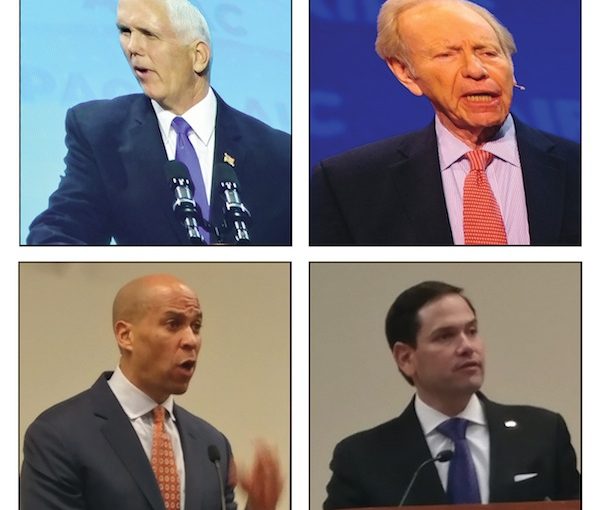
Politicians speak at AIPAC

Clockwise, from top left: U.S. Vice-President Mike Pence, Joe Lieberman, Senator Marco Rubio and Senator Cory Booker address attendees of last month’s AIPAC Policy Conference. (photos by Dave Gordon)

U.S. Vice-President Mike Pence, in addition to other ranking American politicians, spoke of their unwavering support for the Jewish state to 18,000 people at the American Israel Public Affairs Committee (AIPAC) Policy Conference, in Washington, D.C., March 24-26.

Speech themes revolved around recent rocket attacks against Israeli civilians, the Golan Heights being recognized as Israeli sovereign territory by the United States, and sanctions against Iran. Every official who mentioned BDS, the boycott, divestment and sanctions movement against Israel, condemned it.

Much was said about the Democratic congresswoman from Minnesota, Ilhan Abdullahi Omar. Her statements – including “Israel has hypnotized the world” and that AIPAC has influenced U.S. policy through money – have been interpreted as antisemitic by some Jewish leaders.

Pence said, “History has already proven [Donald Trump] to be the greatest friend of the Jewish people and the state of Israel ever to sit in the Oval Office of the White House.”

Among the pro-Israel bona fides of Trump, Pence said the United States shut down the Washington branch of the Palestinian Authority as a consequence for funding terror; ended tax dollar funding for United Nations-funded Palestinian schools; moved the U.S. embassy to Jerusalem; and recognized the Golan Heights as Israeli territory.

“We stand with Israel because her cause is our cause, her values are our values,” he said.

In addition, Pence talked about the end of the “disastrous nuclear deal with Iran” that has been replaced with “a maximum-pressure campaign” of sanctions, thereby causing Iran’s economy to dip.

“There’ll be no more pallets of cash to the mullahs in Iran,” he said.

In a swipe across the political aisle, Pence said, “It’s astonishing to think that the party of Harry Truman, which did so much to help create the state of Israel, has been co-opted by people who promote rank antisemitic rhetoric and work to undermine the broad American consensus of support for Israel.”

Without mentioning her name, he referred to Omar as “a freshman Democrat in Congress” who “trafficked in repeated antisemitic tropes.”

Former U.S. ambassador to the UN Nikki Haley’s first comments were about what she believes is the UN’s hypocrisy.

“You know, what’s interesting is, at the UN, I can guarantee you this morning it is radio silent,” she said, in reference to the rocket attacks from Gaza into Israel. “They are not saying anything about Hamas, they’re not saying anything about the lives lost, they’re not saying anything. But, if it was any [other] countr[y], they’d be calling an emergency Security Council meeting.”

David Friedman, U.S. ambassador to Israel, claimed that Trump is “Israel’s greatest ally ever to reside in the White House” and, to those who think otherwise, “please, take a deep breath and think about it some more.”

How America is now sanctioning Iran was one example of an Israel-friendly policy. Friedman criticized the previous administration for paying the Islamic Republic $100 billion in the hopes that country would “self-correct.”

“What did Iran do with all its newly found treasure?” he asked. “Did it build up its civilian institutions? Did it improve the quality of life of its citizens?” Instead, he said, it “doubled down on terrorist activity in Yemen, in Iraq and in Lebanon. It increased its stock of ballistic missiles and it invested in military bases in Syria, on Israel’s northern border.”

photo - Protesters at this year’s AIPAC Policy Conference, in Washington, D.C., last month
Protesters at this year’s AIPAC Policy Conference, in Washington, D.C., last month. (photo by Dave Gordon)

Israeli Prime Minister Binyamin Netanyahu delivered an address via satellite, initially planning to take the podium in person, but returning to Israel to deal with the rocket attacks.

“The Golan Heights is indispensable for our defence,” he said of the recognition by the United States of the northern land seized by Israel in the Six Day War, in 1967. “It’s part of our history. When you put a shovel in the ground there, what you discover are the ruins of ancient synagogues. Jews lived there for thousands of years and the people of Israel have come back to the Golan.”

Netanyahu said he thought comments like Omar’s are antisemitic.

“Again, the Jews are cast as a force for evil,” he said. “Again, the Jews are charged with disloyalty. Again, the Jews are said to have too much influence, too much power, too much money. Take it from this Benjamin, it’s not about the Benjamins.”

In the session Canada’s Relationship with Israel, the panel included Liberal member of Parliament Anthony Housefather, Conservative MP Erin O’Toole and former Conservative foreign minister John Baird.

Housefather said he believes Israelis do not think there’s a negotiating partner for peace, but they share some blame in the conflict: “The more they create settlements, the less likely there will be peace … they should think carefully before expanding settlements.”

A questioner asked him when the Canadian prime minister would do something “real” for Israel and Housefather noted that, in recent weeks, Prime Minister Justin Trudeau forcefully condemned the BDS movement in a town hall meeting.

Another audience member asked why the Trudeau government continues to fund the United Nations Relief and Works Agency. While acknowledging that UNRWA has “curricula problems” that involve “anti-Jewish, anti-Israel comments, misogynistic comments and anti-gay comments,” he said that the $50 million in funding was just.

Housefather said he had spoken with the head of UNRWA and voiced his “concerns at the slow pace they are making changes in the curricula,” but added that their schools make children “a lot less likely to become terrorists against Israel.”

“Yes to helping them with UN aid programs; no to funding their schools,” said O’Toole. And Baird agreed.

On the topic of a peace plan, O’Toole said he “kept hearing from Palestinians their want for a ‘one-state solution,’” while their government “exerts violence, and does not take care of the needs of their people.”

“I think you’ll see from Israeli leaders that they’re prepared to experience real pain [in concessions],” Baird said, but “Palestinians have to stop the incitement” and the “hate-mongering.”

While several candidates for the Democratic party’s 2020 presidential nomination skipped the conference, leading Democratic figures were prominent at AIPAC, including House Speaker Nancy Pelosi, who insisted no one will be permitted to make Israel a partisan wedge issue.

Dave Gordon is a Toronto-based freelance writer whose work has appeared in more than 100 publications around the world.

Format ImagePosted on April 12, 2019April 10, 2019Author Dave GordonCategories WorldTags AIPAC, Anthony Housefather, antisemitism, BDS, Binyamin Netanyahu, David Friedman, Diaspora, Erin O’Toole, Israel, John Baird, Mike Pence, politics
Self-inflicted troubles

Self-inflicted troubles

There are few political leaders who can rest easy these days. Movements are sweeping the world, upending existing assumptions and bringing or threatening major change.

In Venezuela, the leadership is still contested between the far-left incumbent President Nicolás Maduro and the Western-backed opposition leader Juan Guaidó, who claims the presidency. In Brazil, a new rightist regime is making nice with U.S. President Donald Trump and Israeli Prime Minister Binyamin Netanyahu. Far-right parties continue to make gains in European elections, including last weekend’s vote in Estonia, while a movement in Spain is exhuming the fascist past of the Franco era.

In Canada, we appear to be in the midst of the most dramatic political scandal in recent memory. Former justice minister and attorney general Jody Wilson-Raybould’s testimony last week to the Commons’ Justice Committee blew the lid off what she called inappropriate, excessive political interference and veiled threats from the prime minister and other top government officials, who allegedly attempted to influence her decision around a criminal case involving the Quebec corporation SNC-Lavalin. Wilson-Raybould’s testimony painted a picture of a leadership that couldn’t differentiate between the partisan interests of the Liberal party and the judicious operations of the affairs of the government of Canada. The prime minister’s recently resigned former chief of staff, Gerald Butts, was to address the same committee this week, presumably to voice the narrative of the Prime Minister’s Office. But, before he had time to utter his first word, another cabinet minister, Treasury Board president Jane Philpott, abruptly quit cabinet Monday.

“I must abide by my core values, my ethical responsibilities and constitutional obligations,” Philpott declared in a written statement. “There can be a cost to acting on one’s principles, but there is a bigger cost to abandoning them.” Yikes! What does she know that we don’t know? And when do we find out?

The parallels and differences were stark on the same day last week between American and Canadian politics. While Wilson-Raybould was having her say, Trump’s former personal lawyer, Michael Cohen, was unloading a decade’s worth of pent-up hostility at his former boss in front of members of the U.S. Congress. While Wilson-Raybould was handled with figurative kid gloves by fellow Liberals on the committee (whose job, in some ways, was to defend the prime minister and his government on the issue), the reaction from Republicans toward their former ally was anything but cordial. Trump-allied congresspeople went at Cohen hammer and tong, accusing him of being a serial liar, the irony of the scene seemingly lost in their moral indignation.

While both Trudeau and Trump had a very bad week, impeaching Trump seems like a nearly impossible dream given the loyalty of most Republicans to defend his every action. But Trudeau, whose party is now facing almost certainly more challenging conditions in October’s election, may have an internal revolt on his hands if he does not somehow square the circle of the SNC-Lavalin catastrophe and its associated circus side-shows and, not secondarily, reassure his caucus that they’re not all going to get the boot because their leader interfered with a fundamental tenet governing the proper proceedings of justice and rule of law. This is probably far from over.

In Britain, Prime Minister Theresa May flounders about trying to find some resolution to the impending exit from the European Union, which is scheduled to happen in three weeks. The terms of that breakup – and whether it will take place as planned, be delayed or somehow permanently put on hold – remain entirely uncertain. The governing Conservatives and the opposition Labour party have all acted like amateurs through this process, stumbling from one failure to another. Last week, Labour announced they would support a second referendum on the issue, which could provide an escape hatch. If only the deadline for Brexit were not now being counted in hours.

In Israel, King Bibi faces the most serious threat to his leadership in years. Netanyahu was notified last week that he will almost certainly face indictment for bribery, fraud and breach of trust based on allegations that he has provided benefits to allies and friends in return for gifts like pink champagne and cigars, as well as allegedly bartering favours for positive media coverage. With an election now a month away, and facing a new opposition coalition headed by Benny Gantz, the former chief of general staff of the Israel Defence Forces, Netanyahu is not only fighting against the imminent criminal charges. He now faces, in Gantz, someone who neutralizes Bibi’s perpetual advantage over his political rivals – his reputation as a leader who is tough on security. While Netanyahu has tried to paint the apparently centrist Gantz as a “leftist,” most Israeli voters seem mainly concerned with the cost of living, inflation and other pocketbook issues. While the jockeying for coalitions after the vote is often as significant as the election results themselves, sober commentators are speculating that the Netanyahu era may not last much longer.

While political turmoil can have many sources, much of it in democracies comes straight from the highest levels of leadership – from the malfeasance or misfeasance of top elected officials themselves. Whatever the future has in store for Trudeau, Trump, May and Netanyahu, in each case, much of the damage they individually face is self-inflicted.

Format ImagePosted on March 8, 2019March 6, 2019Author The Editorial BoardCategories From the JITags Binyamin Netanyahu, Britain, Canada, Donald Trump, Israel, Justin Trudeau, politics, Theresa May, United States
Successful launch

Successful launch

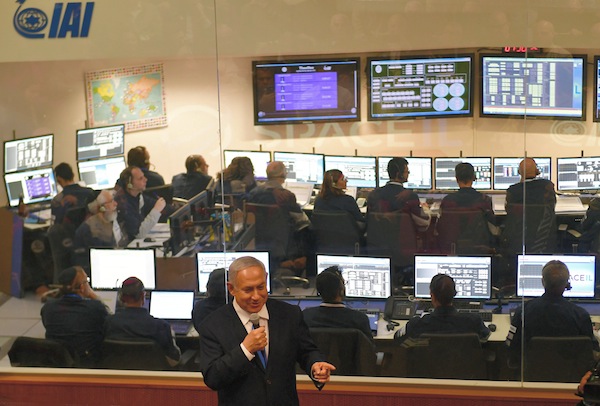
Prime Minister Binyamin Netanyahu at the Israel Aerospace Industries control room to witness the launch of Israel’s first attempt to put a lander on the moon. (photo from IAI courtesy Ashernet)

In the early hours of Feb. 22, Bereishit, which means Genesis, successfully lifted off on one of Elon Musk’s U.S.-based SpaceX Falcon 9 rockets. It is hoped that the 585-kilogram Israeli space vehicle will land on the moon in about six weeks’ time. “There are four countries that have launched a spacecraft to the moon, one of them is 800 times bigger than we are, one of them 500 times bigger, and one that is a little less than that,” said Netanyahu, referring to the United States, Russia and China. “We are a small country, but huge in achievements and in the capacity of our initiative. I hope that the spacecraft to Mars is already being planned.” He also said he hopes that, on April 11, “we will be able to celebrate the safe landing of Bereishit.”

Format ImagePosted on March 1, 2019February 27, 2019Author Edgar AsherCategories IsraelTags Binyamin Netanyahu, IAI, Israel, Israel Aerospace Industries, moon, space, technology

Civil dissent: a Jewish value

Last week, I participated in a survey on Canadian Jews done by the Environics Institute for Survey Research, in partnership with Prof. Robert Brym of the University of Toronto and Prof. Rhonda Lenton of York University. It’s considered a “landmark national survey of Jews in Canada in 2018.”

The phone call came at 5 p.m. This time coincides with making dinner, school lunches for my kids, feeding our dogs, and keeping the twins and dogs from roughhousing too much in the meanwhile. (Did I mention my biologist husband was away, doing field work?)

However, I knew this was important. This was a situation where my opinions and experiences mattered. I needed to contribute despite being the only adult present to address the chaos at my house.

Often, we think of politics, religion and money as things to avoid. They’re too emotionally laden to make good dinner conversation. Still, we need to talk and think about this to figure out where we stand. If one looks only at the Torah portion of the week, you might see it as black and white pronouncements about how one should behave or observe the commandments. Yet Oral Law is also part of Judaism. We care what the rabbis thought and discussed. Over thousands of years, our ideas developed, changed and grew. Those talmudic discussions include majority and minority opinions, as well as stories and sayings.

In our tradition, subtle differences matter. Opinions matter. According to the joke, if you ask two Jews, you’ll get three opinions.

That’s why I was stunned by the reaction to actress Natalie Portman’s choice to decline the Genesis Prize. In her statement, she lovingly celebrated her Israeli identity, her friends and family and her citizenship. She also explained that she felt uncomfortable with the current government, specifically, Prime Minister Binyamin Netanyahu’s choices, and its “violence, corruption, inequality and abuse of power.”

A torrent of media and political reaction followed, some of it hysterical in tone. The president of the Zionist Organization of America, Mort Klein, was downright misogynistic. He called the Harvard-educated actor and director “beautiful, but not too bright.”

Portman carries two passports as a dual American-Israeli citizen. Some called for her to be stripped of her Israeli citizenship. Since when is it OK to tell someone they can no longer be a citizen of a democratic country because she spoke out on political issues that concern her?

I’m a dual American-Canadian citizen. If I speak out on a political issue, I am within my rights as a citizen of (either) democratic society. I hear comments on Prime Minister Justin Trudeau’s government or U.S. President Donald Trump’s latest tweets wherever I go. All that said, some of those survey questions made me realize – I no longer feel comfortable publicly writing about or speaking either in support of Israel or criticizing Israel’s policies. Why?

All subtlety has dropped out of the conversation.

Old guard, right-wing Zionists who say “I stand with Israel” bristle whenever anyone says something critical of the current Israeli government’s policies. Meanwhile, anyone with liberal or left-wing politics feels uncomfortable with the notion that Israel would deport asylum-seekers, never mind the current violence with Palestinians or the reactions to their using the word “occupied.”

Many have given up even trying to discuss the issues. They don’t want to be attacked. Getting vitriolic responses from friends, acquaintances and family members, or a stream of emails about those “antisemites,” or worse, seems par for the course now.

A New York magazine article online, “Natalie Portman and the crisis of liberal Zionism,” helps explain the dilemma. Many younger North American Jews embrace liberal North American politics about equality and human rights, and feel disconnected from Israel. The old notion of a liberal Zionist or progressive supporter is no longer courted by Israel, either. The support of Christian evangelicals and a growing block of Orthodox, conservative voters might mean that some in Israel believe they no longer need the support of those liberal Zionists of old.

You may wonder why my columns don’t discuss Israel much. I’d respond with what Israelis told me as a teenager, living on an Israeli kibbutz. “If you want to weigh in on Israeli politics? Move to Israel and vote. Otherwise? We’ve heard enough from you North Americans.”

I tend my garden, as Voltaire says – I write about Judaism, religion, family and about where we stand as Canadian Jews. Our religion teaches us to learn, analyze and form opinions, like the rabbis do. As a citizen of both the United States and Canada, I defend wholeheartedly Portman’s right to speak out on politics and human rights issues that matter to her. It’s an essential part of free speech and the democratic ideal. One has to wonder whether the virulent reaction to her statement says more about Portman, or about the people who have responded so negatively.

In a democracy, we should be able to express well-considered opinions and disagree about things in a civil way, without fear of threats. Why would anyone consider it acceptable (Jewish) behaviour to threaten, embarrass or demean someone else? Many rabbis taught us: threats, embarrassment or denigrating others are just not Jewish things to do.

Joanne Seiff writes regularly for CBC Manitoba and various Jewish publications. She is the author of three books, including From the Outside In: Jewish Post Columns 2015-2016, a collection of essays available for digital download or as a paperback from Amazon. See more about her at joanneseiff.blogspot.com.

Posted on May 4, 2018May 2, 2018Author Joanne SeiffCategories Op-EdTags Binyamin Netanyahu, civil discourse, democracy, Genesis Prize, Israel, Judaism, Natalie Portman
A look back at the year 5777

A look back at the year 5777

September 2016, Jerusalem. At the funeral of former president and prime minister Shimon Peres, U.S. President Barack Obama offers a tissue to Peres’ son Chemi. (all photos from Ashernet)

In reviewing the Jewish year 5777, one name stands out – Binyamin Netanyahu. Despite having to fend off accusations of various wrongdoings at home, the Israeli prime minister has had a successful diplomatic year.

This year, Israel welcomed U.S. President Donald Trump and India’s Prime Minister Narendra Modi. Modi’s visit marked the first time since the foundation of the state of Israel that a sitting Indian prime minister had visited. Meanwhile, Netanyahu was warmly received by China in March and, a month prior to that, by Australia. Closer to home, he established good relations with Greece and Cyprus.

In September 2016, Israel bade a final farewell to former president and prime minister Shimon Peres. His funeral was attended by many sitting and former heads of state, including former U.S. presidents Barack Obama and Bill Clinton.

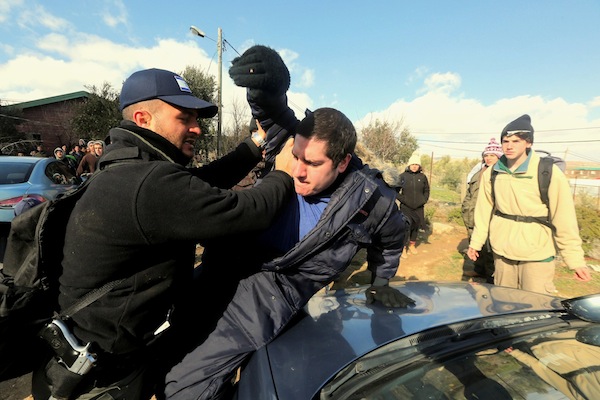
Last December, the Israel Air Force received its first F-35 fighter plane from the United States. In January, settlers in the West Bank outpost of Amona fought with police following a court order that declared Amona an illegal Jewish settlement.

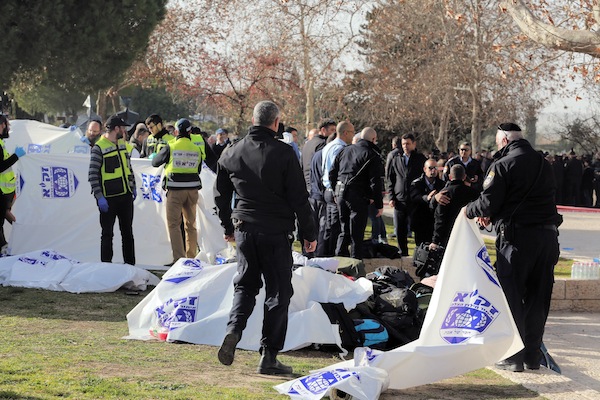
On Jan. 8, four people were killed when a released Arab prisoner ran a truck into a group of people on the Armon Hanatziv Promenade in Jerusalem. This act of murder was referred to as the “truck intifada.” In Gaza, Hamas activists handed out sweets in celebration. This method of terror was soon to be repeated many times in countries all over the world.

At regular intervals during the year, announcements were made concerning important archeological finds all over Israel. Israeli law states that the Israel Antiquities Authority must be notified as soon as there is indication of archeological remains and that, only after specialist examination and, if necessary, excavation, can the development proceed.

The year also saw the celebration of the 50th year since the reunification of Jerusalem in the Six Day War ( June 1967).

It has been an outstanding year for Israel’s high-tech sector. In particular, 2017 saw the largest business deal in Israel’s history when Mobileye was bought by Intel for some $15 billion.

The Jewish year ended with a bit of confusion, as the region once again became unsettled as Iran attempts to get a stronger foothold in Syria, along with their continued efforts to arm Hezbollah.

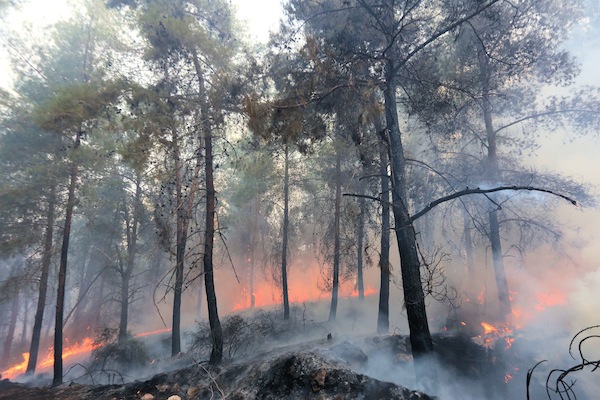
photo - November 2016. A serious fire breaks out near Latrun in the Jerusalem corridor following yet another dry, hot summer. Some 140 firefighters are needed to bring the blaze under control.
November 2016. A serious fire breaks out near Latrun in the Jerusalem corridor following yet another dry, hot summer. Some 140 firefighters are needed to bring the blaze under control.
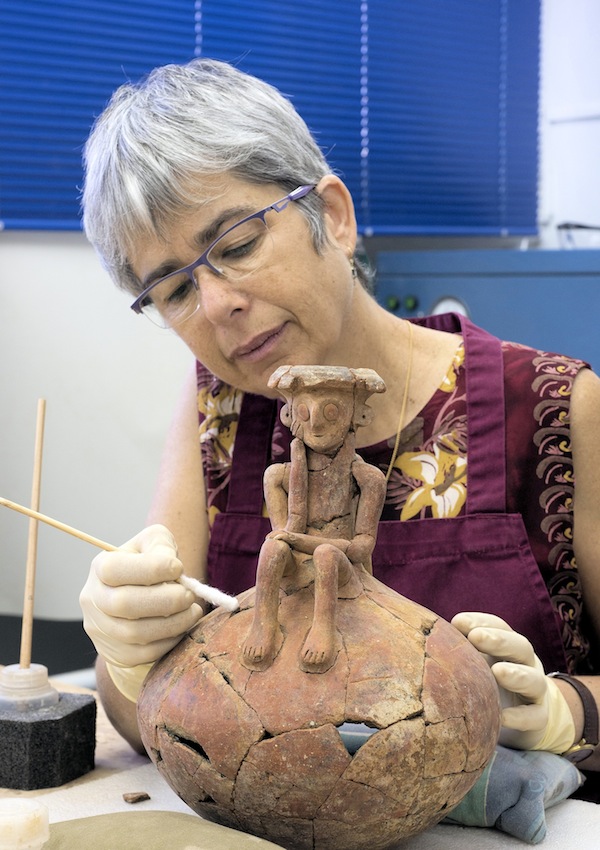
photo - November 2016. A high school student taking part in an organized excavation in Yehud, near Ben-Gurion International Airport, finds a 3,800-year-old jug from the Middle Bronze Age, seen here during its restoration.
November 2016. A high school student taking part in an organized excavation in Yehud, near Ben-Gurion International Airport, finds a 3,800-year-old jug from the Middle Bronze Age, seen here during its restoration.
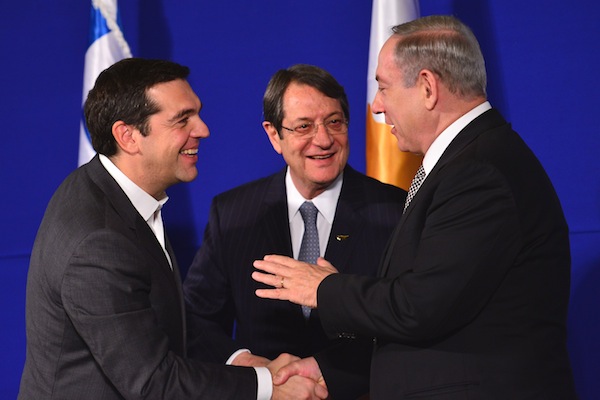
photo - December 2016, Jerusalem. Left to right: Greek Prime Minister Alexis Tsipras, Cypriot President Nicos Anastasiades and Israeli Prime Minister Binyamin Netanyahu hold historic tripartite talks to improve cooperation between the three eastern Mediterranean countries
December 2016, Jerusalem. Left to right: Greek Prime Minister Alexis Tsipras, Cypriot President Nicos Anastasiades and Israeli Prime Minister Binyamin Netanyahu hold historic tripartite talks to improve cooperation between the three eastern Mediterranean countries.
photo - December 2016. The first of 50 F-35 stealth fighters arrive in the Israel Air Force base in Nevatim. The IAF was the first air force outside the United States to receive this state-of-the-art fighter plane
December 2016. The first of 50 F-35 stealth fighters arrive in the Israel Air Force base in Nevatim. The IAF was the first air force outside the United States to receive this state-of-the-art fighter plane.
photo - January 2017. Four pedestrians are murdered in Jerusalem’s East Talpiot neighbourhood by a truck driven at speed; 13 others are injured. The terrorist is shot dead by police
January 2017. Four pedestrians are murdered in Jerusalem’s East Talpiot neighbourhood by a truck driven at speed; 13 others are injured. The terrorist is shot dead by police.
photo - February 2017. Following a High Court ruling, the illegal Jewish settlement of Amona, 20 kilometres north of Jerusalem, is forcibly evacuated by police and security forces. The court ruled that the settlement had been established on Palestinian-owned land
February 2017. Following a High Court ruling, the illegal Jewish settlement of Amona, 20 kilometres north of Jerusalem, is forcibly evacuated by police and security forces. The court ruled that the settlement had been established on Palestinian-owned land.
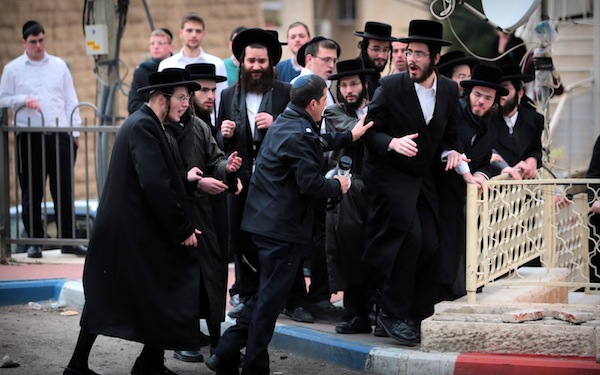
photo - February 2017. Some ultra-Orthodox riot over government insistence that all able-bodied young men be drafted into the army. While heads of many Charedi yeshivot have encouraged their students not to report to induction centres, there are many Israel Defence Force units that have ultra-Orthodox soldiers in their ranks
February 2017. Some ultra-Orthodox riot over government insistence that all able-bodied young men be drafted into the army. While heads of many Charedi yeshivot have encouraged their students not to report to induction centres, there are many Israel Defence Force units that have ultra-Orthodox soldiers in their ranks.
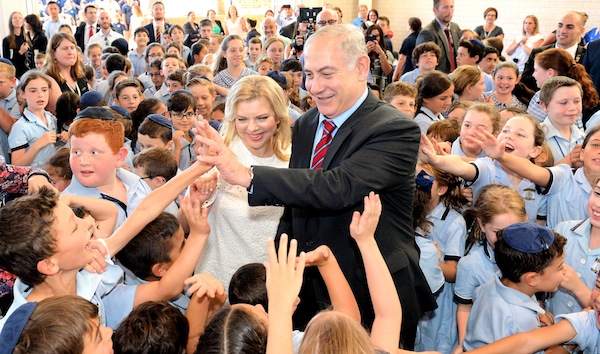
photo - February 2017. Binyamin Netanyahu is the first incumbent Israeli prime minister to officially visit Australia. The picture shows Netanyahu and his wife Sara at the Sydney Jewish School of Moriah
February 2017. Binyamin Netanyahu is the first incumbent Israeli prime minister to officially visit Australia. The picture shows Netanyahu and his wife Sara at the Sydney Jewish School of Moriah.
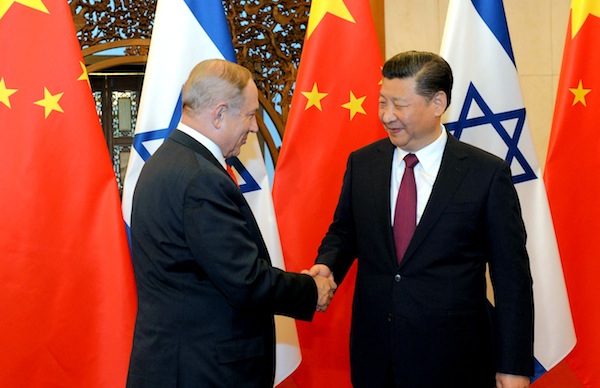
photo - March 2017. Prime Minister Binyamin Netanyahu with Chinese President Xi Jinping. Netanyahu, together with a business delegation, made the visit to China to expand trade between the two countries
March 2017. Prime Minister Binyamin Netanyahu with Chinese President Xi Jinping. Netanyahu, together with a business delegation, made the visit to China to expand trade between the two countries.
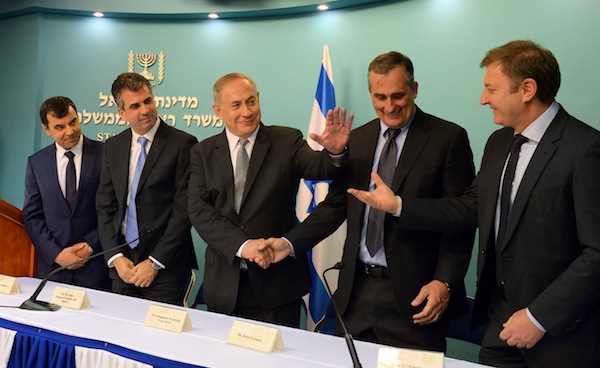
photo - March 2017. Mobileye is bought by Intel, but the headquarters of the company will remain in Jerusalem. Left to right are Amnon Shashua, Eli Cohen, Prime Minister Binyamin Netanyahu, Brian Krzanich and Ziv Aviram
March 2017. Mobileye is bought by Intel, but the headquarters of the company will remain in Jerusalem. Left to right are Amnon Shashua, Eli Cohen, Prime Minister Binyamin Netanyahu, Brian Krzanich and Ziv Aviram.
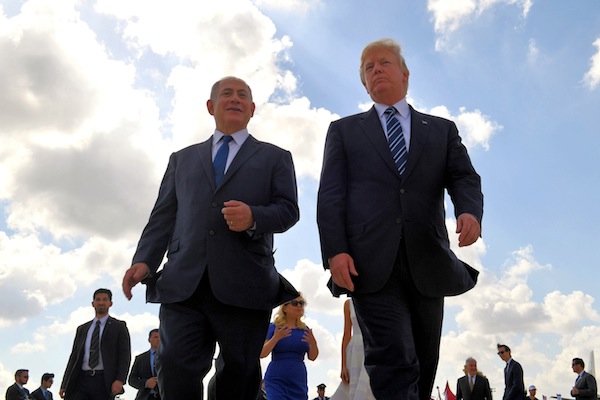
photo - May 23, 2017. U.S. President Donald Trump, seen here with Prime Minister Binyamin Netanyahu, made Israel one of the first overseas countries he visited since becoming president
May 23, 2017. U.S. President Donald Trump, seen here with Prime Minister Binyamin Netanyahu, made Israel one of the first overseas countries he visited since becoming president.
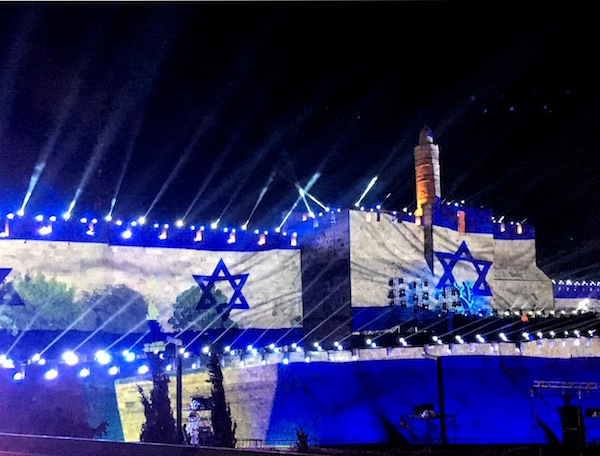
photo - May 2017. On May 20, Jerusalem was illuminated to celebrate the 50th year of the city’s reunification following the Six Day War
May 2017. On May 20, Jerusalem was illuminated to celebrate the 50th year of the city’s reunification following the Six Day War.
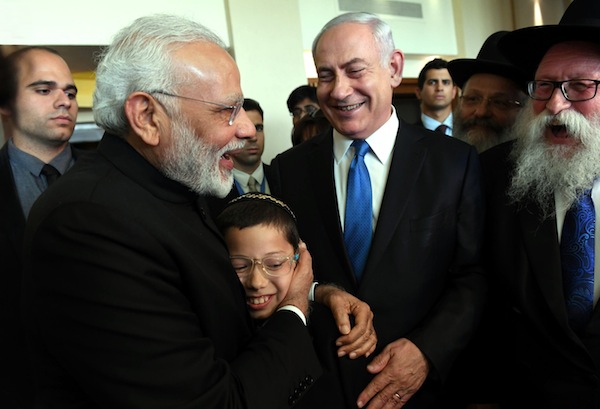
photo - July 2017. Indian Prime Minister Narendra Modi, left, becomes the first sitting Indian prime minister to officially visit Israel. Accompanied by Prime Minister Binyamin Netanyahu, Modi meets with Moshe Holtzberg, 10, who survived the terrorist attack that killed Moshe’s parents and seven others at Mumbai’s Chabad House in November 2008
July 2017. Indian Prime Minister Narendra Modi, left, becomes the first sitting Indian prime minister to officially visit Israel. Accompanied by Prime Minister Binyamin Netanyahu, Modi meets with Moshe Holtzberg, 10, who survived the terrorist attack that killed Moshe’s parents and seven others at Mumbai’s Chabad House in November 2008.
Format ImagePosted on September 29, 2017September 28, 2017Author Edgar AsherCategories IsraelTags Binyamin Netanyahu, Israel, Middle East, politics, terrorism
Mourning, traveling, celebrating – Israel in photos

Mourning, traveling, celebrating – Israel in photos

Prime Minister Binyamin Netanyahu with David Malka, father of Border Police officer Hadas Malka, who was stabbed to death by a Palestinian terrorist outside Jerusalem’s Old City on June 16. (photo by Kobi Gideon / Israel Government Press Office via Ashernet)

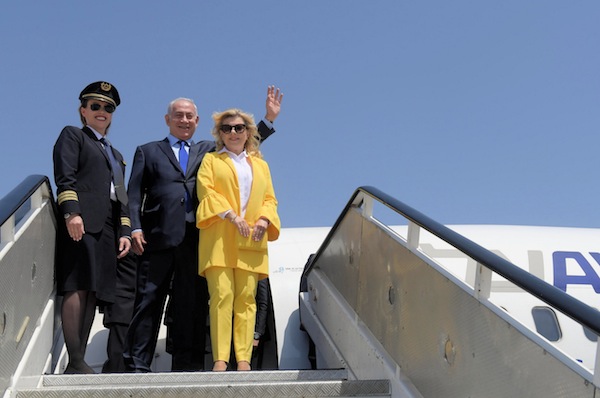
photo - Prime Minister Netanyahu and his wife Sara, with El Al’s first ultra-Orthodox female pilot, Nechama Spiegel Novak, as they set out to Salonika, Greece, on June 14
Prime Minister Netanyahu and his wife Sara, with El Al’s first ultra-Orthodox female pilot, Nechama Spiegel Novak, as they set out to Salonika, Greece, on June 14. (photo from IGPO via Ashernet)
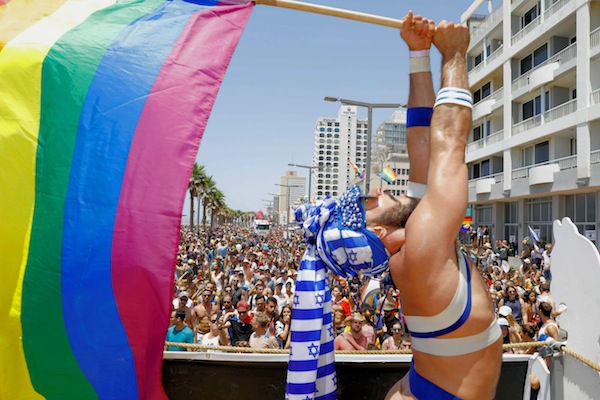
photo - More than 200,000 people attended the Tel Aviv Gay Pride Parade June 9
More than 200,000 people attended the Tel Aviv Gay Pride Parade June 9. (photo by Guy Yechiely via Ashernet)
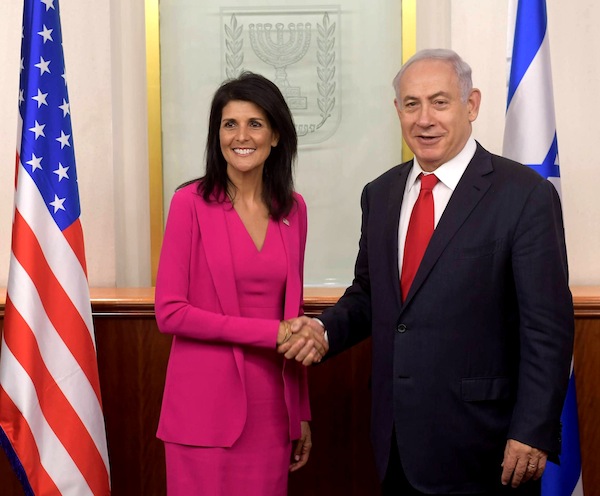
photo - Netanyahu in his office June 7 with U.S. Ambassador to the United Nations Nikki Haley
Netanyahu in his office June 7 with U.S. Ambassador to the United Nations Nikki Haley. (photo by Amos Ben Gershom / IGPO via Ashernet)
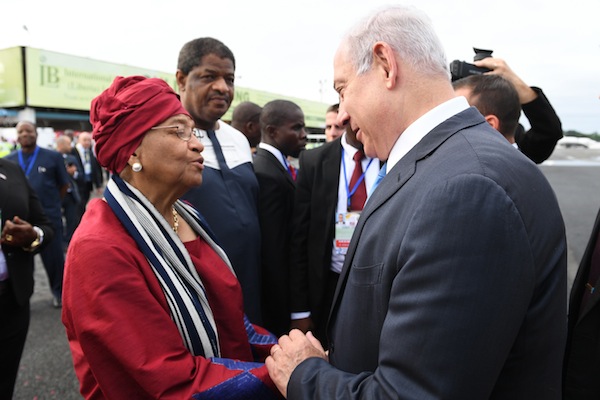
photo - Netanyahu is welcomed to Monrovia by Liberian President Ellen Johnson Sirleaf on June 4
Netanyahu is welcomed to Monrovia by Liberian President Ellen Johnson Sirleaf on June 4. (photo by Kobi Gideon / IGPO via Ashernet)
Format ImagePosted on June 23, 2017June 21, 2017Author Edgar AsherCategories IsraelTags Binyamin Netanyahu, David Malka, Ellen Johnson Sirleaf, Hadas Malka, Israel, LGBTQ, Liberia, Nechama Spiegel Novak, Nikki Haley, Pride, Sara Netanyahu, terrorism, United States

Posts pagination

Previous page Page 1 Page 2 Page 3 … Page 5 Next page
Proudly powered by WordPress