Skip to content
  • Home
  • Subscribe / donate
  • Events calendar
  • News
    • Local
    • National
    • Israel
    • World
    • עניין בחדשות
      A roundup of news in Canada and further afield, in Hebrew.
  • Opinion
    • From the JI
    • Op-Ed
  • Arts & Culture
    • Performing Arts
    • Music
    • Books
    • Visual Arts
    • TV & Film
  • Life
    • Celebrating the Holidays
    • Travel
    • The Daily Snooze
      Cartoons by Jacob Samuel
    • Mystery Photo
      Help the JI and JMABC fill in the gaps in our archives.
  • Community Links
    • Organizations, Etc.
    • Other News Sources & Blogs
    • Business Directory
  • FAQ
  • JI Chai Celebration
  • JI@88! video

Recent Posts

  • Zionism wins big in Vegas
  • Different but connected
  • Survival not passive
  • Musical celebration of Israel
  • Shoppe celebrates 25 years
  • Human “book” event
  • Reclaiming Jewish stories
  • Bema presents Perseverance
  • CSS honours Bellas z”l
  • Sheba Promise here May 7
  • Reflections from Be’eri
  • New law a desecration
  • Resilient joy in tough times
  • Rescue dog brings joy
  • Art chosen for new museum
  • Reminder of hope, resilience
  • The national food of Israel?
  • Story of Israel’s north
  • Sheltering in train stations
  • Teach critical thinking
  • Learning to bridge divides
  • Supporting Iranian community
  • Art dismantles systems
  • Beth Tikvah celebrates 50th
  • What is Jewish music?
  • Celebrate joy of music
  • Women share experiences 
  • Raising funds for Survivors
  • Call for digital literacy
  • The hidden hand of hate
  • Tarot as spiritual ritual
  • Students create fancy meal
  • Encouraging young voices
  • Rose’s Angels delivers
  • Living life to its fullest
  • Drawing on his roots

Archives

Follow @JewishIndie
image - The CJN - Visit Us Banner - 300x600 - 101625

NFB offers 4,000 titles

The National Film Board of Canada (nfb.ca) offers a selection of some 4,000 short and feature-length films, whether you’re looking for animation, documentary or fiction. Explore the Cartoons for Kids section for the latest releases.

The Jewish Independent has reviewed several NFB films over the years, which have been made by Jewish community members, such as Ryan Sidhoo’s docuseries (now feature film) True North, which looks at the youth basketball scene in Toronto, and David Fine and Alison Snowden’s animated short Animal Therapy, which explores some of the pros and cons of following our natural instincts versus doing what is socially acceptable. There are also films on Jewish people or subjects, such as the documentary Ladies and Gentlemen … Mr. Leonard Cohen and the animated short My Yiddish Papi by Éléonore Goldberg.

Enjoy searching the many choices available from the NFB, Jewish-related or not. Recently added titles include Where the Land Ends, a documentary feature by Loïc Darses, about the places that created Quebec, exploring the historical narrative, as a group of young people who were not old enough to vote in the 1995 referendum express their views; Ice Breakers, a documentary short by Sandi Rankaduwa on the Black athletes who helped pioneer modern hockey, through the story of Josh Crooks, an African-Canadian player; and The Great List of Everything, an animated webseries by comic book artists Cathon and Iris Boudreau, as well as Francis Papillon.

New films are being added to nfb.ca all the time, and they’re always free to view.

Format ImagePosted on April 3, 2020April 2, 2020Author JI and NFBCategories TV & FilmTags COVD-19, documentaries, Judaism, movies, National Film Board of Canada, Yiddish
Dealing with anxieties

Dealing with anxieties

Deborah Grayson Riegel, left, and Sophie Riegel co-wrote the book Overcoming Overthinking. Sophie also authored Don’t Tell Me to Relax! (photo from Riegels)

Many people experience one or more kinds of anxiety disorder, yet fewer than half seek professional help, often because of the perceived stigma of having such a condition, according to Deborah Grayson Riegel and Sophie Riegel.

Both Deborah and her daughter Sophie, 19, have more than one diagnosed anxiety disorder – Deborah has three and Sophie, four. Initially, as Deborah and husband Michael were helping Sophie with her anxiety, they didn’t tell her about Deborah’s. But that silence has ended.

Today, Deborah is a speaker, executive coach, instructor and writer who works part-time in the Jewish community in Manhattan. The bulk of her work is within the corporate community, helping people navigate difficult conversations.

“As Sophie and I were putting our book together, I realized how much of my work is about helping people manage the anxiety associated with getting up and speaking in front of other people, or giving feedback or having hard conversations,” Deborah told the Independent.

Most recently, Deborah was invited to work with Duke Corporate Education, which she was excited about, with Sophie having just started as a freshman at Duke.

“I think Sophie feels really strongly about letting parents know that, if you’re withholding or not exploring medication because of a stigma, because of a fear of dependency, because of anything, you may be costing your kid time,” said Deborah. “Sophie had said in a different interview, where questions came up about what we as parents wish we’d done differently … Sophie’s answer was that she wished we’d explored medication sooner.”

According to Sophie, seeking professional help is important, as the combination of both counseling and medication worked best for both her and her mother, as it does for many others.

image - Don’t Tell Me to Relax! book coverShortly after a traumatic experience at the age of 13, Sophie began working on her first book, Don’t Tell Me to Relax!: One Teen’s Journey to Survive Anxiety and How You Can Too, which she completed in five years. “I started writing it because I was being severely bullied due to some of my obsessive compulsive tendencies,” said Sophie. “I talked to my therapist and we realized the only way to have people stop bullying me was to educate them. So, I ended up giving a 20-minute presentation in seventh grade about my experience living with OCD [obsessive compulsive disorder] and anxiety, and the girls who had bullied me ended up coming up and apologizing to me. I realized that, if I could have that kind of impact in 20 minutes, imagine what kind of impact I could have if I wrote an entire book that I could share with everyone.”

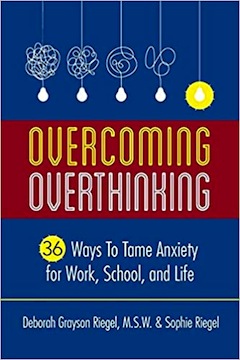
Once Sophie’s book came out, she and her mom decided to co-author one together. Called Overcoming Overthinking: 36 Ways to Tame Anxiety for Work, School and Life, it came out last year.

“When Sophie would be out speaking about the strategies that she uses to navigate anxiety, she heard herself saying, ‘one thing I learned from my mom is … and another thing I learned from my mom is’ … and, I hadn’t realized I was saying or doing these things,” said Deborah. “But Sophie was picking up some strategies I’ve used for myself. So, I said that there are clearly a lot of strategies we’re both using, and maybe we could put them in a book.

“Secondly, I had gotten a call from an organization that had thought that Sophie’s book was something we wrote together. They said, ‘Oh, you wrote this book together … we’d love for you to come and speak.’ And I said, ‘Well, we haven’t written a book together, but we will by October!’ So, we just said, ‘All right, now we’ve told somebody we’re going to write a book … now we have to go write it.’ So, we had a little bit of artificial, external pressure, but it worked well for us.”

In her first book, Sophie shares her journey with anxiety disorder and offers advice to parents, teens and educators; she also debunks anxiety myths and provides a list of resources.

In Overcoming Overthinking the mother-daughter duo offers self-help tips and tools, and focuses on strategies and advice, with about a quarter of the book being from a personal perspective.

One of the stories Sophie shares in the second book is about bribing her therapist to convince her parents that getting a dog would be worthwhile and helpful for her. “We ended up getting a dog, but the interesting part of the story is that my mom is absolutely terrified of dogs … or was … we went from having no dog to having this 80-pound pitbull,” said Sophie.

“And it’s a sign of how much a parent will do to make sure their child is OK … that they will go above and beyond and do anything they need to do. Because, at that point, right before getting a dog and before things started getting a little better for me, my parents thought I’d never be able to graduate high school … that I’d have to be institutionalized, those kinds of things. With this dog, Nash, who’s my best friend, I was able to learn new strategies to handle the anxiety … and learned how much my parents really loved me, and what they were willing to do so I was able to live a healthier lifestyle.”

Both books have been well-received, with parent readers sharing messages such as, “My teen is going through this exact same thing and, because they read your book, they’re starting to know how to talk about it … and I know how to talk to them about it, so you’ve really opened up the lines of communication between us.”

Deborah said, “I got one message from a parent who originally thought their kid was having a heart attack, but then realized from what they had read in Sophie’s book that it was actually a panic attack. It kept them from having to bring him to the ER, because they realized it wasn’t a heart attack. So, they were able to help at home thanks to Sophie’s book.”

Both Deborah and Sophie strongly encourage people to seek professional help when in need. Their book is not a substitute for psychological intervention, they stressed. Deborah added, “We strongly recommend getting that kind of support, whether it’s cognitive behavioural therapy, which has worked for both of us, [or other approaches.]”

image - Overcoming Overthinking book coverOvercoming Overthinking has 36 chapters, which is intentionally double chai (18), symbolizing the saving of the two authors’ lives. The book is divided into three sections.

“The first one is about strategies to change your thinking, to help you change your perspective and mindset, and as a tool for coping with anxiety,” said Deborah. “The second one is about creating new strategies, some concrete things you can do to help you work with anxiety that we think are a little bit out of the box … not what one might call a typical strategy. And the third part is to connect with others about the idea of not isolating yourself and the importance of reaching out, even if that means outing yourself that you’re struggling with something. Most people are uncomfortable being vulnerable. So, we give 12 strategies in that section about how to not do this alone.”

Sophie added, “Also, we go into how it’s good to change your perspective about what connecting with others means. It can mean connecting with a rescue dog, connecting with professionals, connecting with friends and connecting with your parents.”

“I have catastrophic thinking,” said Deborah. “That’s one of the ways my OCD and anxiety show up. Catastrophic thinking has two key elements…. It’s overestimating unlikely probabilities and overestimating devastating consequences. And so, in the morning, we’d put our kids on the school bus and I’d articulate that this is probably the last time we’d ever see them again. Or somebody would get sick and I’d say they’re probably going to die. Or Michael would not answer his phone when I called, and I’d assume he’s dead on the highway. At a certain point, I came to realize that not everybody thinks like this … and that it’s not healthy to think like this … or healthy in a relationship to articulate things that the person cannot help in any way.”

Deborah said she ended up going to speak with a psychologist and getting medication. “That medication has taken my catastrophic thinking from 98% down to two percent,” she said. “Sophie was valedictorian of her class and she got into Duke … her first choice. Sophie is an all-American athlete and has won anti-bullying awards. She has written two books and struggles with four significant anxiety disorders.

“I’m somebody who has a successful career, a healthy marriage and two great children. I travel all over the world for my work. And I struggle with three diagnosed anxiety disorders.

“So, one of the important points is that you can have AD, you can have mental illness, while you can also be happy, healthy and successful. And that feels like a very important message to share,” said Deborah.

For more information about the Riegels’ books, visit donttellmetorelaxbook.com and overcomingoverthinking.com.

Rebeca Kuropatwa is a Winnipeg freelance writer.

Format ImagePosted on April 3, 2020April 2, 2020Author Rebeca KuropatwaCategories BooksTags anxiety, Deborah Grayson Riegel, health, Sophie Riegel
Why not take olive me?

Why not take olive me?

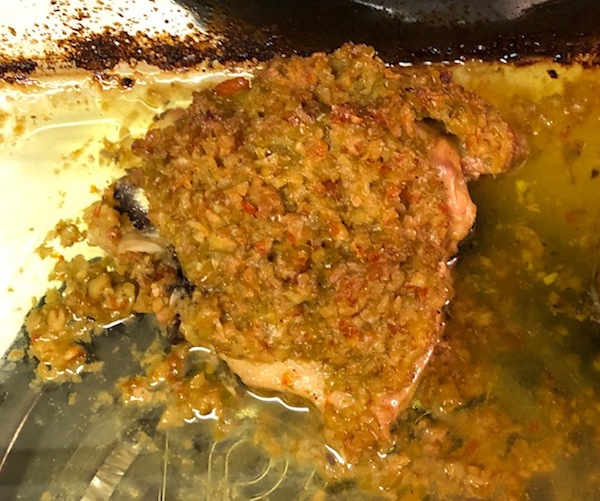
Tori Avey’s Mediterranean Olive Chicken is one of those guest-worthy dishes – impressive, yet easy to prepare and sure to please. (photo by Shelley Civkin)

It’s Thursday afternoon and I’m wondering what the maid is going to make for dinner. Or how I’m going to spend that $70 million Lotto Max I just won. Or when I’ll fly to Mars. See my quandary? I guess you could say I’m in a rut: fish, chicken, steak. Not being a big pasta fan, I seem to fall back on my old regulars every week. If I let him, my husband Harvey would eat pizza and pasta every night.

I remember the ’60s, when my mom had an unwritten weekly dinner schedule. Sundays were prime rib roast with Yorkshire pudding, roast potatoes and salad. The salad was only ever iceberg lettuce (hadn’t farmers discovered romaine, butter lettuce or kale yet??), mixed with cucumbers, tomatoes and green onions. Bottled dressing. The rest of the week’s dinners consisted of chicken livers with onions, salmon, meatloaf or hamburgers, or chicken. Each main was accompanied by the same weekly side dishes. And I mean the same. There was little, if any, variation from week to week. There’s something to say for consistency. With the exception of salad, every other vegetable mom served was frozen and came pre-chopped in a plastic bag. It was the ’60s after all. Occasionally, we’d go to the White Spot on Granville and 67th for a treat, and eat in the car, with the long tray spread across the front seat, attached to the window edges. Exciting times!

It’s funny that the ’60s and ’70s were a time of instant everything – Carnation Instant Breakfast, Pop-Tarts, Shake ’n Bake, Swanson TV Dinners, Nestle’s instant chocolate milk. Even though lots of women were stay-at-home moms and had time on their hands. Not to diminish the hard work they did raising their kids and keeping the house spotless. But let’s face it, lots of women today work outside the home and still do the majority of the childrearing and house chores. There were those privileged few who also had live-in housekeepers (yes, my family was one of them), and still my mother used lots of instant, pre-made foods. She was a good cook, for sure, but had to have a recipe in front of her. I’m like her in that regard. But I digress.

When we got married 10-and-a-half years ago, Harvey and I used to eat out at restaurants three to four times a week. So cooking was easy. Now, not so much. Sure, retirement provides me with more time to explore recipes. But my heart’s just not in it. Actually, that’s not true. I’m usually so busy volunteering that I simply don’t have the time (or inclination) to sit in front of a computer looking for culinary inspiration. Harvey thinks of cooking like a chemistry experiment, so he enjoys it. But as we get older (and sleep way less), we’ve kind of lost the fire in our bellies for cooking.

My father, alav hashalom, used to describe me as a human garbage disposal, because I would pretty much eat anything. He used to say that I’d “eat out of a puddle.” I was the “Give-it-to-Mikey-he’ll-eat-it” daughter. Admittedly, as long as someone else cooks it, I’ll eat it. That was then.

I am still a very easy-to-please eater – as long as the food isn’t too spicy, doesn’t contain too much roughage and doesn’t have nuts, corn, celery or raw vegetables in it. Well-seasoned food is nice, but, at heart, I’m a purist. With a bad gut. Bland food doesn’t bother me; in fact, I’ve been known to enjoy hospital food. After my recent three-month stomach illness, during which I ate only bland food, and very little, I’ve been a bit apprehensive about trying anything different. But, lately, as I’ve been feeling better, I figure it’s time to branch out. Caution to the wind!

As I strolled the culinary landscape that is the internet, I came across a particular chicken recipe by Tori Avey, whose recipes I’ve enjoyed before. Best thing about this recipe is that it’s easy. And, turns out, it’s stunningly delicious. Feast your taste buds. Find it online at toriavey.com/toris-kitchen/mediterranean-olive-chicken.

TORI AVEY’S MEDITERRANEAN OLIVE CHICKEN
(tweaked by me slightly)

3/4 cup chopped green olives (I used queen Manzanilla)
1/3 cup extra virgin olive oil
2 tbsp fresh lime juice
1 tbsp crushed garlic
2 tsp honey
1/2 tsp lime zest
salt and pepper
4-5 lbs chicken pieces, bone in, skin on (I use 6 chicken thighs, as we’re dark meat fans, but white meat would be fine, too)

The recipe also called for red pepper flakes and dried oregano, which I omitted, plus wine to make a sauce afterwards, which I also omitted.

  1. In a mixing bowl, whisk together the chopped olives, olive oil, lime juice, garlic, honey and lime zest. Season the marinade with salt and pepper to taste.
  2. Sprinkle the chicken pieces lightly with salt and pepper. Place chicken pieces in a nine-by-13-inch baking dish. Brush the pieces evenly with olive marinade, using all of the marinade to coat.
  3. Cover the baking dish with plastic wrap and place in the refrigerator for at least two hours (or up to overnight).
  4. Preheat oven to 375˚F. Remove the plastic wrap and cover the baking dish with foil. Pierce a few vents with a sharp knife around the outer edges.
  5. Place the covered dish in the oven. Let the chicken bake for 60 minutes, then remove the foil and bake for an additional 15 to 30 minutes, basting periodically, until well cooked and tender. At the end of cooking, you can broil it for a minute or two to brown the skin (I didn’t bother with this step).

After two bites, my husband pronounced this the best chicken I had ever made. Bar none. And we eat a lot of chicken. Since I usually bake chicken uncovered and it turns out dry, this was a surprising treat – extremely moist, über-flavourful and just as yummy the next day. I’ll probably double the recipe next time around, since it’s worth having enough left for a second dinner. This is one of those guest-worthy dishes – impressive, yet easy to prepare and sure to please. And it makes a nice Shabbat meal, too. I also realized the versatility of the marinade when I tried it on pasta. I’d place bets that it goes well with steak, too. One marinade, three uses. Now that’s a masterful marinade!

You’re welcome. Beteavon!

Shelley Civkin aka the Accidental Balabusta, is a happily retired librarian and communications officer. For 17 years, she wrote a weekly book review column for the Richmond Review. She’s currently a freelance writer and volunteer.

Format ImagePosted on April 3, 2020April 2, 2020Author Shelley CivkinCategories LifeTags Accidental Balabusta, chicken, cooking, Tori Avey

Post-seder meat dishes

After eating all our wonderful family tradition seder dishes, I find it fun to try out meals that I haven’t before and that are not from my cultural background. Here are some you might want to try.

MATZAH MEAT PIE

(Egyptian-born Claudia Roden is the master of Middle Eastern food and author of 20 cookbooks. Now 84 years old, she lives in London. I met her in the 1970s, when she came to Israel and we had a wonderful visit. This is her recipe from the New York Times Passover Cookbook, adapted from The Book of Jewish Foods, which she wrote. It makes four to six servings.)

1 large chopped onion
3 tbsp vegetable oil
1 1/2 pounds ground lamb or beef
salt and pepper to taste
1 tsp cinnamon
1/2 tsp allspice
2 tbsp raisins
2 tbsp pine nuts or walnuts
1 cup warm beef stock
5-6 matzot
1 small egg, beaten

  1. Preheat oven to 375˚F. Spray a pie plate with vegetable spray.
  2. Heat two tablespoons oil in a frying pan and fry onion over medium heat for 10 minutes, until golden. Add ground meat, salt, pepper, cinnamon and allspice. Cook, stirring until meat has browned but is still moist, about 10 minutes. Add raisins.
  3. In another pan, fry the nuts in one tablespoon oil for one minute, stirring until nuts are lightly coloured. Add to meat mixture and stir.
  4. Place beef stock in a large, shallow rectangular pan. Soak matzot one at a time, pressing them gently to absorb the liquid.
  5. Press two or three softened matzot into a pie plate. Place meat mixture on top of matzot. Cover pie with remaining matzot. Brush top with beaten egg. Bake for 30 minutes or until top is golden.

KABSAH
(This recipe comes from It Tastes Too Good to be Kosher by Peter A. Weissenstein and is a Lebanese dish, good for using up leftover lamb or chicken.)

1 pound ground lamb
1 pound ground chicken
4 minced garlic cloves
salt to taste
2 medium, diced onions
1 finely diced large tomato
2 tsp cumin
4 tbsp minced parsley
oil

  1. In a bowl, combine lamb, chicken, garlic, salt, onions, tomato, cumin and parsley and blend.
  2. Heat oil in a frying pan. Spoon mixture into frying pan and fry until well heated. Serve with Israeli salad.

BRISKET MEATBALLS IN TOMATO PASSATA
(Passata is Italian for “go through,” i.e. the cooked tomato puree goes through a special machine. This Italian-influenced dish was created by Hillary Sterling for Vic’s, her New York City restaurant. It makes four servings.)

Meatballs:
1 1/2 cups crumbled, unsalted matzah
2 1/2 tbsp water
1 1/4 pounds ground brisket
1 large egg
1 tbsp olive oil
salt to taste
1 1/2 tsp ground fennel seeds (optional)
1/2 tsp crushed red pepper
pepper to taste

Passata:
1/4 cup sliced garlic
1 1/2 tbsp olive oil
1 28-ounce can crushed, drained plum tomatoes
1/8 cup fresh marjoram leaves
2 1/2 four-by-one-inch orange peel strips
salt and pepper to taste

  1. Preheat oven to 425˚F. Set a wire rack inside a large baking sheet and spray with vegetable oil.
  2. Combine crumbled matzah and water in a bowl. Add brisket, egg, oil, salt, fennel (if using), red pepper and black pepper. Mix with hands until combined. Shape into eight meatballs. Arrange meatballs on sprayed wire rack. Bake until browned, about 22 minutes.
  3. Meanwhile, in a frying pan, cook garlic and oil for passata, stirring often, a minute and a half. Add crushed tomatoes, marjoram leaves, orange peel strips, salt and red pepper. Bring to a boil then remove from heat.
  4. Transfer meatballs to tomato passata in frying pan. Garnish with crumbled matzot, fresh marjoram leaves and chile oil. Serve warm.

Sybil Kaplan is a journalist, lecturer, book reviewer and food writer in Jerusalem. She created and leads the weekly English-language Shuk Walks in Machane Yehuda, she has compiled and edited nine kosher cookbooks, and is the author of Witness to History: Ten Years as a Woman Journalist in Israel.

Posted on April 3, 2020April 2, 2020Author Sybil KaplanCategories Celebrating the HolidaysTags cooking, Passover
Holiday candy, cookies

Holiday candy, cookies

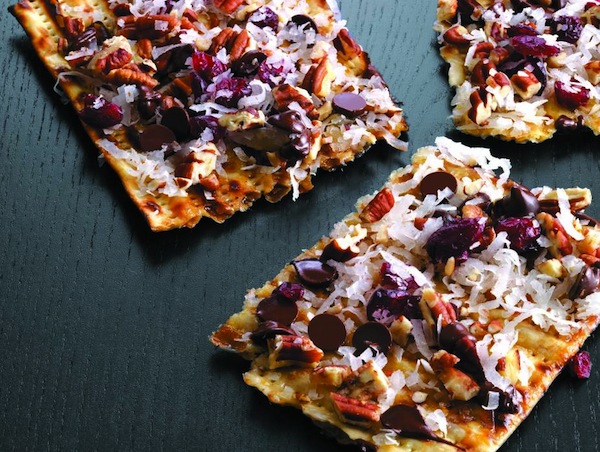
Susie Fishbein’s Butterscotch Matzah Crunch Bars. (photo from kosher.com)

While it is no problem to find candy and cookies that are kosher for Passover, it is also easy to make them yourself. In addition to whatever you may buy at the store, here are some recipes for homemade treats that I enjoy.

MARILYN’S COCONUT MATZAH BALLS
(Marilyn, a former college teacher, now in her 90s, and I were neighbours 40 years ago and are still talk-on-the-phone-daily friends. She came to Israel from Boston in 1949. This recipe makes 20 large balls.)

1/3 cup vegetable oil
1 egg
1/4 cup water or coffee or orange juice
1/2 cup sugar
1/2 cup matzah meal
1/4 cup ground nuts (of your choice)
1/4 cup cocoa
2 tbsp cognac, wine or cherry brandy
1 tbsp coconut

  1. Mix oil, egg, water, coffee or orange juice, sugar, matzah meal, nuts, cocoa and liquor in a bowl. Add more matzah meal if needed to make the dough stick together.
  2. Shape into balls. Place coconut in a bowl and roll each ball in coconut. Refrigerate.

MY FAVOURITE FABULOUS FAUX TOFFEE
(makes three to four dozen two-inch pieces)

6-inch square matzot (enough to cover an 11-by-17-inch cookie sheet)
1 cup butter (I use unsalted pareve margarine)
1 cup brown sugar (I use 2/3 diabetic sugar and 1/3 cup regular)
12 ounces chocolate chips
1 cup chopped nuts

  1. Preheat oven to 350˚F. Generously grease the cookie sheet.
  2. Arrange matzot to cover entire surface.
  3. In a saucepan, combine butter or margarine and brown sugar. Bring to a boil, reduce heat and simmer, stirring continually, for three minutes. Pour over matzot and bake for five minutes.
  4. Remove from oven and cover with chocolate chips, swirling until melted and evenly spread. Sprinkle with nuts. Cool and refrigerate.
  5. Break into pieces when completely cool.

BUTTERSCOTCH CRUNCH BARS
(This is my adaptation from Passover by Design by Susie Fishbein, kosher.com.)

12 tbsp butter or unsalted pareve margarine
1/2 cup brown sugar
4 pieces matzot
1 cup chopped nuts
1 cup shredded coconut
1/2 cup chocolate chips

  1. Preheat oven to 350˚F. Cover a cookie sheet with foil.
  2. Line cookie sheet with matzot, breaking as necessary to fit.
  3. In a saucepan, melt butter or margarine and brown sugar, whisking until the mixture is melted and smooth.
  4. Pour brown sugar mixture over matzot, making sure every surface is covered. Bake for 10 minutes.
  5. In a bowl, toss nuts, coconut and chocolate chips. When matzot are baked enough, remove pan from oven and sprinkle an even layer of coconut mixture on top. Cut into bars while warm.

LIL’S PASSOVER APRICOT SQUARES
(Lil was a friend from our Overland Park, Kan., synagogue. This recipe makes two dozen.)

1 2/3 cups matzah cake meal
1/3 cup sugar
1/3 cup finely ground toasted almonds
1/3 cup oil
2 tbsp lemon juice
1 tbsp grated lemon zest
1 tsp vanilla
2 1/2 to 3 cups apricot preserves

  1. Preheat oven to 350˚F. Grease a rectangular glass baking pan with vegetable cooking spray.
  2. In a mixing bowl, combine matzah cake meal, sugar and almonds and blend.
  3. In another bowl, mix oil, lemon juice, lemon zest and vanilla. Add to dry ingredients and stir with a fork.
  4. Press 2/3 of the mixture on the bottom of the baking pan. Bake for 25 minutes. Remove from oven and cool slightly.
  5. Spread apricot preserves on crust. Sprinkle remaining half of cake meal mixture on top. Return to oven and bake 25 minutes. Cool then cut into squares.

Sybil Kaplan is a journalist, lecturer, book reviewer and food writer in Jerusalem. She created and leads the weekly English-language Shuk Walks in Machane Yehuda, she has compiled and edited nine kosher cookbooks, and is the author of Witness to History: Ten Years as a Woman Journalist in Israel.

Format ImagePosted on April 3, 2020April 2, 2020Author Sybil KaplanCategories Celebrating the HolidaysTags baking, desserts
Importance of this tradition thing

Importance of this tradition thing

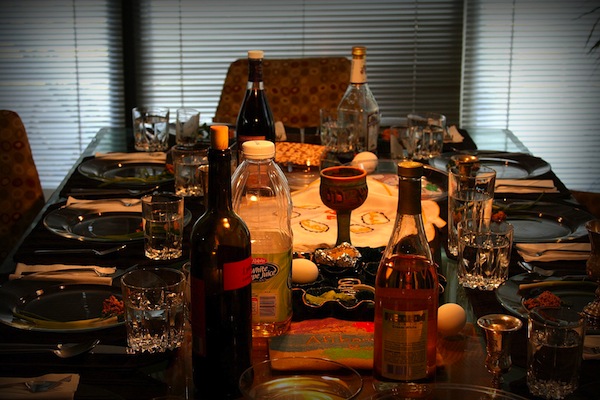
Passover traditions like the seder connect family and friends, and remind us who we are. (photo from flickr.com)

“I know I read an article somewhere that the greatest number of suicides happen on holidays,” Naomi said to her mother.

Rebecca ignored her. “Just keep lining the shelves.”

“But it makes sense, truly it does. Why are we taking this perfectly clean kitchen apart and practically rebuilding it? Does it say anywhere in the Bible that you go straight to hell if you don’t drop with exhaustion the week before Pesach?”

“This is the way my mother did it, and her mother did it, and one day you’ll do it for your kids, too.”

“You’re kidding yourself. If you think I’d ever inflict all this work on my daughter, you’re crazy. And why doesn’t Joe have to help?”

“He will. He’ll kosher the stove and the sinks.”

“And that’s another thing. Two minutes with a blowtorch and then he’ll pour a kettle of water. Big deal. And Dad doesn’t even do that.”

“He conducts the seder.”

“Another big deal. We take the place apart, vacuum chairs and wash curtains and change over dishes, not to mention 40 kilos of kneidl and all that stuff that gives you indigestion. What am I saying, indigestion? All those eggs – you’re probably giving us a gift of coronary heart disease. Jesus!”

“Naomi, stop it.”

“I’m sick of it. I want to escape like Faye.”

Rebecca’s lips tightened. “Fagie’s coming to the seder, too.”

But Naomi was not to be sidetracked. “Fagie, what a name! No wonder she rebelled. Naomi and Joseph, they’re bad enough. But Fagie, what were you thinking of?”

“It’s a good Jewish name. I was thinking of my grandmother. If you and your sister could have known her, you’d understand. The least I could do was keep her name alive.”

The spotless refrigerator was being polished within an inch of its life. Naomi sat down and watched her mother.

“I thought Passover celebrated freedom from slavery. But every year, you become a slave and you make me one, too. If you think you’re giving me wonderful memories, forget it. As soon as I can leave home, I will. Faye told me the best thing about marriage was being able to run her house like the 20th century. Now we’re in the 21st, for chrissake.”

“I hate it when you talk like that.”

“Like what?”

“So tough. All those profanities. What happened to femininity?” she asked her daughter sadly.

“Feminism came along, only you’ve never heard of it. Dad and Joe get out of everything ’cos they’re men. You’re the biggest chauvinist ever, because you not only condone this status quo, you actually perpetuate it.”

Rebecca sighed. “You don’t understand. Neither does Fagie.”

“You bet we don’t. Here, I’ve lined the last bloody shelf. I’m going out.”

“Where?”

“Out, as in O-U-T.”

“When will you be back?”

“If I had my way, it’d be around May or June – after Pesach.” She slammed the door. Rebecca heard the car start up. Her eyes filled with tears. She was exhausted. “This is gratitude,” she thought bitterly. “Here’s Naomi, barely 18, with her own car. We were married six years before we had one.”

Fagie started her marriage with all the things that she and Sam still don’t have after 27 years. And look how she is bringing up Brendan. Brendan! What sort of name is that? No wonder Fagie and Joel hadn’t wanted to give him a brit. If she and Sam hadn’t insisted, their grandson wouldn’t even have had that. They’d treated his Hebrew name, Baruch, as some sort of joke. Well, maybe in their circles it sounded strange. But at least among the family…. Everything with Fagie was a war. If she bought the child a kippah, Fagie would get upset. If she wouldn’t eat in her daughter’s treif house, it meant another argument. What did you have children for?

She heard loud music from upstairs. The Grateful Dead. No wonder they were grateful – they can’t hear the cacophony, she surmised.

When the key turned in the lock, she didn’t have the strength even to go and say hello to Sam. He wandered into the kitchen. “It looks beautiful,” he said, patting her shoulder and taking in the sparkling clean room.

“To us, maybe.”

“What’s wrong? Fagie been getting to you?”

“Not just her. Naomi’s just as bad now.”

Sam sat down heavily. “I don’t understand it. We sent them to day school – forked out in a year more than our education cost in a lifetime. And what do they give back? Where’s Joe?”

“Can’t you hear? He’s studying. That’s his usual accompaniment.”

“Even so, he’s a good student. He’ll make us proud one day. He’s talking about medicine or law, maybe architecture….”

“We’re kidding ourselves, Sam. Even if we’re proud of him, he’ll be ashamed of us.”

“No, not Joe. Why do you say that?”

“Because we’re fighting a losing battle. The things that are important to us are hateful to them.”

Sam’s shoulders sagged. “Joe’s turning his back on our traditions, too?”

“Not yet. He’s only 14. But he will – give him a few years.”

Wearily, Rebecca made dinner. The three of them ate in near silence. Joe had a book next to his plate and didn’t seem to notice. He had already left for school next morning when Rebecca, Sam and Naomi sat down for breakfast. Naomi avoided her mother’s eyes. “I’m sorry about yesterday.”

“No, you’re not,” Rebecca answered, “you meant it.”

“I just wanted you to understand….”

“Oh, I understand. Your father and I made a decision last night. You tell her Sam.”

He cleared his throat. “Naomi, since Pesach is so distasteful to you, you can go and stay with your sister. Your mother and I are taking Joe and going away for the week. That kosher guest house in the mountains –”

“You mean no seder?”

“What for? For Fagie’s family, who barely tolerate it. For you, who finds it such a chore? You know what it says in the Zohar? It says a little hurt from kin is worse than a big hurt from a stranger. Who needs it?” He pushed his chair back abruptly and, a minute later, they heard the front door close.

Naomi pushed the food around on her plate. “I think you’re overreacting. We always have a seder.”

“We always used to have a seder. We’re not going to do it any more. I didn’t care about the work, the exhaustion, because I thought it meant something. If it doesn’t, there’s no point.”

“It meant something to you and Dad.”

“So, we’ll sit at someone else’s seder. Naomi, go to university. You’ll be late for class.”

An hour later, the telephone rang. “Mum, it’s Fagie.”

“Oh, it’s Fagie today. What happened to Faye?”

“Don’t be sarcastic Mum – it doesn’t suit you. Listen, are you home? Can I come round?”

“What for?”

“I need to talk to you.”

“I’m not babysitting if that’s what you want.”

“Brendan’s at play group. I just want to talk to you.”

“I don’t think there’s anything to talk about. But come if you want.”

Thirty minutes later, Fagie’s car drew up. Rebecca poured her a coffee and pushed it towards her.

“So?”

“It’s about the seder.”

“Naomi didn’t waste much time. What’s wrong? You don’t want your sister’s company for a week?”

“Please listen. It’s not right what you’re doing.”

“Not right? For whom?”

“For anyone. Dad will hate not conducting the seder.”

“He’ll survive.”

Fagie’s voice trembled. “Maybe we won’t.”

“What does that mean?”

“I don’t know how to say this. It’s just….”

Rebecca remained silent, not attempting to help.

“It did mean something to us – me and Naomi – even Joel.”

“What did it mean?”

“It meant we were a family. It kind of bound us together. We need it. Brendan needs it. That once a year at least – to remind us who we are.”

“Who are you exactly? You can go and celebrate Easter. It’s all the same to you.”

Fagie’s voice trembled. “You’re making it hard for me. Mum, it’s true we don’t keep all the things you and Dad do. Most people don’t anymore.”

“And that makes it right?”

“Yes – no – I don’t know. It’s hard for us, to be different from our friends. But we need something. We need to know it’s there for us.”

“Not good enough. What happens when we go?”

“Maybe we’ll take it on then. When there’s no one else.”

“Why would you want to do that, if it’s not meaningful now?”

“For our children. I can’t explain. We can only give up these – traditions – because we know you still keep them. That they’re there for us to come back to. Sure, we ridicule them, but it’s like a family. We insult one another all the time because it’s easier than saying, ‘I love you and I need you.’ Do you understand me?”

Fagie was crying openly now. Rebecca didn’t trust herself to speak.

Three nights later, the candles were lit in the candelabra in Rebecca’s dining room, the flames casting shadows on the snowy white tablecloth. Sam sat at the head of the table and inspected the seder plate with its three matzot, the parsley, saltwater, horseradish, charoset, shank bone and roasted egg. He planned where to hide the afikoman, so that it would not be too hard for Brendan to find. Joe was filling the wine glasses, with the extra big one for the prophet Elijah, while Naomi handed out Haggadot. His grandson sat between Fagie and Joel, his face flushed with excitement. Sam’s eyes met his wife’s, which were moist with unshed tears, as were his.

“Baruch atah,” he began. “Blessed art Thou, O Lord our God, King of the Universe, who created the fruit of the vine.”

Dvora Waysman is a Jerusalem-based author. She has written 14 books, including The Pomegranate Pendant, which was made into a movie, and her latest novella, Searching for Sarah. She can be contacted at [email protected] or through her blog dvorawaysman.com.

Format ImagePosted on April 3, 2020April 2, 2020Author Dvora WaysmanCategories Celebrating the HolidaysTags family life, Judaism, Passover, tradition
Pesach: a tale of two stories

Pesach: a tale of two stories

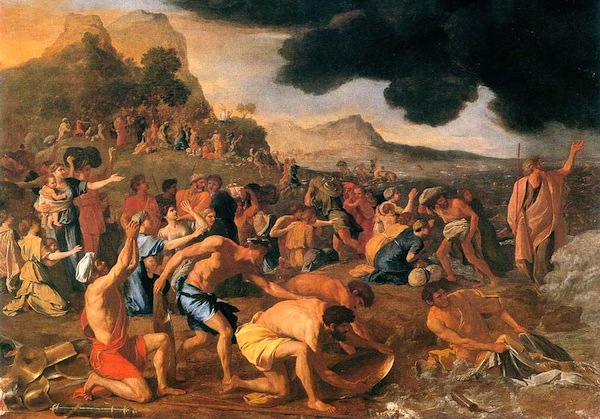
“The Crossing of the Red Sea” by Nicolas Poussin, 1634. (photo from wikimedia)

We are a people with many memories, many stories, and who we are has been shaped by the stories we remember and tell.

More than any other holiday, Pesach is about remembering and passing that memory down to the next generation. Every Jew is commanded to see themselves as if they came out of Egypt, and to tell their Egypt story to their children. The telling of this story is not mediated by teachers or rabbis, nor is it told in a communal framework. The setting of the seder is one of family and immediate friends, and the responsibility is upon every one of us to decide how we convey the story.

What makes this particularly challenging is that, beyond the complicated family dynamics, a Haggadah that is deeply problematic and different sensibilities with regard to what needs to be done, we have inherited two different stories. The challenge is not merely how to tell the story, but which story to tell.

One story, which dominates much of the Haggadah, not to speak of the story as told in the Torah, focuses on Pesach as a story of exodus, of the Jewish people being freed by God from the slavery of Egypt. “I am the Lord. I will free you from the labours of the Egyptians and deliver you from their bondage. I will redeem you with an outstretched arm and through extraordinary chastisements. And I will take you to be my people, and I will be your God.” (Exodus 6:6-7)

More than freedom and salvation, Pesach is a story of the election of the Jewish people, as God pours down God’s wrath on those who enslave the chosen ones and redeems us out of the hands of Egypt to be God’s chosen people. Each plague, told and magnified, is an expression of love, a gift of betrothal of God to us, an offering that bonds us to one another. “I the Lord am your God who brought you out of the land of Egypt, the house of bondage: you shall have no other gods besides me.” (Exodus 20:2-3)

One of the core consequences of this election narrative under Jewish law is the sanctioned discrimination between Jew and non-Jew, between the Children of Israel and the nations of the world. Because God saved us, all of us, from the slavery of Egypt, Jews are all equal, and no Jew can take another Jew as a slave. However, those who are not the recipients of the gift of exodus, the non-Jews, can become our slaves (Leviticus 25). When we go to war, even wars of aggression, the God who took us out of Egypt will always fight on our side, because the moment of election creates an us-them dichotomy in which God is always with us (Deuteronomy 20). Idolatry is neither false nor futile. It is the worship allotted by God to the non-elected. We, the chosen people, are alone commanded to worship God. The God who saved us in Egypt is our God alone (Deuteronomy 4).

This tale of the story of Egypt finds its culmination in our traditional Haggadah, in which one of its concluding prayers is a petition to God to “Pour out your wrath on the nations that do not know you…. Pursue them with anger and destroy them from beneath the heavens of the Lord.”

There is a second story of Pesach, a story in which neither the exodus nor its accompanying plagues takes central stage, but rather the hundreds of years of our subjugation in Egypt. It is to this memory that the core symbols of the holiday – matzah, the poor person’s bread, charoset, the paste that resembles mortar, and maror, the bitter herb, which cause us to relive the experience of pain – all direct us.

It is this memory that shapes the most-repeated commandment in the Torah: “The stranger who resides with you shall be to you as one of your citizens: you shall love him as yourself, for you were strangers in the Land of Egypt.” (Leviticus 19) The story of Egypt is not one of us-them, but of us being them, of us being members of the community of the downtrodden, and the subsequent obligation to treat all who are in need, Jew and non-Jew alike, as equal members of our society.

In an interesting twist on this story, the Ten Commandments obligate us to rest on the Sabbath, “so that your male and female slave may rest as you do. Remember that you were a slave in the Land of Egypt, and the Lord your God freed you from there with a mighty hand and an outstretched arm: therefore, the Lord your God has commanded you to observe the Sabbath day.” (Deuteronomy 5)

It is not merely that because we once were slaves we are bonded to all those in need. The redemption from Egypt is no longer exclusively the moment of election of us, but rather an expression of God’s care and compassion for all who are enslaved. Both our slavery and our salvation unite us with God, in a common mission to bring freedom and equality to our world.

It is with this idea that we begin to tell the story of Egypt in the traditional Haggadah. “This is the bread of affliction that our forefathers ate in the Land of Egypt. All who are hungry let them come and eat.” All, and not merely fellow Jews.

Pesach is a tale of two stories. Each has shaped who we are. As we tell our stories and pass them down to the next generation, it is our obligation to take responsibility for what will define us in the future and what will determine our religious and national identity. The choice is ours. As you tell the stories this year, choose wisely. Our future and the future of Israel depend on it.

Rabbi Dr. Donniel Hartman is president of the Shalom Hartman Institute and author of the 2016 book Putting God Second: How to Save Religion from Itself. Articles by Hartman and other institute scholars can be found at shalomhartman.org.

Format ImagePosted on April 3, 2020April 2, 2020Author Rabbi Dr. Donniel Hartman SHICategories Celebrating the HolidaysTags immigrants, Judaism, migration, Passover, Shalom Hartman Institute
Take time to see Maskit

Take time to see Maskit

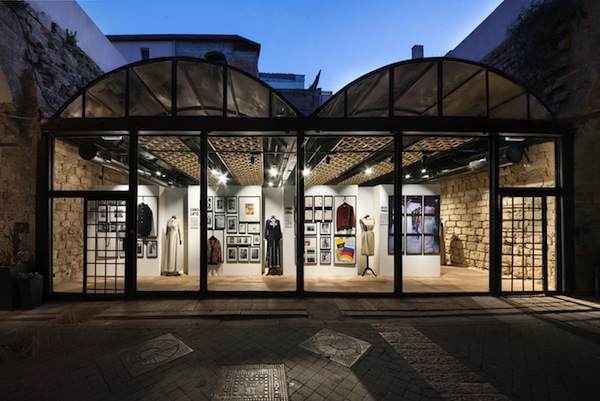
Maskit is located at 4 Auerbach St., in Jaffa. (photo from Maskit)

When next in Israel, in addition to walking the beaches of Tel Aviv, being spiritually uplifted at the Wailing Wall in Jerusalem and enjoying the food across the country, carve out some time to see the fashion houses that have put Israel on the map.

Over the last few years, Israel has been leading in the fashion industry, with numerous graduates from Shenkar College of Engineering, Design and Art landing jobs with renowned fashion ateliers in Europe. But let’s take a step back in time.

In the 1950s, post-independence, immigrants from Yemen and Morocco arrived in Israel. The government sought to train the women in textiles in order to provide for their families. At the time, Ruth Dayan (Moshe Dayan’s wife) was approached to lead the women and, seeing their talent in embroidery and weaving, she suggested that the government and a Hungarian designer, Fini Leitersdorf, initiate a designing business.

The House of Maskit became the headquarters of fashion, with Ruth Dayan as the principal designer. Maskit became famous for their signature caftan, with embellishments of embroidery, textures and the colours of Israel. At their peak, Maskit was featured in Vogue. Their tunic-style creations were considered art, gaining world recognition, enabling them to sell in Bergdorf Goodman, Neiman Marcus and Saks. As Maskit’s success grew, a higher-end line was introduced, which had buttons made from river stones, olive trees and pure silver. The fabrics were from the finest sheep’s wool, as well as silk, linen and cotton.

In the 1970s, however, the Israeli government stopped funding Maskit, shifting its spending to other priorities, notably the military. Ruth Dayan stepped down and, ultimately, Maskit closed.

Full speed ahead some 30 years, designer Sharon Tal, who graduated from Shenkar, returned to her native Israel after designing for the House of Lanvin in Paris and Alexander McQueen in London.

Although a new mother, she was still working, involved with a British lifestyle website that focused on the trends in Israel. Tal’s aha moment came when she saw Duchess of Cambridge Kate Middleton’s wedding dress, which was designed by the House of Alexander McQueen. Upon viewing the outfit, with its elaborate embroidery, she knew it was time for her to get back to design.

Together with her husband, Nil, they discovered that the House of Maskit was ready to reopen. Tal picked up the phone and called Ruth Dayan, then 94 years old. The two became friends and Maskit eventually was reborn, in 2013, melding together its history and Tal’s designs, known for their soft lines and feminine feel.

Maskit’s clients include actresses like Sarah Jessica Parker and Jamie Lee Sigler. However, one of the greatest honours was when the late first lady of Israel, Nechama Rivlin, bestowed then-U.S. first lady Michelle Obama with a coat designed by Tal on a visit to Israel.

The couturier’s home is in Jaffa, where Tal has her atelier. The décor is wondrous, with stone walls, warm natural hues and rows of heavenly designs displayed. On your next visit, do some shopping for what are sure to be lifetime classics.

For more information, visit maskit.com.

Ariella Stein is a mother, wife and fashion maven. A Vancouverite, she has lived in both Turkey and Israel for the past 25 years.

Format ImagePosted on April 3, 2020April 2, 2020Author Ariella SteinCategories IsraelTags fashion, Israel, Maskit, Ruth Dayan, Sharon Tal, travel
Hadrian’s Arch – built to last

Hadrian’s Arch – built to last

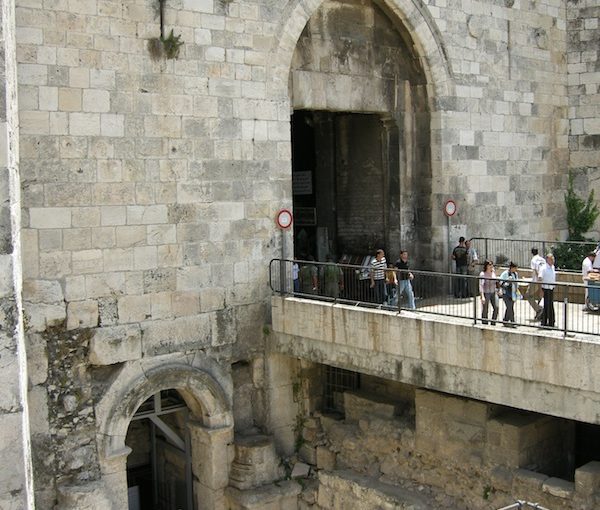
Damascus Gate today and, below it, the Aelia Capitolina arch leading to the Roman Plaza. (photo by Deborah Rubin Fields)

Revenge is sweet. Apparently, while the Roman Emperor Hadrian did not spike enemy heads on palisades, after three years of battle, he did construct an arch celebrating the suppression of the Bar Kochba revolt. This archway was quite detailed, as it marked the northern border of his Jew-less Roman colony (Jews were only allowed in on Tisha b’Av to mourn the temples they had lost) and the Aelia Capitolina, a colony built on the Jerusalem the Romans had destroyed.

Below and to the left of Damascus Gate (built by Suleiman the Magnificent in 16th century CE) are the remains of Hadrian’s Arch of Triumph and his Roman Plaza. Although the site has been explored since 1864 by numerous archeologists, only recently have the Israel Antiquities Authority, the Jerusalem Municipality and the East Jerusalem Development Company (PAMI) cooperated to open to the public the arch that Hadrian ordered built in 135 CE.

The arch seen today was actually part of a three-arched entrance way. Two shorter arches bordered a taller and wider centre one. Only the eastern entrance remains fully intact, along with the bases of what were once elaborate stone pillars. Inside this archway, one still sees the vaulted ceiling and the floor made of large stone slabs.

The thick blocks making up this flooring measure some two metres (6.6 feet) long and 1.2 metres (3.9 feet) wide. To prevent people from slipping on the stones, the Romans striated some of the pavement, which is still in place, albeit worn smooth from use.

None of Hadrian’s building machinery was motorized, of course. Even the Roman tread wheel crane was run on human or animal power. Not one to waste and not one to overlook architectural beauty, Hadrian scavenged the enormous stones of the razed Second Temple and public structures – Herodian stones from the Temple area are distinct in having narrow margins and low, flat, smooth centre bosses. Hadrian used these stones to build two massive guard towers flanking the archway on the right and left.

As the Herodian stones were not attached by mortar, it was probably relatively easy – the average weight of each is said to have been two to five tons – for Hadrian’s gate builders to dismantle the Temple-area stones. These huge limestone pieces still stand, as the remains of the guard towers, neatly stacked at an incredible height of some 11 or 12 metres.

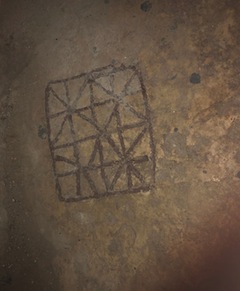
photo - In the Roman Plaza, a Roman soldiers’ game can be found on the ground
In the Roman Plaza, a Roman soldiers’ game can be found on the ground. (photo by Deborah Rubin Fields)

Soldiers throughout history have faced boredom. To counter this, the Roman soldiers in these guard towers played games. One such “board game,” is still scratched into the flooring near the towers.

The gate with its three arches was typical of its period. Just above the remaining arch, one can still decipher the “C” in the Latin inscription bearing the city’s Roman name, Aelia Capitolina. In Jerusalem, a similar example of this kind of gate is the Ecce Homo Arch. It served as an entrance to the eastern forum of Aelia Capitolina. Part of it may be seen today, along the Via Dolorosa.

As further evidence of how well-planned Hadrian’s city was, the gate opened into a plaza, a circular space that was the junction or crossing point of the eastern and western cardines (plural of cardo; literally, heart) or main roads. According to Simon Sebag Montefiore’s book Jerusalem: The Biography, this plaza led to two forums, one close to the destroyed Antonia Fortress and one close to today’s Church of the Holy Sepulchre. There, Hadrian reportedly built a temple to Jupiter.

This gate appears on Jordan’s mosaic Madaba Map. On the sixth-century map – a model of which appears inside the discovered Roman Plaza – one sees an open square with a column just beyond the gate. To prevent anyone from forgetting who was victorious over the Jewish rebels, the column was topped with Hadrian’s figure. On site, there is a model of the column to give current-day visitors an idea of how the column looked. From this column, distances to different parts of the country were measured. Moreover, the column is the source of Damascus Gate’s Arabic name, Bab al-Amud.

To the left of the arch entrance are the large millstone remains from the later Byzantine period. Most likely, an olive oil factory existed there in ancient times.

To the east of the Roman Plaza, there are three other sites worth visiting when such things become possible again, once the COVID-19 pandemic is contained:

Zedekiah’s Cave (also known as Solomon’s Quarry) has visiting hours like those of the Roman Plaza. As the cave has very good acoustics, over the past few years, it has been used to host concerts. The entrance fee is currently 18 shekels. The local telephone is the same as that of the Roman Plaza, 02-6277550. There is partial wheelchair accessibility.

Rockefeller Archeology Museum, on the northern side of the street, recently had a small, but fascinating, exhibit dealing with the 100-year history of Jerusalem Armenian Ceramics. (imj.org.il/en/exhibitions/glimpse-paradise). The museum is free of charge, with hours Sunday, Monday, Wednesday and Thursday, and even on Saturdays. There is a short flight of stairs at the entrance, so contact the curator, Fawzi Ibrahim, about visiting in a wheelchair. The local number is 02-628-2251.

The Northern Promenade route of the Old City’s ramparts allows you to visit these areas from “above,” but is not designed for wheelchairs or strollers. Buy tickets at the tourist office just inside Jaffa Gate.

From the Romans onward, rulers have built special arches marking the defeat of their enemies. Hadrian’s Arch might also have served as a reminder to potential rebels not to try again. What does seem clear is Hadrian has left us with a 1,885-year-old reminder of the many changes of hands Jerusalem has undergone.

Deborah Rubin Fields is an Israel-based features writer. She is also the author of Take a Peek Inside: A Child’s Guide to Radiology Exams, published in English, Hebrew and Arabic.

Format ImagePosted on April 3, 2020April 2, 2020Author Deborah Rubin FieldsCategories TravelTags archeology, Damascus Gate, Hadrian, history, Israel
Jewish Stockholm visit

Jewish Stockholm visit

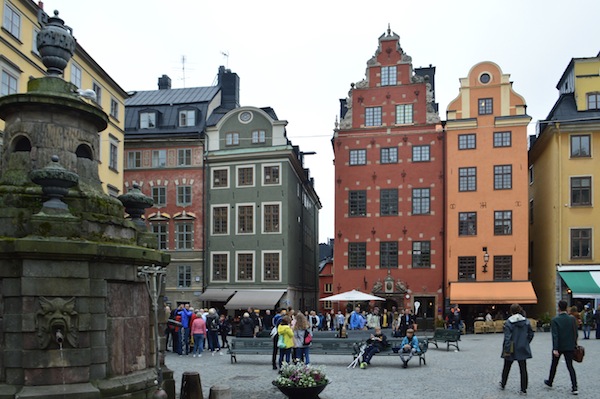
Stockholm’s neighbourhoods are pristinely preserved. This photo was taken last summer. (photo by Ella Kaplun)

Summer days in Stockholm seem never ending. The sun refuses to set until around 10 p.m., leaving a romantic glow upon the city for the evening hours. It is a city made up of a string of 14 islands, most interconnected by bridges; the blue of the water and the green of the land fit together like irregular shaped pieces of a giant jigsaw puzzle.

Stockholm has a unique landscape, with barely any high-rise buildings, except for church spires that pierce the otherwise almost-unobstructed skyline. Since Sweden was neutral during the Second World War, Stockholm was not touched by the war and its old neighbourhoods are pristinely preserved, and feature low buildings in different shades of pastel, inspired by many varied styles of architecture, especially in the Old Town, Gamla Stan.

To get around the city conveniently, a Stockholm Pass, which can be purchased in advance (stockhompass.com), enabled us to hop on and off buses, visit museums and take the always enjoyable ferry rides. But, besides touring, my granddaughter and I also explored Stockholm’s Jewish life here, with its deep-rooted history. Although Sweden has the largest population of Jews in the Scandinavian countries – an estimated 20,000 thousand, 4,500 of whom live in Stockholm – they have a minuscule number compared to other European countries.

To learn more about Stockholm’s Jewish past, we took a three-hour walking tour with knowledgeable guide David Kay from Milk and Honey Tours. We started at our hotel, the Diplomat, a turn-of-the-20th-century Art Nouveau building overlooking Nybroviken Bay. We walked along the waterfront toward the Gamla Stan, where Jews were first officially allowed to settle in Sweden. Ferryboats lined the docks and, last summer, in the many bars and restaurants, including many vegetarian ones, people were relaxing after work, meeting friends and taking in the summer sun.

We crossed a bridge to Gamla Stan, a harbour town built on a hill, with the Royal Palace on top. As we were winding our way up narrow, cobbled streets, passing eye-catching storefronts, our guide told us the story of David Isaac. In 1774, the wealthy gem merchant and seal engraver was invited to settle in Stockholm by Gustav III, to help finance his military expeditions. Unlike Jews who came to Sweden before him and accepted conversion for the privilege of staying, Isaac made it a condition for coming that he be allowed to practise as a Jew. He also insisted that he bring with him other Jewish families so a congregation could be formed.

Our guide then pointed out the middle storey of a three-storey apartment house where the first synagogue in Sweden had been housed. This building, just off the island’s main square, where the Nobel Museum is located, was recently purchased by the Jewish community to be converted into a Jewish museum.

Our tour ended by crossing to another island to see the Great Synagogue. Built in 1870 in a Moorish style, it is a testimony to the wealth and privilege Jews attained by that time and the tolerant attitude of their adopted country. It is now a Conservative synagogue with a female rabbi.

photo - There are many ways of getting around Stockholm
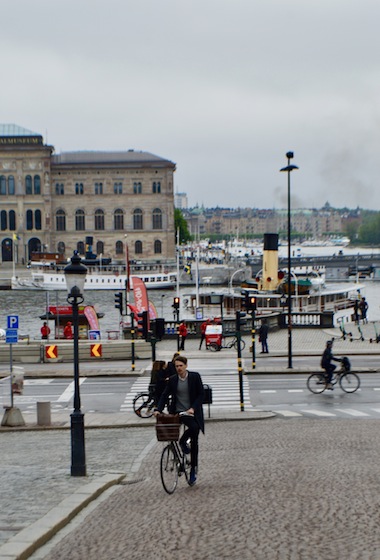
There are many ways of getting around Stockholm. (photo by Ella Kaplun)

Jews have contributed, of course, to the cultural and economic life of Sweden. An elegant department store in the centre of Stockholm was established by the Saks family, who also owned Saks Fifth Avenue in New York. The renowned publishing house Bonnier, founded in 1804, is still important in the literary life of Sweden. The Stockholm Concert Hall was built by the textile merchant Isaac Hirsch and the City Hall was largely financed by Jewish donors. Even though many of these older families are no longer Jewish, because of intermarriage and assimilation, they continue to support Jewish causes.

However, the climate for Jews has changed and Sweden is no exception to the rise of antisemitic incidents in Europe and in North America. There have been news reports of harassment, intimidation and attacks on Jews in Malmo, Gothenburg and other towns. In Sweden, antisemitism has found oxygen both among white supremacists on the far right and Israel-bashers on the far left.

Nevertheless, Jewish life goes on, albeit on a reduced scale. We spoke with a local high school senior, Eliot, who was involved in the Jewish youth organization in Sweden. He told us that, for him, as for many of his peers, Glamsta, the only overnight Jewish summer camp, was his most important experience in maintaining his Jewish identity. Located in Stockholm’s picturesque archipelago, this small camp attracts children from all over the country. “This was the first time I was involved with Shabbat rituals,” Eliot said, “and it made me proud to be Jewish. In this camp you also become part of a close-knit community of young Jews.”

Another important institution that helps to keep the community together is the Bajit (House), a Jewish cultural community centre, built in 2016. It houses the Hillel school, the only Jewish day school in Sweden, with 360 students in classes from kindergarten to sixth grade, and it also sponsors many cultural events. Like all schools in Sweden, including universities, this one is also tuition free.

Although most Swedish Jews hesitate to show any identifiable sign of their religion, the Chabad rabbi of Stockholm walks around with a kippah. Chabad is located on the island of Sodermalm, formerly a working-class neighbourhood that has been gentrified into a kind of Soho, with vintage and antique shops, art galleries and ethnic restaurants. Chabad holds an Orthodox minyan, hosts Shabbat and holiday meals, houses a kindergarten and is a gathering place for youngsters. Chabad also offers bar/bat mitzvah lessons and Jewish studies, and caters to tourists by delivering kosher meals to their hotels.

Stockholm’s Great Synagogue is not only an historical landmark, like in many other places in Europe, but also a functioning one. One Shabbat morning during our stay we witnessed a double bat mitzvah. One of the celebrants was a local girl, the other from New York, who chose to celebrate this important occasion in Stockholm because she and her family are active in Paideia, a Sweden-based organization dedicated to the revival of Jewish culture in Europe. Both girls read from the Torah, their young voices ringing out in this soaring historical interior, which can easily seat 900 people. On that Shabbat, fewer than 100 attended, but these young voices were the hope for the continuation of Swedish Jewish life.

Erika Leviant has written travel pieces for newspapers and magazines in the United States and Canada. Her granddaughter, Ella Kaplun, is an English major at New York University.

Format ImagePosted on April 3, 2020April 2, 2020Author Erika Leviant and Ella KaplunCategories TravelTags history, Judaism, Stockholm

Posts pagination

Previous page Page 1 … Page 268 Page 269 Page 270 … Page 664 Next page
Proudly powered by WordPress