Skip to content
  • Home
  • Subscribe / donate
  • Events calendar
  • News
    • Local
    • National
    • Israel
    • World
    • עניין בחדשות
      A roundup of news in Canada and further afield, in Hebrew.
  • Opinion
    • From the JI
    • Op-Ed
  • Arts & Culture
    • Performing Arts
    • Music
    • Books
    • Visual Arts
    • TV & Film
  • Life
    • Celebrating the Holidays
    • Travel
    • The Daily Snooze
      Cartoons by Jacob Samuel
    • Mystery Photo
      Help the JI and JMABC fill in the gaps in our archives.
  • Community Links
    • Organizations, Etc.
    • Other News Sources & Blogs
    • Business Directory
  • FAQ
  • JI Chai Celebration
  • JI@88! video

Recent Posts

  • On war and antisemitism
  • Jews shine in Canucks colours
  • Moment of opportunity
  • Shooting response
  • BC budget fails seniors
  • Ritual is what makes life holy
  • Dogs help war veterans live again
  • Remain vital and outspoken
  • An urgent play to see
  • Pop-up exhibit popular
  • An invite to join JWest
  • Successful campaign
  • Next-gen orthotic wins
  • Tapping into their creativity
  • The holidays à la JACS
  • Garden City of Tel Aviv
  • Sanctuary garden benefits
  • Gardening in Eden …
  • האנטישמיות גואה ביוון
  • Hateful messages intensify
  • Creating entrepreneurs
  • Wrong choice to host Piker
  • Attack on Jewish kids
  • Multiple benefits of a break
  • Dialing up the perfect thriller
  • Empowerment & more
  • Songs in war of peace
  • Successful trip to Cuba 
  • Tackling antizionism head on
  • Thinking of leaving Canada?
  • Kindness as a matter of fact
  • Personal stories, vital lessons
  • Connecting generations
  • Vancouver to Vienna
  • Recipes a form of resistance
  • Community milestones … February 2026

Archives

Follow @JewishIndie
image - The CJN - Visit Us Banner - 300x600 - 101625

Category: News

Berlin’s House of One

Berlin’s House of One

In Petriplatz, Pastor Gregor Hohberg, left, and Imam Kadir Sanci listen as Rabbi Andreas Nachama recites a prayer for peace. (photo by Frithjof Timm)

In the middle of Berlin, on the grounds of where a church was destroyed in the Second World War, a pastor, imam and rabbi are collaborating to create a new reality wherein Christianity, Islam and Judaism can be practised under the same roof.

“It seems so logical that something like this would take place, but it never has before,” said Rabbi Dr. Andreas Nachama who leads the only Reform congregation in Berlin, Sukkat Shalom (House of Peace).

Some congregations and groups of people refrain from intermingling out of fear of losing members to other groups. For Nachama and the other House of One proponents, this is not a concern.

“I think that the congregations are solid and I don’t think that this might turn out to be a problem,” he said. “We have a lot of experience from sharing a building with Catholics, Protestants and Jews, and we’ve never had that kind of problem. The problems we had were very secular and could be solved quickly with a short discussion – things like who is cleaning the toilets after congregation and so on.”

As for the risk of intermarriage, Nachama said intermarriages “take place because people are studying at the same university or classroom, sitting in the same office, or meeting in a restaurant or theatre. I haven’t had a single case where intermarriages originate from a Christian-Jewish dialogue group in all my years.”
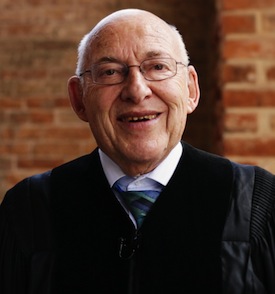
photo - Rabbi Tovia Ben Chorin
Rabbi Tovia Ben Chorin (photo by UFA Lab)

The idea for House of One originated five or six years ago with Nachama’s predecessor, Rabbi Tovia Ben Chorin. He was working to bring the concept to life until he retired and moved back to Switzerland. Nachama has been involved with House of One since April 2015.

Nachama is no stranger to Christian, Jewish and Muslim trialogue. He has been involved in the field since 1972, starting at summer camps in western Germany, where a local school invited members of each of the three faiths to discuss common stories and problems.

As Nachama went on to take Jewish studies in university in the 1970s, he also took basic courses on Islam and Catholicism. Gaining a good understanding of these religions has enabled him to effectively introduce his congregation to interfaith interactions since 1999, bringing in his Islamic and Christian counterparts to teach in the synagogue alongside him.

The clergy meet on a regular basis, sometimes involving leaders in their respective communities, but always aiming to keep meetings to no more than 15 people. So, the interfaith groundwork began long before the excavations started in 2007 of Petriplatz, the site of the old church, among other structures, and a new House of God was being planned. The church wanted to build a house where the three religions would each have a holy space of their own.

“Each would have their own synagogue, mosque and church, working together in one building,” said Nachama. “But, everyone would follow his/her own faith tradition, so it was not about some new religion being created.

“Instead, the idea was to build a house of teaching, of worship, wherein the teaching might bring us together; the worship, everyone does for him/herself in his/her religion.

“We can do programs on some aspects of interest to many, like looking at the differences between kosher and halal. We can also offer teaching programs to the general public.”

Worship times do not seem to be an issue either, with the holy day for Muslims being Friday; for Jews, Saturday; and, for Christians, Sunday.

“But, what happens if Christmas Eve is on a Friday night or during Shabbat?” admitted Nachama. “We can always find problems in terms of holy days on the calendar. They will be solved, but it’s not so easy.”

According to Nachama, the most difficult challenge is in the area of politics. “Islam, in particular, is being taken as a hostage for Islamic fundamental brutality,” he said. “That makes it difficult, because those Muslims that we deal with are not part of that. It makes it difficult … in the public eye … to make it understandable that we, as individuals and as congregations here in Berlin, can cooperate and speak with each other, whatever happens.

“My congregation is very much involved in Christian-Jewish dialogue, and we also sometimes have teachings or panel discussions together with Muslims, so it’s not new to my congregation and, as far as I see, the other congregations have had experience in the field before as well.”

As far as reaching beyond congregational circles, Nachama understands all too well that if someone has prejudice, it is he or she who needs to be willing to open their eyes and ears to seeing the other side. “We can’t do it for them,” he said. “If they are willing, we then can try to show them how we see things.”

While the project is gaining momentum and more than a million euros have already been collected, much more is needed to even break ground on the building project.

Nachama anticipates that his congregants will have no problem with the move when the time comes. “We’ve moved already once and, when completed, either parts of the congregation will move or the whole congregation. It won’t be a problem.

“We believe this project is a result of the history in Berlin,” he continued. Given the history of antisemitism in Germany and the Holocaust, people want to create “a new page of history,” he said. “People really try to look for new ways of cooperation, coexistence and respect for other peoples and faiths.”

For more information or to join the project, visit house-of-one.org.

Rebeca Kuropatwa is a Winnipeg freelance writer.

Format ImagePosted on January 29, 2016January 26, 2016Author Rebeca KuropatwaCategories WorldTags Andreas Nachama, Christians, House of One, interfaith, Jews, Muslims, trialogue
יחסים מאוד מאוד טובים

יחסים מאוד מאוד טובים

ראש ממשלת קנדה, ג‘סטין טרודו ,בדאבוס שהתקיים בשבוע שעבר בשוויץ. (צילום: facebook.com/JustinPJTrudeau)

פגישה נוספת בין ג’סטין טרודו לבנימין נתניהו: השניים נפגשו בשבוע שעבר בדאבוס

ראש ממשלת קנדה, ג’סטין טרודו וראש ממשלת ישראל, בנימין נתניהו, נפגשו בפעם השנייה. הפגישה הפעם ארעה במסגרת הפורום הכלכלי העולמי בדאבוס שהתקיים בשבוע שעבר בשוויץ. כנס דאבוס נחשב לאחד האירועים הכלכליים הבינלאומיים החשובים ביותר, ומשתתפים בו גורמים בכירים מכל העולם. בפעם הראשונה מאז טרודו מונה לראש ממשלה בחודש אוקטובר, נפגשו השניים בוועידת האקלים בפריז שנערכה בסוף חודש נובמבר.

נתניהו ציין כי הפגישה הנוכחית בינו ובין טרודו שנערכה בשבוע שעבר הייתה מצויינת “ויש לנו יחסים מאוד מאוד טובים”. כידוע לנתניהו וסטיבן הרפר, ראש הממשלת קנדה הקודם, היו יחסים מצויינים והם נחשבו למנהיגים מקורבים ביותר. עתה נתניהו משתדל לצייר תמונה של עסקים כרגיל וכי גם הוא וטרודו נמצאים במערכת יחסים טובה מאוד. זאת למרות שבממשלת ישראל חששו מאוד מהניצחון של המפלגה הליברלית בחירות הפדרליות האחרונות כאן ותבוסתו של הרפר שעמד בראש מפלגת השמרנים.

עם זאת נתניהו בוודאי לא אהב לשמוע את טרודו מצהיר שוב בנאומו בדאבוס כי הפתרון למשבר הגרעיני עם איראן הוא פוליטי ולא צבאי. וכן על הכרזתו של ראש ממשלת קנדה בתשובות לשאלות שהופנו אליו בכנס, שקנדה אכן מפסיקה להפציץ מטרות של דאע”ש במזרח התיכון.

ג’סטין טרודו צפוי ללכת בדרכו של אביו פייר טרודו ולהנהיג מדיניות מאוזנת במזרח התיכון

ראש ממשלת קנדה הנוכחי, ג’סטין טרודו , כמו אביו, פייר אליוט טרודו ששימש ראש ממשלת קנדה בשנים 1968-1979 ו1980-1984, צפוי להנהיג מערכת יחסים יותר מאוזנת עם ישראל, תוך ניסיון לחזק את הקשרים עם מדינות ערב, שנחלשו מאוד בתקופת ראש הממשלה הקודם, סטיבן הרפר. שר החוץ של טרודו הבן, סטפן דיון, הזדרז מייד אחרי הבחירות והודיע שקנדה מבקשת לחזור לתפקידה המסורתי (לפני עידן הרפר), ולהיות מתווך הוגן בין הצדדים במזרח התיכון. זאת תוך חיזוק הקשרים מחדש עם מדינות ערב השונות. לדעת פרשנים טרודו כמו אביו לא יעמוד מאחורי ישראל באופן אוטומטי (כמו הרפר) ויבדוק כל נושא לגופו. כאביו הוא כבר הודיע כי קנדה תתנגד לכל חרם על ישראל “שזה סוג חדש של אנטישמיות”.

פייר אליוט טרודו היה קשור וקשוב לקהילה היהודית. הוא מינה שר יהודי לממשלתו, החזיק ביועצים יהודים, והיה ראש הממשלה הראשון בקנדה שמינה שופט יהודי לבית המשפט העליון. הוא היה תומך נלהב של ישראל אך הבין שצריך גם לשמור על איזון עם הפלסטינים. האב כעס מאוד ששמע על החרם הערבי נגד חברות שסחרו עם ישראל. הוא גינה את פעולות הטרור נגד ישראל מצד הפלסטינים והבין את הדאגה הטבעית של ישראל לביטחון. במקביל התנגד לפלישת צה”ל ללבנון ב-1982. המלחמה ואירועי סברה ושתילה סימנו את תחילת התהליך התקררות היחסים בין קנדה לישראל, שהתחממו בעידן הרפר. פרופסור לפוליטיקה באוניברסיטת מקגיל שבמונטריאול, גיל טרוי, טוען שלטרודו הבן גם יש יועצים יהודים ורבים מאנשיו מכירים את ישראל. אביו הבין את ישראל ואין שום אינדיקציה שהבן יהיה שונה ממנו. ברני פרבר מבכירי הפעילים בקהילה היהודית אומר שלא יהיה הבדל המהותי בין הרפר לטרודו, אך טון הדברים יהיה שונה. לדבריו שלטונו של הרפר “הזיז” את הקהילה היהודית חזק ימינה, ומעולם לא היה קיטוב כה גדול בתוך הקהילה כמו היום. פרבר מקווה שקנדה של טרודו תחזור למדיניות יותר מאוזנת במזרח התיכון, כך שקולה ישמע שוב בזירה הבינלאומית וזה יהיה גם טוב יותר לישראל.

Format ImagePosted on January 25, 2016January 23, 2016Author Roni RachmaniCategories עניין בחדשותTags antisemitism, Bernie Farber, Binyamin Netanyahu, Davos, Gil Troy, Justin Trudeau, Middle East, Pierre Trudeau, Stephen Harper, אנטישמיות, בנימין נתניהו, ברני פרבר, ג'סטין טרודו, גיל טרוי, דאבוס, מזרח התיכון, סטיבן הרפר, פייר טרודו

Limmud starts next weekend

Limmud Vancouver 2016, which takes place Jan. 30 and 31, includes seminars, lectures, workshops and discussions on a wide range of topics. This second article in a two-part series features a few of the presenters.

The love of two women

People who have a familiarity with modern Jewish and Zionist history know the name Eliezer Ben-Yehuda as the man who nearly single-handedly revived Hebrew into a modern language. Ben-Yehuda’s grandson, also named Eliezer Ben-Yehuda, contends the history of modern Hebrew, Judaism and Israel would be very different were it not for the two women in his grandfather’s life.

photo - Eliezer Ben-Yehuda
Eliezer Ben-Yehuda (photo courtesy of Limmud Vancouver)

“The story of Eliezer Ben-Yehuda is really very, very interesting and there’s an aspect of it which is really overlooked very often and it’s the issue of the women,” he said in a telephone interview from his home in Florida.

Ben-Yehuda was married, consecutively, to two women – sisters – and the grandson contends that they are the reason the world still knows his name.

“Eliezer Ben-Yehuda, at the beginning of his path, was doomed to an early grave and all his dreams and all his great ideas about reviving the Hebrew language and reviving the Hebrew people in their land could have come to naught,” he said.

At age 21, while studying in Paris, Ben-Yehuda nearly died of tuberculosis. He wrote to his fiancée, his childhood sweetheart Devora Jonas, breaking off their engagement. “He wrote a letter and said forget about me, find yourself another man who is going to give you a life,” said the grandson. “She refused to be jilted. She said, you promised to marry and by God I’m holding you to your promise.”

The couple had five children before Devora died of tuberculosis. Three of the children died of diphtheria in short succession after their mother’s passing. Before she died, Devora insisted that Ben-Yehuda marry her sister, Paula Beila, who later took the Hebrew name Hemda.

“Hemda got this letter from her sister and it said if you want to be a princess, come marry my prince, my husband,” said the grandson. “Hemda decided that, yes, she wants that … and she says I’m going to come to Jerusalem, I’m going to marry you, I’m going to take care of your children for my sister and we’ll have our own children and I will help you in your job.”

They did have children – six, although only three survived, including the father of the Eliezer Ben-Yehuda who will be in Vancouver this month. He credits the two women for everything his grandfather accomplished.

“The first one [Devora] rebuilt his morale,” he said. “He was really quite resigned to the fact that he was going to die.… He married her and she filled him with hope and with strength through love and through her enthusiasm and through her caring of him.”

Hemda was the force that got a world-leading publisher to print Ben-Yehuda’s magnum opus Hebrew dictionary and, after he died with six of the 17 volumes completed, pressed her son Ehud (father of Eliezer the grandson) to complete the series.

Ben-Yehuda’s work changed the course of Jewish history, but his grandson assigns credit elsewhere. “The thing that made it possible was the love of two women,” he said.

Progressive Zionism

Kenneth Bob’s Zionist credentials are pretty strong. He is national president of Ameinu, the progressive Zionist organization, he chairs the board of directors of the American Zionist Movement and serves on the Jewish Agency for Israel board of governors. He believes it is those like him, who identify as progressive Zionists, who can have the most impact confronting the boycott, divestment and sanction (BDS) movement against Israel.

photo - Kenneth Bob
Kenneth Bob (photo courtesy of Limmud Vancouver)

“We share some of the criticism of Israeli policy,” he said of progressive Zionists and the BDS movement. “Where we differ is the BDS movement generally doesn’t support Israel’s right to exist and we are very strong supporters of Israel’s right to exist, we just disagree with some of Israel’s policies. Because the criticism of Israel is coming from the left, it is best for the left Zionists, the ones who can speak the language of the left, to combat their attacks.”

Some commentators argue that BDS is having little real impact, while others see it as a genuine advancing threat. “I take the middle ground on this,” said Bob. Most of the BDS resolutions are emerging on large or elite campuses and gain much media attention, “so the number of BDS resolutions is actually maybe smaller than people might think. It’s in the dozens, not in the hundreds.” However, BDS is making inroads in the trade union movement.

In a world that sometimes seems awash in inhumanity and rights abuses, some people suggest singling out Israel for approbation is evidence of bigotry. As a strategic argument, he said, this approach is not very useful.

“We did some focus group work and liberals … don’t claim to be consistent. When you ask them in focus groups why you’re picking on Israel, they say, well, Israel wants to be like the West, so we’re going to treat Israel like we would the West. And I say, yes, I think we can hold Israel to a higher standard than we do Libya or Syria. I think that’s valid.”

His approach is that single-mindedly attacking Israel isn’t going to resolve the problem of Palestinian statelessness.

“If you really want to try to bring about a two-state solution, then let’s work with those coexistence NGOs on the ground in Israel and Palestine,” he said. “Let’s invest in Palestinian businesses and Israeli businesses that are trying to work across the border. Let’s do all kinds of positive things to encourage our kind of people on the ground in Israel and Palestine, but just punishing Israel doesn’t make sense.”

Life before 1492

The topic of Jews in the Iberian Peninsula immediately raises the spectre of 1492, the year the Jewish people were expelled from Spain. In his Limmud presentation, Robert Daum will delve into the dramatic history that came before that fatal date.

photo - Robert Daum
Robert Daum (photo courtesy of Limmud Vancouver)

“It would be a distortion of the history of any European Jewish context to focus only on the catastrophes that punctuated many centuries of dynamic community life, intellectual creativity and fascinating politics,” said Daum, a rabbi and academic with appointments at the University of British Columbia and a fellow at Simon Fraser University’s Centre for Dialogue, among other positions. “To use an analogous case, the Shoah more or less destroyed European Jewish civilization, but it does not represent or describe European Jewish civilization. At the same time, one cannot ignore the elephant in the room, so to speak, and, of course, 1492 is a critical part of the story. We also need to understand what happened before 1492.”

The lasting impacts of Spanish and Portuguese life on the following half-millennium of Jewish history, Daum said, is panoramic.

“Just as one cannot begin to understand the history of Spain without knowing about the history of Romans, Christians, Jews and Muslims on the Iberian Peninsula,” he said in an email interview, “so, too, one cannot begin to understand many aspects of Jewish civilization, from politics to law to Talmud study to poetry to the development of the Hebrew language, without knowing more about developments in Jewish communities on the Iberian Peninsula before 1492.”

Daum said that most people know that the history of the Jews in Iberia is a rich and storied one, but, he added, “the history is even more interesting than this!” Moreover, this history is still having an impact on Spain and Portugal today, something he will touch on during his presentation.

“In addition to exploring a few fascinating stories, one should expect to come away with a sense of some of the major debates about Jewish (and Muslim) history on the Iberian Peninsula, and an awareness of how these debates are deeply connected to heated debates within Spain today about that fascinating country’s founding narratives and its place in the region,” he said.

Old meets new

For a city that is so new – it celebrated the centenary of its founding in 2009 – Tel Aviv has become a global hotbed of artistic and literary ferment. That’s no coincidence, says Naomi Sokoloff, a professor of modern Jewish literature and Hebrew at the University of Washington.

photo - Naomi Sokoloff
Naomi Sokoloff (photo courtesy of Limmud Vancouver)

“It was designed to be that way,” she said. “It’s been a magnet for writers and artists and publishers almost from the beginning.”

Tel Aviv was created not only as the first Hebrew city, but also as a secular sibling to Jerusalem, the sacred city.

“The city was founded by visionaries,” she said. “Some of them were more utopian and some of them were more pragmatic, but they really founded the city as an idea and as an ideal.”

The name itself is a figment of literature. Theodor Herzl’s utopian novel of a Jewish state, Altneuland (Old New Land), was almost immediately translated into Hebrew and the title of the book was Tel Aviv. Aviv means spring, representing the rebirth of the Hebrew nation, while tel reflects the ancient heritage, meaning accumulated layers of civilization.

Sokoloff’s presentation at Limmud will look at the literature and art of Tel Aviv through the writings of S. Yizhar, a song by Naomi Shemer, a story by Etgar Keret and some paintings of Tel Aviv, all of which may shed light, she said, on the tension between the founding ideas of Tel Aviv and how things turned out.

For this year’s Limmud schedule, visit limmudvancouver.ca.

Posted on January 22, 2016January 21, 2016Author Pat JohnsonCategories LocalTags Altneuland, Eliezer Ben-Yehuda, Iberian Peninsula, Kenneth Bob, Limmud, Naomi Sokoloff, progressive Zionism, Robert Daum
Germany trip changes views

Germany trip changes views

In fall 2015, Yael Levin, third from the right, participated in the program Jewish Life in Germany – Past, Present and Future. (photo from Yael Levin)

Last year marked 50 years of diplomatic relations between Germany and Israel. To celebrate this milestone, events took place everywhere. The Canadian West Coast was no exception. The Centre for Israel and Jewish Affairs, Pacific Region, was approached by the German Consulate in Vancouver to plan the celebrations locally.

I had the privilege of working with a fantastic team at the consulate. I was impressed by the fact that everyone, from the consul general himself to the person that welcomes visitors, was involved. Among other activities, we held a concert by operatic soprano Johanna Krumin and pianist Markus Zugehör performing pieces by Jewish and non-Jewish German composers.

Following months of hard work, it was not only a memorable celebration with the German and Jewish communities but also a strong relationship that led the consul general in Vancouver, Josef Beck, to invite me to participate in the program Jewish Life in Germany – Past, Present and Future. Put together by the Federal Foreign Office and the Goethe Institute, the fall program packed eight days of nonstop activities that allowed North American Jewish professionals and lay leaders to visit Germany and explore both the current reality of Jewish German life, as well as the Israel-Germany relationship.

photo - Interior of Ohel Jakob, Munich’s main synagogue
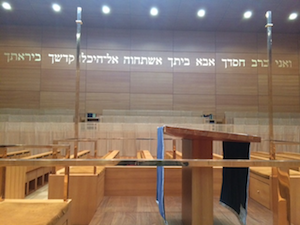
Interior of Ohel Jakob, Munich’s main synagogue. (photo from Yael Levin)

My experiences on this trip could fill several pages so I will share just a few that left a special impression on me.

We began with a visit to Berlin’s historic Jewish Quarter, on the trail of Moses Mendelssohn. We visited the site of the first synagogue, the Centrum Judaicum, the old Jewish cemetery, the Jewish high school and the house of the world’s first female rabbi, Regina Jonas, ordained during the Nazi regime in 1935. Hers is a little-known and fascinating story that would be an inspiration for every Jewish woman (and man).

Following the theme of female leadership, we sat with Deidre Berger, managing director of the American Jewish Committee in Berlin to discuss their work lobbying the government on issues that affect the Jewish community and Israel, such as the European Union’s newly adopted guidelines for labeling goods from Israel’s disputed territories, combating the boycott, divestment and sanction movement, and antisemitism. Their work doesn’t stop there: they are actively engaged in Jewish interfaith dialogue, particularly with the Turkish community, and they work closely with the government helping develop civic education curricula in schools.

The next day, we moved to the subject of anti-terrorism at the Federal Ministry of the Interior, where we spoke with Richard Reinfeld, head of Division ÖS II 3, the office of terrorism and extremism by foreigners. Among other topics, we heard about the great cooperation between Israel and Germany in terms of intelligence exchange.

After the imperative, behind-the-scenes visit to the Jewish Museum of Berlin, the Memorial to the Murdered Jews of Europe and the Topography of Terror Foundation, we had the opportunity to meet with Gerhard Friedrich Schlaudraff, head of the Near East division of the Federal Foreign Office, which covers Israel and all its neighbors. It was frustrating to confirm something that we all know: while there is always someone on the Israeli front to be held accountable for negotiations with the Palestinian Authority, no reliable partner can be found on the PA side.

photo - The “Corridor of Remembrance” inside Ohel Jakob commemorates the 4,587 Munich Jewish citizens murdered by the Nazis
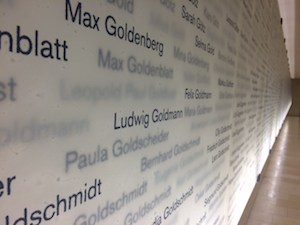
The “Corridor of Remembrance” inside Ohel Jakob commemorates the 4,587 Munich Jewish citizens murdered by the Nazis. (photo from Yael Levin)

We left Berlin after meeting with some of the many Israelis that continue to move to the city. More than 18,000 Israelis have made Berlin their home. Listening to their stories got me thinking about our homeland. Many leave Israel, we were told, because it has become hard to stay, a situation they described with words like “incredibly expensive,” “stressful,” “constant anxiety” and “hopelessness.” I still have mixed feelings about this. While I’m happy they are able to live in a situation that is better for them, I think about the irony: the very place where, years ago, life became absolutely unsustainable for Jews has today become a safe haven of sorts for many.

Our next stop was Munich, where we met with some outstanding people. Listening to Janne Weinzierl from the Stolpersteine Initiative was uplifting. This initiative is a whole topic on its own, but, for now, I will just say that this woman and her husband, neither of whom is Jewish, have volunteered tirelessly to keep the memory of thousands of Jews, and other minorities across Europe murdered during the Nazi regime, alive with a simple “stumbling stone.” To learn more, visit stolpersteine.eu/en/home.

From Dr. Charlotte Knobloch, we heard about the 200-year history of the Bavarian Jewish community and its 70th re-founding anniversary. Knobloch is a pillar of Jewish life in Munich, at 83 years old still actively working for the community.

I particularly enjoyed a conversation with Rabbi Steven Langnas, who is very involved in interfaith dialogue. At some point during lunch, he asked us to pass this message on to our communities: “Many people think that Jewish life has come to an end in Germany and practically in many places in Europe. We are showing that the Holocaust was a tragic pause but it wasn’t the end … the Chabad House now stands across from Hitler’s Munich residence. He’s not there anymore and we still are; just that, is a reason to go on….”

After a special and vibrant Shabbat service at Ohel Jakob synagogue, we headed to Dachau. Can you imagine how it felt after walking to shul to gather with another 300 or so Jews – including some survivors – in the middle of the city, praying the same prayers and singing the same songs that we have sung for hundreds of years (at least) and then proceeding to the sombre and moving visit to a concentration camp?

photo - The memorial for the murdered athletes and coaches of the Israeli Olympic team at the 1972 Games in Munich
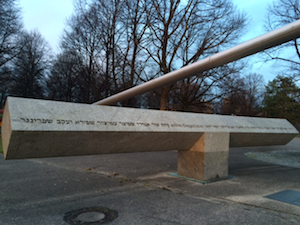
The memorial for the murdered athletes and coaches of the Israeli Olympic team at the 1972 Games in Munich. (photo from Yael Levin)

The entire trip, in fact, was so intense that, most nights, I could not sleep. There was so much to think about at the end of every day. We had sad moments, including our visit to the memorial for the victims of the 1972 terrorist attack on the Israeli Olympic team, and amazing, positive experiences that no one in the group will forget.

I rediscovered Germany on this trip, saw it as never before and, like many mission participants visiting Israel on CIJA trips, I changed many of my opinions about the country – one that marked our people in a very profound and complex way.

It is evident that there is still antisemitism in German society, though definitely not more than in other European countries. I also perceived ambiguity in some of our meetings with German government officials, especially with regard to Israel, but don’t get me wrong, I could see that Germany is one of Israel’s strongest and closest partners today.

It is also clear that Germany has completely changed for the better in relation to our community – not only acknowledging a heavy responsibility for the past but also honestly seeking to create a better future by supporting, protecting and fostering Jewish life and by educating the new generations against antisemitism and hatred.

This is important for us both as Jews and as advocates of justice and tikkun olam.

Yael Levin is manager, community relations, at the Centre for Israel and Jewish Affairs, Pacific Region. This article was originally published by CIJA’s The Exchange.

Format ImagePosted on January 22, 2016January 21, 2016Author Yael LevinCategories WorldTags antisemitism, Germany, Holocaust, Israel-Germany relations, Ohel Jakob, Stolpersteine
An evolving experience

An evolving experience

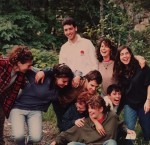
Madrichim at Camp Miriam palling around in summer 1990. The author is in front. (photo from Mira Sucharov)

On a little corner of Gabriola Island lies an enclave of old-style Jewish utopianism. Modeled after a kibbutz, campers (chanichim) and counselors (madrichim) talk about heady topics like radical justice, equal worth, unionization, socialism and Labor Zionism.

They learn Hebrew, engage in physical labor and debate topics like whether O Canada adequately addresses the reality of First Nations, the fate of the Palestinians, and how to make a radically inclusive society within Israel. It’s Camp Miriam, part of the network of Habonim-Dror camps across North America. Among the founders of the camp was my grandmother, Marian Margolis, and I spent one memorable summer there as a counselor in 1990.

A lot has changed in Israel – and especially across the kibbutz movement – over the decades. I spoke to the current rosh (director), 22-year-old Leor Laniado, a student at the University of British Columbia majoring in environmental and sustainable geography.

The camp instils in its campers the value of “shivyon erech ha’adam,” a principle that every human being is of equal worth. It’s heady stuff for 10-year-olds who don’t measure themselves in terms of professional status anyway, but the idea is there. Alongside the usual fare of swimming, sports and crafts, campers choose a daily work branch where each task is valued. Fittingly, bathroom-cleaning detail has become one of the most popular options, Laniado tells me.

Campers also have a long tradition of running a kupah (common fund). An initial donation of pocket money is placed into a pot where campers decide how to spend it. Maybe the kids want to pool the funds for a party, maybe a portion will be donated to charity, maybe one camper needs a new toothbrush and applies to the treasurer – who is, of course, a fellow camper.

Rachel Fishman logged eight years as a camper before joining the staff. She values how much she sees Camp Miriam embodying the ideals of youth empowerment. Within limits, she points out, “youth are given space to make their own society.”

Trilby Smith spent 13 summers at Camp Miriam and is currently vice-chair of the camp committee. She sends both her kids to Miriam so “they can develop a sense of community defined by their peers, so that they can be in an environment that is open to questioning and thinking critically about Israel and what it means to be Jewish, and so that they can learn to be leaders.” And, she added, “So that they can have fun!”

Socialism isn’t the only tricky concept permeating the walls of the dining hall. (Yes, campers even do the dishes.) So, too, is Zionism. “I think that Jews in the Diaspora are facing a crisis of how to support Israel. A lot of madrichim struggle with this internally, especially studying in liberal universities,” Laniado said. It’s about “simultaneous love and criticism” at Miriam. “Recognizing that we’ve created a vibrant Israeli society, there’s a lot of work that remains to be done,” she said.

In Israel, Habonim-Dror partners with Hanoar Haoved on projects such as teaching English in Arab high schools. Called the Shared Existence project, it seeks “a joint liberation of both Israelis and Palestinians, striving towards a diverse and vibrant Israeli commonwealth,” in Laniado’s words.

Struggling with Israeli-Palestinian relations and with Zionism is a common refrain these days, but what Camp Miriam – and Habonim in general – manages to do is offer a way for youth to grapple with these issues head-on rather than abdicate altogether. Abdication – or what sociologists have been calling a “distancing” from Israel and Jewish life – is one of the biggest challenges.

These days, the radical secularism that I recall from the summer of 1990 has been replaced by an inching towards Judaism. While they still forego the Hamotzi in favor of a Labor Zionist chant, campers are now more likely to hear about Jewish values, embrace Jewish texts or be treated to a discussion by the rosh on the weekly Torah portion.

While the simple porridge my Baba Marian made for the campers in the 1950s when she was the first “camp mother” has been supplemented by scrambled eggs, fruit salad, yogurt and granola, along with gluten-free and dairy-free options, Zionism is wrestled with rather than taken for granted as a simple solution to the ills of antisemitism, and a commitment to Hebrew is now paired with a desire to “engage with Arabic language and culture.” The big values – leadership, debate, a commitment to Israel, Jewish identity, justice, labor and inclusiveness – remain.

For more information on Camp Miriam, visit campmiriam.org.

Mira Sucharov is an associate professor of political science at Carleton University. She is a columnist for Canadian Jewish News and contributes to Haaretz and the Jewish Daily Forward, among other publications.

Format ImagePosted on January 22, 2016January 21, 2016Author Mira SucharovCategories LocalTags Camp Miriam, Gabriola Island, Habonim Dror, Labor Zionism, Leor Laniado, Rachel Fishman, Trilby Smith
In the Okanagan

In the Okanagan

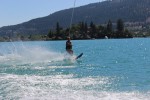
A typical day at camp is split between the waterfront, where campers learn to swim, ski, sail, canoe and kayak, and land, where campers participate in sports, drama, crafts and Jewish programming. (photo from Camp Hatikvah’s Facebook page)

Established in 1937, Camp Hatikvah in the Okanagan offers campers a summer experience that provides balanced emphasis on skill development and relationship building. Campers are immersed in a group setting where they must learn to live, cooperate with and embrace one another. In doing so, they learn a great deal about themselves and what it means to be a member of a community.

During any given summer, close to 400 campers attend Camp Hatikvah. While the bulk of participants are from the Greater Vancouver area, close to 30% come from cities such as Calgary, Los Angeles, San Diego, Seattle, New York, Edmonton, Tel Aviv and Mexico City.

At Hatikvah, campers learn of their shared culture and values, and of their homeland in Israel. During a summer at Hatikvah, campers have an opportunity to participate in Jewish cultural experiences, such as Shabbat, Israeli dancing and Hebrew singing, as well as educational programs about the history and importance of the state of Israel. A typical day at camp is split between the waterfront, where campers learn to swim, ski, sail, canoe and kayak, and land, where campers participate in sports, drama, crafts and Jewish programming.

The camp staff are comprised of approximately 70 Jewish youth from across Canada, the United States and Israel. Most were campers with Hatikvah or its Young Judaea sister camps across Canada. Indeed, when current director and head of staff Liza Rozen-Delman was hired in 2007, she was completing a circle that began years before, when she was at Hatikvah for eight summers, and went from being a first-year staff at 17 to an assistant director at 24.

For more information about Camp Hatikvah, visit the camp’s website, camphatikvah.com, or contact Rozen-Delman at [email protected] or 604-263-1200.


Format ImagePosted on January 22, 2016January 21, 2016Author Camp HatikvahCategories LocalTags Camp Hatikvah, Liza Rozen-Delman, Okanagan, Young Judaea
Outside of British Columbia

Outside of British Columbia

Jewish summer camp combines land and water activities with learning about Israel and Judaism. (photo from Camp BB Riback)

When summer comes to the Pacific Northwest, it’s the best time to head into the great outdoors and, of course, for kids, into the summer camp experience. For Jewish kids in British Columbia, there are not only great local camps – Camp Hatikvah and Camp Miriam – but a few out-of-province options worth considering.

When Camp Solomon Schechter (CSS) was established in 1954, on the shores of Whidbey Island, there was a vision born out of the camp’s now-common catch phrase, “Where Judaism and joy are one.” Sixty-one years later, now located on private, protected lakefront property on the outskirts of Olympia, Wash., the camp is looking to the future again, with the combination of Judaism and joy still central.

A Conservative movement-based summer camp, CSS launched a capital campaign in 2014 called From 60 to 120, with a focus on supporting the next 60 years of growth. In an informational social gathering hosted in Vancouver by the camp on Jan. 10, director Sam Perlin shared plans for the campaign and the new facilities that would be born from it.

photo - Jewish summer camp combines land and water activities with learning about Israel and Judaism
(photo from Camp Solomon Schechter)

Already halfway to reaching their $12 million goal, Perlin said that if they reach $8 million on time, construction would begin as soon as the summer. New dining and covered sports facilities with programming space are in the works, along with health and welcome centres, all built while preserving and enhancing the camp’s unique wetlands.

The new developments will be a welcome addition to the approximately 120 Canadian campers CSS gets in any given summer, a number Perlin says he hopes will continue to grow. “We have full Canadian buses coming from Canada,” he explained. “We even moved Aleph (First) session to accommodate the Canadian school schedule.”

With several matching grants approved, Perlin noted that Canadians can participate in the matching program to maximize their contributions. He also pointed out that a Canadian donation will be matched with the same number in U.S. dollars, regardless of the exchange rate.

For more information on CSS programming or the campaign, visit campschechter.org or from60to120.org.

* * *

Across the Rockies and into Alberta, Camp BB Riback (a B’nai B’rith camp) is celebrating its 60th anniversary on Pine Lake.

Camp director Jerrod Henoch said they’ve been building up their waterfront program to include learn-to-ski and wakeboard sessions. “Our professional-level ski boat and boom, combined with the expert attention of our waterfront staff, sees even many of our youngest campers get up on water skis for their first time at camp,” he explained.

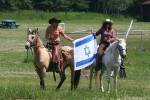
Of course, with the Alberta-based location, Camp BB also features a horseback riding instruction program.

Camp BB will also be building new camper cabins this spring as part one of their facility enhancement plans.

Although the majority of Camp BB’s participants are from Edmonton, Calgary and Saskatoon, Henoch said they do get several B.C. families every summer as well.

“Camp BB is famous for its inclusive and open camp community and we are especially good at helping new campers from out of province or across the world feel included,” he said. “With one of the largest arrays of activity areas in Western Canada, we have something that every camper will excel at and something that will challenge each camper.”

Henoch said there are several staff and even senior management studying or living in British Columbia with whom a consultation for any interested local families could be set up.

More information on the camp can be found at campbb.com.

* * *

One of the newer Jewish camps in the region is Camp Kalsman. Affiliated with the Reform movement, the facilities are located off the Interstate 5, between Mt. Vernon and Everett in Washington.

photo - learning Torah at Camp Kalsman
(photo from Camp Kalsman)

Entering their 10th summer, director David Berkman said this summer will be one big birthday celebration, highlighted by a community-wide party on July 31.

In its first decade, Berkman said the camp’s sense of community has stood out more than anything else.

“The two things that most distinguish Kalsman from other Jewish summer camps are our staff and the community we form with all our participants,” he said. “The Kalsman staff are extraordinary and their dedication to the campers and the camp is amazing. We all work hard to create a sense of family and home away from home. More often than not, campers refer to camp as their home.”

In addition to a heated pool, Camp Kalsman also features a 50-foot tower, a giant swing, a speaking garden and even a petting zoo. With sessions ranging in length from three days to three weeks, the camp serves participants from Grade 2 all the way through high school.

Berkman said Camp Kalsman usually sees three to four dozen campers from north of the border, but he is looking forward to seeing that number grow.

For more information on Camp Kalsman, visit campkalsman.org.

Kyle Berger is Jewish Community Centre of Greater Vancouver sports coordinator, and a freelance writer living in Richmond.


Format ImagePosted on January 22, 2016January 21, 2016Author Kyle BergerCategories WorldTags Camp BB Riback, Camp Kalsman, Camp Solomon Schechter, Conservative movement, CSS, David Berkman, Jerrod Henoch, Pine Lake, Reform movement, Sam Perlin, Whidbey Island
הדולר הקנדי

הדולר הקנדי

הדולר הקנדי נחלש משמעותית מול השקל הישראלי. (צילום: Cynthia Ramsay)

הדולר הקנדי כידוע מאבד גובה מול הדולר האמריקני אך גם מול מטבעות חזקים אחרים בעולם, בהם הלירה שטרלינג הבריטית והיורו האירופאי. עתה מתברר שהדולר הקנדי נחלש משמעותית גם מול השקל הישראלי, שנחשב כיום לאחד המטבעות החזקים בעולם. בסוף השבוע האחרון הדולר הקנדי היה שווה ל-2.736 שקל ישראלי. הנה מספר נקודות ציון משמעותיות המצביעות על השינוי בשווי בין שני המטבעות ומראות כיצד הדולר הקנדי נחלש מאז מול השקל. בראשון לינואר השנה הדולר הקנדי היה ברמות של 2.80 מול השקל, בחודש נובמבר אשתקד הדולר הקנדי היה שווה 2.95 שקלים, בינואר אשתקד הדולר הקנדי היה שווה 3.3 שקלים, בדצמבר 2014 הדולר הקנדי היה שווה 3.5 שקלים, בינואר 2013 הדולר הקנדי היה שווה 3.8 שקלים, ואילו בחודש אוגוסט 2012 הדולר קנדי היה שווה למעלה מארבעה שקלים.

הבי ג‘יז נעלמו מהשדה: משטרת אוטווה בודקת מי גנב כוורות עם שלושים אלף דבורים

למתנת החג הזה הזוג ג’י לא ציפה. מריאן ומאט גי’ נדהמו כי בעיצומם של חגי סוף השנה שתי כוורות שלהם נעלמו, ובתוכן למעלה משלושים אלף דבורים. הכוורות הוצבו בשדה חקלאי באוטווה, ומה שנשאר מהן זה שני לוחות עץ מכוסים בשלג וסביבם עקבות בבוץ העמוק של מי שגנב אותן.

הזוג ג’י מפעילים יחדיו את חברת ג’יז ביז לגידול דבורים נותנות דבש ומחזיקים ביותר מעשרים ובארבע כוורות באזור בירת קנדה. הם הקימו את החברה כיוון שמספר הדבורים בקנדה נמצא בירידה מתמדת בשנים האחרונות וזה מדאיג. שתי הסיבות העיקריות לכך: שינוי האקלים והתחממות כדור הארץ, ולאור הגידול בשימוש בחומרי הדברה מצד החלקאים. לדברי מריאן ומאט הדבורים שנגנבו לא יחזיקו בקור הקנדי הקשה ולכן אסור להזיזן בחורף ויש להשאיר את הכוורת במקומן.

הזוג פנה לעזרת משטרת אוטווה והשוטרים מציינים כי מעולם לא הוגשה להם תלונה על גניבת כוורות עם דבורים.

הסינים הבאים ומשתלטים גם על השפה: ישיבות ועד בית בריצ‘מונד מתנהלות במנדרינית

הסינים כך מתברר משתלטים בכל תחום ותחום על אזור מטרו ונקובר לאור מספרם ההולך וגדל. בעיר ריצ’מונד הסמוכה כבר למעלה ממחצית מהתושבים הם ממוצא סינים. הקנדיים המקומיים מרגישים שהסינים משתלטים להם גם על השפה, כיוון שבחנויות רבות בעיר מוצבים שלטים בשפה הסינית בלבד, למרות שבקנדה שתי השפות הרשמיות הן אנגלית וצרפתית. המחוקק מתברר לא פועל ממש לשנות את המצב ולחייב את בעלי העסקים להציב שלטים גם באנגלית. יש לזכור שסינים רבים שגרים בערים אחרות באזור מגיעים לריצ’מונד לקניות ולמסעדות הסיניות הטובות שיש בה.

אנדריאס קרגוט שגר בריצ’מונד נדהם שהשפה הסינית הרשמית מנדרינית הפכה להיות השפה של ישיבות ועד הבית שבו הוא גר. קרגוט ודייר נוסף ביקשו להצטרף לאסיפה האחרונה של הוועד שדנה בתקציב השנתי. יו”ר הוועד אישר להם להגיע אך ציין במכתבו, “שהישיבה תנוהל במנדרינית שהיא השפה העדיפה מבחינת חברי הוועד”.

קרגוט כועס מאוד על הוועד ומציין כי לא מדובר באיזה סוג של מועדון חברתי אלא בישות משפטית לכל דבר, שדיוניה צריכים להתנהל באחת השפות הרשמיות של קנדה. הוא הקליט את הישיבה ובצר לו הגיש תלונה נגד הוועד למועצה לזכויות האזרח, על אפלייה וגזענות.

יו”ר הוועד, אד מאו, אישר שישיבות הוועד אכן מתנהלות במנדרינית והוסיף כי כל מסמכי הוועד נכתבים באנגלית. הוא דחה את טענות קרגוט שהוועד מפלה לרעה את דוברי האנגלית ונוקט במדיניות גזענית.

Format ImagePosted on January 19, 2016January 19, 2016Author Roni RachmaniCategories עניין בחדשותTags Andreas Kargut, bees, Canadian dollar, human rights, Mandarin, Marianne Gee, Matt Gee, Ottawa, Richmond, shekel, אוטווה, אנדריאס קרגוט, דולר הקנדי, זכויות האזרח, מאט גי', מנדרינית, מריאן גי', ריצ'מונד, שקל
On road to reconciliation

On road to reconciliation

The Wallenberg-Sugihara Civil Courage Society will honor Chief Dr. Robert Joseph, ambassador for Reconciliation Canada, on Jan. 17. (photo from Jack P. Blaney Awards, Simon Fraser University)

The release of the Truth and Reconciliation Commission of Canada report last year was a turning point in the relationship between Canada and its aboriginal peoples. It is part of a longer and ongoing trajectory of healing, according to Chief Dr. Robert Joseph, who is being honored this weekend as a courageous civic leader.

The Wallenberg-Sugihara Civil Courage Society was founded by members of the local Jewish and Swedish communities, including the honorary Swedish consul, to recognize individuals who help others at great risk to themselves. Joseph, hereditary chief of the Gwawaenuk First Nation on northern Vancouver Island, is the recipient of this year’s Wallenberg-Sugihara Civil Courage Award.

photo - Chief Dr. Robert Joseph
Chief Dr. Robert Joseph (photo from Wallenberg-Sugihara Civil Courage Society )

Joseph is ambassador for Reconciliation Canada, an organization intended to “revitalize the relationships among indigenous peoples and all Canadians,” and a member of the National Assembly of First Nations Elders Council.

“At significant personal risk and after facing severe oppression, Chief Dr. Robert Joseph courageously stood up against social injustice to help others,” notes the award citation. “As a residential school survivor, he courageously chose to publicly share his story and the consequences of the abuse and trauma he had endured. This was at a time when the indigenous community was conflicted about bringing the experiences in the residential schools to light and when the larger community was in denial about what happened. Chief Dr. Robert Joseph chose to turn his experience into a vehicle for healing through reconciliation and a will to make sure that this would never happen again.”

In an interview with the Independent, Joseph discussed the progress toward healing his community has made in recent decades.

“Our First Nations people were absolutely in deep despair, not understanding what had happened to us over the course of all that time that residential schools existed,” he said. “But, in the last 20 years, we’ve made remarkable, remarkable progress. And one of the breakthroughs in all of that was survivors like myself began to feel confident enough to tell our stories. We had been walking around in deep shame and despair and brokenness and suddenly we found a way to begin to tell our story.”

A crucial first step, he said, was the federal government’s 1998 Statement of Reconciliation. Though the statement itself was equivocal and not universally appreciated, Joseph said, it was accompanied by funds for survivors and resources for the affected communities.

“I was part of the movement because I was executive director for the Indian Residential School Survivors Society, which was the only organization of its kind at the time,” he said. “So, we began to hold meetings and circles where circles of survivors began to tell their stories and it was deeply, deeply liberating.”

The process expanded, he said, to include representatives of the churches who were complicit in the schools system and later the government and other Canadians.

“We began to recognize that indeed there is a common humanity that exists between all of us and if we can’t harness that common humanity, we’re going to always have these atrocities going on around the world,” he said. The Truth and Reconciliation Commission was a culmination of that progress and Joseph is uplifted by the response of Canadians since the report’s release last year.

“We’ve had a tremendous interest and response from many Canadians about their desire to reconcile,” he said. Even so, the impact of the report was double-edged, he said.

“When the Truth and Reconciliation Commission report was submitted in June, it said that because of a whole number of initiatives and policies, Canada had created, impacted, effected a cultural genocide against the aboriginal people of this country,” he explained. “For me, even as I sat and listened to that, it was sort of a bittersweet report. On the one hand, all of our suffering had been acknowledged and identified in this report. But, on the other hand, as a country together, you and I and everyone who are Canadians were told that genocide was a part of our history.”

He added that he is humbled to receive the Wallenberg-Sugihara Civil Courage Award, which is named in honor of Raoul Wallenberg and Chiune Sugihara, diplomats who, during the Second World War, risked their lives to save Jews from the Nazis.

“I’m really moved by the idea that people who suffered huge indignities, human suffering, who have been through it all like no one else has before, are thinking that somebody as little as I am can be acknowledged by them,” Joseph said.

As he prepares to receive his award, the chief said he is optimistic that Canada is at a crossroad.

“We are so blessed in this country,” he said. “We have all of the rainbow and color of the human race here and we have a chance to engage with each other, to nurture our relationships, to embrace our differences and indeed celebrate them.… But it calls us to our highest order as Canadians to be all that we can be in treating each other with respect and dignity because there is nothing more important than respect and dignity. I think that we are on the right path.”

Joseph will receive his award at an event on Sunday, Jan. 17, at 1:30 p.m., in the Wosk Auditorium at the Jewish Community Centre of Greater Vancouver. The ceremony will be followed by the screening of the film Carl Lutz: The Forgotten Hero, about a Swiss diplomat in Budapest who saved tens of thousands of Jews from the Nazis.

Format ImagePosted on January 15, 2016January 15, 2016Author Pat JohnsonCategories LocalTags Chiune Sugihara, First Nations, Robert Joseph, Truth and Reconciliation Commission, Wallenberg-Sugihara Civil Courage Award
A peek at LimmudVan’16

A peek at LimmudVan’16

Eve Jochnowitz (photo from Limmud Vancouver)

Limmud Vancouver, a now-annual festival of Jewish learning, takes place Jan. 30 and 31. The “pan-denominational” event includes seminars, lectures, workshops and discussions on a diverse array of topics. This week and next, the Independent features a few of the presenters who will participate in the local version of the international phenomenon that has now reached more than 60 Jewish communities worldwide.

A national fish story

Eve Jochnowitz calls gefilte fish the national dish of the Ashkenazi Jewish people.

“Wherever you have Ashkenazic Jews, you have the Yiddish language and you have gefilte fish,” she said. “It’s like DNA. It’s in many different permutations and incarnations, but the gefilte fish pretty much goes wherever the Yiddish-speaking Jews go.”

A culinary ethnographer who hosts a Yiddish-language cooking show, Jochnowitz doesn’t want to tip her hand too much in advance of her presentation here this month.

“Let’s just say there are some very surprising variations on gefilte fish out there and let’s just say that the Ashkenazic Jews will come up with ingenious ways to have gefilte fish in the most unexpected situations,” she said in a phone interview from her New York home.

If there are so many variations, then what, at root, defines geflite fish?

“Usually it is made of freshwater fish; in Eastern Europe, most frequently carp, pike and whitefish,” she said. “The more carp there is, the more dark and the more fishy, more flavorful, it is. Some people like it to be more fishy, some people like it to be almost a tofu substitute with the fishiness very understated and the gefilte fish itself being more of a base for some horseradish or egg sauce or whatever it is you choose to put on your gefilte fish.”

It may or may not have matzah meal, it may or may not have sugar, she said.

“This is another very controversial issue with gefilte fish – should it be sweetened or salted or both?” she said. The term itself means “stuffed fish,” but stuffing a fish is very difficult and labor-intensive, so “most gefilte fish is not gefilte.”

Although she is a gefilte fish maven, Jochnowitz stressed that Ashkenazi food is not limited to the familiar.

“Yiddish food is a universe,” she said. “There is much more to Yiddish food and Yiddish cooking than just challah and kugel.”

Her other presentation at Limmud will focus on the little-known phenomenon of Jewish vegetarian cookbooks of the late 19th and early 20th centuries.

Two sides to the story

David Matas, a noted human rights lawyer who represents the organization Justice for Jews from Arab Countries, says the world needs to recognize that Palestinians are not the only refugee population that emerged from the war of 1948-49.

photo - David Matas
David Matas (photo from Limmud Vancouver)

“What we see is two refugee populations that were generated as a result of the Arab invasion to stop the creation of Israel,” he said. “The Jewish population is, in fact, more numerous than the Palestinian.”

The United Nations, with a few exceptions, has been concerned about the Arab refugees from that time, but not the Jewish ones who were forced from their native lands across North Africa and the Middle East, he said. Israel has also not taken a strong lead on the issue until recently, he added.

“Israel, on the whole, has not been a great advocate on this issue historically because there has been the Zionist mythos that people wanted to come to Israel rather than the fact that they came because they were refugees,” he said. “It’s only recently that Israel has itself adopted this position that these people are a refugee population and should be treated in any overall refugee settlement.”

There is also the fact that Jewish refugees have been given citizenship in Israel or other countries, while the Palestinian populations have largely remained stateless.

“The Arab population mostly has not been resettled and, in fact, they’ve grown because their descendants have been classified as refugees,” Matas said. “They’ve remained as a perpetual refugee population. There’s been an attempt to keep this population as a refugee population, as an argument for the destruction of the state of Israel.”

Matas and his organization believe both refugee groups should receive justice. Most likely, he said, a resolution might involve a compensation fund that wouldn’t necessarily come from Israel or the Arab states, but possibly from the United States or third parties willing to facilitate a larger peace settlement.

“That compensation fund would be available to people who were victimized from both refugee populations, as well as their descendants, or something like that,” he said. The idea of compensation for massive human rights violations is not new. “There’s been lots of experience with the Holocaust, amongst other [cases]. You’ve got a kind of jurisprudence and experience to draw on in order to make these programs work.”

While some commentators contend that the refugee issue can wait until later stages of any negotiated settlement, Matas disagrees.

“I think it’s important to bring it in at this stage of the negotiations,” he said. “This Palestinian notion that we are the refugees and the Jews aren’t plays into this false narrative there’s only one victim population when in fact there are two.”

A Polish journey

Jewish Canadians often travel to Poland in search of their family’s roots or as an exercise in history. Norman Ravvin travels there frequently, but he is as focused on the present as on the past.

photo - Norman Ravvin
Norman Ravvin (photo from Limmud Vancouver)

“You can visit Poland on different terms,” said the Montreal academic and author. He will lead a session on traveling Poland that focuses on the major cities of Warsaw, Kraków, Lodz and Poznan, as well as his maternal ancestors’ hometown of Radzanow.

“The overall depiction will be of Poland as a place that is alive and contemporary,” he said. “Aspects of that are related to Jewish memory and parts of it have to do with contemporary Polish life and then the way that one feels as you go back to the ancestral place.”

Things are changing fast in Poland, Ravvin said. The end of communism, the integration into the European Union and the general march of time means things have altered significantly since Ravvin first toured there in 1999. One area of progress relates to Jewish and war-era history.

“In the last 25 years, they’ve become very effective at commemorating Jewish prewar life,” he said. “If you had traveled to Poland in 2000, this wouldn’t necessarily have appeared to be true, but now certainly it is true and, when you walk in Warsaw, the sidewalks are marked with these remarkable inlays which say this was the ghetto wall, so that you step over it and you actually feel that you understand the prewar and the wartime city and now the postwar city.”

Some of the efforts, he speculates, are for the purposes of tourism, but he also acknowledges Polish efforts at education.

“They’re doing a reasonable job of confronting how to live with the shadows of the past,” he said.

Ravvin’s mother’s family fled Radzanow in 1935 and all those left behind were murdered. The family made their way to Canada, eventually to Vancouver, where Ravvin’s grandfather, Yehuda-Yosef Eisenstein, was a shochet (kosher slaughterer).

Ravvin welcomes people to bring their own family history to his presentation.

“If they’re carrying their own version of this story,” he said, “they might warm that up in their minds, their own families’ Polish past, what they know about it, what they wish they knew, if they’ve gone, whether they might go, so that the possibility is the thing they’re considering and then maybe my talk will change the way they think about that.”

For this year’s Limmud schedule, visit limmudvancouver.ca.

Format ImagePosted on January 15, 2016January 15, 2016Author Pat JohnsonCategories LocalTags David Matas, Eve Jochnowitz, gefilte fish, human rights, Limmud, Norman Ravvin, Poland

Posts pagination

Previous page Page 1 … Page 265 Page 266 Page 267 … Page 321 Next page
Proudly powered by WordPress