Skip to content
  • Home
  • Subscribe / donate
  • Events calendar
  • Business Directory
  • FAQ
  • News
    • Local
    • National
    • Israel
    • World
    • עניין בחדשות
      A roundup of news in Canada and further afield, in Hebrew.
  • Opinion
    • From the JI
    • Op-Ed
  • Arts & Culture
    • Performing Arts
    • Music
    • Books
    • Visual Arts
    • TV & Film
  • Life
    • Celebrating the Holidays
    • Travel
    • The Daily Snooze
      Cartoons by Jacob Samuel
    • Mystery Photo
      Help the JI and JMABC fill in the gaps in our archives.
  • Community Links
    • Organizations, Etc.
    • Other News Sources & Blogs
  • JI Chai Celebration
  • JI@88! video

Recent Posts

  • Federation now across BC
  • Israel fighting for its existence
  • Deal strengthens Iran
  • Patriotic belonging diminishes
  • A campaign to engage
  • Upstanders’ first live event
  • Responding to Carney
  • Having your own home
  • Music a family tradition
  • Musical to warm heart
  • Community milestones … June 2026
  • Sharing her passion for Israel
  • Or Shalom reopens its doors
  • JFS from past to future
  • Need holistic approach
  • Sharing stories, advice
  • Journalist shares fears
  • Skills to live together
  • Road to independence
  • Cutting grass with scissors
  • Zionism as a solution
  • Deceit, desire & the divine
  • Reclaiming sacredness
  • Creative project ideas
  • Summer squares and cobbler
  • Thou shalt … summer commandments
  • Legal help for students
  • Revisiting myth of Lilith
  • Wrong person rebuked
  • Canada’s mixed messages
  • Questions for museum
  • Symposium on antizionism
  • Making soccer political
  • CJPAC lauds Pulver’s impact
  • City recognizes Vrba’s legacy  
  • Organ donation saves lives

Archives

Follow @JewishIndie
image - The CJN - Visit Us Banner - 300x600 - 101625

Category: Local

Hundreds scribe new Torah

Hundreds scribe new Torah

Nomi Fenson, left, and Debby Fenson help complete Congregation Beth Israel’s new sefer Torah with sofer Rabbi Moshe Druin. (Adele Lewin Photography)

Hundreds of people participated in a moving mitzvah over two recent weekends at Congregation Beth Israel. The congregation, still kvelling over its architecturally lauded new building, celebrated the arrival of a new Torah scroll, which was completed by members of the congregation with the help of a sofer, a Torah scribe.

It is one of the 613 mitzvot for each individual to scribe a Torah scroll: “And now, write for yourselves this song, and teach it to the Children of Israel. Place it into their mouths, in order that this song will be for Me as a witness for the Children of Israel.” (Deuteronomy 31:19)

The new sefer Torah was scribed in Israel, with the final 100 letters to be completed. A lottery was originally planned by the congregation to allocate the honor of scribing a letter, but a compromise was found to give the opportunity to everyone who wanted to participate.

“We asked if people would mind partnering with other families,” said Beth Israel’s Rabbi Jonathan Infeld. “And, despite the fact that we had 150 families or individuals who asked to participate, we had enough people who said they were willing to partner that everyone who asked to participate was able to do so.” In the end, about 600 people had a part in the process.

photo - Alexis with Rabbi Moshe Druin
Alexis with Rabbi Moshe Druin. (Adele Lewin Photography)

Participants had the opportunity to scribe with the guidance of Rabbi Moshe Druin, one of several “traveling sofrim” associated with a Florida-based enterprise called Sofer On Site, which facilitates events just like the one Beth Israel chose to undertake. Druin also helped complete a Torah scroll for Temple Sholom last year.

Each participant at Beth Israel proceeded through a variety of meaningful activity stations leading up to the scribing. Led by a volunteer guide, participants learned from teachers on a subject from the Torah. They then proceeded to a different area where they could decorate the new Torah binder, write a wish for the wishing tree, listen to storytelling or peruse the book corner. After handwashing, they prepared for the scribing, which they did with Druin. The sofer shared a teaching on the significance of each Hebrew letter and he filled in the letter as participants placed their hands on his hand or on the quill.

“The joy was palpable,” Infeld said of the event, which went all day Friday, Feb. 19, until Shabbat, then continued on Saturday night after Havdalah and again on Sunday. “The feeling of community was extremely strong.… Some people said this was one of the most meaningful experiences of their life and it was fantastic to see families of multiple generations participating in the activity.”

“It really is a once-in-a-lifetime experience,” said Audrey Moss, a congregation member who served as project chair for the Torah scribing and dedication. “The whole idea was that [participants] go through a spiritual journey. You prepare yourself spiritually and mentally before you go into the sanctuary for your one moment with Rabbi Druin…. I think Rabbi Druin really, really made the event.”

After the scribing, the Torah was dedicated on Shabbat the following weekend, when the congregation also celebrated the 10th anniversary of Debby Fenson’s role as ba’alat tefillah, Torah reader.

Fenson carried the Torah into the sanctuary and a music-filled procession welcomed the new scroll.

“We sang and walked the Torah around the entire shul so that everybody could see it and kiss it,” said Fenson, who admits that the dedication and surrounding ceremonies had a powerful effect on her.

“The whole morning was pretty emotional for me,” she said. “A lot of people came up to see me, and the dedication of the Torah was a special event.”

The Torah dedication was a first for both Fenson and Infeld. All of the synagogue’s existing Torah scrolls are more than 100 years old, said Fenson, so this was the first time a sefer Torah had been created specifically for the congregation. When the new synagogue was completed in 2014, the Torahs were carried into the ark, but this was different, Fenson said.

“People were very emotional and I was feeling that as well,” she said. “It was very exciting.”

Format ImagePosted on March 11, 2016March 10, 2016Author Pat JohnsonCategories LocalTags Beth Israel, Debby Fenson, Moshe Druin, sofer, Torah
A record $8.3 million raised

A record $8.3 million raised

At FEDtalks, the campaign opening event, left to right: Ezra Shanken, Jewish Federation of Greater Vancouver chief executive officer; Neil Pollock, general chair, 2015 Federation annual campaign; Lisa Pullan, chair, women’s philanthropy, 2015 campaign; Stephen Gaerber, Federation board chair; Alex Cristall, co-chair, major gifts, 2015 campaign; and Andrew Merkur, co-chair, major gifts, 2015 campaign. (photo from Jewish Federation of Greater Vancouver)

For the second year in a row, the Jewish Federation of Greater Vancouver annual campaign has closed with a record achievement, this time totaling $8.3 million. This represents an increase of approximately $300,000 from the previous year. Funds will support programs and services on which thousands of community members rely.

“The true power of this record result goes well beyond the impressive numbers. We can make incredible changes in this world when we give from our hearts, and that’s just what our thousands of donors and hundreds of volunteer canvassers have done. I am truly moved by their incredible acts of chesed (kindness) and tzedakah (justice, charity),” said general chair of the campaign Neil Pollock.

“I have witnessed firsthand the challenges in our community and the profound reach of the Federation annual campaign,” said Stephen Gaerber, Federation’s board chair. “The high cost of living in Vancouver has made it difficult for many community members to connect with Jewish life, either because they cannot afford to live centrally or because they cannot afford to participate. The Federation annual campaign addresses issues like these, builds connections between our community and our partnership region in Israel, and helps Jews in need around the world. This record campaign result will provide the support we and our partners need to touch more lives than ever before.”

The face-to-face incentive was one of the keys to this year’s success. It encouraged donors to meet in person with their volunteer canvassers. The 608 face-to-face meetings that took place were an opportunity to have meaningful conversations about shared values and commitment to community.

Federation welcomed 75 new volunteer canvassers as well as 225 new donors to the campaign this year. And Federation chief executive officer Ezra Shanken listed several other statistics in his weekly email message Feb. 19:

  • 1,007 donors increased their gifts
  • 292 volunteer canvassers
  • 1,459 community members attended campaign events
  • 409 campaign volunteers
  • 64 local programs and services supported
  • 17 Israel and overseas programs and services supported
  • 37 partner agencies supported
Format ImagePosted on March 11, 2016March 10, 2016Author Jewish Federation of Greater VancouverCategories LocalTags campaign, Federation, Shanken, tzedakah
Preparing for the summer

Preparing for the summer

A commercial gutter installation. (photo by Ethoseo via commons.wikimedia.org)

As the season transitions from winter to spring, it’s time to attend to some household maintenance tasks.

Exterior areas. Trim trees and remove vegetation from the siding and roofline. Have gutters and drains cleaned by a roofing contractor, add downspout extensions where needed, repair all damaged, disconnected or leaking gutters. Consider having the perimeter drains scoped by a drain tile specialist. Inspect, clean and repair all dirty vents. Take note of all exterior repairs, caulking and painting that will need to be done over the summer.

Decks and balconies. Remove all debris and clean any mildew from the floor surface, clear drains, check the function of sliding doors and screens, test guardrails for stability. Does anything need painting?

Roof and flashings. Have the roof properly inspected for damage, holes, loose flashing materials, outdated shingles, pooling, etc. Remove all debris and moss to prevent moisture issues.

Air conditioner. Have it serviced and the heat pump cleaned.

Furnace. Check the filter and replace or clean it.

Smoke detectors. If you have not done so in the last six months, test all smoke detectors. Replace them if they are older than 10 years. Instal carbon monoxide detectors in areas by gas-burning appliances and check them as well. Also, all smoke detectors should be interconnected and hardwired throughout the home. If one goes off in the basement, they should be heard on the top levels as well.

Electrical outlets. Make sure they are safe and grounded. Replace all broken cover plates, tighten loose ones. Test the GFCI (ground fault circuit interrupter) outlets and replace expired or damaged ones, both inside and out.

Washing machine. Inspect hose connections. These hoses are always under pressure, so replace rubber hoses with steel-braided ones to help prevent leaks.

Clothes dryer. Check that the vent duct is made from a smooth, rigid metal. Replace corrugated plastic or foil ducts, as they pose a fire hazard.

Attic. Check for signs of poor ventilation, pests, insulation issues, damaged sheathing, mold, duct connections and leaks. Repair all problems with the help of an attic contractor.

Spring cleaning. Purge or sell all items you don’t need. Check for other random tasks: replace light bulbs, do minor repairs to ceilings doors, windows, walls, etc.

Sean Moss is a professional home inspector with his company Sean Moss Home and Mold Inspections, homeinspectorsean.com.


Format ImagePosted on March 11, 2016March 10, 2016Author Sean MossCategories LocalTags home repair, spring cleaning
Celebrating our unity

Celebrating our unity

Left to right, Anna Karatchun, Malka Pischanitzkaya and Jenya Friedman at the N’Shei Chabad Unity Event on Feb. 22. (photo by Esti Loeub)

On Feb. 22, Chabad Lubavitch of Vancouver hosted the N’Shei Chabad Women’s Unity Event. Introduced by Henia Wineberg, it was organized to coincide with similar gatherings taking place in 50 cities in 15 countries on six continents in honor of Hakhel, a year of gatherings.

photo - Left to right: Shula Klinger, Pamela Shapiro, Miki Mochkin with Anya, and Genny Krikler
Left to right: Shula Klinger, Pamela Shapiro, Miki Mochkin with Anya, and Genny Krikler (photo by Esti Loeb)

The local dinner and lecture was attended by more than 120 women. The meal, prepared by Menajem Peretz of FortyOne Catering, was followed by the talk given by Freidy Yanover.

Yanover spoke about joy in the days leading up to Purim. Given that we have two months of Adar this year – being a Jewish leap year – we have two opportunities to consider what it means to live with joy, she explained. Her talk was illustrated with reference to the Torah and her own anecdotes and personal stories. It was followed by live music by Adina Selfinger and her singers.

Every seat came with a party bag containing pamphlets from mikvahcampaigns.org about Shabbat candles and the role of the mikvah. To illustrate the scale of the event, each table carried a globe with stickers showing where the events were taking place.

The atmosphere was relaxed and light-hearted, with diners being encouraged to mingle with new acquaintances. Introductions were helped along by a Connect 4 game provided at each seat, along with conversation starters, such as “Talk to someone who bakes challah” or “Talk to someone from out of town.”

Shula Klinger is an author, illustrator and journalist living in North Vancouver.

Format ImagePosted on March 4, 2016March 3, 2016Author Shula KlingerCategories LocalTags Chabad-Lubavitch, FortyOne Catering, Hakhel, Henia Wineberg, N’Shei Chabad
Sheep closer to home

Sheep closer to home

Jenna and Gil Lewinsky with Israeli Ambassador to Canada Rafael Barak, who is holding one of the Lewinskys’ Jacob sheep. (photo from Friends of the Jacob Sheep)

Israeli Ambassador to Canada Rafael Barak was recently hosted by Friends of the Jacob Sheep, a Jewish organization in Abbotsford whose mandate is to conserve the endangered four-horned heirloom Jacob sheep and to send them to a future heritage park for their conservation in the Golan Heights. Barak visited the sheep barn on Feb. 16.

Barak came to give an endorsement of the Jacob sheep project – led by Gil and Jenna Lewinsky – and offered to continue to help facilitate the sheep’s return to Israel.

“The first thing I did when I heard of this [project] from Jenna, was I opened the Bible to see if this is a true story … and, behold, the story was there. It is real,” said the ambassador. “Our hope is found in our national anthem, a strong hope of 2,000 years. And then we heard about the Jacob sheep. We have been helping Jenna [and Gil] with connecting with the agricultural ministry … it is right for the Israeli culture to give the green light for this and to help it.”

The Israeli embassy in Ottawa further commented: “We follow the project and do our best to help more than a year after the Lewinskys contacted us. Now there has been great progress in bringing the sheep and it is evident that the ministry of agriculture is trying to help the issue. We hope that all the bureaucratic procedures required to bring the sheep will be completed soon and will be brought to the ground.”

Format ImagePosted on March 4, 2016March 3, 2016Author Friends of the Jacob SheepCategories LocalTags Israel, Jacob sheep, Lewinsky, Rafael Barak
LEAF works for equality

LEAF works for equality

Michele Landsberg and her daughter, Ilana Landsberg-Lewis. (photo from West Coast LEAF)

Michele Landsberg and her daughter Ilana Landsberg-Lewis laughed and spoke over each other in an animated joint telephone interview with the Jewish Independent. The two women, who are among Canada’s most influential activists, agreed more than they disagreed, and their ideas and opinions flowed and meshed in a way made possible perhaps only through a lifetime of dialogue.

The mother-daughter duo will be keynote speakers at West Coast LEAF’s Equality Breakfast March 11. West Coast LEAF was founded in 1985, alongside its sister organization, the Women’s Legal and Education Action Fund (LEAF National), to ensure that the promises contained in the Canadian Charter of Rights and Freedoms would become a reality for women in British Columbia. West Coast LEAF’s founders recognized that there would be challenges and great potential in putting the abstract legal rights of Section 15 (the equality provision) into action through the courts. The annual Equality Breakfast generally falls around International Women’s Day, which is May 8.

Landsberg is a writer and social activist who wrote for the Globe and Mail and Chatelaine before a 25-year run as a columnist for the Toronto Star. An officer of the Order of Canada, Landsberg’s name is synonymous with feminist perspectives on Canadian and global events.

Landsberg-Lewis is a labor and human rights lawyer. She is the executive director of the Stephen Lewis Foundation, which she co-founded with her father, the former leader of Ontario’s New Democratic party, who also served as Canada’s ambassador to the United Nations. The foundation works with grassroots organizations in sub-Saharan Africa to turn the tide of the AIDS pandemic.

Landsberg-Lewis said she never felt any pressure to go into the family business. In addition to her mother’s writing and activism and her father’s political and diplomatic career, her grandfather David Lewis was leader of the federal NDP.

“There was always interesting and lively conversation,” she said. “Whatever column Mom was writing, whatever Dad was doing … all three of the kids, but I was the eldest, were encouraged to be part of that thinking and lively debate. Yes, I landed very firmly a millimetre away from the tree but, if you ask me, that was the right place to be.”

In her work with her father, Landsberg-Lewis sees the catastrophic advance of AIDS in Africa, but is also inspired by the responses of women who are, she said, “the most affected and infected” by the disease.

“They’re bearing the brunt of the apocalypse of AIDS, they are raising the children, they are pulling their communities together, they are the ones who are trying to effect change, they are the ones who are most adversely affected by discriminatory laws and, on that level, it’s pretty grim,” she said. On the other hand, she continued, despite global funding for fighting AIDS flatlining, affected women are stepping up.

“Take the grandmothers, for instance, who are raising 17 million orphaned children, who were living in isolation, stigma, absolute abject poverty, and were terribly grief stricken because of the loss of their adult children, and they get up the next morning and they look after all these kids. And more than that now – you see that they are beginning to run for local councils and land rights councils and they’re pushing for pensions and pushing for better health care for older women, and so there’s a groundswell of demands for their own rights to be recognized,” she said. “The world is being negligent. This is not surprising or unusual when it comes to women, but the women themselves, as usual, are not waiting for that support, they’re just making it happen.”

Back in North America, a whole different type of change is happening, both mother and daughter agree. Feminists who remember the fights of the 1950s and ’60s are coming up against a generation of young women with a very different idea of what equality and feminism mean. The recent comments by former U.S. secretary of state Madelaine Albright and feminist icon Gloria Steinem, who is a friend of Landsberg’s, nearly led to inter-generational warfare on social media.

Steinem apologized for her comment that young women are abandoning Hillary Clinton’s campaign for Bernie Sanders’ “because that’s where the boys are.” Landsberg blames a grueling book tour and Steinem’s emphatic support for Clinton for the comment, but added she thinks Steinem was getting at an important point when she misspoke.

“I think she meant that young women are still swayed by the power dynamics of our very gendered system, our gendered culture,” said Landsberg. “Boys have more clout and presence in the political world and young women tend to take their cues from them still, quite often, not always, obviously. I think that’s what she meant: that they are swayed by young men’s enthusiasm for Bernie.”

Landsberg-Lewis interjected, contending that the division between Clinton and Sanders supporters is based on ideology more than gender.

Landsberg, who admits she has never shared her friends’ enthusiasm for Clinton, leapt on Albright’s comment, “There is a special place in hell for women who don’t help other women.”

“If we really want to get it right, her quote is misguided,” Landsberg said. “It should be ‘there’s a special place in hell for women who don’t support feminist women.’ Not just any woman, because there was [British prime minister Margaret] Thatcher.”

Clinton, Landsberg said, is “not the kind of woman we can look to to undo the power that has oppressed many, many people.… She is part of the establishment, she is backed by Wall Street, she has endorsed many wars and would endorse more wars as president.”

The rise of Sanders, the democratic socialist whose campaign bills itself as a movement for change, is a good sign on several fronts, say the two. Feminism, among other movements, has struggled in the face of American individualism. This is something that differs in Canada, they agreed, but may signal a revival of movement feminism as more Americans hear Sanders’ message of shared responsibility.

“He’s talking about collective responsibility for changing the situation of women, collective power in collective action and vision,” said Landsberg-Lewis. “And I think that’s an extraordinarily powerful antidote to the individualism that has, I think, for young women – not all young women, not all the time – but has eclipsed the sense of feminism as really being about a movement as opposed to individual power.”

Moving to Canadian politics, mother and daughter both expressed optimism.

“I think the whole country woke up the day after the election and realized that that bad headache they’d had for 10 years was gone,” Landsberg said, laughing. “I think we had a nationwide depression under that grim regime and people felt a sense of relief that we had a new beginning.”

She’ll be watching the new government’s approach to a national child-care plan and worries that Trudeau may be too insulated in the world of “nannydom” to understand that affordable child care is key to women’s equality.

“It is very exciting to have a prime minister who runs around calling himself a feminist,” said Landsberg-Lewis. “I think that that is not a small thing. It’s a first time thing and it’s a big deal.”

“I am thrilled Michele and Ilana are coming together for our Equality Breakfast,” said West Coast LEAF interim executive director Alison Brewin. She said, “The fact that they are mother and daughter reflects the intergenerational nature of the fight to advance women’s equality. West Coast LEAF uses the law to make change, but the work comes in waves that catch and move mothers and daughters, fathers and sons – Michelle and Ilana represent our national struggle for justice.”

Tickets for the West Coast LEAF Equality Breakfast March 11, 7 a.m., at Fairmont Hotel Vancouver are $90 (tax receipt for eligible portion) from 2016equalitybreakfast.eventbrite.ca.

Format ImagePosted on February 26, 2016February 25, 2016Author Pat JohnsonCategories LocalTags Alison Brewin, Charter of Rights and Freedoms, equality, feminism, Ilana Landsberg-Lewis, justice, Michele Landsberg, West Coast LEAF
Mixed reaction to Nini

Mixed reaction to Nini

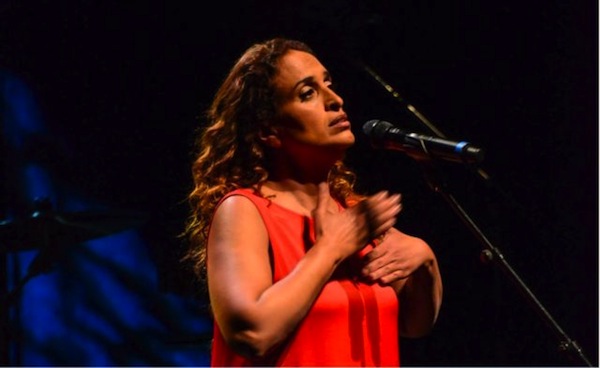
Achinoam Nini at the 21st UNESCO Charity Gala 2012 in Dusseldorf, Germany. (photo by Michael Schilling via commons.wikimedia.org)

The Jewish Federation of Greater Vancouver’s invitation to Israeli singer Achinoam Nini (Noa) to perform at the community’s Yom Ha’atzmaut celebrations has received mixed reactions, including a withdrawal of support for the event by Jewish National Fund of Canada, Pacific Region.

In a Feb. 18 statement, JNF Canada chief executive officer Josh Cooper said the organization would be taking a one-year hiatus from its tradition of sponsoring the Yom Ha’atzmaut event “due to the views of the entertainment booked for this year’s celebration. The entertainer that has been hired does not reflect nor correspond to the mandate and values of the Jewish National Fund of Canada.” When pressed to answer where, specifically, Nini diverged from JNFs mandate, Cooper said he had “nothing further to add.”

Among the many Jewish community partners in a Jewish Federation of Cincinnati-sponsored performance by Nini and Mira Awad in June 2015 was JNF, and JNF was one of the sponsors of a Nini and Gil Dor concert in Atlanta less than two weeks ago. About the different mandates and values of JNF Canada and JNF USA, Cooper said “JNF/KKL has offices in 48 countries. While we all work together in Israel, we operate independent of each other in our respective countries.”

Jewish Federation of Greater Vancouver issued a statement saying the organization was “disappointed” by JNF’s decision to withdraw support: “JNF has been a valued sponsor of our Yom Ha’atzmaut celebration for many years, and we look forward to welcoming them back next year.”

In a Feb. 20 article, the world chair of Keren Kayemeth LeIsrael (KKL)-JNF, Danny Atar, told Haaretz that he was against JNF Canada’s withdrawal of support over Nini’s views, saying, “I intend to express my opinion on the decision directly to the leadership of JNF Canada at a meeting we will be having shortly in Israel.”

Locally, Nini’s scheduled appearance is drawing strong reactions from some community members.

Richmond resident Arnold Shuchat expressed his “complete opposition to the decision to engage the controversial artist” in a Feb. 18 letter to Ezra Shanken, chief executive officer of the Jewish Federation of Greater Vancouver, and to its board of directors. “The purpose of a Jewish community event should be to marshal and unify our community as opposed to fragment it,” he wrote. “It had to be obvious to any reasonable person who might have investigated her political positions that she would be a polarizing figure to many in the community. This decision is a regressive and irresponsible one and should be reversed as quickly as possible to prevent damage to both the reputation and fundraising ability of our Federation.”

René Ragetli, also from Richmond, agreed. “I think she’s a divisive figure and it’s a big mistake to have her here, especially for Yom Ha’atzmaut. She’s said some outrageous things – called our leaders fascist thugs and expressed admiration of Mahmoud Abbas. The woman is not balanced,” he said. “Her bringing comfort to the widow of a terrorist at an event to honor the Israeli fallen – it’s insulting. Sure, people are entitled to their own opinions, but having her on the stage for Yom Ha’atzmaut degrades the event. This is a storm that’s not going away, and a mistake that needs to be corrected.”

An online petition titled “Stop Achinoam Nini from performing at our Yom Ha’atzmaut celebration” had almost 400 signatures at the time of publication. Cynthia Ramsay, publisher of the Jewish Independent, said she has received several letters and emails about Nini.

“Every person who’s tried to get me to run a letter or has cc’d me on an email to Federation has the exact – and I mean exact – same two points: she supports B’Tselem and Breaking the Silence, and she’s anti-Israel or pro-BDS,” Ramsay said. (See “Let’s talk about Nini…” by the JI editorial board.) “No one has provided any evidence, not even a Jerusalem Post quote, to support their allegations, some of which are even nastier and also with zero proof. Because of the wording of most people’s emails/letters, I think it’s a chain reaction, everyone’s just repeating what they’ve heard from someone else without doing any research of their own. The main concern seems to be about BDS and she is against BDS from what I’ve read.”

Shuchat said the issue with Nini was not about BDS. “This has been very divisive because she’s very controversial, she’ll offend a lot of people and it was very foreseeable that this would happen. She’s polarizing so it was a dumb decision to invite her. Mainstream media are going to see this and say, ‘Look at all these heebs fighting with each other!’ Federation should cancel the engagement and focus on building a cohesive community.”

Ramsay disagreed. “I think it would be very sad if Federation withdrew its invitation or if Nini declined it because of the controversy it’s causing, which, I think, is unmerited.”

A Feb. 22 letter to Federation board chair Stephen Gaerber signed by more than 30 Israeli Canadians also urged “Federation to stick to the invitation.” It notes that “the current political climate in Israel condemns every person who advocates for peace and human rights, and campaigns, such as the recent one by Im Tirzu and other similar extremist groups, single out progressive artists, including Amos Oz and David Grossman to name a few.

“By canceling the invitation of Achinoam Nini to perform in Vancouver,” the letter continues, “we will not only be missing the opportunity to experience a great musician, it will also mean taking a stand against everything Vancouver and Canada is proudly known for, our belief in tolerance, pluralism, human rights, these same core values as they are reflected in our Jewish heritage. Here in Vancouver we must not get entangled in the type of intimidation that is going on in Israel. If the opportunity to bring her is missed due to politics, it sends a terrible message and may create rupture in the local Jewish community and will distance plural and liberal people like us from it.”

Lauren Kramer, an award-winning writer and editor, lives in Richmond. To read her work online, visit laurenkramer.net. A version of this article was published by Canadian Jewish News.


Format ImagePosted on February 26, 2016February 25, 2016Author Lauren KramerCategories LocalTags Achinoam Nini, Arnold Shuchat, Cynthia Ramsay, Danny Atar, Jewish National Fund, JNF, Josh Cooper, Noa, René Ragetli, Yom Ha'atzmaut
Holocaust awareness

Holocaust awareness

The Post-Survivor Exhibit in Mystic Market, one of the busiest spots on campus. (photo by Chorong Kim)

The following remarks have been modified from the original address given during Hillel Victoria’s Second Annual Holocaust Awareness Presentation during Holocaust Awareness Week, which took place at the University of Victoria Jan. 25-29.

When my co-organizer, Dr. Kristin Semmens in the history department at the University of Victoria, and I embarked on planning Holocaust Awareness Week, we decided to put a call out for poster submissions to include in the Post-Survivor Exhibit to be publicly displayed in Mystic Market, one of the busiest spots on campus. The aim was to feature personal stories of post-survivors – UVic students who are descendants of Holocaust survivors – and we welcomed submissions from survivors of other genocides and atrocities. We thought that, between all the Jewish students and the diverse student body, we would be overflowing with submissions and would struggle to select 20 stories to include in the exhibit. As it turned out, our struggle was to get any submissions at all. Why am I sharing with you our experience of failed expectations? Well, it’s quite simple. This has been a learning experience for us, just as much as it has been for the students we approached to participate in the exhibit.

Many of the Jewish students said they knew very little about their grandparents or their survival story, and felt they didn’t have enough to write personal reflections about it. I was coming from the point of the view that you can write about “not having enough to write about” and attribute that to the implications of being a descendant of a survivor and the negative effects of post-Holocaust syndrome (a form of transferable post-traumatic stress disorder). Others didn’t want to share their story in public and recommended that we ask people to submit anonymously; some were too scared to be identified as Jews on campus. Both Kristin and I were not surprised by the reasons we received but, as advocates of Holocaust awareness and education, we thought the students could overcome their fear and disassociation from their family’s past.

photo - Dr. Orly Salama-Alber, left, and Hannah Faber sing “Mi Ha’Ish,” while Cheryl Noon, left, and Kaitlin Findlay light the second candle
Dr. Orly Salama-Alber, left, and Hannah Faber sing “Mi Ha’Ish,” while Cheryl Noon, left, and Kaitlin Findlay light the second candle. (photo by Chorong Kim)

As a granddaughter of Holocaust survivors from Poland (and today Belarus) on my mother’s side and a granddaughter of interned Japanese-Canadians on my father’s side, I can tell you that there are two types of survivors. Those who talk and those who don’t. My maternal safta (grandmother) spoke about the Holocaust and would tell everyone that the only reason she survived was because of her blond hair and blue eyes, whereas, my other three grandparents chose to never talk about what happened to them. So much so, that my Japanese bachan and gichan (grandmother and grandfather) completely abandoned their Japanese heritage and opted to raise their children with English names and, tragically, my maternal saba (grandfather) couldn’t even recall the names or faces of his murdered first wife and baby girl. That’s how he dealt with his past.

I only know about my histories because I wanted to know about them and I asked questions. That got me thinking, how can I ask students to write about their stories if they haven’t gone through this process of asking yet? And who am I to pressure them to do so? I know now that I may have asked too much of the students. Perhaps we are not as ready as I thought to share our stories, let alone share them collectively as an international community.

I thank the handful of students who did send in poster submissions for their bravery in sharing their stories. Each one was on a different page in their personal journey to coping and understanding their family or nation’s past. Some already knew all the details while others had to ask their families for help in obtaining old photographs and putting all the bits and pieces of their grandparents’ stories together into one cohesive personal reflection. One of my students wrote to me on Facebook, “I just found out a ton of information that I didn’t know before, and I’m still kind of processing it”; another texted me saying that, although they have decided not to submit a story, this has started a personal desire to find out more about their family’s history. Coming to terms with the past is not easy, we all need healing and we all have the right to look to a brighter future.

photo - Carmel Tanaka with, left to right, Dawn Smith, Thomas Laboucan-Avirom and Rachelle Trenholm of the Indigenous Law Students Association
Carmel Tanaka with, left to right, Dawn Smith, Thomas Laboucan-Avirom and Rachelle Trenholm of the Indigenous Law Students Association. (photo by Chorong Kim)

This weeklong exhibit and the presentation today have already served their purpose – Holocaust awareness. It was not smooth sailing organizing this event. The Holocaust is a very sensitive subject and everyone has their views on how to approach Holocaust education. I am very moved by the outpouring of support from participating organizations in our very diverse community. May this be an example of collaboration, tolerance, compassion and love towards our ultimate goal: peace on this campus, in our community and around the world.

Traditionally, during Holocaust commemorations, six memorial candles are lit to represent the six million Jewish lives lost in the Holocaust. Today, we have chosen to light seven memorial candles, to be lit by UVic students representing various communities and causes, with our seventh candle symbolizing our hope. Performing “Mi Ha’Ish” is post-doctoral fellow Dr. Orly Salama-Alber, accompanied by Hannah Faber, the volunteer coordinator of UVic’s Jewish Students Association, and the same song that has been incorporated into our gift to Dawn Smith, who performed the First Nations acknowledgement earlier. In English, the lyrics read: “Who desires life, loving each day to see good? Then guard your tongue from evil and your lips from speaking deceit. Turn from evil and do good, seek peace and pursue it.” (Psalm 34:12-4)

Our first candle will be lit by undergraduate students Shelly Selivanov, Paige Gelfer and Anat Kelerstein and master’s student Keenan Anthony, grandchildren of Holocaust survivors, and they will be lighting on behalf of the six million Jews who perished in the Shoah.

Our second candle will be lit by I-witness Field School student Cheryl Noon and history graduate student Kaitlin Findlay on behalf of all other persecuted victims of the Holocaust.

photo - Holocaust educators at UVic, left to right, Dr. Helga Thorson, chair, Germanic and Slavic studies department; history professor Dr. Kristin Semmens; and Dr. Charlotte Schallié, co-chair of the European Studies Program
Holocaust educators at UVic, left to right, Dr. Helga Thorson, chair, Germanic and Slavic studies department; history professor Dr. Kristin Semmens; and Dr. Charlotte Schallié, co-chair of the European Studies Program. (photo by Chorong Kim)

Our third candle will be lit by international students Moe Ezzine and Abbie Urquia, who are members of the African Awareness Club, on behalf of all the victims of genocide, including, but not limited to, the Armenian genocide, the Rwandan genocide, the Ukrainian genocide and, more recently, the Syrian genocide.

Our fourth candle will be lit by student advocates Lane Foster and Maks Zouboules from the Sexualized Violence Task Force on behalf of all victims of sexualized violence on and off campus.

Our fifth candle will be lit by undergraduate student Nicola Craig Hora and graduate student Lauren Thompson, who are co-designing a teaching unit on the Holocaust for high school students, on behalf of all the children whose lives were cut short and were robbed of their bright futures.

Our sixth candle will be lit by members of the Indigenous Law Students Association, Thomas Laboucan-Avirom and Rachelle Trenholm, on behalf of all victims of residential schools and Japanese internment camps here in Canada.

Our seventh and final candle, our candle of hope, will be lit by Multifaith Services work-study students Olivia Bos and Gabriela Turla, on behalf of all humanity, regardless of their race, religion, creed and sexual orientation.

photo - Team leader Mike Brosselard from Campus Security
Team leader Mike Brosselard from Campus Security. (photo by Chorong Kim)

On stage, between the candles is our broken window. This window is shattered and represents Kristallnacht, the night of Nov. 9, 1938, on which a massive coordinated attack on Jews occurred and swept across Europe, marking the beginning of the Holocaust. This night is otherwise known as the Night of Broken Glass. Throughout this presentation, we will be reclaiming the broken pieces of glass and rebuilding this very window in a communal act of resilience.

The eight window pieces were placed by members or representatives of the following groups: 1) First Nations community; 2) UVic Multifaith Services; 3) Jewish Federation of Victoria and Vancouver Island; 4) UVic Holocaust educators; 5) Campus Security; 6) student leaders (Jewish Students Association, Indigenous Law Students Association, History Undergraduate Society, Multifaith Services work-study students, Germanic and Slavic studies students, I-witness Field School students, and student advocates from African Awareness Club and Sexualized Violence Task Force); 7) UVic administration (Equity and Human Rights Office); and 8) children of Holocaust survivors and members of the Kristallnacht planning committee.

It takes a community to overcome trauma and rebuild a peaceful future. It also takes a community to prevent trauma from happening in the first place.

Carmel Tanaka is the Hillel BC director at the University of Victoria, a granddaughter of Holocaust survivors and an advocate for Holocaust awareness.

Format ImagePosted on February 26, 2016February 25, 2016Author Carmel TanakaCategories LocalTags Hillel BC, Holocaust, UVic
The West Coast style

The West Coast style

Oberlander Residence II, Vancouver. Peter Oberlander and Barry Downs, architects, 1969. Photograph by Selwyn Pullan, 1970. Courtesy of West Vancouver Museum.

New Ways of Living: Jewish Architects in Vancouver, 1955 to 1975, “focuses on two significant expressions of modernism in the practices of Jewish architects and landscape architects in Vancouver,” explained curator Chanel Blouin at the exhibit’s launch Jan. 28. “First, the integration of the West Coast Modern home into the natural landscape in a way that invites the outdoors in. And, second, in creating home designs that respond to the specific needs and living habits of the family within.”

For her research, Blouin interviewed architect Judah Shumiatcher; architects Kate and Erika Gerson, daughters of the late architect Wolfgang Gerson; University of British Columbia professors emeritus Andrew Gruft and Rhodri Windsor-Liscombe; Leslie van Duzer, head of UBC School of Architecture and Landscape Architecture (SALA) and author of House Shumiatcher; and landscape architect Cornelia Hahn Oberlander, whose late husband, architect Peter Oberlander, is featured in the exhibit, as well.

In addition to the interviews, Blouin traveled to the Canadian Centre for Architecture in Montreal to consult their collections, in particular that on Hahn Oberlander. A highlight of the online exhibit, which can be found at jewishmuseum.ca, is the photography of the houses featured, including photos by Michael Perlmutter, Selwyn Pullan and Fred Schiffer.

“Architecture and the design of cities have always been interests of mine, and I’ve known for awhile that there are and have been members of our community who are or were innovators in these fields,” said Michael Schwartz, coordinator of programs and development at the Jewish Museum and Archives of British Columbia, about the exhibit’s origins. “As we move from theme to theme in each of our exhibits and in each issue of The Scribe, it seemed fitting to turn the lens on this group. Chanel has a footing in architectural history, so when we hired her, this was the topic she was most drawn to. As she progressed through her research, it became clear what era and which individuals to focus on.”

Blouin was hired by the JMABC for the summer of 2015 with support from the Canadian Heritage program Young Canada Works. An extension to the grant allowed her contract to continue through January 2016, said Schwartz, “giving her time to dig much deeper into the topic and produce a more comprehensive result.”

Blouin, a master’s student in art history at UBC, will begin her PhD at University College London in September. “My current research was influenced by my work on New Ways of Living and considers the complex genealogy of the mid-century modern residential designs conceived by the Oberlanders and Wolfgang Gerson,” she told the Independent. “I want to examine how these figures’ exposure to Central European modern art and architecture of the Bauhaus and Werkbund in the Weimar period, as well as their exile and studies at the Architectural Association and the Harvard School of Design with Walter Gropius, influenced their practices in Vancouver.”

About 200 people attended the launch of the exhibit at Inform Interiors. There was a panel discussion between Blouin, Shumiatcher and Windsor-Liscombe; and Hahn Oberlander, the Gersons and van Duzer were in attendance. “There were also representatives from the Jewish Federation, the City of Vancouver and Canadian Heritage, all strong supporters of the JMABC,” said Schwartz.

In his opening remarks, Schwartz noted, “Not only are we very pleased to launch this new exhibit, New Ways of Living, but this week marks the 45th anniversary of the Jewish Museum and Archives of B.C.

“We have with us tonight our founder, Cyril Leonoff, who had the original vision of an organization that would preserve and celebrate the history of Jewish life in B.C…. With a small, dedicated corps of volunteers, Cyril collected documents and carried out oral history interviews with some of our community’s earliest pioneers – people who, in the 1960s, were already in their 80s and 90s.

“From this founding collection, our archives have since grown to comprise over 300,000 photographs, 750 oral history interviews and 300 metres of documents recounting all aspects of the rich 150-year history of our community.”

In the panel discussion, Blouin spoke about the process of developing and curating the exhibit. “I also provided an introduction to the major themes in the exhibit, such as the features of the West Coast style of architecture, site specificity and the important events that introduced Vancouverites to the modernist ethos in the postwar period,” she said. “Rhodri Windsor-Liscombe elaborated further on Jewish involvement in the development of the West Coast Modern home and considered questions of Jewish identity. Judah Shumiatcher shared the story of House Shumiatcher. He described the experience of designing his home and the challenges that the steep slope of the landscape posed as well as the property’s incredible views. We also had a lively Q&A period with many interesting questions from the audience.”

This interaction and excitement is why the JMABC does a launch event. While online exhibits are more cost-efficient and “have no expiry date,” said Schwartz, meaning that researchers around the world will be able to access this material years from now, “there is still value in creating an occasion for people to come together to learn about and celebrate our past. This is why events like the exhibit launch are so important; they give us the chance to dig deeper into the topic and share with our audience a glimpse into the exhibit creation process. This shared experience so essential to museums is generally missing from an online exhibit, hence the need to supplement the exhibit with public programs.”

Blouin said, “One of the most interesting ideas that I hope people will take away from this exhibit is the fact that Vancouver is home to an extraordinary regional style. Many iconic West Coast Modern homes are located in Point Grey and West Vancouver and it’s possible to visit some of them – the West Vancouver Museum provides annual tours. The West Coast style is complex and the Jewish architects who arrived to the city in the postwar period played a prominent role in its development. It’s a fascinating history!”

photo - Interior of House Shumiatcher, 2013. Judah Shumiatcher, architect, 1974
Interior of House Shumiatcher, 2013. Judah Shumiatcher, architect, 1974. Photo by Michael Perlmutter.

The exhibit online, the content of which Blouin wrote, explains that Vancouver “underwent a period of momentous transformation and modernization” after the Second World War. “Returning veterans and new immigrants alike prompted a need for more affordable housing, transportation systems, civic spaces and infrastructure. Between 1940 and 1970, Vancouver required 45,000 new housing units to accommodate the city’s growing population. The city’s expansion was informed by new thinking on improved civic living.”

Blouin explained, “The vibrant art and architecture community that converged around the newly founded School of Architecture at UBC introduced the modernist ethos in Vancouver through various means, including a series of Richard Neutra lectures. The first director of the school, Frederic Lasserre, and B.C. Binning promoted modern architecture in response to the shifting needs of the city.”

The regional domestic architecture of this period “was the post-and-beam house built of locally sourced cedar with wide overhangs and large horizontal windows. Regional West Coast innovations included an exposed timber frame, which allowed for open fluid spaces and immense freestanding ribbon windows oriented toward the picturesque views of the Pacific Northwest landscape.”

While parts of the modernist project will not carry into the future – Marine Gardens, for example, 70 family-sized units designed by Hahn Oberlander and Michael Katz in the 1970s, will be replaced by large residential towers comprising more than 500 units – it will leave a legacy, believes Blouin.

“I think the modernist project has and will continue to inform our thinking about sensitive architecture that responds to both the landscape and the people who inhabit their interiors,” she said. “I hope that New Ways of Living and similar projects, such as the UBC School of Architecture and Landscape Architecture (SALA) West Coast Modern homes book series, will raise awareness about the significance of the West Coast-style homes and the importance of preserving them as they become endangered by escalating land values.”


Format ImagePosted on February 26, 2016February 25, 2016Author Cynthia RamsayCategories LocalTags architecture, Chanel Blouin, Gerson, Jewish Museum and Archives of British Columbia, JMABC, Michael Schwartz, Oberlander, Shumiatcher, West Coast Modern
Legacy of caring and giving

Legacy of caring and giving

Rose’s Angels: Courtney Cohen, centre, is holding two bags, and Lynne Fader is to Cohen’s left. The two women created the group in honor of Rose Lewin, Cohen’s grandmother. (photo by Lianne Cohen)

Each Rose’s Angels contributor, supporter and volunteer has a story about why they give back to the community. With Rose’s Angels, it is not only to ensure that Rose Lewin’s legacy of love and generosity lives on, but also to support the many not-for-profit organizations in Richmond that desperately are in need of assistance.

Rose’s Angels was created by Richmond residents Lynne Fader and Courtney Cohen. Lewin, Cohen’s grandmother, was a well-respected and much-loved Holocaust survivor who believed in doing good for everyone she could.

photo - Lianne Cohen
(photo by Lianne Cohen)

Now in its third year, Rose’s Angels, which is supported and endorsed by the Richmond Kehila Society, just wrapped up its Feb. 14 Care Package Campaign. With the help of 40-plus volunteers, more than 400 toiletry and non-perishable-food care packages, along with 750 warmth bundles (toques, scarves, gloves and socks), were packaged and distributed to a variety of nonprofit organizations in Richmond servicing individuals living in poverty or well below low-income standards. Recipients included the St. Alban Drop-In Centre, Touchstone Family Services, Chimo Outreach, Richmond Multicultural Community Services, Richmond Food Bank, Jewish Food Bank, Turning Point Recovery, Richmond Family Place, Pathways Clubhouse and Light of Shabbat Program.

“It was very fitting to coordinate this event on Valentine’s Day,” said Cohen, “as this is a day when people go on dates and it’s supposed to be ‘extra-special,’ where people buy each other cards, heart-shaped boxes of chocolate, roses, teddy bears and other stuff that basically tells them they love them…. We wanted to share our love within the Richmond community.”

Anyone wishing to make a donation to Rose’s Angels should contact the Richmond Kehila Society at 604-241-9270.

Format ImagePosted on February 26, 2016February 25, 2016Author Rose’s AngelsCategories LocalTags Courtney Cohen, Kehila Society, Lynne Fader, Rose Lewin, Rose’s Angels, tzedakah

Posts pagination

Previous page Page 1 … Page 156 Page 157 Page 158 … Page 181 Next page
Proudly powered by WordPress