Skip to content
  • Home
  • Subscribe / donate
  • Events calendar
  • News
    • Local
    • National
    • Israel
    • World
    • עניין בחדשות
      A roundup of news in Canada and further afield, in Hebrew.
  • Opinion
    • From the JI
    • Op-Ed
  • Arts & Culture
    • Performing Arts
    • Music
    • Books
    • Visual Arts
    • TV & Film
  • Life
    • Celebrating the Holidays
    • Travel
    • The Daily Snooze
      Cartoons by Jacob Samuel
    • Mystery Photo
      Help the JI and JMABC fill in the gaps in our archives.
  • Community Links
    • Organizations, Etc.
    • Other News Sources & Blogs
    • Business Directory
  • FAQ
  • JI Chai Celebration
  • JI@88! video

Recent Posts

  • Eby touts government record
  • Keep lighting candles
  • Facing a complex situation
  • Unique interview show a hit
  • See Annie at Gateway
  • Explorations of light
  • Help with the legal aspects
  • Stories create impact
  • Different faiths gather
  • Advocating for girls’ rights
  • An oral song tradition
  • Genealogy tools and tips
  • Jew-hatred is centuries old
  • Aiding medical research
  • Connecting Jews to Judaism
  • Beacon of light in heart of city
  • Drag & Dreidel: A Queer Jewish Hanukkah Celebration
  • An emotional reunion
  • Post-tumble, lights still shine
  • Visit to cradle of Ashkenaz
  • Unique, memorable travels
  • Family memoir a work of art
  • A little holiday romance
  • The Maccabees, old and new
  • My Hanukkah miracle
  • After the rededication … a Hanukkah cartoon
  • Improving the holiday table
  • Vive la différence!
  • Fresh, healthy comfort foods
  • From the archives … Hanukkah
  • תגובתי לכתבה על ישראלים שרצו להגר לקנדה ולא קיבלו אותם עם שטיח אדום
  • Lessons in Mamdani’s win
  • West Van Story at the York
  • Words hold much power
  • Plenty of hopefulness
  • Lessons from past for today

Archives

Follow @JewishIndie
image - The CJN - Visit Us Banner - 300x600 - 101625

Category: Life

Survivor Judith Weiszmann was saved by Raoul Wallenberg

Survivor Judith Weiszmann was saved by Raoul Wallenberg

Judith Weiszmann holds an audience of students spellbound at Merivale High School in Ottawa in October 2013. (photo by Jeremy Page)

No matter the audience, Judith Weiszmann has three key messages when she speaks about the Holocaust: always remember the good that one person can do in the world, pay attention to the pockets of antisemitism springing up in some parts of Europe and North America, and remember that living in peace with your neighbors is much better than the alternative.

Judith and her husband Erwin, z”l, both structural engineers who emigrated to Canada after the Hungarian Revolution, were frequent speakers about the Holocaust for schools and service clubs in Winnipeg, where Judith still lives and continues to be an outreach speaker. The families of both Judith and Erwin were saved by Raoul Wallenberg, the Swedish businessman-turned-diplomat who came to Hungary towards the end of the war and managed to issue thousands of Schutzpasses (a document identifying the bearer as a Swedish citizen rather than as a Jew) to Hungarian Jews who were on the brink of being deported to concentration camps.
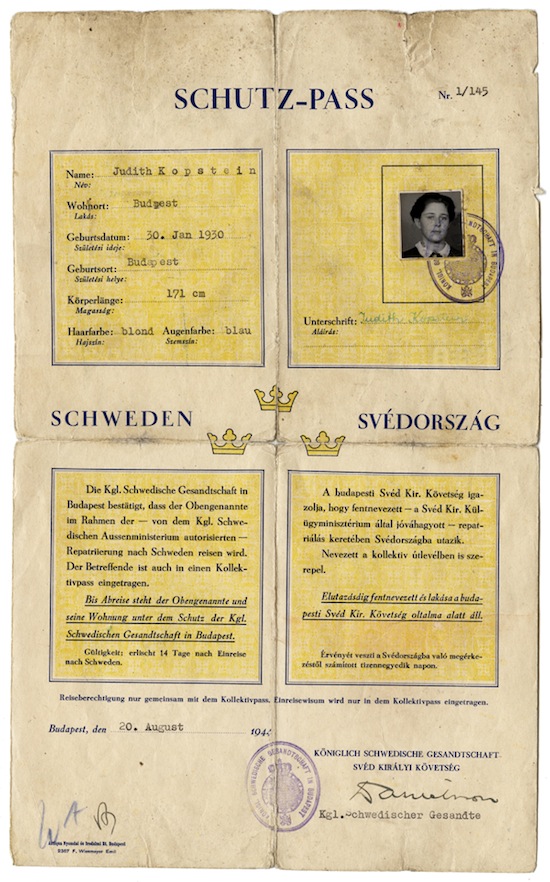
image - The Schutzpass of Judith Weiszmann (née Kopstein), which was featured in a stamp issued by Sweden and also one issued by Canada
The Schutzpass of Judith Weiszmann (née Kopstein), which was featured in a stamp issued by Sweden and also one issued by Canada. (image from Judith Weiszmann)

In 2011, the Swedish government issued a stamp commemorating the 100th birthday of Wallenberg. It featured a picture of Wallenberg in the foreground and an image of a Schutzpass in the background, complete with a picture of the 14-year-old bearer of the pass, Judith Kopstein, who later became Judith Weiszmann. Serendipitously, Judith had presented a copy of her Schutzpass to Wallenberg’s half-sister Nina 10 years previously when Nina attended the unveiling of a statue in her brother’s honor in Toronto. Upon returning to Sweden, unbeknown to Judith, Nina framed her Schutzpass and hung it in her home. Years later, the Swedish Postal Services made use of the image and Canada also issued a stamp using the same Schutzpass, never imagining that the young girl pictured in it was still alive. When Canada Post learned that Judith, then 83, was very much alive, and tremendously honored to appear on a Canadian stamp with Wallenberg, they held a special ceremony for her in Toronto to mark the connections.

Since the issuing of the Wallenberg stamps, Judith has received a wide-ranging number of speaking requests – requests she is only too glad to oblige. In her words, they provide her with an opportunity to “bear witness” to the selflessness of Wallenberg and remind her audiences that forces of evil can take root again if we are not vigilant.

In Ottawa, in October 2013, Judith held an audience of students spellbound in the ethnically diverse Merivale High School during both her morning and afternoon presentations. According to teacher Irv Osterer, whose efforts resulted in Judith’s visit, “by the afternoon, word had gone around the school about how important it was for everyone to hear this woman speak. By the afternoon presentation, the kids were almost hanging from the rafters of the auditorium.”
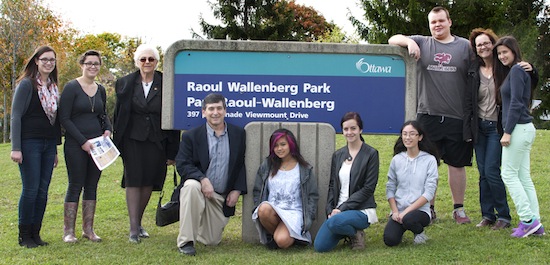
photo - Judith Weiszmann and teacher Irv Osterer, third and fourth from the left, with students from Merivale High School's Jewish Culture Club at the Ottawa's Raoul Wallenberg Park
Judith Weiszmann and teacher Irv Osterer, third and fourth from the left, with students from Merivale High School’s Jewish Culture Club at the Ottawa’s Raoul Wallenberg Park. (photo by Jeremy Page)

Drawing parallels between the fact that she was the age of many of the high school students when she lived through the Holocaust, she inspired the students with messages about the difference one person can make in the world, how hating your neighbor is not a way forward, and about how a better world will come from all of us living side by side in peace. At the conclusion of her remarks, a young woman in a hijab bounded to the front of the theatre to give Judith a spontaneous embrace.

From Ottawa, Judith continued to Toronto, where she spoke to a joint session of B’nai Brith Canada and the Law Society of Upper Canada and to a conference hosted by Canada, the 2013 chair of the International Holocaust Remembrance Alliance (IHRA), an international body that deals with Holocaust and related educational matters and liaises with several governments, Holocaust researchers and educators.

As a result of the Toronto speaking engagements, in February 2014, Judith had the opportunity to realize a lifelong dream, which was to travel to Wallenberg’s homeland, Sweden. On this occasion, she was the guest of the Canadian government and was asked to speak once more to another conference of the IHRA in which the leadership of the alliance rotated from Canada to England.

The stories she told of how the war affected Hungarian Jews and how Wallenberg’s interventions saved thousands of Jews from the gas chambers no doubt resonated as deeply with the Swedish audience as they did with those in Canada. One of Judith’s most remarkable memories is about the last time anyone in the West actually saw Wallenberg.

Judith’s father, Andor Kopstein, was a senior administrative support to Wallenberg. German was the language in which they communicated. On the final day Wallenberg was seen, they were in Budapest together, as Wallenberg was to travel to Debrecen, a Hungarian city that had already been liberated. In conjunction with the Swedish Red Cross, Wallenberg’s intentions were to purchase food in Debrecen for the general population in Budapest, all of whom had had little access to food. It was widely known that Wallenberg had a considerable amount of gold on his person – funds provided by his own government and the governments of several Allied countries – with which he planned to pay for the food. Wallenberg was about to get into the middle car of a three-car convoy, with Russian military officers in the lead and last cars. Just before the convoy pulled away, Wallenberg said to Judith’s father, in German, “I am not sure if these are my bodyguards or my captors.” Wallenberg was never seen again. A young Judith had watched the exchange, hiding behind an entrance door to her apartment building, and her father repeated Wallenberg’s words to her when the convoy departed.

photo - Canada's Dr. Mario Silva hands the gavel over to the United Kingdom's Sir Andrew Burns
Canada’s Dr. Mario Silva hands the gavel of the International Holocaust Remembrance Alliance (IHRA) over to the United Kingdom’s Sir Andrew Burns. (photo by Nicole Roberts, British embassy, Berlin)

At the conclusion of the IHRA conference, Judith met with several Hungarian men and women who had moved to Sweden immediately after the war. At the end of the war, Sweden offered the opportunity for Jewish orphans to be brought to its shores. All those who came at that time have remained in Sweden and made their lives there. Other Hungarians came to Sweden after the Hungarian Revolution in 1956.

Judith gave one further presentation on her trip: to teachers involved in an educational institution that the Swedish government formed some years ago after hearing about resurgences of antisemitism in Norway and elsewhere in Europe.

The fate of Wallenberg has never been known for certain but was undoubtedly a topic of conversation when Judith had the chance once more to meet his half-sister Nina. Stopping for tea with Nina and several of Nina’s nieces, and with her own daughter Ann, who accompanied her on the trip, Judith told one interviewer that she and Nina were “united in a love for her brother Raoul.”

From Sweden, Judith traveled to Budapest to visit with relatives and speak at the Jewish Club, a sort of unofficial arm of the IHRA. The club receives some modest financial help from the alliance for its efforts to fight antisemitism. Its main activity is to present lectures and other educational presentations to teachers, students and, occasionally, the general public about the Holocaust and antisemitism. As Judith explained to me, “During the communist regime, there was no education about WWII. Today’s reality is that there is whole generation of teachers who have grown up with no background whatsoever on what happened during the war, Hungary’s role in it and the consequences of antisemitism. They cannot teach what they do not themselves know about.”

Judith’s presentation drew about 70 people, 60 of whom were students at the senior high school or university level. Organizers told her that about 55 of the students present were non-Jews, which Judith saw as an expression of interest and open-mindedness, and she remarked that the students asked intelligent questions. Many attendees admitted that they were hearing for the first time about Hungary’s role in the war and about the treatment of Jews and other minorities during that time. At the conclusion of her talk, one non-Jewish young man stood to say that he knew that there were fewer survivors each year and that “we young people have to take over and talk about it.”

Since returning home from Sweden and Hungary, Judith continues to share her messages with groups of students and others in Winnipeg. Now, she also wants to talk about new concerns she has about the rise of antisemitic incidences in Hungary. In her view, after the landslide victory of Hungary’s right-wing party in the country’s national elections on April 6, “things do not look very promising for Hungarian Jews.” She is irritated with plans (proposed by the previous government) to erect a monument suggesting that Hungary was occupied during the Second World War and that any fault lies with the German Nazis. A very feisty Judith Weiszmann is here to say otherwise – however, she is also here to remind us how much good one person can do in the world and that we all have options to work at peaceful coexistence.

Karen Ginsberg, an Ottawa-based writer, considers herself blessed to count Judith as a friend.
Format ImagePosted on April 25, 2014April 27, 2014Author Karen GinsbergCategories LifeTags Andor Kopstein, B’nai Brith Canada, Canada Post, Holocaust, IHRA, International Holocaust Remembrance Alliance, Irv Osterer, Judith Kopstein, Judith Weiszmann, Law Society of Upper Canada, Merivale High School, Raoul Wallenberg, Schutzpass, Swedish Postal Services

Mourning turns to joy

Passover is a traditional time for families to sit down together and celebrate a holiday of freedom and deliverance. It’s a time to catch up and share meaningful moments. For one family torn apart by the Second World War, this Passover held a special significance as they caught up on nearly 70 years of history.

For 65 years, Holocaust survivor Rabbi Gershon Chanowitz said Kaddish for his sister, Asna Mera, who he believed had been murdered by the Nazis in 1942. And, for more than half a century, Asna Mera thought that all of her siblings had perished in the Holocaust, leaving her a lone survivor. But thanks to an incredible turn of events, the children of these survivors have learned of each other’s existence and have been reunited. With a shot-in-the-dark Google search and an implausible email, the long-lost Chanowitz cousins began unearthing a mystery spanning six decades and three continents.

A mysterious email

“About a week ago, my son, Moishe, the Chabad emissary [to St. Maarten], received an email through his Chabad website from someone in Israel searching for any news of his relatives,” said Rabbi Ben Zion Chanowitz, a Chabad emissary in Monticello, N.Y., and the son of Gershon Chanowitz – who passed away this past summer at the age of 91.

An excerpt from the email (grammatically edited) read:

“Shalom. I don’t speak English well…. I am from Vitebsk, Belarus. My name is Sashe Bumginz. My mother’s surname was Chanowitz from the shtetl of Glubokoe in the Vitebsk region. In the war, all of my family perished. I am interested in all information on Chanowitz from Glubokoe.”

“I was skeptical at first,” admitted Chanowitz. “We know all of our relatives, after all.” But then a follow up email “shook everything I knew.” Bumginz sent another email detailing his family history with names, places and dates that matched up exactly with Chanowitz’s. He explained how his mother, who passed away in 2007, survived the war and raised a family. As far as he knew, no other close family survived, but he was always searching for any information he could find on his family history.

Suddenly, the largely American-based Chanowitz family was electrified. Could their father’s sister have survived the war? Could they have cousins they hadn’t known existed?

Bumginz grew up in Soviet Russia and eventually moved to Israel in the early ’90s, where he is currently living in Herzilyah with his wife and two children. When he first arrived in Israel he contacted the Holocaust centre and museum Yad Vashem, as well as other resources over the years, attempting to seek out any information they might have on his mother’s family, but every search reached a dead end.

In March 2014, on Purim, Bumginz was invited by a Chabad co-worker to a farbrengen, a Chassidic gathering to celebrate the holiday. At the farbrengen, Bumginz opened up about his history and mentioned that his family, Chanowitz, has been Chabad for generations. He asked around if anyone knew the name, and one participant mentioned that there were Chabad emissaries with that name and suggested that Bumginz use Google to find them. A short search led to the Chanowitz family of St. Maarten, and the email above was received and then forwarded to Ben Zion Chanowitz.

An email exchange ensued.

“Many of us are excited and emotional about this special family news,” said Rebbetzin Simie Schtrocks, Gershon’s daughter. Schtrocks resides in South Surrey, serving as co-director of the Centre for Judaism, Chabad’s branch serving the Lower Fraser Valley.

“It is mind blowing that after 65 years plus we should now find out that Asna Mera actually did survive, had two children and lived in Vitebsk of all places. How tragic it is that she was unaware that the Lubavitch world had continued to flourish and that she had brothers 6,000 miles away who would have been thrilled to help her.”

As the family digests this news, they are slowly discovering stories explaining the years of misinformation, and uncovering many painful details along the way.

Gershon’s story

In the early 1920s, Gershon Chanowitz was born in the town of Glubokoe, in what was then Poland, a border city that has belonged to Lithuania, Poland, Russia and Belarus in the previous 100 years. He was one of 10 children in a dynastic Chabad Chassidic family. His father, Ben Zion, was a shochet (ritual slaughterer), a follower of the previous Lubavitcher rebbe, and an important figure in the small town of 5,000 Jews.

Gershon was sent at a young age to learn in a yeshivah in Otwock, Poland, and he was there in 1941 after the war broke out. At the advice of the previous Lubavitcher rebbe, he escaped north to Warsaw and then Vilna. He found out about Chiune Sugihara, the Japanese ambassador to Kovno, who was signing visas that saved some 2,000 Jewish lives. He obtained visas for three of his siblings, and snuck back to Glubokoe to beg his father to allow him to add his youngest brother, Yisroel, to a forged family passport, allowing him to leave as well. Ben Zion, his wife and the other children stayed behind. Gershon procured visa #1785 for himself, #1836 for his oldest sister Fruma, #1841 for his brother Shmuel Avraham and #2027 for young Yisroel. It was just in time too – the last issued visa was #2039.

The four siblings traveled to Kobe, Japan, and then Shanghai, China, where they resided until they could obtain visas to the United States. During that time, Shmuel Avraham died of an illness in Shanghai. When the war was over, they corresponded with different services seeking any information about their remaining family and discovered that their parents and siblings had been killed. A fifth brother, Chaim, escaped the war, and moved to the newly founded state of Israel and then to America. Eventually, the other three siblings made it to the United States and started rebuilding their lives, establishing the large families that exist today.

When the surviving siblings in the West sought out information on exactly what had happened to their family, they learned that, one day, when the Nazis arrived in town seeking to fill a “death quota,” they went about town killing people. The remaining Chanowitz family barricaded themselves in their house. At one point, they heard desperate banging on the door and 16-year-old Asna Mera, anguished at the thought that it might be a Jew seeking refuge, and despite her family’s protest, answered the door. The German soldier standing there grabbed her and took her away to be killed. The rest of the family was killed a year later in another mass murder.

Gershon and his surviving siblings, Chaim, Yisroel and Fruma, marked their parents’ and siblings’ passing every year, and said Kaddish for them throughout their lives.

Asna Mera’s story

The day that Asna Mera opened the door to the Nazi, she was taken to a soccer field with about 800-900 other Jews. They were then boarded onto trucks to be taken to be executed. On the way, a German commander picked her, and 14 other young beautiful girls, to be taken to a German army base to be among the soldiers. At one point, Asna Mera was with a soldier who had a large knife on his belt. She grabbed the knife and stabbed him to death, running away into the woods.

In the woods, she eventually met up with her 12-year-old brother, Tzvi Hersh, who had also escaped. The two siblings were freezing in the brutal winter and starving. They remembered that their well-respected father had a non-Jewish farmer friend in a nearby town to whom he once gave a large down coat and an expensive ring. They decided to go ask the farmer, who their father had always trusted, for the coat so they could survive. Scared to go together, Tzvi Hersh went first and knocked on the door. The farmer opened the door and grabbed the young boy, tied him up and gave him to the police in exchange for a 10-kilogram bag of flour. Tzvi Hersh was hanged that day.

Asna Mera miraculously survived the war, thinking she was a lone survivor. In her attempts to find her siblings, she traced them to Vilna but then their trails disappeared. She never found out what happened to them. At age 39, she married and moved to Vitebsk, which at that point was a part of Soviet Russia. She had two sons, one Simeon/Ben Zion, named after her father, and another, Sashe/Sholom Ber. Despite communism’s harsh shadow, she raised them as religious Jews.

After the fall of the Iron Curtain, Sashe moved to Israel. Asna Mera once visited in the early 2000s, and went to Yad Vashem herself, where she again tried to seek out more information to no avail.

After the war, Asna Mera discovered the heartbreaking news that the day after she killed the German soldier, the Nazis returned to Glubokoe and killed 150 people in retaliation. She suffered under the shadow of this horrific event all her life.

“She had very little happiness in life,” said Sashe. “She went through so much during the war.” And, when her oldest son Ben Zion was brutally killed while serving in the Russian army (he was thrown off a train by his comrades), she was devastated anew. “She was always quiet and withdrawn and broken.”

“We all wish she at least had happiness,” said Schtroks upon learning the news. “And she still did from her surviving son, passing down the family tradition and maintaining a legacy. We are just sad that although my father and his siblings tried so hard to find missing relatives, they did not find her in time to help her and ameliorate her situation.”

A family reunited

Despite the painful history that they learned along the way, the Chanowitz and Bumginz family are overjoyed at the discovery of one another, and eagerly looked forward to an emotional meeting in person after the Passover holiday. Benson, the son of Yisroel Chanowitz, was the first one of the family to meet Sashe during the intermediate days of Passover last week.

Rabbi Ben Zion Chanowitz recalled a story of his father during his yeshivah years in Poland right before the war, when he had the unique opportunity to observe the Passover seder of the previous Lubavitcher rebbe.

“A Chassid at the table asked the rebbe how we can be celebrating the holiday of freedom while we are still in exile – suffering under the threat of communist Russia and Nazi Germany. The rebbe sagely replied that ‘The redemption in Egypt showed us that you can leave, even if you are in the deepest exile.’”

This year, as Jewish families all over the world gathered to retell the miracles of old, they had a biblical obligation to feel “like they themselves left Egypt.” As they relived their family history, both the darkest moments and the miraculous survival, the Chanowitz and Bumginz families celebrated the miracle of redemption like never before.

– This article was originally published on lubavitch.com and is reprinted with permission.

Posted on April 25, 2014April 23, 2014Author Rena GreenbergCategories LifeTags Bumginz, Chabad, Chanowitz, Chiune Sugihara, Holocaust, Schtrocks
Mystery photo … April 25/14

Mystery photo … April 25/14

Group of men with documents, State of Israel Bonds, Vancouver, B.C., 1970. (JWB fonds, JMABC L.14607)

If you know someone in this photo, please help the JI fill the gaps of its predecessor’s (the Jewish Western Bulletin’s) collection at the Jewish Museum and Archives of B.C. by contacting [email protected].

Format ImagePosted on April 25, 2014July 23, 2014Author JI and JMABCCategories Mystery PhotoTags Jewish Museum and Archives of British Columbia, Jewish Western Bulletin, JMABC, JWB, State of Israel Bonds
This week’s cartoon … April 18/14

This week’s cartoon … April 18/14

For more cartoons, visit thedailysnooze.com.

Format ImagePosted on April 18, 2014May 2, 2014Author Jacob SamuelCategories The Daily SnoozeTags harpsicord, Jacob Samuel, thedailysnooze.com
This week’s cartoon … April 11/14

This week’s cartoon … April 11/14

For more cartoons, visit thedailysnooze.com.

Format ImagePosted on April 11, 2014May 2, 2014Author Jacob SamuelCategories The Daily SnoozeTags Jacob Samuel, Moses, Ten Commandments, thedailysnooz.com
JOFEE – an antidote to pessimism

JOFEE – an antidote to pessimism

Adamah Dairy co-managers Glenn Katz and Steve Sherman tending to new goat kids last year. (photo from Hazon)

More than five months after the Pew Research Centre’s A Portrait of Jewish Americans survey drew widespread pessimism over rising intermarriage and assimilation, as well as declining connection with synagogues and other institutions, proponents of a newly released study believe they may have the antidote for what ails the Jewish community.

On March 10, the Jewish nonprofit Hazon and six funders released Seeds of Opportunity: A National Study of Immersive Jewish Outdoor, Food and Environmental Education (JOFEE), whose findings drew from a mixture of focus-group data, a survey of 800 people age 18 and older, and review forms submitted by 41 programs. All programs examined were what the study called “immersive” experiences of four days or longer that fall under the umbrella of JOFEE. The acronym, although coined specifically for the purpose of the study, is lingo that the report’s supporters hope will grow to define a movement and become part of the Jewish vernacular.

Read more at jns.org.

Format ImagePosted on April 11, 2014April 11, 2014Author Jacob Kamaras JNS.ORGCategories LifeTags A Portrait of Jewish Americans, Hazon, JOFEE, Leichtag Foundation, Pearlstone Centre, Pew Research Centre, Schusterman Family Foundation, Seeds of Opportunity
Passover always takes place in the spring

Passover always takes place in the spring

This year, Pesach begins at sundown on Monday, April 14, and continues through to Tuesday, April 22. The Exodus from Egypt was ordained by G-d to take place in the month of spring. Moreover, the Torah has ordained that special care should be taken to ensure that Pesach always occurs in spring, as it is written: “Observe the month of spring and keep the Passover unto G-d your G-d, for, in the month of spring, G-d your G-d has brought you out of Egypt by night.” (Deuteronomy 16:1)

To ensure that Pesach should indeed occur in spring, in view of the fact that our calendar is based on the moon and the lunar year is about 11 days shorter than the solar year, while the four seasons are determined by the sun, our calendar provides a “leap year” once every two or three years with the addition of a whole month, Adar II, as it did this year. In this way, the lunar year is “reconciled” with the solar year, and Pesach always occurs in the spring. All of the other months of the year, and all our festivals, are regulated accordingly, so that they, too, occur in their due season.

The circumstance of the Exodus from Egypt having been in the spring is explained by our sages as a special Divine benevolence in taking the Jews out of Egypt during the best time of the year. Pesach falls in the middle of the month of Nissan, when nature reveals its greatest powers. We can see and smell blossoms on trees, watch fruit appearing from buds and hear the song of the red-breasted robin.

In fact, there is a special blessing that the rabbis composed for Nissan, for the coming of springtime, that is to be recited when seeing a fruit tree bearing fruit: “Blessed are you, Lord our G-d, King of the Universe, who has made nothing lacking in His world, and created in it goodly creatures and goodly trees to give humankind pleasure.”

The blessing is said just once a year, preferably in Nissan, but if one didn’t get a chance to say it then, it can also be said in Iyar, the next Hebrew month. Our relatives in South Africa recite this blessing in the months of Elul and Tishrei, as that is when their spring occurs.

The great descriptions that appear in King Solomon’s Song of Songs (Shir Hashirim) include “the times of the rain are passed, the time of the songbird has arrived, the blossoms of the trees are seen throughout the land.” This refers to the Land of Israel, where springtime is warm but not summer hot, and the threat of rain all but gone for the year. The smell of spring and renewed life fills people’s souls, and this season in the holy land of Israel is the beloved partner of Pesach, the holiday of renewal and redemption, optimism and hope. Pesach weather carries with it special blessing and encouragement.

When we were taken out of Egypt by G-d’s outstretched arm, we became a nation. In fact, G-d loves us so much that He came down and took our ancestors out Himself, instead of sending an angel to perform the task. As it is written in the Haggadah, in the portion beginning with “Avadim hayeenu,” “We were slaves,” it says, “We were slaves to Pharaoh in Egypt and

G-d our G-d took us out of there with a strong hand and with an outstretched arm. If the Holy One, blessed be He, had not taken our fathers out of Egypt, then we, our children and our children’s children would have remained enslaved to Pharaoh in Egypt.”

Here in Canada, and indeed in so many places, spring arrives with Pesach, however the weather isn’t necessarily springlike. As a child in Toronto, I remember one Pesach having to be carried by my father during the holiday over snow-covered sidewalks. As a teenager in Florida, we were able to have guests over during Pesach and sit outside for our seder. Having lived in Vancouver for more than 30 years, I have experienced Pesach in pounding rain, as well as in sunshine and warmth.

Pesach is, of course, celebrated by Jews the world over. Our dear daughter and her husband, as emissaries for Chabad, will be hosting more than 30 people in their small apartment in Turin, Italy, for the seders, for example. I wish you and your family a very happy and kosher Passover wherever you will be this Pesach – and whatever the weather. Enjoy!

Esther Tauby is a local educator, writer and counselor.

Posted on April 11, 2014April 16, 2014Author Esther TaubyCategories Celebrating the HolidaysTags Chabad, Deuteronomy 16:1, Exodus from Egypt, Pesach, Shir Hashirim, Song of Songs
“Chad Gadya”: an ecologist’s favorite seder song

“Chad Gadya”: an ecologist’s favorite seder song

Passover is soon upon us, and many Jews will celebrate by singing rounds of their favorite classic Passover songs. “Chad Gadya” is a song that ensnares the singer in an increasingly complex chain of causality. Starting with one’s father who buys a goat that gets eaten by a cat that is bitten by a dog that is beaten by a stick, etc., etc. But “Chad Gadya” is not simply an incredibly fun shanty, it is also a great lesson in food chain ecology.

A food chain describes the complex interconnections that occur in nature from different organisms that eat each other. At the start are plants that absorb energy from the sun. The plants are then eaten by herbivores, that are then eaten by predators, that are then eaten by higher-level predators and so on. Each step up the food chain is called a trophic level, from the Greek word trophikos, meaning food.

One phenomenon documented by ecologists is called a trophic cascade. When you remove a key species from the food chain, say from the top, the effects will cascade down the food chain, affecting every organism along the way. One classic example involves the sea otter, a charismatic marine mammal that lived off the coasts of North America as far south as California. Unfortunately, the sea otter was once prized for its lovely fur and, by the early 20th century, they had become extinct south of Alaska.

Sea otters happen to eat a lot of sea urchins. Sea urchins eat a lot of kelp. When the sea otters disappeared, the effect cascaded down the food chain. Sea urchin populations skyrocketed, and began feasting on the kelp. Entire forests of kelp began to disappear, only to be replaced by barren underwater fields full of spiky urchins. This spelled trouble for the many fish and other animals that depended on the kelp forests for shelter and food. Bald eagles, for instance, would normally eat fish hiding in the kelp forests. Without those fish, the eagles had to search elsewhere for food.

Fortunately, sea otter hunting was banned, and populations from Alaska were shipped in. Those new immigrant sea otters have begun to repopulate our coasts, restoring the kelp forests and returning balance to the ecosystem.

Understanding how ecosystems work can be very helpful. For instance, in Israel, on Kibbutz Sde Eliyahu, they grow many useful crops, such as alfalfa and oats. But voles (a type of rodent) can be a huge pest problem. Thousands of burrow openings can accumulate per hectare, causing severe damage to their crops. Poisons are expensive, can be dangerous for consumption and for other animals, and are often ineffective anyway because more voles can just immigrate from nearby fields. Barn owls eat voles, but they only nest in pre-existing cavities, so farmers began putting up nesting boxes to encourage the owls. The strategy worked, the owls keep the voles under control, and they end up being more cost effective than poisons. Manipulating ecological systems for pest management in agriculture – known as biocontrol – is an increasingly common strategy used around the world to improve yields.

So, when sitting down for your Passover seder, eating your favorite foods, reclining and singing your beloved songs, take a moment to reflect on the complex chains of events that brought that food to your table.

Ben Leyland is an ecologist at Simon Fraser University, a musician and an Israeli-Canadian resident of Vancouver.

Format ImagePosted on April 11, 2014April 16, 2014Author Ben LeylandCategories Celebrating the HolidaysTags barn owls, Chad Gadya, Passover, Sde Eliyahu, sea otters, seder, trophikos, voles
Springtime frogs for Pesach

Springtime frogs for Pesach

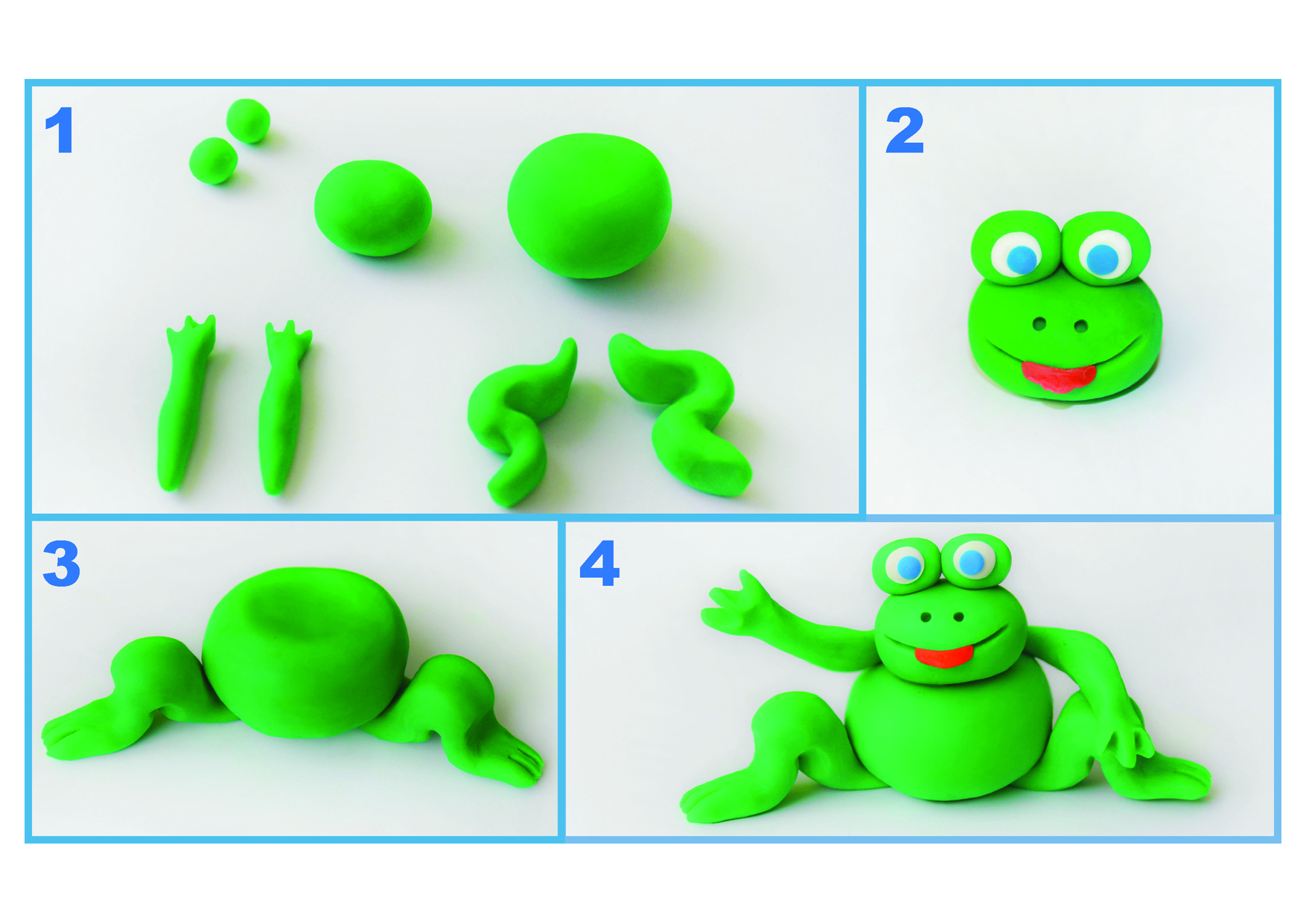
In anticipation of the Jewish holiday of Passover, Curly Orli and I are making cute froggies. It is true that frogs were one of the Ten Plagues, but frogs are also believed to be the bringers of spring! These days, they are happily hopping around in parks and forests after a long winter slumber. Now, you can have one of them at home … a Plasticine one, that is.

Steps 1-4 of making a Passover froggie.
Steps 1-4 of making a Passover Plasticine froggie.

1. Prepare green Plasticine. Separate it into pieces for different body parts: eyes, head, torso and two pairs of legs.

2. Using white and blue Plasticine, make eyes. With the help of a toothpick, make a nose by poking two holes, then a mouth and, finally, add a red tongue.

3. From earlier prepared pieces, let’s make a lower part of the body and legs. Attach them together.

4. Connect upper and lower body. The froggy is ready!!!

image - Steps 1-4 of making a Passover frog.
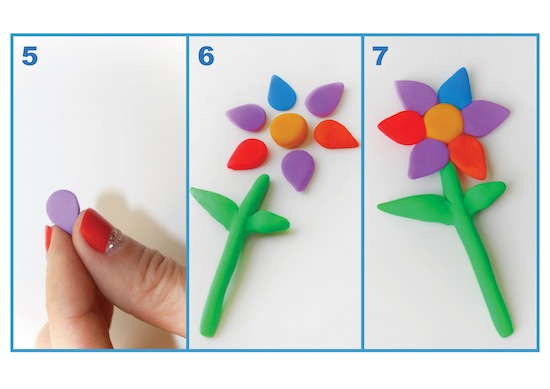
Steps 5-7: making a flower for our Passover Plasticine froggie.

5-6. Our froggy is festive and joyous, so let’s give him a beautiful flower. We can make petals from various small and round colorful Plasticine pieces by making them pointy at the end.

7. Let’s add petals to the flower and connect them to the stem.

8. Now, we will give this flower to the froggy. Our creation is complete.

Happy Passover to all the readers of the Jewish Independent! We wish you peace, joy and new creative adventures.

Lana Lagoonca is a graphic designer, author and illustrator. At curlyorli.com, you will find more free lessons, along with information about Curly Orli merchandise.

Format ImagePosted on April 11, 2014April 16, 2014Author Lana LagooncaCategories Celebrating the HolidaysTags Curly Orly, kids arts and craft, Plasticine

The gluten won’t be missed

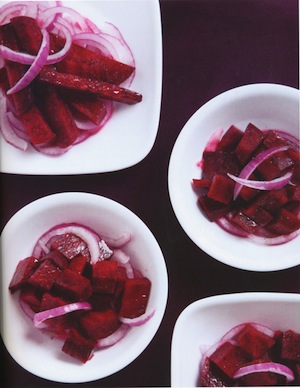
Beet salad from Gluten-Free Goes Gourmet. (photo by Ruchy Schon)

At least three times a year – Rosh Hashanah, Chanukah and Passover – I liven up my dinner menus by trying out some new recipes from recently published cookbooks. I don’t keep a kosher kitchen, I’m not gluten or dairy intolerant, nor am I diabetic or allergic to corn, yet I ventured this spring to try Vicky Pearl’s Gluten-Free Goes Gourmet (Moznaim Publishing Co.), which actually came out last September. While many of the recipes may be appropriate for Pesach meals, many are not chametz-free, particularly in the dessert section – but they’ll make for delicious treats after the holiday.

There are more than 100 recipes in Gluten-Free Goes Gourmet; most are easy-to-follow and quick to make (even without a mixer), but others require a few hours (preparation plus cooking time), so make sure to plan ahead and carefully read through the recipes before setting about to make them. Everything I tried in Gluten-Free Goes Gourmet turned out just like the photos (which are lovely) and, with the exception of the kugel – which, for some reason, I couldn’t get to the quite the right consistency and which had too much salt for my liking – everything tasted great. There was one typo in the book that I came across: the oatmeal chocolate chip cookie recipe makes almost four-dozen cookies, not 18, as indicated.

Gluten-Free Goes Gourmet contains useful information on many of the ingredients used in the recipes, including their nutritional benefits. It has numerous sections: dips and drinks, salads, soups, meat and poultry, fish, mock dairy, side dishes, breads, desserts, and cakes and cookies. It would have been nice to experiment with these last chapters more, as the cookies I made were so delicious – and all indications are that the other gluten-free desserts and breads will be just as tasty.

The following recipes will give readers an idea of how good “free” eating can be. Enjoy!

BEET SALAD

Try to buy beets that are uniform in size, since they’ll cook more evenly. As an added bonus, smaller beets are sweeter.

photo - beet salad
Beet salad from Gluten-Free Goes Gourmet. (photo by Ruchy Schon)

10 beets, peeled
1 red onion

Dressing:
1/2 cup liquid from cooked beets or water
1/3 cup vinegar or freshly squeezed lemon juice
1/4 cup agave, xylitol or granulated sugar
1/4 cup oil
2 tsp kosher salt
1/2 tsp freshly ground pepper

Place beets in an eight-to-10-quart pot (depending on size of beets); cover with water. Bring to a rolling boil over high heat. Cook for one or two hours, maintaining a rolling boil, or until beets are tender enough that the tines of a fork meet with little resistance. Reserving 1/2 cup of cooking water, remove beets from water. Cool slightly. Slice beets according to your preference.

Place beets in a serving bowl; add onions. In a separate small bowl, mix together dressing ingredients. Pour dressing over vegetables, tossing gently until well coated. For best results, cover with plastic wrap and refrigerate overnight. Bring to room temperature before serving.

Yields eight to 10 servings.

CREAM OF ZUCCHINI SOUP

5 large zucchinis, scrubbed clean, washed and cut into thirds
3 large potatoes, peeled and cut into quarters
1 large onion, halved
1/4 tsp freshly ground black pepper
1-2 tbsp (heaping) kosher salt

Place all ingredients into an eight-quart pot. Fill three-quarters full with water and bring to a boil over high heat.

Reduce heat to medium; cook, with lid slightly ajar, for half an hour.

Place immersion blender in pot; blend until smooth.

Makes eight to 10 servings. Freezes very well for up to six months: chill before freezing and thaw in refrigerator.

ALMOND CRACKERS

2 large eggs
2 1/2 tbsp oil
3/4 cup sesame seeds
2 tsp kosher salt
3 cups almond flour
2 tbsp potato starch
1 tbsp minced onion
1 tbsp minced garlic

Preheat oven to 350°F. In the bowl of an electric mixer, cream together eggs and oil. Change paddle attachment to a dough hook.

Add sesame seeds, salt, flour, potato starch, onion and garlic to bowl; mix well.

Divide dough in half. Working with one piece at a time, roll out between layers of parchment paper to 1/16th of an inch thickness.

Remove the top parchment paper; transfer the dough with the parchment paper still under it to a cookie sheet. Cut into one-by-three-inch rectangles. Repeat with the remaining dough.

Bake in preheated oven 14 to 16 minutes or until golden.

Allow crackers to cook on parchment paper on rack.

Yields 60 crackers and the crackers freeze well for up to two months. They will store well in an airtight container at room temperature for up to two weeks.

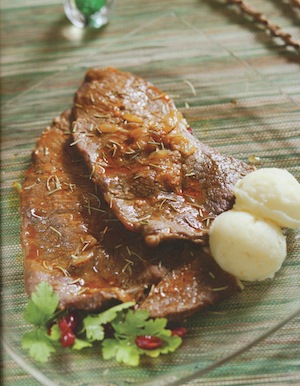
SHOULDER STEAK

photo - shoulder steak
Shoulder steak.
(photo by Ruchy Schon)

1/4 cup oil
3 cloves garlic, minced
3 large onions, sliced thinly
1 lb shoulder steak or pepper steak, or 4 pieces minute steak
1 cup semi-dry red wine
1 bay leaf
1 tsp kosher salt
1/2 tsp dried minced garlic
1/4 tsp dried rosemary leaves (optional)
1/8 tsp freshly ground pepper

Heat oil in a large skillet set over medium heat. Add garlic; brown for about one minute. Add onions; sauté until translucent, three to five minutes.

Add steak, wine, bay leaf and spices. Increase heat to high; bring to a boil. Add five cups water; return to a boil. Reduce heat to medium; cook, covered, for two to two-and-a-half hours or until meat is tender. Remove bay leaf before serving.

Makes four servings. Freezes very well for up to six months.

POTATO KUGEL

5 large eggs
1 cup oil
2 tbsp (heaping) kosher salt
10 large Idaho/russett potatoes (about 5 lbs), peeled and cut in half lengthwise
1 large onion, peeled and cut in half

Preheat oven to 450°F. In a large bowl, whisk together eggs until lightly beaten. Whisk in oil and salt.

In a food processor fitted with the blade with tiny holes and working in batches, process potatoes and onion until almost smooth. Transfer potato mixture to bowl, blending well with egg mixture.

Pour mixture into a parchment-paper-lined nine-by-13-inch baking pan.

Bake in centre of preheated oven for one hour or until top is browned. Reduce heat to 350°F. Bake for two hours.

Yields 12 generous servings.

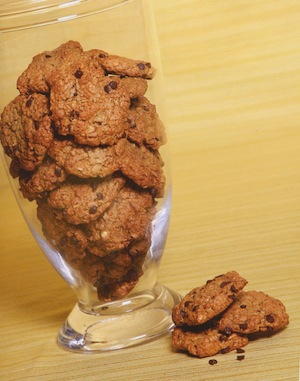
OATMEAL CHOCOLATE CHIP COOKIES

photo - Oatmeal chocolate chip cookies
Oatmeal chocolate chip cookies.
(photo by Ruchy Schon)

1 cup peanut butter
1/4 trans-fat-free margarine, room temperature (1/2 stick)
3/4 cup agave
1/2 cup xylitol or granulated sugar
2 large eggs
1 1/4 tsp baking soda
3 cups old-fashioned rolled oats
2/3 cup chocolate chips (sugar-free, if you prefer)

Preheat oven to 350°F. Line two baking sheets with parchment paper. Set aside.

In an electric mixer, cream together peanut butter, margarine, agave and xylitol (or sugar). Add eggs and baking soda. Mix well.

Stir in oats and chocolate chips until well combined.

Use a tablespoon to drop spoonfuls of dough onto prepared baking sheets. Bake in centre of preheated oven for 11 minutes or until golden yet soft. Do not overbake. Remove to rack to cool completely.

Makes about 48 cookies.

Posted on April 11, 2014April 16, 2014Author Cynthia RamsayCategories Celebrating the HolidaysTags Gluten-Free Goes Gourmet, Vicky Pearl

Posts pagination

Previous page Page 1 … Page 73 Page 74 Page 75 … Page 77 Next page
Proudly powered by WordPress