If you don’t have a will, get it done. That’s the message of the Canadian Association of Gift Planners, an organization that’s designated the month of May as Leave a Legacy Month. Calvin Fong, chair of the national program titled Leave a Legacy, said the program’s goal is to raise awareness of the importance of having a will, as well as the idea that people consider leaving a gift to charity in their will.
“If you die without a will you really have no control over how your estate gets distributed – legislation will dictate that instead,” Fong told the Independent. “Without a will, for example, you have no way of leaving a gift to your favorite charity or creating a trust for your spouse. Having a will ensures your wishes are articulated and carried out after your death.”
Just six weeks ago there were changes to the Wills, Estates and Succession Act (WESA) with important implications. The minimum age to create a will has been lowered from 19 to 16, wills created prior to marriage are still valid after marriage, and the courts have been granted authority to recognize non-compliant documents as wills, and ensure that a deceased person’s last wishes will be respected. For example, legislation now allows for the possibility that electronic versions of wills might be recognized. “The changes modernize legislation created over 100 years ago and streamlines things for the public,” Fong explained.
Tax savings is another reason to consider creating a will. Gifting money or assets to charity makes your estate eligible for a tax deduction upon your death, while creating a trust in your estate allows you to defer taxation of certain assets.
If considering gifting money to charity, start by figuring out what you want your personal legacy to be, advised Marcie Flom, director of the Jewish Community Foundation, which is housed at the Jewish Federation of Greater Vancouver. JCF works one-on-one with donors to create their legacies, using bequests, gifts of life insurance, gifts of cash and in-kind donations, annuities and charitable trusts. To date, it has 330 endowment funds and assets of $42 million that it manages on behalf of donors in the community.
With gifts of life insurance, donors name JCF as the owner and beneficiary. Upon their death, the proceeds of the policy enter an endowment fund they created during their lifetime, supporting causes that were important to them. “Some donors have various life insurance policies and discover that they no longer need them, so they decide to donate them to the foundation,” Flom explained.
With bequests, individuals stipulate a gift to the foundation in their will to support those causes. “It can take various forms, such as a set amount or a percentage of their estate,” Flom said. “It’s very personal, and usually people meet with me to talk about what they want to do, the idea being that we want to help increase your current income or estate value, while also creating a lasting legacy for the community.”
That legacy can involve donations to Jewish and non-Jewish causes, as the JCF distributes funds to both. And there’s a broad range of donors, Flom said, with some funds established with as little as $1,000, or no assets at all if it’s a planned gift. “Some donors make a modest contribution to their fund each year to build it over time,” she explained, “but legacy planning is not limited to those with means. Anyone can establish a fund in any amount and build it over time or establish a fund with a planned future gift.”
Some individuals use their legacy to involve and engage their children in active philanthropy. “They work with us on their philanthropy during their lives, but also use it as a method to engage their kids to take over that philanthropy after they’re gone,” Flom said. The children continue their parents’ legacy of lifetime giving by working together to direct support to their parents’ favorite charities and/or the charities that they are passionate about.
Equipment like the Roller Table can help children develop their upper body muscles. (photo by Deborah Rubin Fields)
Not all playground equipment is created equal. Some equipment is accessible while some is not. Certain equipment is accessible to young wheelchair users, yet cannot be labeled inclusive play apparatus. However, some playground items are both accessible and inclusive and, notably, provide wheelchair-bound children with opportunities for either muscle toning and/or creative play.
Landscape Structures has designed a number of accessible and inclusive pieces of playground equipment. Take, for example, the new ZipKrooz. This is a scaled-down version of the popular adult zip line. The young passenger sits in a hard, high-back seat, secured with a harness. For safety, the chair runs fairly close to the ground. Gravity propels the child across the line. Close to the end of the line, the chair rocks back toward the centre before coming to a stop. The launching action is repeated, as many times as desired. A child using a wheelchair might need help from a grown escort to assist with the transfer to and from the wheelchair to the zip seat, to position the child at the beginning of the line, and to gently push the back of the chair to launch the occupant.
The Play Booster Sway Fun Glider is a roomy, communal “landed” boat that artificially creates wave motion. The “sailors” can either rock the boat from their seated positions or assistants can stand outside the bow or stern, swaying the boat. Wheelchair access is provided via a pull-down ramp. Sitting around a bolted-down table, two wheelchair-using youngsters may join in imagery play with other passengers. Wheelchairs are apparently not locked down; instead, wheelchair users either stabilize themselves with their chair’s brakes and with the table’s hand holds or have their attendants sit behind them, holding the chair’s back hand grips.
The next three play lot items not only promote inclusion and accessibility, but also muscle strengthening. The Accessible Stationary Cycler, the Accessible Power Lifter chinning bar and the Roller Table, for example, help children develop the muscles in their upper body – in their arms, upper back, neck and/or chest. Each apparatus is built low enough so that children using wheelchair mobility (and who have use of their arms and hands) can either reach up to raise themselves out of their chairs or sit in their chairs to comfortably play.
The following two pieces of equipment provide for inclusion and accessibility while focusing on creative enterprise.
Landscape Structures manufactures what it calls an Elevated Sand Table. This raised sandbox allows juvenile wheelchair users (who have use of their arms and hands) to build sandcastles from their chairs. From a standing position, children without physical disabilities play alongside.
The Chimes Reach Panel lets wheelchair users and non-physically challenged children to literally play harmoniously. They may make music together by ringing a row of chimes.
On the other side of the accessibility spectrum (and geographically on the other side of the world), there is the Australian-made Liberty Swing. With its design to accommodate most wheelchairs, this swing is apparently a big hit in Australia, yet this equipment sometimes stands off to the side of the other playground equipment, fenced off and under lock and key.
Admittedly, vandalism and theft are problems playground officials face worldwide. But this reality means that while the swing is accessible to children who use wheelchair mobility, it is not necessarily mainstream integrated.
Play is necessary for a child’s physical and mental development. In the Western world, playing with one’s peers, regardless of one’s physical or mental ability, has been deemed a child’s right. Overall, the surveyed play items show significant progress has been made in fulfilling this objective. Physical and occupational therapists who work with children would do well to encourage their young clients and their families to make use of such equipment, and to try and make playgrounds everywhere as accessible and inclusive as possible.
Deborah Rubin Fields is an Israel-based features writer. She is also the author of Take a Peek Inside: A Child’s Guide to Radiology Exams, published in English, Hebrew and Arabic (take-a-peek-inside.com).
Do any of these symptoms apply to you? You find that your life is chaotic and unmanageable. You are easily sidetracked from tasks you begin. You flit from job to job. You can’t follow through on a project. If so, chances are you’re part of a fairly sizable segment of the population who have been diagnosed with ADHD, attention deficit and hyperactivity disorder.
Often associated with children who face learning challenges at school, it’s less well known that it can be diagnosed in adults. Shanna Pearson, who was diagnosed with the disorder eight years ago, started a business one year later dedicated to helping adults cope with the condition.
Called One Focus Total Success, Pearson’s company provides coaching assistance to people who want to get their lives under control. It does so by having its coaches direct clients to focus on one specific task at a time. With a coach on the phone, the chance of an ADHD sufferer getting sidetracked or procrastinating is reduced, and the coach can verify through a number of means that the client is following through, Pearson said.
The coach’s advice is tailored to meet the needs of each client. If a person is hamstrung by a messy, disorganized desk, the coach gives specific instructions on getting it cleaned up – not later, right now. Instructions will be given and the client might be, for example, expected to photograph the desk, before and after, and email the images to the coach while they’re still on the line. That way, the client stays on task and implements the practical advice they receive. “That’s what we do that people love us for,” Pearson said.
If cleaning a garage is a problem, the instructor helps create a system for storing, and monitors its implementation. Perhaps it’s as simple as storing like objects together, or keeping it color-coded. “The system has to be easy for the client to implement. Everything is simplicity,” Pearson said.
For people with ADHD, organizing tasks can be difficult and learning to prioritize is crucial. Clients are advised to schedule their most important tasks at the time of the day they’re most productive and save less important jobs, like checking email, for less productive times. “We’re teaching them how to create a system and to implement the system,” she explained.
Clients receive one coaching session per week along with a follow-up text message or email. Most clients stay with One Focus for a period of six months. They pay by the month, and are able to cancel at any time.
At any given time, One Focus has more than 400 clients and that number has doubled every year, Pearson said. Like the coaches, many are American, but One Focus has clients across Canada and the world.
“The hardest part of the business is hiring people,” Pearson said. “These people have to be the best coaches on the planet. They need to be motivational, quite good at prioritization, and they have to go deep into people who’ve been living lives with ADHD.”
Coaches have to really understand their clients, who often “have issues of commitment. A lot get overwhelmed by the magnitude of the task and they become paralyzed and go do something else.” She later added, “We stimulate their brains,” clients “learn by doing, not by talking.”
Most of her staff members are trained counselors, psychologists, social workers or teachers.
Given her own history, Pearson said she understands the challenges faced by people with ADHD. She worked for years for a number of nonprofit organizations in the Jewish community, but would leave those jobs after a relatively short time. She also worked for the Ontario Ministry of Health Promotions, designing large health and wellness programs for career counselors. Nevertheless, she found that her life was chaotic, and she wasn’t meeting her career and relationship goals.
“I was very quick and ambitious, but I was not able to follow through,” she said. Over time, “I created a system for myself and [now] it’s the basis of all our coaching.”
Completely self-taught, Pearson designed the One Focus program based on what worked for her. It seems to be working for others, as well. The company is so busy, she is currently hiring three new coaches. And she no longer has time to do any of the coaching herself. She’s delegated that task and set her priorities. Looks like that part of her business life is firmly under control.
– For more national Jewish news, visit cjnews.com.
You may have heard of figure-ground reversal. That’s when you switch the foreground for the background and vice versa. For instance, looking past the vase to see the faces that form its background.
This is how we create new ideas. We are the vase, the faces are the idea. We put ourselves in the background, quiet and out of the way, to let this new idea take the foreground and centre stage.
The same applies to teaching a student, raising a child or counseling a fellow human being. Those who are good at these things know the secret of being there by getting out of the way.
Yet, ironically, the reason we are getting out of the way is because, eventually, that is the way we will be most present. We will be present in our idea as it becomes a tangible creation, or in this other person as the seed we planted in his or her mind begins to grow.
That’s a divine experience, because drawing on this experience allows us to have a sense of G-d’s act of creation and His purpose in doing so.
Radical switch
Originally, there was only One: a singularity without bounds. The kabbalists use the term “Infinite Light.” Trying to imagine Infinite Light is a self-defeating venture. If the light is infinite, there’s no room left for anything else, not even for someone observing this light – even from his own imagination. How can you imagine a situation that leaves you no room to exist?
And that’s really the most wondrous thing about the Infinite Light: that a finite, bounded creation could emerge from there. But it does, because when there are truly no bounds, even the impossible is possible.
Creation, then, was a figure-ground reversal of this state of the Infinite Light. It was the Infinite stepping aside, hiding behind the curtains so that a finite world could take centre stage. Previously, that finite world may as well have been a movie projected onto a screen in the bright sunlight of midday, or a 20-watt light show dancing deep within the orb of the sun. Even those examples are woefully insufficient to describe what it means for a finite impossibility to be utterly subsumed within an infinite context. And now, as the Infinite Light recedes within itself, this world takes on a life of its own. Now all the parameters and patterns that we call the laws of nature step into the foreground. A profusion of disparate events and distinct particles emerges. A world.
Could there be a oneness behind this plurality, a singularity from which all of nature emerges? Rationally, it would seem so. A powerful mind could even attempt to visualize how this must be so. But the tangible, maddening experience of life drowns that sense of reason with its clamor, declaring the very opposite.
Now consider this. What was a radical proposition in the original state – the act of existence – now becomes the mundanely obvious. And what was most apparent and obvious – the singularity of the Infinite Light – now becomes a wondrous concept beyond our imagination.
Radical fix
This, then, is the goal of our labor of life, the meaning behind our struggle with the everyday world to wring out its hidden treasures. We are healing this reversal. With every purposeful act, we are bringing the world to such a state that it itself should openly express the harmony of its underlying oneness, so that the singularity of the Infinite Light – that which we call G-dliness – will be as apparent as before the creation.
But, it’s not so simple. If the background steps back into the foreground, what have we accomplished? Doesn’t that simply void the original reversal? Won’t all of existence once again be swallowed back within its womb?
This is where our metaphors of creator and creation, teacher and student, parent and child, counselor and counseled become useful once again. In all of these, the purpose of getting out of the way is not in the absence itself. It is to be present even more so, which is possible only within a space that seems so far outside of us.
Here is a world that seems so far outside the oneness its Creator. Yet the further it seems from Him, the more He can be expressed within it.
Radical wonder
How will it occur? Perhaps, in a future time of plenty, peace and harmony, men and women will be disillusioned with materialism and dedicate their minds to focusing on inner truths. Such was the case in ancient Israel, when prophets and enlightened souls were to be found on every hilltop and orchard.
Certainly, something of that sort will occur, but it would not present any healing. If the Infinite Light can only be found by transcending the physical world, then what have we accomplished in all our labor with this place?
Perhaps it will be through some massive revelation, by a great light from above – as was the case in Solomon’s Temple, where any person who entered lost all sense of self and was lifted to an entirely new world.
But that, too, would be a failure. It would not be this world speaking, but some supernal light. The world itself would remain unhealed.
Rather, the world will remain a material world, our eyes will remain physical eyes, and all of human experience will function just the same. The rods and cones by which we see, the drum and tendrils by which we hear and the grey matter that processes all that stimuli – they will see and hear and process G-dliness as clearly and as evidently as today they see material objects and hear physical sounds. The little child jumping rope outside, the construction worker drilling steel girders, the ocean’s roar and the big blue sky will all speak of the oneness that breathes within all of them, without need to sit and ponder. It will be the foreground experience. Because this is what they all truly are.
The material world will no longer conceal the light. Quite the contrary, it will be the device through which we can perceive and absorb that light. Because that is the purpose for which it was originally created.
“I will pour My spirit upon all flesh and your sons and daughters will prophesy….” (Joel 1:1)
“And the glory of G-d will be revealed, and all flesh shall see….” (Isaiah 40:5)
Will there still be wonder? Yes. What will be wondrous and astounding is that this could actually be happening in a material world, that the infinite could be expressed within finite bounds. There will always be wonder.
Rabbi Tzvi Freeman, a senior editor at chabad.org, also heads the Ask the Rabbi team. He is the author of Bringing Heaven Down to Earth. This article is based on Maamar V’nacha Alav, 5725. To subscribe to regular updates of the Freeman Files, visit chabad.org.
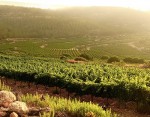
Shiloh Winery overlooks the Shiloh River and the Judean Hills. (photo from shilohwinery.com)
The second in a short series featuring nine Israeli wine producers features Mayer Chomer of Shiloh Winery, situated above the Shiloh River overlooking the Judean Hills.
Mayer Chomer: Shiloh Winery was opened in 2005. That’s when we started running operations. We started in a very small garage, making boutique, very selected wines. I think that we’ve been making good product, good wines. Now the winery has built up to 10,000 cases and we’re growing.
Yossie Horwitz: Can you tell a little about the winemaker, the philosophy of the winery, what types of wines you’re trying to make?
MC: So, we started wanting to make just quality wines. We’re not interested in the volume business. We wanted to make very, very unique wines, quality wines, and obviously we wanted to distinguish ourselves from the rest of our colleagues and competitors. So, our philosophy is really making no compromises in our process: making and investing as much as we can in our equipment and, obviously, trying to be and to make always the best wines possible based on our grapes, our varieties that we have available and, you know, we invest a lot of money planting our vineyards so we can really control our quality. We’ve been just – thank God, you know – selecting good grapes based on a lot of research and making the wines that you see in the market. Thank God, people are acknowledging it by its quality.
YH: What types of wines do you make? Do you make single varietals or blends?
MC: We do have several series. We have the Mosaic, which is our flagship, a blend of five different grapes. We have a series that we call Secret Reserve. We have a merlot, a shiraz and a cab – straight cab. We also have the Shor series. Shor means bull in Hebrew, and the reason why we call it the Shor is because we inherited the lands of Joseph. It recognizes the bull that he slaughtered in the Bible. We also have barbera, merlot and a cab. And we have a lower blend; we call it Mor. We have a white wine, we have a dessert wine – we have all kinds of range!
YH: What’s special about the terroir where your grapes come from?
MC: I can tell you all the things about my terroir, but I’m going to answer you with a quote from the Bible…. The Bible says that Joseph got an extra blessing from the patriarch Jacob…. You know, many people … comment [o]n the Bible, one of them was Rashi, who was very famous, he asked: “What is so special about this blessing? Why did he [get] this land? [Does] Shiloh ha[ve] an extra blessing?” And, on this spot, Rashi answers, “Because the fruits are sweeter.” So, we have a gorgeous, gorgeous place to grow and plant our vineyards. As a matter of fact, many of the wineries are planting vineyards in Shiloh because of this quality. Outstanding quality!
YH: What are the plans for the future?
MC: Well, continue to do good wine, keeping the quality at all costs. And we want to grow, obviously, but we want to grow as per the request of our customers. If our demand will grow, because people will continue acknowledging our quality, then we’ll grow. Otherwise, we will stay where we are, always doing different things and new important things that can be attractive to our customers and clients. But always keeping proportions, meaning we want to be always a quality winery, as opposed to a mass winery.
YH: Can you tell us a little about how you got started in the wine business?
MC: To make this very long story short, I lived in Spain for several years. I was working and doing my PhD. I’m a lawyer by defect!… So I was there and, obviously, Spain is a very important wine region. And every time I would have people over to my house for holidays or for the Sabbath, I was very frustrated that I couldn’t get a good kosher wine. So, back in the [United] States, I was a little bit naïve and I thought, “I’m going to change the world! And I’m going to have just good quality wines, and I’m going to go to Israel and make a good winery.” And that was the beginning of it.
YH: When was this?
MC: This was in 1997. I was in Spain until 2001. So then, when I moved to Israel, I was working for a couple of years and then I decided, “OK, let’s make the dream come true!”
YH: What other regions inform your style of winemaking?
MC: I don’t know if I can answer that. I love French wines as well as Italian wines, which are very different, although they are the Old World. I really respect the New World wines: New Zealand, California. I think it’s important to have a combination of New and Old, just not be limited, but actually just making the best wine possible. We like to make wines that we know customers will appreciate, because customers nowadays start looking for something new, something interesting and attractive. At the same time, you always have that romanticism of good quality, classic wines.
– This article is reprinted courtesy of the Grape Collective, an online publication for all things wine. For more information, visit grapecollective.com.
Wine has been made in Israel since biblical times. The Book of Deuteronomy lists seven blessed species of fruit, including “the fruit of the vine.” Israel’s Mediterranean climate boasts many microclimates, which foster a diversity of wine styles.
The modern Israeli wine industry was greatly influenced by Baron Edmond James de Rothschild, owner France’s Château Lafite Rothschild. He started making wine in Israel in the late 19th century, importing French vine varieties and winemaking knowledge, and founding Carmel Winery, today the largest wine estate in Israel.
By the late 1980s, most Israeli wine was low quality, used for sacramental purposes. But the 1990s saw a huge boom in the establishment of quality-focused boutique wineries that were taking an artisanal approach. Today there are hundreds of wineries producing in aggregate more than 10 million bottles per year. Three producers are responsible for 80 percent of the production: Carmel, Barkan and Golan Heights Winery.
This short series features nine Israeli producers about the wines they make, their individual path into winemaking and their terroir. The first in the series profiles Irit Boxer-Shank of Barkan Winery, the second-largest winery in Israel.
Christopher Barnes: How did you get involvd in wine?
Irit Boxer-Shank: Well, it’s from the family. My father used to own the winery, Barkan. Now, he’s just the CEO.
CB: How did that change?
IBS: I started out as the owner’s daughter. I grew up there since I was 10, so I did everything in the winery, from putting on the labels all the way to the vineyards, walking with the workers, and then the winery was sold to a bigger company. My father is the CEO. I’m the winemaker. We’re still there doing our stuff, and we love it, but it’s not family-owned now.
CB: Tell us a little bit about the terroir where your wines are made.
IBS: Well, because we’re a big winery, we do wines from all over the country, from the northe[rnmost] part to the south, including in the desert. We have all kinds of terroir. We have all the varieties. We do a lot of experiments. That’s what’s fun about being a winemaker in Barkan. I love it because I have fruit from all over the country. I have all kinds of varieties, and I can play all the time.
CB: How many different varieties are you making right now?
IBS: A lot of them, and we do a lot of experiments. We bring a lot of new varieties. There is now a malbec that is brand new. We’re going to bring it to the [United] States. Pinotage was the first different variety that we started growing in Israel, then we have marselan and caladoc from south of France. Well, we’re playing a lot with it. Some of them that are not as good, we’ll go back, and we’ll do something else, but we have a lot. Of course, the cabernet sauvignon is the king, it will always be the king, but we do a lot of varieties.
CB: I interviewed a winemaker in Australia who is using 60 different varieties in his wines. I said to him, “How do you keep track of it? How do you know what’s working and what’s not when you have that many?” Is it more of a challenge to make wine with a lot of different types of grapes?
IBS: I don’t think so. It’s like asking a person who has a lot of children, “How do you keep up with them?” It’s like you grow them from the beginning to the end, so you know each of the wines just like you know a person, all the way, very intimately.
CB: You mentioned malbec. How do you decide if you’re going to try a new variety?
IBS: It’s a long process. We go and try it in different countries. We see the soil and the climate that they’re growing it in, and the best versions of them – like malbec in Argentina, in the south of France. And then we go back home and see if there are very similar [conditions], as similar as we can in Israel, and then we plant just a small plot. If it’s good, we’ll plant more, and then there are trials in the winery to see how to ferment it and what kind of barrels to put it in. It takes us at least eight years to start an experiment on a variety and maybe take it to the market.
CB: Do you buy a lot of fruit?
IBS: No. One of the more interesting things about Barkan Wineries is that we grow everything ourselves. We are also the biggest grower in Israel because all of the grapes are ours, which gives us full, complete control in the winemaking.
CB: Do you have a philosophy of winemaking? Is there something that you feel is your stamp in terms of the process and the styles of wines that you make?
IBS: Well, I discovered that we like using technology to do more of the Old World style. We’re trying to have all the fun from all the different worlds, the New and the Old! That’s something that really characterizes Israelis. We do fusions – that’s what you call the Israeli kitchen cuisine: “the fusion.” We take something from the new and something from the old, and do something from Israel. I guess, in winemaking, it’s also like that.
– This article is reprinted courtesy of the Grape Collective, an online publication for all things wine. For more information, visit grapecollective.com.
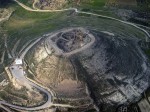
An aerial view of the acropolis of Herodium. (photo from commons.wikimedia.org)
In Israel, water scarcity has long been an issue. Even the Old Testament narrates that the Hebrews complained to Moses about the lack of fresh drinking water (Exodus 17:1-7, Numbers 20:2-13) in the arid Zin Wilderness.
Whether the answer to that particular water problem came from Divine intervention or from human ingenuity or both, the fact remains that the people who populated the ancient Land of Israel figured out sustainable solutions to their water shortages. This article focuses on three historical examples of sustainable water practice.
The first of the sustainable water system to be examined takes you forward in ancient history and north of the Zin Wilderness or Desert (Midbar Tzin, in Hebrew) to Herodium, a hilltop palace and fortress built by King Herod that stood securely at the highest peak in the Judean Desert.
Herodium was constructed more than 2,000 years ago in 23-20 BCE. Needless to say, it was crucial to have access to drinking water in this semi-arid and elevated location, and four vast underground cisterns for rainwater and spring water were carved deep into the mountain. Three of the cisterns were built in close proximity, about 80 feet below the summit. The fourth was hewn slightly above, about 16 feet from the summit. The largest cistern could hold up to 400,000 gallons of water. Access to the three lower cisterns was via the northeast side of the mountain, close to Herodium’s only flight of steps.
Water traveled a few miles from the Spring of Artas to drain into the large pool of Lower Herodium. It was carried uphill on donkeys and emptied into the lower cisterns. There were two ways to obtain water from these cisterns. One, exiting the palace-fortress with empty water skins or jars via the stairs until reaching the opening to the three lower cisterns. Water would then either be carried all the way back or, two, be transported to the opening of the higher cistern, at which point water was (ingeniously) funneled into the reservoir. A bucket attached to a man-made vertical shaft then brought this water up to the palace courtyard. This method was less labor intensive and insured the privacy of the “royals.”
As the nursery rhyme states, “some like it hot and some like it cold.” At Herodium, you had both hot and cold – and more. The Roman-style bathhouse featured a below-floor heating system in both the tepidarium (warm) and the caldarium (perhaps the precursor of the hot tub?), as well as a cold bath (frigidarium), or some kind of Roman bath/Hasmonean ritual bath hybrid, according to a Stanford professor of history.
According to David Mevorah, a curator of a Herod exhibit at the Israel Museum, by installing Roman baths, the king helped spread the importance of washing to the indigenous people of ancient Israel. Moreover, at what is called Lower Herodium (apparently the high-rent district of the day), the enormous pool (referred to by local residents today as El Hammam and measuring 70×45 metres or 230 feet) functioned as a swimming pool, a water reservoir and a small lake for boating, according to historians.
Today, Herodium is no longer a hilltop palace-fortress, but an amazing national park located just south and east of Jerusalem. For directions and hours, call the Herodian National Park at 057-776-1143 or visit parks.org.il.
***
Another (though more modern) solution to water scarcity is located just across the street from the Jerusalem Theatre at 17 Marcus St. Five large cisterns once serviced the Jesus Hilfe Asyl (what later became known as the Hansen Hospital). The Herrnhut Brothers, German Christians affiliated with the Moravian Church, donated the money to build the hospital in the late 1800s. It housed and treated people who were suffering from Hansen’s disease, a bacterial disease that was misdiagnosed as leprosy.
With the water collected, the 70 hospital patients (plus, in some cases, their healthy children) and the German Sisters of Mercy met all their water requirements, including medical needs, personal sanitation, in the kitchen and laundries, and for garden and farm maintenance.
Under the supervision of Jesus Hilfe builders, local workers constructed the cisterns, the largest of which was probably built in 1898. When full, it held 15×15 metres of water. In late December 1902, it even overflowed.
The other four cisterns were fed from rain gutters, which began on the hospital roof complex. Rain was collected from the staircase, the cistern roof and even from the road outside the compound’s high stone wall. Two cisterns were built near the laundry; one cistern was built near the southern garden while the others were situated within the main building, in the central courtyard or kitchen area.
With the advent of medicines to effectively treat Hansen’s disease, the in-patient hospital closed. Over the years, it has been an Israeli Ministry of Health outpatient facility and an early-childhood development centre. At present, it is being used as a Jerusalem municipal cultural centre. Inside the facility, you can visit an informative exhibit dealing with the history of the hospital and health care in Jerusalem. For visiting hours and tour arrangements, email [email protected] or call 054-744-6123.
***
Another ingenious water system is today located in a Ramla (or Ramle) city park. During the early Muslim period, in the early eighth century, Ramla was a strategically significant town, and served as the administrative centre of Palestine. Ramla was close to the road serving the holy city of Jerusalem and the port of Jaffa. Obviously, maintaining control of such an important location meant it had to be populated. This included providing inhabitants with a viable source of water.
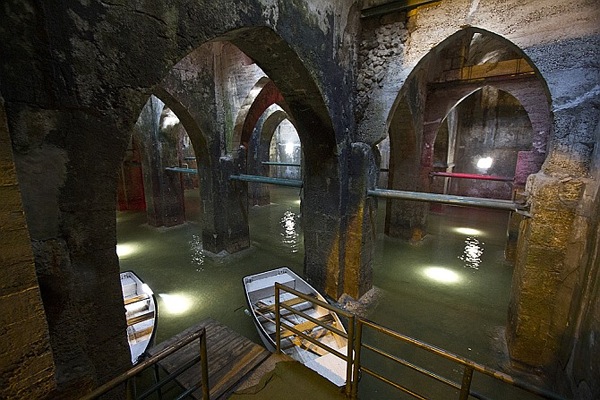
Since summer of 2013, Ramla’s Pool of Arches has been used for a new purpose: concerts! (photo by Ron Peled from goramla.com)
Entering the city park, you’ll catch a glimpse of some long, rounded structures peeking up from the ground. When you descend the steep, narrow metal staircase (that now covers the original stone) leading to the pool, you take a step back in time, into the early Muslim period. This building, however, was not just any old storage unit. This elaborate reservoir, built in 789, is decorated with heavy brick, stone arches and a domed roof. Down below, you’ll find yourself facing an underground dock. It could pass for a medieval fort or a house, except that the floor is missing. In its place, the different chambers are filled with water deep enough for row boating! Altogether, the place gives you a mini-taste of Venice, Italy, except that at Ramla’s Pool of Arches, you never see the sky.
Today, we know arches make the sturdiest of structures, but this was still a novel idea back in the eighth century. Indeed, this construction proved so successful that the 400-plus-metre Pool of Arches withstood the devastation of the 1068 CE earthquake. You can see five of the original six vaults that covered the pool. Fifteen square pillars and 16 cross-shaped pillars support the vaults. Pointed arches exist between each pair of pillars. To compliment the arches, the architect designed small windows above them. These windows were likewise shaped as pointed arches. Locals drew water from 24 square openings in the ceiling.
There are various theories about the reservoir’s original source of water. Some claim it was filled only with rainwater. A more compelling assertion is that water flowed 10 kilometres from Tel Gezer via Caliph Sulayman ibn Adb al-Malik’s water conduit (in Hebrew referred to as an amah). Two points are clear: (1) it wasn’t water from any adjacent spring and (2) we are talking about a part of the world that is hot and dry for months at a time. The engineering and maintenance of this cistern was so successful that archeologists believe it was actively used for 150 years.
The site has a somewhat obscure history and goes by a variety of names, including the Pool of St. Helena and the Pool of Al-Anziya. In the early 20th cenutry, the British repaired the pool, but it was the (post-statehood) Ramla Municipality that converted it for boating.
After you visit the Pool of Arches, make note of the continuation of the city’s old subterranean water system. Ancient water cisterns are located in the White Tower’s large courtyard.
Visitors aged 2 and up can take a boat ride; life jackets are provided. For hours and directions, call 08-977-1595, 08-920-7586 or 052-851-0715. A helpful map can be found at ramla.muni.il/eng.
Deborah Rubin Fields is an Israel-based features writer. She is also the author of Take a Peek Inside: a Child’s Guide to Radiology Exams published in English, Hebrew and Arabic (take-a-peek-inside.com).
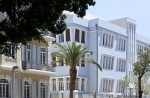
The Norman Tel Aviv (thenorman.com), a luxurious boutique hotel, has restored two buildings on Nachmani Street, at the heart of the Tel Aviv UNESCO heritage site for historic Bauhaus architecture. The newly renovated hotel’s management are also dedicated patrons of the arts, seeking to support contemporary artistic expression in Israel. When complete, the complex will be a travel destination that houses and showcases many avant-garde cultural treasures.
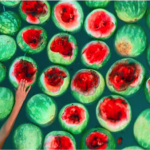
Sigalit Landau (detail), one of the artworks on display at the Norman Tel Aviv..
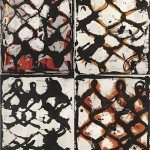
Tsibi Geva painting, also on display at the Norman.
A room at the Norman Tel Aviv.
“Tremendous care has been taken to restore these buildings to their original grandeur, preserving the eclectic style, Renaissance and oriental influences that characterize the edifice at #23 Nachmani, as well as the striking modernist architecture of the adjacent building at #25,” said Olivier Heuchenne, managing director of the Norman.
The hotel – whose grand opening is planned for this summer – will sport an interior design echoing the luxury and style of the grand hotels of the early 20th century, featuring top restaurants, an extraordinary collection of Israeli artwork, an elegant library bar and the Norman’s signature world-class amenities.
The art collection, comprised of more than 100 works, stands at the centre of this accomplishment, uniting design themes and creating an interactive experience for guests. Featured are works by Ilit Azoulay, Sigalit Landau, Klone, Dana Levy, Assaf Shaham and Tsibi Geva, among others, celebrating a class of leading contemporary Israeli artists whose work is exhibited worldwide.
For Tamar Dresdner, the in-house art curator and consultant tasked with selecting works for display, the opportunity to partake in the restoration is a dream come true. “I’ve been living in Tel Aviv for years,” she said in an interview. “I remember walking past these buildings when they were residential properties and then entering them when they housed offices for businesses and lawyers. I always fantasized about what could be done with the space.”